I Found My Tribe by Ruth Fitzmaurice
Ruth Fitzmaurice’s husband, a filmmaker named Simon, was diagnosed with motor neurone disease in 2008. Like Stephen Hawking, he is wheelchair-bound and motionless, communicating only through the mechanical voice of an eye gaze computer.
My husband is a wonder to me but he is hard to find. I search for him in our home. He breathes through a pipe in his throat. He feels everything but cannot move a muscle. I lie on his chest counting mechanical breaths. I hold his hand but he doesn’t hold back. His darting eyes are the only windows left. I won’t stop searching.
Between their five children under the age of 10 (including twins conceived after Simon’s diagnosis), an aggressive basset hound, and Simon’s army of nurses coming and going 24 hours a day, this is one chaotic household. The recurring challenge is to find pockets of stillness – daydreaming, staring at trees outside her window – and to learn what things can bring her back from the brink of despair, again and again.
 Often these are outdoor experiences: a last hurrah of a six-month holiday in Australia, running, and especially plunging into the Irish Sea with her “Tragic Wives’ Swimming Club” – a group that includes her friend Michelle, whose husband is also in a wheelchair after a motorbike crash, and her favorite of Simon’s nurses, Marian, who has a serious car accident.
Rather than a straight chronological narrative, this is a set of brief thematic essays with titles like “Dancing,” “Fear,” “Twins” and “Holidays.” Fitzmaurice’s story is one you piece together through vivid vignettes from her home life. Her prose is generally composed of short, simple phrases; as with Cathy Rentzenbrink’s The Last Act of Love, you can tell there is deep emotion pulsing under the measured sentences. With such huge questions in play – How much can one person take? What would losing one’s mind look like? – there’s no need for added drama, after all. Instead, the author turns to whimsy, toying with the superhero cliché for caregivers and wondering what magic might be at work in her situation.
I was particularly impressed by how Fitzmaurice holds the past and present in her mind, and by how she uses an outsider’s perspective to imagine herself out of her circumstances. At times she uses the third person for these visions of herself as a younger woman newly in love:
The young wife at her kitchen table knows about deep magic. But I know her future. Life is going to push and pull her like a wave. She doesn’t have a choice and neither do I. Come with me, dear girl, sit at my tablecloth. The journey is upon us and to survive it, you can’t just ride the wave, you have to become one. Can we do this? Let’s go. Becoming a wave just might be the deepest magic of them all.
There are so many poignant moments in this book: memories of their determinedly vegetarian wedding; pulling out all the stops for Simon’s fortieth birthday with customized art installations to brighten his view; leaving the marital bed – now a “hospital contraption” – after six years of MND being a part of their lives; a full moon swim with the Tragic Wives on her and Simon’s anniversary. But all the quiet, everyday stuff has power too, especially her interactions with her precocious children, who are confused about why Dadda is like this.
If I had one tiny complaint, it’s that Simon feels like something of a shadowy figure. In flashbacks we get a real sense of his forceful personality, but this new, silent Simon in the wheelchair is a mystery. Only once or twice does she record words he ‘says’ to her via his computer. Perhaps this is inevitable given how locked into himself he’s become. However, he was still capable of becoming the first person with MND to direct a feature film, on location in County Wicklow (My Name Is Emily). He has told his own story elsewhere; in his wife’s telling, their ventures now seem so separate that they rarely appear as equal partners.
It’s my tenth wedding anniversary tomorrow; as I was reading this I kept thinking that, for as much as I complain (to myself) about how hard marriage is, I’ve had it so easy. The stresses a couple face when caregiving of one partner is involved are immense. Fitzmaurice has found herself part of a tribe she probably never wanted to join: the walking wounded, with pain behind their eyes and worry never far from their minds. But in the midst of it she’s also found the band of family and friends who help her pull through each time. Her lovely book – wry, wise, and realistic – will strike a chord with anyone who has faced illness and family tragedy.
My rating: 
I Found My Tribe is published in the UK today, July 6th, by Chatto & Windus. My thanks to the publisher for the review copy.
Note: Fitzmaurice got her book deal on the strength of a series of pieces she wrote for the Irish Times. You can read an extract from the book here. Film rights to her story have been sold to Element Pictures; more details are here. A documentary about Simon’s life, It’s Not Yet Dark, based on his memoir of the same title, has recently been released. For more information see here (this article also showcases multiple family photos).
Update: Simon Fitzmaurice died on October 26, 2017, aged 43.
Most Anticipated Releases for the Second Half of 2017
Back in December I previewed some of the books set to be released in 2017 that I was most excited about. Out of those 30 titles, here’s how I fared:
- Read: 16 [Disappointments: 2]
- Currently reading: 1
- Abandoned partway through: 2
- Lost interest in: 4
- Haven’t managed to find yet: 2
- Languishing on my Kindle; I still have vague intentions to read: 5
The latter half of the year promises plenty of big-name releases, such as long-awaited novels from Nicole Krauss and Jennifer Egan and a memoir by Maggie O’Farrell. Here are 24 books that happen to be on my radar for the coming months; this is by no means a full picture.
The descriptions below are adapted from the publisher blurbs on Goodreads, NetGalley or Amazon. Some of these books I already have access to in print or galley form; others I’ll be looking to get hold of. (In chronological order, generally by first publication date.)
July
How Saints Die by Carmen Marcus [July 13, Harvill Secker]: “Ten years old and irrepressibly curious, Ellie lives with her fisherman father, Peter, on the wild North Yorkshire coast. This vivacious and deeply moving novel portrays adult breakdown through the eyes of a child and celebrates the power of stories to shape, nourish and even save us.”
Moving Kings by Joshua Cohen [July 20, Fitzcarraldo Editions]: “Two young Israeli soldiers travel to New York after fighting in the Gaza War and find work as eviction movers. It’s a story of the housing and eviction crisis in poor Black and Hispanic neighborhoods that also shines new light on the world’s oldest conflict in the Middle East.” (print ARC)
August
 Sour Heart by Jenny Zhang [Aug. 1, Lenny]: “Centered on a community of immigrants who have traded their endangered lives as artists in China and Taiwan for the constant struggle of life at the poverty line in 1990s New York City, Zhang’s exhilarating collection examines the many ways that family and history can weigh us down and also lift us up.”
The Education of a Coroner: Lessons in Investigating Death by John Bateson [Aug. 15, Scribner]: “An account of the hair-raising and heartbreaking cases handled by the coroner of Marin County, California throughout his four decades on the job—from high-profile deaths to serial killers, to Golden Gate Bridge suicides.”
The Futilitarians: Our Year of Thinking, Drinking, Grieving, and Reading by Anne Gisleson [Aug. 22, Little, Brown and Company]: “A memoir of friendship and literature chronicling a search for meaning and comfort in great books, and a beautiful path out of grief.” (currently reading via NetGalley)
Midwinter Break by Bernard McLaverty [Aug. 22, W. W. Norton]: “A retired couple fly from their home in Scotland to Amsterdam for a long weekend. … [A] tender, intimate, heart-rending story … a profound examination of human love and how we live together, a chamber piece of real resonance and power.” (to review for BookBrowse)
 I Am, I Am, I Am: Seventeen Brushes with Death by Maggie O’Farrell [Aug. 22, Tinder Press]: “A childhood illness she was not expected to survive. A terrifying encounter on a remote path. A mismanaged labor in an understaffed hospital … 17 encounters at different ages, in different locations, reveal to us a whole life in a series of tense, visceral snapshots.”
What It Means When a Man Falls from the Sky by Lesley Nneka Arimah [Aug. 24, Tinder Press]: “A dazzlingly accomplished debut collection explores the ties that bind parents and children, husbands and wives, lovers and friends to one another and to the places they call home.” (print ARC to review for Shiny New Books)
Madness Is Better than Defeat by Ned Beauman [Aug. 24, Sceptre]: “In 1938, rival expeditions set off for a lost Mayan temple, one intending to shoot a screwball comedy on location, the other to disassemble the temple and ship it to New York. … Showcasing the anarchic humor and boundless imagination of one of the finest writers of his generation.”
Forest Dark by Nicole Krauss [Aug. 24, Harper/Bloomsbury]: “A man in his later years and a woman novelist, each drawn to the Levant on a journey of self-discovery. Bursting with life and humor, this is a profound, mesmerizing novel of metamorphosis and self-realization – of looking beyond all that is visible towards the infinite.” (currently reading via NetGalley)
 My Absolute Darling by Gabriel Tallent [Aug. 29, Riverhead Books/4th Estate] “A brilliant and immersive, all-consuming read about one fourteen-year-old girl’s heart-stopping fight for her own soul. … Shot through with striking language in a fierce natural setting.” (e-ARC to review for the Pittsburgh Post-Gazette)
September
Dinner at the Center of the Earth by Nathan Englander [Sept. 5, Knopf]: “[A] political thriller that unfolds in the highly charged territory of the Israeli-Palestinian conflict and pivots on the complex relationship between a secret prisoner and his guard. … Englander has woven a powerful, intensely suspenseful portrait of a nation riven by insoluble conflict.”
George and Lizzie by Nancy Pearl [Sept. 5, Touchstone]: “[A]n emotionally riveting debut novel about an unlikely marriage at a crossroads. … With pitch-perfect prose and compassion and humor to spare, George and Lizzie is an intimate story of new and past loves, the scars of childhood, and an imperfect marriage at its defining moments.”
 Little Fires Everywhere by Celeste Ng [Sept. 7, Little, Brown]: “In Shaker Heights, a placid, progressive suburb of Cleveland, everything is meticulously planned. … [E]xplores the weight of long-held secrets and the ferocious pull of motherhood-and the danger of believing that planning and following the rules can avert disaster, or heartbreak.”
Afterglow (A Dog Memoir) by Eileen Myles [Sept. 12, Grove Press]: “A probing investigation into the dynamics between pet and pet-owner. Through this lens, we examine Myles’s experiences with intimacy and spirituality, celebrity and politics, alcoholism and recovery, fathers and family history.”
October
From Here to Eternity: Traveling the World to Find the Good Death by Caitlin Doughty [Oct. 3, W. W. Norton]: “Fascinated by our pervasive terror of dead bodies, mortician Caitlin Doughty set out to discover how other cultures care for their dead. Featuring Gorey-esque illustrations by artist Landis Blair.”
Manhattan Beach by Jennifer Egan [Oct. 3, Scribner/Corsair]: “The pace and atmosphere of a noir thriller and a wealth of detail about organized crime … Egan’s first historical novel is a masterpiece, a deft, startling, intimate exploration of a transformative moment in the lives of women and men, America, and the world.”
Dunbar by Edward St. Aubyn [Oct. 3, Hogarth Shakespeare]: “Henry Dunbar, once all-powerful head of a family firm, has handed it over to his two eldest daughters, Abby and Megan. Relations quickly soured. Now imprisoned in a Lake District care home with only an alcoholic comedian as company, Dunbar starts planning his escape.” (print ARC)
 The Diary of a Bookseller by Shaun Bythell [Oct. 5, Profile Books]: “Bythell owns The Bookshop, Wigtown – Scotland’s largest second-hand bookshop. … These wry and hilarious diaries provide an inside look at the trials and tribulations of life in the book trade, from struggles with eccentric customers to wrangles with his own staff.”
In Shock by Rana Awdish [Oct. 17, St. Martin’s]: “Dr. Awdish spent months fighting for her life, enduring consecutive major surgeries and experiencing multiple overlapping organ failures. At each step of the recovery process, she was faced with repeated cavalier behavior from her fellow physicians. … A brave road map for anyone navigating illness.”
American Wolf: A True Story of Survival and Obsession in the West by Nate Blakeslee [Oct. 17, Crown]: “[I]n recent decades, conservationists have brought wolves back to the Rockies, igniting a battle over the very soul of the West. With novelistic detail, Nate Blakeslee tells the gripping story of one of these wolves, alpha female O-Six.” (print ARC)
November
The White Book by Han Kang [Nov. 2, Portobello Books]: “Writing while on a residency in Warsaw, the narrator finds herself haunted by the story of her older sister, who died a mere two hours after birth. A fragmented exploration of white things … the most autobiographical and experimental book to date from [the] South Korean master.”
 Radio Free Vermont: A Fable of Resistance by Bill McKibben [Nov. 7, Blue Rider Press]: “Follows a band of Vermont patriots who decide that their state might be better off as its own republic. … McKibben imagines an eccentric group of activists who carry out their own version of guerrilla warfare … a fictional response to the burgeoning resistance movement.”
Future Home of the Living God by Louise Erdrich [Nov. 14, Harper]: “Evolution has reversed itself, affecting every living creature on earth. … A chilling dystopian novel both provocative and prescient … a moving meditation on female agency, self-determination, biology, and natural rights that speaks to the troubling changes of our time.”
December
(Nothing as of yet…)
Which of these tempt you? What other books from the latter half of 2017 are you most looking forward to?
Three Recommended July Releases
Here are three enjoyable reads due out next month that I was lucky enough to get a hold of early. These are all first books by women authors, with subjects ranging from twentieth-century artists to a parent’s dementia. I’ve pulled 200–250-word extracts from my full reviews and hope you’ll be tempted by one or more of these.
The Velveteen Daughter by Laurel Davis Huber
(Coming on July 11th from She Writes Press)
The name Margery Williams Bianco might not seem familiar, but chances are you remember her classic children’s book, The Velveteen Rabbit. This lovely debut novel is about Margery and her daughter, Pamela Bianco, a painter and child prodigy troubled by mental illness. The main thread of the novel is set on one day in 1944, and the first-person narration alternates between Margery and Pamela, who through memory and imagination drift back through vivid scenes from their lives in Turin, London, Wales, and New York City.
 Themes of creativity, mental health and motherhood are nestled in this highly visual book full of cameos by everyone from Pablo Picasso to Eugene O’Neill. I love reading fictional biographies of writers and other creative types, and this one gives such an interesting window onto lesser-known twentieth-century figures. I especially appreciated Huber’s endnotes explaining what was fact (almost everything) and what was fiction here, and her discussion of the letters and archives she used.
As The Velveteen Rabbit teaches, we truly come to life when we are loved, and you can see how for Pamela it was a lifelong struggle to be loved for who she was. The artist’s tortured journey and the mother’s tender worry are equally strong. Had I finished it a few days earlier I would have included this in my write-up of the best books of 2017 so far. It would be a great choice for book clubs, too – a set of questions is even included at the end of the novel.
A favorite line (Pamela describes her mother): “Mam’s eyes are vast almond-shaped seas, liquid navy, flowing with an endless depth of understanding and compassion.”
Readalike: Z: A Novel of Zelda Fitzgerald by Therese Anne Fowler
My thanks to publicist Caitlin Hamilton Summie for granting me early access via NetGalley.
My rating: 
Goodbye, Vitamin by Rachel Khong
(Coming on July 11th from Henry Holt and Co. [USA]; already available from Scribner UK)
 Reeling from a broken engagement, Ruth Young returns to her childhood home in California for a year to help look after her father, who has Alzheimer’s. She tries feeding Howard every half-cracked dementia health cure (cruciferous vegetables are a biggie) and, with his teaching assistant, Theo, maintains the illusion that her father is still fit to teach by gathering graduate students for a non-credit History of California class that meets in empty classrooms and occasionally off-campus – wherever they can be away from the watchful eye of Dean Levin.
As these strategies fail and Howard’s behavior becomes ever more erratic, Ruth realizes the best thing she can do is be a recorder of daily memories, just as Howard was for her when she was a little girl: “Here I am, in lieu of you, collecting the moments” – “Today you…”
This is a delightfully quirky little book, in the same vein as Elizabeth McKenzie’s The Portable Veblen. I marked out a bunch of funny metaphors:
This morning’s [hangover] is a rodent: pesky but manageable.
It was grotesque, the way I kept trying to save that relationship. Like trying to tuck an elephant into pants.
The moon, tonight, looks like a cut zucchini coin.
But you may well read this with a lump in your throat, too. From one Christmas to the next, we see how much changes for this family – a reminder that even though the good times are still worth celebrating, they’re gone before you know it.
Readalike: Not Working by Lisa Owens
My rating:
A Beautiful, Terrible Thing: A Memoir of Marriage and Betrayal by Jen Waite
(Coming on July 11th from Plume Books [USA] and Prentice Hall Press [UK])
 Jen Waite had been in New York City pursuing her dream of becoming an actress for two years when she started working at a restaurant for extra cash. It was here that she met Marco Medina, a handsome Argentinian bar manager, and they fell head-over-heels in love. All the clichés: a green card, a successful business venture, a baby on the way, an idyllic wedding on the beach in Maine. And then the whole thing fell apart. “Marco was always an illusion; the best magic trick I’ve ever seen,” Waite marvels.
She’s written her story up like a thriller, full of gradual revelations and the desire to get even. Chapters alternate between “Before,” when she still had what she thought was the perfect existence, and “After,” when she started to suspect that Marco had a secret life. I use the term “thriller” as a compliment: the dialogue is spot-on and this is a remarkably gripping book given that the title and blurb pretty much give the whole game away. More than that, it’s a fascinating psychological study of the personality of a sociopath and pathological liar. Surviving to tell her story and perhaps train to become a therapist for women who have been in her situation is Waite’s apt revenge.
Readalike: Gone Girl by Gillian Flynn
My rating:
Have you read any July releases that you would recommend?
The Best Books from the First Half of 2017
Believe it or not, but the year is almost half over already. A look back at the “Best of 2017” shelf I’ve started on Goodreads has revealed the eight releases that have stood out most clearly for me so far. All but one of these I have already featured on the blog in some way; links are provided. I’ve also included short excerpts from my reviews to show what makes each of these books so special.
 How to Be Human by Paula Cocozza: There’s something gently magical about the way the perspective occasionally shifts to give a fox’s backstory and impressions as a neologism-rich stream. As much as this is about a summer of enchantment and literal brushes with urban wildlife, it’s also about a woman’s life: loneliness, the patterns we get stuck in, and those unlooked-for experiences that might just liberate us. Cocozza sets up such intriguing contradictions between the domestic and the savage, the humdrum and the unpredictable.
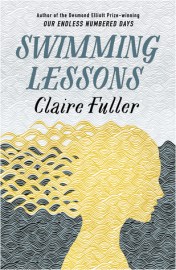 Swimming Lessons by Claire Fuller: This isn’t a happy family story. It’s full of betrayals and sadness, of failures to connect and communicate. Yet it’s beautifully written, with all its scenes and dialogue just right, and it’s pulsing with emotion. One theme is how there can be different interpretations of the same events even within a small family. The novel is particularly strong on atmosphere, reminding me of Iris Murdoch’s The Sea, The Sea and Diane Setterfield’s The Thirteenth Tale. Fuller also manages her complex structure very well.
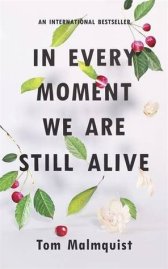 In Every Moment We Are Still Alive by Tom Malmquist: Malmquist does an extraordinary job of depicting his protagonist’s bewilderment at the sudden loss of his partner and his new life as a single father. While it’s being marketed as a novel, this reads more like a stylized memoir. Similar to Karl Ove Knausgaard’s books, it features the author as the central character and narrator, and the story of grief it tells is a highly personal one. This is a book I fully expect to see on next year’s Wellcome Book Prize shortlist.
 My Life with Bob by Pamela Paul: I’ve found a new favorite bibliomemoir. Whether she was hoarding castoffs from her bookstore job, obsessing about ticking off everything in the Norton Anthology, despairing that she’d run out of reading material in a remote yurt in China, or fretting that her new husband took a fundamentally different approach to the works of Thomas Mann, Paul (editor of the New York Times Book Review) always looks beyond the books themselves to ask what they say about her. Just the sort of book I wish I had written.
 My Jewish Year by Abigail Pogrebin: This bighearted, open-minded book strikes me as a perfect model for how any person of faith should engage with their tradition: not just offering lip service and grudgingly showing up to a few services a year, but knowing what you believe and practice, and why. From September 2014 to September 2015, Pogrebin celebrated all the holidays in the Jewish calendar. I was consistently impressed by how she draws thematic connections and locates the resonance of religious ritual in her daily life.
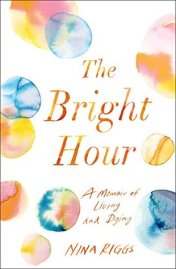 The Bright Hour by Nina Riggs: Beautiful prose enhances this literary and philosophical approach to terminal cancer. Riggs was a great-great-great-granddaughter of Ralph Waldo Emerson, and she quotes from her ancestor’s essays as well as from Michel de Montaigne’s philosophy of life to put things in perspective. She’s an expert at capturing the moments that make life alternately euphoric and unbearable – sometimes both at once. A wonderful book, so wry and honest, with a voice that reminds me of Anne Lamott and Elizabeth McCracken.
 Fragile Lives by Stephen Westaby: This is a vivid, compassionate set of stories culled from the author’s long career in heart surgery. Westaby conveys a keen sense of the adrenaline rush a surgeon gets while operating with the Grim Reaper looking on. I am not a little envious of all that he has achieved: not just saving the occasional life despite his high-mortality field – as if that weren’t enough – but also pioneering various artificial heart solutions and a tracheal bypass tube that’s named after him.
 The Animators by Kayla Rae Whitaker: Though it seems lighthearted on the surface, there’s a lot of meat to this story of the long friendship between two female animators. The cartooning world and the Kentucky–New York City dichotomy together feel like a brand new setting for a literary tragicomedy. I appreciated how Whitaker contrasts the women’s public and private personas and imagines their professional legacy. Plus I love a good road trip narrative, and this novel has two.
And here’s five more 4.5- or 5-star books that I read this year but were not published in 2017:
Days Without End by Sebastian Barry
Homegoing by Yaa Gyasi
When Breath Becomes Air by Paul Kalanithi
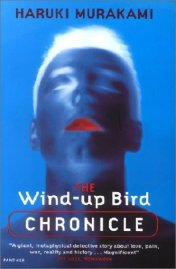
The Wind-Up Bird Chronicle by Haruki Murakami
To Say Nothing of the Dog by Connie Willis
What are some of the best books you’ve read so far this year?
What 2017 releases do I need to catch up on right away?
Summer Reads: The Women of the Castle and The Nest
What do you look for in your summer reading? Terms like “beach read” tend to connote light, frothy stories—especially from genres like romance, mystery, and chick lit—but for me a summer read is any book that happens to be totally absorbing, whatever its length. These two novels I recently read are perfect for the summer because you can sink right into them. Whether a trio of widows in postwar Germany or a dysfunctional family in modern-day New York City, the characters and setting come fully to life and tempt you to settle in on a sofa or a beach towel and stay for a while.
The Women of the Castle by Jessica Shattuck
Like Virginia Baily’s Early One Morning and Caroline Lea’s When the Sky Fell Apart, this is a female-centered World War II story that focuses on a lesser-known aspect of history. The main characters are three German women, Marianne, Benita and Ania, who were aligned with different sides in the Nazism vs. Resistance conflict but have all suffered grave losses. These widows band together to raise their children at Burg von Lingenfels, the dilapidated ancestral castle of Marianne’s late husband’s family, but as the years pass regrets and unburied secrets start to come between them.
 Apart from a short prologue from 1938 and a final section that jumps ahead to 1991, the novel is mainly set in 1945–50. I appreciated the look at postwar Germany, a period you rarely encounter in fiction. Refugees, rape victims, and Russian soldiers are everywhere, while American propaganda heaps shame on Germans for supporting Hitler. As with Barbara Yelin’s Irmina, though, there’s an acknowledgment here that it was never a clear-cut matter of pure evil or utter ignorance; “They had known but not known,” is how Shattuck puts it.
What is most intriguing to watch are the shifting relationships between the three main characters. Marianne, as the widow of one of the conspirators in the plot to assassinate Hitler, feels a compulsion to rescue her fellow widows from work camps and to keep the history of the Resistance alive. When her friends disappoint her—Benita falls in love with a former Nazi officer; Ania admits to a past she’d rather forget—Marianne doesn’t know how to absorb the shocks without judgment. A black-and-white thinker, she has trouble seeing life’s gray areas. Only in her old age is she finally able to realize that people are not simply “good or bad, true or false. They have been laid bare, a collection of choices and circumstances.”
You might think that all the WWII stories have been told by now, yet this novel feels fresh and revelatory. I found it both melancholy and hopeful, with strong characters and a haunting atmosphere:
The next week, a heatwave settled over Burg Lingenfels, a shaggy animal brushing against the hills, panting along the river, quieting the birds and making the castle sweat. The ditches were alive with milkweed, nettles, and creeping phlox. In the warmth, the forest looked soft and dense, a black lump against blue sky.
My rating:
The Women of the Castle was released in the UK by Zaffre, an imprint of Bonnier Publishing, on May 18th. My thanks to Imogen Sebba for the free copy for review.
The Nest by Cynthia D’Aprix Sweeney
Leo Plumb has really blown it this time. He’s had problems with drugs and womanizing before, but this time he got behind the wheel of a car after his cousin’s wedding reception with coke and alcohol in his system and a nineteen-year-old waitress, Matilda Rodriguez, at his side. Matilda is injured in the ensuing accident, and after her hefty payout it looks like the four Plumb siblings’ collective trust fund, “the nest,” will be severely diminished.
 They’re all counting on this money: Melody to send her twin daughters to a good college; Jack to save his floundering antiques business; and Bea to keep her afloat until she can write a long-delayed novel to follow up on the success of her “Archie” short stories (based on a figure suspiciously similar to Leo).
The short chapters switch between the siblings as they tweak their plans for the future. The novel also spends time with Melody’s twins, Nora and Louise, who at 16 are just figuring out what they want from their lives; and with Matilda and her new friend Vinnie as they cope with permanent injuries. All of these characters feel like real people who might be in your neighborhood or your extended family. I especially liked Stephanie, the old girlfriend Leo returns to after his wife finally kicks him out.
In places this reminded me of Ann Patchett’s Commonwealth, Delia Ephron’s Siracusa, and especially Hannah Rothschild’s The Improbability of Love due to a subplot about a stolen sculpture. There’s a rather silly set piece involving the sculpture later on; leaving that aside, I thought this was a compelling story about what happens when the truth comes out and we must readjust our expectations. Realistic rather than rosy, this is a novel about letting go. A nest is, of course, also a home, so for as much as this seems to be about money, it is really more about family and how we reclaim our notion of home after a major upheaval.
My rating: 
The Nest was released in paperback in the UK by The Borough Press on June 1st. My thanks to Emilie Chambeyron for the free copy for review.
Library Checkout: June 2017
I’ve mostly been reading my own books, review books, and stuff on Kindle during and since my America trip, so I haven’t actually completed any library books in June. However, I have several on the go at the moment, so next month should look a bit more impressive!
CURRENTLY READING
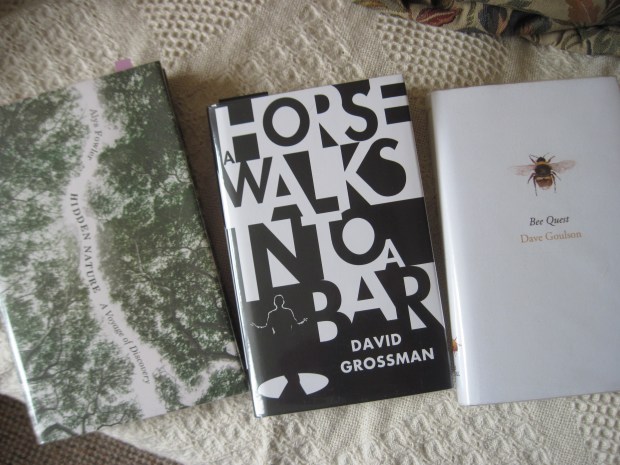
- Hidden Nature: A Voyage of Discovery by Alys Fowler
- Bee Quest: In Search of Rare Bees by Dave Goulson
- A Horse Walks into a Bar by David Grossman
CHECKED OUT, TO BE READ
- Human Acts by Han Kang
- White Tears by Hari Kunzru
- Signs for Lost Children by Sarah Moss

RETURNED UNFINISHED
- Between the World and Me, Ta-Nehisi Coates [AMERICA]
RETURNED UNREAD
Requested by someone else:
- Island Home: A Landscape Memoir by Tim Winton
Lost interest:
- Multitudes: Eleven Stories by Lucy Caldwell
- What Belongs to You by Garth Greenwell
- Gerontius by James Hamilton-Paterson
- Tiny Beautiful Things by Cheryl Strayed [AMERICA]
(Hosted by Charleen of It’s a Portable Magic.)
Have you been taking advantage of your local libraries? What appeals from my lists?
First Encounter: Maggie Nelson
Maggie Nelson is the author of four volumes of poetry and five wide-ranging works of nonfiction that delve into the nature of violence and sexuality. From what I’d heard about her writing, I knew to expect an important and unconventional thinker with a distinctive, lyrical style. As of early June, Vintage has made some of her backlist, including The Red Parts: Autobiography of a Trial and Bluets, available for the first time in the UK.
I read The Red Parts for The Bookbag. Here’s an excerpt from my full review:
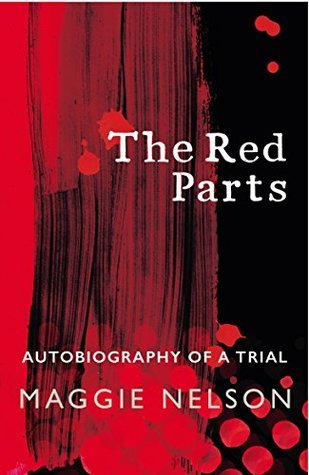 Nelson’s aunt was murdered in Michigan in 1969. Thirty-five years later, just as Nelson had completed writing a poetry collection about her, the case was reopened when new DNA evidence emerged. Most authors would quickly zero in on the trial itself, giving a blow-by-blow of the lawyers’ questioning and witnesses’ statements. Although Nelson does document important developments in the month-long trial, and describes autopsy photographs in blunt detail, her account is much more diffuse than one might expect. Interspersed with Jane’s history are other dark memories: Nelson’s father’s sudden death, her sister’s wild years, aborted love affairs. The title phrase tangentially refers to the words of Jesus in the New Testament, traditionally printed in red, so it has a sort of dual meaning: this is a (futile) search for the gospel truth about her aunt’s death, and also a conscious dive into the parts of life that frighten us. This fluid, engrossing narrative is no ordinary true crime story, but a meditative reflection on loss and identity.
My rating: 
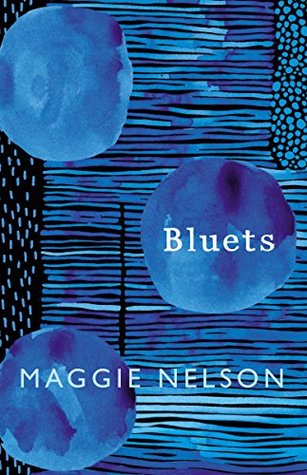 Bluets is a fragmentary record of Nelson’s arbitrary obsession with the color blue. It’s composed of 240 short numbered essays of about a paragraph each; some are just one or two sentences. At one point Nelson refers to these as “propositions,” but really they are more like metaphorical musings. Blue takes on so many meanings: with the connotation of “depressed”, it applies to her loneliness and sense of loss after the breakdown of a relationship (she continues addressing her former partner as “you” here) and a friend’s serious accident:
Loneliness is solitude with a problem. Can blue solve the problem, or can it at least keep me company within it?
Mostly I have felt myself becoming a servant of sadness. I am still looking for the beauty in that.
Then there’s blues music (Billie Holiday), seedy sex (“blue movies”), Joan Mitchell’s 1973 abstract painting Les Bluets, Novalis’ blue flower (which gives the title to a Penelope Fitzgerald novel), and so on. Nelson likens herself to a male bowerbird lining her nest with blue – sometimes literally, as with the collection of “blue amulets” that she keeps on a windowsill so sunlight can pass through the glass and illuminate the stones. I recalled that Sarah Perry lists Bluets as one inspiration for The Essex Serpent, in which the character Stella is fascinated with the color blue and keeps a similar trove of trinkets.
Bluets is a difficult work to characterize, but it seems closest in style to Jenny Offill’s Dept. of Speculation, which is also built on loosely linked aphorisms. The problem with books like these is that individual lines may stand out as profound but don’t contribute to an overall story line or argument. Moreover, Nelson’s forthrightness about sex, which edges towards crassness and feels out of place in this dreamily academic text, took me some getting used to.
Two more favorite lines:
I walked around Brooklyn and noticed that the faded periwinkle of the abandoned Mobil gas station on the corner was suddenly blooming.
If I were today on my deathbed, I would name my love of the color blue and making love with you as two of the sweetest sensations I knew on this earth.
My rating: 
Many thanks to Cat Mitchell of Penguin Random House for the free review copy.
The Red Parts was the more straightforward and satisfying read of this pair, but Bluets is certainly an original and artful bedside book. I would certainly read more by Nelson; I’m particularly interested in The Argonauts (2015), a memoir about forming her unconventional family – her partner, Harry Dodge, is transgender.
Have you read anything by Maggie Nelson? Do her books appeal?
Chastleton House (It Even Has a Bookshop)
I’ve been off my blogging game ever since we got back from America, but I hope to remedy that soon. I have a blog post planned for every day of the coming week, including some reviews, my monthly Library Checkout, a few recommendations for July releases, and a look back at the best books from the first half of the year.
Today I’m easing myself back into blogging with a mini profile of the National Trust historic manor we visited yesterday, Chastleton House in Oxfordshire (but it’s nearer the Gloucestershire border – very much Cotswolds country).
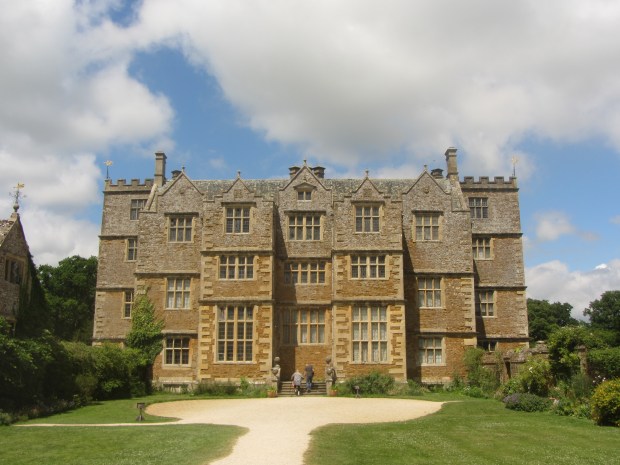
Photo by Chris Foster.
My brother-in-law sent us a voucher for free entry into any NT property, but my eye was drawn to this one in particular because I saw that there’s a secondhand bookshop in the stables. Compared to other historic houses, this one feels a lot less fusty. It’s been preserved as it was when the NT acquired it in 1991, so instead of reconstructed seventeenth-century rooms you get them as they were last used by later tenants. There are cracks in the plasterwork, cobwebs in the corners, and lots of stuff everywhere. But as a result, it seems less like part of the corporate fold; even the “Do Not Touch” signs are handwritten.


Chastleton has a literary claim to fame of which I was unaware before our visit: it was a filming location for the 2015 BBC adaptation of Hilary Mantel’s Wolf Hall. (Never mind that it was built in 1607–12, well after the Tudor history that novel is meant to portray.) Another interesting historical nugget: this is where the rules of croquet were codified in the 1860s, and there are still croquet lawns there today. Our visit happened to coincide with a special lawn games weekend, so we learned how to play croquet properly and my husband proceeded to trounce me.


Of course, I availed myself of a few bargain books from the secondhand stall.
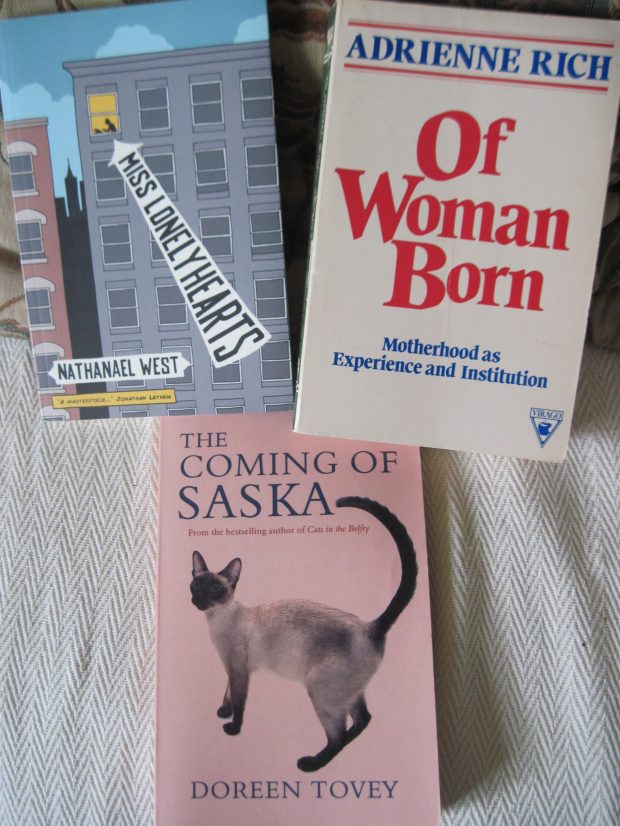 We also had tea and cake from a charity sale in the next-door churchyard. After dinner back home, in the evening we decided to walk 10 minutes down the road to our local event space for a folk concert featuring The Willows, with Gareth Lee and Annie Baylis supporting. We’ve been to three gigs at this former village hall so far this year; with tickets just £10 each and the venue so close, why not?! Each time we have heard absolutely excellent live folk music, with tinges of everything from Americana to electronica.
All together, a smashing day out.
America Reading & Book Haul, Etc.
On Wednesday we got back from two weeks in the States. We were so busy catching up with family and friends we hadn’t seen in a year and a half or more that my reading really slowed down: aside from the three books I took on the plane and finished within my first week, I only read another two books (not counting two during the trip back). Alas, I seem to be in a bit of a rut: everything I read was 3 stars. I haven’t finished anything I’d rate higher than that since late May. I do hope I can break that pattern before June ends!
What I Read:
 In Dear American Airlines by Jonathan Miles, Bennie Ford writes an extended letter during an unexpected overnight layover in Chicago, ostensibly to demand his $392.68 back, but really to tell his life story. His daughter is getting married in California tomorrow; it’s Bennie’s chance to make things right after years of estrangement. Will he make it to the wedding or not? The structure of the book means it doesn’t particularly matter, and I stopped caring a little bit as it went on. The sections of a novel Bennie is translating from the Polish felt irrelevant to me. Still, amusing, and a good one to read in the airport and on a plane.
 Gone: A Girl, a Violin, a Life Unstrung by Min Kym: I’m completely unmusical, so I enjoyed learning about what it’s like to be a violin virtuoso and a child prodigy, and what it means to fall in love with an instrument. Kym also puts things into the context of being a Korean immigrant to London. The central event of the book is having her Stradivarius, worth hundreds of thousands of pounds, stolen from a train station café in late 2010. It’s a brief and fairly immersive story, but the style is melodramatic and choppy at times.
 Back When We Were Grown-ups was my fifth Anne Tyler novel. Rebecca is in her fifties and the pillar of the large Davitch family, even though she only married into it six years before her husband’s sudden death. The Davitches are always renting out their home for their party business, and Rebecca has over the years developed a joyous persona that she’s not sure is really her true self. What would life have been like if she hadn’t become a stepmother to Joe’s three girls but instead married her college sweetheart, Will? While this is funny and warm, and a cozy read in the best possible way, it didn’t really stand out for me.
Three Singles to Adventure by Gerald Durrell, first published in 1954, tells of his animal collecting in Guiana, South America. The highlight is pipa toad reproduction and birth.
 Grief Cottage by Gail Godwin is a very atmospheric read, set on a South Carolina island with a haunted cottage where a family was swept away by a hurricane. However, I thought the rhythm of the young narrator’s languid summer days caring for his great-aunt became tedious, and I struggled to buy how self-aware he was meant to be of his fragile mental state at the age of 11. It’s reminiscent of John Irving (quirky secondary characters and so on) but without the same spark. I was sent a review copy for BookBrowse but found I couldn’t recommend it with 4 stars or higher.
To my surprise, I completely went off Kindle reading on this trip until the flight back, when I raced through Salmon Doubts by Adam Sacks, a sweet but inconsequential graphic novel about the salmon’s life cycle. I also started the poetry collection Fast by Jorie Graham but left it unfinished.
Two more DNFs from the trip were The Reluctant Fundamentalist by Mohsin Hamid and Between the World and Me by Ta-Nehisi Coates. I may try again with both in the future. Alas, library reading was a total wash: Hourglass by Dani Shapiro didn’t arrive in time, I abandoned the Coates, and I didn’t feel in the mood for advice letters so ended up not even starting Tiny Beautiful Things by Cheryl Strayed.
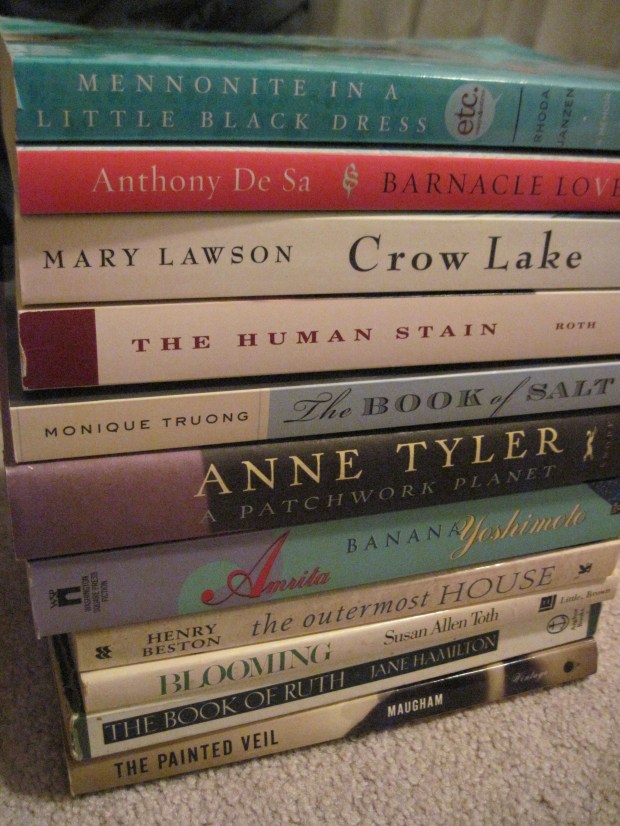
 My enjoyable read on the long journey back was Mennonite in a Little Black Dress by Rhoda Janzen. Janzen gave the Mennonite tradition she’d forsaken a second look after her life fell apart in her early forties: her husband left her for Bob, whom he met on a gay dating site; and she was in a serious car accident. It’s more in the form of linked autobiographical essays than a straight memoir, so she keeps cycling round to some of the same themes, and it gets less laugh-out-loud funny as it goes on. Still, I was impressed by how the author has managed to pull what’s good from experiences most would consider disastrous. (I also read the first third of Hotel du Lac by Anita Brookner.)
Now that I’m home I’ve started a huge pile of review books and library books and instead of the 1–3 books at a time I was reading while we were away I’m back up to my more usual 14.
What I Bought:
Day 2: A stop at my parents’ local Dollar Tree to stock up on greetings cards for the year’s events (2 for $1!) also brought some unexpectedly good book finds. [Not pictured: a paperback of Jonathan Franzen’s Freedom, our favorite of his novels.] Total spend: $3.18.
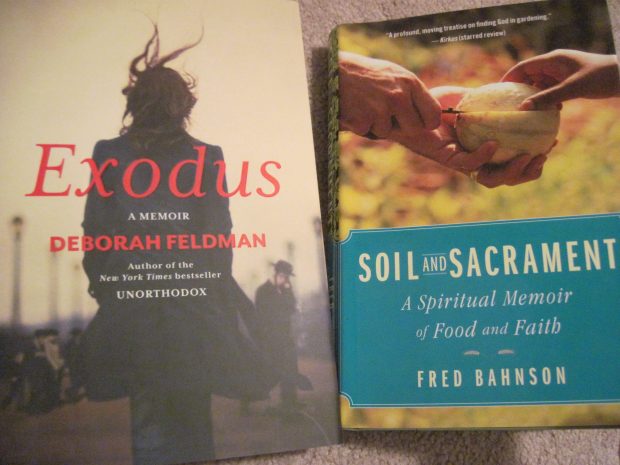
Day 4: The obligatory visit to Wonder Book & Video in Frederick, Maryland, one of my happy places.
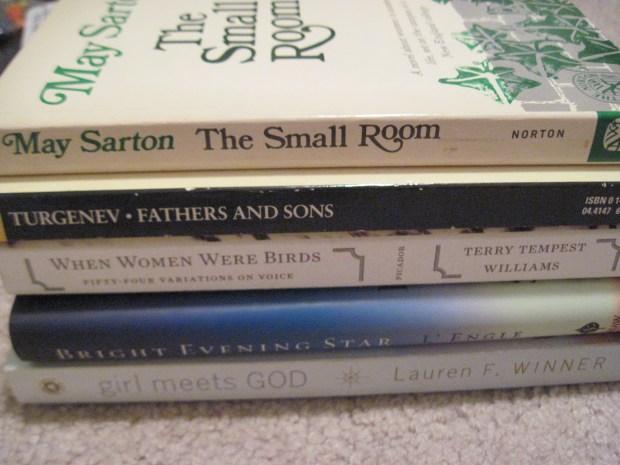
Day 5: A trip to bookstore chain 2nd & Charles in Hagerstown, MD. Total spend (minus my trade-in of various books and CDs): $5.19.
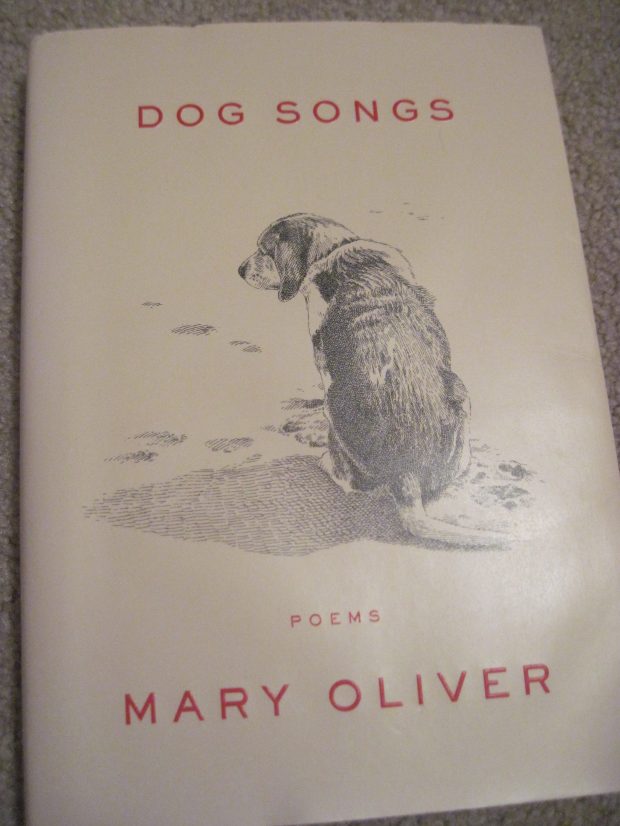
Day 6: A book of Mary Oliver poems from the Goodwill store in Westminster, MD.
Day 14: Some bargains from a thrift store in Rehoboth Beach, Delaware, where we met up with my friend and her family while they were on holiday. Total spend: $4.50.

I also managed to snag a couple of Crown ARCs that are not out until October.
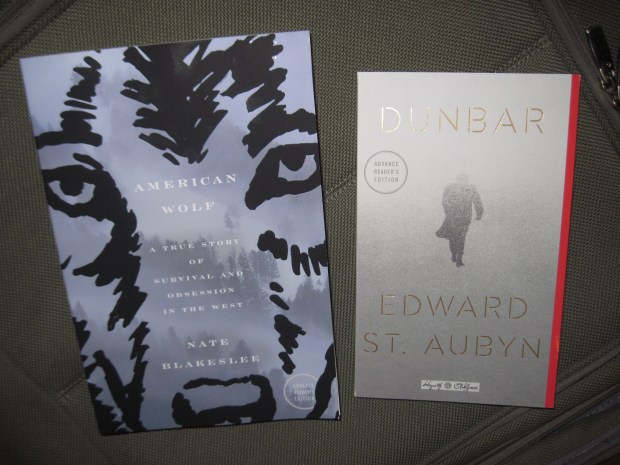
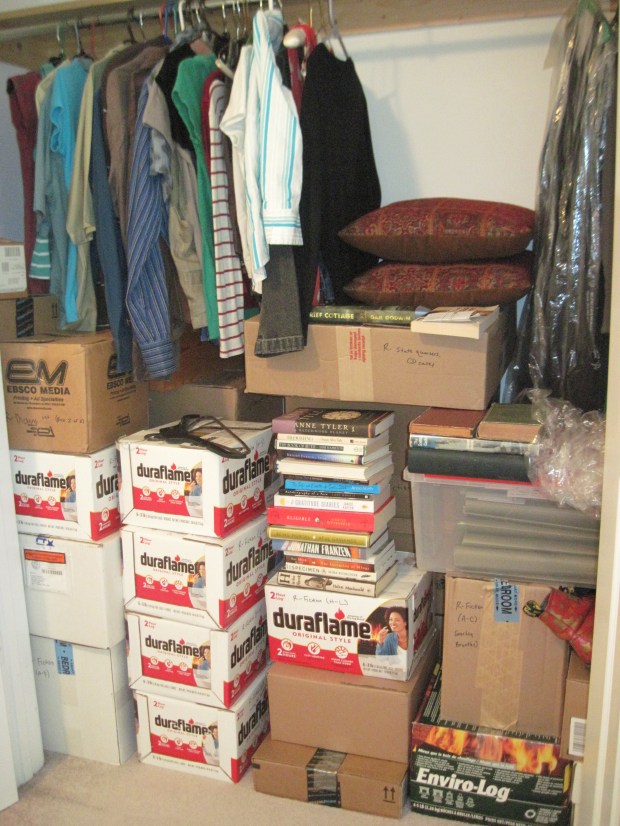
The state of my closet back in the States (most of those boxes contain books):
Other Bookish Sightings:
A Little Free Library at my parents’ local organic supermarket. I dropped off a few proof copies before I left.

The Peabody Library of Johns Hopkins University in Baltimore.

A trip to Mermaid Books in Williamsburg, Virginia (overpriced – no purchases), where I spotted an amusing cover on Anne Tyler’s first novel – she still has the same hairdo!


Ephemera in two of my purchases.


Other highlights of the trip:
- Meeting my sister’s fiancé (!) and his kids.
- Going to an alpaca farm with my sister and nephews.
- Surprising my mom with her early 70th birthday gift: a mother–daughters trip to the Kennedy Center in Washington, D.C. for dinner and a showing of Shear Madness, a long-running improvisational murder mystery with audience participation.
- Exploring Williamsburg (and Jamestown Island) for the first time since I was a kid.
- A day trip to Cape May, New Jersey – a place to go back to, methinks.
- Plus all our meet-ups, however brief, with friends.
- Not forgetting the total of seven cats and two dogs we got to spend time with.
- Two weeks of doing absolutely no work. I didn’t miss it for a second.
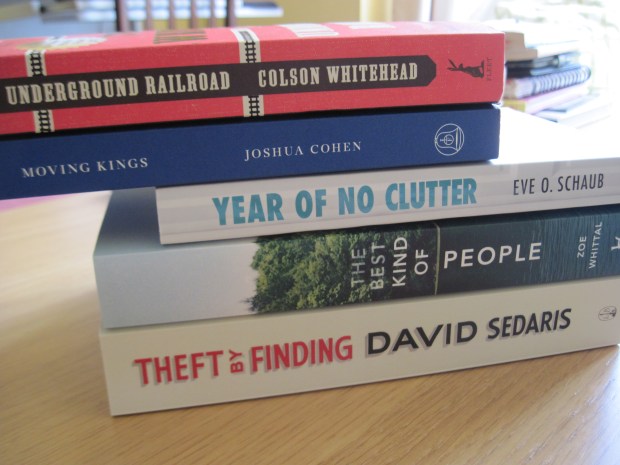
One last book haul photo: These were the review copies (top two) and giveaway books awaiting me when I got back to the UK. (I won the Schaub from Liz’s blog; I’m on a great run with Goodreads giveaways at the moment: along with these Sedaris and Whittal titles, I have new books by Cathy Rentzenbrink and Anne de Courcy on the way.)
How has your summer reading been going?
Classic of the Month: Anna of the Five Towns
This was my first experience with Arnold Bennett’s fiction; I’d previously read his Literary Taste. (He is not to be confused, as I’ve done in the past, with novelist and playwright Alan Bennett (An Uncommon Reader, etc.)!) Bennett (1867–1931) was from the Potteries region of Staffordshire and moved to London in his early twenties to work in a law office. Anna of the Five Towns (1902) was his second novel and first moderate success, but it was The Old Wives’ Tale (1908) and the Clayhanger trilogy (1910–16) that truly made his name.
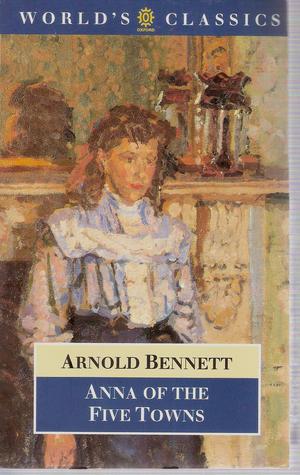 Bennett was a contemporary of D.H. Lawrence, James Joyce and Thomas Hardy (though Hardy had given up on novels by that point), and Anna reminds me of each of these authors to an extent – but particularly of Lawrence, what with his working-class Midlands roots. I also frequently thought of A Portrait of the Artist as a Young Man (religious angst) and Far from the Madding Crowd (a heroine who faces romantic entanglements and financial responsibility for the first time).
Twenty-year-old Anna Tellwright is a Methodist Sunday school teacher and lives with her twelve-year-old sister, Agnes, and their ill-tempered father, Ephraim, in “Bursley” (Bennett’s name for Burslem, now part of Stoke-on-Trent). The family is well off thanks to Ephraim’s canny property investments and inheritances he and his late wife received. Yet Anna is still dumbfounded to learn, on her twenty-first birthday, that she’s worth £50,000. Ephraim, generally referred to as “the miser” – there’s no nuance here; he’s typecast and never rises above the label – is happy to turn over certain aspects of the business to Anna, like hounding their tenants the Prices for late rent, but doesn’t give her autonomy over her daily spending. She must meekly approach her father each time she wants to purchase something for herself.
Anna has a suitor, Henry Mynors, whose business Ephraim supports as a sleeping partner. She loves the idea of being loved – and the suspicion that she has unwittingly wrenched a desirable prospect away from pretty Beatrice Sutton. But she doesn’t seem to be truly in love with Henry, just like her heart isn’t fully committed to the local revival put on by the Methodists. After all, she hasn’t had the emotional conversion experience that would prove irrefutably that she is saved. Much as she beats herself up over her so-called sins, the desired transformation never arrives. Instead, the closest thing she has to an epiphany comes when she’s standing atop a hill on the Isle of Man on her first-ever holiday:
She perceived that the monotony, the austerity, the melancholy of her existence had been sweet and beautiful of its kind, and she recalled, with a sort of rapture, hours of companionship with the beloved Agnes, when her father was equable and pacific. Nothing was ugly nor mean. Beauty was everywhere, in everything.
The Prices take on unforeseen significance in the novel, and in her dealings with them Anna is caught between a wish to be Christlike in her compassion and the drive to act as the shrewd businesswoman her father expects. Though she is eventually able to wrest back something like financial independence, she remains bound by the social convention of marrying well.

Arnold Bennett.
Anna is more timid and introspective than your average heroine; I felt great sympathy for her not in spite of but because of those character traits. I recently took the Myers-Briggs test for the first time, and wondered if Anna could be an ISTJ like me – she dreads having to visit her pupils’ homes and make small talk with the parents, comes across as curt when nervous, and can’t seem to turn her brain off and just feel instead. (Kate Scott of Parchment Girl runs a blog series about characters who exemplify the different Myers-Briggs personality types.)
There’s a lack of subtlety to Bennett’s writing, something I particularly noted in the physical descriptions (“She was tall, but not unusually so, and sturdily built up. Her figure, though the bust was a little flat, had the lenient curves of absolute maturity”) and some heavy-handed foreshadowing (“It was on the very night after this eager announcement that the approaching tragedy came one step nearer”). But I can let him off considering that this was published 115 years ago. It’s an excellent example of regional literature (can you think of another book set in Staffordshire?), with Anna’s visit to Henry’s pottery works a particular highlight. Bennett takes an unpromising setting and rather humble people and becomes their bard:
Nothing could be more prosaic than the huddled, red-brown streets; nothing more seemingly remote from romance. Yet be it said that romance is even here—
Several miles away, the blast-furnaces of Cauldron Bar Ironworks shot up vast wreaths of yellow flame with canopies of tinted smoke. Still more distant were a thousand other lights crowning chimney and kiln, and nearer, on the waste lands west of Bleakridge, long fields of burning ironstone glowed with all the strange colours of decadence. The entire landscape was illuminated and transformed by these unique pyrotechnics of labour atoning for its grime, and dull, weird sounds, as of the breathings and sighings of gigantic nocturnal creatures, filled the enchanted air.
The tea, made specially magnificent in honour of the betrothal, was such a meal as could only have been compassed in Staffordshire or Yorkshire—a high tea of the last richness and excellence, exquisitely gracious to the palate, but ruthless in its demands on the stomach. At one end of the table … was a fowl which had been boiled for four hours; at the other, a hot pork-pie, islanded in liquor, which might have satisfied a regiment. Between these two dishes were … hot pikelets, hot crumpets, hot toast, sardines with tomatoes, raisin-bread, currant-bread, seed-cake, lettuce, home-made marmalade and home-made jams. The repast occupied over an hour, and even then not a quarter of the food was consumed.
I enjoyed this for the pacey plot, the religious theme, the sympathetic protagonist, and the loving look at an industrial area. I’ll certainly be looking out for copies of Bennett’s other novels in secondhand bookshops; meanwhile, Project Gutenberg also has a good selection of his writings. (My copy was withdrawn from Lambeth Libraries stock and sold for 10 pence.)
My rating:
 Bookish Beck = Rebecca Foster. American transplant to England. Freelance proofreader and book reviewer.
 Bookish Beck