Top 5 Reads of 2017 from Literary Relish
I asked Lucy Rock of Literary Relish about the best books she read in 2017 and she came up with this list of five terrific recommendations. Two of these I have on the shelf waiting to be read, and one of them I hadn’t even heard of…
Halfway through 2016, with an abandoned blog and a bun in the oven, reading panic really started to set in. All too aware of the impending decline in any serious ‘me’ time, I read in a bit of a blind frenzy, gobbling up Gone with the Wind, Pride and Prejudice (for the first time – yes, really) and all 864 pages of T.H. White’s The Once and Future King, to name but a few.
2017 has been a funny old year, veering from having hours to spend reading pinned to the sofa to snatching the odd minute here and there. I was feeling rather indifferent about it all but, in fact, looking back I’ve experienced some really great stories this year. Here are my top 5:
- William – An Englishman by Cicely Hamilton
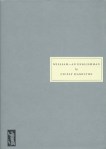 Newlyweds William and Griselda are enjoying a secluded honeymoon somewhere in the European wilderness when, unbeknownst to them, war breaks out: World War I, to be precise. Heartache and chaos ensue as they are thrust into the middle of the war-torn Belgian Ardennes. This is the most unique war narrative I have ever had the pleasure to read; Persephone Books rarely disappoint.
2. Half of a Yellow Sun by Chimamanda Ngozi Adichie
 After reading her later (and bulkier) novel Americanah for book club last year, I felt it would be pretty poor of me not to pick up her earlier, Orange Prize-winning novel. It certainly didn’t disappoint, with a cast of characters that represent the breadth of Nigerian society; it turns out that my ignorance of the Biafran War was profound. I am a better (and considerably more entertained) person for reading this moving story.
3. East Lynne by Ellen Wood
 Surely every girl needs a good period drama every once in a while, and this absolute stonker of a book is everything you need and more this Christmas, trust me. This Victorian sensation novel that charts the demise of Lady Isabel Carlyle following her elopement with fellow aristocrat Francis Levison is rather melodramatic and a mite far-fetched at times but, good golly, it is good.
4. Walking Home by Simon Armitage
 A poetry fan I am not, but I do like Northern boy Simon Armitage and the Pennine Way, the subject of this novel, is a stone’s throw from my front door. In Walking Home Armitage recounts the time he decided to walk this tricky route ‘the wrong way around’ from North to South, paying his way through poetry readings at various eclectic venues across the way. He’s a funny guy, Armitage, and some of the bleak landscape he crosses is very close to my heart. Very enjoyable.
5. The Cuckoo’s Calling by Robert Galbraith
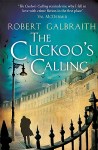 I got all snobby about this list and tried to find something a little more unusual or a little more ‘literary’ from this year’s pickings, but the simple fact is that I have desperately needed pure entertainment lately and J.K. Rowling provides just that with her Cormoran Strike novels. A bit of well-written crime (which I hardly ever read) and lovely, atmospheric London feels.
Here’s to a little more ambitious reading in 2018. Merry Christmas, everyone!
A huge thank-you to Lucy for this guest blog!
Which one of her picks do you want to read first?
The Rest of the Books I Abandoned in 2017, and the Year’s Disappointments
My abandoned books posts are always perversely popular, garnering nearly twice as many views as many of my reviews. This seems to be because fellow readers are secretly (and a bit guiltily) looking for permission to give up on the books they’re not enjoying. I hereby grant you my blessing! If after 25 pages or so a book is not grabbing you – even if it’s a bestseller, or a book all the critics or bloggers are raving about – have no shame about putting it down. You can always change your mind and try it another time, but ultimately you are the arbiter of your own internal library, and only you can say whether a book is for you or not.
That said, here are all the rest of the books I’ve abandoned since May’s post (not mentioning again any that might have come up through my Library Checkout or monthly preview posts). I don’t write full reviews for DNFs, just a sentence or two to remind myself of why I gave up on a book. (In chronological order of my reading.)
Dear Mr M by Herman Koch: I didn’t even make it past the first few pages. I wasn’t at all engaged, and I couldn’t now tell you a single thing about the book.
Stay with Me by Ayobami Adebayo: I started this for a potential BookBrowse review and it felt derivative of every other African-set book I’ve ever read. It was difficult to see what made it original enough to be on the shortlist for the Women’s Prize for Fiction. (DNF @ 15%)
Reservoir 13 by Jon McGregor: I feel bad about this one because so many discerning readers admire it. I thought I knew what to expect – lovely writing, much of it descriptions of the natural world and the daily life of a small community – but I guess I hadn’t fully heeded the warning that nothing happens. You hear a lot about Hardyesque locals you can’t keep straight (because what do they matter?) but never anything about what happened to the missing girl. Couldn’t hold my interest, but I won’t rule out trying it again in the future. (DNF @ 15%)
My Absolute Darling by Gabriel Tallent: I’d heard amazing things about this debut novel and was indeed impressed by the descriptive language and characterization. But if you know one thing about this book, it’s that it’s full of horrifically matter-of-fact scenes of sexual abuse. When I reached the first of these I couldn’t go on, even though I was supposed to review this for the Pittsburgh Post-Gazette. Luckily my editor was very understanding. (DNF @ 6%)
Idaho by Emily Ruskovich: I’d heard a lot of pre-publication buzz about this book, which came out in January, and always meant to get around to it. The problem is likely down to expectations and a surfeit of information. Had I come to this knowing little to nothing about it, perhaps I would have been drawn into the subtle mystery. (DNF @ 7%)
The 7th Function of Language by Laurent Binet [trans. from the French by Sam Taylor]: HHhH was brilliant, but this one’s cleverness passed me by. I could probably sustain my interest in a playful mystery about linguistics and ‘the death of the author’ for the length of a short story, but not for nearly 400 pages. (DNF after 40 pages)
Future Home of the Living God by Louise Erdrich: This starts out feeling like the simple story of Cedar meeting her biological Native American parents and coming to terms with her out-of-wedlock pregnancy. It takes a long time to start resembling the dystopian novel it’s supposed to be, and the signs that something is awry seem too little and come too late to produce even mild alarm. I’d try something else by Erdrich, but I didn’t find her take on this genre worthwhile.(DNF @ 32%)
The Picture of Dorian Gray by Oscar Wilde: I think the central problem here was that I’d seen a theatre adaptation of the novel less than a month before and the story was too fresh in my mind; there were no plot surprises awaiting me, and the scenes involving the painting itself, which I was most interested in reading for myself, felt ever so melodramatic. (DNF after 70 pages)
The Comfort Food Diaries: My Quest for the Perfect Dish to Mend a Broken Heart by Emily Nunn: After a dear brother’s suicide, a breakup from her fiancé, and a couple of spells in rehab to kick the alcohol habit that runs in her family, Nunn set off on a quest for what people across the country consider to be comfort food. She starts with a visit to a cousin in the South and some indulgence in ham biscuits and peanut brittle. Like Life from Scratch by Sasha Martin, this is too heavy on the sad backstory and not quite enough about food. (DNF @ 25%)
The Unseen by Roy Jacobsen [trans. from the Norwegian by Don Bartlett and Don Shaw]: A subtle story of a fishing/farming family carving out a life on a bleak Norwegian island and dreaming of a larger life beyond. I can’t think of anything particularly negative to say about this; it just failed to hold my interest. I read over a third while on holiday in Amsterdam – reading it by the coast at Marken felt particularly appropriate – but once we got back I got caught up in other review books and couldn’t get back into it. (DNF @ 41%)
Favorite lines: “Nobody can leave an island. An island is a cosmos in a nutshell, where the stars slumber in the grass beneath the snow. But occasionally someone tries.”
The Woman on the Stairs by Bernhard Schlink [trans. from the German by Joyce Hackett and Bradley Schmidt]: I planned to review this for German Literature Month back in November. To start with it was vaguely reminiscent of The Last Painting of Sara de Vos and Me and Kaminski, with an artist trying to micromanage the afterlife of his painting and keep hold of the wife he stole off its owner, but it quickly tailed off. The narrator, who is the lawyer representing the painter, soon declares himself in love with the portrait subject – a sudden disclosure I couldn’t quite believe. (DNF @ 23%)
Her Body and Other Parties by Carmen Maria Machado: I read 4 out of 8 stories. Machado writes bizarre, sex-saturated mash-ups of fairy tales and urban legends. My favorite was “Mothers,” about queer family-making and the abuse lurking under the surface of so many relationships. This author is absurdly good at lists, all through “Inventory” and in the shrine to queer icons in “Mothers.” But all the stories go on too long (especially the Law and Order, SVU one, which felt to me like pure filler) and would no doubt be punchier if shorter. Not a book for me, but one I’d recommend to others who’d appreciate the edgy feminist bent.
The Cat Who Stayed for Christmas by Cleveland Amory: A pointless sequel to what was already a rather lackluster story. I read the first chapter and gave the rest a quick skim. It feels like it’s been spun out of a real dearth of material for the sake of prolonging 15 minutes of fame. A whole chapter on how Polar Bear the cat doesn’t really like the trappings of celebrity? Yawn. I’m usually a cat book person, but not in Amory’s case.
Howl, Kaddish and Other Poems, by Allen Ginsberg: I was most interested in reading “Howl,” having seen the wonderful James Franco movie a few years ago and then encountered Ginsberg earlier this year as a minor character in The Nix. I read up through Part I of “Kaddish” and that felt like enough. These are such strange poems, full of startling body and food imagery and alliteration, that they made me laugh out loud in astonishment. They’re awesome in their own way, but also so unsettling I didn’t want to read too much at once.
And a few books I was really looking forward to this year but ended up disappointed with:
Manhattan Beach by Jennifer Egan: Egan focuses on interesting historical side notes such as a woman working as a diver at Brooklyn Navy Yard during WWII, but in general her insertion of period detail is not very natural. I couldn’t help but compare this with her previous novel, the highly original A Visit from the Goon Squad. By comparison, Manhattan Beach is merely serviceable historical fiction and lost my interest as it went into flashbacks or veered away to spend time with other characters. My interest was only ever in Anna. Overall not a stand-out work. (Reviewed for The Bookbag.)
Forest Dark by Nicole Krauss: Impressive in scope and structure, but rather frustrating. If you’re hoping for another History of Love, you’re likely to come away disappointed: while that book touched the heart; this one is mostly cerebral. Metafiction, the Kabbalah, and some alternative history featuring Kafka are a few of the major elements, so think about whether those topics attract or repel you. Looking a bit deeper, this is a book about Jewish self-invention and reinvention. All told, there’s a lot to think about here: more questions than answers, really. Interesting, for sure, but not the return to form I’d hoped for.
George and Lizzie by Nancy Pearl: There are some endearing characters and enjoyable scenes in this tale of an odd couple’s marriage, but in a desperate wish to avoid being boring, Pearl has too often chosen to be edgy rather than sweet, and experimental rather than thorough. I think she intended to tell an empowering parable that counters slut-shaming, but it’s so hard to like Lizzie. The writing is notably poor in the earliest sections, where the attempt at a breathless, chatty style is a distraction. Dutiful research into football hardly helps, instead making this seem like a weak imitation of John Irving.
Dunbar by Edward St. Aubyn: An underwhelming King Lear adaptation. (Didn’t Jane Smiley already give us a less caustic version of this daughters-fighting-over-the-family-business scenario?) It is Dunbar and his emotional awakening and reconciliation with Florence (Cordelia) that power the book. The other two sadistic, nymphomaniac daughters and their henchmen are too thinly drawn and purposelessly evil to be believed.
What books disappointed you this year? Were there any you just couldn’t finish?
How I Fared with My Most Anticipated Reads of 2017
This time last year I highlighted 30 of the 2017 releases I was most excited to read. In July I followed that up with another 25 titles coming out in the latter half of the year that I was looking forward to. So, out of those 55 books, how many did I read, and were they worth it?
 Read: 32 [Disappointments: 6]
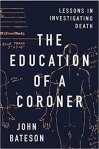
Currently reading: 1 (John Bateson’s The Education of a Coroner)
Abandoned partway through: 5
Lost interest in reading: 6
 Haven’t managed to find yet: 4 (Most keen to get hold of: Maggie O’Farrell’s I Am, I Am, I Am – it’s on my Christmas wish list, so fingers crossed!)
Languishing on my Kindle; I still have vague intentions to read: 7
That means I’ve managed to read 60% of the books I previewed for the year. Not a bad effort. The problem, of course, is that as a year goes on I inevitably find out about loads more books that had somehow escaped my attention earlier, or a book that I didn’t think I was interested in might start to gain momentum through rave reviews from other bloggers and Goodreads friends and I’ll change my mind about reading it.
A number of my most anticipated reads will show up on my Best of 2017 lists anon, while some – alas – will feature in Friday’s post on all the rest of the books I abandoned this year and the books that most disappointed me (11 out of 55 = a rather dismal 20%).
If there’s a lesson here, it’s to not trust the publisher blurbs but wait for some ordinary reader reviews to come through so I can get a better sense of whether a book is really for me.
How did you fare with your most anticipated reads for 2017?
2017 Fiction Picks from Rosemary & Reading Glasses
I asked Carolyn Oliver of Rosemary & Reading Glasses for her top fiction picks from 2017 and she came up with this list of 13 cracking recommendations. I doubt you’ll be able to resist adding at least one of these to your TBR.
Best 2017 Fiction: A Baker’s Dozen
These were my favorite works of fiction published (in the United States) in 2017, listed in the order I read them. One caveat: as I write this, there are 22 days left in 2017, so I may find another favorite; there are some heavy hitters (Jesmyn Ward’s Sing, Unburied, Sing comes to mind) that haven’t found their way to my nightstand yet.
 Human Acts, Han Kang: I admit, this book, which traces the human costs of the brutally repressed Gwanju Uprising, is difficult to read. Worth the effort, though, for its urgent questions about the nature of humanity.
 Pachinko, Min Jin Lee: A twentieth-century family saga about Korean immigrants in Japan. Expansive and richly textured.
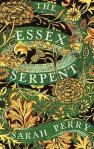 The Essex Serpent, Sarah Perry: A recently widowed natural historian and a village curate spar over rumors of a returned prehistoric serpent. Sumptuous.
 Lincoln in the Bardo, George Saunders: The resident ghosts look on with consternation as Abraham Lincoln visits their cemetery to mourn over the body of his son, Willie. Polyphonic; extraordinarily moving.
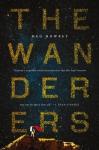 The Wanderers, Meg Howrey: Three astronauts undertake a long-term simulation of a mission to Mars, leaving their loved ones behind. Wonderful literary sci-fi, absorbing in its physical and psychological detail.
 Exit West, Mohsin Hamid: Two young lovers become part of a global migration through mysterious doors that connect locations all over the world. Intimate and tender.
 My Darling Detective, Howard Norman: A tale of family secrets set in 1970s Halifax, featuring plainspoken people and delightful use of radio drama. From my review: “noir with a spring in its step and a lilt in its voice.”
 Days Without End, Sebastian Barry: Irish immigrant Thomas McNulty chronicles his survival in the American West (and the Civil War) and his love for fellow soldier John Cole. Fearsomely beautiful.
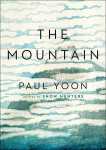 The Mountain, Paul Yoon: Six exquisite short stories, set in different locations over the past 100 years, from a master of the form.
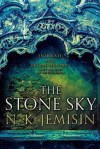 The Stone Sky, N. K. Jemisin: The blistering final book in Ms. Jemisin’s stunning Broken Earth trilogy (must be read in order, so start with The Fifth Season if you’re new to the series). Superb speculative fiction.
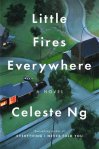 Little Fires Everywhere, Celeste Ng: The complexities of race, class, and motherhood swirl in a Cleveland suburb (my hometown) in this deft, compassionate novel.
 Her Body and Other Parties, Carmen Maria Machado: Short stories grounded in the body but shot through with elements of horror and fantasy. Won’t take it easy on you, but you won’t want to stop reading, either. Brilliant.
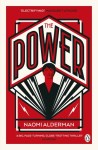 The Power, Naomi Alderman: Women harness a power within themselves that turns the tables on men. Atwoodian dystopia at its finest.
A huge thank-you to Carolyn for this guest blog!
Which one of her picks do you want to read first?
Young Writer of the Year Award Ceremony
Yesterday evening all of us on the Sunday Times / Peters Fraser + Dunlop Young Writer of the Year Award shadow panel met up again for the official prize-giving ceremony at the London Library.
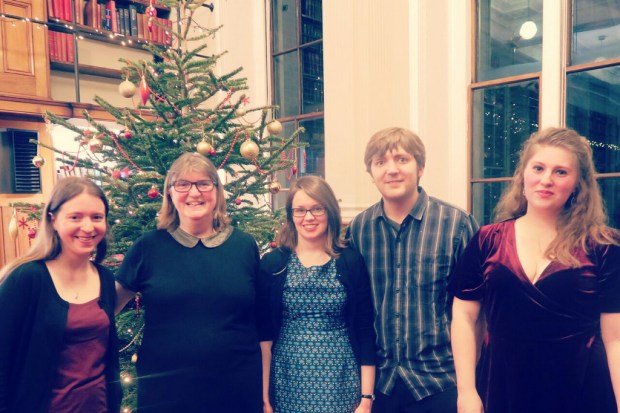
My train arrived late and then I got lost, twice (I don’t own a smartphone and hadn’t brought a map – foolish!), so I walked through the door just moments before the prize announcement, but as that was the most important part of the event it didn’t matter in the end. If you haven’t already heard, the prize went to Sally Rooney for Conversations with Friends. She’s the first Irish winner and the joint youngest along with Zadie Smith.

This did not really come as a surprise to the shadow panel, even though we unanimously chose Julianne Pachico’s The Lucky Ones as our winner.
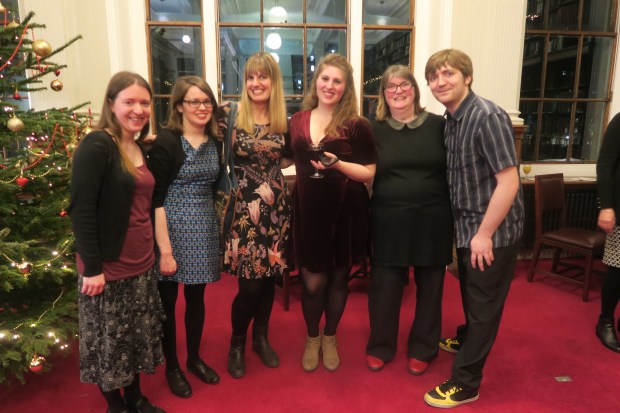
Julianne Pachico is third from left.
Three of us had chosen Rooney’s novel as our runner-up, and when I saw it appear in the Times’ Books of the Year feature, I thought to myself that this was probably a clue. In the official press release, judge and Sunday Times literary editor Andrew Holgate writes, “for line by line quality, emotional complexity, sly sophistication and sheer brio and enjoyment, Sally Rooney’s Conversations with Friends really stood out.”


Judge Elif Shafak states, “I salute Rooney’s intelligent prose, lucid style, and fierce intensity.” Judge Lucy Hughes-Hallett says, “This book stood out for its glittering intelligence, its formal elegance and its capacity to grip the reader. At first reading I was looking forward to bus journeys so that I could read some more. Second time round I was still delighted by the sophistication of its erotic quadrille.”


Being a part of the shadow panel was a wonderful experience and one of the highlights of my literary year.
Christmas Gift Recommendations for 2017
Something tells me my readers are the sort of people who buy books for their family and friends at the holidays. Consider any rating of 3.5 or above on this blog a solid recommendation; 3 stars is still a qualified recommendation, and by my comments you should be able to tell whether the book would be right for you or a friend. I’ll make another plug for the books I’ve already mentioned here as gift ideas and highlight other books I think would be ideal for the right reader. I read all these books this year, and most were released in 2017, but I have a few backlist titles, too – in those cases I’ve specified the publication year. Since I recommend fiction all the time through my reviews, I’ve given significantly more space to nonfiction.
General suggestions:
 For the Shiny New Books Christmas special I chose two books I could see myself giving to lots of people. One was A Glorious Freedom: Older Women Leading Extraordinary Lives by Lisa Congdon, my overall top gift idea. It’s a celebration of women’s attainments after age 40, especially second careers and late-life changes of course. There’s a lively mixture of interviews, first-person essays, inspirational quotes, and profiles of figures like Vera Wang, Laura Ingalls Wilder and Grandma Moses, with Congdon’s whimsical drawings dotted all through. This would make a perfect gift for any woman who’s feeling her age, even if that’s younger than 40. (An essay on gray hair particularly hit home for me.) It’s a reminder that great things can be achieved at any age, and that with the right attitude, we will only grow in confidence and courage over the years. (See my full Nudge review.)
 One Year Wiser: An Illustrated Guide to Mindfulness by Mike Medaglia
Drawn like an adult coloring book, this mindfulness guide is divided into color-block sections according to the seasons and tackles themes like happiness, gratitude, fighting anxiety and developing a healthy thought life. The layout is varied and unexpected, with abstract ideas represented by bodies in everyday situations. It’s a fresh delivery of familiar concepts.


My thanks to SelfMadeHero for the free copy for review.
An Almost Perfect Christmas by Nina Stibbe
 With its short chapters and stocking stuffer dimensions, this is a perfect book to dip into over the holidays. The autobiographical pieces involve Stibbe begrudgingly coming round to things she’s resisted, from Slade’s “Merry Xmas Everybody” to a flaming Christmas pudding. The four short stories, whether nostalgic or macabre, share a wicked sense of humor. You’ll also find an acerbic shopping guide and – best of all – a tongue-in-cheek Christmas A-to-Z. Nearly as funny as Love, Nina. (I reviewed this for the Nov. 29th Stylist “Book Wars” column.)
For some reason book- and nature-themed books seem to particularly lend themselves to gifting. Do you find that too?
For the fellow book and word lovers in your life:
 The Diary of a Bookseller by Shaun Bythell
It’s a pleasure to spend a vicarious year running The Book Shop in Wigtown, Scotland with the curmudgeonly Bythell. I enjoyed the nitty-gritty details about acquiring and pricing books, and the unfailingly quirky customer encounters. This would make a great one-year bedside book. (See my full review.)
The Cabinet of Linguistic Curiosities: A Yearbook of Forgotten Words by Paul Anthony Jones
 Another perfect bedside book: this is composed of daily one-page entries that link etymology with events from history. I’ve been reading it a page a day since mid-October. A favorite word so far: “vandemonianism” (rowdy, unmannerly behavior), named after the penal colony of Van Diemen’s Land (Tasmania), first sighted by Europeans on 24 November 1642.
“The Gifts of Reading” by Robert Macfarlane (2016)
 This was my other Christmas recommendation for Shiny New Books. A love of literature shared with friends and the books he now gifts to students and a new generation of nature writers are the main themes of this perfect essay. First printed as a stand-alone pamphlet in aid of the Migrant Offshore Aid Station, this is just right for slipping in a stocking.
A Girl Walks into a Book: What the Brontës Taught Me about Life, Love, and Women’s Work by Miranda K. Pennington
 This charming bibliomemoir reflects on Pennington’s two-decade love affair with the work of the Brontë sisters, especially Charlotte. It cleverly gives side-by-side chronological tours through the Brontës’ biographies and careers and her own life, drawing parallels and noting where she might have been better off if she’d followed in Brontë heroines’ footsteps.
For the nature enthusiasts in your life:
 A Sand County Almanac and Sketches Here and There by Aldo Leopold
Few know how much of our current philosophy of wilderness and the human impact on the world is indebted to Aldo Leopold. This was first published in 1949, but it still rings true. A month-by-month account of life in Wisconsin gives way to pieces set everywhere from Mexico to Manitoba. Beautiful, incisive prose; wonderful illustrations by Charles W. Schwartz.
The History of Bees by Maja Lunde
 Blending historical, contemporary and future story lines, this inventive novel, originally published in Norway in 2015, is a hymn to the dying art of beekeeping and a wake-up call about the environmental disaster the disappearance of bees signals. The plot strands share the themes of troubled parenthood and the drive to fulfill one’s purpose. Like David Mitchell, Lunde juggles her divergent time periods and voices admirably. It’s also a beautifully produced book, with an embossed bee on the dust jacket and a black and gold honeycomb pattern across the spine and boards. (See my full Bookbag review.)
 Epitaph for a Peach: Four Seasons on My Family Farm by David Mas Masumoto (1995)
Masumoto is a third-generation Japanese-American peach and grape farmer in California. He takes readers on a quiet journey through the typical events of the farming calendar. It’s a lovely, meditative book about the challenges and joys of this way of life. I would highly recommend it to readers of Wendell Berry.
A Wood of One’s Own by Ruth Pavey
 This pleasantly meandering memoir, an account of two decades spent restoring land to orchard in Somerset, will appeal to readers of modern nature writers. Local history weaves through this story, too: everything from the English Civil War to Cecil Sharp’s collecting of folk songs. Bonus: Pavey’s lovely black-and-white line drawings. (See my full review.)
It’s not just books…
There are terrific ideas for other book-related gifts at Sarah’s Book Shelves and Parchment Girl.
 With this year’s Christmas money from my mother I bought the five-disc back catalogue of albums from The Bookshop Band. I crowdfunded their nine-disc, 100+-track recording project last year; it was money extremely well spent. So much quality music, and all the songs are based on books. I listen to these albums all the time while I’m working. I look forward to catching up on older songs I don’t know. Check out their Bandcamp site and see if there’s a physical or digital album you’d like to own or give to a fellow book and music lover. They played two commissioned songs at the launch event for The Book of Dust: La Belle Sauvage, so if you’re a Philip Pullman fan you might start by downloading those.
Would you like to give – or get – any of my recommendations for Christmas?
December Reading Plans & Year-End Goals
Somehow the end of the year is less than four weeks away, so it’s time to start getting realistic about what I can read before 2018 begins. I wish I was the sort of person who was always reading books 4+ months before the release date and setting trends, but I’ve only read three 2018 releases so far, and it’s doubtful I’ll get to more than another handful before the end of the year. Any that I do read and can recommend I will round up briefly in a couple weeks or so.
I’m at least feeling pleased with myself for resuming and/or finishing all but two of the 14 books I had on hold as of last month; one I finally DNFed (The Unseen by Roy Jacobsen) and another I’m happy to put off until the new year (Paradise Road: Jack Kerouac’s Lost Highway and My Search for America by Jay Atkinson – since he’s recreating the journey taken for On the Road, I should look over a copy of that first). Ideally, the plan is to finish all the books I’m currently reading to clear the decks for a new year.
Some other vague reading plans for the month:
I might do a Classic of the Month (I’m currently reading The Awakening by Kate Chopin) … but a Doorstopper isn’t looking likely unless I pick up Hillary Clinton’s Living History. However, there are a few books of doorstopper length pictured in the piles below.
Christmas-themed books. The title-less book with the ribbon is Seven Days of Us by Francesca Hornak, a Goodreads giveaway win. I think I’ll start that plus the Amory today since I’m going to a carol service this evening. On Kindle: A Very Russian Christmas, a story anthology I read about half of last year and might finish this year.
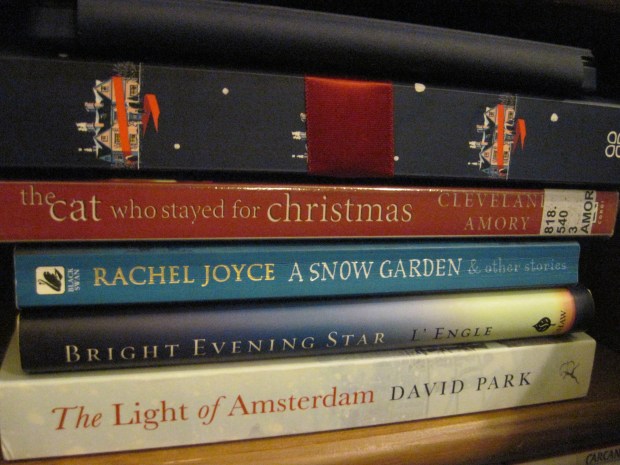
Winter-themed books. On Kindle: currently reading When the Professor Got Stuck in the Snow by Dan Rhodes; Winter by Karl Ove Knausgaard is to be read. (The subtitle of Spufford’s book is “Ice and the English Imagination”.)
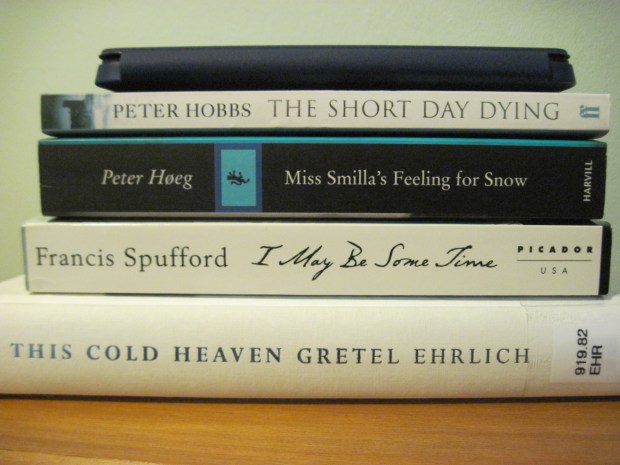
As the holidays approach, I start to daydream about what books I might indulge in during the time off. (I’m giving myself 11 whole days off of editing, though I may still have a few paid reviews to squeeze in.) The kinds of books I would like to prioritize are:
Absorbing reads. Books that promise to be thrilling (says the person who doesn’t generally read crime thrillers); books I can get lost in (often long ones). On Kindle: The Bear and the Nightingale by Katherine Arden.
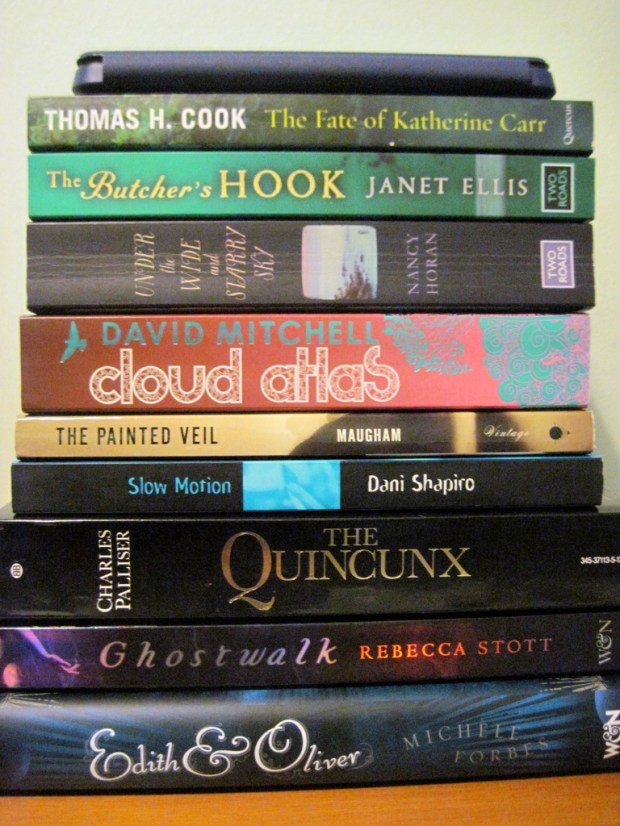
Cozy reads. Animal books, especially cat books, generally fall into this category, as do funny books and children’s books. My mother and I love Braun’s cat mysteries; I read them all starting when I was about 11. I’ve never reread any, so I’d like to see how they stand up years later. Goodreads has been trying to recommend me Duncton Wood for ages, which is funny as I’ve had my eye on it anyway. My husband read the series when he was a kid and we still own some well-worn copies. Given how much I loved Watership Down and Brian Jacques’ novels as a child, I’m hoping it’s a pretty safe bet.

Books I’ve been meaning to read for ages. ’Nuff said. On Kindle: far too many.

And, as always, I’m in the position of wishing I’d gotten to many more of this year’s releases. In fact, there are at least 22 books from 2017 on my e-readers that I still intend to read:
- A Precautionary Tale: How One Small Town Banned Pesticides, Preserved Its Food Heritage, and Inspired a Movement by Philip Ackerman-Leist
- In the Midst of Winter by Isabel Allende
 The Floating World by C. Morgan Babst
- The Day that Went Missing by Richard Beard
- The Best American Series taster volume (skim only?)
- The Heart’s Invisible Furies by John Boyne*
- Guesswork: A Memoir in Essays by Martha Cooley
- The Night Brother by Rosie Garland
- Difficult Women by Roxane Gay
- The Twelve-Mile Straight by Eleanor Henderson
- Eco-Dementia by Janet Kauffman [poetry]
- The Rules Do Not Apply by Ariel Levy
- A Stitch of Time: The Year a Brain Injury Changed My Language and Life by Lauren Marks
- Hug Everyone You Know: A Year of Community, Courage, and Cancer by Antoinette Truglio Martin
 Homing Instinct: Early Motherhood on a Midwestern Farm by Sarah Menkedick
- One Station Away by Olaf Olafsson
- Ghosts of the Tsunami: Death and Life in Japan’s Disaster Zone by Richard Lloyd Parry
- Memory’s Last Breath: Field Notes on My Dementia by Gerda Saunders
- See What I Have Done by Sarah Schmidt
- What She Ate: Six Remarkable Women and the Food That Tells Their Stories by Laura Shapiro
- Midnight at the Bright Ideas Bookstore by Matthew J. Sullivan
- Sing, Unburied, Sing by Jesmyn Ward*
* = The two I most want to read, and thus will try hardest to get to before the end of the year. But the Boyne sure is long.
[The 2017 book I most wanted to read but never got hold of in any form was The Resurrection of Joan Ashby by Cherise Wolas.]
Are there any books from my stacks or lists that you want to put in a good word for?
How does December’s reading look for you?
November’s Novellas: A Wrap-Up
Yesterday was my husband’s birthday. Baking him the world’s most complicated cake on Wednesday evening and taking Thursday off for a birthday outing to Salisbury for the Terry Pratchett exhibit at the town’s museum and the Christmas-decorated rooms at Mompesson House are my collective excuse for not writing up the last of November’s novellas until now.


For the most part I had a great time reading novellas last month. However, there were three I abandoned: Mornings in Mexico by D.H Lawrence (p. 11), whose random, repetitive observations lead to no bigger picture; So Long, See You Tomorrow by William Maxwell (p. 28), which is understated to the point of nothing really happening; and Jaguars and Electric Eels by Alexander von Humboldt (p. 6), which has that dry old style that’s hard to engage with. (I’ll plan to encounter snatches of his writing via Andrea Wulf’s biography instead.)
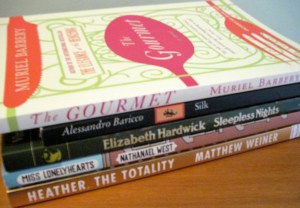 To my disappointment, I find I can’t make generalizations about the correlation between a book’s page count and its quality: a great book stands out no matter its length. But as Joe Hill (Stephen King’s son) said of his latest work, a set of four short novels, a novella should be “all killer, no filler.” Three of the five I review today definitely meet those criteria, impressing me with the literal and/or emotional ground covered.
Below are the novellas I didn’t manage to get to this past November. Perhaps they’ll hang around until next year, unless I get a burning urge to read one or more of them before then:
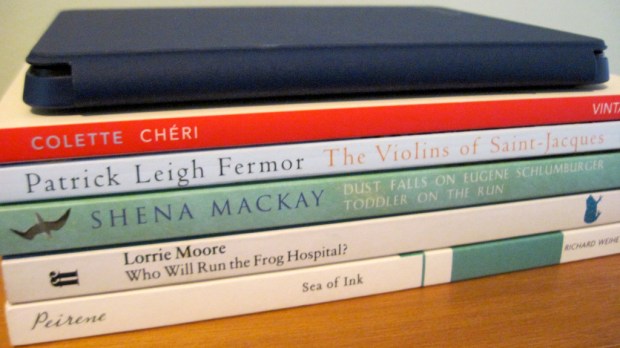
(On the Kindle: Record of a Night Too Brief by Hiromi Kawakami and Spring Garden by Tomoka Shibasaki.)
The Gourmet by Muriel Barbery
(translated from the French by Alison Anderson)
[112 pages]
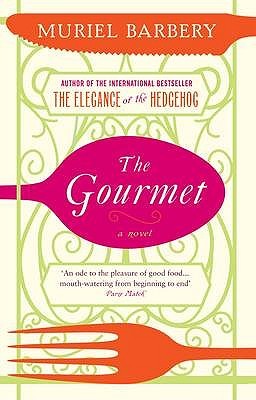 Pierre Arthens, France’s most formidable food critic, is on his deathbed reliving his most memorable meals and searching for one elusive flavor to experience again before he dies. He’s proud of his accomplishments – “I have covered the entire range of culinary art, for I am an encyclopedic esthete who is always one dish ahead of the game” – and expresses no remorse for his affairs and his coldness as a father. This takes place in the same apartment building as The Elegance of the Hedgehog and is in short first-person chapters narrated by various figures from Arthens’ life. His wife, his children and his doctor are expected, but we also hear from the building’s concierge, a homeless man he passed every day for ten years, and even a sculpture in his study. I liked Arthens’ grandiose style and the descriptions of over-the-top meals but, unlike the somewhat similar The Debt to Pleasure by John Lanchester, this doesn’t have much of a payoff.
A favorite passage:
“After decades of grub, deluges of wine and alcohol of every sort, after a life spent in butter, cream, sauce, and oil in constant, knowingly orchestrated and meticulously cajoled excess, my trustiest right-hand men, Sir Liver and his associate Stomach, are doing marvelously well and it is my heart that is giving out.”
Silk by Alessandro Baricco
(translated from the Italian by Guido Waldman)
[104 pages]
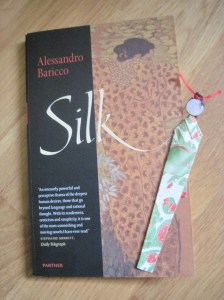 The main action is set between 1861 and 1874, as married French merchant Hervé Joncour makes four journeys to and from Japan to acquire silkworms. “This place, Japan, where precisely is it?” he asks before his first trip. “Just keep going. Right to the end of the world,” Baldabiou, the silk mill owner, replies. On his first journey, Joncour is instantly captivated by his Japanese advisor’s concubine, though they haven’t exchanged a single word, and from that moment on nothing in his life can make up for the lack of her. At first I found the book slightly repetitive and fable-like, but as it went on I grew more impressed with the seeds Baricco has planted that lead to a couple of major surprises. At the end I went back and reread a number of chapters to pick up on the clues. I’d had this book recommended from a variety of quarters, first by Karen Shepard when I interviewed her for Bookkaholic in 2013, so I’m glad I finally found a copy in a charity shop.
Sleepless Nights by Elizabeth Hardwick
[151 pages]
 Hardwick’s 1979 work is composed of (autobiographical?) fragments about the people and places that make up a woman’s remembered past. Elizabeth shares a New York City apartment with a gay man; lovers come and go; she mourns for Billie Holiday; there are brief interludes in Amsterdam and other foreign destinations. She sends letters to “Dearest M.” and back home to Kentucky, where her mother raised nine children. (“My mother’s femaleness was absolute, ancient, and there was a peculiar, helpless assertiveness about it. … This fateful fertility kept her for most of her life under the dominion of nature.”) There’s some astonishingly good writing here, but as was the case for me with Jenny Offill’s Dept. of Speculation, I couldn’t quite see how it was all meant to fit together.
Some favorite passages:
“The stain of place hangs on not as a birthright but as a sort of artifice, a bit of cosmetic.”
“The bright morning sky that day had a rare and blue fluffiness, as if a vacuum cleaner had raced across the heavens as a weekly, clarifying duty.”
“On the battered calendar of the past, the back-glancing flow of numbers, I had imagined there would be felicitous notations of entrapments and escapes, days in the South with their insinuating feline accent, and nights in the East, showing a restlessness as beguiling as the winds of Aeolus. And myself there, marking the day with an I.”
Miss Lonelyhearts by Nathanael West
[110 pages]
 West was a contemporary of F. Scott Fitzgerald; in fact, the story goes that when he died in a car accident at age 37, he had been rushing to Fitzgerald’s wake, and the friends were given adjoining rooms in a Los Angeles funeral home. Like The Great Gatsby, this is a very American tragedy and state-of-the-nation novel. “Miss Lonelyhearts” (never given any other name) is a male advice columnist for the New York Post-Dispatch. His letters come from a pitiable cross section of humanity: the abused, the downtrodden, the unloved. Not surprisingly, the secondhand woes start to get him down (“his heart remained a congealed lump of icy fat”), and he turns to drink and womanizing for escape. Indeed, I was startled by how explicit the language and sexual situations are; this doesn’t feel like a book from 1933. West’s picture of how beleaguered compassion can turn to indifference really struck me, and the last few chapters, in which a drastic change of life is proffered but then cruelly denied, are masterfully plotted. The 2014 Daunt Books reissue has been given a cartoon cover and a puff from Jonathan Lethem to emphasize how contemporary it feels.
Heather, the Totality by Matthew Weiner
[134 pages]
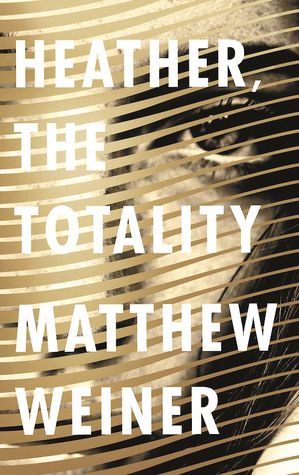 This was very nearly a one-sitting read for me: Clare gave me a copy at our Sunday Times Young Writer Award shadow panel decision meeting and I read all but a few pages on the train home from London. Famously, Matthew Weiner is the creator of Mad Men, but instead of 1960s stylishness this debut novella is full of all-too-believable creepiness and a crescendo of dubious decisions. Mark and Karen Breakstone have one beloved daughter, Heather. We follow them for years, getting little snapshots of a normal middle-class family. One summer, as their New York City apartment building is being renovated, the teenaged Heather catches the eye of a construction worker who has a criminal past – as we’ve learned through a parallel narrative about his life. I had no idea what I would conclude about this book until the last few pages; it was all going to be a matter of how Weiner brought things together. And he does so really satisfyingly, I think. It’s a subtle, Hitchcockian story, and that title is so sly: We never get the totality of anyone; we only see shards here and there – something the cover portrays very well – and make judgments we later have to rethink.
Have you read any of these novellas? Which one takes your fancy?
Sunday Times Young Writer of the Year Award: Shadow Panel Winner & Giveaway
After a month of reading, reviewing, thinking and discussing, our shadow panel has come to a unanimous decision. Our winner is Julianne Pachico for The Lucky Ones. (My full review is here.)

We were all blown away by this linked short story collection set largely in Colombia. The way the whole book fits together, with story building on story, is so sophisticated, and at the sentence level the writing is nigh on flawless. Here’s a glimpse of what the rest of the shadow panel had to say, with links to their full reviews:
“However you style it, this collection is stunningly good and marks the debut of a young author to watch.” (Annabel)
“Pachico’s writing exhibits a surreal power and I’m looking forward to reading what she writes next.” (Clare)
“Pachico’s writing is stunning, and just the way she strings sentences together was a joy to behold.” (Dane)
“Throughout the collection, the sense of something being off-kilter competes with an evocation of place and atmosphere so strong that the book practically creates its own weather.” (Eleanor)

Clare, Eleanor, Rebecca, Annabel and Dane. Photo by Maddy Pickard.
In the run-up to the official awards ceremony on December 7th, we are giving our blog readers a chance to be one of five overall winners, each of whom can choose which one of the shortlisted books they’d like to have sent to them. (The other options are Outlandish Knight by Minoo Dinshaw, The End of the Day by Claire North, Conversations with Friends by Sally Rooney, and The Lauras by Sara Taylor.)
*Note: Unfortunately, this giveaway is limited to entries from the UK and Ireland. All entries must be received by the end of December 6th.*
Click on the Rafflecopter link below to get to the entry screen:
a Rafflecopter giveaway
https://widget-prime.rafflecopter.com/launch.js
Library Checkout: November 2017
This month I’ve mostly been reading Sunday Times Young Writer Award nominees and novellas from my own shelves, but I sneaked in a handful of library reads via some novellas and poetry collections, plus the Iris Murdoch readalong. I’ve added in star ratings and links to reviews of those books I haven’t already featured on the blog in some way.
Most of the books I got out from the university library last month are still hanging around and will continue to provide me with some varied reading through Christmas. I’m especially keen to try Janet Frame and Oliver Sacks for the first time, and This Cold Heaven can’t fail to be an appropriate read for the winter months! Believe it or not, but I have never read The Catcher in the Rye, so I just have to decide the right time to finally experience it.
[I haven’t yet figured out a (free) dedicated link-up system, so if you do take part in Library Checkout please just leave a link to your blog in the comments.]

LIBRARY BOOKS READ
- We Should All Be Feminists by Chimamanda Ngozi Adichie
- Special Exits: A Graphic Memoir by Joyce Farmer [university library]

- Fathom [poetry] by Jenny Lewis

- Under the Net by Iris Murdoch
- First Love by Gwendoline Riley
- Halfway to Silence: Poems by May Sarton [university library]
- Endpoint and Other Poems by John Updike
SKIMMED ONLY
- The Ultimate Freelancer’s Guidebook by Yuwanda Black

CHECKED OUT, TO BE READ
Public library:
- The Cat Who Stayed for Christmas by Cleveland Amory
- Fresh Complaint: Stories by Jeffrey Eugenides
- Our Endless Numbered Days by Claire Fuller
University library:
- Herzog by Saul Bellow
- This Cold Heaven: Seven Seasons in Greenland by Gretel Ehrlich
- To the Is-land: An Autobiography by Janet Frame
- Howl, Kaddish and Other Poems by Allen Ginsberg
- Vita Nova [poetry] by Louise Glück
- The Cabaret of Plants: Botany and the Imagination by Richard Mabey
- There Is an Anger that Moves [poetry] by Kei Miller
- And When Did You Last See Your Father? by Blake Morrison
- The Man Who Mistook His Wife for a Hat by Oliver Sacks
- The Catcher in the Rye by J.D. Salinger
- The Magnificent Spinster by May Sarton
- Spirals in Time: The Secret Life and Curious Afterlife of Seashells by Helen Scales
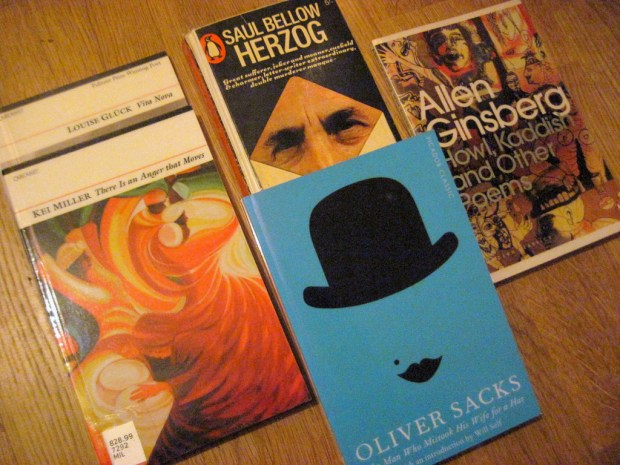
A selection of the university library books on my pile.
RETURNED UNFINISHED
- So Long, See You Tomorrow by William Maxwell [university library]
- Jaguars and Electric Eels by Alexander von Humboldt [university library]
 Bookish Beck = Rebecca Foster. American transplant to England. Freelance proofreader and book reviewer.
