Six Books I Abandoned Recently
Are they not criminals, books that have wasted our time and sympathy, are they not the most insidious enemies of society, corrupters, defilers, the writers of false books, faked books, books that fill the air with decay and disease?
Strong words there, from Virginia Woolf in “How Should One Read a Book?” I’m not quite so fervently opposed to these six books I abandoned recently, but I do share Woolf’s feeling of having had my time wasted. Particularly since I started as a freelance book reviewer, I’ve noticed that I am not very patient with my leisure reading: if a book doesn’t totally grab me and keep me turning the pages with rapt interest, I’m more likely to leave it unfinished. Better if I can do that before spending too much time with a book, but sometimes I approach the halfway point before finally giving up.
Below I give brief write-ups of the abandonees. I’d be interested to hear if you’ve read any of them and thought they were worth persisting with.
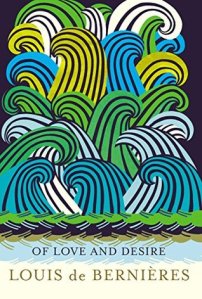 Of Love and Desire by Louis de Bernières
Like so many, I enjoyed Captain Corelli’s Mandolin but haven’t tried much else from de Bernières. These are love poems: many of them Greek-influenced; most of them sentimental and not very interesting. I marked out one passage I liked, but even it then turns into a clichéd relationship poem: “I looked behind and saw the long straight line of my mistakes, / Faithful as hounds, their eyes alert, trailing in my wake. But / They weren’t dogs, they were women, some fair, some dark …” (from “Mistakes”). [Read the first 25 pages.]
My rating: 
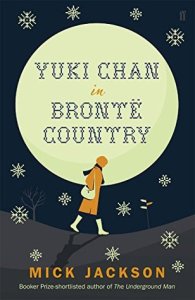 Yuki Chan in Brontë Country by Mick Jackson
The premise for this one – young Japanese woman visits the Brontë sites in Yorkshire as a way of reconnecting with her departed mother – sounded so interesting, but the third-person narration is very flat and detached. It makes Yuki and all the other characters seem like stereotypes: the fashion-obsessed Asian girl, the horde of Japanese tourists. I also noticed that far too many sentences and paragraphs start with “She.” I couldn’t be bothered to see how it would turn out. [Read the first 26%.]
My rating:
 Shylock Is My Name by Howard Jacobson
I’d read Jacobson’s three most recent novels and liked them all well enough. He’s certainly your go-to author if you want a witty discussion of the modern Jewish “persecution complex.” I think the problem with this one was that I wasn’t sure what it wanted to be: a contemporary Jewish novel, or a Hebrew fable, or some mixture thereof. Shylock is pretty much dropped in as is from The Merchant of Venice, so it’s unclear whether he’s Strulovitch’s hallucination or a time traveler or what. The exasperated father characters are well drawn, but their flighty daughters less so. I just got to a point where I didn’t care at all what happened next, which to me was the sign to give up and move on to something else. [Read the first 43%.]
My rating:
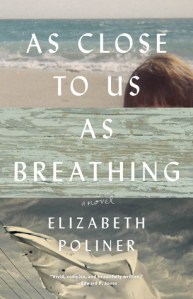 As Close to Us as Breathing by Elizabeth Poliner
The writing is measured and lovely, and I appreciated the picture of late-1940s life for a Jewish family, but the pace was killing me: this is set in one summer, but with constant flashbacks and flash-forwards to other family stories, such that although we learn on page 1 that a character has died, even by the 60% mark I still had not learned how. Also, the narrator is telling everything in retrospect from 1999, but there is too little about her life at that present moment. I would direct readers to Elizabeth Graver’s The End of the Point instead. [Read the first 60%.]
My rating: 
 The Book of Aron by Jim Shepard
I’d read such rave reviews of this novel set in the Warsaw ghetto during the Second World War, and I’ve always meant to try something by Jim Shepard, so this seemed an ideal place to start. I decided to stop because although this is a fairly believable child’s voice, it is only being used to convey information. To me the spark of personality and the pull of storytelling are lacking. I felt like I was reading a history book about the Holocaust, subtly tweaked (i.e. dumbed down and flattened) to sound like it could be a child’s observations. [Read the first 53 pages.]
My rating: 
 Georgia by Dawn Tripp
Who doesn’t love Georgia O’Keeffe’s dreamy paintings of flowers and southwestern scenes? Initially I loved her tough-as-nails voice in this fictionalized autobiography, too, but as the story wore on it felt like she was withholding herself to some degree, only giving the bare facts of (dry, repetitive) everyday life and (wet, repetitive) sex scenes with 24-years-her-elder photographer Alfred Stieglitz. Call me impatient, but I couldn’t be bothered to stick around to see if something actually happened in this novel. I think I’d be interested in glancing through O’Keeffe and Stieglitz’s correspondence, though, just to see how the voices compare to what Tripp has created here. [Read the first 48%.]
My rating:
Book Thing of Baltimore Update
Back in December I shared my excitement upon discovering The Book Thing of Baltimore on a trip back to visit my family in the States. Run entirely through volunteers and donations, it’s an unassuming warehouse where you can go and get as many FREE books as you want. I was in heaven there, as you might imagine.
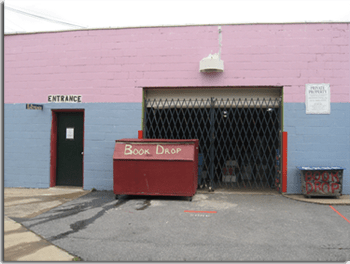
The unassuming shop front for Book Thing. (From their website)
Well, on March 2nd Book Thing suffered a fire that has temporarily closed it down. Books + fire = incredibly sad. Their space is currently unusable and much of the stock was destroyed.
Here’s a great LitHub article about Book Thing and the post-fire strategy. Clean-up efforts are still underway and it’s unclear how soon they can think about reopening.
If you’re local, keep an eye on their Facebook page to see how you can help out. Or, no matter where you are, you can join me in giving a donation via their home page.
“Our mission is to put unwanted books into the hands of those who want them,” they say. I hope they’ll be able to do just that again very soon.
Reviews Roundup, February–March
One of my goals with this blog was to have one convenient place where I could gather together all my writing that appears in disparate online locations. To that end, once a month I provide links to all book reviews I’ve published elsewhere, with a rating (below each description) and a taster so you can decide whether to read more. A few exceptions: I don’t point out my Kirkus Indie, BlueInk or Publishers Weekly reviews since I don’t get a byline. Meanwhile, I’ve done my first article for the Los Angeles Review of Books – exciting!
The Bookbag
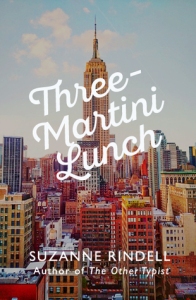
Three-Martini Lunch by Suzanne Rindell: Brings the late 1950s, specifically the bustling, cutthroat New York City publishing world, to life through the connections between three young people who collide over a debated manuscript. The three first-person voices fit together like a dream. It’s an expert evocation of Beat culture and post-war paranoia over Communism and homosexuality. Walking into Eden’s office, especially, you’ll think you’ve landed on the set of Mad Men. This classy, well-plotted follow-up will win Rindell even more fans and tide us all over until the film version of The Other Typist – produced by and starring Keira Knightley – appears. Releases May 19th in the UK.

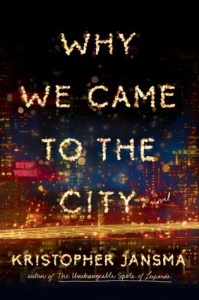 Why We Came to the City by Kristopher Jansma: Five university friends strive to make their lives count against the indifferent backdrop of recession-era New York City. When one of them falls ill, they pull together like a family. The tone of the novel lies somewhere between A Little Life and the sitcom Friends (a Mexican version of which the characters watch obsessively). Even as his characters realize that they are not special and not in control of their lives, Jansma never lets his book descend too far into gloom. Narrowly misses out on 5 stars from me because the storyline loses momentum in Part Two. Rich with emotion and literary allusions (from Walden to The Iliad), this is my favorite novel of the year so far.
Waltzing in Vienna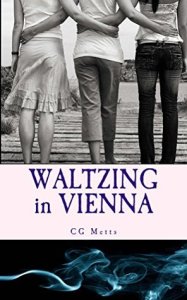 by C.G. Metts (& interview): Three girlfriends – a singer staging a comeback, a psychology professor reawakening to sexuality after being widowed, and a socialite Southern Belle – are reunited in Charleston, South Carolina in their early forties. Remembering their wild college days, they wonder how to make midlife count. There’s a fun Sex and the City or Ya-Ya Sisterhood vibe to this recommended debut novel. I liked the mixture of nostalgia and gentle feminism, and I think this may also inspire readers to see South Carolina’s coastal landscape for themselves. The title phrase is the friends’ shorthand for smoking marijuana together.

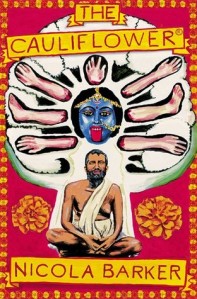 The Cauliflower® by Nicola Barker: Put simply, this is a fictionalized biography of the largely illiterate Hindu guru Sri Ramakrishna (1836–1886). That may sound dry as dust, but Barker makes it a playful delight by skipping around in time and interspersing aphorisms, imagined film scenes, questions and answers, and even a recipe with the narrative chapters. The kernel of the story – set in 1857 at the Dakshineswar Kali Temple, six miles north of Calcutta – is narrated in the first person by the guru’s nephew, Hriday. Scripture of all types (the Bible is also cited) is a relevant, joyful echo here rather than a dull set of rules. Bizarre but very readable. Releases April 21st.
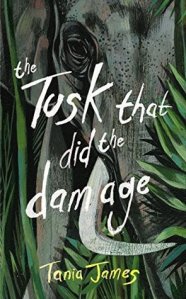 The Tusk That Did the Damage by Tania James: This composite picture of the state of wildlife conservation in India is told from three perspectives: an elephant named the Gravedigger, a poacher, and a documentary filmmaker. James ably intersperses three voices as she explores how people fail to live up to their ideals and make harmful assumptions. Despite these attributes, it was one of those books I had to force myself through. Perhaps it was the environmental agenda: if a book is going to wear its message so openly, it has to live up to it in terms of the writing. I might have preferred it if the whole novel had been from Emma’s point of view, with one climactic encounter with the Gravedigger to make the poaching question immediate and not simply academic.

BookBrowse
Dog Run Moon: Stories by Callan Wink [subscription service]: Wink’s debut story collection, set mostly under Montana’s open skies, stars a motley cast of aimless young men, ranchers, Native Americans, and animals live and dead. He plays around with Western stereotypes in intriguing ways. A few of the tales are a bit less compelling, and I would have preferred more variety in narration (8 of 9 are third person), but the stand-outs more than make up for it. My two favorites were “Runoff” (there’s a double meaning to the title) and “Exotics,” in which all the characters are lured by the life they don’t currently have.
 For Books’ Sake
Interview with Rachel B. Glaser, author of Paulina & Fran [my review of which was in last month’s roundup]
Foreword Reviews
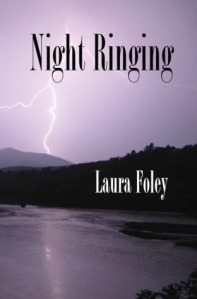 Night Ringing by Laura Foley: Foley’s strong fifth collection ruminates on romance and family via autobiographical free verse. One of the collection highlights is “In the Honda Service Area,” which unexpectedly unites modern technology with ancient literature. While a woman describes her impending hip replacement surgery to a friend, Foley tries to concentrate on Homer’s Iliad. The collection is dedicated to Foley’s partner, Clara Giménez, and lesbian romance is a subtle undercurrent. Especially recommended for fans of Jane Hilberry and Adrienne Rich.
The Temple of Paris by Laura DeBruce: This second volume in Laura DeBruce’s Quicksilver Legacy trilogy is a fast-paced fantasy adventure novel. In the previous book, the author introduced the “Immortals,” centuries-old creatures who are impervious to disease and aging due to a magic elixir. If Hana, the teenage protagonist, can learn how to use the elixir in her possession correctly, she can save her mother from a potentially fatal blood disorder. Although the complicated plot might be challenging for those new to the series, older teens will appreciate the rollicking story and the chance for vicarious European sightseeing.
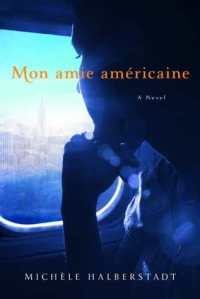 Mon amie américaine by Michèle Halberstadt: After years of heavy smoking and migraines, a brain aneurysm plunges forty-year-old Molly into a coma. The novel is presented as Michèle’s confessional letter to her American friend Molly, addressed in the second person. During Molly’s coma and after she wakes up, Michèle ponders their unlikely friendship and also frets over her threatened marriage. The novella is like a cross between Jenny Offill’s Dept. of Speculation and Jean-Dominique Bauby’s The Diving-Bell and the Butterfly, and bears tantalizing traces of deliberate homage to Pedro Almodóvar’s coma-themed Talk to Her: an understated dual account of betrayal and disability.
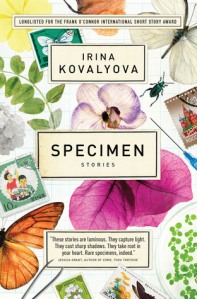 Specimen: Stories by Irina Kovalyova: “People like to pretend that our genes define the truth for us. But I assure you that’s not the case,” a character insists in the title story. Diverse in setting and form, these nine stories, long-listed for the Frank O’Connor International Short Story Award, contrast the scientific understanding of genetics with deeper wisdom about the bonds of love and family. Nestling science into rich psychological narratives, Kovalyova’s work is reminiscent of that of Andrea Barrett and A. S. Byatt; in fact, the latter is directly referenced in one story. She also channels Anthony Marra and Adam Johnson by affirming love’s survival in spite of repressive situations.
Of Crime and Passion by Jonathan Harnisch: In this novella, a proud young man seeks to transcend his underprivileged upbringing by worming his way into the homes of the rich and seducing powerful women. At its heart, the book is about the ongoing conflict between economic and social classes. With the melodramatic action and old-fashioned dialogue, though, it is easy to imagine this coming-of-age tale working better in the form of a play.
Hakai Magazine
(a Canadian publication highlighting coastal ecosystems)
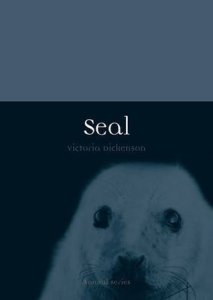 Seal by Victoria Dickenson: “It is hard to imagine a creature more distant from the human species in bodily form, habits, and habitat than the seal,” Dickenson writes in her introduction, “yet our mutual regard tells of a long, shared history of interaction.” Seal is the latest in the 80-strong Animal series from Reaktion Books. Like other volumes, this gives a brief discussion of the featured animal’s evolutionary biology, followed by an interdisciplinary survey of how it has entered human culture throughout history. In the final two chapters—the highlight of an occasionally dry book—Dickenson gives a balanced account of the history of hunting seals.
Los Angeles Review of Books
“Rediscovering an Overlooked Woman Novelist”: A dual review of Constance Fenimore Woolson: Portrait of a Lady Novelist by Anne Boyd Rioux () and Miss Grief and Other Stories (), a new selection of Woolson’s short fiction.
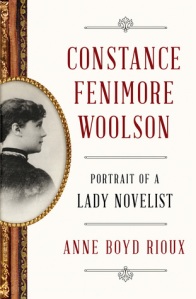
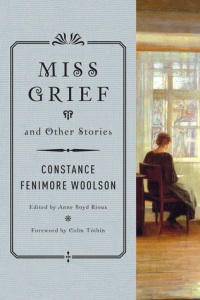 Constance Fenimore Woolson (1840–1894) is most often remembered for her connection to male writers; her great-uncle was pioneering American novelist James Fenimore Cooper, and in her later years as an expatriate in Europe she associated with Henry James, fueling rumors of a romance between them. Deserving to be known in her own right, Woolson represents key junctures between realism and regionalism, and between American and European styles. Gives a remarkable picture of a bold, bright woman who paved the way for writers such as Edith Wharton, E. M. Forster, and Willa Cather, and who arguably might be hailed in the same breath as Henry James and George Eliot.
Nudge
My quick response to Instructions for a Heatwave, for a Maggie O’Farrell retrospective: Another spot-on tale of family and romantic relationships – O’Farrell always gets the emotional tenor just right. You may spot hints of Rachel Joyce’s The Unlikely Pilgrimage of Harold Fry or Bernhard Schlink’s The Reader, but the psychological and linguistic precision is all O’Farrell’s own. Her descriptive language is unfailingly elegant. I love how she opens with the heat as the most notable character: “It inhabits the house like a guest who has outstayed his welcome: it lies along corridors, it circles around curtains, it lolls heavily on sofas and chairs.”
Pretentiousness: Why It Matters by Dan Fox: This wide-ranging essay discusses pretentiousness as it relates to class, taste, and modern art. Fox grew up outside of Oxford but now lives in New York City, where he is the co-editor of frieze. From its Latin etymology we learn that pretentious means “to stretch before,” so to hold something in front of you like a mask. He thus starts off by talking about acting techniques and rhetoric, then broadens this out to themes of authenticity and self-discovery. The most interesting part of the book concerns class connotations. This is a somewhat meandering work, and though it has good individual lines it is not always riveting.
 Third Way magazine
I’ve reviewed books, mostly fiction, for them for the last 2.5 years; sadly, the April 2016 issue will be the final one. It’s a shame; the progressive Christian perspective on popular culture is a niche it will be hard to fill.
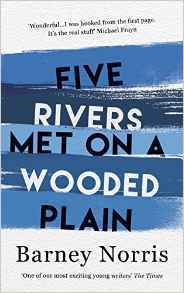
Five Rivers Met on a Wooded Plain by Barney Norris: Barney Norris is a playwright in his twenties, so it’s no surprise that there’s something a little staged to his debut novel. The lives of the book’s five narrators collide one night when a car hits a moped in Salisbury town center. We hear from each protagonist in turn as they reflect on their losses and wonder whether religion – represented by Salisbury Cathedral and the scripture and rituals of Christianity – might help. Rita is the liveliest and most engaging character, difficult as her expletive-strewn narrative might be to traverse. Like David Nicholls, Norris prizes emotional connection and delivers a theatrical plot. If he can avoid the more clichéd aspects of a novel like One Day, he could have a long career in fiction ahead of him. Releases April 21st.
I also post reviews of most of my casual reading and skimming on Goodreads:
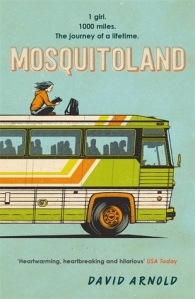 Mosquitoland by David Arnold: I don’t read a whole lot of YA, but the voice of this one captured me right away. Like Hazel in The Fault in Our Stars, Mim (Mary Iris Malone) is a lovably sarcastic oddball – she describes herself as “a young Ellen Page” à la Juno – with some hidden issues that come out over the course of the book. Here Mim’s journey takes the form of a road trip from Mississippi, where she lives with her father and new stepmother, back to Ohio to be with her sick mother. She meets a kooky cast of secondary characters along the way, narrowly escapes danger, and even gets a chance at romance.
A Change of World: Poems by Adrienne Rich: This is a forthcoming Norton reissue of Rich’s first collection from 1951. I’d always thought of her as a later, feminist poet, so it was jolting to see an introduction from W.H. Auden – that made it feel like a real generational crossover. It’s a very impressive debut, full of mannered, rhyme-rich verse. Two favorites were “Walden 1950” (“Thoreau, lank ghost, comes back to visit Concord, / Finds the town like all towns, much the same— / A little less remote, less independent”) and “The Innocents.” I’ll be interested to read some of her later work and see if she loosened up with form. Releases June 21st.
 The Shadow Hour by Kate Riordan: A clever dual-timeline novel with a pleasing Gothic flavor. In 1922 Grace Fairford takes up a governess position at Fenix House near Cheltenham, the very place where her grandmother, Harriet Jenner, worked in 1878. Every few chapters the perspective shifts from Grace (first person) to Harriet (third person). The novel is full of coincidences and the sense of history repeating itself. Riordan’s writing is capable, sometimes clichéd, but the echoes of Jane Eyre and The Turn of the Screw make this a delicious guilty-pleasure read.
Life’s Too Short to Pretend You’re Not Religious by David Dark: Etymologically, the word “religion” means to bind together again. Simply put, Dark’s thesis is that we’re all connected: we are in relationship with the people around us and can’t pretend otherwise. What we need is a shared vision for our shared life, and that involves engaging with other people. No pie-in-the-sky theology here; Dark affirms Daniel Berrigan’s assertion that “the actual world is our only world,” so things like climate change, gun control, immigration, and foreign policy are religious issues because they affect us all in this life. Together we have to imagine another story that isn’t capitalism and American imperialism as usual.
Adios, Cowboy by Olja Savičević Ivančević: In summer 2009, Dada (aka Rusty) returns to her Croatian hometown to care for her mother. Going home facing up to the fact of her brother’s death – when he was 18 he threw himself under a train. “One has to sit down beside one’s demon and mollify it until it’s calm – that’s all, perhaps, that can be done,” she muses. Now for the title: Dada’s late father, brother, and friends (“the Iroquois Brothers”) were all big on cowboys and Indians. When news comes that a spaghetti western actor/director named Ned Montgomery will be passing through town, it causes Dada to think about her father and her brother and, what’s more, about the workings of her own memory.
Now Go Out There: (and Get Curious) by Mary Karr: There’s not much to this Syracuse University commencement speech. Leftovers of sob-story autobiography and clichéd advice cobbled together. Disappointing given how much I loved Karr’s recent The Art of Memoir. For a truly inspirational graduation address, I recommend David Foster Wallace’s This Is Water.
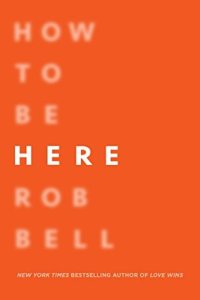 How to Be Here: A Guide to Creating a Life Worth Living by Rob Bell: Bell left his pastoral role to become a motivational speaker so, unsurprisingly, this book is closer to self-help than theology. He’s good pals with Elizabeth Gilbert, and this book would make a great companion piece to her Big Magic. It’s about how to find what gets you out of bed in the morning and live mindfully. As always, his formatting – bite-size paragraphs, stretching out phrases with line breaks – is slightly annoying. I didn’t learn a whole lot; it was more a case of being reminded of things I knew deep down. He prefaces most chapters with an anecdote about his creative ventures, some of which were utter failures.
And my highest recommendation goes to…
The Summer Guest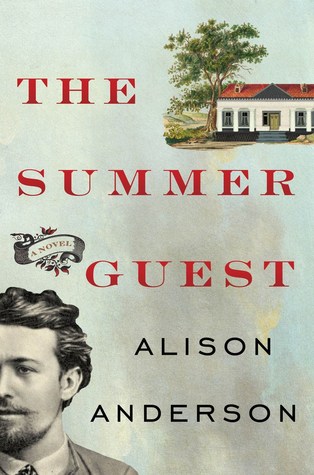 by Alison Anderson: The kernel of the novel is a true story: for two summers in the late 1880s, Chekhov stayed at the Lintvaryovs’ guest house in Luka, Ukraine. One strand of the narration is a journal kept during those years by Zinaida, the family’s eldest daughter, a doctor dying of a brain tumor. Zina’s story is offset by those of two contemporary women. Katya, a Russian émigré in London who’s trying to keep her failing publishing house afloat, sends the never-before-published diary to Ana, a translator based near the French border with Switzerland. There’s a touch of mystery here: where was the diary found? And what became of the novel Chekhov mentions he had in progress? Ana’s search for answers takes her to the Lintvaryov estate, even though Ukraine in 2014 is a hotbed of unrest. Having recently watched the BBC War & Peace miniseries with rapt interest and seen a Tchaikovsky symphony performance, it was the perfect time to get lost in an intricate, playful novel about how Russian literature still resonates. I’ll certainly be looking up Anderson’s other novels.
Girl at War Paperback Release
Next Thursday, the 24th, marks the UK paperback publication of Girl at War by Sara Nović, which I reviewed last year for BookBrowse (a subscription-only site, but you can see an excerpt of my review here). It was #3 on my list of last year’s best fiction, so I’m delighted that Little, Brown Book Group got in touch asking me to help publicize the paperback release. They created a shareable image with a snippet of my NetGalley feedback.
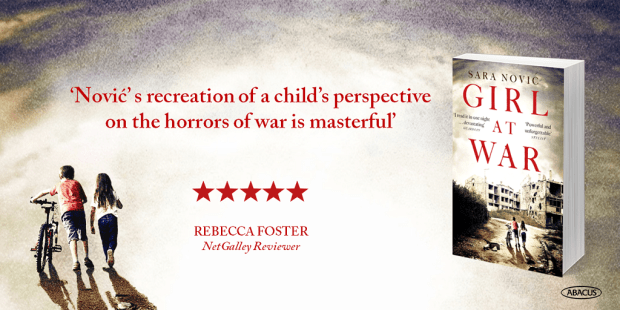
This pitch-perfect debut novel is an inside look at the Yugoslavian Civil War and its aftermath, from the perspective of a young girl caught up in the fighting. If you haven’t already read it, I encourage you to seek it out soon.
The Perils of Sedentary Work
I’ve worked from home as a freelance writer and editor for a smidge over 2.5 years now, and I think the sedentary lifestyle is just starting to catch up with me in terms of my health. Now, it’s not like my previous library assistant job was particularly high-impact, but it at least meant a walk to the local train station, a walk on the other end from the London terminus to my building, daily activity in the form of shelving, errands on foot during my lunch break, and then the commute in reverse.
These days, with the exception of a weekly walk to the grocery store (0.6 mile away), a few strolls up the road to the playing field for some fresh air, and maybe biweekly vacuuming, I’m almost entirely inactive. I’ve never had any lively hobbies apart from walking/gentle hiking, which we only tend to do in earnest on holiday. I don’t have a bike, and I’ve never learned to drive in the UK; my husband takes the car to work most days anyway. Without the rhythms many people have of going out to work, chasing after kids, running errands, and so on, I’m pretty much confined to our flat and spend most of my time sitting down. Of course I could go on YouTube at any time to find aerobics and yoga videos, but do I? No way, José.

Desk setup #1
Just in the past couple weeks I’ve started noticing twinges in my fingers and thumbs and weakness in my forearm – worst with my right arm/hand, which I write with. It’s not really surprising given that I spend eight hours a day typing, mouse clicking, and hand-writing notes on review books, and that’s not even counting the writing I do on my own time. I belong to a Facebook forum for women writers, and hand trouble is certainly not unique to me. In one thread a few dozen ladies replied to chip in about hand pain and what to do about it. Their suggestions ran the gamut from ice packs and supplements to massages and acupuncture.
More generally, I’ve felt achy and lethargic. I never feel refreshed from sleep, and I end my low-energy days feeling mentally but also physically exhausted. Pangs in my lower back are almost certainly due to my posture at my two desk setups, but it was several years ago that I realized I no longer felt resilient to physical knocks. If I wrenched my neck too far to one side or tweaked my shoulder while reaching under the bed, I’d be feeling it for the whole rest of the day, if not longer. Last week it was my hips that ached. This week it’s the side of my left foot. Surely I shouldn’t feel quite so crumbly at the age of 32! Our mostly vegetarian diet is very good, so that’s not the issue – apart from a few vitamins I might be low on. What to do?

Desk setup #2
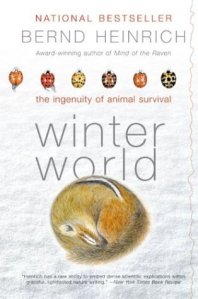 A few books (it always comes back to books here) finally convinced me to do something about my health. You might be surprised to learn which ones. One is Winter World by Bernd Heinrich, a work of wildlife biology I featured in last week’s Books in Brief. In one chapter Heinrich marvels at how bears can hibernate for months without adverse physical effects, given that humans in extended bedrest studies suffer lost muscle mass and bone density, poor absorption of nutrients, and pre-diabetes levels of insulin resistance. “Our bodies are not adapted to inactivity,” he writes. “In our evolutionary history, in contrast to bears, exercise was a constant, and we’re not made to tolerate being idle for long.” A 25-year study of 17,000 Harvard graduates found “the stresses of inactivity mimic the aging response. Every hour of vigorous exercise as an adult was repaid with two hours of additional life span.” It’s no surprise that I’m feeling older than my age!
 I’ve also recently stumbled across Jenifer Joy Madden’s books, The Durable Human Manifesto (2013) and How to Be a Durable Human (coming out later this month). Here are a few of the things she taught me or reinforced:
- Computer work burns a quarter the calories of manual labor.
- “Excessive sitting is a lethal activity,” according to James Levine of the Mayo Clinic.
- A sedentary lifestyle increases the risks of DVT, cancer, and metabolic disease.
- The USA has seen a resurgence in rickets from lack of Vitamin D from diet/sunshine.
- Reading on a screen, one blinks 66% less often than when reading in print, leading to dry eyes.
So with these books to convict me, what have I chosen to do about my health?
- Since Saturday I’ve been taking a daily multivitamin with iron.
- I’m making more of an effort to drink a glass of milk a day.
- I bought a supportive wrist/finger glove to wear while typing and writing by hand.
- If that fails, I’ve bought a moldable ice pack.
- I’m looking into yoga classes in the area.
- Biggest change of all: we ordered a cross trainer and it arrived a couple hours ago. It’s on the low end of both price and functionality, but will meet my needs. As soon as my hubby can put it together – facing the window in the spare room – and we rig up an e-reader ledge, I plan on using it for half an hour every weekday. That’s time spent standing and exercising, but hopefully not lost ‘work’ time if I can read a review book on my Kindle at the same time.

Seems to be helping a bit so far…
As someone who works with words, I live so much in my head that just to acknowledge that I have a body that occasionally needs care is big for me. I know the above are not huge steps, but they’re a start. With vigilance, I should be able to ward off osteoporosis, arthritis and carpal tunnel syndrome, three conditions I’m probably more likely than average to develop later on in life.
For those of you who do desk- or computer-based work, how do you try to counter the perils of sedentary life?
At the Existentialist Café by Sarah Bakewell
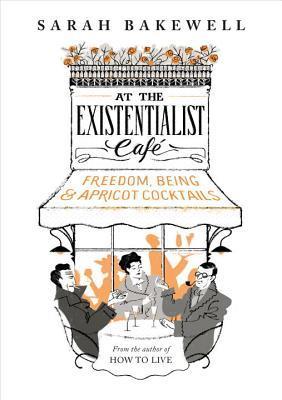 I’ve long meant to read Sarah Bakewell’s How to Live, a biography of Montaigne that also promises to be a deep examination of philosophical and ethical issues. When I heard she had a new book out, I jumped at the chance to learn more about existentialism. I’ve come away from At the Existentialist Café with only a nebulous sense of what existentialism actually means (though Bakewell’s bullet-pointed list of points towards a definition on page 34 is helpful), but certainly with more knowledge about and appreciation for Jean-Paul Sartre and Simone de Beauvoir, two of her main subjects. This is appropriate given the shift in Bakewell’s thinking: “When I first read Sartre and Heidegger, I didn’t think the details of a philosopher’s personality or biography were important. … Thirty years later, I have come to the opposite conclusion. Ideas are interesting, but people are vastly more so.”
Some of the interesting characters herein, apart from Sartre and de Beauvoir (always referred to in these pages as “Beauvoir,” which irked me unduly), are Edmund Husserl, Martin Heidegger, Karl Jaspers, Hannah Arendt, Maurice Merleau-Ponty and Albert Camus. It’s a large cast; you may well find yourself flipping back and forth to the helpful who’s who list in the back of the book. I was amused to see that Freiburg, Germany is the seat of phenomenology (which gave rise to existentialism) – I’m heading there in June to stay with friends at the start of a mini European tour. Husserl was the chair of philosophy at Freiburg, and Heidegger his colleague.
The best I can make out, Heidegger’s philosophy was about describing experience to get to the heart of things. Disregard peripherals and focus on the self’s knowledge of the world, he advised. His best known work, Being and Time, contrasted individual beings with Being itself (i.e. ontology). Think of him as an experimental, modernist novelist, Bakewell advises; understanding what he’s doing with his philosophy is difficult otherwise. Existentialism built on this framework but emphasized freedom and how it is exercised in particular situations.
World War II, especially the year 1945, was a turning point for many of the philosophers discussed. Sartre was held in a POW camp but his eye troubles gave him a way out. Many left Europe for America due to anti-Semitism, including Hannah Arendt and Bruno Bettelheim. Although Heidegger contrasted “the they” (das Man – more similar, perhaps, to the English phrase “the Man”) with the voice of conscience in such a way that suggested one should resist totalitarianism, he would later be exposed as a Nazi. In the following years, the United States became very popular culturally: jazz music, film noir, Hemingway. At the same time, the French were shocked at America’s racial inequality. Sartre believed that one should always take the opinion of the “least favored” or most oppressed party in any situation, which would lead him to speak out for minorities and the colonized, as in the Algerian liberation movement of the 1950s–60s. In the meantime, the rise of the Soviet Union and the development of the atom bomb would emerge as imminent societal threats.
Sartre and de Beauvoir had an open relationship but clearly relied on and felt deeply about each other, especially when it came to their writing. Bakewell convinced me of Sartre’s surprising sex appeal, despite his unprepossessing appearance: “down-turned grouper lips, a dented complexion, prominent ears, and eyes that pointed in different directions.” Apparently he had a silly side and would even do Donald Duck impressions. At the same time, he had rock-solid convictions, as evidenced by his refusal of the Légion d’Honneur and the Nobel Prize. I also learned that he was a biographer of Jean Genet and Gustave Flaubert; his biography of the latter, in three volumes, stretched to 2800 pages! Bakewell waxes anti-lyrical in her account of the disheartening experience of reading it: “Occasional lightning flashes strike the primordial soup, although they never quite spark it into life, and there is no way to find them except by dredging through the bog for as long as you can stand it.”
From the title and subtitle (“Freedom, Being and Apricot Cocktails”), I expected this book to be a bit more of a jolly narrative than it was. The frequent Left Bank Paris setting is atmospheric, but the tone is never as blithe as promised. I would also have liked some additional autobiographical material from Bakewell, who grew up in Reading, England (where I currently live) and met the existentialists through Sartre’s Nausea at age 16.
In the end the fault may not be her book’s but mine: I wasn’t up for fully engaging with a multi-subject biography packed with history and hard-to-grasp philosophical ideas. I’d recommend this to readers who long for bohemian Paris and have enjoyed either an existentialist work or a philosophical novel like Sophie’s World (Jostein Gaarder) or 36 Arguments for the Existence of God (Rebecca Goldstein).
My rating:
With thanks to Chatto & Windus for the review copy.
Further reading: If anything, I think I’m likely to try de Beauvoir’s autobiographical works – the descriptive language Bakewell quotes from them sounds appealing, and of course she was fundamental in paving the way for modern feminism.
You can read an excerpt from At the Existentialist Café, about de Beauvoir’s composition of The Second Sex, at Flavorwire. See also Bakewell’s Guardian list of 10 reasons why we should still be reading the existentialists.
Have you read anything by the existentialists? What would you recommend?
Books in Brief: Five I Loved Recently
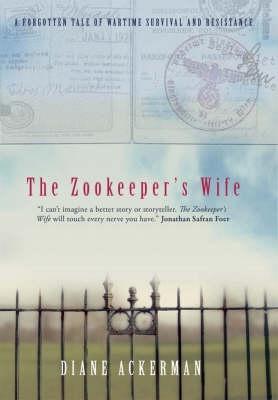 The Zookeeper’s Wife
By Diane Ackerman
A different sort of Holocaust story, set at Warsaw Zoo in the years surrounding World War II. Even after Nazis dismantled their zoo and killed many of the larger animals, Jan and Antonina Żabiński stayed at their home and used the zoo’s premises for storing explosives and ammunition for Jan’s work in the Polish resistance as well as sheltering “Guests,” Jews passing through. This is a gripping narrative of survival against the odds, with the added pleasure of the kind of animal antics you’d find in a Gerald Durrell book. Their son Ryszard kept as pets a badger who bathed sitting back in the tub like a person and an arctic hare who stole cured meats like “a fat, furry thug.” Much of the book is based on Antonina’s journals, but I wish there had been more direct quotes from it and less in the way of reconstruction.
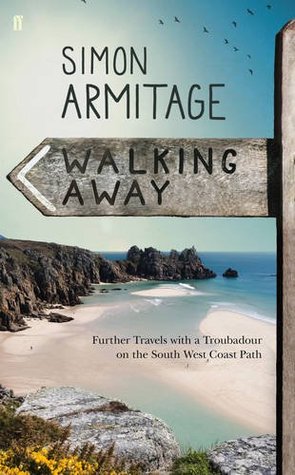 Walking Away: Further Travels with a Troubadour on the South West Coast Path
By Simon Armitage
As a sequel to Walking Home, the account of his 2010 trek along the Pennine Way, Armitage walked much of England’s South West Coast Path in August–September 2013. As before, he relied on the hospitality of acquaintances and strangers to put him up along the way and transport his enormous suitcase for him so he could walk about 10 miles a day to his next poetry reading. Emulating a modern-day troubadour, Armitage passed around a sock at the end of readings for donations (though the list of other stuff people left in the sock, with which he closes the book, is quite amusing). Along the way he meets all kinds of odd folk and muses on the landscape and the distressing amounts of seaside rubbish. His self-deprecating style reminded me of Bill Bryson. A pleasant ramble of a travel book.
 Winter World: The Ingenuity of Animal Survival
By Bernd Heinrich
This great seasonal read carefully pitches science to the level of the layman. Heinrich, an emeritus professor of biology at the University of Vermont, surveys various strategies animals use for surviving the winter: caching food, huddling together, hibernating or entering torpor, and lowering their body temperature – even to the point where 50% of their body water is ice, as with hibernating frogs. He carries out ever so slightly gruesome experiments that make him sound like a lovably nutty professor:
To find out how quickly a fully feathered kinglet loses body heat, I experimentally heated a dead kinglet and then measured its cooling rate. … I do not know how many seeds a chipmunk usually packs into each of its two pouches—I easily inserted sixty black sunflower seeds through the mouth into just one pouch of a roadkill.
His passion for knowledge carries through in his writing. I came away with a fresh sense of wonder for how species are adapted to their environments: “Much that animals have evolved to do would have seemed impossible to us, if experience has not taught us otherwise.”
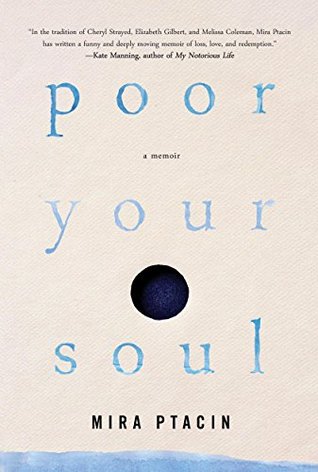 Poor Your Soul
By Mira Ptacin
Ptacin’s memoir is based around two losses: that of her brother, in a collision with a drunk driver; and that of a pregnancy in 2008. She skips back and forth in time to examine the numb aftermath of trauma as well as the fresh pain of actually going through it. In places I felt Ptacin sacrificed the literary quality hindsight might have allowed, prioritizing instead the somewhat clichéd thoughts and responses she had in the moment. Still, I loved so much about this book, especially her memories of growing up in the cereal capital of America and the account of her mother coming to America from Poland. Her mother is a terrific character, and it’s her half-warning, half-commiserative phrase that gives the novel its title (not a typo, as you might be forgiven for thinking): a kind of Slavic “I pity the fool.”
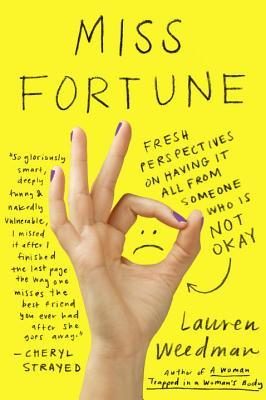 Miss Fortune: Fresh Perspectives on Having It All from Someone Who Is Not Okay
By Lauren Weedman
Weedman is a playwright and minor celebrity who’s worked on The Daily Show, Hung and Looking. This is a truly funny set of essays about marriage (from beginning to end), motherhood, working life and everything in between. Self-deprecatingly, she focuses on ridiculous situations she’s gotten herself into, like the world’s unsexiest threesome and an accidental gang symbol tattoo. Amid the laughs are some serious reflections on being adopted and figuring out how to be a responsible stepmother. With a warning that parts can be pretty raunchy, I’d recommend this to fans of David Sedaris and Bossypants.
My rating for all:
It’s the One-Year Anniversary!
Today marks one year exactly that I’ve had this blog. In that time I’ve posted 80 times, for an average of 6.67 posts per month. To start with I only managed 2 or 3 posts a month, but from July I picked up the pace and recently I’ve been trying to manage at least twice a week.
My most liked posts were Literary Tourism in Manchester, The Best Fiction of 2015: My Top 15, Final Stats for 2015, and my Early One Morning review.
The posts that generated the most discussion were: “How Many Books Is Too Many? (to be reading at once),” my review of The Novel Cure, and (tied for third) The Best Fiction of 2015 and my review of The Goldfinch.
My most ever views were on December 29th, when I published a list of My Favorite Nonfiction Reads of 2015.
So far I’ve had 3,018 visitors and 5,438 views.
I thought that at some point my ideas would dry up, but I currently have four posts in progress and a three-page Word file full of ideas for more, so as long as people are still interested, I’ll keep going.
Thanks to everyone who has supported me this past year by visiting the site, commenting, re-tweeting, and so on. You make it worthwhile!
Let me know how you like my redesign and new features, and if there’s anything else you’d like to see from this blog.
Seeking Fellow Bloggers’ Advice
I’ve had this blog for almost a year now (tomorrow’s the anniversary!), and although I’m enjoying the writing practice and the interaction with readers, it hasn’t necessarily grown as much as I might have wanted it to. So I am seeking advice – from all my readers, but from fellow bloggers in particular.
From those of you who are experienced bloggers, especially book bloggers, I would love to know how you’ve made it work: what your strategies are for types and timing of posts; how you use social media to your advantage; how you connect with publishers and authors; and how you’ve carved out a niche for yourself.
I’d be glad to hear your thoughts about anything from the loooooong list of questions below – and if you’d rather reply at length and in private rather than via a comment, feel free to get in touch with me via e-mail: rebeccafoster.books@gmail.com.
Blogging
- How often do you post per week?
- How long do you try to make your posts?
- Does a post’s timing (day of week and time of day) matter?
- How do you encourage blog comments?
- Do you try to reflect on book trends and controversies?
- How can I help create advanced buzz about books?
- When’s a good time to write about book prize races – before and/or after?
- How many book blogs do you follow and how do you keep up with them all?
I generally publish one straightforward review per week, usually on a Monday, and then my general strategy for other posts is to alternate between lists on a theme (with mini reviews), event or travel write-ups, and personal reflections or opinion pieces. I also do a monthly reviews roundup and often report on my library borrowing at the end of a month.
I try to make my post timings sensible for both US and UK readers, so I usually aim for 9 am ET / 2 pm GMT. I follow about 10 fellow book bloggers and already that feels like the limit of what I can sensibly keep up with, though I’d love to be supportive of others in return. I’d like to think it’s not always a tit for tat scenario, but I also accept that I’m more likely to get follows, likes and comments if I’m returning the favor.
Social Media
- How can I attract more followers (blog and/or Twitter)?
- How often should I check Twitter and post on it?
- Where do you draw the line in terms of who you follow on Twitter?
- How can I best use Twitter to my advantage?
- Do you always tag a book’s author and/or publisher when you tweet a review?
- Is it worth making a Facebook author page?
- Are there any other groups (Facebook or other) I should be part of?
- Are there blog networks or directories I could join?
- Can you think of any blogger perks websites I should sign up for apart from NetGalley, Edelweiss and Blogging for Books?
I think I follow about 300 Twitter accounts. I go on there every few days and find it completely overwhelming; I can be scrolling for 20 minutes and not even get through a few hours of posts, let alone a few days’ worth. I follow a lot of publishers, so use the site mostly to keep an eye out for new books and enter giveaways, plus I link to my blogs and bylined reviews. However, I don’t know whether I should be following all the authors, publicists, fellow reviewers, bloggers, and freelance writers I can. It just seems to snowball!
I also cross-post my reviews to Goodreads and sometimes to Facebook, either on my own page or in a UK Book Bloggers group.
Publishers and Authors
- Do you request books, or are they sent to you unsolicited?
- How do you keep track of what’s coming out and decide what to ask for?
- How far ahead would you request a title?
- Are certain publishers particularly helpful and accommodating?
- How can I know definitively whether an American title is also coming out in the UK, maybe at a later date?
- Are your requests always granted?
- How many times do you follow up with a publicist before giving up?
- How can I help support debut novelists?
- How can I get involved in blog tours and giveaways?
- How could I bag invites to literary events in London?
- Is it possible to get involved in judging a literary prize?
Maybe my expectations are unrealistic, but I’m sure I’ve heard other bloggers talk about receiving boxes full of review books, unasked, months in advance of the publication dates. Some people seem to be doing blog tours and interviews every few days. I’ve gotten a bit braver about sending e-mails to publishers asking for a book I fancy reviewing on my blog, but I don’t feel like I quite have the etiquette down yet.
My long-term aim is to be a judge for a major book prize, like the Bailey’s Prize or the Man Booker Prize. (Hey, a girl can dream! I certainly read enough in a year to keep up with the load.) I also like the sound of getting dressed up for a book release soirée or similar.
Finding a Niche
- Would you rather see more straightforward reviews on my blog, or fewer?
- Is it important for me to specialize in terms of what genres I review?
- Is it advisable to list my e-mail address on the blog?
Tomorrow I’ll unveil an updated blog design to mark the one-year anniversary. I’m also tailoring my “About” page.
I’m grateful for any and all pieces of advice. I may have been doing this for a year now, but I still feel like an utter newbie! Here’s to another year of reading and writing.
The Lonely City by Olivia Laing
For several years in her mid-thirties, British author Olivia Laing lived in New York City. A relationship had recently fallen through and she was subletting an apartment from a friend. Whole days went by when she hardly left the flat, whiling away her time on social media and watching music videos on YouTube. Whenever she did go out, she felt cut off because of her accent and her unfamiliarity with American vernacular; she wished she could wear a Halloween mask all the time to achieve anonymity. How ironic, she thought, that in a city of millions she could be so utterly lonely.
Loneliness feels like such a shameful experience, so counter to the lives we are supposed to lead, that it becomes increasingly inadmissible, a taboo state whose confession seems destined to cause others to turn and flee. … [L]oneliness inhibits empathy because it induces in its wake a kind of self-protective amnesia, so that when a person is no longer lonely they struggle to remember what the condition is like.
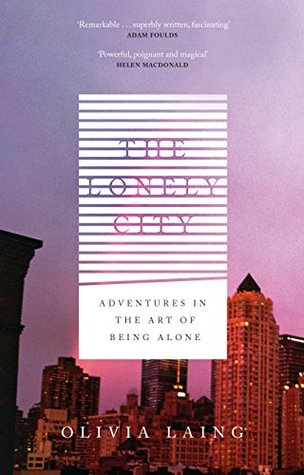 Whereas alcoholic writers were the points of reference for her previous book, the superb The Trip to Echo Spring (2013), here outsider artists take center stage: Edward Hopper, Andy Warhol, David Wojnarowicz, Henry Darger, and the many lost to AIDS in the 1980s to 1990s. It’s a testament to Laing’s skill at interweaving biography, art criticism and memoir when I say that I knew next to nothing about any of these artists to start with and have little fondness for modern art but still found her book completely absorbing.
Several of the artists shared underlying reasons for loneliness: an abusive childhood, mental illness and/or sexuality perceived as aberrant. Edward Hopper might seem the most ‘normal’ of the artists profiled, but even he was bullied when he shot up to 6 feet at age 12; his wife Jo, doing some amateur psychoanalyzing, named it the root of his notorious taciturnity. His Nighthawks, with its “noxious pallid green” shades, perfectly illustrates the inescapability of “urban alienation,” Laing writes: when she saw it in person at the Whitney, she realized the diner has no door. (It’s a shame the book couldn’t accommodate a centerfold of color plates, but each chapter opens with a black-and-white photograph of its main subject.)
Andy Warhol was born Andrej Warhola to Slovakian immigrants in Pittsburgh in 1928. He was often tongue-tied and anxious, and used fashion and technology as ways of displacing attention. In 1968 he was shot in the torso by Valerie Solanas, the paranoid, sometimes-homeless author of SCUM Manifesto, and ever after had to wear surgical corsets. For Warhol and Wojnarowicz, art and sex were possible routes out of loneliness. As homosexuals, though, they could be restricted to sordid cruising grounds such as cinemas and piers. Like Klaus Nomi, a gay German electro-pop singer whose music Laing listened to obsessively, Wojnarowicz died of AIDS. Nomi was one of the first celebrities to succumb, in 1983. The epidemic only increased the general stigma against gay people. Even Warhol, as a lifelong hypochondriac, was leery about contact with AIDS patients. Through protest marches and artworks, Wojnarowicz exposed the scale of the tragedy and the lack of government concern.
In some ways Henry Darger is the oddest of the outsiders Laing features. He is also the only one not based in New York: he worked as a Chicago hospital janitor for nearly six decades; it was only when he was moved into a nursing home and the landlord cleared out his room that an astonishing cache of art and writing was discovered. Darger’s oeuvre included a 15,000-page work of fiction set in “the Realms of the Unreal” and paintings that veer towards sadism and pedophilia. Laing spent a week reading his unpublished memoir. With his distinctive, not-quite-coherent style and his affection for the asylum where he lived as an orphaned child, he reminded me of Royal Robertson, the schizophrenic artist whose work inspired Sufjan Stevens’s The Age of Adz album, and the artist character in the movie Junebug (2005).
A few of the chapters are less focused because they split the time between several subjects. I also felt that a section on Josh Harris, Internet entrepreneur and early reality show streaming pioneer, pulled the spotlight away from outsider art. Although I can see, in theory, how his work is performance art reflecting on our lack of true connection in an age of social media and voyeurism, I still found this the least relevant part.

The American cover
The book is best when Laing is able to pull all her threads together: her own seclusion – flitting between housing situations, finding dates through Craigslist and feeling trapped behind her laptop screen; her subjects’ troubled isolation; and the science behind loneliness. Like Korey Floyd does in The Loneliness Cure, Laing summarizes the physical symptoms and psychological effects associated with solitude. She dips into pediatrician D.W. Winnicott’s work on attachment and separation in children, and mentions Harry Harlow’s abhorrent rhesus monkey experiments in which babies were raised without physical contact.
The tone throughout is academic but not inaccessible. Ultimately I didn’t like this quite as much as The Trip to Echo Spring, but it’s still a remarkable piece of work, fusing social history, commentary on modern art, biographical observation and self-knowledge. The first chapter and the last five paragraphs, especially, are simply excellent. Your interest may wax and wane through the rest of the book, but I expect that, like me, you’ll willingly follow Laing as a tour guide into the peculiar, lonely crowdedness you find in a world city.
(See also Laing’s list of 10 Books about Loneliness, chosen for Publishers Weekly.)
With thanks to Canongate for sending a free copy.
My rating:
 Bookish Beck = Rebecca Foster. American transplant to England. Freelance proofreader and book reviewer.
 Bookish Beck