Booker Prize Longlist Reads (Switzy, The End of Everything) & Shortlist Predictions
In an hour or so, the Booker Prize shortlist will be announced. I’ve now read four of the longlisted novels; I’m still awaiting a library hold of May We Feed the King by Rebecca Perry, which is the only other I’m particularly keen to read. This is the first time in four years that I’ve made much of an effort to read from the longlist, i.e., besides what I happen to have already read. I think this year’s judging panel may have something to do with it: I have read (almost) everything by Raymond Antrobus and Patricia Lockwood, and I admire Mary Beard even if I don’t know her work so well.
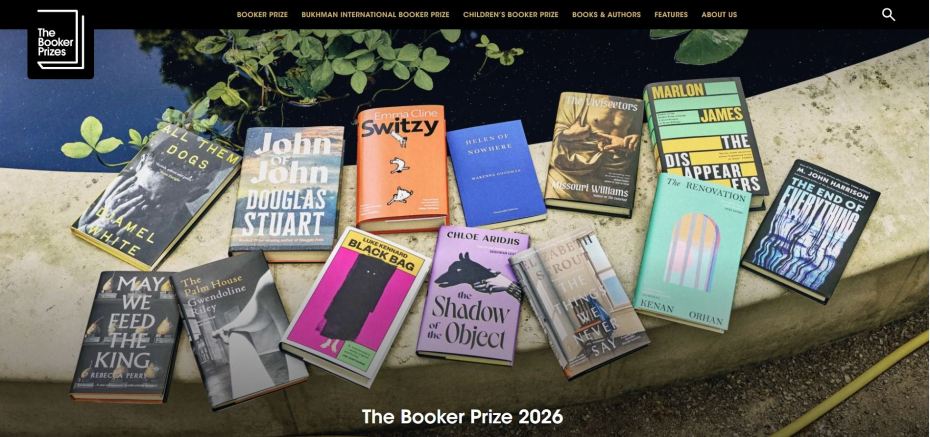
This pair contains unavoidably bleak stuff – dementia and preparing for an assisted death at Dignitas; weird goings-on in postapocalyptic London and Kent – but with some glints of humour. I could see the first being shortlisted but not the second.
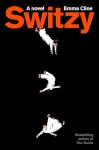
Switzy by Emma Cline
Like many, I read Cline’s debut, The Girls, but lost track of her career afterwards. I was taken aback at the subject matter of her fourth book, which sounded like fodder for a different author – an older male. I also worried that her portrait of a privileged businessman trying to make meagre amends for the wrongs from his past would be too similar to George Saunders’s subpar Vigil. But in the end she won me over with her close-third-person portrait of the last few days of an Everyman defying the inexorable course of dementia.
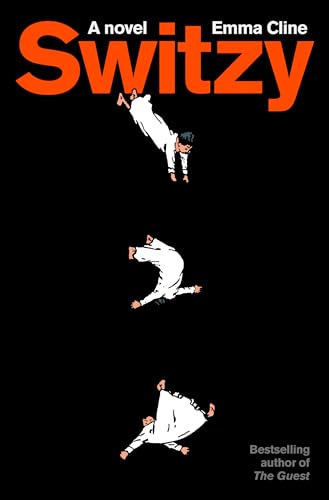 David Hastings, 70, is en route to Zurich, headed to the never-named Dignitas. He’s on a private plane borrowed from a longtime associate, and has with him a personal assistant, Cody. Their first stop is London so he can see his daughter, Rebecca, and his musical prodigy grandson, Rainer, and say a sort of goodbye – although his relatives have no idea it’s the last time they’ll see him. He has one more stop to make, just over the Swiss border, to see Tom, a boarding school chum who endured hazing that David didn’t intervene to stop. Beyond the guilt, we sense that he longs to see Tom because he has always been half in love with him – a recurring homoerotic impulse never consummated. (An interesting parallel is that Rebecca is having clandestine meet-ups with a female friend. Is same-sex attraction inherited?)
Depicting the mental turmoil of a character sinking into dementia is not that ground-breaking; I’ve read a number of novels that do so with aplomb (Still Alice, Elizabeth Is Missing, Turn of Mind, The Night Guest, The Swimmers). However, Cline convincingly traces David’s bewilderment at everyday traveller experiences of hotels, restaurants and taxis. It’s no mawkish tour through disability; instead, his outsider’s view skewers the ridiculousness of modern life. I was most impressed by the way David’s internal monologue skirts lost language and gets stuck on arbitrary phrases: sayings, song lyrics, liturgy. “The quick brown fox jumps over the lazy dog”; “The hills are alive…”; “Now and at the hour of our death…”; his ex-wife’s exhortation to their little girl to “brush away the sugar bugs”; and the story of Little Nemo in Slumberland (which lends the anomalous cover image).
“Unflinching” is a reviewing cliché, but this is what people have in mind when they say it. Cline follows David right up to his last moment, taking us into the room at the clinic with him. There’s nothing special, or even very likable, about this man, but as we follow along on his final physical experiences we get a sense of the weight of any life – which can still have value even if there are no longer any words for what’s happening. I found this much more affecting than I expected to, reaching the final pages with tear-soaked cheeks. (Read via NetGalley) 
Also recently reviewed by Cathy and Susan.
I’ve read and thought a lot about the topic of assisted dying, including with In Love by Amy Bloom, Intervals by Marianne Brooker, That One Patient by Ellen de Visser, The Inevitable by Katie Engelhart, and One Last Thing by Wendy Mitchell. Switzy would make a particularly good fictional counterpart to the Bloom, for those who wish to read further.
A bonus review:
A Better Death: The case for assisted dying by Jonathan Romain
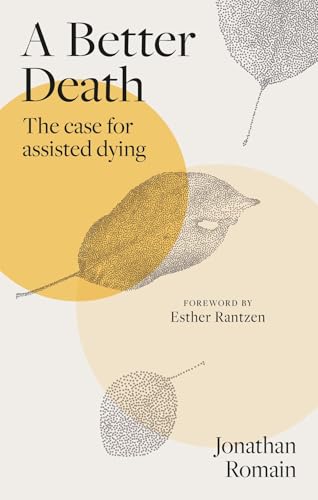 Romain is a rabbi and former chair of Dignity in Dying. In this short work, he gives a valuable history of relevant legislation in the UK and internationally, and a rundown (with rebuttals) of potential ethical objections to assisted dying. The party line of the major religions is to uphold the sanctity of life and thus oppose assisted suicide, but there are notable exceptions. Romain mentions a former archbishop of Canterbury who attends my church. George Carey changed his mind after the high-profile case of Tony Nicklinson, who was paralysed after a stroke and lost his appeal over the right to die. Pious supporters of the Campaign for Dignity in Dying emphasise the duty to be merciful to the suffering. Romain puts it this way: “From a religious perspective[,] it makes much more sense to say that we honour God most by healing someone when we can, comforting them when we cannot do so and helping them let go of life gently when desired.” Most medical bodies, too, have now reversed their official positions, with the majority voting to remain neutral on the matter. Romain characterises the campaign as a sign of humanitarian progress – like universal suffrage or the abolition of slavery – that future generations will look back on as overdue. He hopes that charismatic campaigners will arise from among the dying and their relatives. (The foreword is by TV presenter Esther Rantzen, who appealed after being diagnosed with terminal lung cancer. Just days ago, she announced she’s too fragile to travel to Dignitas.)
For me, this book offered little new because I was familiar with arguments around the issue, pro and con. However, it would be a good primer for those coming to such questions for the first time. What I did find helpful was a discussion of rituals we might develop to accompany an assisted death – a new sort of funeral that may one day be routine. Music, readings, a toast; a candle snuffed out or lit at the moment of death, and so on. Imagine a whole new category of human rite, one that should no longer be clouded in secrecy or available only to the wealthy. Alas, the latest version of the Terminally Ill Adults (End of Life) Bill was voted down by the House of Commons on 11 September, but no doubt it will be back in a new form soon. 
With thanks to Reaktion Books for the free copy for review.
The End of Everything by M. John Harrison
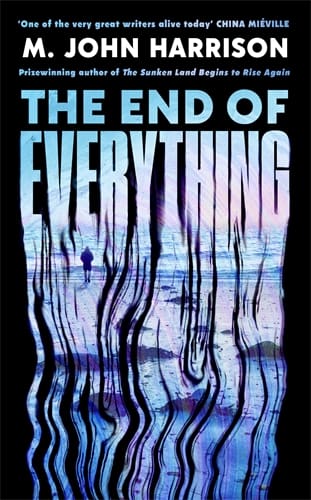 I was willing to give this a try for several reasons: it was readily available from my library (someone donated it), Harrison is lauded yet I’ve never approached his large back catalogue, and it’s novella length. Alas, those were insufficient to overcome my antipathy for vague dystopian scenarios in which characters’ actions have no clear motivations. Years post-crisis and -invasion, some people are still trying to flee Britain, but most seem content muddling along. “What were the iGhetti and where had they come from?” That’s a good question, and one to which we never get a straightforward answer, but the main hint is that they are jelly-like and arrived from elsewhere. Phillip Tennent engages in mudlarking – except some of the artefacts he discovers are amorphously humanoid and evolve human traits.
Initially it seems as if Phillip is the protagonist, but his 70-year-old painter aunt, Marnie, has more enduring importance. When she’s hounded out of her falling-down home, she shelters in an abandoned art gallery. She’s a surprising and almost admirable broad, handy with a weapon whenever she senses her way of life being threatened. There are some darkly comic outrageous happenings, and gruesome set pieces that blur the line between living and dead, human and non-. I had to wonder if there is also a Brexit allegory, given Marnie’s signs reading “HOW CAN YOU MISPLACE A CONTINENT?” Harrison’s prose is smooth and the pages turn quickly, but when I look back at the gnomic dictums I marked out, they don’t seem to mean anything:
Are we watching a film the universe is showing itself?
The world’s over. But that doesn’t matter. Because another one will be along soon enough.
Rather, significance is located in the expressions of uncertainty:
the apocalypse seemed to withhold itself, quickly becoming just another historical continuity.
There was a vigorous ambiguity to everything.
Believe all you like that at some level unavailable to you an organising principle exists. You will never have any evidence of that.
I suspect Harrison’s aim was to show how one can get used to anything, even random violence and purposeless wandering. But this watery postapocalyptic meander sheds no real light on the past, present, or future, and feels as if it should have been published more like a decade ago (at the time of The Wall by John Lanchester et al.). A couple of great scenes, such as children playing with fallen ash as if it were snow, aren’t enough to take the bitter edge off even such a short novel. I’m not tempted to try more by Harrison. (Public library) 
Also recently reviewed by Annabel.
Longlisted novels that I’d already read:
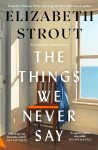 The Things We Never Say by Elizabeth Strout: Artie Dam is a likeable Everyman with the same sorts of secrets and struggles we all have. Sometimes he thinks his marriage is going well and he’s touching his high school history students’ lives; other times he feels fatalistic about his relationships and the US’s trajectory. Along with Lucy by the Sea, this is the most engaged Strout has been with the present day, and the most specific she’s gotten about political outrages. I liked how the flash-forwards prove Artie right in his predictions (occasionally based on premonitory dreams) or confirm what he couldn’t have known about the difference he made for two particular students. In his small way, Artie is a new Stoner.
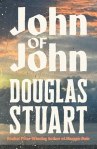 John of John by Douglas Stuart: One of my books of the year for sure. (I reviewed it for Shelf Awareness.) Stuart’s superb third novel is set on the Isle of Harris in the 1990s. Cal seeks to reconcile his sexuality and artistic goals with his family’s expectations and his devout upbringing. An absorbing, deliciously melodramatic story is built around the contrast between modernity and the old ways. The characters’ power plays and acts of desperation are heartrending, but mischief and love of colour and crafts lend lightness. Stuart’s every observation is profound; the simplest phrase is memorable for its beauty.
Here’s my thinking about the shortlist:
Lockwood may be to thank/blame for the weirder and more niche selections (i.e. previously unknown young Americans’ second books), whereas the judges are likely to come to a consensus on more straightforward, reader-friendly material. I imagine we’ll see a shortlist dominated by women and repeat nominees.
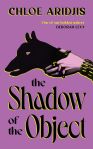
The Shadow of the Object by Chloe Aridjis – Especially with Antrobus and critic Rebecca Liu on the panel, we can expect at least two non-Anglo authors to make it through. Djamel White’s subject matter sounds neither appealing nor fresh. [Kenan Orhan is apparently Turkish American, though he looks white.] Though I’m personally not eager to read Aridjis again (after a DNF of Sea Monsters), I’m taking a gamble on this one being the second.
Switzy by Emma Cline – Edgy and powerful enough to deserve a place.
The Disappearers by Marlon James – A previous winner and a writer’s writer, though I’ve never particularly gotten on with his work.
May We Feed the King by Rebecca Perry – I’ve heard almost exclusively good things.
The Things We Never Say by Elizabeth Strout – She’s getting to be a Booker bridesmaid and has been nominated for poorer books, so I hope she’ll get another shot.
John of John by Douglas Stuart – How could you not?! I’ll throw a tantrum if it doesn’t make it through.
But, of course, the judges could surprise me with a wildcard such as Black Bag by Luke Kennard; Gwendoline Riley is inexplicably popular with judging panels, too.
What have you read from the longlist? Which book(s) do you most want to read, or see on the shortlist?
Alone by Daniel Schreiber (Blog Tour)
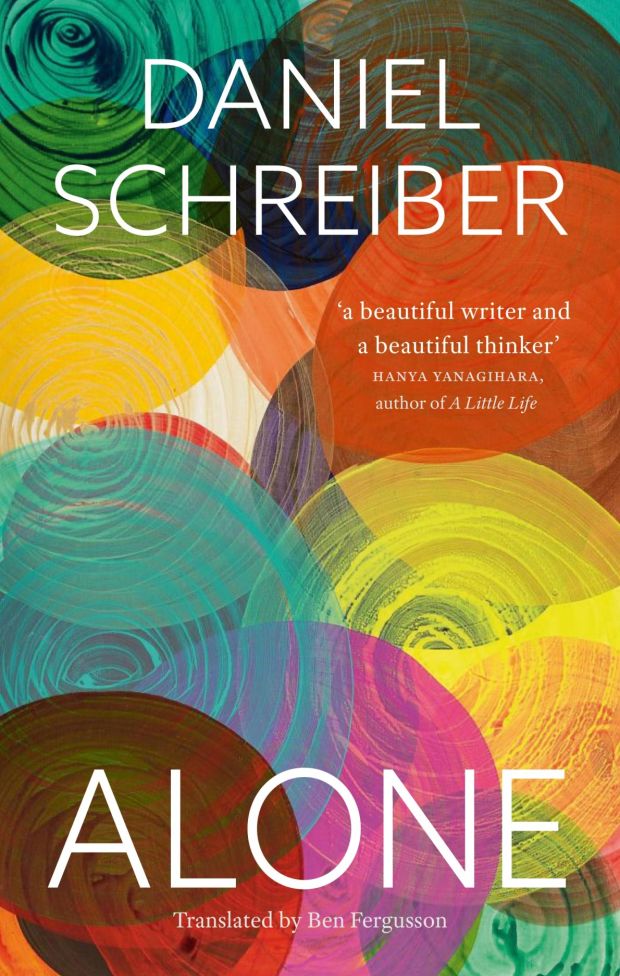
Daniel Schreiber is a Berlin-based essayist and biographer of Susan Sontag. These philosophical reflections on solitude and loneliness, coinciding with the first year of the pandemic, reveal his ambivalence about living alone and his frustration that the idea of the couple so defines society that anyone who does not fall in line is considered aberrant.
“I never made a conscious decision to live alone,” Schreiber says. Although he has had many partners, some of them long term, and even lived with two of them for a time, he is single at the time of writing, and can’t help but think that his state implies some kind of deficiency. Part of this he attributes to queer shame that he must have subconsciously internalized, and part to Pauline Boss’s concept of the “ambiguous loss” – missing what one has never had.
The author has many friends, men and women, but feels that society tells us platonic love is less than romantic love; “friendship is thus reduced to a time of transition … a threshold state that ends when one successfully integrates into traditional forms of cohabitation.” His friend novelist Hanya Yanagihara (who gives a quote on the cover) corroborates this suspicion, which A Little Life affirms: “In the end, she said, you are always alone when you are single.”
The “Never So Lonely” chapter is about the Covid-19 situation in particular. Schreiber acknowledges that being alone does not have to equate to loneliness, yet the less he saw of people during lockdowns, the more he struggled mentally and emotionally. “At some point, a self-reinforcing dynamic of fear set in: the lonelier I felt, the less I could talk about it. And the less I talked about it, the lonelier I felt.”
Hiking, gardening, yoga and, eventually, foreign travel were among his coping strategies. This is as much a mini-memoir as it is a work of cultural criticism. Its academic tone is evident from a glance at the bibliography: Hannah Arendt, Roland Barthes, Joan Didion, Deborah Levy, Audre Lorde, Maggie Nelson and so on. This resonated with other loneliness- or solitude-themed books I’ve read, such as The Lonely City by Olivia Laing and Journal of a Solitude by May Sarton. It offers not answers, but solemn, quiet thoughts.
(Original publication: 2021. Translated from the German by Ben Fergusson.)
With thanks to Reaktion Books for the proof copy for review.
This Year’s Pre-Christmas Reading
My household has been struck down by flu Covid this week, so we’ve had to cancel some all of our holiday plans and I haven’t had as much energy or festive good cheer as I would like. This is my favourite time of the blogging year what with everyone’s best-of lists appearing, so I hope that come Boxing Day I will be feeling up for starting my own countdown of superlatives and catching up on everything you all have posted recently.
Two of my recent reads were appropriate Yuletide choices:
 Robin by Helen F. Wilson: The most recent release from the “Animal” series issued by the British indie publisher Reaktion. (I’d previously read Seal.) Wilson introduces the breadth of international bird species that are known by the name “robin.” (The European robin, the protagonist of this monograph, is the only bird in its genus and is not as closely related to the American robin (a thrush) as to the bluebird; the name simply referenced the red breast. There are also magpie-robins in Southeast Asia.) Like another strikingly red bird, the cardinal in North America, the robin has long been associated with a) death and b) Christmas. They might be a portent of death, or an embodiment of the soul of the departed. For instance, the legend has it that a robin spent days in Westminster Abbey while Queen Mary II lay in state. Robins are the UK’s official favourite bird because they look cute and act endearing and sing sweetly, but they are violently territorial. (The old nursery rhyme “Who Killed Cock Robin?” also set up a weird and false vendetta between sparrows and robins.) This was a pleasant wander through biological and cultural information. I particularly loved the photos and other illustrations.
 Small Things Like These by Claire Keegan: I read this last year but reread it earlier this month for book club. A year ago, I called it a predictable narrative and thought the evil nuns were a stereotype. This time, Keegan really got me in the feels, just as she had with Foster a couple of months before. The Church-sanctioned abuse that was the Magdalen Laundries must have seemed like a system too big to tackle, but take a look at the title. One good man’s small act of rebellion was a way of standing up to the injustice and saying that these girls were of worth (indeed, this won the Orwell Prize for political fiction). This time around, I was especially impressed by how much Keegan fits into so few pages, including Bill working out who his father was. We also get a strong sense of a man in the middle of his life: privileged enough, happy enough, but wondering if this is all there is to it; if there is something more on offer. Like Foster, this is set in the 1980s but feels timeless, and seems to effortlessly encompass so much of what it means to be human. Absolutely beautiful.


Merry Christmas, all!
Reviews Roundup, February–March
One of my goals with this blog was to have one convenient place where I could gather together all my writing that appears in disparate online locations. To that end, once a month I provide links to all book reviews I’ve published elsewhere, with a rating (below each description) and a taster so you can decide whether to read more. A few exceptions: I don’t point out my Kirkus Indie, BlueInk or Publishers Weekly reviews since I don’t get a byline. Meanwhile, I’ve done my first article for the Los Angeles Review of Books – exciting!
The Bookbag
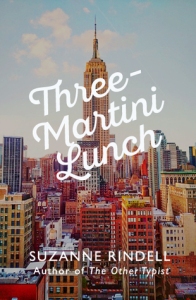
Three-Martini Lunch by Suzanne Rindell: Brings the late 1950s, specifically the bustling, cutthroat New York City publishing world, to life through the connections between three young people who collide over a debated manuscript. The three first-person voices fit together like a dream. It’s an expert evocation of Beat culture and post-war paranoia over Communism and homosexuality. Walking into Eden’s office, especially, you’ll think you’ve landed on the set of Mad Men. This classy, well-plotted follow-up will win Rindell even more fans and tide us all over until the film version of The Other Typist – produced by and starring Keira Knightley – appears. Releases May 19th in the UK.

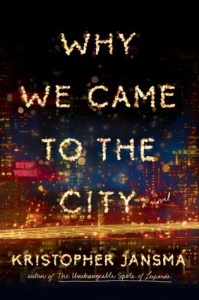 Why We Came to the City by Kristopher Jansma: Five university friends strive to make their lives count against the indifferent backdrop of recession-era New York City. When one of them falls ill, they pull together like a family. The tone of the novel lies somewhere between A Little Life and the sitcom Friends (a Mexican version of which the characters watch obsessively). Even as his characters realize that they are not special and not in control of their lives, Jansma never lets his book descend too far into gloom. Narrowly misses out on 5 stars from me because the storyline loses momentum in Part Two. Rich with emotion and literary allusions (from Walden to The Iliad), this is my favorite novel of the year so far.
Waltzing in Vienna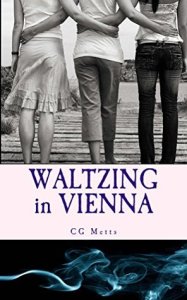 by C.G. Metts (& interview): Three girlfriends – a singer staging a comeback, a psychology professor reawakening to sexuality after being widowed, and a socialite Southern Belle – are reunited in Charleston, South Carolina in their early forties. Remembering their wild college days, they wonder how to make midlife count. There’s a fun Sex and the City or Ya-Ya Sisterhood vibe to this recommended debut novel. I liked the mixture of nostalgia and gentle feminism, and I think this may also inspire readers to see South Carolina’s coastal landscape for themselves. The title phrase is the friends’ shorthand for smoking marijuana together.

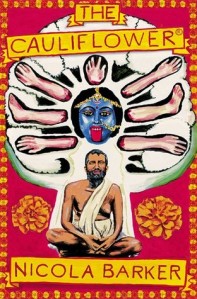 The Cauliflower® by Nicola Barker: Put simply, this is a fictionalized biography of the largely illiterate Hindu guru Sri Ramakrishna (1836–1886). That may sound dry as dust, but Barker makes it a playful delight by skipping around in time and interspersing aphorisms, imagined film scenes, questions and answers, and even a recipe with the narrative chapters. The kernel of the story – set in 1857 at the Dakshineswar Kali Temple, six miles north of Calcutta – is narrated in the first person by the guru’s nephew, Hriday. Scripture of all types (the Bible is also cited) is a relevant, joyful echo here rather than a dull set of rules. Bizarre but very readable. Releases April 21st.
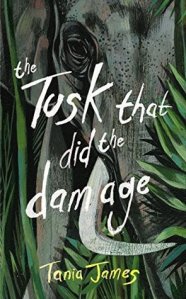 The Tusk That Did the Damage by Tania James: This composite picture of the state of wildlife conservation in India is told from three perspectives: an elephant named the Gravedigger, a poacher, and a documentary filmmaker. James ably intersperses three voices as she explores how people fail to live up to their ideals and make harmful assumptions. Despite these attributes, it was one of those books I had to force myself through. Perhaps it was the environmental agenda: if a book is going to wear its message so openly, it has to live up to it in terms of the writing. I might have preferred it if the whole novel had been from Emma’s point of view, with one climactic encounter with the Gravedigger to make the poaching question immediate and not simply academic.

BookBrowse
Dog Run Moon: Stories by Callan Wink [subscription service]: Wink’s debut story collection, set mostly under Montana’s open skies, stars a motley cast of aimless young men, ranchers, Native Americans, and animals live and dead. He plays around with Western stereotypes in intriguing ways. A few of the tales are a bit less compelling, and I would have preferred more variety in narration (8 of 9 are third person), but the stand-outs more than make up for it. My two favorites were “Runoff” (there’s a double meaning to the title) and “Exotics,” in which all the characters are lured by the life they don’t currently have.
 For Books’ Sake
Interview with Rachel B. Glaser, author of Paulina & Fran [my review of which was in last month’s roundup]
Foreword Reviews
 Night Ringing by Laura Foley: Foley’s strong fifth collection ruminates on romance and family via autobiographical free verse. One of the collection highlights is “In the Honda Service Area,” which unexpectedly unites modern technology with ancient literature. While a woman describes her impending hip replacement surgery to a friend, Foley tries to concentrate on Homer’s Iliad. The collection is dedicated to Foley’s partner, Clara Giménez, and lesbian romance is a subtle undercurrent. Especially recommended for fans of Jane Hilberry and Adrienne Rich.
The Temple of Paris by Laura DeBruce: This second volume in Laura DeBruce’s Quicksilver Legacy trilogy is a fast-paced fantasy adventure novel. In the previous book, the author introduced the “Immortals,” centuries-old creatures who are impervious to disease and aging due to a magic elixir. If Hana, the teenage protagonist, can learn how to use the elixir in her possession correctly, she can save her mother from a potentially fatal blood disorder. Although the complicated plot might be challenging for those new to the series, older teens will appreciate the rollicking story and the chance for vicarious European sightseeing.

 Mon amie américaine by Michèle Halberstadt: After years of heavy smoking and migraines, a brain aneurysm plunges forty-year-old Molly into a coma. The novel is presented as Michèle’s confessional letter to her American friend Molly, addressed in the second person. During Molly’s coma and after she wakes up, Michèle ponders their unlikely friendship and also frets over her threatened marriage. The novella is like a cross between Jenny Offill’s Dept. of Speculation and Jean-Dominique Bauby’s The Diving-Bell and the Butterfly, and bears tantalizing traces of deliberate homage to Pedro Almodóvar’s coma-themed Talk to Her: an understated dual account of betrayal and disability.
 Specimen: Stories by Irina Kovalyova: “People like to pretend that our genes define the truth for us. But I assure you that’s not the case,” a character insists in the title story. Diverse in setting and form, these nine stories, long-listed for the Frank O’Connor International Short Story Award, contrast the scientific understanding of genetics with deeper wisdom about the bonds of love and family. Nestling science into rich psychological narratives, Kovalyova’s work is reminiscent of that of Andrea Barrett and A. S. Byatt; in fact, the latter is directly referenced in one story. She also channels Anthony Marra and Adam Johnson by affirming love’s survival in spite of repressive situations.
Of Crime and Passion by Jonathan Harnisch: In this novella, a proud young man seeks to transcend his underprivileged upbringing by worming his way into the homes of the rich and seducing powerful women. At its heart, the book is about the ongoing conflict between economic and social classes. With the melodramatic action and old-fashioned dialogue, though, it is easy to imagine this coming-of-age tale working better in the form of a play.
Hakai Magazine
(a Canadian publication highlighting coastal ecosystems)
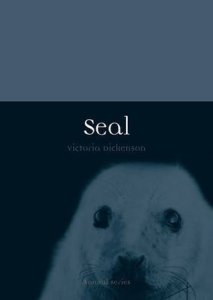 Seal by Victoria Dickenson: “It is hard to imagine a creature more distant from the human species in bodily form, habits, and habitat than the seal,” Dickenson writes in her introduction, “yet our mutual regard tells of a long, shared history of interaction.” Seal is the latest in the 80-strong Animal series from Reaktion Books. Like other volumes, this gives a brief discussion of the featured animal’s evolutionary biology, followed by an interdisciplinary survey of how it has entered human culture throughout history. In the final two chapters—the highlight of an occasionally dry book—Dickenson gives a balanced account of the history of hunting seals.
Los Angeles Review of Books
“Rediscovering an Overlooked Woman Novelist”: A dual review of Constance Fenimore Woolson: Portrait of a Lady Novelist by Anne Boyd Rioux () and Miss Grief and Other Stories (), a new selection of Woolson’s short fiction.
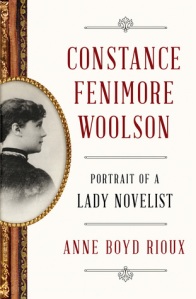
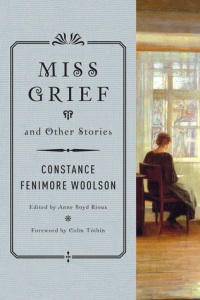 Constance Fenimore Woolson (1840–1894) is most often remembered for her connection to male writers; her great-uncle was pioneering American novelist James Fenimore Cooper, and in her later years as an expatriate in Europe she associated with Henry James, fueling rumors of a romance between them. Deserving to be known in her own right, Woolson represents key junctures between realism and regionalism, and between American and European styles. Gives a remarkable picture of a bold, bright woman who paved the way for writers such as Edith Wharton, E. M. Forster, and Willa Cather, and who arguably might be hailed in the same breath as Henry James and George Eliot.
Nudge
My quick response to Instructions for a Heatwave, for a Maggie O’Farrell retrospective: Another spot-on tale of family and romantic relationships – O’Farrell always gets the emotional tenor just right. You may spot hints of Rachel Joyce’s The Unlikely Pilgrimage of Harold Fry or Bernhard Schlink’s The Reader, but the psychological and linguistic precision is all O’Farrell’s own. Her descriptive language is unfailingly elegant. I love how she opens with the heat as the most notable character: “It inhabits the house like a guest who has outstayed his welcome: it lies along corridors, it circles around curtains, it lolls heavily on sofas and chairs.”
Pretentiousness: Why It Matters by Dan Fox: This wide-ranging essay discusses pretentiousness as it relates to class, taste, and modern art. Fox grew up outside of Oxford but now lives in New York City, where he is the co-editor of frieze. From its Latin etymology we learn that pretentious means “to stretch before,” so to hold something in front of you like a mask. He thus starts off by talking about acting techniques and rhetoric, then broadens this out to themes of authenticity and self-discovery. The most interesting part of the book concerns class connotations. This is a somewhat meandering work, and though it has good individual lines it is not always riveting.
 Third Way magazine
I’ve reviewed books, mostly fiction, for them for the last 2.5 years; sadly, the April 2016 issue will be the final one. It’s a shame; the progressive Christian perspective on popular culture is a niche it will be hard to fill.
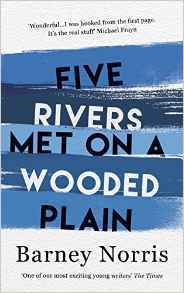
Five Rivers Met on a Wooded Plain by Barney Norris: Barney Norris is a playwright in his twenties, so it’s no surprise that there’s something a little staged to his debut novel. The lives of the book’s five narrators collide one night when a car hits a moped in Salisbury town center. We hear from each protagonist in turn as they reflect on their losses and wonder whether religion – represented by Salisbury Cathedral and the scripture and rituals of Christianity – might help. Rita is the liveliest and most engaging character, difficult as her expletive-strewn narrative might be to traverse. Like David Nicholls, Norris prizes emotional connection and delivers a theatrical plot. If he can avoid the more clichéd aspects of a novel like One Day, he could have a long career in fiction ahead of him. Releases April 21st.
I also post reviews of most of my casual reading and skimming on Goodreads:
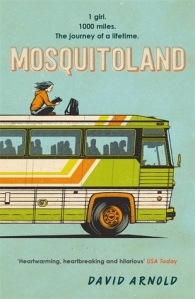 Mosquitoland by David Arnold: I don’t read a whole lot of YA, but the voice of this one captured me right away. Like Hazel in The Fault in Our Stars, Mim (Mary Iris Malone) is a lovably sarcastic oddball – she describes herself as “a young Ellen Page” à la Juno – with some hidden issues that come out over the course of the book. Here Mim’s journey takes the form of a road trip from Mississippi, where she lives with her father and new stepmother, back to Ohio to be with her sick mother. She meets a kooky cast of secondary characters along the way, narrowly escapes danger, and even gets a chance at romance.
A Change of World: Poems by Adrienne Rich: This is a forthcoming Norton reissue of Rich’s first collection from 1951. I’d always thought of her as a later, feminist poet, so it was jolting to see an introduction from W.H. Auden – that made it feel like a real generational crossover. It’s a very impressive debut, full of mannered, rhyme-rich verse. Two favorites were “Walden 1950” (“Thoreau, lank ghost, comes back to visit Concord, / Finds the town like all towns, much the same— / A little less remote, less independent”) and “The Innocents.” I’ll be interested to read some of her later work and see if she loosened up with form. Releases June 21st.
 The Shadow Hour by Kate Riordan: A clever dual-timeline novel with a pleasing Gothic flavor. In 1922 Grace Fairford takes up a governess position at Fenix House near Cheltenham, the very place where her grandmother, Harriet Jenner, worked in 1878. Every few chapters the perspective shifts from Grace (first person) to Harriet (third person). The novel is full of coincidences and the sense of history repeating itself. Riordan’s writing is capable, sometimes clichéd, but the echoes of Jane Eyre and The Turn of the Screw make this a delicious guilty-pleasure read.
Life’s Too Short to Pretend You’re Not Religious by David Dark: Etymologically, the word “religion” means to bind together again. Simply put, Dark’s thesis is that we’re all connected: we are in relationship with the people around us and can’t pretend otherwise. What we need is a shared vision for our shared life, and that involves engaging with other people. No pie-in-the-sky theology here; Dark affirms Daniel Berrigan’s assertion that “the actual world is our only world,” so things like climate change, gun control, immigration, and foreign policy are religious issues because they affect us all in this life. Together we have to imagine another story that isn’t capitalism and American imperialism as usual.
Adios, Cowboy by Olja Savičević Ivančević: In summer 2009, Dada (aka Rusty) returns to her Croatian hometown to care for her mother. Going home facing up to the fact of her brother’s death – when he was 18 he threw himself under a train. “One has to sit down beside one’s demon and mollify it until it’s calm – that’s all, perhaps, that can be done,” she muses. Now for the title: Dada’s late father, brother, and friends (“the Iroquois Brothers”) were all big on cowboys and Indians. When news comes that a spaghetti western actor/director named Ned Montgomery will be passing through town, it causes Dada to think about her father and her brother and, what’s more, about the workings of her own memory.
Now Go Out There: (and Get Curious) by Mary Karr: There’s not much to this Syracuse University commencement speech. Leftovers of sob-story autobiography and clichéd advice cobbled together. Disappointing given how much I loved Karr’s recent The Art of Memoir. For a truly inspirational graduation address, I recommend David Foster Wallace’s This Is Water.

 How to Be Here: A Guide to Creating a Life Worth Living by Rob Bell: Bell left his pastoral role to become a motivational speaker so, unsurprisingly, this book is closer to self-help than theology. He’s good pals with Elizabeth Gilbert, and this book would make a great companion piece to her Big Magic. It’s about how to find what gets you out of bed in the morning and live mindfully. As always, his formatting – bite-size paragraphs, stretching out phrases with line breaks – is slightly annoying. I didn’t learn a whole lot; it was more a case of being reminded of things I knew deep down. He prefaces most chapters with an anecdote about his creative ventures, some of which were utter failures.
And my highest recommendation goes to…
The Summer Guest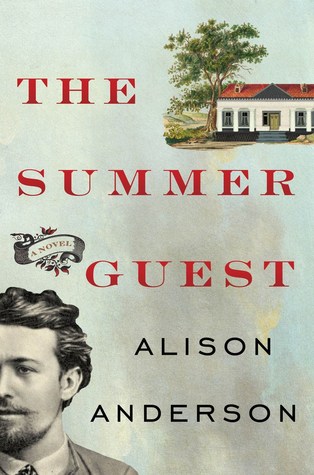 by Alison Anderson: The kernel of the novel is a true story: for two summers in the late 1880s, Chekhov stayed at the Lintvaryovs’ guest house in Luka, Ukraine. One strand of the narration is a journal kept during those years by Zinaida, the family’s eldest daughter, a doctor dying of a brain tumor. Zina’s story is offset by those of two contemporary women. Katya, a Russian émigré in London who’s trying to keep her failing publishing house afloat, sends the never-before-published diary to Ana, a translator based near the French border with Switzerland. There’s a touch of mystery here: where was the diary found? And what became of the novel Chekhov mentions he had in progress? Ana’s search for answers takes her to the Lintvaryov estate, even though Ukraine in 2014 is a hotbed of unrest. Having recently watched the BBC War & Peace miniseries with rapt interest and seen a Tchaikovsky symphony performance, it was the perfect time to get lost in an intricate, playful novel about how Russian literature still resonates. I’ll certainly be looking up Anderson’s other novels.
 Bookish Beck = Rebecca Foster. American transplant to England. Freelance proofreader and book reviewer.
