Getting Real about My “Set Aside Temporarily” Shelf
Mid-November, and I’ve been thinking about how many of the books I currently have on the go I will be able to finish before the end of the year – not to mention whether I can squeeze in any more 2019 releases, or get a jump on early 2020 releases (ha!).
In the back of my mind, however, is some mild, self-induced anxiety. You see, the other year I started an exclusive Goodreads shelf (i.e., one that doesn’t fall into one of the three standard categories, “Read,” “Currently Reading” or “Want to Read”) called “Set Aside Temporarily,” on which I place a book I have put on hiatus for whatever reason, whether I’d read a handful of pages or 200. Maybe a few library holds came in that I needed to finish before a strict due date, or I took on a last-minute review assignment and needed to focus on that book instead.
Usually, though, it’s just a case of having started too many books at once. I’m addicted to finishing books, but also to starting them – often a fresh stack of four or five in one sitting, to add to my 10 or more already on the go. I always used to say that I read 10‒15 books at a time, but in the latter half of this year that has crept up to 20‒25. Sometimes I can manage it; other times it feels like too much, and a few books from the stack fall by the wayside and get stuck with that polite label of “set aside.” It doesn’t necessarily mean that I wasn’t enjoying them, just that they were less compelling than some other reads.

Some of my “set aside” reads, stacked up next to my reading armchair.
So as I contemplated this virtual shelf, which as of the 12th had 33 titles on it, I figured I have the following alternatives for each book: pick it back up immediately and finish it as soon as possible, ideally this year (especially if it’s a 2019 release, so it can be in the running for my Best Of lists); regretfully mark it as a DNF; put it back on the shelf, with or without a place marker, to read some other time; skim to the end if I wasn’t getting on with it particularly well yet want to know what happens; or keep it in limbo for now and maybe read it in 2020.
I told myself it was decision time on all of these. Here’s how it played out:
(* = 2019 release)
Currently reading:
- Let’s Hope for the Best by Carolina Setterwall*
- Savage Pilgrims: On the Road to Santa Fe by Henry Shukman
To resume soon:
- The Easternmost House by Juliet Blaxland* (as soon as my library hold comes in)
- Fleishman Is in Trouble by Taffy Brodesser-Akner*
- The Spirit of Christmas: Stories, Poems, Essays by G.K. Chesterton
- The River Capture by Mary Costello*
- The Scar by Mary Cregan*
- The Envoy from Mirror City by Janet Frame
- Deep Creek: Finding Hope in the High Country by Pam Houston*
- Two-Part Invention: The Story of a Marriage by Madeleine L’Engle
- The Way through the Woods: Of Mushrooms and Mourning by Long Litt Woon*
- Kinds of Love by May Sarton
- All the Lives We Ever Lived: Seeking Solace in Virginia Woolf by Katharine Smyth*
- Dancing with Bees by Brigit Strawbridge Howard*
- A Three Dog Life by Abigail Thomas (a re-read)
- The Dearly Beloved by Cara Wall*
DNFed:
- The Manticore by Robertson Davies – A different perspective isn’t enough to keep me interested in a recounting of the events from Fifth Business.
- The Dovekeepers by Alice Hoffman (even though I’d read 250 pages of the danged thing) – Painstaking but worthy historical fiction.
- Then She Found Me by Elinor Lipman – The first 100 or so pages were pleasant reading during a beer festival, but I had no impetus to pick it up afterwards.
- A Door in the Earth by Amy Waldman* – The first 12% didn’t grab me. Never say never, but I don’t plan on picking it back up soon. Sad, as this was one of my most anticipated releases of the year.
- The Voyage Out by Virginia Woolf – I really tried. It was the third Woolf novel I’d picked up (and put down) in quick succession this year. She’s just such hard work.
Returned to the shelf for another time:
- Ship Fever by Andrea Barrett
- Emerald City by Jennifer Egan
- The Liars’ Club by Mary Karr
- Cider with Rosie by Laurie Lee
- Wait Till I Tell You by Candia McWilliam
- The Seven Storey Mountain by Thomas Merton
- Full Tilt: Ireland to India with a Bicycle by Dervla Murphy
- A Few Short Notes on Tropical Butterflies by John Murray
- Saint Maybe by Anne Tyler
To skim:
- The Yellow House by Sarah M. Broom* – Although very well written, this is dense with family detail, more than I really need.
Still set aside:
- In the Springtime of the Year by Susan Hill – to finish off next spring!
- Bodies in Motion and at Rest: On Metaphor and Mortality by Thomas Lynch (a university library book) – It’s in discrete essays so can be picked up and put down at will.
Some general observations: Recently I’ve lacked staying power with short story collections. However, I find it’s not usually a problem to read a few stories (or essays) and then return to a collection some months later. Memoirs, travel books and quiet fiction can also withstand an interruption. If I’ve put aside a plotty or style-heavy novel, however, that’s a bad sign that I will probably end up DNFing it.
Do you have a physical or virtual shelf of books that are partly read and languishing? How have you tackled it in the past?
All the Books I’ve Abandoned So Far This Year
Hard to believe, but it’s time to start on the mid-year roundups already. I’ll be doing a few posts with statistics on my reading from the first half of 2019: where my books came from, how I fared with my most anticipated reads and how I’m doing towards any projects, the best 2019 releases so far, etc. But first, let’s get this out of the way:
I’ve DNFed 37 books so far this year, equating to roughly 20% of what I started. Although that’s higher than my usual 15% average, suggesting that I’m particularly lacking in stick-to-itiveness lately, I don’t think it’s unreasonable that a fifth of the books I pick up don’t work for me for whatever reason (e.g. tone, voice, writing style, subject matter or similarity to other things I’ve read).
My biannual posts on abandoned books are always perversely popular. If you’re reading this post to feel better about the books you’ve abandoned recently: 1) Welcome! 2) I absolve you of any perceived guilt! 3) I encourage readers to give up on books they are not enjoying – at any time, but as early on as possible. You owe it to yourself to devote your limited, precious time to the books you’ll love and find worthwhile. I apologize in advance for not getting on with a book that you loved.
I won’t mention books I’ve already written about, perhaps in one of my monthly Library Checkout posts. No cover images, tags, links or full reviews here – though I might write that little bit more if I got the book from the publisher. So this is just a text dump, I’m afraid. The titles are mostly in chronological order (with some grouped together); the number of pages I read is generally given in brackets at the end.
The Gunners by Rebecca Kauffman: A group of six kids grew up playing together in the abandoned Gunner house in Lackawanna, New York. They’re now all around 30 and have dispersed to their different lives, but, reeling from the suicide of one of their own, they’ll be brought back together for a funeral. Too much time is spent with Mikey early on, and the sentences don’t flow all that well – the language is a bit simplistic and repetitive. Other reviews have suggested this is a nice read but not all that special. I’ll watch The Big Chill sometime instead. (23 pp.)
Wonder Valley by Ivy Pochoda: There’s a striking opening, as a naked runner bypasses a morning traffic jam in 2010 Los Angeles. We meet a couple of the other main characters, including Ren, who’s come west via a Greyhound bus after eight years in juvenile detention, while they’re stuck in traffic, then cut to Britt, who in 2006 got attracted to a hippie commune near Joshua Tree. The writing is fine, but I didn’t feel invested in any of the characters. (34 pp.)
The Last Samurai by Helen De Witt: Alas, once I got past the prologue I found this impenetrable. It was one of my bibliotherapy prescriptions for uncertainty about whether to have children. I liked the opening legend about an atheist father being talked into attending seminary. The language is repetitive but I thought I could forgive it because it was narrated by an eleven-year-old. But once the book proper starts we’re in Oxford in the 1980s, splitting hairs over translations. I skimmed to page 90 and was ultimately none the wiser about who’s narrating and what’s going on. (20 pp.)
Mr Wrong by Elizabeth Jane Howard: I read the two shortest stories, “Summer Picnic” and “The Proposition.” The former was pleasantly like Elizabeth Taylor or Tessa Hadley lite; I got zero out of the latter. I tried to settle into the opening, title story, but couldn’t.
Underbug: An Obsessive Tale of Termites and Technology by Lisa Margonelli: On the one hand, Margonelli writes enjoyable science for laymen, in a style that reminds me of Ed Yong’s. Termite research has surprising relevance in various fields, such as biofuel production, architecture, and swarm intelligence. On the other hand, I’m simply not interested enough in this set of species. I can imagine having better luck with a book that considered a different group of insects per chapter. My favorite bit was Chapter 13 because it was autobiographical – she tells the ironic story of how termites ate through the wall of her place, and remembers her back-to-nature existence in Maine with a father who trapped and skinned muskrats. I’ll seek out her previous book on petroleum. (131 pp.)
The Hope Fault by Tracy Farr: The style is reminiscent of Virginia Woolf’s, or Tessa Hadley’s, especially as in The Past. The whole family has returned to the ancestral home, which has just been sold and needs to be cleared, in the midst of a deluge. We meet Iris, her grown son Kurt, her niece Lulu, and her ex-husband Paul – with his new wife Kristin and their still-unnamed one-month-old daughter. The shifting POV mostly sticks with Iris. Chapter titles are nicely random phrases plucked from that chapter. The short sections, some of them pure dialogue, are so short you don’t feel you get anywhere or have anything to latch onto. I loved Farr’s previous novel, The Life and Loves of Lena Gaunt, and hoped to love this one too, but the narrative drive just wasn’t there. (44 pp.)
The Heat of the Day by Elizabeth Bowen: I read about the first 35 pages, and in that time hadn’t warmed to any characters or gotten any sense of what this would be about. However, I can see what contemporary authors like A.J. Pearce and Sarah Waters were aiming for. Odd phrasing, too: “By casting about—but then hitherto this had always been done calmly—he had never yet not come on a policy which both satisfied him and in the end worked. There never had yet not been a way through.” (Passive voice, double negatives, and unnecessary verbiage? No thanks.)
The Dinner List by Rebecca Serle: I should have done my homework on Serle; if I had, I would have realized that she writes young adult romances, and though this has been marketed as adult commercial fiction, it still has that YA vibe. The book’s conceit is that the vision board Sabrina’s college roommate Jessica made her do about the five people, alive or dead, whom she’d invite to her ideal dinner party, has become a reality. Short snippets from this dinner – which includes Sabrina’s ex, Tobias; her dead father, Robert, who left her and her mother when she was a little girl; Professor Conrad, her philosophy instructor; Jessica; and Audrey Hepburn – are interspersed with glimpses of Sabrina’s relationship with Tobias, which started by chance one day in Santa Monica and unexpectedly picked up again four years later in New York City. Apart from the lite romance feel, there is lots of weird phrasing: “it came out to be cheaper,” “ripping open a teabag” to make tea (who would do that and why?!), “any way else,” and so on. (65 pp.)
The Altruists by Andrew Ridker: In 2015 Maggie and Ethan Alter, both living in New York City – she a do-gooder who tutors immigrant children and lives so frugally she’s always a little bit hungry; he a compulsive shopper and hermit, since he broke up with his last boyfriend – unexpectedly get letters from their father, Arthur, a widowed engineering professor, inviting them home for spring break. Ridker writes well, as you’d expect from any Iowa Writers’ Workshop graduate. This reminded me most of The Futures by Anna Pitoniak, with traces of Jonathan Franzen or Jonathan Safran Foer in the mix of quirky and cynical characters. But in the chunk I read, I didn’t warm to any of the central characters and never even really got a clear sense of them. I’ll keep an eye out for what Ridker does and maybe try something else by him. (50 pp.)
Sea Monsters by Chloe Aridjis: I had no idea what’s happening (apart from nothing much), except that a 17-year-old girl is exploring derelict mansions in a Mexican town with one guy or another. The atmosphere is well done, but there’s no way the nonexistent plot can keep me reading for another 145 pages. Shame I never even got to those Ukrainian dwarves. (30 pp.)
Children of God by Mary Doria Russell: The Sparrow was one of my favorite backlist reads last year, and when I heard there was a sequel I rushed to put it on my wish list and got a copy for my birthday. While I was, of course, intrigued to learn that a character we thought was dead is still alive, and it was nice to see Emilio Sandoz, the broken priest, having a chance at happiness back on Earth, I couldn’t get myself interested in the political machinations of the alien races. Without the quest setup and terrific ensemble cast of the first book, this didn’t grab me. I’ll pass it on to my minion (aka husband) and he can tell me if anything of interest happens. (60 pp.)
Memories of the Future by Siri Hustvedt: “I am writing not only to tell. I am writing to discover. … I have always believed that memory and the imagination are a single faculty.” As clever a meditation as this is on identity and memory, at a certain point I found it a chore to pick up. I have no objection to autofiction, but I wanted more current wisdom than twentysomething folly, and what I’ve read about the later #MeToo theme suggests that it is unfortunately heavy-handed. I still plan to read the three Hustvedt novels I haven’t read yet, as well as her memoir; I’ll also dip into her essays and poetry. I think she’s an immense talent; this one just wasn’t for me. (112 pp.)
The Secret Barrister: Stories of the Law and How It’s Broken: Although I’ve lived in the UK off and on for 14 years now, I still know very little about its politics and particularly the criminal justice system. I was interested to learn more, and found the opening chapter usefully basic (judges, solicitors, barristers, etc.). The following chapter on magistrates’ court lost me; all I gleaned was that it’s a Bad Thing because the accused don’t get a fair shake. I can’t decide if you’d need to know more or less about the law to find this engaging; I have a law clerk friend who read it and enjoyed it well enough while also finding it depressing. (73 pp.)
A View of the Empire at Sunset by Caryl Phillips: I read the first chapter and skimmed another two. I’m afraid this is utterly lifeless writing; informative but not at all inviting.
Our Lady of Everything by Susan Finlay: The blurb sounded irresistible, but the writing was an instant turn-off. (Starting with a 10-step “Banishing Ritual” was an awful idea; the introduction to two main characters then wasn’t inviting; the following chapters all introduce a different point-of-view character.) (5 pp.)
Liar by Ayelet Gundar-Goshen: I liked the Atonement-style setup: a 17-year-old ice cream scooper has a run-in with a disgruntled, washed-up reality show star and allows rumors of an attempted sexual assault to bloom. Nice biblical echoes and metaphors, though some are a bit belabored (e.g. “Nofar’s guilt, like a Persian cat, rubbed her legs fleetingly, sat for a brief moment on her lap, then moved onward”). Mostly I just felt no pull to keep going and find out what happened. (63 pp.)
Prayer: Letters to Malcolm by C.S. Lewis: Lewis’s last book is a fictional one-sided correspondence that debates the nature of prayer. I thought I might be able to interest myself in prayer as an academic matter, but it turns out that not believing in it means I don’t care enough. (26 pp.)
A Handful of Dust by Evelyn Waugh: Mitford-esque flippant depiction of some upper-class types. (16 pp.)
The Bibliophile’s Dictionary: 2,054 masterful words and phrases by Miles Westley: A secondhand purchase from The Book Shop, Wigtown. The idea is a treasury of obscure vocabulary words, divided into thematic categories and grouped by synonyms. Each word/phrase is illustrated with an example of its use in context in a work of literature, or in a few cases a newspaper article. I kept it as a bedside book for a number of weeks and moderately enjoyed reading a few entries per night. My main annoyances were that Westley often confuses forms, giving a definition for the adjective when he’s using the noun or vice versa, and that his field of reference is pretty narrow: he’s always quoting from authors like Saul Bellow, Pat Conroy, Jack London and Tom Wolfe – dead white guys. I’ll keep this around as a reference book but can’t see myself reading it all the way through. (50 pp.)
The Pocket Mirror by Janet Frame: Having read from Frame’s fiction and memoirs, I wanted to dip into her poetry as well. This collection of free verse from 1967 is mostly written in the first person and concerns everyday local sights and sounds: beaches, town scenes, the view out the window of a morning, and so on; some are short while others are rambling. However, there are also several poems of death and war, and a particular obsession with napalm. While there’s nothing especially off-putting about these poems, nor are they very compelling in style or theme. (22 pp.)
In West Mills by De’Shawn Charles Winslow: There are echoes of Toni Morrison (especially Song of Solomon) in this debut novel set in the small fictional town of West Mills, North Carolina. Wilson has crafted a memorable antiheroine in Azalea “Knot” Centre, who likes to pretend she doesn’t care what people think about her but actually cares deeply. Alcohol and sex are her two vices, and in the 1940s her two out-of-wedlock daughters are secretly adopted by other families in the town, such that she can watch them grow up. The plot is initially slow-moving – it takes nearly half the length to introduce all the characters and deal with Knot’s first baby – but then leaps ahead to 1960 and further community entanglements. The rendering of the local dialect struck me as hokey, and none of the secondary characters seem worthy of sharing a stage with Knot. (162 pp.)
Convenience Store Woman by Sayaka Murata: I feared an Eleanor Oliphant trajectory in this story of a thirtysomething woman who’s worked in the same convenience store for half her life and only barely succeeds in convincing herself and others that she’s a normal person. Even in the little I read, the language was quite repetitive, with Keiko several times describing herself as just a cog in society’s workings, and frequently repeating the rote conversations she has with customers. (30 pp.)
The Rapture by Claire McGlasson: I would normally thrill to any book about a cult, but the writing in this one – maybe it was Dilys’s narration, I don’t know – never grabbed me. What a gorgeous book, though: corduroy-type ridging on the yellow cover, and a colorful deckle-cut dust jacket (with a jackdaw perched in an aggressively ordinary bedroom) that doesn’t quite cover the whole thing. Kudos to Faber for the design. (22 pp.)
I’m so weary of books of anonymized case studies:
- Growing Pains: Making Sense of Childhood, A Psychiatrist’s Story by Mike Shooter
- Seven Signs of Life: Stories from an Intensive Care Doctor by Aoife Abbey
- The Heartland: Finding and Losing Schizophrenia by Nathan Filer: Filer was completely unprepared when he arrived to work in a psychiatric hospital outside Bristol. This book is a record of what he learned: about the history of schizophrenia as a diagnosis, its social stigma, and the experience of living it via speaking to patients and hearing their stories. I read the first of those stories, about Erica, a fashion journalist who became so paranoid that she was being hunted down for committing unwitting crimes that she tried to commit suicide. Compared to Nancy Tucker’s That Was When People Started to Worry, this is dull and not very enlightening. I also found myself irritated by Filer’s habit of hedging around all his terms with “so-called,” and the title is all wrong – people seeing just the two words “The Heartland” on the spine will have no idea that this is a book about mental illness. (They might be thinking it’s about the American Midwest, or whatever.) (58 pp.)
The Narrow Land by Christine Dwyer Hickey: I was attracted by the cover and the prospect of learning about the Hoppers’ marriage, but the first section sticks with a small boy, a German refugee, heading up to Cape Cod. Mrs. Hopper is a more appealing character, yet somehow I never gained traction with the story. (46 pp.)
A Stranger City by Linda Grant: An unidentified woman who jumped off a bridge in London is buried in a paupers’ grave. Flashback to seven months earlier and various conversations and train rides, promising that we’ll learn how these characters are interconnected. The prospect sounds similar to John Lanchester’s Capital, but none of the characters, nor the writing, were interesting enough to bait me. (32 pp.)
The Rest of the Books I Abandoned in 2018
Almost without exception, if I do not finish a book it’s because I WAS BORED AND COULDN’T BE BOTHERED. But that’s obviously not an acceptable review, even if it is the truth, so I always push myself to say a little more. What didn’t work for me? Why couldn’t I connect? I try not to go on too much about the books I don’t finish, since I feel a touch guilty about them and it doesn’t particularly serve anyone to list my failures. However, these occasional posts on abandoned books are very popular, I think because readers want permission to give up on books they’re not enjoying. (You have my express permission!) But also, if you enjoyed some of the below and think I should give them another try, do say. I apologize in advance for not getting on with a book you loved.
These are all the DNFs since late June, not mentioning again any that I described in my monthly Library Checkout posts. No tags, cover images, links or full reviews here – though I might write that little bit more if I got the book from the publisher. In total this year I abandoned about 50 books, equating to roughly 14% of the ones that I started. They are in chronological order of my attempted reads, with the pages or percentages read in brackets.
A Degree of Mastery: A Journey through Book Arts Apprenticeship by Annie Tremmel Wilcox: I bought this from The Open Book (Airbnb) shop in Wigtown. Of course I love books as physical objects, and repairing damaged books was my favorite task when I worked in a university library, so I thought I’d enjoy learning about the traditional bookbinding techniques the author learned from Bill Anthony at the University of Iowa. Yet this was somehow disappointingly tedious with technical detail. [57 pages]
Nevermore by Andrew McNeillie (poetry): I enjoyed the short bird portraits that form “Plato’s Aviary,” and “Elegy,” about the advancing dearth of common songbirds. None of what followed, especially the long ones, drew me in. [61 pages]
Kinship Theory by Hester Kaplan: “Maggie Crown was pregnant with her daughter’s baby,” the first line tells us, acting as a surrogate to fulfill Dale’s overpowering desire to become a mother. It’s a great setup, and I warmed to 48-year-old Maggie with her “burden of maternal guilt” she hopes to ease through this sacrificial act, but not to Dale (the odd, male-sounding name doesn’t help). I think this could have been a good short story, but I don’t have the patience to follow such a slow and quiet plot through nearly 300 pages. [24 pages]
The Shakespeare Requirement by Julie Schumacher: This sequel to Dear Committee Members was only mildly amusing. Jason Fitger is now Payne’s chair of English, a shabby and underfunded department that always seems to get passed over while Economics receives special treatment. His hapless floundering – wasp stings, dental treatment, accidentally getting high on pills before a party – induced a few cringes but no real laughs. The supporting characters are well drawn, but overall I had zero qualms about setting this aside. [44%]
The Librarian by Salley Vickers: The vintage cover design is adorable, and probably drew me in against my better judgment. An idealistic young woman takes up the post of Children’s Librarian in a small town populated by good-hearted busybodies and urchins. On the twee side of pleasant. Promises to be a predictable love story. An excuse for the author to list off her favorite books from childhood? I’m not sure I’d try anything else by Vickers. [48 pages]
If You Leave Me by Crystal Hana Kim: This feels SO similar to Pachinko that I was unable to evaluate it on its own merit. [11%]
Spectra by Ashley Toliver (poetry): I couldn’t make much literal or metaphorical sense out of these poems at all. I highlighted one passage I kind of liked – a play on the two meanings of ‘bulb’? – on my Kindle: “Away from the glow, a dumb bulb freezes in its wintery malaise, covering the rest of the light.” [37%]
Our Homesick Songs by Emma Hooper: I should have known from my experience with Etta and Otto that Hooper’s style is too twee for me, but I was lured in by the accordion on the cover! I did like the existence of the library boat and Cora redecorating the rooms of a derelict house to match the latest travel book she’s read. [14%]
When Rap Spoke Straight to God: A Poem by Erica Dawson: Not for me at all; I should have figured that out before even opening my Edelweiss download. [14%]
Pretend I’m Dead by Jen Beagin: I read the first long chapter (almost like a standalone novella) called “Hole.” Mona, a 23-year-old art school dropout turned cleaner, was raised by a cousin after her addict parents’ death. Like Beagin, who cleaned houses for five years to support her art, Mona collects vacuum cleaners and considers vacuuming her primary hobby. She enjoys the repetition and inadvertent intimacy of her job – it gives her glimpses into other people’s inner lives. In her spare time she volunteers for a needle exchange program and thus falls in with “Mr. Disgusting,” the nickname she gives to a thief and Dumpster diver 21 years her senior. It’s all super-quirky and unnecessarily crass. The closest comparison I can make is with Miranda July’s The First Bad Man. Throughout I kept thinking to myself, this should really be written in the first person. This is a strong character who can describe things for herself. The style is readable; I could have forced myself through the last two-thirds. But with so many other books waiting for me, I decided I didn’t want or need to keep going. [65 pages] My apologies and thanks to Oneworld for the review copy.
Famous Adopted People by Alice Stephens: This felt very college literary magazine. Perfectly competent writing, but with so much thrown in: details, descriptions, profanity and sassy slang in the dialogue. After skimming the first couple of chapters I’d warmed to none of the characters and had no clear idea of where this was going. I wonder if the opposite to the previous book is true: third person would have been a better choice. Each chapter opens with a Korean propaganda image and an epigraph from a famous adopted person. [5 pages]
The Western Wind by Samantha Harvey: Set in the English village of Oakham in 1491, this is narrated by local priest John Reve, who learns more than he might prefer to know about his neighbors through the confession box. The writing and the period detail are strong, but there’s little narrative drive despite Harvey’s unusual strategy of proceeding backwards and this ostensibly being a (murder) mystery. Reve writes of the “endless watermill of days,” and though the action takes place over just four days it still has that repetitive quality: a cycle of confessions, meals, and village rituals that doesn’t feel like it’s going anywhere. [60 pages]
Swan Song by Kelleigh Greenberg-Jephcott: Full of glitzy atmosphere contrasted with washed-up torpor. I have no doubt the author’s picture of Truman Capote is accurate, and there are great glimpses into the private lives of his catty circle. I always enjoy first person plural narration, too. However, I quickly realized that I don’t have sufficient interest in the figures or the time period to sustain me through nearly 500 pages. [18 pages]
Middle England by Jonathan Coe: In 2015 I very much enjoyed Number 11, Coe’s state-of-the-nation novel about wealth, celebrity and suspicion in contemporary England. Middle England uses roughly the same format, of multiple linked characters and story lines, and seems to make many of the same points, too. However, by embedding his book so completely in 2011–18 history, he limits its fictional possibilities. I often wonder how the history books will look back on recent events (Brexit, Trump), but revisiting them in fiction feels depressing and pointless – I was there, I remember all this stuff, I don’t need reminding of how we got here. The book is far too long and there were no characters I immediately latched onto. [22 pages] My apologies and thanks to Viking for the review copy.
The Man Who Came Uptown by George Pelecanos: I’m interested in trying more literary/crossover crime novels and liked the synopsis of this one, but didn’t enjoy the hardboiled style. [20 pages]
A Well-Behaved Woman by Therese Anne Fowler: “Alva did not need to love William Vanderbilt; she needed only to marry him.” I was a huge fan of Fowler’s Z and jumped at the chance to read this, but found the first couple of chapters dull. Alva is one of four sisters and has an invalid father. She’s desperate not to become a spinster or a caregiver, so she goes along with her best friend Consuelo’s plan to set her up with W.K. Vanderbilt, even if they share lingering snobbism about his nouveau riche background. There’s always a danger of historical fiction devolving into a biography-lite information dump about social history (manners, fashion, etc.), and unfortunately that felt like the case here. I might have been able to stomach Alva as part of a group biography, but she wasn’t promising as the focus of a novel. [25 pages] My apologies and thanks to Two Roads for the review copy.
Sea of Ink by Richard Weihe: Lots of names and dates of Chinese dynasties; not a lot of story. Started for a potential Novellas in November review. [7 pages]
The House of Impossible Beauties by Joseph Cassara: I couldn’t get into the sassy Spanglish voice. Doesn’t feel like a book for me, which is a real shame as I won a signed copy in a Oneworld Twitter competition. [5 pages]
Winter by Ali Smith: I’ve read six of her books before, but it’s looking unlikely that I’ll try another at this point (though I might make an exception for How to be both). I knew what to expect style-wise: no speech marks; a fairly repetitive stream-of-consciousness studded with subtle jokes and wordplay. I was enjoying the mock-Dickensian opening and Sophia’s run-in with British bureaucracy (a bank this time, as opposed to the post office in Autumn) on Christmas Eve. But by the time Art came along, I was done. [47 pages]
Crimson by Niviaq Korneliussen [translated from the Greenlandic by Anna Halagar]: I was keen to try this because Greenland has been one of my surprise reading themes this year in both travel books and novels, but this was definitely not for me. I didn’t get far enough into the story to comment on it, but what I did read was drenched in sex talk, with f***ing appearing in pretty much every sentence. One line I liked: “Dry kisses stiffening like desiccated fish.” [7%]
Don’t Skip Out on Me by Willy Vlautin: I picked up a free copy at the Faber Spring Party. It’s perfectly serviceably written in a contemporary Western style and I’m convinced by the setting, but I have no sense of the characters, especially the main character, and no desire to accompany him for another 250+ pages. I’ve seen the movie of Lean on Pete, so I know the sort of emotional tenor to expect. Sorry, Willy. Maybe I’ll try The Free instead. [30 pages]
The Madonna of the Mountains by Elise Valmorbida: Also from the Faber Spring Party. Nice writing, nice details. Italian woman fearing spinsterhood: “She must keep the wedding sheet clean and white, like her soul, like her body, immaculate and new. But she is old. Twenty-five years old and untouched by a husband. Her fingers are without thimbles. She has hands that can wring an animal’s neck. Arms to stir a pot of boiling polenta. She’s a good investment for any man, if only he can overlook her age.” I never built up momentum. [20 pages]
House of Glass by Susan Fletcher: I liked the Jane Eyre vibe of this novel about a young woman with osteogenesis imperfecta who travels from London to a rundown Gloucestershire manor house to create a collection of Kew Gardens’ plants. Clara seems feisty and there’s a neat connection between her brittle bones and the glasshouse she’s to set up. But there’s not enough suspense to this slow build, and based on the other Fletcher novel I read the payout won’t be sufficient. [87 pages]
What books disappointed you this year? Were there any you just couldn’t finish?
All the Books I’ve Abandoned So Far This Year
I abandon about 15% of the books I start. I try not to go on too much about the books I don’t finish, partially because a DNF still feels like something of a failure on my part (to choose the right book; to stick with what I’ve started) and partially because a book blog would ideally be a place where you just wax lyrical on the books that you love. But every time I have written abandoned books posts they have been absurdly popular, so if you need encouragement to ditch the books that aren’t working out for you right now, do take this as my blessing!
If there are books on my list that you have finished and loved, I’d be glad to hear from you. Equally, if there are some here that you also abandoned, do reassure me that I’m not totally off base. I know I can be inconsistent in how I deal with DNFs: how many pages I give them, how much I write about them, and whether I choose to rate them. If I feel I gave a book enough of a try to know what I would have thought of it overall, I go ahead and rate it. Others will almost certainly think that this is unfair to the author and their hard work. Thoughts?
These are in chronological order of my attempted reads, with the pages or percentages read in parentheses. I’ve omitted any books I’ve already written about on the blog.
The Light of Amsterdam by David Park: This is the second time I’ve been seduced by Park’s amazing-sounding plots – the blurb for this one and The Poets’ Wives are ever so appealing – but ended up unable to engage with them. Here, not one of the characters interested me. Park’s writing is noteworthy, but a bit belabored: there are more words and images there than you really need to make the point (“The solace he tried to take in his intellectual superiority was thinning in spiteful synchronicity with the thinning of his hair”; “in this game, intensity or passion were the illegitimate children of commitment”). (32 pp.)
Census by Jesse Ball: I’d enjoyed Ball’s previous novel, How to Start a Fire and Why. This one is very different, though – probably closer to his usual style, based on accounts I’ve read from others. It’s strange, dreamy, and philosophical. With its flat, simple, repetitive language; short sentences and paragraphs; and no speech marks, it is fable-like and oblique, and altogether hard to latch onto. The author opens by saying this is a tribute to his brother, who had Down’s syndrome and died 20 years ago. But in the portion that I read, the character with Down’s syndrome has no apparent presence or personality. People who like dystopian allegories (Saramago and the like?) may well enjoy this, but it wasn’t for me. (10%) 
Exodus: A Memoir by Deborah Feldman: A memoir about a woman’s loss of faith – here, that involved leaving her marriage and her Hasidic Jewish community – should be right up my alley, but I had trouble connecting with Feldman’s voice. I didn’t sense honest wrestling, just hipster angst. Should I bother trying her previous memoir, Unorthodox? (20 pp.)
Tender by Belinda McKeon: I could relate to Catherine, an awkward and initially unconfident university student who doesn’t know what she’s good at. Perhaps because I’ve never had close male friends, though, I found it harder to understand her intimate friendship with James. I liked their snappy conversations, but the run-on nature of the narration was slightly off-putting. I would try other work by McKeon, or possibly even give this one another go some years in the future. (140 pp.) 
The Man on the Middle Floor by Elizabeth S. Moore: Initially I enjoyed the first-person voice of Nick, who is on the autism spectrum and relies on careful weekly schedules and lists of rules of how the world works to fit in. However, the second section featuring him is ill-advised and damaging, branding ASD people as violent and horny. All really rather unpleasant, with two of the main characters walking stereotypes and undistinguished writing. (16 pp. plus some further skimming)
Life in the Garden by Penelope Lively: This is a gorgeous physical book, but inside it’s writing by numbers: It feels so stiff you can see how Lively filled in an outline. One chapter even ends with “This has been a discussion of the written garden”. Early chapters are on the history of gardens, gardens as metaphors, and gardens in literature (Vita Sackville-West, Elizabeth von Arnim, the Sitwells, et al.). I think you’d have to be much more of a gardening enthusiast than I am – I’m a lazy, frustrated amateur at best – to get a lot out of this. (79 pp.) 
The Mermaid and Mrs. Hancock by Imogen Hermes Gowar: Gowar has an accomplished and knowing narrative voice, and the historical setting is totally convincing. But I didn’t get drawn into the story. A merchant unwittingly acquires a hideous fish-like creature and decides to make as much money from displaying it as he can. Meanwhile, a high-class madam decides she needs a new gentleman protector for one of her best whores. Given the title, I think I know what we can expect. The scenes set in the brothel particularly bored me, and the thought of another 350+ pages appalled me. (70 pp. plus some further skimming)
Things Bright and Beautiful by Anbara Salam: I had been looking forward to this historical novel about a missionary marriage in the South Pacific. Unfortunately, I did not find it compelling in the least. Even the twist in the last line of the prologue was not enough to keep me reading. You might try Euphoria by Lily King instead. (6%)
Leap In: A Woman, Some Waves and the Will to Swim by Alexandra Heminsley: I really enjoyed Part 1, which is about leaping into life, whatever that means for you. For her it was learning to swim, undertaking outdoor swimming challenges everywhere from her hometown of Brighton to Ithaca, Greece, but also getting married and undergoing IVF. I especially appreciated her words on acquiring a new skill as an adult and overcoming body issues. But then it seems like her publishers said, “Meh, too short; add in more stuff!” and so we get the history of swimming, what gear you should buy, FAQs, etc. – boring! (Part 1) 
The Lost Girls of Camp Forevermore by Kim Fu: We get a brief introduction to a set of nine- to eleven-year-old campers from the early 1990s on an isolated overnight adventure – they’re pretty hard to keep straight – before diving deep into one’s life for the next 20+ years. The long interlude means Fu doesn’t sustain suspense about whatever bad thing happened when the girls were campers. A disappointment after For Today I Am a Boy. (86 pp.)
The Underneath by Melanie Finn: I requested this on the strength of Finn’s previous novel. Jumping between italicized passages set in Africa and Kay and Michael’s troubled marriage playing out its end in Vermont 10 years later, the narrative feels fragmented. Another strand is about Ben of Comeau Logging and his drug-addicted friend Shevaunne. It’s clear these subplots will meet up at some point, but I didn’t have the patience to hang around. There is a lot of gritty violence towards animals, too. (15 pp. plus some further skimming)
Carry On, Warrior: The real truth about being a woman by Glennon Melton: Melton was an alcoholic and bulimic for nearly 20 years until she found herself pregnant and cleaned up her act, fast. Her approach here is like a cross between Brené Brown, Elizabeth Gilbert and Anne Lamott: generically Christian encouragement to be your authentic self, do your best work, and choose love. But something about the voice grated, and the short essays felt repetitive. (37 pp.)
Life & Times of Michael K by J.M. Coetzee: I should know by now that this is just the sort of book I hate: a spare, almost dystopian allegory that’s not rooted in time or place and whose characters are symbols you hardly care about. The Childhood of Jesus was similar. This starts off as Michael K’s quest to get his ailing mother to Prince Albert, but that’s very soon derailed, and with it my interest. (20 pp. plus some further skimming)
The Conservationist by Nadine Gordimer: Alas, I was 0 for 2 on South African Booker Prize winners. Nice landscape descriptions, but despite the discovery of a body there’s no narrative momentum, and one doesn’t warm to Mehring. My favorite passage, with ironically apt adjectives in bold, was “The upland serenity of high altitude, the openness of grassland without indigenous bush or trees … A landscape without theatricals except when it became an arena for summer storms … – a typical Transvaal landscape, that you either find dull and low-keyed or prefer to all others (they said).” (44 pp.)
The Trick to Time by Kit de Waal: There’s nothing wrong with the book per se; I just wasn’t compelled to read more. Mona is a lonely 60-year-old who runs a toy shop in a seaside town and makes custom-designed dolls. There are some major losses in her past, at first just hints and then whole stories. In memory Mona can relive the limited moments she had with her loved ones. I could recommend this to fans of Rachel Joyce – the story line is particularly reminiscent of The Unlikely Pilgrimage of Harold Fry and The Snow Garden – but wonder if de Waal’s previous book would feel more original. (70 pp.)
The Best of Everything by Rona Jaffe: I had a weird reverse case of déjà vu: this is awfully similar to Mad Men, Suzanne Rindell’s Three-Martini Lunch, and A.J. Pearce’s Dear Mrs Bird, though of course they would have been based on Jaffe’s novel rather than the other way round. Caroline Bender, fresh out of a broken engagement, arrives for her first day as a typist at a New York City publishing house and has to adjust to catty office politics. I think I’ll enjoy this, but need to find another time when I can give it my full attention. (Ch. 1)
The Day that Went Missing: A Family Tragedy by Richard Beard: In August 1978, when the Beard family was on holiday at the beach in Cornwall, nine-year-old Nicholas was taken by the undertow and drowned. Eleven-year-old Richard was the last person to see him alive. He digs up evidence and stories of who Nicky was in his brief life and what exactly happened on that fateful day. The matter-of-fact, even cavalier, tone detracts from any potential emotional power. The other problem is there’s simply not very much to say about a nine-year-old and his rather average English family. (28 pp. plus some further skimming)
The Lido by Libby Page: The kindest word I could apply to the prose is “undemanding.” I’d hoped the charm of a story about a lonely twentysomething journalist and an octogenarian who band together to rescue their local swimming pool would outweigh the dull writing, but not so. Comparisons with Eleanor Oliphant didn’t fill me with confidence, either. (25 pp.)
The Great Believers by Rebecca Makkai: There’s a near-contemporary story line that’s not very compelling; while I enjoyed the 1980s strand about a group of gay friends in Chicago, there are a lot of secondary characters we don’t get to know very well, plus the details of Yale’s art deal slow down the narrative. I really wanted to appreciate the book more because I loved Makkai’s two previous novels so much, but I didn’t feel the impetus to continue. (50 pp. plus some further skimming)
A Long Island Story by Rick Gekoski: I loved Darke, so jumped at the chance to read Gekoski’s second novel. I liked our introduction to mother Addie and father Ben, who works for the Department of Justice but has ambitions as a writer so stays up until all hours typing. They drive out with kids Becca and Jake one summer morning to Long Island to stay with Addie’s parents, Maurice and Perle, at their bungalow. I didn’t sense a lot of promise. It’s interesting to see in the acknowledgements that Gekoski originally tried writing this as a memoir of his 1950s childhood. I think that could have been much more interesting. (35 pp.)
An Actual Life by Abigail Thomas: Thomas writes terrific memoirs-in-essays, so I was intrigued to try her fiction. Nineteen-year-old Virginia got pregnant the first time she slept with Buddy; now she’s married to him and a stay-at-home mother to Madeline. This reads like a cheap knockoff of Anne Tyler, and the shortage of punctuation is maddening. (46 pp.)
The Book of Salt by Monique Truong: I never warmed to the voice of Bình, the Vietnamese cook for Gertrude Stein and Alice B. Toklas in 1930s Paris, nor was I interested enough in what I read about the “Mesdames” to continue getting to know them. I found the narration overwritten: “This language that I dip into like a dry inkwell has failed me. It has made me take flight with weak wings and watched me plummet into silence.” I couldn’t resist the terrific setup, but the delivery was ever so slightly dull. (31 pp.)
Third Blog Anniversary
Hard to believe, but I’ve only been blogging for three years as of today. It feels like something I’ve been doing forever, but at the same time I still consider myself a newbie. This is my 382nd post, so I’ve been keeping up an average of 2.5 posts a week.

By Joey Gannon from Pittsburgh, PA (Candles) [CC BY-SA 2.0 (http://creativecommons.org/licenses/by-sa/2.0)%5D, via Wikimedia Commons.
I’ve particularly enjoyed doing author Q&As and highlighting seasonal reads, novellas, books about cats, and physical book traits. I especially like writing up bookshop visits and other literary travels, and discussing literary prizes. My supply of graphic novels seems to have dried up; for new releases I focus on literary fiction, historical fiction and memoirs.
Straightforward book reviews have always been less popular than book lists and other more tangentially book-related posts. Library Checkout posts are consistently well-liked, as were the “Books in Brief” sets of five mini-reviews I used to do. As I’ve noted before, my posts on abandoned books are always perversely popular.
Some of my favorite posts from the past year were on World Kidney Day, Mother–Daughter Author Pairs, and Book Hoarding, and my review in verse of Jonathan Eig’s Ali: A Life.
The numbers of likes seem to be less than informative as they simply reflect a growing number of followers – many of my recent posts have averaged 20–25 likes – so I prefer to look at comments, as it means people are truly reading and engaging. In terms of numbers of comments, my top posts of all time appeared in the last year and were:
- Bibliotherapy appointment
- Books in Brief, May 2017 (featuring books by Sebastian Barry, Tracy Chevalier, Thomas H. Cook, Nicole Gulotta and Elizabeth Hay)
- (Tied for 3rd) Booker Longlist 2017 & Jacob’s Room Is Full of Books review
Thanks to everyone who has supported me this past year, and/or all three years, by visiting the site, commenting, re-tweeting, and so on. You’re the best!
The Rest of the Books I Abandoned in 2017, and the Year’s Disappointments
My abandoned books posts are always perversely popular, garnering nearly twice as many views as many of my reviews. This seems to be because fellow readers are secretly (and a bit guiltily) looking for permission to give up on the books they’re not enjoying. I hereby grant you my blessing! If after 25 pages or so a book is not grabbing you – even if it’s a bestseller, or a book all the critics or bloggers are raving about – have no shame about putting it down. You can always change your mind and try it another time, but ultimately you are the arbiter of your own internal library, and only you can say whether a book is for you or not.
That said, here are all the rest of the books I’ve abandoned since May’s post (not mentioning again any that might have come up through my Library Checkout or monthly preview posts). I don’t write full reviews for DNFs, just a sentence or two to remind myself of why I gave up on a book. (In chronological order of my reading.)
Dear Mr M by Herman Koch: I didn’t even make it past the first few pages. I wasn’t at all engaged, and I couldn’t now tell you a single thing about the book.
Stay with Me by Ayobami Adebayo: I started this for a potential BookBrowse review and it felt derivative of every other African-set book I’ve ever read. It was difficult to see what made it original enough to be on the shortlist for the Women’s Prize for Fiction. (DNF @ 15%)
Reservoir 13 by Jon McGregor: I feel bad about this one because so many discerning readers admire it. I thought I knew what to expect – lovely writing, much of it descriptions of the natural world and the daily life of a small community – but I guess I hadn’t fully heeded the warning that nothing happens. You hear a lot about Hardyesque locals you can’t keep straight (because what do they matter?) but never anything about what happened to the missing girl. Couldn’t hold my interest, but I won’t rule out trying it again in the future. (DNF @ 15%)
My Absolute Darling by Gabriel Tallent: I’d heard amazing things about this debut novel and was indeed impressed by the descriptive language and characterization. But if you know one thing about this book, it’s that it’s full of horrifically matter-of-fact scenes of sexual abuse. When I reached the first of these I couldn’t go on, even though I was supposed to review this for the Pittsburgh Post-Gazette. Luckily my editor was very understanding. (DNF @ 6%)
Idaho by Emily Ruskovich: I’d heard a lot of pre-publication buzz about this book, which came out in January, and always meant to get around to it. The problem is likely down to expectations and a surfeit of information. Had I come to this knowing little to nothing about it, perhaps I would have been drawn into the subtle mystery. (DNF @ 7%)
The 7th Function of Language by Laurent Binet [trans. from the French by Sam Taylor]: HHhH was brilliant, but this one’s cleverness passed me by. I could probably sustain my interest in a playful mystery about linguistics and ‘the death of the author’ for the length of a short story, but not for nearly 400 pages. (DNF after 40 pages)
Future Home of the Living God by Louise Erdrich: This starts out feeling like the simple story of Cedar meeting her biological Native American parents and coming to terms with her out-of-wedlock pregnancy. It takes a long time to start resembling the dystopian novel it’s supposed to be, and the signs that something is awry seem too little and come too late to produce even mild alarm. I’d try something else by Erdrich, but I didn’t find her take on this genre worthwhile.(DNF @ 32%)
The Picture of Dorian Gray by Oscar Wilde: I think the central problem here was that I’d seen a theatre adaptation of the novel less than a month before and the story was too fresh in my mind; there were no plot surprises awaiting me, and the scenes involving the painting itself, which I was most interested in reading for myself, felt ever so melodramatic. (DNF after 70 pages)
The Comfort Food Diaries: My Quest for the Perfect Dish to Mend a Broken Heart by Emily Nunn: After a dear brother’s suicide, a breakup from her fiancé, and a couple of spells in rehab to kick the alcohol habit that runs in her family, Nunn set off on a quest for what people across the country consider to be comfort food. She starts with a visit to a cousin in the South and some indulgence in ham biscuits and peanut brittle. Like Life from Scratch by Sasha Martin, this is too heavy on the sad backstory and not quite enough about food. (DNF @ 25%)
The Unseen by Roy Jacobsen [trans. from the Norwegian by Don Bartlett and Don Shaw]: A subtle story of a fishing/farming family carving out a life on a bleak Norwegian island and dreaming of a larger life beyond. I can’t think of anything particularly negative to say about this; it just failed to hold my interest. I read over a third while on holiday in Amsterdam – reading it by the coast at Marken felt particularly appropriate – but once we got back I got caught up in other review books and couldn’t get back into it. (DNF @ 41%)
Favorite lines: “Nobody can leave an island. An island is a cosmos in a nutshell, where the stars slumber in the grass beneath the snow. But occasionally someone tries.”
The Woman on the Stairs by Bernhard Schlink [trans. from the German by Joyce Hackett and Bradley Schmidt]: I planned to review this for German Literature Month back in November. To start with it was vaguely reminiscent of The Last Painting of Sara de Vos and Me and Kaminski, with an artist trying to micromanage the afterlife of his painting and keep hold of the wife he stole off its owner, but it quickly tailed off. The narrator, who is the lawyer representing the painter, soon declares himself in love with the portrait subject – a sudden disclosure I couldn’t quite believe. (DNF @ 23%)
Her Body and Other Parties by Carmen Maria Machado: I read 4 out of 8 stories. Machado writes bizarre, sex-saturated mash-ups of fairy tales and urban legends. My favorite was “Mothers,” about queer family-making and the abuse lurking under the surface of so many relationships. This author is absurdly good at lists, all through “Inventory” and in the shrine to queer icons in “Mothers.” But all the stories go on too long (especially the Law and Order, SVU one, which felt to me like pure filler) and would no doubt be punchier if shorter. Not a book for me, but one I’d recommend to others who’d appreciate the edgy feminist bent.
The Cat Who Stayed for Christmas by Cleveland Amory: A pointless sequel to what was already a rather lackluster story. I read the first chapter and gave the rest a quick skim. It feels like it’s been spun out of a real dearth of material for the sake of prolonging 15 minutes of fame. A whole chapter on how Polar Bear the cat doesn’t really like the trappings of celebrity? Yawn. I’m usually a cat book person, but not in Amory’s case.
Howl, Kaddish and Other Poems, by Allen Ginsberg: I was most interested in reading “Howl,” having seen the wonderful James Franco movie a few years ago and then encountered Ginsberg earlier this year as a minor character in The Nix. I read up through Part I of “Kaddish” and that felt like enough. These are such strange poems, full of startling body and food imagery and alliteration, that they made me laugh out loud in astonishment. They’re awesome in their own way, but also so unsettling I didn’t want to read too much at once.
And a few books I was really looking forward to this year but ended up disappointed with:
Manhattan Beach by Jennifer Egan: Egan focuses on interesting historical side notes such as a woman working as a diver at Brooklyn Navy Yard during WWII, but in general her insertion of period detail is not very natural. I couldn’t help but compare this with her previous novel, the highly original A Visit from the Goon Squad. By comparison, Manhattan Beach is merely serviceable historical fiction and lost my interest as it went into flashbacks or veered away to spend time with other characters. My interest was only ever in Anna. Overall not a stand-out work. (Reviewed for The Bookbag.)
Forest Dark by Nicole Krauss: Impressive in scope and structure, but rather frustrating. If you’re hoping for another History of Love, you’re likely to come away disappointed: while that book touched the heart; this one is mostly cerebral. Metafiction, the Kabbalah, and some alternative history featuring Kafka are a few of the major elements, so think about whether those topics attract or repel you. Looking a bit deeper, this is a book about Jewish self-invention and reinvention. All told, there’s a lot to think about here: more questions than answers, really. Interesting, for sure, but not the return to form I’d hoped for.
George and Lizzie by Nancy Pearl: There are some endearing characters and enjoyable scenes in this tale of an odd couple’s marriage, but in a desperate wish to avoid being boring, Pearl has too often chosen to be edgy rather than sweet, and experimental rather than thorough. I think she intended to tell an empowering parable that counters slut-shaming, but it’s so hard to like Lizzie. The writing is notably poor in the earliest sections, where the attempt at a breathless, chatty style is a distraction. Dutiful research into football hardly helps, instead making this seem like a weak imitation of John Irving.
Dunbar by Edward St. Aubyn: An underwhelming King Lear adaptation. (Didn’t Jane Smiley already give us a less caustic version of this daughters-fighting-over-the-family-business scenario?) It is Dunbar and his emotional awakening and reconciliation with Florence (Cordelia) that power the book. The other two sadistic, nymphomaniac daughters and their henchmen are too thinly drawn and purposelessly evil to be believed.
What books disappointed you this year? Were there any you just couldn’t finish?
All the Books I’ve Abandoned So Far This Year
Last year’s abandoned books posts were popular ones – strangely so considering that, instead of giving recommendations like usual, I was instead listing books I’d probably steer you away from. This is such a subjective thing, though; I know that at least a few of the books I discuss below (especially the Mervyn Peake and Rachel Cusk) have admirers among my trusted fellow bloggers. So consider this a record of some books that didn’t work for me: take my caution with a grain of salt, and don’t let me put you off if you think there’s something here that you’d really like to try. (For some unfinished books I give ratings, while for others where I haven’t read far enough to get a good sense of the contents I refrain from rating. This list is in chronological order of my reading rather than alphabetical by title or author.)
 Titus Groan by Mervyn Peake: Vivid scene setting and amusingly exaggerated characters, but I couldn’t seem to get anywhere. It takes over 50 pages for one servant to tell another that the master has had a son?! Hearing that the book only lasts until Titus’s second birthday made me fear the next 400+ pages would just be more of the same. I bought the whole trilogy secondhand, so I hope I’ll be successful on a future attempt. (Set aside at page 62.)
 Seven Seasons in Siena: My Quixotic Quest for Acceptance among Tuscany’s Proudest People, by Robert Rodi: I read the first 49 pages but found the information about the city’s different districts and horse races tedious. Favorite passage: “it’s what’s drawn me to Italians in general—their theatricality, their love of tradition, their spirit. Ever since my first trip to Rome, some ten years ago, I’ve found the robustness of the Italians’ appetites (for food, for music, for fashion) to be a welcome antidote to the dismaying anemia of modern American culture.”
A Book about Love by Jonah Lehrer: Read the first 31% of the Kindle book. Featured in my Valentine’s Day post about “Love” titles. 
 Pondlife: A Swimmer’s Journal by Al Alvarez: I read the first 57 pages but found the entries fairly repetitive. The book spans nine years, but up to that point it was all set in 2002, when Alvarez was 73, and he reported so frequently that the conditions (weather, etc.) at the Hampstead Heath ponds didn’t differ enough to keep this interesting. Unless he’s traveling, you can count on each entry remarking on the traffic getting there, the relative scarcity or overabundance of fellow swimmers at the pond, the chilly start and the ultimately invigorating, calming effect of the water. Impressive that he’d been taking early-morning swims there since age 11, though. Favorite line (from a warm, late June day): “the water is like tepid soup – duck soup with swan-turd croutons.”
 The Best of Adam Sharp by Graeme Simsion: I read the first 36 pages of a library copy and gave up in grave disappointment. Compared to the two Rosie books, this felt like it had no spark. It’s just lots of name-dropping of 1960s and ’70s songs. I felt no connection to either Adam’s current life in England or his memories of his nascent relationship with soap actress Angelina back in Australia.
 The Wild Other: A Memoir by Clover Stroud: Normally I love memoirs that center on bereavement or major illness, but there’s so much going on in this book that drowns out the story of her mother falling off her horse and suffering a TBI when Stroud was 16. For instance, there’s a lot about the blended family she grew up in, embarrassing detail about her early sexual experiences, and an account of postnatal depression that plunges her back into memories of her mother’s accident. “Horses are the source of powerful magic that’s changed my life,” Stroud asserts, so she talks a lot about both real horses and chalk figures of them, but that’s not the same as affirming the healing power of nature, which is how this book has been marketed. Well written, yet I couldn’t warm to the story of a posh Home Counties upbringing, which means I never got as far as the more tantalizing contents set in Ireland and Texas. (Read the first 78 pages.)
 The Evening Road by Laird Hunt: I read about the first 50 pages, skimmed the rest of the first part, and barely glanced at the remainder. Hunt’s previous novel, Neverhome, was a pretty unforgettable take on the Civil War narrative. This latest book is trying to do something new with Jim Crow violence. In the 1920s–30s history Hunt draws on, lynchings were entertainment in the same way other forms of execution were in previous centuries; buses have even been put on to take people to “the show” up at Marvel, Indiana. Hateful Ottie Lee narrates the first half of the novel as she rides with her handsy boss Bud Lancer and her unappealing husband Dale to see the lynching. Their road trip includes a catfish supper, plenty of drinking, and a stop at a dance hall. It ends up feeling like a less entertaining The Help. A feel-good picaresque about a lynching? It might work if there were a contrasting tone, a hint that somewhere in this fictional universe there is an appropriate sense of horror about what is happening. I think Hunt’s mistake is to stick with Ottie Lee the whole time rather than switching between her and Calla Destry (the black narrator of the second half) or an omniscient narrator. I’d long given up on the novel by the time Calla came into play.
 Outline by Rachel Cusk: I read the first 66 pages before setting this aside. I didn’t dislike the writing; I even found it quite profound in places, but there’s not enough story to peg such philosophical depth on. This makes it the very opposite of unputdownable. Last year I read the first few pages of Aftermath, about her divorce, and found it similarly detached. In general I just think her style doesn’t connect with me. I’m unlikely to pick up another of her books, although I have had her memoir of motherhood recommended. Lines I appreciated: “your failures keep returning to you, while your successes are something you always have to convince yourself of”; “it’s a bit like marriage, he said. You build a whole structure on a period of intensity that’s never repeated. It’s the basis of your faith and sometimes you doubt it, but you never renounce it because too much of your life stands on that ground.”
Last but not least, Our Mutual Friend by Charles Dickens, in which I barely made it a few chapters.
Only nine in five months – not too shabby? There’s also a handful of other books that I decided to skim instead of read in their entirety, though.
I’ll be interested to hear if you’ve read any of these books – or plan to read them – and believe that they are worth persisting with.
Six Books I Abandoned Recently
Sigh. It keeps happening. A book that looks unmissable ends up disappointing me and I abandon it partway through. Here’s six I dropped recently: two from the library, two e-copies I was meant to review but found I couldn’t recommend, and two that couldn’t hold my interest on our European holiday. Below I give brief write-ups of the abandonees. As always, I’d be interested to hear if you’ve read any of them and thought they were worth persisting with.
 You Are Having a Good Time: Stories by Amie Barrodale
I only managed the first two stories. Barrodale writes in a flat, affectless style full of unconnected sentences; her themes are of Hollywood and the emptiness of modern life. This reminded me most of Miranda July, so if you’re a big fan of hers I’d say go for it. Otherwise, don’t bother. [Read the first 21%.]
My rating: 
 Sweet Home by Carys Bray
These gently magical short stories equate parenthood with peril: a child is always somehow lost or on the verge of being lost. “Just in Case” is wonderfully macabre, and I was glad to discover how A Song for Issy Bradley got its start (with “Scaling never”). The fragility of memory is another theme, with one story narrated by a woman with dementia. The title story has a Hansel and Gretel fairytale feel to it. I enjoyed the first half well enough, but didn’t feel compelled to continue; I definitely prefer Bray’s full-length work, and this needed to go back to the library anyway. [Read the first 96 pages out of 178.]
My rating: 
 Parfums: A Catalogue of Remembered Smells by Philippe Claudel
[translated from the French by Euan Cameron]
I loved the idea behind this: a memoir in the form of short essays built around scent memories. Cinnamon brings the Christmas season to mind, aftershave reminds him of his father, and garlic and cannabis dredge up different aspects of his growing-up years. There’s some beautifully poetic language here. A favorite line was “The child that I am is allowed to breathe in these smells of dead pollen, widowed woolens and orphaned linen so that one day he can piece them together into a narrative and resurrect lives lost through wars, illnesses and accidents.” But ultimately I got a bit tired of more of the same. Perhaps if I’d kept it as a bedside book and just read a few pieces at a time instead of attempting to read it straight through, it would have worked better for me. [Read the first 86 pages out of 173.]
My rating:
 Absalom’s Daughters by Suzanne Feldman
Three generations of black women – Cassie, Lil Ma and Grandmother – live on Negro Street above the laundry where they work in Heron-Neck, Mississippi. Cassie learns that her father is a white man, William Forrest, whose daughter Judith is near her age. They know they’re sisters and when they hear their worthless pater has received an inheritance they concoct a scheme to go get their nest egg. Alas, the Southern dialect feels false to me, and I wasn’t taken with any of the characters. (Great piece of trivia: Feldman used to write science fiction under the pen name “Severna Park,” which is a town in Maryland.) [Read the first 18%.]
My rating: 
 The Hemingway Thief by Shaun Harris
I thought this would be a fun, light-hearted literary mystery to read on European trains. Henry Cooper, a writer of vampire romances, takes a sabbatical to Mexico to figure out what he really wants to do. Here he unexpectedly wanders into intrigue when a Hemingway manuscript turns up in a small-time criminal’s hotel room. I never warmed to the uninspired hardboiled-lite style and it took far too long for the story to get going. [Read the first 17%.]
My rating:
 Setting Free the Bears by John Irving
This was Irving’s debut, and although you can see seeds of the Dickensian characterization at which he excels in his best work, it was just not good overall. Neither Siggy nor Graff held my interest, and the dialogue feels stiff and unrealistic. There’s also some downright strange wording: “I could peek how the helmet nearly covered her eyes”; “the rain still puddled the courtyard”; “When his spongy ribs whomped the cobbles, the horse said, ‘Gnif!’” I couldn’t decide if this was Irving trying to show that the story is set abroad or if it was just evidence of bad writing. My husband is enough of an Irving fan to have gobbled the book up by the time we reached Austria, but I decided it wasn’t going to get much better. That’s a shame, as I would have liked to get to them, you know, actually setting free the bears at the Vienna Zoo. [Read the first 75 pages out of 384.]
My rating:
Four Books Abandoned Recently (+ One I SHOULD Have)
I’d like to think I’ve gotten better at choosing books that are sure to suit me, but sometimes it’s still a matter of ditching the duds when it becomes clear they’re not working. Here’s the small (digital) pile of abandoned novels I’ve amassed over the last couple of months. I’d be interested to hear if you’ve read any of them and thought they were worth persisting with.
Mrs. Houdini by Victoria Kelly
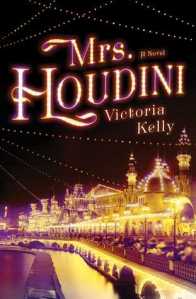 Perfectly serviceable historical fiction, but with no spark. I felt like I was just being given a lot of information about the two major time periods (1894 and 1929). Alas, scenes set at a séance, a circus, and an insane asylum are not nearly as exciting as they promise to be. And, as is often the case with these famous wives books – a genre I generally love but can also find oddly disappointing from time to time – the protagonist tries but fails to explain why she finds her husband so fascinating. “His eyes danced. There was a madness to his passion, but he was not insane. There was something real and familiar about him. … Harry was promising her a life of possibility, of magic, and it was unlike anything she had ever imagined for herself.” [Read the first 40%.]
My rating: 
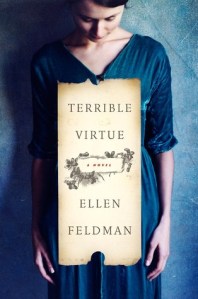 Terrible Virtue by Ellen Feldman
Another case of expectations too high and payoff too little. Fictionalized biographies can be among my favorite historical fiction, but the key is that they have to do something that a biography doesn’t do. They have to shape a story that goes beyond the chronology of what happened to whom and when. This novel about contraception activist Margaret Sanger failed to tell me anything I didn’t already know from The Birth of the Pill, a more engaging book all round. If anything this left me more confused about why Sanger consented to marriage and motherhood. These cringe-worthy lines try to explain it: “His [Bill’s] sex upended the world. His love filled the hole my childhood had carved out of me. Maybe that was the reason I married him.” [Read the first 26%.]
My rating: 
Vexation Lullaby by Justin Tussing
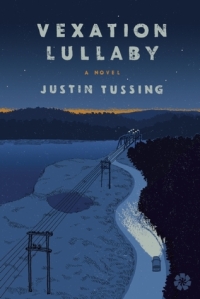 This started off very promising, with Pete Silver, a doctor in Rochester, New York, being summoned by ageing rock star Jimmy Cross for a consult. Jimmy knows Pete’s mother from way back and wants to know if he’ll accompany him on the airplane during this comeback tour as his personal physician. However, after that there was a lot of downtime filling in Pete’s backstory and introducing a first-person voice that didn’t feel relevant. This is Arthur Pennyman, a fan who’s seen every Jimmy Cross show and writes them up on his website. I didn’t care for Arthur’s sections and thought they pulled attention away from Pete’s story. That’s a shame, as the plot reminded me of Jennifer Egan’s A Visit from the Goon Squad. [Read the first nearly 100 pages.]
My rating:
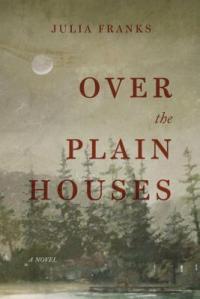 Over the Plain Houses by Julia Franks
Entirely decent historical fiction with a flavor of Ron Rash or Virginia Reeves (Work Like Any Other), but it felt so slow and aimless. Irenie Lambey is married to a harsh fundamentalist preacher named Brodis. She longs for their son to get a good education and hopes that the appearance of a USDA agent may be the chance, but Brodis cares about the boy’s soul rather than his mind. On night-time walks, Irenie stores up artifacts and memories in a cave – desperately trying to have a life larger than what her husband controls. It could well just be my lack of patience, but the believable dialect and solid characters weren’t quite enough to keep me reading. [Read the first 16%.]
My rating:
And now for the one I should have stopped reading at about the 25% point. I have an expanded version of this review on Goodreads; click on the title to read more.
The Mandibles: A Family, 2029–2047 by Lionel Shriver
 Shriver does a good line in biting social commentary. Here she aims at Atwood-style near-future speculative fiction and takes as her topic the world economy. I had big problems with this one. Worst is the sheer information overload: tons of economic detail crammed into frequent, wearisome conversations. Instead of making America’s total financial collapse a vague backdrop for her novel, she takes readers through it event by agonizing event. This means the first third or more of the novel feels like prologue, setting the scene. When she finally gets around to the crux of the matter – the entire extended Mandible family descending on Florence’s small New York City house – it feels like too little plot, too late. Everything Shriver imagines for the near future, except perhaps the annoying slang (e.g. “boomerpoop”), is more or less believable. But boy is it tedious in the telling.
My rating: 
 Bookish Beck = Rebecca Foster. American transplant to England. Freelance proofreader and book reviewer.
 Bookish Beck