(More) Most Anticipated Books for the Second Half of 2026
Yesterday, I reported back on how I’ve done with the 25 Most Anticipated books I chose at the beginning of the year. I have another dozen to add to the list today. These are in release date order by genre, with the UK publication info given first if available. The blurbs are adapted from Goodreads and I’ve taken the liberty of using whichever cover I prefer.
Fiction
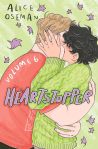 Heartstopper: Volume 6 by Alice Oseman [2 July, Hodder Children’s Books – out now! / July 7, Graphix]: I have simply adored this YA graphic novel series, so much I read it twice. Oseman seems to be having trouble figuring out how to end it, which isn’t surprising given how long it’s been a part of her life and how popular it’s become. “The final installment in the bestselling LGBTQ+ graphic novel series about life, love, and everything that happens in between. Everyone in school knows Nick and Charlie. Everyone knows they’re going to be together forever. But Charlie’s busy with his bid to become head boy. And while Nick is preparing to leave for college, he’s starting to wonder who he’ll be… without Charlie.”
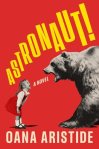 Astronaut! by Oana Aristide [July 14, W. W. Norton & Company; out in the UK from Headline since March, but I missed it!]: I really enjoyed Aristide’s McKitterick Prize-shortlisted debut, Under the Blue, and I wondered if this might be similar to Spaceman of Bohemia. (Nothing to do with astronauts, actually?) “Romania, 1989, the twilight of Ceausescu’s dictatorship: A time when every neighbor, every friend, every family member may be an informant for the regime. When news emerges of a man-eating bear terrorizing the country, two bright lives collide. Constantin, an idealistic police detective [… and] Lia, a rebellious, inquisitive schoolgirl … unwittingly drawn into an elderly neighbor’s secret plot against the regime.” (Edelweiss download)
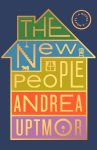 The New People by Andrea Uptmor [July 21, Little, Brown]: “A searing and strikingly intimate debut set in the wake of the 2008 financial crisis, about a newly married lesbian couple who move into a flipped foreclosure, unaware that the former homeowners are still living in the attic. … As Rachel immerses herself in her new role as a tenure-track professor and bestselling novelist, adjunct Emma struggles in the shadow of her wife’s success. Desperate to build something of her own, Emma secretly pursues IVF, even as Rachel insists they wait to have children.” This sounds like a fun blend of Leave the World Behind, The Underground Railroad, and Detransition, Baby. (For BookBrowse review)
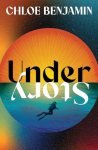 Under Story by Chloe Benjamin [1 Sept., Tinder Press /G.P. Putnam’s Sons]: I loved Benjamin’s previous novel, The Immortalists, which had some speculative/magic realist elements. It looks like she’s now really leaning into the (literary end of) science fiction. This should be a good one to sink into this summer. “Biologist Laurel Salter … works as a dishwasher at McMurdo Station, an isolated research base in Antarctica. … But even in this remote outpost, Laurel can’t outrun her past. … Laurel is captivated by the Arc: its surreal glow; the way it seems almost alive. … Laurel is convinced that the Arc leads down a rabbit hole, and into a world, they can barely imagine. … A breathless page-turner and a love letter to our planet.” (Review copy from publisher)
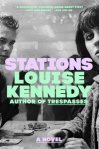 Stations by Louise Kennedy [24 Sept., Bloomsbury Circus / Nov. 3, Riverhead]: I admired Kennedy’s McKitterick Prize-winning debut, Trespasses, very much. “In 1982, Róisín and Red meet as teenagers in their hometown in Ireland. Red’s reputation for trouble might precede him, but Róisín finds in him an intelligent and funny – if unlikely – friend. … As the years pass, they grow up and apart. [… A] devastating story of love and friendship, and the choices we blithely make when we are young, unaware that the consequences will reverberate throughout our lives.” (Edelweiss download)
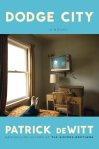 Dodge City by Patrick deWitt [29 Sept., Fourth Estate / Ecco]: DeWitt is reliable for his deadpan humour and quirky plots. “It’s 1967 in Los Angeles and Lee Clarke has received his draft notice, calling him up to fight in the Vietnam War. … He signs up at a drive-away car-delivery service, chancing into a showroom-new Jaguar bound for the East Coast. … In four different towns strung out along the northern United States, Lee visits each member of his immediate family. … An arresting portrait of a country in flux and a family in disarray.” (Edelweiss download)
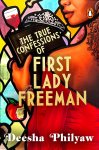 The True Confessions of First Lady Freeman by Deesha Philyaw [29 Sept., Transworld / Mariner Books]: Philyaw’s short story collection, The Secret Lives of Church Ladies, was terrific, and her debut novel sounds like more of the same: (religious) Black women behaving ‘badly’ (make that sexually). “From the moment Scharisse Freeman ditched her humble roots and married a megachurch pastor fifteen years her senior, she’s been labeled too brash and too ‘of the world’ by church folks. … On the eve of her 40th birthday, Schar gets the final bit of validation she’s always dreamt a coveted invitation to participate in the First Lady USA pageant.”
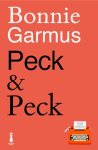 Peck & Peck by Bonnie Garmus [13 Oct., Manila Press / Scribner]: It feels like it’s been a long time (but only four years, actually) since Lessons in Chemistry, which everybody and their aunt’s book club read. “Batter Gray is … in his early twenties, living in New York City, and he wants something different; something that alienates some readers and bores most. Poetry. And yet—to him and exactly thirty-nine editors at a company called Peck & Peck—poetry not only represents the power of humanity but holds the key to its survival. Batter is named after his mother’s heroic dog. An identical twin who lost his brother at birth, he finds himself confronted by the everyday dualities that make up life.” (Edelweiss download)
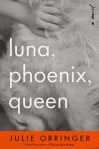 Luna, Phoenix, Queen by Julie Orringer [Oct. 13, Knopf]: Orringer is one of my favourite authors, especially after the brilliance of The Invisible Bridge and The Flight Portfolio. This sounds very different (more like Elizabeth Strout, maybe) but equally good. “Dava and Barr Pennington, professors at a Midwestern university, both harbor potent secrets. [… Dava is] secretly in love with a colleague, Svetlana White; [… and] tests reveal that she’s suffering from early-onset Alzheimer’s. … Soon afterward, her husband, alone in the house at night, discovers her hidden manuscript. … [A] tale of artistic and marital betrayal in a chorus of voices.” (Edelweiss download for Shelf Awareness review)
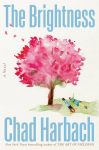 The Brightness by Chad Harbach [27 Oct., Fourth Estate / Little, Brown]: Fifteen years between novels must be some kind of record. Will it be worth the wait?! I read his debut, The Art of Fielding, when it was newly out in 2011, but I reckon I’ll need to reread it before deciding whether to embark on this doorstopper of a sequel. “At 27, Pella’s life looks settled: she’s a recent college graduate, engaged to Mike, her longtime boyfriend, and helping her friend Owen pull off his own destination wedding on Block Island. But over that wild wedding weekend, Pella’s past and present collide spectacularly, blowing up her plans and sending her spiralling toward an unplanned future in New York City.”
Nonfiction
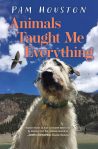 Animals Taught Me Everything by Pam Houston [Oct. 13, Torrey House Press]: Houston is fab in any genre, but I do especially appreciate her writing about nature and her dogs. “From Icelandic mares and Irish wolfhounds to elephants, leopards, hyenas, and a desert-adapted lioness named Charlie, Pam Houston has learned life’s most important lessons from animals. How to play. How to rest. How to love. How to die. How to be present with the dying. How to be present with the living and with the Earth. How to find joy in the least likely places. How to find joy, literally, everywhere. With playful sincerity, Houston finds power and promise in the teachings of our fellow creatures and reminds us that animals are here for us, every day and everywhere.” (Edelweiss download for Shelf Awareness review)
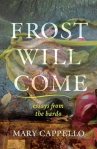 Frost Will Come: Essays from the Bardo by Mary Cappello [Oct. 27, University of Wisconsin Press]: An illness/grief-themed memoir-in-essays = right up my street. “When her octogenarian poet mother was diagnosed with terminal ovarian cancer, Mary Cappello and her wife moved into the living room of Rosemary’s one-bedroom apartment in Philadelphia to help fulfill her wish to live out her life at home. A memoir in the form of lyric essays—with her mother’s own writing interspersed—Frost Will Come is a daughter’s tribute to her mother’s months-long transition from a deeply lived life to a difficult, beautiful, and uneasy death.” (PDF review copy for Shelf Awareness review)
Are any of these calling to you as well?
February Releases by de Visser, George, Lawson, and Smiley
Nonfiction about doctors’ memorable patients and a life of chronic pain and disability; novels set in 1970s Canada and contemporary (but magically outside-of-time) Paris.
That One Patient: Doctors’ and nurses’ stories of the patients who changed their lives forever by Ellen de Visser
[Translated from the Dutch by Brent Annable]
Ellen de Visser is a science writer for the most popular newspaper in the Netherlands, De Volkskrant. Her “That One Patient” column, which began in the summer of 2017, turns interviews with medical professionals into punchy first-person narratives. A collection of them was published in Dutch in 2019. This English translation tacks on 10 additional pieces based on conversations with English and American practitioners (including Dr. Anthony Fauci, immunologist and presidential medical advisor), four of them explicitly reflecting on COVID-19.
Many of the cases are decades old yet stuck with the doctor or nurse in question because of a vital lesson learned. Overtreatment is regretted just as much as an omission of care. Again and again, these medical professionals conclude that it’s impossible to judge someone else’s decisions or quality of life. For instance, a surgeon admits he had a hard time empathizing with his obese patients undergoing stomach reduction until he followed up with a young woman who told him about how invisible she’d felt before her surgery. Premature and disabled children bring grief or joy, not always in the expected doses. A doctor resents the work his team puts into repairing a woman who jumped from an eighth-floor window – why the heroic measures for someone who wanted to die? – until he learns she was pushed. A cancer surgeon develops breast cancer and now knows exactly what her patients go through.
 Some of these stories are disturbing: being stalked by a patient with a personality disorder, a man poisoning his girlfriend, a farmer predicting the very day and time of his death. A gynaecologist changes his mind about abortion after he meets a 15-year-old who gave birth at home and left her baby outside in a plastic bag to die of exposure. Other pieces are heart-warming: A paramedic delivers a premature, breech baby right in the ambulance. Staff throw a wedding at the hospital for a dying teen (as in Dear Life by Rachel Clarke). A woman diagnosed with cancer while pregnant has chemotherapy and a healthy baby – now a teenager. There’s even a tale from a vet who crowdfunded prostheses for a lively terrier.
One unique thing about the Netherlands is that euthanasia is legal and provided by doctors upon the express request of a patient suffering from a terminal illness. It is taken for granted in these essays, yet some interviewees express their discomfort with it as an option for young patients. De Visser is careful to note that, even with the situation as it is, only 4% of deaths in the Netherlands are by euthanasia, and the majority of these are end-stage cancer cases.
As with any collection of this nature, some stories are more enticing than others, but overall I found it a surprising and moving set of reflections that is alive to ethical complexities and grapples with tough issues like disability, doctor error, loneliness, pain, and sense of purpose.
Two quotes, in particular, stood out to me, one from a nurse – “We are only ever guests in other people’s lives, and that’s how we ought to behave” – and the other from Dr. Fauci’s piece. In 2014 he treated a doctor who had been volunteering in Sierra Leone after an Ebola outbreak but became ill with the virus and had to be evacuated. “He cited Hippocrates: ‘It is far more important to know what sort of person has the disease, rather than what sort of disease the person has.’ You treated me like a person, not a disease, he said. And that’s what medicine is all about.” 
With thanks to 4th Estate for the proof copy for review.
A Still Life: A Memoir by Josie George
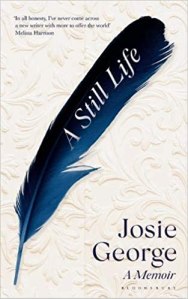 Over a year of lockdowns, many of us have become accustomed to spending most of the time at home. But for Josie George, social isolation is nothing new. Chronic illness long ago reduced her territory to her home and garden. The magic of A Still Life is in how she finds joy and purpose despite extreme limitations. Opening on New Year’s Day and travelling from one winter to the next, the book is a window onto George’s quiet existence as well as the turning of the seasons. (My full review will appear in a forthcoming issue of the Times Literary Supplement. See also Eleanor’s thorough review.) This is top of my wish list for next year’s Barbellion Prize shortlist.
With thanks to Bloomsbury for the proof copy for review.
A Town Called Solace by Mary Lawson
I discovered Mary Lawson in 2015 with Road Ends and caught up with Crow Lake in the summer of 2019. All four of her books are set in fictional locations inspired by the villages and rural areas of Northern Ontario, where the author grew up before moving to England in 1968. So Solace, while not a real town, is true to her memory and, despite the sometimes gruff or know-it-all locals, an emotional landmark for the three central characters, all of whom are processing trauma and looking for places of comfort where they can start over.
 1972. First we meet Clara, a plucky seven-year-old sitting vigil. She’s waiting for the return of two people: her sixteen-year-old sister, Rose, who ran away from home; and their next-door neighbour, Mrs. Orchard, whose cat, Moses, she’s feeding until the old lady gets back from the hospital. As days turn into weeks, though, it seems less likely that either will come home, and one day Clara sees a strange man moving boxes around in Mrs. Orchard’s house. This is Liam Kane, who’s inherited the house from a family friend. In his thirties and recently divorced, he’s taking a break in this tiny town, never imagining that he might find a new life. The third protagonist, and only first-person narrator, is Elizabeth, who lies in a hospital bed with heart trouble and voices her memories as a monologue to her late husband.
As we cycle through these three characters’ perspectives in alternating chapters, we gradually come to understand the connections between them. There are satisfying parallels in that, on multiple occasions but in slightly different ways, a child attaches to an older person or an adult stands in as a guardian for a neglected child. All of Lawson’s creations, even the secondary figures, are dealing with distressing memories or a loss of some kind, the details of which might only emerge much later on. Solace offers myriad opportunities for recovery, whether kitty playtime at Mrs. Orchard’s or diner food and homemade ice cream.
Like Lawson’s other works, this is a slow burner featuring troubled families. Her characters, often full of regret and sorrow, take a shadowy past as a prompt to reset their lives. They’re charming in spite of their flaws. I recalled that Crow Lake also looks back to the climactic happenings experienced by a seven-year-old girl. And like Road Ends, A Town Called Solace makes a convincing case for present decisions being influenced by historical trauma. It’s a tender and inviting story I’d recommend to readers of Wendy McGrath and Anne Tyler, with Clever Girl by Tessa Hadley and Olive, Again by Elizabeth Strout as specific readalikes. (My dilemma now is whether to read my only remaining Lawson novel, The Other Side of the Bridge, right away or save it: she’s not the most prolific author, with four books in 19 years.)
A favorite passage:
[Liam’s] life prior to coming north seemed to be taking on the quality of an old movie, one in which he’d been deeply engrossed while watching it but which now seemed trivial, unconvincing and profoundly lacking in either colour or plot. Solace had colour and plot in spades, maybe too much. In every way it was coming to seem more real than Toronto, with its endless malls and traffic jams and high-powered jobs. Though maybe, if he went back to Toronto, the same would be true in reverse. Maybe when he’d been back for a couple of months he’d find that it was Solace that seemed unreal, its unremarkable streets and stores like something from a dream, its dramatic landscape fading to nothing, like a holiday photo left in the sun.
With thanks to Chatto & Windus for the free copy for review.
The Strays of Paris by Jane Smiley
(Published in the USA in December 2020 under the title Perestroika in Paris. It’s been given a The Boy, the Mole, the Fox and the Horse treatment for its UK release.)
 My summary for Bookmarks magazine: “A racehorse, Perestroika—nicknamed Paras—strays from her unlocked suburban stable one day, carrying her groom’s purse in her mouth, and ends up in Paris’s Place du Trocadéro. Here she meets Frida the dog, Sid and Nancy the mallards, and Raoul the raven. Frida, whose homeless owner died, knows about money. She takes euros from the purse to buy food from a local market, while Paras gets treats from a baker on predawn walks. Etienne, an eight-year-old orphan who lives with his ancient great-grandmother, visits the snowy park to feed the wary animals (who can talk to each other), and offers Paras a home. A sweet fable for animal lovers.”
Yes, this is a talking animal book, but the animals only talk to each other; they communicate with humans through their gestures and soulful eyes. Kindly shopkeepers work out what Frida wants to buy based on what she stares at or points to with a paw; the baker whose window Paras passes on her early morning walks intuits that the horse is hungry; Etienne, who gives a couple of the stray animals a home during a chill winter, learns to understand when Paras needs to go out to relieve herself, after piles of dung build up in the sitting room.
I liked how patiently and convincingly Smiley builds the portrait of each character – human or animal – and the overall situation of kindness and good fortune. Raoul is particularly amusing for his birdsplaining: “It is a feature of age. I have learned so many things in my life that they just force their way out of my beak,” he says. However, a crow would be much more realistic for Paris (or any city) than a raven, and, overall, this was a little twee and farfetched for my tastes. It was nice to read something a bit different from Smiley, who I haven’t tried since her Last Hundred Years Trilogy. She has a sideline in YA horse novels; this should probably have been lumped with those.  (Annabel liked it a bit more.)
I was sent an unsolicited review copy by Picador/Mantle.
 Bookish Beck = Rebecca Foster. American transplant to England. Freelance proofreader and book reviewer.
