(More) Most Anticipated Books for the Second Half of 2026
Yesterday, I reported back on how I’ve done with the 25 Most Anticipated books I chose at the beginning of the year. I have another dozen to add to the list today. These are in release date order by genre, with the UK publication info given first if available. The blurbs are adapted from Goodreads and I’ve taken the liberty of using whichever cover I prefer.
Fiction
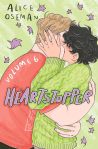 Heartstopper: Volume 6 by Alice Oseman [2 July, Hodder Children’s Books – out now! / July 7, Graphix]: I have simply adored this YA graphic novel series, so much I read it twice. Oseman seems to be having trouble figuring out how to end it, which isn’t surprising given how long it’s been a part of her life and how popular it’s become. “The final installment in the bestselling LGBTQ+ graphic novel series about life, love, and everything that happens in between. Everyone in school knows Nick and Charlie. Everyone knows they’re going to be together forever. But Charlie’s busy with his bid to become head boy. And while Nick is preparing to leave for college, he’s starting to wonder who he’ll be… without Charlie.”
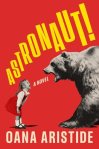 Astronaut! by Oana Aristide [July 14, W. W. Norton & Company; out in the UK from Headline since March, but I missed it!]: I really enjoyed Aristide’s McKitterick Prize-shortlisted debut, Under the Blue, and I wondered if this might be similar to Spaceman of Bohemia. (Nothing to do with astronauts, actually?) “Romania, 1989, the twilight of Ceausescu’s dictatorship: A time when every neighbor, every friend, every family member may be an informant for the regime. When news emerges of a man-eating bear terrorizing the country, two bright lives collide. Constantin, an idealistic police detective [… and] Lia, a rebellious, inquisitive schoolgirl … unwittingly drawn into an elderly neighbor’s secret plot against the regime.” (Edelweiss download)
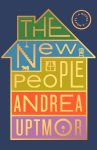 The New People by Andrea Uptmor [July 21, Little, Brown]: “A searing and strikingly intimate debut set in the wake of the 2008 financial crisis, about a newly married lesbian couple who move into a flipped foreclosure, unaware that the former homeowners are still living in the attic. … As Rachel immerses herself in her new role as a tenure-track professor and bestselling novelist, adjunct Emma struggles in the shadow of her wife’s success. Desperate to build something of her own, Emma secretly pursues IVF, even as Rachel insists they wait to have children.” This sounds like a fun blend of Leave the World Behind, The Underground Railroad, and Detransition, Baby. (For BookBrowse review)
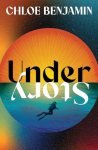 Under Story by Chloe Benjamin [1 Sept., Tinder Press /G.P. Putnam’s Sons]: I loved Benjamin’s previous novel, The Immortalists, which had some speculative/magic realist elements. It looks like she’s now really leaning into the (literary end of) science fiction. This should be a good one to sink into this summer. “Biologist Laurel Salter … works as a dishwasher at McMurdo Station, an isolated research base in Antarctica. … But even in this remote outpost, Laurel can’t outrun her past. … Laurel is captivated by the Arc: its surreal glow; the way it seems almost alive. … Laurel is convinced that the Arc leads down a rabbit hole, and into a world, they can barely imagine. … A breathless page-turner and a love letter to our planet.” (Review copy from publisher)
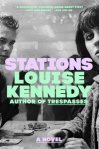 Stations by Louise Kennedy [24 Sept., Bloomsbury Circus / Nov. 3, Riverhead]: I admired Kennedy’s McKitterick Prize-winning debut, Trespasses, very much. “In 1982, Róisín and Red meet as teenagers in their hometown in Ireland. Red’s reputation for trouble might precede him, but Róisín finds in him an intelligent and funny – if unlikely – friend. … As the years pass, they grow up and apart. [… A] devastating story of love and friendship, and the choices we blithely make when we are young, unaware that the consequences will reverberate throughout our lives.” (Edelweiss download)
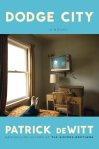 Dodge City by Patrick deWitt [29 Sept., Fourth Estate / Ecco]: DeWitt is reliable for his deadpan humour and quirky plots. “It’s 1967 in Los Angeles and Lee Clarke has received his draft notice, calling him up to fight in the Vietnam War. … He signs up at a drive-away car-delivery service, chancing into a showroom-new Jaguar bound for the East Coast. … In four different towns strung out along the northern United States, Lee visits each member of his immediate family. … An arresting portrait of a country in flux and a family in disarray.” (Edelweiss download)
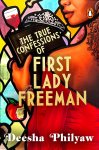 The True Confessions of First Lady Freeman by Deesha Philyaw [29 Sept., Transworld / Mariner Books]: Philyaw’s short story collection, The Secret Lives of Church Ladies, was terrific, and her debut novel sounds like more of the same: (religious) Black women behaving ‘badly’ (make that sexually). “From the moment Scharisse Freeman ditched her humble roots and married a megachurch pastor fifteen years her senior, she’s been labeled too brash and too ‘of the world’ by church folks. … On the eve of her 40th birthday, Schar gets the final bit of validation she’s always dreamt a coveted invitation to participate in the First Lady USA pageant.”
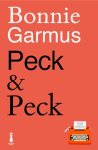 Peck & Peck by Bonnie Garmus [13 Oct., Manila Press / Scribner]: It feels like it’s been a long time (but only four years, actually) since Lessons in Chemistry, which everybody and their aunt’s book club read. “Batter Gray is … in his early twenties, living in New York City, and he wants something different; something that alienates some readers and bores most. Poetry. And yet—to him and exactly thirty-nine editors at a company called Peck & Peck—poetry not only represents the power of humanity but holds the key to its survival. Batter is named after his mother’s heroic dog. An identical twin who lost his brother at birth, he finds himself confronted by the everyday dualities that make up life.” (Edelweiss download)
 Luna, Phoenix, Queen by Julie Orringer [Oct. 13, Knopf]: Orringer is one of my favourite authors, especially after the brilliance of The Invisible Bridge and The Flight Portfolio. This sounds very different (more like Elizabeth Strout, maybe) but equally good. “Dava and Barr Pennington, professors at a Midwestern university, both harbor potent secrets. [… Dava is] secretly in love with a colleague, Svetlana White; [… and] tests reveal that she’s suffering from early-onset Alzheimer’s. … Soon afterward, her husband, alone in the house at night, discovers her hidden manuscript. … [A] tale of artistic and marital betrayal in a chorus of voices.” (Edelweiss download for Shelf Awareness review)
 The Brightness by Chad Harbach [27 Oct., Fourth Estate / Little, Brown]: Fifteen years between novels must be some kind of record. Will it be worth the wait?! I read his debut, The Art of Fielding, when it was newly out in 2011, but I reckon I’ll need to reread it before deciding whether to embark on this doorstopper of a sequel. “At 27, Pella’s life looks settled: she’s a recent college graduate, engaged to Mike, her longtime boyfriend, and helping her friend Owen pull off his own destination wedding on Block Island. But over that wild wedding weekend, Pella’s past and present collide spectacularly, blowing up her plans and sending her spiralling toward an unplanned future in New York City.”
Nonfiction
 Animals Taught Me Everything by Pam Houston [Oct. 13, Torrey House Press]: Houston is fab in any genre, but I do especially appreciate her writing about nature and her dogs. “From Icelandic mares and Irish wolfhounds to elephants, leopards, hyenas, and a desert-adapted lioness named Charlie, Pam Houston has learned life’s most important lessons from animals. How to play. How to rest. How to love. How to die. How to be present with the dying. How to be present with the living and with the Earth. How to find joy in the least likely places. How to find joy, literally, everywhere. With playful sincerity, Houston finds power and promise in the teachings of our fellow creatures and reminds us that animals are here for us, every day and everywhere.” (Edelweiss download for Shelf Awareness review)
 Frost Will Come: Essays from the Bardo by Mary Cappello [Oct. 27, University of Wisconsin Press]: An illness/grief-themed memoir-in-essays = right up my street. “When her octogenarian poet mother was diagnosed with terminal ovarian cancer, Mary Cappello and her wife moved into the living room of Rosemary’s one-bedroom apartment in Philadelphia to help fulfill her wish to live out her life at home. A memoir in the form of lyric essays—with her mother’s own writing interspersed—Frost Will Come is a daughter’s tribute to her mother’s months-long transition from a deeply lived life to a difficult, beautiful, and uneasy death.” (PDF review copy for Shelf Awareness review)
Are any of these calling to you as well?
December Releases by Anita Felicelli, Lise Goett, Brooke Randel & Weike Wang
December isn’t a big month for new releases, but here are excerpts from a few I happened to review early for U.S. publications BookBrowse, Foreword Reviews, and Shelf Awareness: Speculative short stories, loss-tinged poetry, a family memoir based on Holocaust history, and a satirical short novel about racial microaggressions and class divides in contemporary America.
How We Know Our Time Travelers by Anita Felicelli
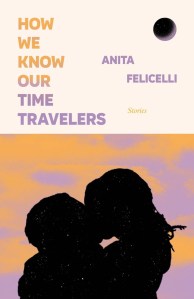 These linked speculative stories, set in near-future California, are marked by environmental anxiety. Many of their characters have South Asian backgrounds. A nascent queer romance between co-op grocery colleagues defies an impending tsunami. A painter welcomes a studio visitor who could be her estranged husband traveling from the past. Mysterious “fog catchers” recur in multiple stories. Memory bridges the human and the artificial, as in “The Glitch,” wherein a coder, bereaved by wildfires, lives alongside holograms of her wife and children. But technology, though a potential means of connecting with the dead, is not an unmitigated good. Creative reinterpretations of traditional stories and figures include urban legends, a locked room mystery, a poltergeist, and a golem. In these grief- and regret-tinged stories, heartbroken people can’t alter their pasts, so they’ll mold the future instead. (See my full Foreword review.)
The Radiant by Lise Goett
 In the 25 poems of Goett’s luminous third poetry collection, nature’s beauty and ancient wisdom sustain the fragile and bereaved. The speaker in “Difficult Body” references a cancer experience and imagines escaping the flesh to diffuse into the cosmos. Goett explores liminal moments and ponders what survives a loss. The use of “terminal” in “Free Fall” denotes mortality while also bringing up fond memories of her late father picking her up from an airport. Mythical allusions, religious imagery, and Buddhist philosophy weave through to shine ancient perspective on current struggles. The book luxuriates in abstruse vocabulary and sensual descriptions of snow, trees, and color. (Tupelo Press, 24 December. Review forthcoming at Shelf Awareness)
Also Here: Love, Literacy, and the Legacy of the Holocaust by Brooke Randel
 Randel’s debut is a poised, tender family memoir capturing her Holocaust survivor grandmother’s recollections of the Holocaust. Golda (“Bubbie”) spoke multiple languages but was functionally illiterate. In her mid-80s, she asked her granddaughter to tell her story. Randel flew to south Florida to conduct interviews. The oral history that emerges is fragmentary and frenetic. The structure of the book makes up for it, though. Interview snippets are interspersed with narrative chapters based on follow-up research. Golda, born in 1930, grew up in Romania. When the Nazis came, her older brothers were conscripted into forced labor; her mother and younger siblings were killed in a concentration camp. At every turn, Golda’s survival (through Auschwitz, Christianstadt, and Bergen-Belsen) was nothing short of miraculous. This concise, touching memoir bears witness to a whole remarkable life as well as the bond between grandmother and granddaughter. (See my full Shelf Awareness review.)
Rental House by Weike Wang
 Their interactions with family and strangers alike on two vacations – Cape Cod and the Catskills, five years apart – put interracial couple Keru and Nate’s choices into perspective as they near age 40. Although some might find their situation (childfree, with a “fur baby”) stereotypical, it does reflect that of a growing number of aging millennials. Wang portrays them sympathetically, but there is also a note of gentle satire here. The way that identity politics comes into the novel is not exactly subtle, but it does feel true to life. And it is very clever how the novel examines the matters of race, class, ambition, and parenthood through the lens of vacations. Like a two-act play, the framework is simple and concise, yet revealing about contemporary American society. (See my full BookBrowse review.)
Women’s Prize 2019: Longlist Review Excerpts and Shortlist Thoughts
There’s a reason I could never wholeheartedly shadow the Women’s Prize: although each year the prize introduces me one or two great novels I might never have heard of otherwise, inevitably there are also some I don’t care for, or have zero interest in reading. Here’s how I fared this year, in categories from best to worst, with excerpts and links to any I’ve reviewed in full:
Loved! (5)
- The Pisces by Melissa Broder: This starts off as a funny but somewhat insubstantial novel about a thirtysomething stuck with a life she isn’t sure she wants, morphs into a crass sex comedy (featuring a merman), but ultimately becomes a profound exploration of possession, vulnerability and the fluidity of gender roles. It’s about the prison of the body, and choosing which of the many different siren voices calling us we’ll decide to listen to. It’s a Marmite book, but perfect Women’s Prize material.

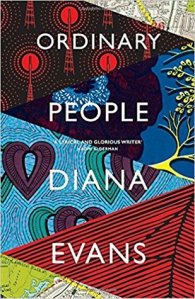 Ordinary People by Diana Evans: Reminds me of On Beauty by Zadie Smith, one of my favorite novels of this millennium. It focuses on two Black couples in South London and the suburbs who, in the wake of Obama’s election, are reassessing their relationships. Their problems are familiar middle-class ones, but Evans captures them so candidly that many passages made me wince. The chapter in which two characters experience mental instability is a standout, and the Black slang and pop music references a nice touch.
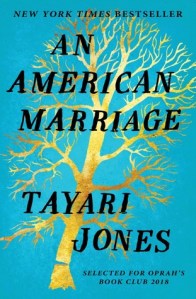
- An American Marriage by Tayari Jones: Roy and Celestial only get a year of happy marriage before he’s falsely accused of rape and sentenced to 12 years in prison in Louisiana. I ached for all three main characters: It’s an impossible situation. There’s a lot to probe about the characters’ personalities and motivations, and about how they reveal or disguise themselves through their narration. I found it remarkable how the letters, which together make up not even one-fifth of the text, enhance the raw honesty of the book.
- Ghost Wall by Sarah Moss: It’s the late 1980s and teenager Silvie Hampton and her parents have joined a university-run residential archaeology course in the North of England, near the bogs where human sacrifice once took place. Nationalism, racism, casual misogyny – there are lots of issues brewing under the surface here. Women’s bodies and what can be done to them is central; as the climax approaches, the tricksy matter of consent arises. I ended up impressed by how much Moss conveys in so few pages. Another one custom-made for the Women’s Prize.
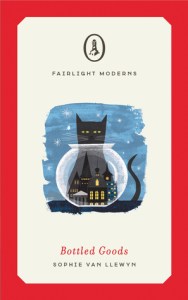 Bottled Goods by Sophie van Llewyn: I just finished this the other day. It’s a terrific hybrid work that manages to combine several of my favorite forms: a novella, flash fiction and linked short stories. The content is also an intriguing blend, of the horrific and the magical. After her brother-in-law’s defection, Alina and her husband Liviu come under extra scrutiny in Communist Romania. Bursts of magic realism and a delightful mixture of narrative styles (lists and letters; alternating between the first and third person) make all this material bearable.
Did not particularly enjoy (2)
- Freshwater by Akwaeke Emezi: Magic realism and mental illness fuel a swirl of disorienting but lyrical prose. Much of the story is told by the ọgbanje (an Igbo term for evil spirits) inhabiting Ada’s head. The conflation of the abstract and the concrete didn’t quite work for me, and the whole is pretty melodramatic. Although I didn’t enjoy this as much as some other inside-madness tales I’ve read, I can admire the attempt to convey the reality of mental illness in a creative way.

 Normal People by Sally Rooney: This book’s runaway success continues to baffle me. I kept waiting for more to happen, skimming ahead to see if there would be anything more to it than drunken college parties and frank sex scenes. It is appealing to see into these characters’ heads and compare what they think of themselves and each other with their awareness of what others think. But page to page it is pretty tedious, and fairly unsubtle.
Attempted but couldn’t get through (3)
- Remembered by Yvonne Battle-Felton: A historical novel marked by the presence of ghosts, this is reminiscent of the work of Cynthia Bond, Toni Morrison and Jesmyn Ward. It’s the closest thing to last year’s Sing, Unburied, Sing. I only read the first 36 pages as neither the characters nor the prose struck me as anything special.
 Swan Song by Kelleigh Greenberg-Jephcott: Full of glitzy atmosphere contrasted with washed-up torpor. I have no doubt the author’s picture of Truman Capote is accurate, and there are great glimpses into the private lives of his catty circle. I always enjoy first person plural narration, too. However, I quickly realized I don’t have sufficient interest in the figures or time period to sustain me through nearly 500 pages. I read the first 18 pages and skimmed to p. 35.
- Number One Chinese Restaurant by Lilian Li: Vague The Nest vibes, but the prose felt flat and the characters little more than clichés (especially scheming ‘Uncle’ Pang). I grew up in Silver Spring, Maryland so was expecting there to be more local interest for me, but this could be taking place anywhere. Reviews from trusted Goodreads friends suggested that the plot and characterization don’t significantly improve as the book goes on, so I gave up after the first two chapters.
Not interested (6)
(Don’t you go trying to change my mind!)

- The Silence of the Girls by Pat Barker: Updated Greek classics are so not my bag.
- My Sister, the Serial Killer by Oyinkan Braithwaite: Meh.
- Milkman by Anna Burns: Nah.
- Lost Children Archive by Valeria Luiselli: I’ll try something else by Luiselli.
- Praise Song for the Butterflies by Bernice L. McFadden: The setting of a fictional African country and that title already have me groaning.
- Circe by Madeline Miller: See the note on Barker above.
The shortlist will be announced on Monday the 29th. Broder and Moss will most likely make the cut. I’d love to see the van Llewyn make it through, as it’s my favorite of what I’ve read from the longlist, but I think it will probably be edged out by more high-profile releases. Either Evans or Jones will advance; Jones probably has the edge with more of an issues book. One of the Greek myth updates is likely to succeed. Luiselli is awfully fashionable right now. Emezi’s is an interesting book and the Prize is making a statement by supporting a non-binary author. Rooney has already won or been nominated for every prize going, so I don’t think she needs the recognition. Same for Burns, having won the Booker.
So, quickly pulling a combination of wanted and expected titles out of the air would give this predicted shortlist:
 The Silence of the Girls by Pat Barker
The Pisces by Melissa Broder
Freshwater by Akwaeke Emezi
An American Marriage by Tayari Jones
Lost Children Archive by Valeria Luiselli
Ghost Wall by Sarah Moss
Eleanor, Eric, Laura and Rachel have been posting lots of reviews and thoughts related to the Women’s Prize. Have a look at their blogs!
 Bookish Beck = Rebecca Foster. American transplant to England. Freelance proofreader and book reviewer.
