Novellas in November
Taking a lead from Laura over at Reading in Bed, I’ve trawled my shelves and my current library pile for some blissfully short books. For this challenge I limited myself to books with fewer than 150 pages and came up with four fiction books and two ‘nonfiction novellas’.
The Library of Unrequited Love by Sophie Divry
[92 pages]
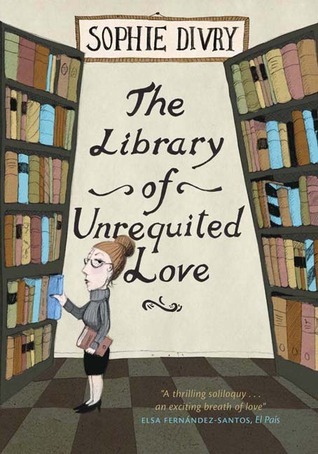 This one-sitting read is a monologue by an embittered librarian who arrives one morning to discover a patron has been locked into the basement overnight—a captive audience. Responsible for Geography, she hopes for a promotion to History, her favorite subject. Alas, no one seems to appreciate this library as a bastion of learning anymore; they only come for DVDs and a place to keep warm. That is, except for Martin, a young PhD researcher who’s caught her eye. But he doesn’t even seem to notice she exists. In one uninterrupted paragraph, this celebrates all that books do for us but suggests that they still can’t fix a broken heart.
My verdict: There are lots of great one-liners about the value of books (“You’re never alone if you live surrounded by books”), but overall it’s a somewhat aimless little experiment and not particularly well translated. 
The All of It by Jeannette Haien
[145 pages]
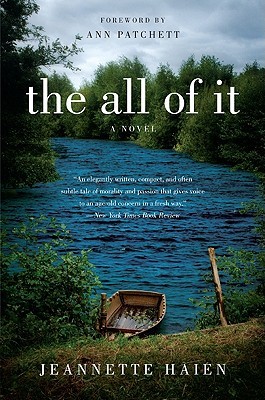 When this won the Sue Kaufman Prize for First Fiction in 1987, the author was in her sixties. It’s since been championed by Ann Patchett, who contributed a Foreword to this 2011 edition. Father Declan de Loughry, fishing for salmon, reflects on the recent death of parishioner Kevin Dennehy. Before he died, Kevin admitted that he and Enda were never properly married. Yet Enda begs the priest to approve a death notice calling Kevin her “beloved husband,” promising she’ll then explain “the all of it” – the very good reason they never married. As she tells her full story, which occupies the bulk of the novella, Father Declan tries to strike a balance between the moral high ground and human compassion.
My verdict: Enda’s initial confession on page 27 is explosive, but the rest of this quiet book doesn’t ever live up to it. I was reminded of Mary Costello’s Academy Street, a more successful short book about an Irish life.
Favorite passage: “One thing I’ve learned, Father—that in this life it’s best to keep the then and the now and the what’s-to-be as close together in your thoughts as you can. It’s when you let gaps creep in, when you separate out the intervals and dwell on them, that you can’t bear the sorrow.”
Thirteen Ways of Looking by Colum McCann
[143 pages]
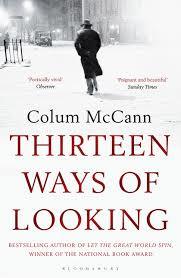 This starts off as the simple story of J. Mendelssohn, an octogenarian who wakes up on a snowy morning in his New York City apartment, contemplating his past – Lithuanian/Polish ancestry, work as a judge and marriage to Eileen, whom he met as a boy in Dublin – and planning to meet his son at a restaurant for lunch. But all of a sudden it turns into a murder mystery on page 24: “Later the homicide detectives will be surprised…” In 13 sections headed by epigraphs from the Wallace Stevens poem “Thirteen Ways of Looking at a Blackbird,” McCann flits through Mendelssohn’s thoughts and flips between the events preceding and immediately following the murder. A late interrogation scene is particularly strong – “unlike our poetry, we like our murders to be fully solved.”
My verdict: This is the first I’ve read from McCann, and it’s terrific. He stuffs so much plot and characterization into not many pages. Mendelssohn’s thought life is rich with allusions and wordplay. I was particularly intrigued to read about the autobiographical overlap in the Author’s Note. I haven’t yet read the short stories included in the volume, but for the novella on its own it’s  .
.
As We Are Now by May Sarton
[134 pages]
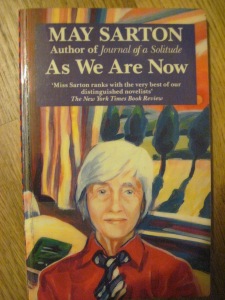 On the surface this is similar to a novel I reviewed earlier in the month, The Secret Diary of Hendrik Groen, 83¼ Years Old. But where spunky Hendrik determines to outwit his care home’s sullen staff, Sarton’s narrator, seventy-six-year-old Caroline Spencer, has given in. A retired high school math teacher, she’s landed in a New England old folks’ home because during her recovery from a heart attack she failed to get along with her brother’s younger wife. She finds kindred spirits in Standish Flint, a tough old farmer, and Reverend Thornhill, but her growing confusion and the home’s pretty appalling conditions drive her to despair.
My verdict: This is enjoyable for the unreliable narrator and the twist ending, but overall it struck me as rather melodramatic. However, I appreciated a lot of Caro’s sentiments.
Favorite passages: “Am I senile, I wonder? The trouble is that old age is not interesting until one gets there, a foreign country with an unknown language to the young, and even to the middle-aged. I wish now that I had found out more about it.” & “And what is left of you? A lapis lazuli pin, a faded rose petal, once pink, slipped into the pages of this copybook.”
And two short works of nonfiction:
Excerpts from a Family Medical Dictionary by Rebecca Brown
[113 pages]
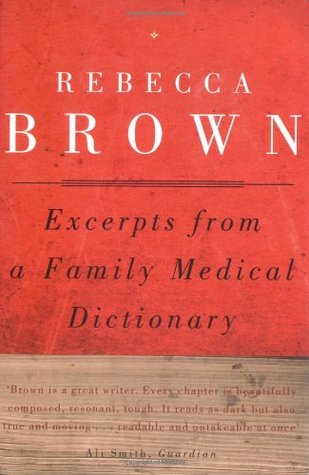 Brown is a novelist from Seattle. This is an account of her mother’s death from what sounds like stomach cancer. The disease progressed quickly and her mother died at home, under hospice care, in New Mexico in 1997. As the title suggests, the brief thematic chapters are arranged around vocabulary words like “anemia” and “metastasis.” My favorite chapters were about washing: her mother’s habit of reading while taking long baths, and the ways Brown and her sister tried to care for their mother’s disintegrating body, including a plan to prepare the corpse themselves. Clinical descriptions of vomiting alternate with magical thinking to accompany her mother’s hallucinations: “You’re packed, Mom, but all of us aren’t going, just you. But you’ve got everything you need.”
My verdict: Brown covers a lot of emotional ground in a very few pages, but I prefer my medical/bereavement memoirs to have more of a narrative and more detail than “when she died it was not peacefully or easy, it was hard.”
Ruined by Reading: A Life in Books by Lynne Sharon Schwartz
[119 pages]
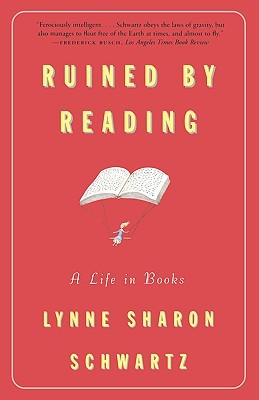 This 1996 memoir was sparked by reading a quote from a Chinese Buddhist in a New York Times article: he suggested that reading is dangerous as it imposes others’ ideas on you and doesn’t allow you to use your own mind freely. Schwartz, of course, begs to differ. As a novelist, reading has been her lifeline. She looks back at her childhood reading and her pretentious college student opinions on Franz Kafka and Henry James, and explains that she lets serendipity guide her reading choices nowadays, rather than a strict TBR list: “reading at random – letting desire lead – feels like the most faithful kind.”
My verdict: It’s a bibliomemoir; I should have loved it. Instead I thought it unstructured and thin. There are some great lines dotted through, but I wasn’t very interested in the examples she focuses on. Five pages about a children’s book by Eleanor Farjeon? Yawn! 
Favorite passages: “Like the bodies of dancers or athletes, the minds of readers are genuinely happy and self-possessed only when cavorting around, doing their stretches and leaps and jumps to the tune of words.” & “How are we to spend our lives, anyway? That is the real question. We read to seek the answer, and the search itself – the task of a lifetime – becomes the answer.”
Have you read any of these? Which one takes your fancy?
How do you feel about novellas in general?
A Booker Prize & Libraries Action Plan, Etc.
On Wednesday the Man Booker Prize’s longlist of 13 novels was announced. I never bother making predictions in advance of prize list announcements because inevitably I forget what was released during the eligibility period and I’m no good at squaring personal favorites with what a judging panel is likely to admire. See the Guardian’s photo essay and Karen’s thorough discussion at Booker Talk for more information about the nominees.
It turns out I’ve read and reviewed four of the longlisted books:
The Sellout by Paul Beatty for Shiny New Books: This is such an outrageous racial satire that I kept asking myself how Beatty got away with it. The Sellout struck a chord in America, but I’m slightly surprised that it’s also been received well in the UK.
The North Water by Ian McGuire for BookBrowse: A gritty, graphic novel about 19th-century whaling that traverses the open seas and the forbidding polar regions. It’s a powerful inquiry into human nature and the making of ethical choices in extreme circumstances.
Work Like Any Other by Virginia Reeves on Goodreads: I was meant to review this for BookBrowse but couldn’t rate it highly enough despite the competent writing. Between the blurb and the first paragraph, you already know everything that’s going to happen.
My Name Is Lucy Barton by Elizabeth Strout on Goodreads: I won a free copy through a Goodreads giveaway. I read this in one sitting on a plane ride and found it to be a powerful portrayal of the small connections that stand out in a life.
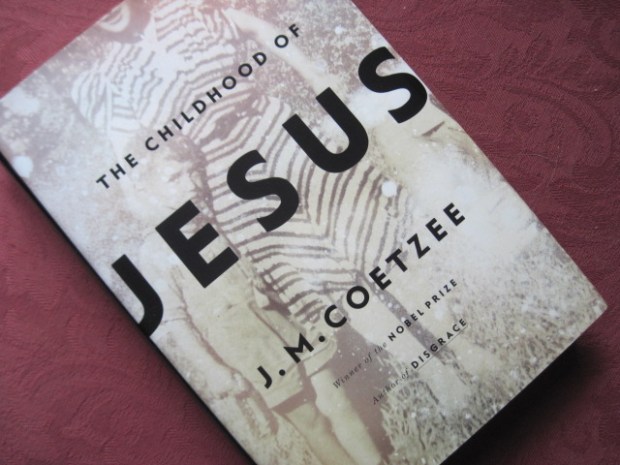
As for what’s next from the longlist, I finally have an excuse to read the copy of The Childhood of Jesus by J.M. Coetzee I won from Goodreads many moons ago – a sequel to which (The Schooldays of Jesus) is among the nominees. It’ll be my first Coetzee; if I like it I’ll be sure to read the follow-up book when it comes out in September.
I already knew I was interested in Eileen by Ottessa Moshfegh, a creepy debut novel about a misfit; All That Man Is by David Szalay, a linked short story collection about stages of men’s lives; and Do Not Say We Have Nothing by Madeleine Thien, set in Canada in the wake of the Tiananmen Square protests. I’ve only read one novel each by A.L. Kennedy and Deborah Levy and wasn’t hugely keen on either author’s style, but the subject matter of both Serious Sweet and Hot Milk is more tempting. I might seek them out from the library.
 And then there’s the books I’d simply never heard of. Of these I’m most interested in His Bloody Project by Graeme Macrae Burnet, based on a true-life murder in Scotland in the 1860s, and The Many by Wyl Menmuir, a debut novella about a village newcomer.
The surprise omission for me is Sarah Perry’s The Essex Serpent. I might also have expected to see Julian Barnes, Adam Haslett, and maybe even Ann Patchett on the longlist.
We’ve found a new rental house and hope to move in on August 15, but we’re waiting for our reference check to be complete and the tenancy contract to be drawn up before we can start doing official things like hire movers, change our address with a zillion service providers, and start packing in earnest.
This past week I’ve busied myself with comparing removals quotes and doing pre-packing tasks I’ve tried to convince myself are useful, like sorting through drawers of mementoes, assessing what’s in storage under the beds, and shifting some unwanted possessions through Freegle, a local web forum for giving away free stuff. So far I’ve gotten rid of a spice rack, 11 empty bottles, 55 empty CD cases, a cat tower plus some food and toys our fussy cat won’t use, and a wildly popular picnic hamper (11 offers came through!). It’s really gratifying to see things go to a good home.
Alas, we did also have to take some items to the local recycling center this weekend, which always seems like something of a failure, but no one’s going to want a broken vacuum cleaner and printer. My hope is that the small appliances dumped there will at least be mined for parts, so it’s better than sending them to landfill.
The weekend has also included berry picking at the local pick-your-own farm and making a summer pudding, a labor-intensive but delicious annual tradition. Plus this afternoon we’re off to Northampton to meet our newest nephew, born on the 20th.
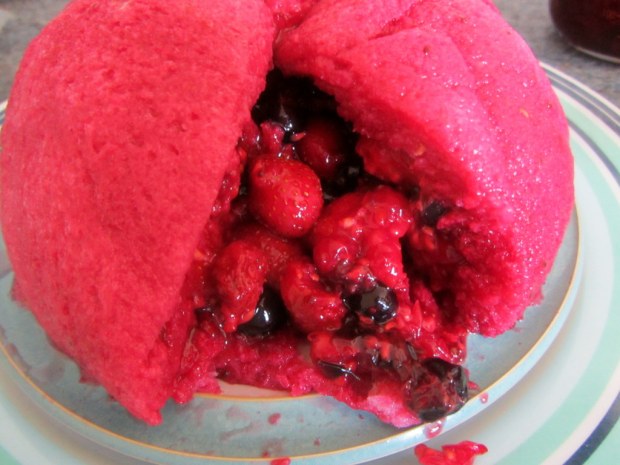
Last year’s summer pudding.
I did finally start boxing up books last night. Much as I love my print library, it’s dispiriting just how much space it takes up. It took five boxes just to empty the small spare room bookcase! Before packing anything I did another full inventory of unread books in the flat and came up with a total of 205, higher than last time but not too bad considering the review books I’ve acquired recently as well as the secondhand shopping I’ve done. I’ve made good progress in my attempt to read mostly books I own for the summer, but it’s a resolution that will have to carry over into the autumn and winter.
The one thing that might scupper me in that plan is that, although we’re only moving 45 minutes away, we’ll be in a new council area where library reservations are free! For years I’ve been a part of library systems where it costs 40 or 50 pence to reserve each book, so I’ve kept holds to an absolute minimum. But from now on you can be sure I’ll be putting myself on the waiting list for every new and forthcoming book that appeals to me! Expect the monthly Library Checkout posts to resume by September.
Any thoughts on this year’s Booker Prize longlist? How are you doing on reading from public libraries or from your own personal collection?
Reviews Roundup, March–April
One of my goals with this blog was to have one convenient place where I could gather together all my writing that appears in disparate online locations. To that end, once a month I provide links to all book reviews I’ve published elsewhere, with a rating (below each description) and a taster so you can decide whether to read more. A few exceptions: I don’t point out my Kirkus Indie, BlueInk or Publishers Weekly reviews since I don’t get a byline.
The Bookbag
 The Improbability of Love by Hannah Rothschild: From the Baileys Prize longlist, an enchanting debut novel that blends art and cooking, mystery and romance. Annie McDee, a heartbroken PA and amateur chef, pays £75 for a painting from a junk shop, not realizing it’s a lost Watteau that will spark bidding wars and uncover a sordid chapter of history. In a triumph of playful narration, we mostly learn about the artwork’s history from the painting ‘herself’. She recounts her turbulent 300-year-history and lists her many illustrious owners, including Marie Antoinette, Napoleon and Queen Victoria. These are the novel’s only first-person sections; you can just imagine a voiceover from Helen Mirren or Judi Dench.

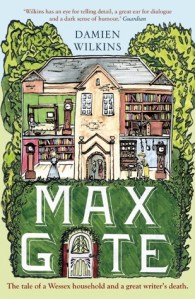 Max Gate by Damien Wilkins: This is a novel of Thomas Hardy’s last days, but we get an unusual glimpse into his household at Max Gate, Dorchester through the point-of-view of his housemaid, twenty-six-year-old Nellie Titterington. Ultimately I suspect a third-person omniscient voice would have worked better. In fact, some passages – recounting scenes Nellie is not witness to – are in the third person, which felt a bit like cheating. Fans familiar with the excellent Claire Tomalin biography might not learn much about Hardy and his household dynamics, but it was fun to spend some imaginary time at a place I once visited. [First published in New Zealand in 2013; releases in the US and UK on June 6th.]

 Dust by Michael Marder: A philosopher carries out an interdisciplinary study of dust: what it’s made of, what it means, and how it informs our metaphors. In itself, he points out, dust is neither positive nor negative, but we give it various cultural meanings. In the Bible, it is the very substance of mortality. Meanwhile “The war on dust, a hallmark of modern hygiene, reverberates with the political hygiene of the war on terror.” The contemporary profusion of allergies may, in fact, be an unintended consequence of our crusade against dust. The discussion is pleasingly wide-ranging, with some unexpected diversions – such as the metaphorical association between ‘stardust’ and celebrity – but also some impenetrable jargon. I’d be interested to try other titles from Bloomsbury’s “Object Lessons” series.
Foreword Reviews
How to Cure Bedwetting by Lane Robson (Oh, the interesting topics my work with self-published books introduces me to!): Explaining the anatomical and behavioral reasons behind bedwetting, the Calgary-based physician gives practical tips for curing the problem within six to twelve months. Throughout, the text generally refers to “pee” and “poop,” which detracts slightly from the professionalism of the work. All the same, this compendium of knowledge, drawing as it does on the author’s forty years of experience, should answer every possible question on the subject. Highly recommended to parents of younger elementary school children, this book will be an invaluable reference in tackling bedwetting.
Nudge
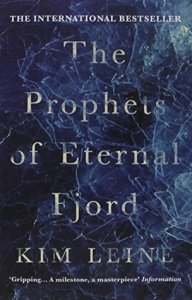 The Prophets of Eternal Fjord by Kim Leine: An epic novel about an unconventional priest, set in late-eighteenth-century Denmark and Greenland. This struck me as a cross between Carsten Jensen’s We, the Drowned, another historical saga from Denmark and one of my favorite novels of all time, and Michel Faber’s The Crimson Petal and the White. Like the former, it features perilous sea voyages and ambivalent father–son relationships; like the latter, it’s edgy and sexualized, full of lechery and bodily fluids. No airbrushing the more unpleasant aspects of history here. The entire story is told in the present tense, with no speech marks. It took me nearly a month and a half to read; by the end I felt I’d been on an odyssey as long and winding as Morten’s.
PANK
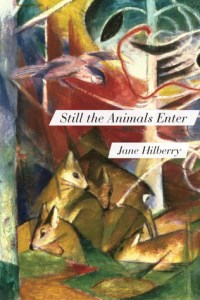 Still the Animals Enter by Jane Hilberry: A rich, strange, and gently erotic collection featuring diverse styles and blurring the lines between child and adult, human and animal, life and death through the language of metamorphosis. Ambivalence about the moments of transition between childhood and adulthood infuses Part One. Early on, “A Hole in the Fence” finishes on a whispered offer: “You could be part of this.” The message in this resonant collection, though, is that we already are a part of it: part of a shared life that moves beyond the individual family or even the human species. We are all connected—to the children we once were, to lovers and family members lost and found, and to the animals we watch in wonder.
Pittsburgh Post-Gazette
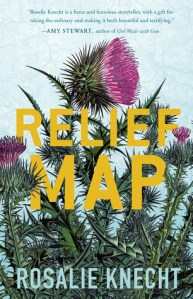 Relief Map by Rosalie Knecht: Lomath, Pennsylvania consists of a half-mile stretch between old textile mills and is home to just 150 people. During one unpredictable summer, blackouts and the arrival of an Eastern European fugitive draw the residents into a welter of paranoia and misguided choices. Our eyewitness to provincial commotion is 16-year-old Livy Marko, who considers herself plain and awkward – her childhood style was supplied by Anne of Green Gables and Goodwill. Knecht’s writing is marked by carefully chosen images and sounds. The novel maintains a languid yet subtly tense ambience. For Livy, coming of age means realizing actions always have consequences. Offbeat and atmospheric, this debut is probably too quiet to make a major splash, but has its gentle rewards.
Shiny New Books
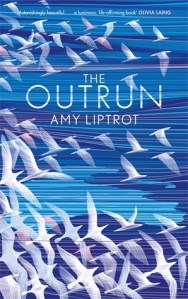 The Outrun by Amy Liptrot: Put simply, this is a memoir about Amy Liptrot’s slide into alcoholism and her subsequent recovery. Liptrot grew up on mainland Orkney, a tight-knit Scottish community she was eager to leave as a teenager but found herself returning to a decade later, washed up after the dissolute living and heartbreak she left behind in London. A simple existence, close to nature and connected to other people, was just what she needed during her first two years of sobriety. Her atmospheric writing about the magical Orkney Islands and their wildlife, rather than the slightly clichéd ruminating on alcoholism, is what sets the book apart. (On the Wellcome Prize shortlist.)

I also post reviews of most of my casual reading and skimming on Goodreads:
 Look We Have Coming to Dover! by Daljit Nagra: The dialect was a bit too heavy for me in some of these poems about the Sikh experience in Britain. By far my favorite was “In a White Town,” which opens: “She never looked like other boys’ mums. / No one ever looked without looking again / at the pink kameez and balloon’d bottoms, // mustard-oiled trail of hair, brocaded pink / sandals and the smell of curry. That’s why / I’d bin the letters about Parents’ Evenings …”
 Work Like Any Other by Virginia Reeves: Between the blurb and the first paragraph, you already know everything that’s going to happen. I admire books that can keep you reading with interest even though you know exactly what’s coming, but this isn’t really one of those. Ultimately I would have preferred for the whole novel, rather than just alternating chapters, to be in Roscoe’s first-person voice, set wholly in prison (where he helps out in the library and with the guard dogs) but with brief flashbacks to his electricity siphoning and the circumstances of his manslaughter conviction. The writing is entirely capable, but the structure made it so I felt the story wasn’t worth my time.
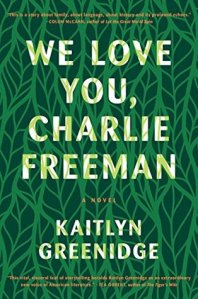 We Love You, Charlie Freeman by Kaitlyn Greenidge: The Freemans are raising Charlie, a chimpanzee, as part of their family for a Toneybee Institute experiment and teaching him to communicate via sign language. Flashbacks to the late 1920s bring an uncomfortable racial subtext to the surface, suggesting that the Toneybee has been involved in dodgy anthropological research over the decades. This is a deep and unsettling story of human–human interactions, even more so than human–animal interactions. I much preferred it to We Are All Completely Beside Ourselves.
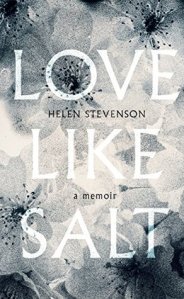 Love Like Salt by Helen Stevenson: Stevenson’s daughter Clara has cystic fibrosis, so I approached and enjoyed this as an illness memoir. However, it’s very scattered, with lots of seemingly irrelevant material included simply because it happened to the author: her mother’s dementia, their life in France, her work as a translator and her hobby of playing the piano, her older husband’s love for Italy and Italian literature, etc. Really the central drama is their seemingly idyllic life in France, Clara being bullied there, and the decision to move back to England (near Bristol), where the girls would attend a Quaker school on scholarships and Clara was enrolled in a widespread clinical trial with modest success. Enjoyable enough if you share some of the author’s interests.
 Springtime: A Ghost Story by Michelle de Kretser: Ghost story? Really? There’s very little in the way of suspense, and not too much plot either, in this Australia-set novella. I would expect tension to linger and questions to remain unanswered. Instead, the author exposes Frances’s ‘ghost’ as harmless. What I think de Kretser is trying to do here is show that ghosts can be people we have known and loved or, alternatively, places we have left behind. There is some nice descriptive writing (e.g. “three staked camellias stood as whitely upright as martyrs”), but not enough story to hold the interest.

 Let the Empire Down by Alexandra Oliver: This debut collection is heavily inspired by history and travel, as well as Serbian poetry and personal anecdote. I enjoyed the earlier poems, especially the ones with ABAB or ABBA rhyme schemes. My favorite was “Plans,” about a twenty-something manicurist who abandoned her talent for science to get ready cash: “A girl’s future should be full and bright, a marble, / but (alas for her) there is a catch: / we take on the immediate. Hope flags: / wishing to be wise and come out shining, / we pop a beaker over our own flame. / We do it cheerfully. We do it coldly.” The last quarter is devoted to poems about films, especially Italian cinema.
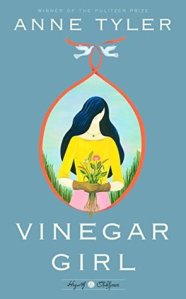 Vinegar Girl by Anne Tyler: This is the most fun I’ve had with the Hogarth Shakespeare series so far, as well as my favorite of the three Anne Tyler novels I’ve read. Yes, it’s set in Baltimore. Kate Battista, the utterly tactless preschool assistant, kept cracking me up. Her father, an autoimmune researcher, schemes for her to marry his lab assistant, Pyotr, so he can stay in the country after his visa expires. The plot twists of the final quarter felt a little predictable, but I was won over by the good-natured storytelling and prickly heroine. (I don’t know The Taming of the Shrew well enough to comment on how this functions as a remake.) Releases in June.
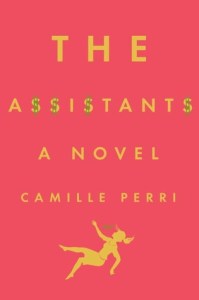 The Assistants by Camille Perri: At age 30, Tina Fontana has been a PA to media mogul Robert Barlow for six years. He’s worth millions; she lives in a tiny Brooklyn apartment. One day a mix-up in refunding expenses lands her with a check for $19,147. If she cashes it she can pay off her debts once and for all and no one at Titan Corporation will be any the wiser, right? This is a fun and undemanding read that will probably primarily appeal to young women. I would particularly recommend it to readers of Friendship by Emily Gould and A Window Opens by Elisabeth Egan. Releases May 3rd.
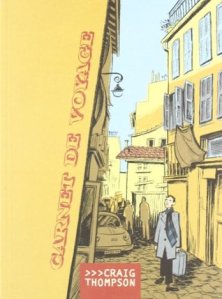 Carnet de Voyage by Craig Thompson: A sketchbook Thompson kept on his combined European book tour for Blankets and research trip for Habibi in March–May 2004. It doesn’t really work as a stand-alone graphic memoir because there isn’t much of a narrative, just a series of book signings, random encounters with friends and strangers, and tourism. My favorite two-page spread is about a camel ride he took into the Moroccan desert. I could also sympathize with his crippling hand pain (from all that drawing) and his “chaos tolerance” overload from the stress of travel.
 Rising Ground: A Search for the Spirit of Place by Philip Marsden: Some very nice writing indeed, but not much of a storyline. The book is something of a jumble of mythology, geology, prehistory, and more recent biographical information about some famous Cornish residents, overlaid on a gentle travel memoir. I enjoyed learning about the meanings of Cornish place names, in particular, and spotting locations I’ve visited.
And my highest recommendation goes to…
Commonwealth by Ann Patchett: It all starts with an early 1960s christening party Los Angeles policeman Fix Keating is throwing for his younger daughter, Franny. DA Bert Cousins turns up, uninvited, with a bottle of gin the grateful guests quickly polish off in their fresh-squeezed orange juice. He also kisses the hostess, sparking a chain of events that will rearrange the Keating and Cousins families in the decades to come. The novel spends time with all six step-siblings, but Franny is definitely the main character – and likely an autobiographical stand-in for Patchett. As a waitress in Chicago, she meets a famous novelist who’s in a slump; the story of her childhood gives him his next bestseller but forces the siblings to revisit a tragic accident they never fully faced up to. Sophisticated and atmospheric; perfect for literary fiction fans in general and Patchett fans in particular. Releases September 13th.
 Bookish Beck = Rebecca Foster. American transplant to England. Freelance proofreader and book reviewer.
