Some 2023 Reading Superlatives
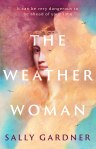 Longest book read this year: The Weather Woman by Sally Gardner (457 pages) – not very impressive compared to last year’s 720-page To Paradise. That means I didn’t get through a single doorstopper this year. D’oh!
Shortest book read this year: Pitch Black by Youme Landowne and Anthony Horton (40 pages)
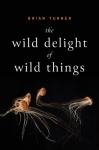
Authors I read the most by this year: Margaret Atwood, Deborah Levy and Brian Turner (3 books each); Amy Bloom, Simone de Beauvoir, Tove Jansson, John Lewis-Stempel, W. Somerset Maugham, L.M. Montgomery and Maggie O’Farrell (2 books each)


Publishers I read the most from: (Setting aside the ubiquitous Penguin and its many imprints) Carcanet (11 books) and Picador/Pan Macmillan (also 11), followed by Canongate (7).
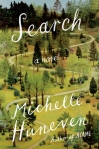
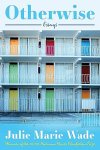
My top author discoveries of the year: Michelle Huneven and Julie Marie Wade
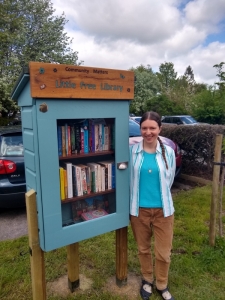
My proudest bookish accomplishment: Helping to launch the Little Free Library in my neighbourhood in May, and curating it through the rest of the year (nearly daily tidying; occasional culling; requesting book donations)
Most pinching-myself bookish moments: Attending the Booker Prize ceremony; interviewing Lydia Davis and Anne Enright over e-mail; singing carols after-hours at Shakespeare and Company in Paris

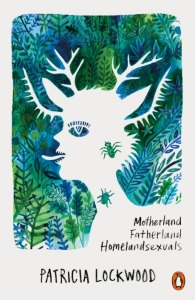
Books that made me laugh: Notes from a Small Island by Bill Bryson, The Librarianist by Patrick deWitt, two by Katherine Heiny, Motherland Fatherland Homelandsexuals by Patricia Lockwood
Books that made me cry: A Heart that Works by Rob Delaney, Lucy by the Sea by Elizabeth Strout, Family Meal by Bryan Washington
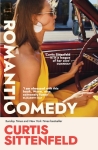 The book that was the most fun to read: Romantic Comedy by Curtis Sittenfeld
Best book club selections: By the Sea by Abdulrazak Gurnah and The Woman in Black by Susan Hill
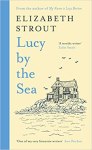 Best last lines encountered this year: “And I stood there holding on to this man as though he were the very last person left on this sweet sad place that we call Earth.” (Lucy by the Sea, Elizabeth Strout)
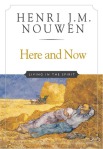 A book that put a song in my head every time I picked it up: Here and Now by Henri Nouwen (Aqualung song here)
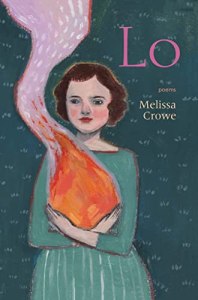
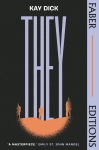
Shortest book title encountered: Lo (the poetry collection by Melissa Crowe), followed by Bear, Dirt, Milk and They



Best 2023 book titles: These Envoys of Beauty and You Bury the Birds in My Pelvis
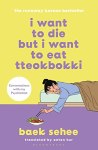 Best book titles from other years: I Want to Die but I Want to Eat Tteokbokki, Before You Suffocate Your Own Fool Self, A Down Home Meal for These Difficult Times, The Cats We Meet Along the Way, We All Want Impossible Things
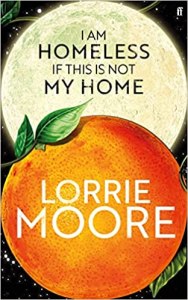
Favourite title and cover combo of the year: I Am Homeless If This Is Not My Home by Lorrie Moore (shame the contents didn’t live up to it!)
Biggest disappointment: Speak to Me by Paula Cocozza
A 2023 book that everyone was reading but I decided not to: Prophet Song by Paul Lynch

The worst books I read this year: Monica by Daniel Clowes, They by Kay Dick, Swallowing Geography by Deborah Levy and Self-Portrait in Green by Marie Ndiaye (1-star ratings are extremely rare for me; these were this year’s four)
The downright strangest book I read this year: Motherland Fatherland Homelandsexuals by Patricia Lockwood
Book Serendipity, Mid-April through Early June
I call it “Book Serendipity” when two or more books that I read at the same time or in quick succession have something in common – the more bizarre, the better. This is a regular feature of mine every few months. Because I usually have 20–30 books on the go at once, I suppose I’m more prone to such incidents. The following are in roughly chronological order.
- Fishing with dynamite takes place in Glowing Still by Sara Wheeler and In Memoriam by Alice Winn.
- Egg collecting (illegal!) is observed and/or discussed in Sea Bean by Sally Huband and The Jay, the Beech and the Limpetshell by Richard Smyth.

- Deborah Levy’s Things I Don’t Want to Know is quoted in What I’d Rather Not Think About by Jente Posthuma and Glowing Still by Sara Wheeler. I then bought a secondhand copy of the Levy on my recent trip to the States.
- “Piss-en-lit” and other folk names for dandelions are mentioned in The House of the Interpreter by Lisa Kelly and The Furrows by Namwali Serpell.
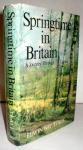
- Buttercups and nettles are mentioned in The House of the Interpreter by Lisa Kelly and Springtime in Britain by Edwin Way Teale (and other members of the Ranunculus family, which includes buttercups, in These Envoys of Beauty by Anna Vaught).

- The speaker’s heart is metaphorically described as green in a poem in Lo by Melissa Crowe and The House of the Interpreter by Lisa Kelly.
- Discussion of how an algorithm can know everything about you in Tomb Sweeping by Alexandra Chang and I’m a Fan by Sheena Patel.
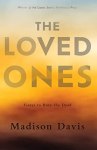
- A brother drowns in The Loved Ones: Essays to Bury the Dead by Madison Davis, What I’d Rather Not Think About by Jente Posthuma, and The Furrows by Namwali Serpell.


A few cases of a book recalling a specific detail from an earlier read:
- This metaphor in The Chosen by Elizabeth Lowry links it to The Marriage Portrait by Maggie O’Farrell, another work of historical fiction I’d read not long before: “He has further misgivings about the scalloped gilt bedside table, which wouldn’t look of place in the palazzo of an Italian poisoner.”
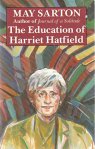
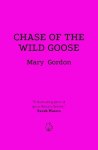
- This reference in The Education of Harriet Hatfield by May Sarton links it back to Chase of the Wild Goose by Mary Louisa Gordon (could it be the specific book she had in mind? I suspect it was out of print in 1989, so it’s more likely it was Elizabeth Mavor’s 1971 biography The Ladies of Llangollen): “Do you have a book about those ladies, the eighteenth-century ones, who lived together in some remote place, but everyone knew them?”
- This metaphor in Things My Mother Never Told Me by Blake Morrison links it to The Chosen by Elizabeth Lowry: “Moochingly revisiting old places, I felt like Thomas Hardy in mourning for his wife.”
- A Black family is hounded out of a majority-white area by harassment in The Education of Harriet Hatfield by May Sarton and Ordinary Notes by Christina Sharpe.
 Wartime escapees from prison camps are helped to freedom, including with the help of a German typist, in My Father’s House by Joseph O’Connor and In Memoriam by Alice Winn.
- A scene of eating a deceased relative’s ashes in 19 Claws and a Black Bird by Agustina Bazterrica and The Loved Ones by Madison Davis.
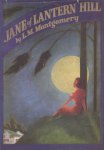
- A girl lives with her flibbertigibbet mother and stern grandmother in “Wife Days,” one story from How Strange a Season by Megan Mayhew Bergman, and Jane of Lantern Hill by L.M. Montgomery.
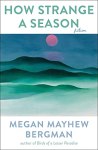
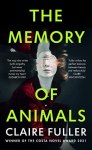
- Macramé is mentioned in How Strange a Season by Megan Mayhew Bergman, The Memory of Animals by Claire Fuller, Floppy by Alyssa Graybeal, and Sidle Creek by Jolene McIlwain.
- A fascination with fractals in Floppy by Alyssa Graybeal and one story in Sidle Creek by Jolene McIlwain. They are also mentioned in one essay in These Envoys of Beauty by Anna Vaught.
- I found disappointed mentions of the fact that characters wear blackface in Laura Ingalls Wilder’s Little Town on the Prairie in Monsters by Claire Dederer and, the very next day, Ordinary Notes by Christina Sharpe.


- Moon jellyfish are mentioned in the Blood and Cord anthology edited by Abi Curtis, Floppy by Alyssa Graybeal, and Sea Bean by Sally Huband.
- A Black author is grateful to their mother for preparing them for life in a white world in the memoirs-in-essays I Can’t Date Jesus by Michael Arceneaux and Ordinary Notes by Christina Sharpe.
- The children’s book The Owl Who Was Afraid of the Dark by Jill Tomlinson is mentioned in The Jay, the Beech and the Limpetshell by Richard Smyth and These Envoys of Beauty by Anna Vaught.
- The protagonist’s father brings home a tiger as a pet/object of display in The Marriage Portrait by Maggie O’Farrell and The Memory of Animals by Claire Fuller.

- Bloor Street, Toronto is mentioned in Jane of Lantern Hill by L.M. Montgomery and Ordinary Notes by Christina Sharpe.
- Ralph Waldo Emerson’s thinking about the stars is quoted in Jane of Lantern Hill by L.M. Montgomery and These Envoys of Beauty by Anna Vaught.
- Wondering whether a marine animal would be better off in captivity, where it could live much longer, in The Memory of Animals by Claire Fuller (an octopus) and Sea Bean by Sally Huband (porpoises).
 Martha Gellhorn is mentioned in The Collected Regrets of Clover by Mikki Brammer and Monsters by Claire Dederer.
- Characters named June in “Indigo Run,” the novella-length story in How Strange a Season by Megan Mayhew Bergman, and The Cats We Meet Along the Way by Nadia Mikail.
- “Explicate!” is a catchphrase uttered by a particular character in Girls They Write Songs About by Carlene Bauer and The Lake Shore Limited by Sue Miller.
- It’s mentioned that people used to get dressed up for going on airplanes in Fly Girl by Ann Hood and The Lights by Ben Lerner.

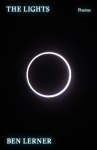
- Green-Wood Cemetery in Brooklyn is a setting in The Lights by Ben Lerner and Grave by Allison C. Meier.
- Last year I read Tomorrow, and Tomorrow, and Tomorrow by Gabrielle Zevin, in which Oregon Trail re-enactors (in a video game) die of dysentery; this is also a live-action plot point in “Pioneers,” one story in Lydia Conklin’s Rainbow Rainbow.
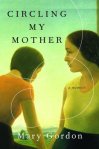
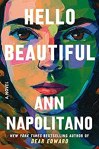
- A bunch (4 or 5) of Italian American sisters in Circling My Mother by Mary Gordon and Hello Beautiful by Ann Napolitano.
What’s the weirdest reading coincidence you’ve had lately?
Nature Book Catch-Up: Sally Huband, Richard Smyth & Anna Vaught
I’m catching up with a few nature- and travel-based 2023 releases that were sent to me for review. I’ve grouped them together because these British authors share some of the same interests and concerns. They celebrate beloved places that become ours through the time we spend in them and the attention we grant; they mourn the loss of biodiversity from rockpools and gardens and seabird cliffs. What kind of diminished world they’re raising their children into is a major worry for all three, and for Huband and Vaught the unease is exacerbated by chronic illness. Wild creatures, and the fellow authors who have hymned them, ease the hurt.
Sea Bean: A beachcomber’s search for a magical charm by Sally Huband
After more than a decade in her adopted home of Shetland, Sally Huband is still a newcomer. A tricky path to motherhood and ensuing chronic illness (the autoimmune disease palindromic rheumatism) limited her mobility and career. Beachcombing is at once her way of belonging to a specific place and feeling part of the wider world – what washes up on a Shetland beach might come from as far away as Atlantic Canada or the Caribbean. Sea glass, lobster pot tags, messages in bottles, driftwood … and a whole lot of plastic, of course. Early on, Huband sets her sights on a sea bean – also known as a drift-seed, from the tropics – which in centuries past was a talisman for ensuring safe childbirth. Possession of one was enough to condemn a 17th-century local woman to death for witchcraft, she learned.
 Stories of motherhood, the quest to find effective treatment in a patriarchal medical system, volunteer citizen science projects (monitoring numbers of dead seabirds, returning beached cetaceans to the water, dissecting fulmar stomachs to assess their plastic content), and studying Shetland’s history and customs mingle in a fascinating way. Huband travels around the archipelago and further afield, finding a vibrant beachcombing culture on the Dutch island of Texel. As in Moby-Duck by Donovan Hohn, one of my all-time favourite nonfiction books, there is delight at the randomness of what the ocean delivers.
I requested this book because Huband’s was my favourite essay in the Antlers of Water anthology. In it, she deplored the fact that women were still not allowed to participate in the Up Helly Aa fire festival in Lerwick. Good news: that is no longer the case, thanks to campaigning by Huband and others. In a late chapter, she also reports that blackface was recently banned from the festivals, and a Black Lives Matter demonstration drew 2000 people. Change does come, but slowly to a traditional island community. And sometimes it is not the right sort of change, as with an enormous wind farm, resisted vigorously by residents, that will primarily enrich a multinational company instead of serving the local people.
In many ways, this is a book about coming to terms with loss, and Huband presents the facts with sombre determination. Passages about the threats to birds and marine life had me near tears. But she writes with such poetic tenderness that the evocative specifics of island life point towards what’s true for all of us making the best of our constraints. I was lucky enough to visit several islands of Shetland in 2006; whether you have or not, this is a radiant memoir I would recommend to readers of Kathleen Jamie, Jean Sprackland and Malachy Tallack.
Some favourite lines:
No island can ever live up to the heightened expectations that we always seem to place on them; life catches up with us, sooner or later.
With each loss, emotional pain accretes for those who have paid attention.
If hope is a hierarchy of wishes then I am happy enough, each time that I beachcomb, to find fragments of the bark of paper birch
I’ve come to think of the ocean as an archive of sorts.
With thanks to Hutchinson Heinemann for the proof copy for review.
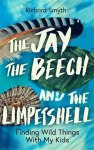
The Jay, the Beech and the Limpetshell: Finding Wild Things with My Kids by Richard Smyth
all around us
the stuff of spells. Our parents
let us go to scamper deeper,
leap from stumps lush with moss.
Everything aloof about me
fell into the soil once charged
with younger siblings
and freedoms of a wood.
…
I give you a damp valley floor,
this feather for your pocket.
~an extract from “Arger Fen,” from Latch by Rebecca Goss
I know Richard Smyth for his writing on birds (I’ve reviewed both A Sweet, Wild Note and An Indifference of Birds) and his somewhat controversial commentary on modern nature writing. This represents a change in direction for him toward more personal reflection, and with its focus on the phenomena of childhood and parenthood it recalls Wild Child by Patrick Barkham and The Nature Seed by Lucy Jones and Kenneth Greenway. But, as I knew to expect from previous works, he has such talent for reeling in the tangential and extrapolating from the concrete to the abstract that this lively read ends up being about everything: what it is to be human on this fading planet.
 And this despite the fact that four of five chapter headings suggest pandemic-specific encounters with nature. Lockdown walks with his two children, and the totems they found in different habitats – also including a chaffinch nest and an owl pellet – are indeed jumping-off points, punctuating a wide-ranging account of life with nature. Smyth surveys the gateway experiences, whether books or television shows or a school tree-planting programme or collecting, that get young people interested; and talks about the people who beckon us into greater communion – sometimes authors and celebrities; other times friends and family. He also engages with questions of how to live in awareness of climate crisis. He acknowledges that he should be vegetarian, but isn’t; who does not harbour such everyday hypocrisies?
It’s still, unfortunately, rare for men to write about parenthood (and especially pregnancy loss – I only think of Native by Patrick Laurie and William Henry Searle’s books), so it’s great to see that represented, and it’s a charming idea that we create “downfamily” because the “upfamily” doesn’t last forever. Although there’s nostalgia for his childhood here, and anxiety about his kids’ chances of seeing wildlife in abundance, Smyth doesn’t get mired in the past or in existential dread. He has a humanist belief that people are essentially good and can do positive things like build offshore wind farms, and in the meantime he will take Genevieve and Daniel into the woods to play so they will develop a sense of wonder at all that lives on. Even for someone like me who doesn’t have children, this was a captivating, thought-provoking read: We’re all invested in the future of life on this planet.
With thanks to Icon Press for the free copy for review.
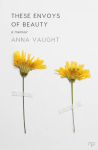
These Envoys of Beauty: A Memoir by Anna Vaught
Anna Vaught is a versatile author: I have a copy of her mental health-themed novel Saving Lucia, longlisted for the inaugural Barbellion Prize, on the shelf; she’s written a spooky set of stories, Famished (see Susan’s review); and I gave some early reader feedback on the opening pages of her forthcoming work of quirky historical fiction, The Zebra and Lord Jones. She’s also publishing a book on writing, and editing a collection of pieces submitted for the first Curae Prize for writers who are also carers. I was drawn to her first nonfiction release by reviews by fellow bloggers – it’s always good when a blog tour achieves its aim!
These dozen short essays are about how nature doesn’t necessarily heal, but is a most valued companion in a life marked by chronic illness and depression. The evocative title and epigraphs are from Ralph Waldo Emerson’s essay “Nature” (1836). The pieces loop through Vaught’s past and present, focussing on favourite places in Wiltshire, where she lives, and at the Pembrokeshire coast. It’s the second memoir about complex PTSD that I’ve read this year (see also What My Bones Know). Both at the time and now, when flashbacks of her parents’ verbal and physical abuse haunt her, lying down in a grassy field, exploring a sea cave or sucking on a gorse flower could be a salve. “Nature offered stability and satisfying detail; pattern, form and things that made sense.”
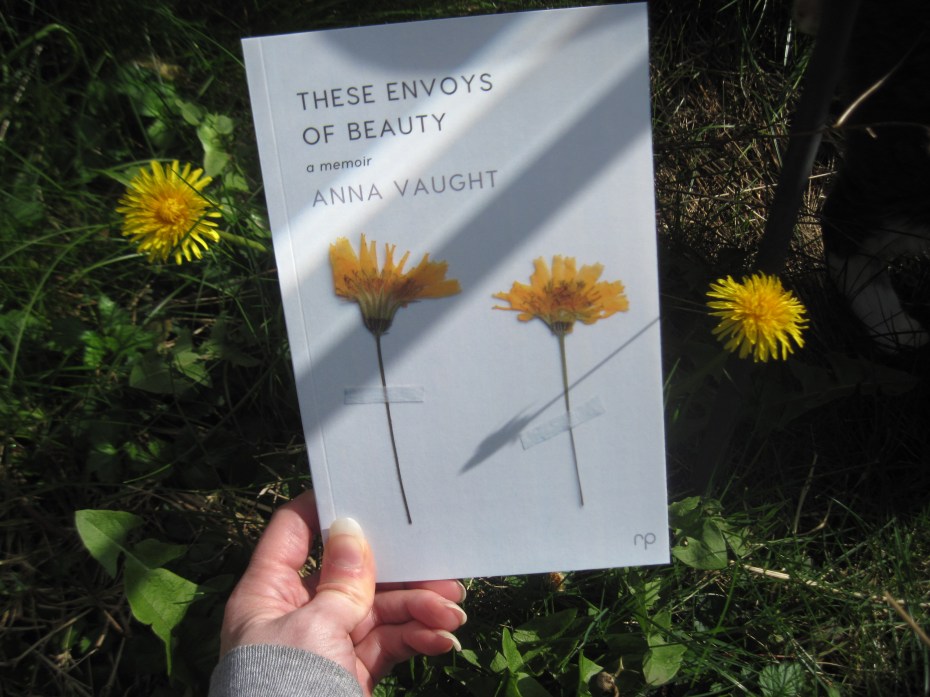
Vaught has a particular love for trees, flowers and moss – even just reciting their Latin names gives her a thrill, and she adds additional information about some species in footnotes. Although her childhood was painful, she retains gratitude for its wide-eyed wonder, and in the exuberance of her prose you can sense a willed childlike perspective (“But back to the list of clouds and writing about clouds!”). I found the frequent self-referential nature of the essays and direct reader address a little precious, but appreciated the thoughts about how nature holds us: “I have always felt a generosity around me, and that I was less lonely outside; at the very least, I could find something to comfort me”. She’s a bookish kindred spirit as well. I’ll be sure to try her work in other genres.
With thanks to Reflex Press for the free copy for review.
Book Serendipity, Early 2021
I call it Book Serendipity when two or more books that I read at the same time or in quick succession have something pretty bizarre in common. Because I have so many books on the go at once (usually 20‒30), I suppose I’m more prone to such incidents.
Josh Cohen’s How to Live. What to Do, a therapist’s guide to literature, explains why this might happen:
More than one writer – the French poet Stéphane Mallarmé, the Argentinian writer Jorge Luis Borges – has advanced the exhilarating idea that each book is an infinitesimally small piece of one single, endless Book. I’ve always felt that this idea, unlikely as it might sound, makes perfect sense if you read enough novels [also nonfiction, for me]. The incidents, descriptions, phrases and images in the book you’re reading will always recall the incidents in another, and those in turn will call up the incidents in another, so that even as you’re reading one book, you’re reading countless others.
The following are in roughly chronological order.
- Mother‒baby swimming sessions in Some Body to Love by Alexandra Heminsley and The Still Point of the Turning World by Emily Rapp.


- [I think it would be a spoiler to even name them, but two novels I read simultaneously in January featured 1) a marriage / close relationship between a man and a woman – even though the man is gay; and 2) a character who beat his wife and then died in a convenient ‘accident’. One was published in 1997 and the other in 2020.]
- Stomas appeared in Dazzling Darkness by Rachel Mann and First Time Ever by Peggy Seeger late in my 2020 reading, and then in early 2021 in Pain: The Science of the Feeling Brain by Abdul-Ghaaliq Lalkhen and Love’s Work by Gillian Rose.
- An account of the author’s experience of ovarian hyperstimulation syndrome in Hormonal by Eleanor Morgan and I Miss You when I Blink by Mary Laura Philpott.
- Salmon fishing takes place in Snow Falling on Cedars by David Guterson and Kings of the Yukon by Adam Weymouth.


- The medical motto “see one, do one, teach one” appears in Breathtaking by Rachel Clarke and Complications by Atul Gawande.
- Filipino medical staff feature in America Is Not the Heart by Elaine Castillo and Breathtaking by Rachel Clarke.
- Twin Peaks is mentioned in The Fragments of My Father by Sam Mills and the anthology Trauma: Essays on Art and Mental Health; a different essay in the latter talks about Virginia Woolf’s mental health struggle, which is a strand in the former.
- St. Teresa of Ávila is mentioned in Heart by Gail Godwin and Sanatorium by Abi Palmer.

- The same Rachel Long poem appears in her debut collection, My Darling from the Lions, and The Emma Press Anthology of Love – but under different titles (“Portent” vs. “Delayed Gratification”).
- There’s a matriarch named Dot in Unsettled Ground by Claire Fuller and The Magician’s Assistant by Ann Patchett.
- There’s an Alaska setting in The Quality of Silence by Rosamund Lupton and Kings of the Yukon by Adam Weymouth.
- Becoming a mother is described as a baptism in Sanctuary by Emily Rapp Black and The Fragments of My Father by Sam Mills.


- While reading America Is Not the Heart by Elaine Castillo, I saw Castillo mentioned in the Acknowledgements of My Darling from the Lions by Rachel Long.
- Polar explorers’ demise is discussed in Ex Libris by Anne Fadiman and The Still Point by Amy Sackville.
- “Butterfingers” / “butter-fingered” is used in America Is Not the Heart by Elaine Castillo and The Clock Winder by Anne Tyler.
- There’s a mention of someone eating paper torn from books (the horror!) in Ex Libris by Anne Fadiman and The Clock Winder by Anne Tyler.
- I was reading three pre-releases at once, each of 288 pages: Milk Fed by Melissa Broder, Unsettled Ground by Claire Fuller, and A Town Called Solace by Mary Lawson.
- The Jewish golem myth is the overarching metaphor of Milk Fed by Melissa Broder and Golem Girl by Riva Lehrer.
- There’s a ceremony to pay respects to those who donated their bodies for medical school dissection in Maybe You Should Talk to Someone by Lori Gottlieb and Golem Girl by Riva Lehrer.
- An old woman with dementia features in The Living Sea of Waking Dreams by Richard Flanagan, Keeper by Andrea Gillies, and The Clock Winder by Anne Tyler.


- A mother dies of cancer on Christmas Day in This Party’s Dead by Erica Buist and The Fragments of My Father by Sam Mills.
- The main character does stand-up comedy in Milk Fed by Melissa Broder and This Party’s Dead by Erica Buist.
- Winning a goldfish at a carnival in The Air Year by Caroline Bird, A Feather on the Breath of God by Sigrid Nunez, and Anna Vaught’s essay in the Trauma anthology.
- ECT (electroconvulsive therapy) is mentioned in Adventures in Human Being by Gavin Francis and Woman on the Edge of Time by Marge Piercy.


- There’s a father who is non-medical hospital staff in The Push by Ashley Audrain (a cleaner) and A Feather on the Breath of God by Sigrid Nunez (a kitchen worker).
- There’s a character named Hart in The Wild Laughter by Caoilinn Hughes and The Birth House by Ami McKay.
- Cannibalism is a point of reference, a major metaphor, or a (surreal) reality in Mother for Dinner by Shalom Auslander, Eat or We Both Starve by Victoria Kennefick, and Light Perpetual by Francis Spufford.
- Infertility and caring for animals were two big themes shared by Brood by Jackie Polzin and Catalogue Baby by Myriam Steinberg. This became clearer when I interviewed both authors in February. Also, both women have shocks of pink hair in their publicity photos!


- A young woman works at a hotel in The Distance between Us by Maggie O’Farrell and My Dark Vanessa by Kate Elizabeth Russell (and The Glass Hotel by Emily St. John Mandel, which I read late last year).
 Bookish Beck = Rebecca Foster. American transplant to England. Freelance proofreader and book reviewer.
 Bookish Beck