Two Final Wellcome Book Prize Longlist Reviews: Krasnostein & Moshfegh
I’ve now read eight of the 12 titles longlisted for the Wellcome Book Prize 2019 and skimmed another two, leaving just two unexplored.
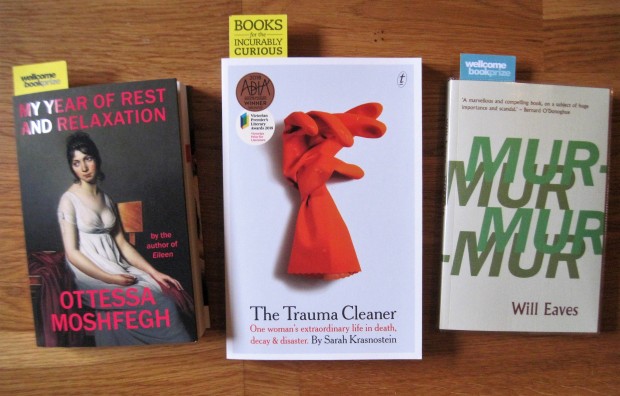
My latest two reads are books that I hugely enjoyed yet would be surprised to see make the shortlist (both  ):
):
The Trauma Cleaner: One Woman’s Extraordinary Life in Death, Decay and Disaster by Sarah Krasnostein (2017)
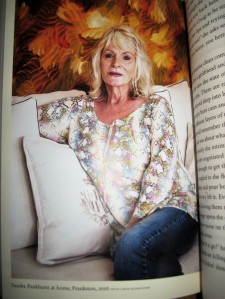
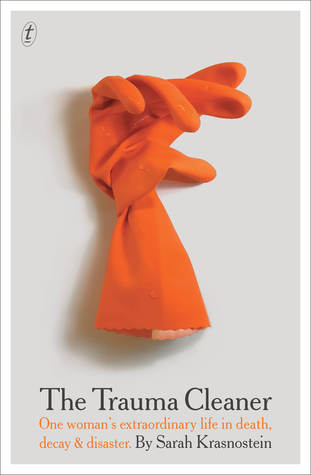 I guarantee you’ve never read a biography quite like this one. For one thing, its subject is still alive and has never been much of a public figure, at least not outside Victoria, Australia. For another, your average biography is robustly supported by archival evidence; to the contrary, this is a largely oral history conveyed by an unreliable narrator. And lastly, whether a biography is critical or adulatory overall, the author usually at least feigns objectivity. Sarah Krasnostein doesn’t bother with that. Sandra Pankhurst’s life is an incredible blend of ordinary and bizarre circumstances and experiences, and it’s clear Krasnostein is smitten with her. “I fall in love … anew each time I listen to her speak,” she gushes towards the book’s end. At first I was irked by all the fawning adjectives she uses for Sandra, but eventually I stopped noticing them and allowed myself to sink into this astonishing story.
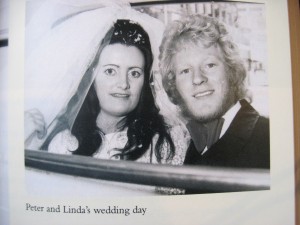
Sandra was born male and adopted by a couple whose child had died. When they later conceived again, they basically disowned ‘Peter’, moving him to an outdoor shed and making him scrounge for food. His adoptive father was an abusive alcoholic and kicked him out permanently when he was 17. Peter married ‘Linda’ at age 19 and they had two sons in quick succession, but he was already going to gay bars and wearing makeup; when he heard about the possibility of a sex change, he started taking hormones right away. Even before surgery completed the gender reassignment, Sandra got involved in sex work, and was a prostitute for years until a brutal rape at the Dream Palace brothel drove her to seek other employment. Cleaning and funeral home jobs nicely predicted the specialty business she would start after the hardware store she ran with her late husband George went under: trauma cleaning.
 Krasnostein parcels this chronology into tantalizing pieces, interspersed with chapters in which she accompanies Sandra and her team on assignments. They fumigate and clean up bodily fluids after suicides and overdoses, but also deal with clients who have lost control of their possessions – and, to some extent, their lives. They’re hoarders, cancer patients and ex-convicts; their homes are overtaken by stuff and often saturated with mold or feces. Sandra sympathizes with the mental health struggles that lead people into such extreme situations. Her line of work takes “Great compassion, great dignity and a good sense of humour,” she tells Krasnostein; even better if you can “not … take the smell in, ’cause they stink.”
 The author does a nice job of staying out of the narrative: though she’s an observer and questioner, there’s only the occasional paragraph in which she mentions her own life. Her mother left when she was young, which helps to explain why she is so compassionate towards the addicts and hoarders she meets with Sandra. Some of the loveliest passages have her pondering how things got so bad for these people and affirming that their lives still have value. As for Sandra herself – now in her sixties and increasingly ill with lung disease and cirrhosis – Krasnostein believes she’s never been unconditionally loved and so has never formed true human connections.
This book does many different things in its 250 pages. It’s part journalistic exposé and part “love letter”; it’s part true crime and part ordinary life story. It considers gender, mental health, addiction, trauma and death. It’s also simply a terrific read that should draw in lots of people who wouldn’t normally pick up nonfiction. I don’t expect it to advance to the shortlist, but if it does I’ll be not-so-secretly delighted.
A favorite passage:
Sometimes, listening to Sandra try to remember the events of her life is like watching someone reel in rubbish on a fishing line: a weird mix of surprise, perplexity and unexpected recognition. No matter how many times we go over the first three decades of her life, the timeline of places and dates is never clear. Many of her memories have a quality beyond being merely faded; they are so rusted that they have crumbled back into the soil of her origins. Others have been fossilised, frozen in time, and don’t have a personal pull until they defrost slightly in the sunlit air between us as we speak. And when that happens there is a tremor in her voice as she integrates them back into herself, not seamlessly but fully.
See also:
My Year of Rest and Relaxation by Ottessa Moshfegh (2018)
If you’ve read her Booker-shortlisted debut, Eileen, you’ll be unsurprised to hear that Moshfegh has written another love-it-or-hate-it book with a narrator whose odd behavior is hard to stomach. This worked better for me than Eileen, I think because I approached it as a deadpan black comedy in the same vein as Elif Batuman’s The Idiot. Its inclusion on the Wellcome longlist is somewhat tenuous: in 2000 the unnamed narrator, in her mid-twenties, gets a negligent psychiatrist to prescribe her drugs for insomnia and depression and stockpiles them so she can take pill cocktails to knock herself out for days at a time. In a sense this is a way of extending the numbness that started with her parents’ deaths – her father from cancer and her mother by suicide. But there’s also a more fantastical scheme in her mind: “when I’d slept enough, I’d be okay, I’d be renewed, reborn. I would be a whole new person.”
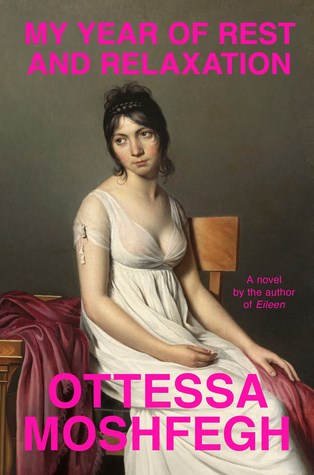 Ever since she was let go from her job at a gallery that showcases ridiculous modern art, the only people in this character’s life are an on-again, off-again boyfriend, Trevor, and her best (only) friend from college, longsuffering Reva, who keeps checking up on her in her New York City apartment even though she consistently treats Reva with indifference or disdain. Soon her life is a bleary cycle of sleepwalking and sleep-shopping, interspersed with brief periods of wakefulness, during which she watches a nostalgia-inducing stream of late-1990s movies on video (the kind of stuff I watched at sleepovers with my best friend during high school) – she has a weird obsession with Whoopi Goldberg.
It’s a wonder the plot doesn’t become more repetitive. I like reading about routines, so I was fascinated to see how the narrator methodically takes her project to extremes. Amazingly, towards the middle of the novel she gets herself from a blackout situation to Reva’s mother’s funeral – about the only time we see somewhere that isn’t her apartment, the corner shop, the pharmacy or Dr. Tuttle’s office – and this interlude is just enough to break things up. There are lots of outrageous lines and preposterous decisions that made me laugh. Consumerism and self-medication to deaden painful emotions are the targets of this biting satire. As 9/11 approaches, you wonder what it will take to wake this character up to her life. I’ve often wished I could hibernate through British winters, but I wouldn’t do what Moshfegh’s antiheroine does. Call this a timely cautionary tale about privilege and disengagement.
Favorite lines:
“Initially, I just wanted some downers to drown out my thoughts and judgments, since the constant barrage made it hard not to hate everyone and everything. I thought life would be more tolerable if my brain were slower to condemn the world around me.”
“Oh, sleep, nothing else could ever bring me such pleasure, such freedom, the power to feel and move and think and imagine, safe from the miseries of my waking consciousness.”
Reva: “you’re not changing anything in your sleep. You’re just avoiding your problems. … Your problem is that you’re passive. You wait around for things to change, and they never will. That must be a painful way to live. Very disempowering.”
See also:
And one more that I got out from the library and skimmed:
Murmur by Will Eaves (2018)
 The subject is Alec Pryor, or “the scientist.” It’s clear that he is a stand-in for Alan Turing, quotes from whom appear as epigraphs at the head of most chapters. Turing was arrested for homosexuality and subjected to chemical castration. I happily read the first-person “Part One: Journal,” which was originally a stand-alone story (shortlisted for the BBC National Short Story Award 2017), but “Part Two: Letters and Dreams” was a lot harder to get into, so I ended up just giving the rest of the book a quick skim. If this is shortlisted, I promise to return to it and give it fair consideration.
See also:
We will announce our shadow panel shortlist on Friday. Follow along here and on Halfman, Halfbook, Annabookbel, A Little Blog of Books, and Dr. Laura Tisdall for reviews, predictions and reactions.
Review: Extinctions by Josephine Wilson
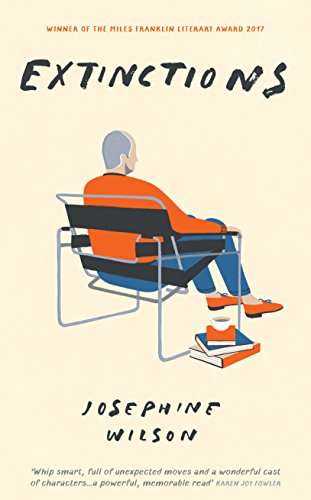 I don’t often get a chance to read the wonderful-sounding Australian books I see on prize shortlists or on Kate’s blog, so I was delighted when Extinctions, which won the 2017 Miles Franklin Literary Award, was published in the UK last year. It may just be my mind making easy associations, but Josephine Wilson’s second novel indeed reminded me of other Australian fiction I’ve enjoyed, including The Life and Loves of Lena Gaunt by Tracy Farr, Salt Creek by Lucy Treloar, and The Singing Ship by Rebecca Winterer. I can’t quite put my finger on what these novels have in common despite their disparate time settings. A hot and forbidding landscape? An enduring sense of pioneer spirit, of survival against the odds? All four, to an extent, pit an explorer’s impetus against family trauma and/or racial difference.
The antihero of Extinctions is widower Frederick Lothian, who at age 69 is a reluctant resident of St Sylvan’s Estate retirement village. It’s January 2006, the middle of a blistering Australian summer, and amid his usual morbid activities of reading the newspaper obituaries and watching his elderly co-residents fall over outside his air-conditioned unit, he has plenty of time to drift back over his life. A retired engineer, he’s an expert on concrete construction as well as a noted collector of modernist furniture. But he’s been much less successful in his personal life. His son is in a care home after a devastating accident, and his adopted daughter Caroline, who is part Aborigine, blames and avoids Fred. A run-in with a nosy neighbor, Jan, forces him to face the world – and his past – again.
Meanwhile, Caroline is traveling in the UK to secure specimens for a museum exhibit on extinct species, and the idea of feeling utterly lonesome, like the last of one’s kind, recurs: Frederick sits stubbornly on his own at St Sylvan’s, pondering the inevitability of death; Caroline and Jan, both adopted, don’t have the comfort of a family lineage; and the museum specimens whose photographs are dotted through the novel (including the last passenger pigeon, Martha, which also – not coincidentally, I’m sure – was Fred’s wife’s name) represent the end of the line.
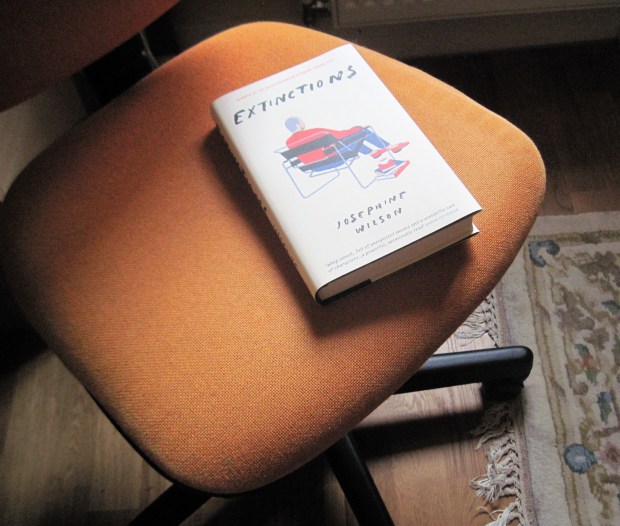
A famous modernist chair features in the book. This is just my office chair.
I loved pretty much everything about this book: the thematic connections, the gentle sense of humor (especially during Fred and Jan’s expensive restaurant dégustation), the chance for a curmudgeonly protagonist to redeem himself, and the spot-on writing. Highly recommended.
My rating:
A favorite passage:
“Like many educated people, Frederick had his opinions, most of which were set in concrete so as to render them more akin to truths, but in reality politics and modern history were his weak points – along with poetry. Where poetry and politics were concerned he feared a lack of foundation, which left him vulnerable to challenge. Deep down he knew that opinion – like concrete – was most resilient when well founded and reinforced.”
Other readalikes: Darke by Rick Gekoski & Ok, Mr Field by Katharine Kilalea
With thanks to Serpent’s Tail for the free copy for review.
#16–17: The Life and Loves of Lena Gaunt & The Invisible Bridge
I’m coming towards the close of my 20 Books of Summer challenge. Now, I’ve done plenty of substituting – some of my choices from early in the summer will have to spill over into the autumn (for instance, I’m reading the May Sarton biography slowly and carefully so am unlikely to finish it before early September) or simply wait for another time – but in the end I will have read 20+ books I own in print by women authors. (Ongoing/still to come are a few buddy reads: Half of a Yellow Sun by Chimamanda Ngozi Adichie with Anna Caig; Late Nights on Air by Elizabeth Hay with Naomi of Consumed by Ink and Penny of Literary Hoarders; and West with the Night by Beryl Markham with Laila of Big Reading Life.)
The two #20Booksof Summer I finished most recently have been the best so far. I’d heard great things about these debut novels but let years go by before getting hold of them, and then months more before picking them up. Though one is more than twice the length of the other, they are both examples of large-scale storytelling at its best: we as readers are privy to the sweep of a whole life, and get to know the protagonists so well that we ache for their sorrow. What might have helped the authors tap into the emotional power of their stories is that both drew on family history, to different extents, when creating the characters and incidents.
The Life and Loves of Lena Gaunt by Tracy Farr (2013)
 Lena Gaunt: early theremin player, grande dame of electronic music, and opium addict. When we meet our 81-year-old narrator, she’s just performed at the 1991 Transformer Festival and has caught the attention of a younger acolyte who wants to come interview her at home near Perth, Australia for a documentary film – a setup that reminded me a bit of May Sarton’s Mrs. Stevens Hears the Mermaids Singing. It’s pretty jolting the first time we see Lena smoke, but as her life story unfolds it becomes clear that it’s been full of major losses, some nearly unbearable in their cruelty, so it’s no surprise that she would wish to forget.
Though Lena bridles at Mo’s many probing questions, she realizes this may be her last chance to have her say and starts typing up a record of her later years to add to a sheaf of autobiographical stories she wrote earlier in life. These are interspersed with the present action to create a vivid collage of Lena’s life: growing up with a pet monkey in Singapore, moving to New Zealand with her lover, frequenting jazz clubs in Paris, and splitting her time between teaching music in England and performing in New York City.
With perfect pitch and recall, young Lena moved easily from the piano to the cello to the theremin. I loved how Farr evokes the strangeness and energy of theremin music, and how sound waves find a metaphorical echo in the ocean’s waves – swimming is Lena’s other great passion. Life has been an overwhelming force from which she’s only wrested fleeting happiness, and there’s a quiet, melancholic dignity to her voice. This was nominated for several prizes in Australia, where Farr is from, but has been unfairly overlooked elsewhere.
Favorite lines:
“I once again wring magic from the wires by simply plucking and stroking my fingers in the aether.”
“I felt the rush of the electrical field through my body. I felt like a god. I felt like a queen. I felt like a conqueror. And I wanted to play it forever.”
“All of the stories of my life have begun and ended with the ocean.”
My rating: 
The Life and Loves of Lena Gaunt was published in the UK by Aardvark Bureau in 2016. My thanks to the publisher for a free copy for review.
The Invisible Bridge by Julie Orringer (2010)
 It’s all too easy to burn out on World War II narratives these days, but this is among the very best I’ve read. It bears similarities to other war sagas such as Birdsong and All the Light We Cannot See, but the focus on the Hungarian Jewish experience was new for me. Although there are brief glimpses backwards and forwards, most of the 750-page book is set during the years 1937–45, as Andras Lévi travels from Budapest to Paris to study architecture, falls in love with an older woman who runs a ballet school, and – along with his parents, brothers, and friends – has to adjust to the increasingly strict constraints on Jews across Europe.
A story of survival against all the odds, this doesn’t get especially dark until the last sixth or so, and doesn’t stay really dark for long. So if you think you can’t handle another Holocaust story, I’d encourage you to make an exception for Orringer’s impeccably researched and plotted novel. Even in labor camps, there are flashes of levity, like the satirical newspapers that Andras and a friend distribute among their fellow conscripts, while the knowledge that the family line continues into the present day provides a hopeful ending.
This is a flawless blend of family legend, wider history, and a good old-fashioned love story. I read the first 70 pages on the plane back from America but would have liked to find more excuses to read great big chunks of it at once. Sinking deep into an armchair with a doorstopper is a perfect summer activity (though also winter … any time, really). [First recommended to me by Andrea Borod (aka the Book Dumpling) over five years ago.]
Favorite lines:
“He felt the stirring of a new ache, something like homesickness but located deeper in his mind; it was an ache for the time when his heart had been a simple and satisfied thing, small as the green apples that grew in his father’s orchard.”
“[It] seemed to be one of the central truths of his life: that in any moment of happiness there was a reminder of bitterness or tragedy, like the ten plague drops spilled from the Passover cup, or the taste of wormwood in absinthe that no amount of sugar could disguise.”
“For years now, he understood at last, he’d had to cultivate the habit of blind hope. It had become as natural to him as breathing.”
My rating: 
Review: Salt Creek by Lucy Treloar
Salt Creek is one of the very best works of historical fiction I’ve read. All the harder, then, to believe that it’s Lucy Treloar’s debut novel. Since its initial release in Australia in 2015, it has gone on to be shortlisted for the Walter Scott Prize for historical fiction and the Miles Franklin Award for Australian novels. We have Claire McAlpine of Word by Word to thank for helping this book find a publisher in the UK. I can particularly recommend it to fans of The Essex Serpent and English Passengers, and there are also resonances with Rebecca Winterer’s Australia-set The Singing Ship.
 Hester Finch is looking back from the 1870s – when she is a widowed teacher settled in England – to the eight ill-fated years her family spent at Salt Creek, a small (fictional) outpost in South Australia, in the 1850s–60s. Her luckless father tried whaling in Adelaide before turning to cheese-making as his next far-fetched money-making venture. From Quaker stock, Papa believed the natives should be well treated and even all but adopted an aboriginal boy named Tully, getting him to bathe and wear clothes and educating him alongside his seven children. However, as Hester hints starting early on in the novel, having a white family monopolizing resources put an impossible strain on relations with the natives.
It seems an inevitable irony of reviewing – or maybe it’s just me? – that the books you love the most are the hardest to write about. However can I do this book justice? I wonder about lots of 5-star books. It’s easier to put together a review when you have some mixture of positive and negative things to say, but I have no faults to find with Salt Creek. It flawlessly evokes its time period and somewhat bleak setting. Hester’s narration is as lyrical as it is nostalgic and matter-of-fact, and I sympathized with her desperation not to be drawn into a Victorian housewife’s cycle of endless pregnancies. The characterization is spot on, especially for figures like Papa or Tully who could have easily been reduced to stereotypes.
Most of all, this is the piercing story of a clash of cultures and the secret prejudices that underpin our beliefs. You might think notions of dominion and looking after ‘poor natives’ are outdated, but just listen in to what particular groups have to say about the environment and intervention abroad and you’ll realize that this is as relevant as ever. Salt Creek comes with my highest recommendation.
Some favorite lines:
“Poor Papa. He pitted himself against the land, yet it was impervious to all his learning and effort and incantatory prayers. The land had its own drives and they ran against Papa’s, blunting all his purposes.”
“I would not have a baby or that would be my life. There would be another and another and nothing left of my self; my life being decided for me.”
“Memories are just the survivors of complete events and are not easy to interpret; in the recalling they can be used to create a story that is only partially true or not true at all.”
“It seemed as if every part of the lagoon had a name and a story and a meaning. The stories were all around us wherever we went. There was scarcely a place without one and it felt as if we were nothing but one more story inside this world and the stories were without number.”
“The longer I looked the more that impression of civilization seemed an illusion.”
With thanks to Gallic Books for the free copy for review.
My rating:
Virginia Woolf Down Under: The Singing Ship by Rebecca Winterer
Memories are stored vertically, fluid and accessible from the strangest depths. … [T]o explore was to salvage, to record a story was to remember one.
Rebecca Winterer won the 2016 Del Sol Press First Novel Prize for The Singing Ship, her sophisticated story of the afflictions and creative transformations that shape the Pilgrim family of Mt. Isaac, Queensland over the course of six decades. However, the book opens with an even longer view – a cosmic one – via a prologue offering a millennia-old perspective on human life. An epilogue returns full circle, telescoping from the Pilgrims back out to the enormity of the earth without belittling the value of the individual. In between those two points of vastness, we spend time on the dusty Australian ground with four characters who nurse their traumas with some unusual obsessions.
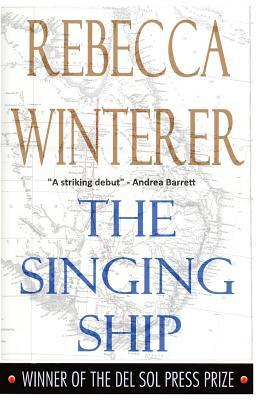 Eleven-year-old Bernadette emulates her hero, nineteenth-century explorer Charles Sturt, by trekking out into the bush with a log book and carefully amassed provisions. Younger sister Jane combats her nightmares by focusing on stories of the saints and constructing little altars, “earnestly fabricating solace and safe havens.” Already the signs of who they’ll grow up to be are evident – Bernadette an award-winning historian, and Jane a nun. But the road there will not be easy: Winterer plants tiny hints of an attack the girls suffer out in the bush.
Meanwhile, the girls’ father, Robert, admits to a sexual peccadillo with a customer at his department store and has a nervous breakdown. Their mother Audrey, an unfulfilled housewife with creative ambitions, responds with affairs of her own but also embarks on her magnum opus, an enormous quilt decorated with her button collection. One day the quilt will be part of the permanent folk art collection at the National Gallery in Canberra. For now it’s like an echo of the bowerbird nest Bernadette finds: a visual display of newfound confidence.
The novel follows the Pilgrims from perhaps the late 1950s through to the present day; and from drought-plagued Mt. Isaac to the university where Bernadette teaches and the convent where Jane lives. There will be more losses along the way – deaths and broken relationships – but these characters keep reinventing themselves to survive. In two cases name changes are symbolic of leaving a previous life behind: we learn that Robert chose the new surname Pilgrim when he escaped from his father’s hotel-cum-brothel, to signify his eagerness in setting out on his life’s journey; and when Jane takes her vows she becomes Sister Ava.
I was impressed by how much ground this novel covers in just 210 pages. It takes in so many weighty topics: mental illness, adultery, sexual assault, bereavement, suicide, art, history, legacy and culture. Perhaps for that reason, I found that I had to parcel it out into small chunks, reading just 10 pages or so at a time. The chronology can be difficult to follow – unspecified lengths of time pass between the sections and the narrative skips back and forth, such that I longed for date headings to help me orient myself. But some of this is deliberate, I’m sure: as in Virginia Woolf’s work, the past bleeds into the present, with memory and action sometimes indistinguishable. Indeed, one part is entitled “The Voyage Out”; though I’m unfamiliar with that Woolf novel, I had To the Lighthouse in mind while reading.

The Singing Ship sculpture at Emu Park, Queensland. ZayZayEM at the English language Wikipedia [CC-BY-SA-3.0 (http://creativecommons.org/licenses/by-sa/3.0/)%5D, via Wikimedia Commons.
The title itself has metaphorical significance, referring to a sculpture of Captain Cook’s Endeavor, sited on a headland over Keppel Bay. It’s “white as bleached cuttlebone” and fitted with organ pipes so that when the wind passes through it creates an uncanny music. Later on Winterer likens the sculpture to the human body. That’s one of the images that will stick with me from this dreamy novel: of music emerging from the detritus of troubled lives.
My rating: 
The Singing Ship was published by Del Sol Press on July 21st. My thanks to the author for sending a free copy for review.
Reviews Roundup, September–October
One of my goals with this blog is to have one convenient place where I can gather together all my writing that has appeared in disparate online locations. To that end, once a month I’ll provide links to all the book reviews I’ve published elsewhere, with a rating (below each description) and a short taster so you can decide whether to click to read more. A couple of exceptions: I won’t point out my Kirkus Indie, BlueInk or Publishers Weekly reviews since I don’t get a byline.
The Bookbag
Rising Strong by Brené Brown: Brown, a qualitative researcher in the field of social work, encourages readers to embrace vulnerability and transform failure and shame through a simple process of re-evaluating the stories we tell ourselves. The gimmicky terminology and frequent self-referencing grated on me a bit, but I appreciated how the book made me reconsider events from my own life. It’s the ideas that carry Rising Strong, so as long as you come to it expecting a useful tool rather than a literary experience you shouldn’t be disappointed. Genuinely helpful self-help.

 Life After You by Lucie Brownlee: With honesty and humor, Brownlee reconstructs the two years following her husband’s sudden death. My sister is still a new widow, so I read this expecting it to resonate with her situation, and it certainly does. I had an issue with the title and marketing, though. When originally published last year, the book had the title Me After You. That’s been changed to sound a little less like a Jojo Moyes novel, but the cover is more chick lit than ever, which doesn’t really match the contents of the book.
The Glass Girl by Sandy Hogarth (& interview): Moving between Australia and England and spanning several decades of Ruth Bishop’s life, this debut novel explores the psychological effects of sexual trauma and betrayal. The middle of the book feels a little meandering, and the chronology is sometimes over-complicated. However, Ruth’s is a warm first-person voice, and the ending hints at welcome resolution to unanswered questions. My favorite aspect of the novel, though, is the frequent observations of the natural world.

 The Year of the Runaways by Sunjeev Sahota: With multilingual slang and several Sikh characters, Sahota’s second novel illuminates aspects of the South Asian experience that might be unfamiliar. Daily life is a struggle for Tochi, Randeep and Avtar: they work multiple jobs to make ends meet, serving at Crunchy Fried Chicken, cleaning sewers, or building a luxury hotel in Leeds. The fourth protagonist is Randeep’s visa-wife, Narinder. Through flashbacks we discover each one’s past. It’s a harrowing read, but you can’t help but sympathize with the four runaways as they make and dissolve connections over the year.
The Gap of Time by Jeanette Winterson: This contemporary ‘cover version’ of The Winter’s Tale links a London financier, a Parisian singer, and a blended family in New Orleans. Winterson creates clear counterparts for each Shakespeare characters, often tweaking names so they are recognizable but more modern. Inventive and true to the themes and imagery (time, adoption; angels, bears, statues) of the original, but ultimately adds little to one’s experience of Shakespeare. I’ll hope for better things from the rest of the Hogarth Shakespeare series. (Still to come: Margaret Atwood on The Tempest, Howard Jacobson on The Merchant of Venice and Anne Tyler on The Taming of the Shrew, among others.)
BookBrowse
 After the Parade by Lori Ostlund [subscription service, but the full text of my review will be available for free during the week of October 20th as part of Editor’s Choice]: Ostlund’s debut novel explores trauma and loneliness through the past and present of the protagonist, an ESL teacher who has just left his long-term partner, as well as the stories of those he meets. Although set over a six-month period, the novel is so full of flashbacks that it feels dense with the weight of the past. At times this can seem more like a set of short stories, only loosely connected through Aaron. Still, the overarching theme is strong and resonant: “after the parade,” after everything has changed irrevocably, you must keep going, pushing past the sadness to build a new life.
BookTrib
 The Best Small Fictions 2015, ed. by Tara L. Masih and Robert Olen Butler: In this very strong anthology of flash fiction, stories range from Tweet length to a few pages, but are always under 1,000 words. Titles and first lines carry a lot of weight. One of the best openers is “I didn’t recognize her without her head” (“Before She Was a Memory,” Emma Bolden). In genre the stories run the gamut from historical fiction to whimsical fantasy. You’ll be introduced to a wealth of fresh and existing talent. There are literally dozens of stand-outs here, but if I had to choose a top 3, they’d be “A Notice from the Office of Reclamation” by J. Duncan Wiley, “The Lunar Deep” by David Mellerick Lynch, and (overall favorite) “Something Overheard” by Yennie Cheung.
For Books’ Sake
 Fates and Furies by Lauren Groff: An incisive study of a marriage, beautifully written and rich with allusions to Shakespeare and Greek mythology. Short, verbless sentences pile up to create exquisite descriptions, as in “Sunset. House on the dunes like a sun-tossed conch. Pelicans thumb-tacked in the wind.” However, I was less sure about the necessity of the bracketed phrases, which seem to represent a Greek chorus giving omniscient commentary, and the use of slang and nicknames can grate. Groff makes it onto a short list of women I expect to produce the Great American Novel.
Foreword Reviews
 When All Goes Quiet by Augustinus F. Lodewyks: This religious memoir should interest those who are curious about how spiritual experience can infiltrate everyday life. “When all goes quiet, I know that Heaven is trying to show me its glory,” Lodewyks writes. In autobiographical vignettes, he vividly expresses his mystical visions, particularly those featuring Jesus, the Virgin Mary and angels, who tend to appear in times of crisis and during events of ritual significance like weddings, funerals and religious pilgrimages. Some will still object to the overt proselytizing, especially in the book’s last quarter.

The Blessing of Movement by Deborah Konrad: Konrad’s story is an inspirational memoir about life with disability and caring for dying relatives. Her sister Sandra became a quadriplegic in her twenties. Throughout the book, Konrad investigates the secret strength that underlay “the sunny disposition of the pretty paralyzed woman.” She concludes that it was all about thankfulness, as proven by Sandra’s gratitude journal. Konrad’s own life undeniably gets sidelined, though; more self-reflection would provide a good match for her insights into her sister’s character.
 DNA of Mathematics by Mehran Basti: Drawing on his academic specialty in mathematics, Basti explores how scientific theories have been used and misused through history. The book lacks focus due to frequent unrelated asides. It may be difficult to grant credibility to a scientist who dismisses the big bang because it was theorized through “semi-broken scientific methods” and seems to have a personal vendetta against Stephen Hawking. Most importantly, the mathematics that forms the book’s basis is never fully explained.

From Hell to Heaven, One Man’s Journey by Gustav Daffy: This book was inspired by an acrimonious divorce and other family troubles; although Christian faith helped Gustav adjust his thinking, many of the poems still feel like the angry outpourings of a man with an ax to grind. Moreover, formulaic rhyming and poor spelling and grammar mar this overlong collection. It would take a professional copyeditor to hone this into a concise set of linguistically and stylistically acute poems. However, the author’s in-the-moment reactions are easy to relate to.
Shiny New Books
 Grief Is the Thing with Feathers by Max Porter: It may seem perverse to twist Emily Dickinson’s words about hope into a reflection on bereavement, but Porter’s exceptional debut does just that: tweak poetic forebears – chiefly Poe’s “The Raven” and Ted Hughes’s Crow – to create a hybrid response to loss. The novella is composed of three first-person voices: Dad, Boys and Crow (the soul of the book: witty, onomatopoeic, often macabre). Dad and his two young sons are adrift in mourning; the boys’ mum died after an unspecified accident in their London flat. The three narratives resemble monologues in a play, with short lines laid out on the page more like stanzas of a poem.
We Love This Book
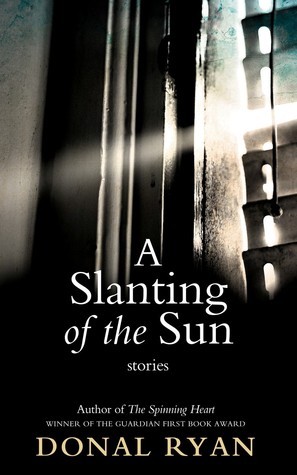 A Slanting of the Sun by Donal Ryan: The Irish author of the novels The Spinning Heart (winner of the Guardian First Book Award in 2013) and The Thing About December, returns with 20 jolting, voice-driven short stories suffused with loneliness and anger. Nineteen of the 20 are in the first person, echoing the chorus of voices that made The Spinning Heart so effective. Many of the narrators speak in thick dialect and run-on sentences, which helps to immerse you in the rhythms of Irish speech. In a book full of lonely people, it is the moments of connection – however fleeting – that matter. For example, in “Long Puck,” one of the best stories, a Catholic priest posted to Syria initiates interfaith hurling matches that temporarily lift everyone’s spirits.
I also post reviews of most of my casual reading and skimming on Goodreads.
 The River by Helen Humphreys: Humphreys has lived along Ontario’s Napanee River for over a decade. I was expecting a blend of personal reflection and natural observations, but instead the book is mostly composed of brief fictional passages illuminating a handful of species. I liked the passages about the heron best – Humphreys successfully imagines the life of a plume hunter and contrasts it with the excitement of two women involved in the foundation of a bird conservation charity. However, much of the book felt like unconnected vignettes, not building to any kind of grander picture of a location.

The Mountain Can Wait by Sarah Leipciger: The novel opens and closes with a hit-and-run, but in between those momentous peaks it’s a quieter tale of a single father trying to guide his son and daughter into young adulthood in the wilds of Canada’s west and islands. Tom Berry’s work is not cutting trees down but planting them – an interesting adaptation of a traditional woodsman’s activity to a new eco age. I found the story a little sleepy but loved Leipciger’s writing, especially her account of the daily drudgery of manual labor and her descriptions of wilderness scenery.
 Decline of the Animal Kingdom by Laura Clarke: Bizarre, in-your-face poetry from a 30-year-old Canadian: business jargon, YouTube videos, fast food…and, yes, animals. Many of the poems feature mules and lions, including weird dialogues between a mule and its supervisor / domestic partner / psychiatrist. With plays on words and sexualized vocabulary, Clarke considers inter-species altruism and the inevitable slide towards extinction. Two favorite lines: “You forget you live parallel to violence” (from “Carnivora”); “The Tasmanian tiger live-tweets its extinction from the Hobart zoo in 1933” (from “Extirpation”).
Do No Harm: Stories of Life, Death and Brain Surgery by Henry Marsh: “Terrible job, neurosurgery. Don’t do it.” Lucky for us, Henry Marsh reports back from the frontlines of brain surgery so we don’t have to. He’s nearing retirement age after a career divided between a London hospital and medical missions to Ukraine. The punchy chapters are named after conditions he has treated or observed. Marsh comes across as having a hot temper, exhibiting extreme frustration with NHS bureaucracy. At the same time, he gets very emotional over his patients declining and dying, and experiences profound guilt over operations that go wrong or were ultimately unnecessary.

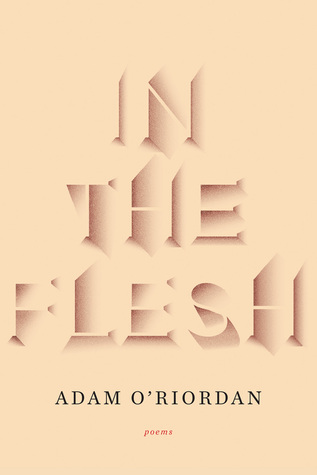 In the Flesh by Adam O’Riordan: My favorite poems in O’Riordan’s debut collection were about Victorian Manchester, 1910s suffragettes and the Wordsworths, this last based on the author’s year in residence at their Lake District cottage. I also liked “The Corpse Garden” – about the outdoor forensic lab in Knoxville, Tennessee – and a couple of multi-part poems that seem to enliven family history. It’s the vocabulary and alliteration that make these poems; there are only a handful of rhyming couplets.
A Circle of Quiet by Madeleine L’Engle: If, like me, you only knew L’Engle through her Wrinkle in Time children’s series, this journal should come as a revelation. I didn’t know she wrote any nonfiction for adults. The Crosswicks books cannot be called simple memoirs, however; there’s so much more going on. In this journal (published 1972) of a summer spent at their Connecticut farmhouse, L’Engle muses on theology, purpose, children’s education, the writing life, the difference between creating stories for children and adults, neighbors and fitting into a community, and much besides.
 A View of the Harbour by Elizabeth Taylor: My third Taylor – not as good as Mrs. Palfrey, but better than Angel. It’s about the everyday family and romantic entanglements of a small English harbor village in the 1940s. Beth is a preoccupied writer who doesn’t notice that her husband, the local doctor, is carrying on an affair with her best friend, the divorcée Tory, who is also their next-door neighbor. As always, Taylor has great insight into the human psyche and unlikely relationships. The plot is low on thrills for sure, but it’s pleasant reading, especially if you’re on holiday at the seaside (I started reading it on the coast near Dublin).
Amazing Grace: A Vocabulary of Faith by Kathleen Norris: This makes the shortlist of books I would hand to skeptics to show them there might be something to this Christianity nonsense after all. Norris spent 20 years away from the faith but gradually made her way back, via the simple Presbyterianism of her Dakota relatives but also through becoming an oblate at a Benedictine monastery – two completely different expressions of the same faith. In few-page essays, she gives each word or phrase a rich backstory through anecdote, scripture and lived philosophy, ensuring that it’s not just religious jargon anymore.
 Undermajordomo Minor by Patrick deWitt: What The Sisters Brothers did for the Western, this does for the Gothic fairytale. It’s not quite as fun or successful as the previous book, but has a nicely campy Dracula or Jane Eyre feel. Lucien “Lucy” Minor, a compulsive liar, sets out to find adventure and romance as undermajordomo of a castle in the quaint German countryside. Here he meets pickpockets, a periodically insane baron, a randy maiden, and a strapping rival who’s a soldier in the absurdist local conflict. DeWitt’s understated humor is not as clearly on display here; there’s also, strangely, quite a bit of sex.
Sentenced to Life by Clive James: James, an Australian critic and all-round man of letters, was first diagnosed with leukemia in 2010. After a setback in 2013, he’s rallied, but these poems are certainly infused with a sense of imminent mortality. The incessant ABAB rhyming in the early poems set up a jaunty rhythm I didn’t find appropriate to the subject matter; I much prefer the later unrhymed poems. “Plot Points” is my favorite, artfully linking disparate historical moments.
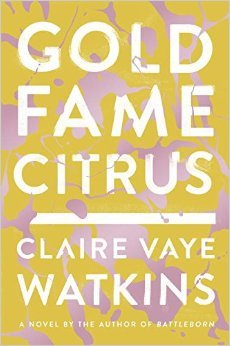 Gold Fame Citrus by Claire Vaye Watkins: Gold, fame, citrus: reasons people once came to California. Now, only a desperate remnant remains in this waterless wasteland. Luz and Ray squat in a starlet’s abandoned mansion and live off of Luz’s modeling money – she was once the environmental movement’s poster child, “Baby Dunn.” When they take charge of a baby called Ig, however, their priorities change. They set off for the strangely beautiful sea of dunes, the Amargosa, leaving behind the ‘frying pan’ of exposure to the elements for the ‘fire’ of a desert cult. There is some absolutely beautiful prose. This is the book that California (Edan Lepucki) wanted to be.
Satin Island by Tom McCarthy: U. is a corporate anthropologist in London, coming off the success of the Koob–Sassen contract and facing the blank page of the Great Report he’s tasked with writing. Not much happens here; the book is more about his anthropological observations and the things he fixates on, like oil spills, a sabotaged parachutist, and Satin Island – a place he encounters in a dream and then, by word association, likens to Staten Island, a destination he doesn’t quite make it to. For me the most interesting parts were about narrative. I found this too clever for its own good; not Booker Prize material.
Review: The Penny Heart by Martine Bailey
“Time devours all things: love and murder and secrets.”
 I loved Martine Bailey’s first novel, last year’s An Appetite for Violets. My description of that one – “lively, well-researched historical fiction, seasoned with mystery and culinary tradition” – is apt here, although this doesn’t quite live up to Bailey’s debut. As in Violets, the setting is the English Midlands in the late eighteenth century, and one of the main characters is a cook at a grand home. However, whereas cook Biddy Leigh herself was the narrator of Violets, through journal entries, here the first-person perspective is that of the mistress of Delafosse Hall (in Greaves, Lancashire), Grace Croxon.
After being dissuaded from making an unfortunate love match, Grace has been pressed into marriage with Michael Croxon, a brooding, almost possessed character. It soon becomes clear that his affections lie elsewhere and he has married Grace for her money, which will fund his ill-fated attempt to set up a mill. My favorite section of the book is the middle, in which Grace is like the Gothic heroine trapped in a spooky house with a distant husband and all kinds of strange goings-on that she doesn’t understand. She reminded me most of the protagonist of Daphne du Maurier’s Rebecca.
At the same time as Grace is trying to figure out what is happening at Delafosse, we also learn the surprising story of how Peg Blissett came to be the Croxons’ new cook. Under another name, she suffered tremendous trials, including transportation to Australia and a dramatic escape to live with New Zealand natives. She also lost her true love, Jack, and on her return to England determines to have her revenge on the man responsible for sending her to prison.
It takes a while to figure out how Peg’s story ties in with Grace and Michael’s, and the plot gets very melodramatic towards the end, with hints of the Victorian sensation novel, but overall it’s a satisfying and atmospheric tale. It’s mostly in comparison with Violets that I locate this book’s weaknesses: a first-person narrative from Peg would have been more interesting, as well as fairer to her own story (and she would seem less like a pantomime villainess towards the end); and the date and place information plus recipes heading each section feel largely unnecessary, whereas they were integral to the previous book.
I kept getting a funny feeling as I was reading that this book must have been written first and later revised to capitalize on the success of Violets, which might account for the way that the culinary theme seems slightly shoehorned in here. Still, Bailey comes up with memorable characters and plots, with the kinds of twists and turns that keep you wondering where it will all lead. I hope that her third novel will break new ground rather than just repeating themes and structures she’s used before.
I was delighted to win a free copy through a Goodreads First Reads giveaway.
My rating:
 Bookish Beck = Rebecca Foster. American transplant to England. Freelance proofreader and book reviewer.
 Bookish Beck