Review: Darke by Rick Gekoski
Dr. James Darke, the narrator of rare-book dealer Rick Gekoski’s debut novel, is of the same lineage as titular antiheroes like Hendrik Groen and Fredrik Backman’s Ove, or J. Mendelssohn, protagonist of the title novella in Colum McCann’s Thirteen Ways of Looking: an aging widower and curmudgeon with an unforgettable voice.
As Darke begins, this retired English teacher is literally sealing himself off from the world. He hires a handyman to take out the door’s built-in letterbox, change the locks and install a high-tech peephole; he has all his mail redirected to an old colleague, George; he changes his e-mail address; and he compiles a thorough list of service providers who will come to him – everything from grocery deliveries to a doctor. Now, with any luck, he won’t need to set foot outside his London home while he writes this “coming-of-old-age book.”
 For eight months Darke stays in self-imposed exile, his solitude broken only by visits from Bronya, a Bulgarian cleaner who engages him in discussions of his beloved Dickens. Although he’s only sixty-something, Darke sounds like a much older man, complaining of constipation and vision problems and launching a vendetta against the annoying neighbor dog. Ignoring the pile of adamant letters George guiltily delivers on behalf of Darke’s daughter, Lucy, he keeps up his very particular habits and rituals (I loved the steps of making coffee with an espresso-maker) and gives himself over to memories of life with Suzy.
The novel is tripartite: In Part I we meet Darke and get accustomed to his angry, hypercritical voice. In Part II we descend into a no-holds-barred account of his wife Suzy’s death from lung cancer. She’s another wonderful character: pessimistic, ungraceful and utterly foul-mouthed. Here Darke unleashes the full extent of his bitterness. He mocks the approach, advocated by Joan Didion (“that poor Joan D’Idiot,” he calls her!), of turning to sages of the past for comfort, instead insisting that literature – including W.B. Yeats, T.S. Eliot and all the rest – was of no use to him in the face of his wife’s impending death:
We don’t have God, so we have literature, with its associated proverbs and allegories, its received wisdom. We quote and genuflect and defer and pay homage, as if in a holy sanctuary. But just as God failed us, so too will reading. We will turn against it as certainly, and rightly, as we did against Him. Nobody, and nothing, can explain life for us.
Luckily, Part III is something of a reprieve, as Darke starts to come out of his temporary retreat and resume life. He has a rental car delivered and sets out for Oxford, where he revisits his and Suzy’s old university haunts and hesitantly reopens a connection with Lucy and her young son, Rudy.
Sebastian Barry astutely notes the novel’s debt to Dante, but the component parts of the Divine Comedy are reordered, with the purgatory of the house-bound months broken by the hellish narrative of Suzy’s dying, which is then lifted by Darke’s return to life.
Each section has a different tone and is enjoyable in its own way, but for me there was no getting around the fact that Part I is the most entertaining. I was surprised to read in the Acknowledgments that Gekoski toned down this first dose of Darke considerably, on the advice of his wife and his literary agent; I think he could have hammed him up a fair bit more. Also, Lucy didn’t ring true for me as a character, which detracted from what’s meant to be an alternately volatile and poignant relationship; I preferred Darke’s scenes with Bronya.
In any case, the novel makes great metaphorical use of light and darkness. Not so subtle, maybe, but it works:
witnessing a protracted and horrible death infects the soul, the images implant themselves, root and flourish, you can never look at yourself or others in the innocent light – you are tarnished, uncleanably darkened.
And of course, look to literature and you find nothing but “shitslingers – Kahlil Gibran, Mr Tolstoy, the dreaded Eliot – all of them. Just wandering in the dark with flashlights.”
With lots of memorable scenes and turns of phrase, Darke is a rewarding glance at loss, literature and the sometimes futile search for salvation. It’s inspiring to see Gekoski, an American-born academic and literary critic (he’s been dubbed the Bill Bryson of the book world), turn his hand to fiction at age 71. I knew of him through his nonfiction, including Outside of a Dog: A Bibliomemoir, which I read in 2010, and have also enjoyed a couple of his articles that nicely presage this novel, on the subjects of reading through grief and turning against print books. I hope you’ll give his work a try.
Darke was published in the UK on February 2nd. With thanks to Becca Nice and Jamie Norman of Canongate for the free copy for review.
My rating: 
Three Cancer Patient Memoirs
There can’t be many of us whose lives haven’t been touched by cancer. Siddhartha Mukherjee, author of The Emperor of All Maladies, estimates that one in three of us will have cancer at some point in life, and that figure is steadily rising to one in two. Cancer hit home for me in late 2010 with my brother-in-law’s diagnosis of a brain tumor and his subsequent death in early 2015. Since then I have been reading cancer and bereavement memoirs almost compulsively, looking for clues to how we can deal with this near-universal phenomenon. Here are three personal stories of cancer that have stuck with me lately.
This Is Cancer: Everything You Need to Know, from the Waiting Room to the Bedroom
By Laura Holmes Haddad
 A stage IV inflammatory breast cancer survivor, Laura Holmes Haddad wrote the “What to Expect” guide she wishes she could have found at the time of her diagnosis in 2012. Throughout this comprehensive, well-structured book, she uses her own experience to set out practical advice for dealing with the everyday medical and emotional realities of cancer. On the technical side, she gives an alphabetical glossary of “Cancerspeak” vocabulary, as well as explanations of different types of scans, chemo drugs, radiation treatments, methods of coping with pain, and options for reconstruction surgery. But she also goes deep into the less obvious aspects of the disease, like hidden financial costs, little-known side effects, and complications that could affect your sleep and travel. Her tips range from the dead simple—bring your own pen for filling out hundreds of pages of forms; schedule little pick-me-ups like a mini-makeover—to major issues like marriage and parenting with cancer.
“Don’t be surprised if this thing—this cancer road trip—leads to places you never could have imagined,” Holmes Haddad writes. “I’m trying to pay it forward to other patients, to help ease some angst, to comfort.” You might be surprised to learn that this is a very pleasant read. It fluidly mixes anecdote with facts and maintains an appropriate tone: forthright and reassuring yet wry, as in the ‘Devil’s Dictionary’ type translations (“DOCTOR: ‘You might feel some discomfort.’ MEANING: ‘This will hurt like hell.’”).
No cancer patient should be without this book. That statement needs no qualifying. Yes, it might be geared more towards women, specifically breast cancer patients, and there’s some U.S.-specific information about health insurance, but much of the guidance is universally applicable. Whether for yourself or to help a family member or friend, you’ll want a copy.
My thanks to publicist Eva Zimmerman for the free e-copy for review. This Is Cancer will be released by Seal Press on Tuesday.
My rating: 
Late Fragments: Everything I Want to Tell You (About This Magnificent Life)
By Kate Gross
 By the end of this charming memoir, I felt I knew Kate Gross as a friend. A high-flying British civil servant who helped Tony Blair found an NGO in Africa, she was shocked to learn in her early thirties that her occasional ‘bottom trouble’ was end-stage colon cancer with liver metastases. “I’m a golden girl, a people-pleaser, something who is used to graft and a pleasant smile being rewarded,” she writes, yet here was a situation she could not control. She died at age 36 in 2014.
In this short, clear-eyed book, she balances a brief recounting of her life with observations about terminal illness and trying to ensure a good future for her five-year-old twin sons. Memoirs by people facing death can often skirt close to cliché, but I felt Gross had fresh things to tell me about many subjects:
Cultivating “bitter gratitude”: “How strange, how brilliant it is that this awareness of wonder, this sense of the sublime, has been so closely intertwined with my illness as it has progressed.”
The value of literature: “Reading is an experience by which we connect ourselves to what we are, to this magnificent, awful life, in which the same grooves are being scored over and over again in different times and tongues.”
How to act around the dying: “we don’t expect great words of wisdom or solace. I just want this shit to be acknowledged”
Gross doesn’t believe in an afterlife beyond her children’s memory and this book—“nothingness-with-benefits.” I could sympathize with her picture of death, “me in the back of a black taxi, leaving an awesome party before the end, just when everyone else was starting to have real fun.” I wish she’d had longer at the party, but I’m glad she left these thoughts behind.
My rating: 
Haematemesis: How One Man Overcame a Fear of Things Medical and Learned to Navigate His Way Around Hospital
By Henry G. Sheppard
 This is a mordantly funny account of one Australian man’s experience with recurrent cancer. In remission since 2007, Sheppard discovered in 2015 that he was once more riddled—that awful word—with leukemia. Having vowed never to go through chemo again, he learned that it had somewhat improved in the intervening years, with the drip treatments now partially replaced by tablets. This time around he ran into a lot of what he calls “Big Hospital Attitude”: scheduling issues with his bone marrow biopsy, nurses who didn’t think he could manage his own insulin treatments, and constant problems with finding veins for his many injections. Was this the much-touted “Patient-Centered Care”? Would he be better off with the “quick and relatively-painless death offered when one is mauled by a pack of wild dogs”?
“Haematemesis” means vomiting blood, and be warned: there is a lot of blood here; if you’re squeamish about needles you may struggle. There is also plenty of scatological humor. But in general I found the tone to be reminiscent of Bill Bryson in a hospital gown, especially when he’s describing squeezing his belly into a CT scanner or recounting his flatulence.
My main complaint is that at 80 pages this feels incomplete, like it’s telling just part of the story. What about his first bout with leukemia, or his earlier life (which, from a look at his Goodreads biography, seems very eventful indeed)? I understand that Sheppard wanted to get this book released while he was still able. I wish him well and hope for a sequel.
My thanks to the author for the free e-copy for review.
My rating: 
Books in Brief: Five I Loved Recently
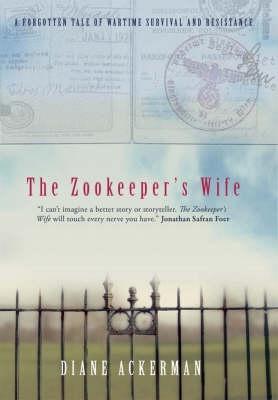 The Zookeeper’s Wife
By Diane Ackerman
A different sort of Holocaust story, set at Warsaw Zoo in the years surrounding World War II. Even after Nazis dismantled their zoo and killed many of the larger animals, Jan and Antonina Żabiński stayed at their home and used the zoo’s premises for storing explosives and ammunition for Jan’s work in the Polish resistance as well as sheltering “Guests,” Jews passing through. This is a gripping narrative of survival against the odds, with the added pleasure of the kind of animal antics you’d find in a Gerald Durrell book. Their son Ryszard kept as pets a badger who bathed sitting back in the tub like a person and an arctic hare who stole cured meats like “a fat, furry thug.” Much of the book is based on Antonina’s journals, but I wish there had been more direct quotes from it and less in the way of reconstruction.
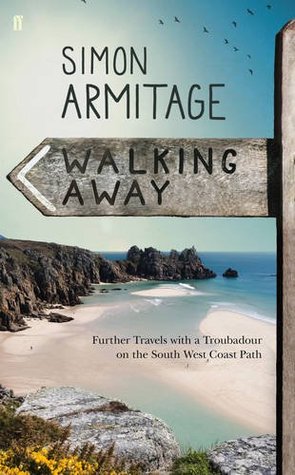 Walking Away: Further Travels with a Troubadour on the South West Coast Path
By Simon Armitage
As a sequel to Walking Home, the account of his 2010 trek along the Pennine Way, Armitage walked much of England’s South West Coast Path in August–September 2013. As before, he relied on the hospitality of acquaintances and strangers to put him up along the way and transport his enormous suitcase for him so he could walk about 10 miles a day to his next poetry reading. Emulating a modern-day troubadour, Armitage passed around a sock at the end of readings for donations (though the list of other stuff people left in the sock, with which he closes the book, is quite amusing). Along the way he meets all kinds of odd folk and muses on the landscape and the distressing amounts of seaside rubbish. His self-deprecating style reminded me of Bill Bryson. A pleasant ramble of a travel book.
 Winter World: The Ingenuity of Animal Survival
By Bernd Heinrich
This great seasonal read carefully pitches science to the level of the layman. Heinrich, an emeritus professor of biology at the University of Vermont, surveys various strategies animals use for surviving the winter: caching food, huddling together, hibernating or entering torpor, and lowering their body temperature – even to the point where 50% of their body water is ice, as with hibernating frogs. He carries out ever so slightly gruesome experiments that make him sound like a lovably nutty professor:
To find out how quickly a fully feathered kinglet loses body heat, I experimentally heated a dead kinglet and then measured its cooling rate. … I do not know how many seeds a chipmunk usually packs into each of its two pouches—I easily inserted sixty black sunflower seeds through the mouth into just one pouch of a roadkill.
His passion for knowledge carries through in his writing. I came away with a fresh sense of wonder for how species are adapted to their environments: “Much that animals have evolved to do would have seemed impossible to us, if experience has not taught us otherwise.”
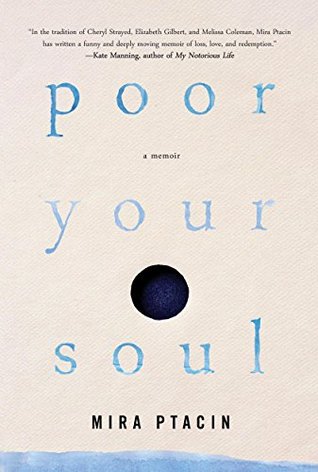 Poor Your Soul
By Mira Ptacin
Ptacin’s memoir is based around two losses: that of her brother, in a collision with a drunk driver; and that of a pregnancy in 2008. She skips back and forth in time to examine the numb aftermath of trauma as well as the fresh pain of actually going through it. In places I felt Ptacin sacrificed the literary quality hindsight might have allowed, prioritizing instead the somewhat clichéd thoughts and responses she had in the moment. Still, I loved so much about this book, especially her memories of growing up in the cereal capital of America and the account of her mother coming to America from Poland. Her mother is a terrific character, and it’s her half-warning, half-commiserative phrase that gives the novel its title (not a typo, as you might be forgiven for thinking): a kind of Slavic “I pity the fool.”
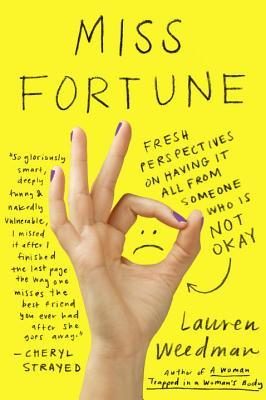 Miss Fortune: Fresh Perspectives on Having It All from Someone Who Is Not Okay
By Lauren Weedman
Weedman is a playwright and minor celebrity who’s worked on The Daily Show, Hung and Looking. This is a truly funny set of essays about marriage (from beginning to end), motherhood, working life and everything in between. Self-deprecatingly, she focuses on ridiculous situations she’s gotten herself into, like the world’s unsexiest threesome and an accidental gang symbol tattoo. Amid the laughs are some serious reflections on being adopted and figuring out how to be a responsible stepmother. With a warning that parts can be pretty raunchy, I’d recommend this to fans of David Sedaris and Bossypants.
My rating for all: 
Bibliotherapy for the New Year
In January lots of us tend to think about self-improvement for the New Year. Books can help! I’m resurrecting a post I first wrote as part of a series for Bookkaholic in April 2013 in hopes that those new to the concept of bibliotherapy will find it interesting.
I happen to believe – and I’m not the only one, not by a long shot – that a relationship with books can increase wellbeing. The right book at the right time can be a powerful thing, not just amusing and teaching, but also reassuring and even healing. Indeed, an ancient Greek library at Thebes bore an inscription on the lintel naming it a “Healing-Place for the Soul.”
The term “bibliotherapy,” from the Greek biblion (books) + therapeia (healing), was coined in 1916 by Samuel McChord Crothers (1857-1927). Crothers, a Unitarian minister and essayist, introduced the word in an Atlantic Monthly piece called “A Literary Clinic.” The use of books as a therapeutic tool then came to the forefront in America during the two world wars, when librarians received training in how to suggest helpful books to veterans recuperating in military hospitals. Massachusetts General Hospital had founded one of the first patients’ libraries, in 1844, and many other state institutions – particularly mental hospitals – had followed suit by the time of the First World War. Belief in the healing powers of reading was becoming more widespread; whereas once it had been assumed that only religious texts could edify, now it was clear that there could be benefits to secular reading too.
Read this for what ails you
Clinical bibliotherapy is still a popular strategy, often used in combination with other medical approaches to treat mental illness. Especially in the UK, where bibliotherapy is offered through official National Health Service (NHS) channels, library and health services work together to give readers access to books that may aid the healing process. Over half of England’s public library systems offer bibliotherapy programs, with a total of around 80 schemes documented as of 2006. NHS doctors will often write patients a ‘prescription’ for a recommended book to borrow at a local library. These books will usually fall under the umbrella of “self-help,” with a medical or mental health leaning: guides to overcoming depression, building self-confidence, dealing with stress, and so on.
Books can serve as one component of cognitive behavioral therapy, which aims to modify behavior through the identification of irrational thoughts and emotions. Bibliotherapy has also been shown to be an effective method of helping children and teenagers cope with problems: everything from parents’ divorce to the difficulties of growing up and resisting peer pressure. Overall, bibliotherapy is an appealing strategy for medical professionals to use with patients because it is low-cost and low-risk but disproportionately effective.
In addition to clinical bibliotherapy, libraries also support what is known as “creative bibliotherapy” – mining fiction and poetry for their healing powers. Library pamphlets and displays advertise their bibliotherapy services under names such as “Read Yourself Well” or “Reading and You,” with eclectic, unpredictable lists of those novels and poems that have proved to be inspiring or consoling. With all of these initiatives, the message is clear: books have the power to change lives by reminding ordinary, fragile people that they are not alone in their struggles.
The School of Life
London’s School of Life, founded by Alain de Botton, offers classes, psychotherapy sessions, secular ‘sermons,’ and a library of recommended reading tackle subjects such as job satisfaction, creativity, parenting, ethics, finances, and facing death with dignity. In addition, the School offers bibliotherapy sessions (one-on-one, for adults or children, or, alternatively, for couples) that can take place in person or online. A prospective reader fills out a reading history questionnaire before meeting the bibliotherapist, and can expect to walk away from the session with one instant book prescription. A full prescription of another 5-10 books arrives within a few days.
In 2011 The Guardian sent six of its writers on School of Life bibliotherapy sessions; their consensus seemed to be that, although the sessions produced some intriguing book recommendations, at £80 (or $123) each they were an unnecessarily expensive way of deciding what to read next – especially compared to asking a friend or skimming newspapers’ reviews of new books. Nonetheless, it is good to see bibliotherapy being taken seriously in a modern, non-medical context.
A consoling canon
You don’t need a doctor’s or bibliotherapist’s prescription to convince you that reading makes you feel better. It cheers you up, makes you take yourself less seriously, and gives you a peaceful space for thought. Even if there is no prospect of changing your situation, getting lost in a book at least allows you to temporarily forget your woes. In Comfort Found in Good Old Books (1911), a touching work he began writing just 10 days after his son’s sudden death, George Hamlin Fitch declared “it has been my constant aim to preach the doctrine of the importance of cultivating the habit of reading good books, as the chief resource in time of trouble and sickness.”
Indeed, as Rick Gekoski noted last year in an article entitled “Some of my worst friends are books,” literary types have always turned to reading to help them through grief. He cites the examples of Joan Didion coming to grips with her husband’s death in The Year of Magical Thinking, or John Sutherland facing up to his alcoholism in The Boy Who Loved Books. Gekoski admits to being “struck and surprised, both envious and a little chagrined, by how literary their frame of reference is. In the midst of the crisis…a major reflex is to turn, for consolation and understanding, to favorite and esteemed authors.” Literary critic Harold Bloom confirms that books can provide comfort; in The Western Canon he especially recommends William Wordsworth, Walt Whitman, and Emily Dickinson as “great poets one can read when one is exhausted or even distraught, because in the best sense they console.”
Just as in a lifetime of reading you will develop your own set of personal classics, you are also likely to build up a canon of favorite books to consult in a crisis – books that you turn to again and again for hope, reassurance, or just some good laughs. For instance, in More Book Lust Nancy Pearl swears by Bill Bryson’s good-natured 1995 travel book about England, Notes from a Small Island: “This is the single best book I know of to give someone who is depressed, or in the hospital.” (With one caveat: beware, your hospitalized reader may well suffer a rupture or burst stitches from laughing.)
Just what you needed
There’s something magical about that serendipitous moment when a reader comes across just the right book at just the right time. Charlie D’Ambrosio confides that he approaches books with a quiet wish: “I hope in my secret heart someone, somewhere, mysteriously influenced and moved, has written exactly what I need” (his essay “Stray Influences” is collected in The Most Wonderful Books). Yet this is not the same as superstitiously expecting to open a book and find personalized advice. Believe it or not, this has been an accepted practice at various points in history. “Bibliomancy” means consulting a book at random to find prophetic help – usually the Bible, as in the case of St. Augustine and St. Francis of Assisi. St. Francis’s first biographer, Thomas of Celano, wrote that “he humbly prayed that he might be shown, at his first opening the book, what would be most fitting for him to do” (in his First Life of St Francis of Assisi).
Perhaps meeting the right book is less like a logical formula and more like falling in love. You can’t really explain how it happened, but there’s no denying that it’s a perfect match. Nick Hornby likens this affair of the mind to a dietary prescription – echoing that medical tone bibliotherapy can often have: “sometimes your mind knows what it needs, just as your body knows when it’s time for some iron, or some protein” (in More Baths, Less Talking).
Entirely by happenstance, a book that recently meant a lot to me is one of the six inaugural School of Life titles, How to Stay Sane by psychotherapist Philippa Perry. Clearly and practically written, with helpful advice on how to develop wellbeing through self-observation, healthy relationships, optimism, and exercise, Perry’s book turned out to offer just what I needed.
I’ve been busy visiting family in the States but I’ll be back soon with a review of The Novel Cure from School of Life bibliotherapists Ella Berthoud and Susan Elderkin.
Thanksgiving Reading
This Thursday marks one of the most American of holidays: Thanksgiving. (My apologies to Canadian readers, who already had their celebration in October, and to British readers, who may find the whole thing a bit mysterious.) If you’ve never experienced a Thanksgiving meal for yourself, you might not know what all the fuss is about. After all, as Bill Bryson puts it in Notes from a Big Country, it’s a holiday where you just try to “get your stomach into the approximate shape of a beach ball.” But something about dysfunctional families crossing the country for a feast and reflecting on the country’s origins – however spurious the Pilgrims-’n-Injuns history behind the tradition might be – makes for intriguing fictional possibilities.
It’s no wonder Thanksgiving turns up all the time in American novels. Jonathan Franzen’s The Corrections is a classic example, but look further and you’ll find references everywhere. For instance, I’m just finishing up Good on Paper by Rachel Cantor (coming in February), set in New York City as Y2K approaches, and what do you know? There’s a Thanksgiving meal. And even a simple list of dishes gives a perfect miniature view of differences in class and perspective: Shira’s neighbor wants “traditional fare—string bean casserole with cornflakes” and yam casserole topped with marshmallows, while her gay, Pakistani co-parent, Ahmad, prefers “the exotic: millet-shitake stuffing with chestnut-and-caper sauce.”
If you’re looking for something seasonal to read this week, here are snippets of books I’ve reviewed, two fiction and two nonfiction. For more ideas, check out this Thanksgiving books list on Goodreads from the Washington Post’s Ron Charles. Anne Tyler, Richard Ford – some great stuff on there!
Fiction:
 Want Not by Jonathan Miles: “Waste not, want not” goes the aphorism, and Miles’s second novel explores both themes to their fullest extent: the concept of waste – from profligate living to garbage and excrement – and ordinary people’s conflicting desires. In three interlocking story lines, Miles looks for what is really of human value at a time when everything seems disposable and possessions both material and digital can exert a dispiriting tyranny. The novel opens on Thanksgiving 2007, with New York City buried under an early snowstorm. The nation’s annual excuse for gluttony makes a perfect metaphorical setting for Miles’s exposé of food waste and consumerist excess. This is a book I wish I had written.


Housebreaking by Dan Pope: This tightly crafted novel of adultery in dysfunctional suburbia is somewhat reminiscent of Tom Perrotta’s Little Children or the movie Far from Heaven, but with less memorable characters and story line overall. The strategy of revisiting the same events of one late summer and fall from different characters’ perspectives makes it feel slightly repetitive and claustrophobic. My favorite touches were the comical dialogue between a handful of old folks and a description of the cookie-cutter buildings in the Connecticut suburbs: “all the little houses, lined up like cereal boxes on a shelf.” Like Want Not, it also revolves around Thanksgiving 2007.

Bet you never thought there would be a third novel set on Thanksgiving 2007! But it appears there is: Strangers at the Feast by Jennifer Vanderbes. You may also like to sample “An Old-Fashioned Thanksgiving,” an 1881 short story by Louisa May Alcott.
Nonfiction:
You won’t have to try too hard to find Thanksgiving scenes in nonfiction either, especially when it comes to memoirs. I read one of Ruth Reichl’s terrific ‘foodoirs’, Comfort Me with Apples, earlier this year and there’s a great moment when she and Michael Singer, who would become her second husband, go to a restaurant for their first Thanksgiving together. It’s a disaster of a meal; the duck isn’t served until midnight. Sure is memorable, though.
 The First Thanksgiving by Nathaniel Philbrick: In this selection from his 2007 book Mayflower: A Story of Courage, Community, and War, reprinted as a mini e-book in the “Penguin Tracks” series, Philbrick tells the true story behind the first Thanksgiving. As with most beloved legends, the circumstances are much more complicated and much less rosy than they appear in our collective memory. Philbrick writes in an informative yet conversational style, and paints an appealing picture of the Pilgrims as reasonable people with humble aims. (See my full review at Bookkaholic.)
 Eating Appalachia: Rediscovering Regional American Flavors by Darrin Nordahl: Nordahl travels through Ohio, West Virginia, Kentucky and North Carolina in search of truly indigenous local ingredients. There are a few recipes and photographs in each chapter, although this is more of a narrative than a cookbook. I loved how he brought it all together with his imagined Appalachian Thanksgiving feast (what we consider traditional today includes very little that would actually have been eaten in the Pilgrims’ place and time):
appetizers of pickled ramps and brook trout crostini, bowls of butternut [the nut, not the squash] cream bisque, plates piled with the showpiece dish of spicebush-peppered roast elk tenderloin and hickory nut stuffing—all washed down with steaming sassafras tea and chilled sumac-ade, capped with a choice of persimmon pudding with black walnut ice cream or pawpaw panna cotta.
Do you like to tailor your reading to the holidays? What will you be reading this Thanksgiving week?
Reviews Roundup, October–November
One of my goals with this blog is to have one convenient place where I can gather together all my writing that has appeared in disparate online locations. To that end, once a month I provide links to all book reviews I’ve published elsewhere, with a rating (below each description) and a taster so you can decide whether to read more. A few exceptions: I won’t point out my Kirkus Indie, BlueInk or Publishers Weekly reviews since I don’t get a byline.
This month you may recognize a few books I already previewed in my posts on books as beautiful objects and library books read in October.
The Bookbag
Charlotte Brontë’s Secret Love by Jolien Janzing: Charlotte and Emily Brontë’s time in Belgium – specifically, Charlotte’s passion for her teacher, Constantin Heger – is the basis for this historical novel. The authoritative yet inviting narration is a highlight, but some readers may be uncomfortable with the erotic portrayal; it doesn’t seem to fit the historical record, which suggests an unrequited love affair. My other issue with the book is a couple of subplots that only seem to have minor significance.

In Fidelity by Jack Wilson: In this 1970s-set novel, the central couple’s relationship is tested by illness and extramarital sexual experiences. Moving from New England to Nigeria and back, the story asks what loyalty really requires when a once-strong connection has faded over time. Strongly reminiscent of John Updike in Part One, this is the male view of adultery. Something about the self-justifying tone stuck in my craw. A more balanced book would give the wife’s perspective, too, as Carol Shields did in Happenstance, or like Lauren Groff recently did to great success in Fates and Furies.
BookBrowse
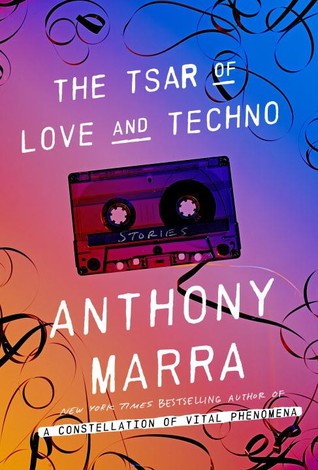 The Tsar of Love and Techno by Anthony Marra [subscription service]: This collection of tightly linked short stories, an intimate look at Russia and Chechnya in wartime and afterwards, reveals how politics, family, and art intertwine. Ranging from 1937 to 2013, the pieces show how fear and propaganda linger in the post-Stalinist era. In art as much as in politics, it can be difficult to distinguish airbrushed history from bitter reality. Just as he did in his excellent debut novel, A Constellation of Vital Phenomena, Marra renders unspeakable tragedies bearable because of his warm and witty writing. All his characters’ voices are well-realized and inviting, and he comes up with terrific one-liners.
BookTrib
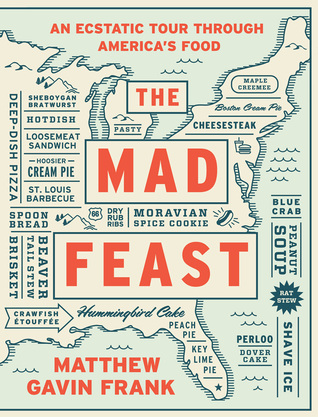 Mad Feast by Matthew Gavin Frank: This is the cookbook David Foster Wallace might have written. In an off-the-wall blend of memoir, travel, history and fiction, Frank proceeds region by region, choosing for each American state one beloved dish and interrogating its origins as well as its metaphors and associations. It’s a mixed bag of familiar foods and ones that only locals are likely to know about. Each chapter ends with a recipe for the signature plate, whether from a Lutheran church or a posh restaurant. Frank’s digressive, anecdotal approach takes some getting used to. If you appreciate the style of writers like Geoff Dyer, Maggie Nelson and Will Self, this should be your next food-themed read.
For Books’ Sake
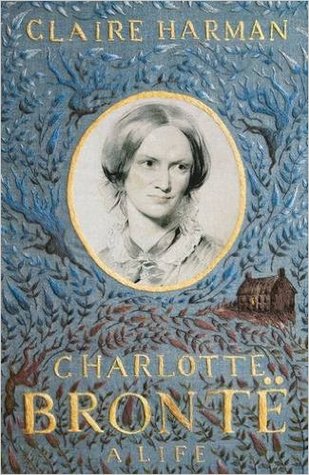 Charlotte Brontë: A Life by Claire Harman: With her bicentennial approaching in April 2016, it’s the perfect time to revisit Charlotte Brontë’s timeless stories. One of the things Harman’s biography does best is trace how the Brontës’ childhood experiences found later expression in fiction. A chapter on the publication of Jane Eyre is a highlight. Diehard fans might not encounter lots of new material, but Harman does make a revelation concerning Charlotte’s cause of death – not TB, as previously believed, but hyperemesis gravidarum (extreme morning sickness). This will help you appreciate afresh a “poet of suffering” whose novels were “all the more subversive because of [their] surface conventionality.”

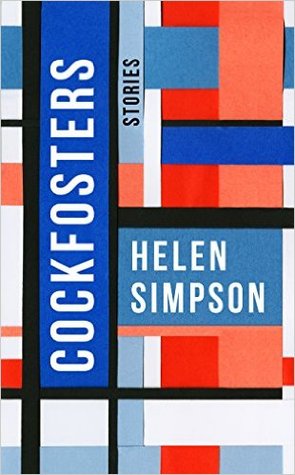
Cockfosters by Helen Simpson: Simpson’s sixth story collection is full of wry, incisive reflections on aging, loss, regrets, gender roles, and a changing relationship to sex. Most of Simpson’s characters are in their late forties, a liminal time when they’re caught between older parents and still-needy children. Many pieces are dialogue-driven, like scenes in plays. In “Kentish Town,” book club members meet to discuss Dickens’s The Chimes. Simpson weaves in discussion of the plot with commentary on the state of the nation as the ladies set the world to rights and make New Year’s resolutions. It’s a perfect story to read in the run-up to Christmas. The overall stand-out is “Erewhon,” named for Samuel Butler’s 1872 satirical utopian novel. It quickly becomes clear that gender roles are reversed in its fictional world.
Foreword Reviews
 Addiction Is Addiction by Raju Hajela, Paige Abbott and Sue Newton: This comprehensive, well-organized guide discusses the features of addictive thinking and feeling, suggests holistic recovery methods, and offers useful definitions, diagrams, and case studies. The authors are affiliated with Health Upwardly Mobile Inc., Calgary, Alberta. Tracing the history of addiction back to the eighteenth century, when it was first known as “alcoholic disease syndrome,” they present an expert view of the disease’s symptoms and outlook. Strongly recommended to those who have participated in groups like Alcoholics Anonymous or Narcotics Anonymous.
Kirkus
Indie Spotlight: Books about Religion: Self-publishing allows writers to tell their full stories. An article based on interviews with four indie religion authors and mini-reviews of their books.
Nudge
Notes on Suicide by Simon Critchley: Critchley is a philosophy professor at New York’s New School for Social Research. Although he reassures readers with his first line that “This book is not a suicide note,” he also hints that its writing was inspired by personal trouble: “my life has dissolved over the past year or so, like sugar in hot tea.” Not suicidal himself, then, but sympathetic to those who are driven to self-murder. This concise essay illuminates arguments surrounding suicide, with points of reference ranging from Greek philosophers to Robin Williams. Overall, though, it feels cursory and inconclusive.
 The Gratitude Diaries by Janice Kaplan: We can all do with a little encouragement to appreciate what we already have. In so many areas of life – finances, career, relationship, even the weather – we’re all too often hoping for more or better than what we are currently experiencing. Here Kaplan undertakes a year-long experiment to see if gratitude can improve every aspect of her life. She draws her information from interviews with researchers and celebrities, quotes from philosophers, and anecdotes from her own and friends’ lives. It’s easy, pleasant reading I’d recommend to fans of Gretchen Rubin.
 The Water Book by Alok Jha: An interdisciplinary look at water’s remarkable properties and necessity for life on earth. For the most part, Jha pitches his work at an appropriate level. However, if it’s been a while since you studied chemistry at school, you may struggle. Part IV, on the search for water in space, is too in-depth for popular science and tediously long. In December 2013 Jha was part of a month-long Antarctic expedition. He uses the trip as an effective framing device, but I would have liked more memoiristic passages. All in all, I was hoping for less hard science and more reflection on water’s importance to human culture.
 Claxton: Field Notes from a Small Planet by Mark Cocker: Mark Cocker is the Guardian’s country diarist for Norfolk. The short pieces in this book are reprints of his columns, some expanded or revised. I would advise keeping this as a bedside or coffee table book from which you read no more than one or two entries a week, so that you always stay in chronological sync. You’ll appreciate the book most if you experience nature along with Cocker, rather than reading from front cover to back in a few sittings. The problem with the latter approach is that there is inevitable repetition of topics across years. All told, after spending a vicarious year in Claxton, you’ll agree: “How miraculous that we are all here, now, in this one small place.”
 A Mile Down by David Vann: Vann, better known for fiction, tells the real-life story of his ill-fated journeys at sea. He hired a Turkish crew to build him a boat of his own, and before long shoddy workmanship, language difficulties, bureaucracy, and debts started to make it all seem like a very bad idea. Was he cursed? Would he follow his father into suicide? The day-to-day details of boat-building and sailing can be tedious, and there’s an angry tone that’s unpleasant; Vann seems to think everybody else was incompetent or a crook. However, he does an incredible job of narrating two climactic storms he sailed through.
Wasafiri
The Triumph of the Snake Goddess by Kaiser Haq: Beginning with the creation of the world and telling climactic tales of the snake goddess Manasa’s interactions with humans, Haq crafts a uniquely playful set of sacred stories that bear striking similarities to those from other religious traditions. Like Greek myths, the Manasa stories are full of shape-shifting and mistaken identity; rape and incest; jealousy and revenge; and over-the-top exploits of warring gods. She even wears snakes in her hair, like Medusa. Many parallels can also be drawn with the Hebrew and Christian scriptures. Haq’s rendering of the creation account, in particular, resembles the language of Genesis. This book will appeal to students of comparative religion, but can be read with equal enjoyment by laymen in search of engaging storytelling.
I also post reviews of most of my casual reading and skimming on Goodreads.
Mrs. Stevens Hears the Mermaids Singing by May Sarton: Although I’m a huge fan of Sarton’s memoirs, this was my first taste of her fiction. I was underwhelmed: it’s slight and strangely unfeminist. Part of the problem may be that I know so much about Sarton that I couldn’t help but see all the autobiographical detail here. Most of the novel’s action takes place in one day, as Mrs. Stevens awaits the arrival of two interviewers and reflects on past love affairs (some with women) and the meaning of the Muse. For me, Sarton’s journals are a better source of deep thoughts on the writer’s vocation, the value of solitude and the memory of love. This was seen as Sarton’s coming-out book, although it’s not at all sexually explicit.
 Running on the March Wind by Lenore Keeshig: Keeshig is a First Nations Canadian; these poems are full of images of Nanabush the Trickster, language from legal Indian acts, and sly subversion of stereotypes – cowboys and Indians, the only good Indian is a dead Indian (in “Making New”), the white man’s burden, and so on. In places I found these more repetitive and polemical than musical, though I did especially like the series of poems on trees.
The Cartographer Tries to Map a Way to Zion by Kei Miller: Kei Miller is a Jamaican writer who uses island patois and slang, and Rastafarian images and language, alongside standard English. Here he sets up (especially with the long, multi-part title poem) a playful contrast between the cartographer, emblem of civilization and unbiased science, and the rastaman, who takes an altogether more laidback approach to mapping his homeland. This was the perfect poetry collection to be reading in tandem with A Brief History of Seven Killings (see below).
 Very British Problems Abroad by Rob Temple: This is possibly ever so slightly funnier than the original (Very British Problems). A lot of it rings true. Once again the fact that the book originated as tweets means you can’t read too much of it at a time or the one-liners grow tiresome. A couple of my favorites were: “The feeling of dread as you approach the campsite and only then remembering that last year you said you’d never, ever do this again” and “Noticing an avalanche heading your way and hoping your umbrella’s up to the job.”
 Purity by Jonathan Franzen: By starting and ending with Purity ‘Pip’ Tyler, Franzen emphasizes his debt to Dickens: shades of both Bleak House and Great Expectations are there in the discovery of true parentage and unexpected riches. This is strong on the level of character and theme. Secrecy, isolation and compassion are recurring topics. East Germany, Bolivia and Oakland, California: Franzen doesn’t quite pull all his settings and storylines together, but this is close. With a more dynamic opening section, it might have been 5 stars.
 A Brief History of Seven Killings by Marlon James: This is an edgy, worthwhile Booker pick, but not for the faint-hearted. For the most part, James alternates patois and standard speech, but nearly every section is packed with local slang and expletives. Whether in monologue or dialogue, the many voices form a captivating chorus. The novel is in five parts, each named after a popular song or album of the time. James’s scope, especially as he follows Josey Wales to the Bronx, is too wide. All the narrative switches, once so dynamic, grow tiresome. At 350 pages this would have been a 5-star read. Nevertheless, I’ll be watching the HBO miniseries. (Full review to appear in December 2015 issue of Third Way magazine.)
 Kitchens of the Great Midwest by J. Ryan Stradal: One of my favorite debuts of 2015. Stradal has revealed that his grandmother’s Lutheran church cookbook was the inspiration for this culinary-themed novel that takes place over the course of 30 years. His unique structure takes what are essentially short stories from different perspectives and time periods and links them loosely through Eva Thorvald. Eva’s pop-up supper club gains fame thanks to her innovative adaptations of traditional Midwestern foods like venison or Scandinavian lutefisk; it charges $5,000 a head. I loved almost all of Stradal’s ordinary, flawed characters. If you want a peek at how average Americans live (apart from the $5,000 meals), you’ll find it here.
 The Japanese Lover by Isabel Allende: Allende is a wonderful storyteller. This isn’t up to the level of her South American novels (e.g. The House of the Spirits), and in elaborating both Alma’s and Irina’s stories there’s a bit too much telling rather than showing, but I thoroughly enjoyed the book all the same – I devoured it in just a few days. Allende is sensitive to both the process of aging and the various strategies for dealing with traumatic events from the past.
 Accidental Saints: Finding God in All the Wrong People by Nadia Bolz-Weber: I knew of Nadia Bolz-Weber through Greenbelt Festival. She’s a foul-mouthed, tattooed, fairly orthodox Lutheran pastor. This brief, enjoyable memoir is about how she keeps believing despite her own past issues and the many messed-up and outwardly unlovable people who show up at her church, House for All Sinners and Saints in Denver. In my favorite section, she zeroes in on one Holy Week and shows the whole range of emotions and trauma that religion can address. The Ash Wednesday chapter is the overall highlight.
 The Road to Little Dribbling: Adventures of an American in Britain by Bill Bryson: Bryson’s funniest book for many years. It meant a lot to me since I am also an American expat in England. Two points of criticism, though: although he moves roughly from southeast to northwest in the country, the stops he makes are pretty arbitrary, and his subjects of mockery are often what you’d call easy targets. Do we really need Bryson’s lead to scorn litterbugs and reality television celebrities? Still, I released many an audible snort of laughter while reading.
 Shaler’s Fish by Helen Macdonald: I was a huge fan of Macdonald’s memoir, H is for Hawk, so was excited to read her poetry collection, originally published in 2001 but to be reissued by Atlantic Monthly Press. Unfortunately, despite the occasional bird and nature imagery (e.g. in “Monhegan”), I found these poems largely inaccessible. Perhaps it was the sprinkling of archaic vocabulary and spellings, or the general lack of punctuation apart from annoying slashes and ampersands.

Portrait of an Addict as a Young Man: A Memoir by Bill Clegg: One of the finest memoirs I’ve come across (and I read a heck of a lot of them). Through this book I followed literary agent Bill Clegg on dozens of taxi rides between generic hotel rooms and bar toilets and New York City offices and apartments; together we smoked innumerable crack pipes and guzzled dozens of bottles of vodka while letting partners and family members down and spiraling further down into paranoia and squalor. Every structural and stylistic decision works: the present tense, short paragraphs, speech set out in italics, occasional flashback chapters distanced through third-person narration. Clegg achieves a perfect balance between his feelings at the time – being out of control and utterly enslaved to his next hit – and the hindsight that allows him to see what a pathetic figure he was becoming.
 Landfalls by Naomi J. Williams: An enjoyable novel of eighteenth-century maritime adventure, based on a true story and reminiscent of Matthew Kneale’s English Passengers and Peter Carey’s Parrot and Olivier in America. Williams moves between the perspectives of various crew members and outsiders, sometimes employing first person and sometimes third. Key chapters are set in South America, California, Alaska, Macao, and the Solomon Islands. I especially enjoyed a chapter from the point-of-view of a native Alaskan girl – one of the few times the novel focuses on female experience.
 Dept. of Speculation by Jenny Offill: Not as innovative or profound as I was expecting given the rapturous reviews from so many quarters. It’s an attempt to tell an old, old story in a new way: wife finds out her husband is cheating. Offill’s style is fragmentary and aphoristic. Some of the facts and sayings are interesting, but most just sit there on the page and don’t add to the story. What I did find worthwhile was tracing the several tense and pronoun changes: from first-person, past tense into present tense, then to third-person and back to first-person for the final page.
 As Far As I Know by Roger McGough: A bit silly for my tastes; lots of puns and other plays on words. In style they feel like children’s poems, but with vocabulary and themes more suited to adults. I did like “Indefinite Definitions,” especially BRUPT: “A brupt is a person, curt and impolite / Brusque and impatient / Who thinks he’s always right.” The whole series is like that: words with the indefinite article cut off and an explanation playing on the original word’s connotations. From the “And So to Bed” concluding cycle, I loved Camp bed: “A la Recherche du Temps Perdu / on the bedside table / Gardenia on the pillow / Silk pyjamas neatly folded.”
 The Penguin Lessons: What I Learned from a Remarkable Bird by Tom Michell: Marley & Me with a penguin. Well, sort of. A sweet if slight story about the author keeping a Magellanic penguin as a pet while teaching in an Argentina boarding school in the 1970s. On a vacation to Uruguay the twentysomething rescued a penguin from an oil spill and named him Juan Salvado. The uproarious process of cleaning the oil-sodden bird, achieved with a bidet, string bag, and plenty of dish soap, was my favorite passage. However, I’m hesitant about anthropomorphizing, and the language can be stiff – I would have dated this to the 1950s by the speech. Also, there’s precious little evidence of Argentina’s political upheaval.
 Bookish Beck = Rebecca Foster. American transplant to England. Freelance proofreader and book reviewer.
 Bookish Beck