The Best Fiction of 2016: My Top 15
You might be surprised to hear that I received ‘only’ eight books for Christmas. (And a very fetching owl bookmark.) Here they are:

As I did last year, I’ve come up with my top 15 fiction books of the year (the three translated works first appeared in English in 2016) and even attempted to rank them. Many of these books have already featured on the blog in some way over the course of the year. To keep it simple for myself as well as for all of you who are figuring out whether you’re interested in these books or not, I’m limiting myself to two sentences per title: the first is a potted summary; the second tells you why you should read it. I also link to any full reviews.
Without further ado, let the countdown begin!
 Your Heart Is a Muscle the Size of a Fist by Sunil Yapa: A hard-hitting novel with an unforgettably resonant title, this is set at the 1999 Seattle WTO protest: Yapa explores the motivations and backstories of activists, police officers, and delegates as the day deteriorates into violence. This fine debut is about cultivating the natural compassion in your heart even while under the threat of the fist.
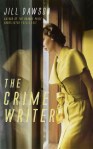 The Crime Writer by Jill Dawson: Beyond the barest biographical facts, Dawson has imagined the plot based on Patricia Highsmith’s own preoccupations: fear of a stalker, irksome poison-pen letters, imagining what it would be like to commit murder … and snails. You’re never quite sure as you’re reading what is actually happening in the world of the novel and what only occurs in Highsmith’s imagination, making this one of the most gripping, compulsive books I encountered this year.
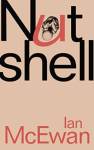 Nutshell by Ian McEwan: Within the first few pages, I was captivated and convinced by the voice of this contemporary, in utero Hamlet. His captive state pairs perfectly with Hamlet’s existential despair, but also makes him (and us as readers) part of the conspiracy: even as he wants justice for his father, he has to hope his mother and uncle will get away with their crime; his whole future depends on it.
 The Longest Night by Andria Williams: This absorbing work of historical fiction combines a remote setting, the threat of nuclear fallout, and a marriage strained to the breaking point in a convincing early 1960s atmosphere. A great debut and an author I’d like to hear more from.
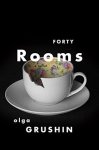 Forty Rooms by Olga Grushin: Each of us is said to occupy 40 rooms in our lives; this novel in 40 vignettes, one per room, tells the life story of a Russian immigrant to America who dreams of becoming a poet but ends up a suburban housewife and mother of six. I feel this book will resonate with women of every age, prompting them to question the path they’ve taken, the passions they’ve left unexplored, and whether it’s too late to change.
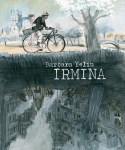 Irmina by Barbara Yelin: After her grandmother’s death Yelin, a Munich-based artist, found a box of diaries and letters that told the story of a budding love affair that was not to be and charted a young woman’s gradual capitulation to Nazi ideology. For the out-of-the-ordinary window onto Third Reich history and the excellent illustrations, I highly recommend this to graphic novel lovers and newbies alike.
 The Wonder by Emma Donoghue: In the 1850s a nurse investigates the case of an Irish girl surviving without food for months: miracle or hoax? Donoghue writes convincing and vivid historical fiction, peppering the text with small details about everything from literature to technology and setting up a particularly effective contrast between medicine and superstition.
 The Summer Guest by Alison Anderson: The kernel of the novel is a true story: for two summers in the late 1880s, Chekhov (known here as Anton Pavlovich) stayed at the Lintvaryovs’ guest house in Luka, Ukraine; one strand of the narration is a journal kept during those years by the family’s eldest daughter, who’s dying of a brain tumor. An elegantly plotted story about writing, translation, illness, and making the most of life.
 Quiet Flows the Una by Faruk Šehić: This autobiographical novel by a Bosnian poet and former soldier is full of poetic language and nature imagery. The lyrical writing about his beloved river provides a perfect counterpoint to the horror and absurdity of war.
 Three-Martini Lunch by Suzanne Rindell: Rindell brings the late 1950s, specifically the bustling, cutthroat New York City publishing world, to life through the connections between three young people who collide over a debated manuscript. It’s an expert evocation of Beat culture and post-war paranoia over communism and homosexuality.
 Golden Hill by Francis Spufford: The novel opens suddenly as twenty-four-year-old Richard Smith arrives from London with a promissory note for £1000; before he can finally get his money, he’ll fall in and out of love, fight a duel, and be arrested twice – all within the space of two months. Bawdy, witty, vivid historical fiction; simply brilliant.
 Why We Came to the City by Kristopher Jansma: Five university friends strive to make their lives count against the indifferent backdrop of recession-era New York City. You’ll see yourself in one or more of the characters, and the rest you’ll greet as if they were your own friends and makeshift family.
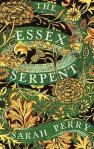 The Essex Serpent by Sarah Perry: The Essex Serpent was a real-life legend from the latter half of the seventeenth century, but Perry’s second novel has fear of the sea creature re-infecting Aldwinter, her invented Essex village, in the 1890s. This exquisite work of historical fiction explores the gaps – narrower than one might think – between science and superstition and between friendship and romantic love.
 The Tobacconist by Robert Seethaler: Seventeen-year-old Franz Huchel’s life changes for good when in 1937 his mother sends him away from his quiet lakeside village to work for her old friend Otto Trsnyek, a Vienna tobacconist. This novel is so many things: a coming-of-age story, a bittersweet romance, an out-of-the-ordinary World War II/Holocaust precursor, and a perennially relevant reminder of the importance of finding the inner courage to stand up to oppressive systems.
 Sweetbitter by Stephanie Danler: The restaurant where twenty-two-year-old Tess works is a claustrophobic world unto itself, like a theatre set where the food is high art and the staff interactions are pure drama. Everything about this novel is utterly assured: the narration, the characterization, the prose style, the plot, the timing; it captures the intensity and idealism of youth yet injects a hint of nostalgia.
& A poetry selection:
 Still the Animals Enter by Jane Hilberry: A rich, strange, gently erotic collection featuring diverse styles and blurring the lines between child and adult, human and animal, life and death through the language of metamorphosis. The message is that we are part of a shared life beyond the individual family or even the human species; we are all connected.
What are the best novels you read this year? Any new favorite books or authors?
I’ll be back tomorrow with the best nonfiction books I read this year.
A Saturday Jaunt to Bath
 We heard that The Bookshop Band would be playing at a free seasonal concert on Saturday night, so on something of a whim we planned a daytrip to Bath. Even though it wasn’t exactly on the way (my husband’s regular, feeble refrain), I take any opportunity of being in the Bath/Bristol area to make a pilgrimage to Bookbarn International. This was a delightful surprise since I’d been in late July and never thought I’d get to go again this year.
This turned out to be our best trip yet. We were unrushed for once, so had plenty of time for browsing. I had particularly good luck in the orange-spined all-Penguins section, and even found three books I wanted from the “Unsorted” shelves, which was something of a miracle. We finally tried out their newish café and got a darned good cup of coffee and a cake each.


All told, we came away with a better haul than on any previous visit: 13 books for me, 10 nature books plus a River Café cookbook for my husband, and eight books to give away as presents. And for all that (books + refreshments), less than £40. Add on a couple of books from a charity shop in Bath and I got some real steals – no book more than £1.
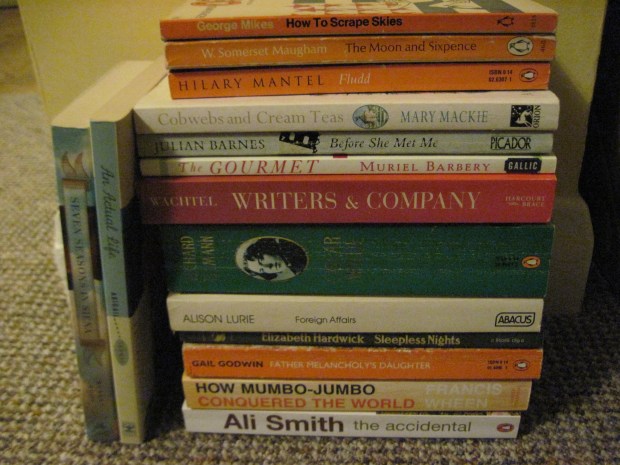
I’m particularly pleased with:
- Richard Ellmann’s biography of Oscar Wilde
- Writers & Company, a collection of Canadian radio interviews with authors
- A signed copy of Francis Wheen’s How Mumbo-Jumbo Conquered the World
- An Actual Life by Abigail Thomas – I love her memoirs so have been looking forward to trying her fiction.
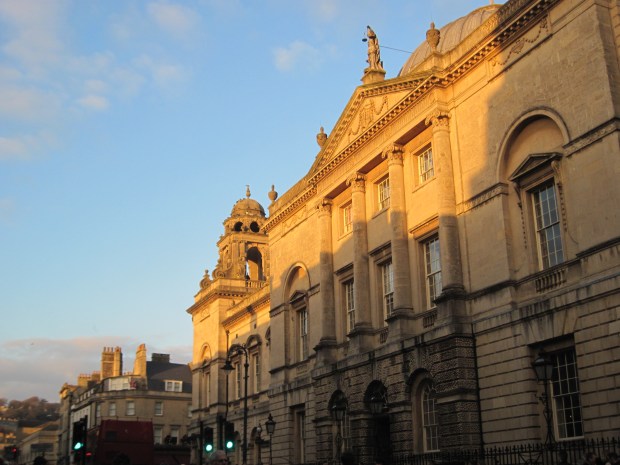
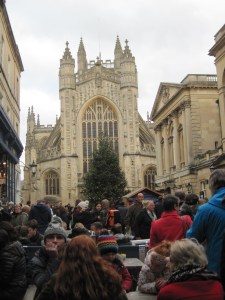
Bath Abbey
This was my fifth trip to Bath, which was looking lovely and golden in the wintry afternoon light but was certainly bustling, to put it politely. More accurately, you could barely move through the main streets, particularly around the Christmas market. At one point we weren’t sure we were going to get any hot food for dinner – it had never occurred to us to book ahead, and the brasserie and pub we tried were both full. Luckily the Real Italian Pizza Co. had a table for two, and I enjoyed a gloriously doughy calzone before we headed up to St Swithin’s Church for a holiday concert featuring Songways Choir and The Bookshop Band.
St Swithin’s has had a church on site since the tenth century, a sort of age we Americans can barely get our heads round. Jane Austen’s parents married here; so did William Wilberforce. It was something of a bittersweet occasion because the couple who make up The Bookshop Band are moving to Wigtown, Scotland’s town of books, in January and expecting their first booklet in May. So this was most likely my last chance to see them for quite a while. They only played a mini-set of five songs after the choir performance. Most of these I’d heard before, but “Wagons and Wheels,” based on Carol Birch’s Orphans of the Carnival (which I have on my Kindle and have been meaning to read), was new to me and a highlight.


Earlier in the evening we’d had a chance to stop by Mr B’s Emporium of Reading Delights, the independent bookshop in Bath where the band got their start. It’s such a cozy and welcoming shop, and I added a goodly number of books to my wish list while I was there. It’s something of a shame that we never got to see them perform in situ (though I don’t know how more than 20 people could fit in the upstairs space!), but I’ve managed to see them live three times and by funding their 2016 recording project have had excellent music streaming to my computer the whole year.
Thanks to last night’s holiday concert and the university carol service we’ll be attending tomorrow evening, I should certainly be feeling in the Christmas spirit. Look out for my two posts on seasonal reading coming up this week.
Picked up any secondhand bargains recently?
Are you feeling the Christmas spirit?
Birthday Happenings
One of the best things about being a home-based freelancer is that I can arrange my work schedule to suit my life. Having my birthday fall on a Friday this year was especially good because it meant I got until Monday to submit my daily editing load. My husband was working as usual, so I spent much of the day reading under the cat and charity shopping. I bought seven books, a nice mixture of England-themed nonfiction and juicy novels, plus new-to-me comfy black flats. (Total spend: £10.25.) Being short on time that evening, we lazily ordered delivery pizza for probably the first time in eight years, followed by cocktails and cake.
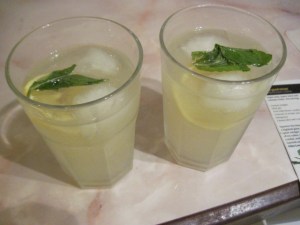 I didn’t end up using my literary cakes and cocktails books this year, but that gives me a chance to proffer my own pun names for what we did make. We tried two gin cocktails we’d found recipes for in the Guardian. The one they called “Elderflower Collins” was absolutely delicious: lemon juice, elderflower cordial and gin, topped up with San Pellegrino Limonata (lemon soda) and garnished with a lemon slice and a mint sprig. I dub it “A Visit from Mr. Collins,” as in the Bennet girls will have to down quite a few of these before…
Unfortunately, the second cocktail was not a hit. The “Miss Polly Hawkins” combines chamomile-flavored gin (I steeped two chamomile teabags in 60 mL of gin for a week), rose syrup (we didn’t have it or want to buy it so substituted our homemade rosehip syrup), plain gin and egg white. Egg white is a fairly frequent ingredient in cocktails – it adds gloss and body – but we found that it made the drink gloopy. That plus the overall floral and medicinal notes meant this was fairly hard to swallow; we had to drown it in sparkling water and ice cubes to get it down. Alas, I modify Iris Murdoch to call this “An Unappealing Rose.”
 However, my cake was an unqualified success. I usually go for chocolate or chocolate/peanut butter desserts, but decided to be different this year and requested the Italian Pear and Ginger Cheesecake from Genevieve Taylor’s cookbook A Good Egg. It was sophisticated and delicious. Running with the Italy thing, I’ll pick out a Forster title and call it “Where Angels Pear to Tread.” (It doesn’t make a whole lot of sense; then again, neither do a lot of the names in Tequila Mockingbird and Scone with the Wind!)
On Sunday the birthday fun continued with a trip to Hungerford Bookshop (our nearest independent bookshop) and a gentle country walk. I bought two secondhand books but came away with a total of four – in the basement they have a table covered in free proof copies, so my husband and I grabbed one each (how I wish I could have taken the lot!). It’s a great idea for rewarding customer loyalty and dealing with unwanted proofs; perhaps I’ll donate a stack of mine to them next time I’m there.


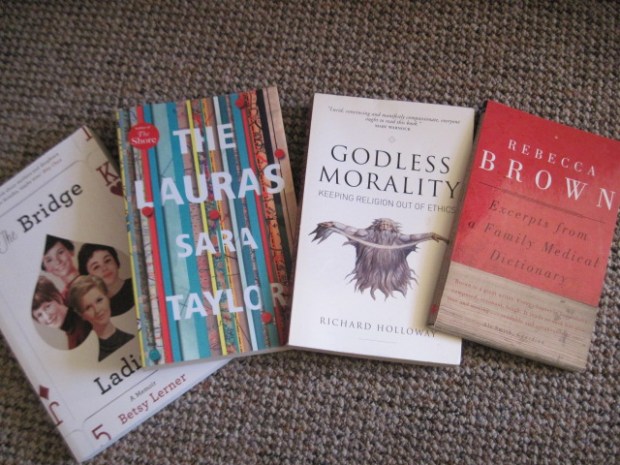
Two proofs (left) and two nonfiction purchases.
This year I got a Kindle case and two bookshop-themed memoirs as presents: The Little Bookstore of Big Stone Gap by Wendy Welch and Books, Baguettes and Bedbugs by Jeremy Mercer. I started reading the former – the story of a married couple opening a bookshop in recession-era Virginia – right away. I also got a poster frame so I can finally hang my literary map of the British Isles on the wall above my desk, and a “Shhhh, reading in progress” mug.

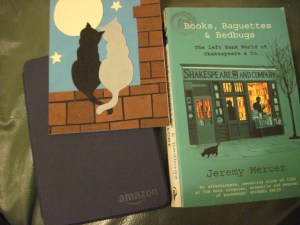

Consuming tasty food and drink + acquiring a baker’s dozen of books + getting out into the countryside = a great birthday weekend!
What are the ingredients for your perfect birthday?
In Cambridge for “Nature Matters”
We spent a few days last week in Cambridge, England for New Networks for Nature’s interdisciplinary “Nature Matters” conference, this year on the theme of “In Touch with the Wild.” This is the fourth year my husband (a biologist with the University of Reading) has participated, and the third year in a row that I’ve attended for a day. While other years the gathering has been in the small town of Stamford, this year’s temporary move to Cambridge gave us the impetus to finally explore this world-famous city for the first time.
Arriving later than we meant to on a Thursday evening, checking into our noisy hostel and then having to dash out in time for my husband to make the first event (and making a futile attempt to find an open coffee shop where I could while away a couple hours)…this all meant our first impression of the city was not great. However, cheap, terrific Chinese street food on Friday after the conference, followed by a delicious glass of cider in a pub and a sunny day for exploring the bustling city center on Saturday created a more favorable overall feeling.
-
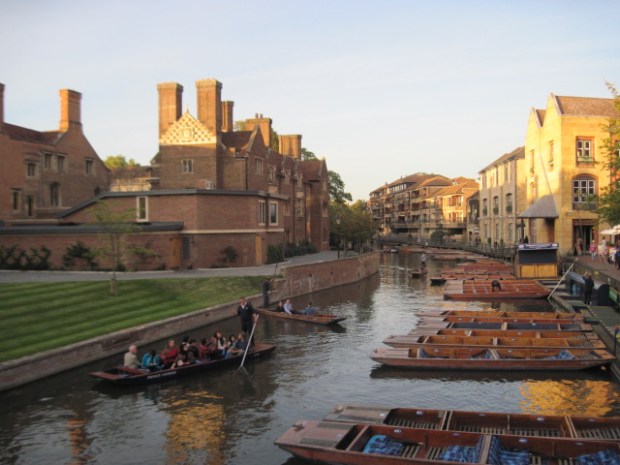
- Venice? No! Cambridge.

-
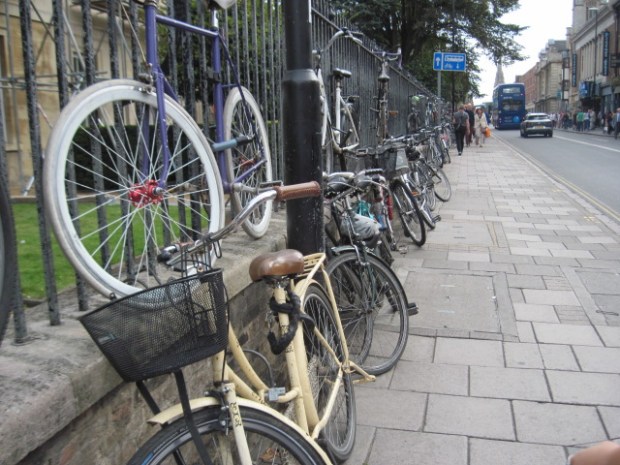
- Everyone cycles.
-

- King’s College.

-
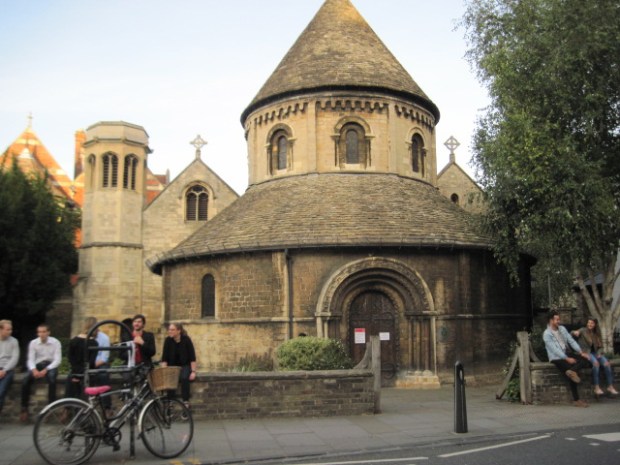
- The Church of the Holy Sepulchre, aka The Round Church.
Last year’s conference highlights for me were a debate about nature’s economic value and a panel on the purpose of nature poetry. This year’s sessions tackled personal connection with nature, rewilding (setting aside tracts of land for wilderness and reintroducing native species that have been driven out or gone locally extinct, such as wolves and wild boar), and coping with a sense of loss. With everyone from geographers to a singer and a painter involved on the day I attended, the conference succeeded in drawing in different fields from the sciences and the arts to provide commentary on ways we might reconnect with nature.
 The day’s first event brought together author William Fiennes, poet Alison Brackenbury, and Cambridge psychologist Laurie Parma. Fiennes spoke about writing an introduction to John Fowles’s long, curmudgeonly essay The Tree. Whereas Fowles denigrates Linnaeus, Fiennes thinks of him as a hero; like Adam in the Bible, Linnaeus knew the value of naming things. “In order to care about something, we first have to notice it,” Fiennes insisted; for him the noticing began when he was a child going round the garden with his father and learning plant names. Rather than thinking of names as a control mechanism, he suggested they can be a first step in “granting [a species] a place in your sensorium.”
 Brackenbury, who comes from four generations of Lincolnshire shepherds, recited from memory seven poems from her latest collection, Skies, several of which reflect on species’ extinctions or comebacks. “Look at them well before they go” is the broadly applicable piece of advice that closes “The Elms.” I especially liked one poem about a starling’s many songs.
Parma relayed the scientific evidence for green spaces mitigating stress and promoting happiness. At an event like this there’s an inevitable feeling that the speakers are preaching to the choir: we already know the personal value of time in nature, as well as the scale of environmental degradation. Still, this came home afresh in the following session as Dr. Stuart Butchart of BirdLife International spoke about the situation in Hawaii, where deforestation, non-native mosquitoes and other invasive animals are rapidly driving native birds to extinction. Photojournalist Toby Smith then questioned whether the nature photographer’s role should be to chronicle nature’s degradation or to celebrate what’s left. Many speakers acknowledged the difficult balance between mourning losses and applauding successes.
I spent most of Saturday scouring Cambridge’s charity shops and made out like a bandit, coming away with 15 books for £15.39. If you happen to find yourself in Cambridge and have seen all you need to of the colleges and the river (it doesn’t take very long), I can recommend Burleigh Street for charity shops but also Mill Road, a slightly more off-the-beaten-path student area of ethnic eateries and cheap stores. Books for Amnesty has an incredible selection; I took advantage of a couple James Lasdun books from their £1 poetry shelf. Best of all was the Salvation Army store, where all books were either 40 or 70 pence. I amassed a huge pile and then put half of it back when I remembered I would have to carry these books the mile or so back into town and then haul them around the whole rest of the day. I also did well at RSPCA’s two shops, one a dedicated bookshop on Mill Road.

Cambridge is certainly rich in secondhand book buying opportunities. Other shops I browsed but didn’t buy from included G. David Books and the tiny Sarah Key Books (also known as “The Haunted Bookshop” – I’d love to know why! – and included on a Guardian list of 10 of the best secondhand bookstores), both on St. Edward’s Passage, and the multi-floored emporium Heffers on St. John’s Street, which has a great selection of board games and gift items as well as new and used books.
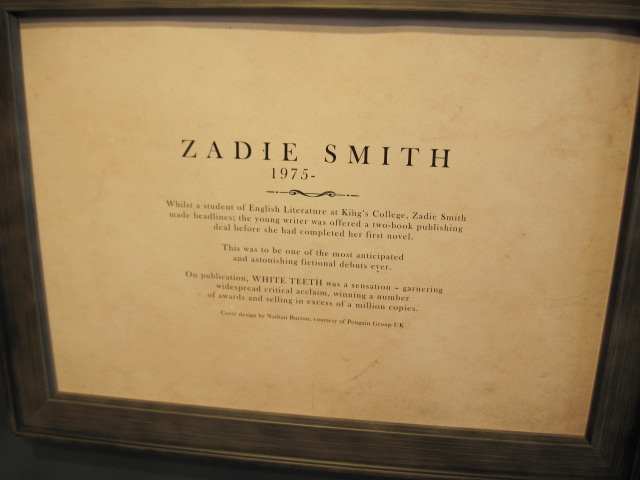
As a literary destination, Cambridge left a bit to be desired, though. There weren’t any literary graves for me to find, nor any notable houses or statues. Many of the college’s famous alumni are known for work in other fields. There’s Newton, Darwin and Hawking in the sciences, for instance – they all appear in this mural in the hostel dining room. Plenty of political figures attended, as well as lots of living authors (Wikipedia has an extensive list; the hostel wall featured Zadie Smith as a fairly recent example of a literary alumna).


So, overall, a nice enough city for a day trip but not somewhere you need to stay much longer. Granted, it was outside of term time so King’s College wasn’t running its usual chapel services, and I never did make it out to the Fitzwilliam Museum. Still, I reckon you’ll find much more to see and do in Oxford, a city I’ve visited again and again ever since my undergraduate study abroad days took me there for weekly theology tutorials.
Your thoughts (on new cities, connecting with nature and secondhand book shopping) are always welcome!
Return to Bookbarn
Sounds like a summer blockbuster, doesn’t it? There was certainly plenty of tension on our drive from the Reading area to Somerset this past Friday, as traffic on the M4 built up and our time for book shopping ticked down from a planned hour and a half to just 35 minutes before store closing. It had been almost exactly one year since my last trip to Bookbarn International, and after weeks of wheedling I’d finally persuaded my husband to make the detour on our way to visit friends in Bristol.
Despite the tight deadline, I enjoyed my browsing and scored some good finds. As usual, it seemed like a terrific bargain: £14.50 for 15 books. One’s a gift for our nephew in America, four are nature books my husband chose, and the rest are mine! Bonus: a few days later it occurred to me to ask after the collectible books I left behind last year for Bookbarn to sell for me and it turns out I have nearly £21 coming to me – so in effect our shopping was free!
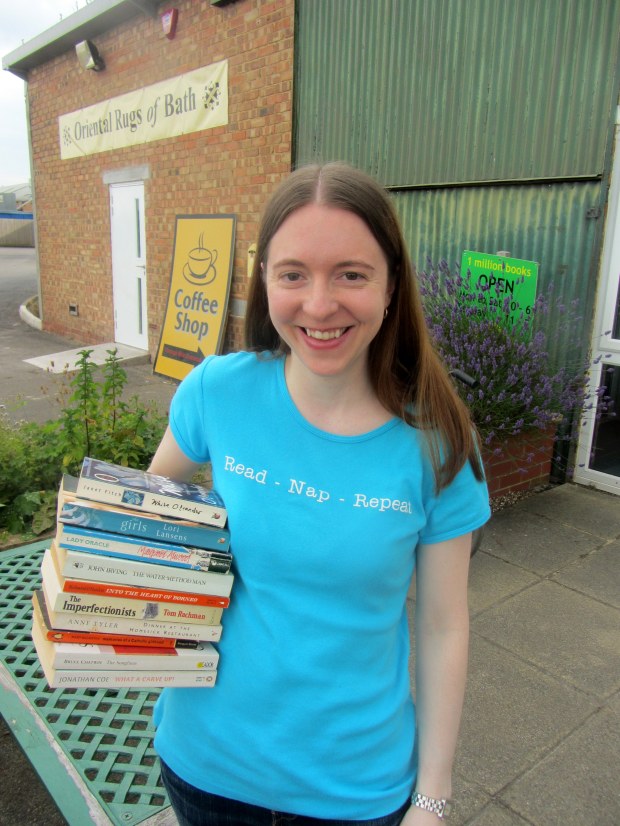
In case you can’t read the titles in the photo, here’s my haul:
Travel books:
The Songlines, Bruce Chatwin
Into the Heart of Borneo, Redmond O’Hanlon
[I featured both of the world-class travel writers in a recent article for Bookmarks, so it’s only proper that I actually read something by them.]
Memoir:
Memories of a Catholic Girlhood, Mary McCarthy [I’m a sucker for religious memoirs.]
Fiction:
Lady Oracle, Margaret Atwood [It’s been a while since I tried one from her back catalogue.]
What a Carve Up!, Jonathan Coe [I enjoyed the recent ‘sequel’, Number 11.]
White Oleander, Janet Fitch [An Oprah favorite I’ve long meant to read.]
The Water-Method Man, John Irving [Let’s hope for better things from his second novel.]
The Girls, Lori Lansens [I can’t resist a conjoined twins story.]
The Imperfectionists, Tom Rachman [Already read some years back, but worth owning.]
Dinner at the Homesick Restaurant, Anne Tyler [To continue my run of Tyler classics.]
Had any secondhand book coups lately?
Book-Cycle of Exeter
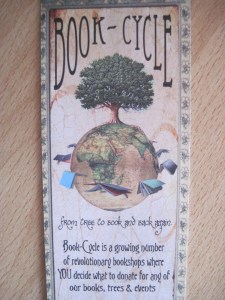 This past weekend we paid a visit to close friends who live in Exeter, Devon. A bleak day of exploring the city in torrential wind and rain was saved by a wonderful tea room (The Hidden Treasure) and a stop at Book-Cycle, a storefront bookshop with a difference: each customer can take just three books per day, and the price is whatever you decide to donate to the charity’s UK tree-planting and worldwide literacy efforts. Not quite as amazing a free-for-all as The Book Thing of Baltimore, then, but still quite a treasure trove with a great selection, especially of recent fiction.
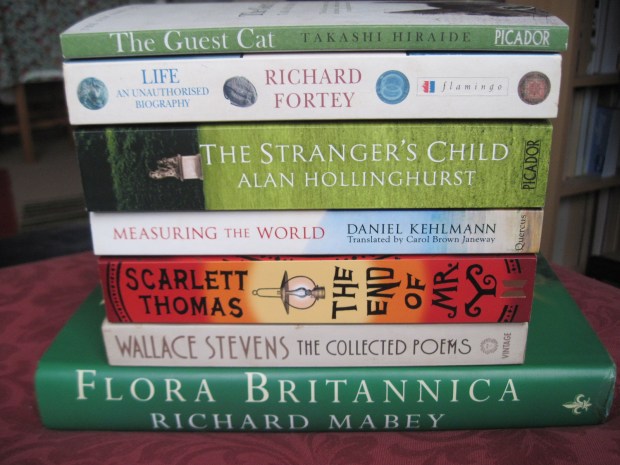
My husband and I came away with three books each for a total donation of £4 (the extent of the change in our wallets) – an incredible bargain considering he probably would have paid more than that just for the coffee table book on plants. Add on a copy of Takashi Hiraide’s The Guest Cat found at Oxfam Books and we spent just £5.99 for an excellent Saturday haul.

A welcome tea and cake stop.
Book-Cycle has a number of branches in England (plus one in Rome), though none of them are particularly convenient for where we live. It seems pretty straightforward to set up your own Book-Cycle shelf in a café or shop, however, so perhaps I’ll look into doing that this summer – in addition to or instead of a Little Free Library.
What were your best recent book finds?
When Is a Bookshop Not a Bookshop?
The answer to the riddle: when all the books are free! Christmas came early on Sunday when I visited a place I long knew of but had never visited: The Book Thing of Baltimore. It’s an entirely not-for-profit venture run with the help of volunteers and donations. “Our mission is to put unwanted books into the hands of those who want them,” says their website. My hubby and I were going into the city to meet friends for the day, so I suggested a quick run to Book Thing, a hidden treasure on an unassuming concrete lot that’s only open on the weekends.
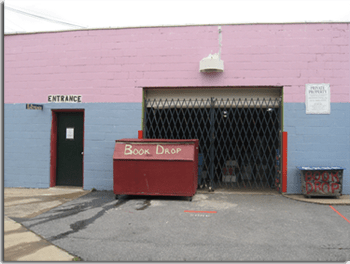
The unassuming shop front for Book Thing. (From their website)
I brought along a backpack crammed full of unwanted books from my old bedroom to donate, thinking that I would pick up just two or three in return. I was expecting one disorganized room full of pretty crummy books. To my delight, it was an enormous four-room warehouse with an amazing selection. A wonderful place to wander around and pick up things at random, but not great for seeking out particular titles given that the books – notably, fiction and biographies – are in no discernible alphabetical order.
Are you at all surprised to learn that I came away with a backpack just as overstuffed as I came with? At one point, as I was stacking up some terrific animal-themed books, my husband said, “You do realize you can only take what you can fit in your backpack? We’re going back by train!” My refrain was “but they’re all free!” I ended up with 31 books in total.
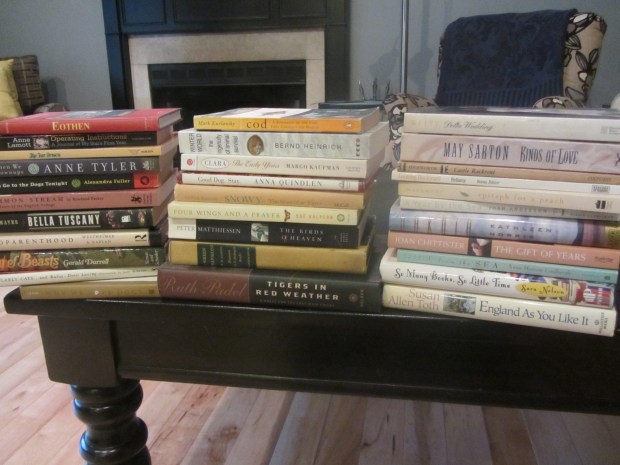
The haul.
I was especially thrilled with: The Fur Person, May Sarton’s book about cats, which I’d been hoping to find secondhand on this trip; Tigers in Red Weather, Ruth Padel’s travel book about searching for the world’s few remaining tigers in all their known habitats – I’d already read it but my husband hasn’t; Dakota by Kathleen Norris, a new favorite theology writer; Sara Nelson’s So Many Books, So Little Time (how apt!); and A Year by the Sea by Joan Anderson, which I’d never heard of but should fit right into my interest in women’s diaries.
Lest you think I’m some selfish book fiend, note that the pile on the left in the photograph below is for giving away to family and friends this Christmas. (Yes, I am aware that the pile of books we are keeping dwarfs the gift stack. Sigh.)
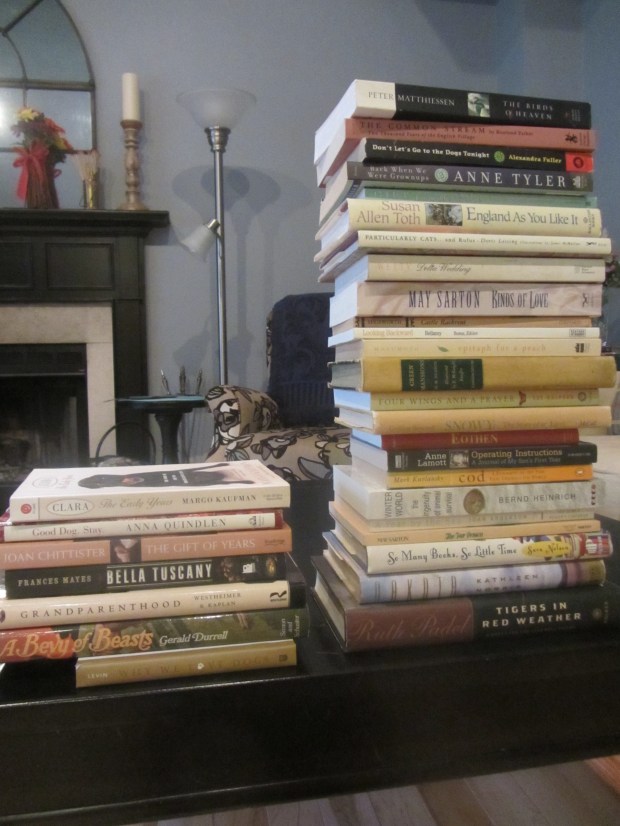
Dueling stacks.
All in all, it was a great day in Baltimore. We had a terrific lunch at City Café; browsed part of the amazing (and also free!) Walters Art Museum; toured the central campus of Johns Hopkins University, where my friend is a PhD student; walked through a small park; observed the shops and eateries of hipster Hampden; and saw the famous Christmas lights on 34th Street. They call it “Charm City,” and on Sunday it more than lived up to its name.
Book Thing is as sprawling as my favorite bookshop, Wonder Book (Frederick, Maryland), but you needn’t hand over any money. It’s as varied and tempting as any public library, but you don’t have to bring the books back. Nothing says “Merry Christmas” like free books!
Today’s Secondhand Book Haul
Today, as an early birthday outing for me, we headed to Henley-on-Thames by train, getting off one stop early at Shiplake to walk a couple of miles along the river.
Courtesy of Chris Foster
Henley has one of our favorite local secondhand bookstores. It’s only our second time there, but we instantly became devotees thanks to their £1 section, which includes all paperbacks.

Courtesy of Chris Foster
Today’s haul (total spend = £10):
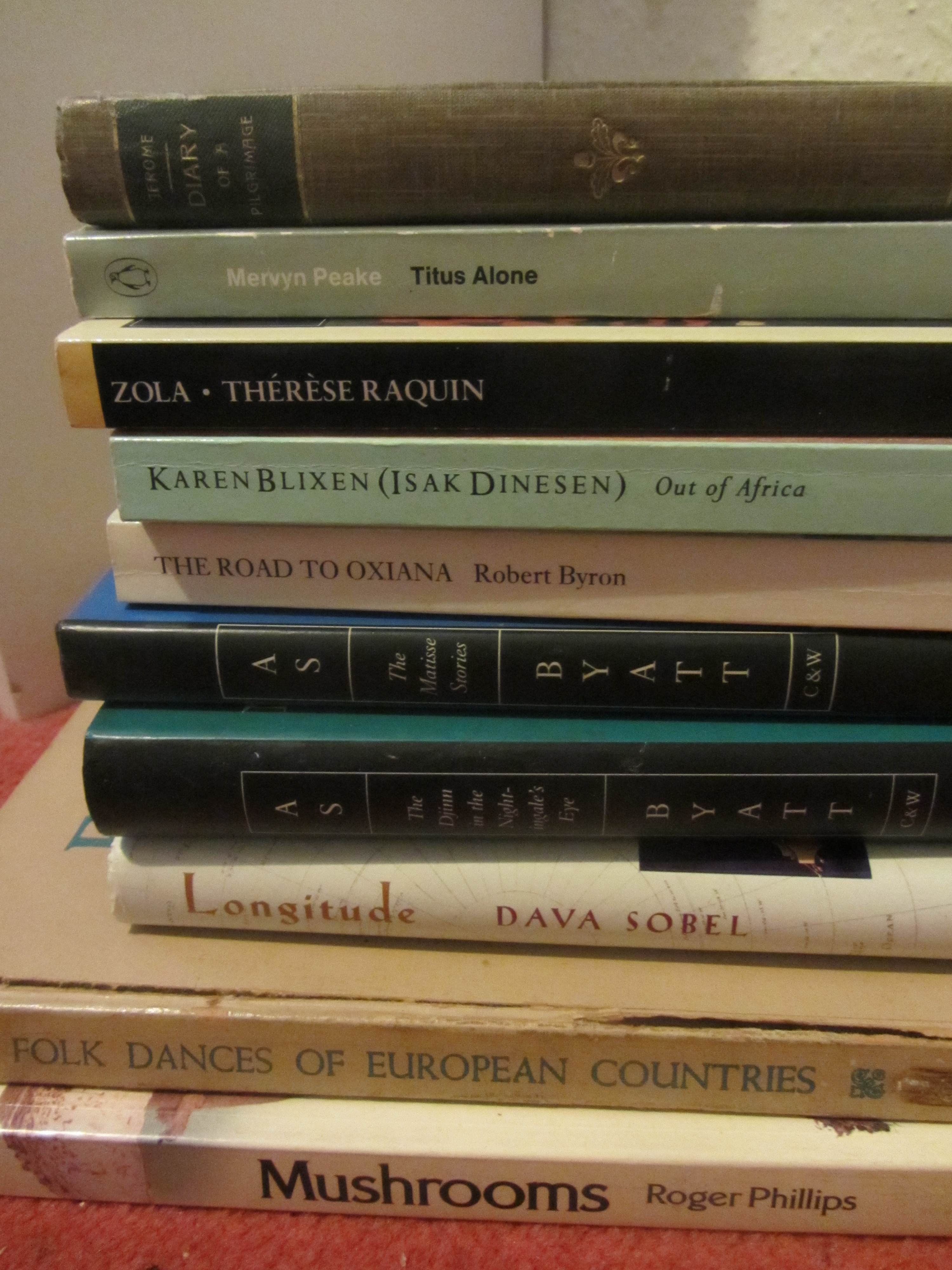
I’m especially pleased with the £1 copy of Diary of a Pilgrimage by Jerome K. Jerome, a novel about a journey by train and boat from England to Germany to see the Oberammergau Passion Play. We have plans to travel around Europe by train next year, so this will be a fun one to slip in a handbag for the Germany leg.
Tonight I’m headed to the theatre for the second time in a week – I shall report back about both trips on Monday.
A Tale of Two Bookshops: Bookbarn International and Wonder Book
A friend’s wedding in Bristol last Saturday provided the perfect opportunity for a return visit to Bookbarn International, a terrific secondhand bookshop near Bath in northeast Somerset. Between the stock on their shelves and in the warehouse from which they sell online, they have millions of books, and all the ones in the shop are either £1 or 50 pence (children’s books and, when I went, all paperback fiction as a summer reading promotion). It’s like heaven for this bibliophile. I first went a couple years ago on the way back from Cornwall – although, on both occasions, my longsuffering husband protests, Bookbarn wasn’t really ‘on the way’ in any sense.
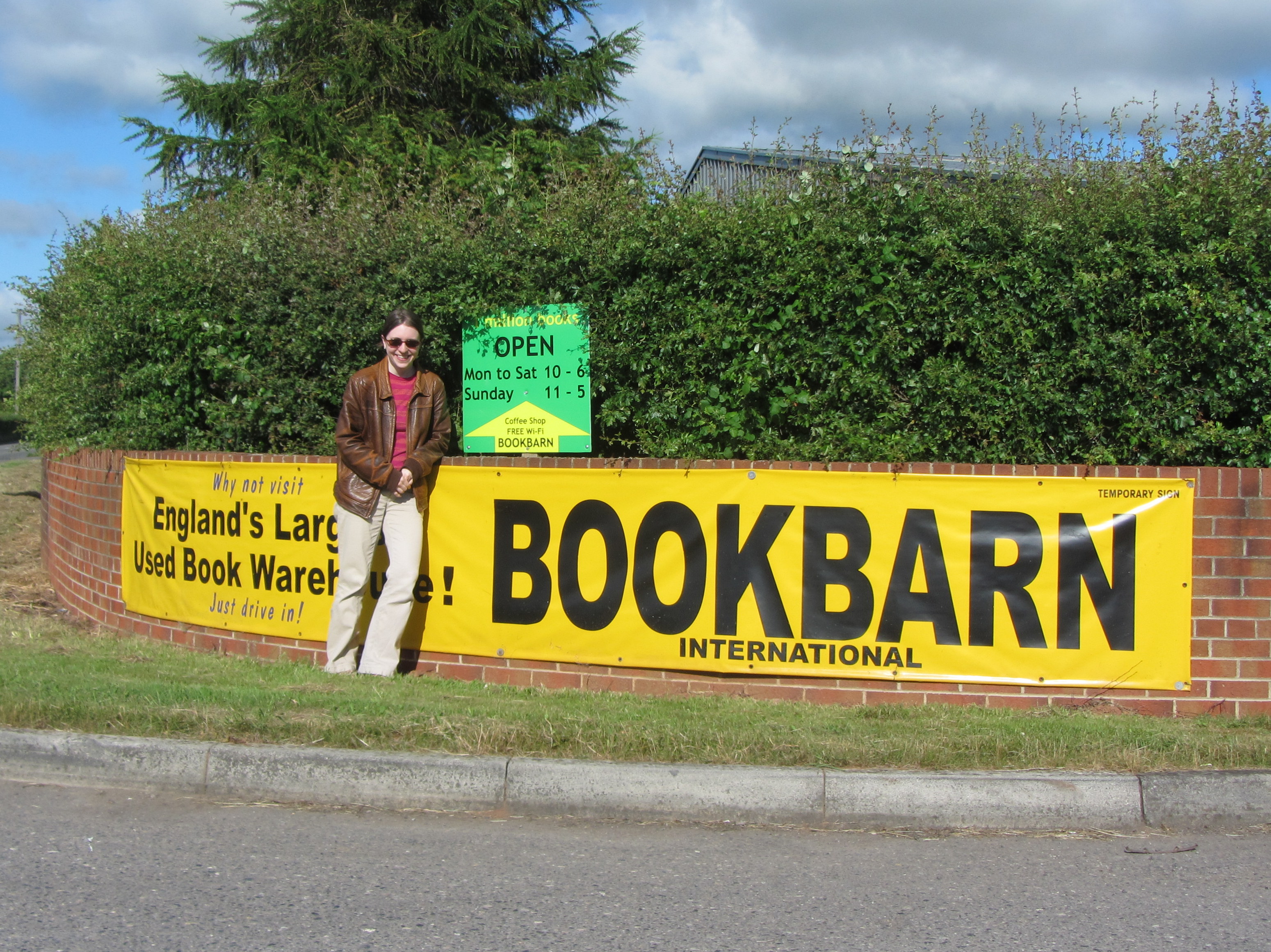
First visit in June 2013

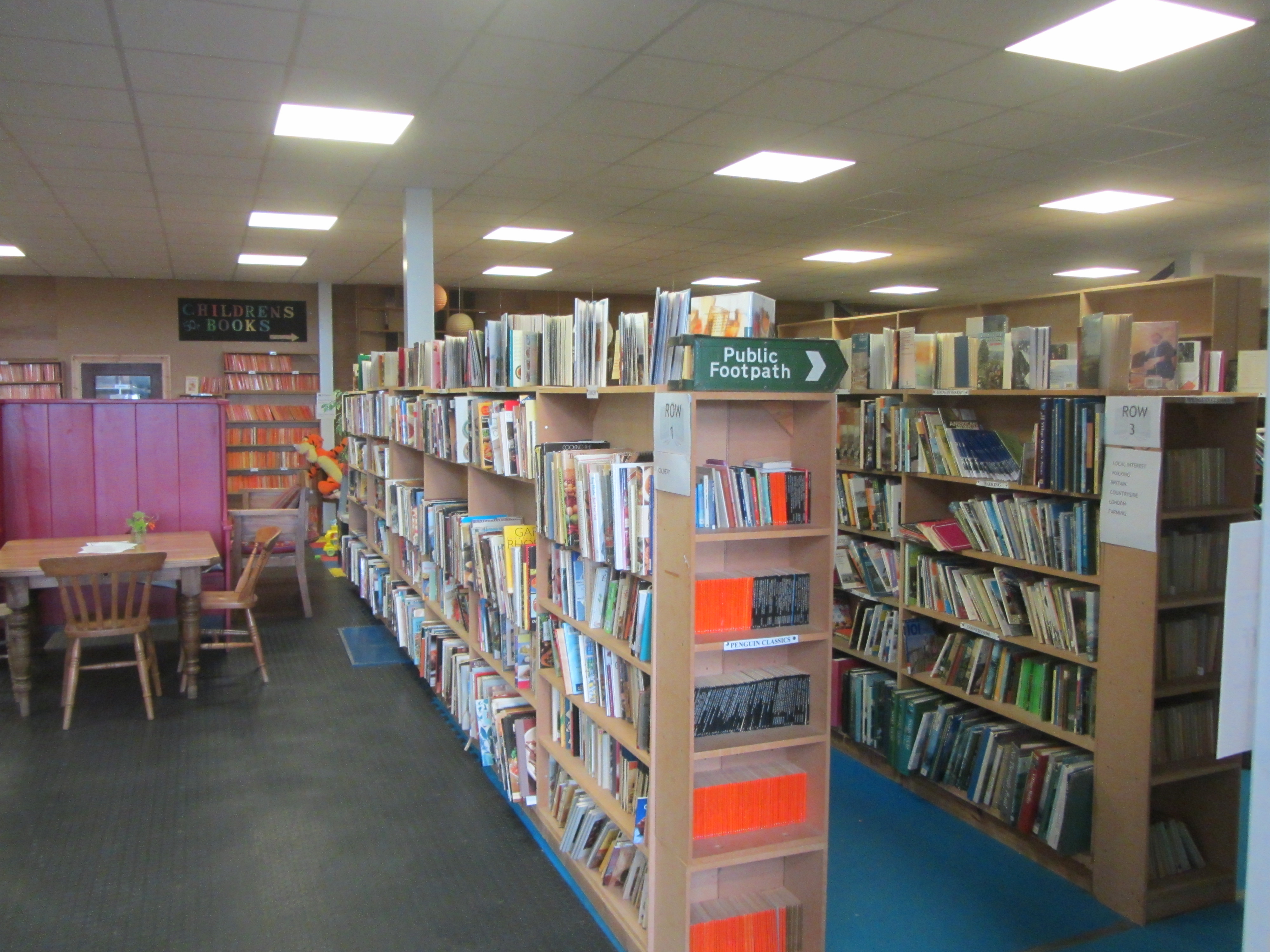
Well worth the detour, though, as Bookbarn is basically the British equivalent of my beloved Wonder Book, a chain with several branches in Maryland. I first encountered the store when my sister worked for WHAG television station in Hagerstown, and when I chose to go to college in Frederick, I wouldn’t say that the town’s two Wonder Book branches (one has since closed, alas) were a deciding factor, but they were certainly a bonus. I even worked there as a part-time book assistant during my senior year at Hood College, and it didn’t quite spoil my love for the place – though I’ll admit it’s much better to be a customer than an employee.
The Frederick location (photo from their website).

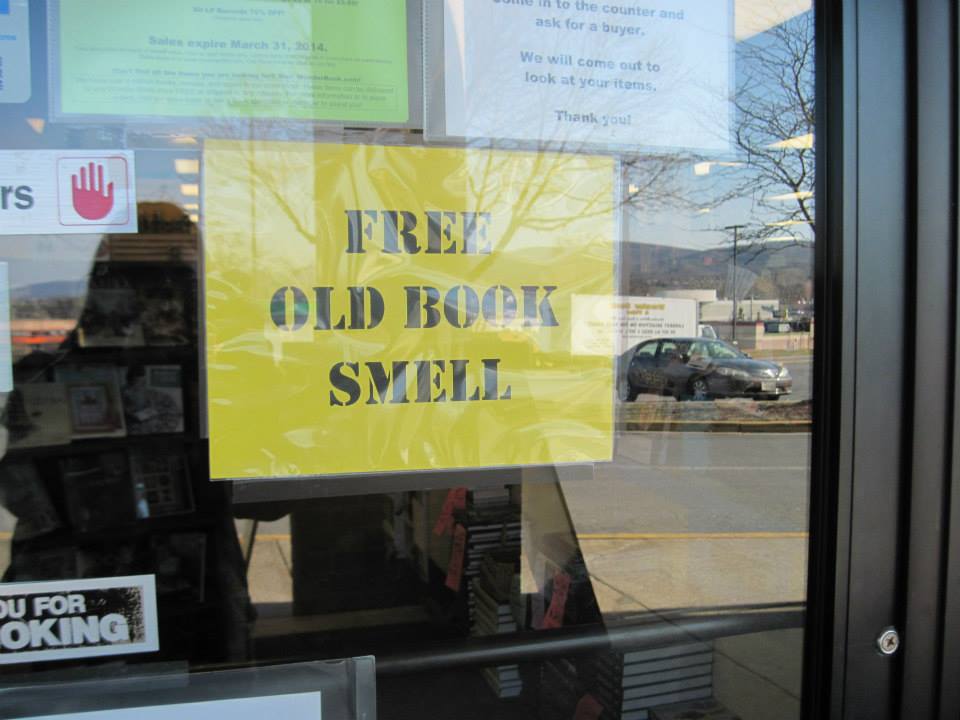
Say it ain’t so! You never know what you’ll find in terms of categorization at Wonder Book.
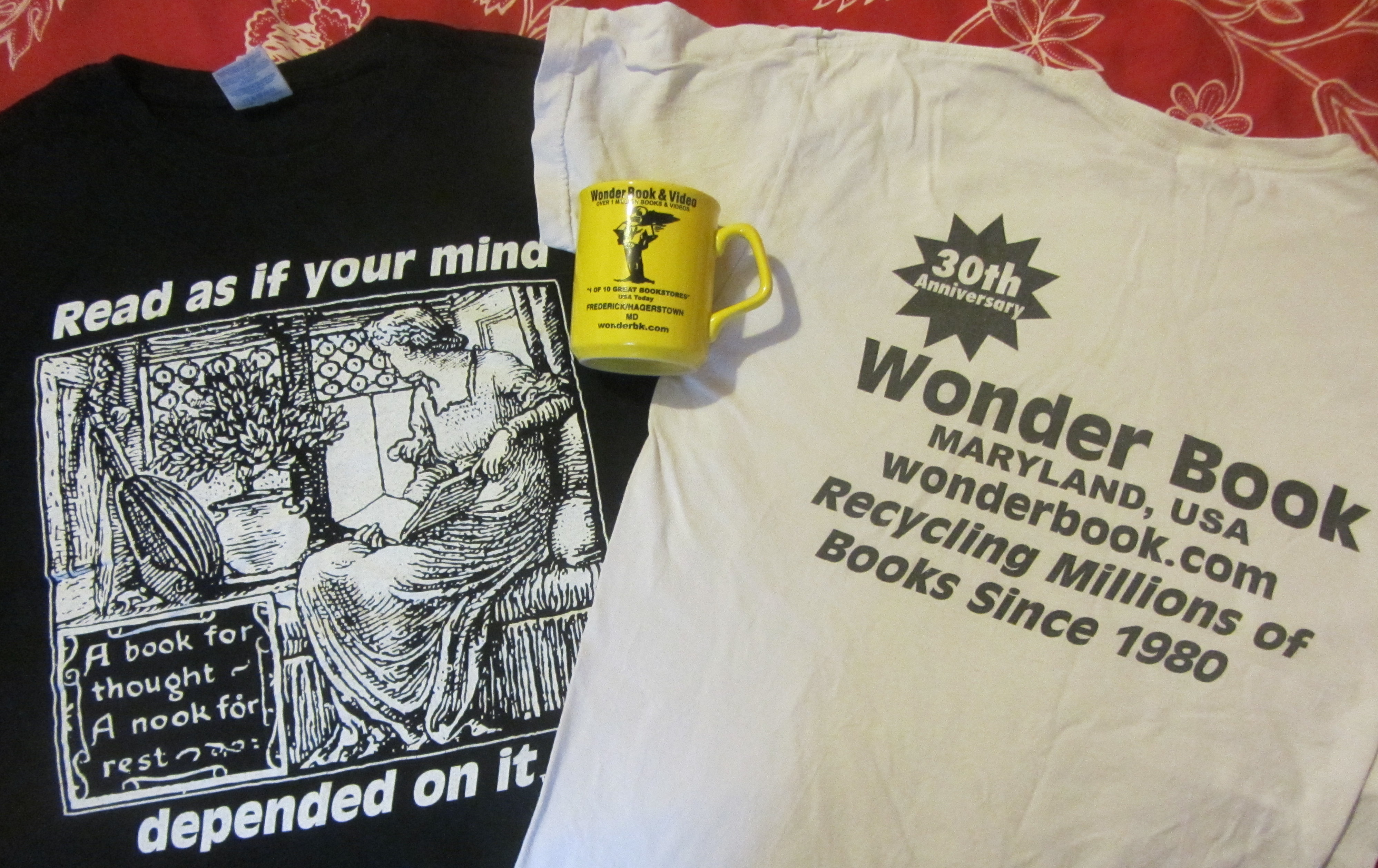
I’ve lived abroad for over eight years now, but I still manage to get back to Wonder Book once or twice a year during visits to family. Like Bookbarn, it’s an enormous warehouse-like place with dozens of different categories and subcategories of books, most at very reasonable prices. Again like Bookbarn, it’s the kind of place where you’ll need to allow time to root around, since within sections the books might not be in perfect alphabetical order. The stock rolls over so quickly or, especially in the case of theology, is so overwhelmingly large that there’s just no way to sensibly organize it all. Come with a list, but be willing to browse at a leisurely pace and let serendipity guide you as much as the subject headings. You’ll also find snacks and book-themed gifts such as (at Wonder Book anyway) mugs and T-shirts.
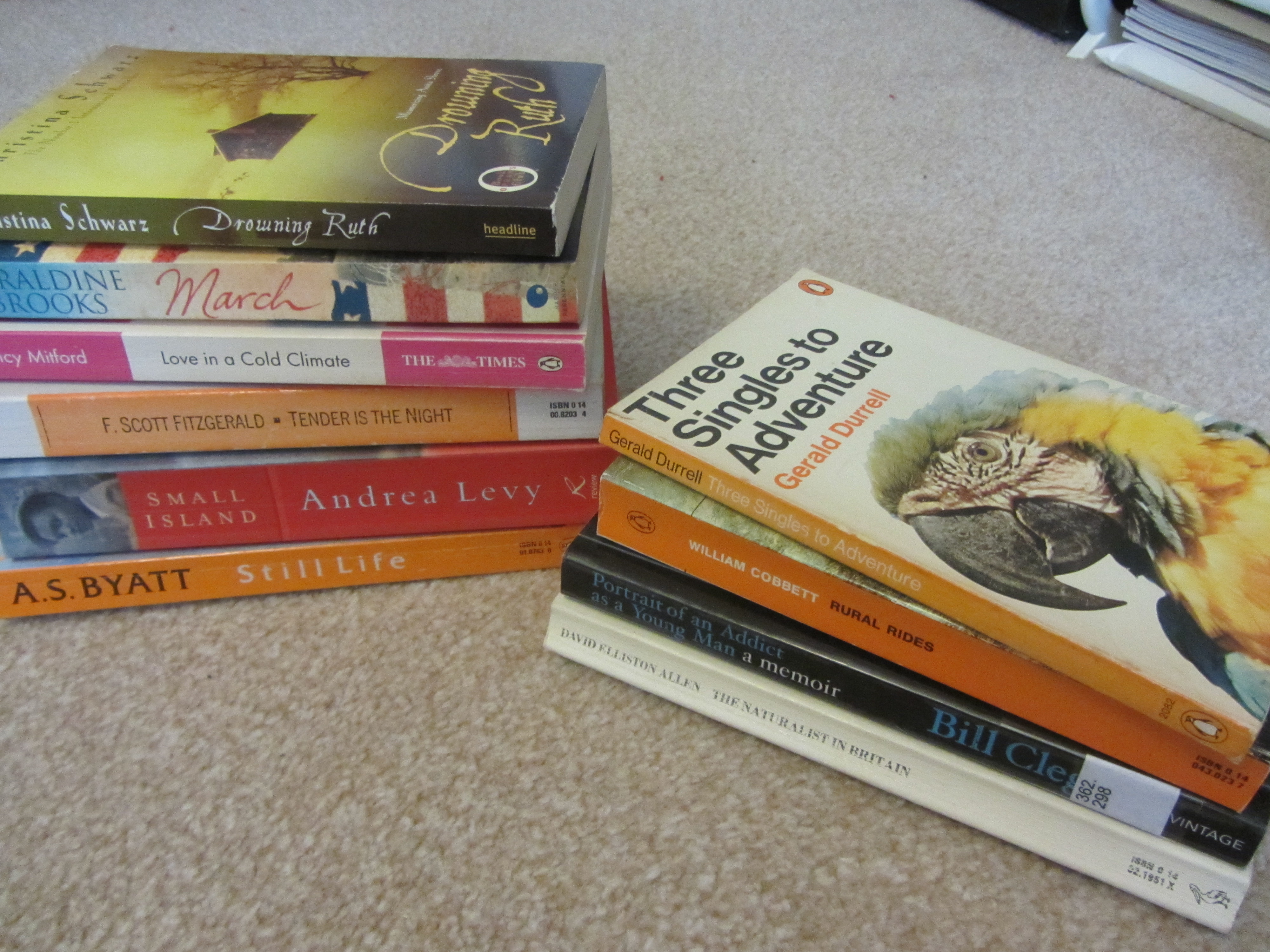
On this last visit to Bookbarn I got 18 books for all of £12 – bargain! Pictured below are my purchases, minus the ones certain readers or their children might be getting for birthday or Christmas presents later in the year…
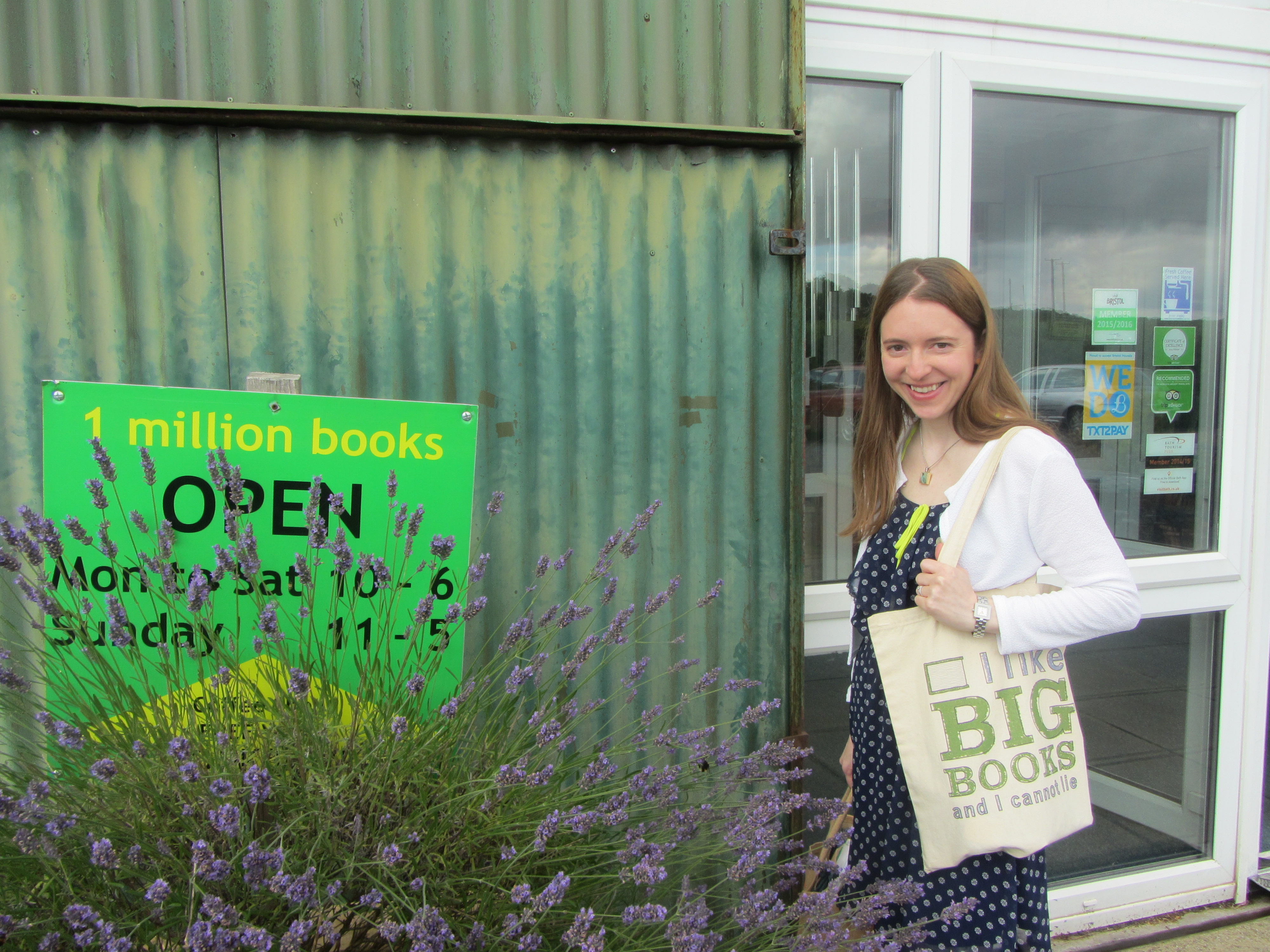
For the greatest concentration of wonderful bookshops in one place, I can’t recommend Hay-on-Wye, Wales highly enough (see my article on Book Towns for more). See also Jen Campbell’s The Bookshop Book for more ideas of bookshops to seek out wherever your travels take you.
Are you a devoted secondhand book shopper? What are some of your favorite bookshops in the United States, United Kingdom, or further afield?
 Bookish Beck = Rebecca Foster. American transplant to England. Freelance proofreader and book reviewer.
