Book Serendipity, April‒Early July
I call it serendipitous when two or more books that I read at the same time or in quick succession have something pretty bizarre in common. Because I have so many books on the go at once (usually around 20), I suppose I’m more prone to such incidents than some. I also list these occasional reading coincidences on Twitter. The following are in rough chronological order. (January to March appeared in this post.)
- Characters named Sonny in Pew by Catherine Lacey, My Father’s Wake by Kevin Toolis, and Sacred Country by Rose Tremain.
- A double dose via Greenery via Tim Dee – while reading it I was also reading Other People’s Countries by Patrick McGuinness, whom he visits in Belgium; and A Cold Spring by Elizabeth Bishop, referenced in a footnote.


- A red thread is worn as a bracelet for its emotional or spiritual significance in The Book of Longings by Sue Monk Kidd and Plan B by Anne Lamott.
- The Library of Alexandria features in Footprints by David Farrier and The Book of Longings by Sue Monk Kidd.
- The Artist’s Way is mentioned in At Hawthorn Time by Melissa Harrison and Traveling Mercies by Anne Lamott.
- Characters sleep in a church in Pew by Catherine Lacey and Abide With Me by Elizabeth Strout. (And both novels have characters named Hilda.)


- Coins being flung away among some trees in In the Springtime of the Year by Susan Hill and The Book of Longings by Sue Monk Kidd (literally the biblical 30 pieces of silver in the Kidd, which is then used as a metaphor in the Hill).
- Rabbit-breeding projects in When the Lights Go Out by Carys Bray and Parable of the Sower by Octavia E. Butler.


- Mentions of the Great Barrier Reef in When the Lights Go Out by Carys Bray and Footprints by David Farrier.
- The same very specific fact – that Seamus Heaney’s last words, in a text to his wife, were “Noli timere” – was mentioned in Curlew Moon by Mary Colwell and Greenery by Tim Dee.
- Klondike ice cream bars appeared in both Small Victories by Anne Lamott and The Fixed Stars by Molly Wizenberg.

- The metaphor of a rising flood only the parent or the child will survive is used in both Exit West by Mohsin Hamid and What We Carry by Maya Lang.
- The necessity of turning right to save oneself in a concentration camp setting is mentioned in both Man’s Search for Meaning by Viktor Frankl and Fugitive Pieces by Anne Michaels.
- An English child is raised in North Africa in Oleander, Jacaranda by Penelope Lively and The Child in Time by Ian McEwan.
- The Bristol Stool Chart appeared in both Gulp by Mary Roach and The Bad Doctor by Ian Williams.


- A Greek island setting in both Exit West by Mohsin Hamid and Fugitive Pieces by Anne Michaels (plus, earlier, in A Theatre for Dreamers by Polly Samson).
- Both Writers & Lovers by Lily King and Mother: A Memoir by Nicholas Royle mention Talking Heads within the first 20 pages.
- A trip to North Berwick in the early pages of Mother: A Memoir by Nicholas Royle, and hunting for cowrie shells on the beach – so familiar from Evie Wyld’s The Bass Rock, read the previous month. (Later, more collecting of cowrie shells in Oleander, Jacaranda by Penelope Lively.)
- Children’s authors are main characters in The Crow Road by Iain Banks and The Child in Time by Ian McEwan.

- A character is killed by a lightning strike in The Crow Road by Iain Banks and Writers & Lovers by Lily King.
- Characters named Ash in The Crow Road by Iain Banks and The Fixed Stars by Molly Wizenberg.
 A brother steals the main character’s object of affection in The Crow Road by Iain Banks and Sacred Country by Rose Tremain.
- A minor character in Parable of the Sower by Octavia E. Butler is called Richard Rohr … meanwhile, I was reading a book by Richard Rohr, The Universal Christ.
- A maternity ward setting in The Pull of the Stars by Emma Donoghue and The Bell in the Lake by Lars Mytting.
- A love triangle is a central element in Writers & Lovers by Lily King and The Bell in the Lake by Lars Mytting.


- Reading a book by a Galloway (The Trick Is to Keep Breathing by Janice Galloway) and a book about Galloway (Native: Life in a Vanishing Landscape by Patrick Laurie) simultaneously.
- Attending college in L.A. in The Vanishing Half by Brit Bennett and Dreams from My Father by Barack Obama.
- Two books that reference the same Darwin quote: Into the Tangled Bank by Lev Parikian, and “The Entangled Bank” is the title of the final poem in Red Gloves by Rebecca Watts.


- Characters with the surname Savage in The Box Garden by Carol Shields and Islands of Mercy by Rose Tremain.
- A character is taught how to eat oysters in The Vanishing Half by Brit Bennett and Kitchen Confidential by Anthony Bourdain.
- A Louisiana setting in The Vanishing Half by Brit Bennett and Property by Valerie Martin.
- Characters named Stella in The Vanishing Half by Brit Bennett and The Group by Lara Feigel.


- The last line of the book has a character saying “Come in” in Americanah by Chimamanda Ngozi Adichie and Ankomst by Gøhril Gabrielsen.
- Currently reading four books with mixed-race narrators: (Black/white) The Girl Who Fell from the Sky by Heidi Durrow, Dreams from My Father by Barack Obama, Memorial Drive by Natasha Trethewey; and (Japanese/white) My Year of Meats by Ruth Ozeki.
- Currently reading two novels in which a pair of orphaned sisters are taken in by relatives (Deerbrook by Harriet Martineau and Rise and Shine by Anna Quindlen). Plus two more novels with orphan characters: The Girl Who Fell from the Sky and My Year of Meats.
-
- In two of these four (not telling which, though you can safely assume it’s not the Victorian novel!), they are orphans because both parents were killed in a car accident. I feel like this is a fictional setup that I encounter all the time (cf. All the Beautiful Girls, The Monsters of Templeton, Saint Maybe) that can’t be that common in real life?
-


- Vassar as an alma mater in Kitchen Confidential by Anthony Bourdain and The Group by Mary McCarthy.
- Punahou School (Honolulu, Hawaii) is the author’s alma mater in The Noonday Demon by Kathleen Norris and Dreams from My Father by Barack Obama.
What’s the weirdest reading coincidence you’ve had lately?
Three May Releases: Climate Change, a Son’s Elegy, and Sexual Fluidity
I’m still averaging four new releases per month: a nicely manageable number. In addition to Lily King’s Writers & Lovers, in May I’ve read a novel about eco-anxiety and marital conflict, a memoir of losing a mother to grief and dementia, and an account of a shift in sexuality. I had a somewhat mixed reaction to all three books, but see if one or more catches your eye anyway.
When the Lights Go Out by Carys Bray
Perhaps if this had come out two or three years ago, it could have felt fresh. As it is, it felt like a retread of familiar stories about eco-grief and -anxiety among the middle classes (such as Weather and Unsheltered). Emma Abram is an average suburban mother of two in the north of England, upcycling fabrics and doing her best with other little green initiatives around the house since she got laid off from her job when the local library closed. She feels guilty a lot of the time, but what else can she do?
Nero fiddled while Rome burned; she will sew while the polar ice melts and the seas surge.
She couldn’t un-birth the children, un-earth the disposable nappies or un-plumb the white goods.
 Such sentiments also reminded me of the relatable, but by no means ground-breaking, contents of Letters to the Earth.
Emma’s husband Chris, though, has taken things to an extreme: as zealous as he once was about his childhood faith, he now is about impending climate change. One day, a week or so before Christmas, she is embarrassed to spot him by the roadside in town, holding up a signboard prophesying environmental doom. “In those days, Chris had been spreading the Good News. Now he is spreading the Bad News.” He thinks cold-weather and survivalist gear makes appropriate gifts; he raises rabbits for meat; he makes Emma watch crackpot documentaries about pandemic preparation. (Oh, the irony! I was sent this book in December.)
Part of the problem was to do with my expectations: from the cover and publicity materials I thought this was going to be a near-future speculative novel about a family coping with flooding and other literal signs of environmental apocalypse. Instead, it is a story about a marriage in crisis. (I cringed at how unsubtly this line put it: “The climate of her marriage [has] been changing, and she has been in denial about it for a long time.”) It is also, like Unless, about how to relate to a family member who has, in your opinion, gone off the rails.
Nothing wrong with those themes, of course, but my false assumptions meant that I spent well over 200 pages waiting for something to happen, thinking that everything I had read thus far was backstory and character development that, in a more eventful novel, would have been dispatched within, say, the first 40 pages. I did enjoy the seasonal activity leading up to Christmas Eve, and the portrayal of Chris’s widowed, pious mother. But compared to A Song for Issy Bradley, one of my favorite books of 2014, this was a disappointment.
My thanks to Hutchinson for the proof copy for review. This came out in e-book and audio on May 7th but the print edition has been delayed until November 12th.
Mother: A Memoir by Nicholas Royle
“A memoir is about what survives. But it is also about what is enigmatic and irretrievable. Cryptic and unknown.”
 A few years ago I read Royle’s An English Guide to Birdwatching, one of the stranger novels I’ve ever come across (it brings together a young literary critic’s pet peeves, a retired couple’s seaside torture by squawking gulls, the confusion between the two real-life English novelists named Nicholas Royle, and bird-themed vignettes). It was joyfully over-the-top, full of jokes and puns as well as trenchant observations about modern life.
I found that same delight in the vagaries of language and life in Mother: A Memoir. Royle’s mother, Kathleen, had Alzheimer’s and died in 2003. At least to start with, she was aware of what was happening to her: “I’m losing my marbles,” she pronounced one day in the kitchen of the family home in Devon. Yet Royle pinpoints the beginning of the end nearly two decades earlier, when his younger brother, Simon, died of a rare cancer. “From that death none of us recovered. But my mother it did for. She it by degrees sent mad.”
In short, titled sections that function almost like essays, Royle traces his mother’s family history and nursing career, and brings to life her pastimes and mannerisms. She passed on to Royle, a professor of English and creative writing at the University of Sussex, a love of literature and of unusual words and sayings. She was often to be found with a crossword puzzle in front of her, she devoured books (devoting a whole summer to the complete works to date of Doris Lessing, for instance), and she gave advice on her son’s early stories.
The narrative moves back and forth in time and intersperses letters, lists and black-and-white photographs. Royle often eschews punctuation and indulges in wordplay. “These details matter. The matter of my mater. Matador killing metaphor.” I found that I remained at arm’s length from the book – admiring it rather than becoming as emotionally engaged with it as I wanted to be – but it’s certainly not your average memoir, and it’s always refreshing to find (auto)biographical work that does something different.
My thanks to Myriad Editions for the free copy for review.
The Fixed Stars by Molly Wizenberg
Wizenberg is the author of two terrific food-themed memoirs. I particularly loved A Homemade Life, which chronicles the death of her father Burg from cancer, her time living in Paris, building a new life in Seattle, starting her famous food blog (Orangette), and meeting her husband, Brandon. Her follow-up, Delancey, was about the ups and downs of them opening a pizza restaurant and bar in Seattle while she was pregnant with June.
By contrast, The Fixed Stars was an uncomfortable read in more ways than one. For one thing, it unpicks the fairy tale of what had looked like a pretty ideal marriage and entrepreneurial partnership. It turns out Wizenberg wasn’t wholly on board with their little restaurant empire and found the work overwhelming. It was all Brandon’s dream, not hers. (She admits to these facts in Delancey, but it was the success, not the doubt, that I remembered.)
And then, in the summer of 2015, Wizenberg was summoned for jury duty and found herself fascinated by one of the defense attorneys, a woman named Nora who wore a man’s suit and a butch haircut. The author had always considered herself straight, had never been attracted to a woman before, but this crush wouldn’t go away. She and Brandon tried an open marriage so that she could date Nora and he could see other people, too, but it didn’t work out. Brandon didn’t want her to fall in love with anyone else, but that was just what was happening.
 Wizenberg announced her coming-out and her separation from Brandon on her blog, so I was aware of all this for the last few years and via Instagram followed what came next. I knew her new spouse is a non-binary person named Ash who was born female but had top surgery to remove their breasts. (At first I was assumed Nora was an alias for Ash, but they are actually different characters. After things broke down with Nora, a mutual friend set her up with Ash.) The other source of discomfort for me here was the explicit descriptions of her lovemaking with Nora – her initiation into lesbian sex – though she draws a veil over this with Ash.
I’m not sure if the intimate details were strictly necessary, but I reminded myself that a memoir is a person’s impressions of what they’ve done and what has happened to them, molded into a meaningful shape. Wizenberg clearly felt a need to dig for the why of her transformation, and her answers range from her early knowledge of homosexuality (an uncle who died of AIDS) to her frustrations about her life with Brandon (theirs really was a happy enough marriage, and a markedly amicable divorce, but had its niggles, like any partnership).
I appreciated that, ultimately, Wizenberg leaves her experience unlabeled. She acknowledges that hers is a messy story, but an honest one. While she entertains several possibilities – Was she a closeted lesbian all along? Or was she bisexual? Can sexual orientation change? – she finds out that sexual fluidity is common in women, and that all queer families are unique. An obvious comparison is with Maggie Nelson’s The Argonauts, which is a bit more profound and original. But the mourning for her marriage and the anguish over what she was doing to her daughter are strong elements alongside the examination of sexuality. The overarching metaphor of star maps is effective and reminded me of Constellations by Sinéad Gleeson.
There were points in the narrative where I was afraid the author would resort to pat answers about what was ‘meant to be’ or to depicting villains versus heroic actions, but instead she treats this all just as something that happened and that all involved coped with as best they could, hopefully making something better in the end. It’s sensitively told and, while inevitably different from her other work, well worth reading for anyone who’s been surprised where life has led.
I read an advanced e-copy from Abrams Press via Edelweiss. A Kindle edition came out on May 12th, but the hardback release has been pushed back to August 4th.
What recent releases can you recommend?
New Reading Projects! (Join Me?)
It’s only one week since we announced the Not the Wellcome Prize winner, the culmination of a month-long project that was months more in the planning. I don’t think I’ll be coordinating another blog tour anytime soon, as it was a lot of work finding participants, working out a schedule and keeping on top of the publicizing via social media. Still, it was a lot of fun, and already I’m missing the buzz and ready to get stuck into more projects.
I’d love it if you joined me for one or more of these. Some could be combined with your 20 Books of Summer or other challenges, too.
Ongoing buddy reads
 It would have been Richard Adams’s 100th birthday on the 9th. That night I started rereading his classic tale of rabbits in peril, Watership Down, which was my favorite book from childhood even though I only read it the once at age nine. I’m 80 pages in and enjoying all the local place names. Who would ever have predicted that that mousy tomboy from Silver Spring, Maryland would one day live just 6.5 miles from the real Watership Down?!
 My husband is joining me for the Watership Down read (he’s not sure he ever read it before), and we’re also doing a buddy read of Arctic Dreams by Barry Lopez. In that case, we ended up with two free copies, one from the bookshop where I volunteer and the other from The Book Thing of Baltimore, so we each have a copy on the go. Lopez’s style, like Peter Matthiessen’s, lends itself to slower, reflective reading, so I’m only two chapters in. It’s novel to journey to the Arctic, especially as we approach the summer.
I plan to take my time over these two, so tell me if you have a copy of either and feel like picking it up at any point over the next few months.
Bibliotherapy self-prescriptions
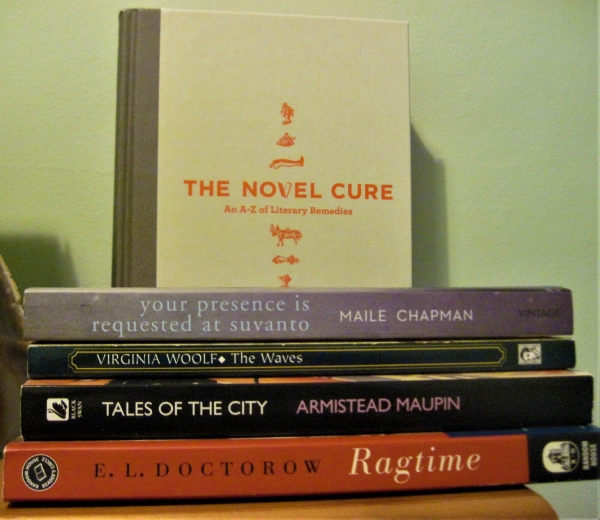
The other day I got out my copy of The Novel Cure by School of Life bibliotherapists Ella Berthoud and Susan Elderkin and browsed through the categories for some prescriptions that might feel relevant to the current situation. I found four books I own that fit the bill:
From the list of “The Ten Best Novels to Lower Your Blood Pressure”: Your Presence Is Requested at Suvanto by Maile Chapman & The Waves by Virginia Woolf (and I’ve read another three of them, including, recently, Crossing to Safety).
One of several prescriptions for Loneliness: Tales of the City by Armistead Maupin.
The cure for Zestlessness: Ragtime by E. L. Doctorow.
If you have access to one of these, or have a copy of The Novel Cure and are keen on following up on another of the prescriptions, let me know.
And now for two memes that I (think I) have created. Although I’m sure something similar has been done in the past, I couldn’t find any specific blogs about them. I don’t know about you, but I always need encouragement to pick up books from my own shelves – even though libraries are currently closed, I’m still working my way through a library stack, and I’m tempted to make another order of new books from Hungerford Bookshop. It’s great to support libraries and independent bookstores, of course, but there could be no better time to mine your own bookshelves for treasures you bought ages ago but still have never read.
Journey through the Day with Books
I enjoyed picking out 18 books from my shelves that refer to particular times of day or meals or activities associated therewith. Four of these are books I’ve already read and four are ones I’m currently reading. You can piggyback on my selections if you wish, or find your own set.
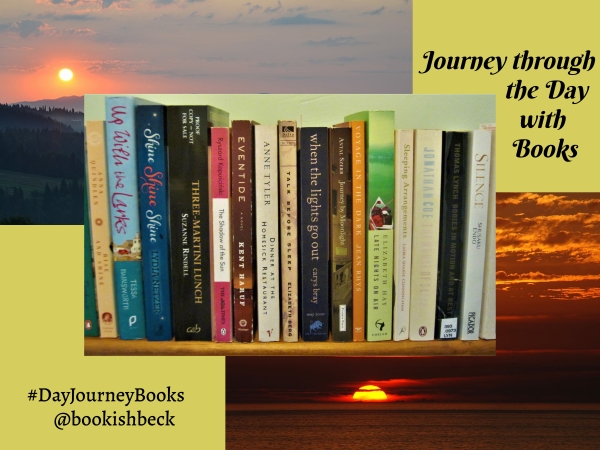
Here’s my full list:
Zennor in Darkness by Helen Dunmore
Rise and Shine by Anna Quindlen
Up with the Larks by Tessa Hainsworth
Shine Shine Shine by Lydia Netzer
Three-Martini Lunch by Suzanne Rindell
The Shadow of the Sun by Ryszard Kapuściński
Eventide by Kent Haruf
Dinner at the Homesick Restaurant by Anne Tyler
Talk before Sleep by Elizabeth Berg
When the Lights Go Out by Carys Bray
Journey by Moonlight by Antal Szerb
Voyage in the Dark by Jean Rhys
Late Nights on Air by Elizabeth Hay
Sleeping Arrangements by Laura Shaine Cunningham
The House of Sleep by Jonathan Coe
Bodies in Motion and at Rest by Thomas Lynch
Silence by Shūsaku Endō
Arctic Dreams by Barry Lopez
The Four in a Row Challenge
I’ve been contemplating this one for quite a while. It’s inspired by Phyllis Rose’s The Shelf –from LEQ to LES: Adventures in Extreme Reading (one of Simon’s favourite books – see his review), for which she picked a shelf of the New York Society Library, eliminated duplicates and repeat entries from the same author, and read the remainder – whether she’d heard of them or not; whether they were awful or not. (“Hands down the worst book on the shelf is Le Queux’s Three Knots, a mystery that reads as if it were written by an eight-year-old on Percocet.”)

This is a variation in that you’re looking at your own TBR shelves and picking a set of four books in a row. For many, that will be four novels whose authors’ surnames all start with the same letter. But if you organize your books differently (especially within nonfiction), you may find that the set of four is more arbitrary. You never know what they might have in common, though (book serendipity!).
I’m no strict challenge host, so if you want to engineer your shelf order, or if you decide to swap a book in later on, that is no problem at all. My one firm rule is only one book per author.
I’ve picked out a few appealing sets, all from my fiction shelves. F, G, L and M had particularly rich pickings. I’ll report back as I finish each set, while the “Journey through a Day” may well take me the whole rest of the year.
Still ongoing (more here): Projects to read as many Bellwether Prize, Wellcome Book Prize and Women’s Prize winners as possible, as well as Wellcome long- and shortlistees.
Can I tempt you to take part in any of these reading projects?
[Journey through the Day: Sunrise in Pieniny, Poland (Pudelek / CC BY-SA (https://creativecommons.org/licenses/by-sa/4.0)) / Sunset (Alvesgaspar / CC BY-SA (https://creativecommons.org/licenses/by-sa/3.0))
Four in a Row: Four pelicans in a row (Sheba_Also 43,000 photos / CC BY-SA (https://creativecommons.org/licenses/by-sa/2.0)) / Phone boxes, Market Place, Ripon (Tim Green from Bradford / CC BY (https://creativecommons.org/licenses/by/2.0))]
2016 Runners-Up and Other Superlatives
Let’s hear it for the ladies! In 2016 women writers accounted for 9 out of my 15 top fiction picks, 12 out of my 15 nonfiction selections, and 8 of the 10 runners-up below. That’s 73%. The choices below are in alphabetical order by author, with any full reviews linked in. Many of these have already appeared on the blog in some form over the course of the year.
Ten Runners-Up:
FICTION
 Hag-Seed by Margaret Atwood: Atwood looks more like a good witch every year, and here she works her magic on The Tempest to produce the most satisfying volume of the Hogarth Shakespeare series yet. There’s a really clever play-within-the-play-within-the-play thing going on, and themes of imprisonment and performance resonate in multiple ways.
 The Atomic Weight of Love by Elizabeth J. Church: In Church’s debut, an amateur ornithologist learns about love and sacrifice through marriage to a Los Alamos physicist and a relationship with a Vietnam veteran. I instantly warmed to Meri as a narrator and loved following her unpredictable life story.
 We Love You, Charlie Freeman by Kaitlyn Greenidge: The Freemans are raising Charlie, a chimpanzee, as part of their family for a Toneybee Institute experiment and teaching him to communicate via sign language. This is a rich and unsettling story of human–human interactions, even more so than human–animal interactions; it’s a great first novel and I will follow Greenidge’s career with interest.
To the Bright Edge of the World by Eowyn Ivey: Ivey’s intricate second novel weaves together diaries, letters, photographs, and various other documents and artifacts to tell the gently supernatural story of an exploratory mission along Alaska’s Wolverine River in 1885 and its effects through to the present day. I can highly recommend this rollicking adventure tale to fans of historical fiction and magic realism.
This Must Be the Place by Maggie O’Farrell: Spreading outward from Ireland and reaching into every character’s past and future, this has all O’Farrell’s trademark insight into family and romantic relationships, as well as her gorgeous prose and precise imagery. I have always felt that O’Farrell expertly straddles the (perhaps imaginary) line between literary and popular fiction; her books are addictively readable but also hold up to critical scrutiny.
Commonwealth by Ann Patchett: This deep study of blended family dynamics starts with an early 1960s christening party Los Angeles policeman Fix Keating is throwing for his younger daughter, Franny; we see the aftermath of that party in the lives of six step-siblings in the decades to come. This is a sophisticated and atmospheric novel I would not hesitate to recommend to literary fiction fans in general and Patchett fans in particular.
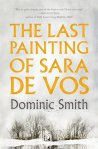 The Last Painting of Sara de Vos by Dominic Smith: Jessie Burton, Tracy Chevalier and all others who try to write historical fiction about the Netherlands in the seventeenth century, eat your hearts out. Such a beautiful epoch-spanning novel about art and regret.
Shelter by Jung Yun: A Korean-American family faces up to violence past and present in a strong debut that offers the hope of redemption. I would recommend this to fans of David Vann and Richard Ford.
NONFICTION
I Will Find You by Joanna Connors: By using present-tense narration, Connors makes the events of 1984 feel as if they happened yesterday: a blow-by-blow of the sex acts forced on her at knife-point over the nearly one-hour duration of her rape; the police reports and trials; and the effects it all had on her marriage and family. This is an excellent work of reconstruction and investigative reporting.
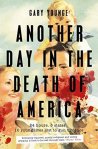 Another Day in the Death of America by Gary Younge: Younge built this book by choosing a 24-hour period (November 22 to 23, 2013) and delving into all 10 gun deaths of young Americans on record for that time: seven black, two Latino, and one white; aged nine to 18; about half at least vaguely gang-related, while in two – perhaps the most crushing cases – there was an accident while playing around with a gun. I dare anyone to read this and then try to defend gun ‘rights’ in the face of such senseless, everyday loss.
Various Superlatives:
Best Discoveries of the Year: Apollo Classics reprints (I reviewed three of them this year); Diana Abu-Jaber, Linda Grant and Kristopher Jansma.
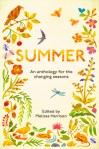
Most Pleasant Year-Long Reading Experience: The seasonal anthologies issued by the UK Wildlife Trusts and edited by Melissa Harrison (I reviewed three of them this year).

Most Improved: I heartily disliked Sarah Perry’s debut novel, After Me Comes the Flood. But her second, The Essex Serpent, is exquisite.
Debut Novelists Whose Next Work I’m Most Looking Forward to: Stephanie Danler, Kaitlyn Greenidge, Francis Spufford, Andria Williams and Sunil Yapa.
The Year’s Biggest Disappointments: Here I Am by Jonathan Safran Foer, Today Will Be Different by Maria Semple, and Swing Time by Zadie Smith. Here’s hoping 2017 doesn’t bring any letdowns from beloved authors.


The Worst Book I Read This Year: Paulina & Fran (2015) by Rachel B. Glaser. My only one-star review of the year. ’Nuff said?
The 2016 Novels I Most Wish I’d Gotten to: (At least the 10 I’m most regretful about)
- The Power by Naomi Alderman
- The Museum of You by Carys Bray
- The Course of Love by Alain de Botton
- What Belongs to You by Garth Greenwell*
 Homegoing by Yaa Gyasi
- The Waiting Room by Leah Kaminsky
- The Inseparables by Stuart Nadler
- Harmony by Carolyn Parkhurst*
- The Nest by Cynthia D’Aprix Sweeney*
- The Underground Railroad by Colson Whitehead*
*Haven’t been able to find anywhere yet; the rest are on my Kindle.
Which of these should I get reading on the double?
Coming tomorrow: Some reading goals for 2017.
Short Stories in September
In 2014 I read 20 short story collections, but in 2015 and 2016 (at least so far) I’ve only managed 10 per year. Three of those have all clumped within the last month or so, though. I started The Pier Falls back in May but set it aside at the halfway point; luckily, when I returned to it earlier this month I devoured the rest within a few hours. I also reviewed the second annual anthology of Best Small Fictions for the Small Press Book Review, a new online venue for me, and tried out Alexandra Kleeman’s short stories after loving her debut novel last year. Mini reviews below…
Best Small Fictions 2016, edited by Stuart Dybek
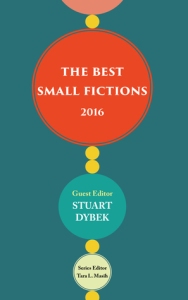 This collects 45 super-short stories that stand out for their structure, voice, and character development—all in spite of often extreme brevity. Humor and pathos provide sharp pivot points. It helps to have an unusual perspective, like that of a Venus flytrap observing a household’s upheavals (Janey Skinner’s “Carnivores”), or of potential names gathering around a baptismal font (Alberto Chimal’s “The Waterfall”). Hard as it is to choose from such a diverse bunch, I do have three favorites: Elizabeth Morton’s “Parting,” in which a divorce causes things to be literally divided; Mary-Jane Holmes’s “Trifle,” where alliteration and culinary vocabulary contrast an English summer with Middle Eastern traces; and Amir Adam’s “The Physics of Satellites,” which uses images from astronomy and a recent suicide to contrast falling, flying, and barely holding on. There are fewer highlights than in the previous volume, but this is still an excellent snapshot of contemporary flash fiction. (See my full review at the Small Press Book Review.)
The Pier Falls by Mark Haddon
 These nine stories examine what characters do in extreme, often violent situations. My three favorites were “Bunny,” reminiscent of The Fattest Man in Britain with its picture of a friendship between an obese man and a young woman who sees more in him than his size; “The Woodpecker and the Wolf,” a brilliantly suspenseful tale set in space – it reminded me of the Sandra Bullock movie Gravity; and “The Weir,” which imagines the unexpectedly lasting relationship between a lonely middle-aged man and the young woman he rescues from a near-suicide by drowning. “Wodwo” starts off as a terrific Christmas horror story but goes on far too long and loses power. I would say that about several of these stories, actually: they’re that bit too long, so that you start waiting for them to be over. I prefer sudden endings that give a bit of a kick. All in all, though, two-thirds of the stories are fairly memorable, and I’d say I liked this better than any of Haddon’s three novels.
Intimations by Alexandra Kleeman
 Kleeman’s debut novel, You Too Can Have a Body Like Mine, was a surprise favorite of mine from last year. Alas, her stories don’t pack the same punch. True, some of them employ a similar combination of surreal plot and in-your-face ideology, but only four out of the 12 stories seemed to me strong enough to stand alone. These were “Lobster Dinner,” surely inspired by David Foster Wallace’s Consider the Lobster, in which crustaceans wreak revenge on their consumers; “The Dancing-Master,” about a man who tries to introduce a nineteenth-century feral boy to culture only for wildness to come creeping back; “I May Not Be the One You Want,” in which Karen, writing a profile about a dairy farmer, avoids men’s attempts to turn her into a sexual object; and “Fake Blood,” another pseudo-horror story about a girl in a nurse costume who can’t decide whether she’s caught up in a murder mystery game or a real serial killer’s trap. Of the rest, four or five – including vignettes from Karen’s future life – are okay and a couple are pointless as well as seemingly endless (“A Brief History of Weather” and “Hylomorphosis”). Students of feminist literature, especially fans of Angela Carter, may be willing to exchange satisfying storytelling for messages about women’s bodies and anxiety about motherhood.
 On Tuesday I finished All That Man Is by David Szalay, from the Booker Prize shortlist. Whether it’s a novel or actually short stories is certainly a matter for debate! After I read Madeleine Thien’s shortlisted novel (I’ll be picking it up from the library on Friday) I’ll report back on both in advance of the prize announcement at the end of October.
 I’m also currently making my way through How Much the Heart Can Hold, a set of seven stories from the likes of Carys Bray and Donal Ryan on the theme of different types of love, and Petina Gappah’s forthcoming collection, Rotten Row. (Both are out in early November.)
Collections on my Kindle that I’m keen to read soon, maybe even before the end of this year, include We Come to Our Senses by Odie Lindsey, Music in Wartime by Rebecca Makkai, and Honeydew by Edith Pearlman.
Are you a short story fan? Read any good ones recently?
Six Books I Abandoned Recently
Sigh. It keeps happening. A book that looks unmissable ends up disappointing me and I abandon it partway through. Here’s six I dropped recently: two from the library, two e-copies I was meant to review but found I couldn’t recommend, and two that couldn’t hold my interest on our European holiday. Below I give brief write-ups of the abandonees. As always, I’d be interested to hear if you’ve read any of them and thought they were worth persisting with.
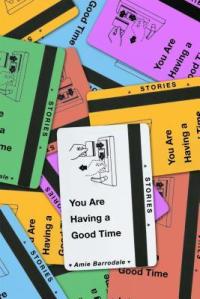 You Are Having a Good Time: Stories by Amie Barrodale
I only managed the first two stories. Barrodale writes in a flat, affectless style full of unconnected sentences; her themes are of Hollywood and the emptiness of modern life. This reminded me most of Miranda July, so if you’re a big fan of hers I’d say go for it. Otherwise, don’t bother. [Read the first 21%.]
My rating: 
 Sweet Home by Carys Bray
These gently magical short stories equate parenthood with peril: a child is always somehow lost or on the verge of being lost. “Just in Case” is wonderfully macabre, and I was glad to discover how A Song for Issy Bradley got its start (with “Scaling never”). The fragility of memory is another theme, with one story narrated by a woman with dementia. The title story has a Hansel and Gretel fairytale feel to it. I enjoyed the first half well enough, but didn’t feel compelled to continue; I definitely prefer Bray’s full-length work, and this needed to go back to the library anyway. [Read the first 96 pages out of 178.]
My rating: 
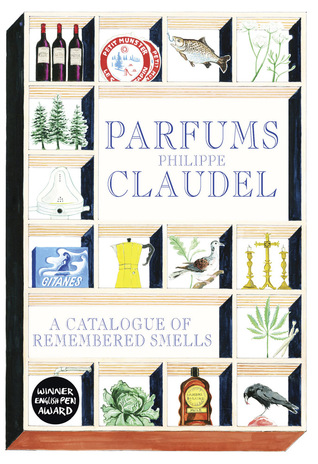 Parfums: A Catalogue of Remembered Smells by Philippe Claudel
[translated from the French by Euan Cameron]
I loved the idea behind this: a memoir in the form of short essays built around scent memories. Cinnamon brings the Christmas season to mind, aftershave reminds him of his father, and garlic and cannabis dredge up different aspects of his growing-up years. There’s some beautifully poetic language here. A favorite line was “The child that I am is allowed to breathe in these smells of dead pollen, widowed woolens and orphaned linen so that one day he can piece them together into a narrative and resurrect lives lost through wars, illnesses and accidents.” But ultimately I got a bit tired of more of the same. Perhaps if I’d kept it as a bedside book and just read a few pieces at a time instead of attempting to read it straight through, it would have worked better for me. [Read the first 86 pages out of 173.]
My rating:
 Absalom’s Daughters by Suzanne Feldman
Three generations of black women – Cassie, Lil Ma and Grandmother – live on Negro Street above the laundry where they work in Heron-Neck, Mississippi. Cassie learns that her father is a white man, William Forrest, whose daughter Judith is near her age. They know they’re sisters and when they hear their worthless pater has received an inheritance they concoct a scheme to go get their nest egg. Alas, the Southern dialect feels false to me, and I wasn’t taken with any of the characters. (Great piece of trivia: Feldman used to write science fiction under the pen name “Severna Park,” which is a town in Maryland.) [Read the first 18%.]
My rating: 
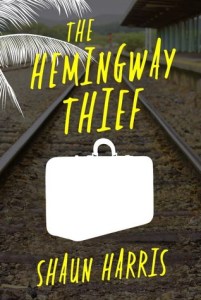 The Hemingway Thief by Shaun Harris
I thought this would be a fun, light-hearted literary mystery to read on European trains. Henry Cooper, a writer of vampire romances, takes a sabbatical to Mexico to figure out what he really wants to do. Here he unexpectedly wanders into intrigue when a Hemingway manuscript turns up in a small-time criminal’s hotel room. I never warmed to the uninspired hardboiled-lite style and it took far too long for the story to get going. [Read the first 17%.]
My rating:
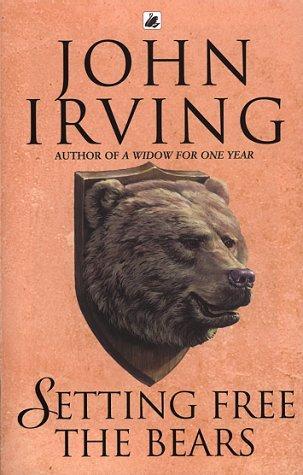 Setting Free the Bears by John Irving
This was Irving’s debut, and although you can see seeds of the Dickensian characterization at which he excels in his best work, it was just not good overall. Neither Siggy nor Graff held my interest, and the dialogue feels stiff and unrealistic. There’s also some downright strange wording: “I could peek how the helmet nearly covered her eyes”; “the rain still puddled the courtyard”; “When his spongy ribs whomped the cobbles, the horse said, ‘Gnif!’” I couldn’t decide if this was Irving trying to show that the story is set abroad or if it was just evidence of bad writing. My husband is enough of an Irving fan to have gobbled the book up by the time we reached Austria, but I decided it wasn’t going to get much better. That’s a shame, as I would have liked to get to them, you know, actually setting free the bears at the Vienna Zoo. [Read the first 75 pages out of 384.]
My rating:
Review: The Girl Who Slept with God, Val Brelinski
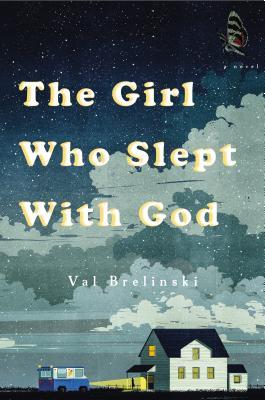 That striking title sets the scene for an out-of-the-ordinary coming-of-age novel set in a fundamentalist Christian family in Arco, Idaho in 1970. The Quanbecks renounce dancing, movies, alcohol and everything else that represents regular teenage life for thirteen-year-old Jory. She and her sisters are sheltered from the world within their church and Christian school. That sense of being set apart only grows stronger when seventeen-year-old Grace comes back pregnant from a short mission trip to Mexico. Grace swears it was an immaculate conception and she, like Mary, has been entrusted with carrying God’s child. Is she telling the truth, is she repressing a traumatic event, or is she mentally ill? Val Brelinski keeps that question largely open throughout her strong debut novel.
Grace’s actions will have a lasting effect on Jory. The girls’ parents – their father a Harvard-educated astronomer and their mother a virtual shut-in who relies on prescription anxiety pills – decide that Grace will live away from them and the community, and Jory will keep her company. Dr. Quanbeck buys a small house next-door to Hilda Kleinfelter and withdraws both girls from school so word can’t get around. Jory will attend secular Schism High, where she gets an education in teenage socialization that includes the Homecoming dance, liquor and an accidental LSD trip. Hilda becomes a sort of surrogate grandmother to the girls, and Grip, a deadbeat ice cream van driver in his twenties, is their new best friend.
Brelinski is sensitive to the ways in which religion and romantic infatuation influence her characters’ choices, and even when things get a little bit uncomfortable – like when Grip and Jory steal a kiss – the plot feels true to life. The choice of close third-person narration from Jory’s perspective, rather than first-person, thankfully keeps the book from resembling a teen diary. This is the best of both worlds: we get Jory’s thoughts, but in more sophisticated literary language. The novel also blends biblical metaphors and Dr. Quanbeck’s astronomical vocabulary to good effect, as in this lovely passage near the end:
The universe had opened up and revealed its own perfectly blank face to [Jory’s] own, returning her gaze with a flattened emptiness that stretched on and on and on—a world so wide and featureless and open, so dark and formless, that light never pierced it: no sun, no moon, no stars. And it now seemed entirely possible that two girls … could stumble mutely on across the face of it forever, seeking a home, and a resting place, and finding none.
 In a book full of memorable characters, I found Grace and Dr. Quanbeck to be the most compelling ones, mostly for how logic and superstition collide in their thinking. Like the father in A Song for Issy Bradley by Carys Bray, one of my favorite novels from last year, Dr. Quanbeck could almost seem like the villain here for the choices he imposes on his family, but the picture of him is nuanced so that you can see how desperately he loves his family and wants to protect them from worldly pain.
 Along with Issy Bradley (set in Britain’s Mormon community), the novel reminded me most of We Sinners by Hanna Pylväinen, another picture of family life under strict religious guidelines, and How to Tell Toledo from the Night Sky by Lydia Netzer, a love story with astronomical overtones. Much as I liked it, I did think Brelinski’s novel was about a quarter too long; both the middle section – where Jory is negotiating her newfound freedom – and the dénouement felt drawn out. It would be interesting to see Brelinski’s talent for characterization and scene-setting applied to short stories or a much shorter novel. I also thought the initial decision to set the two girls up in their own home felt slightly far-fetched.
All the same, I appreciated this balanced picture of family life. The Quanbecks are never just oddities or your stereotypical dysfunctional family, but as idealistic and messed up as all the rest of us. As Mrs. Kleinfelter puts it, “Most [families] are pretty much the same, I think. Good and bad mixed together in a small bag. Or a small house.”
My rating: 
I received early access to this book through the Penguin First to Read program.
 Bookish Beck = Rebecca Foster. American transplant to England. Freelance proofreader and book reviewer.
 Bookish Beck


.jpg)
.jpg)