Book Serendipity, Mid-June through August
I call it “Book Serendipity” when two or more books that I read at the same time or in quick succession have something in common – the more bizarre, the better. This is a regular feature of mine every couple of months. Because I usually have 20–30 books on the go at once, I suppose I’m more prone to such incidents. People frequently ask how I remember all of these coincidences. The answer is: I jot them down on scraps of paper or input them immediately into a file on my PC desktop; otherwise, they would flit away!
The following are in roughly chronological order.
- A description of the Y-shaped autopsy scar on a corpse in Pet Sematary by Stephen King and A Truce that Is Not Peace by Miriam Toews.
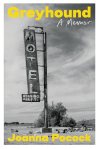
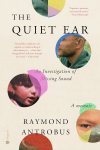
- Charlie Chaplin’s real-life persona/behaviour is mentioned in The Quiet Ear by Raymond Antrobus and Greyhound by Joanna Pocock.
- The manipulative/performative nature of worship leading is discussed in Don’t Forget We’re Here Forever by Lamorna Ash and Jarred Johnson’s essay in the anthology Queer Communion: Religion in Appalachia. I read one scene right after the other!
- A discussion of the religious impulse to celibacy in Don’t Forget We’re Here Forever by Lamorna Ash and The Dry Season by Melissa Febos.
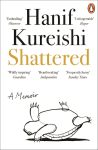
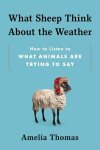
- Hanif Kureishi has a dog named Cairo in Shattered; Amelia Thomas has a son by the same name in What Sheep Think About the Weather.
- A pilgrimage to Virginia Woolf’s home in The Dry Season by Melissa Febos and Writing Creativity and Soul by Sue Monk Kidd.
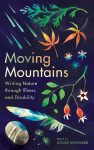
- Water – Air – Earth divisions in the Nature Matters (ed. Mona Arshi and Karen McCarthy Woolf) and Moving Mountains (ed. Louise Kenward) anthologies.
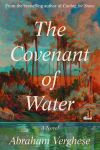 The fact that humans have two ears and one mouth and so should listen more than they talk is mentioned in What Sheep Think about the Weather by Amelia Thomas and The Covenant of Water by Abraham Verghese.
- Inappropriate sexual comments made to female bar staff in The Most by Jessica Anthony and Isobel Anderson’s essay in the Moving Mountains (ed. Louise Kenward) anthology.
- Charlie Parker is mentioned in The Most by Jessica Anthony and The Quiet Ear by Raymond Antrobus.
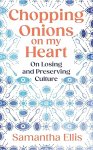
- The metaphor of an ark for all the elements that connect one to a language and culture was used in Chopping Onions on My Heart by Samantha Ellis, which I read earlier in the year, and then again in The Quiet Ear by Raymond Antrobus.
- A scene of first meeting their African American wife (one of the partners being a poet) and burning a list of false beliefs in The Dry Season by Melissa Febos and The Quiet Ear by Raymond Antrobus.
- The Kafka quote “a book must be the axe for the frozen sea inside us” appears in Shattered by Hanif Kureishi and Writing Creativity and Soul by Sue Monk Kidd. They also both quote Dorothea Brande on writing.
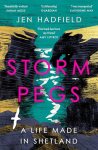
- The simmer dim (long summer light) in Shetland is mentioned in Storm Pegs by Jen Hadfield and Sally Huband’s piece in the Moving Mountains (ed. Louise Kenward) anthology (not surprising as they both live in Shetland!).
- A restaurant applauds a proposal or the news of an engagement in The Homemade God by Rachel Joyce and Likeness by Samsun Knight.
- Noticing that someone ‘isn’t there’ (i.e., their attention is elsewhere) in Woodworking by Emily St. James and Palaver by Bryan Washington.
- I was reading Leaving Atlanta by Tayari Jones and Leaving Church by Barbara Brown Taylor – which involves her literally leaving Atlanta to be the pastor of a country church – at the same time. (I was also reading Leave the World Behind by Rumaan Alam.)
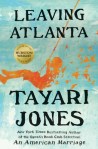
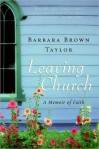
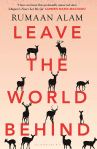
- A mention of an adolescent girl wearing a two-piece swimsuit for the first time in Leave the World Behind by Rumaan Alam, The Summer I Turned Pretty by Jenny Han, and The Stirrings by Catherine Taylor.
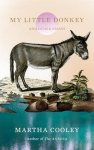
- A discussion of John Keats’s concept of negative capability in My Little Donkey by Martha Cooley and What Sheep Think About the Weather by Amelia Thomas.
- A mention of JonBenét Ramsey in Leave the World Behind by Rumaan Alam and the new introduction to Leaving Atlanta by Tayari Jones.
- A character drowns in a ditch full of water in Leaving Atlanta by Tayari Jones and The Covenant of Water by Abraham Verghese.
 A girl dares to question her grandmother for talking down the girl’s mother (i.e., the grandmother’s daughter-in-law) in Cekpa by Leah Altman and Leaving Atlanta by Tayari Jones.
- A woman who’s dying of stomach cancer in The Covenant of Water by Abraham Verghese and Book of Exemplary Women by Diana Xin.
- A woman’s genitals are referred to as the “mons” in Leave the World Behind by Rumaan Alam and The Covenant of Water by Abraham Verghese.
- A girl doesn’t like her mother asking her to share her writing with grown-ups in People with No Charisma by Jente Posthuma and one story of Book of Exemplary Women by Diana Xin.
- A girl is not allowed to walk home alone from school because of a serial killer at work in the area, and is unprepared for her period so lines her underwear with toilet paper instead in Leaving Atlanta by Tayari Jones and The Stirrings by Catherine Taylor.
 When I interviewed Amy Gerstler about her poetry collection Is This My Final Form?, she quoted a Walt Whitman passage about animals. I found the same passage in What Sheep Think About the Weather by Amelia Thomas.
- A character named Stefan in The Dime Museum by Joyce Hinnefeld and Palaver by Bryan Washington.
- A father who is a bad painter in The Dime Museum by Joyce Hinnefeld and The Homemade God by Rachel Joyce.
- The goddess Minerva is mentioned in The Dime Museum by Joyce Hinnefeld and The Stirrings by Catherine Taylor.
- A woman finds lots of shed hair on her pillow in In Late Summer by Magdalena Blažević and The Dig by John Preston.
 An Italian man who only uses the present tense when speaking in English in The Homemade God by Rachel Joyce and Beautiful Ruins by Jess Walter.
- The narrator ponders whether she would make a good corpse in People with No Charisma by Jente Posthuma and Terminal Surreal by Martha Silano. The former concludes that she would, while the latter struggles to lie still during savasana (“Corpse Pose”) in yoga – ironic because she has terminal ALS.
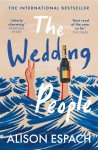
- Harry the cat in The Wedding People by Alison Espach; Henry the cat in Calls May Be Recorded by Katharina Volckmer.
- The protagonist has a blood test after rapid weight gain and tiredness indicate thyroid problems in Voracious by Małgorzata Lebda and The Stirrings by Catherine Taylor.
- It’s said of an island that nobody dies there in Somebody Is Walking on Your Grave by Mariana Enríquez and Beautiful Ruins by Jess Walter.
- A woman whose mother died when she was young and whose father was so depressed as a result that he was emotionally detached from her in The Wedding People by Alison Espach and People with No Charisma by Jente Posthuma.
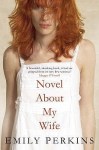 A scene of a woman attending her homosexual husband’s funeral in The Homemade God by Rachel Joyce and Novel About My Wife by Emily Perkins.
- There’s a ghost in the cellar in In Late Summer by Magdalena Blažević, The Covenant of Water by Abraham Verghese and Book of Exemplary Women by Diana Xin.
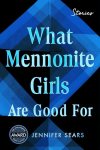
- Mention of harps / a harpist in The Wedding People by Alison Espach, The Homemade God by Rachel Joyce, and What Mennonite Girls Are Good For by Jennifer Sears.
- “You use people” is an accusation spoken aloud in The Dry Season by Melissa Febos and Beautiful Ruins by Jess Walter.
- Let’s not beat around the bush: “I want to f*ck you” is spoken aloud in The Wedding People by Alison Espach and Novel About My Wife by Emily Perkins; “Want to/Wanna f*ck?” is also in The Wedding People by Alison Espach and in Bigger by Ren Cedar Fuller.
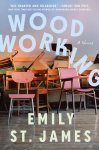 A young woman notes that her left breast is larger in Voracious by Małgorzata Lebda and Woodworking by Emily St. James. (And a girl fondles her left breast in one story of Book of Exemplary Women by Diana Xin.)
- A shawl is given as a parting gift in How to Cook a Coyote by Betty Fussell and one story of What Mennonite Girls Are Good For by Jennifer Sears.
- The author has Long Covid in Alec Finlay’s essay in the Moving Mountains anthology, and Pluck by Adam Hughes.
- An old woman applies suncream in Kate Davis’s essay in the Moving Mountains anthology, and How to Cook a Coyote by Betty Fussell.
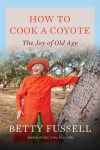
- There’s a leper colony in What Mennonite Girls Are Good For by Jennifer Sears and The Covenant of Water by Abraham Verghese.
- There’s a missionary kid in South America in Bigger by Ren Cedar Fuller and What Mennonite Girls Are Good For by Jennifer Sears.
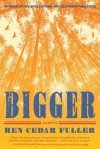
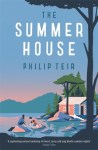 A man doesn’t tell his wife that he’s lost his job in Novel About My Wife by Emily Perkins and The Summer House by Philip Teir.
- A teen brother and sister wander the woods while on vacation with their parents in Leave the World Behind by Rumaan Alam and The Summer House by Philip Teir.
- Using a famous fake name as an alias for checking into a hotel in one story of Single, Carefree, Mellow by Katherine Heiny and Seascraper by Benjamin Wood.
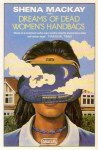
- A woman punches someone in the chest in the title story of Dreams of Dead Women’s Handbags by Shena Mackay and Novel About My Wife by Emily Perkins.
What’s the weirdest reading coincidence you’ve had lately?
20 Books of Summer, 13–16: Tony Chan, Jen Hadfield, Kenward Anthology, Catherine Taylor
Three from my initial list (all nonfiction) and one substitute picked up at random (poetry). These are strongly place-based selections, ranging from Sheffield to Shetland and drawing on travels while also commenting on how gender and dis/ability affect daily life as well as the experience of nature.
Four Points Fourteen Lines by Tony Chan (2016)
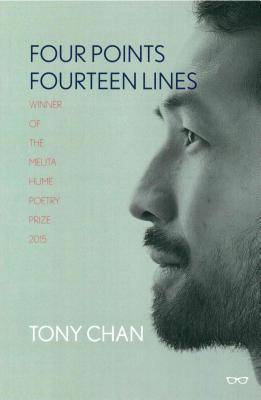 Chan is a schoolteacher who, in 2015, left his day job to undertake a 78-day solo walk between “the four extreme cardinal points of the British mainland”: Dunnet Head (North) to Ardnamurchan Point (West) in Scotland, down to Lowestoft Ness (East) in Suffolk and across to Lizard Point, Cornwall (South). It was a solo trek of 1,400 miles. He wrote one sonnet per day, not always adhering to the same rhyme scheme but fitting his sentiments into 14 lines of standard length. He doesn’t document much practical information, but does admit he stayed in decent hotels, ate hot meals, etc. Each poem is named for the starting point and destination, but the topic might be what he sees, an experience on the road, a memory, or whatever. “Evanton to Inverness” decries a gloomy city; “Inverness to Foyers” gives thanks for his shoes and lycra undershorts. He compares Highlanders to heroic Trojans: “Something sincere in their browned, moss-green tweeds, / In their greeting voice of gentle tenor. / From ancient Hector or from ancient clans, / Here live men most earnest in words and deeds.” None of the poems are laudable in their own right, but it’s a pleasant enough project. Too often, though, Chan resorts to outmoded vocabulary to fit the form or try to prove a poetic pedigree (“Suddenly comes an Old Testament of deluge and / Tempest, deluding the sense wholly”; “I know these streets, whence they come and whither / They run”; “I learnt well some verses of Tennyson / Years ago when noble dreams were begat”) when he might have been better off varying the form and/or using free verse. (Signed copy from Little Free Library)
Storm Pegs: A Life Made in Shetland by Jen Hadfield (2024)
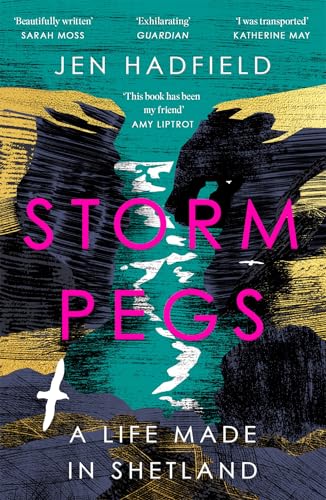 This is not so much a straightforward memoir as a set of atmospheric vignettes, each headed by a relevant word or phrase in the Shaetlan dialect. Hadfield, who is British Canadian, moved to the islands in her late twenties in 2006 and soon found her niche. “My new life quickly debunked those Edge-of-the-World myths – Shetland was too busy to feel remote, and had too strong a sense of its own identity to feel frontier-like.” It’s gently ironic, she notes, that she’s a terrible sailor and gets vertigo at height yet lives somewhere with perilous cliff edges that is often reachable only by sea. Living in a trailer waiting for her home to be built on West Burra, she feels the line between indoors and out is especially thin. It’s a life of wild swimming, beachcombing, fresh fish, folk music, seabirds, kind neighbours, and good cheer that warms long winter nights. After the isolation of the pandemic period comes the unexpected joy of a partner and a pregnancy in her mid-forties. Hadfield is a Windham-Campbell Prize-winning poet, and her lyrical prose is full of lovely observations that made me hanker to return to Shetland – it’s been 19 years since my only visit, after all. This was a slow read I savoured for its language and sense of place.
With thanks to Picador for the free paperback copy for review.
From Shetland authors, I have also reviewed:
Orchid Summer by Jon Dunn (Hadfield mentions him)
Sea Bean by Sally Huband (Hadfield meets her)
The Valley at the Centre of the World by Malachy Tallack
Moving Mountains: Writing Nature through Illness and Disability, ed. Louise Kenward (2023)
 I often read memoirs about chronic illness and disability – the sort of narratives recognized by the Barbellion and ACDI Literary Prizes – and the idea of nature essays that reckon with health limitations was an irresistible draw. The quality in this anthology varies widely, from excellent to barely readable (for poor prose or pretentiousness). I’ll be kind and not name names in the latter category; I’ll only say the book has been poorly served by the editing process. The best material is generally from authors with published books: Polly Atkin (Some of Us Just Fall; see also her recent response to the Raynor Winn fiasco), Victoria Bennett (All My Wild Mothers), Sally Huband (as above!), and Abi Palmer (Sanatorium). For the first three, the essay feels like an extension of their memoir, while Palmer’s inventive piece is about recreating seasons for her indoor cats. My three favourite entries, however, were Louisa Adjoa Parker’s poem “This Is Not Just Tired,” Nic Wilson’s “A Quince in the Hand” (she’s an acquaintance through New Networks for Nature and has a memoir out this summer, Land Beneath the Waves), and Eli Clare’s “Moving Close to the Ground,” about being willing to scoot and crawl to get into nature. A number of the other pieces are repetitive, overlong or poorly shaped and don’t integrate information about illness in a natural way. Kudos to Kenward for including BIPOC and trans/queer voices, though. (Christmas gift from my wish list)
The Stirrings: Coming of Age in Northern Time by Catherine Taylor (2023)
“A typical family and an ordinary story, although neither the family nor the story seems commonplace when it is your family and your story.”
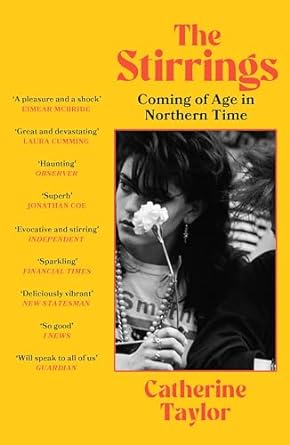 Taylor, who was born in New Zealand and grew up in Sheffield, won the Ackerley Prize for this memoir. (After Dunmore and King, this is the third in my intended four-in-a-row on the 20 Books of Summer Bingo card, fulfilling the “Book published in summer” category – August 2023.) It is bookended by two pivotal summers: 1976, the last normal season in her household before her father left; and 1989, the “Second Summer of Love,” when she had an abortion (the subject of “Milk Teeth,” the best individual chapter and a strong stand-alone essay). In between, fear and outrage overshadow her life: the Yorkshire Ripper is at large, nuclear war looms, mines are closing and protesters meet with harsh reprisals, and her own health falters until she gets a diagnosis of Graves’ disease. Then, in her final year at Cardiff, one of their housemates is found dead. Taylor draws reasonably subtle links to the present day, when fascism, global threats, and femicide are, unfortunately, as timely as ever. She’s the sort of personality I see at every London literary event I attend: Wellcome Book Prize ceremonies, Weatherglass’s Future of the Novella event, and so on. I got the feeling this book is more about bearing witness to history than revealing herself, and so I never warmed to it or to her on the page. But if you’d like to get a feel for the mood of the times, or you have experience of the settings and period, you may well enjoy it more than I did. (New purchase from Bookshop.org with a Christmas book token)
 Bookish Beck = Rebecca Foster. American transplant to England. Freelance proofreader and book reviewer.
 Bookish Beck