Some 2024 Reading Superlatives
Longest book read this year: The Bee Sting by Paul Murray

Shortest books read this year: The Wood at Midwinter by Susanna Clarke – a standalone short story (unfortunately, it was kinda crap); After the Rites and Sandwiches by Kathy Pimlott – a poetry pamphlet
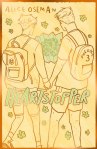 Authors I read the most by this year: Alice Oseman (5 rereads), Carol Shields (3 rereads); Margaret Atwood, Rachel Cusk, Pam Houston, T. Kingfisher, Sarah Manguso, Maggie O’Farrell, and Susan Allen Toth (2 each)
Publishers I read the most from: (Besides the ubiquitous Penguin Random House and its myriad imprints,) Carcanet (15), Bloomsbury & Faber (12 each), Alice James Books & Picador/Pan Macmillan (9 each)
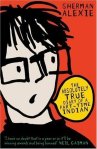
My top author ‘discoveries’ of the year: Sherman Alexie and Bernardine Bishop

Proudest bookish achievements: Reading almost the entire Carol Shields Prize longlist; seeing The Bookshop Band on their huge Emerge, Return tour and not just getting my photo with them but having it published on both the Foreword Reviews and Shelf Awareness websites

Most pinching-myself bookish moment: Getting a chance to judge published debut novels for the McKitterick Prize
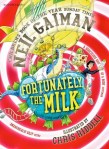
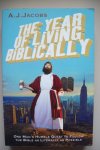
Books that made me laugh: Lots, but particularly Fortunately, the Milk… by Neil Gaiman, The Year of Living Biblically by A.J. Jacobs, and You Don’t Have to Be Mad to Work Here by Benji Waterhouse
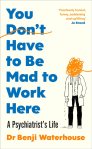
Books that made me cry: On Chesil Beach by Ian McEwan, My Good Bright Wolf by Sarah Moss
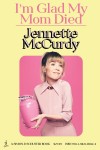 Two books that hit the laughing-and-crying-at-the-same-time sweet spot: The Absolutely True Diary of a Part-Time Indian by Sherman Alexie and I’m Glad My Mom Died by Jennette McCurdy
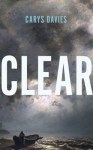
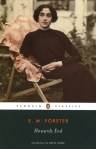
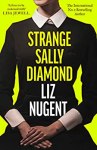
Best book club selections: Clear by Carys Davies, Howards End by E.M. Forster, Strange Sally Diamond by Liz Nugent
Best first lines encountered this year:
- From Cocktail by Lisa Alward: “The problem with parties, my mother says, is people don’t drink enough.”
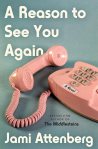
- From A Reason to See You Again by Jami Attenberg: “Oh, the games families play with each other.”
- From The Snow Queen by Michael Cunningham: “A celestial light appeared to Barrett Meeks in the sky over Central Park, four days after Barrett had been mauled, once again, by love.”

Best last lines encountered this year:
 From The Ministry of Time by Kaliane Bradley: “Forgiveness and hope are miracles. They let you change your life. They are time-travel.”
- From Mammoth by Eva Baltasar: “May I know to be alert when, at the stroke of midnight, life sends me its cavalry.”
- From Private Rites by Julia Armfield: “For now, they stay where they are and listen to the unwonted quiet, the hush in place of rainfall unfamiliar, the silence like a final snuffing out.”
- From Come to the Window by Howard Norman: “Wherever you sit, so sit all the insistences of fate. Still, the moment held promise of a full life.”
- From Intermezzo by Sally Rooney: “It doesn’t always work, but I do my best. See what happens. Go on in any case living.”
- From Barrowbeck by Andrew Michael Hurley: “And she thought of those Victorian paintings of deathbed scenes: the soul rising vaporously out of a spent and supine body and into a starry beam of light; all tears wiped away, all the frailty and grossness of a human life transfigured and forgiven at last.”
- From Small Rain by Garth Greenwell: “Pure life.”

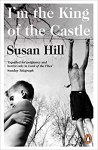
Books that put a song in my head every time I picked them up: I’m the King of the Castle by Susan Hill (“Crash” by Dave Matthews Band); Y2K by Colette Shade (“All Star” by Smashmouth)
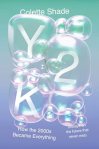
Shortest book titles encountered: Feh (Shalom Auslander) and Y2K (Colette Shade), followed by Keep (Jenny Haysom)
 Best 2024 book titles: And I Will Make of You a Vowel Sound, I Can Outdance Jesus, Zombie Vomit Mad Libs, Crocodile Tears Didn’t Cause the Flood, This Is Why We Can’t Have Nice Things
Best book titles from other years: Recipe for a Perfect Wife, Tripping over Clouds, Waltzing the Cat, Dressing Up for the Carnival, The Met Office Advises Caution
Favourite title and cover combo of the year: I’m Mostly Here to Enjoy Myself by Glynnis MacNicol

Best punning title (and nominative determinism): Knead to Know: A History of Baking by Dr Neil Buttery
 Biggest disappointments: The Glassmaker by Tracy Chevalier (I didn’t get past the first chapter because of all the info dumping from her research); The Year of the Cat by Rhiannon Lucy Cosslett; milk and honey by Rupi Kaur (that … ain’t poetry); 2 from the Observer’s 10 best new novelists feature (here and here)
A couple of 2024 books that everyone was reading but I decided not to: Creation Lake by Rachel Kushner, You Are Here by David Nicholls
 The worst books I read this year: Mammoth by Eva Baltasar, A Spy in the House of Love by Anaïs Nin
The downright strangest books I read this year: Zombie Vomit Mad Libs, followed by The Peculiar Life of a Lonely Postman. All Fours by Miranda July (I am at 44% now) is pretty weird, too.

R.I.P., Part II: Duy Đoàn, T. Kingfisher & Rachael Smith
A second installment for the Readers Imbibing Peril challenge (first was a creepy short story collection). Zombies link my first two selections, an experimental poetry collection and a historical novella that updates a classic, followed by a YA graphic novel about a medieval witch who appears in contemporary life to help a teen deal with her problems. I don’t really do proper horror; I’d characterize all three of these as more mischievous than scary.
Zombie Vomit Mad Libs by Duy Đoàn
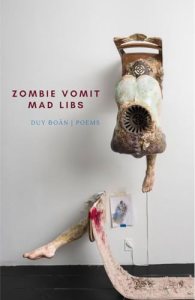 The Vietnamese American poet’s second collection strikes a balance between morbid – a pair of sonnets chants the names and years of poets who died by suicide – and playful. Multiple poems titled “Zombie” or “Zombies” are composed of just 1–3 cryptic lines. Other repeated features are blow-by-blow descriptions of horror movie scenes and the fill-in-the-blank Mad Libs format. There is an obsession with Leslie Cheung, a gay Hong Kong actor who also died by suicide, in 2003. Đoàn experiments linguistically as well as thematically, by adding tones (as used in Vietnamese) to English words. This was a startling collection I admired for its range and pluck, though I found little to personally latch on to. I was probably expecting something more like 36 Ways of Writing a Vietnamese Poem by Nam Le. But if you think poetry can’t get better than zombies + linguistics + suicides, boy have I got the collection for you! (Đoàn’s first book, We Play a Game, won the Yale Series of Younger Poets Prize and a Lambda Literary Award for bisexual poetry.)
To be published in the USA by Alice James Books on November 12. With thanks to the publisher for the advanced e-copy for review.
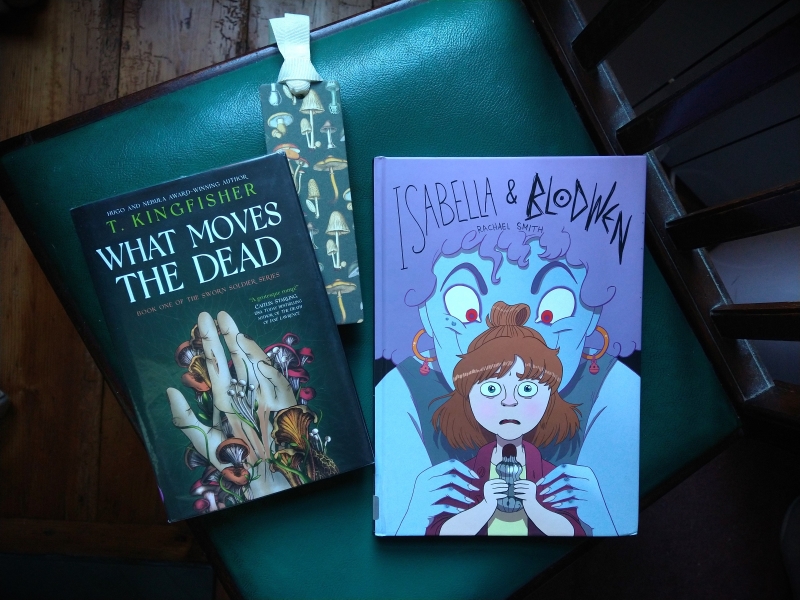
What Moves the Dead by T. Kingfisher (2022)
{MILD SPOILERS AHEAD}
 This first book in the “Sworn Soldier” duology is a retelling of Edgar Allan Poe’s “The Fall of the House of Usher.” Set in the 1890s, it’s narrated by Alex Easton, a former Gallacian soldier who learns that their childhood friend Madeline Usher is dying and goes to visit her at her and her brother Roderick’s home in Ruritania. Easton also meets the Ushers’ friend, the American doctor Denton, and Eugenia Potter, an amateur mycologist (and aunt of a certain Beatrix). Easton and Potter work out that what is making Madeline ill is the same thing that’s turning the local rabbits into zombies…
At first it seemed the author was awkwardly inserting a nonbinary character into history, but it’s more complicated than that. The sworn soldier tradition in countries such as Albania was a way for women, especially orphans or those who didn’t have brothers to advocate for them, to have autonomy in martial, patriarchal cultures. Kingfisher makes up European nations and their languages, as well as special sets of pronouns to refer to soldiers (ka/kan), children (va/van), etc. She doesn’t belabour the world-building, just sketches in the bits needed.
This was a quick and reasonably engaging read, though I wasn’t always amused by Kingfisher’s gleefully anachronistic tone (“Mozart? Beethoven? Why are you asking me? It was music, it went dun-dun-dun-DUN, what more do you want me to say?”). I wondered if the plot might have been inspired by a detail in Merlin Sheldrake’s Entangled Life, but it seems more likely it’s a half-conscious addition to a body of malevolent-mushroom stories (Mexican Gothic by Silvia Moreno-Garcia, various by Jeff VanderMeer, The Beauty by Aliya Whiteley). I was drawn in by Easton’s voice and backstory enough to borrow the sequel, about which more anon. (T. Kingfisher is the pen name of Ursula Vernon.) (Public library)
Isabella & Blodwen by Rachael Smith (2023)
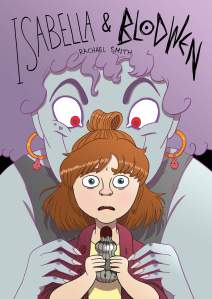 I’d reviewed Smith’s adult graphic memoirs Quarantine Comix (mental health during Covid) and Glass Half Empty (alcoholism and bereavement) for Foreword and Shelf Awareness, respectively. When I spotted this in the Young Adult section and saw it was about a witch, I mentally earmarked it for R.I.P. Isabella Maria Penwick-Wickam is a precocious 16-year-old student at Oxford. With her fixation on medieval history and folklore, she has the academic side of the university experience under control. But her social life is hopeless. She’s alienated flatmates and classmates alike with her rigid habits and judgemental comments. On a field trip to the Pitt Rivers Museum, where students are given a rare opportunity to handle artefacts, she accidentally drops a silver bottle into her handbag. Before she can return it, its occupant, a genie-like blowsy blue-and-purple witch named Blodwen, is released into the world. She wreaks much merry havoc, encouraging Issy to have some fun and make friends.
It’s a sweet enough story, but a few issues detracted from my enjoyment. Issy is often depicted more like a ten-year-old. I don’t love the blocky and exaggerated features Smith gives her characters, or the Technicolor hues. And I found myself rolling my eyes at how the book unnaturally inserts a sexual harassment theme – which Blodwen responds to in modern English, having spoken in archaic fashion up to that point, and with full understanding of the issue of consent. I can imagine younger teens enjoying this, though. (Public library)
The mini playlist I had going through my mind as I wrote this:
- “Running with Zombies” by The Bookshop Band (inspired by The Making of Zombie Wars by Aleksandar Hemon)
- “Flesh and Blood Dance” by Duke Special
- “Dead Alive” by The Shins
And to counterbalance the evil fungi of the Kingfisher novella, here’s Anne-Marie Sanderson employing the line “A mycelium network is listening to you” in a totally non-threatening way. It’s one of the multiple expressions of reassurance in her lovely song “All Your Atoms,” my current earworm from her terrific new album Old Light.
 Bookish Beck = Rebecca Foster. American transplant to England. Freelance proofreader and book reviewer.
 Bookish Beck