A Review for PKD Awareness Day: The Mourner’s Bestiary by Eiren Caffall
Today is PKD Awareness Day. Because the author and I both have polycystic kidney disease, I’m doing something I rarely do and reprinting an early review of mine that has already appeared on Shelf Awareness. I could hardly believe it when I was trawling through the list of review book offers and saw that Eiren Caffall also has PKD, then even more astonished to learn that it is a major theme in her memoir, which also weaves in marine biology and environmental concerns. An altogether intriguing book that, of course, held personal interest for me.
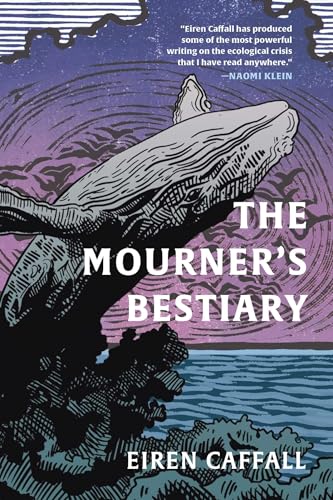
The Mourner’s Bestiary by Eiren Caffall
Eiren Caffall’s debut is an ardent elegy for her illness-haunted family and for the ailing marine environments that inspire her.
For centuries, the author’s family has been subject to “the Caffall Curse.” Polycystic kidney disease, a degenerative genetic condition, causes fluid-filled cysts to proliferate in a person’s enlarged kidneys. PKD can involve pain, fatigue, high blood pressure, kidney failure, and a heightened risk of brain aneurysm. Given Caffall’s paternal family history, she expected to die before age 50.
 Caffall’s melancholy memoir spotlights moments that opened her eyes to medical and environmental catastrophe. In 1980, when she was nine years old, she and her parents vacationed at a rental cottage on Long Island Sound. They nicknamed the pollution-ridden site “Dogshit Beach”—her mother spent idyllic summers there as a child, yet now “both the ecosystem and my father were slipping away.” For the first time, Caffall became aware of her father’s suffering and lack of energy. She realized that she, too, might have inherited PKD and could face similar struggles as an adult.
In 2014, Caffall, then a single mother, took her nine-year-old son, Dex, on vacation to the Gulf of Maine. During the trip, she had a fall that prompted a seizure, and she and Dex were evacuated from Monhegan Island by Coast Guard ship. Although no further seizures ensued and no clear cause emerged, the crisis served as a wake-up call, reminding her of how serious PKD is and that it might afflict her son as well.
The book draws fascinating connections between personal experiences and ecological threats. Caffall structures her story as a gallery of endangered marine animals such as the Longfin Inshore Squid and Humpback Whale, tracing their history and exposing the dangers they face in degraded environments. Red tides (massive algal blooms) and floods are apt metaphors for physical trials: “the Sound was dying, hypoxic … from an overwhelm of nutrients flooding an ecosystem—nitrogen, phosphorus, imbalanced saline—the same things that overwhelm a body when kidneys can no longer filter blood properly.”
Re-created scenes enliven accounts of family illness and therapeutic developments. The lyrical hybrid narrative, informed by scientific journals and government publications, is as impassioned about restoring the environment as it is about ensuring equality of access to health care. Personal and species extinction are just cause for “permanent mourning,” Caffall writes, but adapting to change keeps hope alive.
(Coming out in the USA from Row House Publishing on October 15th)
Posted with permission from Shelf Awareness.
[I couldn’t help but compare family members’ trajectories. Like her father, my mother was on dialysis for a time before getting a transplant, from her cousin. Like her aunt, my uncle died of a brain aneurysm, which is an associated risk. It sounds like Caffall has been much more severely affected than I have thus far. She is 53 and on Tolvaptan, a cutting-edge drug that slows the growth of cysts and thus the decline in kidney function. But even within families, the disease course is so varied. A cousin of mine was in her thirties when she had a transplant, whereas I am still very much in the early stages.]
A shout-out to the PKD Foundation in the States and the PKD Charity here in the UK.
A related post: In 2017 I reviewed four books for World Kidney Day.
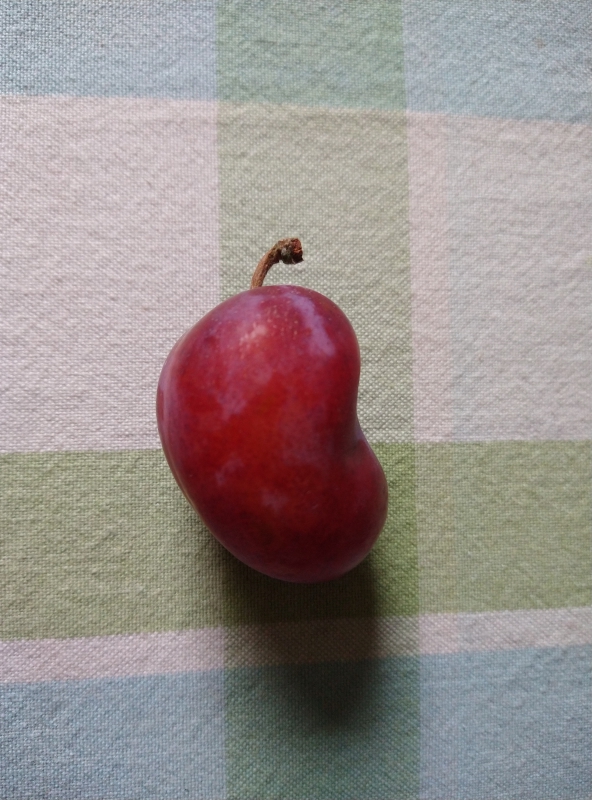
From the supermarket last week: a plum that wanted to be a kidney.
Nonfiction Recommendations from Carolyn Oliver
I ‘met’ poet Carolyn Oliver through her much-missed blog, Rosemary & Reading Glasses. (She’s on Twitter as @CarolynROliver and Instagram as @carolynroliver.) Back in 2017 I asked for her top fiction picks; this year she’s contributed another guest blog listing the best nonfiction she’s read this year. It’s a fascinating selection of memoirs, essays, science and nature, and current events. I scurried to add the ones I hadn’t already heard of to my TBR. Which ones tempt you?
My favorite nonfiction reads from this year (though many are backlist):
 The Butchering Art, Lindsey Fitzharris: Fascinating medical history of Lister’s antiseptic breakthrough.
 Braiding Sweetgrass, Robin Wall Kimmerer: Reflective ecology from the perspective of a Native botanist. Probably my favorite essay collection of the decade.
 The Book of Delights, Ross Gay: Just as the title says. Mini-essays on myriad topics. When you’ve finished, pick up his Catalog of Unabashed Gratitude (poems).
 Atlas of Poetic Botany, Francis Halle: Bite-sized excursions into the worlds of unusual flora, with drawings. Meant for adults, I think, but a huge hit with my eight-year-old.
 Stamped from the Beginning: The Definitive History of Racist Ideas in America, Ibram X. Kendi: Just as the title says. Incisive, eye-opening, necessary.
 The Art Detective, Philip Mould: A romp through the art world with an enthusiastic, knowledgeable guide (Mould is the co-host of the BBC’s Fake or Fortune).
 How We Fight for Our Lives, Saeed Jones: The bildungsroman America needs. Beautiful writing.
 In the Dream House, Carmen Maria Machado: The most formally inventive memoir I’ve ever read. Brilliant and necessary.
 Coventry, Rachel Cusk: I was entranced by Cusk’s voice, even when I didn’t share her conclusions; reading this collection (with the exception of the book reviews added at the end), I felt I was witnessing the writer’s mind in the act of thinking.
 Bookish Beck = Rebecca Foster. American transplant to England. Freelance proofreader and book reviewer.
 Bookish Beck