Carol Shields Prize Reading: Coleman Hill and Between Two Moons
Two last Carol Shields Prize nominees today: from the shortlist, a gorgeous tapestry of African-American family history; and, from the longlist, a likable debut novel about Muslim twin sisters navigating the febrile summer of their high school graduation in Brooklyn.
Coleman Hill by Kim Coleman Foote
Is this family memoir or autofiction? I’ve shelved it as both on Goodreads; it’s a blend, one for which Foote borrows the term that Audre Lorde coined for Zami, “biomythography.” Like Edwidge Danticat, Jesmyn Ward and Jacqueline Woodson, Foote draws on personal stories but also invokes overarching narratives of Black migration and struggle. The result is magisterial, a debut novel that feels like oral history and a family scrapbook rolled into one.
During the First World War, the Coleman family were part of a mass exodus from the segregated South to the industrialized North. They hoped for a better life in New Jersey than they’d had under slavery and sharecropping in Alabama and Florida, but in fact many of the author’s ancestors became mired in ill-paid service roles (cleaner, maid, refuse collector) and, ironically, ended up having fewer opportunities for advancement than relatives who stayed behind and enrolled in Black educational institutions in the South.
Like a linked short story collection, the book pulls together 15 vignettes stretching from 1916 to 1989 and told in different styles and voices, including AAVE – I’m reliably informed that the audiobook is wonderful for that reason. A prologue in the first-person plural introduces the women who would become family matriarchs: “We wanted to go to school but couldn’t. The walk was too long. We was needed at home to plant and harvest. And boys could get more outta schooling, folks said, so it was our brothers who went.”

Other sections alternate first and third person. I especially admired the use of the second person for passages from the perspective of Celia Coleman, who develops a dependence on Four Roses whisky after being widowed. An interlude gives two poems from the point-of-view of cotton – crop failure was partly responsible for the initial relocation. There are also black-and-white photographs heading each chapter, and a family tree at the start. When I first heard about this book through its longlisting, the idea of family history told by nine characters sounded overwhelming (and potentially worthy). But the voices are so distinct that there is never a danger of getting lost, and the scenes are so vivid that you cringe from the beatings and cheer when a woman stands up to her meddling mother-in-law. There are echoes and reversals across the generations, as alcoholism and domestic abuse recur.
The core story is about Celia’s nastiness and resistance to her son Jeb’s marriage to Bertha Grimes. Bertha, battered by Jebbie and Celia alike, escapes to a brothel where she works as a cleaner. Celia ends up raising their children, along with another set of grandchildren, earning the nickname “Gra’ Coleman” and a reputation for meanness. (One excellent stand-alone story about the younger generation is titled “How to Kill Gra’ Coleman and Live to Tell About It (c. 1950).”) The inherited trauma is clear, yet I never found the content as bleak here as in A Council of Dolls; Foote weaves in enough counterbalancing lightness and love. There are so many strong female characters – Jeb’s older sisters, Bertha’s younger ones; their daughters – and plenty of humour and spirit despite the sometimes distressing subject matter. The family home, and the objects hoarded there, also play a major role.
It’s difficult to suggest the scope, as large and various as any American family’s history. An author’s note at the end details Foote’s approach – somewhere between “channeling spirits” and fictionalizing – to a novel that was many years in the gestation. I’d particularly recommend Coleman Hill to fans of Ayana Mathis and Toni Morrison. For me, there’s no contest; this should win the Carol Shields Prize for Fiction. 
With thanks to publicist Nicole Magas and SJP Lit (Zando) for the free e-copy for review.
Longlisted:
Between Two Moons by Aisha Abdel Gawad
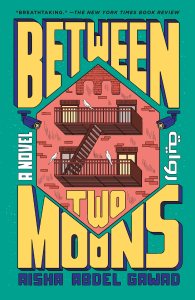 This debut novel is cleverly set within the month of Ramadan, a time of abstention. In this way, Gawad emphasizes the tension between faith and the temptations of alcohol and sex. Egyptian-American twin sisters Amira and Lina Emam are on the cusp, about to graduate from high school and go their separate ways. Lina wants to be a model and is dating a nightclub manager she hopes can make this a reality; Amira, ever the sensible one, is college-bound. But then she meets her first boyfriend, Faraj, and lets Lina drag her into a reckless partying lifestyle. “I was seized with that summertime desire of girls: to push my body to its limits.” Meanwhile, the girls’ older brother, Sami, just home from prison, is finding it a challenge to integrate back into the family and their Bay Ridge mosque, reeling from a raid on a Muslim-owned neighbourhood business and a senseless attack on the old imam.
I feared that a tired terrorism plot would surface and was relieved when this wasn’t the case, although there is a passionate message about the injustice of police surveillance of Muslim communities. I agree with Laura (see her review) that it does at times feel like an adult is producing YA fiction. It’s proficiently written and I enjoyed getting a glimpse into an unfamiliar world, but the novel never truly sparked into life for me. It also commits one of my pet peeves: inserting third-person segments to fill in events that the narrator could not have witnessed (while referring to the other characters as “the mother,” “the boy,” or “the other girl”). One to put on high school curricula but not on a prize list. 
With thanks to Laura for passing on her copy.
And a DNF:
 You Were Watching from the Sand by Juliana Lamy – I read the first 22% of this short fiction collection, which equated to a brief opener in the second person about a situation of abuse, followed by part of one endless-feeling story based around one apartment and bodega and featuring two young female family friends, one of whom accepts sexual favours in the supply closet from most male visitors. The voice and prose didn’t grab me, but of course I can’t say whether later stories would have been more to my taste. (Edelweiss)
Overall thoughts and prediction:
I’m grateful for the chance to have read most of the Carol Shields Prize longlist this year, thanks to the library, Edelweiss, and especially the publicist providing multiple books in digital format straight from the publishers. I’ve been introduced to a number of books and authors I might never have otherwise come across, and my reactions to what I expected to love or to dislike sometimes surprised me. It was also fun to do a few as buddy reads with Laura.
Here’s a recap of what I read, from favourite to least favourite:
Coleman Hill by Kim Coleman Foote – see above
Land of Milk and Honey by C Pam Zhang
Cocktail by Lisa Alward
I Have Some Questions for You by Rebecca Makkai (read last year)
Dances by Nicole Cuffy
Daughter by Claudia Dey
Chrysalis by Anuja Varghese
The Future by Catherine Leroux
Between Two Moons by Aisha Abdel Gawad – see above
Brotherless Night by V.V. Ganeshananthan (a skim)
A Council of Dolls by Mona Susan Power
You Were Watching from the Sand by Juliana Lamy (DNF) – see above
Birnam Wood by Eleanor Catton (skimmed last year)
Loot by Tania James (skim/DNF)
Thus, my ideal shortlist would have been the top five: Coleman Hill, Land of Milk and Honey, Cocktail, I Have Some Questions for You, and Dances.
It’s impossible to predict what the judges will pick from the actual shortlist. I never even attempted one of the finalists (A History of Burning by Janika Oza – Marcie’s comments made me confident it wouldn’t be for me) and only skimmed two others (Catton and Ganeshananthan). Sod’s law would suggest that one of those few will therefore win! I could see the case for any of the five, anyway. But I will have my fingers crossed for Coleman Hill.
The winner will be announced on Monday, 13 May.
Will you seek out something from the shortlist (or longlist)?
20 Books of Summer #9–14: Alden, Colwin, Danticat, Kimmel, Lipman & Steinbach
I fly back to the UK later today after a fairly busy few weeks of packing, unpacking, and more packing as I got my mom settled into her new home and dealt with the substantial amount of stuff I still had in storage with my parents. I’ll post later in the week about book culling versus acquisitions. For now, here’s a quick look at the books by women I’ve been reading in print towards my summer challenge: everything from a memoir of infertility to a perfectly summery novel set at a Vermont lake resort.
Crossing the Moon by Paulette Bates Alden (1998)
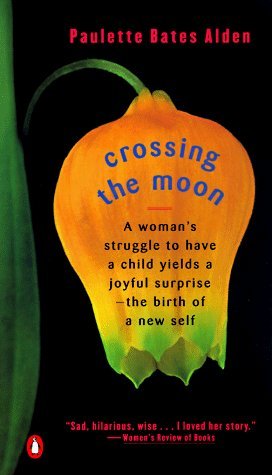 I first read this nearly four years ago (you can find my initial review in an early blog post that rounds up three of Alden’s works), and was moved to reread it this summer as a follow-up to Sheila Heti’s Motherhood. The book focuses on Alden’s uncertainty about having children all the way up to her late thirties, when she underwent three years of somewhat desperate, and ultimately unsuccessful, infertility treatment. “From the very start, I had seen writing and motherhood as mutually exclusive,” she writes, an attitude very similar to Heti’s. Yet she feared missing out on the meaning and love a child could bring to her life.
More broadly, the memoir is about the search to integrate the different aspects of a life – including family history and the fateful decisions that seem to have been made for you – into a realistic vision of the future. I didn’t find the book quite as profound this time around, but I noticed that I marked many of the same passages I did four years ago, about the dearth of childless role models and the struggle to accept the life that has become yours, even if it’s not what you predicted for yourself. That proves how influential and comforting it’s been for me.
Favorite lines:
“About the closest I can come to imagining what it would be like to have a child is with our cat, Cecil. For Cecil I feel the most delicious love, but also the most anxious responsibility.”
“It came to me that it really was a choice between two good things—having a child and not having a child. Our life without a child seemed good to me. I caught a glimpse that it was what was right for us, for the best. But who can say what is ‘best’? Maybe it’s possible to get to a place where what is best is simply what is.”
My rating: 
Passion and Affect by Laurie Colwin (1974)
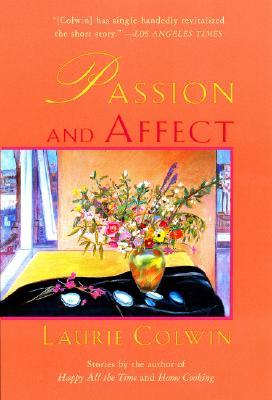 I mostly know Colwin as a food writer, but she also published fiction. This subtle story collection turns on quiet, mostly domestic dramas: people falling in and out of love, stepping out on their spouses and trying to protect their families. I didn’t particularly engage with the central two stories about cousins Vincent and Guido (characters from her novel Happy All the Time, which I abandoned a few years back), but the rest more than made up for them.
Several stories reveal the hidden depths of a character who’s only been a bit player in a protagonist’s life: a family friend who suddenly commits suicide, a Hispanic cook who has a rich boyfriend, a widowed piano teacher whose young student’s accomplishments buoy him up, and a supermarket employee whose ordinary life doesn’t live up to the fantasy background her manager, an art history PhD student, dreams up for her. In “The Water Rats” and “Wet,” water symbolizes all that we can’t control and understand, whether that’s our family’s safety or the inner life of a spouse.
Colwin writes funny, sharp descriptions, like “he was greeted by a young man wearing his hair in the manner of John Donne, a three-piece suit, and cowboy boots” and “she windowshopped, staring with rapt depression at rows of mannikins in glossy trousers.”
Favorite lines:
“She was three years married and when she looked at herself in the mirror, she did not see that she had become any more serious, any less young and heedless, or any more willing to get down to what Richard called ‘the things of life.’ He was right when he said that she had not made up her mind about anything.”
“He looked at his dissertation, or the heap that was to become his dissertation, and sighed again. He was of two minds about this Vermeer business, and he was of two minds about this supermarket business. That accounted for four minds in all, and it made life painful for him.”
My rating: 
Breath, Eyes, Memory by Edwidge Danticat (1994)
 Like her protagonist, Sophie Caco, Danticat was raised by her aunt in Haiti and reunited with her parents in the USA at age 12. As Sophie grows up and falls in love with an older musician, she and her mother are both haunted by sexual trauma that nothing – not motherhood, not a long-awaited return to Haiti – seems to heal. I loved the descriptions of Haiti (“The sun, which was once god to my ancestors, slapped my face as though I had done something wrong. The fragrance of crushed mint leaves and stagnant pee alternated in the breeze” and “The stars fell as though the glue that held them together had come loose”), and the novel gives a powerful picture of a maternal line marred by guilt and an obsession with sexual purity. However, compared to Danticat’s later novel, Claire of the Sea Light, I found the narration a bit flat and the story interrupted – thinking particularly of the gap between ages 12 and 18 for Sophie. (Another Oprah’s Book Club selection.)
Favorite lines:
“She cannot stay out of duty. The things one does, one should do out of love.”
“I knew my hurt and hers were links in a long chain and if she hurt me, it was because she was hurt, too.”
My rating: 
A Girl Named Zippy by Haven Kimmel (2001)
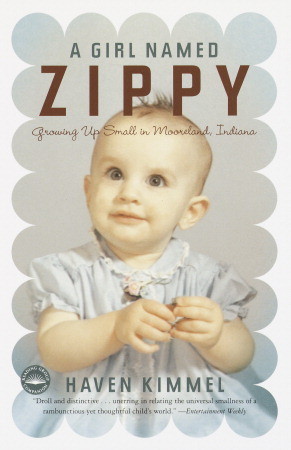 Maybe you grew up in or near a town like Mooreland, Indiana (population 300). Born in 1965 when her brother and sister were 13 and 10, Kimmel was affectionately referred to as an “Afterthought” and nicknamed “Zippy” for her boundless energy. Gawky and stubborn, she pulled every trick in the book to try to get out of going to Quaker meetings three times a week, preferring to go fishing with her father. The short chapters, headed by family or period photos, are sets of thematic childhood anecdotes about particular neighbors, school friends and pets. I especially loved her parents: her mother reading approximately 40,000 science fiction novels while wearing a groove into the couch, and her father’s love of the woods (which he called his “church”) and elaborate preparations for camping trips an hour away.
The tone is light-hearted despite hints of unpleasantness around town: open hostility towards people of color, a lecherous music teacher and a kid who abused animals. The more exaggerated stories are reminiscent of David Sedaris’s work – did she really cut hippies’ hair in exchange for an Irish Setter puppy?! Mostly, the book made me think about my mother’s small-town childhood versus my own suburban one, and how I would try to put all my early experiences together in a funny, nostalgic but honest way. It wouldn’t be easy at all, which makes Kimmel’s a noteworthy achievement.
Favorite lines:
“I figure heaven will be a scratch-and-sniff sort of place … I will ask for the smell of my dad’s truck, which was a combination of basic truck (nearly universal), plus his cologne (Old Spice), unfiltered Lucky Strikes, and when I was very lucky, leaded gasoline.”
“Mom used to say that my dad was a mountain man, which was obviously just a figure of speech, since most of Indiana is flat as a pancake. Her point was that Dad is a wild man, which was certainly true.”
My rating:
The Inn at Lake Devine by Elinor Lipman (1998)
 This was a breezy, delightful novel perfect for summer reading. In 1962 Natalie Marx’s family is looking for a vacation destination and sends query letters to various Vermont establishments. Their reply from the Inn at Lake Devine (proprietress: Ingrid Berry) tactfully but firmly states that the inn’s regular guests are Gentiles. In other words, no Jews allowed. The adolescent Natalie is outraged, and when the chance comes for her to infiltrate the Inn as the guest of one of her summer camp roommates, she sees it as a secret act of revenge.
In fact, in the years to come, after she trains as a chef, Natalie will become further entwined in the inn’s life, helping the family recover from a tragedy, falling in love with one of the Berry sons, and unwittingly contributing to a livelihood-threatening accident. Natalie’s voice drew me in right from the start. Lipman’s comedies of manners have been compared to Jane Austen’s, and you can see that likeness in the witty dialogue. I’ll certainly read more by her.
My rating:
Without Reservations: The Travels of an Independent Woman by Alice Steinbach (2000)
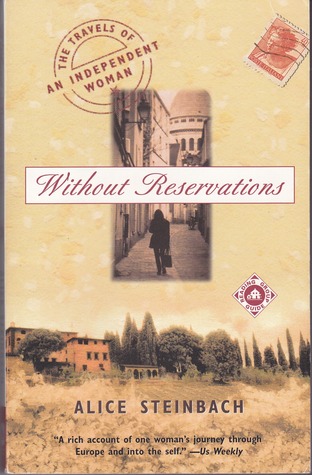 In 1993 Steinbach, then in her fifties, took a sabbatical from her job as a Baltimore Sun journalist to travel for nine months straight in Paris, England and Italy. As a divorcee with two grown sons, she no longer felt shackled to her Maryland home and wanted to see if she could recover a more spontaneous and adventurous version of herself and not be defined exclusively by her career. Her innate curiosity and experience as a reporter helped her to quickly form relationships with other English-speaking tourists, which was an essential for someone traveling alone.
I enjoyed spotting familiar sites I’ve visited, but I don’t think you need to know these countries or even have a particular interest in them to appreciate the book. Whether she’s attending a swanky party or nearly getting mugged, Steinbach is an entertaining and unpretentious tour guide. Her attitude is impressive, too: “I had surprised myself this year by jumping in to reshape my life before life stepped in to reshape it for me.” You might not be willing to give up your normal existence for nine months, but I suspect that this travel memoir might make you consider how you could be more daring in your daily life.
My rating:
Books in Brief: Five I Loved Recently
Why We Write about Ourselves: Twenty Memoirists on Why They Expose Themselves (and Others) in the Name of Literature
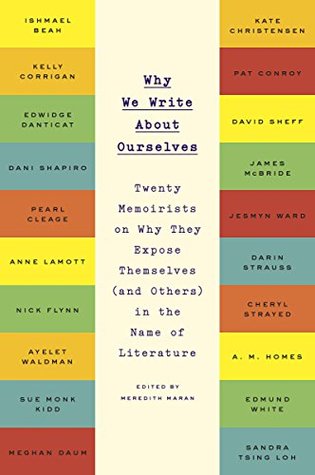 (Edited by Meredith Maran)
A great collection of first-person pieces from memoir authors, charting their individual journeys into autobiographical writing and giving their top tips. Opinions vary as to whether you have to get the approval of the people who appear in your work – some think that’s essential; others simply change the names and get on with it. Sometimes this has led to fallout within families. One thing everyone agrees on, though, is that a memoir has to be as carefully crafted as any novel, with a clear narrative arc and distinctive dialogue and scenes. My favorite pieces were from Kate Christensen, Edwidge Danticat and Darin Strauss.
Can’t We Talk about Something More Pleasant?
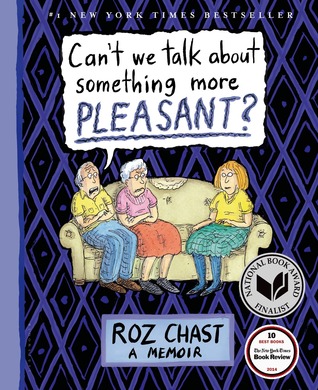 (By Roz Chast)
Memoir + graphic novel = graphic memoir. This one’s about her parents’ aging, senility and death yet still manages to be laugh-out-loud funny. It also includes photos of her parents’ apartment filled with ancient stuff they’d hoarded and a touching series of sketches she made of her mother while she was dying. This and Fun Home are the two best graphic memoirs I’ve read. A favorite line, uttered when her mother bounced back temporarily from hospice care: “Where, in the five Stages of Death, is EAT TUNA SANDWICH?!?!?”
Best Food Writing 2015
(Edited by Holly Hughes)
 “Food is intimate. We take it into our bodies. When we gather at the table with friends and family, we’re gathering to affirm something.” The title doesn’t lie – these essays are terrific. There wasn’t a single one I didn’t find interesting, whether the topic was lab meat; seeking out the perfect burger, Bolognese sauce or gumbo; particular chefs or restaurants; food fads; starting a simple meatball supper club; or feeding picky kids. A couple favorites were “Finding Home at Taco Bell” by John DeVore and “The One Ingredient that Has Sustained Me during Bouts of Leukemia” by Jim Shahin. This series has been running since 2000, but this is the first time I’ve picked up one of the books. I’ll be looking out for it again next year.
 The Longest Night
(By Andria Williams)
Utterly absorbing historical fiction. What with the remote setting and the threat of Cold War or nuclear fallout, this is reminiscent of The Last Pilot and The Wives of Los Alamos, but more engaging than either of those. You may also see hints of Richard Yates or even Tom Perrotta’s Little Children in the story of a marriage strained to the breaking point. Each character is fully explored and the early 1960s atmosphere is completely convincing. A great debut and an author I’d like to hear more from.
Your Heart Is a Muscle the Size of a Fist
(By Sunil Yapa)
 A hard-hitting novel with an unforgettably resonant title, this is set at the 1999 Seattle WTO protest. Yapa explores the motivations and backstories of activists, police officers, and delegates as the day deteriorates into violence. The novel flows pretty much effortlessly. Yapa’s writing style is closest to Smith Henderson’s (Fourth of July Creek): short, verbless sentences alternate with long, lyrical ones; there’s plenty of repetition and rhetorical questions, but it remains accessible rather than overblown. This fine debut novel is about cultivating the natural compassion in your heart even while under the threat of the fist.
My rating for all: 
 Bookish Beck = Rebecca Foster. American transplant to England. Freelance proofreader and book reviewer.
 Bookish Beck