A Review for PKD Awareness Day: The Mourner’s Bestiary by Eiren Caffall
Today is PKD Awareness Day. Because the author and I both have polycystic kidney disease, I’m doing something I rarely do and reprinting an early review of mine that has already appeared on Shelf Awareness. I could hardly believe it when I was trawling through the list of review book offers and saw that Eiren Caffall also has PKD, then even more astonished to learn that it is a major theme in her memoir, which also weaves in marine biology and environmental concerns. An altogether intriguing book that, of course, held personal interest for me.
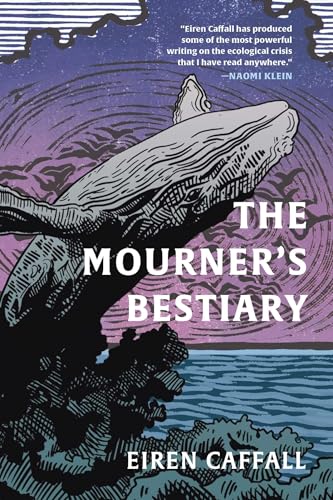
The Mourner’s Bestiary by Eiren Caffall
Eiren Caffall’s debut is an ardent elegy for her illness-haunted family and for the ailing marine environments that inspire her.
For centuries, the author’s family has been subject to “the Caffall Curse.” Polycystic kidney disease, a degenerative genetic condition, causes fluid-filled cysts to proliferate in a person’s enlarged kidneys. PKD can involve pain, fatigue, high blood pressure, kidney failure, and a heightened risk of brain aneurysm. Given Caffall’s paternal family history, she expected to die before age 50.
 Caffall’s melancholy memoir spotlights moments that opened her eyes to medical and environmental catastrophe. In 1980, when she was nine years old, she and her parents vacationed at a rental cottage on Long Island Sound. They nicknamed the pollution-ridden site “Dogshit Beach”—her mother spent idyllic summers there as a child, yet now “both the ecosystem and my father were slipping away.” For the first time, Caffall became aware of her father’s suffering and lack of energy. She realized that she, too, might have inherited PKD and could face similar struggles as an adult.
In 2014, Caffall, then a single mother, took her nine-year-old son, Dex, on vacation to the Gulf of Maine. During the trip, she had a fall that prompted a seizure, and she and Dex were evacuated from Monhegan Island by Coast Guard ship. Although no further seizures ensued and no clear cause emerged, the crisis served as a wake-up call, reminding her of how serious PKD is and that it might afflict her son as well.
The book draws fascinating connections between personal experiences and ecological threats. Caffall structures her story as a gallery of endangered marine animals such as the Longfin Inshore Squid and Humpback Whale, tracing their history and exposing the dangers they face in degraded environments. Red tides (massive algal blooms) and floods are apt metaphors for physical trials: “the Sound was dying, hypoxic … from an overwhelm of nutrients flooding an ecosystem—nitrogen, phosphorus, imbalanced saline—the same things that overwhelm a body when kidneys can no longer filter blood properly.”
Re-created scenes enliven accounts of family illness and therapeutic developments. The lyrical hybrid narrative, informed by scientific journals and government publications, is as impassioned about restoring the environment as it is about ensuring equality of access to health care. Personal and species extinction are just cause for “permanent mourning,” Caffall writes, but adapting to change keeps hope alive.
(Coming out in the USA from Row House Publishing on October 15th)
Posted with permission from Shelf Awareness.
[I couldn’t help but compare family members’ trajectories. Like her father, my mother was on dialysis for a time before getting a transplant, from her cousin. Like her aunt, my uncle died of a brain aneurysm, which is an associated risk. It sounds like Caffall has been much more severely affected than I have thus far. She is 53 and on Tolvaptan, a cutting-edge drug that slows the growth of cysts and thus the decline in kidney function. But even within families, the disease course is so varied. A cousin of mine was in her thirties when she had a transplant, whereas I am still very much in the early stages.]
A shout-out to the PKD Foundation in the States and the PKD Charity here in the UK.
A related post: In 2017 I reviewed four books for World Kidney Day.
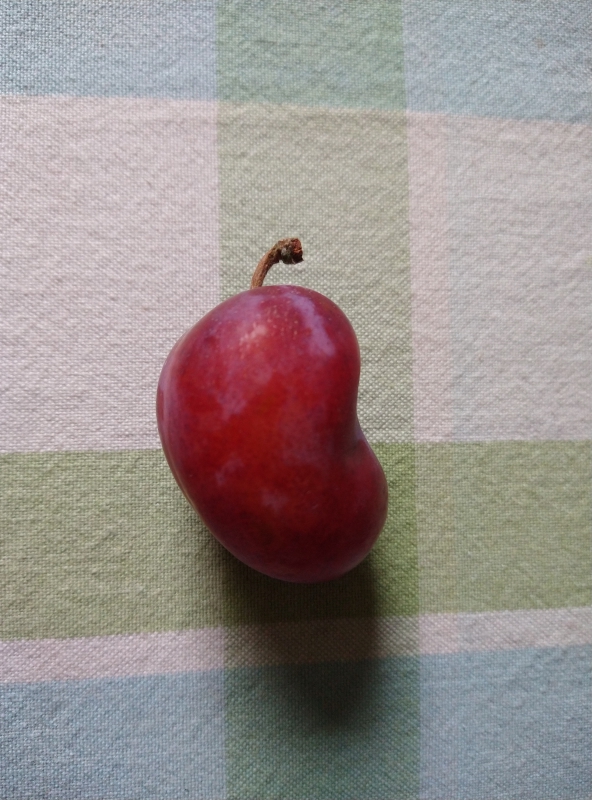
From the supermarket last week: a plum that wanted to be a kidney.
Book Serendipity, June to Mid-August 2024
I call it “Book Serendipity” when two or more books that I read at the same time or in quick succession have something in common – the more bizarre, the better. This is a regular feature of mine every couple of months. Because I usually have 20–30 books on the go at once, I suppose I’m more prone to such incidents. People frequently ask how I remember all of these coincidences. The answer is: I jot them on scraps of paper or input them immediately into a file on my PC desktop; otherwise, they would flit away!
The following are in roughly chronological order.
- A self-induced abortion scene in Recipe for a Perfect Wife by Karma Brown and Sleeping with Cats by Marge Piercy.
- A woman who cleans buildings after hours, and a character named Tova who lives in the Seattle area in A Reason to See You Again by Jami Attenberg and Remarkably Bright Creatures by Shelby Van Pelt.
- Flirting with a surf shop employee in Sandwich by Catherine Newman and Remarkably Bright Creatures by Shelby Van Pelt.
- Living in Paris and keeping ticket stubs from all films seen in Paris Trance by Geoff Dyer and The Invention of Hugo Cabret by Brian Selznick.
- A schefflera (umbrella tree) is mentioned in Cheri by Jo Ann Beard and Company by Shannon Sanders.

- The Plague by Albert Camus is mentioned in Knife by Salman Rushdie and Stowaway by Joe Shute.
- Making egg salad sandwiches is mentioned in Cheri by Jo Ann Beard and Sandwich by Catherine Newman.
- Pet rats in Stowaway by Joe Shute and Happy Death Club by Naomi Westerman. Rats are also mentioned in Mammoth by Eva Baltasar, The Tale of Despereaux by Kate DiCamillo, and The Colour by Rose Tremain.
- Eels feature in Our Narrow Hiding Places by Kristopher Jansma, Late Light by Michael Malay, and The Colour by Rose Tremain.
- Atlantic City, New Jersey is a location in Florence Adler Swims Forever by Rachel Beanland and Company by Shannon Sanders.
 The father is a baker in Florence Adler Swims Forever by Rachel Beanland and Our Narrow Hiding Places by Kristopher Jansma.
- A New Zealand setting (but very different time periods) in Greta & Valdin by Rebecca K Reilly and The Colour by Rose Tremain.
- A mention of Melanie Griffith’s role in Working Girl in I’m Mostly Here to Enjoy Myself by Glynnis MacNicol and Happy Death Club by Naomi Westerman.
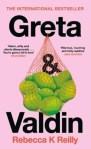 Ermentrude/Ermyntrude as an imagined alternate name in Greta & Valdin by Rebecca K Reilly and a pet’s name in Stowaway by Joe Shute.
- A poet with a collection that was published on 6 August mentions a constant ringing in the ears: Joshua Jennifer Espinoza (I Don’t Want to Be Understood) and Keith Taylor (What Can the Matter Be?).
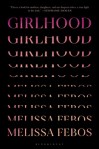
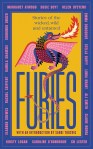
- A discussion of the original meaning of “slut” (a slovenly housekeeper) vs. its current sexualized meaning in Girlhood by Melissa Febos and Sandi Toksvig’s introduction to the story anthology Furies.
- An odalisque (a concubine in a harem, often depicted in art) is mentioned in I’m Mostly Here to Enjoy Myself by Glynnis MacNicol and The Shark Nursery by Mary O’Malley.
- Reading my second historical novel of the year in which there’s a disintegrating beached whale in the background of the story: first was Whale Fall by Elizabeth O’Connor, then Come to the Window by Howard Norman.
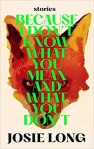 A short story in which a woman gets a job in online trolling in Because I Don’t Know What You Mean and What You Don’t by Josie Long and in the Virago Furies anthology (Helen Oyeyemi’s story).
- Her partner, a lawyer, is working long hours and often missing dinner, leading the protagonist to assume that he’s having an affair with a female colleague, in Recipe for a Perfect Wife by Karma Brown and Summer Fridays by Suzanne Rindell.
- A fierce boss named Jo(h)anna in Summer Fridays by Suzanne Rindell and Test Kitchen by Neil D.A. Stewart.
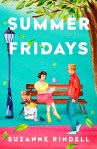
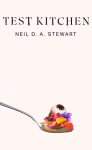
- An OTT rendering of a Scottish accent in Greta & Valdin by Rebecca K Reilly and Test Kitchen by Neil D.A. Stewart.
- A Padstow setting and a mention of Puffin Island (Cornwall) in The Cove by Beth Lynch and England as You Like It by Susan Allen Toth.
- A mention of the Big and Little Dipper (U.S. names for constellations) in Directions to Myself by Heidi Julavits and How We Named the Stars by Andrés N. Ordorica.
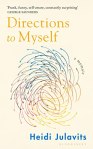
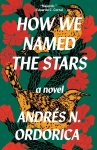
- A mention of Binghamton, New York and its university in We Are Animals by Jennifer Case and We Would Never by Tova Mirvis.
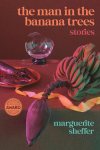
- A character accidentally drinks a soapy liquid in We Would Never by Tova Mirvis and one story of The Man in the Banana Trees by Marguerite Sheffer.
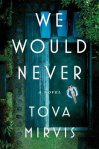 The mother (of the bride or groom) takes over the wedding planning in We Would Never by Tova Mirvis and Summer Fridays by Suzanne Rindell.
- The ex-husband’s name is Jonah in The Mourner’s Bestiary by Eiren Caffall and We Would Never by Tova Mirvis.
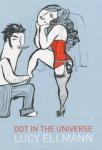
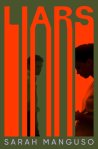
- The husband’s name is John in Dot in the Universe by Lucy Ellmann and Liars by Sarah Manguso.
- An affair is discovered through restaurant receipts in Summer Fridays by Suzanne Rindell and Test Kitchen by Neil D.A. Stewart.
- A mention of eating fermented shark in The Museum of Whales You Will Never See by A. Kendra Greene and Test Kitchen by Neil D.A. Stewart.
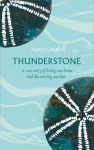
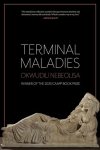
- A mention of using one’s own urine as a remedy in Thunderstone by Nancy Campbell and Terminal Maladies by Okwudili Nebeolisa.
- The main character tries to get pregnant by a man even though one of the partners is gay in Mammoth by Eva Baltasar and Until the Real Thing Comes Along by Elizabeth Berg.
- Motherhood is for women what war is for men: this analogy is presented in We Are Animals by Jennifer Case, Parade by Rachel Cusk, and Want, the Lake by Jenny Factor.
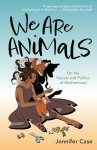 Childcare is presented as a lifesaver for new mothers in We Are Animals by Jennifer Case and Liars by Sarah Manguso.
- A woman bakes bread for the first time in Mammoth by Eva Baltasar and A Year of Biblical Womanhood by Rachel Held Evans.
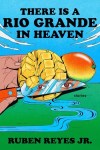
- A gay couple adopts a Latino boy in Greta & Valdin by Rebecca K Reilly and one story of There Is a Rio Grande in Heaven by Ruben Reyes, Jr.
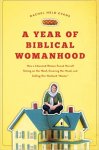 A husband who works on film projects in A Year of Biblical Womanhood by Rachel Held Evans and Liars by Sarah Manguso.
- A man is haunted by things his father said to him years ago in Parade by Rachel Cusk and one story in There Is a Rio Grande in Heaven by Ruben Reyes, Jr.
- Two short story collections in a row in which a character is a puppet (thank you, magic realism!): The Man in the Banana Trees by Marguerite Sheffer, followed by There Is a Rio Grande in Heaven by Ruben Reyes, Jr.
- A farm is described as having woodworm in Mammoth by Eva Baltasar and Parade by Rachel Cusk.
- Sebastian as a proposed or actual name for a baby in Signs, Music by Raymond Antrobus and Birdeye by Judith Heneghan.
What’s the weirdest reading coincidence you’ve had lately?
 Bookish Beck = Rebecca Foster. American transplant to England. Freelance proofreader and book reviewer.
 Bookish Beck