Three on a Theme: Bog Body Novels by Balen, Holmes & North
I’ve been down something of a rabbit hole this year, reading four novels centred on the discovery of a bog body. I heard about Anna North’s first and, as a big fan of The Life and Death of Sophie Stark (and, to a lesser extent, Outlawed), had to read it. Who could resist the setup of scientists trying to solve a millennia-old murder mystery? When I learned that the theme of Katya Balen’s adult fiction debut was similar, there was no choice but to make it a trio. Through the library I located a teen novel that links the discovery of a bog body at the Irish border with a young man’s experience of The Troubles, Bog Child by Siobhan Dowd. I ended up reviewing that for Reading Ireland Month instead, but then spotted a backlist mystery – again, about a bog body discovery in Ireland – and couldn’t resist.
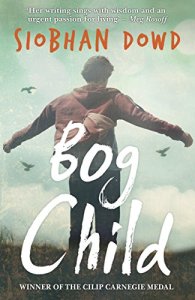
There are some common elements in all four of these novels. The authors briefly mention the special qualities of peat bog that preserve a corpse. In each case, the body is unearthed by accident and found to be that of a victim of violence – a kind of symbolic, corporate punishment. A female archaeologist is the lead researcher caught up in studying the body. In the Holmes and North, the archaeologist is the main character and has to deal with protesters; the other two feature a lay protagonist. The discovery becomes a matter of personal significance for all of them, though. (Discussed in the order in which I read them. The three below are also linked by an Anna!)
Bog Queen by Anna North (2025)
Dr. Agnes Linstrom is an American forensic scientist in Manchester for a postdoctoral fellowship. When a woman’s body is found in a patch of peat bog in Ludlow, she’s called down to give her expert opinion. Police think they’ve finally solved a 1960s spousal murder, but it soon becomes clear that the corpse is much, much older. Alternating chapters follow Agnes’s 2018 investigation, complicated by competing claims on the bog (a peat company vs. environmental protesters, who have occupied the site); and the story of the Iron Age druid who came to be buried in the bog.
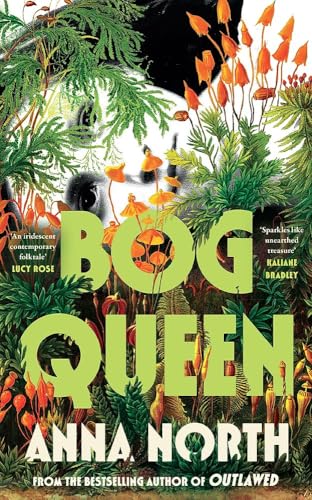 As per usual with a dual-narrative novel, I was more engaged with the contemporary storyline, so rather felt I had to push myself through the historical material so I could get back to the good stuff. Luckily, though, North doesn’t spoil the Celtic Britain segments with too much research or attempts at archaic speech. Occasional short sections from the point-of-view of a colony of moss were unnecessary but harmless. Subtle parallels emerge between Agnes and the druid, both young women who have to fight to be taken seriously, hope to live up to family expectations, and struggle to see the way forward.
Agnes works with other female scientists who seem to represent different ways of living: Sunita, who’s married to a woman and has a teenage daughter, Ruby; and Danielle, who’s easing back into work after a difficult childbirth. I thought the connections to Agnes’s past and potential future were a little heavy-handed in the party scene where she commiserates with Ruby over mental health and holds Danielle’s baby. If I were being unkind, I might also say that the characters are designed to tick boxes (Sunita = South Asian and queer; Nicholas, the lead protester = Black). Overall, though, this is illuminating about women’s lives then and now – not as different as one might hope – and kept me turning the pages to find out what happened to the not one, but two, bodies the bog disgorges. (Public library)
{SPOILERS IN THE NEXT TWO}
Our Numbered Bones by Katya Balen (2026)
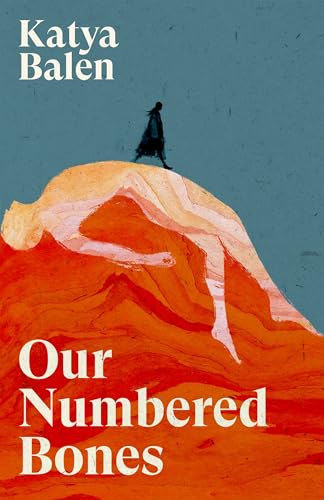 This was Balen’s adult debut after many works for children. Anna is stuck on her contracted novel when she gets a place on a retreat for writers who are struggling financially. Her struggle is more against despair, though: her mother is disappearing into dementia, and she recently had a stillborn daughter. The latter fact is not fully revealed until maybe halfway through, despite some heavy foreshadowing, so until then we are left to wonder why Anna left her husband, JP, who seems like a great guy (a considerate French chef, what’s not to like?), and why she is so inept and bent on sabotaging her own life.
When a bog body is found near the cottage where she’s staying, Anna becomes imaginatively and emotionally involved in the ensuing exhumation. As in Bog Child and Bog Queen, the corpse is that of a woman and it becomes clear that she was executed – punishment for a perceived social infraction, but also emblematic of the systemic misogyny of the time. Anna becomes enmeshed with the archaeologists, especially Jen, who wears a custom ring as a tribute to each woman she has found dead.
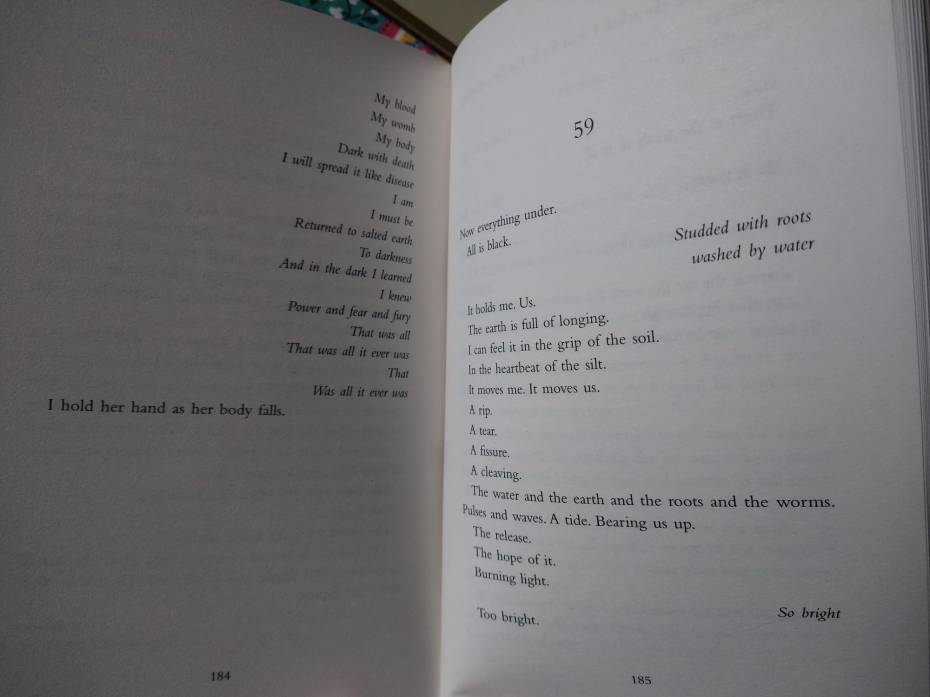
While the content of this novel ticked a lot of interest boxes for me, I didn’t particularly enjoy the style. The attempt to wring poetry out of a mental health crisis too often results in pretentious fragments – as in this sample two-page spread. (Read via Edelweiss / Public library)
The Find by Anna M Holmes (2022)
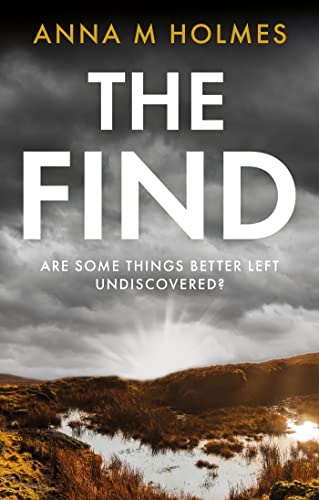 Construction on a retail park in Ireland stops abruptly when a digger encounters a body in the peat, and before long it’s clear that this is not a Troubles victim. Dr Carrie O’Neill, a young archaeologist from New Zealand, becomes “the Face of the Find” as media outlets become increasingly obsessed with the mystery of Ballybere Man. The furore only heightens when certain research conclusions are released about him: he was from Palestine, lived about two thousand years ago, had his body lovingly embalmed with pine needle stuffing and a coating of honey, and has wounds in his feet and hands consistent with crucifixion.
It’s such an interesting setup, pitting the scientists, who are determined to uncover the whole truth, against the religious powers that be – everyone from the Roman Catholic hierarchy to American fundamentalists – to whom the very idea of Jesus’s physical body being extant is an affront. Holmes makes Carrie a sympathetic character what with her homesickness, grief for her grandmother, relationship with Irish Times journalist Finn Durante, and harassment by extremists. But I was disappointed that a pretty standard thriller plot of abduction, blackmail, and violence ensues. From the cover you can tell that the author and publisher were hoping to attract readers of Peter May. The bog body itself is just a stand-in for an ideological impasse and so ends up feeling less important than in any of the other novels. (Read via BookSirens)
Another readalike: Meet Me at the Museum by Anne Youngson, a charming, bittersweet epistolary novel in which an English farmer’s wife writes to the curator at the Silkeborg Museum in Denmark about the Tollund Man.
“Peat might just save the world.”
~Victoria Gatehouse
 Last year a book I helped crowdfund, The Book of Bogs, edited by Anna Chilvers and Clare Shaw, was released by independent publisher Little Toller Books. The project began as a protest against a proposed wind farm that would obliterate Walshaw Moor in Yorkshire, which inspired the Brontë sisters and Ted Hughes. It’s astonishingly comprehensive and I’m only a third of the way through so far. I’ve been reading slowly, one or two pieces a week. There is art and poetry (I’ve been enjoying this the most so far) as well as environmentally minded essays. I’m looking forward to work by some greats of the nature writing world.
Earlier this year, I got to attend a special preview evening (put on for local charities – this was in my capacity as a Repair Café volunteer) of the Wildlife Photographer of the Year Award exhibition at The Base in Greenham. I was already working on this trio so was alert for photographs of bogs and moss.


 Bookish Beck = Rebecca Foster. American transplant to England. Freelance proofreader and book reviewer.
