#1925Club: The Heart of a Dog by Mikhail Bulgakov
Simon and Kaggsy’s classics reading weeks always get me picking up older books. I found this unusual Russian novella on a giveaway pile a few years ago and it’s been on my #NovNov possibility shelf ever since, but now turned out to be the perfect time for it. This review also fits into the Hundred Years Hence challenge.
Sharik is an abused stray dog, living on scraps on the snowy streets of Moscow until Professor Philip Philipovich Preobrazhensky takes him in. The professor is a surgeon renowned for his rejuvenation procedures – implanting monkey ovaries into a middle-aged lady, for instance – and he has designs on the mutt. His new strategy is to take the pituitary gland and testicles of a just-deceased young man and transplant them into Sharik. The central chapter is composed of medical notes taken by Preobrazhensky’s assistant, Dr. Bormenthal. Gradually, a transformation is achieved: The dog’s bark becomes more of a human groan and his fur and tail fall off. Soon the new man is fully convincing: eating, dressing and conversing. Even in a matter-of-fact style, the doctor’s clinical observations are hilarious. “The dog[,] in the presence of Zina and myself, had called Prof. Preobrazhensky a ‘bloody bastard’. … Heard to ask for ‘another one, and make it a double.’” The scientists belatedly look into the history of the man whose glands they harvested and discover to their horror that he was an alcoholic petty thief who died in a bar fight. Sharikov follows suit as an inebriated boor who pesters women, wants to be known as Poligraph Poligraphovich – and still chases cats. Is it too late to reverse a Frankenstein-esque trial gone wrong?
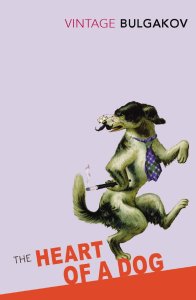 This was a fairly entertaining fable-like story, with whimsical fragments of narration from Sharik himself at the start and close. The blurb inside the jacket of my 1968 Harvill Press hardback suggests “The Heart of a Dog can be enjoyed solely as a comic story of splendid absurdity; it can also be read as a fierce parable about the Russian Revolution.” The allegorical meaning could easily have passed me by, being less overt than in Animal Farm. Reading a tiny bit of external information, I see that this has been interpreted as a satire on the nouveau riche during the Bolshevik era: Sharikov complains about how wealthy the professor is and proposes that he sacrifice some of his apartment-cum-office’s many rooms to others who have nowhere to live. But yes, I mostly stayed at the surface level and found an amusing mad-scientist cautionary tale. I’ll read more by Bulgakov – I’ve had a copy of The Master and Margarita for ages. Next year’s Reading the Meow week might be my excuse.
[Translated from Russian by Michael Glenny, 1968]
(Free from a neighbour, formerly part of Scarborough Public Library stock) 
I also intended to read An American Tragedy by Theodore Dreiser from the university library, having a dim memory of a black-and-white film version starring Montgomery Clift (A Place in the Sun). But the catalogue’s promised 400-some pages was a lie; there are two volumes in one, totaling 840 pages. So that was a nonstarter.
But here are some other famous 1925 titles that I’ve read (I’m now at 7 out of the top 15 on the Goodreads list of the most popular books published in 1925):
The Great Gatsby by F. Scott Fitzgerald
The Trial by Franz Kafka
The Painted Veil by W. Somerset Maugham
Emily Climbs by L.M. Montgomery
Carry On, Jeeves by P.G. Wodehouse
Mrs. Dalloway by Virginia Woolf
I’ve previously participated in the 1920 Club, 1956 Club, 1936 Club, 1976 Club, 1954 Club, 1929 Club, 1940 Club, 1937 Club, 1970 Club, and 1952 Club.
Poetry Month Reviews & Interview: Amy Gerstler, Richard Scott, Etc.
April is National Poetry Month in the USA, and I was delighted to have several of my reviews plus an interview featured in a special poetry issue of Shelf Awareness on Friday. I’ve also recently read Richard Scott’s second collection.
Wrong Winds by Ahmad Almallah
Palestinian poet Ahmad Almallah’s razor-sharp third collection bears witness to the devastation of Gaza.
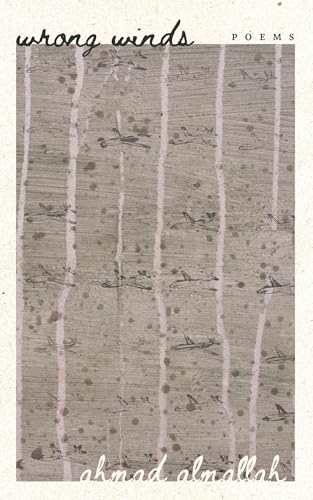 Through allusions, Almallah participates in an ancient lineage of poets, opening the collection with an homage to Al-Shanfarā and ending with “A Lament” for Zbigniew Herbert. Federico García Lorca is also a major influence. Occasional snippets of Arabic, French, and German, and accounts of travels in Berlin and Granada, reveal a cosmopolitan background. The speaker in “Loose Strings” considers exile, engaged in the potentially futile search for a homeland that is being destroyed: “What does it mean to be a poet, another ‘Homer’/ going home? Trying to find one?”
Tonally, anger and grief alternate, while alliteration and slant rhymes (sweat/sweet) create entrancing rhythms. In “Before Gaza, a Fall” and “My Tongue Is Tied Up Today,” staccato phrasing and spaced-out stanzas leave room for the unspeakable. The pièce de résistance is “A Holy Land, Wasted” (co-written with Huda Fakhreddine), which situates T.S. Eliot’s existential ruin in Palestine. Almallah contrasts Gaza then and now via childhood memories and adult experiences at checkpoints. His pastiche of “The Waste Land” starts off funny (“April is not that bad actually”) but quickly darkens, scorning those who turn away from tragedy: “It’s not good/ for your nerves to watch/ all that news, the sights/ of dead children.” The wordplay dazzles again here: “to motes the world crumbles, shattered/ like these useless mots.”
For Almallah, who now lives in Philadelphia, Gaza is elusive, enduringly potent—and mourned. Sometimes earnest, sometimes jaded, Wrong Winds is a remarkable memorial. 
Is This My Final Form? by Amy Gerstler
 Amy Gerstler’s exceptional book of poetry leaps from surrealism to elegy as it ponders life’s unpredictability.
The language of transformation is integrated throughout. Aging and the seasons are examples of everyday changes. “As Winter Sets In” delivers “every day/ a new face you can’t renounce or forsake.” “When I was a bird,” with its interspecies metamorphoses, introduces a more fantastical concept: “I once observed a scurry of squirrels,/ concealed in a hollow tree, wearing seventeenth/ century clothes. Alas, no one believes me.” Elsewhere, speakers fall in love with the bride of Frankenstein or turn to dinosaur urine for a wellness regimen.
The collection contains five thematic slices. Part I spotlights women behaving badly (such as “Marigold,” about a wild friend; and “Mae West Sonnet,” in an hourglass shape); Part II focuses on music and sound. The third section veers from the inherited grief of “Schmaltz Alert” to the miniplay “Siren Island,” a tragicomic Shakespearean pastiche. Part IV spins elegies for lives and works cut short. The final subset includes a tongue-in-cheek account of pandemic lockdown activities (“The Cure”) and wry advice for coping (“Wound Care Instructions”).
Monologues and sonnets recur—the title’s “form” refers to poetic structures as much as to personal identity. Alliteration plus internal and end rhymes create satisfying resonance. In the closing poem, “Night Herons,” nature puts life into perspective: “the whir of wings/ real or imagined/ blurs trivial things.”
This delightfully odd collection amazes with its range of voices and techniques.
I also had the chance to interview Amy Gerstler, whose work was new to me. (I’ll certainly be reading more!) We chatted about animals, poetic forms and tone, Covid, the Los Angeles fires, and women behaving ‘badly’. 
Little Mercy by Robin Walter
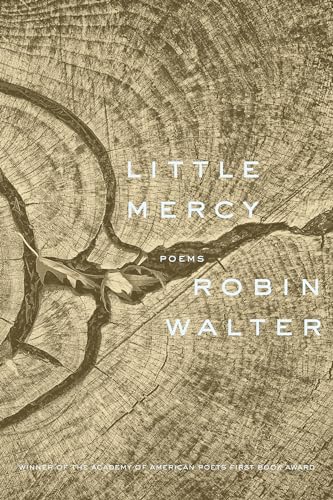 In Robin Walter’s refined debut collection, nature and language are saving graces.
Many of Walter’s poems are as economical as haiku. “Lilies” entrances with its brief lines, alliteration, and sibilance: “Come/ dark, white/ petals// pull/close// —small fists// of night—.” A poem’s title often leads directly into the text: “Here” continues “the body, yes,/ sometimes// a river—little/ mercy.” Vocabulary and imagery reverberate, as the blessings of morning sunshine and a snow-covered meadow salve an unquiet soul (“how often, really, I want/ to end my life”).
Frequent dashes suggest affinity with Emily Dickinson, whose trademark themes of loss, nature, and loneliness are ubiquitous here, too. Vistas of the American West are a backdrop for pronghorn antelope, timothy grass, and especially the wrens nesting in Walter’s porch. Animals are also seen in peril sometimes: the family dog her father kicked in anger or a roadkilled fox she encounters. Despite the occasional fragility of the natural world, the speaker is “held by” it and granted “kinship” with its creatures. (How appropriate, she writes, that her mother named her for a bird.)
The collection skillfully illustrates how language arises from nature (“while picking raspberries/ yesterday I wanted to hold in my head// the delicious names of the things I saw/ so as to fold them into a poem later”—a lovely internal rhyme) and becomes a memorial: “Here, on earth,/ we honor our dead// by holding their names/ gentle in our hollow mouths—.”
This poised, place-saturated collection illuminates life’s little mercies. 
The three reviews above are posted with permission from Shelf Awareness.
That Broke into Shining Crystals by Richard Scott
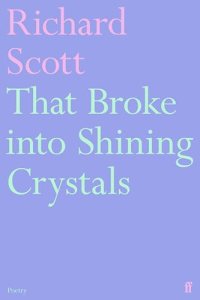 I’ve never forgotten how powerful it was to hear Richard Scott read aloud from his forthcoming collection, Soho, at the Faber Spring Party in February 2018. Back then I called his work “amazingly intimate,” and that is true of this second collection as well.
It also mirrors his debut in that the book is in several discrete sections – like movements of a musical composition – and there are extended allusions to particular poets (there, Paul Verlaine and Walt Whitman; here, Andrew Marvell and Arthur Rimbaud). But there is one overall theme, and it’s a tough one: Scott’s boyhood grooming and molestation by a male adult, and how the trauma continues to affect him.
Part I contains 21 “Still Life” poems based on particular paintings, mostly by Dutch or French artists (see the Notes at the end for details). I preferred to read the poems blind so that I didn’t have the visual inspiration in my head. The imagery is startlingly erotic: the collection opens with “Like a foreskin being pulled back, the damask / reveals – pelvic bowl of pink-fringed shadow” (“Still Life with Rose”) and “Still Life with Bananas” starts “curved like dicks they sit – cosy in wicker – an orgy / of total yellowness – all plenty and arching – beyond / erect – a basketful of morning sex and sugar and sunlight”.
“O I should have been the / snail,” the poet laments; “Living phallus that can hide when threatened. But / I’m the oyster. … Cold jelly mess of a / boy shucked wide open.” The still life format allows him to freeze himself at particular moments of abuse or personal growth; “still” can refer to his passivity then as well as to his ongoing struggle with PTSD.
Part II, “Coy,” is what Scott calls a found poem or “vocabularyclept,” rearranging the words from Marvell’s 1681 “To His Coy Mistress” into 21 stanzas. The constraint means the phrases are not always grammatical, and the section as a whole is quite repetitive.
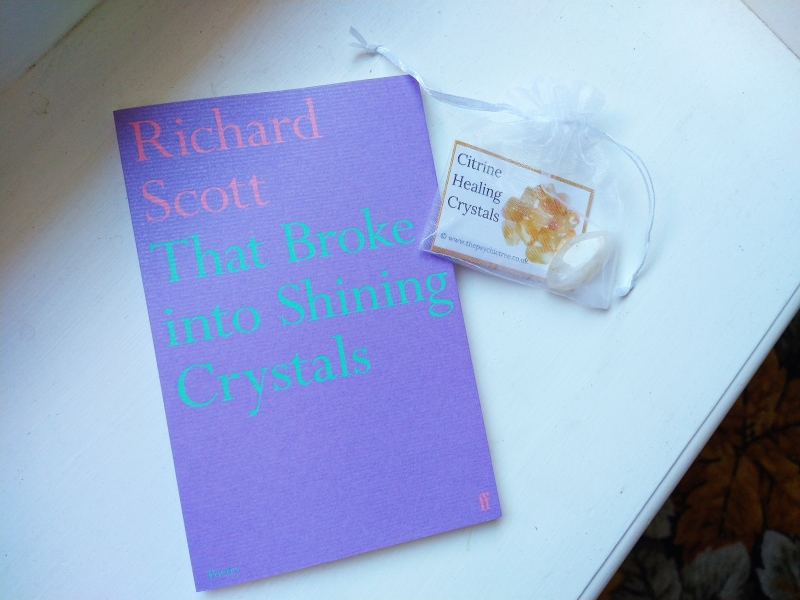
The title of the book (and of its final section) comes from Rimbaud and, according to the Notes, the 22 poems “all speak back to Arthur Rimbaud’s Illuminations but through the prism of various crystals and semi-precious stones – and their geological and healing properties.” My lack of familiarity with Rimbaud and his circle made me wonder if I was missing something, yet I thrilled to how visual the poems in this section were.
As with the Still Lifes, there’s an elevated vocabulary, forming a rich panoply of plants, creatures, stones, and colours. Alliteration features prominently throughout, as in “Citrine”: “O citrine – patron saint of the molested, sunny eliminator – crown us with your polychromatic glittering and awe-flecks. Offer abundance to those of us quarried. A boy is igneous.”
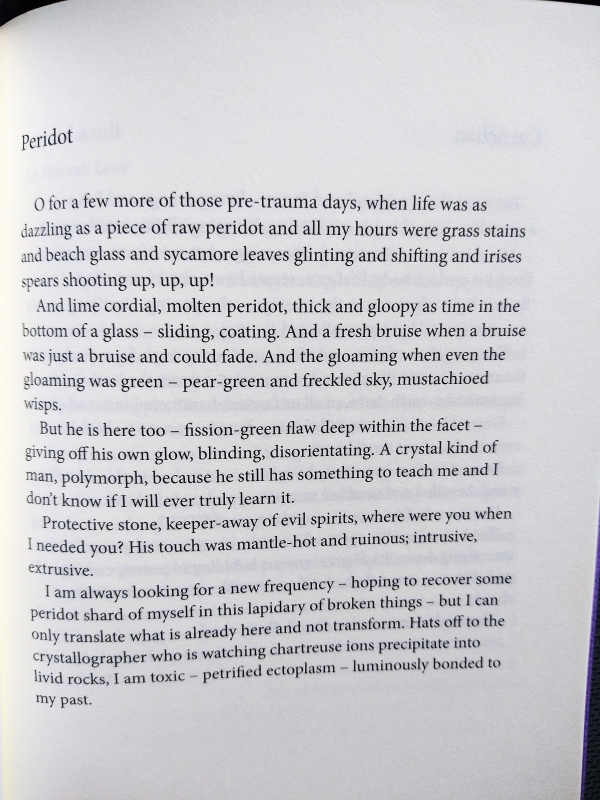
I’ve photographed “Peridot” (which was my mother’s birthstone) as an example of the before-and-after setup, the gorgeous language including alliteration, the rhetorical questioning, and the longing for lost innocence.
It was surprising to me that Scott refers to molestation and trauma so often by name, rather than being more elliptical – as poetry would allow. Though I admire this collection, my warmth towards it ebbed and flowed: I loved the first section; felt alienated by the second; and then found the third rather too much of a good thing. Perhaps encountering Part I or III as a chapbook would have been more effective. As it is, I didn’t feel the sections fully meshed, and the theme loses energy the more obsessively it’s repeated. Nonetheless, I’d recommend it to readers of Mark Doty, Andrew McMillan and Brandon Taylor.
Published today. With thanks to Faber for the free copy for review. An abridged version of this review first appeared in my Instagram post of 11 April.
Read any good poetry recently?
Miscellaneous #ReadIndies Reviews: Mostly Poetry + Brown, Sands
Catching up on a few final #ReadIndies contributions in early March! Short responses to some indie reading I did from my shelves over the course of last month.

Bloodaxe Books:
Parables & Faxes by Gwyneth Lewis (1995)
 I was surprised to discover this was actually my fourth book by Lewis, a bilingual Welsh author: two memoirs, one of depression and one about marriage; and now two poetry collections. The table of contents suggest there are only 16 poems in the book, but most of the titles are actually headings for sections of anywhere between 6 and 16 separate poems. She ranges widely at home and abroad, as in “Welsh Espionage” and the “Illinois Idylls.” “I shall taste the tang / of travel on the atlas of my tongue,” Lewis writes, an example of her alliteration and sibilance. She’s also big on slant and internal rhymes – less so on end rhymes, though there are some. Medieval history and theology loom large, with the Annunciation featuring more than once. I couldn’t tell you now what that many of the poems are about, but Lewis’s telling is always memorable.
Sample lines:
For the one
who said yes,
how many
said no?
…
But those who said no
for ever knew
they were damned
to the daily
as they’d disallowed
reality’s madness,
its astonishment.
(from “The ‘No’ Madonnas,” part of “Parables & Faxes”)
(Secondhand purchase – Westwood Books, Sedbergh) 
&
Fields Away by Sarah Wardle (2003)
 Wardle’s was a new name for me. I saw two of her collections at once and bought this one as it was signed and the themes sounded more interesting to me. It was her first book, written after inpatient treatment for schizophrenia. Many of the poems turn on the contrast between city (London Underground) and countryside (fields and hedgerows). Religion, philosophy, and Greek mythology are common points of reference. End rhymes can be overdone here, and I found a few of the poems unsubtle (“Hubris” re: colonizers and “How to Be Bad” about daily acts of selfishness vs. charity). However, there are enough lovely ones to compensate: “Flight,” “Word Tasting” (mimicking a wine tasting), “After Blake” (reworking “Jerusalem” with “And will chainsaws in modern times / roar among England’s forests green?”), “Translations” and “Word Hill.”
Favourite lines:
(oh, but the last word is cringe!)
Catkin days and hedgerow hours
fleet like shafts of chapel sun.
Childhood in a cobwebbed bower
guards a treasure chest of fun.
(from “Age of Awareness”)
(Secondhand purchase – Carlisle charity shop) 
Carcanet Press:
Tripping Over Clouds by Lucy Burnett (2019)
 The title is a setup for the often surrealist approach, but where another Carcanet poet, Caroline Bird, is warm and funny with her absurdism, Burnett is just … weird. Like, I’d get two stanzas into a poem and have no idea what was going on or what she was trying to say because of the incomplete phrases and non-standard punctuation. Still, this is a long enough collection that there are a good number of standouts about nature and relationships, and alliteration and paradoxes are used to good effect. I liked the wordplay in “The flight of the guillemet” and the off-beat love poem “Beer for two in Brockler Park, Berlin.” The noteworthy Part III is composed of 34 ekphrastic poems, each responding to a different work of (usually modern) art.
Favourite lines:
This is a place of uncalled-for space
and by the grace of the big sky,
and the serrated under-silhouette of Skye,
an invitation to the sea unfolds
to come and dine with mountain.
(from “Big Sands”)
(New (bargain) purchase – Waterstones website) 
&
The Met Office Advises Caution by Rebecca Watts (2016)
 The problem with buying a book mostly for the title is that often the contents don’t live up to it. (Some of my favourite ever titles – An Arsonist’s Guide to Writers’ Homes in New England, The Voluptuous Delights of Peanut Butter and Jam – were of books I couldn’t get through). There are a lot of nature poems here, which typically would be enough to get me on board, but few of them stood out to me. Trees, bats, a dead hare on the road; maps, Oxford scenes, Christmas approaching. All nice enough; maybe it’s just that the poems don’t seem to form a cohesive whole. Easy to say why I love or hate a poet’s style; harder to explain indifference.
Sample lines:
Branches lash out; old trees lie down and don’t get up.
A wheelie bin crosses the road without looking,
lands flat on its face on the other side, spilling its knowledge.
(from the title poem)
(New (bargain) purchase – Amazon with Christmas voucher)
Faber:
Places I’ve Taken My Body by Molly McCully Brown (2020)
 The title signals right away how these linked autobiographical essays split the ‘I’ from the body – Brown resents the fact that disability limits her experience. Oxygen deprivation at their premature birth led to her twin sister’s death and left her with cerebral palsy severe enough that she generally uses a wheelchair. In Bologna for a travel fellowship, she writes, “There are so many places that I want to be, but I can’t take my body anywhere. But I must take my body everywhere.” A medieval city is particularly unfriendly to those with mobility challenges, but chronic pain and others’ misconceptions (e.g. she overheard a guy on her college campus lamenting that she’d die a virgin) follow her everywhere.
A poet, Brown earned minor fame for her first collection, which was about historical policies of enforced sterilization for the disabled and mentally ill in her home state of Virginia. She is also a Catholic convert. I appreciated her exploration of poetry and faith as ways of knowing: “both … a matter of attending to the world: of slowing my pace, and focusing my gaze, and quieting my impatient, indignant, protesting heart long enough for the hard shell of the ordinary to break open and reveal the stranger, subtler singing underneath.” This is part of a terrific run of three pieces, the others about sex as a disabled person and the odious conservatism of the founders of Liberty University. Also notable: “Fragments, Never Sent,” letters to her twin; and “Frankenstein Abroad,” about rereading this novel of ostracism at its 200th anniversary. (Secondhand purchase – Amazon)
New River Books:
The Hedgehog Diaries: A Story of Faith, Hope and Bristle by Sarah Sands (2023)
 Reasons for reading: 1) I’d enjoyed Sands’s The Interior Silence and 2) Who can resist a book about hedgehogs? She covers a brief slice of 2021–22 when her aged father was dying in a care home. Having found an ill hedgehog in her garden and taken it to a local sanctuary, she developed an interest in the plight of hedgehogs. In surveys they’re the UK’s favourite mammal, but it’s been years since I saw one alive. Sands brings an amateur’s enthusiasm to her research into hedgehogs’ place in literature, philosophy and science. She visits rescue centres, meets activists in Oxfordshire and Shropshire who have made hedgehog welfare a local passion, and travels to Uist to see where hedgehogs were culled in 2004 to protect ground-nesting birds’ eggs. The idea is to link personal brushes with death with wider threats of extinction. Unfortunately, Sands’s lack of expertise is evident. This was well-meaning, but inconsequential and verging on twee. (Christmas gift from my wishlist)
Three on a Theme: Matrescence Memoirs (and a Bonus Novel)
I think of pregnancy and childbirth like any extreme adventure (skydiving, polar exploration): wholly extraordinary experiences with much to recommend them – though better appreciated retrospectively than in the moment – to which my response is a hearty “no, thanks.” But just as books have taken me to deserts and the frozen north, miles above or below the earth, into many eras and cultures, they’ve long been my window onto motherhood.
Matrescence, a word coined by anthropologist Dana Raphael in the 1970s, is the process of becoming a mother. It’s a transition period, like adolescence, that involves radical physical and mental changes and has lasting effects. And as Lucy Jones reports, up to 45% of women describe childbirth as traumatic. That’s not a niche experience; it’s an epidemic. If it was men going through this, you can bet it would be at the top of international research agendas.
These three memoirs (and a bonus novel) are bold, often harrowing accounts of the metamorphosis involved in motherhood. They’re personal yet political in how they expose the lack of social support for creating and raising the next generation. All four of these 2023 releases are eye-opening, lyrical and vital; they deserve to be better known.
Matrescence: On the Metamorphosis of Pregnancy, Childbirth and Motherhood by Lucy Jones
Like Jones’s previous book, Losing Eden, about climate breakdown and the human need for nature, Matrescence is a potent blend of scientific research and stories from the frontline. She has synthesized a huge amount of information into a tight 260-some pages that are structured thematically but also proceed roughly chronologically through her own matrescence. Not long into her pregnancy with her first child, a daughter, she realised the extent to which outdated and sexist expectations still govern motherhood: concepts like “natural childbirth” and “maternal instinct,” the judgemental requirement for exclusive breastfeeding, the idea that a parent should “enjoy every minute” of their offspring’s babyhood rather than admitting depression or overwhelm. After the cataclysm of birth, loneliness set in. “Matrescence was another country, another planet. I didn’t know how to talk about the existential crisis I was facing, or the confronting, encompassing relationship I was now in.”
 Jones is now a mother of three. You might think delivery would get easier each time, but in fact the birth of her second son was worst, physically: she had to go into immediate surgery for a fourth-degree anal sphincter tear. In reflecting on her own experiences, and speaking with experts, she has become passionate about fostering open discussion about the pain and risk of childbirth, and how to mitigate them. Women who aren’t informed about what they might go through suffer more because of the shock and isolation. There’s the medical side, but also the equally important social implications: new mothers need so much more practical and mental health support, and their unpaid care work must be properly valued by society. “Yet the focus remains on individual responsibility, maintaining the illusion that we are impermeable, impenetrable machines, disconnected from the world around us.”
The hybrid nature of the book is its genius. A purely scientific approach might have been dry; a social history well-trod and worthy; a memoir too inward-looking to make wider points. Instead it’s equally committed to all three purposes. I appreciated the laser focus on her own physical and emotional development, but the statistical and theoretical context gives a sense of the universal. The literary touches – lists and word clouds, verse-like meditations and flash vignettes about natural phenomena – are not always successful, but there is a thrill to seeing Jones experimenting. Like Leah Hazard’s Womb, this is by no means a book that’s just for mothers; it’s for anyone who’s ever had a mother.
With thanks to Allen Lane (Penguin) for the free copy for review.
Milk: On Motherhood and Madness by Alice Kinsella
 Kinsella is an Irish poet who became a mother in her mid-twenties; that’s young these days. In unchronological vignettes dated in relation to her son’s birth – the number of months after; negative numbers to indicate that it happened before – she explores her personality, mental health and bodily experiences, but also comments more widely on Irish culture (the stereotype of the ‘mammy’; the only recent closure of Magdalene laundries and overturning of anti-abortion laws) and theories about motherhood.
I liked this most when the author stuck close to her own sensory and emotional life; overall, the book felt too long and I thought a late segue into an argument against the dairy industry was unnecessary. Had I been the editor, I would have cut the titled essays and just stuck to the time-stamped pieces. At its best, though, this is a poetic engagement with the tropes and reality of motherhood, sometimes delivered in paragraphs that more closely resemble verse:
+1 I have become the common myth. Mother. The sleepy hum of early memories. The smell of shampoo, of Olay, of lavender. The feeling of safety. The absence of fear.
+2 There’s a possibility,
that we are among the happiest
people in the world:
mothers.[Record freeze preserve.] Fighting death by reproducing our days. Fighting death by reproducing. Here: your life on paper. Here: their life to come.
We’re expected to be mothers the instant we lock eyes with our baby. To shed everything we were and be reborn: Madonnas.
The baby’s favourite thing to do is sit on my lap and interact with other people. This is what mothers are for, I think. Comfort, security, a place to get to know the world from.
The language is gorgeous, and while Kinsella complains of disorientation to the point of worrying about losing herself (although she had struggled with mental health earlier in life, the subtitle’s reference to ‘madness’ seemed to me like overkill compared to other memoirs I’ve read of postpartum depression, trauma or psychosis, such as Inferno by Catherine Cho and Birth Notes by Jessica Cornwell), she comes across as entirely lucid. Her goal here is to find and add to the missing literature of motherhood, in much the same way that Jazmina Barrera, another young mother and writer, attempted with Linea Nigra. This would also make a good companion read to A Ghost in the Throat by Doireann Ní Ghríofa.
Kinsella is among my predictions for the Sunday Times Charlotte Aitken Young Writer of the Year Award shortlist, along with Eliza Clark (Penance) and Tom Crewe (The New Life). (Public library)
The Unfamiliar: A Queer Motherhood Memoir by Kirsty Logan
 I’ve read one of Kirsty Logan’s novels and dipped into her short stories. I immediately knew her parenting memoir would be up my street, but wondered how her fantasy/horror style might translate into nonfiction. Second-person narration is perfect for describing her journey into motherhood: a way of capturing the bewildering weirdness of this time but also forcing the reader to experience it firsthand. It is, in a way, as feminist and surreal as her other work. “You and your partner want a baby. But your two bodies can’t make a baby together. So you need some sperm.” That opening paragraph is a jolt, and the frank present-tense storytelling carries all through.
To start with, Logan’s wife Annie tried getting pregnant. They had a known sperm donor and did home insemination, then advanced to IVF. But after three miscarriages and a failed cycle, they took a doctor’s advice and switched to the younger womb – Logan’s, by four years. As “The Planning” makes way for “The Growing,” it helps that Annie knows exactly what she’s going through. The pregnancy sticks, though the fear of something going wrong never abates, and after the alternating magic and discomfort of those nine months (“You’ve reached the ‘shoplifting a honeydew’ stage”) it’s time for “The Birth,” as horrific an account as I’ve read. The baby had shifted to be back-to-back, which required an emergency C-section, but before that there was a sense of total helplessness, abandonment to unmanaged pain.
Finally the doctor comes. She asks what you would like, and you, shaking shitting pissing bleeding, unable to see when the pain reaches its peak, not screaming, not swearing, not being rude to anyone, not begging for an epidural, … say: I’d like to try some gas and air, if that’s okay, please.
What is remarkable is how Logan recreates this time so intensely – she took notes all through the pregnancy, plus on her phone in hospital and in the early days after bringing the baby home – but can also see how, even in the first hours, she was shaping it into a narrative. “You like that it’s a story. You like that it’s Gothic and gory … and funny.” Except it wasn’t. “You thought you were going to die.” And yet. “How can the lucid, everyday world explain this? The wonder, the curiosity, the recognition. The baby has lived inside your body, and you’ve only just met. The baby is your familiar, and deeply unfamiliar.”
This reminded me of other memoirs I’ve read about queer family-making, especially small by Claire Lynch, which similarly turns on the decision about which female partner will carry the pregnancy and is written in an experimental style. The Unfamiliar is utterly absorbing and conveys so much about the author and her family, even weaving in her father’s death seven years before. I’ve signed up for Logan’s online memoir-writing course (“Where to Start and Where to End”) organised by Writers & Artists (part of Bloomsbury) for next month.
With thanks to Virago Press for the free copy for review.
And, as a bonus, a short novel that deals with many of these same themes:
Reproduction by Louisa Hall
 Procreation. Duplication. Imitation. All three connotations are appropriate for the title of an allusive novel about motherhood and doppelgangers. A pregnant writer starts composing a novel about Mary Shelley and finds the borders between fiction and (auto)biography blurring: “parts of her story detached themselves from the page and clung to my life.” The first long chapter, “Conception,” is full of biographical information about Shelley and the writing and plot of Frankenstein, chiming with Mary and the Birth of Frankenstein by Anne Eekhout, which I read last year. It’s a recognisable piece of autofiction, moving with Hall from Texas to New York to Montana to Iowa as she marries, takes on various university teaching roles and goes through two miscarriages and then, in the “Birth” section, the traumatic birth of her daughter, after which she required surgery and blood transfusions.
These first two sections are exceptional. There’s a sublime clarity to them, like life has been transcribed to the page exactly as it was lived. The change of gears to the third section, “Science Fiction,” put me off, and it took me a long time to get back into the flow. In this final part, the narrator reconnects with a friend and colleague, Anna, who is determined to get pregnant on her own and genetically engineer her embryos to minimise all risk. Here she is more like a Rachel Cusk protagonist, eclipsed by another’s story and serving primarily as a recorder. I found this tedious. It all takes place during Trump’s presidency [Laura F. told me I accidentally published with that saying pregnancy – my brain was definitely saturated with the topic after these reads!] and the Covid pandemic, heightening the strangeness of matrescence and of the lengths Anna goes to. “What, after all, in these end times we lived in, was still really ‘natural’ at all?” the narrator ponders. She casts herself as the narrating Walton, and Anna as Dr. Frankenstein (or sometimes his monster), in this tale of transformation – chosen or not – and peril in a country hurtling toward self-implosion. It’s brilliantly envisioned, and – almost – flawlessly executed. (Public library)
Additional related reading:
Notes Made while Falling by Jenn Ashworth
After the Storm by Emma Jane Unsworth
And coming out in 2025: Mother, Animal by Helen Jukes (Elliott & Thompson)
Barbellion Prize Shortlist: Golem Girl by Riva Lehrer
Three memoirs remain on the shortlist; three windows onto living with disability or caring for a relative with an incapacitating mental illness.
First up is a visual artist’s account of growing up with spina bifida, entering Disabled culture, and forming a collaborative style all her own.
Golem Girl: A Memoir by Riva Lehrer (2020)
“My first monster story was Frankenstein,” Lehrer writes. Like Dr. Frankenstein’s creation or the Golem of medieval Jewish legend, she felt like a physical monstrosity in search of an animating purpose. Born with spina bifida, she spent much of her first two years in Cincinnati Children’s Hospital and would endure dozens of surgeries in years to come to repair her spine and urinary tract and attempt to make her legs the same length. In 1958, when she was born, 90% of children with her condition died before age two. Lehrer’s mother, Carole, who grew up in a family pharmacy business and had worked as a medical researcher, was her daughter’s dogged health advocate. Carole fought for Riva even though she was caught up in her own chronic pain after a botched back surgery that left her addicted to painkillers.
Lehrer went to a special school for the disabled in Ohio. It was racially integrated (rare at that time) and offered children physical therapy and normal experiences like Girl Scouts and day camp. But it was clear the teachers didn’t expect these children to achieve anything or have a family life; home ec classes just taught how to wash up from a wheelchair and make meals for one. One horrible day, a substitute teacher locked a classroom door and hectored the children, saying their parents must have drunk and fornicated and they were the wages of sin.
Between the routine or emergency surgeries and family heartaches, Lehrer grew up to attend art school at the University of Cincinnati and Art Institute of Chicago. Professors (most of them male) found her work grotesque and self-indulgent, and she struggled with how to depict her body. There were boyfriends and girlfriends, even a wife (though in the late 1980s, before same-sex marriage was legally recognized). In 1996 she joined the Chicago Disabled Artists Collective and it was a revelation. She learned that Disabled (like Deaf) is a cultural identity as much as a physical reality, adopted vocabulary like crip (a reclaimed term, like queer) and ableism, and began painting fellow artists with dwarfism, prostheses, or wheelchairs.

Becoming a member of the Medical Humanities faculty as well as a visiting artist at two Chicago universities, the School of the Art Institute and Northwestern, gave Lehrer access to Gross Anatomy Labs, where she found in the historical collections – just as she had at the Mütter Museum of medical curiosities in Philadelphia – a fetus in a jar with her very condition. Knowing that she might be the first Disabled person her budding doctors met, she was determined to give them an “inclusive vision” of “the reality of human divergence.” She would have the medical students draw one of the jarred specimens, not as an oddity but as an individual, and give a 15-minute presentation about someone who lives with that disability.
Golem Girl is a touching family memoir delivered in short, essay-like chapters, most of them named after books or films. It is also a primer in Disability theory and – what truly lifts it above the pack – a miniature art gallery, with reproductions of paintings from various of Lehrer’s series as well as self-portraits, family portraits, and photographs. “I fiercely wanted to see a gallery filled with portraits of luminous crips,” she writes; “I suspected I was going to have to make them myself.” And that is just what she has done. The “Circle Stories” featured the Chicago Disabled Artists Collective and “Mirror Shards” included animal daimons, while “The Risk Pictures” of some of her personal heroes were daringly collaborative: she would give the subject an hour alone in her studio with their portrait in progress and allow them to amend it as they wished. Much of her work has bright colors and involves anatomical realism and symbols personal to herself and/or the subject – with Frida Kahlo an acknowledged influence.
I’ve now (just about) read the whole Barbellion Prize shortlist. For how it illuminates a life of being different – through queerness in addition to disability, engages with the academic fields of anatomy and Disability studies, and showcases the achievements of Disabled artists, this would be my clear winner of the inaugural award, with Sanatorium my backup choice. It is also a finalist for the National Book Critics Circle Award for Autobiography.
Readalikes I have also reviewed:
- Constellations by Sinéad Gleeson
- I Am, I Am, I Am by Maggie O’Farrell
Favorite lines:
“The hospital demands surrender. You accept the piercing, the cutting, the swallowing of noxious chemicals. You roll over and stand up even when it’s as impossible as flying around the ceiling. Whoever has authority can remove your clothes and display your stitched-up monster body to crowds of young white-coated men. You’re an assemblage of parts that lack gender and those elusive things called feelings.”
“‘Normal’ beauty is unmarked, smooth, shiny, upright; but my gaze began to slip past normal beauty as if it was coated in baby oil. I wanted crip beauty—variant, iconoclastic, unpredictable. Bodies that were lived in with intentionality and self-knowledge. Crip bodies were fresh.”
With thanks to Virago for the free copy for review.
See my introductory post for more about the Barbellion Prize, which is in its first year and will be awarded on Friday “to an author whose work has best represented the experience of chronic illness and/or disability.”
I will review the final two on the shortlist, The Fragments of My Father by Sam Mills and Kika & Me by Amit Patel, tomorrow.
Book Serendipity, Late 2020 into 2021
I call it Book Serendipity when two or more books that I read at the same time or in quick succession have something pretty bizarre in common. Because I have so many books on the go at once (20+), I suppose I’m more prone to such incidents than some. I also list some of my occasional reading coincidences on Twitter. The following are in chronological order.
- The Orkney Islands were the setting for Close to Where the Heart Gives Out by Malcolm Alexander, which I read last year. They showed up, in one chapter or occasional mentions, in The Frayed Atlantic Edge by David Gange and The Stone Diaries by Carol Shields, plus I read a book of Christmas-themed short stories (some set on Orkney) by George Mackay Brown, the best-known Orkney author. Gavin Francis (author of Intensive Care) also does occasional work as a GP on Orkney.

- The movie Jaws is mentioned in Mr. Wilder and Me by Jonathan Coe and Landfill by Tim Dee.
- The Sámi people of the far north of Norway feature in Fifty Words for Snow by Nancy Campbell and The Mercies by Kiran Millwood Hargrave.
- Twins appear in Mr. Wilder and Me by Jonathan Coe and Tennis Lessons by Susannah Dickey. In Vesper Flights Helen Macdonald mentions that she had a twin who died at birth, as does a character in Miss Benson’s Beetle by Rachel Joyce. A character in The Light Years by Elizabeth Jane Howard is delivered of twins, but one is stillborn. From Wrestling the Angel by Michael King I learned that Janet Frame also had a twin who died in utero.
- Fennel seeds are baked into bread in The Mercies by Kiran Millwood Hargrave and The Strays of Paris by Jane Smiley. Later, “fennel rolls” (but I don’t know if that’s the seed or the vegetable) are served in Monogamy by Sue Miller.


- A mistress can’t attend her lover’s funeral in Here Is the Beehive by Sarah Crossan and Tennis Lessons by Susannah Dickey.
- A sudden storm drowns fishermen in a tale from Christmas Stories by George Mackay Brown and The Mercies by Kiran Millwood Hargrave.
 Silver Spring, Maryland (where I lived until age 9) is mentioned in one story from To Be a Man by Nicole Krauss and is also where Peggy Seeger grew up, as recounted in her memoir First Time Ever. Then it got briefly mentioned, as the site of the Institute of Behavioral Research, in Livewired by David Eagleman.
- Lamb is served with beans at a dinner party in Monogamy by Sue Miller and Larry’s Party by Carol Shields.
- Trips to Madagascar in Landfill by Tim Dee and Lightning Flowers by Katherine E. Standefer.
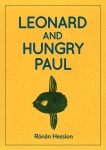 Hospital volunteering in My Year with Eleanor by Noelle Hancock and Leonard and Hungry Paul by Ronan Hession.
- A Ronan is the subject of Emily Rapp’s memoir The Still Point of the Turning World and the author of Leonard and Hungry Paul (Hession).
- The Magic Mountain (by Thomas Mann) is discussed in Scattered Limbs by Iain Bamforth, The Still Point of the Turning World by Emily Rapp, and Snow by Marcus Sedgwick.
- Frankenstein is mentioned in The Biographer’s Tale by A.S. Byatt, The Still Point of the Turning World by Emily Rapp, and Snow by Marcus Sedgwick.


- Rheumatic fever and missing school to avoid heart strain in Foreign Correspondence by Geraldine Brooks and Unsettled Ground by Claire Fuller. Janet Frame also had rheumatic fever as a child, as I discovered in her biography.
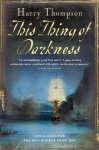
- Reading two novels whose titles come from The Tempest quotes at the same time: Owls Do Cry by Janet Frame and This Thing of Darkness by Harry Thompson.

- A character in Embers by Sándor Márai is nicknamed Nini, which was also Janet Frame’s nickname in childhood (per Wrestling the Angel by Michael King).
- A character loses their teeth and has them replaced by dentures in America Is Not the Heart by Elaine Castillo and The Light Years by Elizabeth Jane Howard.
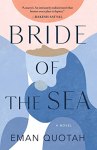
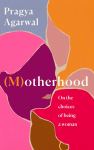
Also, the latest cover trend I’ve noticed: layers of monochrome upturned faces. Several examples from this year and last. Abstract faces in general seem to be a thing.




What’s the weirdest reading coincidence you’ve had lately?
My (Not the) Booker Prize Reading
A week from today, on the 14th (my birthday, as well as Susan’s – be sure to wish her a happy one!), this year’s Booker Prize will be announced. The Prize’s longlist didn’t contain much that piqued my interest this time around; I read one book from it and didn’t get on with it well at all, and I also DNFed another three.
Read
Frankissstein by Jeanette Winterson
 Winterson does her darndest to write like Ali Smith here (no speech marks, short chapters and sections, random pop culture references). Cross Smith’s Seasons quartet with the vague aims of the Hogarth Shakespeare project and Margaret Atwood’s The Heart Goes Last and you get this odd jumble of a novel that tries to combine the themes and composition of Frankenstein with the modern possibilities of transcending bodily limitations. Her contemporary narrator is Ry Shelley, a transgender doctor sponsored by the Wellcome Trust who supplies researcher Victor Stein with body parts for his experiments in Manchester. In Memphis for a tech expo, Ry meets Ron Lord, a tactless purveyor of sexbots.
Their interactions alternate with chapters narrated by Mary Shelley in the 1810s; I found this strand much more engaging and original, perhaps because I haven’t read that much about Shelley and her milieu, whereas it feels like I’ve read a lot about machine intelligence and transhumanism recently (To Be a Machine, Murmur, Machines Like Me). I think Winterson’s aim was to link the two time periods through notions of hybridness and resistance to death. It never really came together for me. 
DNFed
 Night Boat to Tangier by Kevin Barry – I read the first 76 pages. The other week two grizzled Welsh guys came to deliver my new fridge. Their barely comprehensible banter reminded me of that between Maurice and Charlie, two ageing Irish gangsters. The long first chapter is terrific. At first these fellas seem like harmless drunks, but gradually you come to realize just how dangerous they are. Maurice’s daughter Dilly is missing, and they’ll do whatever is necessary to find her. Threatening to decapitate someone’s dog is just the beginning – and you know they could do it. “I don’t know if you’re getting the sense of this yet, Ben. But you’re dealing with truly dreadful fucken men here,” Charlie warns at one point. I loved the voices; if this was just a short story it would have gotten a top rating, but I found I had no interest in the backstory of how these men got involved in heroin smuggling.
The Wall by John Lanchester – I lost interest in it and wasn’t drawn in by the first pages.
 The Man Who Saw Everything by Deborah Levy – I read the first 35 pages. There’s a lot of repetition; random details seem deliberately placed as clues. I’m sure there’s a clever story in here somewhere, but apart from a few intriguing anachronisms (in 1988 a smartphone is just “A small, flat, rectangular object … lying in the road. … The object was speaking. There was definitely a voice inside it”) there is not much plot or character to latch onto. I suspect there will be many readers who, like me, can’t be bothered to follow Saul Adler from London’s Abbey Road, where he’s hit by a car in the first paragraph, to East Berlin.
 There’s only one title from the Booker shortlist that I’m interested in reading: Girl, Woman, Other by Bernardine Evaristo. I’ll be reviewing it later this month as part of a blog tour celebrating the Aké Book Festival, but as a copy hasn’t yet arrived from either the publisher or the library I won’t have gotten far into it before the Prize announcement.
As for the other five on the shortlist…
- I’m a conscientious objector to Margaret Atwood’s The Testaments. I haven’t appreciated her previous dystopian sequels, and I’ve never really understood all the hype around The Handmaid’s Tale.
- I don’t plan on reading Lucy Ellmann’s Ducks, Newburyport – unless some enterprising soul produces an abridged version of no more than 250 pages.*

Ducks, Newbury
- I didn’t rate The Fishermen highly enough to give Chigozie Obioma’s An Orchestra of Minorities a try.
- I forced myself through Midnight’s Children some years back. What a pointless slog! Lukewarm reviews of his recent work mean I’m now doubly determined to avoid Salman Rushdie’s Quichotte.
- Although the setup appeals to me (a prostitute’s whole life spooling out in front of her in the moments before her death) and I enjoyed her previous novel well enough, I’ve not heard enough good things to pick up Elif Shafak’s 10 Minutes 38 Seconds in this Strange World.
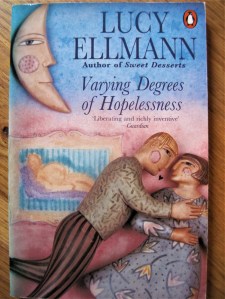 *However, I was delighted to find a copy of her 1991 novel, Varying Degrees of Hopelessness (just 182 pages, with short chapters often no longer than a paragraph and pithy sentences) in a 3-for-£1 sale at our local charity warehouse. Isabel, a 31-year-old virgin whose ideas of love come straight from the romance novels of ‘Babs Cartwheel’, hopes to find Mr. Right while studying art history at the Catafalque Institute in London (a thinly veiled Courtauld, where Ellmann studied). She’s immediately taken with one of her professors, Lionel Syms, whom she dubs “The Splendid Young Man.” Isabel’s desperately unsexy description of him had me snorting into my tea:
He had a masculinity.
His broad shoulders and narrow hips gave him a distinctive physique.
He held seminars and wore red socks.
To hold seminars seemed to indicate a wish to develop a rapport with his students.
The red socks seemed to indicate testosterone.
I swooned in admiration of him.
Unfortunately, the Splendid Young Man is more interested in Isabel’s portly flatmate, Pol. There’s a screwball charm to this campus novel full of love triangles and preposterous minor characters. I laughed at many of Ellmann’s deadpan lines, and would recommend this to fans of David Lodge’s academic comedies. But if you wish to, you could read this as a cautionary tale about the dangers of romantic fantasies. Ellmann even offers two alternate endings, one melodramatic and one more prosaic but believable. I’ll seek out the rest of her back catalogue – so thanks to the Booker for putting her on my radar.
In the meantime, I did a bit better with the “Not the Booker Prize” (administered by the Guardian) shortlist, reading three out of their six:
Flames by Robbie Arnott
 This strange and somewhat entrancing debut novel is set in Arnott’s native Tasmania. The women of the McAllister family are known to return to life – even after a cremation, as happened briefly with Charlotte and Levi’s mother. Levi is determined to stop this from happening again, and decides to have a coffin built to ensure his 23-year-old sister can’t ever come back from the flames once she’s dead. The letters that pass between him and the ill-tempered woodworker he hires to do the job were my favorite part of the book. In other strands, we see Charlotte traveling down to work at a wombat farm in Melaleuca, a female investigator lighting out after her, and Karl forming a close relationship with a seal. This reminded me somewhat of The Bus on Thursday by Shirley Barrett and Orkney by Amy Sackville. At times I had trouble following the POV and setting shifts involved in this work of magic realism, though Arnott’s writing is certainly striking.
A favorite passage:
“The Midlands droned on, denuded hill after denuded hill, until I rolled into sprawling suburbs around noon. Here’s a list of the places I’d choose to visit before the capital: hell, anywhere tropical, the Mariana Trench, a deeper pit of hell, my mother’s house.”
My thanks to Atlantic Books for the free paperback copy for review.
See Susan’s review for a more enthusiastic response.
 The Unauthorised Biography of Ezra Maas by Daniel James: A twisty, clever meta novel about “Daniel James” trying to write a biography of Ezra Maas, an enigmatic artist who grew up a child prodigy in Oxford and attracted a cult following in 1960s New York City, where he was a friend of Warhol et al. (See my full review.)
Supper Club by Lara Williams: A great debut novel with strong themes of female friendship and food. The Supper Club Roberta and Stevie create is performance art, but it’s also about creating personal meaning when family and romance have failed you. (See my full review.)
The other three books on the shortlist are:
- Skin by Liam Brown: A dystopian novel in which people become allergic to human contact. I think I’ll pass on this one.
 Please Read This Leaflet Carefully by Karen Havelin: A debut novel by a Norwegian author that proceeds backwards to examine the life of a woman struggling with endometriosis and raising a young daughter. I’m very keen to read this one.
- Spring by Ali Smith: I’ve basically given up on Ali Smith – and certainly on the Seasons quartet, after DNFing Winter.
(The Not the Booker Prize will be announced on the Guardian website this Friday the 11th.)
 Bookish Beck = Rebecca Foster. American transplant to England. Freelance proofreader and book reviewer.
 Bookish Beck