Three on a Theme for Father’s Day: Holt Poetry, Filgate & Virago Anthologies
A rare second post in a day for me; I got behind with my planned cat book reviews. I happen to have had a couple of fatherhood-themed books come my way earlier this year, an essay anthology and a debut poetry collection. To make it a trio, I finished an anthology of autobiographical essays about father–daughter relationships that I’d started last year.
What My Father and I Don’t Talk About: Sixteen Writers Break the Silence, ed. Michele Filgate (2025)
This follow-up to Michele Filgate’s What My Mother and I Don’t Talk About is an anthology of 16 compassionate, nuanced essays probing the intricacies of family relationships.
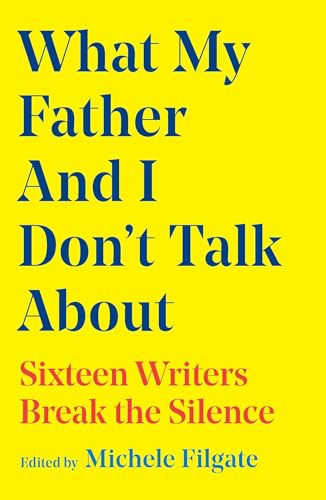 Understanding a father’s background can be the key to interpreting his later behavior. Isle McElroy had to fight for scraps of attention from their electrician father, who grew up in foster care; Susan Muaddi Darraj’s Palestinian father was sent to America to make money to send home. Such experiences might explain why the men were unreliable or demanding as adults. Patterns threaten to repeat across the generations: Andrew Altschul realizes his father’s hands-off parenting (he joked he’d changed a diaper “once”) was an outmoded convention he rejects in raising his own son; Jaquira Díaz learns that the depression she and her father battle stemmed from his tragic loss of his first family.
Some take the title brief literally: Heather Sellers dares to ask her father about his cross-dressing when she visits him in a nursing home; Nayomi Munaweera is pleased her 82-year-old father can escape his arranged marriage, but the domestic violence that went on in it remains unspoken. Tomás Q. Morín’s “Operation” has the most original structure, with the board game’s body parts serving as headings. All the essays display psychological insight, but Alex Marzano-Lesnevich’s—contrasting their father’s once-controlling nature with his elderly vulnerability—is the pinnacle.
Despite the heavy topics—estrangement, illness, emotional detachment—these candid pieces thrill with their variety and their resonant themes. (Read via Edelweiss)
Reprinted with permission from Shelf Awareness. (The above is my unedited version.)
Father’s Father’s Father by Dane Holt (2025)
Holt’s debut collection interrogates masculinity through poems about bodybuilders and professional wrestlers, teenage risk-taking and family misdemeanours.
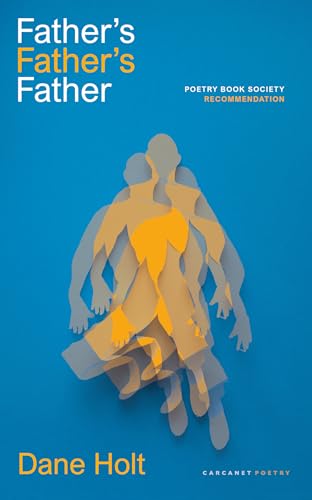
Your father’s father’s father
poisoned a beautiful horse,
that’s the story. Now you know this
you’ve opened the door marked
‘Family History’.
(from “‘The Granaries are Bursting with Meal’”)
The only records found in my grandmother’s attic
were by scorned women for scorned women
written by men.
(from “Tammy Wynette”)
He writes in the wake of the deaths of his parents, which, as W.S. Merwin observed, makes one feel, “I could do anything,” – though here the poet concludes, “The answer can be nothing.” Stylistically, the collection is more various than cohesive, with some of the late poetry as absurdist as you find in Caroline Bird’s. My favourite poem is “Humphrey Bogart,” with its vision of male toughness reinforced by previous generations’ emotional repression:
My grandfather
never told his son that he loved him.
I said this to a group of strangers
and then said, Consider this:
his son never asked to be told.
They both loved
the men Humphrey Bogart played.
…
There was
one thing my grandfather could
not forgive his son for.
Eventually it was his son’s dying, yes.
With thanks to Carcanet Press for the free e-copy for review.
Fathers: Reflections by Daughters, ed. Ursula Owen (1983; 1994)
“I doubt if my father will ever lose his power to wound me, and yet…”
~Eileen Fairweather
I read the introduction and first seven pieces (one of them a retelling of a fairy tale) last year and reviewed that first batch here. Some common elements I noted in those were service in a world war, Freudian interpretation, and the alignment of the father with God. The writers often depicted their fathers as unknown, aloof, or as disciplinarians. In the remainder of the book, I particularly noted differences in generations and class. Father and daughter are often separated by 40–55 years. The men work in industry; their daughters turn to academia. Her embrace of radicalism or feminism can alienate a man of conservative mores.
 Sometimes a father is defined by his emotional or literal absence. Dinah Brooke addresses her late father directly: “Obsessed with you for years, but blind – seeing only the huge holes you had left in my life, and not you at all. … I did so want someone to be a father to me. You did the best you could. It wasn’t a lot. The desire was there, but the execution was feeble.” Had Mary Gordon been tempted to romanticize her father, who died when she was seven, that aim was shattered when she learned how much he’d lied about and read his reactionary and ironically antisemitic writings (given that he was a Jew who converted to Catholicism).
I mostly skipped over the quotes from novels and academic works printed between the essays. There are solid pieces by Adrienne Rich, Michèle Roberts, Sheila Rowbotham, and Alice Walker, but Alice Munro knocks all the other contributors into a cocked hat with “Working for a Living,” which is as detailed and psychologically incisive as one of her stories (cf. The Beggar Maid with its urban/rural class divide). Her parents owned a fox farm but, as it failed, her father took a job as night watchman at a factory. She didn’t realize, until one day when she went in person to deliver a message, that he was a janitor there as well.
This was a rewarding collection to read and I will keep it around for models of autobiographical writing, but it now feels like a period piece: the fact that so many of the fathers had lived through the world wars, I think, might account for their cold and withdrawn nature – they were damaged, times were tough, and they believed they had to be an authority figure. Things have changed, somewhat, as the Filgate anthology reflects, though father issues will no doubt always be with us. (Secondhand – National Trust bookshop)
Book Serendipity, November to December 2024
I call it “Book Serendipity” when two or more books that I read at the same time or in quick succession have something in common – the more bizarre, the better. This is a regular feature of mine every couple of months. Because I usually have 20–30 books on the go at once, I suppose I’m more prone to such incidents. People frequently ask how I remember all of these coincidences. The answer is: I jot them down on scraps of paper or input them immediately into a file on my PC desktop; otherwise, they would flit away! The following are in roughly chronological order.
- Characters who were in a chess club and debating society in high school/college in Playground by Richard Powers and Intermezzo by Sally Rooney.
- Pondering the point of a memorial and a mention of hiring mourners in Immemorial by Lauren Markham and Basket of Deplorables by Tom Rachman.
- A mention of Rachel Carson, and her The Sea Around Us in particular, in Playground by Richard Powers, while I was also reading for review Rachel Carson and the Power of Queer Love by Lida Maxwell.
- A character pretends to be asleep when someone comes into the room to check on them in Knulp by Hermann Hesse and Rental House by Weike Wang.
- A mention of where a partner puts his pistachio shells in After the Rites and Sandwiches by Kathy Pimlott and Rental House by Weike Wang.
 A character who startles very easily (in the last two cases because of PTSD) in Life before Man by Margaret Atwood, A History of Sound by Ben Shattuck, and Disconnected by Eleanor Vincent.
- The husband is named Nate in Life before Man by Margaret Atwood and Rental House by Weike Wang.
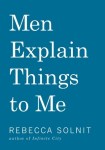
- In People Collide by Isle McElroy, there’s a mention of Elizabeth reading “a popular feminist book about how men explained things to women.” The day I finished reading the novel, I started reading the book in question: Men Explain Things to Me by Rebecca Solnit.
- I learned about the “he’s-at-home” (19th-century dildo) being used by whalers’ wives on Nantucket while the husbands are away at sea through historical fiction – Daughters of Nantucket by Julie Gerstenblatt, which I read last year – and encountered the practice again through an artefact found in the present day in The History of Sound by Ben Shattuck. Awfully specific!
- A week after I finished reading Station Eleven by Emily St. John Mandel, it turned up in a discussion of Vancouver Island in Island by Julian Hanna.
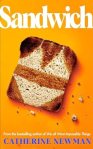
- A Cape Cod setting in Sandwich by Catherine Newman (earlier in the year) plus The History of Sound by Ben Shattuck and Rental House by Weike Wang.

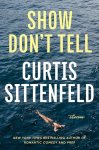
- A gay character references Mulder and Scully (of The X-Files) in the context of determining sexual preference, and there’s a female character named Kit, in The Old Haunts by Allan Radcliffe and one story of Show Don’t Tell by Curtis Sittenfeld.
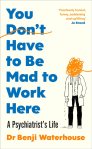
- A mention of The Truman Show in the context of delusions in The Year of Living Biblically by A.J. Jacobs and You Don’t Have to Be Mad to Work Here by Benji Waterhouse.
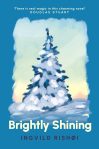
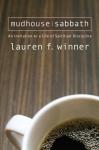
- St. Lucia is mentioned in Beasts by Ingvild Bjerkeland, Brightly Shining by Ingvild Rishøi (two Norwegian authors named Ingvild there!), and Mudhouse Sabbath by Lauren Winner.
- A pet named Darwin: in Levels of Life by Julian Barnes it’s Sarah Bernhardt’s monkey; in Cold Kitchen by Caroline Eden it’s her beagle. Within days I met another pet beagle named Darwin in Island by Julian Hanna. (It took me a moment to realize why it’s a clever choice!)
- A character named Henrik in The Place of Tides by James Rebanks and one story of Show Don’t Tell by Curtis Sittenfeld, and a Hendrik in The Safekeep by Yael van der Wouden.
- A hat with a green ribbon in The Safekeep by Yael van der Wouden and one story of Show Don’t Tell by Curtis Sittenfeld (in which it’s an emoji).
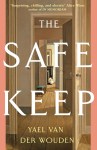
- Romanian neighbours who speak very good English in Island by Julian Hanna and Rental House by Weike Wang.
- A scene of returning to a house one used to live in in Hyper by Agri Ismaïl, The Old Haunts by Allan Radcliffe, and one story of Show Don’t Tell by Curtis Sittenfeld.
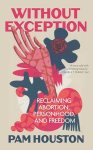
- A woman has had three abortions in The House of Dolls by Barbara Comyns and Without Exception by Pam Houston.
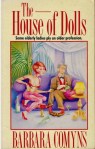
- Household items keep going missing and there’s broken china in The House of Dolls by Barbara Comyns and The Safekeep by Yael van der Wouden.
- Punctuated equilibrium (a term from evolutionary biology) is used as a metaphor in Hyper by Agri Ismaïl and Men Explain Things to Me by Rebecca Solnit.
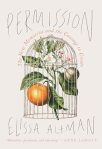 The author’s mother repeatedly asked her daughter a rhetorical question along the lines of “Do you know what I gave up to have you?” in Permission by Elissa Altman and Without Exception by Pam Houston.
- The author/character looks in the mirror at the end of a long day and hardly recognizes him/herself in The Place of Tides by James Rebanks, You Don’t Have to Be Mad to Work Here by Benji Waterhouse, and Amphibian by Tyler Wetherall.
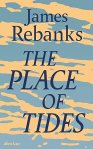
- A man is afraid to hold his boyfriend’s hand in public in another country because he’s unsure about the cultural attitudes towards homosexuality in Clinical Intimacy by Ewan Gass and Small Rain by Garth Greenwell.
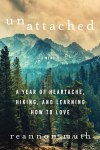
- The author’s mother is a therapist/psychologist and the author her/himself is undergoing some kind of mental health treatment in Unattached by Reannon Muth and You Don’t Have to Be Mad to Work Here by Benji Waterhouse.
- A man declares that dying in one’s mid-40s is nothing to complain about in A Beginner’s Guide to Dying by Simon Boas and Small Rain by Garth Greenwell.
- A woman ponders whether her ongoing anxiety is related to the stressful circumstances of her birth in Unattached by Reannon Muth and When the World Explodes by Amy Lee Scott.
What’s the weirdest reading coincidence you’ve had lately?
People Collide by Isle McElroy (Blog Tour)
People Collide (2023), nonbinary author Isle McElroy’s second novel, is a body swap story that explores the experiences and gender expectations of a heterosexual couple when they switch places. It’s not so much magic realism as a what-if experiment. Eli wakes up one morning in his wife Elizabeth’s body in their “pie slice of an apartment” in southern Bulgaria, where they moved for her government-sponsored teaching position. At first, finding himself alone, he thinks she’s disappeared and goes to the school to ask after her. The staff and students there, seeing him as Elizabeth, think they’re witnessing some kind of mental breakdown and send ‘her’ home. One of them is gone, yes, but it’s Elizabeth – in Eli’s body.
Both sets of parents get involved in the missing person case and, when a credit card purchase indicates Elizabeth is in Paris, Eli sets off after her. He is an apt narrator because he sees himself as malleable and inessential: “I wasn’t a person but a protean blob, intellectually and emotionally gelatinous, shaped by whatever surrounded me; “I could never shake the sense that I was, for [Elizabeth], like a supplementary arm grafted onto the center of her stomach.” He comes from a rough family background, has a history of disordered eating, and doesn’t have a career, so is mildly resentful of Elizabeth’s. She’s also an aspiring novelist and her solitary work takes priority while he cooks the meals and grades her students’ papers.

The couple already pushed against gender stereotypes, then, but it is still a revelation to Elizabeth how differently she is treated as a male. “I can’t name a single thing I don’t like about it. Everything’s become so much easier for me in your body,” she says to Eli when they finally meet up in Paris. There follows an arresting seven-page sex scene as they experience a familiar act anew in their partner’s body. “All that had changed was perspective.” But interactions with the partner’s parents assume primacy in much of the rest of the book.
This novel has an intriguing premise that offered a lot of potential, but it doesn’t really go anywhere with it. The sex scene actually struck me as the most interesting part, showing how being in a different body would help one understand desire. Beyond that, it feels like a stale rumination on passing as female (Elizabeth schooling Eli about menstruation and how to respond to her parents’ news about extended family) and women not being taken seriously in the arts (a lecture by a Rachel Cusk-like writer in the final chapter). I also couldn’t account for two unusual authorial decisions: Eli is caught up in a Parisian terrorist attack, but nothing results. Was it to shake things up at the one-third point, for want of a better idea? I also questioned the late shift to Elizabeth’s mother’s narration. Introducing a new first-person narrator, especially so close to the end, feels like cheating, or admitting defeat if there’s something important that Eli can’t witness. The author is skilled at creating backstory and getting characters from here to there. But in figuring out how the central incident would play out, the narrative falls short. Ultimately, I would have preferred this at short story length, where suggestion would be enough and more could have been left to the imagination.
With thanks to Anne Cater of Random Things Tours and HarperVia for the free copy for review.
Buy People Collide from Bookshop.org [affiliate link]
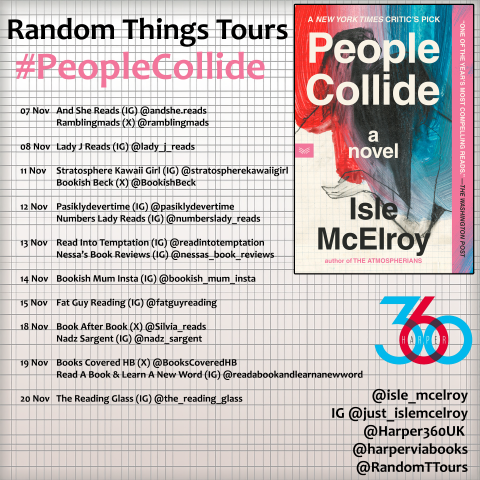
I was delighted to be part of the blog tour for People Collide. See below for details of where other reviews have appeared or will appear soon.
 Bookish Beck = Rebecca Foster. American transplant to England. Freelance proofreader and book reviewer.
 Bookish Beck