June Releases by Fiona Mozley, Heather Sellers & Myfanwy Tristram
This month I have a fiction–poetry–nonfiction trio covers fake memories, Florida’s beauty and weirdness, and the past 50 years of protests in the UK. I also excerpt my reviews of five June releases I read in advance for Shelf Awareness, including one that’s in the running for my Book of the Year.
Awake Awake by Fiona Mozley
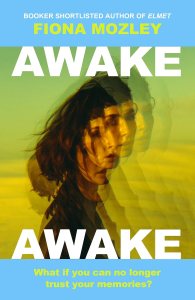 When writer Mary Mooney dives into her memories during appointments with her therapist, Sita, most of what comes up is the everyday stuff of her childhood in York: mild shenanigans with her younger brother, Jos; her friends Amelia and Eve plus Eric, a newcomer from New York City; and their wider circle. Early on, though, she warns readers that she’s untrustworthy. “In recent years, I have had difficulties with my memory,” she confesses. “It was not a sickness of forgetting. I did not have too few memories, but too many,” some of which couldn’t possibly be real – the best example being her conviction that her grandfather assassinated Hitler. She also tells Sita of a hotel fire and her rudeness to a couple of right-wing writers and journalists – things one does in dreams but not generally in real life.
The focus is on Mary and her peers’ formative teen years around the start of the Iraq War. In the final chapter, she offers a where-are-they-now for her closest friends. “Most of this is a verifiable journey through a life I really lived,” she notes, but “from hereon the fabrications begin.” This should have been an exciting revisiting of recent history in the company of an unreliable narrator, but everything about the novel is so dull that it was impossible to stay interested. It feels like pedestrian autofiction (insomuch as Mozley is from York and came of age in the same period as Mary, who is nominated for a major award for her first novel) drawing on a Blair-years upbringing. Mozley’s Elmet, which was shortlisted for the Booker Prize and the Sunday Times Young Writer of the Year Award, is one of my favourite debut novels of the last decade, so it’s a real shame that her subsequent work hasn’t lived up to that potential. Hot Stew (2021) was a DNF for me, a caricature-heavy London state-of-the-nation novel, and Awake Awake reads like a half-baked debut, not a world-class novelist’s third. Unless I hear rave reviews about a return to form in future, that’s it for me with Mozley.
With thanks to John Murray Publishers for the free copy for review.
Women in Tampa Talking about Alligators by Heather Sellers
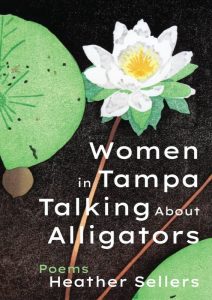 With such a title, how could you not want to read it?! In her fifth poetry collection, Sellers, a Florida native, recounts conversations with her neighbours, backyard sightings, and boat trips through swamp country. An appreciation of beauty rubs shoulders with awareness that it is threatened by climate breakdown and the state’s existential identity crisis. She describes Florida as “the thumbs-down thumb”; it “hangs on, for now, bobbing, / as she lowers into the dull warm blue sea.” Lovely poems about birds spin delightfully unexpected imagery: “watching the great white egret / stiletto across the jasmine fence, / black patent legs shining”. But they also contain barbs about the polluting influence of modern life (spot the alliteration and internal and slant rhymes):
Someone’s silvery phone gleaming underwater.
A fleet of rays flew between our little boats, skin kites on roller skates.
We discovered the things slung around the channel marker
was not a bird, just a plastic sack: the common, grey Florida Wal-Mart bag.
Cormorants dove into the chests of mangrove.
High above, paragraphs of frigates cursive-d land, land, land.
As winter and summer swap, the advantages and downsides of living in an identikit suburb mostly inhabited by retirees from elsewhere become clear. Nature is red in tooth and claw even in her garden, where crows prey on baby mockingbirds. Alligators are everywhere, and when “removed” for being a “nuisance” – in other words, interfering with human activity – their end reveals our inhumane priorities. “No? Seriously? They are euthanized? Euthanized for what, for living?” This is a terrific free verse collection at the intersection of the edenic and the diminished everyday. I would definitely read more by Sellers.
Published by Lynx House Press. With thanks to publicist Jeffrey Yamaguchi for the free e-copy for review.
Noisy Valley: The Art of Protest by Myfanwy Tristram
This is not a comprehensive history of protest but a snapshot of it over the past half-century or so, focussing on the Rhondda Valley in South Wales (not far from Cardiff), where a surprising number originated. The frame story is an exhibit of Tristram’s protest drawings at the Workers Gallery in Ynyshir, where she meets those featured. Each story is then expounded in turn, based on interviews with someone who led the protest or participated in it. We learn of miners’ strikes, a protest against a hospital closure, outrage over toxic runoff from a landfill, and a campaign to save Northern Meadows. One impetus was the worrying trend in the UK (and elsewhere) of governments cracking down on peaceful protests with overly harsh punishments.
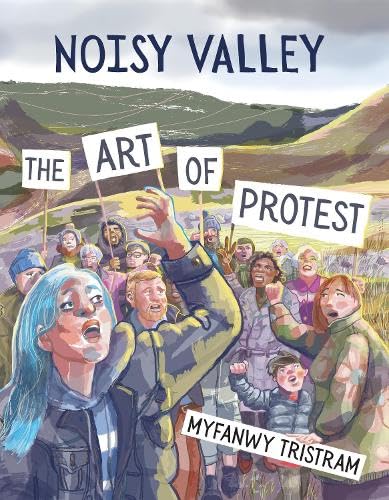
I was surprised to find that two of the chapters had local relevance for me: the Greenham Common women’s peace camp and the Aldermaston marches (part of the Campaign for Nuclear Disarmament). I was additionally taken aback to spot Martyn Joseph, a Welsh singer-songwriter we’re familiar with from Greenbelt Festival, turning up to sing a new bespoke version of “This Land Is Your Land” for a protest. I’m not fond of the talking heads approach to graphic nonfiction (also seen in Sexuality: A Graphic Guide and Trans History) or of the particular style here – monochrome in the main text with a few full-colour pages plus in the asides on the history of protest and changing regulations. I preferred the spreads focusing on landscapes. However, this is a worthwhile project and I particularly appreciated the below quote, which captures my feeling about the environmental marches I’ve been on in London.
You might find this a bit weird, but I never really thought that protest ever achieves its purpose. We still have nuclear weapons, you know. But it is worthwhile. My feeling is that protest is wonderful because it brings people together as a social group. The meeting of hearts and minds. I would argue that’s very positive.
~David Hurn, Aldermaston photographer
With thanks to SelfMadeHero for the free copy for review.
Reviewed for Shelf Awareness:
 The Daffodil Days by Helen Bain: A remarkable debut novel about the last years of Sylvia Plath’s life. I’ve already discussed it here.
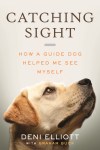 Catching Sight: How a Guide Dog Helped Me See Myself by Deni Elliott with Graham Buck: Elliott was diagnosed as legally blind as an adult, though she’d always had limited vision. She explores her relationships with five very different dogs and introduces the process of training guide dogs in this heartwarming story of human–animal connection and resilience.
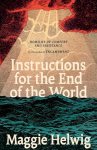 Instructions for the End of the World: Homilies of Comfort and Resistance by Maggie Helwig: Helwig is the rector of inner-city Toronto’s St. Stephen-in-the-Fields. Her stirring sermons espouse a practical, progressive theology and affirm the power of solidarity and the commitment to social justice in turbulent times (including the pandemic years).
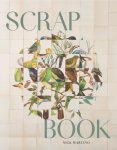 Scrap Book by Nick Martino: Martino’s formally inventive debut poetry collection draws on his mother’s journals and 1980s Polaroids to capture a Midwestern family dynamic overshadowed by divorce and his father’s incarceration.
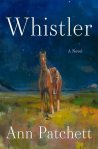 Whistler by Ann Patchett: Patchett is a master on the subject of family dysfunction, and her tenth novel, a stepdaughter–stepfather love story, is as wise as ever on secrets, traumatic memories, and storytelling. This is one of my top three books of 2026 so far, along with Brawler and John of John.
Which of these June releases have you read, or will you seek out now? What am I missing out on?
Three on a Theme for Father’s Day: Holt Poetry, Filgate & Virago Anthologies
A rare second post in a day for me; I got behind with my planned cat book reviews. I happen to have had a couple of fatherhood-themed books come my way earlier this year, an essay anthology and a debut poetry collection. To make it a trio, I finished an anthology of autobiographical essays about father–daughter relationships that I’d started last year.
What My Father and I Don’t Talk About: Sixteen Writers Break the Silence, ed. Michele Filgate (2025)
This follow-up to Michele Filgate’s What My Mother and I Don’t Talk About is an anthology of 16 compassionate, nuanced essays probing the intricacies of family relationships.
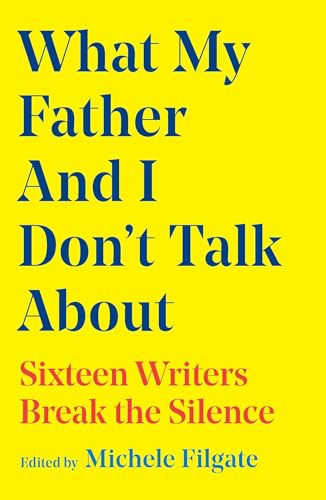 Understanding a father’s background can be the key to interpreting his later behavior. Isle McElroy had to fight for scraps of attention from their electrician father, who grew up in foster care; Susan Muaddi Darraj’s Palestinian father was sent to America to make money to send home. Such experiences might explain why the men were unreliable or demanding as adults. Patterns threaten to repeat across the generations: Andrew Altschul realizes his father’s hands-off parenting (he joked he’d changed a diaper “once”) was an outmoded convention he rejects in raising his own son; Jaquira Díaz learns that the depression she and her father battle stemmed from his tragic loss of his first family.
Some take the title brief literally: Heather Sellers dares to ask her father about his cross-dressing when she visits him in a nursing home; Nayomi Munaweera is pleased her 82-year-old father can escape his arranged marriage, but the domestic violence that went on in it remains unspoken. Tomás Q. Morín’s “Operation” has the most original structure, with the board game’s body parts serving as headings. All the essays display psychological insight, but Alex Marzano-Lesnevich’s—contrasting their father’s once-controlling nature with his elderly vulnerability—is the pinnacle.
Despite the heavy topics—estrangement, illness, emotional detachment—these candid pieces thrill with their variety and their resonant themes. (Read via Edelweiss)
Reprinted with permission from Shelf Awareness. (The above is my unedited version.)
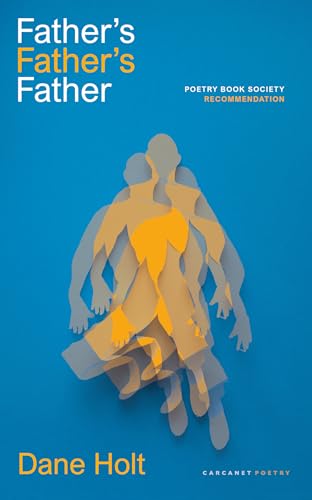
Father’s Father’s Father by Dane Holt (2025)
Holt’s debut collection interrogates masculinity through poems about bodybuilders and professional wrestlers, teenage risk-taking and family misdemeanours.
Your father’s father’s father
poisoned a beautiful horse,
that’s the story. Now you know this
you’ve opened the door marked
‘Family History’.
(from “‘The Granaries are Bursting with Meal’”)
The only records found in my grandmother’s attic
were by scorned women for scorned women
written by men.
(from “Tammy Wynette”)
He writes in the wake of the deaths of his parents, which, as W.S. Merwin observed, makes one feel, “I could do anything,” – though here the poet concludes, “The answer can be nothing.” Stylistically, the collection is more various than cohesive, with some of the late poetry as absurdist as you find in Caroline Bird’s. My favourite poem is “Humphrey Bogart,” with its vision of male toughness reinforced by previous generations’ emotional repression:
My grandfather
never told his son that he loved him.
I said this to a group of strangers
and then said, Consider this:
his son never asked to be told.
They both loved
the men Humphrey Bogart played.
…
There was
one thing my grandfather could
not forgive his son for.
Eventually it was his son’s dying, yes.
With thanks to Carcanet Press for the free e-copy for review.
Fathers: Reflections by Daughters, ed. Ursula Owen (1983; 1994)
“I doubt if my father will ever lose his power to wound me, and yet…”
~Eileen Fairweather
I read the introduction and first seven pieces (one of them a retelling of a fairy tale) last year and reviewed that first batch here. Some common elements I noted in those were service in a world war, Freudian interpretation, and the alignment of the father with God. The writers often depicted their fathers as unknown, aloof, or as disciplinarians. In the remainder of the book, I particularly noted differences in generations and class. Father and daughter are often separated by 40–55 years. The men work in industry; their daughters turn to academia. Her embrace of radicalism or feminism can alienate a man of conservative mores.
 Sometimes a father is defined by his emotional or literal absence. Dinah Brooke addresses her late father directly: “Obsessed with you for years, but blind – seeing only the huge holes you had left in my life, and not you at all. … I did so want someone to be a father to me. You did the best you could. It wasn’t a lot. The desire was there, but the execution was feeble.” Had Mary Gordon been tempted to romanticize her father, who died when she was seven, that aim was shattered when she learned how much he’d lied about and read his reactionary and ironically antisemitic writings (given that he was a Jew who converted to Catholicism).
I mostly skipped over the quotes from novels and academic works printed between the essays. There are solid pieces by Adrienne Rich, Michèle Roberts, Sheila Rowbotham, and Alice Walker, but Alice Munro knocks all the other contributors into a cocked hat with “Working for a Living,” which is as detailed and psychologically incisive as one of her stories (cf. The Beggar Maid with its urban/rural class divide). Her parents owned a fox farm but, as it failed, her father took a job as night watchman at a factory. She didn’t realize, until one day when she went in person to deliver a message, that he was a janitor there as well.
This was a rewarding collection to read and I will keep it around for models of autobiographical writing, but it now feels like a period piece: the fact that so many of the fathers had lived through the world wars, I think, might account for their cold and withdrawn nature – they were damaged, times were tough, and they believed they had to be an authority figure. Things have changed, somewhat, as the Filgate anthology reflects, though father issues will no doubt always be with us. (Secondhand – National Trust bookshop)
 Bookish Beck = Rebecca Foster. American transplant to England. Freelance proofreader and book reviewer.
