Wendell Berry’s “Why I Am Not Going to Buy a Computer” & Why I Acquired My First Smartphone at Age 40.5
Wendell Berry is an American treasure: the 89-year-old Kentucky farmer is also a philosopher, poet, theologian, and writer of fiction, and many of his pronouncements bear the timeless wisdom of a biblical prophet. I’ve read his work from several genres and was curious to see how this 1987 essay – originally published in Harper’s Magazine and reprinted, along with some letters to the editor in response, plus extra commentary in the form of a 1990 essay, by Penguin in 2018 as the 50th and final entry in their Penguin Modern pamphlet series – might resonate with my own reluctance to adopt current technology.
The title essay is brief, barely filling 4.5 pages of a small-format paperback. It’s so concise that it would be difficult to summarize in many fewer words, but I’ll run through the points he makes across the initial essay, the replies to the correspondence, and a follow-up piece entitled “Feminism, the Body and the Machine” (1989). Berry laments his reliance on energy corporations and wants to limit that as much as possible. He decries consumerism in general; he isn’t going to acquire something just to be ‘keeping up with the times’. He doesn’t believe a computer will make his work better, and it doesn’t meet his criteria for a useful tool (smaller, cheaper and less energy-intensive than what it replaces; sourced locally and easily repaired by a non-specialist). He is perfectly happy with his current arrangement: he writes his work by hand and his wife types it up for him. He is loath to lose this human touch.

The letters to the editor, predictably, accuse him of self-righteousness for depicting his choice as the more virtuous one. The correspondents also felt they had to stand up for Berry’s wife, who might have better things to do than act as her husband’s secretary. This is the only time the author becomes slightly defensive, basically saying, ‘you don’t know anything about me, my wife or my marriage … maybe she wants to!’ He doubles down on the environmental harm caused by technology and consumerism, acknowledging his continued dependence on fossil fuels and vowing to avoid them, and unnecessary purchases, where possible.
If some technology does damage to the world, … then why is it not reasonable, and indeed moral, to try to limit one’s use of that technology?
To the extent that we consume, in our present circumstances, we are guilty. To the extent that we guilty consumers are conservationists, we are absurd. … can we do something directly to solve our share of the problem? … Why then is not my first duty to reduce, so far as I can, my own consumption?
If the use of a computer is a new idea, then a newer one is not to use one.
He even appears to speak prophetically to the rise of artificial intelligence:
My wish simply is to live my life as fully as I can. … And in our time this means that we must save ourselves from the products that we are asked to buy in order, ultimately, to replace ourselves. The danger most immediately to be feared in ‘technological progress’ is the degradation and obsolescence of the body.
Certain of his arguments felt relevant to me as I ponder my own relationship to technology. I compose all my reviews on a 19-year-old personal computer that’s not connected to the Internet. I don’t listen to the radio and have seen maybe three films in the past two years. We’ve been television-free for a decade and I have never regretted it (Berry: “It is easy – it is even a luxury – to deny oneself the use of a television set, and I zealously practice that form of self-denial. Every time I see television (at other people’s houses), I am more inclined to congratulate myself on my deprivation.”).
I find it so hard to adjust to new tech that my reluctance may have shaded into suspicion. I’m certainly no early adopter, but I’d also object to the label “Luddite”: since 2013 I’ve been using e-readers, which are invaluable in my reviewing work. But for 15 years or more I have been looking at other people and their smartphones with disdain. I prided myself on my resistance. Stubbornness seemed like a virtue when the alternative was spending a lot of money on something I didn’t need.

Receiving my first cell phone in July 2004 (with my dad at left; at Dulles airport).
Two months ago, though, I finally gave in and accepted a hand-me-down Motorola Android phone from my father-in-law, after nearly 20 years of using an old-style mobile phone. As we were renegotiating our phone and Internet contract, I got virtually unlimited minutes and data on this device for £6/month, with no initial outlay. Had I been forced to make a purchase, I think I would still be holding out. But I had gotten to the point where refusal was cutting off my nose to spite my face. Why keep martyring myself – saying I couldn’t make important household phone calls because they drained my pay-as-you-go credit; learning complex workarounds to post to Instagram from my PC; taking crap photos on a digital camera held together with a rubber band? Why resist utility just for the sake of it?
To be clear, this was not a matter of saving time. I’m not a busy person. Plus I believe there is value in slowing down and acting deliberately. (See this book-based article I wrote for the Los Angeles Review of Books in 2018 on the benefits of “wasting time.”) Mindless scrolling is as much a temptation on a PC as on a phone, so avoiding social media was not a motive for me; others with addictive tendencies may decide otherwise. Nor did I view convenience as reason enough per se. However, I admit I was attracted to the efficiency of a pocket-sized device that can at once replace a computer, pager, telephone, Rolodex, phonebook, camera, photo album, television screen, music player, camcorder, Dictaphone, stopwatch, calculator, map, satnav, flashlight, encyclopaedia, Kindle library, calendar, diary, Post-It notes, notebook, alarm clock and mirror. (Have I missed anything?) Talk about multi-tasking!

Out with the old, in with the new?
I would still say that I object to tech serving as a status symbol or a basis for self-importance, and I’d be pretty dubious about it ever being a worthwhile hobby. Should this phone fail me in future, I’ll copy my husband’s habit of buying a secondhand handset for £60–80. I wouldn’t acquire something that represented new extraction of rare resources. Treating things (or people) as disposable is anathema to me, something about which I know Berry would agree. I’m naturally parsimonious, obsessive about keeping things going for as long as possible and recycling them responsibly when they reach their end of life.
It’s one reason why I’ve gotten involved in the Repair Café movement. I volunteer for our local branch, which started up in February, on the admin and publicity side of things. The old-fashioned, make-do-and-mend ethos appeals to me. It’s the same spirit evoked in the lyrics of American singer-songwriter Mark Erelli’s “Analog Hero”:
He’s the fix-it man, the fix-it man
If he can’t put it back together, then it was never worth a damn
Maybe he’s crazy for trying to save what’s already gone
Now it ain’t even broken and we’re going for the upgrade
Nobody thinks twice ’bout what we’re really throwing away
It’s out with the old, in with the new…
I can imagine Wendell Berry still pecking out his words on a typewriter on his Kentucky farm. He’s an analogue hero, too. And he doesn’t go nearly as far as Mark Boyle, whose radical life experiment is recounted in The Way Home: Tales from a life without technology, which I reviewed for Shiny New Books in 2019.
I have pretty much made my peace with owning a smartphone. I have few apps and am still more likely to work at my PC or on paper. I’ll concede that I enjoy being able to post to X or Instagram wherever I am, and to keep up with messages on the go. (I used to have to say cryptic things to friends like, “once I leave the house, I will be unavailable except by text.”) Mostly, I’m relieved to have shed the frustrations of outmoded tech. Though I still keep my Nokia brick by my bedside as a trusty alarm clock – and a torch for when the cat wakes me between 2 and 5 each morning.

Ultimately, I feel, a smartphone is a tool like any other. It’s how you use it. Salman Rushdie comes to much the same conclusion about the would-be murder weapon wielded against him: “a knife is a tool, and acquires meaning from the use we make of it. It is morally neutral” (from Knife).
Berry’s argument about overreliance on energy remains a good one, but we are all so complicit in so many ways – even more so than in the late 1980s when he was writing – that avoiding the computer, and now the smartphone, doesn’t seem to hold particular merit. While this pamphlet will be but a quaint curio piece for most readers (rather than a parallel to the battle of wills I’ve conducted with myself), it is engaging and convincing, and the societal issues it considers are still ones to be wrestled with.
My copy was purchased with part of a £30 voucher I received free from Penguin UK for being part of their “Bookmarks” online community – answering polls, surveys, etc.
Six Degrees of Separation: From How to Do Nothing to Genie and Paul

It’s my seventh month in a row doing Six Degrees. This time (see Kate’s introductory post) we all start with How to Do Nothing by Jenny Odell, about time and mindfulness. I’ve not read this 2019 release, but its premise reminds me of two books I reviewed a couple of years ago for this Los Angeles Review of Books article on the benefits of “wasting time.”
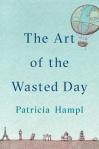
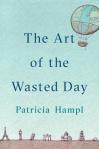
#1 One of those books was The Art of the Wasted Day by Patricia Hampl. The book blends memoir with travel and biographical information about some of Hampl’s exemplars of solitary, introspective living. Her book wanders along with her mind, in keeping with her definition of memoir as “lyrical quest literature,” where meaning always hovers above the basics of plot.
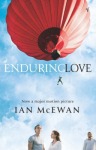
#2 The hot air balloon on the cover takes me to Enduring Love by Ian McEwan. It opens, famously, with a fatal ballooning accident that leaves the witnesses guiltily wondering whether they could have done more. Freelance science journalist Joe Rose – on a picnic with his partner, Keats scholar Clarissa – rushed to help, as did Jed Parry, a young Christian zealot who fixates on Joe. I recently borrowed a DVD of the film from a neighbor and it somehow felt even darker and creepier. (Strangely, the two main characters’ jobs were changed to philosophy professor and sculptor – were those considered easier to show on film?)
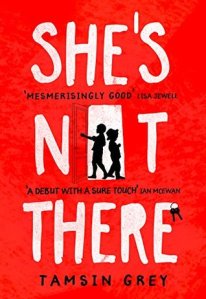 #3 A quote from McEwan on the cover convinced my book club to read the mediocre She’s Not There by Tamsin Grey. (I think the author was also a friend of a friend of someone in the group.) One morning, nine-year-old Jonah wakes up to find the front door of the house open and his mum gone. It takes just a week for the household to descend into chaos as Jonah becomes sole carer for his foul-mouthed little brother, six-year-old Raff. In this vivid London community, children are the stars and grown-ups, only sketchily drawn, continually fail them.
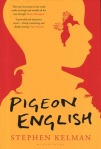
#4 The readalike that came to mind when reading Grey’s novel was Pigeon English by Stephen Kelman, set on a similarly rough London estate. It was on the notorious 2011 Man Booker Prize shortlist (a judge spoke of looking for books that “zip along”; the right author won – Julian Barnes – but for a book I did not particularly enjoy, The Sense of an Ending). The novel is narrated by eleven-year-old Harrison Opoku, who is newly arrived in England from Ghana and turns sleuth when one of his young acquaintances is found murdered.
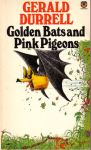
#5 According to my Goodreads library, the only other book I’ve read with “pigeon” in the title is Golden Bats and Pink Pigeons by Gerald Durrell. I love his animal-collecting adventure books, although this one set on Mauritius did not particularly stand out.
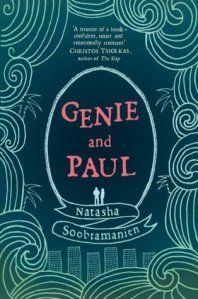 #6 The Mauritius location, plus a return to the “pigeon/pidgin” pun of the Kelman title, leads me to my final book, Genie and Paul by Natasha Soobramanien, about a brother and sister pair who left Mauritius for London as children and still speak Creole when joking. I reviewed this postcolonial response to Paul et Virginie (1788), the classic novel by Jacques-Henri Bernardin de Saint-Pierre, for Wasafiri literary magazine in 2013. It was among my first professional book reviews, and I’ve enjoyed reviewing occasionally for Wasafiri since then – it gives me access to small-press books and BAME authors, which I otherwise don’t read often enough.
Join us for #6Degrees of Separation if you haven’t already! Next month’s starting book will be Rodham by Curtis Sittenfeld (see my review).
Have you read any of my selections?
Are you tempted by any you didn’t know before?
Recent Bylines: Glamour, Shiny New Books, Etc.
Following up on my post from June, here are excerpts from and links to some of my recent online writing for places that aren’t my blog.
Review essay of Gross Anatomy by Mara Altman for Glamour UK
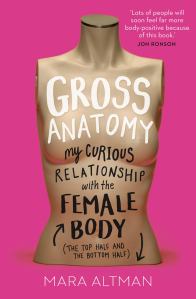 The female body has been a source of deep embarrassment for Altman, but here she swaps shame for self-deprecating silliness and cringing for chuckling. Through a snappy blend of personal anecdotes and intensive research, she exposes the cultural expectations that make us dislike our bodies, suggesting that a better knowledge of anatomy might help us feel normal. While 11 of her 15 topics aren’t exclusive to women’s anatomy—birthmarks, hemorrhoids, warts and more apply to men, too—she always presents an honest account of the female experience. This is one of my favorite books of the year and one I’d recommend to women of any age. It’s funny, it’s feminist, and it’s a cracking good read. (My full review is complete with embarrassing personal revelations!)
Essay on two books about “wasting time” for the Los Angeles Review of Books
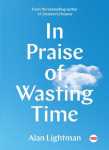
In Praise of Wasting Time by Alan Lightman  &
&
 The Art of the Wasted Day by Patricia Hampl: A poet’s delight in lyricism and free association is in evidence here. The book blends memoir with travel and biographical information about some of Hampl’s exemplars of solitary, introspective living, and it begins, quite literally, with daydreaming.
 Hampl and Lightman start from the same point of frazzled frustration and arrive at many of the same conclusions about the necessity of “wasted” time but go about it in entirely different ways. Lightman makes a carefully constructed argument and amasses a sufficient weight of scientific and anecdotal evidence; Hampl drifts and dreams through seemingly irrelevant back alleys of memory and experience. The latter is a case of form following function: her book wanders along with her mind, in keeping with her definition of memoir as “lyrical quest literature,” where meaning always hovers above the basics of plot.
Book list for OZY on the refugee crisis & another coming up on compassion in medicine.
Pittsburgh Post-Gazette reviews
(Their website is not available outside the USA, so the links may not work for you).
Slave Old Man by Patrick Chamoiseau
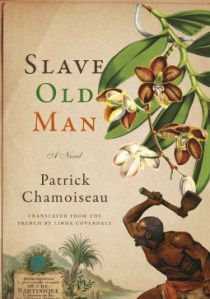 Chamoiseau is a social worker and author from the Caribbean island of Martinique. Translator Linda Coverdale has chosen to leave snippets of Martinican Creole in this text, creating a symphony of languages. The novel has an opening that might suit a gloomy fairytale: “In slavery times in the sugar isles, once there was an old black man.” The novel’s language is full of delightfully unexpected verbs and metaphors. At not much more than 100 pages, it is a nightmarish novella that alternates between feeling like a nebulous allegory and a realistic escaped slave narrative. It can be a disorienting experience: like the slave, readers are trapped in a menacing forest and prone to hallucinations. The lyricism of the writing and the brief glimpse back from the present day, in which an anthropologist discovers the slave’s remains and imagines the runaway back into life, give this book enduring power.
Lake Success by Gary Shteyngart
 Barry Cohen, a conceited hedge fund manager under SEC investigation for insider trading, sets out on a several-month picaresque road trip in the second half of 2016. The ostensible aim is to find his college girlfriend, but he forms fleeting connections with lots of ordinary folks along the way. Barry may be a figure of fun, but it’s unpleasant to spend so much time with his chauvinism (“he never remembered women’s names” but gets plenty of them to sleep with him), which isn’t fully tempered by alternating chapters from his wife’s perspective. Pitched somewhere between the low point of “Make America Great Again” and the loftiness of the Great American novel, Lake Success may not achieve the profundity it’s aiming for, but it’s still a biting portrait of an all-too-recognizable America where money is God and villains gets off easy.
Shiny New Books reviews
(Upcoming: Nine Pints by Rose George and Under the Rock by Benjamin Myers.) Latest:
The Immeasurable World: Journeys in Desert Places by William Atkins
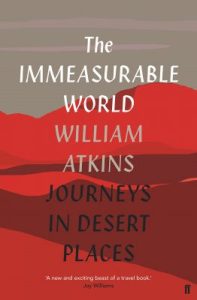 Atkins has produced an appealing blend of vivid travel anecdotes, historical background and philosophical musings. He is always conscious that he is treading in the footsteps of earlier adventurers. He has no illusions about being a pioneer here; rather, he eagerly picks up the thematic threads others have spun out of desert experience and runs with them – things like solitude, asceticism, punishment for wrongdoing and environmental degradation. The book is composed of seven long chapters, each set in a different desert. In my favorite segment, the author rents a cabin in the Sonoran Desert of Arizona for $100 a week. My interest waxed and waned from chapter to chapter, but readers of travelogues should find plenty to enjoy. Few of us would have the physical or emotional fortitude to repeat Atkins’s journeys, but we get the joy of being armchair travelers instead.
Mrs Gaskell & Me: Two Women, Two Love Stories, Two Centuries Apart by Nell Stevens
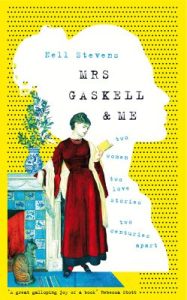 I was ambivalent about the author’s first book (Bleaker House), but for a student of the Victorian period this was unmissable, and the meta aspect was fun and not off-putting this time. Stevens has a light touch, and flits between Gaskell’s story and her own in alternating chapters. One strand covers the last decade of Gaskell’s life, but what makes it so lively and unusual is that Stevens almost always speaks of Gaskell as “you.” The intimacy of that address ensures her life story is anything but dry. The other chapters are set between 2013 and 2017 and narrated in the present tense, which makes Stevens’s dilemmas feel pressing. For much of the first two years her PhD takes a backseat to her love life. She’s obsessed with Max, a friend and unrequited crush from her Boston University days who is now living in Paris. This is a whimsical, sentimental, wry book that will ring true for anyone who’s ever been fixated on an idea or put too much stock in a relationship that failed to thrive.
Times Literary Supplement reviews
I’ve recently submitted my sixth and seventh for publication. All of them have been behind a paywall so far, alas. (Upcoming: Face to Face: True stories of life, death and transformation from my career as a facial surgeon by Jim McCaul; On Sheep: Diary of a Swedish Shepherd by Axel Lindén.) Latest:
How To Build A Boat: A Father, his Daughter, and the Unsailed Sea by Jonathan Gornall
 Gornall’s genial memoir is the story of a transformation and an adventure, as a fifty-something freelance journalist gets an unexpected second chance at fatherhood and decides to build his daughter, Phoebe, a boat. It was an uncharacteristic resolution for “a man who [had] never knowingly wielded a plane or a chisel,” yet in a more metaphorical way it made sense: the sea was in his family’s blood. Gornall nimbly conveys the precarious financial situation of the freelancer, as well as the challenges of adjusting to new parenthood late in life. This is a refreshingly down-to-earth account. The nitty-gritty details of the construction will appeal to some readers more than to others, but one can’t help admiring the combination of craftsmanship and ambition. (Full review in September 7th issue.)
Some of My Recent and Upcoming Bylines
Next month marks five years that I’ve been a freelance reviewer, and I turn 35 later in the year. With these milestones in mind, I’ve been pushing myself a bit more to make contact with new publications and try to get my work out there more widely.
Most recently, I was pleased to have my first article in Literary Hub, an essay about rereading Little Women in its 150th anniversary year in conjunction with the new BBC/PBS miniseries production. (I shared this article intensively on social media, so do forgive me if you’ve already seen it somewhere else!) This is the first time, apart from here on the blog, that I’ve blended book commentary with personal material. I think it’s probably the best “exposure” I’ve had for my writing thus far: last time I looked, Literary Hub’s Facebook post about the article had gotten 123 likes and 33 shares, with 71 likes and 22 retweets on Twitter.
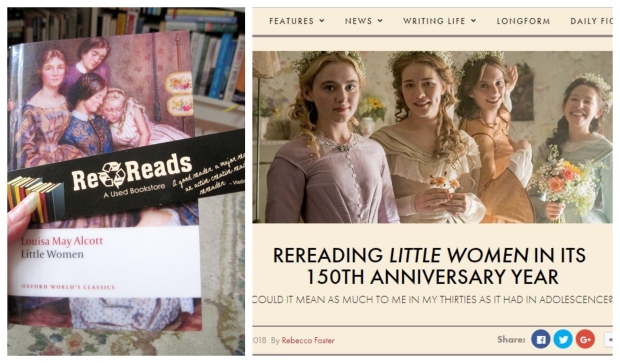
[Note: I now know that the spelling is Katharine Hepburn and have asked twice over e-mail for the editor to correct it, but it’s clearly very low on their list of priorities!]
I continue to review for the Pittsburgh Post-Gazette on a regular basis. My latest review was quite a negative one, alas, for Richard Flanagan’s First Person ( ). Upcoming: Slave Old Man by Patrick Chamoiseau () and A Weekend in New York by Benjamin Markovits.


I still contribute the occasional review to Shiny New Books. My latest two are of From Here to Eternity by Caitlin Doughty ( ) and All the Beautiful Girls by Elizabeth J. Church ().


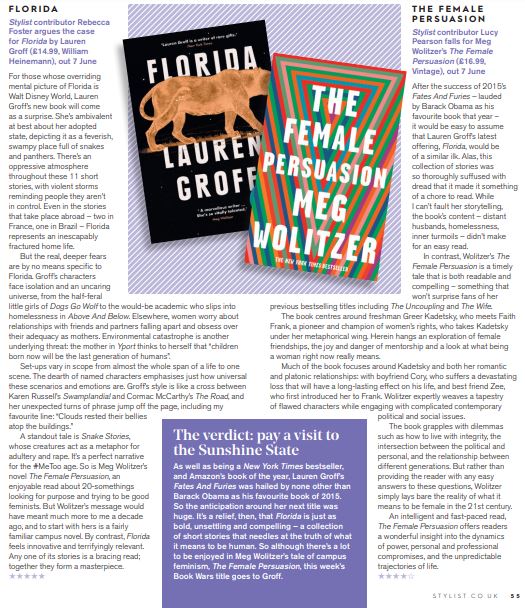
I reviewed Florida by Lauren Groff ( ), my fiction book of the year so far, for Stylist magazine. This is the fourth time I’ve volunteered for their “Book Wars” column, but the first time I’ve ‘won’ – I attribute it to the high class of book!
Bylines coming later in the summer:
- A dual review of two nature-themed memoirs in the Times Literary Supplement (June 15th issue). This is my third piece for the TLS, but as it’s a longer one it feels a little more ‘real’.
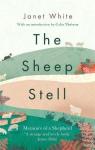
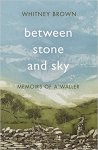
- An essay on two books about “wasting time” (including Alan Lightman’s) in the Los Angeles Review of Books (June 20th).
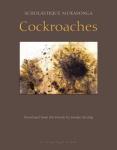
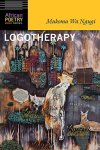
- A dual review of a memoir and a poetry volume by African writers in Wasafiri literary magazine (Issue 95).
Upcoming work, with no publication date yet:
- A dual review of two death-themed poetry collections for PN Review.


- Two book lists for OZY, one on the refugee crisis and another on compassion in medicine.
- A review essay on Gross Anatomy by Mara Altman for Glamour Online.
A Few Simple New Year’s Resolutions
I’m not big on New Year’s resolutions – I prefer to set challenges and commitments at any time of year – but I have a few professional and reading-related goals that I will share here for the sake of accountability.
Career
- Target a few more big-name publications. My work will appear in the Pittsburgh Post-Gazette and the Los Angeles Review of Books in the early months of 2016 – that’s progress, but I’d like to work on getting some other noteworthy publications.
- Assess which freelance gigs are working for me and which ones are not worth it. Sometimes I look at the number of hours I put into a project compared to the ultimate payment amount and think I must be crazy to continue with it.
- Find ways of being paid into my British bank account rather than hoarding lots of dollars in an American bank account where they’re not doing me much good.
Leisure Reading
- Focus on reading more of the books I actually own. This means cutting down on NetGalley and Edelweiss requests and volunteer reviewing!
- Keep an ongoing priority list of books and authors I want to try, and make steady progress through it. On the list so far: Elena Ferrante, Matt Haig, Karl Ove Knausgaard, Wallace Stegner, Tim Winton, and Nell Zink.
What are some of your goals for 2016 – reading-related or otherwise?
 Bookish Beck = Rebecca Foster. American transplant to England. Freelance proofreader and book reviewer.
 Bookish Beck