How I Fared with My Most Anticipated Reads of 2017
This time last year I highlighted 30 of the 2017 releases I was most excited to read. In July I followed that up with another 25 titles coming out in the latter half of the year that I was looking forward to. So, out of those 55 books, how many did I read, and were they worth it?
 Read: 32 [Disappointments: 6]
Currently reading: 1 (John Bateson’s The Education of a Coroner)
Abandoned partway through: 5
Lost interest in reading: 6
 Haven’t managed to find yet: 4 (Most keen to get hold of: Maggie O’Farrell’s I Am, I Am, I Am – it’s on my Christmas wish list, so fingers crossed!)
Languishing on my Kindle; I still have vague intentions to read: 7
That means I’ve managed to read 60% of the books I previewed for the year. Not a bad effort. The problem, of course, is that as a year goes on I inevitably find out about loads more books that had somehow escaped my attention earlier, or a book that I didn’t think I was interested in might start to gain momentum through rave reviews from other bloggers and Goodreads friends and I’ll change my mind about reading it.
A number of my most anticipated reads will show up on my Best of 2017 lists anon, while some – alas – will feature in Friday’s post on all the rest of the books I abandoned this year and the books that most disappointed me (11 out of 55 = a rather dismal 20%).
If there’s a lesson here, it’s to not trust the publisher blurbs but wait for some ordinary reader reviews to come through so I can get a better sense of whether a book is really for me.
How did you fare with your most anticipated reads for 2017?
Mini-Reviews: The Graybar Hotel & Saints for All Occasions
My attention was drawn to The Graybar Hotel, the debut story collection by Curtis Dawkins, because the author is a convicted murderer serving a life sentence in a Michigan prison. (You can read more about his background in this Guardian article.) These 14 short stories are all set at least partially in prison, and feature men learning how to live with the consequences of their mistakes and how to fill long, empty days. They perfect their amateur tattooing skills, write raps, or carve soap figures; they watch TV or make collect calls to random numbers. There’s a kind of make-do attitude in the air, as well as the idea that you can reinvent yourself – starting with your past. But of course there are also more destructive forces around, with drugs, suicide, and violent revenge always lurking in the background.
 Perhaps of necessity, the collection is rather homogeneous. For instance, all but two stories are in the first person, with the typical narrator an observer who recounts other prisoners’ dreams and desperate actions but reveals little or nothing about himself. My favorite stories are those that also look backward and/or forward to show the protagonist’s life before and after prison rather than just dwelling on daily life in the pen. In one stand-out, “Leche Quemada,” Clyde is released after 12 years and tries to slip back into life with Melissa but finds that – like the boiled milk candies his Hispanic cellmates made and he always coveted – what you’ve been waiting for all this time might not be all that you hope for. My overall favorite is “Engulfed,” in which Steven, who admitted selling phony security systems after he fell for a set designer, calls his roommate out for lies about his past. Fire as a destructive yet cleansing force that reveals the truth is a potent symbol here as well as in “Six Pictures of a Fire at Night.”
*All proceeds from the book go into an education fund for Dawkins’s children.
My rating: 
The Graybar Hotel was published in the UK by Canongate on July 20th. My thanks to Alice Laing for the free copy for review.
 Having enjoyed J. Courtney Sullivan’s The Engagements, I was keen to try her new novel, Saints for All Occasions. It opens in 2009 with Nora Rafferty, a mother of four, rushing to the hospital after being informed of a death in the family. She reluctantly accepts that her next task will be to contact the abbey where her estranged sister Theresa, now known as Mother Cecilia, lives. From County Clare, the girls moved to Boston together in the late 1950s: Nora to join Charlie, the fiancé she didn’t really love, and Theresa to have a chance at a new and exciting life. Moving back and forth between 2009 and earlier points in the sisters’ history, the novel considers the way their decisions have played out over the course of half a century, musing over what was fated and what they might have changed. We meet and spend much time with Nora’s children, especially John, who worked on the campaigns of a suspiciously Mitt Romney-esque figure and adopted a daughter from China with his wife; and Bridget, who’s planning to have a baby with her partner Natalie but hasn’t come out to her mother yet.
I’m not sure I ever gave this book a fair shake; from the earliest pages it reminded me so strongly of other Irish-American family stories I’ve read: Mary Costello’s Academy Street, Anne Enright’s The Green Road, Nick Laird’s Modern Gods, Maggie O’Farrell’s This Must Be the Place, and Colm Tóibín’s Brooklyn. With these forebears in my mind, it was hard to judge the book on its own merits. I also thought the ‘secret’ was as plain as day from the beginning. If it’s a less familiar story line for you, you may well enjoy it more than I did.
Favorite lines:
Charlie gave her a sad smile. ‘Isn’t there anything you like about Boston?’ Nora thought it over. ‘Brigham’s vanilla ice cream,’ she said. ‘That’s it.’
It was amazing that you did not become your grief entirely, and walk around leaking it everywhere. It could lie dormant inside of you for days, weeks, years. You could seem a perfectly whole person to everyone you met. Without warning, grief might poke you in the ribs, punch you in the gut, knock the wind out of you. But even then, you seemed just fine. The world went on and on.
My rating: 
Saints for All Occasions is published in the UK today, August 31st, by Fleet. My thanks to Hayley Camis for the free review copy.
Most Anticipated Releases for the Second Half of 2017
Back in December I previewed some of the books set to be released in 2017 that I was most excited about. Out of those 30 titles, here’s how I fared:
- Read: 16 [Disappointments: 2]
- Currently reading: 1
- Abandoned partway through: 2
- Lost interest in: 4
- Haven’t managed to find yet: 2
- Languishing on my Kindle; I still have vague intentions to read: 5
The latter half of the year promises plenty of big-name releases, such as long-awaited novels from Nicole Krauss and Jennifer Egan and a memoir by Maggie O’Farrell. Here are 24 books that happen to be on my radar for the coming months; this is by no means a full picture.
The descriptions below are adapted from the publisher blurbs on Goodreads, NetGalley or Amazon. Some of these books I already have access to in print or galley form; others I’ll be looking to get hold of. (In chronological order, generally by first publication date.)
July
How Saints Die by Carmen Marcus [July 13, Harvill Secker]: “Ten years old and irrepressibly curious, Ellie lives with her fisherman father, Peter, on the wild North Yorkshire coast. This vivacious and deeply moving novel portrays adult breakdown through the eyes of a child and celebrates the power of stories to shape, nourish and even save us.”
Moving Kings by Joshua Cohen [July 20, Fitzcarraldo Editions]: “Two young Israeli soldiers travel to New York after fighting in the Gaza War and find work as eviction movers. It’s a story of the housing and eviction crisis in poor Black and Hispanic neighborhoods that also shines new light on the world’s oldest conflict in the Middle East.” (print ARC)
August
 Sour Heart by Jenny Zhang [Aug. 1, Lenny]: “Centered on a community of immigrants who have traded their endangered lives as artists in China and Taiwan for the constant struggle of life at the poverty line in 1990s New York City, Zhang’s exhilarating collection examines the many ways that family and history can weigh us down and also lift us up.”
The Education of a Coroner: Lessons in Investigating Death by John Bateson [Aug. 15, Scribner]: “An account of the hair-raising and heartbreaking cases handled by the coroner of Marin County, California throughout his four decades on the job—from high-profile deaths to serial killers, to Golden Gate Bridge suicides.”
The Futilitarians: Our Year of Thinking, Drinking, Grieving, and Reading by Anne Gisleson [Aug. 22, Little, Brown and Company]: “A memoir of friendship and literature chronicling a search for meaning and comfort in great books, and a beautiful path out of grief.” (currently reading via NetGalley)
Midwinter Break by Bernard McLaverty [Aug. 22, W. W. Norton]: “A retired couple fly from their home in Scotland to Amsterdam for a long weekend. … [A] tender, intimate, heart-rending story … a profound examination of human love and how we live together, a chamber piece of real resonance and power.” (to review for BookBrowse)
 I Am, I Am, I Am: Seventeen Brushes with Death by Maggie O’Farrell [Aug. 22, Tinder Press]: “A childhood illness she was not expected to survive. A terrifying encounter on a remote path. A mismanaged labor in an understaffed hospital … 17 encounters at different ages, in different locations, reveal to us a whole life in a series of tense, visceral snapshots.”
What It Means When a Man Falls from the Sky by Lesley Nneka Arimah [Aug. 24, Tinder Press]: “A dazzlingly accomplished debut collection explores the ties that bind parents and children, husbands and wives, lovers and friends to one another and to the places they call home.” (print ARC to review for Shiny New Books)
Madness Is Better than Defeat by Ned Beauman [Aug. 24, Sceptre]: “In 1938, rival expeditions set off for a lost Mayan temple, one intending to shoot a screwball comedy on location, the other to disassemble the temple and ship it to New York. … Showcasing the anarchic humor and boundless imagination of one of the finest writers of his generation.”
Forest Dark by Nicole Krauss [Aug. 24, Harper/Bloomsbury]: “A man in his later years and a woman novelist, each drawn to the Levant on a journey of self-discovery. Bursting with life and humor, this is a profound, mesmerizing novel of metamorphosis and self-realization – of looking beyond all that is visible towards the infinite.” (currently reading via NetGalley)
 My Absolute Darling by Gabriel Tallent [Aug. 29, Riverhead Books/4th Estate] “A brilliant and immersive, all-consuming read about one fourteen-year-old girl’s heart-stopping fight for her own soul. … Shot through with striking language in a fierce natural setting.” (e-ARC to review for the Pittsburgh Post-Gazette)
September
Dinner at the Center of the Earth by Nathan Englander [Sept. 5, Knopf]: “[A] political thriller that unfolds in the highly charged territory of the Israeli-Palestinian conflict and pivots on the complex relationship between a secret prisoner and his guard. … Englander has woven a powerful, intensely suspenseful portrait of a nation riven by insoluble conflict.”
George and Lizzie by Nancy Pearl [Sept. 5, Touchstone]: “[A]n emotionally riveting debut novel about an unlikely marriage at a crossroads. … With pitch-perfect prose and compassion and humor to spare, George and Lizzie is an intimate story of new and past loves, the scars of childhood, and an imperfect marriage at its defining moments.”
 Little Fires Everywhere by Celeste Ng [Sept. 7, Little, Brown]: “In Shaker Heights, a placid, progressive suburb of Cleveland, everything is meticulously planned. … [E]xplores the weight of long-held secrets and the ferocious pull of motherhood-and the danger of believing that planning and following the rules can avert disaster, or heartbreak.”
Afterglow (A Dog Memoir) by Eileen Myles [Sept. 12, Grove Press]: “A probing investigation into the dynamics between pet and pet-owner. Through this lens, we examine Myles’s experiences with intimacy and spirituality, celebrity and politics, alcoholism and recovery, fathers and family history.”
October
From Here to Eternity: Traveling the World to Find the Good Death by Caitlin Doughty [Oct. 3, W. W. Norton]: “Fascinated by our pervasive terror of dead bodies, mortician Caitlin Doughty set out to discover how other cultures care for their dead. Featuring Gorey-esque illustrations by artist Landis Blair.”
Manhattan Beach by Jennifer Egan [Oct. 3, Scribner/Corsair]: “The pace and atmosphere of a noir thriller and a wealth of detail about organized crime … Egan’s first historical novel is a masterpiece, a deft, startling, intimate exploration of a transformative moment in the lives of women and men, America, and the world.”
Dunbar by Edward St. Aubyn [Oct. 3, Hogarth Shakespeare]: “Henry Dunbar, once all-powerful head of a family firm, has handed it over to his two eldest daughters, Abby and Megan. Relations quickly soured. Now imprisoned in a Lake District care home with only an alcoholic comedian as company, Dunbar starts planning his escape.” (print ARC)
 The Diary of a Bookseller by Shaun Bythell [Oct. 5, Profile Books]: “Bythell owns The Bookshop, Wigtown – Scotland’s largest second-hand bookshop. … These wry and hilarious diaries provide an inside look at the trials and tribulations of life in the book trade, from struggles with eccentric customers to wrangles with his own staff.”
In Shock by Rana Awdish [Oct. 17, St. Martin’s]: “Dr. Awdish spent months fighting for her life, enduring consecutive major surgeries and experiencing multiple overlapping organ failures. At each step of the recovery process, she was faced with repeated cavalier behavior from her fellow physicians. … A brave road map for anyone navigating illness.”
American Wolf: A True Story of Survival and Obsession in the West by Nate Blakeslee [Oct. 17, Crown]: “[I]n recent decades, conservationists have brought wolves back to the Rockies, igniting a battle over the very soul of the West. With novelistic detail, Nate Blakeslee tells the gripping story of one of these wolves, alpha female O-Six.” (print ARC)
November
The White Book by Han Kang [Nov. 2, Portobello Books]: “Writing while on a residency in Warsaw, the narrator finds herself haunted by the story of her older sister, who died a mere two hours after birth. A fragmented exploration of white things … the most autobiographical and experimental book to date from [the] South Korean master.”
 Radio Free Vermont: A Fable of Resistance by Bill McKibben [Nov. 7, Blue Rider Press]: “Follows a band of Vermont patriots who decide that their state might be better off as its own republic. … McKibben imagines an eccentric group of activists who carry out their own version of guerrilla warfare … a fictional response to the burgeoning resistance movement.”
Future Home of the Living God by Louise Erdrich [Nov. 14, Harper]: “Evolution has reversed itself, affecting every living creature on earth. … A chilling dystopian novel both provocative and prescient … a moving meditation on female agency, self-determination, biology, and natural rights that speaks to the troubling changes of our time.”
December
(Nothing as of yet…)
Which of these tempt you? What other books from the latter half of 2017 are you most looking forward to?
Blog Tour: Two Voices, One Story
“[B]eing an adoptive parent is like parenting in Technicolor: everything is just a little more intense. This means the highs can be really high, but it also means that the lows are going to be really low. You have to prepare yourself.”
~Sharon Roszia, quoted in A Book about Love, by Jonah Lehrer
Two Voices, One Story is a mother–daughter memoir that splits narration duties between Elaine Rizzo and Amy Masters, the now-teenage daughter she adopted from China in 1999. Elaine’s sections provide the main thread of their story, while Amy’s passages, generally shorter and printed in italics, chime in to give her perspective on various events and relationships that have been important in her life.
 Elaine is forthright about her infertility and the miscarriage that led to her decision to adopt. In the late 1990s, China’s one-child policy was still in place, but it was the severe flooding of the Yangtze River that led directly to Amy’s adoption. Thousands died and millions more were displaced. Given the context, it’s not so surprising that baby Amy was left outside a welfare center. She was given the Chinese name Tong Fang – “Copper Child.”
For me the highlight of the book was Elaine and Lee’s trip to China to pick up Amy. Although they were nervous and disoriented, they experienced the kindness of strangers and responded with compassion of their own, taking along extra toiletries and clothes of different sizes and leaving the surplus with the care center. Amy had bronchitis, one more worry on top of all the paperwork and red tape they had to go through to finalize the adoption.
Back in England, Amy had some behavioral problems that were likely vestiges of her time at the orphanage. She hated noise, especially thunderstorms; she hit herself and others; and she often woke up screaming. Private schooling ensured she wouldn’t get left behind, and there were many happy times with extended family and holidays to Australia and the west coast of Wales, where Elaine and Amy would later settle with Elaine’s second husband.
But life wasn’t always rosy: Amy was strong-willed and uncooperative – perhaps nothing out of the ordinary for a teenager, but still a challenge for her parents. Elaine recalls a social worker telling them “that very often adoptive parents don’t feel like they have the right to tell their child off, or that they think they shouldn’t say or do anything which might upset the child, because they are trying to compensate for what has happened prior to the adoption.”
Lengthy commuting to her job back in England and years-long house renovations demanded much of Elaine’s attention, yet she remained alert to what was going on with Amy. Unfortunately, in her teen years Amy experienced racism from a few schoolmates, including abusive Facebook messages that drove the family to contact the police. Amy herself, though, always comes across as easygoing about being different: “Every Christmas we used to do a Nativity show and I remember being an angel first and then one of the kings, which I suppose was the right role for me because I really do come from the East.”
Even though this is a very quick read, my interest waxed and waned. The telling can be clichéd and sentimental, and I felt too much space was given to banal details that added little to an understanding of the central mother–daughter relationship. This self-published book has a very appealing cover but needs another look from an experienced editor who could fix the fairly frequent typos and punctuation issues and cut out the bullet points (nine pages’ worth) and speech tics like “I will also say…” and “I have to comment…”
I would certainly recommend this book to those who have a personal experience of or interest in adoption, particularly from overseas (for a fictional take on adoption from China, you might also try The Fortunes by Peter Ho Davies, The Red Thread by Ann Hood, and This Must Be the Place by Maggie O’Farrell), as well as to anyone wondering how to parent or educate a child who is in some way different.
I’ll end with some lovely words from Amy:
when my Chinese mum left me outside the gates of the welfare center almost eighteen years ago now, because there was nothing left for me in Tongling, she must have had the desperate hope that I would find a happy life with people who loved me. I can only say that her wish did come true.
My rating:
Two Voices, One Story will be published by Clink Street Publishing on March 21st. Thanks to Rachel Gilbey of Authoright Marketing & Publicity for arranging my free copy for review.
I was pleased to participate in the blog tour for Two Voices, One Story.
2016 Runners-Up and Other Superlatives
Let’s hear it for the ladies! In 2016 women writers accounted for 9 out of my 15 top fiction picks, 12 out of my 15 nonfiction selections, and 8 of the 10 runners-up below. That’s 73%. The choices below are in alphabetical order by author, with any full reviews linked in. Many of these have already appeared on the blog in some form over the course of the year.
Ten Runners-Up:
FICTION
 Hag-Seed by Margaret Atwood: Atwood looks more like a good witch every year, and here she works her magic on The Tempest to produce the most satisfying volume of the Hogarth Shakespeare series yet. There’s a really clever play-within-the-play-within-the-play thing going on, and themes of imprisonment and performance resonate in multiple ways.
 The Atomic Weight of Love by Elizabeth J. Church: In Church’s debut, an amateur ornithologist learns about love and sacrifice through marriage to a Los Alamos physicist and a relationship with a Vietnam veteran. I instantly warmed to Meri as a narrator and loved following her unpredictable life story.
 We Love You, Charlie Freeman by Kaitlyn Greenidge: The Freemans are raising Charlie, a chimpanzee, as part of their family for a Toneybee Institute experiment and teaching him to communicate via sign language. This is a rich and unsettling story of human–human interactions, even more so than human–animal interactions; it’s a great first novel and I will follow Greenidge’s career with interest.
To the Bright Edge of the World by Eowyn Ivey: Ivey’s intricate second novel weaves together diaries, letters, photographs, and various other documents and artifacts to tell the gently supernatural story of an exploratory mission along Alaska’s Wolverine River in 1885 and its effects through to the present day. I can highly recommend this rollicking adventure tale to fans of historical fiction and magic realism.
This Must Be the Place by Maggie O’Farrell: Spreading outward from Ireland and reaching into every character’s past and future, this has all O’Farrell’s trademark insight into family and romantic relationships, as well as her gorgeous prose and precise imagery. I have always felt that O’Farrell expertly straddles the (perhaps imaginary) line between literary and popular fiction; her books are addictively readable but also hold up to critical scrutiny.
Commonwealth by Ann Patchett: This deep study of blended family dynamics starts with an early 1960s christening party Los Angeles policeman Fix Keating is throwing for his younger daughter, Franny; we see the aftermath of that party in the lives of six step-siblings in the decades to come. This is a sophisticated and atmospheric novel I would not hesitate to recommend to literary fiction fans in general and Patchett fans in particular.
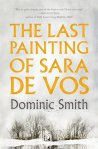 The Last Painting of Sara de Vos by Dominic Smith: Jessie Burton, Tracy Chevalier and all others who try to write historical fiction about the Netherlands in the seventeenth century, eat your hearts out. Such a beautiful epoch-spanning novel about art and regret.
Shelter by Jung Yun: A Korean-American family faces up to violence past and present in a strong debut that offers the hope of redemption. I would recommend this to fans of David Vann and Richard Ford.
NONFICTION
I Will Find You by Joanna Connors: By using present-tense narration, Connors makes the events of 1984 feel as if they happened yesterday: a blow-by-blow of the sex acts forced on her at knife-point over the nearly one-hour duration of her rape; the police reports and trials; and the effects it all had on her marriage and family. This is an excellent work of reconstruction and investigative reporting.
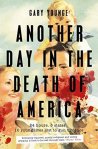 Another Day in the Death of America by Gary Younge: Younge built this book by choosing a 24-hour period (November 22 to 23, 2013) and delving into all 10 gun deaths of young Americans on record for that time: seven black, two Latino, and one white; aged nine to 18; about half at least vaguely gang-related, while in two – perhaps the most crushing cases – there was an accident while playing around with a gun. I dare anyone to read this and then try to defend gun ‘rights’ in the face of such senseless, everyday loss.
Various Superlatives:
Best Discoveries of the Year: Apollo Classics reprints (I reviewed three of them this year); Diana Abu-Jaber, Linda Grant and Kristopher Jansma.
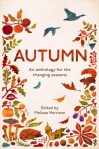
Most Pleasant Year-Long Reading Experience: The seasonal anthologies issued by the UK Wildlife Trusts and edited by Melissa Harrison (I reviewed three of them this year).

Most Improved: I heartily disliked Sarah Perry’s debut novel, After Me Comes the Flood. But her second, The Essex Serpent, is exquisite.
Debut Novelists Whose Next Work I’m Most Looking Forward to: Stephanie Danler, Kaitlyn Greenidge, Francis Spufford, Andria Williams and Sunil Yapa.
The Year’s Biggest Disappointments: Here I Am by Jonathan Safran Foer, Today Will Be Different by Maria Semple, and Swing Time by Zadie Smith. Here’s hoping 2017 doesn’t bring any letdowns from beloved authors.


The Worst Book I Read This Year: Paulina & Fran (2015) by Rachel B. Glaser. My only one-star review of the year. ’Nuff said?
The 2016 Novels I Most Wish I’d Gotten to: (At least the 10 I’m most regretful about)
- The Power by Naomi Alderman
- The Museum of You by Carys Bray
- The Course of Love by Alain de Botton
- What Belongs to You by Garth Greenwell*
 Homegoing by Yaa Gyasi
- The Waiting Room by Leah Kaminsky
- The Inseparables by Stuart Nadler
- Harmony by Carolyn Parkhurst*
- The Nest by Cynthia D’Aprix Sweeney*
- The Underground Railroad by Colson Whitehead*
*Haven’t been able to find anywhere yet; the rest are on my Kindle.
Which of these should I get reading on the double?
Coming tomorrow: Some reading goals for 2017.
To the Bright Edge of the World by Eowyn Ivey
Eowyn Ivey’s intricate second novel weaves together diaries, letters, photographs, and various other documents and artifacts to tell the gently supernatural story of an exploratory mission along Alaska’s Wolverine River in 1885 and its effects through to the present day. If you have read Ivey’s 2012 debut, The Snow Child, you’ll remark once again on her skill in bringing the bleak beauty of Alaska to life on the page and blending magic realism and folktales with a nonetheless realistic view of history.
In March 1885 Lieutenant Colonel Allen Forrester sets out with a small team – including brash Sergeant Bradley Tillman, melancholy photographer Lieutenant Andrew Pruitt, native guides, and Samuelson, a trapper who serves as a go-between – to navigate a previously unmapped portion of Alaska. Back at Vancouver Barracks he’s left his wife of four months, Sophie. Bold and curious, she intended to travel into Alaska with Allen until she learned she was pregnant. Now she passes the months of her confinement – and raises eyebrows among the military wives – by pursuing her amateur hobbies of birdwatching and photography.
 Through alternating passages from journals by Allen and Sophie, Ivey contrasts the big adventures of surveying new territory with the smaller adventures of domestic life. Along their perilous journey Allen and his men encounter many legends and incidents they cannot explain: shape-shifters, like the women who morph into flocks of geese or the shaman who takes the form of a half-lame raven; a baby born out of a tree trunk; and a prehistoric creature that guards a lake. As Allen writes in a letter to Sophie towards the end of his journey:
I can find no means to account for what we have witnessed, except to say that I am no longer certain of the boundaries between man & beast, of the living and & dead. It has been a strange experience indeed. All that I have taken for granted, of what is real & true, has been called into question.
A framing story sets the historical narrative in the context of the present day: Walter Forrester has sent his great-uncle Allen’s letters and journal to a small Alaska museum for safekeeping. Initially the young curator, Joshua Sloan, is annoyed at the unwanted donation and the extra work it creates for him, but gradually – right alongside the novel’s readers – he starts to be sucked into the story the documents reveal. Through their correspondence, Josh and Walt develop a touching friendship despite their differences.
Ivey fits the pieces of her epistolary together in a sophisticated manner and makes you care about each of the characters. Sophie and Pruitt, especially, have traumatic backstories that help you understand their behavior. Sophie reminded me most of Meridian Wallace in Elizabeth J. Church’s The Atomic Weight of Love – both are self-taught scientists with a deep love for birds and a determination to live interesting lives even if others disapprove. The novel also brings to mind Maggie O’Farrell’s This Must Be the Place in that it skips back and forth in time and intersperses a central narrative with other documents, including an auction catalogue of relevant objects.
I found Sophie’s voice instantly more engaging than Allen’s shorthand-like style, and it took me a while – maybe 60–80 pages – to warm up to the storyline and characters. I would have appreciated an Author’s Note at the end of the book explaining what, if anything, was based on a true story and which documents are authentic. (As it is, I assume that all the characters are fictional but the explorers’ journey is based on the historical record.) Nonetheless, I can highly recommend this rollicking adventure tale to fans of historical fiction and magic realism.
With thanks to Katie Brown at Tinder Press for the free review copy.
My rating: 
Reviews Roundup, April–May
Every month I compile the book reviews I’ve published elsewhere, with a rating (below each description) and a taster so you can decide whether to click on the link to read more.
The Bookbag
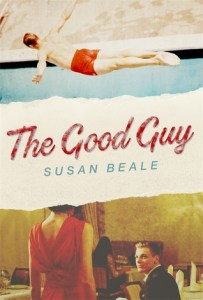 The Good Guy by Susan Beale: You might think there’s nothing new to add to the suburban-angst-and-adultery storyline. What Beale does so beautifully in this debut novel is to put you right into the minds of the three main characters. This is a story about the differences between what’s easy and what’s right, and the quest to make amends wherever possible. It’s also a cautionary tale: be careful what you wish for, because that boring life you were so eager to escape may just be what you wanted after all. I also love the range of settings, from the dazzling Shoppers’ World mall to a beach house on Cape Cod. This is a delicious, slightly gossipy summer read with a Mad Men feel to it. I’d especially recommend this to fans of The Longest Night and Tigers in Red Weather. Releases June 16th.

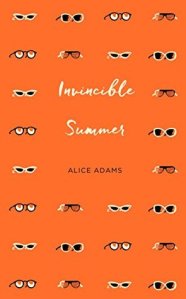 Invincible Summer by Alice Adams: Four Bristol University friends navigate the highs and lows of life in the 20 years following graduation. Like in One Day, the narrative checks in on the characters nearly every summer. As happens in real life, even the closest friends gradually drift apart. Job situations and relationships change, and external events like the financial collapse of 2008 take a toll. Compared to some other similar recent novels (e.g. Why We Came to the City by Kristopher Jansma), this debut somewhat lacks sparkle. Releases June 2nd in the UK and June 28th in the USA.

This Must Be the Place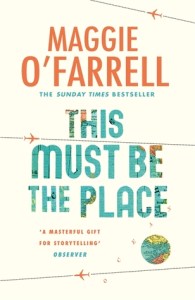 by Maggie O’Farrell: O’Farrell’s globe-trotting seventh novel opens in 2010 with Daniel Sullivan, an American linguistics professor in Donegal. Spreading outward from Ireland and reaching into every character’s past and future, this has all O’Farrell’s trademark insight into family and romantic relationships, as well as her gorgeous prose and precise imagery. The disparate locations and the title suggest our nomadic modern condition. It’s the widest scope she has attempted yet; that’s both a good and a bad thing. I did wonder if there were a few too many characters and plot threads.
BookBrowse
(A subscriber service, so I can only make excerpts available.)
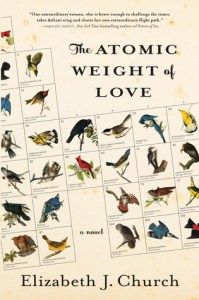 The Atomic Weight of Love by Elizabeth J. Church: In Church’s debut, an amateur ornithologist learns about love and sacrifice through marriage to a Los Alamos physicist and a relationship with a Vietnam veteran. Torn between two men who mean so much to her, Meri has to consider what her true duties are. “There was no good solution. No clear way out, no approach that would earn the Good Housekeeping Seal of Approval,” she wryly observes. I instantly warmed to Meri as a narrator and loved following her unpredictable life story. Church reveals the difficulty a woman of that time had in choosing her own path and making it fit into men’s plans, and shows how love, as the title suggests, can be a burden but also a thing of reassuring substance. Meri longs, like one of her beloved birds, to take flight into her dreams. Whether she gets there, and how, is a bittersweet trip but one you’ll be glad you went along for.
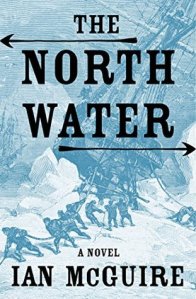 The North Water by Ian McGuire: A gritty tale of adventure and murder set aboard a mid-nineteenth-century whaling ship. Archaic adjectives pile up in a clever recreation of Victorian prose: “The men, empurpled, reeking, drenched in the fish’s steaming, expectorated gore.” Much of the novel is bleak and brutal like that. There are a lot of “F” and “C” words, too; this is so impeccably researched that I don’t doubt the language is accurate. McGuire never shies away from gory detail, whether that’s putrid smells, bodily fluids, animal slaughter, or human cruelty. I thought the novel’s villain was perhaps too evil, with no redeeming features. Still, this is a powerful inquiry into human nature and the making of ethical choices in extreme circumstances. From the open seas to the forbidding polar regions, this is a journey worth taking.
Foreword Reviews
Rediscovering the Immune System as an Integrated Organ by Peter Bretscher: A rigorous introduction to current immunological thought. Vocabulary terms are given in bold italics and defined in context on first use, and each chapter ends with a helpful synopsis. However, these summaries are almost as dense as the text itself, and the many acronyms are difficult to keep straight. Unlike a textbook, though, the book also contains welcome snippets of autobiography. Bretscher traces not just the evolution of immunological knowledge, but also the development of his own thinking. This will be an invaluable resource for students in search of a nonstandard immunology primer. With research under way into vaccinations against AIDS, tuberculosis, and cancer, the field has a bright future.
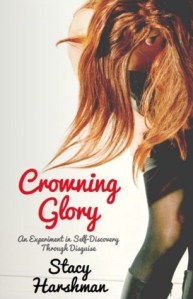 Crowning Glory: An experiment in self-discovery through disguise by Stacy Harshman: In 2005, Harshman decided to embark on a sociological experiment-cum-personal challenge: each week for six weeks she donned a different wig, and with the help of her assistant, Bonnie, she carefully recorded the reactions she received from onlookers and potential partners. Each day she chose three New York City locales, taking in events like lunch, happy hour, and late night socializing. Recalling the time she was hospitalized for a psychotic break in 2000, she marvels at how changing hairstyles could help her feel self-assured and sexy. The book is an appealing cross between a scientific study and a spy story.
Nudge
 All at Sea by Decca Aitkenhead: In May 2014, Aitkenhead, a Guardian writer, was on vacation with her partner Tony Wilkinson and their two young sons in Jamaica. A beautiful sunny morning turned disastrous when Tony swam out to rescue their son Jake and drowned. After the tragic events of the first chapter, this wrenching memoir retreats to consider the 10 years she and Tony (a former criminal and crack addict) spent as “the most implausible couple I have ever known.” More than half the book is devoted to the aftermath of Tony’s death, described in a matter-of-fact style that still manages to convey the depth of Aitkenhead’s pain. This is a unique combination of a journalist’s forthright storytelling and the ‘magical thinking’ Joan Didion introduced. Releases in the States on August 16th.
 Diary of a Short-Sighted Adolescent by Mircea Eliade: This rediscovered Romanian classic is what you might get if a teenage Adrian Mole was studying for a philosophy degree. Before picking this up I knew of Eliade as a commentator on world religions. I didn’t realize he also wrote novels. This is particularly special in that it’s a lost manuscript he wrote as a teenager; it was only discovered in a Bucharest attic after his death in the 1980s. The novel’s chief detriments – the repetitive nature of the sections about his schooling, and his obsessive introspection – are also, ironically, what make it most true to the adolescent experience. I’d recommend it to fans of My Brilliant Friend and Melanie Sumner’s How to Write a Novel.

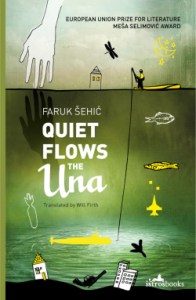 Quiet Flows the Una by Faruk Šehić: This autobiographical novel by a Bosnian poet and former soldier is full of poetic language and nature imagery. The narrator transcends his sordid war memories through his magical approach to life. Actual war scenes only come much later in the book; even then they are conveyed in such an abstract style that they seem more like hallucinations than remembered events. The lyrical writing about his beloved river provides a perfect counterpoint to the horror and absurdity of war. “We made this town, Bosanska Krupa, of black mire, yellow sand and green water borrowed from the Una. The tall towers of our town tickle God’s feet.” What most impressed me about passages like that one is the alliteration that shines through even after translation. I would highly recommend this to readers of Anthony Marra and Daniel Kehlmann.

 Shelter by Jung Yun: A Korean-American family faces up to violence past and present in this strong debut. Finances and relationships just keep going from bad to worse, as the novel’s tripartite structure suggests: “Dawn” cedes to “Dusk,” which descends into “Night.” You wonder just how terrible things can get – will this really reach the Thomas Hardy levels of tragedy it seems to portend? – until, in the incredible last 10 pages, Yun pulls back from violence and offers the hope of redemption. I did wonder if there were a few too many secondary characters. However, the Korean-American culture of honor and shame makes a perfect setting. I would recommend this to fans of David Vann and Richard Ford.
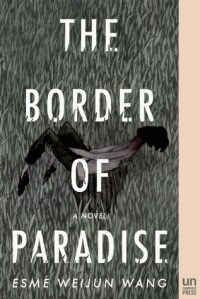 The Border of Paradise by Esmé Weijun Wang: Mental illness haunts an Asian-American family in this offbeat multi-generational saga. Wang’s debut novel opens in 1968 with David Nowak reporting from the motel room where he plans to kill himself. Succeeding portions of the novel are narrated from other perspectives: David’s wife Jia-Hui, aka Daisy, whom he met in Taiwan; then their son William and his half-sister Gillian. Jia-Hui’s narrative is the most entrancing. Presented as a translation, it includes occasional foreign characters or blank spaces where she couldn’t quite catch what someone was saying in English. Her sections are full of foreboding about the family legacy of madness. I was reminded most of A Reunion of Ghosts and All My Puny Sorrows. Something about this book left a slightly bitter aftertaste for me, but there’s no doubt Wang has fine plotting, character building, and prose skills.
 The Story of a Seagull and the Cat Who Taught Her to Fly by Luis Sepúlveda: Zorba, a fat black cat, will be alone this summer while his boy’s family go on holiday – convenient given the adventure that’s about to befall him. Kengah, an exhausted and oil-drenched seagull, lands on his balcony and lays a final, precious egg. She makes Zorba promise he will not eat the egg but will look after her baby and teach it to fly. He enlists his motley group of fellow cats at the port of Hamburg to help him figure out how to raise a chick. Sepúlveda, a Chilean author, was jailed under the Pinochet regime and was later on the crew of a Greenpeace ship. The environmental message here is noticeable but not overpowering. Geared towards confident nine- to eleven-year-olds, this might also be read aloud with younger children.
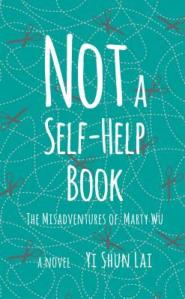 Not a Self-Help Book: The Misadventures of Marty Wu by Yi Shun Lai: Marty Wu is an advertising account executive for a NYC retirees’ magazine but dreams of opening her own costume shop. This debut novel is her Bridget Jones-esque diary, often written in a kind of shorthand style contrasting her goals with her seemingly inevitably failures, as in: “Crap. Is 4:00 a.m. Have breakfast meeting. Must sleep.” She’s constantly quoting to herself the advice and wisdom she’s gleaned from various motivational books she picked up in hopes of self-improvement. Lai writes engagingly about the contrasts between Taiwan and the States, especially the complexities of family roles. This is a lighthearted, summery read. Watch Marty ditch self-help books and start living the life she wants anyway.
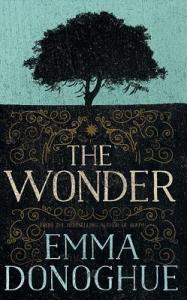 The Wonder by Emma Donoghue: A nurse investigates the case of an Irish girl surviving without food for months: miracle or hoax? The novel draws on about 50 historical cases of “Fasting Girls” that occurred in Europe and North America in the 16th to 20th centuries. It sets up a particularly effective contrast between medicine and superstition. Donoghue writes convincing, vivid historical fiction, peppering the text with small details about everything from literature to technology. This is the fifth book I’ve read by her, and it’s by far my favorite. With the two-week time limit and the fact that most scenes take place in the cabin – with just a handful set in other village locales like the bog and the pub where Lib stays – this has something of the flavor of a locked-room mystery. Releases September 20th.
Football by Jean-Philippe Toussaint: A nostalgic tour through a soccer fan’s highlights. Over the years Toussaint has realized what he loves about the sport: its seasonality (the World Cup “comes round every four years with the regularity of a leap-year seasonal fruit”) and the rituals of attending a match. On the other hand, he recognizes downsides, such as temporary permission given to chauvinism and the fact that it doesn’t age well – it’s an instant thing; one doesn’t tend to watch repeats. My favorite chapter, set in 2014, is less about sports and more about a hard time in the author’s personal life: he had recently lost his father and finished a ten-year novel sequence, leaving him unsure what to do next. I enjoyed his introspective passages about the writing life and the sense of purpose it gives his struggles. I was not the ideal reader, given my general antipathy to sports and my unfamiliarity with the author. All the same, I can see how this would appeal to fans of Fever Pitch.
Reviews Roundup, February–March
One of my goals with this blog was to have one convenient place where I could gather together all my writing that appears in disparate online locations. To that end, once a month I provide links to all book reviews I’ve published elsewhere, with a rating (below each description) and a taster so you can decide whether to read more. A few exceptions: I don’t point out my Kirkus Indie, BlueInk or Publishers Weekly reviews since I don’t get a byline. Meanwhile, I’ve done my first article for the Los Angeles Review of Books – exciting!
The Bookbag
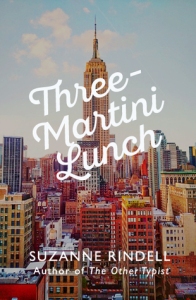
Three-Martini Lunch by Suzanne Rindell: Brings the late 1950s, specifically the bustling, cutthroat New York City publishing world, to life through the connections between three young people who collide over a debated manuscript. The three first-person voices fit together like a dream. It’s an expert evocation of Beat culture and post-war paranoia over Communism and homosexuality. Walking into Eden’s office, especially, you’ll think you’ve landed on the set of Mad Men. This classy, well-plotted follow-up will win Rindell even more fans and tide us all over until the film version of The Other Typist – produced by and starring Keira Knightley – appears. Releases May 19th in the UK.
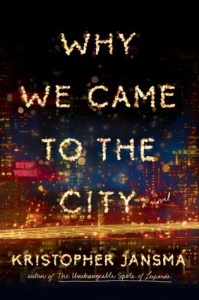 Why We Came to the City by Kristopher Jansma: Five university friends strive to make their lives count against the indifferent backdrop of recession-era New York City. When one of them falls ill, they pull together like a family. The tone of the novel lies somewhere between A Little Life and the sitcom Friends (a Mexican version of which the characters watch obsessively). Even as his characters realize that they are not special and not in control of their lives, Jansma never lets his book descend too far into gloom. Narrowly misses out on 5 stars from me because the storyline loses momentum in Part Two. Rich with emotion and literary allusions (from Walden to The Iliad), this is my favorite novel of the year so far.
Waltzing in Vienna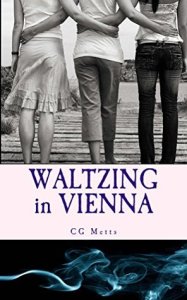 by C.G. Metts (& interview): Three girlfriends – a singer staging a comeback, a psychology professor reawakening to sexuality after being widowed, and a socialite Southern Belle – are reunited in Charleston, South Carolina in their early forties. Remembering their wild college days, they wonder how to make midlife count. There’s a fun Sex and the City or Ya-Ya Sisterhood vibe to this recommended debut novel. I liked the mixture of nostalgia and gentle feminism, and I think this may also inspire readers to see South Carolina’s coastal landscape for themselves. The title phrase is the friends’ shorthand for smoking marijuana together.
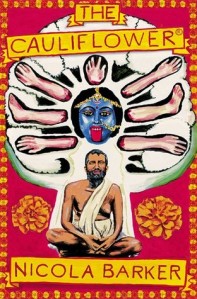 The Cauliflower® by Nicola Barker: Put simply, this is a fictionalized biography of the largely illiterate Hindu guru Sri Ramakrishna (1836–1886). That may sound dry as dust, but Barker makes it a playful delight by skipping around in time and interspersing aphorisms, imagined film scenes, questions and answers, and even a recipe with the narrative chapters. The kernel of the story – set in 1857 at the Dakshineswar Kali Temple, six miles north of Calcutta – is narrated in the first person by the guru’s nephew, Hriday. Scripture of all types (the Bible is also cited) is a relevant, joyful echo here rather than a dull set of rules. Bizarre but very readable. Releases April 21st.
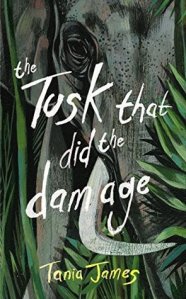 The Tusk That Did the Damage by Tania James: This composite picture of the state of wildlife conservation in India is told from three perspectives: an elephant named the Gravedigger, a poacher, and a documentary filmmaker. James ably intersperses three voices as she explores how people fail to live up to their ideals and make harmful assumptions. Despite these attributes, it was one of those books I had to force myself through. Perhaps it was the environmental agenda: if a book is going to wear its message so openly, it has to live up to it in terms of the writing. I might have preferred it if the whole novel had been from Emma’s point of view, with one climactic encounter with the Gravedigger to make the poaching question immediate and not simply academic.
BookBrowse
Dog Run Moon: Stories by Callan Wink [subscription service]: Wink’s debut story collection, set mostly under Montana’s open skies, stars a motley cast of aimless young men, ranchers, Native Americans, and animals live and dead. He plays around with Western stereotypes in intriguing ways. A few of the tales are a bit less compelling, and I would have preferred more variety in narration (8 of 9 are third person), but the stand-outs more than make up for it. My two favorites were “Runoff” (there’s a double meaning to the title) and “Exotics,” in which all the characters are lured by the life they don’t currently have.
 For Books’ Sake
Interview with Rachel B. Glaser, author of Paulina & Fran [my review of which was in last month’s roundup]
Foreword Reviews
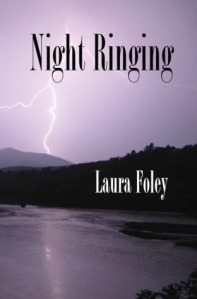 Night Ringing by Laura Foley: Foley’s strong fifth collection ruminates on romance and family via autobiographical free verse. One of the collection highlights is “In the Honda Service Area,” which unexpectedly unites modern technology with ancient literature. While a woman describes her impending hip replacement surgery to a friend, Foley tries to concentrate on Homer’s Iliad. The collection is dedicated to Foley’s partner, Clara Giménez, and lesbian romance is a subtle undercurrent. Especially recommended for fans of Jane Hilberry and Adrienne Rich.
The Temple of Paris by Laura DeBruce: This second volume in Laura DeBruce’s Quicksilver Legacy trilogy is a fast-paced fantasy adventure novel. In the previous book, the author introduced the “Immortals,” centuries-old creatures who are impervious to disease and aging due to a magic elixir. If Hana, the teenage protagonist, can learn how to use the elixir in her possession correctly, she can save her mother from a potentially fatal blood disorder. Although the complicated plot might be challenging for those new to the series, older teens will appreciate the rollicking story and the chance for vicarious European sightseeing.
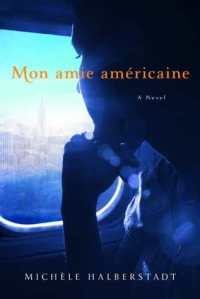 Mon amie américaine by Michèle Halberstadt: After years of heavy smoking and migraines, a brain aneurysm plunges forty-year-old Molly into a coma. The novel is presented as Michèle’s confessional letter to her American friend Molly, addressed in the second person. During Molly’s coma and after she wakes up, Michèle ponders their unlikely friendship and also frets over her threatened marriage. The novella is like a cross between Jenny Offill’s Dept. of Speculation and Jean-Dominique Bauby’s The Diving-Bell and the Butterfly, and bears tantalizing traces of deliberate homage to Pedro Almodóvar’s coma-themed Talk to Her: an understated dual account of betrayal and disability.
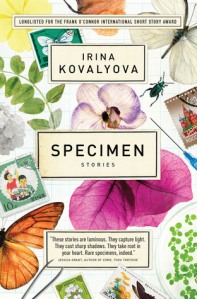 Specimen: Stories by Irina Kovalyova: “People like to pretend that our genes define the truth for us. But I assure you that’s not the case,” a character insists in the title story. Diverse in setting and form, these nine stories, long-listed for the Frank O’Connor International Short Story Award, contrast the scientific understanding of genetics with deeper wisdom about the bonds of love and family. Nestling science into rich psychological narratives, Kovalyova’s work is reminiscent of that of Andrea Barrett and A. S. Byatt; in fact, the latter is directly referenced in one story. She also channels Anthony Marra and Adam Johnson by affirming love’s survival in spite of repressive situations.
Of Crime and Passion by Jonathan Harnisch: In this novella, a proud young man seeks to transcend his underprivileged upbringing by worming his way into the homes of the rich and seducing powerful women. At its heart, the book is about the ongoing conflict between economic and social classes. With the melodramatic action and old-fashioned dialogue, though, it is easy to imagine this coming-of-age tale working better in the form of a play.
Hakai Magazine
(a Canadian publication highlighting coastal ecosystems)
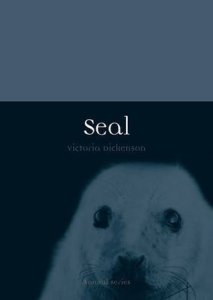 Seal by Victoria Dickenson: “It is hard to imagine a creature more distant from the human species in bodily form, habits, and habitat than the seal,” Dickenson writes in her introduction, “yet our mutual regard tells of a long, shared history of interaction.” Seal is the latest in the 80-strong Animal series from Reaktion Books. Like other volumes, this gives a brief discussion of the featured animal’s evolutionary biology, followed by an interdisciplinary survey of how it has entered human culture throughout history. In the final two chapters—the highlight of an occasionally dry book—Dickenson gives a balanced account of the history of hunting seals.
Los Angeles Review of Books
“Rediscovering an Overlooked Woman Novelist”: A dual review of Constance Fenimore Woolson: Portrait of a Lady Novelist by Anne Boyd Rioux () and Miss Grief and Other Stories (), a new selection of Woolson’s short fiction.
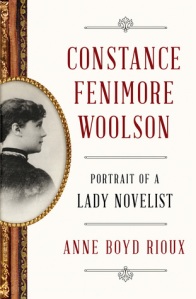
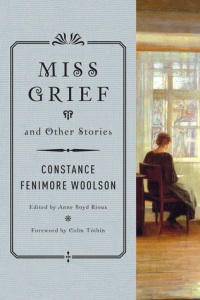 Constance Fenimore Woolson (1840–1894) is most often remembered for her connection to male writers; her great-uncle was pioneering American novelist James Fenimore Cooper, and in her later years as an expatriate in Europe she associated with Henry James, fueling rumors of a romance between them. Deserving to be known in her own right, Woolson represents key junctures between realism and regionalism, and between American and European styles. Gives a remarkable picture of a bold, bright woman who paved the way for writers such as Edith Wharton, E. M. Forster, and Willa Cather, and who arguably might be hailed in the same breath as Henry James and George Eliot.
Nudge
My quick response to Instructions for a Heatwave, for a Maggie O’Farrell retrospective: Another spot-on tale of family and romantic relationships – O’Farrell always gets the emotional tenor just right. You may spot hints of Rachel Joyce’s The Unlikely Pilgrimage of Harold Fry or Bernhard Schlink’s The Reader, but the psychological and linguistic precision is all O’Farrell’s own. Her descriptive language is unfailingly elegant. I love how she opens with the heat as the most notable character: “It inhabits the house like a guest who has outstayed his welcome: it lies along corridors, it circles around curtains, it lolls heavily on sofas and chairs.”
Pretentiousness: Why It Matters by Dan Fox: This wide-ranging essay discusses pretentiousness as it relates to class, taste, and modern art. Fox grew up outside of Oxford but now lives in New York City, where he is the co-editor of frieze. From its Latin etymology we learn that pretentious means “to stretch before,” so to hold something in front of you like a mask. He thus starts off by talking about acting techniques and rhetoric, then broadens this out to themes of authenticity and self-discovery. The most interesting part of the book concerns class connotations. This is a somewhat meandering work, and though it has good individual lines it is not always riveting.
 Third Way magazine
I’ve reviewed books, mostly fiction, for them for the last 2.5 years; sadly, the April 2016 issue will be the final one. It’s a shame; the progressive Christian perspective on popular culture is a niche it will be hard to fill.
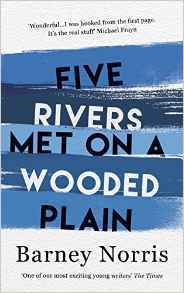
Five Rivers Met on a Wooded Plain by Barney Norris: Barney Norris is a playwright in his twenties, so it’s no surprise that there’s something a little staged to his debut novel. The lives of the book’s five narrators collide one night when a car hits a moped in Salisbury town center. We hear from each protagonist in turn as they reflect on their losses and wonder whether religion – represented by Salisbury Cathedral and the scripture and rituals of Christianity – might help. Rita is the liveliest and most engaging character, difficult as her expletive-strewn narrative might be to traverse. Like David Nicholls, Norris prizes emotional connection and delivers a theatrical plot. If he can avoid the more clichéd aspects of a novel like One Day, he could have a long career in fiction ahead of him. Releases April 21st.
I also post reviews of most of my casual reading and skimming on Goodreads:
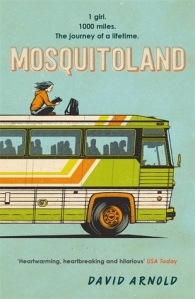 Mosquitoland by David Arnold: I don’t read a whole lot of YA, but the voice of this one captured me right away. Like Hazel in The Fault in Our Stars, Mim (Mary Iris Malone) is a lovably sarcastic oddball – she describes herself as “a young Ellen Page” à la Juno – with some hidden issues that come out over the course of the book. Here Mim’s journey takes the form of a road trip from Mississippi, where she lives with her father and new stepmother, back to Ohio to be with her sick mother. She meets a kooky cast of secondary characters along the way, narrowly escapes danger, and even gets a chance at romance.
A Change of World: Poems by Adrienne Rich: This is a forthcoming Norton reissue of Rich’s first collection from 1951. I’d always thought of her as a later, feminist poet, so it was jolting to see an introduction from W.H. Auden – that made it feel like a real generational crossover. It’s a very impressive debut, full of mannered, rhyme-rich verse. Two favorites were “Walden 1950” (“Thoreau, lank ghost, comes back to visit Concord, / Finds the town like all towns, much the same— / A little less remote, less independent”) and “The Innocents.” I’ll be interested to read some of her later work and see if she loosened up with form. Releases June 21st.
 The Shadow Hour by Kate Riordan: A clever dual-timeline novel with a pleasing Gothic flavor. In 1922 Grace Fairford takes up a governess position at Fenix House near Cheltenham, the very place where her grandmother, Harriet Jenner, worked in 1878. Every few chapters the perspective shifts from Grace (first person) to Harriet (third person). The novel is full of coincidences and the sense of history repeating itself. Riordan’s writing is capable, sometimes clichéd, but the echoes of Jane Eyre and The Turn of the Screw make this a delicious guilty-pleasure read.
Life’s Too Short to Pretend You’re Not Religious by David Dark: Etymologically, the word “religion” means to bind together again. Simply put, Dark’s thesis is that we’re all connected: we are in relationship with the people around us and can’t pretend otherwise. What we need is a shared vision for our shared life, and that involves engaging with other people. No pie-in-the-sky theology here; Dark affirms Daniel Berrigan’s assertion that “the actual world is our only world,” so things like climate change, gun control, immigration, and foreign policy are religious issues because they affect us all in this life. Together we have to imagine another story that isn’t capitalism and American imperialism as usual.
Adios, Cowboy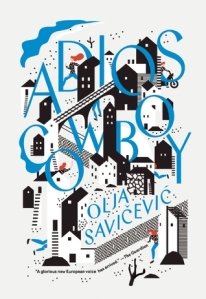 by Olja Savičević Ivančević: In summer 2009, Dada (aka Rusty) returns to her Croatian hometown to care for her mother. Going home facing up to the fact of her brother’s death – when he was 18 he threw himself under a train. “One has to sit down beside one’s demon and mollify it until it’s calm – that’s all, perhaps, that can be done,” she muses. Now for the title: Dada’s late father, brother, and friends (“the Iroquois Brothers”) were all big on cowboys and Indians. When news comes that a spaghetti western actor/director named Ned Montgomery will be passing through town, it causes Dada to think about her father and her brother and, what’s more, about the workings of her own memory.
Now Go Out There: (and Get Curious) by Mary Karr: There’s not much to this Syracuse University commencement speech. Leftovers of sob-story autobiography and clichéd advice cobbled together. Disappointing given how much I loved Karr’s recent The Art of Memoir. For a truly inspirational graduation address, I recommend David Foster Wallace’s This Is Water.

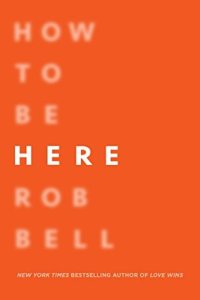 How to Be Here: A Guide to Creating a Life Worth Living by Rob Bell: Bell left his pastoral role to become a motivational speaker so, unsurprisingly, this book is closer to self-help than theology. He’s good pals with Elizabeth Gilbert, and this book would make a great companion piece to her Big Magic. It’s about how to find what gets you out of bed in the morning and live mindfully. As always, his formatting – bite-size paragraphs, stretching out phrases with line breaks – is slightly annoying. I didn’t learn a whole lot; it was more a case of being reminded of things I knew deep down. He prefaces most chapters with an anecdote about his creative ventures, some of which were utter failures.
And my highest recommendation goes to…
The Summer Guest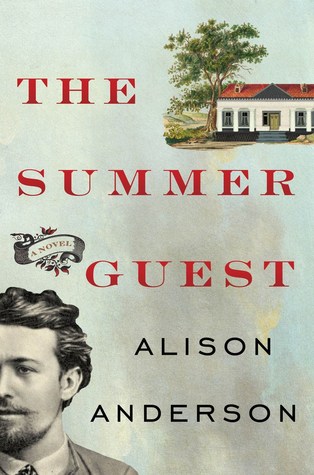 by Alison Anderson: The kernel of the novel is a true story: for two summers in the late 1880s, Chekhov stayed at the Lintvaryovs’ guest house in Luka, Ukraine. One strand of the narration is a journal kept during those years by Zinaida, the family’s eldest daughter, a doctor dying of a brain tumor. Zina’s story is offset by those of two contemporary women. Katya, a Russian émigré in London who’s trying to keep her failing publishing house afloat, sends the never-before-published diary to Ana, a translator based near the French border with Switzerland. There’s a touch of mystery here: where was the diary found? And what became of the novel Chekhov mentions he had in progress? Ana’s search for answers takes her to the Lintvaryov estate, even though Ukraine in 2014 is a hotbed of unrest. Having recently watched the BBC War & Peace miniseries with rapt interest and seen a Tchaikovsky symphony performance, it was the perfect time to get lost in an intricate, playful novel about how Russian literature still resonates. I’ll certainly be looking up Anderson’s other novels.
The Novel Cure—Bibliotherapy in Action
A good book, read at the right moment, should leave you uplifted, inspired, energized and eager for more. With so many books to choose from, what’s the point of reading even one more that leaves you cold?
I’ve mentioned my interest in bibliotherapy before. Well, for anyone new to the concept or interested in finding out more, The Novel Cure by Ella Berthoud and Susan Elderkin, two of the bibliotherapists at London’s School of Life, is an accessible introduction. Subtitled “An A–Z of Literary Remedies,” this is a learned and at times tongue-in-cheek book of advice about what fiction to read if you’re suffering from any sort of malady – physical, psychological, or imagined.
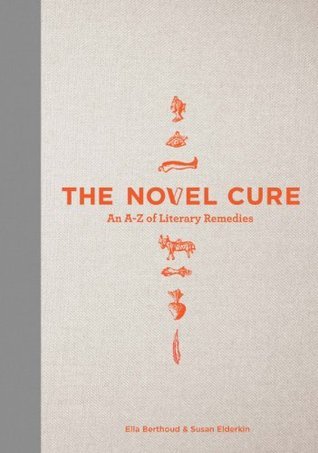 The alphabetical format and “see also” asides make it more like a cross-referenced encyclopedia than a book to read straight through, though I tried it both ways. Initially I flipped through at random, letting one entry take me to another related one and so on, but after a while I went back to the start and caught up on unread entries to finish within a year.
“It helps enormously at times of stress to read about other people who are going through similar things; watching how other people cope or fail to cope will make you feel less alone and give you strength,” the authors write to introduce the “cancer, caring for someone with” entry. I found this to be true when my sister lost her husband to cancer last year. She had never been a reader – apart from celebrity magazines – but in the past year she’s read nearly 90 books, many of them memoirs about illness and bereavement. Books are how I’ve always made sense of the world, so it’s been incredibly gratifying to see her turn to them as well. There are plenty of recommendations I’ll pass on to her from this book, especially “death of a loved one” (After You’d Gone by Maggie O’Farrell and Extremely Loud and Incredibly Close by Jonathan Safran Foer) and “widowed, being” (The Same Sea by Amos Oz and Major Pettigrew’s Last Stand by Helen Simonson).
You’ll be amazed at the range of conditions and circumstances for which the book offers prescriptions. Newly retired? “Bucolic and tranquil, The Enigma of Arrival [by V.S. Naipaul] will encourage you to take stock of your life and enjoy the unfolding of new possibilities.” Workaholic? “Immerse your desiccated soul in something very simple, very rustic, very small. We suggest [Thomas] Hardy’s gentlest, most innocent novel, Under the Greenwood Tree.” Two sections that felt particularly relevant to me as a vertically challenged freelancer were “short, being” and “tax return, fear of doing.” Meanwhile I’ll be pointing my husband to “baldness,” “flying, fear of,” “stress” and “tinnitus” (poor chap). But some of these entries surely resulted from the authors thinking “hey, here’s a great book we have to mention,” and then coming up with a category to fit it into, like “determinedly chasing after a woman even when she’s a nun” for In the Skin of a Lion by Michael Ondaatje.

I think I prefer this U.S. cover.
Indeed, there’s a certain levity to this book that I think some reviewers have missed. These aren’t all entirely serious suggestions, though they are all worthwhile books. I especially liked the sections where the authors incorporate pastiche of the book in question. A piece recommending Pamela by Samuel Richardson is in the form of an old-fashioned letter, for example, while “single, being” apes Bridget Jones’s diary entries. They even imitate certain authors’ prose style, as in “Who poses questions without question marks and observes the subtle changes in the light with exquisite brevity.” Answer: J.P. Donleavy, apparently.
The book is also a great source of top ten lists (I’m working through their novels for thirty-somethings) and advice for how to deal with reading crises (e.g. “busy to read, being too” and “giving up halfway through, tendency to”). My only criticism of the book – and this is one I level against many examples from the ‘books about books’ genre – is that there’s a fair bit of plot summary, sometimes so much so that it puts me off reading a book rather than whets my appetite for it.
It’s a bit belated (or early) for suggesting this as a Christmas gift for a book lover, but perhaps you can hand it over as a birthday gift or an anytime present – even to yourself. I got my copy on Amazon for £4, quite a bargain for a book I’ll be returning to again and again over the years.
My rating: 
Do you agree that novels have the power to cure, or at least help with, problems?
Review: Early One Morning by Virginia Baily
Like the Roberto Benigni film Life Is Beautiful, Virginia Baily’s second novel* shows how the Holocaust affected Italy’s Jews. It’s not a Holocaust novel, though; it’s a before-and-after story that’s more about adoption, coming of age when you don’t know who you are, and adapting to motherhood. It’s about choices, inevitabilities, regrets and a love that endures.
 October 1943: Chiara Ravello is walking near Rome’s Jewish ghetto when she spots a large group of people being herded into trucks. A Jewish woman catches her eye and directs her seven-year-old son to go with Chiara. Pretending the boy is her nephew, Chiara saves him from certain death. The war years have been a hard time for the Ravello family: Chiara’s father and her fiancé both died about five years ago, and her mother perished in a bombing a few months ago. Now she and her epileptic sister Cecilia are preparing to flee the occupation by taking refuge in their grandmother’s home in the hills above Rome. Chiara never expected to be a mother after Carlo’s death, but now she has the chance to raise Daniele Levi as her own.
That’s where many novels would have ended it: with a hopeful conclusion after a time of hardship; with a new beginning spooling out in the future. Instead, this is where Baily starts her bittersweet tale. It’s no happily ever after for Chiara and Daniele; indeed, over the years that Daniele is a silent, sullen boy, then a rebellious teenager, and finally a drug addict, Chiara will frequently question the impulsive choice she made that morning in 1943. She seems doomed, in Daniele’s eyes at least, to be “the wicked stepmother, half-provider, half-tyrant.” This gives the novel something of the flavor of Lionel Shriver’s We Need to Talk about Kevin, another rare instance of fictional ambivalence about motherhood.
There’s an extra layer to the novel, however. In 1973, Chiara learns that Daniele has a daughter he never knew: Maria, now 16, lives with her mother in Wales. Angry and unsure of her new identity, Maria has boycotted her school leaving exams and asks to live with Chiara for the summer instead. Baily describes these two very different characters equally well, and does a great job of capturing the feel of Rome and its surroundings, especially through Maria’s viewpoint. She also moves deftly between the events of 1943–44 and those of 1973 in alternating chapters, giving subtle clues as to the time period through her interesting choice of tense: right up to the last chapter, she uses the present tense to describe past action, and the past tense for current action.
Through the flashbacks, we learn surprising truths about how Chiara abandoned a family member and gained a best friend. She made dubious choices during the war, but also showed great bravery and generosity. Baily gives just enough away, and so gradually that the novel’s nearly 400 pages pass quickly. In touching on World War II and the Holocaust only peripherally, the novel avoids well-worn, clichéd narratives and does something new.
The writing does not draw attention to itself; there are no long-winded descriptions or ornate sentences. Baily relies more on food (as in “[Maria’s] insides were lubricated with olive oil”) and period fashion to add detail and local color. Still, where there is metaphorical language it usually refers to animals and seems both appropriate and evocative. I also love the warm, earthy tones of the book’s cover, which reminds me of my time spent in Tuscany last year. However, I’m not sure the novel’s title works; it doesn’t say enough about the book.
Still, I admire how Baily takes what seems like a familiar Holocaust rescue story and turns it on its head. A late passage in which Chiara watches over Daniele as he sleeps off a hangover hints at the emotional ambiguities she conveys here:
Funny how sometimes she used to think that because he had this horseshoe birthmark, a talisman of good fortune imprinted in his skin, he carried his luck with him. How she persisted in thinking it was luck that had saved him when the rest of his family had perished, and not, as he seems to want to demonstrate to her, its opposite.
‘I don’t blame you, Ma,’ he has told her more than once.
‘So why are you so intent on throwing your life away?’ she has asked him, but he doesn’t seem to have an answer.
 I would particularly recommend this novel to fans of Maggie O’Farrell and Anthony Doerr. Read this alongside Julia Blackburn’s Thin Paths or another choice from my Italian summer reading list – it’s the next best thing to being there.
My rating: 
*At first I presumed this was a debut, but it turns out she wrote one novel previously, under the name Ginny Baily, Africa Junction (2011).
Many thanks to Virago for my free copy, received through a newsletter giveaway.
 Bookish Beck = Rebecca Foster. American transplant to England. Freelance proofreader and book reviewer.
 Bookish Beck