Short Story Catch-Up: Carver, Cunningham, Park, Polders, Racket, Schweblin, Williams (& Heti Stand-Alone)
I actually read 15 collections in total for Short Story September. I’m finally catching up on reviews, though I’m aware that I’ve missed out on Lisa’s link-up. (My other reviews: Heiny, Mackay, McEwan; the BBC National Short Story Award 2025 anthology; Donoghue, Grass, Isherwood, Mansfield as part of my Germany reading.) To keep it simple and get the basics across before I forget any more about these books, I’ll post some shorthand notes under headings.
Cathedral by Raymond Carver (1983)
Why I read it:
- I’d really enjoyed What We Talk about When We Talk about Love.
- This fits into my project to read books from my birth year.
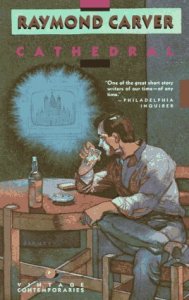 Stats: 12 stories (6 x 1st-person, 6 x 3rd-person)
Themes: alcoholism, adultery, fatherhood, crap jobs, crumbling families
Tone: melancholy, laconic
File under: grit-lit
For fans of: John Cheever, Ernest Hemingway, Denis Johnson
Caveat(s): It doesn’t match What We Talk about When We Talk about Love.
If you read just one story, make it: “A Small, Good Thing”
(University library) 
A Wild Swan and Other Tales by Michael Cunningham (2015)
Why I read it:
- I have a vague plan to read through Cunningham’s whole oeuvre.
- This one is different to his others, and beautifully illustrated by Yuko Shimizu.
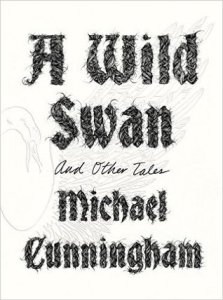 Stats: 11 stories (3 x 2nd-person, 8 x 3rd-person)
Themes: coming of age, longing, loss, bargaining
Tone: witty, knowing
File under: fairy tale updates
For fans of: Margaret Atwood, Neil Gaiman
Caveat(s): For the most part, he doesn’t do anything interesting with the story lines.
If you read just one story, make it: “Little Man” (the Rumpelstiltskin remake)
(Secondhand – Awesomebooks.com) 
An Oral History of Atlantis by Ed Park (2025)
Why I read it:
- I’d heard buzz, probably because Park was a Pulitzer Prize finalist for his novel.
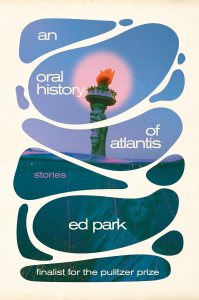 Stats: 16 stories (12 x 1st-person, 1 x 1st-person plural, 1 x 2nd-person, 2 x 3rd-person)
Themes: the Asian American and university experience, writing, translation, aphorisms
Tone: jokey, nostalgic
File under: dystopian fiction, metafiction
For fans of: George Saunders
Caveat(s): There’s more intellectual experimentation than emotional engagement.
If you read just one story, make it: “An Accurate Account”
(Read via NetGalley)
Woman of the Hour by Clare Polders (2025)
Why I read it:
- I always like to sneak at least one flash fiction collection in for this challenge.
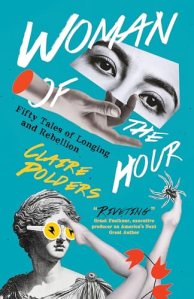 Stats: 50 stories, a mixture of 1st- and 3rd-person
Themes: childhood, sexuality, motherhood, choices vs. fate
Tone: sharp, matter-of-fact
File under: feminist, satire
For fans of: Claire Fuller, Terese Svoboda
Caveat(s): There’s too many stories to keep track of and not enough stand-outs.
If you read just one story, make it: “Woman of the Hour”
(BookSirens)
Racket: New Writing Made in Newfoundland, ed. Lisa Moore (2015)
Why I read it:
- Naomi’s blog always whets my appetite for Atlantic Canadian fiction, but I’m rarely able to find it over here.
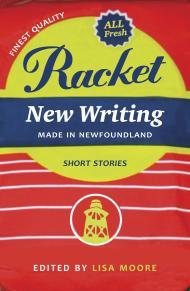 Stats: 11 stories, mostly by Memorial University creative writing graduates (7 x 1st-person, 1 x 2nd-person, 3 x 3rd-person)
Themes: mental health, bereavement, tragic accidents
Tone: jaunty, reflective
File under: voice-y early-2000s lit-fic
For fans of: Sharon Bala (her story is among the best here), Jonathan Safran Foer; hockey
Caveat(s): I wouldn’t say I’m now a fan of any of the writers I hadn’t heard of before.
If you read just one story, make it: “23 Things I Hate in No Particular Order” by Gary Newhook
(Little Free Library)
Good and Evil and Other Stories by Samanta Schweblin (2025)
[Translated from Spanish by Megan McDowell]
Why I read it:
- I thought it would be good to add in another title in translation.
- I’d read Schweblin before (but I wish I’d remembered that I rated Fever Dream 2*.)
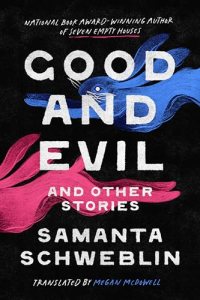 Stats: 6 stories (5 x 1st-person, 1 x 3rd-person)
Themes: near-misses, grief, memory, suicidal ideation
Tone: introspective, jaded
File under: Latin American weirdness (some mild magic realism)
For fans of: Guadalupe Nettel (The Accidentals is very similar but a bit better)
Caveat(s): A couple of the stories are overlong and none of them are particularly memorable.
If you read just one story, make it: “William in the Window”
(Read via NetGalley) 
The Doctor Stories by William Carlos Williams, compiled by Robert Coles (1939)
Why I read it:
- I’m not sure how I came across it; perhaps through another doctor–author such as Gavin Francis or Atul Gawande?
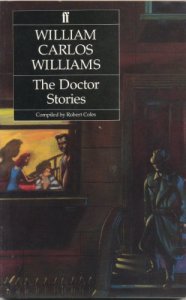 Stats: 14 stories (plus a handful of poems and an autobiographical fragment), all 1st-person
Themes: addiction, childbirth, immigrants, poverty, the randomness of suffering
Tone: hardboiled, dedicated
File under: autofiction, dirty realism
For fans of: Raymond Carver, Gabriel Weston
Caveat(s): The descriptions of immigrants’ appearance/behaviour/speech is not always kind.
If you read just one story, make it: “Old Doc Rivers”
(University library) 
And a stand-alone story:
“The St. Alwynn Girls at Sea” by Sheila Heti (New Yorker, 2025)
To my knowledge, this is the only short fiction Heti has published. I’m generally a big fan of her bizarre autofiction – though Pure Colour was a step too far for me – and was fascinated to see on Eleanor’s blog that this is historical fiction, a genre Heti hasn’t attempted before. Or is it historical? The students of a girls’ boarding school have been sent out on a ship for their safety during a conflict. With news of a planned meet-up with a boys’ boat for a talent show and calls to knit socks for soldiers, it seems it must be the Second World War. But then there are references to headphones, Prince and Kurt Vonnegut. So it’s an alternative Cold War fantasy? Or a dystopian future scenario with retro elements? As in Motherhood, the characters appeal to an Oracle (here, a photograph of a departed girl called Audrey) when stymied by confusion. But the actual plot is just girls wanting men to love them – Dani obsesses about Sebastien, with whom she’s exchanging letters; Flora can’t stop thinking about her father’s infidelity – a common Heti theme, but the teenage perspective feels glib, indulgent; it’s YA without the heart or commitment. So I was somewhat aghast to learn this is from Heti’s novel in progress.
#5–6 Short Fiction: Animal Crackers and Barnacle Love
I may have fallen behind on my 20 Books of Summer reading – August is going to have to be jam-packed! – but I have been enjoying the all-animals challenge. One of these two collections of short fiction sustains an animal theme for most of its length, while the other draws on metaphors from a fishing community but isn’t specifically about nature.
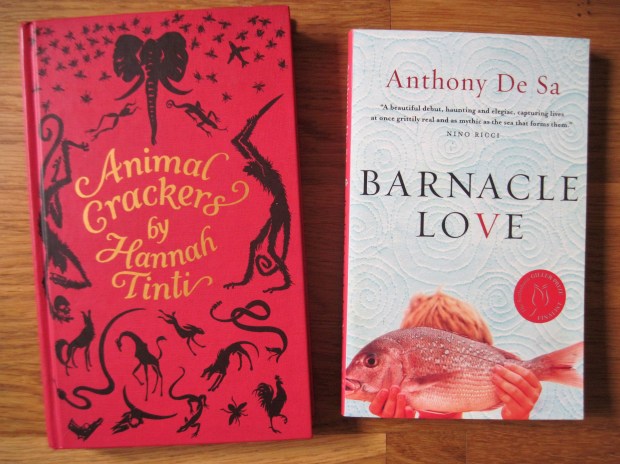
Animal Crackers by Hannah Tinti (2004)
A zoo, a circus, a turkey farm, a natural history museum, an African hunting expedition: several of the 11 stories are set in locales where human–animal interactions are formalized and exploitative, but all mention an animal at least once. In two cases the animal reference seems incidental and the stories really belong elsewhere – “Home Sweet Home,” which opens with the excellent line “Pat and Clyde were murdered on pot roast night,” appeared in Best American Mystery Stories 2003; “Hit Man of the Year” feels like a trial run for The Twelve Lives of Samuel Hawley – and in others there are gratuitous animal deaths at the hands of disturbed boys or angry men, which is always a strike against a book for me.
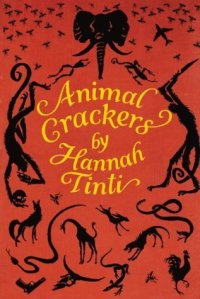 I only found four stand-outs here. “Reasonable Terms” is a playful piece of magic realism in which a zoo’s giraffes get the gorilla to write out a list of demands for their keepers and, when agreement isn’t forthcoming, stage a mass mock suicide. In “How to Revitalize the Snake in Your Life,” a woman takes revenge on her boa constrictor-keeping boyfriend. In “Miss Waldron’s Red Colobus,” which reminded me of Ned Beauman’s madcap style, a boarding school teenager eludes the private detectives her parents have hired to keep tabs on her and makes it all the way to Ghana, where a new species of monkey is named after her. My favorite of all was “Preservation,” in which Mary saves wildlife paintings through her work as an art conservator but can’t save her father from terminal illness.
Barnacle Love by Anthony De Sa (2008)
When I plucked this Giller Prize finalist from a secondhand bookshop’s clearance shelf, I assumed it was a novel. The 10 titled chapters are in chronological order and recount the Rebelos’ experiences in Canada between the mid-1950s and the early 1980s, but in that each focuses on a discrete incident from the family’s history, they are more like linked short stories. Manuel, a fisherman from the Azores, is shipwrecked on the coast of Newfoundland and begins a new life in Canada. He’s deliberately gone far from his home village, far from his controlling mother and the priest who abused him: “I knew that if I stayed in our town, on our stifling island, I’d be consumed by what it was you [his mother] hoped and dreamed for me.” He moves from St. John’s to Toronto, brings over a Portuguese wife, and raises two children while hopping from one unsuccessful money-making scheme to another.
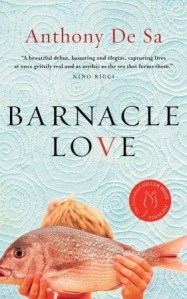 The first half of the book reports Manuel’s life in the third person, while the second is in the first person, narrated by his son, Antonio. Through that shift in perspective we come to see Manuel as both a comic and a tragic figure: he insists on speaking English, but his grammar and accent are atrocious; he cultivates proud Canadian traditions, like playing the anthem on repeat on Canada Day and spending Christmas Eve at Niagara Falls, but he’s also a drunk the neighborhood children laugh at. Although the two chapters set back in Portugal were my favorites, Manuel is a compelling, sympathetic character throughout, and I appreciated De Sa’s picture of the immigrant’s contrasting feelings of home and community. Particularly recommended if you’ve enjoyed That Time I Loved You by Carrianne Leung.
Representative passages:
Manuel’s mother: “My husband used to say that men are all barnacles. A barnacle starts out life swimming freely in the ocean. But, when it matures, it must settle down and choose a home. My dear husband used to say that it chooses to live with other barnacles of the same kind so that they can mate.”
Manuel: “I leave Portugal on fishing boat and I know I not going to come back. I give everything away to follow something new. I no understand what but something inside push me here—to make something of myself in this land. I come to be someone in this world.”
 Bookish Beck = Rebecca Foster. American transplant to England. Freelance proofreader and book reviewer.
 Bookish Beck