Mega #ShortStorySeptember Catch-Up! Fetto, P. Fitzgerald, Henley, Logan, L. Moore, E. Williams & 2 Partial Reads, 3 DNFs, 2 Single Stories
In total, I read 10 collections, as well as parts of five more, and nine individual stories for Short Story September. It would be absurd for me to be disappointed with those numbers (in comparison to last year’s 15 collections, I guess). Today is the last day of the link-up, so I’m calling it a day and giving brief responses to the rest of the books I read for the challenge. (My other reviews: six stories, Old Romantics by Maggie Armstrong, “Death in Midsummer” by Yukio Mishima, three R.I.P. collections.) The range of styles, settings, and subject matter in the below really showcase how much the short story can do, often in very few pages.
Hail Mary by Funmi Fetto (2025)
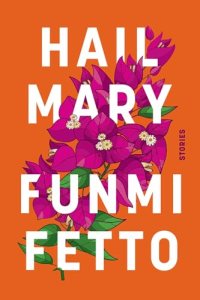 These nine stories explore religious and cultural limitations on Nigerian women’s lives at home and in London. The title story questions whether Riliwa’s efforts to assimilate have been worthwhile; “It amazed her how much England was lauded and celebrated back home. Her reality was cruel and cold.” In “Dodo Is Yoruba for Fried Plantain,” Morayo married into privilege in the Gloucestershire countryside, but long since discovered the relationship was a sham. On trips to London markets to buy authentic African ingredients, she wonders if reconnecting with her roots will redeem lost time. A longing for motherhood underpins several of the stories, even sometimes explaining willingness to ignore homosexual urges. I was most impressed by “House Girl,” in which the abused protagonist flees her inescapable situation in a full-on Anna Karenina finale. There is not a lot of cheer here, but ample Adichie-esque talent with character, details, and plot to keep one reading. (Public library)
The Means of Escape by Penelope Fitzgerald (2000)
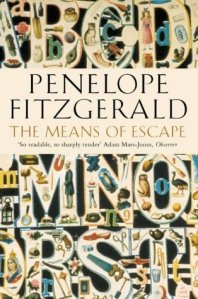 I already reviewed the single story “The Axe,” which is the odd one out – a mischievous ghost story. The rest are more typical of Fitzgerald: elegant slices of historical fiction, immediately establishing mastery of a place, time and set of circumstances, whether that be a convict on the loose in 1850s Australia (the title story), Impressionist-era English painters seeking models in Paris (“The Red-Haired Girl)”, or a poor boy who loses his precious medal in the 1660s (“Desideratus”). A couple of the stories appear to be contemporary and have a gently comic tone: the fussy conductor located on a tiny Scottish island in “Beehernz,” the overbearing stately-home guide in “Not Shown.” There’s a timeless, allegorical feel to “The Prescription” (one of two Greek/Turkish settings), in which doctors who once had a mentor–student relationships give rival diagnoses, and the title of “Our Lives Are Only Lent to Us” indicates philosophizing about the tragic losses in a small Central American town. I was dazzled by the breadth of Fitzgerald’s imagination and the confidence of her execution. (Secondhand – Community Furniture Project, Newbury)
Apple & Palm by Patricia Henley (2026)
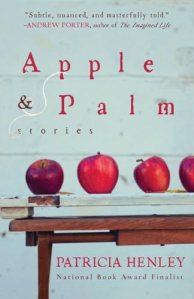 How had I never heard of Henley – an accomplished novelist, story writer, poet and playwright who was a National Book Award finalist for her debut? These eight linked short stories initially attracted me because they’re set in (fictional) Whistle Pig, Western Maryland, a region of my home state I know reasonably well, with Baltimore an occasional counterpart. Each spins its own web of connections and complications; together, they form a composite portrait of a community through its (ageing) women. Though Roxy’s 100th birthday has passed, she still shows her photographs and supports friends through a women’s art collective. Jill manages the family orchard and frets about her gambling-addicted father. After a disabling accident, Harper borrows Aunt Jill’s car for her gig as an artist’s model. Claire lashes out at her tenure refusal and her husband’s request for an open marriage. Sally leaves an IVF struggle behind for a vacation home in the Bahamas. A massage therapist hears a customer’s life story; sixtysomething friends diverge through varying experiences of illness and sex. I especially appreciated the matter-of-fact portrayal of a middle-aged asexual character. These fine stories reminded me of work by Stewart O’Nan and Ann Patchett.
Published by Cornerstone Press. With thanks to publicist Caitlin Hamilton Summie for the e-copy for review.
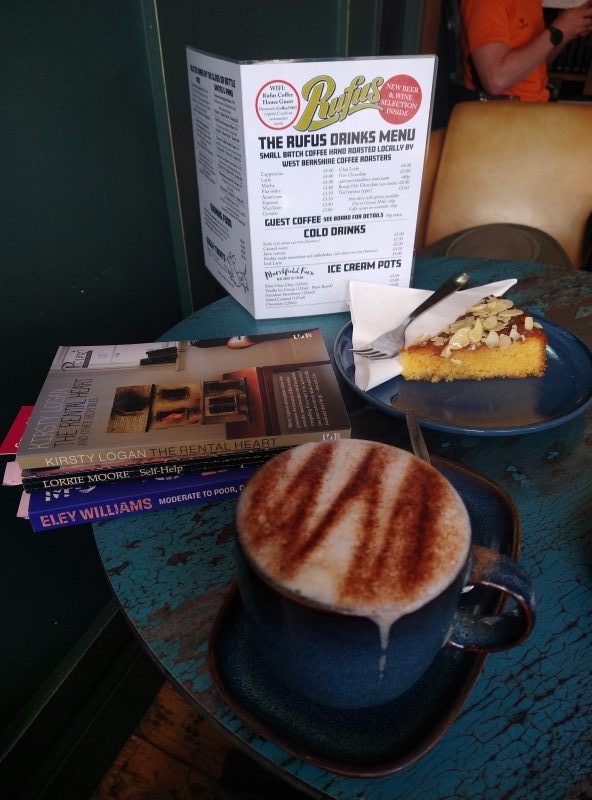
The Rental Heart and Other Fairytales by Kirsty Logan (2014)
 I’m not sure why I felt led to buy this Polari First Book Prize winner, as I’ve struggled with Logan’s fiction before (“The Gracekeeper” here was expanded into a novel). Of the 20 stories, many are flash length; I tended to prefer the slightly longer, queer takes on history and folklore. “Underskirts” is voiced by houseguests and servants, including the various maids the Lady of the manor seduces. It starts as a bit of fun when teenage girls experiment sexually with each other; then one goes to live with Baba Yaga in “Witch.” In “Coin-Operated Boys,” Elodie comes up with a novel solution to her lack of suitors. Many of the characters are young people reeling from loss or facing transition moments. A fair few stories are in titled or numbered fragments and have multiple narrators or a reverse chronology. You certainly couldn’t complain of them being samey. Still, many feel wispy, like there isn’t enough time to care about or understand the characters; to turn a skit into a full-length, satisfying drama. (New purchase from Salt Publishing)
Self-Help by Lorrie Moore (1985)
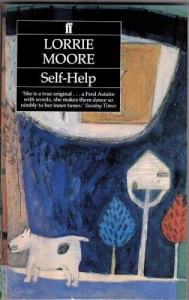 My fourth collection (after Bark, Birds of America and Like Life) by Moore, who is truly one of the great short story writers. In keeping with the title, four story names start with “How” and several are in the second person, to distance the main character and/or establish a tongue-in-cheek, advice-giving imperative. Women navigate marriage, infidelity, motherhood, and having ill or mentally compromised mothers of their own. I got Melissa Bank and Nora Ephron vibes from the first story, “How to Be an Other Woman.” Charlene’s quick wit makes her much more than just a mistress: “‘So, you’re a secretary.’ Squirm and quip: ‘More like a sedentary’.” “The Kid’s Guide to Divorce” adopts a child’s perspective with equal aplomb and is only four pages. In “Go Like This,” Liz schedules her escape from cancer for Bastille Day. The diary entries of “Amahl and the Night Visitors” wrestle with freedom vs. control in a couple’s relationship through their argument about whether or not to let the cat go outside. A woman persists in writing despite her professors and classmates objecting to her “outrageous and incompetent” sense of plot. There are such hilarious turns of phrase – “a strange flesh sundae of despair and exhilaration,” “full-haired as Easter basket grass” – throughout that I was taken aback by the dark turn in the final story, “To Fill,” where the narrator’s flippant wordplay masks her mental instability. A treat for Amy Bloom and Helen Simpson fans. (Secondhand – The Bookshop, Wigtown)
Moderate to Poor, Occasionally Good by Eley Williams (2024)
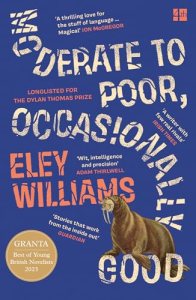 I could make a quip about how apt the title is for the contents, but that would feel mean. My sense with Williams’s second collection was that her practice was to think of an outlandish image or moment and go from there. What if a courtship withered because one partner accidentally sent footage of walrus sex? (“Scrimshaw,” which was a finalist for the BBC National Short Story Award in 2020.) What if someone hired a skywriter to scrawl “Will you marry me?” outside a restaurant window and it wasn’t received well? What if someone reading the radio shipping forecast (which lends the title phrase) used that segment to address their failing relationship? These 19 stories are inventive, yes, and often delight in wordplay and obscure vocabulary. That will be no surprise to anyone who’s read Attrib. and Other Stories or The Liar’s Dictionary. Too often, though, it feels like showing off skill but not committing emotionally, which means I didn’t believe in the lovelorn narrators and their peculiar predicaments. (“Too-quick chicanery of thought can cause a conversational form of the bends.” Quite.) The highlight was “Squared Circle,” about two pro wrestlers who convene every year on the anniversary of their famous showdown, even when one is seriously ill. (Gift from my wish list last year)
I’m still reading two excellent linked short story collections that I’m taking my time over:
 Rattlebone by Maxine Clair (1994): Vibrant and varied snapshots of a Black community in Kansas. I feel like Tayari Jones must have been influenced by it.
 A Desert between Two Seas by A. Muia (2025): Exquisitely detailed historical stories about a Mexican priest, his houseboy’s enforced pearl-diving, and the wanderings that ensue.
A few DNFs:
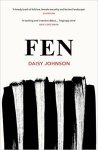 Fen by Daisy Johnson (2016): Adolescent girls discover sex – “Virginity was a half-starved dog you were looking after, wanted to give away as quickly as possible so you could forget it ever existed.” I read six stories but found the majority of them too similar, and provocative for the sake of it. Two good ones: “Starver” compares disordered eating with local eels that refuse to eat when the land is drained; in “Language,” a ghost struggles to communicate. (Gift from my wish list)
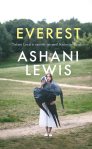 Everest by Ashani Lewis (2024): I read more than two-thirds of the book but can barely tell you anything about it. There’s some anxiety about social media, some coming-of-age discovery, some mean-girls friendship. Technically, the stories are accomplished, but they lack warmth. Two good ones: “Antarctica,” about an ill, older woman petitioning to go to the Scott Polar Research Institute; in “The Imitation Oyster,” fine dining is the basis of a liaison. (Public library)
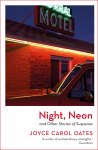 Night, Neon by Joyce Carol Oates (2021): I reviewed two stories on Oates’s birthday. My third Oates DNF; I don’t have high hopes of getting through a book by this lady. Despite the short form, she has such repetitive phrasing. Two good ones: in “Curious,” a writer makes generous anonymous donations to change a grocery clerk’s life; in “Parole Hearing, California Institution for Women, Chino, CA,” a Charles Manson follower appeals. Even in this nine-pager – short for Oates – the anaphora of “Because…” statements gets old. (Public library)
Single stories:
“The Quiet” by Carys Davies (2014)
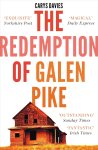 [from The Redemption of Galen Pike]
A good companion to West and Clear; all three share a vivid historical setting and a surprise ending that makes you want to stand up and cheer. Susan Boyce is a pioneer’s wife, isolated and battered. Her neighbour, Henry Fowler, keeps coming around, including when her husband is away, and at first there’s a hint of menace about his visits. But then they compare their scars. Brilliant. (New purchase from Salt Publishing)
“The Necklace” by Guy de Maupassant (1884)
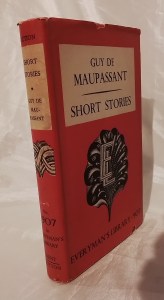 [translated from French by Marjorie Laurie; from the Everyman Short Stories volume]
Thanks to Emma of Words and Peace for recommending this one. It’s such an instant classic I a) can’t believe I’d never encountered it before and b) can’t imagine a time when it didn’t exist. A young woman with little money but grand pretensions marries.
She was eternally restive under the conviction that she had been born to enjoy every refinement and luxury. Depressed by her humble surroundings, the sordid walls of her dwelling, its worn furniture and shabby fabrics were a torment to her.
She had no pretty gowns, no jewels, nothing—and yet she cared for nothing else. She felt that it was for such things as these that she had been born.
Now, as Madame Loisel, she is keen to make a good impression at her first society outing, an At Home at the Education Office, but has nothing to wear. She begs her husband for money to buy a new dress, then borrows a diamond necklace from a friend. When the necklace gets lost in the hustle and bustle of the party, it has lasting consequences. “How small a thing can serve to save or ruin you!” This sobering morality tale is like Flaubert crossed with O. Henry. The lesson I drew from it was, just confess! I lost one of the earrings that I borrowed from a friend to wear to the Booker Prize ceremony, and everything was fine! (Little Free Library)
Whew, all caught up!
And the final statistics for Short Story September:
25 bloggers
80 posts
38 individual stories &
60 whole collections reviewed
(+ 1 bonus biography of a short story writer)
All the posts are here and here.

Thank you all again for joining in!
#ShortStorySeptember, Meet #RIPXXI: Fremlin, M.R. James & Navarro
I can hardly believe it’s October; I still have a bunch of short stories to finish and review! I’m taking the opportunity to start on Readers Imbibing Peril with these three collections that crank up the suspense with their scenes of the unexplained.
Don’t Go to Sleep in the Dark by Celia Fremlin (1970)
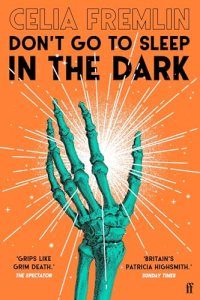
(Faber reprint: 2024)
I wasn’t wild about Fremlin’s Uncle Paul, but these 13 stories were terrific. Nightmares sometimes become reality as children and women of a certain age face up to threats, whether concrete or imaginary. The twist endings can reassure or unsettle, but in either case they call into question the tenor of what’s gone before. Only three tales are in the first person, with the other 10 in an authoritative third person. The need to protect children is a recurring impulse, ageing is a frequent cause of angst, and there are a couple of instances of frightening bird imagery (a nod to du Maurier?). There are also tweaks of horror story tropes – the haunted house in “The Hated House” and “The Locked Room.” Visual and auditory clues ramp up the tension. I’ll highlight a couple of favourites: “The Quiet Game,” in which a mother’s mental illness has dangerous implications for her twins; and “The Baby-Sitter,” about a little girl who’s afraid of The Hen with Great Big Eyes and her child-minder, who’s lived out her own horrors as a European refugee. This one is a fine example of how Fremlin mixes the everyday with suggestions of the supernatural. (Little Free Library)
Ghost Stories of an Antiquary: A Graphic Collection of Short Stories by M.R. James, Volume I (2016)
(Adapted by Leah Moore and John Reppion)
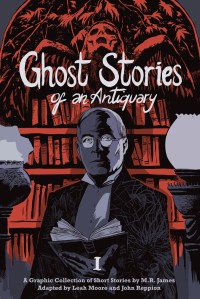 (I reviewed Volume II in 2017.) Though all retold by the same duo, these four stories are each illustrated by a different artist. So although the setup and voice tends to be samey – a dignified man investigating strange happenings at a country house – the art style varies significantly While I didn’t care for the approach in the first two (“Canon Alberic’s Scrap-Book” – Marvel; “Lost Hearts” – Pixar), the others, “The Mezzotint” and “The Ash-tree,” made up for it. I liked the monochrome palette, gentlemen detecting vibe, and Wildean mark of a morphing image of the former. In the latter, a Gothic setting and a history of suppressing witchcraft pave the way for unnatural spectacles. James’s classic ghost stories have been hugely influential on the likes of Susan Hill. (I also wondered if Stephen King borrowed the girl in the bath from “Lost Hearts” for The Shining.) Still, my conclusion about the second volume stands for the whole project: the “problem with using the graphic form for … tales that center around nameless horror is that depicting [what is feared] saps it of its power.”
With thanks to SelfMadeHero for the free copy of The Compendium (Volumes I and II) for review.
Blood Is Dripping onto the Courtyard by Elvira Navarro (2025; 2026)
[Translated from the Spanish by Christina MacSweeney]
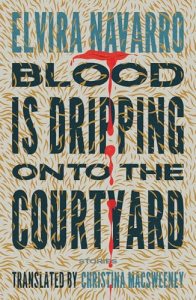 My introduction to Navarro, a Spanish author, reminded me most of Agustina Bazterrica’s 19 Claws and a Black Bird. These nine stories are full of derelict buildings, outsider characters, and traces of the uncanny. Seven are in the third person and two in first. A nice touch: two stories are linked in that they feature Almudena, who is studying in Paris. “The Fear of the City” is, we realize, the story she wrote about femicide, as mentioned, fittingly, in “The City of Fear.” “Idiotic Love” is narrated by a trans woman with an anal fissure and conjures a seedy world of nightclubs and sex shops. This was the longest story and not a pleasant one. There were just three standouts for me. In “The Washing Machine,” which contains the title line, a couple’s appliance keeps filling with blood for no reason. “The Animal Collector” is a tough one for animal lovers because of all the injuries and deaths, but the idea of a highway maintenance man assembling a makeshift zoo for his roadside rescues is alluring. Eventually, he becomes overwhelmed and compassion turns into a burden. In “A Small Bunch of Violets,” Mari chooses a new ornament for her father’s grave during a heat wave, but the flowers keep being displaced. There were too many so-so stories, though.
With thanks to Two Lines Press and publicist Nicolette Praça for the proof copy for review.
#ShortStorySeptember Round-Up with Statistics
Thank you for joining in and making this second year of Short Story September such a success! In total, 25 bloggers contributed 80 posts, including planning posts and book lists plus reviews that together covered 38 individual stories and 60 whole collections (and a bonus biography of a short story writer).
If you want to take a look back at the link parties, they are here and here.
The authors covered more than once this year were Celia Fremlin and W. Somerset Maugham; the only book reviewed more than once (certain stories, at least) was Vampire Tales, a good lead into R.I.P.
As always, I bit off much more than I could chew and I’m still making my way through a number of collections and single stories. For my benefit, if no one else’s, the link party will stay open (and the opening post pinned on my site) through 6 October. I’ll come back and update the final statistics as well.
New to My TBR in #ShortStorySeptember
I’m still frantically trying to finish the multiple short story collections on my stack, but there’s always room for more on the TBR!
This month I discovered (and promptly ordered secondhand):
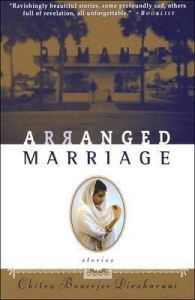
- Arranged Marriage by Chitra Banerjee Divakaruni (via Lisa of Hopewell’s Public Library of Life), a collection about the South Asian immigrant experience that I thought could be a good follow-up to Interpreter of Maladies
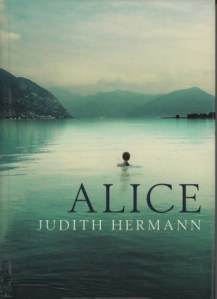
- Alice by Judith Hermann (via Brona of This Reading Life), linked short stories that would also count towards German Literature Month in November
 It’s been a while since I’ve read anything of Tom Cox’s, but I loved the description in Jan’s review (at What I Think About When I Think About Reading) of his new collection, Curious Events Lately Occurring in This Neighbourhood, as “a sketch show” with “a certain skewed perception, a certain willingness to embrace the surreal.” I’m also always partial to flash fiction, too, which this is at least in part.
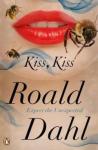 I came across Roald Dahl’s short stories for grown-ups through Cathy’s review of Kiss, Kiss at 746 Books and will borrow his collected stories from the university library for next year’s challenge.
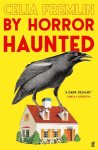 I am really enjoying a different spooky collection of Celia Fremlin’s at the moment, so I will have to source By Horror Haunted (reviewed by Helen at She Reads Novels).
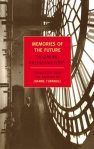 Diana’s review of multiple collections by Sigizmund Krzhizhanovsky at Thoughts on Papyrus piqued my interest and I managed to find one story, “Quadraturin,” with the full text online to read another time.
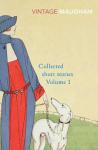 Both Nancy Elin and Rose featured a selection of short stories by W. Somerset Maugham; Rose even said she thinks his stories are better than his novels, so I know I’ve got to read some. I have the volume Creatures of Circumstance, and can access others from the public library.
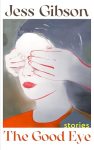 Last month I earned a £70 voucher for doing a Teams call about my reading and book-buying habits with a UX researcher at Awesomebooks.com (she didn’t know what she was in for!) – my favourite place to buy secondhand books online – and spent it at the weekend. I have two new copies on the way as part of that big order, one of which is a collection of uncanny stories that I’ve had in my sights ever since I first heard about it: The Good Eye by Jess Gibson, Margaret Atwood’s daughter. I will plan to read it as part of Margaret Atwood Reading Month in November.
Have you discovered any new stories or collections this month?
#ShortStorySeptember: “Death in Midsummer” by Yukio Mishima (1952; 1966)
Tomoko Ikuta is on a beach vacation with her three children and sister-in-law, Yasue, who is their de facto nanny and housekeeper. The trip soon turns nightmarish when three family members die in quick succession.
{BEWARE SPOILERS IN THE REMAINDER}
Tomoko is taking a well-deserved nap to escape the punishing sun. Yasue is an attentive babysitter who has already chased after the children and warned them about going any deeper. She’s barely looked away for a second when the six-year-old boy, Kiyoo, and five-year-old girl, Keiko, disappear. Yasue runs into the ocean to find them and is hit by a massive wave that seems to trigger a heart attack. In the ensuing chaos, the missing children are forgotten – even by Tomoko – until it’s far too late.
All of the above happens within the first six pages; the rest is aftermath. The idyllic setting introduced in the story’s first few paragraphs (the beach “unspoiled for sea bathing,” the hotel’s “beautiful” view, the placid image of the mother asleep) feels like mockery when set against the “ridiculous” and “excessive” tragedy that has befallen the family. The husband, Masaru, on the train from Tokyo to join his diminished kin, wishes he could “shout at the other passengers: ‘Listen, everybody. You don’t know it, but I have just lost my sister and two of my three children.” The season itself seems to have betrayed them: “If only summer would end. The very word ‘summer’ carried with it festering thoughts of death.”
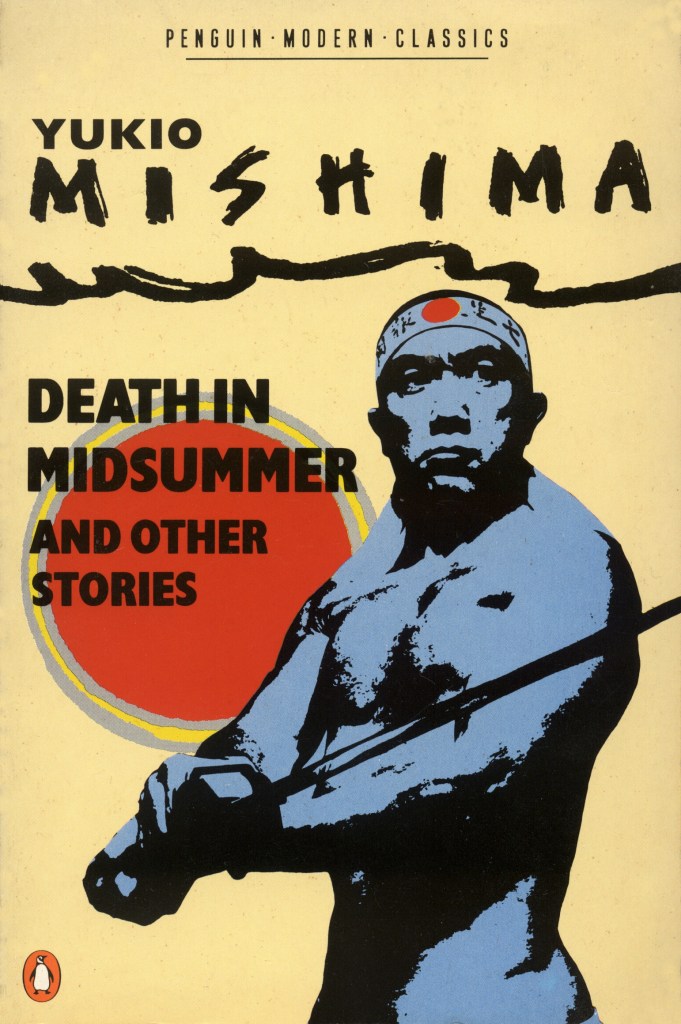
Mishima’s vision is of fate as cruel and capricious. As the bereaved parents undertake the necessary funeral preparations, he explores the practicalities and the ironies of the situation:
A death is always a problem in administration. They were frantically busy administering.
Tomoko listened to the subdued humming of the autumn cicadas, and smelled the incense and the cool, shady grass. ‘What a nice place. They’ll have room to play, and they won’t be bored. I can’t help thinking it will be good for them. Strange, isn’t it?’
She’s found a perfect, peaceful spot for her children to spend eternity, since they’ll never get to grow up.
As time passes, the memory of the incident is less painful. What had been unbearable becomes simple reality. But then something curious happens. One family’s losses take on legendary status, transformed into a widespread cautionary tale:
Rather than an injury it became a moral lesson, and it changed from a concrete fact to a metaphor. It was no longer the property of the Ikuta family, it was public. … You have to watch children constantly when you take them to the beach. People drown where you would never think it possible. Not that Masaru and his wife had sacrificed two children and a sister to teach a lesson. The loss of the three had served no other purpose, however; and many a heroic death produces as little.
Yet Mishima also extends an opportunity for redemption when, two years later, the couple returns to the same beach with their remaining son, five-year-old Katsuo, and their new daughter, Momoko. It’s an act of faith and an acceptance that danger is always present and that no parent, however protective, can completely eliminate risk. By inscribing a full circle like that, Mishima emphasizes the severity of the loss but also somehow atones for it.
I found this story so powerful – emotionally charged but understated – that I’m surprised I’d not come across it before in my constant quest to find the best classic grief literature. At 29 pages, it feels just right; a note at the end mentions that it was abridged by translator Edward G. Seidensticker. I’ll be sure to try more by Mishima.
From Death in Midsummer and Other Stories (1966) (Secondhand – Better World Books)
#ShortStorySeptember: Single Stories by Barnes, Bellow, Enright, P. Fitzgerald, Mackay, and Norman
Thanks for all the contributions to Short Story September thus far! I usually review whole collections, but today I’m highlighting individual stories I read either as stand-alones, in an unrelated volume, or as a taster from a book I might finish some other time. A few really surprised me for being so dissimilar to other work by the author. These six seem to illustrate different techniques or situations that short stories are good at exploring, thus my headings. (Beware mild spoilers in most of these brief responses.)
The Pastiche
“Homage to Hemingway” by Julian Barnes (2011)
[from Through the Window]
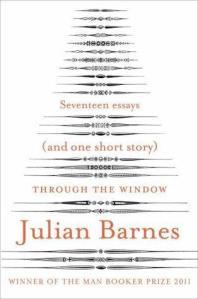 The protagonist is a literature instructor and failed novelist whom we see undertaking three different teaching gigs (in rural Wales, the Alps, and the American Midwest), like the triptych of expatriate Americans waiting for trains in Hemingway’s “Homage to Switzerland,” which is specifically referenced here. He believes fiction is “omnivorous and essentially amoral” and hopes to inspire his students to “reflect on life’s influence on art, and then art’s influence back on life.” This is, of course, a huge theme across Barnes’s oeuvre. Luckily, Barnes doesn’t attempt mimicry of Hemingway’s style, which really wouldn’t suit him at all, but I enjoyed the barbs his students throw. For example, Kate describes Hemingway as “the ultimate dead white male … celebration of machismo. Boys with toys.” This wasn’t very memorable but has me hankering to track down and reread Barnes’s full-length story collections. (Public library)
The Character Study
“Leaving the Yellow House” by Saul Bellow (1958)
[Penguin Modern: 36]
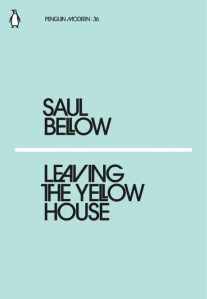 I wouldn’t have recognized this as Bellow’s writing were his name not on the cover. I think of him as a chronicle of Jewish city-dwellers; this is the story of a woman in a tiny town in the American West. Everyone in Sego Desert Lake knows that Hattie is an alcoholic. She’s now in her early seventies and pretty much has bourbon running through her veins. When she gets her car stuck on train tracks while driving drunk and breaks her arm in the ensuing kerfuffle, she and her acquaintances are forced to think seriously about what’s going to happen to her. She looks back on her two marriages and her relationship with India, who used to own her house – I never did work out who India was to her; a friend? an employer? – as she sets to the task of writing her will. Who deserves to have the house in turn? The title has a double meaning and also points to the final leave-taking of death. Hattie is not a very likeable character but has a certain admirable dignity, like Olive Kitteridge or Hagar in The Stone Angel. I liked her fancy that her whole life has been filmed and she’ll soon be able to revisit any moment she chooses. A melancholy slice of mid-century Americana. (Secondhand – Community Furniture Project, Newbury)
The Shock Ending
“Pillow” by Anne Enright (2008)
[from Taking Pictures]
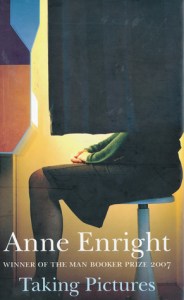 Alison, from Ireland, is part of a set of international roommates at her American college. Li is always asking her questions about what things mean or how they work. The first lines have her querying “What is a homosexual?” With this Enright sets us up to think that Li has a crush on Alison. First, the roommates find out that Li is her surname and really they should call her Ping. And then one morning Alison wakes up struggling to breathe because Ping is trying to smother her with the title object. I gasped aloud! The incident seems to come out of nowhere but I guess illustrates how easy it can be to hide mental illness. I kind of wish it wasn’t the Chinese girl who ended up being unstable, though. I’m not sure short stories are where Enright shines; I read the first two stories in this volume but won’t finish it. (Public library)
The Visual Pun
“The Axe” by Penelope Fitzgerald (1975)
[from The Means of Escape]
An office worker recalls having to make redundancies, including of his dignified clerical assistant, W. S. Singlebury. He feels even worse about it when the man invites him to visit his home. This faux report to the Company boss chronicles a growing sense of unease as he returns to work and finds the fired man still in the office, gruesomely injured and leaking blood all over. Fitzgerald has playfully imagined Singlebury getting the axe, literally, and then haunting the man responsible. I’ve never experienced such gleeful mischief from Fitzgerald – I only knew her austere historical novellas – but sure enough, this originally appeared in The Times Anthology of Ghost Stories. (Secondhand – Community Furniture Project, Newbury)
The Family Drama in Miniature
“The Worlds Smallest Unicorn” by Shena Mackay (1999)
[from The Worlds Smallest Unicorn and Other Stories]
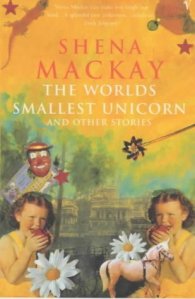 Fan’s brother-in-law, Teddy, has just returned from Hong Kong and she’s not happy about it: “now here was this succubus squatting in her kitchen, expecting to be fed.” She sees in the newspaper that an old flame of his, a singer, has died and he sets out for the funeral, passing a circus billet advertising the title act. (Since it reproduces what was on the tacky poster, I can let Mackay off for the grammatical gaffe, though it doth offend the eyes!) It seems to be a metaphor for anything that’s too good to be true, such as Fan’s affair with Teddy years ago. Her adolescent daughters’ banter and the South London environs are highlights in this one, but so far the book is not living up to the collection I read by Mackay last year, Dreams of Dead Women’s Handbags. (Secondhand – Slightly Foxed, Berwick)
The Relationship Study
“Kiss in the Hotel Joseph Conrad” by Howard Norman (1989)
[from Kiss in the Hotel Joseph Conrad]
 The narrator is dishonourably discharged from Canada’s air force for faking an emergency beach landing during a practice flight in 1943. “We’ve come up with a new, Asshole category,” the colonel declares as he dismisses him. Still, this amiable joker hopes his pluck will endear him to Imogene Linny, who has a kissing booth for would-be soldiers on the Halifax wharf. She recognizes him from his prank and says, “You can kiss something, but it ain’t, I guarantee you, my lips.” In the two decades that follow, he keeps tabs on Imogene as she marries into a hotel empire and he works on the greyhound tracks. After all, he paid his dollar at that booth but never got his kiss. This could have gone creepy but Norman keeps it quirky and sweet instead. His novels, too, often feature Atlantic Canada, oddballs, and hotels. (Secondhand – Hay Cinema Bookshop)
Are any of these authors, and their stories, familiar to you?
Which of these six story types do you prefer?
My Year in Short Stories (#ShortStorySeptember)
The Short Story September link-up is open (see my pinned post). At the start of the month, I’m inviting you to tell about the short stories you’ve already read this year, especially any that you’ve particularly enjoyed.
I don’t consider myself a great short story reader, so I was surprised to look back and find that I’ve already read 17 collections this year. I include in that four books that I consider to be linked short story collections, even though they were all published as novels rather than stories. (I’m sure Susan is right when she theorizes that this is about marketing – what’s expected to sell.) The best have been Brawler by Lauren Groff and Nightjar by Emily Ruskovich, which are actually quite similar.
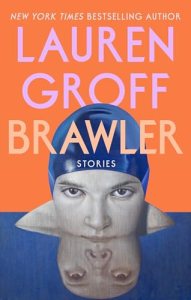
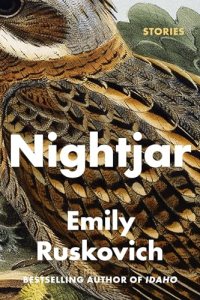
Some other favourites were:
 The Daffodil Days by Helen Bain: A slantwise biographical portrait of Sylvia Plath through her interactions in the last years of her life. The 16 chapters adopt the points-of-view of various secondary characters (e.g., Plath’s housekeeper, riding teacher, and brother), but the kernel of each is an encounter with Plath that illuminates her personality and state of mind. (Reviewed for Shelf Awareness)
Strange Weather in Tokyo by Hiromi Kawakami: Tsukiko is a lonely barfly in her late thirties when she bumps into a secondary school teacher again. She calls him “Sensei,” and they start meeting up for low-key adventures. Kawakami infuses the book with attention to the seasons’ changes and everyday sensual pleasures like food. A lovely, subtle romance.
 Ladies, Ladies, Ladies by Kristen Zory King: A “chapbook” containing 18 flash stories. It’s remarkable how much is packed into a few pages: a voice, a character, a setting and situation, an incident, a salient backstory, and some kind of epiphany or resolution. Fifteen of the pieces focus on one named character. Each story is distinctive, with no words wasted.
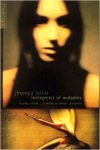 Interpreter of Maladies by Jhumpa Lahiri: Lahiri won the Pulitzer for this debut. Her characters tend to be Indian or Bengali immigrants in New England. Relationship studies trade off with accounts of encounters with strangers across generations and/or cultures. Often, food is a reminder of home. An overall theme is denying or affirming common humanity.
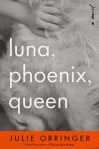 Luna, Phoenix, Queen by Julie Orringer: In Orringer’s wonderful third novel, the secrets between two literature professors and the adoption of a remarkable dog fuel an absorbing story of love, memory, and connection beyond words. Chapters take on different characters’ perspectives. (Review forthcoming for Shelf Awareness)
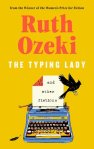 The Typing Lady and Other Fictions by Ruth Ozeki: Ozeki is up to her usual auto/metafiction tricks here, blurring the lines between fact and fiction, life and death. Themes include memory, creativity, language, ageing and cross-generation connections. The stories are playful without being twee, and represent a real return to form.
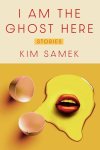 I Am the Ghost Here by Kim Samek: The television producer’s inventive debut recalls Ed Park and George Saunders with its focus on the mixed blessing of technology. Her speculative short stories’ protagonists deal with grief or new motherhood, often while also struggling with their health. Samek sets up unusual situations with knock-out first lines. (Reviewed for BookBrowse)
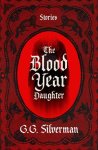 The Blood Year Daughter by G.G. Silverman: A remarkable collection that mixes feminist horror and twisted fairy tales into potent concoctions. Women’s bodies are imperiled by sadistic men and acts of self-sacrifice. Blood is a symbol of desire or power. Motherhood and sisterhood are vital bonds. Among bleak storylines come flashes of morbid humor. (Reviewed for Foreword Reviews)
All by women!
And the rest:
- Love Invents Us by Amy Bloom
- Baby in a Box by Sarah Braunstein (Reviewed for BookBrowse)
- A Calendar of Love and Other Stories by George Mackay Brown
- Museum Visits by Éric Chevillard
- Lesser Known Monsters of the 21st Century by Kim Fu
- It Will Come Back to You: Collected Stories by Sigrid Nunez
- The Book of Mating by Laksmi Pamuntjak [trans. from Indonesian by Annie Tucker] (Review forthcoming for Foreword Reviews)

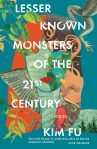

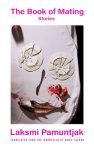
(All but two by women!)
What are some of your recent favorite experiences with short fiction?
Welcome to Short Story September! (#ShortStorySeptember)
Join me in celebrating the art of the short story this month! Simply read one or more individual stories (or collections) and share your review by adding a blog post or social media post to the InLinkz party below. (Or paste a link in a comment and I can add it for you.)
You can find more information about the challenge here. This post will be pinned to the top of my blog, and at the end of the month I will post a recap of what everyone has reviewed.
#ShortStorySeptember Reading Options
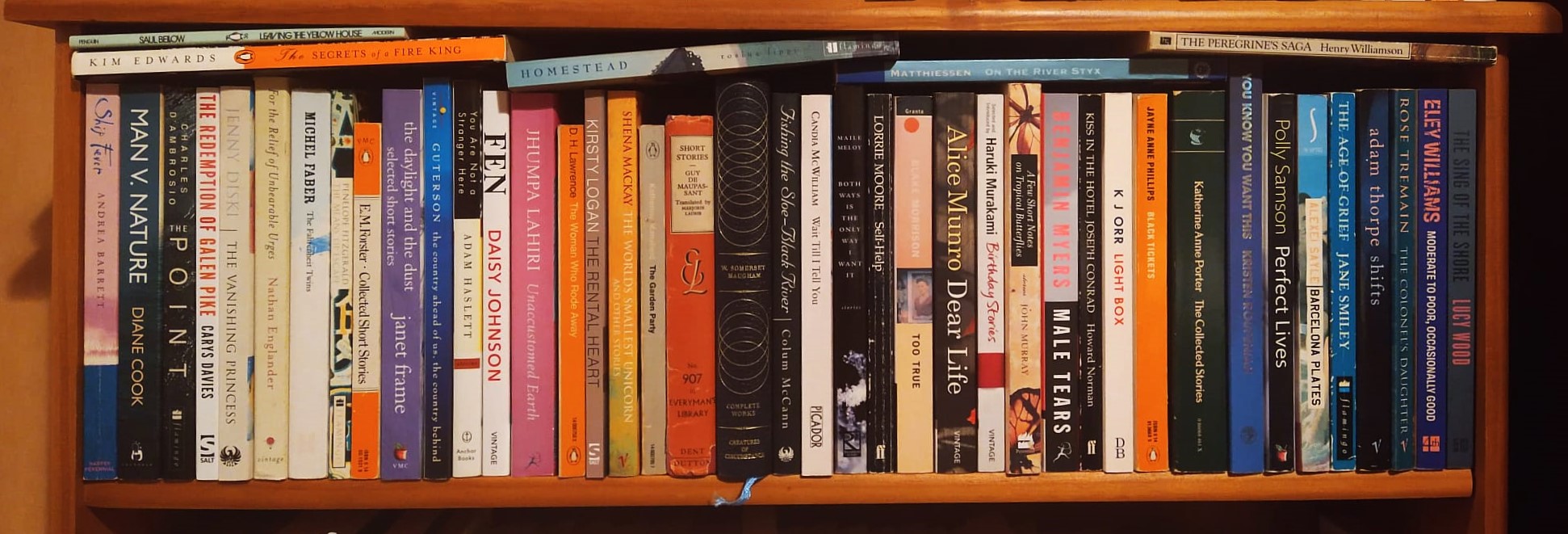
It’s a little over a week now until Short Story September begins. I’ve been gathering potential reads, mostly from my own shelves. I used to have a dedicated short story shelf, but earlier this year interfiled everything into an alphabetical fiction sequence. When I went hunting through to pick out the story collections, they were more numerous than I expected! I recreated a temporary short story shelf (below), but it ended up overflowing…
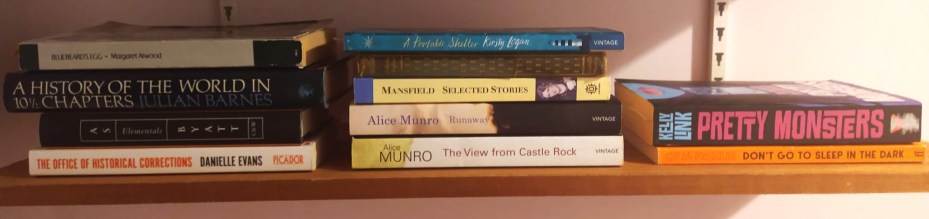
I also earmarked a few books I wouldn’t mind rereading (left-hand stack). In the few cases where I have more than one option by the same author, I’ve pulled out the extras (middle stack). And I have a couple that would do double duty for R.I.P. (right-hand stack), which technically starts in September, though I usually don’t feel like reading for that challenge until closer to Halloween.
Here’s a library pile I assembled last week, another R.I.P.-suitable read that I’m partway through, and two late additions from a secondhand book haul.

But wait, there’s more! Here are some of the options on my e-readers:

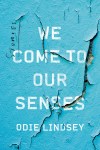
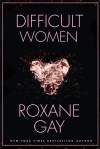


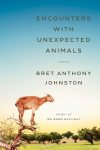
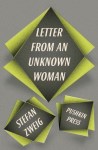
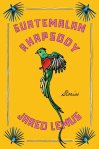
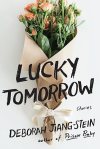

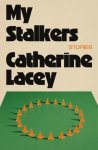
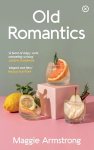
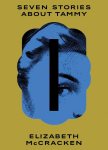
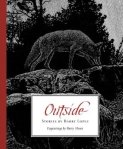
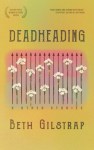

My overall aim will be to cover a variety of time periods and styles, as well as author nationalities and genders.
Particularly for the classics and longer Collected/Selected volumes (Barnes, de Maupassant, Forster, Frame, Lawrence, Mansfield, Maugham, Porter, Williamson), I will probably choose just one renowned story to review.
I wanted to get ahead, so I’m now stuck into six collections already!
Spy anything that you have read and can recommend?
What have you got lined up for next month?
Short Story September Is Coming Soon!
Every September I make a special effort to get to more of the short fiction on my shelves, e-readers, and library catalogue. Last year, Lisa of ANZ LitLovers launched Short Story September as a proper blogger challenge and I had great fun taking part. This year her health does not allow her to host*, so I’m stepping in; apologies for the last-minute announcement.
Lisa encouraged people to choose particular short stories that they would recommend. You may want to review individual stories – from anthologies or literary magazines, for instance – instead of or in addition to entire collections.
I’m going to keep it all quite simple so there’s more time for reading and less taken up by blog admin. My plan is as follows; feel free to join in with the prompts in bold, which always serve as handy ways to top and tail a challenge month:
- 24 August: Planning post for Short Story September – Photographs of my potential reads
- 1 September: Opening post with InLinkz link-up (pinned to my site throughout the month)
- 4 September: My Year in Short Stories – Looking back at the collections I’ve already read in 2026, with mini-reviews of some stand-outs.
~Reviews of various collections and individual stories through the month~
- 28 September: New to My TBR – Short stories and authors I’ve discovered through this year’s challenge
- 30 September: Round-up of your links, with statistics on the number of authors and books featured and any stories that were discussed multiple times
- 7 October: The link-up will stay open for another week to mop up any late entries, which I will also add in to the round-up post.
I hope you’ll join me in celebrating the art of the short story next month. The hashtag is #ShortStorySeptember and the badge is above. I’m on Bluesky (@bookishbeck.bsky.social) and Instagram (@bookishbeck) but likely to miss social media posts, so do also add your post to the InLinkz party and/or paste a link in a comment on the opening post.
*Please send Lisa all your warm get-well wishes!
Many thanks to Kim of Reading Matters for the use of her logo design.
 Bookish Beck = Rebecca Foster. American transplant to England. Freelance proofreader and book reviewer.
