10 Days in the USA and What I Read (Plus a Book Haul)
On October 29th, I went to an evening drinks party at a neighbour’s house around the corner. A friend asked me about whether the UK or the USA is “home” and I replied that the States feels less and less like home every time I go, that the culture and politics are ever more foreign to me and the UK’s more progressive society is where I belong. I even made an offhand comment to the effect of: once my mother passed, I didn’t think I’d fly back there often, if at all. I was thinking about 5–10 years into the future; instead, a few hours after I got home from the party, we were awoken by the middle-of-the-night phone call saying my mother had suffered a nonrecoverable brain bleed. The next day she was gone.
I haven’t reflected a lot on the irony of that timing, probably because it feels like too much, but it turns out I was completely wrong: in fact, I’m now returning to the States more often. With our mom gone and our dad not really in our lives, my sister and I have gotten closer. Since October I’ve flown back twice and she’s visited here once. There are 7.5 years between us and we’ve always been at different stages of life, with separate preoccupations and priorities; I was also lazy and let my mom be the go-between, passing family news back and forth. Now there’s a sense that we are all we have, and we have to stick together.


So it was doubly important for me to be there for my sister’s graduation from nursing school last week. If we follow each other on Facebook or Instagram, you will have already seen that she finished at the top of her cohort and was one of just two students recognized for academic excellence out of the college’s over 200 graduates – and all of this while raising four children and coping with the disruption of Mom’s death seven months ago. There were many times when she thought she would have to pause or give up her studies, but she persisted and will start work as a hospice nurse soon. We’re all as proud as could be, on our mom’s behalf, too.
The trip was a mixture of celebratory moments and sad duties. We started the process of going through our mom’s belongings and culling what we can, but the files, photos and mementoes are the real challenge and had to wait for another time. There were dozens of books I’d given her for birthdays and holidays, mostly by her favourite gentle writers – Gerald Durrell, Jan Karon, Gervase Phinn – invariably annotated with her name, the date and occasion. I looked back through them and then let them go.


Between my two suitcases I managed to bring back the rest of her first box of journals (there are 150 of them in total, spanning 1989 to 2022), and I’m halfway through #4 at the moment. We moved out of my first home when I was nine, and I don’t have a lot of vivid memories of those early years. But as I read her record of everyday life it’s like I’m right back in those rooms. I get new glimpses of myself, my dad, my sister, but especially of her – not as my mother, but as a whole person. As a child I never realized she was depressed: distressed about her job situation, worried over conflicts with her siblings and my sister, coping with ill health (she was later diagnosed with fibromyalgia) and resisting ageing. For as strong as her Christian faith was, she was really struggling in ways I couldn’t appreciate then.

I hope that later journals will introduce hindsight, now that she’s not around to give a more circumspect view. In any case, they’re an incredible legacy, a chance for me to relive much of my life that I otherwise would only remember in fragments through photographs, and perhaps have a preview of what I can expect from the course of our shared kidney disease.
What I Read
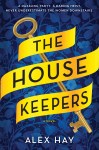 The Housekeepers by Alex Hay – A historical heist novel with shades of Downton Abbey, this comes out in July. Reviewed for Shelf Awareness.


Cowboys Are My Weakness by Pam Houston – Terrific: stark, sexy stories about women who live out West and love cowboys and hunters (as well as dogs and horses). Ten of the stories are in the first person, voiced by women in their twenties and thirties who are looking for romance and adventure and anxiously pondering motherhood (“by the time you get to be thirty, freedom has circled back on itself to mean something totally different from what it did at twenty-one”). The remaining two are in the second person, which I always enjoy. The occasional Montana setting reminded me of stories I’ve read by Maile Meloy and Maggie Shipstead, while the relationship studies made me think of Amy Bloom’s work. 

The Harpy by Megan Hunter – Read for Literary Wives club. Review coming up on Monday. 

The Lake Shore Limited by Sue Miller – A solid set of narratives alternating between the POVs of four characters whose lives converge around a play inspired by the playwright’s loss of her boyfriend on one of the hijacked planes on 9/11. Her mixed feelings about him towards the end of his life and about being shackled to his legacy as his ‘widow’ reverberate in other sections: one about the lead actor, whose wife has ALS; and one about a widower the playwright is being set up with on a date. Fitting for a book about a play, the scenes feel very visual. A little underpowered, but subtlety is to be expected from a Miller novel. She, Anne Tyler and Elizabeth Berg write easy reads with substance, just the kind of book I want to take on an airplane, as indeed I did with this one. I read the first 2/3 on my travel day (although with the 9/11 theme this maybe wasn’t the best choice!).
 For apposite plane reading, I also started Fly Girl by Ann Hood, her memoir of being a TWA flight attendant in the 1970s, the waning glory days of air travel. I’ve read 10 or so of Hood’s books before from various genres, but lost interest in the minutiae of her job applications and interviews. Another writer would probably have made a bigger deal of the inherent sexism of the profession, too. I read 30%.
 Hello Beautiful by Ann Napolitano – I knew I wanted to read this even before it was Oprah’s 100th book club pick. It’s a family story spanning three decades and focusing on the Padavanos, a working-class Italian American Chicago clan with four daughters: Julia, Sylvie, and twins Cecilia and Emeline. Julia meets melancholy basketball player William Waters while at Northwestern in the late 1970s and they marry and have a daughter; Sylvie, a budding librarian, makes out with boys in the stacks until her great romance comes along; Cecilia is an artist and Emeline loves babies and manages a nursery. More than once a character think of their collective story as a “soap opera,” and there’s plenty of melodrama here – an out-of-wedlock pregnancy, estrangements, a suicide attempt, a coming out, stealing another’s man – as well as far-fetched coincidences, including the two major deaths falling on the same day as a birth and a reconciliation.
There is such warmth and intensity to the telling, and brave reckoning with mental illness, prejudice and trauma, that I excused flaws such as dwelling overly much in characters’ heads through close third person narration, to the detriment of scenes and dialogue. I love sister stories in general, and the subtle echoes of Leaves of Grass and Little Women (the connections aren’t one to one and you’re kept guessing for most of the book who will be the Beth) add heft. I especially appreciated how a late parent is still remembered in daily life after 30 years have passed. This is, believe it or not, the second basketball novel I’ve loved this year, after Tell the Rest by Lucy Jane Bledsoe.
I always try to choose thematically appropriate reads, so I also started:
 Circling My Mother by Mary Gordon – A memoir she began after her nonagenarian mother’s death with dementia. Intriguingly, the structure is not chronological but topic by topic, built around key relationships: so far I’ve read “My Mother and Her Bosses” and “My Mother: Words and Music.”
Grave by Allison C. Meier – My sister and I made a day trip up to my mother’s grave for the first time since her burial. She has a beautiful spot in a rural cemetery dating back to the 1780s, but it’s in full sun and very dry, so we tried to cheer up the dusty plot with some extra topsoil and grass seed, marigolds, and a butterfly flag.


 Meier is a cemetery tour guide in Brooklyn, where she lives. In the third of the e-book I’ve read so far, she looks at American burial customs, the lack of respect for Black and Native American burial sites, and the rise of garden cemeteries such as Mount Auburn in Cambridge, Massachusetts. I’ve been reading death-themed books for over a decade and have delighted in exploring cemeteries (including Mount Auburn, as part of my New England honeymoon) for even longer, so this is right up my street and one of the better Object Lessons monographs.
What I Bought
I traded in most of my mother’s books at 2nd & Charles and Wonder Book and Video but, no surprise, promptly spent the store credit on more secondhand books. Thanks to clearance shelves at both stores, I only had to chip in another $12.25 for the below haul, which also covered two Dollar Tree purchases (I felt bad for Susan Minot having signed editions end up remaindered!). Some tried and true authors here, as well as novelties to test out, with a bunch of short stories and novellas to read later in the year.


The Best Books of 2019: Some Runners-Up
I sometimes like to call this post “The Best Books You’ve Probably Never Heard Of (Unless You Heard about Them from Me)”. However, these picks vary quite a bit in terms of how hyped or obscure they are; the ones marked with an asterisk are the ones I consider my hidden gems of the year. Between this post and my Fiction/Poetry and Nonfiction best-of lists, I’ve now highlighted about the top 13% of my year’s reading.
Fiction:
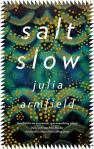 Salt Slow by Julia Armfield: Nine short stories steeped in myth and magic. The body is a site of transformation, or a source of grotesque relics. Armfield’s prose is punchy, with invented verbs and condensed descriptions that just plain work. She was the Young Writer of the Year Award shadow panel winner. I’ll be following her career with interest.
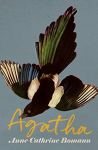 *Agatha by Anne Cathrine Bomann: In late-1940s Paris, a psychiatrist counts down the days and appointments until his retirement. A few experiences awaken him from his apathy, including meeting Agatha, a new German patient with a history of self-harm. This debut novel is a touching, subtle and gently funny story of rediscovering one’s purpose late in life.
 A Single Thread by Tracy Chevalier: Chevalier is an American expat like me, but she’s lived in England long enough to make this very English novel convincing and full of charm. Violet Speedwell, 38, is an appealing heroine who has to fight for a life of her own in the 1930s. Who knew the hobbies of embroidering kneelers and ringing church bells could be so fascinating?
 Akin by Emma Donoghue: An 80-year-old ends up taking his sullen pre-teen great-nephew with him on a long-awaited trip back to his birthplace of Nice, France. The odd-couple dynamic works perfectly and makes for many amusing culture/generation clashes. Donoghue nails it: sharp, true-to-life and never sappy, with spot-on dialogue and vivid scenes.
 Things in Jars by Jess Kidd: In 1863 Bridie Devine, female detective extraordinaire, is tasked with finding the six-year-old daughter of a baronet. Kidd paints a convincingly stark picture of Dickensian London, focusing on an underworld of criminals and circus freaks. The prose is spry and amusing, particularly in her compact descriptions of people.
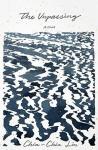 *The Unpassing by Chia-Chia Lin: Bleak yet beautiful in the vein of David Vann’s work: the story of a Taiwanese immigrant family in Alaska and the bad luck and poor choices that nearly destroy them. This debut novel is full of atmosphere and the lowering forces of weather and fate.
 The Doll Factory by Elizabeth Macneal: Set in the early 1850s and focusing on the Great Exhibition and Pre-Raphaelite Brotherhood, this reveals the everyday world of poor Londoners. It’s a sumptuous and believable fictional world, with touches of gritty realism. A terrific debut full of panache and promise.
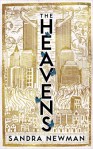 *The Heavens by Sandra Newman: Not a genre I would normally be drawn to (time travel), yet I found it entrancing. In her dreams Kate becomes Shakespeare’s “Dark Lady” and sees visions of a future burned city. The more she exclaims over changes in her modern-day life, the more people question her mental health. Impressive for how much it packs into 250 pages; something like a cross between Jonathan Franzen and Samantha Harvey.
 *In Love with George Eliot by Kathy O’Shaughnessy: Many characters, fictional and historical, are in love with George Eliot over the course of this debut novel. We get intriguing vignettes from Eliot’s life with her two great loves, and insight into her scandalous position in Victorian society. O’Shaughnessy mimics Victorian prose ably.
 Daisy Jones and The Six by Taylor Jenkins Reid: This story of the rise and fall of a Fleetwood Mac-esque band is full of verve and heart. It’s so clever how Reid delivers it all as an oral history of pieced-together interview fragments. Pure California sex, drugs, and rock ’n roll, yet there’s nothing clichéd about it.
Graphic Novels:
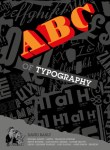 *ABC of Typography by David Rault: From cuneiform to Comic Sans, this history of typography is delightful. Graphic designer David Rault wrote the whole thing, but each chapter has a different illustrator, so the book is like a taster course in comics styles. It is fascinating to explore the technical characteristics and aesthetic associations of various fonts.
 *The Lady Doctor by Ian Williams: Dr. Lois Pritchard works at a medical practice in small-town Wales and treats embarrassing ailments at a local genitourinary medicine clinic. The tone is wonderfully balanced: there are plenty of hilarious, somewhat raunchy scenes, but also a lot of heartfelt moments. The drawing style recalls Alison Bechdel’s.
Poetry:
 *Thousandfold by Nina Bogin: This is a lovely collection whose poems devote equal time to interactions with nature and encounters with friends and family. Birds are a frequent presence. Elsewhere Bogin greets a new granddaughter and gives thanks for the comforting presence of her cat. Gentle rhymes and half-rhymes lend a playful or incantatory nature.
Nonfiction:
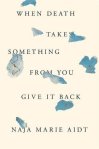 *When Death Takes Something from You Give It Back by Naja Marie Aidt: Aidt’s son Carl Emil died in 2015, having jumped out of his fifth-floor Copenhagen window during a mushroom-induced psychosis. The text is a collage of fragments. A playful disregard for chronology and a variety of fonts, typefaces and sizes are ways of circumventing the feeling that grief has made words lose their meaning forever.
 *Homesick: Why I Live in a Shed by Catrina Davies: Penniless during an ongoing housing crisis, Davies moved into the shed near Land’s End that had served as her father’s architecture office until he went bankrupt. Like Raynor Winn’s The Salt Path, this intimate, engaging memoir serves as a sobering reminder that homelessness is not so remote.
 *Hard Pushed: A Midwife’s Story by Leah Hazard: An empathetic picture of patients’ plights and medical professionals’ burnout. Visceral details of sights, smells and feelings put you right there in the delivery room. This is a heartfelt read as well as a vivid and pacey one, and it’s alternately funny and sobering.
 *Deep Creek: Finding Hope in the High Country by Pam Houston: Autobiographical essays full of the love of place, chiefly her Colorado ranch – a haven in a nomadic career, and a stand-in for the loving family home she never had. It’s about making your own way, and loving the world even – or especially – when it’s threatened with destruction. Highly recommended to readers of The Chronology of Water by Lidia Yuknavitch.
 *Dancing with Bees: A Journey back to Nature by Brigit Strawbridge Howard: Bees were the author’s gateway into a general appreciation of nature, something she lost for a time in midlife because of the rat race and family complications. She clearly delights in discovery and is devoted to lifelong learning. It’s a book characterized by curiosity and warmth. I ordered signed copies of this and the Simmons (below) directly from the authors via Twitter.
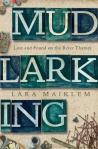 *Mudlarking: Lost and Found on the River Thames by Lara Maiklem: Maiklem is a London mudlark, scavenging for what washes up on the shores of the Thames, including clay pipes, coins, armaments, pottery, and much more. A fascinating way of bringing history to life and imagining what everyday existence was like for Londoners across the centuries.
 Unfollow: A Journey from Hatred to Hope, Leaving the Westboro Baptist Church by Megan Phelps-Roper: Phelps-Roper grew up in a church founded by her grandfather and made up mostly of her extended family. Its anti-homosexuality message and picketing of military funerals became trademarks. This is an absorbing account of doubt and making a new life outside the only framework you’ve ever known.
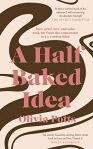 *A Half Baked Idea: How Grief, Love and Cake Took Me from the Courtroom to Le Cordon Bleu by Olivia Potts: Bereavement memoir + foodie memoir = a perfect book for me. Potts left one very interesting career for another. Losing her mother when she was 25 and meeting her future husband, Sam, who put time and care into cooking, were the immediate spurs to trade in her wig and gown for a chef’s apron.
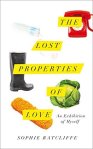 *The Lost Properties of Love by Sophie Ratcliffe: Not your average memoir. It’s based around train journeys – real and fictional, remembered and imagined; appropriate symbols for many of the book’s dichotomies: scheduling versus unpredictability, having or lacking a direction in life, monotony versus momentous events, and fleeting versus lasting connections.
 Inheritance: A Memoir of Genealogy, Paternity, and Love by Dani Shapiro: On a whim, in her fifties, Shapiro sent off a DNA test kit and learned she was only half Jewish. Within 36 hours she found her biological father, who’d donated sperm as a medical student. It’s a moving account of her emotional state as she pondered her identity and what her sense of family would be in the future.
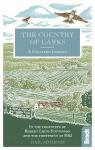 *The Country of Larks: A Chiltern Journey by Gail Simmons: Reprising a trek Robert Louis Stevenson took nearly 150 years before, revisiting sites from a childhood in the Chilterns, and seeing the countryside that will be blighted by a planned high-speed railway line. Although the book has an elegiac air, Simmons avoids dwelling in melancholy, and her writing is a beautiful tribute to farmland that was once saturated with the song of larks.

(Books not pictured were read from the library or on Kindle.)
Coming tomorrow: Other superlatives and some statistics.
 Bookish Beck = Rebecca Foster. American transplant to England. Freelance proofreader and book reviewer.

