More Books about Cats
Back in April I reviewed five books about cats, several of which proved to be a mite disappointing. I’m happy to report that in the meantime I have searched high and low and found some great books about cats that I would not hesitate to recommend to readers with even the slightest interest in our feline friends. I’ve got a book of trivia, a set of heart-warming autobiographical anecdotes, two books of poems, a sweet memoir, and – best of all – a wide-ranging new book that combines the science and cultural history of the domestic cat.
Fifty Nifty Cat Facts by J.M. Chapman and S.M. Davis
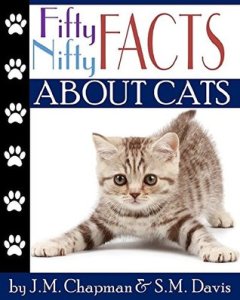 This one’s geared towards children, but I enjoyed the format: each page pairs a cute cat photo with a piece of trivia you might or might not have known. I learned a few neat things:
- a cat’s internal temperature is higher than ours (more like 101.5° F)
- cats have no sweet taste buds and have a dominant paw
- all calicos are female (orange spots being an X-linked genetic trait)
- cats could actually drink seawater – their kidneys are effective enough to process the salt
- people who say they are allergic to cat fur are actually allergic to a protein in the saliva they use to wash themselves!
My rating: 
Cat Stories by James Herriot
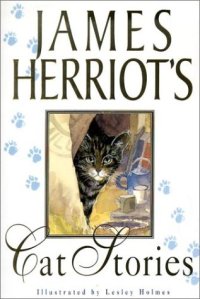 When I was a child my mother and I loved Herriot’s memoirs of life as a primarily large-animal veterinarian in Yorkshire. One story from this volume – the final, Christmas-themed one – is familiar from a picture book we brought out around the holidays. The rest are all drawn from the memoirs, though, so the fact that I don’t remember them must be a function of time; it could be as many as 22 years since I last picked up a Herriot book! In any case, these are charming tales about gentle medical mysteries and even the most aloof of stray cats becoming devoted pets. I especially liked “Alfred: The Sweet-Shop Cat” and “Oscar: The Socialite Cat,” about two endearing creatures known around the village. I also appreciated Herriot’s observation that “cats are connoisseurs of comfort.” With cute watercolor illustrations, this little book would make a great gift for any cat lover.
My rating: 
I Could Pee on This: And Other Poems by Cats by Francesco Marciuliano
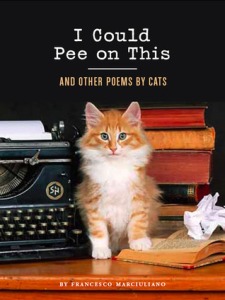 Cat owners must own a copy for the coffee table. That’s just not negotiable. You will recognize so many of the behaviors and attitudes mentioned here. This is a humor book rather than a poetry collection, so the quality of the poems (all from the point-of-view of a cat) is kind of neither here nor there. Even so, Chapter 1 is a lot better than the other three and contains most of the purely hilarious verses, like “I Lick Your Nose” and “Closed Door.” Favorite lines included “I trip you when you walk down the stairs / So you know I’m always near” and “I said I could sit on your lap forever / Don’t you even think of trying to get up / Well, you should have gone to the bathroom beforehand”. “Sushi” is a perfect haiku with a kicker of a last line: “Did you really think / That you could hide fish in rice? / Oh, the green paste burns!”
My rating: 
Well-Versed Cats by Lance Percival

 A cute set of poems, most of them describing different breeds of domestic cats and a few of the big cats. There are a lot of puns and jokes along with the end rhymes, making these akin to limericks in tone if not in form. My favorite was “Skimpy the Stray?” – about a wily cat who wanders the neighborhood eliciting sympathetic snacks from various cat lovers. “The routine still goes on, so I mustn’t be too catty, / But she ought to change her name from ‘Skimpy’ into ‘Fatty’.” Our cat had a habit of stealing neighbor kitties’ food and a history of “going visiting,” as the shelter we adopted him from put it, so this particular poem rang all too true. The illustrations (by Lalla Ward, wife of Richard Dawkins) are also great fun.
My rating:
Raining Cats and Donkeys by Doreen Tovey
 Originally from 1967, this lighthearted memoir tells of Tovey’s life in a Somerset village with her husband Charles, two demanding Siamese cats named Solomon and Sheba, and Annabel the donkey. “Nobody misses anything in our village,” Tovey remarks, and along with her charming anecdotes about her pets there are plenty of amusing encounters with the human locals too. In my favorite chapter, Annabel is taken off to mate with a Shetland pony and Solomon has a tussle with a hare. I can recommend this to fans of animal books by Gerald Durrell and Jon Katz. Tovey wrote a whole series of books about her various Siamese cats and life in a 250-year-old cottage. I found a copy of Cats in the Belfry on my visit to Cambridge and will probably read it over Christmas for a cozy treat.
My rating:
The Lion in the Living Room by Abigail Tucker
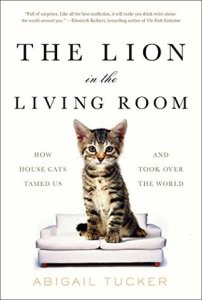 Now this is the amazing cat book I’d been looking for! It’s a fascinating interdisciplinary look at how the domestic cat has taken over the world – both literally and figuratively. A writer for Smithsonian magazine, Tucker writes engaging, accessible popular science. The closest comparison I can make, style-wise, is to Rebecca Skloot’s The Immortal Life of Henrietta Lacks, even though that has much heavier subject matter.
The book traces domestic cat evolution from the big cats of the La Brea tar pits to the modern day, explaining why cats are only built to eat flesh and retain the hunting instinct even though they rarely have to look further than their designated bowls for food nowadays. Alongside the science, though, is plenty of cultural history. You’ll learn about how cats have been an invasive species in many sensitive environments, and about the bizarre, Halloween-scary story of the Toxoplasma gondii parasite. You’ll meet the tender hearts who volunteer for trap, neuter and release campaigns to cut down on the euthanizing of strays at shelters; the enthusiasts who breed unusual varieties of cats and groom them for shows; and the oddballs who buy into the $58 billion pet industry’s novelty accessories.
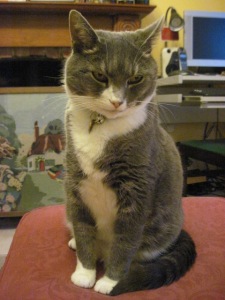
The lion in my living room.
From the earliest domestication of animals to the cat meme-dominated Internet, Tucker – a cat lady herself, as frequent mentions of her ginger tom Cheeto attest – marvels at how cats have succeeded by endearing themselves to humans and adapting as if effortlessly to any habitat in which they find themselves. A must for cat lovers for sure, but I don’t think you even have to be a pet person to find this all-embracing book pretty enthralling.
My rating:
Up next: The Church Cat, an anthology from a recent charity shop haul; The Cat Who Came for Christmas by Cleveland Amory, Cat Sense by John Bradshaw, and Talk to the Tail by Tom Cox from the public library.
Whether you consider yourself a cat lover or not, do any of these books appeal?
In Cambridge for “Nature Matters”
We spent a few days last week in Cambridge, England for New Networks for Nature’s interdisciplinary “Nature Matters” conference, this year on the theme of “In Touch with the Wild.” This is the fourth year my husband (a biologist with the University of Reading) has participated, and the third year in a row that I’ve attended for a day. While other years the gathering has been in the small town of Stamford, this year’s temporary move to Cambridge gave us the impetus to finally explore this world-famous city for the first time.
Arriving later than we meant to on a Thursday evening, checking into our noisy hostel and then having to dash out in time for my husband to make the first event (and making a futile attempt to find an open coffee shop where I could while away a couple hours)…this all meant our first impression of the city was not great. However, cheap, terrific Chinese street food on Friday after the conference, followed by a delicious glass of cider in a pub and a sunny day for exploring the bustling city center on Saturday created a more favorable overall feeling.
-
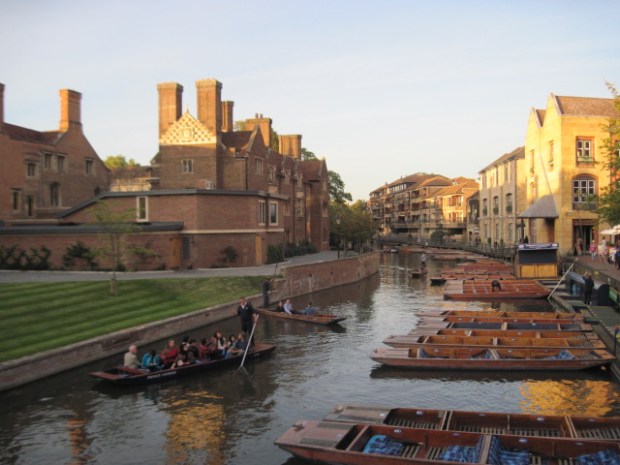
- Venice? No! Cambridge.

-
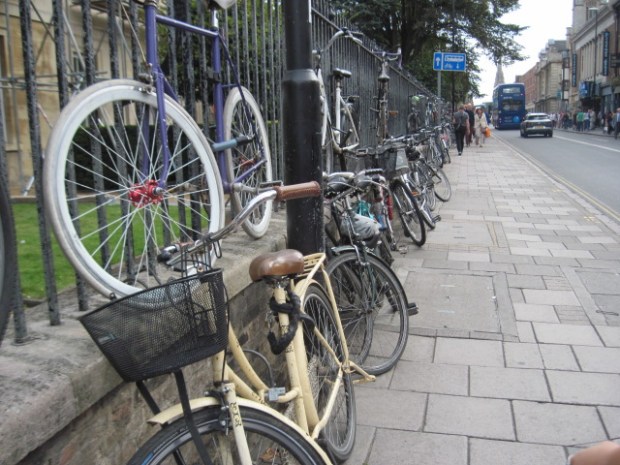
- Everyone cycles.
-

- King’s College.

-
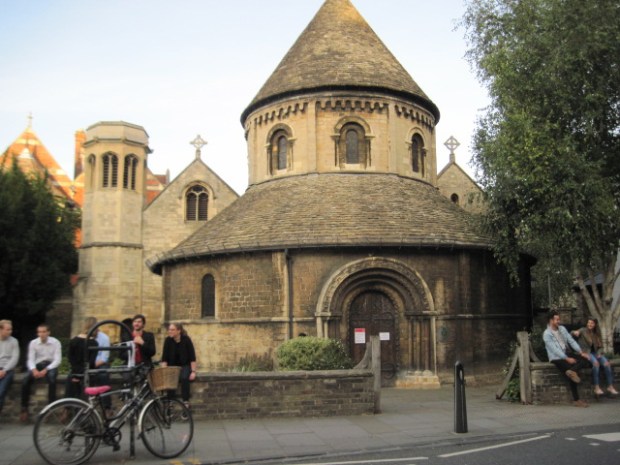
- The Church of the Holy Sepulchre, aka The Round Church.
Last year’s conference highlights for me were a debate about nature’s economic value and a panel on the purpose of nature poetry. This year’s sessions tackled personal connection with nature, rewilding (setting aside tracts of land for wilderness and reintroducing native species that have been driven out or gone locally extinct, such as wolves and wild boar), and coping with a sense of loss. With everyone from geographers to a singer and a painter involved on the day I attended, the conference succeeded in drawing in different fields from the sciences and the arts to provide commentary on ways we might reconnect with nature.
 The day’s first event brought together author William Fiennes, poet Alison Brackenbury, and Cambridge psychologist Laurie Parma. Fiennes spoke about writing an introduction to John Fowles’s long, curmudgeonly essay The Tree. Whereas Fowles denigrates Linnaeus, Fiennes thinks of him as a hero; like Adam in the Bible, Linnaeus knew the value of naming things. “In order to care about something, we first have to notice it,” Fiennes insisted; for him the noticing began when he was a child going round the garden with his father and learning plant names. Rather than thinking of names as a control mechanism, he suggested they can be a first step in “granting [a species] a place in your sensorium.”
 Brackenbury, who comes from four generations of Lincolnshire shepherds, recited from memory seven poems from her latest collection, Skies, several of which reflect on species’ extinctions or comebacks. “Look at them well before they go” is the broadly applicable piece of advice that closes “The Elms.” I especially liked one poem about a starling’s many songs.
Parma relayed the scientific evidence for green spaces mitigating stress and promoting happiness. At an event like this there’s an inevitable feeling that the speakers are preaching to the choir: we already know the personal value of time in nature, as well as the scale of environmental degradation. Still, this came home afresh in the following session as Dr. Stuart Butchart of BirdLife International spoke about the situation in Hawaii, where deforestation, non-native mosquitoes and other invasive animals are rapidly driving native birds to extinction. Photojournalist Toby Smith then questioned whether the nature photographer’s role should be to chronicle nature’s degradation or to celebrate what’s left. Many speakers acknowledged the difficult balance between mourning losses and applauding successes.
I spent most of Saturday scouring Cambridge’s charity shops and made out like a bandit, coming away with 15 books for £15.39. If you happen to find yourself in Cambridge and have seen all you need to of the colleges and the river (it doesn’t take very long), I can recommend Burleigh Street for charity shops but also Mill Road, a slightly more off-the-beaten-path student area of ethnic eateries and cheap stores. Books for Amnesty has an incredible selection; I took advantage of a couple James Lasdun books from their £1 poetry shelf. Best of all was the Salvation Army store, where all books were either 40 or 70 pence. I amassed a huge pile and then put half of it back when I remembered I would have to carry these books the mile or so back into town and then haul them around the whole rest of the day. I also did well at RSPCA’s two shops, one a dedicated bookshop on Mill Road.

Cambridge is certainly rich in secondhand book buying opportunities. Other shops I browsed but didn’t buy from included G. David Books and the tiny Sarah Key Books (also known as “The Haunted Bookshop” – I’d love to know why! – and included on a Guardian list of 10 of the best secondhand bookstores), both on St. Edward’s Passage, and the multi-floored emporium Heffers on St. John’s Street, which has a great selection of board games and gift items as well as new and used books.
As a literary destination, Cambridge left a bit to be desired, though. There weren’t any literary graves for me to find, nor any notable houses or statues. Many of the college’s famous alumni are known for work in other fields. There’s Newton, Darwin and Hawking in the sciences, for instance – they all appear in this mural in the hostel dining room. Plenty of political figures attended, as well as lots of living authors (Wikipedia has an extensive list; the hostel wall featured Zadie Smith as a fairly recent example of a literary alumna).


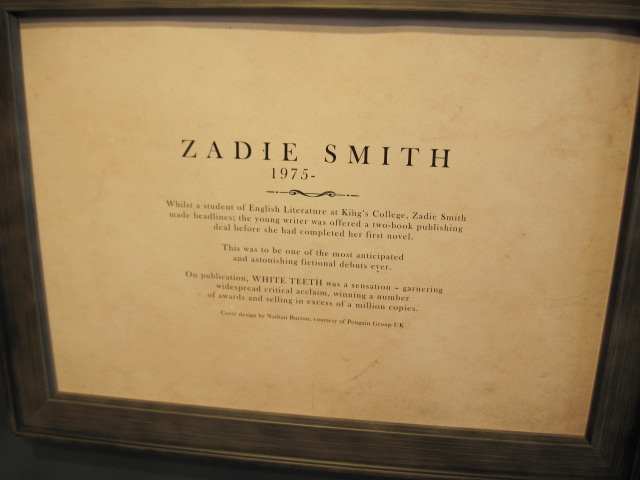
So, overall, a nice enough city for a day trip but not somewhere you need to stay much longer. Granted, it was outside of term time so King’s College wasn’t running its usual chapel services, and I never did make it out to the Fitzwilliam Museum. Still, I reckon you’ll find much more to see and do in Oxford, a city I’ve visited again and again ever since my undergraduate study abroad days took me there for weekly theology tutorials.
Your thoughts (on new cities, connecting with nature and secondhand book shopping) are always welcome!
Grief in Literature: Michel Faber and Cathy Rentzenbrink
On Tuesday night I had the chance to see Michel Faber in conversation with Cathy Rentzenbrink at Foyles bookstore in London. The topic was grief in literature, and specifically Faber’s book of poems in honor of his late wife, Undying: A Love Story (which I reviewed here in July). Faber had always written occasional poems, he said, “sort of kind of clever” stuff that he would have taken little note of if he encountered it from another author; the only really good ones, he thought, were about illness, based on his time as a nurse. So when there came this huge uprising of poems about Eva’s last illness, he felt they were a more appropriate way of commemorating her life than a novelistic narrative.

A six-floor bookshop: heaven for book lovers.
Rentzenbrink mentioned two things that particularly struck her: how Eva emerges in the fullness of her personality in the course of these poems, and the fact that the book is not angry. Faber explained that Eva herself was not angry. She did not think of multiple myeloma as her enemy and had no illusions about ‘beating’ cancer; instead, she just tried to achieve the best quality of life and the longest lifespan possible. In fact, she found cancer interesting, Faber recalled: she researched it as much as she could and followed its course with a certain curiosity. He contrasted her experience with that of an acquaintance in the Scottish Highlands who had the same disease and wanted to know nothing about it, leaving it all in the hands of her doctors. Faber believes this ignorance shortened their friend’s life unnecessarily.
Making sure that Eva came through as a real person in the poems was a struggle, Faber confessed. To start with his editors at Canongate, many of whom knew Eva, were frustrated that Undying was mercilessly medical, describing the process and aftermath of cancer treatment. A few poems, then, he wrote as a direct response to that criticism, almost as if ‘on commission’, he said, to infuse the book with more of Eva’s personality.
Only two of the poems were written while Eva was still alive, Faber noted. One was “Nipples,” written at her bedside just 10 days before her death. Eva had dealt with the pain and indignity of her illness admirably, but plasmacytomas – big purple welts all over her skin – truly broke her spirit, he revealed. His poem is a strangely erotic take on these blemishes: “Excited peaks of plasma. … Your flesh is riotous with the pleasure / of predatory cells.”

Cathy Rentzenbrink and Michel Faber
There’s irony there, and a certain dark humor in many of the rest. “There are so many absurdities when a body is breaking down spectacularly,” Faber said. And yet the last two years of Eva’s life were “incredibly intimate and tender,” as a fiercely independent woman ended up very frail and completely dependent on him as her carer. Likewise, Faber had to shift from creativity to practicality to cope with household tasks plus caregiving.
Cathy Rentzenbrink was the perfect person to interview Faber. She is the author of a bereavement memoir, The Last Act of Love, about her brother’s death after eight years in a vegetative state. Moreover, her mother survived a bout with cancer at the same age as Eva; she was heavily involved with that process through accompanying her to chemotherapy appointments. I was a bit disappointed that Rentzenbrink didn’t get to speak more about her own grief and the experience of crafting a narrative out of it. Faber said he too had envisioned more of a dialogue, but that Rentzenbrink thought it would be inappropriate for her to talk about herself and generously kept the focus on his work instead.
I also would have appreciated more context about grief literature in general, and poetry in particular. Faber did mention that there are many kinds of grief poetry. For instance, Thomas Hardy was still writing poems about his first wife decades after her death. Faber consciously avoided writing elegant, well-formed poetry like some that he’s read; instead he wanted his poems to be raw, direct, even shocking. Contrast that with the rainbows and heavenly visions of much of what’s out there. This came home to me a few weeks ago at my husband’s uncle’s funeral. Three poems were recited in the course of the ceremony, all of them heavily clichéd and unfailingly rhymed. This meant that the speakers ended up using singsong voices. In Faber’s poems, though, end rhymes are rare. I noticed them more, along with the sibilance and internal rhymes, through the emphasis he lent when reading aloud.
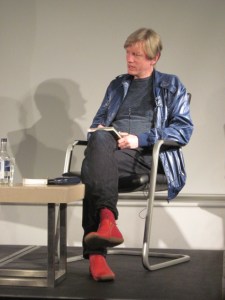 Rentzenbrink insisted there is still life to be lived for the grieving. As if to reinforce her point, Faber openly admitted to his relationship with a fellow writer who also lost a longtime partner, Louisa Young, whom he met the year after Eva’s death. He’s aware that this poses a marketing problem: he’s no longer the disconsolate soul in rumpled clothing, barely surviving without his spouse. (Indeed, he looked well put together and hip in his blue leather jacket and bright orange shoes, and his blond mop makes him appear much younger than he is.) Thinking also of a widower friend, Rentzenbrink said that her feeling was “he looked after her for so many years; he can have a little fun now!”
As to Faber’s professional future, he reiterated that he does not plan to write any more novels for adults. All of his fiction is about characters desperate to transcend, he said, and now it’s time for him to do that in his own life. He’s pondered a couple of nonfiction projects about aesthetics and music, but for now his next goal is a YA adventure novel. Whenever plaintive readers beg him for future novels, he cheekily asks whether they’ve read his whole back catalogue – including two collections of short stories, always a hard sell for novel readers. I have six more of Faber’s books to get to myself, so that’s plenty to fuel me in the years ahead. I came away from this event with a greater appreciation for the poems in Undying and a deep respect for a man aware of the seasons of his life, writing and caregiving among them.
Six from My Shelves
My resolution to read just my own books for the summer largely fell by the wayside, but I did manage to get through another handful of print books from the shelves. Below I give brief write-ups of what I’ve finished lately and recall how these books came to be in my collection.
 In Fond Remembrance of Me by Howard Norman: A strange, short book that blends memoir and Inuit legends. In 1977 Norman travelled to Churchill, Manitoba to transcribe an oral storyteller’s folktales. Most of these were about Noah coming into contact with the peoples of the far north and displeasing them by refusing to give over the exotic animals of his ark as food. Helen Tanizaki, a scholar in her late thirties who tried half-heartedly to hide the fact that she was dying of stomach cancer, was also there to translate stories into Japanese. It’s easy to see why she impressed Norman with her mystical stoicism. She was a keen birdwatcher, and declared she wanted to be reincarnated as a seabird. The portrait of Helen is compelling, but the book doesn’t hang together well, especially because the interspersed legends are so repetitive. [From my Amazon wish list last Christmas.]
 An Anthology of Animal Poetry, ed. Kenneth A. Mason: This was assembled in 1940 by a 19-year-old, and it shows. The choices are obvious and old-fashioned; too many of the poems are long and insist on rhyming. However, I discovered some real gems. Three poems in a row are about skylarks – by Gerard Manley Hopkins, Wordsworth and Shelley – and they’re all brilliant, using the bird as an emblem of freedom. Shelley’s “To a Skylark,” in particular, I can’t believe I’ve never encountered before. Its 21 stanzas praise the bird’s pure joy and wonder how careworn humans might emulate it: “We look before and after, / And pine for what is not … Teach me half the gladness / That thy brain must know.” My vintage Pelican copy has ads for chocolate and cigarettes that made me laugh. [Bought from a secondhand bookstore in Tunbridge Wells for 10 pence.]


 The Mistress’s Daughter by A.M. Homes: This grew out of a New Yorker article Homes published about meeting her biological parents in her early 30s. Her mother carried on an affair with her married boss, starting when she was just a teenager – Homes learned that she was the mistress’s daughter. This is the story of how her birth mother tried to get involved in her life, in a really rather stalker-ish way, and the occasional contact she had from her birth father. The blow-by-blow gets a little boring, especially when it’s Homes and her father only communicating via lawyers. Homes doesn’t really make much of a contribution to the literature of adoption, though this is a pleasant enough read. “I am an amalgam. I will always be something glued together, something slightly broken.” [Bought from a library book sale in America for $1.]
 Summertime by Vanessa Lafaye: An enjoyable historical novel based on several true-life elements: a work camp of army veterans based at the Florida Keys, segregation and lynching, and a massive hurricane that hit in 1935. Main characters Missy and Henry are well drawn, but beyond them I thought Lafaye splits the perspective too far: I didn’t need to see through the eyes of lots of the veterans, the shopkeeper, or the policeman investigating the brutal beating of a local white woman. As for this crime, I knew whodunit pretty much right away, so there wasn’t any suspense regarding that plot point. However, Lafaye does do a great job of building tension in the novel’s final third as the storm approaches. The U.S. title (Under a Dark Summer Sky) is much better; “Summertime” evokes strangely rosy images and so is inappropriate. [I won a copy in a Goodreads giveaway.]
 So Many Books, So Little Time: A Year of Passionate Reading by Sara Nelson: Nelson is forthright about what she likes and doesn’t like; she also ruefully reflects on the gap between what she meant to read and what she actually read in 2002. Her reading diary tells a lot about her personal life too: having a non-reading spouse and a novelist sister; memories of her late father; and the struggle to instill a love of reading into her young son. Inevitably a little dated as it engages with ‘It’ books of the time like A Million Little Pieces and Kitchen Confidential, the book has staying power because in each chapter Nelson broadens out from her discussion of one or more books to craft a thematic essay. This was meant to be my bedside book for the second half of the year, but I devoured it in less than seven weeks. It’s full of lines bibliophiles can relate to. [Free from The Book Thing of Baltimore.]
 The Debt to Pleasure by John Lanchester: Tarquin Winot, the snobby Francophile who narrates Lanchester’s debut novel, has a voice reminiscent of Oliver in Julian Barnes’s Talking It Over and Love etc. His opinionated, verbose speech provides much of the book’s wit. “This is not a conventional cookbook,” the first line warns, but a foodie’s tribute to traditional English and French dishes that compose the best seasonal menus. As we travel with Tarquin from Portsmouth to Provence we learn more about this peculiar character through the memories dishes elicit: about his Irish nanny, his sculptor brother’s boarding school years, etc. Lanchester subtly introduces notes of doubt about the narrator’s reliability, until we have to wonder how much his tale resembles Perfume or The Talented Mr. Ripley. Deliciously clever and sinuous. [Bought from a London charity shop for 20 pence.]
I spent much of the summer bogged down in several very good but not particularly page-turning works of nonfiction. I’ll review those in due course.
Up next, though, are a few Booker Prize longlist mini-reviews in advance of the shortlist announcement on Tuesday.
Autumn Is Here, in Poetry and Prose
“The trees are undressing, and fling in many places –
On the gray road, the roof, the window-sill –
Their radiant robes and ribbons and yellow laces”
~from “Last Week in October,” Thomas Hardy (1928)
I recently learned that there are two different official start dates for autumn. The meteorological beginning of the season was on September 1st, while the astronomical opening is not until the 22nd. For the purposes of this review I’ll incline towards the former. I’ve been watching leaves fall since early last month, after all, but now – after a weekend spent taking a chilly boat ride down the canal, stocking the freezer with blackberries and elderberries, and setting hops to dry in the shed – it truly feels like autumn is here in southern England. Luckily, I had just the right book in hand to read over the last couple of weeks as I’ve been settling into our new place, Autumn: An anthology for the changing seasons.
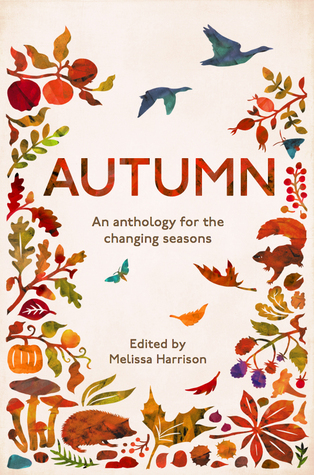 This is the third of four seasonal volumes issued this year by the UK’s Wildlife Trusts, in partnership with London-based publisher Elliott & Thompson and edited by Melissa Harrison (see also my review of Summer). The format of all the books is roughly the same: pieces range from one to a few pages and run the gamut from recurring phenological records (Gilbert White and Thomas Furly Forster) and extracts from classic literature (poems by Shelley, Tennyson and Yeats) to recent nature writers (an excerpt from Helen Macdonald’s H is for Hawk; new work from Amy Liptrot and John Lewis-Stempel). Perhaps half the content has been contributed by talented amateurs, about 10 of them repeats from the first volumes.
This collection was slightly less memorable for me than Summer. A few pieces seem like school assignments, overly reliant on clichés of blackberry picking and crunching leaves underfoot. The best ones don’t attempt too much; they zero in on one species or experience and give a complete, self-contained story rather than general musings. A few stand-outs in this respect are Jo Cartnell chancing upon bank voles, Julian Jones on his obsession with eels, Laurence Arnold telling of his reptile surveying at London Wetland Center, and Lucy McRobert having a magic moment with dolphins off the Scilly Isles. I also enjoyed Kate Blincoe’s account of foraging for giant puffball mushrooms and Janet Willoner on pressing apples into juice – I’m looking forward to watching this at our town’s Apple Day in October.
I think all the contemporary writers would agree that you don’t have to live or go somewhere ‘special’ to commune with nature; there are marvels everywhere, even on your own tiny patch, if you will just go out and find them. For instance, South London seems an unlikely place for wildlife encounters, yet Will Harper-Penrose meets up with one of the country’s most strikingly exotic species (an introduced one), the ring-necked parakeet. Jane Adams comes across a persistent gang of wood mice in her very own attic, while Daphne Pleace spots red deer stags from the safety of her motorhome when on vacation in northwest Scotland.

A Japanese maple near the National Cathedral in Washington, D.C. Photo by Chris Foster.
Remarkably, the book’s disparate pieces together manage to convey a loose chronological progression, from the final days of lingering summer to the gradual onset of winter. Here’s Annie Worsley’s lovely portrayal of autumn’s approach: “In the woodlands the first trees to betray summer are silver birches: splashes of yellow dapple their fine, shimmering greenery. Here and there, long wavering larch tresses begin to change from deep green to orange and ochre.” At the other end of the autumnal continuum, David Gwilym Anthony’s somber climate change poem, “Warming,” provides a perfect close to the anthology: “These days I’ll take what Nature sends / to hoard for dour December: / a glow of warmth as autumn ends.”
A few more favorite lines:
- “Dusk, when the edges of all things blur. A time of mauve and moonlight, of shapeshiftings and stirrings, of magic.” (Alexi Francis)
- “Go down the village street on a late September afternoon and the warm burnt smell of jam-making oozes out of open cottage doors.” (Clare Leighton, 1933)
- “There are miniature Serengetis like this under most logs, if you take the time to look.” (Ryan Clark)
- “Ah, the full autumn Bisto bouquet comes powering to the nose: mouldering leaves, decaying mushrooms, rusting earth.” (John Lewis-Stempel)
My favorite essay of all, though, is by Jon Dunn: playful yet ultimately elegiac, it’s about returning to his croft on a remote Shetland island to find that an otter has been picking off his chickens.
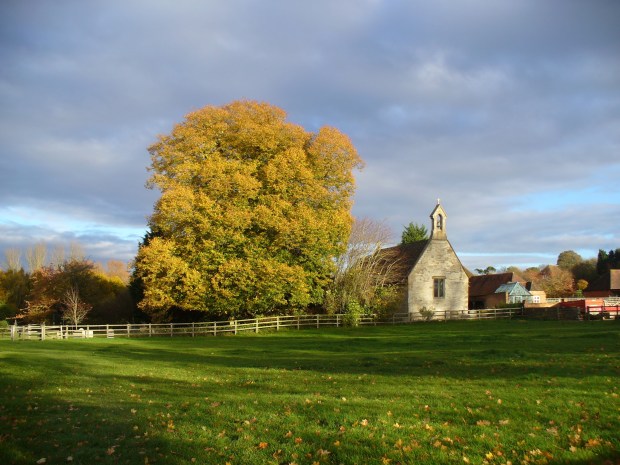
All Saint’s Church in Woolstone, Oxfordshire. Photo by Chris Foster.
Like Summer, this gives a good sense of autumn as a whole, including its metaphorical associations. As Harrison puts it in her introduction, autumn “makes tangible a suite of emotions – wistfulness, nostalgia, a comfortable kind of melancholy – that are, at other times of the year, just out of reach.” It’s been my favorite season since childhood, probably because it combines the start of the school year, my birthday, and American holidays like Halloween and Thanksgiving. Whatever your own experience of autumn – whether it’s a much loved season or not; even if you call it “fall” instead – I can highly recommend this anthology’s chorus of voices old and new. There’s no better way for a book lover to usher in the season.
With thanks to Jennie Condell at Elliott & Thompson for the free copy for review.
My rating:
Mini Reviews Roundup for the Summer
Here’s a quick look at some of the book reviews I’ve had published elsewhere on the web over the past few months, with a taster so you can decide whether to read more by clicking on the link. These are all 4-star reads I can highly recommend.
The Bookbag
Trio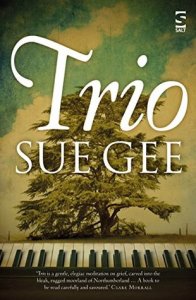 by Sue Gee: Sue Gee’s tenth novel is a sensitive portrait of life’s transience and the things that give us purpose. In the late 1930s, a widowed history teacher in Northumberland finds a new lease on life when he falls for one of the members of a local trio of musicians. My favorite passages of the book are descriptive ones, often comprised of short, evocative phrases; I also loved the banter between the musicians. The novel has a reasonably simple plot. We delve into the past to discover each main character’s backstory and some unexpected romantic entanglements, but in the 1930s storyline there aren’t a lot of subplots to distract from the main action. I was reminded in places of Downton Abbey: the grand hall and its village surroundings, the build-up to war, the characters you come to love and cheer for. [Thanks to Elle for piquing my interest in this one.]
How to Set a Fire and Why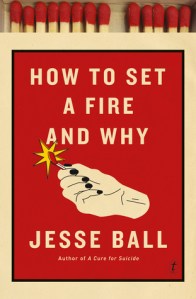 by Jesse Ball: Lucia Stanton is a cynical 14-year-old misfit who lives with her elderly aunt in a garage. At first she only supports the idea of arson, but events draw her into getting personally involved. This is one of those fairly rare novels that stand out immediately for the first-person voice. Lucia reminded me of Holden Caulfield or of Mim Malone from David Arnold’s Mosquitoland. She’s like a cynical philosopher. For as heartbreaking as her family history is, she was always either making me laugh or impressing me with her wisdom. Although this is his sixth novel, I hadn’t heard much about Jesse Ball prior to picking it up. His skill at creating the interior world of a troubled 14-year-old girl leads me to believe that the rest of his work would be well worth a look.
BookBrowse
[Non-subscribers can read excerpts of my reviews]
Imagine Me Gone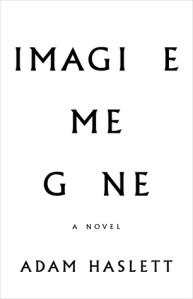 by Adam Haslett: Mental illness plagues two generations of an Anglo-American family in Haslett’s moving second novel. Narration duties are split between the five members: father John, mother Margaret, and siblings Alec, Michael, and Celia. By giving each main character a first-person voice, Haslett offers readers a full picture of how mental illness takes a toll not only on sufferers but also on those who love and care for them. John’s descriptions of what mental illness is like are among the most striking passages in the book. Michael’s sections are wonderfully humorous, a nice counterbalance to some of the aching sadness. The multiple points of view fit together beautifully in this four-decade family symphony, although I sometimes felt that Celia was one main character too many – her story doesn’t contribute very much to the whole. A powerful read for fans of family stories.
Dinner with Edward by Isabel Vincent: In this heartwarming memoir, a journalist tells how friendship with an elderly gentleman rekindled her appetite for life. New to NYC and with a faltering marriage, Isabel received an unusual request from her friend Valerie: Would she look in on Valerie’s father, Edward? In his nineties, he’d recently been widowed and Valerie was worried about him losing the will to live. If he could have a guest to cook for and entertain, it might give him a new sense of purpose. As it turned out, it was a transformative friendship for the author as much as for Edward. Each chapter opens with a mouth-watering menu. Although Edward is now deceased, when we see him for the final time, he is still alive and well. This is a nice way to leave things – rather than with a funeral, which might have altered the overall tone.
Nudge
Ruby by Cynthia Bond: When Ruby Bell returns to Liberty Township, her east Texas hometown, in 1964, her fellow black folk turn her into a victim of derision. The churchgoing men of the town get the idea that they can use her body however they want. In part this is because her mental health is deteriorating, and the more she struggles to stifle traumatic memories the stranger she acts. The only one who continues to see Ruby as a human being rather than a demon or a subhuman object is Ephram Jennings. I found their relationship, reminiscent of that between Sethe and Paul D. in Toni Morrison’s Beloved, very touching. The novel moves fluidly between the past and present to give all of the central characters’ backstories – most of them unremittingly tragic. As difficult as some of the later scenes are to take, you feel entranced into continuing because of the touches of magic realism. Out of the darkness Bond weaves enchanting language and scenes. I highly recommend this to fans of Ayana Mathis’s The Twelve Tribes of Hattie and Angela Flournoy’s The Turner House.
The Hatred of Poetry by Ben Lerner: This fluid essay asks how poetry navigates between the personal and the universal. Socrates famously wanted to ban poets, fearing poetry might be turned to revolutionary purposes. Lerner wonders whether poetry still has a political role. Whitman’s goal was to create a new American verse style. But was it realistic for him to think that he could speak for everyone? The same might be asked about the poets who read at presidential inaugurations. Can different races and genders speak to and for each other, or is it only white males who are assumed to be able to pronounce on humanity’s behalf? Those are some of the questions addressed in this conversational yet unabashedly highbrow essay. Lerner’s points of reference range from Keats and Dickinson to Claudia Rankine, with ample quotations and astute commentary.
Pittsburgh Post-Gazette
Before the Fall by Noah Hawley: The key is in the title: perhaps playing on the theological implications of “the Fall” and Scott and JJ’s “salvation” from a plane crash, the novel toggles between build-up and aftermath. Disasters bring disparate people together to make superb fictional setups. Crucially, Hawley doesn’t make the mistake of conflating characters under easy labels like “victims” and “survivors.” Instead, he renders them all individuals with complete backstories. Some of their potted histories are relevant, while others throw up red herrings in the ensuing enquiry. Readers’ task is to weigh up what is happenstance and what is destiny. This lies somewhere on the continuum between crime and literary fiction; if it’s not quite Jonathan Franzen, nor is it Robert Ludlum. It’s a pretty much ideal summer vacation read – though you might think twice about taking it on a plane.
Undying: Poems by Michel Faber
Today, July 7th, happens to be my ninth wedding anniversary. For Michel Faber, however, it marks a more somber occasion: two years since his wife, Eva, died of cancer. They met in 1988 and got to spend over 25 years together. It was a second marriage for Eva, a visual artist – a bohemian life full of travel and each working on their art, until a six-year battle with multiple myeloma (a cancer of the bone marrow) cut Eva down in her fifties.
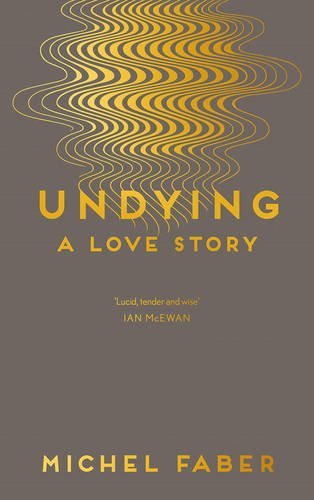 Faber’s new book, Undying: A Love Story, is a striking outpouring of 67 poems, most of them written in 2014–15, after Eva died. In two halves, it takes up first Eva’s illness and death, and then the aftermath and memories. Faber gives a vivid sense of how completely cancer changed both their lives: “There were three of us in our marriage. / You, me, and your cancer.” Eva’s illness put everything into perspective: “In our former lives, B.C., / all sorts of issues seemed to matter – / like minor wastes of money, and a scarcity / of storage space.”
The poems vary widely in stanza length and style. With only a few exceptions, they are in the first person – “I” and “we” – and addressed directly to Eva as “you,” even after she was gone. In one of my favorites, “You Loved to Dance,” Faber remembers the rare occasions in their relationship when they danced together and shakes his head over lost opportunities: “A thousand chances that we didn’t take. … Half a dozen dances in a quarter-century. / I doubt you thought that that was all there’d be.”
Although this is mostly free verse, the occasional rhyming couplet ends a poem:
Yes, let us not leave off praying.
Not for God our soul to keep
but just to die, of old age, in our sleep.
Wake-up call. You’re dead another day.
The hotel hopes I have enjoyed my stay.
As you can see from those last lines, the tone is gently sardonic. Faber’s strategy is often to hold up physical artifacts of Eva’s life – the hundreds of menstrual pads she’d accumulated, only to go through early menopause (“Change Of Life”); the odd foodstuffs he found in their cupboards after her death and tried to use up (“Tamarind”) – and turn them to gently mocking commentary on all the futile plans we make. Most ironic of all is “Or, If Only,” in which he catalogues all the ways life can kill you when you don’t want it to, whereas by the end Eva longed for an easy way out: “We’d jump at any offer. / Any speedy death would do us.”
In subject matter and tone I would liken these poems to Christian Wiman’s and Christopher Reid’s. Wiman is a poet and theologian who has himself been through the trenches – long, painful years of treatment for blood cancer. Christopher Reid’s A Scattering is a poetic reflection on his wife Lucinda’s death from a brain tumor. Though you can sense the rich emotion in the poems of Undying, Faber doesn’t quite match either of these authors for craft. His talent is better suited to the expansive world of a novel like The Crimson Petal and the White.
I was thus dismayed to read in this book’s publicity materials that Faber does not intend to write any more fiction – “[Eva’s] death is a major factor in his decision not to write any further novels. A talented artist, she set aside her career to help further his, despite his protestations – and he is dedicating much of the rest of his life to making her work better known.” Faber’s The Book of Strange New Things was one of my most memorable reads from 2014. The story of an interplanetary missionary separated from his wife, it takes on new ache when you realize Faber was writing it in the shadow of his own wife’s death. If, indeed, it was to be his last novel, it’s appropriate that it gives such a poignant portrait of a marriage.
I’ll keep hoping that Faber writes more fiction. In the meantime, any fan of his writing should get hold of these tender, elegiac poems.
All I can do, in what remains of my brief time,
is mention, to whoever cares to listen,
that a woman once existed, who was kind
and beautiful and brave, and I will not forget
how the world was altered, beyond recognition,
when we met.
With thanks to Canongate for the free copy for review.
My rating:
An Anthology of Summer Reading
In partnership with the UK’s Wildlife Trusts, London-based publisher Elliott & Thompson is celebrating the seasons with a series of anthologies edited by novelist and nature writer Melissa Harrison. My husband had a short piece published in the first volume (Spring), so I was eager to get my hands on a copy of Summer.
 The format in all the books is roughly the same: they’re composed of short pieces that range from one to a few pages and run the gamut from recurring phenological records (Gilbert White and Thomas Furly Forster) and extracts from classic literature (Adam Bede and Far from the Madding Crowd) to recent nature books (Mark Cocker’s Claxton and Paul Evans’s Field Notes from the Edge). In addition, there are new contributions from established writers or talented amateurs, one as young as twelve – heartening proof that young people are still enthused about nature.
With the exception of the poems, none of these entries have titles, and the attribution and date of composition are not given until the very end. The idea behind this pseudo-anonymity, I think, is that if – as I sometimes was – you are patient enough to not skip ahead to discover who wrote it when, you will judge all of the pieces by the same standards. You approach each without expectations, and in many cases may be stumped as to whether the writing is historical or modern. I found W.H. Hudson’s and Mary Webb’s extracts particularly readable, for instance; you wouldn’t guess they’re from the early decades of the twentieth century.
There are 70-some pieces here on a wide variety of subjects, but a few of the ones that struck me were on badger-watching (Caroline Greville, who is writing a memoir on the topic), looking for orchids (environmental journalist Michael McCarthy), moth trapping, and night-time wildlife like glow-worms and bats. I especially appreciated Alexandra Pearce’s essay on the brief life of mayflies and Nicola Chester’s on searching for owls. Of the previously published pieces, Paul Evans’s on ant swarms is a stand-out. My two favorites, though, are from celebrated nature columnist Simon Barnes, who writes about paddling a canoe in Norfolk with his son in search of adventure, and Esther Woolfson, who, as she does in her book Field Notes from a Hidden City, illuminates the unnoticed wildlife of Aberdeen.

Courtesy of Chris Foster
Again and again this message comes through: take the time to look closely and you will find great wonders. “Perhaps as adults our lives are so filled with bills, chores, jobs and other things that we often forget to stop and look at the world around us,” Jan Freedman, curator of natural history at Plymouth City Museum and Art Gallery, astutely notes. Whether it’s lichens or weevils, all you generally have to pay to experience nature’s delights is attention. I loved Alexi Francis’s description of a hare: “Haunches down, nose cross-stitched, it closes its eyes to the sun in a moment of blissful slumber.” Having that moment of communion with nature and then choosing just the right words to capture it is what this book is all about.
Taken together, these pieces truly give the feeling of an English summer. The older writing is remarkably undated, which contributes to a sense of continuity across the centuries. However, the book also evokes more universal notions of summer: those drowsy, leisurely days we gild with nostalgia. As Harrison puts it in her introduction, the longing for summer is really a wish to return to childhood: “Those elysian summers, polished to dazzling brightness by the flow of years, can never be recaptured; but we have this summer, however imperfect we as adults might deem it, and we can go out and seek it at every opportunity we find.”

Courtesy of Chris Foster
As the relatively frequent typos – three in the Barnes piece alone, for example – suggest, the series has been somewhat hastily put together. Nonetheless, these are really rather lovely books. Summer is a perfect bedside companion to dip into as the days warm up. Impossible not to covet the whole four-season set.
With thanks to Marianne Thorndahl at Elliott & Thompson for the free copy for review.
My rating: 
Reviews Roundup, March–April
One of my goals with this blog was to have one convenient place where I could gather together all my writing that appears in disparate online locations. To that end, once a month I provide links to all book reviews I’ve published elsewhere, with a rating (below each description) and a taster so you can decide whether to read more. A few exceptions: I don’t point out my Kirkus Indie, BlueInk or Publishers Weekly reviews since I don’t get a byline.
The Bookbag
 The Improbability of Love by Hannah Rothschild: From the Baileys Prize longlist, an enchanting debut novel that blends art and cooking, mystery and romance. Annie McDee, a heartbroken PA and amateur chef, pays £75 for a painting from a junk shop, not realizing it’s a lost Watteau that will spark bidding wars and uncover a sordid chapter of history. In a triumph of playful narration, we mostly learn about the artwork’s history from the painting ‘herself’. She recounts her turbulent 300-year-history and lists her many illustrious owners, including Marie Antoinette, Napoleon and Queen Victoria. These are the novel’s only first-person sections; you can just imagine a voiceover from Helen Mirren or Judi Dench.
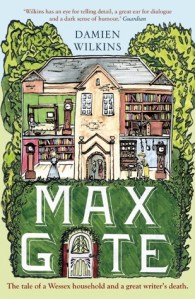 Max Gate by Damien Wilkins: This is a novel of Thomas Hardy’s last days, but we get an unusual glimpse into his household at Max Gate, Dorchester through the point-of-view of his housemaid, twenty-six-year-old Nellie Titterington. Ultimately I suspect a third-person omniscient voice would have worked better. In fact, some passages – recounting scenes Nellie is not witness to – are in the third person, which felt a bit like cheating. Fans familiar with the excellent Claire Tomalin biography might not learn much about Hardy and his household dynamics, but it was fun to spend some imaginary time at a place I once visited. [First published in New Zealand in 2013; releases in the US and UK on June 6th.]

 Dust by Michael Marder: A philosopher carries out an interdisciplinary study of dust: what it’s made of, what it means, and how it informs our metaphors. In itself, he points out, dust is neither positive nor negative, but we give it various cultural meanings. In the Bible, it is the very substance of mortality. Meanwhile “The war on dust, a hallmark of modern hygiene, reverberates with the political hygiene of the war on terror.” The contemporary profusion of allergies may, in fact, be an unintended consequence of our crusade against dust. The discussion is pleasingly wide-ranging, with some unexpected diversions – such as the metaphorical association between ‘stardust’ and celebrity – but also some impenetrable jargon. I’d be interested to try other titles from Bloomsbury’s “Object Lessons” series.
Foreword Reviews
How to Cure Bedwetting by Lane Robson (Oh, the interesting topics my work with self-published books introduces me to!): Explaining the anatomical and behavioral reasons behind bedwetting, the Calgary-based physician gives practical tips for curing the problem within six to twelve months. Throughout, the text generally refers to “pee” and “poop,” which detracts slightly from the professionalism of the work. All the same, this compendium of knowledge, drawing as it does on the author’s forty years of experience, should answer every possible question on the subject. Highly recommended to parents of younger elementary school children, this book will be an invaluable reference in tackling bedwetting.
Nudge
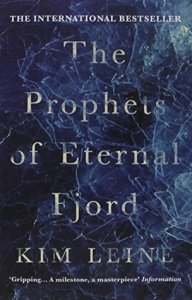 The Prophets of Eternal Fjord by Kim Leine: An epic novel about an unconventional priest, set in late-eighteenth-century Denmark and Greenland. This struck me as a cross between Carsten Jensen’s We, the Drowned, another historical saga from Denmark and one of my favorite novels of all time, and Michel Faber’s The Crimson Petal and the White. Like the former, it features perilous sea voyages and ambivalent father–son relationships; like the latter, it’s edgy and sexualized, full of lechery and bodily fluids. No airbrushing the more unpleasant aspects of history here. The entire story is told in the present tense, with no speech marks. It took me nearly a month and a half to read; by the end I felt I’d been on an odyssey as long and winding as Morten’s.
PANK
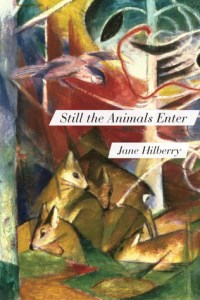 Still the Animals Enter by Jane Hilberry: A rich, strange, and gently erotic collection featuring diverse styles and blurring the lines between child and adult, human and animal, life and death through the language of metamorphosis. Ambivalence about the moments of transition between childhood and adulthood infuses Part One. Early on, “A Hole in the Fence” finishes on a whispered offer: “You could be part of this.” The message in this resonant collection, though, is that we already are a part of it: part of a shared life that moves beyond the individual family or even the human species. We are all connected—to the children we once were, to lovers and family members lost and found, and to the animals we watch in wonder.
Pittsburgh Post-Gazette
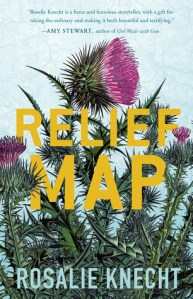 Relief Map by Rosalie Knecht: Lomath, Pennsylvania consists of a half-mile stretch between old textile mills and is home to just 150 people. During one unpredictable summer, blackouts and the arrival of an Eastern European fugitive draw the residents into a welter of paranoia and misguided choices. Our eyewitness to provincial commotion is 16-year-old Livy Marko, who considers herself plain and awkward – her childhood style was supplied by Anne of Green Gables and Goodwill. Knecht’s writing is marked by carefully chosen images and sounds. The novel maintains a languid yet subtly tense ambience. For Livy, coming of age means realizing actions always have consequences. Offbeat and atmospheric, this debut is probably too quiet to make a major splash, but has its gentle rewards.
Shiny New Books
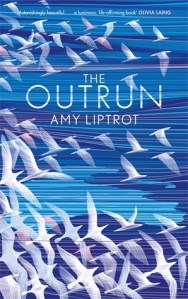 The Outrun by Amy Liptrot: Put simply, this is a memoir about Amy Liptrot’s slide into alcoholism and her subsequent recovery. Liptrot grew up on mainland Orkney, a tight-knit Scottish community she was eager to leave as a teenager but found herself returning to a decade later, washed up after the dissolute living and heartbreak she left behind in London. A simple existence, close to nature and connected to other people, was just what she needed during her first two years of sobriety. Her atmospheric writing about the magical Orkney Islands and their wildlife, rather than the slightly clichéd ruminating on alcoholism, is what sets the book apart. (On the Wellcome Prize shortlist.)

I also post reviews of most of my casual reading and skimming on Goodreads:
 Look We Have Coming to Dover! by Daljit Nagra: The dialect was a bit too heavy for me in some of these poems about the Sikh experience in Britain. By far my favorite was “In a White Town,” which opens: “She never looked like other boys’ mums. / No one ever looked without looking again / at the pink kameez and balloon’d bottoms, // mustard-oiled trail of hair, brocaded pink / sandals and the smell of curry. That’s why / I’d bin the letters about Parents’ Evenings …”
 Work Like Any Other by Virginia Reeves: Between the blurb and the first paragraph, you already know everything that’s going to happen. I admire books that can keep you reading with interest even though you know exactly what’s coming, but this isn’t really one of those. Ultimately I would have preferred for the whole novel, rather than just alternating chapters, to be in Roscoe’s first-person voice, set wholly in prison (where he helps out in the library and with the guard dogs) but with brief flashbacks to his electricity siphoning and the circumstances of his manslaughter conviction. The writing is entirely capable, but the structure made it so I felt the story wasn’t worth my time.
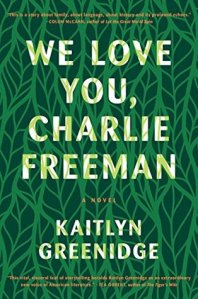 We Love You, Charlie Freeman by Kaitlyn Greenidge: The Freemans are raising Charlie, a chimpanzee, as part of their family for a Toneybee Institute experiment and teaching him to communicate via sign language. Flashbacks to the late 1920s bring an uncomfortable racial subtext to the surface, suggesting that the Toneybee has been involved in dodgy anthropological research over the decades. This is a deep and unsettling story of human–human interactions, even more so than human–animal interactions. I much preferred it to We Are All Completely Beside Ourselves.
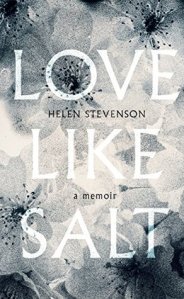 Love Like Salt by Helen Stevenson: Stevenson’s daughter Clara has cystic fibrosis, so I approached and enjoyed this as an illness memoir. However, it’s very scattered, with lots of seemingly irrelevant material included simply because it happened to the author: her mother’s dementia, their life in France, her work as a translator and her hobby of playing the piano, her older husband’s love for Italy and Italian literature, etc. Really the central drama is their seemingly idyllic life in France, Clara being bullied there, and the decision to move back to England (near Bristol), where the girls would attend a Quaker school on scholarships and Clara was enrolled in a widespread clinical trial with modest success. Enjoyable enough if you share some of the author’s interests.
 Springtime: A Ghost Story by Michelle de Kretser: Ghost story? Really? There’s very little in the way of suspense, and not too much plot either, in this Australia-set novella. I would expect tension to linger and questions to remain unanswered. Instead, the author exposes Frances’s ‘ghost’ as harmless. What I think de Kretser is trying to do here is show that ghosts can be people we have known and loved or, alternatively, places we have left behind. There is some nice descriptive writing (e.g. “three staked camellias stood as whitely upright as martyrs”), but not enough story to hold the interest.

 Let the Empire Down by Alexandra Oliver: This debut collection is heavily inspired by history and travel, as well as Serbian poetry and personal anecdote. I enjoyed the earlier poems, especially the ones with ABAB or ABBA rhyme schemes. My favorite was “Plans,” about a twenty-something manicurist who abandoned her talent for science to get ready cash: “A girl’s future should be full and bright, a marble, / but (alas for her) there is a catch: / we take on the immediate. Hope flags: / wishing to be wise and come out shining, / we pop a beaker over our own flame. / We do it cheerfully. We do it coldly.” The last quarter is devoted to poems about films, especially Italian cinema.
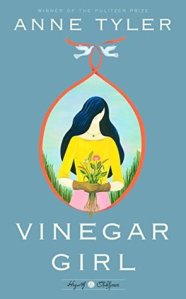 Vinegar Girl by Anne Tyler: This is the most fun I’ve had with the Hogarth Shakespeare series so far, as well as my favorite of the three Anne Tyler novels I’ve read. Yes, it’s set in Baltimore. Kate Battista, the utterly tactless preschool assistant, kept cracking me up. Her father, an autoimmune researcher, schemes for her to marry his lab assistant, Pyotr, so he can stay in the country after his visa expires. The plot twists of the final quarter felt a little predictable, but I was won over by the good-natured storytelling and prickly heroine. (I don’t know The Taming of the Shrew well enough to comment on how this functions as a remake.) Releases in June.
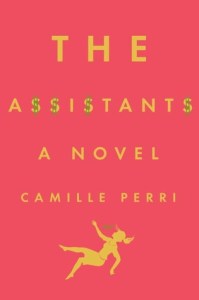 The Assistants by Camille Perri: At age 30, Tina Fontana has been a PA to media mogul Robert Barlow for six years. He’s worth millions; she lives in a tiny Brooklyn apartment. One day a mix-up in refunding expenses lands her with a check for $19,147. If she cashes it she can pay off her debts once and for all and no one at Titan Corporation will be any the wiser, right? This is a fun and undemanding read that will probably primarily appeal to young women. I would particularly recommend it to readers of Friendship by Emily Gould and A Window Opens by Elisabeth Egan. Releases May 3rd.
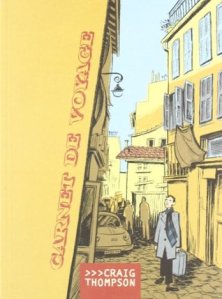 Carnet de Voyage by Craig Thompson: A sketchbook Thompson kept on his combined European book tour for Blankets and research trip for Habibi in March–May 2004. It doesn’t really work as a stand-alone graphic memoir because there isn’t much of a narrative, just a series of book signings, random encounters with friends and strangers, and tourism. My favorite two-page spread is about a camel ride he took into the Moroccan desert. I could also sympathize with his crippling hand pain (from all that drawing) and his “chaos tolerance” overload from the stress of travel.
 Rising Ground: A Search for the Spirit of Place by Philip Marsden: Some very nice writing indeed, but not much of a storyline. The book is something of a jumble of mythology, geology, prehistory, and more recent biographical information about some famous Cornish residents, overlaid on a gentle travel memoir. I enjoyed learning about the meanings of Cornish place names, in particular, and spotting locations I’ve visited.
And my highest recommendation goes to…
Commonwealth by Ann Patchett: It all starts with an early 1960s christening party Los Angeles policeman Fix Keating is throwing for his younger daughter, Franny. DA Bert Cousins turns up, uninvited, with a bottle of gin the grateful guests quickly polish off in their fresh-squeezed orange juice. He also kisses the hostess, sparking a chain of events that will rearrange the Keating and Cousins families in the decades to come. The novel spends time with all six step-siblings, but Franny is definitely the main character – and likely an autobiographical stand-in for Patchett. As a waitress in Chicago, she meets a famous novelist who’s in a slump; the story of her childhood gives him his next bestseller but forces the siblings to revisit a tragic accident they never fully faced up to. Sophisticated and atmospheric; perfect for literary fiction fans in general and Patchett fans in particular. Releases September 13th.
Reviews Roundup, January–February
One of my goals with this blog is to have one convenient place where I can gather together all my writing that has appeared in disparate online locations. To that end, once a month I provide links to all book reviews I’ve published elsewhere, with a rating (below each description) and a taster so you can decide whether to read more. A few exceptions: I won’t point out my Kirkus Indie, BlueInk or Publishers Weekly reviews since I don’t get a byline. Meanwhile, I’ve done my first review for the Pittsburgh Post-Gazette – exciting!
The Bookbag
The Noise of Time by Julian Barnes: “Art is the whisper of history, heard above the noise of time.” Through a fictionalized biography of the Russian composer Shostakovich, Barnes questions how art can withstand political oppression. Knowing Barnes’s penchant for stylistic experimentation, this was never going to be a straightforward, chronological life story. Instead, as he so often does, he sets up a tripartite structure, focusing on three moments when Shostakovich has a reckoning with Power. The book is full of terrific one-liners (“Integrity is like virginity: once lost, never recoverable”), but there are not many memorable scenes to latch on to.
Motions and Moments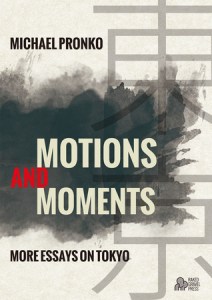 : More Essays on Tokyo (& interview) by Michael Pronko: Pronko’s third collection of essays about his adopted city is an eloquent tribute to a place full of contradictions and wonders. Compared to his earlier collection, Beauty and Chaos, I sense Pronko is now more comfortable in his surroundings, perhaps happier to include himself in ‘we’ rather than looking on passively at ‘them’. For instance – inspired by Japanese women’s perfect outfits – he consciously tries to dress better, and he’s taken to eating ramen and sleeping on a futon, just like a native. The highlight is a set of pieces written in the aftermath of the 2011 earthquake / tsunami.
BookBrowse
 The Portable Veblen by Elizabeth McKenzie: Veblen, named after the late-nineteenth-century Norwegian-American economist, is one of the oddest heroines you’ll ever meet. She thinks squirrels are talking to her and kisses flowers. But McKenzie doesn’t just play Veblen for laughs; she makes her a believable character well aware of her own psychological backstory. I suspect the squirrel material could be a potential turn-off for readers who can’t handle too much whimsy. Over-the-top silly in places, this is nonetheless a serious account of the difficulty of Veblen and Paul, her neurology researcher fiancé, blending their dysfunctional families and different ideologies – which is what marriage is all about.
 Weathering by Lucy Wood: This atmospheric debut novel is set in a crumbling house by an English river and stars three generations of women – one of them a ghost. Ada has returned to her childhood home after 13 years to scatter her mother Pearl’s ashes, sort through her belongings, and get the property ready to sell. In a sense, then, this is a haunted house story. Yet Wood introduces the traces of magical realism so subtly that they never feel jolting. Like the river, the novel is fluid, moving between the past and present with ease. The vivid picture of the English countryside and clear-eyed look at family dynamics remind me most of Tessa Hadley (The Past) and Polly Samson (The Kindness).
Foreword Reviews
When We Were Invincible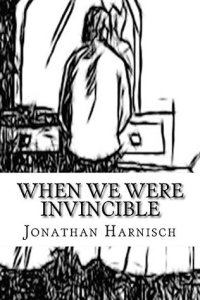 by Jonathan Harnisch: In this short novel, a young man wrestles with depression and Tourette’s syndrome, which together drive him to the point of suicide. A series of dreams and chance meetings, along with the possibility of romance and faith in God, pull him back from the edge. The book successfully introduces philosophical themes and gives a sympathetic picture of mental illness. However, it is weaker at filling in background and providing transitions, and there are many awkward, unlikely lines of dialogue. Recommended to fans of The Curious Incident of the Dog in the Night-Time.
Nudge
 The Life and Death of Sophie Stark by Anna North: The twisty, clever story of a doomed filmmaker – perfect for fans of Hausfrau. Who is Sophie Stark? A New York City-based indie director whose four documentary-style movies are “almost more like life than life itself.” Bisexual and with certain traits of high-functioning autism, Sophie is easily misunderstood. She’s a rebel who doesn’t conform to social niceties. The book is told through five first-person reminiscences from the people closest to her. In this respect the novel’s format recalls Kitchens of the Great Midwest. My favorite sections, though, are the reviews of her films, all by the same critic.
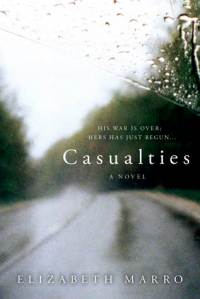 Casualties by Betsy Marro: A powerful, melancholy debut novel about how war affects whole families, not just individual soldiers. As in Bill Clegg’s Did You Ever Have a Family, which Casualties resembles in tone if not in style, a bereaved mother sets off on a journey. Ruth’s unlikely companion on the road trip east is a Gulf War amputee who appears little more than a conman but genuinely wants to clean up his act so he can reconcile with his teenage daughter. At times the road trip scenario felt a little far-fetched to me, and Casey too obvious a replacement son figure. Yet as both he and Ruth ponder how much they have lost and the small things they can try to put right, they together form a touching picture of the various ways war’s effects can linger.
Pittsburgh Post-Gazette
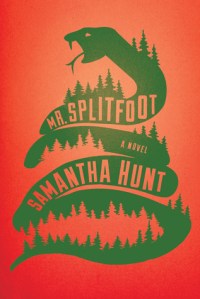 Mr. Splitfoot by Samantha Hunt: “All stories are ghost stories,” Samantha Hunt proclaims in her quirky third novel about the crossover between motherhood and mysticism. In a dual storyline that takes in fundamentalist cults, unlikely mediums and a pregnant woman’s pilgrimage, Hunt asks whether one can ever believe in the unseen. Mr. Splitfoot has the offbeat charm of Scarlett Thomas’s work. While the plot ultimately feels like a bit of a jumble, its vision of unexpected love and loyalty remains compelling. “The End’s always coming,” but it is how one lives in the face of brutality and impending extinction that matters.
I also post reviews of most of my casual reading and skimming on Goodreads:
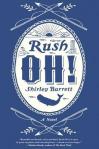 Rush Oh! by Shirley Barrett: A debut novel in which an Australian whaler’s daughter looks back at 1908, a catastrophic whaling season but also her first chance at romance. I felt that additional narrators, such as a whaleman or an omniscient voice, would have allowed for more climactic scenes. Still, I found this gently funny, especially the fact that the family’s cow and horse are inseparable and must be together on any outing. There are some great descriptions of whales, too.
 Felicity by Mary Oliver: I was disappointed with my first taste of Mary Oliver’s poetry. So many readers praise her work to the skies, and I’ve loved excerpts I’ve read elsewhere. However, I found these to be rather simplistic and clichéd, especially poems’ final lines, e.g. “Soon now, I’ll turn and start for home. / And who knows, maybe I’ll be singing.” or “Late, late, but now lovely and lovelier. / And the two of us, together—a part of it.” I’ll definitely try more of her work, but I’ll look out for an older, classic collection.
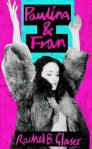 Paulina & Fran by Rachel B. Glaser: Full of blunt, faux-profound sentences and smutty, two-dimensional characters. Others may rave about it, but this wasn’t for me. I get that it is a satire on female friendship and youth entitlement. But I hated how the main characters get involved in a love triangle, and once they leave college any interest I had in them largely disappeared. Least favorite lines: “Paulina. She’s like Cleopatra, but more squat.” / “She’s more like Humphrey Bogart” and “She craved the zen-ness of being rammed.”

 Noah’s Wife by Lindsay Starck: I kept wanting to love this book, but never quite did. It’s more interesting as a set of ideas – a town where it won’t stop raining, a minister losing faith, homeless zoo animals sheltering with ordinary folk – than as an executed plot. My main problem was that the minor characters take over so that you never get to know the title character, who remains nameless. There’s also a ton of platitudes towards the end. It reminded me most of The Readers of Broken Wheel Recommend and Not Forgetting the Whale (another cozy environmental dystopia based around biblical allusions).
 Spill Simmer Falter Wither by Sara Baume: This sounded like a charmingly offbeat story about a loner and his adopted dog setting off on a journey. As it turns out, this debut is much darker than expected, but what saves it from being unremittingly depressing is the same careful attention to voice you encounter in fellow Irish writers like Donal Ryan and Anne Enright. It’s organized into four sections, with the title’s four verbs as headings. In a novel low on action, the road trip is much the most repetitive section, extending to the language as well. Even so, Baume succeeds in giving a compassionate picture of a character whose mental state comes into question. (Full review in March 2016 issue of Third Way magazine.)
 Medium Hero by Korby Lenker: Lenker is an indie musician, and the 27 autobiographical stories in his debut collection are about the everyday challenges of being on the road versus trying to pay the bills. Many feature “Korby” or “Simon” as fictional stand-ins, and recurring locations include his hometown of Twin Falls, Idaho and his adopted home of Nashville. As the title suggests, Lenker has no illusions about being famous or out of the ordinary. Most of the time he just tries to be a decent guy, the kind who prays for family members in distress even though he’s not sure he believes in God. Lest that sound too serious, though, there are also stories about peeing his pants and the perils of being a metrosexual.
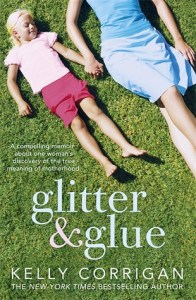 Glitter and Glue by Kelly Corrigan: Slides down like ice cream. And I say that even though the whole basis for this memoir feels rather thin. Corrigan frames it around five months in the early 1990s when she worked as a nanny for two Australian kids whose mother died of cancer. For a young woman fresh out of college, it was like a trial run for being a mother, and also gave her a new appreciation for everything her own mother had done for her during her Philadelphia Catholic upbringing. If Corrigan’s father was the ‘glitter’ of the family, her mother was the ‘glue’ – holding everything together in the background. This is impressively reconstructed, dialogue and all, from letters, journals and photos.
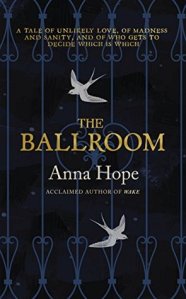 The Ballroom by Anna Hope: This novel was inspired by the story of the author’s great-great-grandfather, an Irishman who was a patient at Menston Asylum in West Yorkshire from 1909 to 1918. The novel zeroes in on the long, hot summer of 1911, focusing through alternating close third-person chapters on John Mulligan, a new patient named Ella Fay, and Dr. Charles Fuller, who wants to put his mental hospital at the frontline of eugenics research. Ultimately I didn’t like this quite as much as Wake, but I think it cements Anna Hope’s reputation as a solid historical fiction writer. I hope with her next book she’ll move beyond the years around World War I to consider a less-chronicled era.
 Life without a Recipe by Diana Abu-Jaber: The Jordanian–American writer reflects on how various food cultures have sustained her through a life that hasn’t always turned out as expected. Three marriages, a move from Portland to Florida, a winding path to motherhood in her forties, and her father’s death from leukemia are some of the main events. Like Sasha Martin’s Life from Scratch, this is more about family and personal history than it is about food (and there are no recipes). Still, food is the stuff of memories, and it is what binds her to two strong characters: her Jordanian father Bud with his stuffed grape leaves, and her maternal grandmother Grace with her frequent baking and the pastries they consumed together in Paris.
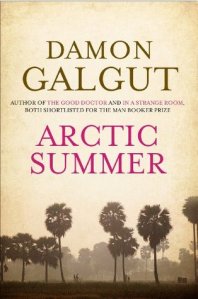 Arctic Summer by Damon Galgut: This fictionalized account of the life of E.M. Forster focuses on the drawn-out composition of A Passage to India, which he began in 1913 but wouldn’t complete and publish until 1924. In between he broke off to write his explicitly homosexual novel Maurice (only published posthumously), spent three years working in Egypt during the war, and served as a secretary to an Indian maharajah. As fictionalized biographies of authors go, I’d rate this somewhere between David Lodge’s A Man of Parts (H.G. Wells) and Colm Tóibín’s superior The Master (Henry James); all three share a heavy focus on the author’s sexuality. “Buggery in the colonies. It wasn’t noble” is one of my favorite random snippets from this novel, and sums up, for me, its slightly prurient aftertaste.
 Bookish Beck = Rebecca Foster. American transplant to England. Freelance proofreader and book reviewer.
