Short Stories in September Roundup: Alexie, Donoghue, Groff Anthology, Houston, McCracken, Moore, Svoboda, Walker
I gave myself an extra week to finish up the story collections I was in the middle of, so I’ve managed to read 13 during this challenge to self (including my first and second posts). Again I’m borrowing Marcie’s five-sentence review format to keep things simple.
The Lone-Ranger and Tonto Fistfight in Heaven by Sherman Alexie (1993)
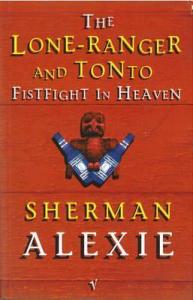 There are 22 stories in this fairly short book, so most top out at no more than 10 pages: little slices of life on and around the reservation at Spokane, Washington. Some central characters recur, such as Victor, Thomas Builds-the-Fire and James Many Horses, but there are so many tales that I couldn’t keep track of them across the book even though I read it quickly. My favourite was “This Is What It Means to Say Phoenix, Arizona,” in which Victor and Thomas fly out to collect the ashes of Victor’s father. Some of the longer titles give a sense of the tone: “Because My Father Always Said He Was the Only Indian Who Saw Jimi Hendrix Play ‘The Star-Spangled Banner’ at Woodstock” and “Jesus Christ’s Half-Brother Is Alive and Well on the Spokane Indian Reservation.” I couldn’t help but think of it as a so-so rehearsal for The Absolutely True Diary of a Part-Time Indian because a similar cast of drunks, jokers, relatives and basketball players populates the stories and a comparable voice prevails. (University library)
The Woman Who Gave Birth to Rabbits by Emma Donoghue (2002)
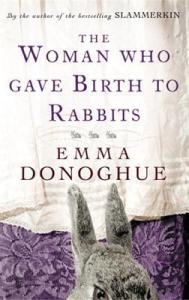 The title story is about Mary Toft – I thought of making her hoax the subject of a Three on a Theme post because I actually have two novels about her downloaded from NetGalley and Edelweiss (Mary and the Rabbit Dream by Noémi Kiss-Deáki and Mary Toft; or, The Rabbit Queen by Dexter Palmer), but the facts as conveyed here don’t seem like nearly enough to fuel a whole book, so I doubt I’ll read those. Donoghue has a good eye for historical curios and incidents and an academic’s gift for research, yet not many of these 17 stories, most of which are in the third person, rise above the novelty. Many protagonists are British or Irish women who were a footnote in the historical record: an animal rights activist, a lord’s daughter, a cult leader, a blind poet, a medieval rioter, a suspected witch. There are mild homoerotic touches, too. I enjoyed “Come, Gentle Night,” about John Ruskin’s honeymoon, and “Cured,” which reveals a terrifying surgical means of controlling women’s moods but, as I found with Astray and Learned by Heart, Donoghue sometimes lets documented details overwhelm other elements of a narrative. (Secondhand – Awesomebooks.com)
The Best Short Stories 2023: The O. Henry Prize Winners, ed. Lauren Groff (2023)
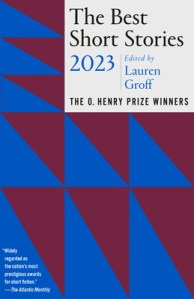 Hard to convey the variety of this 20-story anthology in a concise way because they run the gamut from realist (Nigerian homosexuality in “Happy Is a Doing Word” by Arinze Ifeakandu; Irish gangsters in “The Blackhills” by Eamon McGuinness) to absurd (Ling Ma’s “Office Hours” has academics passing through closet doors into a dream space; the title of Catherine Lacey’s “Man Mountain” is literal; “Ira and the Whale” is Rachel B. Glaser’s gay version of the Jonah legend). Also difficult to encapsulate my reaction, because for every story I would happily have seen expanded into a novel (the gloomy character study “The Locksmith” by Grey Wolfe LaJoie, the teenage friends’ coming-of-age in “After Hours at the Acacia Park Pool” by the marvellous Kirstin Valdez Quade), there was another I thought might never end (“Dream Man” by Cristina Rivera-Garza and “Temporary Housing” by Kathleen Alcott). Three are in translation. I admired Lisa Taddeo’s tale of grief and revenge, “Wisconsin,” and Naomi Shuyama-Gómez’s creepy Colombian-set “The Commander’s Teeth.” But my two favourites were probably “Me, Rory, and Aurora” by Jonas Eika (Danish), which combines an uneasy threesome, the plight of the unhoused and a downright chilling Ishiguro-esque ending; and “Xífù,” K-Ming Chang’s funny, morbid take on daughter/mother-in-law relations in China. (PDF review copy)
Waltzing the Cat by Pam Houston (1998)
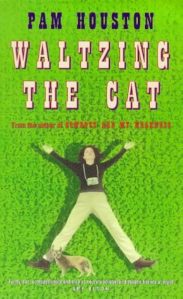 The novel-in-stories is about Lucy, a photographer in her early thirties with a penchant for falling for the wrong men – alcoholics or misogynists or ones who aren’t available. When she’s not working she’s thrill-seeking: rafting in Colorado, travelling in the Amazon, sailing in the Caribbean, or gliding. “Everything good I’ve gotten in life I’ve gotten by plunging in,” she boasts, to which a friend replies, “Sure, and everything bad you’ve gotten in your life you’ve gotten by plunging in.” Ultimately she ‘settles down’ on the Colorado ranch she inherits from her grandmother with a dog, making this – based on what I learned from the autobiographical essays in Deep Creek – even more autofiction for Houston than her debut, Cowboys Are My Weakness, was. Although the final magic realist touch of having her child-self come to her with a box of photographs of traumatic memories is overdone, the themes of accepting vulnerability, seeking to freeze time and creating a home for yourself resonated, and the title story, about the death of Lucy’s mother, is a brilliant and heart-wrenching standalone. (Secondhand – British Red Cross, Berwick)
The Souvenir Museum by Elizabeth McCracken (2021)
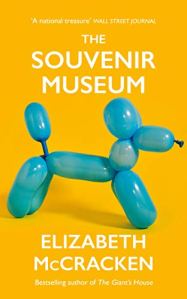 McCracken is terrific in short forms: The Hero of This Book, a novella, was one of my top books of 2022, and I also loved her previous story collection, Thunderstruck. Five of these dozen stories are taken from different points in the lives of Jack and Sadie, English and American academics (who I inevitably read as McCracken and her husband, Edward Carey) who come from large-family zaniness versus claustrophobic mother–daughter melancholy. I kept thinking that McCracken’s are just the sorts of scenarios Lucy and Olive would have told stories about in Tell Me Everything: accidents, misfortunes; random connections. Travel is a major element in many of the stories, including to Denmark (in the title story) and Amsterdam. I couldn’t decide whether I preferred the Jack-and-Sadie material or the rest, but I had a favourite from each: “The Irish Wedding” cracked me up as much as it did Sadie with the accidental use of crass American slang, while “Proof,” about a man communing with his father despite his early dementia, is set on a boat trip I’ve made (in 2004!) to see puffins on the Treshnish islands of Scotland. (Secondhand – Dogs Trust charity shop, Marlborough)
Like Life by Lorrie Moore (1990)
 Compared to Birds of America, this feels a little dated and the plots are overall less memorable. Still, the eight stories of Moore’s second collection are chewy with insight into relationships and the mindsets of youngish and middle-aged women, and there’s an effortless wry wit to her turns of phrase. Her exasperated would-be feminist characters remind me of Helen Simpson’s, while the cheese-selling protagonist of “Joy” made me think of an early Carol Shields story; and who knew a “cute meet” (aka a meet-cute) was a thing back then? New York City contrasts with the Midwest, most notably in “You’re Ugly, Too” and “The Jewish Hunter.” The title story, which comes last, crafts a weirdly muted dystopia built around shortages and marital misery; I preferred the (comparative lightness) of “Vissi d’Arte,” about a lonely playwright, and “Places to Look for Your Mind,” in which an empty-nest entrepreneur hosts an aimless young Englishman her daughter met on her study abroad year. (Secondhand – Bark charity shop, Berwick)
The Long Swim by Terese Svoboda (2023)
 These 44 stories, mostly of flash fiction length, combine the grit of Denis Johnson with the bite of Flannery O’Connor. Siblings squabble over a late parent’s effects or wishes, marriages go wrong, the movie business isn’t as glittering as it’s cracked up to be, and drugs and alcohol complicate everything. The settings range through North America and the Caribbean, with a couple of forays to Europe. There are no speech marks and, whether the narrative is in first person or third, all the voices are genuine and distinctive yet flow together admirably. Svoboda has a poet-like talent for compact, zingy lines; two favourites were “my laziness is born of generalized-looking-to-get-specific grief, like an atom trying to make salt” (“Niagara”) and “Ditziness, a kind of Morse code of shriek-and-stop, erupts around the girls” (“Orphan Shop”).
Winner of the Juniper Prize for Fiction. Published by University of Massachusetts Press. With thanks to the author for the free PDF copy for review.
In Love and Trouble by Alice Walker (1973)
 I’d only ever read The Color Purple, so when I spotted this in a bookshop on our Northumberland holiday it felt like a good excuse to try something else by Walker. I had actually encountered one of the stronger stories before: “Everyday Use” is in the Close Company Virago anthology. In these Southern scenes (“a hate-filled state complete with magnolias, tornadoes and broken-tongued field hands”), Black women oppressed by fathers and partners gain what few advantages they can through deception or folk medicine. I liked “Entertaining God,” which opens with a boy abducting a gorilla from a zoo, and “To Hell with Dying,” about a friendship with an elderly neighbour in cotton country. Setting, style, characters; nothing drew me to any of the others or made me think I’ll read Walker again in the future. (Secondhand – Berrydin Books, Berwick)
Which of these would you read?
Currently reading: I’m not good at picking up short stories in the rest of the year, but I’ve discovered that I really enjoy reviewing them for Shelf Awareness – the length and format of their reviews really suits essay and story collections. So I’m now partway through Save Me, Stranger by Erika Krouse (2025) for an early Shelf Awareness review. Another book I started in Northumberland, Dreams of Dead Women’s Handbags by Shena Mackay, I didn’t finish in time for this challenge but will either continue or set aside and pick back up next year. Both are fantastic!
Talking ’bout My Generation? Conversations with Friends by Sally Rooney
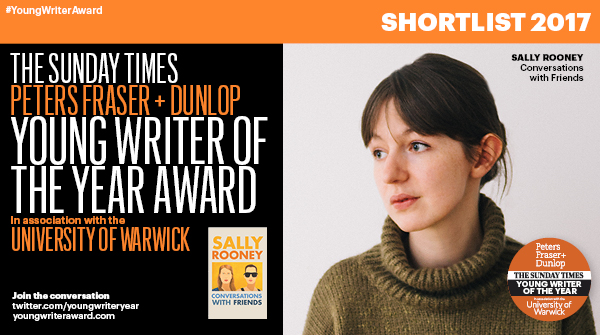 Sunday Times Young Writer of the Year Award shortlist review #2
The first thing to note about a novel with “Conversations” in the title is that there are no quotation marks denoting speech. In a book so saturated with in-person chats, telephone calls, texts, e-mails and instant messages, the lack of speech marks reflects the swirl of voices in twenty-one-year-old Frances’ head; thought and dialogue run together. This is a work in which communication is a constant struggle but words have lasting significance.
 It’s the summer between years at uni in Dublin, and Frances is interning at a literary agency and collaborating with her best friend (and ex-girlfriend) Bobbi on spoken word poetry events. She’s the ideas person, and Bobbi brings her words to life. At an open mic night they meet Melissa, an essayist and photographer in her mid-thirties who wants to profile the girls. She invites them back for a drink and Frances, who is from a slightly rough background – divorced parents and an alcoholic father who can’t be relied on to send her allowance – is dazzled by the apparent wealth of Melissa and her handsome actor husband, Nick. Bobbi develops a crush on Melissa, and before too long Frances falls for Nick. The stage is set for some serious amorous complications over the next six months or so.
Young woman and older, married man: it may seem like a cliché, but Sally Rooney is doing a lot more here than just showing us an affair. For one thing, this is a coming of age in the truest sense: Frances, forced into independence for the first time, is figuring out who she is as she goes along and in the meantime has to play roles and position herself in relation to other people:
At any time I felt I could do or say anything at all, and only afterwards think: oh, so that’s the kind of person I am.
I couldn’t think of anything witty to say and it was hard to arrange my face in a way that would convey my sense of humour. I think I laughed and nodded a lot.
What will be her rock in the uncertainty? She can’t count on her parents; she alienates Bobbi as often as not; she reads the Gospels out of curiosity but finds no particular solace in religion. Her other challenge is coping with the chronic pain of a gynecological condition. More than anything else, this brings home to her the disappointing nature of real life:
I realised my life would be full of mundane physical suffering, and that there was nothing special about it. Suffering wouldn’t make me special, and pretending not to suffer wouldn’t make me special. Talking about it, or even writing about it, would not transform the suffering into something useful. Nothing would.
 Rooney writes in a sort of style-less style that slips right down. There’s a flatness to Frances’ demeanor: she’s always described as “cold” and has trouble expressing her emotions. I recognized the introvert’s risk of coming across as aloof. Before I started this I worried that I’d fail to connect to a novel about experiences so different from mine. I was quite the strait-laced teen and married at 23, so I wasn’t sure I’d be able to relate to Frances and Bobbi’s ‘wildness’. But this is much more about universals than it is about particulars: realizing that you’re stuck with yourself, exploring your sexuality and discovering that sex is its own kind of conversation, and deciding whether ‘niceness’ is really the same as morality.
With its prominent dialogue and discrete scenes, I saw the book functioning like a minimalist play, and I could also imagine it working as an on-location television miniseries. In some ways the dynamic between Frances and Bobbi mirrors that between the main characters in Paulina and Fran by Rachel B. Glaser, Friendship by Emily Gould, and The Animators by Kayla Rae Whitaker, so if you enjoyed any of those I highly recommend this, too. Rooney really captures the angst of youth:
You’re twenty-one, said Melissa. You should be disastrously unhappy.
I’m working on it, I said.
This is a book I was surprised to love, but love it I did. Rooney is a tremendous talent whose career we’ll have the privilege to watch unfolding. I’ve told the shadow panel that if we decide our focus is on the “Young” in Young Writer, there’s no doubt that this nails the zeitgeist and should win.
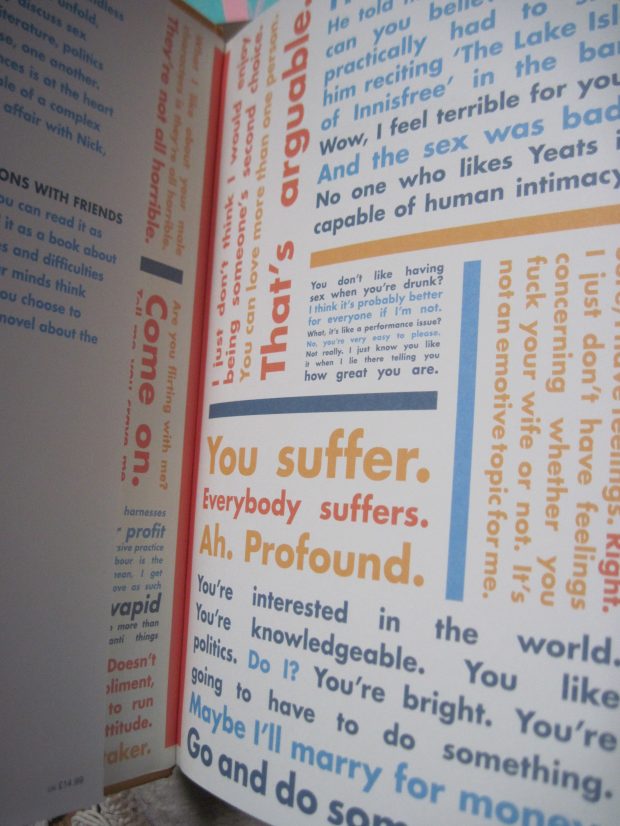
The conversations even spill out onto the endpapers.
Reviews of Conversations with Friends:
From the shadow panel:
Annabel’s at Annabookbel
Clare’s at A Little Blog of Books
Dane’s at Social Book Shelves
Eleanor’s at Elle Thinks
Others:
2016 Runners-Up and Other Superlatives
Let’s hear it for the ladies! In 2016 women writers accounted for 9 out of my 15 top fiction picks, 12 out of my 15 nonfiction selections, and 8 of the 10 runners-up below. That’s 73%. The choices below are in alphabetical order by author, with any full reviews linked in. Many of these have already appeared on the blog in some form over the course of the year.
Ten Runners-Up:
FICTION
 Hag-Seed by Margaret Atwood: Atwood looks more like a good witch every year, and here she works her magic on The Tempest to produce the most satisfying volume of the Hogarth Shakespeare series yet. There’s a really clever play-within-the-play-within-the-play thing going on, and themes of imprisonment and performance resonate in multiple ways.
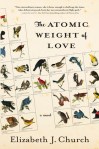 The Atomic Weight of Love by Elizabeth J. Church: In Church’s debut, an amateur ornithologist learns about love and sacrifice through marriage to a Los Alamos physicist and a relationship with a Vietnam veteran. I instantly warmed to Meri as a narrator and loved following her unpredictable life story.
 We Love You, Charlie Freeman by Kaitlyn Greenidge: The Freemans are raising Charlie, a chimpanzee, as part of their family for a Toneybee Institute experiment and teaching him to communicate via sign language. This is a rich and unsettling story of human–human interactions, even more so than human–animal interactions; it’s a great first novel and I will follow Greenidge’s career with interest.
To the Bright Edge of the World by Eowyn Ivey: Ivey’s intricate second novel weaves together diaries, letters, photographs, and various other documents and artifacts to tell the gently supernatural story of an exploratory mission along Alaska’s Wolverine River in 1885 and its effects through to the present day. I can highly recommend this rollicking adventure tale to fans of historical fiction and magic realism.
This Must Be the Place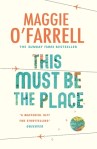 by Maggie O’Farrell: Spreading outward from Ireland and reaching into every character’s past and future, this has all O’Farrell’s trademark insight into family and romantic relationships, as well as her gorgeous prose and precise imagery. I have always felt that O’Farrell expertly straddles the (perhaps imaginary) line between literary and popular fiction; her books are addictively readable but also hold up to critical scrutiny.
Commonwealth by Ann Patchett: This deep study of blended family dynamics starts with an early 1960s christening party Los Angeles policeman Fix Keating is throwing for his younger daughter, Franny; we see the aftermath of that party in the lives of six step-siblings in the decades to come. This is a sophisticated and atmospheric novel I would not hesitate to recommend to literary fiction fans in general and Patchett fans in particular.
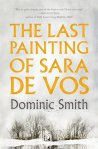 The Last Painting of Sara de Vos by Dominic Smith: Jessie Burton, Tracy Chevalier and all others who try to write historical fiction about the Netherlands in the seventeenth century, eat your hearts out. Such a beautiful epoch-spanning novel about art and regret.
Shelter by Jung Yun: A Korean-American family faces up to violence past and present in a strong debut that offers the hope of redemption. I would recommend this to fans of David Vann and Richard Ford.
NONFICTION
I Will Find You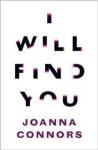 by Joanna Connors: By using present-tense narration, Connors makes the events of 1984 feel as if they happened yesterday: a blow-by-blow of the sex acts forced on her at knife-point over the nearly one-hour duration of her rape; the police reports and trials; and the effects it all had on her marriage and family. This is an excellent work of reconstruction and investigative reporting.
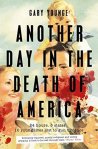 Another Day in the Death of America by Gary Younge: Younge built this book by choosing a 24-hour period (November 22 to 23, 2013) and delving into all 10 gun deaths of young Americans on record for that time: seven black, two Latino, and one white; aged nine to 18; about half at least vaguely gang-related, while in two – perhaps the most crushing cases – there was an accident while playing around with a gun. I dare anyone to read this and then try to defend gun ‘rights’ in the face of such senseless, everyday loss.
Various Superlatives:
Best Discoveries of the Year: Apollo Classics reprints (I reviewed three of them this year); Diana Abu-Jaber, Linda Grant and Kristopher Jansma.
Most Pleasant Year-Long Reading Experience: The seasonal anthologies issued by the UK Wildlife Trusts and edited by Melissa Harrison (I reviewed three of them this year).

Most Improved: I heartily disliked Sarah Perry’s debut novel, After Me Comes the Flood. But her second, The Essex Serpent, is exquisite.
Debut Novelists Whose Next Work I’m Most Looking Forward to: Stephanie Danler, Kaitlyn Greenidge, Francis Spufford, Andria Williams and Sunil Yapa.
The Year’s Biggest Disappointments: Here I Am by Jonathan Safran Foer, Today Will Be Different by Maria Semple, and Swing Time by Zadie Smith. Here’s hoping 2017 doesn’t bring any letdowns from beloved authors.


The Worst Book I Read This Year: Paulina & Fran (2015) by Rachel B. Glaser. My only one-star review of the year. ’Nuff said?
The 2016 Novels I Most Wish I’d Gotten to: (At least the 10 I’m most regretful about)
- The Power by Naomi Alderman
- The Museum of You by Carys Bray
- The Course of Love by Alain de Botton
- What Belongs to You by Garth Greenwell*
 Homegoing by Yaa Gyasi
- The Waiting Room by Leah Kaminsky
- The Inseparables by Stuart Nadler
- Harmony by Carolyn Parkhurst*
- The Nest by Cynthia D’Aprix Sweeney*
- The Underground Railroad by Colson Whitehead*
*Haven’t been able to find anywhere yet; the rest are on my Kindle.
Which of these should I get reading on the double?
Coming tomorrow: Some reading goals for 2017.
Reviews Roundup, February–March
One of my goals with this blog was to have one convenient place where I could gather together all my writing that appears in disparate online locations. To that end, once a month I provide links to all book reviews I’ve published elsewhere, with a rating (below each description) and a taster so you can decide whether to read more. A few exceptions: I don’t point out my Kirkus Indie, BlueInk or Publishers Weekly reviews since I don’t get a byline. Meanwhile, I’ve done my first article for the Los Angeles Review of Books – exciting!
The Bookbag
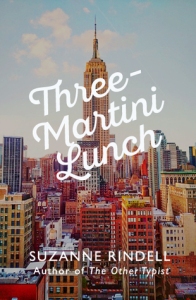
Three-Martini Lunch by Suzanne Rindell: Brings the late 1950s, specifically the bustling, cutthroat New York City publishing world, to life through the connections between three young people who collide over a debated manuscript. The three first-person voices fit together like a dream. It’s an expert evocation of Beat culture and post-war paranoia over Communism and homosexuality. Walking into Eden’s office, especially, you’ll think you’ve landed on the set of Mad Men. This classy, well-plotted follow-up will win Rindell even more fans and tide us all over until the film version of The Other Typist – produced by and starring Keira Knightley – appears. Releases May 19th in the UK.

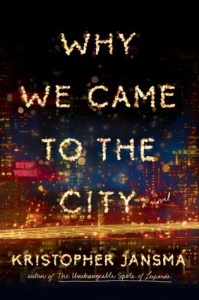 Why We Came to the City by Kristopher Jansma: Five university friends strive to make their lives count against the indifferent backdrop of recession-era New York City. When one of them falls ill, they pull together like a family. The tone of the novel lies somewhere between A Little Life and the sitcom Friends (a Mexican version of which the characters watch obsessively). Even as his characters realize that they are not special and not in control of their lives, Jansma never lets his book descend too far into gloom. Narrowly misses out on 5 stars from me because the storyline loses momentum in Part Two. Rich with emotion and literary allusions (from Walden to The Iliad), this is my favorite novel of the year so far.
Waltzing in Vienna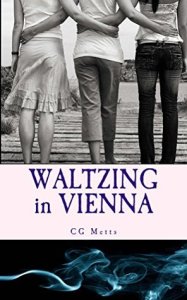 by C.G. Metts (& interview): Three girlfriends – a singer staging a comeback, a psychology professor reawakening to sexuality after being widowed, and a socialite Southern Belle – are reunited in Charleston, South Carolina in their early forties. Remembering their wild college days, they wonder how to make midlife count. There’s a fun Sex and the City or Ya-Ya Sisterhood vibe to this recommended debut novel. I liked the mixture of nostalgia and gentle feminism, and I think this may also inspire readers to see South Carolina’s coastal landscape for themselves. The title phrase is the friends’ shorthand for smoking marijuana together.

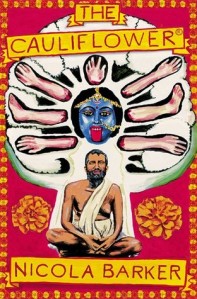 The Cauliflower® by Nicola Barker: Put simply, this is a fictionalized biography of the largely illiterate Hindu guru Sri Ramakrishna (1836–1886). That may sound dry as dust, but Barker makes it a playful delight by skipping around in time and interspersing aphorisms, imagined film scenes, questions and answers, and even a recipe with the narrative chapters. The kernel of the story – set in 1857 at the Dakshineswar Kali Temple, six miles north of Calcutta – is narrated in the first person by the guru’s nephew, Hriday. Scripture of all types (the Bible is also cited) is a relevant, joyful echo here rather than a dull set of rules. Bizarre but very readable. Releases April 21st.
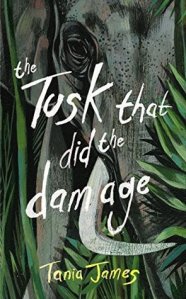 The Tusk That Did the Damage by Tania James: This composite picture of the state of wildlife conservation in India is told from three perspectives: an elephant named the Gravedigger, a poacher, and a documentary filmmaker. James ably intersperses three voices as she explores how people fail to live up to their ideals and make harmful assumptions. Despite these attributes, it was one of those books I had to force myself through. Perhaps it was the environmental agenda: if a book is going to wear its message so openly, it has to live up to it in terms of the writing. I might have preferred it if the whole novel had been from Emma’s point of view, with one climactic encounter with the Gravedigger to make the poaching question immediate and not simply academic.

BookBrowse
Dog Run Moon: Stories by Callan Wink [subscription service]: Wink’s debut story collection, set mostly under Montana’s open skies, stars a motley cast of aimless young men, ranchers, Native Americans, and animals live and dead. He plays around with Western stereotypes in intriguing ways. A few of the tales are a bit less compelling, and I would have preferred more variety in narration (8 of 9 are third person), but the stand-outs more than make up for it. My two favorites were “Runoff” (there’s a double meaning to the title) and “Exotics,” in which all the characters are lured by the life they don’t currently have.
 For Books’ Sake
Interview with Rachel B. Glaser, author of Paulina & Fran [my review of which was in last month’s roundup]
Foreword Reviews
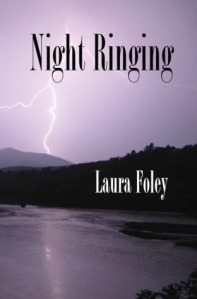 Night Ringing by Laura Foley: Foley’s strong fifth collection ruminates on romance and family via autobiographical free verse. One of the collection highlights is “In the Honda Service Area,” which unexpectedly unites modern technology with ancient literature. While a woman describes her impending hip replacement surgery to a friend, Foley tries to concentrate on Homer’s Iliad. The collection is dedicated to Foley’s partner, Clara Giménez, and lesbian romance is a subtle undercurrent. Especially recommended for fans of Jane Hilberry and Adrienne Rich.
The Temple of Paris by Laura DeBruce: This second volume in Laura DeBruce’s Quicksilver Legacy trilogy is a fast-paced fantasy adventure novel. In the previous book, the author introduced the “Immortals,” centuries-old creatures who are impervious to disease and aging due to a magic elixir. If Hana, the teenage protagonist, can learn how to use the elixir in her possession correctly, she can save her mother from a potentially fatal blood disorder. Although the complicated plot might be challenging for those new to the series, older teens will appreciate the rollicking story and the chance for vicarious European sightseeing.

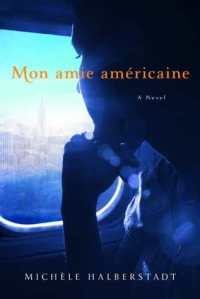 Mon amie américaine by Michèle Halberstadt: After years of heavy smoking and migraines, a brain aneurysm plunges forty-year-old Molly into a coma. The novel is presented as Michèle’s confessional letter to her American friend Molly, addressed in the second person. During Molly’s coma and after she wakes up, Michèle ponders their unlikely friendship and also frets over her threatened marriage. The novella is like a cross between Jenny Offill’s Dept. of Speculation and Jean-Dominique Bauby’s The Diving-Bell and the Butterfly, and bears tantalizing traces of deliberate homage to Pedro Almodóvar’s coma-themed Talk to Her: an understated dual account of betrayal and disability.
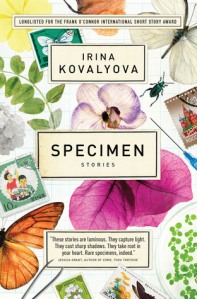 Specimen: Stories by Irina Kovalyova: “People like to pretend that our genes define the truth for us. But I assure you that’s not the case,” a character insists in the title story. Diverse in setting and form, these nine stories, long-listed for the Frank O’Connor International Short Story Award, contrast the scientific understanding of genetics with deeper wisdom about the bonds of love and family. Nestling science into rich psychological narratives, Kovalyova’s work is reminiscent of that of Andrea Barrett and A. S. Byatt; in fact, the latter is directly referenced in one story. She also channels Anthony Marra and Adam Johnson by affirming love’s survival in spite of repressive situations.
Of Crime and Passion by Jonathan Harnisch: In this novella, a proud young man seeks to transcend his underprivileged upbringing by worming his way into the homes of the rich and seducing powerful women. At its heart, the book is about the ongoing conflict between economic and social classes. With the melodramatic action and old-fashioned dialogue, though, it is easy to imagine this coming-of-age tale working better in the form of a play.
Hakai Magazine
(a Canadian publication highlighting coastal ecosystems)
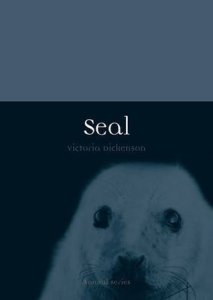 Seal by Victoria Dickenson: “It is hard to imagine a creature more distant from the human species in bodily form, habits, and habitat than the seal,” Dickenson writes in her introduction, “yet our mutual regard tells of a long, shared history of interaction.” Seal is the latest in the 80-strong Animal series from Reaktion Books. Like other volumes, this gives a brief discussion of the featured animal’s evolutionary biology, followed by an interdisciplinary survey of how it has entered human culture throughout history. In the final two chapters—the highlight of an occasionally dry book—Dickenson gives a balanced account of the history of hunting seals.
Los Angeles Review of Books
“Rediscovering an Overlooked Woman Novelist”: A dual review of Constance Fenimore Woolson: Portrait of a Lady Novelist by Anne Boyd Rioux () and Miss Grief and Other Stories (), a new selection of Woolson’s short fiction.
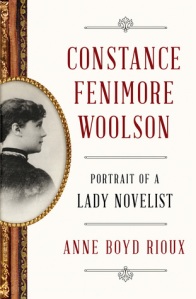
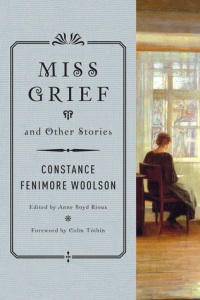 Constance Fenimore Woolson (1840–1894) is most often remembered for her connection to male writers; her great-uncle was pioneering American novelist James Fenimore Cooper, and in her later years as an expatriate in Europe she associated with Henry James, fueling rumors of a romance between them. Deserving to be known in her own right, Woolson represents key junctures between realism and regionalism, and between American and European styles. Gives a remarkable picture of a bold, bright woman who paved the way for writers such as Edith Wharton, E. M. Forster, and Willa Cather, and who arguably might be hailed in the same breath as Henry James and George Eliot.
Nudge
My quick response to Instructions for a Heatwave, for a Maggie O’Farrell retrospective: Another spot-on tale of family and romantic relationships – O’Farrell always gets the emotional tenor just right. You may spot hints of Rachel Joyce’s The Unlikely Pilgrimage of Harold Fry or Bernhard Schlink’s The Reader, but the psychological and linguistic precision is all O’Farrell’s own. Her descriptive language is unfailingly elegant. I love how she opens with the heat as the most notable character: “It inhabits the house like a guest who has outstayed his welcome: it lies along corridors, it circles around curtains, it lolls heavily on sofas and chairs.”
Pretentiousness: Why It Matters by Dan Fox: This wide-ranging essay discusses pretentiousness as it relates to class, taste, and modern art. Fox grew up outside of Oxford but now lives in New York City, where he is the co-editor of frieze. From its Latin etymology we learn that pretentious means “to stretch before,” so to hold something in front of you like a mask. He thus starts off by talking about acting techniques and rhetoric, then broadens this out to themes of authenticity and self-discovery. The most interesting part of the book concerns class connotations. This is a somewhat meandering work, and though it has good individual lines it is not always riveting.
 Third Way magazine
I’ve reviewed books, mostly fiction, for them for the last 2.5 years; sadly, the April 2016 issue will be the final one. It’s a shame; the progressive Christian perspective on popular culture is a niche it will be hard to fill.
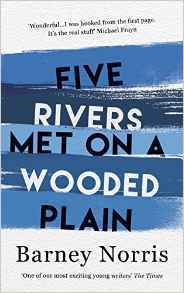
Five Rivers Met on a Wooded Plain by Barney Norris: Barney Norris is a playwright in his twenties, so it’s no surprise that there’s something a little staged to his debut novel. The lives of the book’s five narrators collide one night when a car hits a moped in Salisbury town center. We hear from each protagonist in turn as they reflect on their losses and wonder whether religion – represented by Salisbury Cathedral and the scripture and rituals of Christianity – might help. Rita is the liveliest and most engaging character, difficult as her expletive-strewn narrative might be to traverse. Like David Nicholls, Norris prizes emotional connection and delivers a theatrical plot. If he can avoid the more clichéd aspects of a novel like One Day, he could have a long career in fiction ahead of him. Releases April 21st.
I also post reviews of most of my casual reading and skimming on Goodreads:
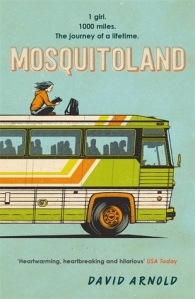 Mosquitoland by David Arnold: I don’t read a whole lot of YA, but the voice of this one captured me right away. Like Hazel in The Fault in Our Stars, Mim (Mary Iris Malone) is a lovably sarcastic oddball – she describes herself as “a young Ellen Page” à la Juno – with some hidden issues that come out over the course of the book. Here Mim’s journey takes the form of a road trip from Mississippi, where she lives with her father and new stepmother, back to Ohio to be with her sick mother. She meets a kooky cast of secondary characters along the way, narrowly escapes danger, and even gets a chance at romance.
A Change of World: Poems by Adrienne Rich: This is a forthcoming Norton reissue of Rich’s first collection from 1951. I’d always thought of her as a later, feminist poet, so it was jolting to see an introduction from W.H. Auden – that made it feel like a real generational crossover. It’s a very impressive debut, full of mannered, rhyme-rich verse. Two favorites were “Walden 1950” (“Thoreau, lank ghost, comes back to visit Concord, / Finds the town like all towns, much the same— / A little less remote, less independent”) and “The Innocents.” I’ll be interested to read some of her later work and see if she loosened up with form. Releases June 21st.
 The Shadow Hour by Kate Riordan: A clever dual-timeline novel with a pleasing Gothic flavor. In 1922 Grace Fairford takes up a governess position at Fenix House near Cheltenham, the very place where her grandmother, Harriet Jenner, worked in 1878. Every few chapters the perspective shifts from Grace (first person) to Harriet (third person). The novel is full of coincidences and the sense of history repeating itself. Riordan’s writing is capable, sometimes clichéd, but the echoes of Jane Eyre and The Turn of the Screw make this a delicious guilty-pleasure read.
Life’s Too Short to Pretend You’re Not Religious by David Dark: Etymologically, the word “religion” means to bind together again. Simply put, Dark’s thesis is that we’re all connected: we are in relationship with the people around us and can’t pretend otherwise. What we need is a shared vision for our shared life, and that involves engaging with other people. No pie-in-the-sky theology here; Dark affirms Daniel Berrigan’s assertion that “the actual world is our only world,” so things like climate change, gun control, immigration, and foreign policy are religious issues because they affect us all in this life. Together we have to imagine another story that isn’t capitalism and American imperialism as usual.
Adios, Cowboy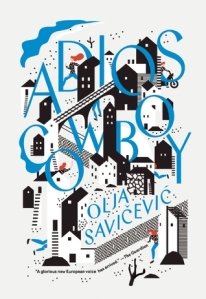 by Olja Savičević Ivančević: In summer 2009, Dada (aka Rusty) returns to her Croatian hometown to care for her mother. Going home facing up to the fact of her brother’s death – when he was 18 he threw himself under a train. “One has to sit down beside one’s demon and mollify it until it’s calm – that’s all, perhaps, that can be done,” she muses. Now for the title: Dada’s late father, brother, and friends (“the Iroquois Brothers”) were all big on cowboys and Indians. When news comes that a spaghetti western actor/director named Ned Montgomery will be passing through town, it causes Dada to think about her father and her brother and, what’s more, about the workings of her own memory.
Now Go Out There: (and Get Curious) by Mary Karr: There’s not much to this Syracuse University commencement speech. Leftovers of sob-story autobiography and clichéd advice cobbled together. Disappointing given how much I loved Karr’s recent The Art of Memoir. For a truly inspirational graduation address, I recommend David Foster Wallace’s This Is Water.

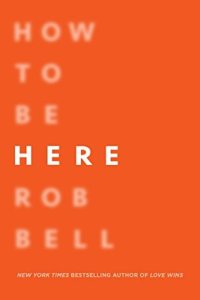 How to Be Here: A Guide to Creating a Life Worth Living by Rob Bell: Bell left his pastoral role to become a motivational speaker so, unsurprisingly, this book is closer to self-help than theology. He’s good pals with Elizabeth Gilbert, and this book would make a great companion piece to her Big Magic. It’s about how to find what gets you out of bed in the morning and live mindfully. As always, his formatting – bite-size paragraphs, stretching out phrases with line breaks – is slightly annoying. I didn’t learn a whole lot; it was more a case of being reminded of things I knew deep down. He prefaces most chapters with an anecdote about his creative ventures, some of which were utter failures.
And my highest recommendation goes to…
The Summer Guest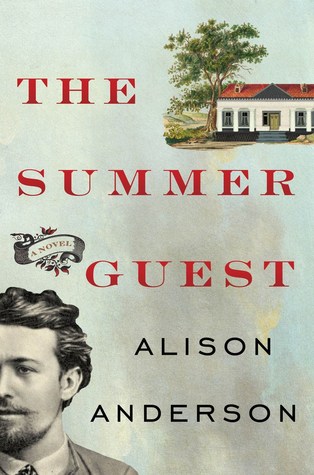 by Alison Anderson: The kernel of the novel is a true story: for two summers in the late 1880s, Chekhov stayed at the Lintvaryovs’ guest house in Luka, Ukraine. One strand of the narration is a journal kept during those years by Zinaida, the family’s eldest daughter, a doctor dying of a brain tumor. Zina’s story is offset by those of two contemporary women. Katya, a Russian émigré in London who’s trying to keep her failing publishing house afloat, sends the never-before-published diary to Ana, a translator based near the French border with Switzerland. There’s a touch of mystery here: where was the diary found? And what became of the novel Chekhov mentions he had in progress? Ana’s search for answers takes her to the Lintvaryov estate, even though Ukraine in 2014 is a hotbed of unrest. Having recently watched the BBC War & Peace miniseries with rapt interest and seen a Tchaikovsky symphony performance, it was the perfect time to get lost in an intricate, playful novel about how Russian literature still resonates. I’ll certainly be looking up Anderson’s other novels.
Reviews Roundup, January–February
One of my goals with this blog is to have one convenient place where I can gather together all my writing that has appeared in disparate online locations. To that end, once a month I provide links to all book reviews I’ve published elsewhere, with a rating (below each description) and a taster so you can decide whether to read more. A few exceptions: I won’t point out my Kirkus Indie, BlueInk or Publishers Weekly reviews since I don’t get a byline. Meanwhile, I’ve done my first review for the Pittsburgh Post-Gazette – exciting!
The Bookbag
The Noise of Time by Julian Barnes: “Art is the whisper of history, heard above the noise of time.” Through a fictionalized biography of the Russian composer Shostakovich, Barnes questions how art can withstand political oppression. Knowing Barnes’s penchant for stylistic experimentation, this was never going to be a straightforward, chronological life story. Instead, as he so often does, he sets up a tripartite structure, focusing on three moments when Shostakovich has a reckoning with Power. The book is full of terrific one-liners (“Integrity is like virginity: once lost, never recoverable”), but there are not many memorable scenes to latch on to.
Motions and Moments : More Essays on Tokyo (& interview) by Michael Pronko: Pronko’s third collection of essays about his adopted city is an eloquent tribute to a place full of contradictions and wonders. Compared to his earlier collection, Beauty and Chaos, I sense Pronko is now more comfortable in his surroundings, perhaps happier to include himself in ‘we’ rather than looking on passively at ‘them’. For instance – inspired by Japanese women’s perfect outfits – he consciously tries to dress better, and he’s taken to eating ramen and sleeping on a futon, just like a native. The highlight is a set of pieces written in the aftermath of the 2011 earthquake / tsunami.
BookBrowse
 The Portable Veblen by Elizabeth McKenzie: Veblen, named after the late-nineteenth-century Norwegian-American economist, is one of the oddest heroines you’ll ever meet. She thinks squirrels are talking to her and kisses flowers. But McKenzie doesn’t just play Veblen for laughs; she makes her a believable character well aware of her own psychological backstory. I suspect the squirrel material could be a potential turn-off for readers who can’t handle too much whimsy. Over-the-top silly in places, this is nonetheless a serious account of the difficulty of Veblen and Paul, her neurology researcher fiancé, blending their dysfunctional families and different ideologies – which is what marriage is all about.
 Weathering by Lucy Wood: This atmospheric debut novel is set in a crumbling house by an English river and stars three generations of women – one of them a ghost. Ada has returned to her childhood home after 13 years to scatter her mother Pearl’s ashes, sort through her belongings, and get the property ready to sell. In a sense, then, this is a haunted house story. Yet Wood introduces the traces of magical realism so subtly that they never feel jolting. Like the river, the novel is fluid, moving between the past and present with ease. The vivid picture of the English countryside and clear-eyed look at family dynamics remind me most of Tessa Hadley (The Past) and Polly Samson (The Kindness).
Foreword Reviews
When We Were Invincible by Jonathan Harnisch: In this short novel, a young man wrestles with depression and Tourette’s syndrome, which together drive him to the point of suicide. A series of dreams and chance meetings, along with the possibility of romance and faith in God, pull him back from the edge. The book successfully introduces philosophical themes and gives a sympathetic picture of mental illness. However, it is weaker at filling in background and providing transitions, and there are many awkward, unlikely lines of dialogue. Recommended to fans of The Curious Incident of the Dog in the Night-Time.
Nudge
 The Life and Death of Sophie Stark by Anna North: The twisty, clever story of a doomed filmmaker – perfect for fans of Hausfrau. Who is Sophie Stark? A New York City-based indie director whose four documentary-style movies are “almost more like life than life itself.” Bisexual and with certain traits of high-functioning autism, Sophie is easily misunderstood. She’s a rebel who doesn’t conform to social niceties. The book is told through five first-person reminiscences from the people closest to her. In this respect the novel’s format recalls Kitchens of the Great Midwest. My favorite sections, though, are the reviews of her films, all by the same critic.
 Casualties by Betsy Marro: A powerful, melancholy debut novel about how war affects whole families, not just individual soldiers. As in Bill Clegg’s Did You Ever Have a Family, which Casualties resembles in tone if not in style, a bereaved mother sets off on a journey. Ruth’s unlikely companion on the road trip east is a Gulf War amputee who appears little more than a conman but genuinely wants to clean up his act so he can reconcile with his teenage daughter. At times the road trip scenario felt a little far-fetched to me, and Casey too obvious a replacement son figure. Yet as both he and Ruth ponder how much they have lost and the small things they can try to put right, they together form a touching picture of the various ways war’s effects can linger.
Pittsburgh Post-Gazette
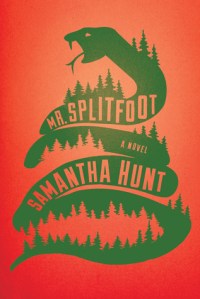 Mr. Splitfoot by Samantha Hunt: “All stories are ghost stories,” Samantha Hunt proclaims in her quirky third novel about the crossover between motherhood and mysticism. In a dual storyline that takes in fundamentalist cults, unlikely mediums and a pregnant woman’s pilgrimage, Hunt asks whether one can ever believe in the unseen. Mr. Splitfoot has the offbeat charm of Scarlett Thomas’s work. While the plot ultimately feels like a bit of a jumble, its vision of unexpected love and loyalty remains compelling. “The End’s always coming,” but it is how one lives in the face of brutality and impending extinction that matters.
I also post reviews of most of my casual reading and skimming on Goodreads:
 Rush Oh! by Shirley Barrett: A debut novel in which an Australian whaler’s daughter looks back at 1908, a catastrophic whaling season but also her first chance at romance. I felt that additional narrators, such as a whaleman or an omniscient voice, would have allowed for more climactic scenes. Still, I found this gently funny, especially the fact that the family’s cow and horse are inseparable and must be together on any outing. There are some great descriptions of whales, too.
 Felicity by Mary Oliver: I was disappointed with my first taste of Mary Oliver’s poetry. So many readers praise her work to the skies, and I’ve loved excerpts I’ve read elsewhere. However, I found these to be rather simplistic and clichéd, especially poems’ final lines, e.g. “Soon now, I’ll turn and start for home. / And who knows, maybe I’ll be singing.” or “Late, late, but now lovely and lovelier. / And the two of us, together—a part of it.” I’ll definitely try more of her work, but I’ll look out for an older, classic collection.
Paulina & Fran by Rachel B. Glaser: Full of blunt, faux-profound sentences and smutty, two-dimensional characters. Others may rave about it, but this wasn’t for me. I get that it is a satire on female friendship and youth entitlement. But I hated how the main characters get involved in a love triangle, and once they leave college any interest I had in them largely disappeared. Least favorite lines: “Paulina. She’s like Cleopatra, but more squat.” / “She’s more like Humphrey Bogart” and “She craved the zen-ness of being rammed.”

 Noah’s Wife by Lindsay Starck: I kept wanting to love this book, but never quite did. It’s more interesting as a set of ideas – a town where it won’t stop raining, a minister losing faith, homeless zoo animals sheltering with ordinary folk – than as an executed plot. My main problem was that the minor characters take over so that you never get to know the title character, who remains nameless. There’s also a ton of platitudes towards the end. It reminded me most of The Readers of Broken Wheel Recommend and Not Forgetting the Whale (another cozy environmental dystopia based around biblical allusions).
 Spill Simmer Falter Wither by Sara Baume: This sounded like a charmingly offbeat story about a loner and his adopted dog setting off on a journey. As it turns out, this debut is much darker than expected, but what saves it from being unremittingly depressing is the same careful attention to voice you encounter in fellow Irish writers like Donal Ryan and Anne Enright. It’s organized into four sections, with the title’s four verbs as headings. In a novel low on action, the road trip is much the most repetitive section, extending to the language as well. Even so, Baume succeeds in giving a compassionate picture of a character whose mental state comes into question. (Full review in March 2016 issue of Third Way magazine.)
 Medium Hero by Korby Lenker: Lenker is an indie musician, and the 27 autobiographical stories in his debut collection are about the everyday challenges of being on the road versus trying to pay the bills. Many feature “Korby” or “Simon” as fictional stand-ins, and recurring locations include his hometown of Twin Falls, Idaho and his adopted home of Nashville. As the title suggests, Lenker has no illusions about being famous or out of the ordinary. Most of the time he just tries to be a decent guy, the kind who prays for family members in distress even though he’s not sure he believes in God. Lest that sound too serious, though, there are also stories about peeing his pants and the perils of being a metrosexual.
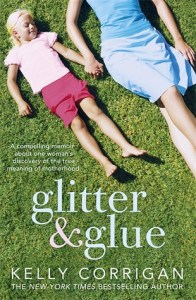 Glitter and Glue by Kelly Corrigan: Slides down like ice cream. And I say that even though the whole basis for this memoir feels rather thin. Corrigan frames it around five months in the early 1990s when she worked as a nanny for two Australian kids whose mother died of cancer. For a young woman fresh out of college, it was like a trial run for being a mother, and also gave her a new appreciation for everything her own mother had done for her during her Philadelphia Catholic upbringing. If Corrigan’s father was the ‘glitter’ of the family, her mother was the ‘glue’ – holding everything together in the background. This is impressively reconstructed, dialogue and all, from letters, journals and photos.
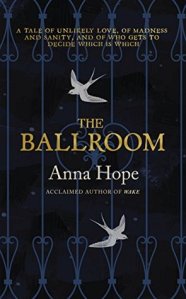 The Ballroom by Anna Hope: This novel was inspired by the story of the author’s great-great-grandfather, an Irishman who was a patient at Menston Asylum in West Yorkshire from 1909 to 1918. The novel zeroes in on the long, hot summer of 1911, focusing through alternating close third-person chapters on John Mulligan, a new patient named Ella Fay, and Dr. Charles Fuller, who wants to put his mental hospital at the frontline of eugenics research. Ultimately I didn’t like this quite as much as Wake, but I think it cements Anna Hope’s reputation as a solid historical fiction writer. I hope with her next book she’ll move beyond the years around World War I to consider a less-chronicled era.
 Life without a Recipe by Diana Abu-Jaber: The Jordanian–American writer reflects on how various food cultures have sustained her through a life that hasn’t always turned out as expected. Three marriages, a move from Portland to Florida, a winding path to motherhood in her forties, and her father’s death from leukemia are some of the main events. Like Sasha Martin’s Life from Scratch, this is more about family and personal history than it is about food (and there are no recipes). Still, food is the stuff of memories, and it is what binds her to two strong characters: her Jordanian father Bud with his stuffed grape leaves, and her maternal grandmother Grace with her frequent baking and the pastries they consumed together in Paris.
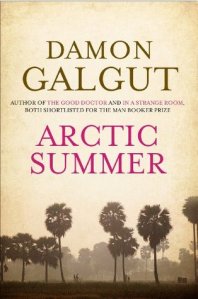 Arctic Summer by Damon Galgut: This fictionalized account of the life of E.M. Forster focuses on the drawn-out composition of A Passage to India, which he began in 1913 but wouldn’t complete and publish until 1924. In between he broke off to write his explicitly homosexual novel Maurice (only published posthumously), spent three years working in Egypt during the war, and served as a secretary to an Indian maharajah. As fictionalized biographies of authors go, I’d rate this somewhere between David Lodge’s A Man of Parts (H.G. Wells) and Colm Tóibín’s superior The Master (Henry James); all three share a heavy focus on the author’s sexuality. “Buggery in the colonies. It wasn’t noble” is one of my favorite random snippets from this novel, and sums up, for me, its slightly prurient aftertaste.
 Bookish Beck = Rebecca Foster. American transplant to England. Freelance proofreader and book reviewer.
 Bookish Beck