Recommended May Releases
May and June are HUGE months for new releases. I’ve been doing enough early reading via NetGalley and Edelweiss that I’ve found plenty to recommend to you for next month. From a novel voiced by one of Hemingway’s wives to a physicist’s encouragement to waste more time, I hope there will be something here for everyone.
The Pisces by Melissa Broder
[Coming from Hogarth Press (USA) on the 1st and Bloomsbury (UK) on the 3rd]
 At first I thought this was one of those funny, quirky but somewhat insubstantial novels about a thirtysomething stuck with a life she isn’t sure she wants – something along the lines of Goodbye, Vitamin, The Portable Veblen, or All Grown Up. Then I thought it was just a crass sex comedy. But the further I read the deeper it all seemed to become: tropes from Greek myth and the fluidity of gender roles made me think of You Too Can Have a Body Like Mine, another debut novel that surprised me for its profundity. Lucy, a thirty-eight-year-old PhD student, agrees to spend a summer dog-sitting for her yoga entrepreneur sister in Venice Beach, California while she undertakes therapy for the twin problems of low self-esteem and love addiction. If you know one thing about this book, it’s that there’s sex with a merman. Ultimately, though, I’d say it’s about “the prison of the body” and choosing which of the different siren voices calling us to listen to. I found it outrageous but rewarding.
My rating:
How to Be a Perfect Christian by Adam Ford and Kyle Mann
[Coming from Multnomah (USA) on the 1st]
 The Babylon Bee is a Christian version of The Onion, so you know what you’re getting here: a very clever, pitch-perfect satire of evangelical Christianity today. If, like me, you grew up in a nondenominational church and bought into the subculture hook, line and sinker (Awana club, youth group, courtship, dc Talk albums, the whole shebang), you will find that so much of this rings true. The book is set up as a course for achieving superficial perfection through absolute “conformity to the status quo of the modern church.” Sample advice: find an enormous church that meets your needs, has a great coffee bar and puts on a laser-lit worship performance to rival “an amusement park for cats or a Def Leppard concert”; master the language of Christianese (“Keeping it in prayer” pretty much covers your bases); and bring as little as you can to the church potluck (a 25-pack of napkins) but consume as much as is anatomically possible. So, a lot of fun, just a little overlong because you get the joke early on.
My rating:
The Ensemble by Aja Gabel
[Coming from Riverhead (USA) on the 15th]
 In May 1994, the members of the Van Ness String Quartet are completing their final graduate recital at a San Francisco conservatory and preparing for the Esterhazy quartet competition in the Canadian Rockies. These four talented musicians – Jana, first violin; Brit, second violin; Henry, viola; and Daniel, cello – have no idea what the next 15 years will hold for them: a cross-country move, romances begun and lost, and career successes and failures. Drawing on her own history as a violinist and cellist, Aja Gabel infuses her debut novel with the simultaneous uncertainty and euphoria of both the artistic life and early adulthood in general. An alternating close third-person perspective gives glimpses into the main characters’ inner lives, and there are evocative descriptions of classical music. I think The Ensemble will mean even more to those readers who are involved in music, but anyone can relate to the slow fade from youth into middle age and the struggle to integrate art with the rest of life.
My rating:
Tropic of Squalor by Mary Karr
[Coming from Harper (USA) on the 8th]
 Mary Karr is mostly known as a memoirist, but this is actually her fifth poetry collection. Death is a major theme, with David Foster Wallace’s suicide and 9/11 getting multiple mentions. Karr also writes self-deprecatingly about her Texas childhood. Best of all is the multi-part “The Less Holy Bible”: a sort of Devil’s Dictionary based loosely around the books of the Bible, it bounces between Texas and New York City and twists biblical concepts into commonsense advice. Not one for those who are quick to cry heresy, perhaps, but I enjoyed it very much, especially “VI. Wisdom: The Voice of God”: “Ninety percent of what’s wrong with you could be cured with a hot bath, / says God through the manhole covers, but you want magic, to win / the lottery you never bought a ticket for. … Don’t look for initials in the geese honking / overhead or to see through the glass even darkly. It says the most obvious shit, / i.e. Put down that gun, you need a sandwich.”
My rating:
In Praise of Wasting Time by Alan Lightman
[Coming from Simon & Schuster / TED (USA and UK) on the 15th]
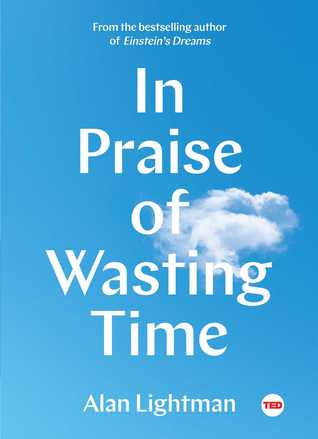 Lightman, a physicist and MIT professor, argues that only in unstructured time can we rediscover our true identity and recover our carefree childhood creativity. This work-as-play model goes against the modern idea that time is money and every minute must be devoted to a project. “For any unexpected opening of time that appears during the day, I rush to patch it, as if a tear in my trousers. … I feel compelled to find a project, to fill up the hole.” Yet there is another way of approaching time, as he discovered when doing research in a village in Cambodia. He realized that the women he talked to didn’t own watches and thus had no real sense of how long any task took them. This sharp, concise treatise ruminates on the cultural forces that have enslaved us in the West to productivity. (In short, he blames the Internet, but specifically smartphones.) Lightman insists on the spiritual benefits of free time and solitude. “With a little determination, each of us can find a half hour a day to waste time,” he asserts.
My rating:
Love and Ruin by Paula McLain
[Coming from Ballantine Books (USA) and Fleet (UK) on the 1st]
 This is the weakest of the three McLain novels I’ve read, but when we’re talking about a writer of this caliber that isn’t much of a criticism. It’s strange to me that, having written a novel from the perspective of Hadley Richardson, Ernest Hemingway’s first wife, McLain would choose to tell the story of another Hemingway wife – this time Martha Gellhorn, a war reporter and author in her own right. If I set aside this misgiving, though, and just assess the quality of the writing, there are definitely things to praise, such as the vivid scenes set during the Spanish Civil War, the dialogues between Martha and Hem, the way he perhaps fills in for her dead father, her fondness for his sons, and her jealousy over his growing success while her books sink like stones. I especially liked their first meeting in a bar in Key West, and the languid pace of their life in Cuba. I read such books because I’m intrigued about the appeal of a great man, but here I got a little bogged down with the many settings and events.
My rating:
What May books do you have on the docket? Have you already read any that you can recommend?
My 2018 Wellcome Book Prize Wish List
Tomorrow the longlist for the 2018 Wellcome Book Prize will be announced. This year’s judging panel is chaired by Edmund de Waal, author of The Hare with Amber Eyes. I hope to once again shadow the shortlist along with a few fellow book bloggers. I don’t feel like I’ve read all that many books that are eligible (i.e., released in the UK in 2017, and on a medical theme), but here are some that I would love to see make the list. I link to all those I’ve already featured here, and give review extracts for the books I haven’t already mentioned.

 I Found My Tribe by Ruth Fitzmaurice
- In Pursuit of Memory: The Fight against Alzheimer’s by Joseph Jebelli
- Goodbye, Vitamin by Rachel Khong
- In Every Moment We Are Still Alive by Tom Malmquist
- Admissions: A Life in Brain Surgery by Henry Marsh
 I Am, I Am, I Am: Seventeen Brushes with Death by Maggie O’Farrell: O’Farrell captures fragments of her life through essays on life-threatening illnesses and other narrow escapes she’s experienced. The pieces aren’t in chronological order and aren’t intended to be comprehensive. Instead, they crystallize the fear and pain of particular moments in time, and are rendered with the detail you’d expect from her novels. She’s been mugged at machete point, nearly drowned several times, had a risky first labor, and was almost the victim of a serial killer. (My life feels awfully uneventful by comparison!) But the best section of the book is its final quarter: an essay about her childhood encephalitis and its lasting effects, followed by another about her daughter’s extreme allergies.
- The Smell of Fresh Rain: A Journey into the Sense of Smell by Barney Shaw
- Fragile Lives: A Heart Surgeon’s Stories of Life and Death on the Operating Table by Stephen Westaby
It’s also possible that we could see these make the longlist:
 History of Wolves by Emily Fridlund: Fridlund’s Minnesota-set debut novel is haunted by a dead child. From the second page readers know four-year-old Paul is dead; a trial is also mentioned early on, but not until halfway does Madeline Furston divulge how her charge died. This becomes a familiar narrative pattern: careful withholding followed by tossed-off revelations that muddy the question of complicity. The novel’s simplicity is deceptive; it’s not merely a slow-building coming-of-age story with Paul’s untimely death at its climax. For after a first part entitled “Science”, there’s still half the book to go – a second section of equal length, somewhat ironically labeled “Health”. (Reviewed for the TLS.)
- Hair Everywhere by Tea Tulić
 Modern Death: How Medicine Changed the End of Life by Haider Warraich: A learned but engaging book that intersperses science, history, medicine and personal stories. The first half is about death as a medical reality, while the second focuses on social aspects of death: religious beliefs, the burden on families and other caregivers, the debate over euthanasia and physician-assisted suicide, and the pros and cons of using social media to share one’s journey towards death. (See my full Nudge review.)
Of 2017’s medical titles that I haven’t read, I would have especially liked to have gotten to:
- Sound: A Story of Hearing Lost and Found by Bella Bathurst
 This Is Going to Hurt: Secret Diaries of a Junior Doctor by Adam Kay
- With the End in Mind: Dying, Death, and Wisdom in an Age of Denial by Kathryn Mannix [I have this one on my Kindle from NetGalley]
- Into the Grey Zone: A Neuroscientist Explores the Border between Life and Death by Adrian Owen
- Patient H69: The Story of My Second Sight by Vanessa Potter
We are also likely to see a repeat appearance from the winner of the 2017 Royal Society Science Book Prize, Testosterone Rex: Myths of Sex, Science, and Society by Cordelia Fine.
Other relevant books I read last year that have not (yet?) been released in the UK:
 The Education of a Coroner: Lessons in Investigating Death by John Bateson
- The Family Gene: A Mission to Turn My Deadly Inheritance into a Hopeful Future by Joselin Linder
- Last Things: A Graphic Memoir of Loss and Love by Marissa Moss
- Love and Laughter in the Time of Chemotherapy by Manjusha Pawagi
 No Apparent Distress: A Doctor’s Coming-of-Age on the Front Lines of American Medicine by Rachel Pearson: Pearson describes her Texas upbringing and the many different hands-on stages involved in her training: a prison hospital, gynecology, general surgery, rural family medicine, neurology, dermatology. Each comes with memorable stories, but it’s her experience at St. Vincent’s Student-Run Free Clinic on Galveston Island that stands out most. Pearson speaks out boldly about the divide between rich and poor Americans (often mirrored by the racial gap) in terms of what medical care they can get. A clear-eyed insider’s glimpse into American health care.
- The Bright Hour: A Memoir of Living and Dying by Nina Riggs
 The Tincture of Time: A Memoir of (Medical) Uncertainty by Elizabeth L. Silver: At the age of six weeks, Silver’s daughter suffered a massive brain bleed for no reason that doctors could ever determine. Thanks to the brain’s plasticity, especially in infants, the bleed was reabsorbed and Abby has developed normally, although the worry never goes away. Alongside the narrative of Abby’s baffling medical crisis, Silver tells of other health experiences in her family. An interesting exploration of the things we can’t control and how we get beyond notions of guilt and blame to accept that time may be the only healer.
Do you follow the Wellcome Book Prize? Have you read any books that might be eligible?
2017’s Runners-Up and Other Superlatives
The choices below are in alphabetical order by author, with any previously published reviews linked in (many of these books have already appeared on the blog in some way over the course of the year). You know the drill by now: to keep it simple for myself as well as for all of you who are figuring out whether you’re interested in these books or not, I’m limiting myself to two sentences per title. The first is a potted summary; the second tells you why you should read it. Across these three best-of posts (see also my Top Nonfiction and Best Fiction posts), I’ve spotlighted roughly the top 15% of my year’s reading.
Runners-Up:
 As a God Might Be by Neil Griffiths: The themes and central characters were strong enough to keep me powering through this 600-page novel of ideas about encounters with God and the nature of evil. This turned out to be just my sort of book: big and brazen, a deep well of thought that will only give up its deeper meanings upon discussion and repeat readings.
 Spaceman of Bohemia by Jaroslav Kalfař: The story of Jakub Procházka, a Czech astronaut who leaves his wife behind to undertake a noble research mission but soon realizes he can never escape his family history or the hazards of his own mind. A terrific blend of the past and the futuristic, Earth and space.
 English Animals by Laura Kaye: A young Slovakian becomes a housekeeper for a volatile English couple and discovers a talent for taxidermy. A fresh take on themes of art, sex, violence and belonging, this is one of the more striking debut novels I’ve encountered in recent years.
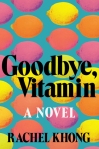 Goodbye, Vitamin by Rachel Khong: Reeling from a broken engagement, Ruth Young returns to her childhood home in California for a year to help look after her father, who has Alzheimer’s. This is a delightfully quirky little book, but you may well read it with a lump in your throat, too.
 Midwinter Break by Bernard MacLaverty: In MacLaverty’s quietly beautiful fifth novel, a retired couple faces up to past trauma and present incompatibility during a short vacation in Amsterdam. My overall response was one of admiration for what this couple has survived and sympathy for their current situation – with hope that they’ll make it through this, too. (Reviewed for BookBrowse.)
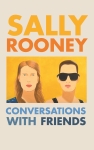 Conversations with Friends by Sally Rooney: An Irish college student navigates friendships and an affair with a married man. This is much more about universals than it is about particulars: realizing you’re stuck with yourself, exploring your sexuality and discovering sex is its own kind of conversation, and deciding whether ‘niceness’ is really the same as morality; a book I was surprised to love, but love it I did.
 Lincoln in the Bardo by George Saunders: The residents of Georgetown cemetery limbo don’t know they’re dead – or at least won’t accept it. An entertaining and truly original treatment of life’s transience; I know it’s on every other best-of-year list out there, but it really is a must-read.
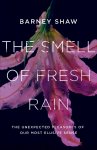 The Smell of Fresh Rain by Barney Shaw: Shaw travels through space, time and literature as he asks why we don’t have the vocabulary to talk about the smells we encounter every day. If you’re interested in exploring connections between smell and memory, discovering what makes the human sense of smell unique, and learning some wine-tasting-style tips for describing odors, this is a perfect introduction.
 A Life of My Own by Claire Tomalin: Tomalin is best known as a biographer of literary figures including Mary Wollstonecraft, Samuel Pepys and Charles Dickens, but her memoir is especially revealing about the social and cultural history of the earlier decades her life covers. A dignified but slightly aloof book – well worth reading for anyone interested in spending time in London’s world of letters in the second half of the twentieth century.
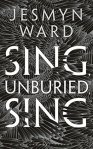 Sing, Unburied, Sing by Jesmyn Ward: The story of a mixed-race family haunted – both literally and figuratively – by the effects of racism, drug abuse and incarceration in Bois Sauvage, a fictional Mississippi town. Beautiful language; perfect for fans of Toni Morrison and Cynthia Bond.
I’ve really struggled with short stories this year, but here are four collections I can wholeheartedly recommend:
 What It Means when a Man Falls from the Sky by Lesley Nneka Arimah (Reviewed for Shiny New Books.)
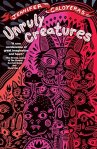
- Unruly Creatures: Stories by Jennifer Caloyeras
- Bad Dreams and Other Stories by Tessa Hadley
- The Great Profundo and Other Stories by Bernard MacLaverty (1987)
The Best 2017 Books You Probably Never Heard of (Unless You Heard about Them from Me!):
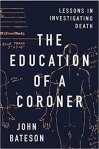 The Education of a Coroner by John Bateson: The coroner’s career is eventful no matter what, but Marin County, California has its fair share of special interest, what with Golden Gate Bridge suicides, misdeeds at San Quentin Prison, and various cases involving celebrities (e.g. Harvey Milk, Jerry Garcia and Tupac) in addition to your everyday sordid homicides. Ken Holmes was a death investigator and coroner in Marin County for 36 years; Bateson successfully recreates Holmes’ cases with plenty of (sometimes gory) details.
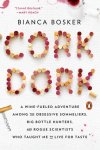 Cork Dork by Bianca Bosker: Tasting notes: gleeful, ebullient, learned, self-deprecating; suggested pairings: Sweetbitter by Stephanie Danler; Top Chef, The Great British Bake Off. A delightful blend of science, memoir and encounters with people who are deadly serious about wine.
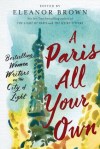 A Paris All Your Own: Bestselling Women Writers on the City of Light, edited by Eleanor Brown: A highly enjoyable set of 18 autobiographical essays that celebrate what’s wonderful about the place but also acknowledge disillusionment; highlights are from Maggie Shipstead, Paula McLain, Therese Anne Fowler, Jennifer Coburn, Julie Powell and Michelle Gable. If you have a special love for Paris, have always wanted to visit, or just enjoy armchair traveling, this collection won’t disappoint you.
 Ashland & Vine by John Burnside: Essentially, it’s about the American story, individual American stories, and how these are constructed out of the chaos and violence of the past – all filtered through a random friendship that forms between a film student and an older woman in the Midwest. This captivated me from the first page.
 Tragic Shores: A Memoir of Dark Travel, Thomas H. Cook: In 28 non-chronological chapters, Cook documents journeys he’s made to places associated with war, massacres, doomed lovers, suicides and other evidence of human suffering. This is by no means your average travel book and it won’t suit those who seek high adventure and/or tropical escapism; instead, it’s a meditative and often melancholy picture of humanity at its best and worst. (Reviewed for Nudge.)
 The Valentine House by Emma Henderson: This is a highly enjoyable family saga set mostly between 1914 and 1976 at an English clan’s summer chalet in the French Alps near Geneva, with events seen from the perspective of a local servant girl. You can really imagine yourself into all the mountain scenes and the book moves quickly –a great one to take on vacation.

The year’s runners-up and superlatives that I happen to have around in print.
Various Superlatives, Good and Bad:
 The 2017 Book Everybody Else Loved but I Didn’t: Eleanor Oliphant Is Completely Fine by Gail Honeyman. (See my Goodreads review for why.)
The Year’s Biggest Disappointments: All Grown Up by Jami Attenberg, Future Home of the Living God by Louise Erdrich, Between Them by Richard Ford and George and Lizzie by Nancy Pearl.
The Worst Book I Read This Year: Books by Charlie Hill (ironic, that). My only one-star review of the year.
 The Downright Strangest Book I Read This Year: An English Guide to Birdwatching by Nicholas Royle.
My Best Discoveries of the Year: Beryl Bainbridge, Saul Bellow, Bernard MacLaverty and Haruki Murakami. I’ve read two books by each of these authors this year and look forward to trying more from them.
The Debut Authors Whose Next Work I’m Most Looking Forward to: Lesley Nneka Arimah, Laura Kaye, Carmen Marcus, Julianne Pachico and Sally Rooney.
 The Best First Line of the Year: “History has failed us, but no matter.” (Pachinko, Min Jin Lee)
The Best Last Line of the Year: “If she was an instance of the goodness in this world then passing through by her side was miracle enough.” (Midwinter Break, Bernard MacLaverty)
Coming tomorrow: Some early recommendations for 2018.
Three Recommended July Releases
Here are three enjoyable reads due out next month that I was lucky enough to get a hold of early. These are all first books by women authors, with subjects ranging from twentieth-century artists to a parent’s dementia. I’ve pulled 200–250-word extracts from my full reviews and hope you’ll be tempted by one or more of these.
The Velveteen Daughter by Laurel Davis Huber
(Coming on July 11th from She Writes Press)
The name Margery Williams Bianco might not seem familiar, but chances are you remember her classic children’s book, The Velveteen Rabbit. This lovely debut novel is about Margery and her daughter, Pamela Bianco, a painter and child prodigy troubled by mental illness. The main thread of the novel is set on one day in 1944, and the first-person narration alternates between Margery and Pamela, who through memory and imagination drift back through vivid scenes from their lives in Turin, London, Wales, and New York City.
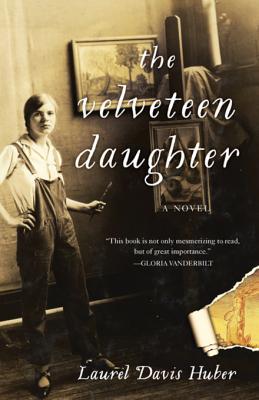 Themes of creativity, mental health and motherhood are nestled in this highly visual book full of cameos by everyone from Pablo Picasso to Eugene O’Neill. I love reading fictional biographies of writers and other creative types, and this one gives such an interesting window onto lesser-known twentieth-century figures. I especially appreciated Huber’s endnotes explaining what was fact (almost everything) and what was fiction here, and her discussion of the letters and archives she used.
As The Velveteen Rabbit teaches, we truly come to life when we are loved, and you can see how for Pamela it was a lifelong struggle to be loved for who she was. The artist’s tortured journey and the mother’s tender worry are equally strong. Had I finished it a few days earlier I would have included this in my write-up of the best books of 2017 so far. It would be a great choice for book clubs, too – a set of questions is even included at the end of the novel.
A favorite line (Pamela describes her mother): “Mam’s eyes are vast almond-shaped seas, liquid navy, flowing with an endless depth of understanding and compassion.”
Readalike: Z: A Novel of Zelda Fitzgerald by Therese Anne Fowler
My thanks to publicist Caitlin Hamilton Summie for granting me early access via NetGalley.
My rating: 
Goodbye, Vitamin by Rachel Khong
(Coming on July 11th from Henry Holt and Co. [USA]; already available from Scribner UK)
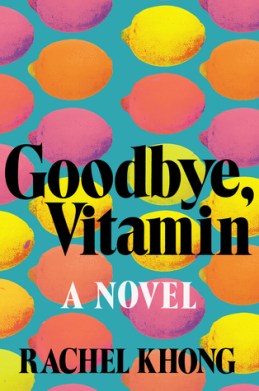 Reeling from a broken engagement, Ruth Young returns to her childhood home in California for a year to help look after her father, who has Alzheimer’s. She tries feeding Howard every half-cracked dementia health cure (cruciferous vegetables are a biggie) and, with his teaching assistant, Theo, maintains the illusion that her father is still fit to teach by gathering graduate students for a non-credit History of California class that meets in empty classrooms and occasionally off-campus – wherever they can be away from the watchful eye of Dean Levin.
As these strategies fail and Howard’s behavior becomes ever more erratic, Ruth realizes the best thing she can do is be a recorder of daily memories, just as Howard was for her when she was a little girl: “Here I am, in lieu of you, collecting the moments” – “Today you…”
This is a delightfully quirky little book, in the same vein as Elizabeth McKenzie’s The Portable Veblen. I marked out a bunch of funny metaphors:
This morning’s [hangover] is a rodent: pesky but manageable.
It was grotesque, the way I kept trying to save that relationship. Like trying to tuck an elephant into pants.
The moon, tonight, looks like a cut zucchini coin.
But you may well read this with a lump in your throat, too. From one Christmas to the next, we see how much changes for this family – a reminder that even though the good times are still worth celebrating, they’re gone before you know it.
Readalike: Not Working by Lisa Owens
My rating:
A Beautiful, Terrible Thing: A Memoir of Marriage and Betrayal by Jen Waite
(Coming on July 11th from Plume Books [USA] and Prentice Hall Press [UK])
 Jen Waite had been in New York City pursuing her dream of becoming an actress for two years when she started working at a restaurant for extra cash. It was here that she met Marco Medina, a handsome Argentinian bar manager, and they fell head-over-heels in love. All the clichés: a green card, a successful business venture, a baby on the way, an idyllic wedding on the beach in Maine. And then the whole thing fell apart. “Marco was always an illusion; the best magic trick I’ve ever seen,” Waite marvels.
She’s written her story up like a thriller, full of gradual revelations and the desire to get even. Chapters alternate between “Before,” when she still had what she thought was the perfect existence, and “After,” when she started to suspect that Marco had a secret life. I use the term “thriller” as a compliment: the dialogue is spot-on and this is a remarkably gripping book given that the title and blurb pretty much give the whole game away. More than that, it’s a fascinating psychological study of the personality of a sociopath and pathological liar. Surviving to tell her story and perhaps train to become a therapist for women who have been in her situation is Waite’s apt revenge.
Readalike: Gone Girl by Gillian Flynn
My rating:
 Bookish Beck = Rebecca Foster. American transplant to England. Freelance proofreader and book reviewer.
 Bookish Beck