Every Day Is Mother’s Day (Three on a Theme)
It’s Mother’s Day in the UK today, so I’m featuring three books about mothers and motherhood: a poetry collection, a memoir, and a novel. There are complicated emotions at play in all of these books, whether because of the loss of a child, a mother’s misbehaviour, or a combination of abuse and unfitness.
Her Birth by Rebecca Goss (2013)
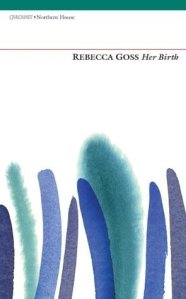 Goss’s first child, Ella, died at 16 months of a rare heart condition, Severe Ebstein’s Anomaly. This collection is in three parts, the first recreating vignettes from her daughter’s short life, the purgatorial central section dwelling in the aftermath of grief, and the third summoning the courage to have another baby. “So extraordinary was your sister’s / short life, it’s hard for me to see // a future for you. I know it’s there, … yet I can’t believe // my fortune”. The close focus on physical artefacts and narrow slices of memory wards away mawkishness. The poems are sweetly affecting but never saccharine. “I kept a row of lilac-buttoned relics / in my wardrobe. Hand-knitted proof, something/ to haul my sorry lump of heart and make it blaze.” (New purchase from Bookshop UK with buyback credit)
How to Survive Your Mother by Jonathan Maitland (2006)
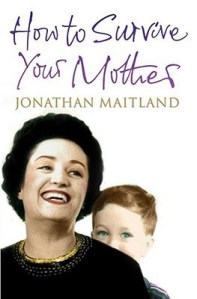 I can’t remember where I came across this in the context of recommended family memoirs, but the title and premise were enough to intrigue me. I’d not previously heard of Maitland, who at the time was known for a TV investigative reporting show called Watchdog exposing con artists. The irony: he was soon to discover that his own mother was a con artist. By chance, he met a journalist who recalled a scandal involving his parents’ old folks’ homes. Maitland toggles between flashbacks to his earlier life and fragments from his investigation, which involved archival research but mostly interviews with his estranged sister, his mother’s ex-husbands, and more.
Bru was a larger-than-life character: Israeli, obsessed with cars and personal upkeep – she once lied to her son that she’d had “eyebrow cancer” rather than admit to having had a facelift, and prone to suicide attempts and other grand gestures, such as opening a “gay hotel” in the 1970s. It eventually emerges that she talked an old man under her care into changing his will to make her his sole beneficiary; she and Maitland’s father also borrowed money from other vulnerable elderly customers. No doubt Bru had narcissistic personality disorder. This was interesting for the psychological insight but not so much for the blow-by-blow. It might have made a better novel. (Secondhand – Awesomebooks.com) 
Every Day Is Mother’s Day by Hilary Mantel (1985)
 If you mostly know Mantel for her Thomas Cromwell trilogy, her debut novel, a black comedy, will come as a surprise. Two households become entangled in sordid ways in 1974. The Axons, Evelyn and her intellectually disabled adult daughter, Muriel, live around the corner from Florence Sidney, who still resides in her family home and whose brother Colin lives nearby with his wife and three children (the fourth is on the way). Colin is having an affair with Muriel’s social worker, Isabel Field. Evelyn is dismayed to realize that Muriel has, somehow, fallen pregnant.
Everyone in this short, spiky novel has been neglected by or separated from a mother, and/or finds motherhood oppressive. The picture is bleak indeed. Colin and Florence’s mother is institutionalized; Muriel’s pregnancy is an embarrassment to be hidden; childbirth is a traumatic memory for Evelyn: “She had been left alone to scream, on a high white bed. … The parasite was straining to be away.” But you’ll find humour and delicious creepiness here, too: a dinner party so atrocious you have to laugh; Evelyn’s utter lack of manners and house that seems to be haunted by poltergeists. The offspring of Barbara Comyns and Shirley Jackson, this is also reminiscent of Muriel Spark or early Margaret Atwood.
I could see the seeds of future Mantel (Evelyn is a retired amateur medium – a precursor of the psychic in Beyond Black) but enjoyed this for its own sake. Very annoyingly, when I started reading this and saw on Goodreads that it has a sequel, I glanced at the page for the latter and there was a huge spoiler. Harrumph. Not sure I’ll read Vacant Possession, but this was strong evidence that it’s worth diving into the back catalogue of big-name authors. (Public library)
May Poetry Releases: Blood & Cord Anthology; Connolly, Goss, Harrison
Apart from Monsters, my focus for May releases has been on poetry, with three Carcanet collections plus a poetry-heavy anthology of writing on early parenthood. Love, history, nature and parental bonds are a few underlying subjects that connect some or all of these.
The Recycling by Joey Connolly
Joey Connolly’s second collection reminded me most of Caroline Bird’s work (especially the mise en abyme ending to “For Such a Widely Used Material, Glass Sure Does Have Some Downsides”): effusive and sometimes absurdist, with unexpected imagery and wordplay.
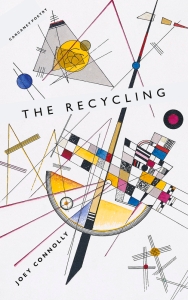 In keeping with the title, there are environmentalist considerations and musings on materials, but also the connotation of reusing language or rehashing ideas. I appreciated this strategy when he’s pondering etymology (“Strange noun full of verb, noun / bending to verb, strange / idea of repeating repetition” in the title poem) or reworking proverbs in the hilarious “Poem in Which Is Is Sufficient” (“Sufficient unto the glaze / is the primer thereunder. Sufficient / unto the applecart is the upset / thereof” and so on) but perhaps less so during 22 indulgent pages of epigraphs. The distance-designated poems of the inventive “Solvitur Ambulando” section range from history to science fiction: “Abstracted, ankle deep in the proto-gutters of Elizabethan London: / how were you ejected from your life to wash up here?”
It’s such a versatile book. I loved the philosophical self-questioning of “Why Try and Be Good When This World” (“the / mental carapace required to weather the hardness / of indifference insulates you from what it means to be alive”) and the utterly original love poetry (“I will take out the bins, and I will try not to leave the keys / in the door, and I will continue / to love you / to the fullest extent to which I find myself able. Oh love. Checkmate”). Eminently quotable stuff. Here are two of my favourite passages:
like an
amateur kintsugi enthusiast in the ruined chinashop
of my childhood idealism
What sweet sorrow
to persist within this disappeared world
With thanks to Carcanet Press for the advanced e-copy for review.
Blood & Cord: Writers on Early Parenthood, edited by Abi Curtis
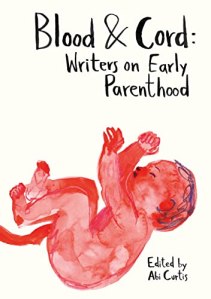
“The introduction of a new baby rearranges a life, and this requires a new language and a new kind of engagement with the world,” Abi Curtis writes in her introduction. These poems and pieces of flash autofiction or memoir are often visceral, as the title and cover image by Elīna Brasliņa indicate. Elizabeth Hogarth’s “Animal Body” tracks how primal instinct takes over. Second- and third-person narratives distance the speaker from the experience, as in Ruth Charnock’s hybrid “three tarot cards for the new mother.” As I’ve come to expect from The Emma Press, there’s a wide variety of formats, styles and even page layout, with some poems printed in landscape.
 Curtis’s four poems are, together, the strongest entry. I particularly loved the final lines of “September Birth”: “We listen close but cannot fathom / Your new language. We will spend / The rest of our days learning it.” Naomi Booth, too, zeroes in on language in “What is tsunami?” A daughter’s acquisition of language provides entertainment (“She names her favourite doll, Hearty Campfire”) but also induces apprehension:
There are certain words that you dread hearing her say. The first is money. … You dread the way it will become as concrete to her as sky and cat and gate. Mu-nee. Mu-nee.
Not all of these are jubilant birth stories. There are children who are longed for but never arrive. There are also babies who never breathe, or soon die. Alex McRae Dimsdale’s “Bath” is a heartbreaking poem about bidding goodbye to a stillborn son:
It wasn’t the first time that a couple had to leave
the hospital without their newborn.
What could they give us instead?
Here, a small white wooden box –
inside, a packet of wildflower seeds,
your wristband, little
stripy hat. A curlicued certificate
inked with your footprints.
…
what maternal sin did I commit,
deciding who you were
for a whole life that was
already stopped before it started?
“Other Mothers,” a prose essay by poet Rebecca Goss (from whom more below), is about her infant daughter’s death in hospital.
There are a few male contributors, outnumbered five to one by women writers. Poets Liz Berry and Gail McConnell illuminate same-sex motherhood. The two short stories – i.e., those that are clearly fiction rather than memoir by different pronouns – were among the weakest pieces for me: the one piles cruel irony on misery (no real surprise as it’s by an author I’ve had a strong reaction against in the past; the only saving grace was a clever reference to Hemingway’s six-word story about baby shoes); the other is silly and contrived.
I think this was my seventh Emma Press book, and my fourth of their anthologies, of which I’d recommend The Emma Press Anthology of Love. This one was a bit more uneven for me, but I can see it holding appeal for new parents who are of a literary bent.
Published in association with the York Centre for Writing, York St John University. With thanks to The Emma Press for the free copy for review.
Latch by Rebecca Goss
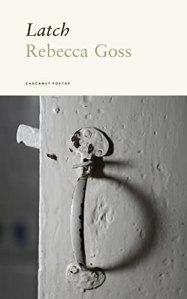 Rebecca Goss’s fourth poetry collection arises from a rural upbringing in Suffolk. Her parents’ farm was a “[s]emi-derelict, ramshackle whimsy of a place”. There’s nostalgia for the countryside left behind and for a less complicated family life before divorce, yet this is no carefree pastoral. From the omnipresent threats to girls to the challenges of motherhood, Goss is awake to the ways in which women are compelled to adapt to life in male spheres. The title/cover image has multiple connotations: the first bond between mother and child; the gates and doors that showcase craftsmanship (as in “Blacksmith, Making”) or seek to shut menacing forces out (see “The Hounds”), but cannot ensure safety.
Even the individual poem titles tell tales: “The Retired Agronomist Drives a Tractor in the Summer Because He Likes the Oily Smell of the Machine” and three with the enticing pattern “Woman Returns to Childhood Home…” Trees and animals provide much of the imagery. A few of my personal favourites were “Rooks,” “Weir,” and “In Song Flight.”

With thanks to Carcanet Press for the advanced e-copy for review.
Kitchen Music by Lesley Harrison
Lesley Harrison is a Scottish poet with a number of pamphlets and collections to her name. Orkney and other remote islands are settings for these atmospheric poems filled with whale song and weather (“the vast dark hung with / ropes of song”), birds and wordplay. Language and folktales inspire the poet, and she engages in word association and creates rebuses built around middle letters rather than first. There are also black-and-white photographs, and whale images by Marina Rees punctuating “C-E-T-A-C-E-A.” My attention threatened to drift away from the sometimes wispy lines and paragraphs, but this would be well worth taking on holiday to read on location.

With thanks to Carcanet Press for the advanced e-copy for review.
Would you be interested in reading one or more of these?
Nature Book Catch-Up: Sally Huband, Richard Smyth & Anna Vaught
I’m catching up with a few nature- and travel-based 2023 releases that were sent to me for review. I’ve grouped them together because these British authors share some of the same interests and concerns. They celebrate beloved places that become ours through the time we spend in them and the attention we grant; they mourn the loss of biodiversity from rockpools and gardens and seabird cliffs. What kind of diminished world they’re raising their children into is a major worry for all three, and for Huband and Vaught the unease is exacerbated by chronic illness. Wild creatures, and the fellow authors who have hymned them, ease the hurt.
Sea Bean: A beachcomber’s search for a magical charm by Sally Huband
After more than a decade in her adopted home of Shetland, Sally Huband is still a newcomer. A tricky path to motherhood and ensuing chronic illness (the autoimmune disease palindromic rheumatism) limited her mobility and career. Beachcombing is at once her way of belonging to a specific place and feeling part of the wider world – what washes up on a Shetland beach might come from as far away as Atlantic Canada or the Caribbean. Sea glass, lobster pot tags, messages in bottles, driftwood … and a whole lot of plastic, of course. Early on, Huband sets her sights on a sea bean – also known as a drift-seed, from the tropics – which in centuries past was a talisman for ensuring safe childbirth. Possession of one was enough to condemn a 17th-century local woman to death for witchcraft, she learned.
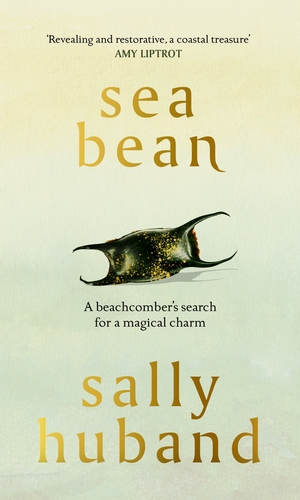 Stories of motherhood, the quest to find effective treatment in a patriarchal medical system, volunteer citizen science projects (monitoring numbers of dead seabirds, returning beached cetaceans to the water, dissecting fulmar stomachs to assess their plastic content), and studying Shetland’s history and customs mingle in a fascinating way. Huband travels around the archipelago and further afield, finding a vibrant beachcombing culture on the Dutch island of Texel. As in Moby-Duck by Donovan Hohn, one of my all-time favourite nonfiction books, there is delight at the randomness of what the ocean delivers.
I requested this book because Huband’s was my favourite essay in the Antlers of Water anthology. In it, she deplored the fact that women were still not allowed to participate in the Up Helly Aa fire festival in Lerwick. Good news: that is no longer the case, thanks to campaigning by Huband and others. In a late chapter, she also reports that blackface was recently banned from the festivals, and a Black Lives Matter demonstration drew 2000 people. Change does come, but slowly to a traditional island community. And sometimes it is not the right sort of change, as with an enormous wind farm, resisted vigorously by residents, that will primarily enrich a multinational company instead of serving the local people.
In many ways, this is a book about coming to terms with loss, and Huband presents the facts with sombre determination. Passages about the threats to birds and marine life had me near tears. But she writes with such poetic tenderness that the evocative specifics of island life point towards what’s true for all of us making the best of our constraints. I was lucky enough to visit several islands of Shetland in 2006; whether you have or not, this is a radiant memoir I would recommend to readers of Kathleen Jamie, Jean Sprackland and Malachy Tallack.
Some favourite lines:
No island can ever live up to the heightened expectations that we always seem to place on them; life catches up with us, sooner or later.
With each loss, emotional pain accretes for those who have paid attention.
If hope is a hierarchy of wishes then I am happy enough, each time that I beachcomb, to find fragments of the bark of paper birch
I’ve come to think of the ocean as an archive of sorts.
With thanks to Hutchinson Heinemann for the proof copy for review.
The Jay, the Beech and the Limpetshell: Finding Wild Things with My Kids by Richard Smyth
all around us
the stuff of spells. Our parents
let us go to scamper deeper,
leap from stumps lush with moss.
Everything aloof about me
fell into the soil once charged
with younger siblings
and freedoms of a wood.
…
I give you a damp valley floor,
this feather for your pocket.
~an extract from “Arger Fen,” from Latch by Rebecca Goss
I know Richard Smyth for his writing on birds (I’ve reviewed both A Sweet, Wild Note and An Indifference of Birds) and his somewhat controversial commentary on modern nature writing. This represents a change in direction for him toward more personal reflection, and with its focus on the phenomena of childhood and parenthood it recalls Wild Child by Patrick Barkham and The Nature Seed by Lucy Jones and Kenneth Greenway. But, as I knew to expect from previous works, he has such talent for reeling in the tangential and extrapolating from the concrete to the abstract that this lively read ends up being about everything: what it is to be human on this fading planet.
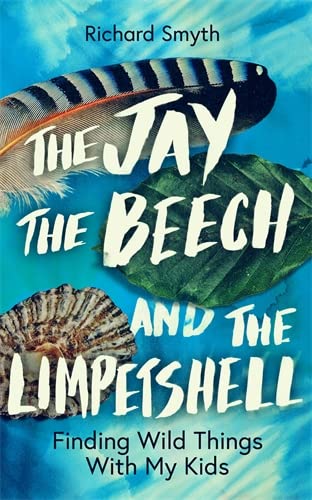 And this despite the fact that four of five chapter headings suggest pandemic-specific encounters with nature. Lockdown walks with his two children, and the totems they found in different habitats – also including a chaffinch nest and an owl pellet – are indeed jumping-off points, punctuating a wide-ranging account of life with nature. Smyth surveys the gateway experiences, whether books or television shows or a school tree-planting programme or collecting, that get young people interested; and talks about the people who beckon us into greater communion – sometimes authors and celebrities; other times friends and family. He also engages with questions of how to live in awareness of climate crisis. He acknowledges that he should be vegetarian, but isn’t; who does not harbour such everyday hypocrisies?
It’s still, unfortunately, rare for men to write about parenthood (and especially pregnancy loss – I only think of Native by Patrick Laurie and William Henry Searle’s books), so it’s great to see that represented, and it’s a charming idea that we create “downfamily” because the “upfamily” doesn’t last forever. Although there’s nostalgia for his childhood here, and anxiety about his kids’ chances of seeing wildlife in abundance, Smyth doesn’t get mired in the past or in existential dread. He has a humanist belief that people are essentially good and can do positive things like build offshore wind farms, and in the meantime he will take Genevieve and Daniel into the woods to play so they will develop a sense of wonder at all that lives on. Even for someone like me who doesn’t have children, this was a captivating, thought-provoking read: We’re all invested in the future of life on this planet.
With thanks to Icon Press for the free copy for review.
These Envoys of Beauty: A Memoir by Anna Vaught
Anna Vaught is a versatile author: I have a copy of her mental health-themed novel Saving Lucia, longlisted for the inaugural Barbellion Prize, on the shelf; she’s written a spooky set of stories, Famished (see Susan’s review); and I gave some early reader feedback on the opening pages of her forthcoming work of quirky historical fiction, The Zebra and Lord Jones. She’s also publishing a book on writing, and editing a collection of pieces submitted for the first Curae Prize for writers who are also carers. I was drawn to her first nonfiction release by reviews by fellow bloggers – it’s always good when a blog tour achieves its aim!
These dozen short essays are about how nature doesn’t necessarily heal, but is a most valued companion in a life marked by chronic illness and depression. The evocative title and epigraphs are from Ralph Waldo Emerson’s essay “Nature” (1836). The pieces loop through Vaught’s past and present, focussing on favourite places in Wiltshire, where she lives, and at the Pembrokeshire coast. It’s the second memoir about complex PTSD that I’ve read this year (see also What My Bones Know). Both at the time and now, when flashbacks of her parents’ verbal and physical abuse haunt her, lying down in a grassy field, exploring a sea cave or sucking on a gorse flower could be a salve. “Nature offered stability and satisfying detail; pattern, form and things that made sense.”
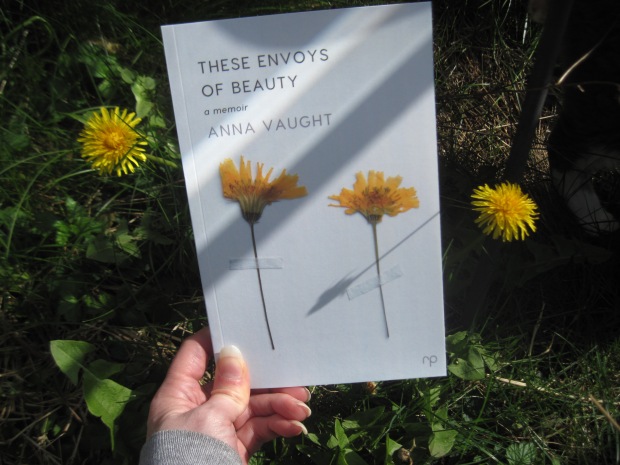
Vaught has a particular love for trees, flowers and moss – even just reciting their Latin names gives her a thrill, and she adds additional information about some species in footnotes. Although her childhood was painful, she retains gratitude for its wide-eyed wonder, and in the exuberance of her prose you can sense a willed childlike perspective (“But back to the list of clouds and writing about clouds!”). I found the frequent self-referential nature of the essays and direct reader address a little precious, but appreciated the thoughts about how nature holds us: “I have always felt a generosity around me, and that I was less lonely outside; at the very least, I could find something to comfort me”. She’s a bookish kindred spirit as well. I’ll be sure to try her work in other genres.
With thanks to Reflex Press for the free copy for review.
 Bookish Beck = Rebecca Foster. American transplant to England. Freelance proofreader and book reviewer.
 Bookish Beck