Review Catch-Up: Memoirs by Maggie Nelson and Jonathan Tepper
Two memoirs that I’ve been meaning to post about for a while now: a novella-length response to chronic pain, and a story of growing up at a refuge for addicts and AIDS victims in Spain.
Pathemata: Or, The Story of My Mouth by Maggie Nelson (2025)
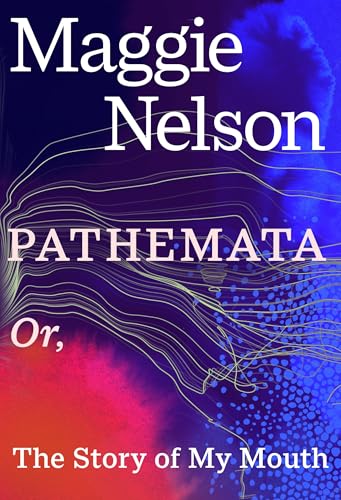 This is a very short (68-page), dreamy meditation on pain. Nelson has ongoing chronic jaw pain despite multiple expensive trips to specialist clinics and many different treatment strategies tried. As she writes, it’s the pandemic era and she’s also home-schooling her son. Meanwhile, her marriage to H seems to be crumbling. The text is composed of non-indented sentences in roughly thematic groupings. But dreams are recounted as often as real-life events, making this a particularly slippery work of autofiction, with an emphasis on the fiction.
The dentist in the valley and I go back and forth over injecting my jaw with Botox.
I hold out, realising that the only thing that frightens me more than pain and its viciousness is numbness, paralysis.
Sometimes I wonder what I would have thought about all these years, if I hadn’t spent so much time thinking about the pain.
Nelson dwells on the irony of someone who talks for a living having so much trouble with oral speech. She also reflects on the early loss of her father and the recent death of a close friend, C. Could it be that jaw pain is how her body is manifesting long-held grief and stress? she wonders.
The Argonauts is an absolute classic of life writing and I’ve long admired Nelson’s cultural criticism. She’s an important thinker on queerness and embodiment, in the vein of Garth Greenwell and Olivia Laing. Aside from the indulgence of including all the dreams (and one instance of jargon: “It sounds like an invagination – a chamber to hold the pastiche of lacerations”), there’s nothing wrong with this per se. It’s just that the essay is over before it’s begun. Why not part of a longer essay collection, or expanded into a full-length memoir?
With thanks to Fern Press, Vintage (Penguin) for the proof copy for review.
{SPOILERS IN THIS ONE}
Shooting Up: A Memoir of Love, Loss, and Addiction by Jonathan Tepper (2026)
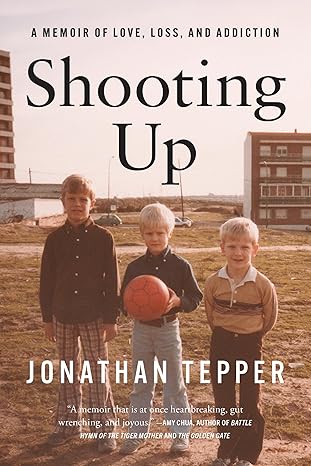 In the early 1980s, the author and his three brothers moved to Spain with their missionary parents, Elliott and Mary, who founded Betel, a rehabilitation centre for junkies (yonkis). “Our neighbourhood [San Blas in Madrid] was the biggest drug supermarket not only in Spain but in all of Europe, and it was happening right on our doorstep.” Betel is still operating today and has supported 100,000 addicts, but it all started with eight young men in the Teppers’ living room. Elliott was filled with righteous enthusiasm for the task and always had scripture passages and C.S. Lewis quotes on the tip of his tongue. When his four sons went delivering leaflets to heroin addicts on the street, they stood out for their blond hair and blue eyes. Soon, though, the yonkis they helped became more than ‘customers’, or objects of pity, but friends as close as family.
From a child’s perspective, the memoir effectively recreates scenes and dialogue from these outreach years. I especially appreciated the descriptions of what it’s like to grow up inside a religious bubble: “the invisible walls of my family and beliefs had been my world. In the [goldfish] bowl you think the water is all there is”. I’m a minister’s kid myself, so I nodded along to lines like “Being a preacher’s kid meant being the first to church and last to leave as my parents hugged and spoke to everybody.” There was real grief as, one by one, young men they knew fell victim to AIDS: Luis, Ángel, Raúl, Salva, Jambri. But there were other losses, too: Tepper’s younger brother, Timothy, died in a car accident while they were back in the USA on a sabbatical in 1991, and his mother later died by suicide after being disabled by a brain tumour.
There’s a section of black-and-white photographs at the end of the book, and the chapters are headed with Spanish phrases to evoke the setting. Later chapters follow Tepper through his college years and the triumph of getting a Rhodes scholarship. (In fact, he and his two remaining brothers all graduated from Oxford University on the same day.) The focus on academic success as a more legitimate high than that offered by drugs reminded me of Educated by Tara Westover, while the solemn duty of being an eyewitness to the AIDS crisis is reminiscent of All the Young Men by Ruth Coker Burks. This is a touching tribute to all those dead.
With thanks to the author and Constable (Little, Brown) for the advanced proof copy for review.
 Bookish Beck = Rebecca Foster. American transplant to England. Freelance proofreader and book reviewer.
 Bookish Beck