Review Catch-Up: Memoirs by Maggie Nelson and Jonathan Tepper
Two memoirs that I’ve been meaning to post about for a while now: a novella-length response to chronic pain, and a story of growing up at a refuge for addicts and AIDS victims in Spain.
Pathemata: Or, The Story of My Mouth by Maggie Nelson (2025)
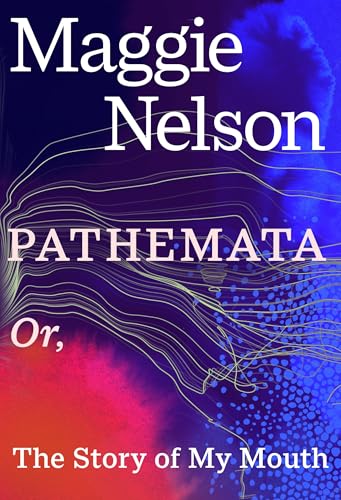 This is a very short (68-page), dreamy meditation on pain. Nelson has ongoing chronic jaw pain despite multiple expensive trips to specialist clinics and many different treatment strategies tried. As she writes, it’s the pandemic era and she’s also home-schooling her son. Meanwhile, her marriage to H seems to be crumbling. The text is composed of non-indented sentences in roughly thematic groupings. But dreams are recounted as often as real-life events, making this a particularly slippery work of autofiction, with an emphasis on the fiction.
The dentist in the valley and I go back and forth over injecting my jaw with Botox.
I hold out, realising that the only thing that frightens me more than pain and its viciousness is numbness, paralysis.
Sometimes I wonder what I would have thought about all these years, if I hadn’t spent so much time thinking about the pain.
Nelson dwells on the irony of someone who talks for a living having so much trouble with oral speech. She also reflects on the early loss of her father and the recent death of a close friend, C. Could it be that jaw pain is how her body is manifesting long-held grief and stress? she wonders.
The Argonauts is an absolute classic of life writing and I’ve long admired Nelson’s cultural criticism. She’s an important thinker on queerness and embodiment, in the vein of Garth Greenwell and Olivia Laing. Aside from the indulgence of including all the dreams (and one instance of jargon: “It sounds like an invagination – a chamber to hold the pastiche of lacerations”), there’s nothing wrong with this per se. It’s just that the essay is over before it’s begun. Why not part of a longer essay collection, or expanded into a full-length memoir?
With thanks to Fern Press, Vintage (Penguin) for the proof copy for review.
{SPOILERS IN THIS ONE}
Shooting Up: A Memoir of Love, Loss, and Addiction by Jonathan Tepper (2026)
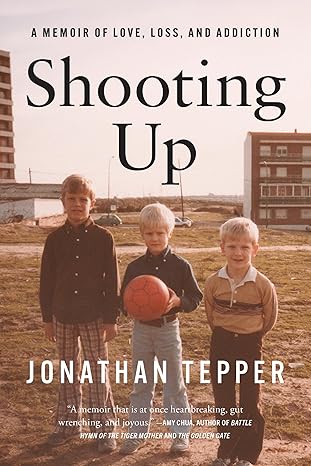 In the early 1980s, the author and his three brothers moved to Spain with their missionary parents, Elliott and Mary, who founded Betel, a rehabilitation centre for junkies (yonkis). “Our neighbourhood [San Blas in Madrid] was the biggest drug supermarket not only in Spain but in all of Europe, and it was happening right on our doorstep.” Betel is still operating today and has supported 100,000 addicts, but it all started with eight young men in the Teppers’ living room. Elliott was filled with righteous enthusiasm for the task and always had scripture passages and C.S. Lewis quotes on the tip of his tongue. When his four sons went delivering leaflets to heroin addicts on the street, they stood out for their blond hair and blue eyes. Soon, though, the yonkis they helped became more than ‘customers’, or objects of pity, but friends as close as family.
From a child’s perspective, the memoir effectively recreates scenes and dialogue from these outreach years. I especially appreciated the descriptions of what it’s like to grow up inside a religious bubble: “the invisible walls of my family and beliefs had been my world. In the [goldfish] bowl you think the water is all there is”. I’m a minister’s kid myself, so I nodded along to lines like “Being a preacher’s kid meant being the first to church and last to leave as my parents hugged and spoke to everybody.” There was real grief as, one by one, young men they knew fell victim to AIDS: Luis, Ángel, Raúl, Salva, Jambri. But there were other losses, too: Tepper’s younger brother, Timothy, died in a car accident while they were back in the USA on a sabbatical in 1991, and his mother later died by suicide after being disabled by a brain tumour.
There’s a section of black-and-white photographs at the end of the book, and the chapters are headed with Spanish phrases to evoke the setting. Later chapters follow Tepper through his college years and the triumph of getting a Rhodes scholarship. (In fact, he and his two remaining brothers all graduated from Oxford University on the same day.) The focus on academic success as a more legitimate high than that offered by drugs reminded me of Educated by Tara Westover, while the solemn duty of being an eyewitness to the AIDS crisis is reminiscent of All the Young Men by Ruth Coker Burks. This is a touching tribute to all those dead.
With thanks to the author and Constable (Little, Brown) for the advanced proof copy for review.
Book Serendipity, January to February
I call it “Book Serendipity” when two or more books that I read at the same time or in quick succession have something in common – the more bizarre, the better. This is a regular feature of mine every couple of months. Because I usually have 20–30 books on the go at once, I suppose I’m more prone to such incidents. People frequently ask how I remember all of these coincidences. The answer is: I jot them down on scraps of paper or input them immediately into a file on my PC desktop; otherwise, they would flit away! Feel free to join in with your own.
The following are in roughly chronological order.
- An old woman with purple feet (due to illness or injury) in one story of Brawler by Lauren Groff and John of John by Douglas Stuart.

- Someone is pushed backward and dies of the head injury in Zofia Nowak’s Book of Superior Detecting by Piotr Cieplak and one story of Brawler by Lauren Groff.
- The Hindenburg disaster is mentioned in A Long Game by Elizabeth McCracken and Evensong by Stewart O’Nan.
- Reluctance to cut into a corpse during medical school and the dictum ‘see one, do one, teach one’ in the graphic novel See One, Do One, Teach One: The Art of Becoming a Doctor by Grace Farris and Separate by C. Boyhan Irvine.
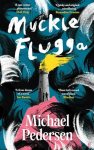 A remote Scottish island setting and a harsh father in Muckle Flugga by Michael Pedersen [Shetland] and John of John by Douglas Stuart [Harris]. (And another Scottish island setting in A Calendar of Love by George Mackay Brown [Orkney].)
- A mention of genuine Harris tweed in Alone in the Classroom by Elizabeth Hay and John of John by Douglas Stuart.
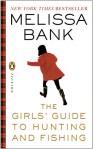
- The Katharine Hepburn film The Philadelphia Story is mentioned in The Girls’ Guide to Hunting and Fishing by Melissa Bank and Woman House by Lauren W. Westerfield.
- A mention of Icelandic poppies in Nighthawks by Lisa Martin and Boundless by Kathleen Winter.
- Vita Sackville-West is mentioned in the Orlando graphic novel adaptation by Susanne Kuhlendahl and Boundless by Kathleen Winter.

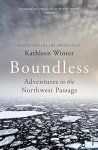
- Fear of bear attacks in Black Bear by Trina Moyles and Boundless by Kathleen Winter. Bears also feature in A Rough Guide to the Heart by Pam Houston and No Paradise with Wolves by Katie Stacey. [Looking through children’s picture books at the library the other week, I was struck by how many have bears in the title. Dozens!]
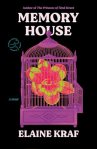
- I was reading books called Memory House (by Elaine Kraf) and Woman House (by Lauren W. Westerfield) at the same time, both of them pre-release books for Shelf Awareness reviews.
- An adolescent girl is completely ignorant of the facts of menstruation in I Who Have Never Known Men by Jacqueline Harpman and Carrie by Stephen King.
- Camembert is eaten in The Honesty Box by Lucy Brazier and Ordinary Saints by Niamh Ni Mhaoileoin.
- A herbal tonic is sought to induce a miscarriage in The Girls Who Grew Big by Leila Mottley and Bog Queen by Anna North.

- Vicks VapoRub is mentioned in Love Invents Us by Amy Bloom, Kin by Tayari Jones, and Dirt Rich by Graeme Richardson.
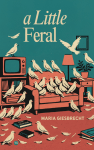
- An adolescent girl only admits to her distant mother that she’s gotten her first period because she needs help dealing with a stain (on her bedding / school uniform) in Love Invents Us by Amy Bloom, An Experiment in Love by Hilary Mantel, and Ordinary Saints by Niamh Ni Mhaoileoin. (I had to laugh at the mother asking the narrator of the Mantel: “Have you got jam on your underskirt?”) Basically, first periods occurred a lot in this set! They are also mentioned in A Little Feral by Maria Giesbrecht and one story of The Blood Year Daughter by G.G. Silverman. [I also had three abortion scenes in this cycle, but I think it would constitute spoilers to say which novels they appeared in.)
- A casual job cleaning pub/bar toilets in Kin by Tayari Jones and John of John by Douglas Stuart.
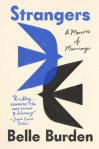
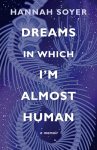
- Kansas City is a location mentioned in Strangers by Belle Burden, Mrs. Bridge by Evan S. Connell, and Dreams in Which I’m Almost Human by Hannah Soyer. (Not actually sure if that refers to Kansas or Missouri in two of them.)
- The notion of “flirting with God” is mentioned in Love Invents Us by Amy Bloom and A Little Feral by Maria Giesbrecht.
- A signature New Orleans cocktail, the Sazerac (a variation on the whisky old-fashioned containing absinthe), appears in Kin by Tayari Jones and Let the Bad Times Roll by Alice Slater.
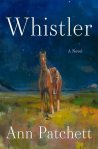
- An older person’s smell brings back childhood memories in Love Invents Us by Amy Bloom and Whistler by Ann Patchett.
- The fact that complaining of chest pain will get you seen right away in an emergency room is mentioned in Love Invents Us by Amy Bloom and The Girls Who Grew Big by Leila Mottley.
- Thickly buttered toast is a favoured snack in The Honesty Box by Lucy Brazier and An Experiment in Love by Hilary Mantel.
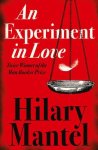 A scene of trying on fur coats in Love Invents Us by Amy Bloom and An Experiment in Love by Hilary Mantel.
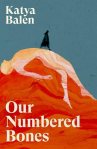
- Lime and soda is drunk in Our Numbered Bones by Katya Balen, Kin by Tayari Jones, and Whistler by Ann Patchett.
- A husband 17 years older than his wife in Kin by Tayari Jones and Whistler by Ann Patchett.
- The protagonist seems to hold a special attraction for old men in Love Invents Us by Amy Bloom and Whistler by Ann Patchett.
- A tattoo of a pottery shard (her ex-husband’s) in Strangers by Belle Burden and one of an arrowhead (her own) in Dreams in Which I’m Almost Human by Hannah Soyer.
- A relationship with an older editor at a publishing house: The Girls’ Guide to Hunting and Fishing by Melissa Bank (romantic) and Whistler by Ann Patchett (stepfather–stepdaughter).
- Repeated vomiting and a fever of 103–104°F leads to a diagnosis of appendicitis in My Grandmothers and I by Diana Holman-Hunt and Whistler by Ann Patchett.
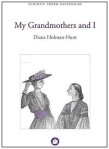 Multiple pet pugs in Strangers by Belle Burden and My Grandmothers and I by Diana Holman-Hunt.
- Palm crosses are mentioned in My Grandmothers and I by Diana Holman-Hunt and Kin by Tayari Jones.
- A Miss Jemison in Kin by Tayari Jones and a Miss Jamieson in Elizabeth and Ruth by Livi Michael.
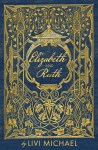
- Pasley as a surname in Elizabeth and Ruth by Livi Michael and a place name (Pasley Bay) in Boundless by Kathleen Winter.
- A remark on a character’s unwashed hair in My Grandmothers and I by Diana Holman-Hunt and Let the Bad Times Roll by Alice Slater.
- A mention of a monkey’s paw in Museum Visits by Éric Chevillard and Let the Bad Times Roll by Alice Slater.

- A character gets 26 (22) stitches in her face (head) after a car accident, a young person who’s vehemently anti-smoking, and a mention of being dusted orange from eating Cheetos, in Whistler by Ann Patchett and Let the Bad Times Roll by Alice Slater.
- Pre-eclampsia occurs in Strangers by Belle Burden and The Girls Who Grew Big by Leila Mottley.
- There’s a chapter on searching for corncrakes on the Isle of Coll (the Inner Hebrides of Scotland) in The Edge of Silence by Neil Ansell, which I read last year; this year I reread the essay on the same topic in Findings by Kathleen Jamie.
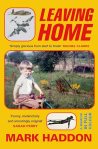
- Worry over women with long hair being accidentally scalped – if a horse steps on her ponytail in Mare by Emily Haworth-Booth; if trapped in a London Underground escalator in Leaving Home by Mark Haddon.
 A pet ferret in My Grandmothers and I by Diana Holman-Hunt and Shooting Up by Jonathan Tepper.
- A dodgy doctor who molests a young female patient in Leaving Home by Mark Haddon and Elizabeth and Ruth by Livi Michael.
- A high school girl’s inappropriate relationship with her English teacher is the basis for Love Invents Us by Amy Bloom, and then Half His Age by Jennette McCurdy, which I started soon after.

- College roommates who become same-sex lovers, one of whom goes on to have a heterosexual marriage, in Kin by Tayari Jones and Whistler by Ann Patchett.
- A mention of Sephora (the cosmetics shop) in Half His Age by Jennette McCurdy and Whistler by Ann Patchett.
- A discussion of the Greek mythology character Leda in Mrs. Bridge by Evan S. Connell and Whistler by Ann Patchett (where it’s also a character name).
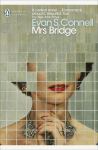
- A workaholic husband who rarely sees his children and leaves their care to his wife in Strangers by Belle Burden and Mrs. Bridge by Evan S. Connell.
- An apparently wealthy man who yet steals food in Strangers by Belle Burden and Let the Bad Times Roll by Alice Slater.
- Characters named Lulubelle in Mrs. Bridge by Evan S. Connell and Lulabelle in Kin by Tayari Jones.
- Characters named Ruth in Mrs. Bridge by Evan S. Connell, Kin by Tayari Jones, and Elizabeth and Ruth by Livi Michael.
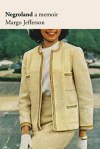 A mention of Mary McLeod Bethune in Negroland by Margo Jefferson and Kin by Tayari Jones.
- Doing laundry at a whorehouse in Kin by Tayari Jones and Elizabeth and Ruth by Livi Michael.
- A male character nicknamed Doll in John of John by Douglas Stuart and then Elizabeth and Ruth by Livi Michael.
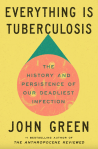
- A mention of tuberculosis of the stomach in Findings by Kathleen Jamie and Shooting Up by Jonathan Tepper. I was also reading a whole book on tuberculosis, Everything Is Tuberculosis by John Green, at the same time.
- Mention of Doberman dogs in Mrs. Bridge by Evan S. Connell and one story of The Blood Year Daughter by G.G. Silverman.
- Extreme fear of flying in Leaving Home by Mark Haddon and Whistler by Ann Patchett.
What’s the weirdest reading coincidence you’ve had lately?
The 2026 Releases I’ve Read So Far
I happen to have read a number of pre-release books, generally for paid reviews for Foreword and Shelf Awareness. (I already previewed six upcoming novellas here.) Most of my reviews haven’t been published yet, so I’ll just give brief excerpts and ratings here to pique the interest. I link to the few that have been published already, then list the 2026 books I’m currently reading. Soon I’ll follow up with a list of my Most Anticipated titles.


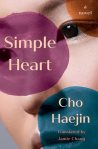 Simple Heart by Cho Haejin (trans. from Korean by Jamie Chang) [Other Press, Feb. 3]: A transnational adoptee returns to Korea to investigate her roots through a documentary film. A poignant novel that explores questions of abandonment and belonging through stories of motherhood.
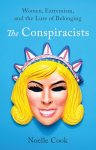 The Conspiracists: Women, Extremism, and the Lure of Belonging by Noelle Cook [Broadleaf Books, Jan. 6]: An in-depth, empathetic study of “conspirituality” (a philosophy that blends conspiracy theories and New Age beliefs), filtered through the outlook of two women involved in storming the Capitol on January 6, 2021.


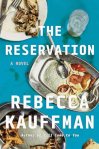 The Reservation by Rebecca Kauffman [Counterpoint, Feb. 24]: The staff members of a fine-dining restaurant each have a moment in the spotlight during the investigation of a theft. Linked short stories depict character interactions and backstories with aplomb. Big-hearted; for J. Ryan Stradal fans.


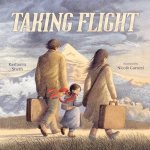 Taking Flight by Kashmira Sheth (illus. Nicolo Carozzi) [Dial Press, April 21]: A touching story of the journeys of three refugee children who might be from Tibet, Syria and Ukraine. The drawing style reminded me of Chris Van Allsburg’s. This left a tear in my eye.
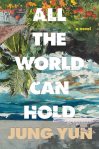

Currently reading:
(Blurb excerpts from Goodreads; all are e-copies apart from Evensong)
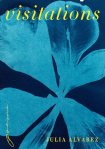 Visitations: Poems by Julia Alvarez [Knopf, April 7]: “Alvarez traces her life [via] memories of her childhood in the Dominican Republic … and the sisters who forged her, her move to America …, the search for mental health and beauty, redemption, and success.”
Our Numbered Bones by Katya Balen [Canongate, 12 Feb. / HarperVia, Feb. 17]: Her “adult debut [is] about a grieving author who heads to rural England for a writer’s retreat, only to stumble upon an incredible historical find” – a bog body!
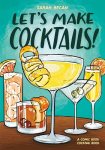 Let’s Make Cocktails!: A Comic Book Cocktail Book by Sarah Becan [Ten Speed Press, April 7]: “With vivid, easy-to-follow graphics, Becan guides readers through basic techniques such as shaking, stirring, muddling, and more. With all recipes organized by spirit for easy access, readers will delight in the panelized step-by-step comic instructions.”
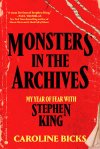 Monsters in the Archives: My Year of Fear with Stephen King by Caroline Bicks [Hogarth/Hodder & Stoughton, April 21]: “A fascinating, first of its kind exploration of Stephen King and his … iconic early books, based on … research and interviews with King … conducted by the first scholar … given … access to his private archives.”
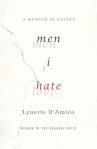 Men I Hate: A Memoir in Essays by Lynette D’Amico [Mad Creek Books, Feb. 17]: “Can a lesbian who loves a trans man still call herself a lesbian? As D’Amico tries to engage more deeply with the man she is married to, she looks at all the men—historical figures, politicians, men in her family—in search of clear dividing lines”.
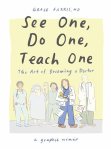 See One, Do One, Teach One: The Art of Becoming a Doctor: A Graphic Memoir by Grace Farris [W. W. Norton & Company, March 24]: “In her graphic memoir debut, Grace looks back on her journey through medical school and residency.”
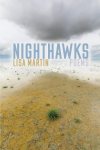 Nighthawks by Lisa Martin [University of Alberta Press, April 2]: “These poems parse aspects of human embodiment—emotion, relationship, mortality—and reflect on how to live through moments of intense personal and political upheaval.”
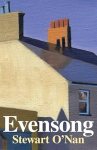 Evensong by Stewart O’Nan [published in USA in November 2025; Grove Press UK, 1 Jan.]: “An intimate, moving novel that follows The Humpty Dumpty Club, a group of women of a certain age who band together to help one another and their circle of friends in Pittsburgh.”
 This Is the Door: The Body, Pain, and Faith by Darcey Steinke [HarperOne, Feb. 24]: “In chapters that trace the body—The Spine, The Heart, The Knees, and more—[Steinke] introduces sufferers to new and ancient understandings of pain through history, philosophy, religion, pop culture, and reported human experience.”
 American Fantasy by Emma Straub [Riverhead, April 7 / Michael Joseph (Penguin), 14 May]: “When the American Fantasy cruise ship sets sail for a four-day themed voyage, aboard are all five members of a famous 1990s boyband, and three thousand screaming women who have worshipped them for thirty years.”
Additional pre-release review books on my shelf:
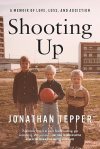 Shooting Up by Jonathan Tepper [Constable, 19 Feb.]: “Born into a family of American missionaries driven by unwavering faith … Jonathan’s home became a sanctuary for society’s most broken … AIDS hit Spain a few years after it exploded in New York and, like an invisible plague, … claimed countless lives – including those … in the family rehabilitation centre.”
Elizabeth and Ruth by Livi Michael [Salt Publishing, 9 Feb.]: “Based on the real correspondence between Elizabeth Gaskell and Charles Dickens … [Gaskell] visits a young Irish prostitute in Manchester’s New Bailey prison. … [A] story of hypocrisy and suppression, and how Elizabeth navigates the … prejudice of the day to help the young girl”.
Will you look out for one or more of these?
Any other 2026 reads you can recommend?
 Bookish Beck = Rebecca Foster. American transplant to England. Freelance proofreader and book reviewer.
