#ShortStorySeptember, Meet #RIPXXI: Fremlin, M.R. James & Navarro
I can hardly believe it’s October; I still have a bunch of short stories to finish and review! I’m taking the opportunity to start on Readers Imbibing Peril with these three collections that crank up the suspense with their scenes of the unexplained.

Don’t Go to Sleep in the Dark by Celia Fremlin (1970)
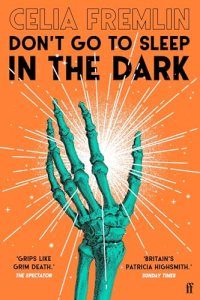
(Faber reprint: 2024)
I wasn’t wild about Fremlin’s Uncle Paul, but these 13 stories were terrific. Nightmares sometimes become reality as children and women of a certain age face up to threats, whether concrete or imaginary. The twist endings can reassure or unsettle, but in either case they call into question the tenor of what’s gone before. Only three tales are in the first person, with the other 10 in an authoritative third person. The need to protect children is a recurring impulse, ageing is a frequent cause of angst, and there are a couple of instances of frightening bird imagery (a nod to du Maurier?). There are also tweaks of horror story tropes – the haunted house in “The Hated House” and “The Locked Room.” Visual and auditory clues ramp up the tension. I’ll highlight a couple of favourites: “The Quiet Game,” in which a mother’s mental illness has dangerous implications for her twins; and “The Baby-Sitter,” about a little girl who’s afraid of The Hen with Great Big Eyes and her child-minder, who’s lived out her own horrors as a European refugee. This one is a fine example of how Fremlin mixes the everyday with suggestions of the supernatural. (Little Free Library) 
Ghost Stories of an Antiquary: A Graphic Collection of Short Stories by M.R. James, Volume I (2016)
(Adapted by Leah Moore and John Reppion)
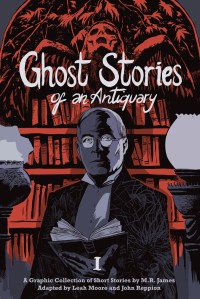 (I reviewed Volume II in 2017.) Though all retold by the same duo, these four stories are each illustrated by a different artist. So although the setup and voice tends to be samey – a dignified man investigating strange happenings at a country house – the art style varies significantly While I didn’t care for the approach in the first two (“Canon Alberic’s Scrap-Book” – Marvel; “Lost Hearts” – Pixar), the others, “The Mezzotint” and “The Ash-tree,” made up for it. I liked the monochrome palette, gentlemen detecting vibe, and Wildean mark of a morphing image of the former. In the latter, a Gothic setting and a history of suppressing witchcraft pave the way for unnatural spectacles. James’s classic ghost stories have been hugely influential on the likes of Susan Hill. (I also wondered if Stephen King borrowed the girl in the bath from “Lost Hearts” for The Shining.) Still, my conclusion about the second volume stands for the whole project: the “problem with using the graphic form for … tales that center around nameless horror is that depicting [what is feared] saps it of its power.”
With thanks to SelfMadeHero for the free copy of The Compendium (Volumes I and II) for review.
Blood Is Dripping onto the Courtyard by Elvira Navarro (2025; 2026)
[Translated from the Spanish by Christina MacSweeney]
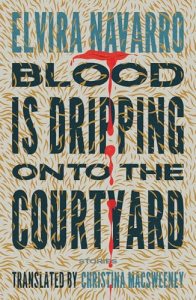 My introduction to Navarro, a Spanish author, reminded me most of Agustina Bazterrica’s 19 Claws and a Black Bird. These nine stories are full of derelict buildings, outsider characters, and traces of the uncanny. Seven are in the third person and two in first. A nice touch: two stories are linked in that they feature Almudena, who is studying in Paris. “The Fear of the City” is, we realize, the story she wrote about femicide, as mentioned, fittingly, in “The City of Fear.” “Idiotic Love” is narrated by a trans woman with an anal fissure and conjures a seedy world of nightclubs and sex shops. This was the longest story and not a pleasant one. There were just three standouts for me. In “The Washing Machine,” which contains the title line, a couple’s appliance keeps filling with blood for no reason. “The Animal Collector” is a tough one for animal lovers because of all the injuries and deaths, but the idea of a highway maintenance man assembling a makeshift zoo for his roadside rescues is alluring. Eventually, he becomes overwhelmed and compassion turns into a burden. In “A Small Bunch of Violets,” Mari chooses a new ornament for her father’s grave during a heat wave, but the flowers keep being displaced. There were too many so-so stories, though.
With thanks to Two Lines Press and publicist Nicolette Praça for the proof copy for review.
Book vs. Film: What Are You Going Through / The Room Next Door
Film, because…
I’m borrowing the idea from a post series by Kate of Books Are My Favourite and Best that compares books and their adaptations. It’s now vanishingly rare for me to see movies – I can probably count on the fingers of one hand the ones I’ve seen in the last three years – because we haven’t had a television for a decade or more, don’t subscribe to any streaming services, find going to the cinema too expensive, and mostly can’t be bothered to get out an old laptop to watch our measly collection of DVDs. It’s kind of a shame, because I was a real cinephile in my high school and early college years, making my way through the American Film Institute’s top 100 list, recording B&W classics from late-night TV, and following the Oscars race to enter a low-value pool. It certainly means a lot more time for books, though.
BUT I watched two streamed movies while I was staying with my sister in the States, both chosen for their literary influences or similarities. (I ran out of time to watch Women Talking, which I was eyeing up but it would have incurred a separate cost.) One was The Menu, about a megalomaniac chef for whose extravagant multi-course meals the mega-rich travel to a private island. Elle suggested it as a companion to Land of Milk and Honey with its chef protagonist and questions of power, sexuality and wealth. The Menu, starring Ralph Fiennes, was good fun, with a twisty plot and strong performances, but got darker and gorier than expected as Fiennes’ character uses dishes to explore childhood trauma and settle old scores.
The other was Pedro Almodóvar’s first English-language feature, The Room Next Door (2024). It’s based on Sigrid Nunez’s What Are You Going Through (2020), which I read at its release. It’s the story of a writer whose friend, ravaged by cancer, asks her to be present when she ends her life. As is typical of Nunez’s sparse, Cusk-like autofiction, the characters have no names and minimal histories, there are no speech marks, and the scant plot is layered with various other found stories and aphorisms. The film is, of necessity, very different: it zeroes in on the assisted suicide plot, makes events more concrete, and goes as far as the aftermath rather than just-before-the-end. I watched it with my sister because, as a hospice nurse, she has an interest in the topic.

Julianne Moore at The Room Next Door premiere (BFI LFF: Royal Festival Hall, 19 October 2024) (Raph_PH, CC BY 2.0, via Wikimedia Commons).
{SPOILERS IN THE REMAINDER}
In The Room Next Door, Ingrid (Julianne Moore) is a writer whose latest book explores her fear of death. She and Martha (Tilda Swinton) were acquaintances when they worked for the same magazine, but they seem to have lost touch over the decades. Martha’s journalistic career was much more exciting, taking her to war zones as a correspondent. Martha has a daughter, Michelle, whom she’s really not in touch with, partly as a result of not being frank about the identity of Michelle’s father. Ingrid is shocked by Martha’s request and it takes her a while to come around to the idea of being the person ‘in the room next door’ when Martha takes the euthanasia drug she’s bought off the dark web.
Nunez’s novel opens with the narrator attending a doom-and-gloom lecture by her ex, who is convinced that climate change won’t be addressed and the human race will die out. I was surprised that he’s included in the film and in fact given an expanded role: not only is there the scene from the book in which Ingrid meets Damian (John Turturro) for lunch and tells him what’s going on with her friend, but we learn that he was an ex for both of them, and he helps Ingrid deal with the fallout of Martha’s actions. He also seems to function as a reminder of sexuality, which remains a powerful impulse even in the face of individual or collective death.
When I got home from the States, I reread the Nunez and – though she’s a favourite of mine – I confess I was disappointed. The philosophical and storytelling asides seem like unnecessary distractions when all you want to know is what happens with her friend. (I have, of course, also read The Spare Room, which preceded the Nunez by 12 years, in the meantime.) My original review seems generous as well as admirably succinct. (It’s depressing for me to go back to old reviews; not only have I not gotten any better, my writing has deteriorated, if anything. Is it laziness? Erosion of formality? Lack of time? Loss of focus?)

My sole complaint then was that Nunez spent too much time recounting the plot of a mystery novel the narrator reads. Well! Having reviewed her collected short stories, It Will Come Back to You, I can report that said plot is that of her “The Plan,” published in LitMag in 2019. How (playful and meta, yes, but) self-indulgent to borrow her own short story! So while I still appreciated the overall theme of empathy and the wise observations (“The only thing harder than seeing yourself grow old is seeing the people you’ve loved grow old … most people are in denial about aging, just as they are about dying”), and enjoyed the monologue from a cat which I’d forgotten about, I got bored and impatient the second time around. (I’m still a Nunez stan, though. – Am I using that right? Are we still saying that?)
Ultimately, then, The Room Next Door surpasses its source material for its focus, its performances, its locations, and its weirdness. Almodóvar cuts most of the peripheral material and makes it all about the women’s relationship with each other, as well as Ingrid’s with her ex and Martha’s with her daughter. The elegant Moore does a fine job in the role; the only way to have given a flavour of Nunez’s narration would have been to use voiceover or diary-writing scenes, which could have been naff. But Swinton is a marvel. Her American accent is ever so slightly strange, but that works; she’s such a striking person that it fits for her to be somewhat otherworldly. She is a perfect vessel for Martha’s frustrated rage and her body language, as well as the costuming and makeup, highlight the differences between her well periods, when she’s vibrant, and her worst relapses, when she’s pale and gaunt. (I was astonished to learn that both actors are now 65, by the way!)
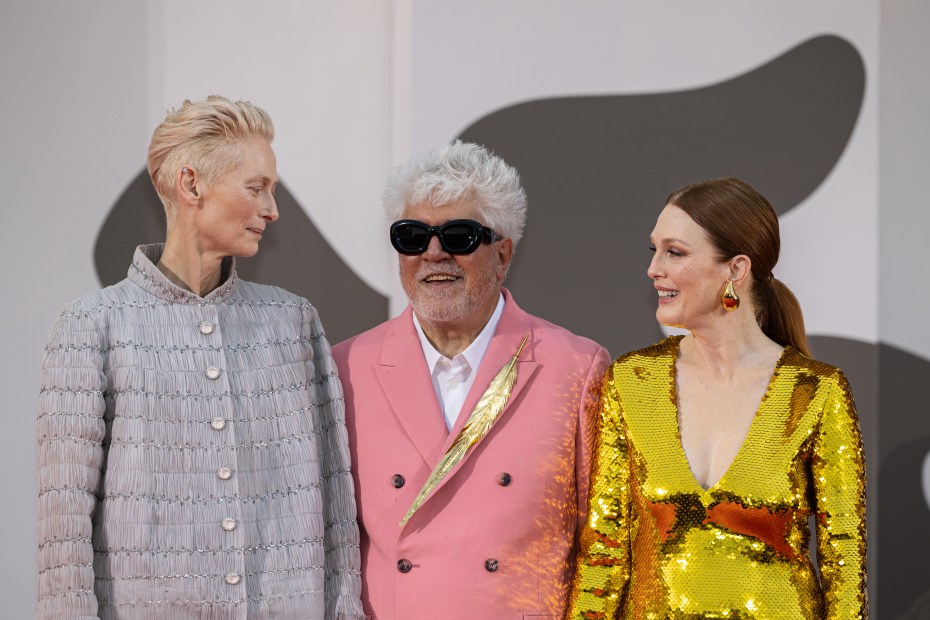
Tilda Swinton, Pedro Almodóvar, and Julianne Moore at 81st Venice International Film Festival (Harald Krichel, CC BY-SA 4.0, via Wikimedia Commons).
In the book, the friends stay in an Airbnb in upstate New York. In the film, Casa Szoke, an hour from Madrid in Spain, stands in. It’s a stunning Modernist (also described as “brutalist”) house, and the pool terrace and the staircase dividing Martha’s room from Ingrid’s downstairs are key features. Probably the single most interesting decision Almodóvar made was to have Swinton play Michelle as well, which emphasizes the persistence of family traits and – because Michelle has a scene after Martha is dead – makes it seem like she’s not completely gone. Of course, Almodóvar has always gone in for surrealism and doubling, and I loved this hint of the mysterious. I also appreciated the repeated quotes from James Joyce’s novella The Dead (“faintly falling … upon all the living and the dead.”).
The gist may be the same, but the reading and viewing experiences are really very dissimilar and, while I wouldn’t dissuade you from either, it was the film that impressed me most.
Book
My original rating: 
My rating now: 
Film
12 Days in Portugal and Spain & What I Read
 It’s the second time we’ve braved the 20+-hour ferry crossing from the south coast of England to Santander in the north of Spain. Four years ago, we stayed on the edge of the Picos de Europa national park in Spain. This time we prioritized Portugal, spending a night in Spain on the way out and back. (In Léon, we acquired a taste for vermouth – and the free tapas that come with it. So cheap, too. What a fun eating-out culture!)
Portugal was a new country for us and we thoroughly enjoyed getting a taste of it. Spring seemed to be a month ahead of the UK and blossom was abundant. We stayed in three places in the north: Guimarães, the Douro Valley, and the Côa Valley. We took our new-to-us EV and found the distances manageable and charging cheaper and easier than in the UK. Going by car made packing easy and allowed us to bring back some port, Mr. F’s favourite tipple. However, there were hairy drives along confusing city streets and narrow mountain roads.


Our first stay was at Pousada de Santa Marinha, overlooking Portugal’s oldest city. One of a chain of state-restored castles and convents, it was originally a 12th-century monastery. We relished the bountiful breakfast buffet and manicured grounds but wished for more free time to relax in the grand common areas. Mostly we used this as a base for the first of two day trips to Porto, where we got good views from the cathedral tower, had delicious coffee and veggie snacks at 7g Roaster, and did a tour and tasting at Taylor’s port house. Portugal does a good line in doorstep cats. We also had our first sighting of swifts for the year on the 7th, flying above the azulejos (painted tiles) and cobbled streets of Guimarães before a traditional taverna meal of bacalhau (salt cod) fritters and bean stew with vinho verde.


Quinta dos Murças was, if anything, even more luxurious than the pousada. We were the only guests on our first of three nights at the winery, and after a private English-language cellar tour and wine and port tasting, a sit on the wisteria-covered balcony, and a three-course meal in the dining room, we were feeling like royalty. Along with grapes, they grow almonds, olives and several types of citrus. The lemon trees were dripping with the biggest fruits I’ve ever seen, and the smell of the orange blossom was truly intoxicating. The next morning we got up early and took a pack-up picnic on the train back into Porto, which was so hot and busy that we wondered why we’d bothered – though we did have an excellent tasting experience at a smaller producer, Poças, that included white and red wine, several ports, and a cocktail of white port, lime juice, and blood orange tonic served with a salt rim.


Portuguese is significantly more challenging than Spanish, so I was pleased with myself for managing an all-Portuguese transaction with the conductor on the rural branch line. The old-fashioned train carriages were spacious with comfortable seats, though the ride was not what one would call speedy. The journey back was fraught because we found ourselves pressed to catch the final train of the day (at just after 5:30 p.m.!), couldn’t figure out how to buy tickets at the station machines, were short of cash to pay the conductor on board, and arrived 2 hours late after a car collided with a telegraph pole and left the track blocked for an hour. The following day, what did we do? Got back on a train! (In the opposite direction, with tickets we’d carefully purchased ahead online.) This time we traveled toward the eastern end of the scenic Douro Valley so that we managed to see the whole river in pieces. The village of Tua had no particular sights, but we had a pleasant amble along its river boardwalk.


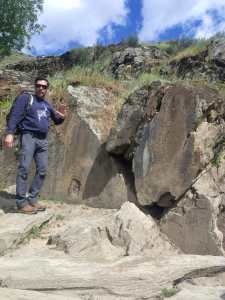 We’d earmarked the Côa Valley because it’s home to a sizable rewilding project. On the way, we stopped at Penascosa, an outdoor rock art site with etchings of ibex, aurochs and deer – and even ancient attempts at animation! The Rewilding Centre, where we stayed, is similar to a hostel and has an industrial kitchen because it also operates as a café for the villagers. In cities, we had tended to find English speakers, but the centre manager here had no English, so we happily switched to French (a true lingua franca!) to communicate with her.
The accommodation may have felt like a step down after our two previous splurges, but we’d booked a different treat to selves: an English-speaking guide from Wildlife Portugal who took us out in a Land Rover and found us loads of eagles, vultures and warblers. Bee-eaters and black storks were particular highlights. We were impressed by the array of landscapes: vines and olive groves, granite boulders, high cliffs, pools created by former mining, and green glens. At the hostel we met an English couple (one half a botanist) who are exploring Europe on Interrail passes during a three-month sabbatical, and they joined us for the second day of wildlife tourism; we discovered that Fernando is just as good with plants as with birds.


It was a varied, comfy, boozy trip. There was the touristy experience in Porto and parts of the Douro Valley, but also the ‘real’ countryside. Things ended on something of a sour note due to a rough return crossing of the Bay of Biscay. We’ll be back in Spain next summer to meet up with my sister and our nephew on his school trip to Barcelona, but that jaunt will be by train!


What I Read
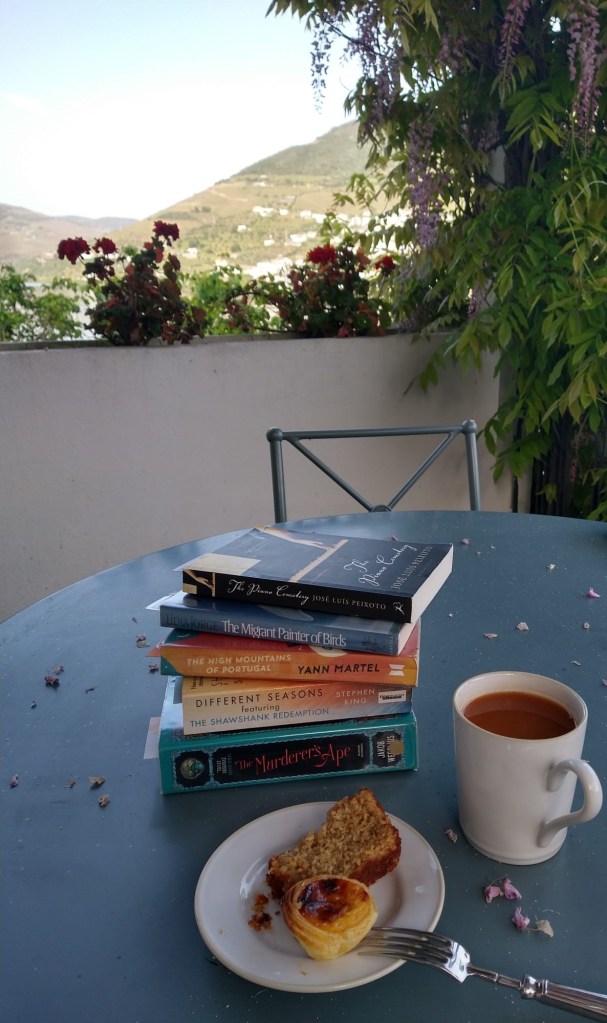
En route: Rita Hayworth and Shawshank Redemption by Stephen King, which I’ll review for a spring-themed post as it’s the first in a quartet of loosely seasonal novellas. You likely know this prison story from the film version.
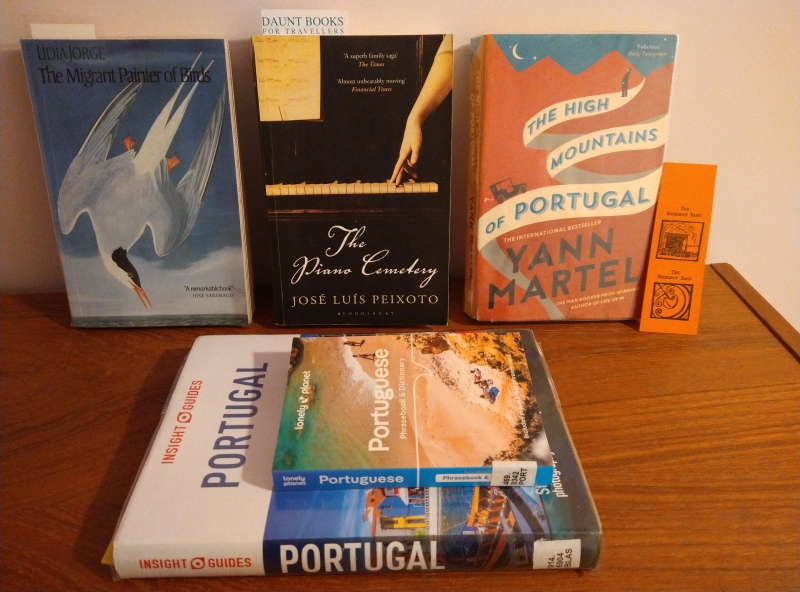
In Portugal: three Portugal-set novels I’d proudly sourced, including two in translation. My only previous knowledge of Portuguese literature had been a DNF of a José Saramago novel.
The Migrant Painter of Birds by Lídia Jorge (1998; 2001)
[Translated by Margaret Jull Costa]
 The title figure is Walter, a former soldier who wanders the world and sends his bird paintings back to his daughter at the Dias family home in (fictional) Valmares. His actual visits are few and clandestine: Jorge keeps returning to a scene of him holding his shoes in his hand so he can soundlessly climb the stairs to see his daughter. You see, his daughter is officially his ‘niece’, born of an affair Maria Ema had with her husband Custódio’s brother. That act of adultery is the foundation of the novel but so tacit that it influences everything, including the language and narration. “Walter’s daughter” narrates – in third person or first – and frequently refers to herself as “Walter’s niece” instead.
The slippery narrative moves back and forth in time, pausing at a few landmark years. Very little happens, per se, apart from Walter’s daughter having a liaison with her mother’s therapist and then going to find her father in Argentina, but throughout we are invited to observe the family’s shifting dynamic and understand the narrator’s growing bitterness – “so bruised are we all by the passing of time.” I found the writing intermittently beautiful (“the sun was setting, persimmon red, behind the smooth fields”; “A tangle of living ghosts, the magical cortège of all tyrannies”) but sometimes pretentious or obfuscating to no purpose (“I invoke the decade of irony, the decade of silence pierced by the oblique laughter of cynicism”). (Interlibrary loan) 
The High Mountains of Portugal by Yann Martel (2016)
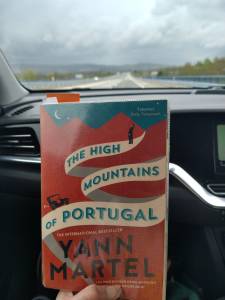 I knew of Martel’s obscure fourth novel through The Bookshop Band’s song “Why I Travel This Way,” about a bereaved man who starts walking backwards. What I didn’t realize is that the book is essentially three linked novellas and that song responds to just the first one, “Homeless.” Within a week, museum curator Tomás’s son, common-law wife, and father all died. Tomás sets off in his uncle’s early motorcar (this being 1904) to find a religious relic he learned about from a 17th-century priest’s journal written in São Tomé. But he has no idea how to drive, and accidents and persecution continue to beset him. A Job-like figure, he has set “his back to the world, his back to God” as a way of “not grieving” but “objecting.” Next, pathologist Eusebio and his wife have a high-minded discussion of the morality of murder mysteries in the 1939-set “Homeward.” Eusebio then undertakes an unexpected late-night job when an old woman arrives with her late husband’s corpse in a suitcase. Every cut reveals the substance of the man’s life rather than the reason for his death.
 After religious parable and magic realism, “Home” initially seems more straightforward with its story of a widowed Canadian senator who buys Odo the chimpanzee from a research centre and relocates to rural Portugal. If you’ve read Life of Pi and/or Beatrice and Virgil, you know that Martel really goes in for his animal allegories. Odo might be considered symbolic of simplicity and joy in life. There are apt connections with the other novellas: not only an overarching theme of grief, but the specifics of one northern Portuguese village and its events that have become legend. And, yes, chimpanzees. A line from the first part serves as Martel’s mantra: “We are risen apes, not fallen angels.” Weird but satisfying. (Public library)
The Piano Cemetery by José Luís Peixoto (2006; 2010)
[Translated by Daniel Hahn]
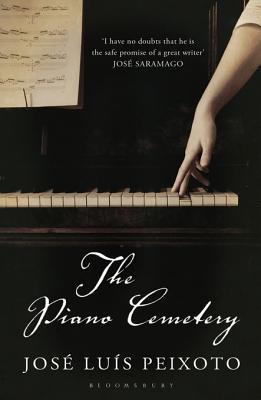 It may be premature, but I feel I can pinpoint some trademarks of Portuguese literature based on the few examples I’ve now read (plus Martel’s pastiche): narrative trickery, family dysfunction, metaphors of blindness, philosophical and religious dialogues, and a fine line between life and death. Unfortunately, in this case I found the appealing elements buried under an off-putting style. The Lázaro family are carpenters in 1910s Lisbon with a back room housing busted pianos that they use for their instrument-repair side business. To start with, the narrator is the dead patriarch of the family, who remembers how he met his wife at the piano cemetery and keeps watch over his children and grandchildren in the present day. There are also two long sections of stream-of-consciousness memories of his son Francisco as he runs the marathon at the 1912 Stockholm Olympics. Francisco Lázaro was a historical figure who died in that athletic pursuit, but the family backstory of estrangement, domestic violence, and adultery that Peixoto builds around him is fictional. Punctuated by distance markers (“Kilometre one” and so on), Francisco’s fragments are decontextualised and often don’t join up or even form complete sentences. Add in the father’s fatphobic attitude toward one of his daughters and the laughably circuitous phrasing (“my thick hand in a single movement, like an impulse, but not even an impulse, like a desire you have for a moment and which becomes concrete in that same moment, another person’s desire within me, a desire which is not thought, but which rises up like a flame” – huh? can I blame the translator?) and you might see why this was a slog for me. (Secondhand purchase – Awesomebooks.com)
Plus a partial reread of a delightful teen novel we both read the last time we were in Spain:
The Murderer’s Ape by Jakob Wegelius
[Translated from the Swedish by Peter Graves]
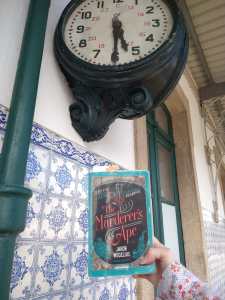 Talk about a risen ape! Sally Jones is an animal narrator extraordinaire: a ship’s engineer who meets every challenge that comes her way with aplomb, traveling from Portugal to India and back just to clear the Chief’s name after he’s falsely accused of murder. She happens to be a gorilla, but her only real limitation is that she can’t voice human language; she understands and writes it perfectly, and can beat most people at chess. This doorstopper never feels like one because it races along on a tide of adventure and intrigue. The technology suggests a 1920s date. All the settings are evocative, but historical Lisbon is especially enticing (and not dissimilar to Peixoto’s): Sally Jones lives with Ana Molina, a famous fado singer, and works in her neighbour Signor Fidardo’s instrument workshop repairing accordions.
 Plus the latter half of another novel or two I had on the go, and most of a couple of pre-release e-books for Shelf Awareness reviews: the odd Kitten by Stacey Yu, about a cat-identifying millennial Disaster woman, and The Half Life by Rachel Beanland. Set in 1970s Sardinia, this was a perfect summer read – intelligent as well as sultry – about a young Navy wife’s sexual coming of age and casual investigation into the ongoing effect of American nuclear submarines on the island’s natural environment.
Review Catch-Up: Memoirs by Maggie Nelson and Jonathan Tepper
Two memoirs that I’ve been meaning to post about for a while now: a novella-length response to chronic pain, and a story of growing up at a refuge for addicts and AIDS victims in Spain.
Pathemata: Or, The Story of My Mouth by Maggie Nelson (2025)
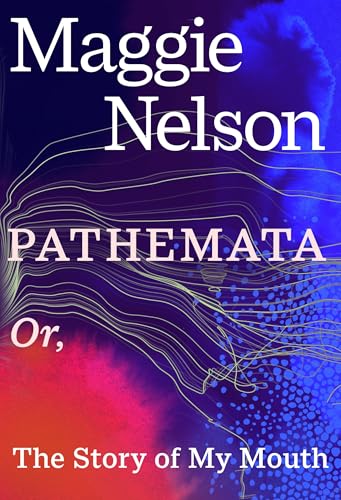 This is a very short (68-page), dreamy meditation on pain. Nelson has ongoing chronic jaw pain despite multiple expensive trips to specialist clinics and many different treatment strategies tried. As she writes, it’s the pandemic era and she’s also home-schooling her son. Meanwhile, her marriage to H seems to be crumbling. The text is composed of non-indented sentences in roughly thematic groupings. But dreams are recounted as often as real-life events, making this a particularly slippery work of autofiction, with an emphasis on the fiction.
The dentist in the valley and I go back and forth over injecting my jaw with Botox.
I hold out, realising that the only thing that frightens me more than pain and its viciousness is numbness, paralysis.
Sometimes I wonder what I would have thought about all these years, if I hadn’t spent so much time thinking about the pain.
Nelson dwells on the irony of someone who talks for a living having so much trouble with oral speech. She also reflects on the early loss of her father and the recent death of a close friend, C. Could it be that jaw pain is how her body is manifesting long-held grief and stress? she wonders.
The Argonauts is an absolute classic of life writing and I’ve long admired Nelson’s cultural criticism. She’s an important thinker on queerness and embodiment, in the vein of Garth Greenwell and Olivia Laing. Aside from the indulgence of including all the dreams (and one instance of jargon: “It sounds like an invagination – a chamber to hold the pastiche of lacerations”), there’s nothing wrong with this per se. It’s just that the essay is over before it’s begun. Why not part of a longer essay collection, or expanded into a full-length memoir?
With thanks to Fern Press, Vintage (Penguin) for the proof copy for review.
{SPOILERS IN THIS ONE}
Shooting Up: A Memoir of Love, Loss, and Addiction by Jonathan Tepper (2026)
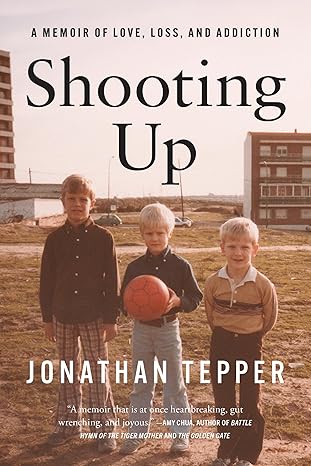 In the early 1980s, the author and his three brothers moved to Spain with their missionary parents, Elliott and Mary, who founded Betel, a rehabilitation centre for junkies (yonkis). “Our neighbourhood [San Blas in Madrid] was the biggest drug supermarket not only in Spain but in all of Europe, and it was happening right on our doorstep.” Betel is still operating today and has supported 100,000 addicts, but it all started with eight young men in the Teppers’ living room. Elliott was filled with righteous enthusiasm for the task and always had scripture passages and C.S. Lewis quotes on the tip of his tongue. When his four sons went delivering leaflets to heroin addicts on the street, they stood out for their blond hair and blue eyes. Soon, though, the yonkis they helped became more than ‘customers’, or objects of pity, but friends as close as family.
From a child’s perspective, the memoir effectively recreates scenes and dialogue from these outreach years. I especially appreciated the descriptions of what it’s like to grow up inside a religious bubble: “the invisible walls of my family and beliefs had been my world. In the [goldfish] bowl you think the water is all there is”. I’m a minister’s kid myself, so I nodded along to lines like “Being a preacher’s kid meant being the first to church and last to leave as my parents hugged and spoke to everybody.” There was real grief as, one by one, young men they knew fell victim to AIDS: Luis, Ángel, Raúl, Salva, Jambri. But there were other losses, too: Tepper’s younger brother, Timothy, died in a car accident while they were back in the USA on a sabbatical in 1991, and his mother later died by suicide after being disabled by a brain tumour.
There’s a section of black-and-white photographs at the end of the book, and the chapters are headed with Spanish phrases to evoke the setting. Later chapters follow Tepper through his college years and the triumph of getting a Rhodes scholarship. (In fact, he and his two remaining brothers all graduated from Oxford University on the same day.) The focus on academic success as a more legitimate high than that offered by drugs reminded me of Educated by Tara Westover, while the solemn duty of being an eyewitness to the AIDS crisis is reminiscent of All the Young Men by Ruth Coker Burks. This is a touching tribute to all those dead.
With thanks to the author and Constable (Little, Brown) for the advanced proof copy for review.
#ReadIndies Nonfiction Catch-Up: Ansell, Farrier, Febos, Hoffman, Orlean and Stacey
These are all 2025 releases; for some, it’s approaching a year since I was sent a review copy or read the book. Silly me. At last, I’ve caught up. Reading Indies month, hosted by Kaggsy in memory of her late co-host Lizzy Siddal, is the perfect time to feature books from five independent publishers. I have four works that might broadly be classed as nature writing – though their topics range from birdsong and technology to living in Greece and rewilding a plot in northern Spain – and explorations of celibacy and the writer’s profession.
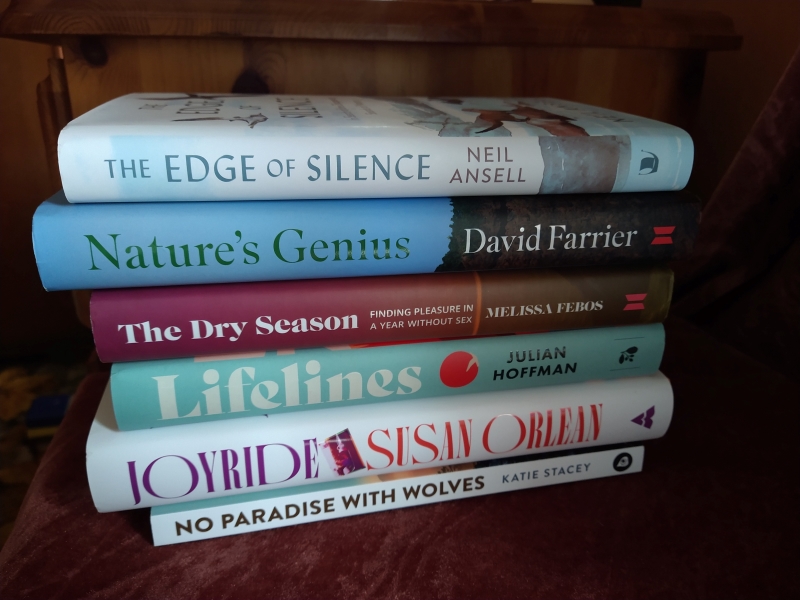
The Edge of Silence: In Search of the Disappearing Sounds of Nature by Neil Ansell
 Ansell draws parallels between his advancing hearing loss and the biodiversity crisis. He puts together a wish list of species – mostly seabirds (divers, grebes), but also inland birds (nightjars) and a couple of non-avian representatives (otters) – that he wants to hear and sets off on public transport adventures to find them. “I must find beauty where I can, and while I still can,” he vows. From his home on the western coast of Scotland near the Highlands, this involves trains or buses that never align with the ferry timetables. Furthest afield for him are two nature reserves in northern England where his mission is to hear bitterns “booming” and natterjack toads croaking at night. There are also mountain excursions to locate ptarmigan, greenshank, and black grouse. His island quarry includes Manx shearwaters (Rum), corncrakes (Coll), puffins (Sanday), and storm petrels (Shetland).
Camping in a tent means cold nights, interrupted sleep, and clouds of midges, but it’s all worth it to have unrepeatable wildlife experiences. He has a very high hit rate for (seeing and) hearing what he intends to, even when they’re just on the verge of what he can decipher with his hearing aids. On the rare occasions when he misses out, he consoles himself with earlier encounters. “I shall settle for the memory, for it feels unimprovable, like a spell that I do not want to break.” I’ve read all of Ansell’s nature memoirs and consider him one of the UK’s top writers on the natural world. His accounts of his low-carbon travels are entertaining, and the tug-of-war between resisting and coming to terms with his disability is heartening. “I have spent this year in defiance of a relentless, unstoppable countdown,” he reflects. What makes this book more universal than niche is the deadline: we and all of these creatures face extinction. Whether it’s sooner or later depends on how we act to address the environmental polycrisis.
With thanks to Birlinn for the free copy for review.
Nature’s Genius: Evolution’s Lessons for a Changing Planet by David Farrier
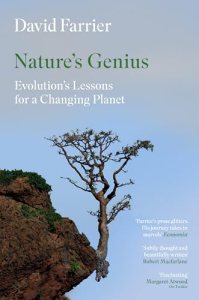 Farrier’s Footprints, which tells the story of the human impact on the Earth, was one of my favourite books of 2020. This contains a similar blend of history, science, and literary points of reference (Farrier is a professor of literature and the environment at the University of Edinburgh), with past changes offering a template for how the future might look different. “We are forcing nature to reimagine itself, and to avert calamity we need to do the same,” he writes. Cliff swallows have evolved blunter wings to better evade cars; captive breeding led foxes to develop the domesticated traits of pet dogs.
It’s not just other species that experience current evolution. Thanks to food abundance and a sedentary lifestyle, humans show a “consumer phenotype,” which superseded the Palaeolithic (95% of human history) and tends toward earlier puberty, autoimmune diseases, and obesity. Farrier also looks at notions of intelligence, language, and time in nature. Sustainable cities will have to cleverly reuse materials. For instance, The Waste House in Brighton is 90% rubbish. (This I have to see!)
There are many interesting nuggets here, and statements that are difficult to argue with, but I struggled to find an overall thread. Cool to see my husband’s old housemate mentioned, though. (Duncan Geere, for collaborating on a hybrid science–art project turning climate data into techno music.)
With thanks to Canongate for the free copy for review.
The Dry Season: Finding Pleasure in a Year without Sex by Melissa Febos
Febos considers but rejects the term “sex addiction” for the years in which she had compulsive casual sex (with “the Last Man,” yes, but mostly with women). Since her early teen years, she’d never not been tied to someone. Brief liaisons alternated with long-term relationships: three years with “the Best Ex”; two years that were so emotionally tumultuous that she refers to the woman as “the Maelstrom.” It was the implosion of the latter affair that led to Febos deciding to experiment with celibacy, first for three months, then for a whole year. “I felt feral and sad and couldn’t explain it, but I knew that something had to change.”
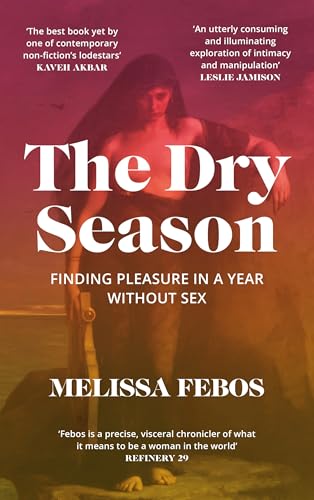 The quest involved some research into celibate movements in history, but was largely an internal investigation of her past and psyche. Febos found that she was less attuned to the male gaze. Having worn high heels almost daily for 20 years, she discovered she’s more of a trainers person. Although she was still tempted to flirt with attractive women, e.g. on an airplane, she consciously resisted the impulse to spin random meetings into one-night stands. (A therapist had stopped her short with the blunt observation, “you use people.”) With a new focus on the life of the mind, she insists, “My life was empty of lovers and more full than it had ever been.” (This reminded me of Audre Lorde’s writing on the erotic.) As Silvana Panciera, an Italian scholar on the beguines (a secular nun-like sisterhood), told her: “When you don’t belong to anyone, you belong to everyone. You feel able to love without limits.”
Intriguing that this is all a retrospective, reflecting on her thirties; Febos is now in her mid-forties and married to a woman (poet Donika Kelly). Clearly she felt that it was an important enough year – with landmark epiphanies that changed her and have the potential to help others – to form the basis for a book. For me, she didn’t have much new to offer about celibacy, though it was interesting to read about the topic from an areligious perspective. But I admire the depth of her self-knowledge, and particularly her ability to recreate her mindset at different times. This is another one, like her Girlhood, to keep on the shelf as a model.
With thanks to Canongate for the free copy for review.
Lifelines: Searching for Home in the Mountains of Greece by Julian Hoffman
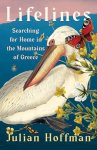
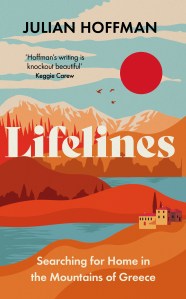 Hoffman’s Irreplaceable was my nonfiction book of 2019. Whereas that was a work with a global environmentalist perspective, Lifelines is more personal in scope. It tracks the author’s unexpected route from Canada via the UK to Prespa, a remote area of northern Greece that’s at the crossroads with Albania and North Macedonia. He and his wife, Julia, encountered Prespa in a book and, longing for respite from the breakneck pace of life in London, moved there in 2000. “Like the rivers that spill into these shared lakes, lifelines rarely flow straight. Instead, they contain bends, meanders and loops; they hold, at times, turns of extraordinary surprise.” Birdwatching, which Hoffman suggests is as “a way of cultivating attention,” had been their gateway into a love for nature developed over the next quarter-century and more, and in Greece they delighted in seeing great white and Dalmatian pelicans (which feature on the splendid U.S. cover. It would be lovely to have an illustrated edition of this.)
 One strand of this warm and fluent memoir is about making a home in Greece: buying and renovating a semi-derelict property, experiencing xenophobia and hospitality from different quarters, and finding a sense of belonging. They’re happy to share their home with nesting wrens, who recur across the book and connect to the tagline of “a story of shelter shared.” In probing the history of his adopted country, Hoffman comes to realise the false, arbitrary nature of borders – wildlife such as brown bears and wolves pay these no heed. Everything is connected and questions of justice are always intersectional. The Covid pandemic and avian influenza (which devastated the region’s pelicans) are setbacks that Hoffman addresses honestly. But the lingering message is a valuable one of bridging divisions and learning how to live in harmony with other people – and with other species.
With thanks to Elliott & Thompson for the free copy for review.
Joyride by Susan Orlean
As a long-time staff writer for The New Yorker, Orlean has had the good fortune to be able to follow her curiosity wherever it leads, chasing the subjects that interest her and drawing readers in with her infectious enthusiasm. She grew up in suburban Ohio, attended college in Michigan, and lived in Portland, Oregon and Boston before moving to New York City. Her trajectory was from local and alternative papers to the most enviable of national magazines: Esquire, Rolling Stone and Vogue. Orlean gives behind-the-scenes information on lots of her early stories, some of which are reprinted in an appendix. “If you’re truly open, it’s easy to fall in love with your subject,” she writes; maintaining objectivity could be difficult, as when she profiled an Indian spiritual leader with a cult following; and fended off an interviewee’s attachment when she went on the road with a Black gospel choir.
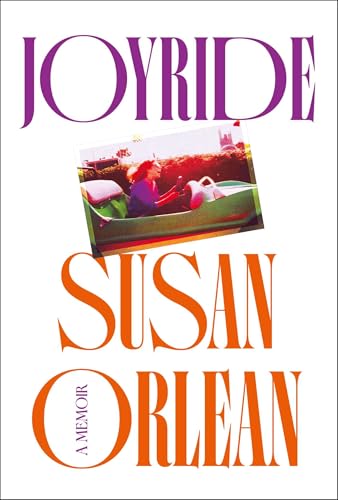 Her personal life takes a backseat to her career, though she is frank about the breakdown of her first marriage, her second chance at love and late motherhood, and a surprise bout with lung cancer. The chronological approach proceeds book by book, delving into her inspirations, research process and publication journeys. Her first book was about Saturday night as experienced across America. It was a more innocent time, when subjects were more trusting. Orlean and her second husband had farms in the Hudson Valley of New York and in greater Los Angeles, and she ended up writing a lot about animals, with books on Rin Tin Tin and one collecting her animal pieces. There was also, of course, The Library Book, about the wild history of the main Los Angeles public library. But it’s her The Orchid Thief – and the movie (not) based on it, Adaptation – that’s among my favourites, so the long section on that was the biggest thrill for me. There are also black-and-white images scattered through.
It was slightly unfortunate that I read this at the same time as Book of Lives – who could compete with Margaret Atwood? – but it is, yes, a joy to read about Orlean’s writing life. She’s full of enthusiasm and good sense, depicting the vocation as part toil and part magic:
“I find superhuman self-confidence when I’m working on a story. The bashfulness and vulnerability that I might otherwise experience in a new setting melt away, and my desire to connect, to observe, to understand, powers me through.”
“I like to do a gut check any time I dismiss or deplore something I don’t know anything about. That feels like reason enough to learn about it.”
“anything at all is worth writing about if you care about it and it makes you curious and makes you want to holler about it to other people”
With thanks to Atlantic Books for the free copy for review.
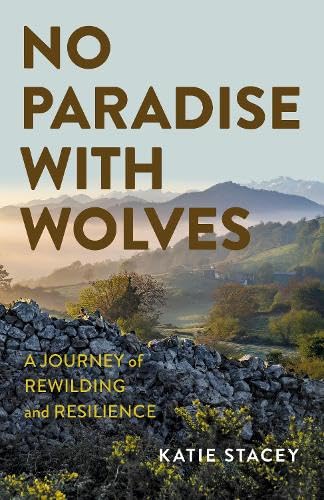
No Paradise with Wolves: A Journey of Rewilding and Resilience by Katie Stacey
I had the good fortune to visit Wild Finca, Luke Massey and Katie Stacey’s rewilding site in Asturias, while on holiday in northern Spain in May 2022, and was intrigued to learn more about their strategy and experiences. This detailed account of the first four years begins with their search for a property in 2018 and traces the steps of their “agriwilding” of a derelict farm: creating a vegetable garden and tending to fruit trees, but also digging ponds, training up hedgerows, and setting up rotational grazing. Their every decision went against the grain. Others focussed on one crop or type of livestock while they encouraged unruly variety, keeping chickens, ducks, goats, horses and sheep. Their neighbours removed brush in the name of tidiness; they left the bramble and gorse to welcome in migrant birds. New species turned up all the time, from butterflies and newts to owls and a golden fox.
Luke is a wildlife guide and photographer. He and Katie are conservation storytellers, trying to get people to think differently about land management. The title is a Spanish farmers’ and hunters’ slogan about the Iberian wolf. Fear of wolves runs deep in the region. Initially, filming wolves was one of the couple’s major goals, but they had to step back because staking out the animals’ haunts felt risky; better to let them alone and not attract the wrong attention. (Wolf hunting was banned across Spain in 2021.) There’s a parallel to be found here between seeing wolves as a threat and the mild xenophobia the couple experienced. Other challenges included incompetent house-sitters, off-lead dogs killing livestock, the pandemic, wildfires, and hunters passing through weekly (as in France – as we discovered at Le Moulin de Pensol in 2024 – hunters have the right to traverse private land in Spain).
Luke and Katie hope to model new ways of living harmoniously with nature – even bears and wolves, which haven’t made it to their land yet, but might in the future – for the region’s traditional farmers. They’re approaching self-sufficiency – for fruit and vegetables, anyway – and raising their sons, Roan and Albus, to love the wild. We had a great day at Wild Finca: a long tour and badger-watching vigil (no luck that time) led by Luke; nettle lemonade and sponge cake with strawberries served by Katie and the boys. I was clear how much hard work has gone into the land and the low-impact buildings on it. With the exception of some Workaway volunteers, they’ve done it all themselves.
Katie Stacey’s storytelling is effortless and conversational, making this impassioned memoir a pleasure to read. It chimed perfectly with Hoffman’s writing (above) about the fear of bears and wolves, and reparation policies for farmers, in Europe. I’d love to see the book get a bigger-budget release complete with illustrations, a less misleading title, the thorough line editing it deserves, and more developmental work to enhance the literary technique – as in the beautiful final chapter, a present-tense recreation of a typical walk along The Loop. All this would help to get the message the wider reach that authors like Isabella Tree have found. “I want to be remembered for the wild spaces I leave behind,” Katie writes in the book’s final pages. “I want to be remembered as someone who inspired people to seek a deeper connection to nature.” You can’t help but be impressed by how much of a difference two people seeking to live differently have achieved in just a handful of years. We can all rewild the spaces available to us (see also Kate Bradbury’s One Garden against the World), too.
With thanks to Earth Books (Collective Ink) for the free copy for review.
Which of these do you fancy reading?
The 2026 Releases I’ve Read So Far
I happen to have read a number of pre-release books, generally for paid reviews for Foreword and Shelf Awareness. (I already previewed six upcoming novellas here.) Most of my reviews haven’t been published yet, so I’ll just give brief excerpts and ratings here to pique the interest. I link to the few that have been published already, then list the 2026 books I’m currently reading. Soon I’ll follow up with a list of my Most Anticipated titles.


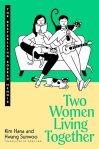
 Simple Heart by Cho Haejin (trans. from Korean by Jamie Chang) [Other Press, Feb. 3]: A transnational adoptee returns to Korea to investigate her roots through a documentary film. A poignant novel that explores questions of abandonment and belonging through stories of motherhood.
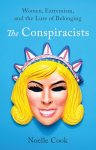 The Conspiracists: Women, Extremism, and the Lure of Belonging by Noelle Cook [Broadleaf Books, Jan. 6]: An in-depth, empathetic study of “conspirituality” (a philosophy that blends conspiracy theories and New Age beliefs), filtered through the outlook of two women involved in storming the Capitol on January 6, 2021.

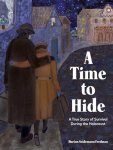
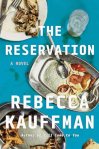 The Reservation by Rebecca Kauffman [Counterpoint, Feb. 24]: The staff members of a fine-dining restaurant each have a moment in the spotlight during the investigation of a theft. Linked short stories depict character interactions and backstories with aplomb. Big-hearted; for J. Ryan Stradal fans.


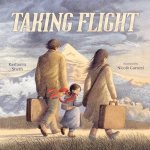 Taking Flight by Kashmira Sheth (illus. Nicolo Carozzi) [Dial Press, April 21]: A touching story of the journeys of three refugee children who might be from Tibet, Syria and Ukraine. The drawing style reminded me of Chris Van Allsburg’s. This left a tear in my eye.
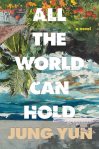

Currently reading:
(Blurb excerpts from Goodreads; all are e-copies apart from Evensong)
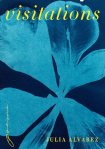 Visitations: Poems by Julia Alvarez [Knopf, April 7]: “Alvarez traces her life [via] memories of her childhood in the Dominican Republic … and the sisters who forged her, her move to America …, the search for mental health and beauty, redemption, and success.”
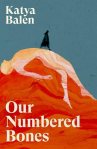 Our Numbered Bones by Katya Balen [Canongate, 12 Feb. / HarperVia, Feb. 17]: Her “adult debut [is] about a grieving author who heads to rural England for a writer’s retreat, only to stumble upon an incredible historical find” – a bog body!
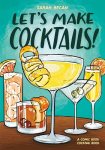 Let’s Make Cocktails!: A Comic Book Cocktail Book by Sarah Becan [Ten Speed Press, April 7]: “With vivid, easy-to-follow graphics, Becan guides readers through basic techniques such as shaking, stirring, muddling, and more. With all recipes organized by spirit for easy access, readers will delight in the panelized step-by-step comic instructions.”
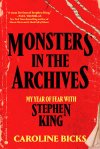 Monsters in the Archives: My Year of Fear with Stephen King by Caroline Bicks [Hogarth/Hodder & Stoughton, April 21]: “A fascinating, first of its kind exploration of Stephen King and his … iconic early books, based on … research and interviews with King … conducted by the first scholar … given … access to his private archives.”
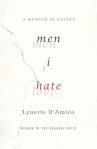 Men I Hate: A Memoir in Essays by Lynette D’Amico [Mad Creek Books, Feb. 17]: “Can a lesbian who loves a trans man still call herself a lesbian? As D’Amico tries to engage more deeply with the man she is married to, she looks at all the men—historical figures, politicians, men in her family—in search of clear dividing lines”.
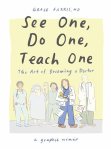 See One, Do One, Teach One: The Art of Becoming a Doctor: A Graphic Memoir by Grace Farris [W. W. Norton & Company, March 24]: “In her graphic memoir debut, Grace looks back on her journey through medical school and residency.”
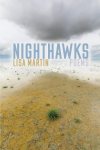 Nighthawks by Lisa Martin [University of Alberta Press, April 2]: “These poems parse aspects of human embodiment—emotion, relationship, mortality—and reflect on how to live through moments of intense personal and political upheaval.”
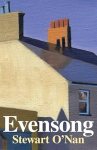 Evensong by Stewart O’Nan [published in USA in November 2025; Grove Press UK, 1 Jan.]: “An intimate, moving novel that follows The Humpty Dumpty Club, a group of women of a certain age who band together to help one another and their circle of friends in Pittsburgh.”
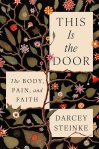 This Is the Door: The Body, Pain, and Faith by Darcey Steinke [HarperOne, Feb. 24]: “In chapters that trace the body—The Spine, The Heart, The Knees, and more—[Steinke] introduces sufferers to new and ancient understandings of pain through history, philosophy, religion, pop culture, and reported human experience.”
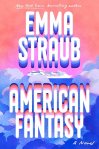 American Fantasy by Emma Straub [Riverhead, April 7 / Michael Joseph (Penguin), 14 May]: “When the American Fantasy cruise ship sets sail for a four-day themed voyage, aboard are all five members of a famous 1990s boyband, and three thousand screaming women who have worshipped them for thirty years.”
Additional pre-release review books on my shelf:
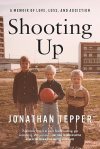 Shooting Up by Jonathan Tepper [Constable, 19 Feb.]: “Born into a family of American missionaries driven by unwavering faith … Jonathan’s home became a sanctuary for society’s most broken … AIDS hit Spain a few years after it exploded in New York and, like an invisible plague, … claimed countless lives – including those … in the family rehabilitation centre.”
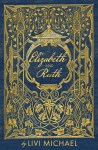 Elizabeth and Ruth by Livi Michael [Salt Publishing, 9 Feb.]: “Based on the real correspondence between Elizabeth Gaskell and Charles Dickens … [Gaskell] visits a young Irish prostitute in Manchester’s New Bailey prison. … [A] story of hypocrisy and suppression, and how Elizabeth navigates the … prejudice of the day to help the young girl”.
Will you look out for one or more of these?
Any other 2026 reads you can recommend?
#WITMonth, Part I: Novellas by Eva Baltasar and Françoise Sagan
I’m starting off my Women in Translation month coverage with mini responses to two novellas: one Catalan and one French; both about disaffected women trying to work out what they want from life.
Mammoth by Eva Baltasar (2022; 2024)
[Translated from the Catalan by Julia Sanches]
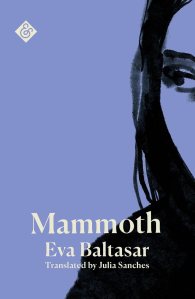 I’d been vaguely attracted by descriptions of the Spanish poet’s novels Permafrost and Boulder, which are also about lesbians in odd situations. Mammoth is the third book in a loose trilogy. Its 24-year-old narrator is so desperate for a baby that she’s decided to have unprotected sex with men until a pregnancy results. In the meantime, her sociology project at nursing homes comes to an end and she moves from Barcelona to a remote farm where she develops subsistence skills and forms an interdependent relationship with the gruff shepherd. “I’d been living in a drowning city, and I need this – the restorative silence of a decompression chamber. … my past is meaningless, and yet here, in this place, there is someone else’s past that I can set up and live in awhile.” For me this was a peculiar combination of distinguished writing (“The city pounces on the still-pale light emerging from the deep sea and seizes it with its lucrative forceps”) but absolutely repellent story, with a protagonist whose every decision makes you want to throttle her. An extended scene of exterminating feral cats certainly didn’t help matters. I’d be wary of trying Baltasar again.
With thanks to And Other Stories for the proof copy for review.
Aimez-vous Brahms… by Françoise Sagan (1959; 1960)
[Translated from the French by Peter Wiles]
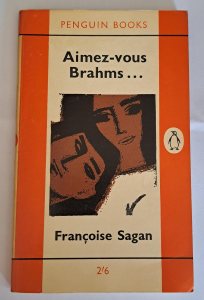 At age 39, divorced interior decorator Paule is “passionately concerned with her beauty and battling with the transition from young to youngish woman”. (Ouch. But true.) It’s an open secret that her partner Roger is always engaged in a liaison with a young woman; people pity her and scorn Roger for his infidelity. But when Paule has a dalliance with a client’s son, 25-year-old lawyer Simon, a double standard emerges: “they had never shown her the mixture of contempt and envy she was going to arouse this time.” Simon is an idealist, accusing her of “letting love go by, of neglecting your duty to be happy”, but he’s also indolent and too fond of drink. Paule wonders if she’s expected too much from an affair. “Everyone advised a change of air, and she thought sadly that all she was getting was a change of lovers: less bother, more Parisian, so common”.
I was by turns reminded of Chéri by Colette, In a Summer Season by Elizabeth Taylor, and even The Graduate (“Mrs. Robinson,” anyone?). Simon asks the title question to invite Paule to a concert; that she has to ponder it carefully tells her she’s “losing herself, losing track of herself”. But it’s all too easy for the status quo to be reinstated after a brave act. Middle-aged woman makes bid for freedom but ultimately nothing changes: same plot as The Funeral Cryer and any number of other books, but this was so much better. How did Sagan manage such insight at age 24 (and this was her fourth book)?! While not quite as memorable as Bonjour Tristesse, this is another incisive slice of fiction that has aged well apart from using “sodomite” and “Negress” as matter-of-fact terms for bit players. I’d read anything else I can find by Sagan. (Secondhand – Community Furniture Project, Newbury)
20 Books of Summer, 5: A House Full of Daughters by Juliet Nicolson
Journalist and popular historian Juliet Nicolson is Vita Sackville-West’s granddaughter and one of the few remaining guardians of her living memory. This 2015 family memoir chronicles the lives of seven (eight, really) generations of women and travels from Malaga in the 1830s to present-day England. Nicolson acknowledges the inherited privilege that has typified this clan since the time of Vita’s grandmother but prefers to emphasize the roles that place and talent have played. It is enough of a biography of Vita to have won a Bisexual Book Award but, even though Vita only had sons, the focus is on mother–daughter bonds and how values and experiences have recurred across nearly two centuries.
First came Pepita, who rose from poverty in southern Spain to be a legendary dancer (“the Beyoncé of her day,” Nicolson quipped at an online event I attended – see below) and catch the eye of an English diplomat, Lionel Sackville-West, at a performance in Paris. Although Pepita was already married to her dancing teacher, she shook off her controlling mother and became Sackville-West’s longtime mistress, bearing him seven children. They could all have been disinherited for illegitimacy, however, had Pepita’s daughter Victoria not secured the link – and access to the family estate, Knole – by marrying her cousin, young Lionel Sackville-West. Vita wrote in Pepita, her joint biography of her mother and grandmother, “My mother appears to have been born with the faculty of attracting the most peculiar and improbable happenings,” such as a proposal of marriage from the recently widowed U.S. president, Chester Arthur, when she accompanied her father to Washington, DC.

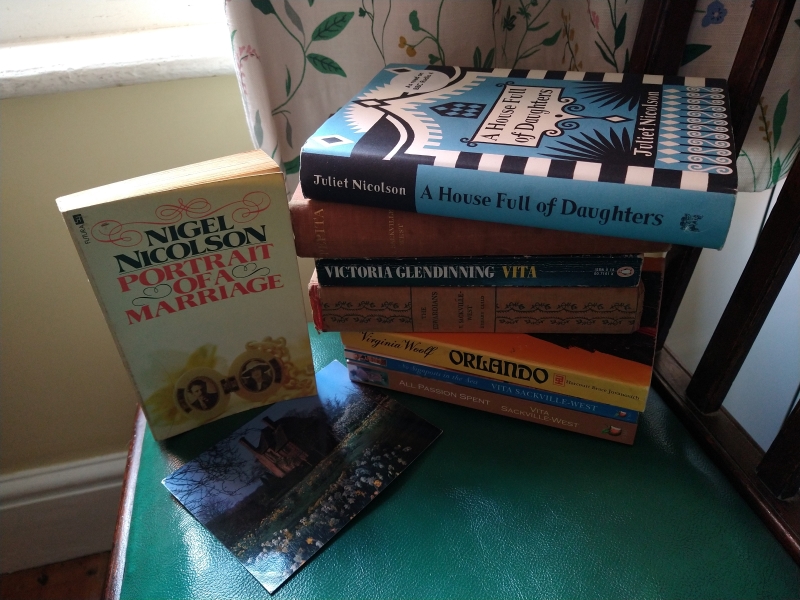
Vita is the book’s presiding spirit and pivot point, but I already knew a lot about her from reading Victoria Glendinning’s biography plus two of her novels, so this material was too familiar. The fact that we then leap from daughters to a daughter-in-law (Nicolson’s mother, Philippa Tennyson-d’Eyncourt – these figures are all posher than posh!) is unfortunate as it dilutes the theme. However, Nicolson gives a behind-the-scenes look at Sissinghurst and the marriages between Vita and Harold, loving but also a cover for same-sex relationships for both of them; and Nigel and Philippa, which was a disaster almost from the start. Nicolson is also brave to admit the alcoholism that she subconsciously received from her mother. Philippa died at 58, but by admitting she had a problem Nicolson was able to get help and turn things around. Two generations followed: her two daughters and one granddaughter, who is now 11.
Nicolson sees patterns repeating across the generations: emotional abandonment by parents, “the lack of confidence, the fear of failure, and the seeking of approval where there was none” as well as “writing about the life and work of an earlier generation.” She hopes that with this book she has marked the arrival of “an increasingly tolerant and accepting generation, one that is not afraid to learn from the mistakes of the past and is determined not to repeat them”. (Fun but unrelated fact: Penelope Fitzgerald was one of Nicolson’s teachers.)

On the staircase leading up to Vita’s study in the tower, September 2009.
I visited Sissinghurst in 2009 – I can’t believe I haven’t been back in the past 15 years – and when we briefly lived in Sevenoaks in 2012 we also went to Knole. Both are magical places, especially Sissinghurst. For a few years there I was on a kick of reading a lot by and about Vita (I can recommend No Signposts in the Sea) and I also absorbed a fair bit via Adam Nicolson’s books (that’s Juliet’s brother) and his wife Sarah Raven’s – her recipes are to die for, and she’s kept up the gardens in a way that would make Vita proud. So I’d say it probably helps to have an existing interest in the family, but it should be a reasonably engrossing read in any case. (Free from a neighbour) 
Yesterday I watched “The Inspiration of Vita Sackville-West,” a recording of an RSL event held at the London Library in October that was aired to tie in with their annual Dalloway Day as well as the 95th anniversary of the publication of Virginia Woolf’s Orlando (for which Vita was a model) and, of course, Pride Month. The panelists were Juliet Nicolson; trans novelist Shola von Reinhold, whose LOTE (2020) won the Republic of Consciousness and James Tait Black Memorial Prizes; fashion critic Charlie Porter; and writer Olivia Laing. The discussion was expertly chaired by Shahidha Bari, an academic, fashion writer and presenter of BBC Two’s Inside Culture. She opened by asking each speaker to define Vita in one word. Nicolson chose “lover,” which von Reinhold echoed. Porter said “physical.” Laing cheated with a made-up compound word: “androgynous-aristocratic-aesthete.”
And the conversation went on from there. Nicolson spoke of her grandmother as a formidable woman, tall and tobacco-scented, and remembered the exotic treasures she and her siblings found in Vita’s tower study, such as a bottle of emerald-green nail polish. She described Vita as enigmatic and representing duality: she was born a Victorian but has been embraced by modernist and queer studies; she was conventional in some ways, but also a rebel. Porter has written about fashion and the Bloomsbury circle, with Woolf as one of his subjects, so he thinks about Vita mostly as a muse. He read from Vita’s letter to Harold describing meeting Woolf, whom she thought “quite old” and “atrociously dressed.” Nonetheless, she’d lost her heart. Woolf in her turn commented on Vita’s moustache, which was likely a sign of her Spanish heritage rather than excess testosterone as some have theorized.
For von Reinhold, Vita is an early example of androgyny, a precursor to today’s trans and nonbinary identities. Laing, who has recently published a book on gardening, focused on Vita as a garden writer and designer. She said she doesn’t really value Vita’s novels but thinks her garden books (collections of her Observer columns) are extraordinary and read a passage in which she dreamt up the famous White Garden she would create at Sissinghurst (I read a kinda crummy novel about it a few years ago, The White Garden by Stephanie Barron).
The event gave a very good sense of Vita as a person but not as a writer. Audience questions brought up her poetry (oh God, it’s awful!) and travel books but that was as far as it went, and there was no discussion of the novels. Nicolson mentioned Pepita in passing but mostly talked about Portrait of a Marriage, which was half written by Vita and then finished by Nigel, a publisher (he was half of Weidenfeld and Nicolson, aka W&N). He had the courage to reveal his mother’s sexuality and Nicolson said that she believes Vita’s legacy is courage – to create a garden from scratch as a self-taught amateur, yes; but mostly to be oneself.
The Lost Supper by Taras Grescoe (Blog Tour)
“Searching for the Future of Food in the Flavors of the Past” is the instructive subtitle of this globe-trotting book of foodie exploration in the vein of A Cook’s Tour and The Omnivore’s Dilemma. With its firm grounding in history, it also reminded me of Twain’s Feast. Journalist Tara Grescoe is based in Montreal. Dodging Covid lockdowns, he managed to make visits to the homes of various traditional foods, such as the more nutritious emmer wheat that sustained the Çatalhöyük settlement in Turkey 8,500 years ago; the feral pigs that live on Ossabaw Island off of Georgia, USA: the Wensleydale cheese that has been made in Yorkshire for more than 700 years; the olive groves of Puglia; and the potato-like tuber called camas that is a staple for the Indigenous peoples of Vancouver Island.
One of the most fascinating chapters is about the quest to recreate “garum,” a fermented essence of salted fish (similar to modern-day Asian fish sauces) used ubiquitously by the Romans. Grescoe journeys to Cádiz, Spain, where the sauce is being made again in accordance with the archaeological findings at Pompeii. He experiences a posh restaurant tasting menu where garum features in every dish – even if just a few drops – and then has a go at making his own. “Garum seemed to subject each dish to the culinary equivalent of italicization,” he found, intensifying the existing flavours and giving an inimitable umami hit. I’m also intrigued by the possibilities of entomophagy (eating insects) so was interested in his hunt for water boatman eggs, “the caviar of Mexico”; and his outing to the world’s largest edible insect farm near Peterborough, Ontario.
Grescoe seems to be, like me, a flexitarian, focusing on plants but indulging in occasional high-quality meat and fish. He advocates for eating as locally as you can, and buying from small producers whose goods reflect the care taken over the raising. “Everybody who eats cheap, factory-made meat is eating suffering,” he insists, having compared an industrial-scale slaughterhouse in North Carolina with small farms of heritage pigs. He acknowledges other ecological problems, too, however, such as the Ossabaw hogs eating endangered loggerhead turtles’ eggs and the overabundance of sheep in the Yorkshire Dales leading to a loss of plant diversity. This ties into the ecological conscience that is starting to creep into foodie lit (as opposed to a passé Bourdain eat-everything mindset), as witnessed by Dan Saladino’s Eating to Extinction winning the Wainwright Prize (Conservation) last year.
Another major theme of the book is getting involved in the food production process yourself, however small the scale (growing herbs or tomatoes on a balcony, for instance). “With every home food-making skill I acquired, I felt like I was tapping into some deep wellspring of self-sufficiency that connected me to my historic—and even prehistoric—ancestors,” Grescoe writes. He also cites American farmer-philosopher Wendell Berry’s seven principles for responsible eating, as relevant now as they were in the 1980s. The book went a little deeper into history and anthropology than I needed, but there was still plenty here to hold my interest. Readers may not follow Grescoe into grinding their own wheat or making their own cheese, but we can all be more mindful about where our food comes from, showing gratitude rather than entitlement. This was a good Nonfiction November and pre-Thanksgiving read!
With thanks to Random Things Tours and Greystone Books for the proof copy for review.
Buy The Lost Supper from Bookshop UK [affiliate link]
I was delighted to be part of the blog tour for The Lost Supper. See below for details of where other reviews have appeared or will be appearing soon.
September Releases by Chloe Lane, Ben Lerner, Navied Mahdavian & More
September and October are bounteous months in the publishing world. I’ll have a bunch of books to plug in both, mostly because I’ve upped my reviewing quota for Shelf Awareness. There’s real variety here, from contemporary novellas and heavily autobiographical poetry to nature essays and a graphic memoir.
Arms & Legs by Chloe Lane
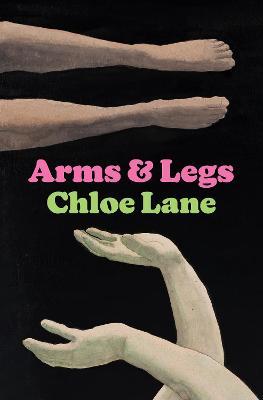 I reviewed Lane’s debut novel, The Swimmers, a black comedy about a family preparing for an assisted suicide, this time last year. It seems there’s an autobiographical setup to the author’s follow-up, which focuses on a couple from New Zealand now living in Florida with their young son. Narrator Georgie teaches writing at a local college and is having an affair with Jason, an Alabama-accented librarian she met through taking Finn to the Music & Movement class. She joins in a volunteer-led controlled burn in the forest, and curiosity quickly turns to horror when she discovers the decaying body of a missing student.
There’s a strong physicality to this short novel: fire, bodies and Florida’s dangerous fauna (“To choose to live in a place surrounded by these creatures, these threats, it made me feel like I was living a bold life”). Georgie has to decide whether setting fire to her marriage with Dan is what she really wants. A Barry Hannah short story she reads describes adultery as just a matter of arms and legs, a phrase that’s repeated several times.
Georgie is cynical and detached from her self-destructive choices, coming out with incisive one-liners (“My life isn’t a Muriel Spark novel, there’s no way to flash forward and find out if I make it out of the housefire alive” and “He rested the spade on his shoulder as if he were a Viking taking a drinks break in the middle of a battle”). Lane burrows into instinct and motivation, also giving a glimpse of the challenges of new motherhood. Apart from a wicked dinner party scene, though, the book as a whole was underwhelming: the body holds no mystery, and adultery is an old, old story.
With thanks to Gallic Books for the proof copy for review.
The Lights by Ben Lerner
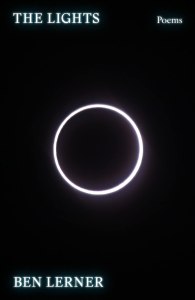 I’d read fiction and nonfiction from Lerner but had no idea of what to expect from his poetry. Almost every other poem is a prose piece, many of these being absurdist monologues that move via word association between topics seemingly chosen at random: psychoanalysis, birdsong, his brother’s colorblindness; proverbs, the Holocaust; art conservation, his partner’s upcoming C-section, an IRS Schedule C tax form, and so on.
The vocabulary and pronouncements can be a little pretentious. The conversational nature and randomness of the subjects contribute to the same autofiction feel you get from his novels. For instance, he probes parenting styles: his parents’ dilemma between understanding his fears and encouraging him in drama and sport; then his daughters’ playful adoption of his childhood nickname of Benner for him.
A few highlights: the enjambment in “Index of Themes”; the commentary on pandemic strictures and contrast between ancient poetry and modern technology in “The Stone.” I wouldn’t seek out more poetry by Lerner, but this was interesting to try. (Read via Edelweiss)
Sample lines:
“When you die in the patent office / there’s a pun on expiration”
“the goal is to be on both sides of the poem, / shuttling between the you and I. … Form / is always the answer to the riddle it poses”
“It’s raining now / it isn’t, or it’s raining in the near / future perfect when the poem is finished / or continuous, will have been completed”
This Country: Searching for Home in (Very) Rural America by Navied Mahdavian
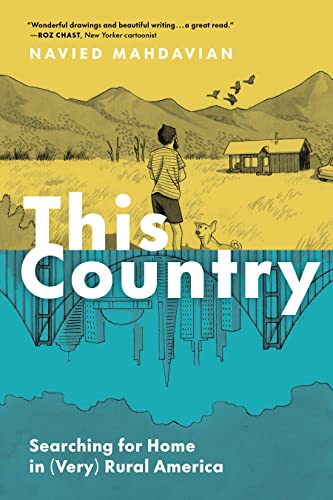 Mahdavian has also published comics in the New Yorker. His debut graphic novel is a memoir of the three years (2016–19) he and his wife lived in remote Idaho. Of Iranian heritage, the author had lived in Miami and then the Bay Area, so was pretty unprepared for living off-grid. His wife, Emelie (who is white), is a documentary filmmaker. They had a box house brought in on a trailer. After Trump’s surprise win, it was a challenging time to be a Brown man in the rural USA. “You’re not a Muslim, are you?” was the kind of question he got on their trips into town. Neighbors were outwardly friendly – bringing them firewood and elk kebabs, helping when their car wouldn’t start or they ran off the road in icy conditions, teaching them the local bald eagles’ habits – yet thought nothing of making racist and homophobic slurs.
I appreciated the self-deprecating depictions of learning DIY from YouTube videos and feeling like a wimp in comparison to his new friends who hunt and have gun collections – one funny spread has him imagining himself as a baby in a onesie sitting across from a manly neighbor. “I am shedding my city madness,” Mahdavian boasts as they plant an abundant garden and start learning about trees and birds. The references to Persian myth and melodrama are intriguing, though sometimes seem à propos of nothing, as do the asides on science and nature. I preferred when the focus was on the couple’s struggles with infertility and reopening the town movie theater – a flop because people only want John Wayne flicks.
This was enjoyable reading, but the simple black-and-white style is unlikely to draw in readers new to graphic storytelling, and I wondered if the overall premise – ‘we expected to find closed-minded racists and we did’ – was enough to hang a memoir on. (Read via Edelweiss)
Reviewed for Shelf Awareness:
(Links to full text)
The Wren, The Wren by Anne Enright
 Enright’s astute eighth novel traces the family legacies of talent and trauma through the generations descended from a famous Irish poet. Cycles of abandonment and abuse characterize the McDaraghs. Enright convincingly pinpoints the narcissism and codependency behind their love-hate relationships. (It was an honor to also interview Anne Enright. You can see our Q&A here.)
When My Ghost Sings by Tara Sidhoo Fraser
 This lyrical debut memoir is an experimental, literary recounting of the experience of undergoing a stroke and relearning daily skills while supporting a gender-transitioning partner. Fraser splits herself into two: the “I” moving through life, and “Ghost,” her memory repository. But “I can’t rely only on Ghost’s mental postcards,” Fraser thinks, and sets out to retrieve evidence of who she was and is.
The Vaster Wilds by Lauren Groff
 (Already featured in my Best of 2023 so far post.) Groff’s fifth novel combines visceral detail and magisterial sweep as it chronicles a runaway Jamestown servant’s struggle to endure the winter of 1610. Flashbacks to traumatic events seep into her mind as she copes with the harsh reality of life in the wilderness. The style is archaic and postmodern all at once. Evocative and affecting – and as brutal as anything Cormac McCarthy wrote. A potent, timely fable as much as a historical novel.
Zoo World: Essays by Mary Quade
 A collection of 15 thoughtful nature/travel essays that explore the interconnectedness of life and conservation strategies, and exemplify compassion for people and, particularly, animals. The book makes a round-trip journey, beginning at Quade’s Ohio farm and venturing further afield in the Americas and to Southeast Asia before returning home.
The Goodbye World Poem by Brian Turner
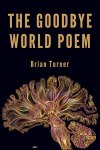 The lovely laments in Brian Turner’s fourth collection (a sequel to The Wild Delight of Wild Things) dwell in the aftermath of the loss of his wife and others, and cultivate compensatory appreciation for the natural world. Turner’s poetry is gilded with alliteration and maritime metaphors The long title piece, which closes the collection, repeats many phrases from earlier poems—a pleasing way of drawing the book’s themes together. (My review of the third volume in this loose trilogy is forthcoming.)
And a bonus review book, relevant for its title:
September and the Night by Maica Rafecas
[Translated from the Catalan by Megan Berkobien and María Cristina Hall]
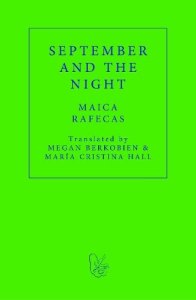 A new Logistics Centre is to cut through Anaïs’s family vineyards as part of a compulsory land purchase. While her father, Magí, and brother, Jan, are resigned to the loss, this single mother decides to resist, tying herself to a stone shed on the premises that will be right in the path of the bulldozers. This causes others to question her mental health, with social worker Elisa tasked with investigating the case. Key evidence of her irrational behaviour turns out to have perfectly good explanations.
Certain chapters alternate Jan’s and Anaïs’s perspectives, recreate her confusion in a psychiatric hospital, or have every sentence beginning with “There” or “And” – effective anaphora. Although I didn’t think Jan’s several romantic options added to the plot, this debut novella from a Spanish author was a pleasant surprise. It’s based on a true story, though takes place in fictional locations, and bears a gentle message of cultural preservation.
With thanks to Fum d’Estampa Press for the free copy for review.
 Bookish Beck = Rebecca Foster. American transplant to England. Freelance proofreader and book reviewer.
