Book Serendipity, October to December 2023
I call it “Book Serendipity” when two or more books that I read at the same time or in quick succession have something in common – the more bizarre, the better. This is a regular feature of mine every couple of months. Because I usually have 20–30 books on the go at once, I suppose I’m more prone to such incidents. The following are in roughly chronological order.
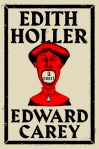
- A woman turns into a spider in Edith Holler by Edward Carey and The Human Origins of Beatrice Porter and Other Essential Ghosts by Soraya Palmer.

- Expulsion from Eden scenes (one literal, after the Masaccio painting; another more figurative by association) in Conversation Among Stones by Willie Lin and North Woods by Daniel Mason.
- Reading my second 2023 release featuring a theatre fire (after The House Is on Fire by Rachel Beanland, which I actually read last year): Edith Holler by Edward Carey.
- The protagonist cuts their foot in The Rituals by Rebecca Roberts and The Last House on Needless Street by Catriona Ward.


- On the same evening, I started two novels where the protagonist’s parents both died in a car crash: The Witches by Roald Dahl and Family Meal by Bryan Washington. This is something I encounter ALL THE TIME in fiction (versus extremely rarely in life) and it’s one of my major pet peeves. I can excuse it more in the children’s book as the orphan trope allows for adventures, but for the most part it just seems lazy to me. The author has decided they don’t want to delve into a relationship with parents at all, so they cut it out in the quickest and easiest possible way.
- A presumed honour killing in Behind You Is the Sea by Susan Muaddi Darraj and The Hundred and Ninety-Nine Steps by Michel Faber.


- A Houston, Texas setting in The Only Way Through Is Out by Suzette Mullen and Family Meal by Bryan Washington.
- Daniel Clowes, whose graphic novel Monica I was also in the middle of at the time, was mentioned in Robin Ince’s Bibliomaniac.
- The author/speaker warns the squeamish reader to look away for a paragraph in Robin Ince’s Bibliomaniac (recounting details of a gross-out horror plot) and one chapter of Daniel Mason’s North Woods.


- A mentally ill man who lives at the end of a lane in Daniel Mason’s North Woods and The Last House on Needless Street by Catriona Ward.
- Reading Last House before the Mountain by Monika Helfer and The Last House on Needless Street by Catriona Ward at the same time.
- The Daedalus myth (via Aeschylus or Brueghel, or just in general) is mentioned in Last House before the Mountain by Monika Helfer, The Ghost Orchid by Michael Longley, and Absolutely and Forever by Rose Tremain.
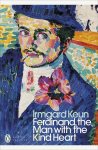
- A character goes to live with their aunt and uncle in Western Lane by Chetna Maroo and The House of Doors by Tan Twan Eng (both Booker-longlisted), but also The Woman in Black by Susan Hill, Train Dreams by Denis Johnson, and The Story Girl by L.M. Montgomery. I came across all five instances within a few days! Later I also encountered a brief mention of this in Ferdinand by Irmgard Keun. How can this situation be so uncommon in life but so common in fiction?!


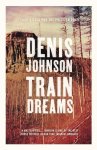

- The outdated terms “Chinaman” and “coolie” appear frequently in Train Dreams by Denis Johnson and The House of Doors by Tan Twan Eng.
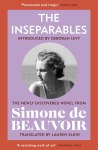
- A 15-year-old declares true love in The Inseparables by Simone de Beauvoir and Absolutely and Forever by Rose Tremain.
- A French character named Pascal in The Inseparables by Simone de Beauvoir and The Garrick Year by Margaret Drabble.

- A minor character called Mrs Biggs in Harriet Said… by Beryl Bainbridge and The House of Doors by Tan Twan Eng.
- The Chinese zither (guzheng) is mentioned in Dear Chrysanthemums by Fiona Sze-Lorrain, which I read earlier in the year, and The House of Doors by Tan Twan Eng.
- Oscar Wilde’s trial is mentioned in The House of Doors by Tan Twan Eng, as it was in The New Life by Tom Crewe, which I read earlier in the year – in both it was a cautionary case for older homosexual characters (based on real people: W. Somerset Maugham vs. John Addington Symonds) who were married to women but had a live-in male secretary generally known to be their lover. At the same time as I was reading The House of Doors, I was rereading Wilde’s De Profundis, which was written from prison.


- In Fifty Days of Solitude Doris Grumbach mentions reading Bear by Marian Engel. I read both during Novellas in November.
- Living funerals are mentioned in Ferdinand by Irmgard Keun and The Ritual Effect by Michael Norton.
- A character insists that lilac not be included in a bouquet in In the Sweep of the Bay by Cath Barton and Bright Young Women by Jessica Knoll.


- A woman has a lover named Frances in Bright Young Women by Jessica Knoll and The Cancer Journals by Audre Lorde.
- The final word of the Fanny Howe poem in Raised by Wolves (the forthcoming 50th anniversary poetry anthology from Graywolf Press) is “theophanies.” At the same time, I was reading the upcoming poetry collection Theophanies by Sarah Ghazal Ali.


- The Cancer Journals by Audre Lorde, which I’d read the month before, was a major influence on the cancer memoir All In by Caitlin Breedlove.
- Two foodie memoirs I read during our city break, A Waiter in Paris by Edward Chisholm and The Sweet Life in Paris by David Lebovitz, both likened a group of young men to a Dolce & Gabbana ad. (Chisholm initially lived at Porte des Lilas, the next Metro stop up from where we stayed in Mairie des Lilas.)
- A French slang term for penis, “verge,” is mentioned in both The Sweet Life in Paris by David Lebovitz and Learning to Drive by Katha Pollitt.


What’s the weirdest reading coincidence you’ve had lately?
Short Stories in September, Part III: Linked Collections by Jonathan Escoffery & Soraya Palmer
These two debut linked short story collections had enough in common to get a mention in yesterday’s Book Serendipity post, including a 2023 publication date, a central sibling pair, Jamaican heritage, and memories of a devastating hurricane.
If I Survive You by Jonathan Escoffery
A starred Kirkus review first put this on my radar, and I requested a copy back in February. Though I enjoyed the first two stories, I then set the book aside. Its longlisting for this year’s Booker Prize reminded me to pick it back up and it’s now one of the six on the shortlist.
Five of eight stories are filtered through the consciousness of Trelawny, the younger son of Topper and Sanya, who immigrated to Miami in the late 1970s to escape unrest in Kingston, Jamaica. Older brother Delano is the golden boy, yet in a post-recession landscape both sons struggle to get by. After their parents’ split, the family home seems like a totem of security.
An accident leads Delano to give up his tree service business and pursue reggae music professionally. Trees play a pivotal role: when Topper humiliates him at a party by calling him “soft” and “defective,” Trelawny attacks his father’s beloved ackee tree with an axe. After Topper kicks him out, Trelawny lives in his car, accepting a succession of strange and sordid gigs (the stuff of “Odd Jobs” and the title story; “in Miami … you’re as likely to wind up getting your organs harvested as you are to make a profit”) before settling on teaching.

Three stories are in the always engaging second person (one of those inhabiting Topper’s perspective), three are narrated in the first person by Trelawny, and two are in the third person – the one about Delano and another about their cousin Cukie (“Splashdown”). Family legacy, particularly from fathers, is a major theme. “I felt sick with hatred,” Trelawny says. “For her [racist] father, yes, but for all fathers, for their propensity for passing down the worst of themselves.”
Trelawny is an entertaining POV character, jaded but quick-witted as he navigates microaggressions. People are confused about whether he’s African American or Latino. “In Flux,” the opening story and probably the strongest, has him coming to terms with what it means to be Black in America while living in Florida or at college in the Midwest, prompted by a question he frequently has to field: “What are you?” My other favourite story was “Independent Living,” in which he’s an administrator for an oversubscribed senior housing block and has to become as wily as his residents.
Escoffery creates a strong sense of place and character. I suspect there’s a lot that’s autobiographical here, as is common in first books. His ambivalence about sites that hold personal significance is palpable. Ideally, a linked collection will be composed of confident stand-alone stories that together are more than the sum of their parts. I didn’t really feel that about these. While the voice is promising and several stories are highlights, the whole didn’t set me on fire. (And I’d be astonished if it won the Booker. That’ll go to a guy named Paul.) Maybe Escoffery has a great novel brewing, though. 
A favourite passage:
“On the day you are scheduled to begin the sixth grade, a hurricane named Andrew pops your house’s roof open, peeling it back like the lid of a Campbell’s soup can, pouring a fraction of the Atlantic into your bedroom, living room—everywhere—bloating carpet, drywall, and fibreboard with sopping sea salt corrosion. It disinters the kidney-colored fibreglass from the walls and ceiling, splaying the house’s entrails on the lawn. The storm chops your neighbor’s house to rubble, parks a tugboat at the far end of your street.”
With thanks to 4th Estate for the free copy for review.
Buy from Bookshop [affiliate link].
The Human Origins of Beatrice Porter & Other Essential Ghosts by Soraya Palmer
Sasha and Zora are steeped in Caribbean folklore absorbed from their parents. Nigel, from Jamaica, tells them about “Rolling Calf,” the vengeful ghost of a butcher paying penance for all the animals he slaughtered; Trinidadian Beatrice reminds them that the hero of the Anansi stories is a woman. Like the trickster spider, these Brooklyn adolescents will have to live by their wits when their family disintegrates – Nigel leaves to marry a German woman and Beatrice returns to Trinidad when she’s diagnosed with metastatic skin cancer.
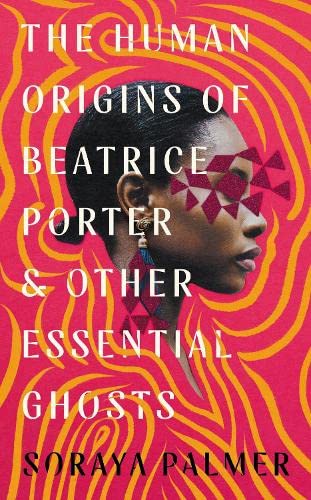 Apart from a few third-person segments about the parents, the chapters, set between 1997 and 2005, trade off first-person narration duties between Zora, a romantic would-be writer, and Sasha, the black sheep and substitute family storyteller-in-chief, who dates women and goes by Ashes when she starts wearing a binder. It’s interesting to discover examples of queer erasure in both parents’ past, connecting Beatrice more tightly to Sasha than it first appears – people always condemn most vehemently what they’re afraid of revealing in themselves.
I’ve had too much of the patois + legends/magic realism combo recently (e.g., When We Were Birds) and Palmer tries too hard to root her stories in time through 1990s pop culture references. She also exhibits a slightly annoying MFA stylistic showiness, whereas Escoffery’s work feels more natural. Still, this is more novel than stories (the opposite is true for If I Survive You) and thus the kind of book that would make a good wildcard selection on the Women’s Prize longlist. (Passed along by a book club friend) 
A favourite passage:
Zora: “It was like the end of a Jenga game, the way shit just fell apart. Our family foundation had been fading slowly for years, and yet when it all collapsed, it seemed to happen all at once.”
Buy from Bookshop [affiliate link].
Final reviews and a roundup coming up soon.
Currently reading: Hateship, Friendship, Courtship, Loveship, Marriage by Alice Munro; Close Company: Stories of Mothers and Daughters, ed. Christine Park; Small, Burning Things by Cathy Ulrich
Book Serendipity, August to September 2023
I call it “Book Serendipity” when two or more books that I read at the same time or in quick succession have something in common – the more bizarre, the better.
In Diary of a Tuscan Bookshop, Alba Donati remarks on this phenomenon: “Jung called these coincidences ‘synchronicities’, postulating that the universe possessed its own form of intelligence, which generated harmonies. A universe that detects and brings together the elements it feels are seeking each other in the endless swirl of life. Chance be damned.”
This is a regular feature of mine every couple of months. Because I usually have 20–30 books on the go at once, I suppose I’m more prone to such incidents. The following are in roughly chronological order.
- A memoir that opens with a little girl being injured in a bicycle accident: Some of Us Just Fall by Polly Atkin and Pharmakon by Almudena Sánchez.
- Telling stories through embroidery in Cross-Stitch by Jazmina Barrera and The Farmer’s Wife by Helen Rebanks.

- A small boy nicknamed “Willmouse” (real name: William) in Mary and the Birth of Frankenstein by Anne Eekhout and The Greengage Summer by Rumer Godden.
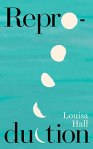
- An account of a routine sonogram that ends with the technician leaving the doctor to deliver bad news in Reproduction by Louisa Hall and The Unfamiliar by Kirsty Logan.
- Black dreadlocks/braid/ponytail being cut off in When We Were Birds by Ayanna Lloyd Banwo, The Wren, The Wren by Anne Enright, and Rebecca, Not Becky by Christine Platt and Catherine Wigginton Greene.

- Wondering how to arm a Black daughter against racist microaggressions in Rebecca, Not Becky by Christine Platt and Catherine Wigginton Greene and Ordinary Notes by Christina Sharpe.
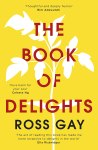
- Countering the commodification or romanticization of Black suffering in The Book of Delights by Ross Gay and Ordinary Notes by Christina Sharpe.

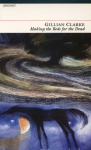
- An account of how the foot and mouth disease outbreak of 2001 affected the UK, especially northwest England, in Making the Beds for the Dead by Gillian Clarke and The Farmer’s Wife by Helen Rebanks.
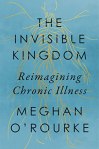
- I encountered the quote from Elaine Scarry’s The Body in Pain about pain being inexpressible in Reproduction by Louisa Hall and The Invisible Kingdom by Meghan O’Rourke on the same day. It’s also referenced in Mary Jean Chan’s Bright Fear.

- A mention of eating frogs’ legs in The Book of Delights by Ross Gay and La Vie by John Lewis-Stempel.
- I read about the effects of heavy metal pollution on the body in The Invisible Kingdom by Meghan O’Rourke and Windswept by Annie Worsley in the same evening.
- Composer Erik Satie is mentioned in Making the Beds for the Dead by Gillian Clarke and August Blue by Deborah Levy.
- Stendhal syndrome and Florence are mentioned in The Wren, The Wren by Anne Enright and Pharmakon by Almudena Sánchez.
- Swallows nesting in an old Continental building in Diary of a Tuscan Bookshop by Alba Donati and La Vie by John Lewis-Stempel.
- France being all about the rules and a “Putain de merde” exclamation to bad news in Dirt by Bill Buford and La Vie by John Lewis-Stempel.

- A character named Nomi in Friends and Strangers by J. Courtney Sullivan and one called Noemi in Diary of a Tuscan Bookshop by Alba Donati.
- Epigenetics (trauma literally determining the genetic traits that are passed on) is discussed in The Invisible Kingdom by Meghan O’Rourke and Pharmakon by Almudena Sánchez.
- Women of a certain age in Tuscany in The Three Graces by Amanda Craig and Diary of a Tuscan Bookshop by Alba Donati.
- Audre Lorde is quoted in Tremor by Teju Cole, Bibliomaniac by Robin Ince, The Invisible Kingdom by Meghan O’Rourke, Alone by Daniel Schreiber, and Ordinary Notes by Christina Sharpe.
- A Galway Kinnell poem is mentioned/quoted in The Dead Peasant’s Handbook by Brian Turner and Otherwise by Julie Marie Wade.
- The Bamiyan Buddhas are mentioned in Tremor by Teju Cole and The Dead Peasant’s Handbook by Brian Turner.


- Both The Three Graces by Amanda Craig and The Story of Lucy Gault by William Trevor open with a man shooting someone from his bedroom window.
- Linked short story collections about two children’s relationship with their Jamaican father, and mention of a devastating hurricane, in If I Survive You by Jonathan Escoffery and The Human Origins of Beatrice Porter and Other Essential Ghosts by Soraya Palmer. (Dual review coming up tomorrow!)
- Characters named Ben and Mara in The Whispers by Ashley Audrain and one story in Kate Doyle’s I Meant It Once.
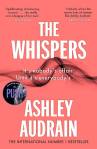
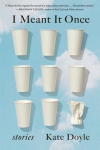
- Occasional uncut pages in my copies of I Meant It Once by Kate Doyle and The Unfamiliar by Kirsty Logan.
- A Florida setting and mention of the Publix supermarket chain in If I Survive You by Jonathan Escoffery and Arms and Legs by Chloe Lane.
- A down-at-heel English seaside town near Scarborough features in The Seaside by Madeleine Bunting and Penance by Eliza Clark.
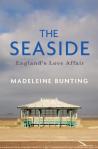

- A fictional northern town with “Crow” in the name: Crow-on-Sea in Penance by Eliza Clark and Crows Bank in Weyward by Emilia Hart.
- Claw-machine toys are mentioned in Penance by Eliza Clark and Directions to Myself by Heidi Julavits.
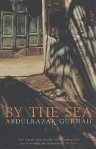
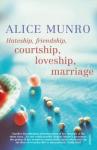
- Reading books by two Nobel Prize winners at the same time: Abdulrazak Gurnah (By the Sea) and Alice Munro (Hateship, Friendship, Courtship, Loveship, Marriage).
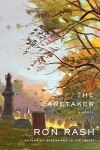
- Reading my second 2023 release featuring North Carolina ghost lights (after All of Us Together in the End by Matthew Vollmer, which I actually read last year): The Caretaker by Ron Rash.
- Reading my second 2023 release featuring a cat named Virginia Woolf (after Tell the Rest by Lucy Jane Bledsoe, which I actually read last year): one of the short stories in I Meant It Once by Kate Doyle.
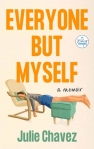
- A character named Shay in Everyone but Myself by Julie Chavez, The Human Origins of Beatrice Porter and Other Essential Ghosts by Soraya Palmer and The Caretaker by Ron Rash.
What’s the weirdest reading coincidence you’ve had lately?
 Bookish Beck = Rebecca Foster. American transplant to England. Freelance proofreader and book reviewer.
 Bookish Beck