Short Stories in September Roundup: Alexie, Donoghue, Groff Anthology, Houston, McCracken, Moore, Svoboda, Walker
I gave myself an extra week to finish up the story collections I was in the middle of, so I’ve managed to read 13 during this challenge to self (including my first and second posts). Again I’m borrowing Marcie’s five-sentence review format to keep things simple.
The Lone-Ranger and Tonto Fistfight in Heaven by Sherman Alexie (1993)
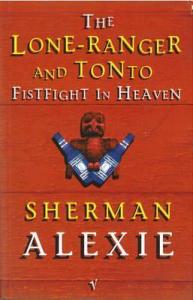 There are 22 stories in this fairly short book, so most top out at no more than 10 pages: little slices of life on and around the reservation at Spokane, Washington. Some central characters recur, such as Victor, Thomas Builds-the-Fire and James Many Horses, but there are so many tales that I couldn’t keep track of them across the book even though I read it quickly. My favourite was “This Is What It Means to Say Phoenix, Arizona,” in which Victor and Thomas fly out to collect the ashes of Victor’s father. Some of the longer titles give a sense of the tone: “Because My Father Always Said He Was the Only Indian Who Saw Jimi Hendrix Play ‘The Star-Spangled Banner’ at Woodstock” and “Jesus Christ’s Half-Brother Is Alive and Well on the Spokane Indian Reservation.” I couldn’t help but think of it as a so-so rehearsal for The Absolutely True Diary of a Part-Time Indian because a similar cast of drunks, jokers, relatives and basketball players populates the stories and a comparable voice prevails. (University library)
The Woman Who Gave Birth to Rabbits by Emma Donoghue (2002)
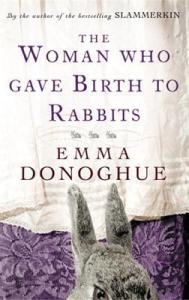 The title story is about Mary Toft – I thought of making her hoax the subject of a Three on a Theme post because I actually have two novels about her downloaded from NetGalley and Edelweiss (Mary and the Rabbit Dream by Noémi Kiss-Deáki and Mary Toft; or, The Rabbit Queen by Dexter Palmer), but the facts as conveyed here don’t seem like nearly enough to fuel a whole book, so I doubt I’ll read those. Donoghue has a good eye for historical curios and incidents and an academic’s gift for research, yet not many of these 17 stories, most of which are in the third person, rise above the novelty. Many protagonists are British or Irish women who were a footnote in the historical record: an animal rights activist, a lord’s daughter, a cult leader, a blind poet, a medieval rioter, a suspected witch. There are mild homoerotic touches, too. I enjoyed “Come, Gentle Night,” about John Ruskin’s honeymoon, and “Cured,” which reveals a terrifying surgical means of controlling women’s moods but, as I found with Astray and Learned by Heart, Donoghue sometimes lets documented details overwhelm other elements of a narrative. (Secondhand – Awesomebooks.com)
The Best Short Stories 2023: The O. Henry Prize Winners, ed. Lauren Groff (2023)
 Hard to convey the variety of this 20-story anthology in a concise way because they run the gamut from realist (Nigerian homosexuality in “Happy Is a Doing Word” by Arinze Ifeakandu; Irish gangsters in “The Blackhills” by Eamon McGuinness) to absurd (Ling Ma’s “Office Hours” has academics passing through closet doors into a dream space; the title of Catherine Lacey’s “Man Mountain” is literal; “Ira and the Whale” is Rachel B. Glaser’s gay version of the Jonah legend). Also difficult to encapsulate my reaction, because for every story I would happily have seen expanded into a novel (the gloomy character study “The Locksmith” by Grey Wolfe LaJoie, the teenage friends’ coming-of-age in “After Hours at the Acacia Park Pool” by the marvellous Kirstin Valdez Quade), there was another I thought might never end (“Dream Man” by Cristina Rivera-Garza and “Temporary Housing” by Kathleen Alcott). Three are in translation. I admired Lisa Taddeo’s tale of grief and revenge, “Wisconsin,” and Naomi Shuyama-Gómez’s creepy Colombian-set “The Commander’s Teeth.” But my two favourites were probably “Me, Rory, and Aurora” by Jonas Eika (Danish), which combines an uneasy threesome, the plight of the unhoused and a downright chilling Ishiguro-esque ending; and “Xífù,” K-Ming Chang’s funny, morbid take on daughter/mother-in-law relations in China. (PDF review copy)
Waltzing the Cat by Pam Houston (1998)
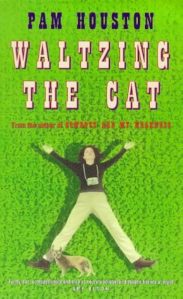 The novel-in-stories is about Lucy, a photographer in her early thirties with a penchant for falling for the wrong men – alcoholics or misogynists or ones who aren’t available. When she’s not working she’s thrill-seeking: rafting in Colorado, travelling in the Amazon, sailing in the Caribbean, or gliding. “Everything good I’ve gotten in life I’ve gotten by plunging in,” she boasts, to which a friend replies, “Sure, and everything bad you’ve gotten in your life you’ve gotten by plunging in.” Ultimately she ‘settles down’ on the Colorado ranch she inherits from her grandmother with a dog, making this – based on what I learned from the autobiographical essays in Deep Creek – even more autofiction for Houston than her debut, Cowboys Are My Weakness, was. Although the final magic realist touch of having her child-self come to her with a box of photographs of traumatic memories is overdone, the themes of accepting vulnerability, seeking to freeze time and creating a home for yourself resonated, and the title story, about the death of Lucy’s mother, is a brilliant and heart-wrenching standalone. (Secondhand – British Red Cross, Berwick)
The Souvenir Museum by Elizabeth McCracken (2021)
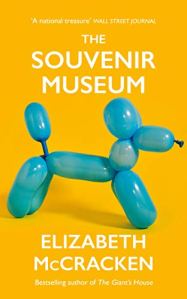 McCracken is terrific in short forms: The Hero of This Book, a novella, was one of my top books of 2022, and I also loved her previous story collection, Thunderstruck. Five of these dozen stories are taken from different points in the lives of Jack and Sadie, English and American academics (who I inevitably read as McCracken and her husband, Edward Carey) who come from large-family zaniness versus claustrophobic mother–daughter melancholy. I kept thinking that McCracken’s are just the sorts of scenarios Lucy and Olive would have told stories about in Tell Me Everything: accidents, misfortunes; random connections. Travel is a major element in many of the stories, including to Denmark (in the title story) and Amsterdam. I couldn’t decide whether I preferred the Jack-and-Sadie material or the rest, but I had a favourite from each: “The Irish Wedding” cracked me up as much as it did Sadie with the accidental use of crass American slang, while “Proof,” about a man communing with his father despite his early dementia, is set on a boat trip I’ve made (in 2004!) to see puffins on the Treshnish islands of Scotland. (Secondhand – Dogs Trust charity shop, Marlborough)
Like Life by Lorrie Moore (1990)
 Compared to Birds of America, this feels a little dated and the plots are overall less memorable. Still, the eight stories of Moore’s second collection are chewy with insight into relationships and the mindsets of youngish and middle-aged women, and there’s an effortless wry wit to her turns of phrase. Her exasperated would-be feminist characters remind me of Helen Simpson’s, while the cheese-selling protagonist of “Joy” made me think of an early Carol Shields story; and who knew a “cute meet” (aka a meet-cute) was a thing back then? New York City contrasts with the Midwest, most notably in “You’re Ugly, Too” and “The Jewish Hunter.” The title story, which comes last, crafts a weirdly muted dystopia built around shortages and marital misery; I preferred the (comparative lightness) of “Vissi d’Arte,” about a lonely playwright, and “Places to Look for Your Mind,” in which an empty-nest entrepreneur hosts an aimless young Englishman her daughter met on her study abroad year. (Secondhand – Bark charity shop, Berwick)
The Long Swim by Terese Svoboda (2023)
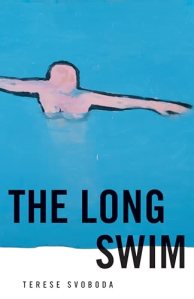 These 44 stories, mostly of flash fiction length, combine the grit of Denis Johnson with the bite of Flannery O’Connor. Siblings squabble over a late parent’s effects or wishes, marriages go wrong, the movie business isn’t as glittering as it’s cracked up to be, and drugs and alcohol complicate everything. The settings range through North America and the Caribbean, with a couple of forays to Europe. There are no speech marks and, whether the narrative is in first person or third, all the voices are genuine and distinctive yet flow together admirably. Svoboda has a poet-like talent for compact, zingy lines; two favourites were “my laziness is born of generalized-looking-to-get-specific grief, like an atom trying to make salt” (“Niagara”) and “Ditziness, a kind of Morse code of shriek-and-stop, erupts around the girls” (“Orphan Shop”).
Winner of the Juniper Prize for Fiction. Published by University of Massachusetts Press. With thanks to the author for the free PDF copy for review.
In Love and Trouble by Alice Walker (1973)
 I’d only ever read The Color Purple, so when I spotted this in a bookshop on our Northumberland holiday it felt like a good excuse to try something else by Walker. I had actually encountered one of the stronger stories before: “Everyday Use” is in the Close Company Virago anthology. In these Southern scenes (“a hate-filled state complete with magnolias, tornadoes and broken-tongued field hands”), Black women oppressed by fathers and partners gain what few advantages they can through deception or folk medicine. I liked “Entertaining God,” which opens with a boy abducting a gorilla from a zoo, and “To Hell with Dying,” about a friendship with an elderly neighbour in cotton country. Setting, style, characters; nothing drew me to any of the others or made me think I’ll read Walker again in the future. (Secondhand – Berrydin Books, Berwick)
Which of these would you read?
Currently reading: I’m not good at picking up short stories in the rest of the year, but I’ve discovered that I really enjoy reviewing them for Shelf Awareness – the length and format of their reviews really suits essay and story collections. So I’m now partway through Save Me, Stranger by Erika Krouse (2025) for an early Shelf Awareness review. Another book I started in Northumberland, Dreams of Dead Women’s Handbags by Shena Mackay, I didn’t finish in time for this challenge but will either continue or set aside and pick back up next year. Both are fantastic!
Reviewing Two Books by Cancelled Authors
I don’t have anything especially insightful to say about these authors’ reasons for being cancelled, although in my review of the Clanchy I’ve noted the textual examples that have been cited as problematic. Alexie is among the legion of male public figures to have been accused of sexual misconduct in recent years. I’m not saying those aren’t serious allegations, but as Claire Dederer wrestled with in Monsters, our judgement of a person can be separate from our response to their work. So that’s the good news: I thought these were both fantastic books. They share a theme of education.
The Absolutely True Diary of a Part-Time Indian by Sherman Alexie (illus. Ellen Forney) (2007)
 Alexie is to be lauded for his contributions to the flourishing of both Indigenous literature and YA literature. This was my first of his books and I don’t know a thing about him or the rest of his work. But I feel like this must have groundbreaking for its time (or maybe a throwback to Adrian Mole et al.), and I suspect it’s more than a little autobiographical.
It reads exactly like a horny 14-year-old boy’s diary, but “Junior” (Arnold Spirit, Jr.) is also self-deprecating and sweetly vulnerable; Alexie’s tone is spot on. Junior has had a tough life on a Spokane reservation in Washington, being bullied for his poor eyesight and speech impediments that resulted from brain damage at birth and ongoing seizures. Poverty, alcoholism, casinos: they don’t feel like clichés of Indian reservations here because Alexie writes from experience and presents them matter-of-factly. Junior’s parents never got to pursue their dreams and his sister has run away to Montana, but he has a chance to change the trajectory. A rez teacher says his only hope for a bright future is to transfer to the elite high school in Reardan. So he does, even though it often requires hitch-hiking or walking miles.
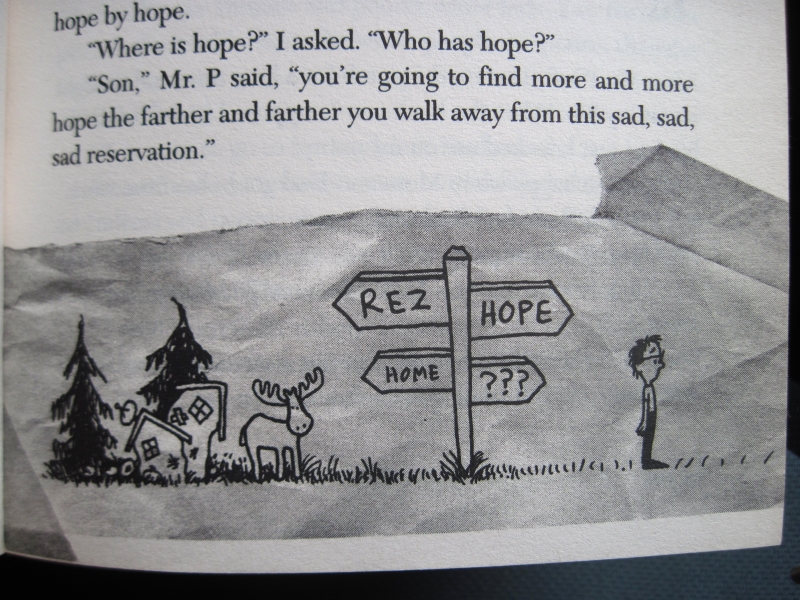
Junior soon becomes adept at code-switching: “Traveling between Reardan and Wellpinit, between the little white town and the reservation, I always felt like a stranger. I was half Indian in one place and half white in the other.” He gets a white girlfriend, Penelope, but has to work hard to conceal how impoverished he is. His best friend, Rowdy, is furious with him for abandoning his people. That resentment builds all the way to a climactic basketball match between Reardan and Wellpinit that also functions as a symbolic battle between the parts of Junior’s identity. Along the way, there are multiple tragic deaths in which alcohol, inevitably, plays a role. “I’m fourteen years old and I’ve been to forty-two funerals,” he confides. “Jeez, what a sucky life. … I kept trying to find the little pieces of joy in my life. That’s the only way I managed to make it through all of that death and change.”
One of those joys, for him, is cartooning. Describing his cartoons to his new white friend, Gordy, he says, “I use them to understand the world.”

Forney’s black-and-white illustrations make the cartoons look like found objects – creased scraps of notebook paper sellotaped into a diary. This isn’t a graphic novel, but most of the short chapters include several illustrations. There’s a casual intimacy to the whole book that feels absolutely authentic. Bridging the particular and universal, it’s a heartfelt gem, and not just for teens. (University library) 
Some Kids I Taught and What They Taught Me by Kate Clanchy (2019)
If your Twitter sphere and mine overlap, you may remember the controversy over the racialized descriptions in this Orwell Prize-winning memoir of 30 years of teaching – and the fact that, rather than issuing a humbled apology, Clanchy, at least initially, doubled down and refuted all objections, even when they came from BIPOC. It wasn’t a good look. Nor was it the first time I’ve found Clanchy to be prickly. (She is what, in another time, might have been called a formidable woman.) Anyway, I waited a few years for the furore to die down before trying this for myself.
I know vanishingly little about the British education system because I don’t have children and only experienced uni here at a distance, through my junior year abroad. So there may be class-based nuances I missed – for instance, in the chapter about selecting a school for her oldest son and comparing it with the underprivileged Essex school where she taught. But it’s clear that a lot of her students posed serious challenges. Many were refugees or immigrants, and she worked for a time on an “Inclusion Unit,” which seems to be more in the business of exclusion in that it’s for students who have been removed from regular classrooms. They came from bad family situations and were more likely to end up in prison or pregnant. To get any of them to connect with Shakespeare, or write their own poetry, was a minor miracle.

Clanchy is also a poet and novelist – I’ve read one of her novels, and her Selected Poems – and did much to encourage her students to develop a voice and the confidence to have their work published (she’s produced anthologies of student work). In many cases, she gave them strategies for giving literary shape to traumatic memories. The book’s engaging vignettes have all had the identifying details removed, and are collected under thematic headings that address the second part of the title: “About Love, Sex, and the Limits of Embarrassment” and “About Nations, Papers, and Where We Belong” are two example chapters. She doesn’t avoid contentious topics, either: the hijab, religion, mental illness and so on.
You get the feeling that she was a friend and mentor to her students, not just their teacher, and that they could talk to her about anything and rely on her support. Watching them grow in self-expression is heart-warming; we come to care for these young people, too, because of how sincerely they have been created from amalgams. Indeed, Clanchy writes in the introduction that “I have included nobody, teacher or pupil, about whom I could not write with love.”
And that is, I think, why she was so hurt and disbelieving when people pointed out racism in her characterization:
I was baffled when a boy with jet-black hair and eyes and a fine Ashkenazi nose named David Marks refused any Jewish heritage
her furry eyebrows, her slanting, sparking black eyes, her general, Mongolian ferocity. [but she’s Afghan??]
(of girls in hijabs) I never saw their (Asian/silky/curly?) hair in eight years.
They’re a funny pair: Izzat so small and square and Afghan with his big nose and premature moustache; Mo so rounded and mellow and Pakistani with his long-lashed eyes and soft glossy hair.
There are a few other ill-advised passages. She admits she can’t tell the difference between Kenyan and Somali faces; she ponders whether being a Scot in England gave her some taste of the prejudice refugees experience. And there’s this passage about sexuality:
Are we all ‘fluid’ now? Perhaps. It is commonplace to proclaim oneself transsexual. And to actually be gay, especially if you are as pretty as Kristen Stewart, is positively fashionable. A couple of kids have even changed gender, a decision … deliciously of the moment
My take: Clanchy wanted to craft affectionate pen portraits that celebrated children’s uniqueness, but had to make them anonymous, so resorted to generalizations. Doing this on a country or ethnicity basis was the mistake. Journalistic realism doesn’t require a focus on appearances (I would hope that, if I were ever profiled, someone could find more interesting things to say about me than that I am short and have a large nose). She could have just introduced the students with ‘facts,’ e.g., “Shakila, from Afghanistan, wore a hijab and was feisty and outspoken.” Note to self: white people can be clueless, and we need to listen and learn. The book was reissued in 2022 by independent publisher Swift Press, with offending passages removed (see here for more info). I’d be keen to see the result and hope that the book will find more readers because, truly, it is lovely. (Little Free Library)
Nonfiction November “Stranger than Fiction”: The Boys in the Boat
I’m taking a quick break from novellas coverage but keeping up the nonfiction focus with this week’s Nonfiction November prompt, “Stranger than Fiction,” hosted by Christopher at Plucked from the Stacks: “This week we’re focusing on all the great nonfiction books that almost don’t seem real. A sports biography involving overcoming massive obstacles, a profile on a bizarre scam, a look into the natural wonders in our world—basically, if it makes your jaw drop, you can highlight it for this week’s topic.” I would also interpret this brief to refer to nonfiction that reads as fluently as a novel, and on both counts this book stands out.
The Boys in the Boat: Nine Americans and Their Epic Quest for Gold at the 1936 Berlin Olympics by Daniel James Brown (2013)
We read this for my book club a couple of months ago, on the recommendation of one of our members’ spouses. I was dubious because I don’t read history books, and don’t enjoy playing or watching sports, so a sport + history book sounded like a real snoozefest, but that couldn’t have been further from the truth.

Brown focuses on one of the University of Washington rowers, Joe Rantz, in effect making him the protagonist of a classic underdog story. The college team in general, and Rantz in particular, were unlikely champions. Rantz lost his mother young and, abandoned by his father multiple times, had to make a living by his wits in the Seattle area, sometimes resorting to illegal schemes like poaching and selling liquor during Prohibition, but also logging and working in dam construction. Even among the teammates who became his de facto family, he was bullied for coming from poverty and for his enthusiasm for folksy music. That we come to know and care deeply for Rantz testifies to how well Brown recreates his life story – largely via Rantz’s daughter’s reminiscences, though Brown did meet Rantz before his death.
Another central character is world-renowned boat designer George Pocock, an Englishman who set up shop on the Washington campus. Boatbuilding and rowing both come across as admirable skills involving hard physical labour, scientific precision and an artist’s mind. I was surprised by how much I enjoyed reading about the technical details of woodworking and rowing. Brown emphasizes the psychological as well as the physical challenges of rowing – “mind in boat” is a catchphrase reminding rowers to give their total attention for there to be harmony between teammates. Individual talent is only useful insomuch as it boosts collective performance, and there has to be a perfect balance between speed, power and technique. Often, it means going past the pain barrier: “Competitive rowing is an undertaking of extraordinary beauty preceded by brutal punishment,” as the author sums it up.
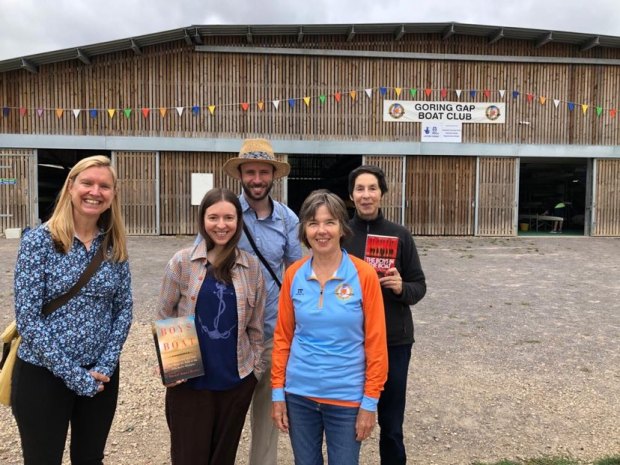
(After reading the book, some of us went on a fieldtrip to see the boating club where the woman who recommended the book rows as an amateur. It wasn’t until I saw the rowers out on the Thames that I realized that only the coxswain – the one who sits at the back of the boat and calls out the orders – faces forward, while all the other rowers are facing backwards. That feels metaphorically significant, like you have to trust where the journey is taking you all together rather than relying on your own sight.)
All along, Brown subtly weaves in the historical background: Depression-era Seattle with its shantytowns, and the rise of Hitler in Germany. Joseph Goebbels and Leni Riefenstahl were key propagandists, whitewashing the city in advance of the Olympics to make a good impression on foreign visitors. Some atrocities had already been committed, and purification policies were in place, yet the Nazis fooled many with a façade of efficiency and cleanliness.
I have deep admiration for books, fiction or non-, that can maintain suspense even though you know the outcome. The pacing really works here. Most of the action is pre-Berlin, which keeps the tension high. (The only times when my attention waned was in the blow-by-blow accounts of preliminary races.) There were so many mishaps associated with the Olympic race that it truly is amazing that the U.S. team pulled through to win – I’ll leave the specifics for future readers to discover. But there are a couple ‘stranger than fiction’ details of the book that I do want to pull out: Joe’s father and brother each married one sister from a set of twins; and actor Hugh Laurie’s father was on the Great Britain rowing team at the 1936 Olympics.
The fires and heatwave of 1936 felt familiar, as did the hairstyles and fashions in the black-and-white photos (but the ‘boys’ themselves look more like 35-year-olds than modern college students). In some ways it seemed that little has changed, but then other facts feel impossibly outdated – e.g., sperm whale oil was used to oil the boats.
This might seem like a ‘dad book’ – indeed, several of us passed the book on to our fathers/-in-law after reading – but in fact it has very broad appeal and is one I’d be likely to recommend to any big readers, even if they’re not keen on nonfiction. It’s one of my most memorable reads of the year so far. And whether you fancy reading the book or not, you may want to look out for the George Clooney-directed film, coming out next year. (Secondhand purchase) 
The Book of Difficult Fruit by Kate Lebo
I have a soft spot for uncategorizable nonfiction like this. My expectation was for a food memoir, but while the essays incorporate shards of autobiography and, yes, recipes, they also dive into everything from botany and cultural history to medicinal uses. Kate Lebo has a finger in many pies – a figure of speech I use deliberately, as she is primarily a baker (but also a poet) and her three previous books are about pie.
You won’t find any ordinary apples or oranges here. Difficult fruit – “the Tart, Tender, and Unruly,” as the subtitle elaborates – is different: rarer to find, more challenging to process, perhaps harder to love. Instead of bananas and pears, then, you’ll read about the niche (aronia and thimbleberries), the rotten and malodorous (medlars and durian fruit), and the downright inedible (just one: the Osage orange, only suitable for repelling spiders or turning into decorations). These fruits might be foraged on hikes, sent by friends and relatives in other parts of the USA, or sold at Lebo’s local Spokane, Washington farmer’s market. Occasionally the ‘recipes’ are for non-food items, such as a pomegranate face mask or yuzu body oil.

The A-to-Z format required some creativity and occasions great trivia but also poignant stories. J is for juniper berry, a traditional abortifacient, and brings to mind for Lebo the time she went to Denver to accompany a friend to an abortion appointment. N is for the Norton grape, an American variety whose wine is looked down upon compared to European cultivars. Q is for quince, what Eve likely ate in the Garden of Eden; like the first humans in the biblical account, Lebo’s pair of adopted aunts were cast out for their badness. W is for wheat, a reminder of her doomed relationship with a man who strictly avoided gluten; X is for xylitol, whose structure links to her stepdaughter’s belief in the power of crystals.
Health is a recurring element that intersects with eating habits: Lebo has ulcerative colitis, depression and allergies; her grandfather was a pharmacist and her mother is a physical therapist who suffers from migraines and is always trying out different diets. The extent to which a fruit can genuinely promote wellness is a question that is pondered more than once. Whether the main focus is on the foodstuff or the family experience, each piece is carefully researched so as to be authoritative yet conversational. The author is particularly good at describing smells and tastes, which can be so difficult to translate into words:
My first taste of durian was as candy, a beige lozenge with a slight pink blush that my boss at the time dared me to try. … It tasted of strawberries and old garlic. I had to will myself to finish. … My second taste of durian was at dim sum in New York City, visiting a man who would never love me. The durian was stewed, sweetened, and crenellated with flaky dough. … [It] was like peaches laced with onions, and had a richness that made my chest tight. Each bite was a dare. Could I keep going?
A single medlar that has been bletted outdoors through early December can be eaten in three bites. The first taste will be of spiced applesauce. … The second taste, because the medlar has spent long cold weeks on the branch, is sparkling wine. Not a good sparkling wine, but pleasant enough. Slightly explosive-tasting, like certain manufactured candies. Ugly, but what a personality. The third taste is a cold mildew one usually only smells, and generally interprets as a warning not to eat any more. You have now finished the medlar.
Two essays in a row best exemplified the book’s approach for me. The chapter on gooseberries, the cover stars, captures everything I love about them (we have two bushes; this year we turned our haul into a couple of Nigel Slater’s crumble cakes and a batch of gingery jam) and gives tips on preparation plus recipes I could see myself making. “Gooseberries are sour like you’ve arrived before they were ready for company, like they wanted you to see them in a better dress,” Lebo writes. The piece on huckleberries then shares Indigenous (Salish) wisdom about the fruit and notes that in a Spokane McDonald’s you can buy a huckleberry shake.
Over the eight months I spent with this collection – picking it up once in a while to read an essay, or a portion of one – I absorbed a lot of information, as well as some ideas for dishes I might actually try. Most of all, I admired how this book manages to be about everything, which makes sense because food is not just central to our continued survival but also bound up with collective and personal identity, memory, and traditions. Though it started off slightly scattershot for me, it’s ended up being one of my favorite reading experiences of the year.
With thanks to Picador for the free copy for review.
Snow and Winter Reads, Part II
Since I wrote about my first batch of wintry reads in early February, it’s turned much more spring-like here in southern England, with blue skies and the daffodils blooming. Still, temperatures continue chilly and some nights I’ve had trouble falling asleep because of the wind tearing down the street and flapping the bin lids. With meteorological spring due to start tomorrow, I’m bidding farewell to winter with a few more snow-covered reads: a children’s classic, a modern classic from the 1990s, and an implausible but enjoyably rollicking thriller.
The Wolves of Willoughby Chase by Joan Aiken (1962)
 Aiken’s books were not part of my childhood, but I was vaguely aware of this first book in a long series when I plucked it from a neighbor’s giveaway pile. The snowy scene on the cover and described in the first two paragraphs drew me in and the story, a Victorian-set fantasy with notes of Oliver Twist and Jane Eyre, soon did, too. In this alternative version of the 1830s, Britain already had an extensive railway network and wolves regularly used the Channel Tunnel (which did not actually open until 1994) to escape the Continent’s brutal winters for somewhat milder climes.
One winter, the orphaned Sylvia travels by train from London to the north of England to live with her cousin Bonnie and her parents, Sir Willoughby and Lady Green. But dodgy things are afoot at Willoughby Chase: Miss Slighcarp, a distant cousin, has been hired as the girls’ governess but, just as soon as Bonnie’s parents leave on a long trip, she sets about taking over the house. Bonnie and Sylvia, exiled to a workhouse, rely on a secret network of friends and servants to keep them safe and get them home via an intrepid journey.
Miss Slighcarp is just one of the novel’s Dickensian villains – balanced out by some equally Dickensian urchins and helpful adults, all of them with hearts of gold. There’s something perversely cozy about the plight of an orphan in children’s books: the characters call to the lonely child in all of us, and we rejoice to see how ingenuity and luck come together to defeat wickedness. There are charming passages here in which familiar smells and favorite foods offer comfort. I especially loved their friend Simon’s cave and his little rituals. This would make a perfect stepping stone from Roald Dahl to one of the actual Victorian classics.
My only quibble with the book overall would be that the wolves seem unnecessary: they only truly appear once, for a climactic scene during the train ride, and the rest of the time are just a background menace. From fairy tales onwards, wolves have gotten a bad rap, and we don’t need to perpetuate myths about how dangerous they are to humans. 
Snow Falling on Cedars by David Guterson (1994)
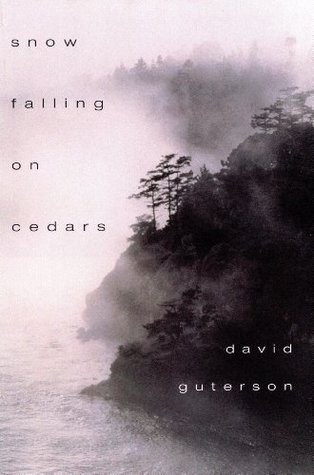 My first 5-star read of the year! It certainly took a while, but I’m now on a roll with a bunch of 4.5- and 5-star ratings bunching together. I remember the buzz surrounding this novel, mostly because of the Ethan Hawke film version that came out when I was a teenager. Even though I didn’t see it, I was aware of it, as I was of other literary fiction that got turned into Oscar-worthy films at about that time, like The Shipping News and House of Sand and Fog.
The novel is set in 1954 on San Piedro, an island of 5,000 off the coast of Washington state. A decade on from the war, the community’s chickens come home to roost when a Japanese American man, Kabuo Miyamoto, is charged with murdering a fellow fisherman, Carl Heine. The men had been engaged in a dispute over some land – seven acres of strawberry fields that were seized from the Miyamoto family when, like the rest of the country’s Japanese population, they were rounded up in internment camps. Meanwhile, Ishmael Chambers, who runs the local newspaper and lost an arm in the war, stumbles on a piece of evidence that might turn the case around. Still in love with Hatsue, now Kabuo’s wife but once his teenage obsession, he is torn between winning her back and wanting to do what’s right.
Guterson alternates between trial scenes and flashbacks to war service or stolen afternoons Ishmael and Hatsue spent kissing in the shelter of massive cedar trees. The mystery element held me completely gripped – readers are just as in the dark as the jurors until very close to the end – but this is mostly a powerful picture of the lasting effects of racism. All the characters are well drawn, even minor ones like elderly defense attorney Nels Gudmundsson. Even though I only read 10 or 15 pages at a sitting over the course of a month, every time I picked up the book I was instantly immersed in the atmosphere, whether it was a warm courtroom with a snowstorm swirling outside or a troop ship entering the Pacific Theater. This has the epic feel of a doorstopper, though it’s only 400 pages. I can’t recommend it highly enough.
The Quality of Silence by Rosamund Lupton (2015)
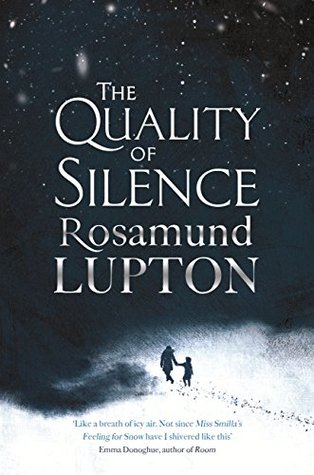 Ten-year-old Ruby and her mother Yasmin have arrived in Alaska to visit Ruby’s dad, Matt, who makes nature documentaries. When they arrive, police inform them that the town where he was living has been destroyed by fire and he is presumed dead. But Yasmin won’t believe it and they set out on a 500-mile journey north to find her husband, first hitching a ride with a trucker and then going it alone in a stolen vehicle. All the time, with the weather increasingly brutal, they’re aware of someone following them – someone with malicious intent.
The narration is in short segments, alternating between Ruby’s first person and a third-person account from Yasmin’s point-of-view. There are many interesting elements here: Ruby is deaf so communicates via a combination of sign language, voice recognition software, blogs and social media, and describes things synesthetically; Yasmin is a physicist drawing metaphors to scientific concepts, but can’t explain her own mystical certainty that Matt is still alive; and there is an environmentalist message behind the fracking cover-up plot.
But starting with the first page, there are so many improbabilities in play, from a 10-year-old having a Twitter account to Yasmin managing to drive a big rig on ice roads in a foreign country. I knew from reviewing Three Hours last year that Lupton writes addictive thrillers. This one was perfectly readable, but not as good. It’s our book club read for early March, and I expect I won’t be the only one to find it hardly believable. 
Plus a skim:
Arctic Dreams by Barry Lopez (1986)
 This was my first time trying the late Lopez. It was supposed to be a buddy read with my husband because we ended up with two free copies, but he raced ahead while I limped along just a few pages at a time before admitting defeat and skimming to the end (it was the 20 pages on musk oxen that really did me in). For me, the reading experience was most akin to The Snow Leopard by Peter Matthiessen in that both are about a literal journey in an extreme environment, yet what stands out are the philosophical musings. Where Matthiessen was animated by Buddhist ideas about selfhood and loss, Lopez takes the secular long view of human life and responsibility in light of potential extinction. The epilogue, in particular, is endlessly quotable. It’s depressing to encounter books like this now, though: 30+ years ago, literary nature writers were issuing clarion calls about climate disaster, and we didn’t listen.
Some favorite passages:
“Whenever I met a collared lemming on a summer day and took its stare I would think: Here is a tough animal. Here is a valuable life. … If it could tell me of its will to survive, would I think of biochemistry, or would I think of the analogous human desire? If it could speak of the time since the retreat of the ice, would I have the patience to listen?”
“The cold view to take of our future is that we are therefore headed for extinction in a universe of impersonal chemical, physical, and biological laws. A more productive, certainly more engaging view, is that we have the intelligence to grasp what is happening, the composure not to be intimidated by its complexity, and the courage to take steps that may bear no fruit in our lifetimes.”
“One of the oldest dreams of mankind is to find a dignity that might include all living things. And one of the greatest of human longings must be to bring such dignity to one’s own dreams, for each to find his or her own life exemplary in some way. The struggle to do this is a struggle because an adult sensibility must find some way to include all the dark threads of life. A way to do this is to pay attention to what occurs in a land not touched by human schemes, where an original order prevails.”
 Bookish Beck = Rebecca Foster. American transplant to England. Freelance proofreader and book reviewer.
 Bookish Beck