20 Books of Summer, 17–20: Jaouad, Kim, Merwin, Piñeiro (#WITMonth)
It’s time to draw a line under 20 Books of Summer so I can focus on hosting Short Story September. I’m technically not quite finished with these first two I’m technically not quite finished with these first two [70 pages to go in the Jaouad and 46 in the Kim], but I’ve read enough to form an opinion and will pop back later to add in final thoughts and ratings. My final four are a memoir of cancer in young adulthood; a page-turning courtroom drama about experimental autism treatment gone wrong; gorgeous nature poems; and a novella in translation that comments on disability, motherhood and mental health issues. Skip to the end for my one DNF of the challenge and a look back at some stats plus my most successful reads.
Between Two Kingdoms: What Almost Dying Taught Me about Living by Suleika Jaouad (2021)
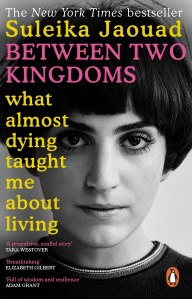
{Updated on 7 September} Jaouad wrote a New York Times column about going through leukaemia treatment in her early twenties and what came next. After months of itching and fatigue, she fell properly ill while working her first postgraduate job in Paris and her blood test results were so bad that she flew home to New York. She would be in and out of hospital for the next five years, enduring multiple rounds of chemo and a bone marrow transplant from her brother. It’s a terrific granular account of the physical and emotional rigours of illness, as well as the strain it put on her relationships – being her primary caregiver was too much for her boyfriend, Will. But she also found a community of young cancer patients, many (like Max Ritvo) now dead. After 60% of the book’s length, as the title – its metaphor taken from Susan Sontag – suggests, the new challenge for Jaouad was resuming life. “I’ve spent the past fifteen hundred days working tirelessly toward a single goal—survival. And now that I’ve survived, I’m realizing I don’t know how to live.” She decides to undertake a cross-country road trip punctuated by visits to people who wrote to her through her column: fellow cancer survivors, a mother who lost a son to suicide, a man on death row in Texas. At first I thought this content felt tacked on and should have been a sequel, but ultimately it illustrates why she wouldn’t edit out her illness if she had it all to do again. I hadn’t heard of Jaouad before I stumbled on this book; from Instagram, I learned she’s now (at age 38) weathered cancer three times. (Little Free Library) 
Miracle Creek by Angie Kim (2019)
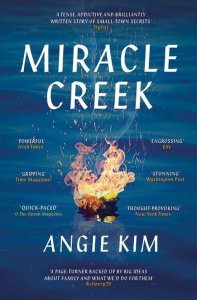
{Updated on 7 September} After enjoying Happiness Falls so much, I wanted to go back to Kim’s debut, for which she won an Edgar Award. (There’s an autistic boy and discussion of therapies in that second book as well.) The bulk of the novel is set during the four days of an August 2009 trial. It’s been a year since a horrific accident at Pak Yoo’s “Miracle Submarine,” a rural Virginia hyperbaric oxygen chamber where regulars came for twice-daily treatment of autism, cerebral palsy, and infertility. Meanwhile, protesters gathered outside to draw attention to what they believed to be a dangerous and unproven technique, the equivalent of child abuse. Someone with Camel cigarettes and matches from a local 7-11 set a small fire under an oxygen tank; the resulting explosion killed two and seriously injured two more. The mother of one of the autistic boys was arrested for suspected arson and attempted murder, but as the trial goes on suspicion seems to shift to members of the Korean American family who ran the HBOT operation. There’s a lot to sink the teeth into here. Each character has secrets, and little revelations are emerging all the time, such that the prosecutor and defence lawyer are always having to adjust their approach. Like I’ve experienced with Kim before, this was intelligent, thought-provoking, and absorbing. It’s just the sort of crime-adjacent fiction I like. An author Q&A at the end reveals a couple of autobiographical inspirations: working in her immigrant parents’ convenience store near Baltimore as a teenager, and taking one of her sons, who had neurological deafness and chronic illnesses, for HBOT. (Gift from my wish list)
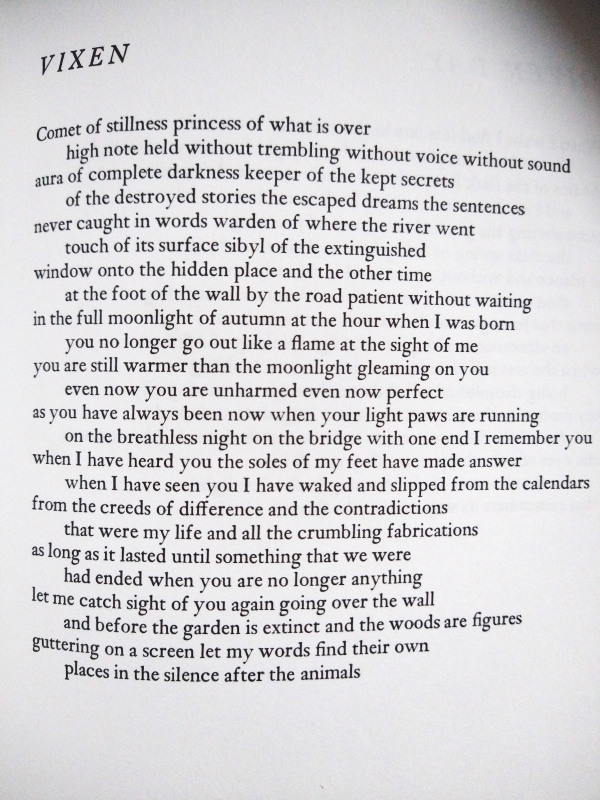
The Vixen by W.S. Merwin (1996)
it seems that the world is made of a single
summer as it always has been (from “Entry”)
 I took this off the shelf because Merwin was one of the POV characters in The Daffodil Days, Helen Bain’s excellent novel about Sylvia Plath’s final years. I had no idea what to expect, and it took me a while to get used to his entirely unpunctuated verse. Only by reading aloud or in my head was I able to split the text blocks into meaning-rich phrases. The fox is a revenant flitting through many of these poems as they pinpoint natural rhythms and human traces across the seasons and centuries. A lot reference summer, in particular, so this was a perfect choice for the challenge. There are a few historical portraits but most of the pieces feel timeless, evoking a countryside locale where the speaker returns to find derelict dwellings given over to birds and trees. Mostly it feels like this could be England, but sometimes a dry aridity suggests the Mediterranean. There is a strong sense of temporality, especially of afterness – the close of a day, the tail end of a season, the still-resonant emptiness after life has left or activity has finished. But there is also the hint of an eternal present:
Seen from afterward the time appears to have been
all of a piece which of course it was but how seldom
it seemed that way when it was still happening (from “Completion”)
In a long book (~65 pieces), there were only a few poems that washed over me without making any impression. The run-on pace, alliteration, and close attention to the natural world made this utterly mesmerizing. I’ll be sure to read more by Merwin. (Secondhand – Bridport Old Books) 
Elena Knows by Claudia Piñeiro (2007; 2021)
[Translated from Spanish by Frances Riddle]
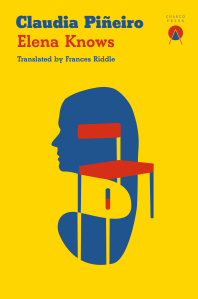 Piñeiro is an Argentinian author known for infusing her detective novels with a political conscience. Elena Knows is a mystery of sorts, in which the title character devotes herself to investigating her daughter’s death (Rita was found hanging in the belfry of a church). But several elements make this atypical for crime fiction: Elena has Parkinson’s disease – “that f—ing whore illness,” she calls it; refuses to accept the police’s conclusion that Rita died by suicide – she would never have gone there in the rain, she insists; and drags her uncooperative body across Buenos Aires to confront an acquaintance she thinks might be able to shed some light. It’s a circadian narrative, divided into sections by Elena’s pill schedule, but expands its timeline through flashbacks to consider the complications of the mother–daughter relationship as Elena became more physically dependent. The eventual encounter with Isabel presents a contrast in the form of a woman who didn’t want to become a mother but had to because of a prohibition on abortion, which was only legalized in Argentina in 2020. While the approach and themes were appealing, I found this repetitive and the long blocks of dialogue in italics were challenging to read. This was shortlisted for the International Booker Prize, though I thought it had a better chance in that year’s Barbellion Prize race (returning this year!). (Gift from my wish list)
And a DNF:
Blonde by Joyce Carol Oates (2000)
Her problem wasn’t she was a dumb blonde, it was she wasn’t a blonde and she wasn’t dumb.
Sigh. Between February and July I read about 200 pages, then skimmed another 100 or so, then finally gave up. (My third Oates DNF. I don’t think she and I are meant to be, though I seem to have better luck with her short stories and own another couple of her books to try.) I engaged most with the early pages about her childhood with a vain, neglectful mother who ends up in a mental hospital; and then with her teenage marriage to Bucky Glazer and involvement in the war effort.
She was a sweet kid but so emotional. Wanting love all the time. She was immature and unreliable and I guess so was I; we were too young. If she’d been a better cook and not so emotional, it might’ve worked out.
Except that people were dying and being injured and the world filling up with smoldering rubble, Norma Jeane liked the War. The War was as steady and reliable as hunger or sleep. Always, the War was there.
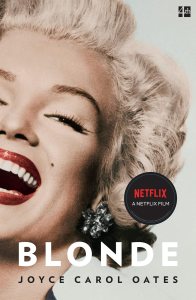 In the part that I skimmed, she is starting to become known in Hollywood, with a nude photo shoot (for which she only earned $50), bit parts in films, and her famous stage name.
In the introductory Author’s Note, Oates writes, “for all its length, synecdoche is the principle of appropriation.” So, for instance, instead of multiple foster families, we just get one. Always, there was unwanted male attention, including molestation. I was surprised to find that the pick-and-choose, fact–fiction hybrid approach became a problem for me. I wanted to know if she really married a man named Bucky and wrote poetry. Yet I didn’t want to have to be verifying every fact either.
Oates’s kitchen-sink style involves imagined scenes and dialogue plus retrospective commentary and knowing asides; long, looping sentences and short ones; direct and indirect speech; lots of exclamation points. Lots of everything. The repetition will be deliberate, for effect, but I kept longing for a streamlined version that cut, say, three of every five sentences.
Anyway, this was certainly a project worth undertaking for Oates; you can see why it was irresistible to unearth the reality behind a legend. Norma Jeane is intriguing for her simultaneous childlike innocence and cultivated sensuality. (Secondhand – Awesomebooks.com)
20 Books Statistics:
14 fiction
4 nonfiction
2 poetry
7 by BIPOC
3 towards WIT Month (for which I reviewed 8 in total, with library reads and Foreword reviews)
3 rereads
I’ve learned this year that it’s important, momentum-wise, to build in a number of shorter books (6 of novella length + 2 poetry collections) and best to avoid doorstoppers. I was wise to pick some addictive, undemanding novels that tread the line between popular and literary fiction (Kim, Mantel, O’Farrell, Reid, Sullivan); anything that feels like hard work (Oates!) is definitely not a summer read.
I only read a risible 4 of the specific books I set out as options in my planning post, plus 1 of my additional ideas. (It’s ironic that I struggled to finish this set of 20 when I could have labelled anything from my shelves part of the challenge – in total, I read 39 of my own books this summer.)
My favourites of the 20 were Strange Weather in Tokyo, Prodigal Summer & The Vanishing Act of Esme Lennox (both rereads), and The Vixen. But What Belongs to You, Miracle Creek, Mitz, The Employees, Commencement, and Flush were also great reads. To be able to single out half of the books equals a huge success!
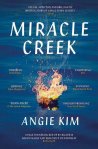
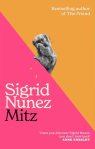
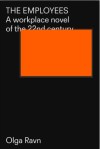
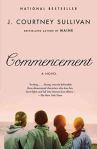
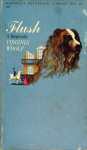
I also completed a 4-book diagonal on the Bingo card!
- Summer in the title (PRODIGAL SUMMER)
- A classic you’ve been meaning to (RE-)read (FLUSH)
- Features a family holiday (MITZ)
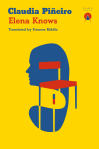
- Published in summer (ELENA KNOWS – July 2021)
First Four in a Row: Márai, Maupin, McEwan, McKay
I announced a few new TBR reading projects back in May 2020, including a Four in a Row Challenge (see the ‘rules’, such as they are, in my opening post). It only took me, um, nearly 11 months to complete a first set! The problem was that I kept changing my mind on which four to include and acquiring more that technically should go into the sequence, e.g. McCracken, McGregor; also, I stalled on the Maupin for ages. But here we are at last. Debbie, meanwhile, took up the challenge and ran with it, completing a set of four novels – also by M authors, clearly a numerous and tempting bunch – back in October. Here’s hers.

I’m on my way to completing a few more sets: I’ve read one G, one and a bit H, and I selected a group of four L. I’ve not chosen a nonfiction quartet yet, but that could be an interesting exercise: I file by author surname even within categories like science/nature and travel, so this could throw up interesting combinations of topics. Do feel free to join in this challenge if, like me, you could use a push to get through more of the books on your shelves.
Embers by Sándor Márai (1942)
[Translated from the Hungarian by Carol Brown Janeway]
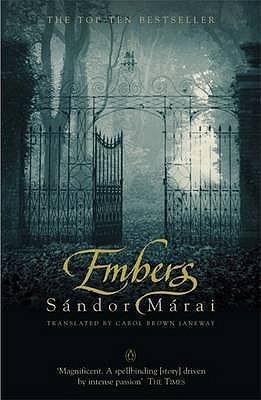 My first work of Hungarian literature.* This was a random charity shop purchase, simply because I’m always trying to read more international literature and had enjoyed translations by Carol Brown Janeway before. In 1940, two old men are reunited for the first time in 41 years at a gloomy castle, where they will dine by candlelight and, over the course of a long conversation, face up to the secret that nearly destroyed their friendship. This is the residence of 75-year-old Henrik, usually referred to as “the General,” who lives alone apart from Nini, his 91-year-old wet nurse. His wife, Krisztina, died 33 years ago.
Henrik was 10 when he met Konrad at an academy school. They were soon the best of friends, but two things came between them: first was the difference in their backgrounds (“each forgave the other’s original sin: wealth on the one hand and poverty on the other”); second was their love for the same woman.
I appreciated the different setup to this one – a male friendship, just a few very old characters, the probing of the past through memory and dialogue – but it was so languid that I struggled to stay engaged with the plot. 
*My next will be Journey by Moonlight by Antal Szerb, another charity shop find.
Favourite lines:
“My homeland was a feeling, and that feeling was mortally wounded.”
“Life becomes bearable only when one has come to terms with who one is, both in one’s own eyes and in the eyes of the world.”
Tales of the City by Armistead Maupin (1978)
I’d picked this up from the free bookshop we used to have in the local mall (the source of my next two as well) and started it during Lockdown #1 because in The Novel Cure it is given as a prescription for Loneliness. Berthoud and Elderkin suggest it can make you feel like part of a gang of old friends, and it’s “as close to watching television as literature gets” due to the episodic format – the first four Tales books were serialized in the San Francisco Chronicle.
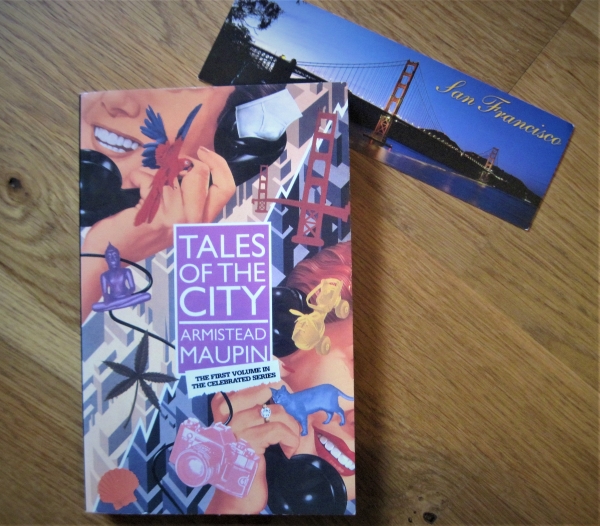
How I love a perfect book and bookmark combination!
The titled chapters are each about three pages long, which made it an ideal bedside book – I would read a chapter per night before sleep. The issue with this piecemeal reading strategy, though, was that I never got to know any of the characters; because I’d often only pick up the book once a week or so, I forgot who people were and what was going on. That didn’t stop individual vignettes from being entertaining, but meant it didn’t all come together for me.
Maupin opens on Mary Ann Singleton, a 25-year-old secretary who goes to San Francisco on vacation and impulsively decides to stay. She rooms at Anna Madrigal’s place on Barbary Lane and meets a kooky assortment of folks, many of them gay – including her new best friend, Michael Tolliver, aka “Mouse.” There are parties and affairs, a pregnancy and a death, all told with a light touch and a clear love for the characters; dialogue predominates. While it’s very much of its time, it manages not to feel too dated overall. I can see why many have taken the series to heart, but don’t think I’ll go further with Maupin’s work.
Note: Long before I tried the book, I knew about it through one of my favourite Bookshop Band songs, “Cleveland,” which picks up on Mary Ann’s sense of displacement as she ponders whether she’d be better off back in Ohio after all. Selected lyrics:
Quaaludes and cocktails
A story book lane
A girl with three names
A place, post-Watergate
Freed from its bird cage
Where the unafraid parade
[…]
Perhaps, we should all
Go back to Cleveland
Where we know what’s around the bend
[…]
Citizens of Atlantis
The Madrigal Enchantress cries
And we decide, to stay and bide our time
On this far-out, far-flung peninsula.
The Children Act by Ian McEwan (2014)
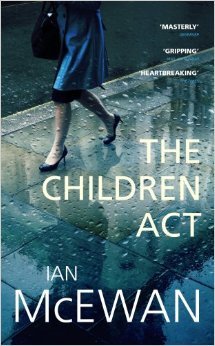 Although it’s good to see McEwan take on a female perspective – a rarer choice for him, though it has shown up in Atonement and On Chesil Beach – this is a lesser novel from him, only interesting insomuch as it combines elements from two of his previous works, The Child in Time (legislation around child welfare) and Enduring Love (a religious stalker). Fiona Maye, a High Court judge, has to decide whether 17-year-old Adam, a bright and musical young man with acute leukaemia, should be treated with blood transfusions despite his Jehovah’s Witness parents’ objection.
[SPOILERS FOLLOW]
She rules that the doctors should go ahead with the treatment. “He must be protected from his religion and from himself.” Adam, now better but adrift from the religion he was raised in, starts stalking Fiona and sending her letters and poems. Estranged from her husband, who wants her to condone his affair with a young colleague, and fond of Adam, Fiona spontaneously kisses the young man while traveling for work near Newcastle. But thereafter she ignores his communications, and when he doesn’t seek treatment for his recurring cancer and dies, she blames herself.
[END OF SPOILERS]
It’s worth noting that the AI in McEwan’s most recent full-length novel, Machines Like Me, is also named Adam, and in both books there’s uncertainty about whether the Adam character is supposed to be a child substitute. 
The Birth House by Ami McKay (2006)
Dora is the only daughter to be born into the Rare family of Nova Scotia’s Scots Bay in five generations. At age 17, she becomes an apprentice to Marie Babineau, a Cajun midwife and healer who relies on ancient wisdom and appeals to the Virgin Mary to keep women safe and grant them what they want, whether that’s a baby or a miscarriage. As the 1910s advance and the men of the village start leaving for the war, the old ways represented by Miss B. and Dora come to be seen as a threat. Dr. Thomas wants women to take out motherhood insurance and commit to delivering their babies at the new Canning Maternity Home with the help of chloroform and forceps. “Why should you ladies continue to suffer, most notably the trials of childbirth, when there are safe, modern alternatives available to you?” he asks.
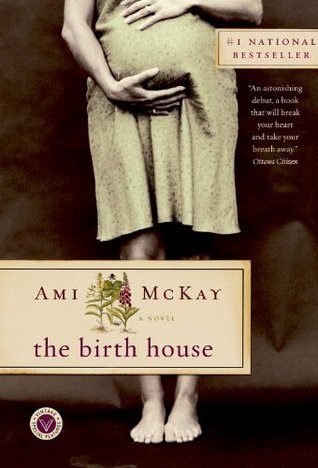 Encouraged into marriage at an early age, Dora has to put her vocation on hold to be a wife to Archer Bigelow, a drunkard with big plans for how he’s going to transform the area with windmills that generate electricity. Dora’s narration is interspersed with journal entries, letters, faux newspaper articles, what look like genuine period advertisements, and a glossary of herbal remedies – creating what McKay, in her Author’s Note, calls a “literary scrapbook.” I love epistolary formats, and there are so many interesting themes and appealing secondary characters here. Early obstetrics is not the only aspect of medicine included; there is also an exploration of “hysteria” and its treatment, and the Spanish flu makes a late appearance. Dora, away in Boston at the time, urges her friends from the Occasional Knitters’ Society to block the road to the Bay, make gauze masks, and wash their hands with hot water and soap.
There are a few places where the narrative is almost overwhelmed by all the (admittedly, fascinating) facts McKay, a debut author, turned up in her research, and where the science versus superstition dichotomy seems too simplistic, but for the most part this was just the sort of absorbing, atmospheric historical fiction that I like best. McKay took inspiration from her own home, an old birthing house in the Bay of Fundy. 
Snow and Winter Reads, Part II
Since I wrote about my first batch of wintry reads in early February, it’s turned much more spring-like here in southern England, with blue skies and the daffodils blooming. Still, temperatures continue chilly and some nights I’ve had trouble falling asleep because of the wind tearing down the street and flapping the bin lids. With meteorological spring due to start tomorrow, I’m bidding farewell to winter with a few more snow-covered reads: a children’s classic, a modern classic from the 1990s, and an implausible but enjoyably rollicking thriller.
The Wolves of Willoughby Chase by Joan Aiken (1962)
 Aiken’s books were not part of my childhood, but I was vaguely aware of this first book in a long series when I plucked it from a neighbor’s giveaway pile. The snowy scene on the cover and described in the first two paragraphs drew me in and the story, a Victorian-set fantasy with notes of Oliver Twist and Jane Eyre, soon did, too. In this alternative version of the 1830s, Britain already had an extensive railway network and wolves regularly used the Channel Tunnel (which did not actually open until 1994) to escape the Continent’s brutal winters for somewhat milder climes.
One winter, the orphaned Sylvia travels by train from London to the north of England to live with her cousin Bonnie and her parents, Sir Willoughby and Lady Green. But dodgy things are afoot at Willoughby Chase: Miss Slighcarp, a distant cousin, has been hired as the girls’ governess but, just as soon as Bonnie’s parents leave on a long trip, she sets about taking over the house. Bonnie and Sylvia, exiled to a workhouse, rely on a secret network of friends and servants to keep them safe and get them home via an intrepid journey.
Miss Slighcarp is just one of the novel’s Dickensian villains – balanced out by some equally Dickensian urchins and helpful adults, all of them with hearts of gold. There’s something perversely cozy about the plight of an orphan in children’s books: the characters call to the lonely child in all of us, and we rejoice to see how ingenuity and luck come together to defeat wickedness. There are charming passages here in which familiar smells and favorite foods offer comfort. I especially loved their friend Simon’s cave and his little rituals. This would make a perfect stepping stone from Roald Dahl to one of the actual Victorian classics.
My only quibble with the book overall would be that the wolves seem unnecessary: they only truly appear once, for a climactic scene during the train ride, and the rest of the time are just a background menace. From fairy tales onwards, wolves have gotten a bad rap, and we don’t need to perpetuate myths about how dangerous they are to humans. 
Snow Falling on Cedars by David Guterson (1994)
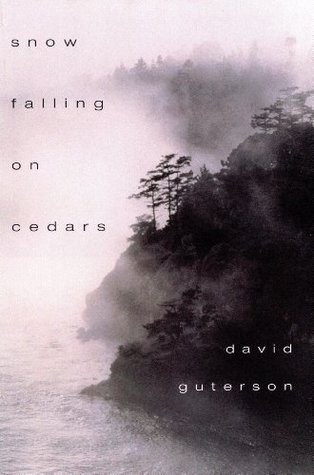 My first 5-star read of the year! It certainly took a while, but I’m now on a roll with a bunch of 4.5- and 5-star ratings bunching together. I remember the buzz surrounding this novel, mostly because of the Ethan Hawke film version that came out when I was a teenager. Even though I didn’t see it, I was aware of it, as I was of other literary fiction that got turned into Oscar-worthy films at about that time, like The Shipping News and House of Sand and Fog.
The novel is set in 1954 on San Piedro, an island of 5,000 off the coast of Washington state. A decade on from the war, the community’s chickens come home to roost when a Japanese American man, Kabuo Miyamoto, is charged with murdering a fellow fisherman, Carl Heine. The men had been engaged in a dispute over some land – seven acres of strawberry fields that were seized from the Miyamoto family when, like the rest of the country’s Japanese population, they were rounded up in internment camps. Meanwhile, Ishmael Chambers, who runs the local newspaper and lost an arm in the war, stumbles on a piece of evidence that might turn the case around. Still in love with Hatsue, now Kabuo’s wife but once his teenage obsession, he is torn between winning her back and wanting to do what’s right.
Guterson alternates between trial scenes and flashbacks to war service or stolen afternoons Ishmael and Hatsue spent kissing in the shelter of massive cedar trees. The mystery element held me completely gripped – readers are just as in the dark as the jurors until very close to the end – but this is mostly a powerful picture of the lasting effects of racism. All the characters are well drawn, even minor ones like elderly defense attorney Nels Gudmundsson. Even though I only read 10 or 15 pages at a sitting over the course of a month, every time I picked up the book I was instantly immersed in the atmosphere, whether it was a warm courtroom with a snowstorm swirling outside or a troop ship entering the Pacific Theater. This has the epic feel of a doorstopper, though it’s only 400 pages. I can’t recommend it highly enough. 
The Quality of Silence by Rosamund Lupton (2015)
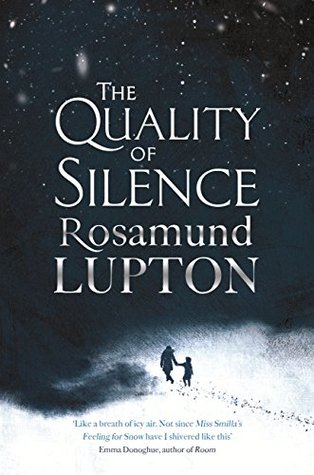 Ten-year-old Ruby and her mother Yasmin have arrived in Alaska to visit Ruby’s dad, Matt, who makes nature documentaries. When they arrive, police inform them that the town where he was living has been destroyed by fire and he is presumed dead. But Yasmin won’t believe it and they set out on a 500-mile journey north to find her husband, first hitching a ride with a trucker and then going it alone in a stolen vehicle. All the time, with the weather increasingly brutal, they’re aware of someone following them – someone with malicious intent.
The narration is in short segments, alternating between Ruby’s first person and a third-person account from Yasmin’s point-of-view. There are many interesting elements here: Ruby is deaf so communicates via a combination of sign language, voice recognition software, blogs and social media, and describes things synesthetically; Yasmin is a physicist drawing metaphors to scientific concepts, but can’t explain her own mystical certainty that Matt is still alive; and there is an environmentalist message behind the fracking cover-up plot.
But starting with the first page, there are so many improbabilities in play, from a 10-year-old having a Twitter account to Yasmin managing to drive a big rig on ice roads in a foreign country. I knew from reviewing Three Hours last year that Lupton writes addictive thrillers. This one was perfectly readable, but not as good. It’s our book club read for early March, and I expect I won’t be the only one to find it hardly believable.
Plus a skim:
Arctic Dreams by Barry Lopez (1986)
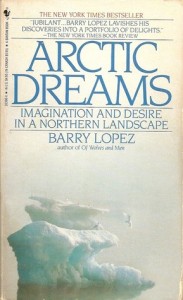 This was my first time trying the late Lopez. It was supposed to be a buddy read with my husband because we ended up with two free copies, but he raced ahead while I limped along just a few pages at a time before admitting defeat and skimming to the end (it was the 20 pages on musk oxen that really did me in). For me, the reading experience was most akin to The Snow Leopard by Peter Matthiessen in that both are about a literal journey in an extreme environment, yet what stands out are the philosophical musings. Where Matthiessen was animated by Buddhist ideas about selfhood and loss, Lopez takes the secular long view of human life and responsibility in light of potential extinction. The epilogue, in particular, is endlessly quotable. It’s depressing to encounter books like this now, though: 30+ years ago, literary nature writers were issuing clarion calls about climate disaster, and we didn’t listen.
Some favorite passages:
“Whenever I met a collared lemming on a summer day and took its stare I would think: Here is a tough animal. Here is a valuable life. … If it could tell me of its will to survive, would I think of biochemistry, or would I think of the analogous human desire? If it could speak of the time since the retreat of the ice, would I have the patience to listen?”
“The cold view to take of our future is that we are therefore headed for extinction in a universe of impersonal chemical, physical, and biological laws. A more productive, certainly more engaging view, is that we have the intelligence to grasp what is happening, the composure not to be intimidated by its complexity, and the courage to take steps that may bear no fruit in our lifetimes.”
“One of the oldest dreams of mankind is to find a dignity that might include all living things. And one of the greatest of human longings must be to bring such dignity to one’s own dreams, for each to find his or her own life exemplary in some way. The struggle to do this is a struggle because an adult sensibility must find some way to include all the dark threads of life. A way to do this is to pay attention to what occurs in a land not touched by human schemes, where an original order prevails.”
 Bookish Beck = Rebecca Foster. American transplant to England. Freelance proofreader and book reviewer.
