Novellas in November 2023: That’s a Wrap!
This was Cathy’s and my fourth year co-hosting Novellas in November. We’ve done our best to keep up with your posts, collected via four Inlinkz post parties. We had 52 bloggers take part this year, contributing a total of 175 posts. You can look back at them all here. See also Cathy’s wrap-up post.

Claire Keegan continued to get lots of love this year, and it was great to see people engaging with our weekly prompts and buddy reads, and cleverly combining challenges with German Lit Month, Nonfiction November and Beryl Bainbridge Reading Week. Other books highlighted more than once included Cheri by Jo Ann Beard, They by Kay Dick, Train Dreams by Denis Johnson and Two Lives by William Trevor.
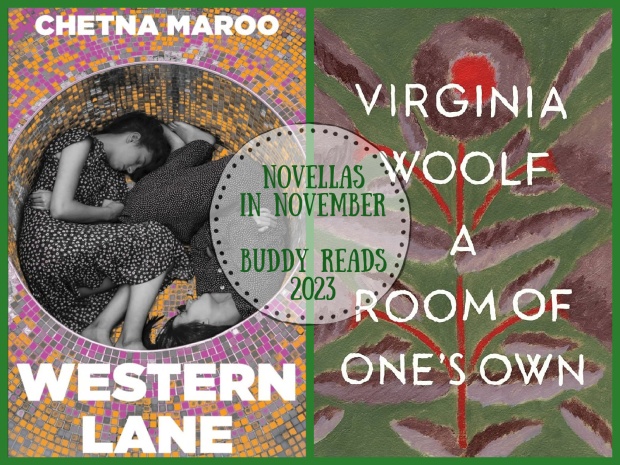
We’d love to get your feedback about what worked well or less well this month…
- Did you like having the prompts? Or would you rather go back to themes?
- Was it good to have a choice of buddy reads? Or do you prefer having just one?
- Did Inlinkz work okay for hosting the link-up?

Thank you all for being so engaged with #NovNov23! We’ll see you back here next year.
Book Serendipity, August to September 2023
I call it “Book Serendipity” when two or more books that I read at the same time or in quick succession have something in common – the more bizarre, the better.
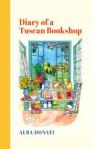
In Diary of a Tuscan Bookshop, Alba Donati remarks on this phenomenon: “Jung called these coincidences ‘synchronicities’, postulating that the universe possessed its own form of intelligence, which generated harmonies. A universe that detects and brings together the elements it feels are seeking each other in the endless swirl of life. Chance be damned.”
This is a regular feature of mine every couple of months. Because I usually have 20–30 books on the go at once, I suppose I’m more prone to such incidents. The following are in roughly chronological order.
- A memoir that opens with a little girl being injured in a bicycle accident: Some of Us Just Fall by Polly Atkin and Pharmakon by Almudena Sánchez.
- Telling stories through embroidery in Cross-Stitch by Jazmina Barrera and The Farmer’s Wife by Helen Rebanks.

- A small boy nicknamed “Willmouse” (real name: William) in Mary and the Birth of Frankenstein by Anne Eekhout and The Greengage Summer by Rumer Godden.
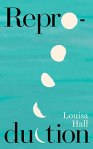
- An account of a routine sonogram that ends with the technician leaving the doctor to deliver bad news in Reproduction by Louisa Hall and The Unfamiliar by Kirsty Logan.
- Black dreadlocks/braid/ponytail being cut off in When We Were Birds by Ayanna Lloyd Banwo, The Wren, The Wren by Anne Enright, and Rebecca, Not Becky by Christine Platt and Catherine Wigginton Greene.

- Wondering how to arm a Black daughter against racist microaggressions in Rebecca, Not Becky by Christine Platt and Catherine Wigginton Greene and Ordinary Notes by Christina Sharpe.
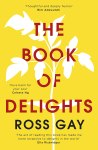
- Countering the commodification or romanticization of Black suffering in The Book of Delights by Ross Gay and Ordinary Notes by Christina Sharpe.

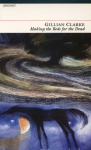
- An account of how the foot and mouth disease outbreak of 2001 affected the UK, especially northwest England, in Making the Beds for the Dead by Gillian Clarke and The Farmer’s Wife by Helen Rebanks.
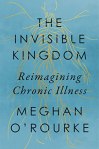
- I encountered the quote from Elaine Scarry’s The Body in Pain about pain being inexpressible in Reproduction by Louisa Hall and The Invisible Kingdom by Meghan O’Rourke on the same day. It’s also referenced in Mary Jean Chan’s Bright Fear.

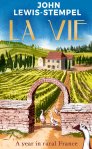
- A mention of eating frogs’ legs in The Book of Delights by Ross Gay and La Vie by John Lewis-Stempel.
- I read about the effects of heavy metal pollution on the body in The Invisible Kingdom by Meghan O’Rourke and Windswept by Annie Worsley in the same evening.
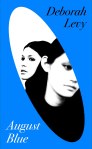
- Composer Erik Satie is mentioned in Making the Beds for the Dead by Gillian Clarke and August Blue by Deborah Levy.
- Stendhal syndrome and Florence are mentioned in The Wren, The Wren by Anne Enright and Pharmakon by Almudena Sánchez.
- Swallows nesting in an old Continental building in Diary of a Tuscan Bookshop by Alba Donati and La Vie by John Lewis-Stempel.
- France being all about the rules and a “Putain de merde” exclamation to bad news in Dirt by Bill Buford and La Vie by John Lewis-Stempel.

- A character named Nomi in Friends and Strangers by J. Courtney Sullivan and one called Noemi in Diary of a Tuscan Bookshop by Alba Donati.
- Epigenetics (trauma literally determining the genetic traits that are passed on) is discussed in The Invisible Kingdom by Meghan O’Rourke and Pharmakon by Almudena Sánchez.
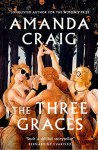
- Women of a certain age in Tuscany in The Three Graces by Amanda Craig and Diary of a Tuscan Bookshop by Alba Donati.
- Audre Lorde is quoted in Tremor by Teju Cole, Bibliomaniac by Robin Ince, The Invisible Kingdom by Meghan O’Rourke, Alone by Daniel Schreiber, and Ordinary Notes by Christina Sharpe.
- A Galway Kinnell poem is mentioned/quoted in The Dead Peasant’s Handbook by Brian Turner and Otherwise by Julie Marie Wade.
- The Bamiyan Buddhas are mentioned in Tremor by Teju Cole and The Dead Peasant’s Handbook by Brian Turner.


- Both The Three Graces by Amanda Craig and The Story of Lucy Gault by William Trevor open with a man shooting someone from his bedroom window.
- Linked short story collections about two children’s relationship with their Jamaican father, and mention of a devastating hurricane, in If I Survive You by Jonathan Escoffery and The Human Origins of Beatrice Porter and Other Essential Ghosts by Soraya Palmer. (Dual review coming up tomorrow!)
- Characters named Ben and Mara in The Whispers by Ashley Audrain and one story in Kate Doyle’s I Meant It Once.
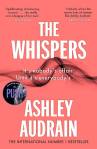
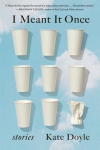
- Occasional uncut pages in my copies of I Meant It Once by Kate Doyle and The Unfamiliar by Kirsty Logan.
- A Florida setting and mention of the Publix supermarket chain in If I Survive You by Jonathan Escoffery and Arms and Legs by Chloe Lane.
- A down-at-heel English seaside town near Scarborough features in The Seaside by Madeleine Bunting and Penance by Eliza Clark.
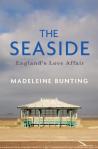

- A fictional northern town with “Crow” in the name: Crow-on-Sea in Penance by Eliza Clark and Crows Bank in Weyward by Emilia Hart.
- Claw-machine toys are mentioned in Penance by Eliza Clark and Directions to Myself by Heidi Julavits.
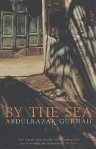
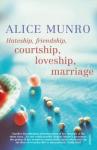
- Reading books by two Nobel Prize winners at the same time: Abdulrazak Gurnah (By the Sea) and Alice Munro (Hateship, Friendship, Courtship, Loveship, Marriage).
- Reading my second 2023 release featuring North Carolina ghost lights (after All of Us Together in the End by Matthew Vollmer, which I actually read last year): The Caretaker by Ron Rash.
- Reading my second 2023 release featuring a cat named Virginia Woolf (after Tell the Rest by Lucy Jane Bledsoe, which I actually read last year): one of the short stories in I Meant It Once by Kate Doyle.
- A character named Shay in Everyone but Myself by Julie Chavez, The Human Origins of Beatrice Porter and Other Essential Ghosts by Soraya Palmer and The Caretaker by Ron Rash.


What’s the weirdest reading coincidence you’ve had lately?
Two “Summer” Reads: Knausgaard and Trevor
Last year at about this time I reviewed Jonathan Smith’s Summer in February and Elizabeth Taylor’s In a Summer Season, two charming English novels about how love can upend ordinary life. This month I read my first William Trevor novel, Love and Summer, which is very much in that vein. My other selection, Karl Ove Knausgaard’s last of four seasonal installments written for his young daughter, is a mostly nonfiction hybrid.
Summer by Karl Ove Knausgaard (2016; English translation, 2018)

Illustrated by German artist Anselm Kiefer.
I’ve now read three volumes from the Seasons Quartet – all but Spring. The series started with Knausgaard addressing his fourth child in utero. By now she’s two years old but still the recipient of his nostalgic, slightly didactic essays on seasonal topics, as well as the “you” some of his journal entries are written to. I wasn’t so keen on Autumn, but Winter and Summer are both brilliant for how they move from tangibles – ice cream cones, camping, fruit flies, seagulls, butterflies and the circus – into abstract notions of thought, memory, identity and meaning. That fluidity is especially notable here when Knausgaard drifts in and out of the imagined experience of an elderly woman of his grandfather’s acquaintance who fell in love with an Austrian soldier and abandoned her children during World War II.
I especially enjoyed two stories: traveling with his son to Brazil for a literary festival where he ran into English surgeon Henry Marsh, and fainting at an overcrowded publisher party in London. He’s always highly aware of himself (he never gives open-mouthed smiles because of his awful teeth) and of others (this woman at the party is desperate to appear young). But more so than these stand-out events and his memories of childhood, he gives pride of place to everyday life, things like chauffeuring his three older children to their various activities and shopping at the supermarket for barbecue food. “By writing it I reveal that not only do I think about it, I attach importance to it. … I love repetition. Repetitions turn time into a place, turn the days into a house.” I highlighted dozens of passages in the Kindle book. I’ll need to catch up on Spring, and then perhaps return to the My Struggle books; I only ever read the first.
My rating: 
Love and Summer by William Trevor (2009)
 Trevor (1928–2016) was considered a writer’s writer and a critic’s dream for the simple profundity of his prose. I had long meant to try his work. This short novel is set over the course of one summer in a small Irish town in the 1950s, and opens on the day of the funeral of old Mrs. Connulty. A stranger is seen taking photographs around town, and there is much murmuring about who he might be. He is Florian Kilderry, who recently inherited his Anglo-Italian artist parents’ crumbling country house. It’s impossible to pay the debts and keep the house going, so he plans to sell it and its contents as soon as possible and move abroad, perhaps to Scandinavia.
But he hasn’t passed through Rathmoye without leaving ripples. Ellie Dillahan, a young farmer’s wife who was raised by nuns and initially moved to Dillahan’s as his housekeeper, falls in love with the stranger almost before she meets him, and they embark on a short-lived liaison. Blink and you’ll miss that the relationship is actually sexual; Trevor only uses the word “embraced” twice, I think. That reticence keeps it from being a torrid affair, yet we do get a sense of how wrenching the thought of Florian leaving becomes for Ellie. Trevor often moves from descriptions of nature or farm chores straight into Ellie’s thoughts, or vice versa.
“In the crab-apple orchard she scattered grain and the hens came rushing to her. She hadn’t been aware that she didn’t love her husband. Love hadn’t come into it”
“He [Florian] would be gone, as the dead are gone, and that would be there all day, in the kitchen and in the yard, when she brought in anthracite for the Rayburn, when she scalded the churns, while she fed the hens and stacked the turf.”
This is quietly beautiful writing – perhaps too quiet for me, despite the quirky secondary characters around the town (including the busybody Connulty daughter and the madman Orpen Wren) – but I would recommend Trevor to readers of Mary Costello and Colm Tóibín. I would also like to try Trevor’s short stories, for which he was particularly known; I think in small doses his subtle relationship studies and gentle writing would truly shine.
My rating: 
Summery reading options for next year: The Heat of the Day by Elizabeth Bowen, One Summer: America, 1927 by Bill Bryson, and The Go-Between by L. P. Hartley (set over a long, hot summer). I may also get Sunburn by Laura Lippman and Heat Wave by Penelope Lively out from the library.
 Bookish Beck = Rebecca Foster. American transplant to England. Freelance proofreader and book reviewer.
 Bookish Beck