The Women’s Prize shortlist will be announced on Wednesday the 26th. I’ve managed to read a few more novels from the longlist and started another (Fire Rush by Jacqueline Crooks), which would take me up to 6 read out of 16. I have a couple of others on order from the library (Kennedy and Patel), but will only bother to read them if they are shortlisted.
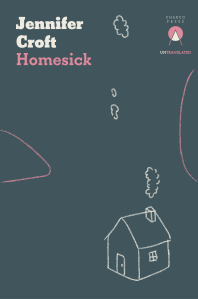
Homesick by Jennifer Croft
I was intrigued by the publication history of this one: Croft first wrote it in Spanish, then produced an English-language version which, in the USA, was marketed as a memoir illustrated with her own photographs. Here in the UK, though, Charco Press published it as part of their new range of untranslated fiction – with no photos, alas. So, it’s clear that this is thinly veiled autobiography; literally all that may have been changed is the character names.
 The protagonist is ‘Amy’, who lives in a tornado-ridden Oklahoma and whose sister, ‘Zoe’ – a handy A to Z of growing up there – has a mysterious series of illnesses that land her in hospital. The third person limited perspective reveals Amy to be a protective big sister who shoulders responsibility: “There is nothing in the world worse than Zoe having her blood drawn. Amy tries to show her the pictures [she’s taken of Zoe’s dog] at just the right moment, just right before the nurse puts the needle in”.
The girls are home-schooled and Amy, especially, develops a genius for languages, receiving private tutoring in Russian from Sasha, a Ukrainian former student of their father’s. Both sister are more than a little in love with Sasha. They alternate between competing for attention and indulging their joint passions – such as for the young Russian figure-skating couple who sweep the Winter Olympics. Amy starts college at 15, which earns her unwanted attention among her classmates, and struggles with her mental health before deciding to see the world. Despite periods of estrangement, her relationship with Zoe is what grounds her.
In a sense this is a simple chronological story, told in a matter-of-fact way. Yet each of its vignettes – some just a paragraph long – is perfectly chosen to reveal the family dynamic and the moment in American history. Detailed chapter headings continue the narrative and sometimes contain a shocking truth. What Croft does so brilliantly is to chart the accretion of ordinary and landmark events that form a life; Amy realizes this as she looks back at a packet of her photographs: “laid out step by step like this, more or less in order, the pictures also form a kind of path.”
Initially, I had my doubts as to whether this should have been eligible for the Women’s Prize. In the end it didn’t matter whether it was presented as memoir or autofiction, so true was it to the experience of 1990s girlhood, as well as to sisterhood and coming of age at any time in history. It reminded me strongly of Very Cold People by Sarah Manguso, but felt that little bit more universal in how it portrays family ties, ambition, and life’s winding path. (See also Annabel’s review for Shiny New Books.) 
With thanks to Charco Press for the free copy for review.
Children of Paradise by Camilla Grudova
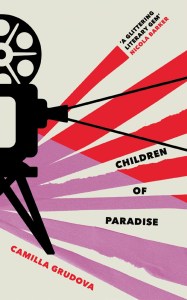 In 2017 I reviewed Grudova’s surreal story collection, The Doll’s Alphabet, describing its tales as “perverted fairytales or fragmentary nightmares.” Okay then, let’s continue in that perverted, nightmarish vein. Holly, new to the country/city, finds a room in a shared flat and a job as an usher at the Paradise Cinema, which shows a random assortment of art films and cult classics. The building is so low-rent it’s almost half derelict, and the staff take full advantage of the negligent management to get up to all sorts of sexual shenanigans, as well as drinking and drug-taking, while on duty. Holly and her co-workers are truly obsessed with the cinema, watching every showing at work but also hosting all-night movie marathons in their apartments. “The outside world, all of its news, faded away, and the movies became my main mirror of the world,” she confesses. “They were a necessary evil, customers, so that we, the true devotees, could have access to the screen, our giant godlike monument.”
The title is simultaneously ironic and an homage to Les Enfants du Paradis (1945), and the chapters are named after particular films. A change of ownership forces the Paradise to become more mainstream – hello, Marvel flicks and hipster snacks – but a series of horrific accidents and deliberate acts makes it seem like a cursed place. Aping movie genres, perhaps, Children of Paradise starts off as an offbeat stoner comedy and by the end approaches horror to an extent I didn’t expect. The content becomes increasingly sordid, visceral, with no opportunity missed to mention bodily fluids and excretions. I’m not notably opposed to gross-out humour, but the whole thing felt quite distasteful as well as miserable. (Public library e-book) 
My general feeling about these first two books, and probably a few others from the longlist (Crooks, McKenzie, Paull, et al.), is that the judges are trying to showcase the breadth of women’s writing: ‘Hey, guys, women can write autofiction and horror and humour and patois and speculative fiction and everything in between!’ But I don’t think these more niche or genre fiction representatives will make it any further in the race, especially because each may have been championed by a different judge.
Where the judges will find common ground will be on the standard stuff that always gets shortlisted: fairly run-of-the-mill character- and issue-driven contemporary or historical fiction. That makes it sound like I’m being dismissive, but in fact I do generally like much of the fiction that gets shortlisted for the WP: it’s readable book club fodder. It’s just maybe not inventive in the way that certain longlist titles can be. On which note, er, see the below!
The Marriage Portrait by Maggie O’Farrell
What a relief it was to wholeheartedly enjoy this sumptuous work of historical fiction, after the disappointment that was Hamnet (though perhaps I’ll feel more kindly towards the latter when I reread it for Literary Wives in November).
 Lucrezia di Cosimo de’ Medici is a historical figure who died at age 16, having been married off from her father’s Tuscan palazzo as a teenager to Alfonso II d’Este, Duke of Ferrara. She was reported to have died of a “putrid fever” but the suspicion has persisted that her husband actually murdered her, a story perhaps best known via Robert Browning’s poem “My Last Duchess.”
The focus is on the final year of Lucrezia’s life, but in flashbacks we meet her as a rebellious girl with a talent for drawing and a fascination with animals. At first it appears that Alfonso esteems her for her spiritedness – he gives her a painting of a stone marten as a betrothal gift, after all, and has her depicted with paintbrush in hand – but as the gradual storyline meets up with the 1561 spotlight, it becomes clear that she is only valued for her ability to produce an heir. However spacious and opulent they are, it is impossible to forget that Lucrezia, as a noblewoman, is confined to the edifices owned by her father or her husband.
O’Farrell’s usual present-tense narration is engaging throughout, and the two long chapters either side of the midpoint, one concerning her wedding day and the other the preparation for her portrait, are particularly absorbing. I was convinced I knew how this story would end, yet the author pulls off a delicious surprise. This is ripe for the miniseries treatment, not least because it is so attentive to visuals: the architecture of the main buildings, the lavish clothing, the colours, and the eye for what makes a good painting. Scenes are even described in terms of a spatial arrangement appreciated from afar: how three figures form a triangle in the centre of a room; how two people on a balcony bisect the view from a window.
Despite the length, this was thoroughly engrossing and one I’d recommend to readers of Geraldine Brooks and Tracy Chevalier. (See also Laura’s review.) (Public library) 
The other nominees I’ve read are:
Demon Copperhead by Barbara Kingsolver 
Black Butterflies by Priscilla Morris
My ideal shortlist (a wish list based on my reading and what I still want to read):
Homesick by Jennifer Croft
Fire Rush by Jacqueline Crooks
Black Butterflies by Priscilla Morris
The Marriage Portrait by Maggie O’Farrell
I’m a Fan by Sheena Patel
Memphis by Tara M. Stringfellow
vs.
My predicted shortlist:
Trespasses by Louise Kennedy
Demon Copperhead by Barbara Kingsolver
Stone Blind by Natalie Haynes
The Marriage Portrait by Maggie O’Farrell
Memphis by Tara M. Stringfellow
Wandering Souls by Cecile Pin
An overall winner? Perhaps Trespasses by Louise Kennedy, or an unprecedented repeat win from Barbara Kingsolver or Maggie O’Farrell.
(See also Laura’s predictions post.)
What have you read from the longlist so far? Which of these books are calling to you?
 Bookish Beck = Rebecca Foster. American transplant to England. Freelance proofreader and book reviewer.

O’Farrell of course is no surprise, and yours is not the only positive Croft review I’ve read, so I’ve ordered it from the library (not in our branch, but a small queue seems to have formed for it). I think I can leave Grudove well alone.
LikeLiked by 1 person
Great choices!
LikeLiked by 1 person
Thank you for the link to my review of the Croft. A rather cleverly constructed narrative, whichever way you take it! It has stayed with me too since I read it last summer.
Unlike you, I loved the Grudova, my capacity for horror and getting through the gross-out bits getting me through unscathed.
LikeLiked by 1 person
That’s the real test, whether a book can stay with you! It would be interesting to have a look at the American edition one day and see what the experience is like reading it with different names and photographs.
LikeLike
The Croft sounds compelling, so I’ll keep an eye out for it. Like Annabel I find the basic concept of the Grudova intriguing enough to suggest I might get something out of it despite its grossness!
LikeLiked by 1 person
Holly and co. were so impassive I found it hard to care what happened to them.
LikeLiked by 1 person
Oh, I will be up in arms if Fire Rush doesn’t make the shortlist! It’s my pick for winner. I agree that the niche literary titles are going to drop off but I think it’s just mainstream enough – and so relevant.
Like you, I loved Homesick but sadly think it has no chance of making the shortlist. I wasn’t a fan of the O’Farrell ending but otherwise we’re definitely on the same page there as well.
My predictions post is scheduled for Monday.
LikeLiked by 1 person
I’m struggling to get past the first few chapters of Fire Rush, but I can certainly see that it is more interesting than much of what typically gets shortlisted.
I’ll add in your link on Monday.
LikeLiked by 1 person
Oh thank you! Fire Rush gets a bit less experimental as it goes on.
LikeLike
I’m going to read Homesickness and Fire Rush, I’d love to read The Marriage Portrait but not in a rush for it, I feel like it deserves to be savoured. I’m reading Pod by Laline Paull because I loved The Bees, but it’s not engaging me in quite the same way sadly. I appreciated Trespasses, but found it flawed in ways that would prevent me from predicting it as the winner, but it’s great to see Northern Irish fiction being celebrated and up there on The Times bestseller list for the second week in a row. Glory is another I’d pick up and read but not likely in the short term.
LikeLiked by 1 person
I read The Marriage Portrait over the course of a few weeks and that felt like the right pace.
I’m not hugely interested in reading Trespasses for myself, but will try it if it’s shortlisted.
LikeLiked by 1 person
Interesting… I adored Hamnet, but found Marriage Portrait to be a touch tedious. One way or another, O’Farrell is one of my go-to authors!
LikeLiked by 1 person
Huh, sounds like we had opposite reactions! I’ll see how I feel when I reread Hamnet in November.
LikeLiked by 1 person
The Marriage Portrait sounds intriguing despite the sad ending.
LikeLiked by 1 person
The ending … you’ll just have to see for yourself!
LikeLike
I’ve read the O’Farrell, Memphis, Glory, and the Bandit Queens and would still like to read at least Stone Blind and Trespasses. Memphis and The Bandit Queens were both very enjoyable but I don’t see either one winning. My guy says either Marriage Portrait or Trespasses seem to have the best odds.
LikeLiked by 1 person
I’m keen to read Memphis but my library hasn’t acquired a copy yet. Those seem like likely winners to me as well, though I might expect Barbara Kingsolver to have an even better chance.
LikeLiked by 1 person
Oh yes, Kingsolver has a good chance too. I keep forgetting about that one.
LikeLike
You did well with your predictions – 3 of them made it to the shortlist.
Interesting how opinions are so divided in book blogging world into those who prefer Hamnet to Marriage Portrait and those who are in the direct opposite camp. I loved so much about Marraige Portrait – particularly the wedding day scenes and the encounter with the tigress but did feel she was wallowing in description at times.
LikeLiked by 1 person
Eric and Laura each correctly predicted 4, but 3 is not too bad and my usual average. I can see that The Marriage Portrait was maybe longer than it needed to be, but I found all the descriptions so sumptuous that I didn’t mind.
LikeLike
That cinema one looks horrible but I don’t think I’d have picked it up in the first place. You did well with your predictions! I’ve only read Fire Rush, which I loved (I’m being a lot braver in my reading recently, wonder if anyone has noticed!) – how are you getting on with it?
LikeLiked by 1 person
I’m about a third of the way through Fire Rush now. It’s going well!
LikeLike
[…] Homesick by Jennifer Croft: Each vignette – some just a paragraph long – is perfectly chosen to reveal a family dynamic and a moment in American history. What Croft does so brilliantly is to chart the accretion of ordinary and landmark events that form a life. In the end it didn’t matter whether this was presented as memoir or autofiction, so true was it to the experience of 1990s girlhood, as well as to sisterhood and coming of age. […]
LikeLike
[…] = The Vanishing Act of Esme Lennox, Instructions for a Heatwave, her two children’s books, and The Marriage Portrait; top tier = After You’d Gone, The Hand that First Held Mine, This Must Be the Place, and I Am, I […]
LikeLike