As part of my Pride Month coverage (more coming up in Love Your Library on Monday), I’m reviewing a sophisticated gay novella that’s celebrating its 10th anniversary this year, and a gossipy pastiche of a Hollywood tell-all that I read for Wednesday’s upcoming book club. SPOILERS APPEAR IN BOTH, so if details of what happens bother you, you may want to skim or skip over some of what follows. In fact, it might be a spoiler just to include the Reid under this heading…
What Belongs to You by Garth Greenwell (2016)
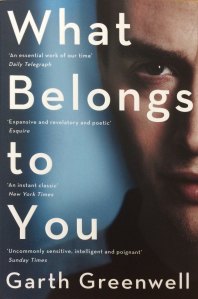 Greenwell’s third novel, Small Rain, was my novel of 2024, so I wanted to go back to his debut and trace the development of his talent. This, too, is autofiction and shares a preoccupation with the profound uncertainty produced by illness and a newfound awareness of mortality. There are also, through flashbacks, glimpses of the author’s strict, religious Kentucky upbringing in both. But What Belongs to You mostly arose from the years Greenwell spent teaching English in Bulgaria. A version of the first section was published in 2011 as a standalone novella called Mitko. This is the name of the mercurial, possibly mentally ill and unhoused sex worker that the American teacher meets in the bathrooms of Sofia’s National Palace of Culture and keeps encountering—sometimes willingly, sometimes not—in the years to come. “Never before had I met anyone who combined such transparency … with such mystery,” the narrator marvels; he feels “held like his beloved, or his child; or held, I suppose it must be said, like his captive or his prey.” Their relationship is wildly imbalanced. The sex can be tender or violent. He gives Mitko money; Mitko gives him syphilis. The narrator meditates on his bodily fear, his sense of betrayal, the unknowability of others, and the deviousness of appropriating their stories for his art. I didn’t love reading about gay cruising, but the stream-of-consciousness section about his earlier life, prompted by news of his father’s imminent death, and the granular account of a train ride with his mother he spends observing a little boy and his grandmother were right up my street – masterful examples of how to translate experience directly into hypnotic prose. Greenwell is the James Baldwin of our time. (Secondhand – Awesomebooks.com)
The Seven Husbands of Evelyn Hugo by Taylor Jenkins Reid (2017)
I always thought this came after Daisy Jones & the Six, but instead that 2019 novel brought renewed attention to her earlier work. They are both structured around biased first-person confessions in an interview setting, as well as, here, faux documents (gossip magazine articles). Evelyn Hugo grew up the daughter of Cuban immigrants in 1940s Hell’s Kitchen and escaped to Hollywood at age 15. That was through her first marriage; the others to come were for a mixture of reasons: short-lived passion, career advantage, public scandal, or masking the truth of another relationship. Because, in fact, the real love of this blonde bombshell’s life was a woman: fellow actress Celia St. James, with whom she co-starred in a Little Women adaptation. They have an intermittent relationship over the decades, both hiding in marriages to men so they can be together in secret and so that Evelyn can have the child she longs for. (Evelyn insists throughout that she is bisexual, which bothers lesbian Celia.)
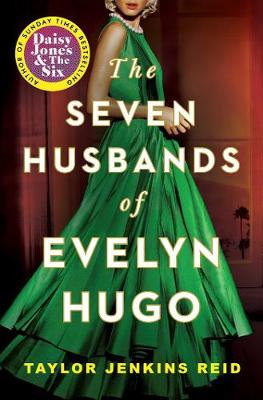
It’s a rollicking tour through a convincing pastiche of an Old Hollywood career, divided into sections based on the husband of the time. Evelyn comes across as cut-throat: willing to lie and manipulate people to get ahead. And yet you can’t help but admire her shrewdness; she’s also sympathetic for the poverty and domestic violence she’s endured, if not for how she’s leveraged her sensuality (her large breasts were famously almost shown in a French film). Ever the actress, she is still performative even when she claims to be disclosing the truth publicly for the first time. I wondered if she was too clichéd as a brassy Latina.
My main problem, though, was with the framing story: Evelyn demands that Monique Grant, a biracial rookie journalist, write her life story. Evelyn is 79 and strangely sure she’ll die soon, so wants to both unburden herself and set the record straight. Monique is going through a divorce and learns from Evelyn to treat this simply as the breakdown of a marriage rather than as a personal failure. She also absorbs lessons of how to be assertive and advance her own career. But early on Reid signposts a shock connection to be revealed between Evelyn and Monique. That ‘big reveal’ was a bit of a letdown. It could have just been an interview transcript (hello, Daisy Jones!) or finished ‘biography’.
In any case, writing as two characters of colour took guts from Reid, and bisexual rep is always welcome. This was an undemanding, soap opera-esque summer read. The only category on which it might fall short in our book club ratings is the writing, which is lite (but good for guzzling). Think of it as a fruity cocktail in book form. (Secondhand – Community Furniture Project) 

 Bookish Beck = Rebecca Foster. American transplant to England. Freelance proofreader and book reviewer.

I remember all the hype around Evelyn Hugo when it came out–I had an ARC from NetGalley, and while I did enjoy it, I didn’t feel anywhere near what other claimed/wrote.
LikeLiked by 1 person
I agree that it doesn’t quite live up to its hype or its very high average rating on Goodreads.
LikeLiked by 1 person
High praise for Greenwell, who I have nver read.
LikeLiked by 1 person
Alas that I only have one more of his books to read! (Cleanness, which I can get from the library.)
LikeLiked by 1 person
I absolutely loved Evelyn Hugo, probably my favourite book ever from Reid, although I agree that the framing story was largely unnecessary.
LikeLiked by 1 person
It was great fun to read, but I can’t see myself thinking about it much in the future. I’ve attempted two later TJR novels and not gotten far! Is her back catalogue worth it?
LikeLiked by 1 person
I’ve found her very hit and miss. My other favourites are Daisy Jones & The Six (probably the most similar of her novels to Evelyn Hugo) and Carrie Soto Is Back – everything else has been a disappointment.
LikeLiked by 1 person
Yeah, Daisy Jones was great (my first from her). I’ve not tried Carrie Soto but maybe I should.
LikeLike
You’re rattling through your 20 Books – well done! I’ve never fancied Reid, not sure why, but I just haven’t.
LikeLiked by 1 person
I’ve done well this first month, mostly because I’m choosing by whim and reading things I wanted to anyway (reduces the sense of obligation) — but with the rest I do hope to achieve a 1/3+ BIPOC ratio overall.
LikeLike
P.S. Reid is fun but lightweight. You might enjoy Daisy Jones for the period music pastiche (Fleetwood Mac et al.), but it’s not essential. She doesn’t always live up to the hype.
LikeLike
My first thought was, well, now I am the last person who hasn’t read the Evelyn Hugo book. LOL.
LikeLiked by 1 person
It was fun but definitely not unmissable.
LikeLiked by 1 person
You could be the second-last, actually, Laila! But, JIC, I skip-read your reviews, Rebecca….
LikeLiked by 1 person