20 Books of Summer, 8–9: Greenwell and Reid for Pride Month
As part of my Pride Month coverage (more coming up in Love Your Library on Monday), I’m reviewing a sophisticated gay novella that’s celebrating its 10th anniversary this year, and a gossipy pastiche of a Hollywood tell-all that I read for Wednesday’s upcoming book club. SPOILERS APPEAR IN BOTH, so if details of what happens bother you, you may want to skim or skip over some of what follows. In fact, it might be a spoiler just to include the Reid under this heading…
What Belongs to You by Garth Greenwell (2016)
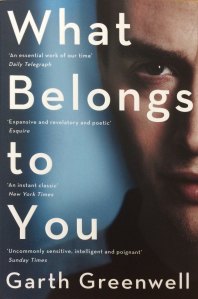 Greenwell’s third novel, Small Rain, was my novel of 2024, so I wanted to go back to his debut and trace the development of his talent. This, too, is autofiction and shares a preoccupation with the profound uncertainty produced by illness and a newfound awareness of mortality. There are also, through flashbacks, glimpses of the author’s strict, religious Kentucky upbringing in both. But What Belongs to You mostly arose from the years Greenwell spent teaching English in Bulgaria. A version of the first section was published in 2011 as a standalone novella called Mitko. This is the name of the mercurial, possibly mentally ill and unhoused sex worker that the American teacher meets in the bathrooms of Sofia’s National Palace of Culture and keeps encountering—sometimes willingly, sometimes not—in the years to come. “Never before had I met anyone who combined such transparency … with such mystery,” the narrator marvels; he feels “held like his beloved, or his child; or held, I suppose it must be said, like his captive or his prey.” Their relationship is wildly imbalanced. The sex can be tender or violent. He gives Mitko money; Mitko gives him syphilis. The narrator meditates on his bodily fear, his sense of betrayal, the unknowability of others, and the deviousness of appropriating their stories for his art. I didn’t love reading about gay cruising, but the stream-of-consciousness section about his earlier life, prompted by news of his father’s imminent death, and the granular account of a train ride with his mother he spends observing a little boy and his grandmother were right up my street – masterful examples of how to translate experience directly into hypnotic prose. Greenwell is the James Baldwin of our time. (Secondhand – Awesomebooks.com)
The Seven Husbands of Evelyn Hugo by Taylor Jenkins Reid (2017)
I always thought this came after Daisy Jones & the Six, but instead that 2019 novel brought renewed attention to her earlier work. They are both structured around biased first-person confessions in an interview setting, as well as, here, faux documents (gossip magazine articles). Evelyn Hugo grew up the daughter of Cuban immigrants in 1940s Hell’s Kitchen and escaped to Hollywood at age 15. That was through her first marriage; the others to come were for a mixture of reasons: short-lived passion, career advantage, public scandal, or masking the truth of another relationship. Because, in fact, the real love of this blonde bombshell’s life was a woman: fellow actress Celia St. James, with whom she co-starred in a Little Women adaptation. They have an intermittent relationship over the decades, both hiding in marriages to men so they can be together in secret and so that Evelyn can have the child she longs for. (Evelyn insists throughout that she is bisexual, which bothers lesbian Celia.)
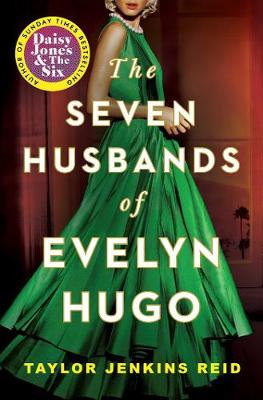
It’s a rollicking tour through a convincing pastiche of an Old Hollywood career, divided into sections based on the husband of the time. Evelyn comes across as cut-throat: willing to lie and manipulate people to get ahead. And yet you can’t help but admire her shrewdness; she’s also sympathetic for the poverty and domestic violence she’s endured, if not for how she’s leveraged her sensuality (her large breasts were famously almost shown in a French film). Ever the actress, she is still performative even when she claims to be disclosing the truth publicly for the first time. I wondered if she was too clichéd as a brassy Latina.
My main problem, though, was with the framing story: Evelyn demands that Monique Grant, a biracial rookie journalist, write her life story. Evelyn is 79 and strangely sure she’ll die soon, so wants to both unburden herself and set the record straight. Monique is going through a divorce and learns from Evelyn to treat this simply as the breakdown of a marriage rather than as a personal failure. She also absorbs lessons of how to be assertive and advance her own career. But early on Reid signposts a shock connection to be revealed between Evelyn and Monique. That ‘big reveal’ was a bit of a letdown. It could have just been an interview transcript (hello, Daisy Jones!) or finished ‘biography’.
In any case, writing as two characters of colour took guts from Reid, and bisexual rep is always welcome. This was an undemanding, soap opera-esque summer read. The only category on which it might fall short in our book club ratings is the writing, which is lite (but good for guzzling). Think of it as a fruity cocktail in book form. (Secondhand – Community Furniture Project) 
20 Books of Summer, 1–3: Paul Auster, David Baker, Helen Ellis
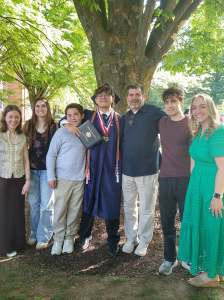
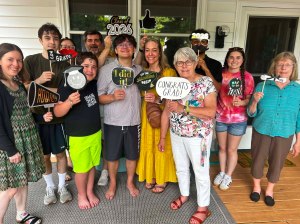
I took the three of these on the plane to the States with me — I’ve been away for just over a week for my nephew’s high school graduation and a family party — and they proved to be undemanding and reasonably diverting company. All: 
Sunset Park by Paul Auster (2010)
After reading Siri Hustvedt’s Ghost Stories, I found myself hankering to try more by her late husband. This is a fairly good novel about sexual boundaries and the ongoing impact of secrets on families. Miles Heller is living in Florida, clearing out abandoned houses. He’s 29 and has been estranged from his parents — actress mother Mary-Lee, publisher father Morris — for seven years, moving from place to place and doing odd jobs but never letting anyone know where he’s living. He’s never told anyone that he believes his stepbrother Bobby’s death was his fault. When he falls in love with a Cuban American high school student named Pilar Sanchez, one of the girl’s older sisters threatens to call the police on him for sleeping with someone underage unless he steals them stuff from the foreclosed houses. To escape potential consequences, he joins his old friend Bing Nathan at a squat in Sunset Park, Brooklyn, right across from Green-Wood cemetery. What he doesn’t know is that Bing has been reporting on his movements to his parents all along.
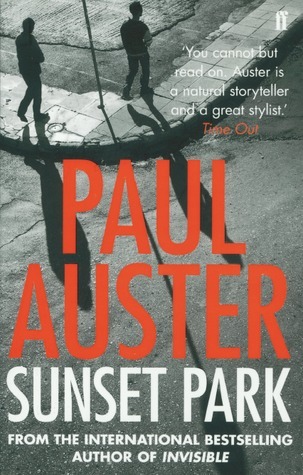 The omniscient narration moves between Miles, his parents, and the three other residents of the squat, with no speech marks throughout and one section in the second person. The prose is so fluid that the pages turn incredibly quickly, but even when he’s inhabiting women’s perspectives you feel a male presence in Auster’s work. There can be something a little distasteful in his writing about sex. If being charitable, I would say that all these examples (the underage girlfriend, having anal sex to avoid pregnancy, infidelity, housemate Ellen’s pornographic drawings, a man being in love with his male best friend) are a way of exploring the lines we draw around sex and whether they are fundamental or arbitrary. But when you’re reading it, it just feels prurient.
Auster’s pet loves of baseball (Hustvedt in Ghost Stories: “Year-round, Paul yakked to me about the Mets”) and film are here through Miles’s and Morris’s shared passion for baseball and housemate Alice’s dissertation work on The Best Years of Our Lives, a charming (or should that be sentimental?) postwar movie I watched back when I was working my way through the American Film Institute’s top 100 list in my high school and college years. Between that, the glimpse of the publishing industry through Morris and Alice’s work for PEN trying to get justice for an exiled Chinese writer, there are a number of appealing elements, but they don’t all come together in any particularly meaningful way. Definitely second-tier work from him. I know I have a lot of better ones still to come. (Secondhand — Community Furniture Project, Newbury)
Whale Fall by David Baker (2022)
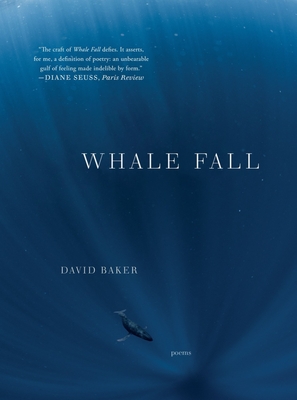 I’d never heard of Baker, even though he’s a prolific and well-respected American practitioner of eco-poetry. Nature poetry is usually right up my street, so I was keen to give this a try. The long title sequence intersperses statistics about whale journeys and ocean plastics with the poet’s memories of Cold War alarmism and current chronic health issues. There are descriptions of riverside and forest scenes, worries about an ageing father, references to Turner’s paintings of clouds, concerns about wildfires, and so on. I quite liked “Storm Psalm” and “Middle Devonian,” but there are not many other standouts overall. The stanza and line arrangements vary a good bit, with most poems ranging across several pages in numbered sections or parts separated by asterisks. Apart from a bit of alliteration, I didn’t notice a lot in the way of technique. I feel almost churlish for not appreciating this more, but it didn’t speak to me, and there were some sentimental tics, as in the brief poem below. (Secondhand — hospital book sale)
“Extinction”
When you are gone they will read your footprints,
if they still read, as they might a poem about love—
wandering in circles, here and there obscured,
washed out in places by weather, sudden landslide.
Keep walking, pilgrim. This is your great tale.
Southern Lady Code by Helen Ellis (2012)
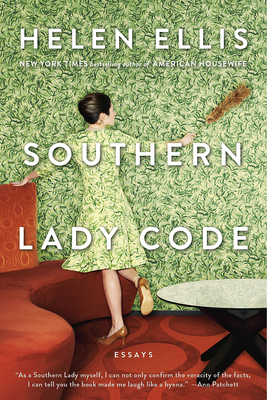 That I read the whole thing on the flight tells you that this collection of 23 micro-essays was addictive in a popcorn sort of way. Ellis is more sassy than introspective when writing about her Alabama upbringing versus her married, childfree adulthood in New York City and the etiquette that she espouses. She quotes her mother’s dictums and gives translations of phrases one might use when trying to be polite: “I’m put together. ‘Put together’ is Southern Lady Code for you can take me to church or Red Lobster and I’ll fit in fine.” She writes about reality TV, reporting pornography on Twitter (but not before enjoying it privately), her belief in ghosts, and her beauty routines for an ageing body — her debt to Nora Ephron is clearest in “Seven Things I’m Doing Instead of a Neck Lift.” I especially enjoyed one essay about her affinity for gay men (I was reminded of Beard by Kelly Foster Lundquist). The best sequence of three pieces covers making kitschy 1970s finger food for her annual holiday party, tips for how to be a good guest, and the art of the thank-you note.
But, often, I found the book quite shallow, and mentions of how much she spends on outfits rubbed me the wrong way. (I’d somehow encountered the essay on accidentally switching another woman’s Burberry coat for her own before.) “Serious Women” is the least fluffy with its account of a sordid murder trial she attended because her friend was the assistant district attorney. There were other little mentions of incidents I wished she’d had the courage to take on in full, such as her rape and her and her husband’s collective loss of parents and a brother. Still, I liked Ellis’s writing enough that I’d definitely read her short story collection, American Housewife. (Secondhand — Community Furniture Project, Newbury)
So none of these were stellar books, but I’m pleased to have read them because they were all “just-because” books from my shelves. No challenge or deadline drove me to them; I picked them up simply because I felt like reading them. Which is what I think summer reading is supposed to be about.
Graduation and party pics:
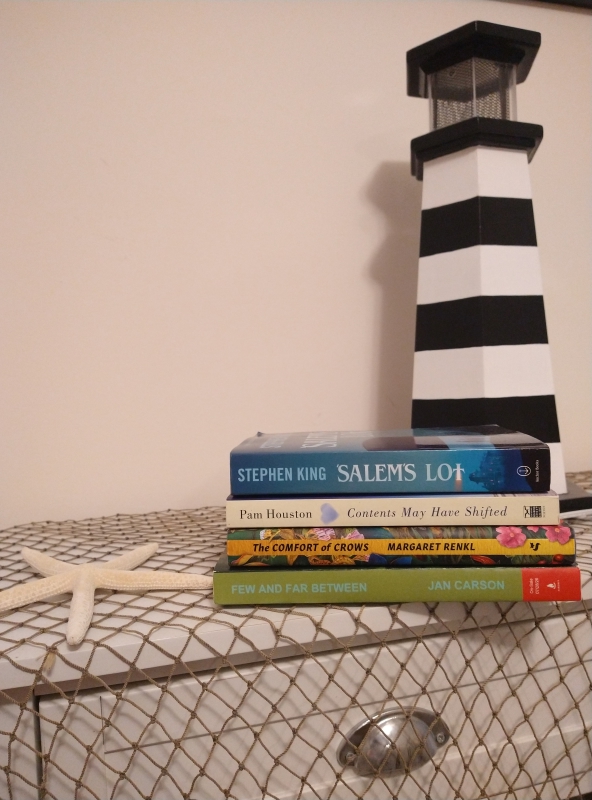
My U.S. book haul (the Houston is signed; the Carson is a review copy, out at the end of July):
I couldn’t figure out how to log in to WordPress from the laptop I borrowed from my sister while I was away, so I’ll be catching up on blogs and comments the rest of this week. I read most of two other books during my trip and will write those up soon.
 Bookish Beck = Rebecca Foster. American transplant to England. Freelance proofreader and book reviewer.
