2017’s Runners-Up and Other Superlatives
The choices below are in alphabetical order by author, with any previously published reviews linked in (many of these books have already appeared on the blog in some way over the course of the year). You know the drill by now: to keep it simple for myself as well as for all of you who are figuring out whether you’re interested in these books or not, I’m limiting myself to two sentences per title. The first is a potted summary; the second tells you why you should read it. Across these three best-of posts (see also my Top Nonfiction and Best Fiction posts), I’ve spotlighted roughly the top 15% of my year’s reading.
Runners-Up:
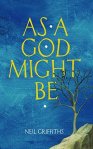 As a God Might Be by Neil Griffiths: The themes and central characters were strong enough to keep me powering through this 600-page novel of ideas about encounters with God and the nature of evil. This turned out to be just my sort of book: big and brazen, a deep well of thought that will only give up its deeper meanings upon discussion and repeat readings.
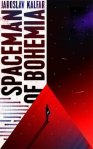 Spaceman of Bohemia by Jaroslav Kalfař: The story of Jakub Procházka, a Czech astronaut who leaves his wife behind to undertake a noble research mission but soon realizes he can never escape his family history or the hazards of his own mind. A terrific blend of the past and the futuristic, Earth and space.
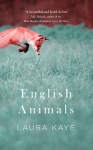 English Animals by Laura Kaye: A young Slovakian becomes a housekeeper for a volatile English couple and discovers a talent for taxidermy. A fresh take on themes of art, sex, violence and belonging, this is one of the more striking debut novels I’ve encountered in recent years.
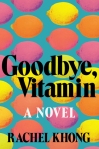 Goodbye, Vitamin by Rachel Khong: Reeling from a broken engagement, Ruth Young returns to her childhood home in California for a year to help look after her father, who has Alzheimer’s. This is a delightfully quirky little book, but you may well read it with a lump in your throat, too.
 Midwinter Break by Bernard MacLaverty: In MacLaverty’s quietly beautiful fifth novel, a retired couple faces up to past trauma and present incompatibility during a short vacation in Amsterdam. My overall response was one of admiration for what this couple has survived and sympathy for their current situation – with hope that they’ll make it through this, too. (Reviewed for BookBrowse.)
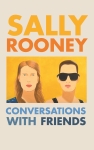 Conversations with Friends by Sally Rooney: An Irish college student navigates friendships and an affair with a married man. This is much more about universals than it is about particulars: realizing you’re stuck with yourself, exploring your sexuality and discovering sex is its own kind of conversation, and deciding whether ‘niceness’ is really the same as morality; a book I was surprised to love, but love it I did.
 Lincoln in the Bardo by George Saunders: The residents of Georgetown cemetery limbo don’t know they’re dead – or at least won’t accept it. An entertaining and truly original treatment of life’s transience; I know it’s on every other best-of-year list out there, but it really is a must-read.
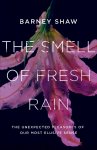 The Smell of Fresh Rain by Barney Shaw: Shaw travels through space, time and literature as he asks why we don’t have the vocabulary to talk about the smells we encounter every day. If you’re interested in exploring connections between smell and memory, discovering what makes the human sense of smell unique, and learning some wine-tasting-style tips for describing odors, this is a perfect introduction.
 A Life of My Own by Claire Tomalin: Tomalin is best known as a biographer of literary figures including Mary Wollstonecraft, Samuel Pepys and Charles Dickens, but her memoir is especially revealing about the social and cultural history of the earlier decades her life covers. A dignified but slightly aloof book – well worth reading for anyone interested in spending time in London’s world of letters in the second half of the twentieth century.
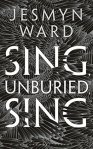 Sing, Unburied, Sing by Jesmyn Ward: The story of a mixed-race family haunted – both literally and figuratively – by the effects of racism, drug abuse and incarceration in Bois Sauvage, a fictional Mississippi town. Beautiful language; perfect for fans of Toni Morrison and Cynthia Bond.
I’ve really struggled with short stories this year, but here are four collections I can wholeheartedly recommend:
 What It Means when a Man Falls from the Sky by Lesley Nneka Arimah (Reviewed for Shiny New Books.)
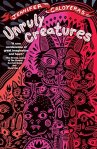
- Unruly Creatures: Stories by Jennifer Caloyeras
- Bad Dreams and Other Stories by Tessa Hadley
- The Great Profundo and Other Stories by Bernard MacLaverty (1987)
The Best 2017 Books You Probably Never Heard of (Unless You Heard about Them from Me!):
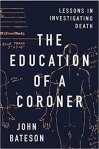 The Education of a Coroner by John Bateson: The coroner’s career is eventful no matter what, but Marin County, California has its fair share of special interest, what with Golden Gate Bridge suicides, misdeeds at San Quentin Prison, and various cases involving celebrities (e.g. Harvey Milk, Jerry Garcia and Tupac) in addition to your everyday sordid homicides. Ken Holmes was a death investigator and coroner in Marin County for 36 years; Bateson successfully recreates Holmes’ cases with plenty of (sometimes gory) details.
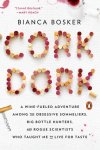 Cork Dork by Bianca Bosker: Tasting notes: gleeful, ebullient, learned, self-deprecating; suggested pairings: Sweetbitter by Stephanie Danler; Top Chef, The Great British Bake Off. A delightful blend of science, memoir and encounters with people who are deadly serious about wine.
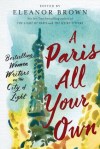 A Paris All Your Own: Bestselling Women Writers on the City of Light, edited by Eleanor Brown: A highly enjoyable set of 18 autobiographical essays that celebrate what’s wonderful about the place but also acknowledge disillusionment; highlights are from Maggie Shipstead, Paula McLain, Therese Anne Fowler, Jennifer Coburn, Julie Powell and Michelle Gable. If you have a special love for Paris, have always wanted to visit, or just enjoy armchair traveling, this collection won’t disappoint you.
 Ashland & Vine by John Burnside: Essentially, it’s about the American story, individual American stories, and how these are constructed out of the chaos and violence of the past – all filtered through a random friendship that forms between a film student and an older woman in the Midwest. This captivated me from the first page.
 Tragic Shores: A Memoir of Dark Travel, Thomas H. Cook: In 28 non-chronological chapters, Cook documents journeys he’s made to places associated with war, massacres, doomed lovers, suicides and other evidence of human suffering. This is by no means your average travel book and it won’t suit those who seek high adventure and/or tropical escapism; instead, it’s a meditative and often melancholy picture of humanity at its best and worst. (Reviewed for Nudge.)
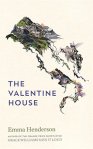 The Valentine House by Emma Henderson: This is a highly enjoyable family saga set mostly between 1914 and 1976 at an English clan’s summer chalet in the French Alps near Geneva, with events seen from the perspective of a local servant girl. You can really imagine yourself into all the mountain scenes and the book moves quickly –a great one to take on vacation.

The year’s runners-up and superlatives that I happen to have around in print.
Various Superlatives, Good and Bad:
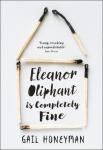 The 2017 Book Everybody Else Loved but I Didn’t: Eleanor Oliphant Is Completely Fine by Gail Honeyman. (See my Goodreads review for why.)
The Year’s Biggest Disappointments: All Grown Up by Jami Attenberg, Future Home of the Living God by Louise Erdrich, Between Them by Richard Ford and George and Lizzie by Nancy Pearl.
The Worst Book I Read This Year: Books by Charlie Hill (ironic, that). My only one-star review of the year.
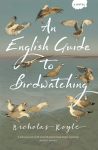 The Downright Strangest Book I Read This Year: An English Guide to Birdwatching by Nicholas Royle.
My Best Discoveries of the Year: Beryl Bainbridge, Saul Bellow, Bernard MacLaverty and Haruki Murakami. I’ve read two books by each of these authors this year and look forward to trying more from them.
The Debut Authors Whose Next Work I’m Most Looking Forward to: Lesley Nneka Arimah, Laura Kaye, Carmen Marcus, Julianne Pachico and Sally Rooney.
 The Best First Line of the Year: “History has failed us, but no matter.” (Pachinko, Min Jin Lee)
The Best Last Line of the Year: “If she was an instance of the goodness in this world then passing through by her side was miracle enough.” (Midwinter Break, Bernard MacLaverty)
Coming tomorrow: Some early recommendations for 2018.
Best Fiction of 2017, Plus Some Other Favorite Reads
Below I’ve chosen my top nine fiction releases from 2017 (seven by women!), followed by the backlist titles I loved the most this year. Many of these books have already featured on my blog in some way over the course of the year. To keep it simple for myself as well as for all of you who are figuring out whether you’re interested in these books or not, as with my nonfiction selections I’m mostly limiting myself to two sentences per title: the first is a potted summary; the second tells you why you should read it. I also link to any full reviews.
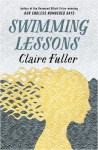 Swimming Lessons by Claire Fuller: This atmospheric novel reminiscent of Iris Murdoch is no happy family story; it’s full of betrayals and sadness, of failures to connect and communicate, yet it’s beautifully written, with all its scenes and dialogue just right. I recently caught up on Fuller’s acclaimed 2015 debut, Our Endless Numbered Days, and collectively I’m so impressed with her work, specifically the elegant way she alternates between time periods to gradually reveal the extent of family secrets and the faultiness of memory.
 The Lucky Ones by Julianne Pachico: You may remember that our shadow panel chose this as our winner for the Sunday Times Young Writer of the Year award: we were blown away by this linked short story collection set in a drug-fueled Colombia in which violence and its aftermath are never far away. For the originality of the setup and the sheer excellence of the writing, this can’t be topped.
 The Velveteen Daughter by Laurel Davis Huber: The name Margery Williams Bianco might not seem familiar, but chances are you remember her classic children’s book, The Velveteen Rabbit. This is about Margery and her daughter, Pamela Bianco, a painter and child prodigy troubled by mental illness, and the themes of creativity, mental health and motherhood are nestled in a highly visual debut novel full of cameos by everyone from Pablo Picasso to Eugene O’Neill.
 The Animators by Kayla Rae Whitaker: The cartooning world and the Kentucky–New York City dichotomy together feel like a brand new setting for a literary tragicomedy. Though it seems lighthearted, there’s a lot of meat to this story of the long friendship between two female animators as Whitaker contrasts the women’s public and private personas and imagines their professional legacy.
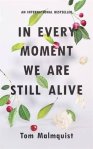 In Every Moment We Are Still Alive by Tom Malmquist: While it’s being marketed as a novel, this reads more like a stylized memoir: Similar to Karl Ove Knausgaard’s books, it features the author as the central character and narrator, and the story of grief it tells is a highly personal one. Malmquist does an extraordinary job of depicting his protagonist’s bewilderment at the sudden loss of his partner and his new life as a single father.
 How to Be Human by Paula Cocozza: As much as this is about a summer of enchantment and literal brushes with urban wildlife, it’s also about a woman’s life: loneliness, the patterns we get stuck in, and those unlooked-for experiences that might just liberate us. There’s something gently magical about the way the perspective occasionally shifts to give a fox’s backstory and impressions as a neologism-rich stream.
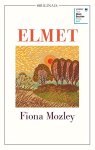 Elmet by Fiona Mozley: The dark horse on this past year’s Man Booker Prize longlist, this is a twisted fable about the clash of the land-owning and serf classes in contemporary England. It’s a gorgeous, timeless tale balanced between lush nature writing and Hardyesque pessimism.
-
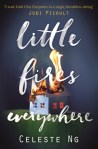 Little Fires Everywhere by Celeste Ng: A multi-layered story about many facets of motherhood: adoption, surrogacy, pregnancy, abortion; estrangement, irritation, longing and pride. Each and every character earns our sympathy here – a real triumph of characterization, housed in a tightly plotted and beautifully written novel you’ll race through.
And my fiction book of the year was:
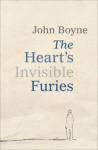 The Heart’s Invisible Furies by John Boyne: A wonderful seam of humor tempers the awfulness of much of what befalls Cyril Avery – born in Dublin in 1945 – for whom homosexuality seems a terrible curse. It’s an alternately heartbreaking and heartening portrait of a life lived in defiance of intolerance and tragedy.
My poetry read of the year was:
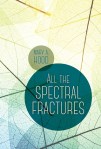 All the Spectral Fractures: New and Selected Poems, Mary A. Hood: There is so much substance and variety to this poetry collection spanning the whole of Hood’s career. A professor emerita of microbiology at the University of West Florida and a former poet laureate of Pensacola, Florida, she takes inspiration from the ordinary folk of the state, the world of academic scientists, flora and fauna, and the minutiae of everyday life.
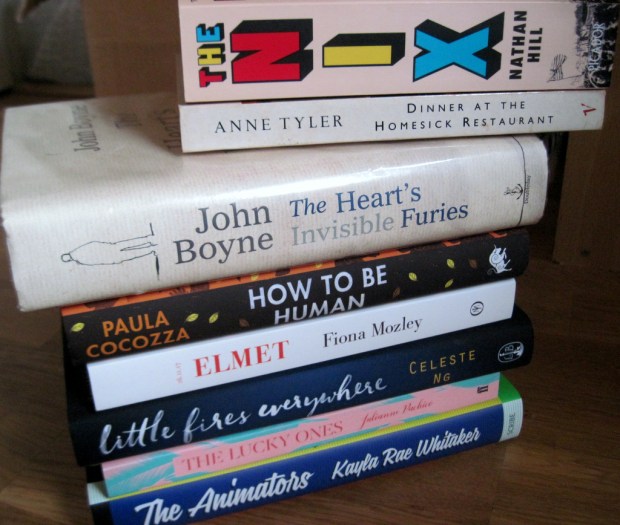
The year’s best books that I happen to have around in print.
And here’s a quick run-through of the seven best backlist titles I read this year:
-
 To Say Nothing of the Dog by Connie Willis: Time travel would normally be a turnoff for me, but Willis manages it perfectly in this uproarious blend of science fiction and pitch-perfect Victorian pastiche (boating, séances and sentimentality, oh my!).
-
 Homegoing by Yaa Gyasi: Brings together so many facets of the African and African-American experience; full of clear-eyed observations about the ongoing role race plays in American life.
-
 Days Without End by Sebastian Barry: Contains the most matter-of-fact consideration of same-sex relationships I’ve ever encountered in historical fiction. Heart-breaking, life-affirming, laugh-out-loud: those may be clichés, but it’s all these things and more.
-
 The Wind-Up Bird Chronicle by Haruki Murakami: Mesmerizing and bizarre, but in the best possible way: it questions our comfort in the everyday by contorting familiar elements like dreams do. I’m a definite Murakami convert.
-
 The Nix by Nathan Hill: A rich story about family curses and failure, and how to make amends for a life full of mistakes. Hill is a funny and inventive writer.
-
 Signs for Lost Children by Sarah Moss: Simply superb in the way it juxtaposes England and Japan in the 1880s and comments on mental illness, the place of women, and the difficulty of navigating a marriage whether the partners are thousands of miles apart or in the same room.
My overall most memorable fiction read of the year, to my great surprise, was:
-
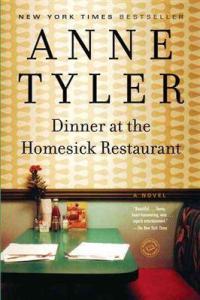 Dinner at the Homesick Restaurant by Anne Tyler: I’ve been lukewarm on Anne Tyler’s novels before – this is my sixth from her – but this instantly leapt onto my list of absolute favorite books. Its chapters are like perfectly crafted short stories focusing on different members of the Tull family. These vignettes masterfully convey the common joys and tragedies of a fractured family’s life. After Beck Tull leaves with little warning, Pearl must raise Cody, Ezra and Jenny on her own and struggle to keep her anger in check. Cody is a vicious prankster who always has to get the better of good-natured Ezra; Jenny longs for love but keeps making bad choices. Despite their flaws, I adored these characters and yearned for them to sit down, even just the once, to an uninterrupted family dinner of comfort food.
What were some of your top fiction reads of the year?
Tomorrow I’ll be naming some runners-up and listing a few other superlatives.
My Top 10 Nonfiction Reads of 2017
Below I’ve chosen my seven favorite nonfiction books published in 2017, followed by three older titles that I only recently discovered. Many of these books have already featured on the blog in some way over the course of the year. To keep it simple for myself as well as for all of you who are figuring out whether you’re interested in these books or not, I’m mostly limiting myself to two sentences per title: the first is a potted summary; the second tells you why you should read it. I also link to any full reviews.
-
 Landslide: True Stories by Minna Zallman Proctor: This gorgeous set of autobiographical essays circles through some of the overarching themes of the author’s life: losing her mother, a composer; the importance Italy had for both of them; a love for the work of Muriel Spark; their loose connection to Judaism; and the relentless and arbitrary nature of time. Proctor provides a fine example of how to write a non-linear memoir that gets to the essence of what matters in life.
 My Jewish Year by Abigail Pogrebin: From September 2014 to September 2015, Pogrebin celebrated all the holidays in the Jewish calendar, drawing thematic connections and looking for the resonance of religious rituals might have in her daily life. This bighearted, open-minded book strikes me as a perfect model for how any person of faith should engage with their tradition: not just offering lip service and grudgingly showing up to a few services a year, but knowing what you believe and practice, and why.
-

The U.S. cover
In Pursuit of Memory: The Fight against Alzheimer’s by Joseph Jebelli: With the world’s population aging, it is expected that by 2050 Alzheimer’s will be the second leading cause of death after heart disease. Research neurologist Joseph Jebelli gives a thorough survey of the history of Alzheimer’s and the development of our efforts to treat and even prevent it, but balances his research with a personal medical story any reader can relate to – his beloved grandfather, Abbas, succumbed to Alzheimer’s back in Iran in 2012. (See my full review for BookBrowse.)
 My Life with Bob by Pamela Paul: Whether she was hoarding castoffs from her bookstore job, obsessing about ticking off everything in the Norton Anthology, despairing that she’d run out of reading material in a remote yurt in China, or fretting that her new husband took a fundamentally different approach to the works of Thomas Mann, Paul (the editor of the New York Times Book Review) always looks beyond the books themselves to ask what they say about her. It’s just the sort of bibliomemoir I wish I had written.
 The Bright Hour by Nina Riggs: Beautiful prose enhances this literary and philosophical approach to terminal cancer. Riggs was a great-great-great-granddaughter of Ralph Waldo Emerson and quotes from her ancestor’s essays as well as from Michel de Montaigne’s philosophy to put things into perspective; she’s an expert at capturing the moments that make life alternately euphoric and unbearable – and sometimes both at once.
 Fragile Lives by Stephen Westaby: This is a vivid, compassionate set of stories culled from the author’s long career in heart surgery with the Grim Reaper looking on. I am not a little envious of all that Westaby has achieved: not just saving the occasional life despite his high-mortality field – as if that weren’t enough – but also pioneering various artificial heart solutions and a tracheal bypass tube that’s named after him.
And my nonfiction book of the year was:
1. The Shadow in the Garden: A Biographer’s Tale by James Atlas: I read this in August, planning to contrast it with Claire Tomalin’s A Life of My Own, another biographer’s memoir, for the LARB. It would have been a brilliant article, believe me. But they didn’t bite, and by the time I approached the TLS they’d already arranged coverage of the books. Alas! Such is the life of a freelancer. Since then I’ve struggled to know what to say about Atlas’s book that would explain why I loved it so much that my paperback proof is riddled with Post-It flags. (It’s going to take more than a couple of sentences…)
Much more so than Tomalin, Atlas gave me a real sense of what it’s like to immerse yourself in another person’s life. He made it up as he went along: he was only 25 when he got the contract to write a biography of the poet Delmore Schwartz, who died a penniless alcoholic at age 52. Writing about the deceased was a whole different matter to engaging with a living figure, as Atlas did when he wrote his biography of Saul Bellow in the 1990s.
 Atlas perceptively explores the connections between Schwartz and Bellow (Schwartz was the model for the protagonist of Bellow’s 1975 Pulitzer winner, Humboldt’s Gift) and between Bellow and himself (a Chicago upbringing with Russian Jewish immigrant ancestors), but also sets his work in the context of centuries of biographical achievement – from Boswell’s The Life of Samuel Johnson through master biographers like Richard Holmes, Leon Edel and Richard Ellmann (Atlas’s supervisor during his fellowship at Oxford) to recent controversial biographies of Robert Frost and Vladimir Nabokov.
This book deals with the nitty-gritty of archival research and how technology has changed it; Atlas also talks story-telling strategies and the challenge of impartiality, and ponders how we look for the patterns in a life that might explain what, besides genius, accounts for a writer’s skill. Even the footnotes are illuminating, and from the notes I learned about a whole raft of biographies and books on the biographer’s trade that I’d like to read. After I finished reading it I spent a few days dreamily wondering if I might write a biography some day. For anyone remotely interested in life writing, pick this up with my highest recommendation.
I’ll make it up to an even 10 with a few backlist titles I also loved:
 The Unexpected Professor: An Oxford Life in Books by John Carey (2014): Carey gives a thorough picture of events from his personal and professional life, but the focus is always on his literary education: the books that have meant the most to him and the way his taste and academic specialties have developed over the years. Ultimately what this book conveys is the joy of being a lifelong reader.
 A Sand County Almanac and Sketches Here and There by Aldo Leopold (1949): So many of Leopold’s musings ring true today: how we only appreciate wildlife if we can put an economic value on it, the troubles we get into when we eradicate predators and let prey animals run rampant, and the danger of being disconnected from the land that supplies our very life. And all this he delivers in stunning, incisive prose.
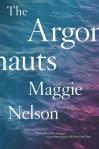 The Argonauts by Maggie Nelson (2015): An exquisite interrogation of gender identity and an invaluable reminder that the supposed complications of making a queer family just boil down to your basic human experiences of birth, love and death. I preferred those passages where Nelson allows herself to string her fragments into more extended autobiographical meditations, like the brilliant final 20 pages interspersing her memories of giving birth to her son Iggy with an account of the deathbed vigil her partner (artist Harry Dodge) held for his mother; it had me breathless and in tears, on a plane of all places.
What were some of your top nonfiction reads of the year?
Tomorrow I’ll be posting my Library Checkout a few days early.
Next week’s planned posts:
26th: Doorstopper of the Month
27th: Top fiction of the year list
28th: Runners-up and other superlatives
29th: Early 2018 recommendations
30th: Final statistics on my 2017 reading
Top 5 Reads of 2017 from Literary Relish
I asked Lucy Rock of Literary Relish about the best books she read in 2017 and she came up with this list of five terrific recommendations. Two of these I have on the shelf waiting to be read, and one of them I hadn’t even heard of…
Halfway through 2016, with an abandoned blog and a bun in the oven, reading panic really started to set in. All too aware of the impending decline in any serious ‘me’ time, I read in a bit of a blind frenzy, gobbling up Gone with the Wind, Pride and Prejudice (for the first time – yes, really) and all 864 pages of T.H. White’s The Once and Future King, to name but a few.
2017 has been a funny old year, veering from having hours to spend reading pinned to the sofa to snatching the odd minute here and there. I was feeling rather indifferent about it all but, in fact, looking back I’ve experienced some really great stories this year. Here are my top 5:
- William – An Englishman by Cicely Hamilton
 Newlyweds William and Griselda are enjoying a secluded honeymoon somewhere in the European wilderness when, unbeknownst to them, war breaks out: World War I, to be precise. Heartache and chaos ensue as they are thrust into the middle of the war-torn Belgian Ardennes. This is the most unique war narrative I have ever had the pleasure to read; Persephone Books rarely disappoint.
2. Half of a Yellow Sun by Chimamanda Ngozi Adichie
 After reading her later (and bulkier) novel Americanah for book club last year, I felt it would be pretty poor of me not to pick up her earlier, Orange Prize-winning novel. It certainly didn’t disappoint, with a cast of characters that represent the breadth of Nigerian society; it turns out that my ignorance of the Biafran War was profound. I am a better (and considerably more entertained) person for reading this moving story.
3. East Lynne by Ellen Wood
 Surely every girl needs a good period drama every once in a while, and this absolute stonker of a book is everything you need and more this Christmas, trust me. This Victorian sensation novel that charts the demise of Lady Isabel Carlyle following her elopement with fellow aristocrat Francis Levison is rather melodramatic and a mite far-fetched at times but, good golly, it is good.
4. Walking Home by Simon Armitage
 A poetry fan I am not, but I do like Northern boy Simon Armitage and the Pennine Way, the subject of this novel, is a stone’s throw from my front door. In Walking Home Armitage recounts the time he decided to walk this tricky route ‘the wrong way around’ from North to South, paying his way through poetry readings at various eclectic venues across the way. He’s a funny guy, Armitage, and some of the bleak landscape he crosses is very close to my heart. Very enjoyable.
5. The Cuckoo’s Calling by Robert Galbraith
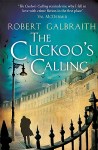 I got all snobby about this list and tried to find something a little more unusual or a little more ‘literary’ from this year’s pickings, but the simple fact is that I have desperately needed pure entertainment lately and J.K. Rowling provides just that with her Cormoran Strike novels. A bit of well-written crime (which I hardly ever read) and lovely, atmospheric London feels.
Here’s to a little more ambitious reading in 2018. Merry Christmas, everyone!
A huge thank-you to Lucy for this guest blog!
Which one of her picks do you want to read first?
2017 Fiction Picks from Rosemary & Reading Glasses
I asked Carolyn Oliver of Rosemary & Reading Glasses for her top fiction picks from 2017 and she came up with this list of 13 cracking recommendations. I doubt you’ll be able to resist adding at least one of these to your TBR.
Best 2017 Fiction: A Baker’s Dozen
These were my favorite works of fiction published (in the United States) in 2017, listed in the order I read them. One caveat: as I write this, there are 22 days left in 2017, so I may find another favorite; there are some heavy hitters (Jesmyn Ward’s Sing, Unburied, Sing comes to mind) that haven’t found their way to my nightstand yet.
 Human Acts, Han Kang: I admit, this book, which traces the human costs of the brutally repressed Gwanju Uprising, is difficult to read. Worth the effort, though, for its urgent questions about the nature of humanity.
Pachinko, Min Jin Lee: A twentieth-century family saga about Korean immigrants in Japan. Expansive and richly textured.
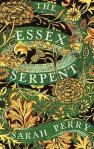 The Essex Serpent, Sarah Perry: A recently widowed natural historian and a village curate spar over rumors of a returned prehistoric serpent. Sumptuous.
Lincoln in the Bardo, George Saunders: The resident ghosts look on with consternation as Abraham Lincoln visits their cemetery to mourn over the body of his son, Willie. Polyphonic; extraordinarily moving.
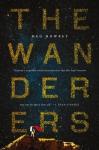 The Wanderers, Meg Howrey: Three astronauts undertake a long-term simulation of a mission to Mars, leaving their loved ones behind. Wonderful literary sci-fi, absorbing in its physical and psychological detail.
 Exit West, Mohsin Hamid: Two young lovers become part of a global migration through mysterious doors that connect locations all over the world. Intimate and tender.
 My Darling Detective, Howard Norman: A tale of family secrets set in 1970s Halifax, featuring plainspoken people and delightful use of radio drama. From my review: “noir with a spring in its step and a lilt in its voice.”
Days Without End, Sebastian Barry: Irish immigrant Thomas McNulty chronicles his survival in the American West (and the Civil War) and his love for fellow soldier John Cole. Fearsomely beautiful.
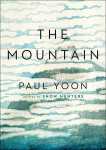 The Mountain, Paul Yoon: Six exquisite short stories, set in different locations over the past 100 years, from a master of the form.
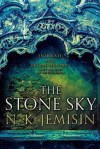 The Stone Sky, N. K. Jemisin: The blistering final book in Ms. Jemisin’s stunning Broken Earth trilogy (must be read in order, so start with The Fifth Season if you’re new to the series). Superb speculative fiction.
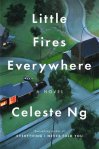 Little Fires Everywhere, Celeste Ng: The complexities of race, class, and motherhood swirl in a Cleveland suburb (my hometown) in this deft, compassionate novel.
 Her Body and Other Parties, Carmen Maria Machado: Short stories grounded in the body but shot through with elements of horror and fantasy. Won’t take it easy on you, but you won’t want to stop reading, either. Brilliant.
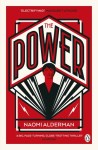 The Power, Naomi Alderman: Women harness a power within themselves that turns the tables on men. Atwoodian dystopia at its finest.
A huge thank-you to Carolyn for this guest blog!
Which one of her picks do you want to read first?
Christmas Gift Recommendations for 2017
Something tells me my readers are the sort of people who buy books for their family and friends at the holidays. Consider any rating of 3.5 or above on this blog a solid recommendation; 3 stars is still a qualified recommendation, and by my comments you should be able to tell whether the book would be right for you or a friend. I’ll make another plug for the books I’ve already mentioned here as gift ideas and highlight other books I think would be ideal for the right reader. I read all these books this year, and most were released in 2017, but I have a few backlist titles, too – in those cases I’ve specified the publication year. Since I recommend fiction all the time through my reviews, I’ve given significantly more space to nonfiction.
General suggestions:
 For the Shiny New Books Christmas special I chose two books I could see myself giving to lots of people. One was A Glorious Freedom: Older Women Leading Extraordinary Lives by Lisa Congdon, my overall top gift idea. It’s a celebration of women’s attainments after age 40, especially second careers and late-life changes of course. There’s a lively mixture of interviews, first-person essays, inspirational quotes, and profiles of figures like Vera Wang, Laura Ingalls Wilder and Grandma Moses, with Congdon’s whimsical drawings dotted all through. This would make a perfect gift for any woman who’s feeling her age, even if that’s younger than 40. (An essay on gray hair particularly hit home for me.) It’s a reminder that great things can be achieved at any age, and that with the right attitude, we will only grow in confidence and courage over the years. (See my full Nudge review.)
 One Year Wiser: An Illustrated Guide to Mindfulness by Mike Medaglia
Drawn like an adult coloring book, this mindfulness guide is divided into color-block sections according to the seasons and tackles themes like happiness, gratitude, fighting anxiety and developing a healthy thought life. The layout is varied and unexpected, with abstract ideas represented by bodies in everyday situations. It’s a fresh delivery of familiar concepts.


My thanks to SelfMadeHero for the free copy for review.
An Almost Perfect Christmas by Nina Stibbe
 With its short chapters and stocking stuffer dimensions, this is a perfect book to dip into over the holidays. The autobiographical pieces involve Stibbe begrudgingly coming round to things she’s resisted, from Slade’s “Merry Xmas Everybody” to a flaming Christmas pudding. The four short stories, whether nostalgic or macabre, share a wicked sense of humor. You’ll also find an acerbic shopping guide and – best of all – a tongue-in-cheek Christmas A-to-Z. Nearly as funny as Love, Nina. (I reviewed this for the Nov. 29th Stylist “Book Wars” column.)
For some reason book- and nature-themed books seem to particularly lend themselves to gifting. Do you find that too?
For the fellow book and word lovers in your life:
 The Diary of a Bookseller by Shaun Bythell
It’s a pleasure to spend a vicarious year running The Book Shop in Wigtown, Scotland with the curmudgeonly Bythell. I enjoyed the nitty-gritty details about acquiring and pricing books, and the unfailingly quirky customer encounters. This would make a great one-year bedside book. (See my full review.)
The Cabinet of Linguistic Curiosities: A Yearbook of Forgotten Words by Paul Anthony Jones
 Another perfect bedside book: this is composed of daily one-page entries that link etymology with events from history. I’ve been reading it a page a day since mid-October. A favorite word so far: “vandemonianism” (rowdy, unmannerly behavior), named after the penal colony of Van Diemen’s Land (Tasmania), first sighted by Europeans on 24 November 1642.
“The Gifts of Reading” by Robert Macfarlane (2016)
 This was my other Christmas recommendation for Shiny New Books. A love of literature shared with friends and the books he now gifts to students and a new generation of nature writers are the main themes of this perfect essay. First printed as a stand-alone pamphlet in aid of the Migrant Offshore Aid Station, this is just right for slipping in a stocking.
A Girl Walks into a Book: What the Brontës Taught Me about Life, Love, and Women’s Work by Miranda K. Pennington
 This charming bibliomemoir reflects on Pennington’s two-decade love affair with the work of the Brontë sisters, especially Charlotte. It cleverly gives side-by-side chronological tours through the Brontës’ biographies and careers and her own life, drawing parallels and noting where she might have been better off if she’d followed in Brontë heroines’ footsteps.
For the nature enthusiasts in your life:
A Sand County Almanac and Sketches Here and There by Aldo Leopold
Few know how much of our current philosophy of wilderness and the human impact on the world is indebted to Aldo Leopold. This was first published in 1949, but it still rings true. A month-by-month account of life in Wisconsin gives way to pieces set everywhere from Mexico to Manitoba. Beautiful, incisive prose; wonderful illustrations by Charles W. Schwartz.
The History of Bees by Maja Lunde
 Blending historical, contemporary and future story lines, this inventive novel, originally published in Norway in 2015, is a hymn to the dying art of beekeeping and a wake-up call about the environmental disaster the disappearance of bees signals. The plot strands share the themes of troubled parenthood and the drive to fulfill one’s purpose. Like David Mitchell, Lunde juggles her divergent time periods and voices admirably. It’s also a beautifully produced book, with an embossed bee on the dust jacket and a black and gold honeycomb pattern across the spine and boards. (See my full Bookbag review.)
 Epitaph for a Peach: Four Seasons on My Family Farm by David Mas Masumoto (1995)
Masumoto is a third-generation Japanese-American peach and grape farmer in California. He takes readers on a quiet journey through the typical events of the farming calendar. It’s a lovely, meditative book about the challenges and joys of this way of life. I would highly recommend it to readers of Wendell Berry.
A Wood of One’s Own by Ruth Pavey
 This pleasantly meandering memoir, an account of two decades spent restoring land to orchard in Somerset, will appeal to readers of modern nature writers. Local history weaves through this story, too: everything from the English Civil War to Cecil Sharp’s collecting of folk songs. Bonus: Pavey’s lovely black-and-white line drawings. (See my full review.)
It’s not just books…
There are terrific ideas for other book-related gifts at Sarah’s Book Shelves and Parchment Girl.
 With this year’s Christmas money from my mother I bought the five-disc back catalogue of albums from The Bookshop Band. I crowdfunded their nine-disc, 100+-track recording project last year; it was money extremely well spent. So much quality music, and all the songs are based on books. I listen to these albums all the time while I’m working. I look forward to catching up on older songs I don’t know. Check out their Bandcamp site and see if there’s a physical or digital album you’d like to own or give to a fellow book and music lover. They played two commissioned songs at the launch event for The Book of Dust: La Belle Sauvage, so if you’re a Philip Pullman fan you might start by downloading those.
Would you like to give – or get – any of my recommendations for Christmas?
A Few Spooky Reads for Halloween
I’m not at all one for scary books; horror and even crime fiction rarely make it onto my reading agenda. But in advance of Halloween I did read a few books that would count as creepy. Maybe you’ll fancy picking one of them up today?
Ghost Stories of an Antiquary, Vol. II by M.R. James
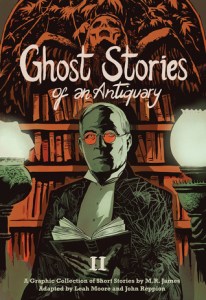 I’ve only ever read one M.R. James piece before, in an anthology of stories about libraries. This was perhaps not an ideal way to encounter his ghost stories for the first time. Though all four (“Number 13,” “Count Magnus,” “Oh, Whistle and I Will Come to You, My Lad” and “The Treasure of Abbot Thomas”) are adapted by the same pair, Leah Moore and John Reppion, each is illustrated by a different artist, so the drawing style ranges from rounded and minimalist to an angular, watercolor Marvel style. The stories have thematic links of research, travel, archaeological discovery and antiquities. Very often there are found documents that must be interpreted. Several narrators are scholars coming across unexplained phenomena: a hotel room that appears and disappears, a sarcophagus lid that opens on its own, a storm summoned by a whistle, and so on.
In a brief introduction, Jason Arnopp applauds the decision to “show readers the ghouls and ghosts,” but I disagree – to me a central problem with using the graphic form for these tales that center around nameless horror is that depicting the source of horror saps it of its power. Still, I appreciated the introduction to James’s ghost stories.
My rating:
With thanks to SelfMadeHero for the free copy for review.
Devil’s Day by Andrew Michael Hurley
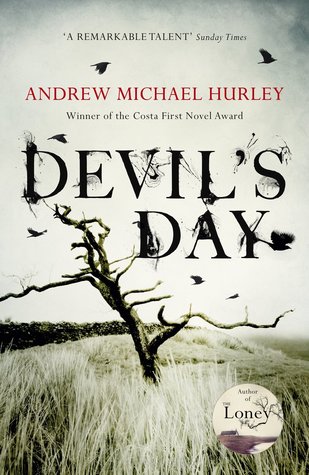 In Hurley’s Lancashire farmland setting, Devil’s Day is a regional Halloween-time ritual when the locals serve up the firstborn lamb of spring as a sacrifice to ward off the Devil’s shape-shifting appearance in the human or animal flock. Is it all a bit of fun, or necessary for surviving supernatural threat? We see the year’s turning through the eyes of John Pentecost, now settled back on his ancestral land with his wife, Kat, and their blind son, Adam. However, he focuses on two points from his past: his bullied childhood and a visit home early on in his marriage that coincided with the funeral of his grandfather, “the Gaffer”. The Endlands is a tight-knit community with a long history of being cut off from everywhere else, which makes it an awfully good place to keep secrets.
The first and last quarters of the book flew by for me, while the middle dragged a bit. The rural atmosphere and the subtle air of menace reminded me of Elmet and Bellman and Black. I’ll certainly seek out Hurley’s acclaimed debut, The Loney. [Read via NetGalley]
Favorite lines:
“Nothing changed in Underclough. Nothing happened. Not really. … elsewhere was always a place where the worst things happened. … The world outside the valley might well collapse but we wouldn’t necessarily feel the ripples here.”
My rating: 
Slade House by David Mitchell
“If I could just see a ghost, just once … Just one ghost, so I know that death’s not game over, but a door.”
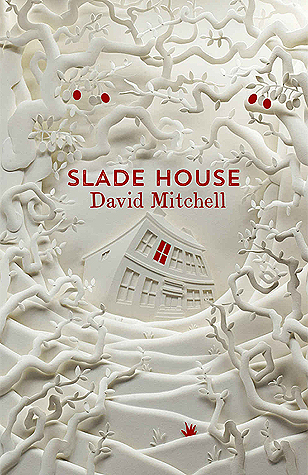 This was so cool! I feel like I’d never experienced a “real” Mitchell book before (having only read The Thousand Autumns of Jacob de Zoet, which is in some ways the odd one out), and I was impressed by how he brings everything together in this short novel. Every nine years between 1979 and 2015, a different visitor gets sucked into the treacherous world-within-a-world of the Grayer twins’ Slade House. This dilapidated mansion located off an unassuming alley morphs to fit each guest’s desires. To reveal more would spoil the fun, so I’ll just say that I love how Mitchell lulls you into a pretty horrific pattern before springing a couple of major surprises in later chapters. Each time period and narrator feels distinct and believable, and I’m told one character is from two other Mitchell novels (and the phrase “bone clock” even makes an appearance). I need to pick up Cloud Atlas soon for sure. [Public library copy]
My rating: 
Recommended spooky listening: The album That Ghost Belongs to Me by The Bookshop Band – all songs inspired by scary books.
Did you read anything scary this Halloween season?
Cats I’ve Encountered in Books Recently
Even when it’s not a book that’s specifically about cats, cats often seem to turn up in my reading. Maybe it’s simply that I look out for them more since I became a cat owner several years ago. Here are some of the quotes, scenes or whole books featuring cats that I’ve come across this year.
Cats real and imaginary
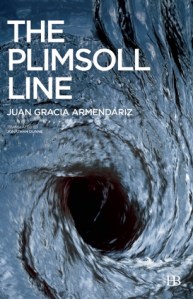 Readers see some of the action from the perspective of Polanski the cat in The Plimsoll Line by Juan Gracia Armendáriz. While the feline might not grasp the emotional importance of the scenes he witnesses, we do. “The cat narrows its eyes when it sees the man lean against the window frame, overcome by a fit of sobbing that has nothing to do with sadness, or sorrow, but with an internal crumbling, like the collapse of a wave breaking on the shore of his skin and sweeping away his memory.”
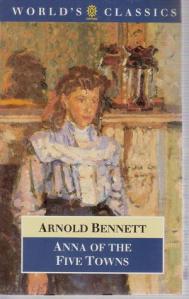 From Anna of the Five Towns by Arnold Bennett: “Anna was disturbed by the arrival at the front door of the milk-girl. Alternately with her father, she stayed at home on Sunday evenings, partly to receive the evening milk and partly to guard the house. The Persian cat with one ear preceded her to the door as soon as he heard the clatter of the can. The stout little milk-girl dispensed one pint of milk into Anna’s jug, and spilt an eleemosynary supply on the step for the cat. ‘He does like it fresh, Miss,’ said the milk-girl, smiling at the greedy cat, and then, with a ‘Lovely evenin’,’ departed down the street, one fat red arm stretched horizontally out to balance the weight of the can in the other.”
From Kilvert’s Diary by Francis Kilvert: “Toby [the cat] sits before the fire on the hearthrug and now and then jumps up on my knee to be stroked. The mice scurry rattling round the wainscot and Toby darts off in great excitement to listen and watch for them.” (18 Oct. 1870)
 The Wind-Up Bird Chronicle by Haruki Murakami starts with a missing cat. “So now I had to go cat hunting. I had always liked cats. And I liked this particular cat. But cats have their own way of living. They’re not stupid. If a cat stopped living where you happened to be, that meant it had decided to go somewhere else. If it got tired and hungry, it would come back. Finally, though, to keep Kumiko happy, I would have to go looking for our cat. I had nothing better to do.”
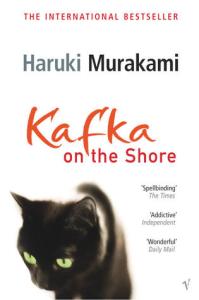
I’m also 64 pages into Murakami’s Kafka on the Shore; in Chapter 6 we meet another seeker of lost cats, Nakata, when he has an absurd conversation with a black cat named Otsuka. (Perhaps he’s the creature pictured on the cover of my paperback?)
Picture books
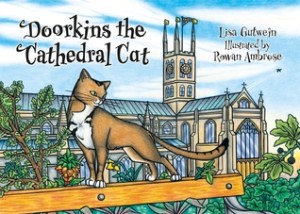 Doorkins the Cathedral Cat by Lisa Gutwein: This sweet children’s book tells the true story of how a stray cat wandered into London’s Southwark Cathedral in 2008 and gradually made it her home. It proceeds day by day through one week to give a helpful idea of the range of activities the cathedral hosts – everything from a wedding to a regular Sunday service – but also showcases important events like visits from the Bishop and the Queen. In every case we get to see how Doorkins insinuates herself into proceedings. I liked how the bright colors of the illustrations echo the cathedral’s stained glass, and appreciated the photo gallery and extra information at the end. The author, a doctor whose husband is a verger at the cathedral, and illustrator Rowan Ambrose, a dentist, met at King’s College London, where I used to work.
The Church Mice in Action by Graham Oakley: My third from the series, I think. The mice suggest to the parson’s sister that she might enter Sampson into cat shows to earn enough to repair the church roof. They then do their best to rig the results, but couldn’t have predicted the consequences. I loved the late summer/onset of autumn atmosphere.
On the extreme reluctance to remove a cat from one’s lap.
 From The Tenant of Wildfell Hall by Anne Brontë: Miss Millward, Eliza’s older sister and the vicar’s daughter, when he passes her a ball of wool that’s rolled under the table – “Thank you, Mr. Markham. I would have picked it up myself, only I did not want to disturb the cat.”
From the essay “On Cat-Worship” in George Mikes’s How to Be Decadent: “Having joked for decades about how the English worship the cat, like the ancient Egyptians only more so, I have fallen for the cat myself. It has become my sacred animal. … I have been late for appointments, failed to go shopping and missed planes because Tsi-Tsa was sitting on my lap.”
Other cat-themed reading on the horizon:
- The Cat Who Stayed for Christmas by Cleveland Amory, borrowed from the public library, should make a good pre-holiday read.
- I’m keen to get hold of The Travelling Cat Chronicles by Hiro Arikawa, which comes out in November.
- My husband gave me a copy of Tom Cox’s The Good, the Bad and the Furry for my birthday.
- I have Jason Hazeley’s The Fireside Grown-Up Guide to the Cat and Thomas McNamee’s The Inner Life of Cats on my Kindle.
- It’s not particularly geared towards cat lovers (see Eleanor’s review), but it is called My Cat Yugoslavia by Pajtim Statovci and is also on my Kindle.
- I have copies of Cats in May by Doreen Tovey plus a couple of anthologies of cat-related writing picked up in Hay-on-Wye.
Last-Minute Booker Prize Predictions
The Man Booker Prize 2017 will be announced this evening (roughly 22:00 GMT, in my memory). Ever since the shortlist announcement I’ve felt that George Saunders is a shoo-in for Lincoln in the Bardo. I think he will win, and should. However, I’ve still only read four out of the six on the shortlist, so my predictions are not entirely based on personal knowledge of the books. I can’t say I’m hugely enthused about trying Auster or Hamid, but I’d be more likely to do so if either won.
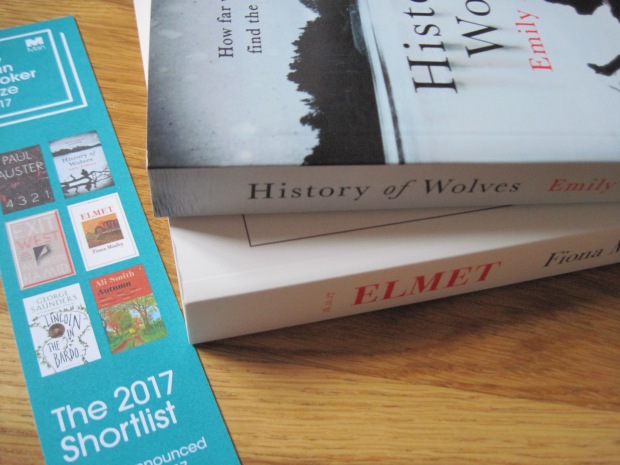
The two from the shortlist that I own + the annual bookmark, picked up from the public library.
Here, in what I predict is their descending order of likelihood to win, are the six shortlisted titles, with a pithy three words on why each one would take the prize:
Lincoln in the Bardo by George Saunders – Something actually novel.
Exit West by Mohsin Hamid – Timely re: refugees.
Autumn by Ali Smith – Timely re: Brexit.
4 3 2 1 by Paul Auster – Great American Novel.
Elmet by Fiona Mozley – Gorgeous, talented debut.
History of Wolves by Emily Fridlund – Haunting, underrated debut.
What have you managed to read from the Booker shortlist? How do your predictions match up against mine?
Books I Acquired Just for the Title
Sometimes you know just from the title of a book – without even opening it or reading anything about it – that it’s one you have to have. Here’s a photo gallery of books I acquired on the strength of the title, whether:
Bookish necessities—

Humor titles I knew would ring true—
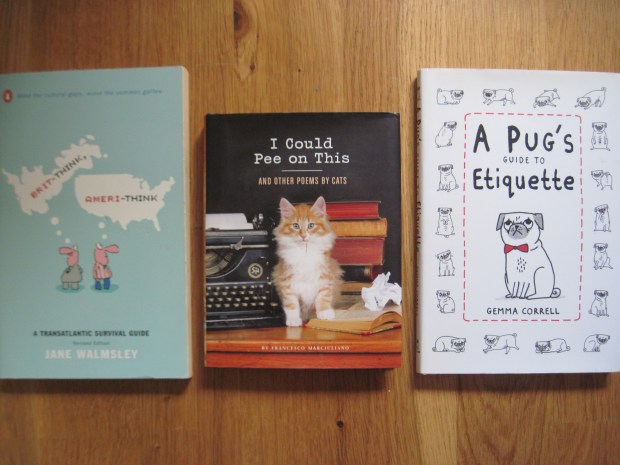
Phrases that made me want to find out more—
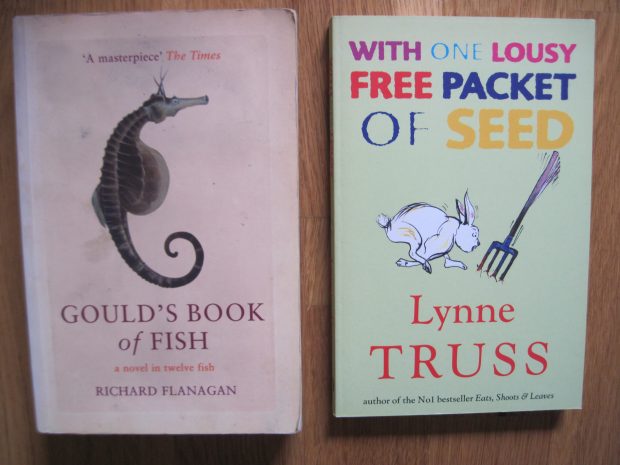
Intriguing titles, but even better subtitles—

Provocative—
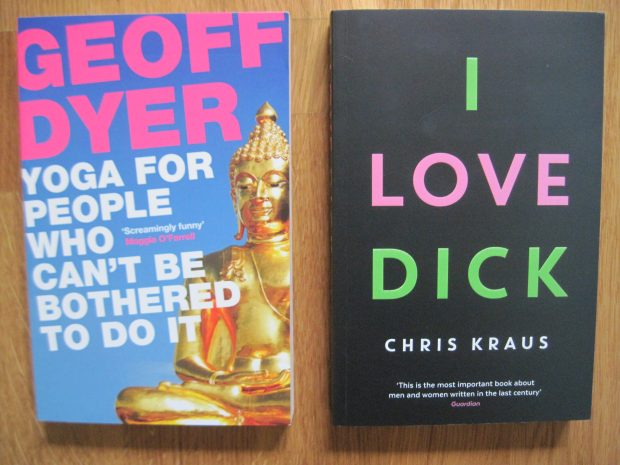
Or just plain random—
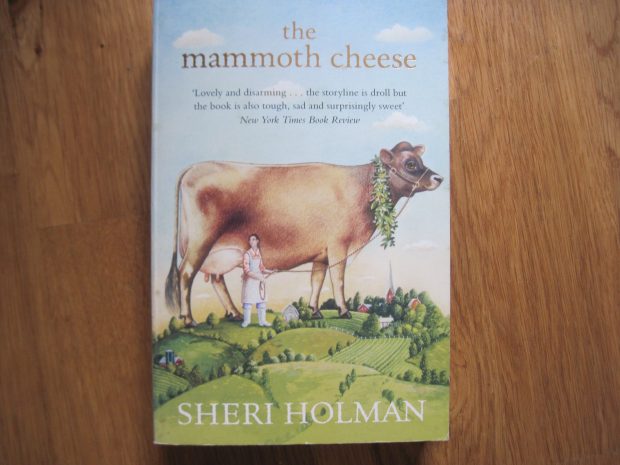
And here’s a selection of books I want to read that are on my “Awesome Title” shelf on Goodreads:
- I’m No Longer Troubled by the Extravagance by Rick Bursky
- The Dud Avocado by Elaine Dundy
- If Birds Gather Your Hair for Nesting by Anna Journey
- Clash of Civilizations over an Elevator in Piazza Vittorio by Amara Lakhous
- How to Slowly Kill Yourself and Others in America by Kiese Laymon
- Like a Mule Bringing Ice Cream to the Sun by Sarah Ladipo Manyika
- What I Was Doing While You Were Breeding by Kristin Newman
- There Once Lived a Mother Who Loved Her Children, Until They Moved Back In by Ludmilla Petrushevskaya
- The Sasquatch Hunter’s Almanac by Sharma Shields
- Why the Child Is Cooking in the Polenta by Aglaja Veteranyi
 Bookish Beck = Rebecca Foster. American transplant to England. Freelance proofreader and book reviewer.
