Library Checkout: February 2017
I managed to get through six library reads in February. I’ve added in ratings and links to any reviews for books I haven’t already featured on the blog in some way. Currently I have a lovely quartet of books on the go; given that I got a bit carried away with the free reservations, it looks like I’ll be reading a whole bunch of library books in March.
LIBRARY BOOKS READ
- Short and Sweet: 101 Very Short Poems, edited by Simon Armitage

- The Tell-Tale Heart by Jill Dawson

- From Me to You: Love Poems by U.A. Fanthorpe and R.V. Bailey
- Homegoing by Yaa Gyasi

- Family Life by Akhil Sharma
- The January Man: A Year of Walking Britain by Christopher Somerville

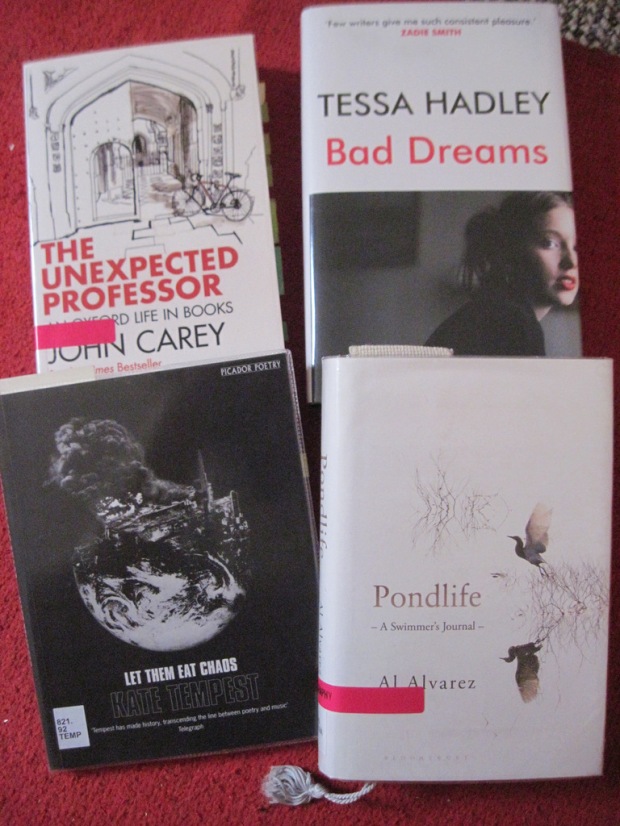
The current library reads. I hadn’t noticed until I took the photo that they all feature black, white and red on their covers…
CURRENTLY READING
- Pondlife: A Swimmer’s Journal by Al Alvarez
- The Unexpected Professor: An Oxford Life in Books by John Carey
- Bad Dreams and Other Stories by Tessa Hadley
- Let Them Eat Chaos [poetry] by Kate Tempest
CHECKED OUT, TO BE READ
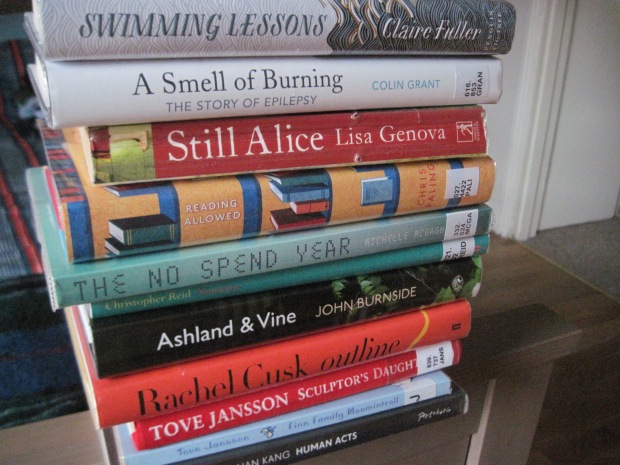
- Ashland & Vine by John Burnside
- Outline by Rachel Cusk
- Swimming Lessons by Claire Fuller
- Still Alice by Lisa Genova
- A Smell of Burning: The Story of Epilepsy by Colin Grant
- Finn Family Moomintroll & Sculptor’s Daughter by Tove Jansson
- Human Acts by Han Kang
- The No Spend Year: How I Spent Less and Lived More by Michelle McGagh [to skim only, I think]
- Reading Allowed: True Stories and Curious Incidents from a Provincial Library by Chris Paling
- Nonsense by Christopher Reid [poetry]
ON HOLD, TO BE CHECKED OUT
- The Good People by Hannah Kent
- The Best of Adam Sharp by Graeme Simsion
IN THE RESERVATION QUEUE
- Go Lean Vegan: The Revolutionary 30-Day Diet Plan to Lose Weight and Feel Great by Christine Bailey
- Days Without End by Sebastian Barry
- The Owl at the Window: A Memoir of Loss and Hope by Carl Gorham
- Where Poppies Blow: The British Soldier, Nature, the Great War by John Lewis-Stempel
- Augustown by Kei Miller
- A Beginner’s Guide to Losing Your Mind: Survival Techniques for Staying Sane by Emily Reynolds
- Lincoln in the Bardo by George Saunders
Have you been taking advantage of your local libraries? What appeals from my lists?
In the Past Week…
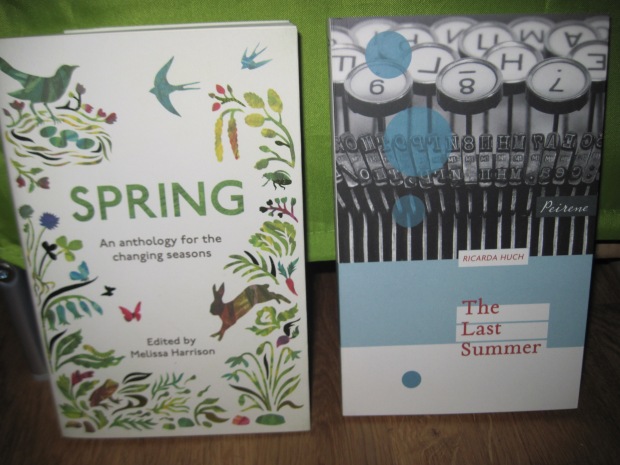
It truly felt like spring was on the way. Temperatures were in the mid-fifties (I’ve never really gotten to grips with Centigrade) and the daffodils in our back garden were trying their best to join the snowdrops decorating the churchyard in town. I started reading this pair of books to look to the seasons ahead instead of dreading that winter might return in earnest:
Some lovely things have happened in the past week.
- I’ve delighted from afar as my sister, a widow for just over two years, precipitously falls in love with a pastor she met through a dating website.
- I had my second yoga class and, after the one other participant had to leave early, got what was essentially a private lesson. Many of the poses feel right at the edge of what my flexibility and balance will allow, which is surely a sign that the exercise is doing me good.
- (This one’s not so much lovely as annoying yet amusing.) The cat, already a connoisseur of cereal milk, discovered the illicit pleasure of melted butter in a dish we unthinkingly left on the counter, and now will not rest in his search for it. This is bad news as he’s already quite the butterball. He’s also ramped up his efforts to access all of the house’s secret spaces, including the airing cupboard, the under-stairs cupboard, and the crawlspace under the bath. [Stay tuned for tomorrow’s mini-reviews of yet more cat books, including one about some very mischievous Siamese cats.]
- On Friday I got an e-mail out of the blue asking me to review a book for the Times Literary Supplement. It was October 2015 when I first wrote for them, but that ended poorly: they ran out space in the magazine for my review and paid me a “kill fee” instead, but it made me doubt myself – was that code for them not thinking my writing was good enough to publish? So hearing back from them five months after I’d last gotten in touch asking for work was a great surprise. And I get to read History of Wolves, which I’ve heard marvelous things about.
- We went to a brilliant gig by folk artists Phillip Henry and Hannah Martin in a hole-in-the-wall venue 10 minutes from our house. It was doubtless the first time I’d seen beatboxing and a classical Indian sitar/guitar used in folk music, and Henry’s harmonica skills were literally unbelievable. You had to have been there. I was impressed anew at how folk, arising as it does from liberal working-class traditions, is unafraid to tackle social issues. They had songs about his cotton mill-working grandfather, the war in Syria, immigration, and a detention center in the Midlands. My favorite, though, was “Landlocked,” about a real woman from the eighteenth century who went to sea with her naval husband but ended up right back where she started: selling fish at Exmouth harbor. I loved Martin’s deep, rich voice and the complex interplay of guitar, banjo, pedal steel and fiddle in many of their songs.
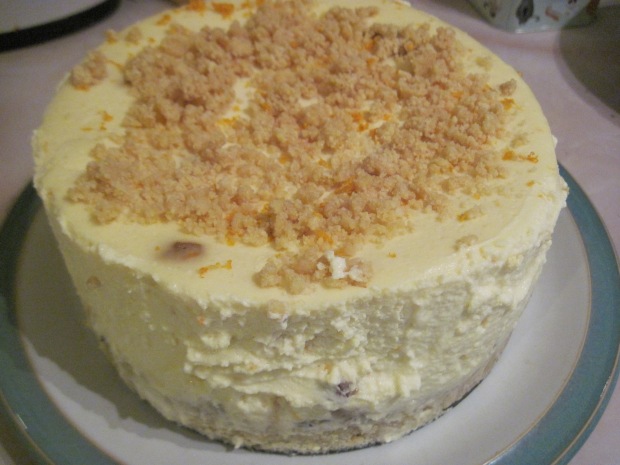
- With one of our leftover jars of homemade mincemeat we made a decadent mincemeat cheesecake from this Nigel Slater recipe. What with the shortbread crust and crumbs and the orange zest in the topping, it was very much like having mince pies – but also cheesecake. Yum.
- This morning we attended a service led by a former archbishop. We knew that George Carey was a parishioner at the Berkshire church we’ve been frequenting since December, but hadn’t seen him at the pulpit yet. He’s one of various retired and lay clergy who have been filling in while the church seeks to appoint a new vicar. Carey gave a damn fine sermon (I guess he’s had plenty of practice) on the enormous topic of why bad things happen to good people, refuting the prosperity gospel and telling the tragically fascinating story behind the hymn “It Is Well with My Soul.”
And, of course, I’ve been reading some brilliant books. This week’s ongoing reading has included three terrific novels: Homegoing by Yaa Gyasi, Spaceman of Bohemia by Jaroslav Kalfař, and Narcissism for Beginners by Martine McDonagh.
How was your week – in terms of reading and otherwise?
Literary Power Couples: An Inventory
With Valentine’s Day on the way, I’ve been reading a bunch of books with “Love” in the title to round up in a mini-reviews post next week. One of them was What I Loved by Siri Hustvedt – my second taste of her brilliant fiction after The Blazing World. Yet I’ve not tried a one of her husband Paul Auster’s books. There’s no particular reason for that; I’ve even had his New York Trilogy out from the library in the past, but never got around to reading it.
How about some other literary power couples? Here’s some that came to mind, along with an inventory of what I’ve read from each half. It’s pretty even for the first two couples, but in most of the other cases there’s a clear winner.
Zadie Smith: 5
Nick Laird: 5 (= ALL)
Zadie Smith in 2011. By David Shankbone (CC BY 3.0 (http://creativecommons.org/licenses/by/3.0) via Wikimedia Commons.
I’ve read all of Zadie Smith’s work apart from NW; I only got a few pages into it when it first came out, but I’m determined to try again someday. To my surprise, I’ve read everything her husband Nick Laird has ever published, which includes three poetry collections and two fairly undistinguished ‘lad lit’ novels. I’m pleased to see that his new novel Modern Gods, coming out on June 27th, is about two sisters and looks like a stab at proper literary fiction.
Jonathan Safran Foer: 4 (= ALL)
Nicole Krauss: 3 (= ALL)
Alas, they’re now an ex-couple. In any case, they’re both on the fairly short list of authors I’d read anything by. Foer has published three novels and the nonfiction polemic Eating Animals. Krauss, too, has three novels to her name, but a new one is long overdue after the slight disappointment of 2010’s Great House.
Margaret Drabble: 5
Michael Holroyd: 0
Michael Holroyd is a biographer and general nonfiction dabbler. I have a few of his books on my TBR but don’t feel much compulsion to seek them out. By contrast, I’ve read four novels and a memoir by Margaret Drabble and am likely to devour more of her fiction in the future.

Margaret Drabble in 2011. By summonedbyfells [CC BY 2.0 (http://creativecommons.org/licenses/by/2.0)%5D via Wikimedia Commons.
Claire Tomalin: 2
Michael Frayn: 1
Claire Tomalin’s masterful biographies of Charles Dickens and Thomas Hardy are pillars of my nonfiction collection, and I have her books on Nelly Ternan and Samuel Pepys on the shelf to read as well. From her husband, celebrated playwright Michael Frayn, however, I’ve only read the comic novel Skios. It is very funny indeed, though, about a case of mistaken identity at an academic conference on a Greek island.
Plus a few I only recently found out about:
Ian McEwan: 7 (+ an 8th in progress)
Annalena McAfee: 1 (I’ll be reviewing her novel Hame here on Thursday)
Katie Kitamura: 1 (I just finished A Separation yesterday)
Hari Kunzru: 0
Madeleine Thien: 1 (Do Not Say We Have Nothing)
Rawi Hage: 0
Afterwards I consulted the lists of literary power couples on Flavorwire and The Huffington Post and came up with a few more that had slipped my mind:
Michael Chabon: 1
Ayelet Waldman: 0
I loved Moonglow and am keen to try Michael Chabon’s other novels, but I also have a couple of his wife Ayelet Waldman’s books on my TBR.
Dave Eggers: 5
Vendela Vida: 0
I’ve read a decent proportion of Dave Eggers’s books, fiction and nonfiction, but don’t know anything by his wife and The Believer co-founder Vendela Vida.
David Foster Wallace: 2
Mary Karr: 1
I didn’t even know they were briefly a couple. From Wallace I’ve read the essay collection Consider the Lobster and the commencement address This Is Water. I’ve definitely got to get hold of Karr’s memoirs, having so far only read her book about memoir (The Art of Memoir).
And some classics:
Ted Hughes: 1 (Crow)
Sylvia Plath: 0
F. Scott Fitzgerald: 2 (The Great Gatsby and Tender Is the Night)
Zelda Fitzgerald: 0
![F. Scott and Zelda Fitzgerald in 1921. By Kenneth Melvin Wright (Minnesota Historical Society) [Public domain], via Wikimedia Commons.](https://bookishbeck.com/wp-content/uploads/2017/02/f_scott_fitzgerald_and_wife_zelda_september_1921.jpg?w=208&h=300)
F. Scott and Zelda Fitzgerald in 1921. By Kenneth Melvin Wright (Minnesota Historical Society) [Public domain], via Wikimedia Commons.
How have you fared with these or other literary power couples? Do you generally gravitate towards one or the other from a pair?
A Book for Every Occasion?
Yesterday I signed up for a six-week yoga course at the local wellbeing center. This is something I’ve been meaning to do for at least two years. Now that I’ve finally made myself commit to it, of course I’m thinking twice: going out on a Tuesday evening in the cold, dark and quite possibly wet – what was I thinking?! What will I wear? Will I have to talk to other people? Will they be nice? Will they be better than me? It’s like high school all over again.
So, naturally, last night I started reading this:
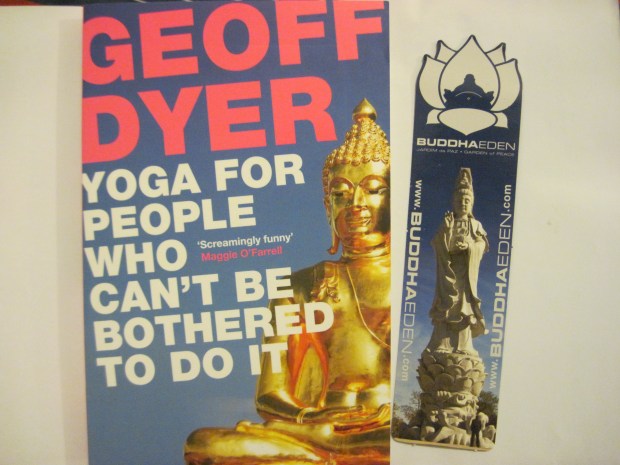
This was a Christmas gift from my wish list. With an appropriate bookmark I found at the library where I worked in London.
It’s actually a book of disparate travel essays, with the first about a stay in Louisiana that coincided with Mardi Gras in the early 1990s. But Geoff Dyer is one of those amazingly talented authors I’d read on pretty much any topic. I’ll probably skip ahead to the title essay and then make my way through the rest of the book.
Alas, I don’t think there’s a specific book that can console me for failing to get tickets to see John Mayer in London in May and wasting several hours of this morning in the stressful attempt, followed by much disappointed lethargy. (We were similarly unsuccessful with U2 recently, but did manage to secure seats to see Sigur Rós play London in September.)
When’s the last time you found a surprisingly relevant book on your shelf?
Postscript: The next day John Mayer announced a second London show, and this time we got tickets 🙂
Library Checkout: January 2017
I’ve been doing pretty well with my goal of reading mostly books that I own, but have also managed to squeeze in a handful from public and university libraries. Next month may well be full of library reads, though – I went a little wild with the free reservations! I’ve added in ratings and links to any reviews for books I haven’t already featured on the blog in some way.
LIBRARY BOOKS READ
- Love of Country: A Hebridean Journey by Madeleine Bunting

- Safest by Michael Donaghy [poetry]
- Blackout: Remembering the Things I Drank to Forget by Sarah Hepola
- The Church Mice at Christmas by Graham Oakley
- Falling Awake by Alice Oswald [poetry]

- Quartet in Autumn by Barbara Pym
- Say Something Back by Denise Riley [poetry]
- To Say Nothing of the Dog by Connie Willis

LIBRARY BOOKS SKIMMED
- Rainy Brain, Sunny Brain: The New Science of Optimism and Pessimism by Elaine Fox
- Fresh India: 130 Quick, Easy and Delicious Vegetarian Recipes for Every Day by Meera Sodha
CURRENTLY READING
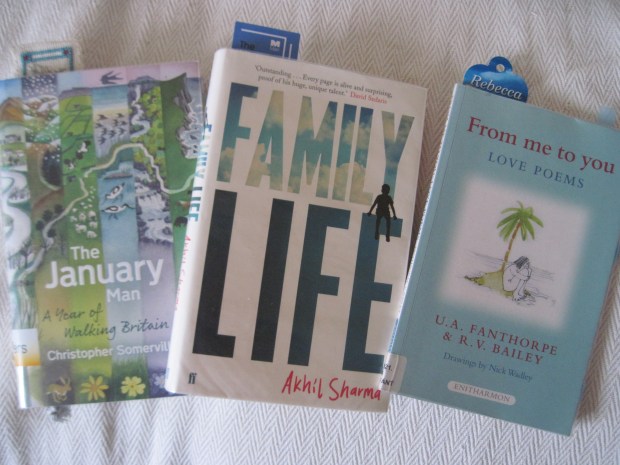
- From Me to You: Love Poems by U.A. Fanthorpe and R.V. Bailey
- Family Life by Akhil Sharma
- The January Man: A Year of Walking Britain by Christopher Somerville
CHECKED OUT, TO BE READ
- Pondlife: A Swimmer’s Journal by Al Alvarez
- Short and Sweet: 101 Very Short Poems, edited by Simon Armitage
- The Unexpected Professor: An Oxford Life in Books by John Carey
- The Tell-Tale Heart by Jill Dawson
- Nonsense by Christopher Reid [poetry]
IN THE RESERVATION QUEUE
- Go Lean Vegan: The Revolutionary 30-Day Diet Plan to Lose Weight and Feel Great by Christine Bailey
- Swimming Lessons by Claire Fuller
- Quick and Easy Thai Recipes by Jean-Pierre Gabriel
- The Owl at the Window: A Memoir of Loss and Hope by Carl Gorham
- A Smell of Burning: The Story of Epilepsy by Colin Grant
- Bad Dreams and Other Stories by Tessa Hadley
- The Good People by Hannah Kent
- Where Poppies Blow: The British Soldier, Nature, the Great War by John Lewis-Stempel
- The No Spend Year: How I Spent Less and Lived More by Michelle McGagh
- Reading Allowed: True Stories and Curious Incidents from a Provincial Library by Chris Paling
- A Beginner’s Guide to Losing Your Mind: Survival Techniques for Staying Sane by Emily Reynolds
- The Best of Adam Sharp by Graeme Simsion
RETURNED UNREAD
- Talk to the Tail: Adventures in Cat Ownership and Beyond by Tom Cox: A glance at the table of contents revealed that most of the essays were not about cats. Rip-off!
- Sunshine by Melissa Lee-Houghton: This was also on the Costa Poetry Award shortlist, so I picked it up from a display at the same time I got the Oswald and Riley. I flicked through and it didn’t seem like it would be for me.
- Woods etc by Alice Oswald: I tried this just before Falling Awake (see above) and didn’t make it past the first few pages.
Have you been taking advantage of your local libraries? What appeals from my lists?
Some Books I Was Surprised to Love
Like most fiction readers, I generally stick with what I’m pretty sure I’ll like. For me that means that, unless I’ve heard very good feedback that makes me think the book will stand out from its peers, I tend to avoid science fiction, fantasy, and mystery novels (or genre fiction in general). I’m also leery of magic realism and allegories, as these techniques can so often be cringe-inducing. But occasionally a book will come along that proves me wrong.
 For instance, last week I finished To Say Nothing of the Dog by Connie Willis. Time travel would normally be a turnoff for me, but Willis manages it perfectly in this uproarious blend of science fiction and pitch-perfect Victorian pastiche (boating, séances and sentimentality, oh my!). Once I got into it, I read it extremely quickly – finishing the final 230 pages on one Sunday afternoon and evening – and it provoked a continuous stream of snorts. I can hardly think of anyone I wouldn’t recommend it to.
This got me thinking about some other pleasantly surprising books that took me outside of my usual reading comfort zone in recent years:
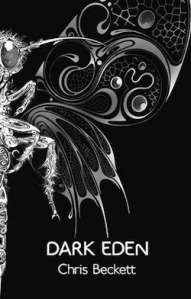 Dark Eden by Chris Beckett: Six generations ago a pair of astronauts landed on the planet Eden and became matriarch and patriarch of a new race of eerily primitive humans. A young leader, John Redlantern, rises up within the group, determined to free his people from their limited worldview by demythologizing their foundational story. Through events that mirror many of the accounts in Genesis and Exodus, Beckett provides an intriguing counterpoint to the ways Jews and Christians relate to the biblical narrative. Page-turning science fiction with deep theological implications. I liked each of the two sequels less than the book that went before, but they’re still worth reading.
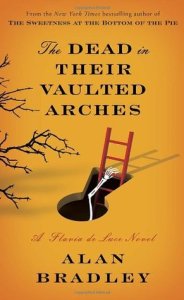 The Flavia de Luce mysteries by Alan Bradley: Normally I shy away from series and tire of child narrators – and yet I find the Flavia de Luce novels positively delightful. Why? Well, Canadian author Alan Bradley’s quaintly authentic mysteries are set at Buckshaw, a crumbling country manor house in 1950s England, where the titular eleven-year-old heroine, also the narrator, performs madcap chemistry experiments and solves small-town murders. The Dead in Their Vaulted Arches (#6) is the best yet. In this installment, Flavia finally learns of her unexpected inheritance from her mother. The most recent, Thrice the Brinded Cat Hath Mew’d (#8), is a close second.
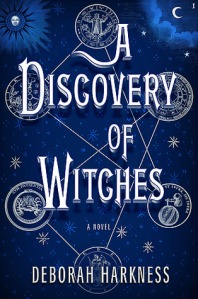 A Discovery of Witches by Deborah Harkness: The thinking gal’s Twilight. Harkness, a historian of science, draws on her knowledge of everything from medieval alchemy to recent DNA mapping. The main character, reluctant witch Diana Bishop, is studying alchemical treatises at the Bodleian Library. She calls up an enchanted manuscript from Ashmole’s original collection, presumed missing since 1859. There are three excised pages, and the book instantly draws attention from the myriad “creatures” (non-humans) plaguing Oxford. Enter Matthew Clairmont, a mega-hot vampire with a conscience. From rural France to upstate New York, he and Diana fight off rival vampires and the witches who killed Diana’s parents. As with Beckett’s books, the two sequels are a bit of a letdown, but the first book is great fun.
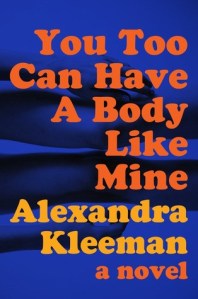 You Too Can Have a Body Like Mine by Alexandra Kleeman: A full-on postmodern satire bursting with biting commentary on body image, consumerism and conformity. The narrator, known only as A, lives in a shared suburban apartment. She and her roommate, B, are physically similar and emotionally dependent, egging each other on to paranoid anorexia. Television and shopping are the twin symbolic pillars of a book about the commodification of the body. In a culture of self-alienation where we compulsively buy things we don’t need, have no idea where our food comes from and worry about keeping up a facade of normalcy, Kleeman’s is a fresh voice advocating the true sanity of individuality.
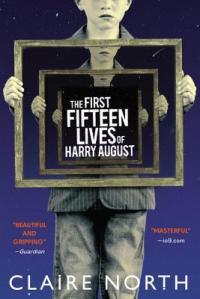 The First Fifteen Lives of Harry August by Claire North: The theme of a character reliving the same life over and over will no doubt have you thinking of Kate Atkinson’s Life After Life, but I liked this book so much better. Perhaps simply because of the first-person narration, I developed much more of a fondness for Harry August and his multiple life stories than I ever did for Ursula Todd. Harry, the illegitimate son of a servant girl, is born in the same manner each time – on New Year’s Day 1919, in the ladies’ restroom at Berwick-upon-Tweed rail station! – but becomes many people in his different lives.
What books were you surprised to love recently?
Books that (Should Have) Literally Changed My Life
(Following on from my posts Landmark Books from My Early Life and Landmark Books in My Life, Part II.)
Every once in a while you’ll hear someone claim that a certain book will change your life. I think of a scene in Garden State, still one of my favorite movies of all time, where Natalie Portman’s character tells Zach Braff’s character “this song will change your life” and puts The Shins’ “New Slang” on his headphones. (Ok, it’s a good song, but not that great.)
Are there any books that have literally changed my life? I can think of a handful that have been extremely influential on my worldview and, in a couple of cases, also changed my behavior. As it happens, they’re all nonfiction.
Religion
 After I got back to the States from my year abroad, I spent a few years doing some intensive reading about progressive Christianity (it was sometimes also called the emergent church) and other religions, trying to decide if it was worth sticking with the faith I’d grown up in. Although I still haven’t definitively answered this for myself, and have drifted in and out of lots of churches over the last 12 years, two authors were key to me never ditching Christianity entirely: Brian McLaren and Marcus Borg.
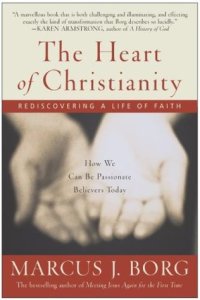 McLaren founded the church we attend whenever we’re back in Maryland and is the author of over a dozen theology titles, including the New Kind of Christian trilogy of allegorical novels. For me his best book is A New Kind of Christianity, which pulls together all his recurrent themes. Borg, who died in 2015, wrote several books that made a big impression on me, but none more so than The Heart of Christianity, which is the best single book I’ve found about what Christianity can and should be, going back to Jesus’ way of peace and social justice and siphoning off the unhelpful doctrines that have accumulated over the centuries.
 Any number of other Christian books and authors have been helpful to me over the years (Secrets in the Dark by Frederick Buechner, How (Not) to Speak of God by Peter Rollins, Falling Upward by Richard Rohr, An Altar in the World by Barbara Brown Taylor, Without Buddha I Could Not be a Christian by Paul Knitter, Unapologetic by Francis Spufford, and various by Kathleen Norris, Rowan Williams, Richard Holloway and Anne Lamott), reassuring me that it’s not all hellfire/pie in the sky mumbo-jumbo for anti-gay Republicans, but Borg and McLaren were there at the start of my journey.
Sexuality
 Reading is my primary means of examining society as well as my own life, so it’s no wonder that I have turned to books to learn from some gender pioneers. Hanne Blank’s accessible social history Straight (2012) is particularly valuable for its revelation of the surprisingly short history of heterosexuality as a concept – the term has only existed since the 1860s. But the book that most helped me adjust my definitions of gender and broaden my tolerance was Conundrum by Jan Morris (1974).
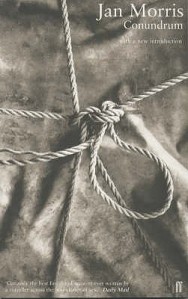 James Morris, born in 1926, was a successful reporter, travel writer, husband and father. Yet all along he knew he was meant to be female; it was something he had sensed for the first time as a young child sitting under the family piano: “I was three or perhaps four years old when I realized that I had been born into the wrong body, and should really be a girl … the conviction was unfaltering from the start.” In 1954 he began taking hormones to start his transition to womanhood, completed by a sex reassignment surgery in Morocco in 1972. This exceptional memoir of sex change evokes the swirl of determination and doubt, as well as the almost magical process of metamorphosing from one thing to another. Morris has been instrumental in helping me see sexuality as a continuum rather than a fixed entity.
Food
Apart from Michael Pollan, can you guess who’s had the greatest influence on my eating habits? You might be surprised to learn it’s American novelist Jonathan Safran Foer. In 2009 he published a provocative book called Eating Animals. I’m still surprised by how powerful and challenging I found it, considering that I knew pretty much what to expect: anti-meat rhetoric from a trendy vegetarian, with plenty of arresting statistics and horrifying behind-the-scenes accounts of factory farming and slaughter. But I set aside my jaded approach to potential propaganda and let it all saturate me, and it was devastating.
 The fact that I still haven’t completely given up meat is proof of how difficult it is to change, even once you’ve been convicted. We’ve gone from eating meat occasionally to almost never, and then mostly when we’re guests at other people’s houses. But if I really reminded myself to think about where my food was coming from, I’m sure we’d be even more hardline. Foer didn’t answer all my questions – what about offal and wild game, and why not go all the way to veganism? – but I appreciated that he never characterizes the decision to be vegetarian as an easy one. He recognizes the ways food is bound up with cultural traditions and family memories, but still thinks being true to one’s principles outweighs all. (He’s brave enough to suggest to middle America that it’s time to consider a turkey-free Thanksgiving!)
Daily Life
 There’s nothing more routine than brushing your teeth, and I never thought I would learn a new way to do it at age 32! But that’s just what Ignore Your Teeth and They’ll Go Away by Sheldon Dov Sydney gave me. He advises these steps: (1) brushing with a dry brush to remove bits of food and plaque, (2) flossing, and (3) brushing with toothpaste as a polish and to freshen breath. It takes a little bit longer than your usual quick brush and thus I can’t often be bothered to do it, but it does always leave my mouth feeling super-clean.
 I frequently succumb to negative self-talk, thinking “I can’t cope” or “There’s no way I could…” Feel the Fear and Do It Anyway by Susan Jeffers helped me see that I need to be more positive in my thought life. Originally published in 1987, the self-help classic says that at the base of every fear is a belief that “I can’t handle it.” Our fears are either of things that can happen to us (aging and natural disasters) or actions we might take (going back to school or changing jobs). You can choose to hold fear with either pain (leading to paralysis) or power (leading to action). This is still a struggle for me, but whenever I start to think “I can’t” I try to replace it with Jeffers’ mantra, “Whatever it is, I’ll handle it.”
Can you think of any books that have literally changed your life?
Authors I Keep Meaning to Try
Picking up a book by an author you’ve never encountered before can be a bit daunting. Perhaps, like me, you’ve heard people praise particular authors for a long time and have wanted to give their writing a try, but simply never known quite where to start. For me, a few that keep coming to mind, bringing with them a twinge of guilt each time, are Haruki Murakami, Joyce Carol Oates and John Updike.
Oates published her first novel at age 26 and has written around 50 of them since; she’s also a prolific short story writer and essayist, such that her total output numbers some 70-plus volumes. Yet the only piece I’ve ever read by her is a 1966 short story, “Where Are You Going, Where Have You Been?”, which was assigned reading for my freshman seminar at college. Where in the world should I start with her novels?!
Likewise, Updike is a huge figure in twentieth-century American literature – with, again, about 70 books to his credit, including not just novels but also short stories, poetry, autobiography, and literary criticism – but I’ve barely read a word he wrote.
Rather than shrugging my shoulders in disillusioned frustration and deciding not to try these intimidating authors after all, I’m going to try to put a reasoned plan in place. As I see it, there are five strategies I could take:
- Start with their first book (this is what Laura of Reading in Bed is doing this year, to decide whose complete works to read)
- Start with their most high-profile book – the one that won a major prize, or was on the bestseller list for weeks, or became a ubiquitous book club selection
- Start with their latest book
- Start with their most unconventional work
- Start with whatever comes to hand first (public library holdings might be the limitation)
So, which strategy do you recommend for the three authors I mentioned above? I’ll plan to try all of them this year. Which of their books should I be sure not to miss?
Starting the Year as I Mean to Go On?
The houseguests have gone home, the Christmas tree is coming down tomorrow, and it’s darned cold. I’m feeling stuck in a rut in my career, the blog, and so many other areas of life. It’s hard not to think of 2017 as a huge stretch of emptiness with very few bright spots. All I want to do is sit around in my new fuzzy bathrobe and read under the cat. Luckily, I’ve had some great books to accompany me through the Christmas period and have finished five so far this year.
I thought I’d continue the habit of writing two-sentence reviews (or maybe no more than three), except when I’m writing proper full-length reviews on assignment or for blog tours or other websites. Granted, they’re usually long and multi-part sentences, and this isn’t actually a time-saving trick – as Blaise Pascal once said, “I’m sorry I wrote you such a long letter; I didn’t have time to write a short one” – but it feels like good discipline.
So here’s some mini-reviews of what I’ve been reading in late December and early January:
The Dark Flood Rises, Margaret Drabble
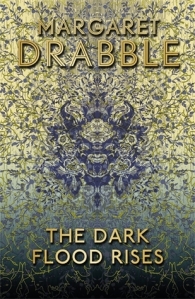 The “dark flood” is D.H. Lawrence’s metaphor for death, and here it corresponds to busy seventy-something Fran’s obsession with last words, obituaries and the search for the good death as many of her friends and acquaintances succumb – but also to literal flooding in the west of England and (dubious, this) to mass immigration of Asians and Africans into Europe. This is my favorite of the five Drabble books that I’ve read – it’s closest in style and tone to her sister A.S. Byatt as well as to Tessa Hadley, and the themes of old age and life’s randomness are strong – even though there seem to be too many characters and the Canary Islands subplot mostly feels like an unnecessary distraction. (Public library)
Hogfather, Terry Pratchett
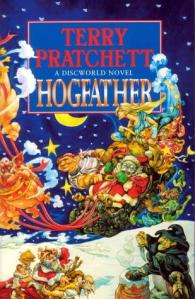 In Discworld belief causes imagined beings to exist, so when a devious plot to control children’s minds results in a dearth of belief in the Hogfather, the Fat Man temporarily disappears and Death has to fill in for him on this Hogswatch night. I laughed aloud a few times while reading this clever Christmas parody, but I had a bit of trouble following the plot and grasping who all the characters were given that this was my first Discworld book; in general I’d say that Pratchett is another example of British humor that I don’t entirely appreciate (along with Monty Python and Douglas Adams) – he’s my husband’s favorite, but I doubt I’ll try another of his books. (Own copy)
Love of Country: A Hebridean Journey, Madeleine Bunting
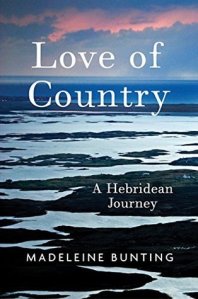 In a reprise of childhood holidays that inevitably headed northwest, Bunting takes a series of journeys around the Hebrides and weaves together her contemporary travels with the religion, folklore and history of this Scottish island chain, an often sad litany of the Gaels’ poverty and displacement that culminated with the brutal Clearances. Rather than giving an exhaustive survey, she chooses seven islands to focus on and tells stories of unexpected connections – Orwell’s stay on Jura, Lord Leverhulme’s (he of Port Sunlight and Unilever) purchase of Lewis, and Bonnie Prince Charlie’s landing on Eriskay – as she asks how geography influences history and what it truly means to belong to a place. (Public library)
Cobwebs and Cream Teas: A Year in the Life of a National Trust House, Mary Mackie
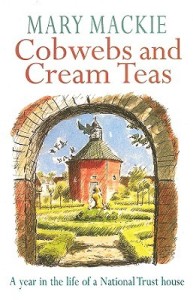 Mackie’s husband was Houseman and then Administrator at Felbrigg Hall in Norfolk in the 1980s – live-in roles that demanded a wide range of skills and much more commitment than the usual 9 to 5 (when he borrowed a pedometer he learned that he walked 15 miles in the average day, without leaving the house!). Her memoir of their first year at Felbrigg proceeds chronologically, from the intense cleaning and renovations of the winter closed season through to the following Christmas’ festivities, and takes in along the way plenty of mishaps and visitor oddities. It will delight anyone who’d like a behind-the-scenes look at the life of a historic home. (Own copy)
The Bridge Ladies: A Memoir, Betsy Lerner
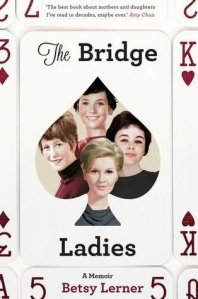 When life unexpectedly took the middle-aged Lerner back to her hometown of New Haven, Connecticut, she spent several years sitting in on her mother’s weekly bridge games to learn more about these five Jewish octogenarians who have been friends for 50 years and despite their old-fashioned reserve have seen each other through the loss of careers, health, husbands and children. Although Lerner also took bridge lessons herself, this is less about the game and more about her ever-testy relationship with her mother (starting with her rebellious teenage years), the ageing process, and the ways that women of different generations relate to their family and friends. It wouldn’t be exaggerating to say that every mother and daughter should read this; I plan to shove it in my mother’s and sister’s hands the next time I’m in the States. (Own copy)
Waiting on the Word, Malcolm Guite
 Guite chooses well-known poems (by Christina Rossetti, John Donne, Alfred Lord Tennyson, Samuel Taylor Coleridge et al.) as well as more obscure contemporary ones as daily devotional reading between the start of Advent and Epiphany; I especially liked his sonnet sequence in response to the seven “O Antiphons.” His commentary is learned and insightful, and even if at times I thought he goes into too much in-depth analysis rather than letting the poems speak for themselves, this remains a very good companion to the Christmas season for any poetry lover. (E-book from NetGalley)
 I started too many books over Christmas and have sort of put six of them on hold – including Titus Groan, which I’m thinking of quitting (it takes over 50 pages for one servant to tell another that the master has had a son?!), and City on Fire, which is wonderful but dispiritingly long: even after two good sessions with it in the days after Christmas, I’ve barely made a dent.
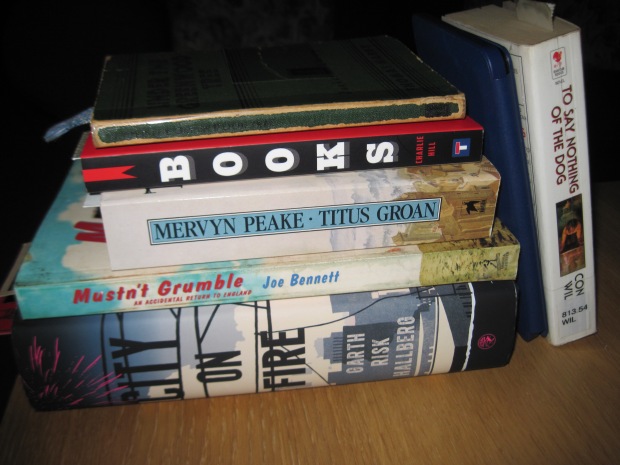
Stack on left = on hold (the book on top is Under the Greenwood Tree); standing up at right = books I’m actually reading.
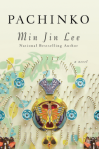
However, the three books that I am actively reading I’m loving: To Say Nothing of the Dog by Connie Willis is an uproarious blend of time travel science fiction and Victorian pastiche (university library), Pachinko by Min Jin Lee is a compulsive historical saga set in Korea (ARC from NetGalley), and the memoir Birds Art Life by Kyo Maclear has been compared to H Is for Hawk in the way she turns to birdwatching to deal with depression (e-book from Edelweiss). I also will be unlikely to resist my e-galley of the latest Anne Lamott book, Hallelujah Anyway (forthcoming in April, ARC from Edelweiss), for much longer.



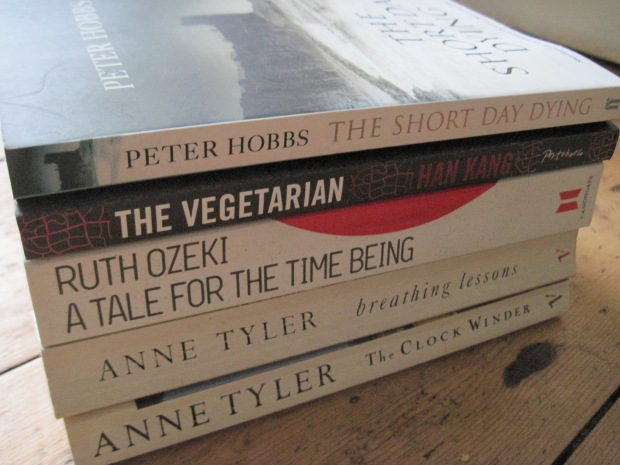
Meanwhile, in post-holiday charity shopping I scored six books for £1.90: one’s been tucked away as a present for later in the year; the Ozeki I’ve already read, but it’s a favorite so I’m glad to own it; and the rest are new to me. I look forward to trying Han Kang; Anne Tyler is a reliable choice for a cozy read; and the Hobbs sounds like a wonderful Victorian-set novel.
All in all, I seem to be starting my year in books as I mean to go on: reading a ton; making sure I review most or all of the books, even if I write just a few sentences; maintaining a balance between my own books, library books, and recent or advance NetGalley/Edelweiss reads; and failing to restrain myself from buying more.
Now if I could just work on my general attitude…
How’s the reading year starting off for you?
Some Final Statistics for 2016
I thought last year’s reading total could never be beat, but somehow I’ve done it. In the meantime I also exceeded my Goodreads goal by a whole 20%. I don’t like to crow, so I’ve worked out the statistics below in terms of percentages rather than absolute numbers. (But, if you’re curious, you can see my final tally here.)
Fiction: 46.2%
Nonfiction: 41.3%
Poetry: 12.5%
Average rating: 3.6 out of 5 stars
 Longest book: The Goldfinch by Donna Tartt
Shortest book: Physical by Andrew McMillan (in general, reading poetry is one way I boost my reading totals; although the books require time and attention, most only have between 50 and 100 pages)
Average length: 258 pages
Male author: 40.4%
Female author: 59.6%
(Really interesting as I never consciously set out to read more books by women.)
E-books: 33.7%
Print books: 66.3%
(I’m surprised this isn’t closer to half and half!)
Works in translation: 8.3%
(Must do better!)
2016: What a year, huh? World events left so many of us reeling, but books kept me going.
How did 2016 turn out for you reading-wise?
Wishing all of my readers a very happy new year. I look forward to another year of reading and blogging.
 Bookish Beck = Rebecca Foster. American transplant to England. Freelance proofreader and book reviewer.
 Bookish Beck