Mega #ShortStorySeptember Catch-Up! Fetto, P. Fitzgerald, Henley, Logan, L. Moore, E. Williams & 2 Partial Reads, 3 DNFs, 2 Single Stories
In total, I read 10 collections, as well as parts of five more, and nine individual stories for Short Story September. It would be absurd for me to be disappointed with those numbers (in comparison to last year’s 15 collections, I guess). Today is the last day of the link-up, so I’m calling it a day and giving brief responses to the rest of the books I read for the challenge. (My other reviews: six stories, Old Romantics by Maggie Armstrong, “Death in Midsummer” by Yukio Mishima, three R.I.P. collections.) The range of styles, settings, and subject matter in the below really showcase how much the short story can do, often in very few pages.
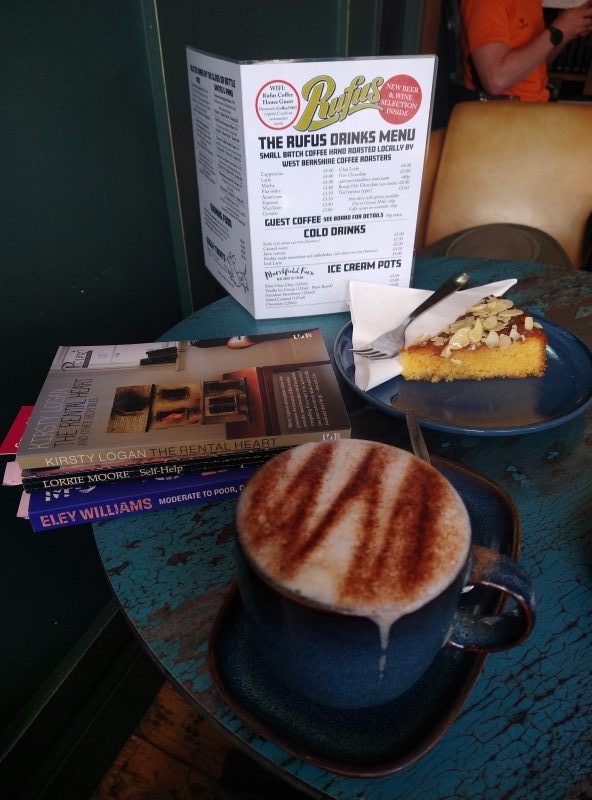
Hail Mary by Funmi Fetto (2025)
 These nine stories explore religious and cultural limitations on Nigerian women’s lives at home and in London. The title story questions whether Riliwa’s efforts to assimilate have been worthwhile; “It amazed her how much England was lauded and celebrated back home. Her reality was cruel and cold.” In “Dodo Is Yoruba for Fried Plantain,” Morayo married into privilege in the Gloucestershire countryside, but long since discovered the relationship was a sham. On trips to London markets to buy authentic African ingredients, she wonders if reconnecting with her roots will redeem lost time. A longing for motherhood underpins several of the stories, even sometimes explaining willingness to ignore homosexual urges. I was most impressed by “House Girl,” in which the abused protagonist flees her inescapable situation in a full-on Anna Karenina finale. There is not a lot of cheer here, but ample Adichie-esque talent with character, details, and plot to keep one reading. (Public library)
The Means of Escape by Penelope Fitzgerald (2000)
 I already reviewed the single story “The Axe,” which is the odd one out – a mischievous ghost story. The rest are more typical of Fitzgerald: elegant slices of historical fiction, immediately establishing mastery of a place, time and set of circumstances, whether that be a convict on the loose in 1850s Australia (the title story), Impressionist-era English painters seeking models in Paris (“The Red-Haired Girl)”, or a poor boy who loses his precious medal in the 1660s (“Desideratus”). A couple of the stories appear to be contemporary and have a gently comic tone: the fussy conductor located on a tiny Scottish island in “Beehernz,” the overbearing stately-home guide in “Not Shown.” There’s a timeless, allegorical feel to “The Prescription” (one of two Greek/Turkish settings), in which doctors who once had a mentor–student relationships give rival diagnoses, and the title of “Our Lives Are Only Lent to Us” indicates philosophizing about the tragic losses in a small Central American town. I was dazzled by the breadth of Fitzgerald’s imagination and the confidence of her execution. (Secondhand – Community Furniture Project, Newbury)
Apple & Palm by Patricia Henley (2026)
 How had I never heard of Henley – an accomplished novelist, story writer, poet and playwright who was a National Book Award finalist for her debut? These eight linked short stories initially attracted me because they’re set in (fictional) Whistle Pig, Western Maryland, a region of my home state I know reasonably well, with Baltimore an occasional counterpart. Each spins its own web of connections and complications; together, they form a composite portrait of a community through its (ageing) women. Though Roxy’s 100th birthday has passed, she still shows her photographs and supports friends through a women’s art collective. Jill manages the family orchard and frets about her gambling-addicted father. After a disabling accident, Harper borrows Aunt Jill’s car for her gig as an artist’s model. Claire lashes out at her tenure refusal and her husband’s request for an open marriage. Sally leaves an IVF struggle behind for a vacation home in the Bahamas. A massage therapist hears a customer’s life story; sixtysomething friends diverge through varying experiences of illness and sex. I especially appreciated the matter-of-fact portrayal of a middle-aged asexual character. These fine stories reminded me of work by Stewart O’Nan and Ann Patchett.
Published by Cornerstone Press. With thanks to publicist Caitlin Hamilton Summie for the e-copy for review.
The Rental Heart and Other Fairytales by Kirsty Logan (2014)
 I’m not sure why I felt led to buy this Polari First Book Prize winner, as I’ve struggled with Logan’s fiction before (“The Gracekeeper” here was expanded into a novel). Of the 20 stories, many are flash length; I tended to prefer the slightly longer, queer takes on history and folklore. “Underskirts” is voiced by houseguests and servants, including the various maids the Lady of the manor seduces. It starts as a bit of fun when teenage girls experiment sexually with each other; then one goes to live with Baba Yaga in “Witch.” In “Coin-Operated Boys,” Elodie comes up with a novel solution to her lack of suitors. Many of the characters are young people reeling from loss or facing transition moments. A fair few stories are in titled or numbered fragments and have multiple narrators or a reverse chronology. You certainly couldn’t complain of them being samey. Still, many feel wispy, like there isn’t enough time to care about or understand the characters; to turn a skit into a full-length, satisfying drama. (New purchase from Salt Publishing)
Self-Help by Lorrie Moore (1985)
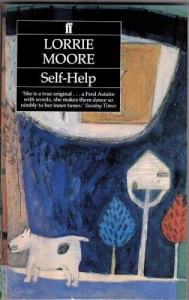 My fourth collection (after Bark, Birds of America and Like Life) by Moore, who is truly one of the great short story writers. In keeping with the title, four story names start with “How” and several are in the second person, to distance the main character and/or establish a tongue-in-cheek, advice-giving imperative. Women navigate marriage, infidelity, motherhood, and having ill or mentally compromised mothers of their own. I got Melissa Bank and Nora Ephron vibes from the first story, “How to Be an Other Woman.” Charlene’s quick wit makes her much more than just a mistress: “‘So, you’re a secretary.’ Squirm and quip: ‘More like a sedentary’.” “The Kid’s Guide to Divorce” adopts a child’s perspective with equal aplomb and is only four pages. In “Go Like This,” Liz schedules her escape from cancer for Bastille Day. The diary entries of “Amahl and the Night Visitors” wrestle with freedom vs. control in a couple’s relationship through their argument about whether or not to let the cat go outside. A woman persists in writing despite her professors and classmates objecting to her “outrageous and incompetent” sense of plot. There are such hilarious turns of phrase – “a strange flesh sundae of despair and exhilaration,” “full-haired as Easter basket grass” – throughout that I was taken aback by the dark turn in the final story, “To Fill,” where the narrator’s flippant wordplay masks her mental instability. A treat for Amy Bloom and Helen Simpson fans. (Secondhand – The Bookshop, Wigtown)
Moderate to Poor, Occasionally Good by Eley Williams (2024)
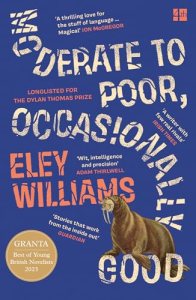 I could make a quip about how apt the title is for the contents, but that would feel mean. My sense with Williams’s second collection was that her practice was to think of an outlandish image or moment and go from there. What if a courtship withered because one partner accidentally sent footage of walrus sex? (“Scrimshaw,” which was a finalist for the BBC National Short Story Award in 2020.) What if someone hired a skywriter to scrawl “Will you marry me?” outside a restaurant window and it wasn’t received well? What if someone reading the radio shipping forecast (which lends the title phrase) used that segment to address their failing relationship? These 19 stories are inventive, yes, and often delight in wordplay and obscure vocabulary. That will be no surprise to anyone who’s read Attrib. and Other Stories or The Liar’s Dictionary. Too often, though, it feels like showing off skill but not committing emotionally, which means I didn’t believe in the lovelorn narrators and their peculiar predicaments. (“Too-quick chicanery of thought can cause a conversational form of the bends.” Quite.) The highlight was “Squared Circle,” about two pro wrestlers who convene every year on the anniversary of their famous showdown, even when one is seriously ill. (Gift from my wish list last year)
I’m still reading two excellent linked short story collections that I’m taking my time over:
 Rattlebone by Maxine Clair (1994): Vibrant and varied snapshots of a Black community in Kansas. I feel like Tayari Jones must have been influenced by it.
 A Desert between Two Seas by A. Muia (2025): Exquisitely detailed historical stories about a Mexican priest, his houseboy’s enforced pearl-diving, and the wanderings that ensue.
A few DNFs:
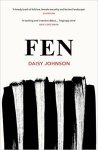 Fen by Daisy Johnson (2016): Adolescent girls discover sex – “Virginity was a half-starved dog you were looking after, wanted to give away as quickly as possible so you could forget it ever existed.” I read six stories but found the majority of them too similar, and provocative for the sake of it. Two good ones: “Starver” compares disordered eating with local eels that refuse to eat when the land is drained; in “Language,” a ghost struggles to communicate. (Gift from my wish list)
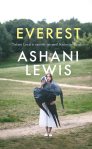 Everest by Ashani Lewis (2024): I read more than two-thirds of the book but can barely tell you anything about it. There’s some anxiety about social media, some coming-of-age discovery, some mean-girls friendship. Technically, the stories are accomplished, but they lack warmth. Two good ones: “Antarctica,” about an ill, older woman petitioning to go to the Scott Polar Research Institute; in “The Imitation Oyster,” fine dining is the basis of a liaison. (Public library)
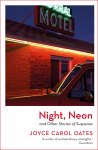 Night, Neon by Joyce Carol Oates (2021): I reviewed two stories on Oates’s birthday. My third Oates DNF; I don’t have high hopes of getting through a book by this lady. Despite the short form, she has such repetitive phrasing. Two good ones: in “Curious,” a writer makes generous anonymous donations to change a grocery clerk’s life; in “Parole Hearing, California Institution for Women, Chino, CA,” a Charles Manson follower appeals. Even in this nine-pager – short for Oates – the anaphora of “Because…” statements gets old. (Public library)
Single stories:
“The Quiet” by Carys Davies (2014)
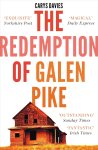 [from The Redemption of Galen Pike]
A good companion to West and Clear; all three share a vivid historical setting and a surprise ending that makes you want to stand up and cheer. Susan Boyce is a pioneer’s wife, isolated and battered. Her neighbour, Henry Fowler, keeps coming around, including when her husband is away, and at first there’s a hint of menace about his visits. But then they compare their scars. Brilliant. (New purchase from Salt Publishing)
“The Necklace” by Guy de Maupassant (1884)
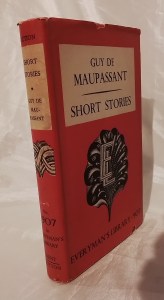 [translated from French by Marjorie Laurie; from the Everyman Short Stories volume]
Thanks to Emma of Words and Peace for recommending this one. It’s such an instant classic I a) can’t believe I’d never encountered it before and b) can’t imagine a time when it didn’t exist. A young woman with little money but grand pretensions marries.
She was eternally restive under the conviction that she had been born to enjoy every refinement and luxury. Depressed by her humble surroundings, the sordid walls of her dwelling, its worn furniture and shabby fabrics were a torment to her.
She had no pretty gowns, no jewels, nothing—and yet she cared for nothing else. She felt that it was for such things as these that she had been born.
Now, as Madame Loisel, she is keen to make a good impression at her first society outing, an At Home at the Education Office, but has nothing to wear. She begs her husband for money to buy a new dress, then borrows a diamond necklace from a friend. When the necklace gets lost in the hustle and bustle of the party, it has lasting consequences. “How small a thing can serve to save or ruin you!” This sobering morality tale is like Flaubert crossed with O. Henry. The lesson I drew from it was, just confess! I lost one of the earrings that I borrowed from a friend to wear to the Booker Prize ceremony, and everything was fine! (Little Free Library)
Whew, all caught up!
And the final statistics for Short Story September:
25 bloggers
80 posts
38 individual stories &
60 whole collections reviewed
(+ 1 bonus biography of a short story writer)
All the posts are here and here.

Thank you all again for joining in!
20 Books of Summer, 17–20: Jaouad, Kim, Merwin, Piñeiro (#WITMonth)
It’s time to draw a line under 20 Books of Summer so I can focus on hosting Short Story September. I’m technically not quite finished with these first two I’m technically not quite finished with these first two [70 pages to go in the Jaouad and 46 in the Kim], but I’ve read enough to form an opinion and will pop back later to add in final thoughts and ratings. My final four are a memoir of cancer in young adulthood; a page-turning courtroom drama about experimental autism treatment gone wrong; gorgeous nature poems; and a novella in translation that comments on disability, motherhood and mental health issues. Skip to the end for my one DNF of the challenge and a look back at some stats plus my most successful reads.
Between Two Kingdoms: What Almost Dying Taught Me about Living by Suleika Jaouad (2021)
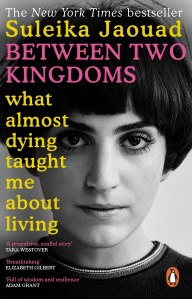
{Updated on 7 September} Jaouad wrote a New York Times column about going through leukaemia treatment in her early twenties and what came next. After months of itching and fatigue, she fell properly ill while working her first postgraduate job in Paris and her blood test results were so bad that she flew home to New York. She would be in and out of hospital for the next five years, enduring multiple rounds of chemo and a bone marrow transplant from her brother. It’s a terrific granular account of the physical and emotional rigours of illness, as well as the strain it put on her relationships – being her primary caregiver was too much for her boyfriend, Will. But she also found a community of young cancer patients, many (like Max Ritvo) now dead. After 60% of the book’s length, as the title – its metaphor taken from Susan Sontag – suggests, the new challenge for Jaouad was resuming life. “I’ve spent the past fifteen hundred days working tirelessly toward a single goal—survival. And now that I’ve survived, I’m realizing I don’t know how to live.” She decides to undertake a cross-country road trip punctuated by visits to people who wrote to her through her column: fellow cancer survivors, a mother who lost a son to suicide, a man on death row in Texas. At first I thought this content felt tacked on and should have been a sequel, but ultimately it illustrates why she wouldn’t edit out her illness if she had it all to do again. I hadn’t heard of Jaouad before I stumbled on this book; from Instagram, I learned she’s now (at age 38) weathered cancer three times. (Little Free Library)
Miracle Creek by Angie Kim (2019)
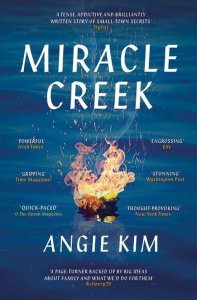
{Updated on 7 September} After enjoying Happiness Falls so much, I wanted to go back to Kim’s debut, for which she won an Edgar Award. (There’s an autistic boy and discussion of therapies in that second book as well.) The bulk of the novel is set during the four days of an August 2009 trial. It’s been a year since a horrific accident at Pak Yoo’s “Miracle Submarine,” a rural Virginia hyperbaric oxygen chamber where regulars came for twice-daily treatment of autism, cerebral palsy, and infertility. Meanwhile, protesters gathered outside to draw attention to what they believed to be a dangerous and unproven technique, the equivalent of child abuse. Someone with Camel cigarettes and matches from a local 7-11 set a small fire under an oxygen tank; the resulting explosion killed two and seriously injured two more. The mother of one of the autistic boys was arrested for suspected arson and attempted murder, but as the trial goes on suspicion seems to shift to members of the Korean American family who ran the HBOT operation. There’s a lot to sink the teeth into here. Each character has secrets, and little revelations are emerging all the time, such that the prosecutor and defence lawyer are always having to adjust their approach. Like I’ve experienced with Kim before, this was intelligent, thought-provoking, and absorbing. It’s just the sort of crime-adjacent fiction I like. An author Q&A at the end reveals a couple of autobiographical inspirations: working in her immigrant parents’ convenience store near Baltimore as a teenager, and taking one of her sons, who had neurological deafness and chronic illnesses, for HBOT. (Gift from my wish list)
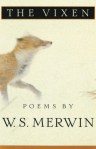
The Vixen by W.S. Merwin (1996)
it seems that the world is made of a single
summer as it always has been (from “Entry”)
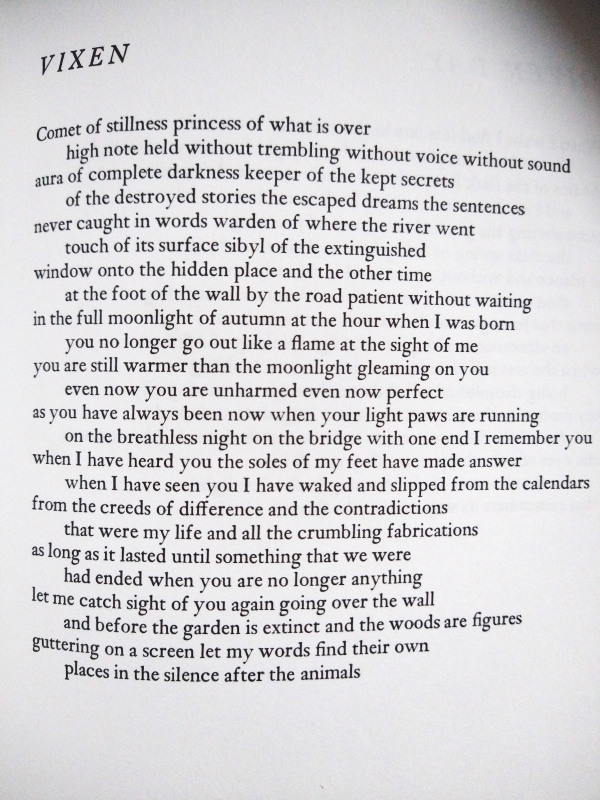
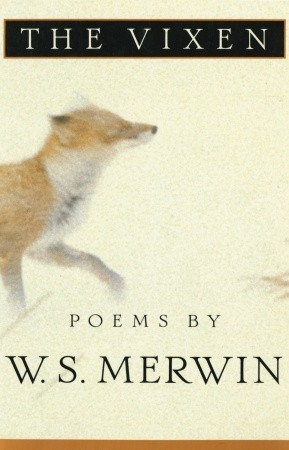 I took this off the shelf because Merwin was one of the POV characters in The Daffodil Days, Helen Bain’s excellent novel about Sylvia Plath’s final years. I had no idea what to expect, and it took me a while to get used to his entirely unpunctuated verse. Only by reading aloud or in my head was I able to split the text blocks into meaning-rich phrases. The fox is a revenant flitting through many of these poems as they pinpoint natural rhythms and human traces across the seasons and centuries. A lot reference summer, in particular, so this was a perfect choice for the challenge. There are a few historical portraits but most of the pieces feel timeless, evoking a countryside locale where the speaker returns to find derelict dwellings given over to birds and trees. Mostly it feels like this could be England, but sometimes a dry aridity suggests the Mediterranean. There is a strong sense of temporality, especially of afterness – the close of a day, the tail end of a season, the still-resonant emptiness after life has left or activity has finished. But there is also the hint of an eternal present:
Seen from afterward the time appears to have been
all of a piece which of course it was but how seldom
it seemed that way when it was still happening (from “Completion”)
In a long book (~65 pieces), there were only a few poems that washed over me without making any impression. The run-on pace, alliteration, and close attention to the natural world made this utterly mesmerizing. I’ll be sure to read more by Merwin. (Secondhand – Bridport Old Books) 
Elena Knows by Claudia Piñeiro (2007; 2021)
[Translated from Spanish by Frances Riddle]
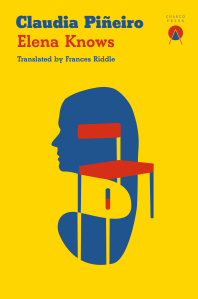 Piñeiro is an Argentinian author known for infusing her detective novels with a political conscience. Elena Knows is a mystery of sorts, in which the title character devotes herself to investigating her daughter’s death (Rita was found hanging in the belfry of a church). But several elements make this atypical for crime fiction: Elena has Parkinson’s disease – “that f—ing whore illness,” she calls it; refuses to accept the police’s conclusion that Rita died by suicide – she would never have gone there in the rain, she insists; and drags her uncooperative body across Buenos Aires to confront an acquaintance she thinks might be able to shed some light. It’s a circadian narrative, divided into sections by Elena’s pill schedule, but expands its timeline through flashbacks to consider the complications of the mother–daughter relationship as Elena became more physically dependent. The eventual encounter with Isabel presents a contrast in the form of a woman who didn’t want to become a mother but had to because of a prohibition on abortion, which was only legalized in Argentina in 2020. While the approach and themes were appealing, I found this repetitive and the long blocks of dialogue in italics were challenging to read. This was shortlisted for the International Booker Prize, though I thought it had a better chance in that year’s Barbellion Prize race (returning this year!). (Gift from my wish list)
And a DNF:
Blonde by Joyce Carol Oates (2000)
Her problem wasn’t she was a dumb blonde, it was she wasn’t a blonde and she wasn’t dumb.
Sigh. Between February and July I read about 200 pages, then skimmed another 100 or so, then finally gave up. (My third Oates DNF. I don’t think she and I are meant to be, though I seem to have better luck with her short stories and own another couple of her books to try.) I engaged most with the early pages about her childhood with a vain, neglectful mother who ends up in a mental hospital; and then with her teenage marriage to Bucky Glazer and involvement in the war effort.
She was a sweet kid but so emotional. Wanting love all the time. She was immature and unreliable and I guess so was I; we were too young. If she’d been a better cook and not so emotional, it might’ve worked out.
Except that people were dying and being injured and the world filling up with smoldering rubble, Norma Jeane liked the War. The War was as steady and reliable as hunger or sleep. Always, the War was there.
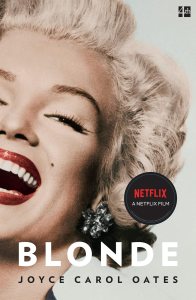 In the part that I skimmed, she is starting to become known in Hollywood, with a nude photo shoot (for which she only earned $50), bit parts in films, and her famous stage name.
In the introductory Author’s Note, Oates writes, “for all its length, synecdoche is the principle of appropriation.” So, for instance, instead of multiple foster families, we just get one. Always, there was unwanted male attention, including molestation. I was surprised to find that the pick-and-choose, fact–fiction hybrid approach became a problem for me. I wanted to know if she really married a man named Bucky and wrote poetry. Yet I didn’t want to have to be verifying every fact either.
Oates’s kitchen-sink style involves imagined scenes and dialogue plus retrospective commentary and knowing asides; long, looping sentences and short ones; direct and indirect speech; lots of exclamation points. Lots of everything. The repetition will be deliberate, for effect, but I kept longing for a streamlined version that cut, say, three of every five sentences.
Anyway, this was certainly a project worth undertaking for Oates; you can see why it was irresistible to unearth the reality behind a legend. Norma Jeane is intriguing for her simultaneous childlike innocence and cultivated sensuality. (Secondhand – Awesomebooks.com)
20 Books Statistics:
14 fiction
4 nonfiction
2 poetry
7 by BIPOC
3 towards WIT Month (for which I reviewed 8 in total, with library reads and Foreword reviews)
3 rereads
I’ve learned this year that it’s important, momentum-wise, to build in a number of shorter books (6 of novella length + 2 poetry collections) and best to avoid doorstoppers. I was wise to pick some addictive, undemanding novels that tread the line between popular and literary fiction (Kim, Mantel, O’Farrell, Reid, Sullivan); anything that feels like hard work (Oates!) is definitely not a summer read.
I only read a risible 4 of the specific books I set out as options in my planning post, plus 1 of my additional ideas. (It’s ironic that I struggled to finish this set of 20 when I could have labelled anything from my shelves part of the challenge – in total, I read 39 of my own books this summer.)
My favourites of the 20 were Strange Weather in Tokyo, Prodigal Summer & The Vanishing Act of Esme Lennox (both rereads), and The Vixen. But What Belongs to You, Miracle Creek, Mitz, The Employees, Commencement, and Flush were also great reads. To be able to single out half of the books equals a huge success!
I also completed a 4-book diagonal on the Bingo card!
- Summer in the title (PRODIGAL SUMMER)
- A classic you’ve been meaning to (RE-)read (FLUSH)
- Features a family holiday (MITZ)
- Published in summer (ELENA KNOWS – July 2021)

Book Serendipity, June to July
Life can have odd confluences. Esme will not say serendipity: she loathes the word. But sometimes she thinks there must be something at work, some impulse, some collision of forces, some kinks in chronology.
~The Vanishing Act of Esme Lennox by Maggie O’Farrell
Unlike Esme Lennox, I love the word serendipity! You probably know by now that I call it “Book Serendipity” when two or more books that I read at the same time or in quick succession have something in common – the more bizarre, the better. This is a regular feature of mine every couple of months. Because I usually have 20–30 books on the go at once, I suppose I’m more prone to such incidents. People frequently ask how I remember all of these coincidences. The answer is: I jot them down on scraps of paper or input them immediately into a file on my PC desktop; otherwise, they would flit away!
Thanks to Kay for posting about her own book serendipity moments here!
The following are in roughly chronological order.
- A woman gets on a flight even though she’s technically too pregnant to do so in one poem of Family Lines (ed. Armitage and Bower) and Commencement by J. Courtney Sullivan.
- A mention of a Spanish cat in one poem of Family Lines (ed. Armitage and Bower) and Tsi-Tsa by George Mikes.
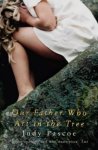
- Rum and coke is mentioned in I Sing to the Greenhearts by Maggie Harris and Our Father Who Art in the Tree by Judy Pascoe.
- A character named Gladys in Blonde by Joyce Carol Oates and Our Father Who Art in the Tree by Judy Pascoe.
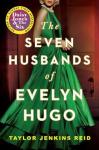
- A character named Celia in The Seven Husbands of Evelyn Hugo by Taylor Jenkins Reid and Commencement by J. Courtney Sullivan.
- A girl holds her breath until she faints in Lost Lambs by Madeline Cash and Our Father Who Art in the Tree by Judy Pascoe.
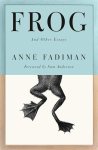 Samuel Taylor Coleridge’s performance as a father appears in one poem of Family Lines (ed. Armitage and Bower) and one essay of Frog by Anne Fadiman.
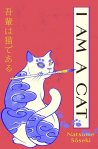
- A cat scratches a tatami mat in Letters of Note: Cats (ed. Shaun Usher) and I Am a Cat by Natsume Sōseki.
- A Freudian explanation of the collector’s obsessive impulse in The Madman’s Guide to Stamp Collecting by Robert Irwin and The Butterfly Season by Lea Korsgaard.
- A book/other arts coincidence, this: I first saw the actress Anya Taylor-Joy in The Menu, which I watched on my sister’s TV streaming system in the US, and then realized she’s pictured on the Netflix tie-in cover of a book I borrowed from the library, The Queen’s Gambit by Walter Tevis.
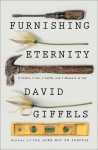
- Manhattans are drunk in Furnishing Eternity by David Giffels and The Seven Husbands of Evelyn Hugo by Taylor Jenkins Reid.
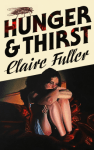
- A main character has a history of living in an orphanage in Blonde by Joyce Carol Oates, Buckeye by Patrick Ryan, and The Queen’s Gambit by Walter Tevis; and in children’s homes in Hunger and Thirst by Claire Fuller.
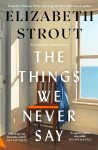
- An in-law named Fran(cesca) in The Vanishing Act of Esme Lennox by Maggie O’Farrell and The Things We Never Say by Elizabeth Strout.
- A scene of visiting one’s grandmother in a dementia ward in The Vanishing Act of Esme Lennox by Maggie O’Farrell and Black Lake by Emily Skaja.
- Eating spoons of sugar straight from the jar/box in Depression Cooking by Sonali Menezes and The Things We Never Say by Elizabeth Strout.
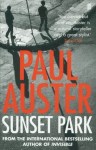
- Young people living in a squat in Sunset Park by Paul Auster and then Hunger and Thirst by Claire Fuller.
- A people-trafficking plot in Lost Lambs by Madeline Cash and The Singer’s Gun by Emily St. John Mandel.
- Someone who doesn’t want to be recognized says “I don’t know what you’re talking about” / “I have no idea what you’re talking about” when someone identifies them in Apt Pupil by Stephen King and The Seven Husbands of Evelyn Hugo by Taylor Jenkins Reid.
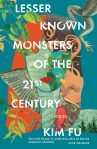
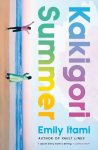
- A woman suffers from insomnia despite having done all the ‘right’ things, sleep hygiene-wise, in one story of Lesser-Known Monsters of the 21st Century by Kim Fu and Kakigori Summer by Emily Itami.
- A future blonde bombshell actress gets married off at age 15 in Blonde by Joyce Carol Oates and The Seven Husbands of Evelyn Hugo by Taylor Jenkins Reid.
- A homosexual encounter takes place in a public bathroom in What Belongs to You by Garth Greenwell and The Seven Husbands of Evelyn Hugo by Taylor Jenkins Reid. (Plus heterosexual ones in a private shower in Partita by Barbara Kingsolver.)
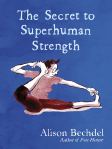
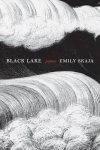
- A reference to Emerson’s “transparent eyeball” in The Secret to Superhuman Strength by Alison Bechdel and Black Lake by Emily Skaja.
- A character named Manny in Dominion by Addie E. Citchens, Partita by Barbara Kingsolver, and one story of The Typing Lady by Ruth Ozeki.
- A female character named Mick(ie) in The Heart Is a Lonely Hunter by Carson McCullers and Partita by Barbara Kingsolver. (There’s also a male Mick in Few and Far Between by Jan Carson.)
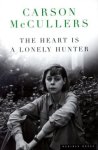
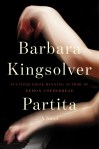
- Shoplifting takes place in Receipts from the Bookshop by Katie Clapham, The Singer’s Gun by Emily St. John Mandel, The Heart Is a Lonely Hunter by Carson McCullers, one story of The Typing Lady by Ruth Ozeki, and The Things We Never Say by Elizabeth Strout.
- The medical necessity of ironing all one’s clothing, especially nappies/underwear, is mentioned in L’Appart by David Lebovitz (a Greek person told him that) and Don’t Let’s Go to the Dogs Tonight by Alexandra Fuller (de rigueur in 1970s Rhodesia).
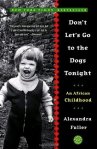
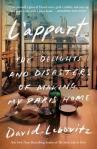 Remarking on how quiet/noisy a French dishwasher is in Paris to the Moon by Adam Gopnik/L’Appart by David Lebovitz and a mention of one’s good fortune in getting a store to accept a returned appliance.
- A mention of Ludwig Bemelmans’ Madeline in Receipts from the Bookshop by Katie Clapham and Brother, I’m Dying by Edwidge Danticat.
- Characters are robbed in a motel room in Dominion by Addie E. Citchens and The New People by Andrea Uptmor.

- Living in the space above a garage in one story of The Typing Lady by Ruth Ozeki and The New People by Andrea Uptmor.
- Scenes of a woman/girl reassembling a gun, and a gun amnesty, in one story of Lesser-Known Monsters of the 21st Century by Kim Fu and Don’t Let’s Go to the Dogs Tonight by Alexandra Fuller.
- The use of a typewriter in Brother, I’m Dying by Edwidge Danticat, Apt Pupil by Stephen King, A Long Game by Elizabeth McCracken, one story of Night, Neon by Joyce Carol Oates, and The Typing Lady by Ruth Ozeki.
- Thousands of dollars being stored in/under a mattress in Brother, I’m Dying by Edwidge Danticat and The New People by Andrea Uptmor.
 The smell of vetiver: a cologne in Year of the Drought by Roland Buti and fabric softener in Brother, I’m Dying by Edwidge Danticat.
- I encountered sections on the sense of smell at about the same time in Life in Five Senses by Gretchen Rubin and Wearing God by Lauren Winner.
- A person bites someone else’s finger in Don’t Let’s Go to the Dogs Tonight by Alexandra Fuller, one story of The Typing Lady by Ruth Ozeki, and The New People by Andrea Uptmor. (And an ear in The Dud Avocado by Elaine Dundy.)
- Eating an omelette in a Paris café in The Dud Avocado by Elaine Dundy, Paris to the Moon by Adam Gopnik, and Moveable Feasts by Chris Newens. (I suppose these things will happen if I read multiple Paris-set books at once!)
- The fact that “Pas mal” (“not bad”) is high praise in French is explained in Pardon Our French by Alex Durand and Tom Carles and L’Appart by David Lebovitz.
 An insistence that the soles of a woman’s feet not be shown in A Rough Guide to the Heart by Pam Houston (etiquette in Bhutan) and Blonde by Joyce Carol Oates (when Norma Jeane Baker, aka Marilyn Monroe, is having early nude photos taken).
- A nude photo shoot takes place in The Singer’s Gun by Emily St. John Mandel and Blonde by Joyce Carol Oates. There are also nude portrait sittings in The Dud Avocado by Elaine Dundy and The Original by Nell Stevens.
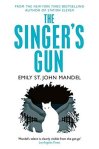
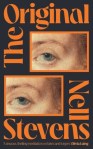
- A man has glass embedded in his face in Few and Far Between by Jan Carson and The Singer’s Gun by Emily St. John Mandel.
- The idea that one will be cursed for touching a stranger’s grave appears in Don’t Let’s Go to the Dogs Tonight by Alexandra Fuller and Kakigori Summer by Emily Itami.
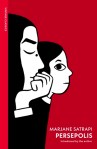
- I find myself rereading two childhood memoirs of wartime life at the same time: Don’t Let’s Go to the Dogs Tonight by Alexandra Fuller and Persepolis by Marjane Satrapi.
What’s the weirdest reading coincidence you’ve had lately?
Some Peripheral Reading for Joyce Carol Oates’s Birthday
June 16th is Bloomsday, of course, and was Paul Auster and Siri Hustvedt’s wedding anniversary – as I learned from Ghost Stories. It’s also the 88th birthday of one of our most prolific authors, Joyce Carol Oates. As I wrote in my introductory post for 20 Books of Summer, Marcie (of Buried in Print) and I have embarked on a casual Oates buddy reading project starting this summer and extending into autumn’s spooky selections. (See her post from today on her early and recent experiences with JCO.)
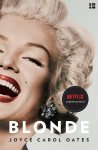 First, an update: I’m now on page 101 of Blonde! It’s such a mammoth doorstopper that I will celebrate my every milestone.
When I scoured the public library and university library catalogues for Oates’s work, I found two oddities to explore further. One is an essay contributed to an anthology on tear-jerking poems; the other is her introduction to an art book on a particular genre of funerary sculpture.
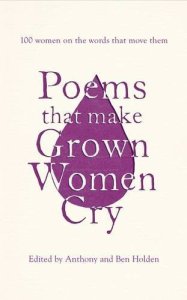
For Poems that Make Grown Women Cry: 100 Women on the Words that Move Them (2016; ed. Anthony and Ben Holden), Oates chose “City Horse” by Henri Cole (I’ve read his 2025 collection The Other Love). It’s a melodramatic portrait of a dead horse overcome by a natural disaster. We know from the title who the poem is about, though not until over halfway through do we get an actual identification: “O, wondrous horse; O, delicate horse – dead, dead”; before that, the unnamed “she” has been simply one more element of the flood detritus (“sucked out to sea and washed up again – / with uprooted trees, crumpled cars, and collapsed houses –”), with evidence of human abuse before that (“facedown in dirt, and tied to a telephone pole, / as if trying to raise herself still, though one leg is broken”). It gets more mawkish before the end: “‘She was more smarter than me, / she just wait,’ a boy sobs”. So I didn’t love the poem as a whole, but the first line of this elegy is incredible: “At the end of the road from concept to corpse”.
In her prefatory essay, Oates extrapolates from one suffering creature to pity “for us all”: “we have been made unnatural by our increasingly mechanized and impersonal society,” and we, too, will be “used up and discarded eventually … by nature, and by time.”
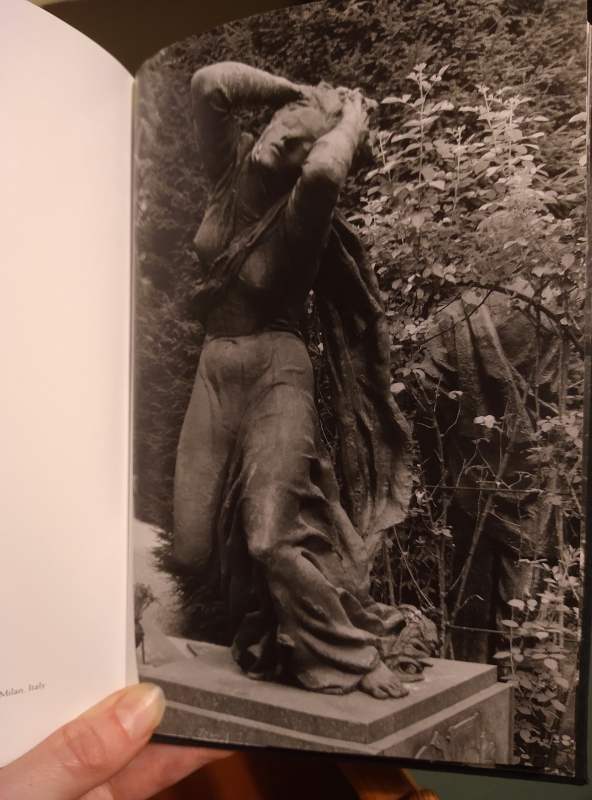
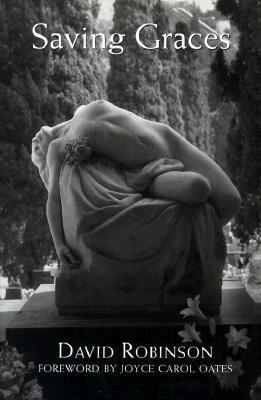 From a dead horse to cities full of dead humans … I think we can safely conclude Oates is not the most cheerful of writers. Saving Graces by David Robinson (1995) is a black-and-white photographic tour through European cemeteries, mostly in London, Milan, and Paris, with a focus on a specific class of 19th-century statuary. These are mourning women: generally semi-nude or flimsily draped and often in the throes of full-body, abandoned weeping that looks like a sexual swoon. They are not angels, Robinson insists; instead, he came to believe that they represented the meeting of the Romantic infatuation with death and “the emergence of the family as the primary focus of affection” in the Victorian period. The women emphasize the finality of death and the overwhelming nature of grief, but those who commissioned the statues may also have envisioned them as “escorts on the journey ahead … posted there to watch over and take care of the deceased.” As photographs go, they’re not hugely interesting; there’s only so much one can do, composition-wise, with gravestones, and I wish he or Oates had done more to subvert the exploitation of the sensual female image.
Oates’s foreword contrasts the photography of life with “the photography of stillness—of the arrested, meditative image.” Robinson’s are the latter type, of course. She describes the book as follows:
“an assemblage of strikingly beautiful photographs that tells us much, and hints at far more, of our collective desire that death be not mere deadness—biological decay, cellular decomposition, the extinction of the ‘unique’ human personality—but Death: mysterious, ethereal, mourned, and therefore celebrated by the most attractive among us. Contemplating these images, we realize how human anxiety, human vanity, human terror of the unknown, whether male or female, may well be the unacknowledged origin of our greatest artworks”.
I’ve already encountered Death in the first chapter of Blonde, and I reckon he’ll be a common figure in much of Oates’s work to come, whether realist, Gothic or gory.
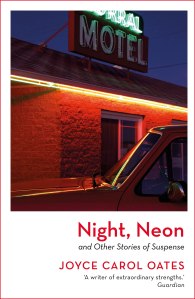 Today I picked up Night, Neon (2021), one of Oates’s many collections of suspense stories, from the library and, based on online reviews, chose two stories to read. I started with the first one, “Detour,” in which a road sign reroutes Abigail from her usual commute when she’s a mile from home. Disoriented, she ends up driving into a ditch and stumbles to the nearest dwelling for help. No one answers the door, so she lets herself in and, Goldilocks-like, makes herself at home, using the toilet and settling into a bed for a nap. When she wakes up, she’s been put into a nightgown and is locked into the bedroom by a man who claims to be her husband of 30 years and is concerned about her health. How has she entered into someone else’s life, and will she be able to get back to her own? The story ends on a note of (hopeful) uncertainty.
“Miss Golden Dreams 1949” proved to be a great companion to Blonde in that it’s voiced by a Marilyn Monroe clone/sex robot being auctioned off at Sotheby’s. Creepily, it’s addressed from her to “Daddy,” a wealthy potential buyer. Even in Oates’s short fiction, I’m finding that she uses three sentences where one would do the job, but at least the stories pass quickly.
Guardian reviewer Ben East sums up her approach nicely (“You tend to know what you’re getting with an Oatesian short – a disquieting snapshot of American life on the verge of individual or ideological collapse”) and describes her short fiction in general as “nuanced rather than neat.” This collection seems promising, so I’ll probably go ahead and read its six more stories and a novella before the summer is out.
Book Serendipity, March to May
I call it “Book Serendipity” when two or more books that I read at the same time or in quick succession have something in common – the more bizarre, the better. This is a regular feature of mine every couple of months. Because I usually have 20–30 books on the go at once, I suppose I’m more prone to such incidents. People frequently ask how I remember all of these coincidences. The answer is: I jot them down on scraps of paper or input them immediately into a file on my PC desktop; otherwise, they would flit away! Feel free to join in with your own.
The following are in roughly chronological order.
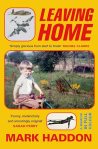
- A sister named Fiona in The Forgotten Waltz by Anne Enright and Leaving Home by Mark Haddon.
- A parent burns a dirty magazine in Mrs. Bridge by Evan S. Connell and The Blood Year Daughter by G.G. Silverman.
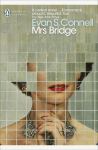
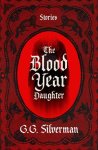
- Sabbath chains, Gaelic sermons, and psalm singing on the very pious Isle of Lewis in John of John by Douglas Stuart (set in the 1990s), then Findings by Kathleen Jamie (essay from the early 2000s). I doubt any of the above can still be found there, though we did note “Respect the Sabbath” signs on playground equipment on our 2022 trip.
- A single mother who won’t answer the phone because she’s afraid of who/what it might be in Blonde by Joyce Carol Oates and The First Day of Spring by Nancy Tucker.
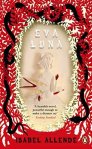
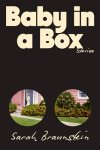
- An orphaned narrator named (Eva) Luna in Eva Luna by Isabel Allende and Fountainville by Tishani Doshi. Then I came across a dog named Luna in Transcription by Ben Lerner! And the main character in one story of Baby in a Box by Sarah Braunstein starts going by her nickname, Luna.
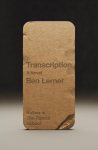
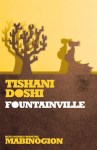
- There’s a Muriel Rukeyser poem in the anthology Night Feeds and Morning Songs (ed. Ana Sampson) and Rukeyser is a character in Sophie Ward’s Our Better Natures, which I was also reading at the time.
- Eating boiled ham in Ordinary Saints by Niamh Ni Mhaoileoin and I Capture the Castle by Dodie Smith (and boiled turkey in The First Day of Spring by Nancy Tucker).
 Checking a hotel room for bedbugs in Transcription by Ben Lerner and Half His Age by Jennette McCurdy.
- A young person writing in shorthand in I Capture the Castle by Dodie Smith and First Class Murder by Robin Stevens.
- A character named Emmie in Transcription by Ben Lerner and (no surprise here) Emmie Arbel: The Colour of Memory by Barbara Yelin.
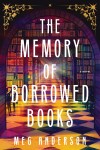
- Noting that roses are not suited to a particular climate in The Memory of Borrowed Books by Meg Anderson and Late Migrations by Margaret Renkl.

- A Welsh character named Owain in Fountainville by Tishani Doshi and Bog Child by Siobhan Dowd.
- The Secret Garden is discussed/mentioned in Reading My Mother Back by Timothy C. Baker and Mare by Emily Haworth-Booth, and mentioned in The Memory of Borrowed Books by Meg Anderson.
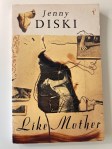
- The protagonist is emotionless at their mother’s deathbed in Like Mother by Jenny Diski and Leaving Home by Mark Haddon.
- (Apologies: this one is grim.) A young woman is sexually assaulted with a bottle in The Benefactors by Wendy Erskine and The Truth about Ruby Cooper by Liz Nugent (both Irish novelists).
- A husband is involved in a deliberate (suicidal) crash in Show Me Where It Hurts by Claire Gleeson and one story of I Am the Ghost Here by Kim Samek.
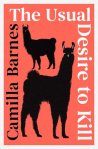
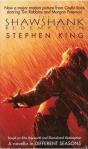
- Ali Baba’s cave is used as a metaphor in The Usual Desire to Kill by Camilla Barnes and Rita Hayworth and Shawshank Redemption by Stephen King.
- A brother- and sister-in-law have an affair in the two Portuguese novels I read on my Portugal holiday, The Migrant Painter of Birds by Lídia Jorge and The Piano Cemetery by José Luís Peixoto.
- A woman describes her discovery of orgasm in The Half Life by Rachel Beanland and The High Mountains of Portugal by Yann Martel.
- ‘There are two kinds of people…’ thinking in The Mighty Red by Louise Erdrich and one story of It Will Come Back to You by Sigrid Nunez.
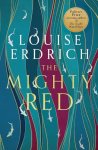
- Money is hidden behind a boiler in The Mighty Red by Louise Erdrich and The Murderer’s Ape by Jakob Wegelius.
 The surname Callaway in The Half Life by Rachel Beanland and Calloway in The Watersmith by Yance Wyatt.
- Louise Erdrich, whose The Mighty Red I was reading at the time, is mentioned in The Madman’s Guide to Stamp Collecting by Robert Irwin.
- A minor character named Genevieve appears in Our Numbered Bones by Katya Balen and The Watersmith by Yance Wyatt.
- The Mighty Red by Louise Erdrich is the second novel I’ve read within eight months (after The Wedding People by Alison Espach) in which a reluctant bride is saddled with a groom named Gary.
- A mountain lion sighting in The Mighty Red by Louise Erdrich and Learning from Silence by Pico Iyer.
- A character has a love of Agatha Christie novels in The High Mountains of Portugal by Yann Martel and Buckeye by Patrick Ryan.
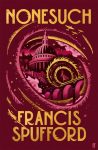
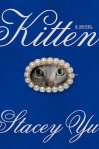
- A character with the nickname Kitten in Nonesuch by Francis Spufford (particularly funny because it’s for a thug) and Kitten by Stacey Yu.
- Reading two queer novels with an academic writing course setting at the same time: Almost Life by Kiran Millwood Hargrave and Kingfisher by Rozie Kelly.
- A remark about the rare beauty of black hair with blue eyes in Kingfisher by Rozie Kelly and My Year in Paris with Gertrude Stein by Deborah Levy.
- An STD is evidence of a husband’s infidelity in The Daffodil Days by Helen Bain and A Beautiful Loan by Mary Costello.
- Bottles being used to hold picnic meals / foraged blackberries (noted because these days it would be plastic pots for everything) in Zami by Audre Lorde (the 1940s) and The Daffodil Days by Helen Bain (the 1960s).
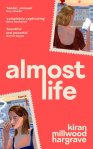 Kismet is a character name in The Mighty Red by Louise Erdrich, so I was primed to notice the word being used in Almost Life by Kiran Millwood Hargrave (it’s a synonym for fate).
- A writer who faces the wall to work in The Daffodil Days by Helen Bain (Ted Hughes, that is) and The Autobiography of Alice B. Toklas by Gertrude Stein (referring to Alice B. Toklas!).
- A painting of an Arctic tern features in The Migrant Painter of Birds by Lídia Jorge (on the cover) and Kingfisher by Rozie Kelly.
- Hot milk is drunk in The Memory of Borrowed Books by Meg Anderson, Kingfisher by Rozie Kelly (with Ovaltine), Nonesuch by Francis Spufford, and Kitten by Stacey Yu.
- William James is mentioned in My Year in Paris with Gertrude Stein by Deborah Levy and Wise by Frank Tallis.
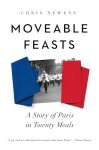 Algerian Muslim men appear in A Beautiful Loan by Mary Costello and Moveable Feasts by Chris Newens.
- A pet cat was found on the shore in The Memory of Borrowed Books by Meg Anderson and Kitten by Stacey Yu.
- Bringing cherries to an invalid in Almost Life by Kiran Millwood Hargrave and Kingfisher by Rozie Kelly.
- Sex with a woman who has a mastectomy scar in Kingfisher by Rozie Kelly and Zami by Audre Lorde.
- A sighting of a kingfisher as auspicious in Kingfisher by Rozie Kelly and Transcription by Ben Lerner.
- The idea that former lovers leave a mark on people in Almost Life by Kiran Millwood Hargrave and Zami by Audre Lorde.
- Pet cat(s) do themselves a mischief by getting into paint supplies in Zami by Audre Lorde and Kitten by Stacey Yu.
- A Sandymount, Dublin setting in A Beautiful Loan by Mary Costello and Hood by Emma Donoghue.
- An Irish family where the mother and one daughter move to the USA and the father and other daughter stay behind in Hood by Emma Donoghue and The Truth about Ruby Cooper by Liz Nugent (both Irish novelists).
- The concept of a “funeral cake” in The Mighty Red by Louise Erdrich and Kingfisher by Rozie Kelly.
- A character regrets wearing eye makeup on an emotional occasion in The Memory of Borrowed Books by Meg Anderson and Kingfisher by Rozie Kelly.
 My second Irish novel of the year that takes place over one week: Hood by Emma Donoghue (after One by One in the Dark by Deirdre Madden).
- A cat of confusing gender: Grace is male in Hood by Emma Donoghue and Bob is always referred to as “it” in My Year in Paris with Gertrude Stein by Deborah Levy.
- The idea that it’s rare for a woman to a) be a good storyteller (in The Torrents of Spring by Ivan Turgenev) or b) tell a punchline with a straight face (in The Correspondent by Virginia Evans – at least the man gets called out on his sexist opinion in this case). I also noticed the use of the word “caprice” in both books (and also in Turgenev’s First Love) because it’s unusual and I like it.
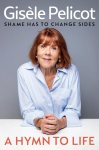
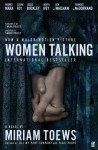
- Another grim, grim one: reading two books at the same time in which a woman is / women are drugged and raped while unconscious (A Hymn to Life by Gisèle Pelicot and Women Talking by Miriam Toews).
- I read two short stories in quick succession about a peasant porter who carries a broom: “A Real Durwan” by Jhumpa Lahiri (from Interpreter of Maladies) followed by “Mumu” by Ivan Turgenev.
- An older woman insists that she still is/has a little girl inside in The Correspondent by Virginia Evans and A Hymn to Life by Gisèle Pelicot.
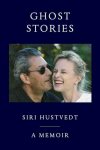 The number 7 has magical significance for the author in Ghost Stories by Siri Hustvedt and A Hymn to Life by Gisèle Pelicot.
- A couple meets when they see each other reading the same book in an outdoor location: A Lover’s Discourse by Roland Barthes in Almost Life by Kiran Millwood Hargrave; and The Great Gatsby in Sunset Park by Paul Auster.
- Alison Bechdel’s Dykes to Watch Out For is mentioned in Hood by Emma Donoghue; I was reading a Bechdel book, The Secret of Superhuman Strength, at the same time.
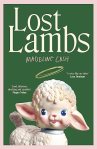
- Gnats are irksome in Sunset Park by Paul Auster and Lost Lambs by Madeline Cash.
What’s the weirdest reading coincidence you’ve had lately?
20 Books of Summer Begins!
Today marks the start of 20 Books of Summer and for me it begins with a novel that will no doubt take me the entire three months of the challenge to finish (with many other books on the go at the same time, of course).
I technically started reading Blonde by Joyce Carol Oates back in February, but I’ve only reached page 70, where I’ve been stuck for weeks. It’s not that I’m not enjoying it, but the type is so small and thus the writing so dense on the 700+ pages that I never seem to make any progress. Even setting myself micro-goals of 10 pages per day, for instance, failed as I’ve found that I always want to pick up other ‘easier’ books instead. In these sorts of situations, I would be inclined to skim, but that would be missing the whole point of an Oates novel, which seems to be the style just as much as the plot.
I’ve failed with her twice before, alas: in 2020 I read about 80 pages of We Were the Mulvaneys before giving up. My pithy response: “Too much of quirky folks.” (The other attempt, that same year, was Night-Gaunts, of which I only read the first story.) And “too much” seems about right for describing JCO in general. Too dark, too wordy. “Prolix” is an adjective I’m tempted to apply, but it doesn’t seem fair when I haven’t managed an entire book yet. Moreover, I’m committed to a casual Oates buddy reading project with Marcie (of Buried in Print) this summer and autumn. We’re choosing different books but trying with our selections to get a good sense of her range. Towards Halloween time we’ll read some spooky stories, for instance. I’d also like to source some of her novellas and nonfiction.
In any case, today is the perfect day to introduce this read as it would have been Marilyn Monroe’s 100th birthday. Oates calls her novel a “radically distilled ‘life’ in the form of fiction, and, for all its length, synecdoche is the principle of appropriation.” After a prologue about Death coming for Norma Jeane, the early pages have been about her childhood with a vain, neglectful mother who ends up in a mental hospital. “The primary fact of Gladys was the primary mystery of Gladys: She could not be a true mother to Norma Jeane. Not at the present time.” Already we see the forces that will shape Norma Jeane’s future: the deep wound of an absent father and an unfit mother, a fascination with glamour and Hollywood, and the genetic curse of substance use disorder.
Here’s a song about endometriosis that uses Norma Jeane as its starting point: “One in Ten” by Jenn Butterworth. Every time I so much as look at the cover of Blonde, I get it in my head…
We Have Always Lived in the Castle (#NovNov22 Short Classics Week)
Novellas in November is here! Our first weekly theme is short classics. (Leave your links with Cathy, here.)
Left over from a planned second R.I.P. post that I didn’t get a chance to finish:
We Have Always Lived in the Castle by Shirley Jackson (1962)
 A few years ago for the R.I.P. challenge I read The Haunting of Hill House, which is a terrific haunted house/horror novel, a genre I almost never read. I was expecting this to be more of the same from Jackson, but instead it’s a brooding character study of two sisters isolated by their scandalous family history and the suspicion of the townspeople. Narrator Merricat (Mary Katherine Blackwood) tells us in the first paragraph that she is 18, but she sounds and acts more like a half-feral child of 10 who makes shelters in the woods for her and her cat Jonas; I wasn’t sure if I should understand her to be intellectually disabled, or willfully childish, or some combination thereof.
Her older sister Constance does everything for her and for wheelchair-bound Uncle Julian, the only family they have left after most of their relatives died of poisoning six years ago. Constance stood trial for their murder and was acquitted, but the locals haven’t let the incident go and even chant a cruel rhyme whenever Merricat comes into town for shopping: “Merricat, said Connie, would you like a cup of tea? / Oh, no, said Merricat, you’ll poison me.” Julian obsessively mulls over the details of the poisoning, building a sort of personal archive of tragedy, while in everyday life a curtain of dementia separates him from reality. When cousin Charles comes to visit, perhaps to get a share of the money they have hidden around the place, he threatens the idyll they’ve created, and Merricat starts joking about poisonous mushrooms…
I loved the offbeat voice and unreliable narration, and the way that the Blackwood house is both a refuge and a prison for the sisters. “Where could we go?” Merricat asks Constance when she expresses concern that she should have given the girl a more normal life. “What place would be better for us than this? Who wants us, outside? The world is full of terrible people.” As the novel goes on, you ponder who is protecting whom, and from what. There are a lot of great scenes, all so discrete that I could see this working very well as a play with just a few backdrops to represent the house and garden. It has the kind of small cast and claustrophobic setting that would translate very well to the stage.
Joyce Carol Oates’s afterword brings up an interesting point about how food is fetishized in Jackson’s fiction – I look forward to trying more of it. (Public library) 
Need some more ideas of short classics? Here’s a list of favourites I posted a couple of years ago, and a Book Riot list with only a couple of overlaps.
 This month I also hope to have a look through Great Short Books by Kenneth C. Davis, a selection of 58 classic and contemporary works (some of them perhaps a bit longer than our cutoff of 200 pages). It’s forthcoming from Scribner on the 22nd, but I have an e-copy via Edelweiss that I will skim.

R.I.P. Reads, Part I: Magrs Buddy Read; Hynes, Johnson, Oates
This is my third year participating in R.I.P. (Readers Imbibing Peril), now in its 15th year. I read my first novel by Paul Magrs as a buddy read with Liz of Adventures in reading, running and working from home, and coincidentally had Daisy Johnson’s creepy second novel out from the library. Rounding out this first post are a novella by James Hynes and a short story by Joyce Carol Oates, by whom I still haven’t managed to read a whole book. For my planned Part II, I’m working on historical suspense novels by Michelle Paver (a constant on my R.I.P. lists, it seems) and Laura Purcell, and trying my first Henning Mankell.

666 Charing Cross Road by Paul Magrs (2011)
 Apart from Dracula, my only previous experience of vampire novels was Deborah Harkness’s books. My first book from Paul Magrs ended up being a great choice because it’s pretty lighthearted and as much about the love of books as it is about supernatural fantasy – think of a cross between Jasper Fforde and Neil Gaiman. The title is a tongue-in-cheek nod to Helene Hanff’s memoir, 84 Charing Cross Road. Like Hanff, Aunt Liza sends letters and money to a London bookstore in exchange for books that suit her tastes. A publisher’s reader in New York City, Liza has to read new stuff for work but not-so-secretly prefers old books, especially about the paranormal – a love she shares with her gay bookseller friend, Jack.
One day the bookstore (actual address: 66b) sends a gruesome treasure, a grimoire soaked in vampire blood. In the wrong hands, it returns the vampiric spirit to life and sets off a chain reaction as each victim bites and infects others. I couldn’t help but think of the pandemic; indeed, Magrs uses the word “disease” at one point. Vampirism always has erotic overtones, though, making it seem more like an STD. As it happens, the vampires’ New York leader is Liza’s niece Shelley’s boyfriend, Daniel. Meanwhile, the star exhibit at the Museum of Outsider Art where Shelley works, a Scottish Bride effigy nicknamed Bessie, has come to life. Bessie leads Liza and Jack to London in the fight against Daniel and his kind.
Set between Halloween and Christmas, this is a pacy and quick-witted story that is easy to follow even as it gets more complicated and adds in ever more secondary characters. Hints about Liza’s past experience of the supernatural and an open ending leave room for a prequel or sequel. There were a few melodramatic moments and I wasn’t always convinced by Liza’s New Yawk accent. (I also wanted to stick up for Liza and another character about her age, Consuela – Magrs often refers to one or both as “the old woman,” when in the context they can’t be far past 60!) But these are minor niggles about a book that was so much fun to read. I’ll try something else by Magrs, probably Exchange and/or one of the Brenda and Effie series – who could resist that premise of the Bride of Frankenstein running a B&B in Whitby? (See also Liz’s review.)
My rating: 
The rest…
Queen of the Jungle (from Publish and Perish: Three Tales of Tenure and Terror) by James Hynes (1997)
 I read the first of this volume’s three suspense novellas and will save the others for future years of R.I.P. or Novellas in November. At 95 pages, it feels like a complete, stand-alone plot with solid character development and a believable arc. Paul and Elizabeth are academics marooned at different colleges: Paul is finishing up his postdoc and teaches menial classes at an English department in Iowa, where they live; Elizabeth commutes long-distance to spend four days a week in Chicago, where she’s on track for early tenure at the university.
The couple’s cat, Charlotte, starts acting up, peeing in random places around the apartment. The animal psychic they hire says it’s because a woman keeps coming and going, disturbing the cat’s routines. Elizabeth assumes it’s her fault, feels terrible, and redoubles her efforts to get her boss to offer Paul a job on the basis of his bizarre literary/pop culture mash-up thesis chapters. But readers soon learn the real reason for the cat’s unease: Paul is carrying on an affair with Kymberly, a graduate student from the communications department. Charlotte is preternaturally determined to terrorize Kym and broadcast Paul’s secret. It’s an amusing battle of wills that comes to have greater stakes. Mentions of computer and telephone technology made this seem slightly dated, but I liked Hynes’s writing.
My rating:
Sisters by Daisy Johnson (2020)
 Teenagers September and July were born just 10 months apart, with July always in thrall to her older sister. September can pressure her into anything, no matter how risky or painful, in games of “September Says.” But one time things went too far. That was the day they went out to the tennis courts to confront the girls at their Oxford school who had bullied July.
For much of this short novel, Johnson keeps readers guessing about what happened that day and why the girls’ mother, Sheela, took them away to Settle House, her late husband’s family home in the North York Moors. Despite the new setting, July finds it impossible to shrug off her sister’s influence. Their psychic connection is such that she feels she’s losing her own virginity as she watches September have sex with a local boy on the beach. September’s is so much the dominant personality that July admits she feels like no more than “an appendage.”
Emotionally used and physically harmed, July starts to doubt her sanity. This was most evident for me in the scene where she goes up to a soggy-looking wall of Settle House and puts a hand through it, hearing “the rustle and gurgle of motion, the shuttering of thousands of wings.” (Presuming that’s a deliberate word choice and not a typo for shuddering.) Ants start pouring out of the wall, followed by a bird. But when she goes back to look at the wall later that day, it’s intact. I was reminded of The Haunting of Hill House, with its picture of a malevolent house preying on its inhabitants’ fears.

Sisters is a book that depends entirely on its late twist, so I shall say no more. About halfway through, I had a vague idea of what the surprise might be, but convinced myself I was wrong. “What if? … Nah, couldn’t be.” I wonder how early you’ll catch on. I adore the U.S. cover, but the UK cover contains more of a hint. I think I liked Everything Under, Johnson’s Booker-shortlisted debut novel, that little bit more, but my bottom line for that one goes for this, too: “As mesmerizing as it is unsettling.” Johnson is such a talented young author, and she also has the best author photo out there at the moment, a black-and-white image of her reflected in a train window.
My rating: 
“The Woman in the Window” (from Night-Gaunts and Other Tales of Suspense) by Joyce Carol Oates (2018)
 Oates was inspired by Edward Hopper’s 1926 painting, Eleven A.M. (The striking cover image is from a photographic recreation by Richard Tuschman. Very faithful except for the fact that Hopper’s armchair was blue.) A secretary pushing 40 waits in the New York City morning light for her married lover to arrive. She’s tired of him using her and keeps a sharp pair of sewing shears under her seat cushion. We bounce between the two characters’ perspectives as their encounter nears. He’s tempted to strangle her. Will today be that day, or will she have the courage to plunge those shears into his neck before he gets a chance? In this room, it’s always 11 a.m. The tension is well maintained, but the punctuation kind of drove me crazy. I might try the rest of the book next year.
Have you been reading anything fantastical or spooky this October?
20 Books of Summer, #19–20: Heat & The Gospel of Trees
Finishing off my summer reading project with a stellar biography-cum-travel book about Italian cuisine and a family memoir about missionary work in Haiti in the 1980s.
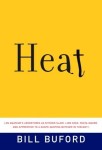
Heat by Bill Buford (2006)
(20 Books of Summer, #19) The long subtitle gives you an outline of the contents: “An Amateur’s Adventures as Kitchen Slave, Line Cook, Pasta-Maker, and Apprentice to a Dante-Quoting Butcher in Tuscany.” If Buford’s name sounds familiar, it’s because he was the founding editor of Granta magazine and publisher at Granta Books, but by the time he wrote this he was a staff writer for the New Yorker.
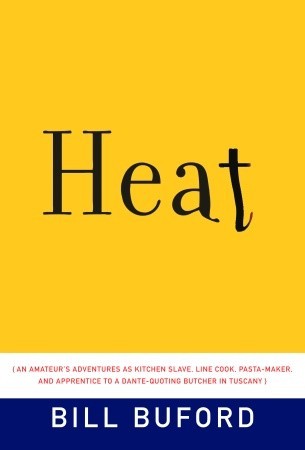 Mario Batali is the book’s presiding imp. In 2002–3, Buford was an unpaid intern in the kitchen of Batali’s famous New York City restaurant, Babbo, which serves fancy versions of authentic Italian dishes. It took 18 months for him to get so much as a thank-you. Buford’s strategy was “be invisible, be useful, and eventually you’ll be given a chance to do more.”
In between behind-the-scenes looks at frantic or dull sessions of food prep (“after you’ve made a couple thousand or so of these little ears [orecchiette pasta], your mind wanders. You think about anything, everything, whatever, nothing”), Buford traces Batali’s culinary pedigree through Italy and London, where Batali learned from the first modern celebrity chef, Marco Pierre White, and gives pen portraits of the rest of the kitchen staff. At first only trusted with chopping herbs, the author develops his skills enough that he’s allowed to work the pasta and grill stations, and to make polenta for 200 for a benefit dinner in Nashville.
Later, Buford spends stretches of several months in Italy as an apprentice to a pasta-maker and a Tuscan butcher. His obsession with Italian cuisine is such that he has to know precisely when egg started to replace water in pasta dough in historical cookbooks, and is distressed when the workers at the pasta museum in Rome can’t give him a definitive answer. All the same, the author never takes himself too seriously: he knows it’s ridiculous for a clumsy, unfit man in his mid-forties to be entertaining dreams of working in a restaurant for real, and he gives self-deprecating accounts of his mishaps in the various kitchens he toils in:
to stir the polenta, I was beginning to feel I had to be in the polenta. Would I finish cooking it before I was enveloped by it and became the darkly sauced meaty thing it was served with?
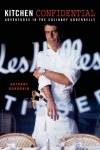
Compared to Kitchen Confidential, I found this less brash and more polished. You still get the sense of macho posturing from a lot of the figures profiled, but of course this author is not going to be in a position to interrogate food culture’s overweening masculinity. However, he does take a stand in support of small-scale food production:
Small food: by hand and therefore precious, hard to find. Big food: from a factory and therefore cheap, abundant. Just about every preparation I learned in Italy was handmade and involved learning how to use my own hands differently. … Food made by hand is an act of defiance and runs contrary to everything in our modernity. Find it; eat it; it will go.
This is exactly what I want from food writing: interesting nuggets of trivia and insight, a quick pace, humor, and mouthwatering descriptions. If the restaurant world lures you at all, you must read this one.
- Nice connections with my other summer reading: there are mentions of both Eric Asimov and Ruth Reichl visiting Babbo in their capacity as food critics for the New York Times.
- This also induced a weird case of reverse déjà vu: a book I reviewed last summer for BookBrowse, Hungry by Jeff Gordinier, is so similar that it must have been patterned on Heat: the punchy one-word title; a New York journalist follows an internationally known chef (in that case, René Redzepi) and surveys culinary trends.
 I was delighted to learn that this year Buford released a sequel of sorts, this one about French cuisine: Dirt. It’s on my wish list.
Source: From my dad
My rating: 
The Gospel of Trees by Apricot Irving (2018)
(20 Books of Summer, #20) Irving’s parents were volunteer missionaries to Haiti between 1982 and 1991, when she was aged six to 15. Her father, Jon, was trained as an agronomist, and his passion was for planting trees to combat the negative effects of deforestation on the island (erosion and worsened flooding). But in a country blighted by political unrest, AIDS and poverty, people can’t think long-term; they need charcoal to light their stoves, so they cut down trees.
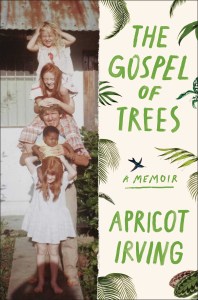 Along with an agricultural center, the American Baptist missionaries were closely associated with a hospital, Hôpital le Bon Samaritain, run by amateur archaeologist Dr. Hodges and his family. Although Apricot and her two younger sisters were young enough to adapt easily to life in a developing country, they were disoriented each time the family returned to California in between assignments. Their bonds were shaky due to her father’s temper, her parents’ rocky relationship, and the jealousy provoked over almost adopting a Haitian baby girl.
Irving drew on letters and cassette tape recordings, newsletters, and journals (her parents’ and her own) to recreate the decade in Haiti and the years since. This debut book was many years in the making – she started the project in 2001. “I inherited my father’s anger and his perfectionism. Haiti was a wound, an unhealed scab that I was afraid to pick open. But I knew that unless I faced that broken history, my own buried grief, like my father’s, would explode ways I couldn’t predict.”
She and her parents returned to the country after the 2010 earthquake: they were volunteers with a relief organization, while she reported for the This American Life radio program. I loved the ambivalent portrait of Haiti and, especially, of Jon, but couldn’t muster up much interest in secondary characters, hoped for more discussion of (loss of) faith, and thought the book about 80 pages too long. Irving writes wonderfully, though, especially when musing on Haiti’s pre-Columbian history; I’d gladly read a nature book about her life in Oregon, or a novel – in tone this reminded me of The Poisonwood Bible.
Some favorite lines:
If, like my father, you suffer from a savior complex, Haiti is a bleak assignment, but if you are able to enter it unguarded, shielded only by curiosity, you will find the sorrows entangled with a defiant joy.
My family had moved to Haiti to try to help, but instead, we learned our limitations. Failure can be a wise friend. We felt crushed at times; found it difficult to breathe; and yet the experience carved into each of us an understanding of loss, the weight of compassion. We learned how small we were when measured against the world’s great sorrow.
Source: Bargain book from Amazon last year
My rating: 
And a DNF:
 We Were the Mulvaneys by Joyce Carol Oates (oats!)
I gave up after 38 pages. I’ve long meant to try Oates, but her oeuvre is daunting. An Oprah’s Book Club selection seemed like a safe bet. I found the quirky all-American family saga approach somewhat similar to John Irving or Richard Russo, but Judd’s narration is annoyingly perky, and already I was impatient to find out what happened to his sister Marianne on Valentine’s Day 1976. I’ll give it a few years and try again. In the meantime, maybe I’ll try Oates in a different genre.
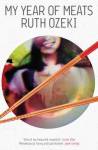
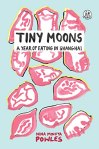
Looking back, Heat was the clear highlight of my 20 Books, closely followed by My Year of Meats by Ruth Ozeki. I also really enjoyed the foodoirs by Anthony Bourdain, Nina Mingya Powles and Luisa Weiss. It’s funny how much I love foodie lit given that I don’t cook. As Alice Steinbach puts it, “while we all like to eat, we like it more when someone else does the cooking.”
 Of course, not all of my selections were explicitly food-related; others simply had food words in their titles (or, as above, in the author’s name). Of these, my favorite was a reread, Ella Minnow Pea. Ideally, I would not have had to include my two skims and one partial read in the total, but I ran out of time in August to substitute in three more books. I’m happy enough with my showing this year, but next time I plan to build in more flexibility – or cheating, whichever you wish to call it – to ensure that I manage 20 solid reads.
I already have a color theme planned for 20 Books of Summer 2021! Here are 15 books that I own, mostly fiction, that would fit the bill:
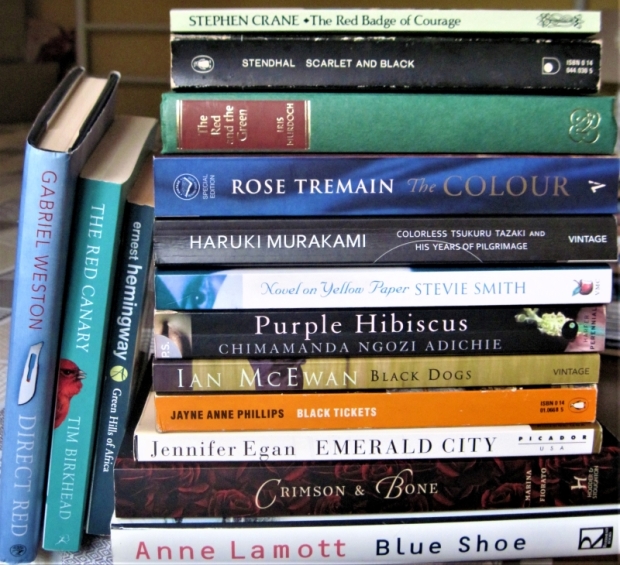
As wildcard selections and/or substitutes, I will also allow:
- Books with “light”, “dark”, or “bright” in the title
- Kindle or library books, though I’d like the focus to remain on print books I own.
- If I’m really stuck, book covers/jackets in a rainbow of colors. I’ll skip orange because Penguin paperbacks are too plentiful in my book collection, but I have some nice red, yellow, green, blue, purple and pink covers to choose from.
20 Books of Summer 2018
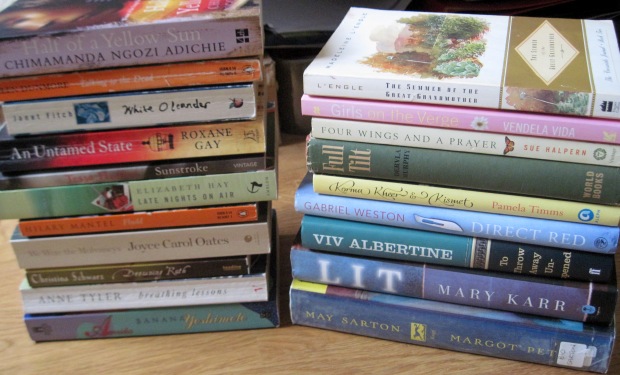
This is my first year joining in with the 20 Books of Summer challenge run by Cathy of 746 Books. I’ve decided to put two twists on it. One: I’ve only included books that I own in print, to work on tackling my mountain of unread books (300+ in the house at last count). As I was pulling out the books that I was most excited to read soon, I noticed that most of them happened to be by women. So for my second twist, all 20 books are by women. Why not? I’ve picked roughly half fiction and half life writing, so over the next 12 weeks I just need to pick one or two from the below list per week, perhaps alternating fiction and non-. I’m going to focus more on the reading than the reviewing, but I might do a few mini roundup posts.
I’m doing abysmally with the goal I set myself at the start of the year to read lots of travel classics and biographies, so I’ve chosen one of each for this summer, but in general my criteria were simply that I was keen to read a book soon, and that it mustn’t feel like hard work. (So, alas, that ruled out novels by Elizabeth Bowen, Ursula K. LeGuin and Virginia Woolf.) I don’t insist on “beach reads” – the last two books I read on a beach were When Breath Becomes Air by Paul Kalanithi and Grief Cottage by Gail Godwin, after all – but I do hope that all the books I’ve chosen will be compelling and satisfying reads.
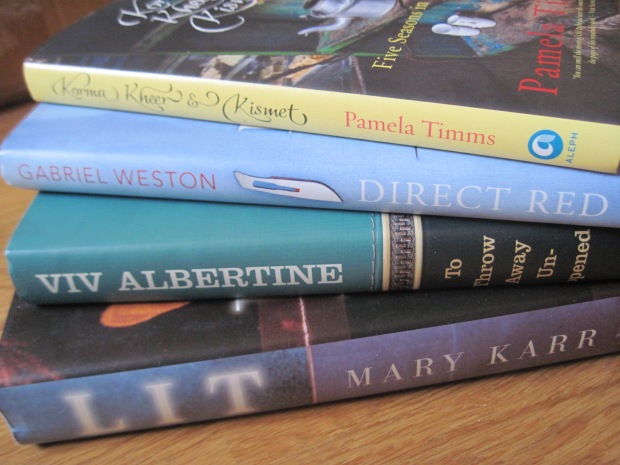
- To Throw Away Unopened by Viv Albertine – I picked up a copy from the Faber Spring Party, having no idea who Albertine was (guitarist of the all-female punk band The Slits). Everyone I know who has read this memoir has raved about it.
- Lit by Mary Karr – I’ve read Karr’s book about memoir, but not any of her three acclaimed memoirs. This, her second, is about alcoholism and motherhood.
- Korma, Kheer and Kismet: Five Seasons in Old Delhi by Pamela Timms – I bought a bargain copy at the Wigtown Festival shop earlier in the year. Timms is a Scottish journalist who now lives in India. This should be a fun combination of foodie memoir and travel book.
- Direct Red: A Surgeon’s Story by Gabriel Weston (a woman, honest!) – Indulging my love of medical memoirs here. I bought a copy at Oxfam Books earlier this year.
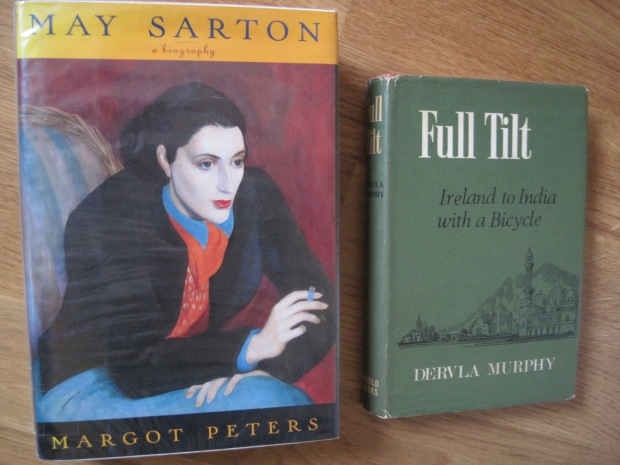 5. May Sarton by Margot Peters – I’ve been on a big May Sarton kick in recent years, so have been eager to read this 1997 biography, which apparently is not particularly favorable.
6. Full Tilt: Ireland to India with a Bicycle by Dervla Murphy – I bought this 1960s hardback from a charity shop in Cambridge a couple of years ago. It will at least be a start on that travel classics challenge.
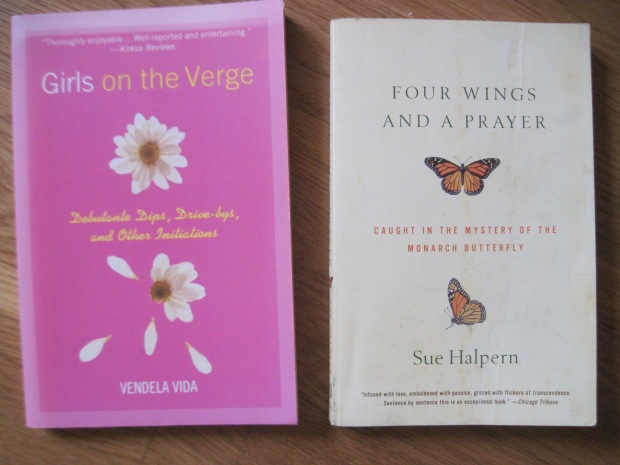
7. Girls on the Verge: Debutante Dips, Drive-bys, and Other Initiations by Vendela Vida – This was Vida’s first book. It’s about coming-of-age rituals for young women in America.
8. Four Wings and a Prayer: Caught in the Mystery of the Monarch Butterfly by Sue Halpern – Should fall somewhere between science and nature writing, with a travel element.
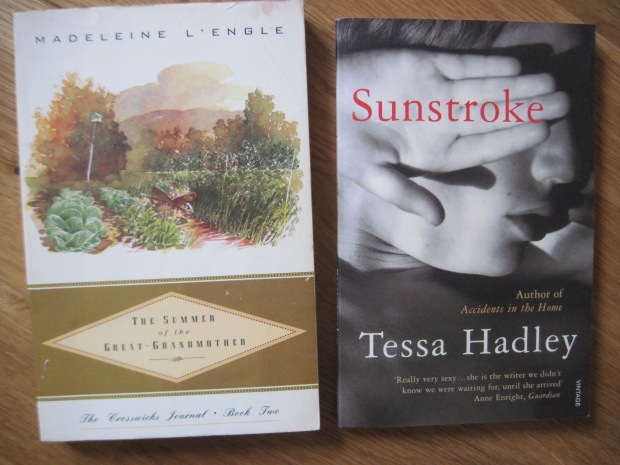
9. The Summer of the Great-Grandmother by Madeleine L’Engle – L’Engle is better known for children’s books, but she wrote tons for adults, too: fiction, memoirs and theology. I read the stellar first volume of the Crosswicks Journal, A Circle of Quiet, in September 2015 and have meant to continue the series ever since.
10. Sunstroke by Tessa Hadley – You know how I love reading with the seasons when I can. This slim 2007 volume of stories is sure to be a winner. Seven of the 10 originally appeared in the New Yorker or Granta.
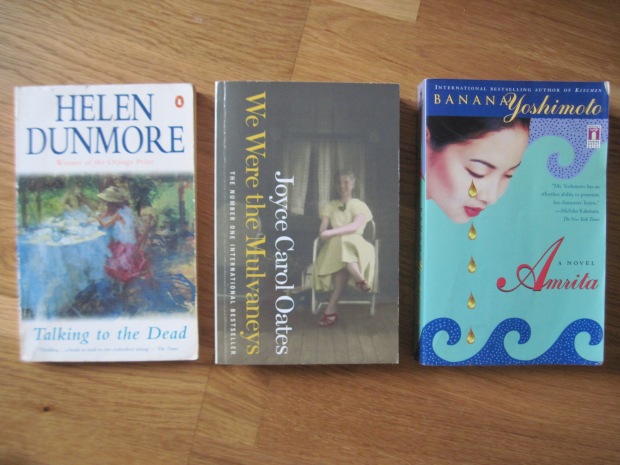
11. Talking to the Dead by Helen Dunmore – I’ve only ever read Dunmore’s poetry. It’s long past time to try her fiction. This one comes highly recommended by Susan of A life in books.
12. We Were the Mulvaneys by Joyce Carol Oates – Oates is intimidatingly prolific, but I’m finally going to jump in and give her a try.
13. Amrita by Banana Yoshimoto – A token lit in translation selection. “This is the story of [a] remarkable expedition through grief, dreams, and shadows to a place of transformation.” (Is it unimaginative to say that sounds like Murakami?)
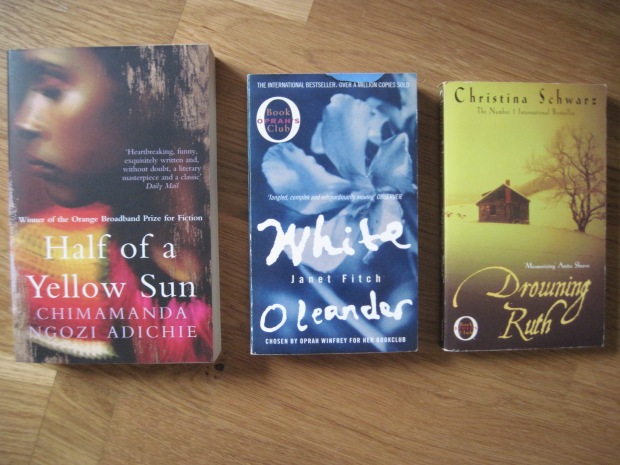
14. Half of a Yellow Sun by Chimamanda Ngozi Adichie – How have I not read any of her fiction yet?! This has been sitting on my shelf for years. I only vaguely remember the story line from the film, so it should be fairly fresh for me.
15. White Oleander by Janet Fitch – An Oprah’s Book Club selection from 1999. I reckon this would make a good beach or road trip read.
16. Drowning Ruth by Christina Schwarz – Another Oprah’s Book Club favorite from 2000. Set in Wisconsin in the years after World War I.
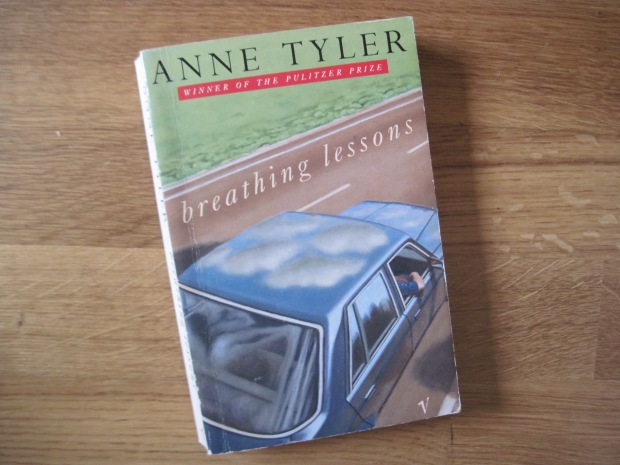
- Breathing Lessons by Anne Tyler – Tyler novels are a tonic. I have six unread on the shelf; the blurb on this one appealed to me the most. This summer actually brings two Tylers as Clock Dance comes out on July 12th – I’ll either substitute that one in, or read both!
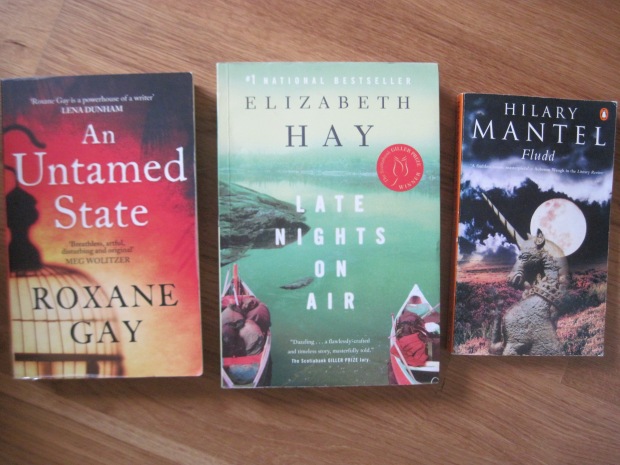
18. An Untamed State by Roxane Gay – I’ve only read Gay’s memoir, Hunger. She’s an important cultural figure; it feels essential to read all her books. I expect this to be rough.
19. Late Nights on Air by Elizabeth Hay – This has been on my radar for such a long time. After loving my first Hay novel (A Student of Weather) last year, what am I waiting for?
20. Fludd by Hilary Mantel – I haven’t read any Mantel in years, not since Bring Up the Bodies first came out. While we all await the third Cromwell book, I reckon this short novel about a curate arriving in a fictional town in the 1950s should hit the spot.
I’ll still be keeping up with my review books (paid and unpaid), blog tours, advance reads and library books over the summer. The aim of this challenge, though, is to make inroads into the physical TBR. Hopefully the habit will stick and I’ll keep on plucking reads from my shelves during the rest of the year.
Where shall I start? If I was going to sensibly move from darkest to lightest, I’d probably start with An Untamed State and/or Lit. Or I might try to lure in the summer weather by reading the two summery ones…
 Bookish Beck = Rebecca Foster. American transplant to England. Freelance proofreader and book reviewer.
