Books that (Should Have) Literally Changed My Life
(Following on from my posts Landmark Books from My Early Life and Landmark Books in My Life, Part II.)
Every once in a while you’ll hear someone claim that a certain book will change your life. I think of a scene in Garden State, still one of my favorite movies of all time, where Natalie Portman’s character tells Zach Braff’s character “this song will change your life” and puts The Shins’ “New Slang” on his headphones. (Ok, it’s a good song, but not that great.)
Are there any books that have literally changed my life? I can think of a handful that have been extremely influential on my worldview and, in a couple of cases, also changed my behavior. As it happens, they’re all nonfiction.
Religion
 After I got back to the States from my year abroad, I spent a few years doing some intensive reading about progressive Christianity (it was sometimes also called the emergent church) and other religions, trying to decide if it was worth sticking with the faith I’d grown up in. Although I still haven’t definitively answered this for myself, and have drifted in and out of lots of churches over the last 12 years, two authors were key to me never ditching Christianity entirely: Brian McLaren and Marcus Borg.
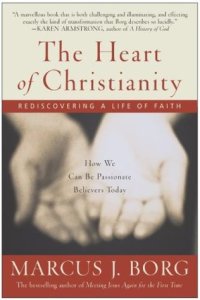 McLaren founded the church we attend whenever we’re back in Maryland and is the author of over a dozen theology titles, including the New Kind of Christian trilogy of allegorical novels. For me his best book is A New Kind of Christianity, which pulls together all his recurrent themes. Borg, who died in 2015, wrote several books that made a big impression on me, but none more so than The Heart of Christianity, which is the best single book I’ve found about what Christianity can and should be, going back to Jesus’ way of peace and social justice and siphoning off the unhelpful doctrines that have accumulated over the centuries.
 Any number of other Christian books and authors have been helpful to me over the years (Secrets in the Dark by Frederick Buechner, How (Not) to Speak of God by Peter Rollins, Falling Upward by Richard Rohr, An Altar in the World by Barbara Brown Taylor, Without Buddha I Could Not be a Christian by Paul Knitter, Unapologetic by Francis Spufford, and various by Kathleen Norris, Rowan Williams, Richard Holloway and Anne Lamott), reassuring me that it’s not all hellfire/pie in the sky mumbo-jumbo for anti-gay Republicans, but Borg and McLaren were there at the start of my journey.
Sexuality
 Reading is my primary means of examining society as well as my own life, so it’s no wonder that I have turned to books to learn from some gender pioneers. Hanne Blank’s accessible social history Straight (2012) is particularly valuable for its revelation of the surprisingly short history of heterosexuality as a concept – the term has only existed since the 1860s. But the book that most helped me adjust my definitions of gender and broaden my tolerance was Conundrum by Jan Morris (1974).
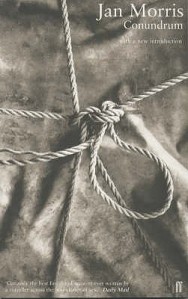 James Morris, born in 1926, was a successful reporter, travel writer, husband and father. Yet all along he knew he was meant to be female; it was something he had sensed for the first time as a young child sitting under the family piano: “I was three or perhaps four years old when I realized that I had been born into the wrong body, and should really be a girl … the conviction was unfaltering from the start.” In 1954 he began taking hormones to start his transition to womanhood, completed by a sex reassignment surgery in Morocco in 1972. This exceptional memoir of sex change evokes the swirl of determination and doubt, as well as the almost magical process of metamorphosing from one thing to another. Morris has been instrumental in helping me see sexuality as a continuum rather than a fixed entity.
Food
Apart from Michael Pollan, can you guess who’s had the greatest influence on my eating habits? You might be surprised to learn it’s American novelist Jonathan Safran Foer. In 2009 he published a provocative book called Eating Animals. I’m still surprised by how powerful and challenging I found it, considering that I knew pretty much what to expect: anti-meat rhetoric from a trendy vegetarian, with plenty of arresting statistics and horrifying behind-the-scenes accounts of factory farming and slaughter. But I set aside my jaded approach to potential propaganda and let it all saturate me, and it was devastating.
 The fact that I still haven’t completely given up meat is proof of how difficult it is to change, even once you’ve been convicted. We’ve gone from eating meat occasionally to almost never, and then mostly when we’re guests at other people’s houses. But if I really reminded myself to think about where my food was coming from, I’m sure we’d be even more hardline. Foer didn’t answer all my questions – what about offal and wild game, and why not go all the way to veganism? – but I appreciated that he never characterizes the decision to be vegetarian as an easy one. He recognizes the ways food is bound up with cultural traditions and family memories, but still thinks being true to one’s principles outweighs all. (He’s brave enough to suggest to middle America that it’s time to consider a turkey-free Thanksgiving!)
Daily Life
 There’s nothing more routine than brushing your teeth, and I never thought I would learn a new way to do it at age 32! But that’s just what Ignore Your Teeth and They’ll Go Away by Sheldon Dov Sydney gave me. He advises these steps: (1) brushing with a dry brush to remove bits of food and plaque, (2) flossing, and (3) brushing with toothpaste as a polish and to freshen breath. It takes a little bit longer than your usual quick brush and thus I can’t often be bothered to do it, but it does always leave my mouth feeling super-clean.
 I frequently succumb to negative self-talk, thinking “I can’t cope” or “There’s no way I could…” Feel the Fear and Do It Anyway by Susan Jeffers helped me see that I need to be more positive in my thought life. Originally published in 1987, the self-help classic says that at the base of every fear is a belief that “I can’t handle it.” Our fears are either of things that can happen to us (aging and natural disasters) or actions we might take (going back to school or changing jobs). You can choose to hold fear with either pain (leading to paralysis) or power (leading to action). This is still a struggle for me, but whenever I start to think “I can’t” I try to replace it with Jeffers’ mantra, “Whatever it is, I’ll handle it.”
Can you think of any books that have literally changed your life?
Authors I Keep Meaning to Try
Picking up a book by an author you’ve never encountered before can be a bit daunting. Perhaps, like me, you’ve heard people praise particular authors for a long time and have wanted to give their writing a try, but simply never known quite where to start. For me, a few that keep coming to mind, bringing with them a twinge of guilt each time, are Haruki Murakami, Joyce Carol Oates and John Updike.
Oates published her first novel at age 26 and has written around 50 of them since; she’s also a prolific short story writer and essayist, such that her total output numbers some 70-plus volumes. Yet the only piece I’ve ever read by her is a 1966 short story, “Where Are You Going, Where Have You Been?”, which was assigned reading for my freshman seminar at college. Where in the world should I start with her novels?!
Likewise, Updike is a huge figure in twentieth-century American literature – with, again, about 70 books to his credit, including not just novels but also short stories, poetry, autobiography, and literary criticism – but I’ve barely read a word he wrote.
Rather than shrugging my shoulders in disillusioned frustration and deciding not to try these intimidating authors after all, I’m going to try to put a reasoned plan in place. As I see it, there are five strategies I could take:
- Start with their first book (this is what Laura of Reading in Bed is doing this year, to decide whose complete works to read)
- Start with their most high-profile book – the one that won a major prize, or was on the bestseller list for weeks, or became a ubiquitous book club selection
- Start with their latest book
- Start with their most unconventional work
- Start with whatever comes to hand first (public library holdings might be the limitation)
So, which strategy do you recommend for the three authors I mentioned above? I’ll plan to try all of them this year. Which of their books should I be sure not to miss?
Starting the Year as I Mean to Go On?
The houseguests have gone home, the Christmas tree is coming down tomorrow, and it’s darned cold. I’m feeling stuck in a rut in my career, the blog, and so many other areas of life. It’s hard not to think of 2017 as a huge stretch of emptiness with very few bright spots. All I want to do is sit around in my new fuzzy bathrobe and read under the cat. Luckily, I’ve had some great books to accompany me through the Christmas period and have finished five so far this year.
I thought I’d continue the habit of writing two-sentence reviews (or maybe no more than three), except when I’m writing proper full-length reviews on assignment or for blog tours or other websites. Granted, they’re usually long and multi-part sentences, and this isn’t actually a time-saving trick – as Blaise Pascal once said, “I’m sorry I wrote you such a long letter; I didn’t have time to write a short one” – but it feels like good discipline.
So here’s some mini-reviews of what I’ve been reading in late December and early January:
The Dark Flood Rises, Margaret Drabble
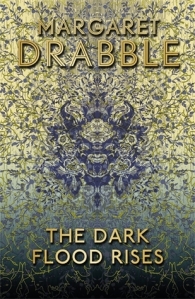 The “dark flood” is D.H. Lawrence’s metaphor for death, and here it corresponds to busy seventy-something Fran’s obsession with last words, obituaries and the search for the good death as many of her friends and acquaintances succumb – but also to literal flooding in the west of England and (dubious, this) to mass immigration of Asians and Africans into Europe. This is my favorite of the five Drabble books that I’ve read – it’s closest in style and tone to her sister A.S. Byatt as well as to Tessa Hadley, and the themes of old age and life’s randomness are strong – even though there seem to be too many characters and the Canary Islands subplot mostly feels like an unnecessary distraction. (Public library)
Hogfather, Terry Pratchett
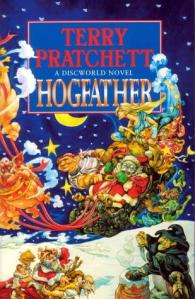 In Discworld belief causes imagined beings to exist, so when a devious plot to control children’s minds results in a dearth of belief in the Hogfather, the Fat Man temporarily disappears and Death has to fill in for him on this Hogswatch night. I laughed aloud a few times while reading this clever Christmas parody, but I had a bit of trouble following the plot and grasping who all the characters were given that this was my first Discworld book; in general I’d say that Pratchett is another example of British humor that I don’t entirely appreciate (along with Monty Python and Douglas Adams) – he’s my husband’s favorite, but I doubt I’ll try another of his books. (Own copy)
Love of Country: A Hebridean Journey, Madeleine Bunting
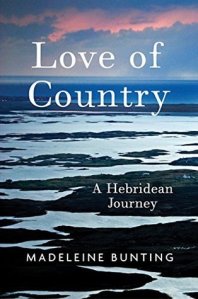 In a reprise of childhood holidays that inevitably headed northwest, Bunting takes a series of journeys around the Hebrides and weaves together her contemporary travels with the religion, folklore and history of this Scottish island chain, an often sad litany of the Gaels’ poverty and displacement that culminated with the brutal Clearances. Rather than giving an exhaustive survey, she chooses seven islands to focus on and tells stories of unexpected connections – Orwell’s stay on Jura, Lord Leverhulme’s (he of Port Sunlight and Unilever) purchase of Lewis, and Bonnie Prince Charlie’s landing on Eriskay – as she asks how geography influences history and what it truly means to belong to a place. (Public library)
Cobwebs and Cream Teas: A Year in the Life of a National Trust House, Mary Mackie
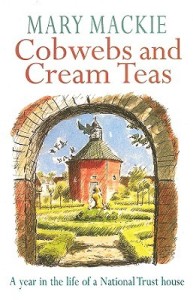 Mackie’s husband was Houseman and then Administrator at Felbrigg Hall in Norfolk in the 1980s – live-in roles that demanded a wide range of skills and much more commitment than the usual 9 to 5 (when he borrowed a pedometer he learned that he walked 15 miles in the average day, without leaving the house!). Her memoir of their first year at Felbrigg proceeds chronologically, from the intense cleaning and renovations of the winter closed season through to the following Christmas’ festivities, and takes in along the way plenty of mishaps and visitor oddities. It will delight anyone who’d like a behind-the-scenes look at the life of a historic home. (Own copy)
The Bridge Ladies: A Memoir, Betsy Lerner
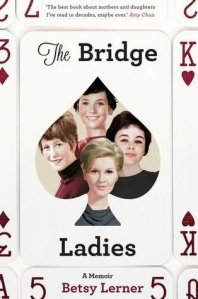 When life unexpectedly took the middle-aged Lerner back to her hometown of New Haven, Connecticut, she spent several years sitting in on her mother’s weekly bridge games to learn more about these five Jewish octogenarians who have been friends for 50 years and despite their old-fashioned reserve have seen each other through the loss of careers, health, husbands and children. Although Lerner also took bridge lessons herself, this is less about the game and more about her ever-testy relationship with her mother (starting with her rebellious teenage years), the ageing process, and the ways that women of different generations relate to their family and friends. It wouldn’t be exaggerating to say that every mother and daughter should read this; I plan to shove it in my mother’s and sister’s hands the next time I’m in the States. (Own copy)
Waiting on the Word, Malcolm Guite
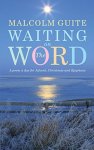 Guite chooses well-known poems (by Christina Rossetti, John Donne, Alfred Lord Tennyson, Samuel Taylor Coleridge et al.) as well as more obscure contemporary ones as daily devotional reading between the start of Advent and Epiphany; I especially liked his sonnet sequence in response to the seven “O Antiphons.” His commentary is learned and insightful, and even if at times I thought he goes into too much in-depth analysis rather than letting the poems speak for themselves, this remains a very good companion to the Christmas season for any poetry lover. (E-book from NetGalley)
 I started too many books over Christmas and have sort of put six of them on hold – including Titus Groan, which I’m thinking of quitting (it takes over 50 pages for one servant to tell another that the master has had a son?!), and City on Fire, which is wonderful but dispiritingly long: even after two good sessions with it in the days after Christmas, I’ve barely made a dent.
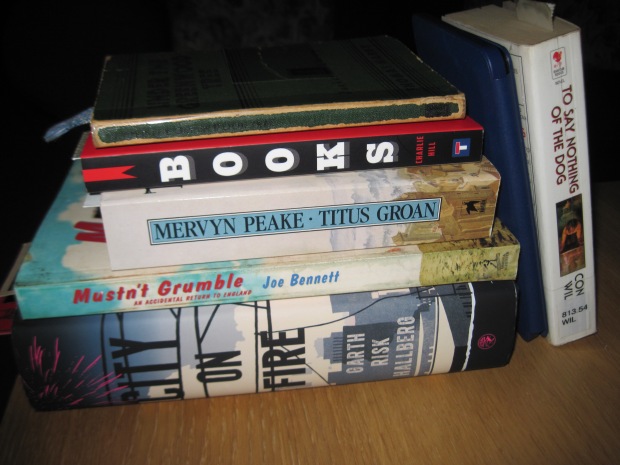
Stack on left = on hold (the book on top is Under the Greenwood Tree); standing up at right = books I’m actually reading.
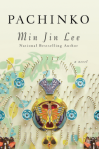
However, the three books that I am actively reading I’m loving: To Say Nothing of the Dog by Connie Willis is an uproarious blend of time travel science fiction and Victorian pastiche (university library), Pachinko by Min Jin Lee is a compulsive historical saga set in Korea (ARC from NetGalley), and the memoir Birds Art Life by Kyo Maclear has been compared to H Is for Hawk in the way she turns to birdwatching to deal with depression (e-book from Edelweiss). I also will be unlikely to resist my e-galley of the latest Anne Lamott book, Hallelujah Anyway (forthcoming in April, ARC from Edelweiss), for much longer.



Meanwhile, in post-holiday charity shopping I scored six books for £1.90: one’s been tucked away as a present for later in the year; the Ozeki I’ve already read, but it’s a favorite so I’m glad to own it; and the rest are new to me. I look forward to trying Han Kang; Anne Tyler is a reliable choice for a cozy read; and the Hobbs sounds like a wonderful Victorian-set novel.
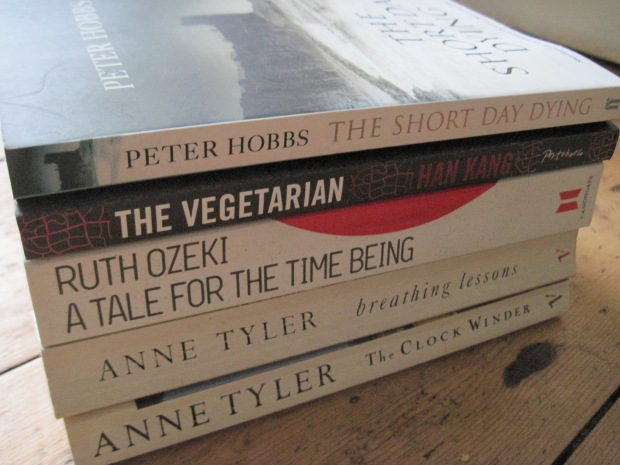
All in all, I seem to be starting my year in books as I mean to go on: reading a ton; making sure I review most or all of the books, even if I write just a few sentences; maintaining a balance between my own books, library books, and recent or advance NetGalley/Edelweiss reads; and failing to restrain myself from buying more.
Now if I could just work on my general attitude…
How’s the reading year starting off for you?
Some Final Statistics for 2016
I thought last year’s reading total could never be beat, but somehow I’ve done it. In the meantime I also exceeded my Goodreads goal by a whole 20%. I don’t like to crow, so I’ve worked out the statistics below in terms of percentages rather than absolute numbers. (But, if you’re curious, you can see my final tally here.)
Fiction: 46.2%
Nonfiction: 41.3%
Poetry: 12.5%
Average rating: 3.6 out of 5 stars
 Longest book: The Goldfinch by Donna Tartt
Shortest book: Physical by Andrew McMillan (in general, reading poetry is one way I boost my reading totals; although the books require time and attention, most only have between 50 and 100 pages)
Average length: 258 pages
Male author: 40.4%
Female author: 59.6%
(Really interesting as I never consciously set out to read more books by women.)
E-books: 33.7%
Print books: 66.3%
(I’m surprised this isn’t closer to half and half!)
Works in translation: 8.3%
(Must do better!)
2016: What a year, huh? World events left so many of us reeling, but books kept me going.
How did 2016 turn out for you reading-wise?
Wishing all of my readers a very happy new year. I look forward to another year of reading and blogging.
Reading Goals for 2017
I’ve set just a few modest goals for the coming year’s reading:
- As always, I’d like to focus on reading more of the books I actually own. I went around and did an inventory of unread books in the house and came up with 221. That could easily fill two-thirds or more of next year, yet I know I’m unlikely to cut down on my library borrowing or NetGalley and Edelweiss requests. I think the strategy will be to always have two of my own books on the go at all times, one fiction and one nonfiction, no matter how many other public library or Kindle books I’m reading.
- Some of the books I most want to tackle have 500+ pages. I wonder if I have enough really long books to sustain a Doorstopper of the Month feature? To get a head start on this goal, this past week I started City on Fire by Garth Risk Hallberg and Titus Groan by Mervyn Peake. Also on the shelf are A Suitable Boy, This Thing of Darkness, An Instance of the Fingerpost, Until I Find You, and a few chunky biographies; I’m also sure to get some long books from the library and NetGalley.
-

The classics bookcase.
I read very few classics in 2016, just a couple short books by Jerome K. Jerome, a Stefan Zweig novella, Tender Is the Night, and two rediscovered 1930s works from the Apollo Classics series. So that’s something to rectify in 2017. Three classics from the list of “Books to Read in Your 30s” in The Novel Cure are calling to me, and it’s also high time I read some more Dickens (maybe I’ll finally return to Dombey and Son?), Trollope (at least The Warden, if not more of the Barsetshire series), Brontë (Anne, in this case) and Woolf (The Voyage Out). Maybe I’ll also start a Classic of the Month feature?
Regarding my career…
I’d like to replace some of my individual book reviewing with longer articles. For instance, this past year Foreword magazine invited me to write three articles surveying new and upcoming books in various genres: young adult, climate change and middle grade. It’s more rewarding (and remunerative) to prioritize full-length articles.
Regarding the blog…
I’d love to get involved in more blog tours and collaborative challenges. I also hope to continue maintaining a balance between straightforward reviews/lists and different stuff, whether that’s travel reports or more introspective pieces. My dream is still to judge a literary prize, even if that’s just as part of a shadow panel.
What are some of your goals for 2017 – reading-related or otherwise?
Tomorrow: Some final statistics on my reading for the year.
Merry Christmas! (Back on Tuesday)
Do you think I’ve packed enough books for going down to my in-laws’ place for a few days?
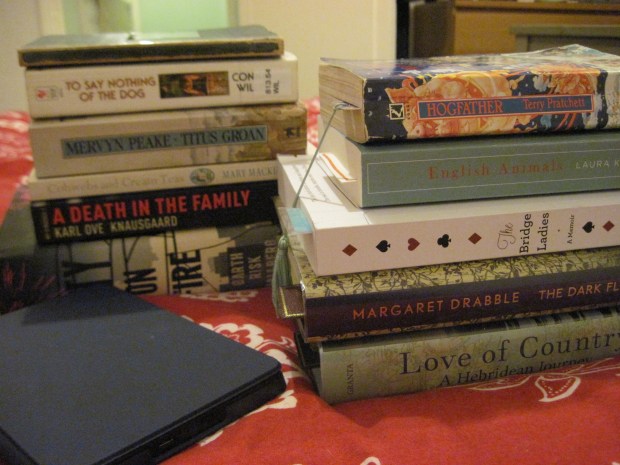
The right-hand stack is my currently reading pile. I’m prioritizing Hogfather for Christmas, plus The Dark Flood Rises and Love of Country as they’re 2016 releases. But then – just in case I run out, or get bored with anything – I’ve got six more print books in the left-hand stack (on the top is Thomas Hardy’s Under the Greenwood Tree). And if any of these fail me, the Kindle has roughly 300 books on it, including 16 of yesterday’s 2017 selections.
I’ll be back on Tuesday the 27th for five consecutive days’ worth of year-end goodies: my top fiction and nonfiction reads of 2016, some other superlatives, a few year-end stats, and some goals for 2017’s reading.
Wishing you all safe travels and happy holidays!
Some Advanced 2017 Reads
I haven’t had much chance to explore 2017’s offerings yet. Although I technically have access to loads of pre-release titles through NetGalley and Edelweiss, the books in front of me and, of course, the ones I’m reading on assignment tend to take priority. Much as I’d like to be ahead of the trend, I’ve only read five 2017 titles, three of which I can recommend. Two of these happen to be poetry books; the third is a wonderful bereavement-themed memoir.
Whereas by Stephen Dunn
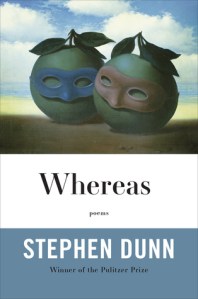 “A Card from Me to Me,” the prefatory poem, sets the tone, as the poet wishes himself a happy 75th birthday and marvels at “the strangeness, the immensity, of what I have / and have had and every small thing that against the odds continues to be.” Much of what follows is about life and death, success and failure, and what we learn from it all. For example, writing about a funeral: “at such moments / everyone is an amateur of feelings.”
I especially liked “Unnatural,” with its meditation on nature vs. artifice, “Let’s Say,” and “Nothing Personal,” about an author killing off a character (or is that God killing off the narrator?). These are very lucid poems, reading like complete sentences and thorough trains of thought, with memorable alliteration and vocabulary. I’d read more from Dunn.
Releases February 21st.
My rating: 
The Analyst by Molly Peacock
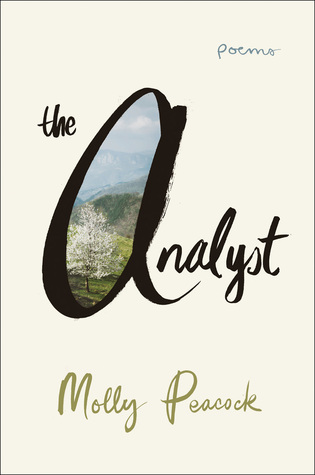 Peacock wrote this in tribute to her longtime psychoanalyst, Joan Workman Stein, who practiced in New York City until she suffered a stroke in 2012. This collection contains a rich mixture of autobiographical reflection and translations. The form and style vary from poem to poem, but I was always struck by the imagery, often drawn from the culinary and art worlds – everything from marinara sauce and a skinned rabbit to paper dolls and methods of expressing gratitude in French. I presumed the entire book would be about Stein, but instead the poems about her pre- and post-stroke life share space with ones about Peacock’s own life, from childhood onward. Having enjoyed The Paper Garden, the author’s biography of eighteenth-century artist Mary Delany, I was especially tickled to see several poems that mention collage and other paper arts, such as “Authors.”
“Mandala in the Making,” the final poem, meditates on the contrast between the drive to make art and the essential impermanence of life: “When they’re done, // they’ll brush it all away. You can’t believe it. / Nothing stays (including the memory you’ve lost). / What lasts?”
I was really impressed with this collection and will be searching out Peacock’s previous poetry books as well.
Releases January 3rd.
My rating: 
Traveling with Ghosts: A Memoir by Shannon Leone Fowler
“This is a story about finding love and learning to live with loss. But mostly, it’s a story about all the places in between.” In August 2002, Fowler was traveling in Thailand with her fiancé Sean. They were embracing in shallow water outside their cabana when Fowler felt something brush past her thigh. The highly toxic box jellyfish stung Sean on his leg, and by the time she brought help he was already dead, though clinic staff went through the motions of trying to resuscitate him.
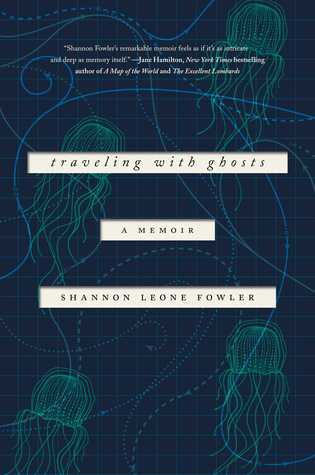 This memoir concentrates on the four and a half months that followed Sean’s death, a time that Fowler filled with constant travel through Eastern Europe – “a place where the endings [in folk tales as well as in real life] were rarely happy, but the stories were told just the same.” She had a compulsion to keep moving, as if Sean’s death was something she could outrun; she sought out risky places, going to Bosnia and then to Tel Aviv to visit the Israeli girls who helped her deal with the practicalities of Sean’s death.
Fowler toggles between her blithe trips with Sean in the few years they had together, her somber travels after his death, and the immediate aftermath of his death. Each short section is headed by the date and place, but the constant time shifts are meant to be disorienting and reflect how traumatic memories linger. Your average memoir might have brought things up to the present day by showing how the author learned and grew from the experience. This is not your average memoir. It delves into the thick of the grief and stays there. It doesn’t give easy answers about how to get over things or suggest life will later be perfect, just in a different way. It’s honest and unusual and has stayed with me. Highly recommended.
(Note: The author is the daughter of novelist Karen Joy Fowler.)
Releases February 21st.
My rating:
Two more 2017 books are on my reading stack:
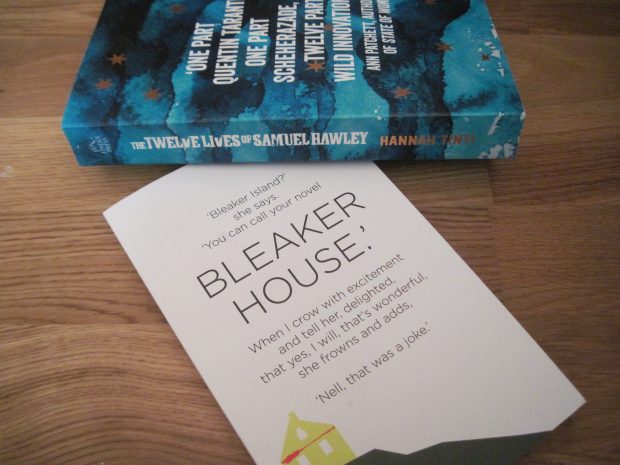
- I’m halfway through Bleaker House by Nell Stevens, a memoir about her failed attempt to write her debut novel during several months of isolation on Bleaker Island in the Falklands. It’s weird but funny, and I think any writer will relate to the feelings of loneliness and a lack of confidence. I’ll be reviewing it for Nudge. (Releases March 14th.)
- I’ll be reviewing The Twelve Lives of Samuel Hawley by Hannah Tinti for The Bookbag sometime before its March 28th release.
Have you sampled any 2017 books yet?
Year-End Reading Goals
With less than a month left in the year, it’s time to be realistic about what I’m likely to finish before the end of 2016. My goals are fairly simple:
- Finish all the books I’m currently reading.
- Get through my stack from the public library; it’s not as daunting as it seems because I plan to just skim two or three of them.
- Make as much of a dent in my giveaway books pile (below) as possible. This particular goal is looking increasingly unlikely. I certainly don’t have any illusions about getting through the 900+ pages of City on Fire, though I might start it over Christmas and hope to get caught up in it. Before then I’ll try to read another couple books I won in various giveaways; any that remain will be priorities for January.
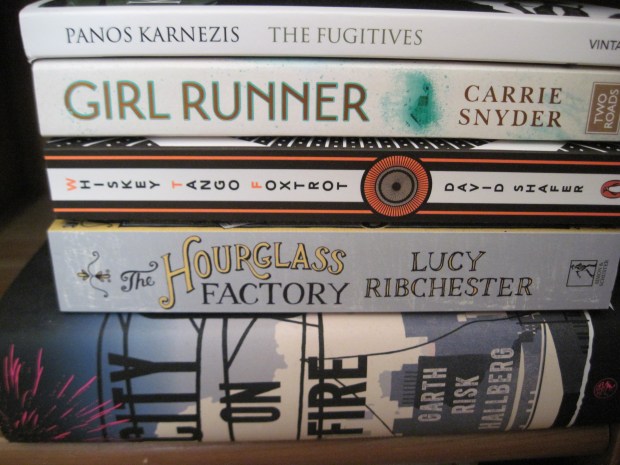
- Finish my next two review books for BookBrowse, due in early January: Valiant Gentlemen by Sabina Murray and The Sun Is Also a Star by Nicola Yoon. They’re extremely different – rollicking historical fiction set in the 1880s–1910s and a contemporary YA story with teen narrators – but I’m very much looking forward to both.
- I had hoped to make this the year I finally try Karl Ove Knausgaard. I might start the first volume over Christmas and see how I get on with it. I was also thinking about picking up the first book of Mervyn Peake’s Gormenghast trilogy. Luckily, Christmas promises to be conducive to reading: a very quiet few days sat around the fire in my in-laws’ Hampshire rectory and at their home by the coast!
As usual, a peek at a few Books of the Year lists has left me feeling glum about how few of the year’s best books I seem to have read. From the Kirkus list, I’ve read 11, skimmed one, and am currently reading another two = 13/100 read. I’ve done slightly better according to the New York Times list: I’ve read 20, skimmed two, abandoned one, and have one (Murray, see above) to read soon = 21/100 before the end of the year.
What do you hope to read before the end of 2016?
How have you done on various best-of lists?
Library Checkout: November 2016
I’m winding down with public and university library books for the year and hope to get to the end of the stacks before 2016 is out. I read some terrific books this month! Some of them I’ve already talked about here, and others I may feature in a future post or two. (I’ve given ratings for all the books I finished, and added links to Goodreads for those I managed to review.)
LIBRARY BOOKS READ
- Hag-Seed: The Tempest Retold by Margaret Atwood
- Keeping an Eye Open: Essays on Art by Julian Barnes
- Open City by Teju Cole
- Mend the Living by Maylis de Kerangal
- The Yellow House on the Corner by Rita Dove (poetry)

- Squirrel Pie (and other stories): Adventures in Food across the Globe by Elisabeth Luard

- Thirteen Ways of Looking by Colum McCann
- Diving into the Wreck by Adrienne Rich (poetry)
- As We Are Now by May Sarton
- The Tobacconist by Robert Seethaler

- Autumn by Ali Smith
- The Pursuit of Happiness: Why Are We Driving Ourselves Crazy and How Can We Stop? by Ruth Whippman
CURRENTLY READING
- Man Walks into a Room by Nicole Krauss
CHECKED OUT, TO BE READ
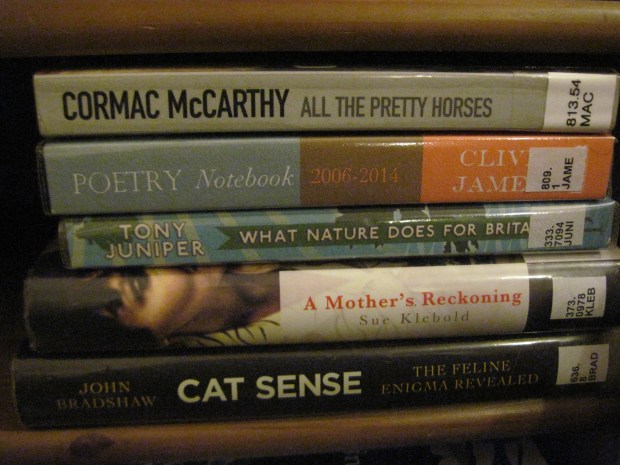
- Cat Sense by John Bradshaw [to skim only, I think]
- Poetry Notebook, 2006–2014 by Clive James [to skim only, I think]
- A Mother’s Reckoning by Sue Klebold
- All the Pretty Horses by Cormac McCarthy
- What Nature Does for Britain by Tony Juniper [to skim only, I think]
ON HOLD, TO BE PICKED UP
- The Cat Who Came for Christmas, Cleveland Amory
- The Cat Who Stayed for Christmas, Cleveland Amory
IN THE RESERVATION QUEUE
- The Dark Flood Rises by Margaret Drabble
- Cure: A Journey into the Science of Mind over Body by Jo Marchant
- Family Life by Akhil Sharma
- To Say Nothing of the Dog by Connie Willis
RETURNED UNREAD
- The Course of Love by Alain de Botton – requested; I’ll read it on my Kindle instead.
- The Lie Tree by Frances Hardinge – I scanned the first few pages and wasn’t in the mood; I may try it again another time.
- Dear Mr. M by Herman Koch – I read the first 20 pages, but it wasn’t gripping me at all.
- The Painted Bridge by Wendy Wallace – same as for the Hardinge.
(Thanks, as always, go to Shannon of River City Reading for the great blog idea and template!)
Landmark Books in My Life, Part II
This is a follow-up to a piece I wrote in September about the books that shaped my early life. I think of my twenties in general, and 2005–7 in particular, as a golden period in my reading life, when I started to develop the tastes that still guide my book choices today.

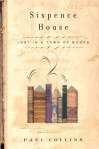 I was an English and Religion major and studied abroad in England for my junior year in 2003–4. As I was getting ready to go overseas for that first time in the summer of 2003, Susan Allen Toth’s trilogy of travel memoirs, starting with My Love Affair with England, and Paul Collins’s Sixpence House whetted my appetite for travel in Great Britain and, in the case of the latter, made me determined to get to Hay-on-Wye, Wales as soon as I could. (I first visited in May 2004 and have gone back several times since.)
 One of the most memorable books I read during my year abroad was Robert Elsmere by Mrs. Humphry Ward. It’s almost forgotten nowadays, but was a bestseller at its release in 1888. The story of a minister’s loss of faith and how it affects his marriage, it’s a stand-in for a whole faith-and-doubt subgenre that was wildly popular at the time. The novel is long, brooding and overwritten—in many ways it exemplifies the worst characteristics of the Victorian novel—but it resonated with my own crisis of faith and planted the seed for my Master’s thesis on women’s faith and doubt narratives in Victorian fiction.
 Part of working through that ongoing crisis of faith was seeing other religions more objectively and being open to the similarities between them. I found Karen Armstrong’s comparative study of the Abrahamic faiths (Christianity, Judaism and Islam), A History of God, absolutely riveting when I read it in my senior year of college. It’s a classic.
 My academic conference career began and ended with one I attended the summer after college graduation. I adapted a paper I’d written about D.H. Lawrence’s new moral framework for sexuality and was accepted to present it at the D.H. Lawrence Society of North America’s annual conference in 2005, which that year was held in Santa Fe, New Mexico. Thankfully, I’ve mostly blanked out my actual paper presentation as part of a panel of three young people, but the trip as a whole was wonderful—it was my first time in the southwest, and the conference included great field trips to Lawrence’s ranch at Taos and the Georgia O’Keeffe museum. I prepared for the experience by reading David Lodge’s Small World, a paperback I’d plucked from the shelves of the bookstore where I worked part-time during my senior year. “A satire about the academic conference circuit? I’m there!” I thought, and since then David Lodge has become one of my two or three favorite authors.
 It wasn’t until I returned to England to get my Master’s in 2005–6 that I really reclaimed reading as a leisure activity. The last couple years of college had been so busy I’d barely been able to cope with my assigned reading; I remember never making it very far in any paperback I picked up from the public library (like Charles Frazier’s Cold Mountain, which I’ve never gone back to). But the long, lonely evenings in Leeds had to be filled somehow, and the upstairs stacks of the magnificent Brotherton Library had plenty to offer in the way of literary fiction. In that year I made my way through loads of books by A.S. Byatt and Julian Barnes, as well as David Lodge (my top 3, probably). Possession made the biggest impression, but I love pretty much all of Byatt’s work. If pressed to name my favorite author, it would be her.
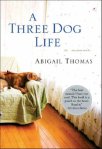 In the partial year between finishing my Master’s and getting married back in England, I lived at home with my parents and worked part-time at a community college library. My evening shifts were often dead quiet, so I got plenty of reading done behind the circulation desk. One book I selected at random from the public library shelves, Abigail Thomas’s A Three Dog Life, had a big impact on me in 2007. The memoir tells of her husband’s traumatic brain injury and the aftermath. Thomas writes in a fragmentary, episodic format that felt fresh and jolted me. I wasn’t entirely sure I liked the style, but it sure was intriguing.

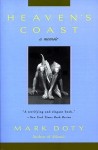 I picked up Meredith Hall’s Without a Map around the same time, which cemented my interest in women’s life stories. Memoirs have been among my favorite genres ever since. Mark Doty’s exquisite Heaven’s Coast, which I read the following year, kickstarted my particular fascination with bereavement memoirs. Also, I think it was through following up his memoirs with his collections of poems that I first got into contemporary poetry.
In recent years I’ve tried to branch out (e.g. into graphic novels and literature in translation), but contemporary literary fiction, historical fiction, memoirs, theology and travel books remain my preferred genres. Most of these loves I can trace back to my early twenties.
 Bookish Beck = Rebecca Foster. American transplant to England. Freelance proofreader and book reviewer.
 Bookish Beck