4 Reasons to Love Kayla Rae Whitaker’s The Animators
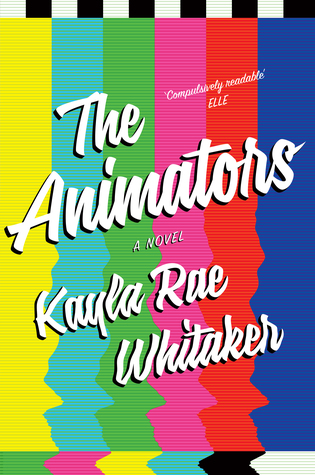 I have way too much to say about this terrific debut novel, and there’s every danger of me slipping into plot summary because, though it seems lighthearted on the surface, there’s a lot of meat to this story of the long friendship between two female animators. So I’m going to adapt a format that has worked well for other bloggers (e.g. Carolyn at Rosemary and Reading Glasses) and pull out four reasons why you must be sure not to miss this book.
- Bosom Friends. Have you ever had, or longed for, what Anne Shirley calls a “bosom friend”? If so, you’ll love watching the friendship develop between narrator Sharon Kisses and her business partner, Mel Vaught. In many ways they are opposites. Lanky, blonde Mel is a loud, charismatic lesbian who uses drugs and alcohol to fuel a manic pace of life. She’s the life of every party. Sharon, on the other hand, is a curvy brunette and neurotic introvert who’s always falling in love with men but never achieving real relationships. They meet in Professor McIntosh’s Introduction to Sketch class at a small college and a decade later are still working together. They win acclaim for their first full-length animated feature, Nashville Combat, based on Mel’s dysfunctional upbringing in the Central Florida swamps. But they see each other through some really low lows, too, like the death of Mel’s mother and Sharon’s punishing recovery from a stroke at the age of 32.
She was the first person to see me as I had always wanted to be seen. It was enough to indebt me to her forever.
- The Value of Work. Kayla Rae Whitaker was inspired by her childhood obsession with dark, quirky cartoons like Beavis and Butthead and Ren and Stimpy. Books about artists sometimes present the work as magically fully-formed, rather than showing the arduous process behind it. Here, though, you track Mel and Sharon’s next film from a set of rough sketches in a secret notebook to a polished comic, following it through storyboarding, filling-in and final edits. It’s a year of all-nighters, poor diet and substance abuse. But work – especially the autobiographical projects these characters create – is also saving. Even when it seems the well has run dry, creativity always resurges. I also appreciated how the novel contrasts the women’s public and private personas and imagines their professional legacy.
The work will always be with you, will come back to you if it leaves, and you will return to it to find that you have, in fact, gotten better, gotten sharper. It happens to you while you are asleep inside.
- Road Trips and Rednecks. I love a good road trip narrative, and this novel has two. First there’s the drive down to Florida for Mel to identify her mother, and then there’s Sharon’s sheepish return to her hometown of Faulkner, Kentucky. Here’s where the book really takes off. The sharp, sassy dialogue sparkles throughout, but the scenes with Sharon’s mom and sister are particularly hilarious. What’s more, the contrast between the American heartland and the flashy New York City life Mel and Sharon have built works brilliantly. Although in the Kentucky section Whitaker portrays some obese Americans you’d be tempted to call white trash, she never resorts to cruel hillbilly stereotypes. The author herself is from rural eastern Kentucky and paints the place in a tender light. She even makes Louisville – where the friends go to meet up with Sharon’s old neighbor and first crush, Teddy Caudill – sound like quite an appealing tourist destination!
I used it to hate it here. How could I have possibly hated this? This is me. I sprang from this place.
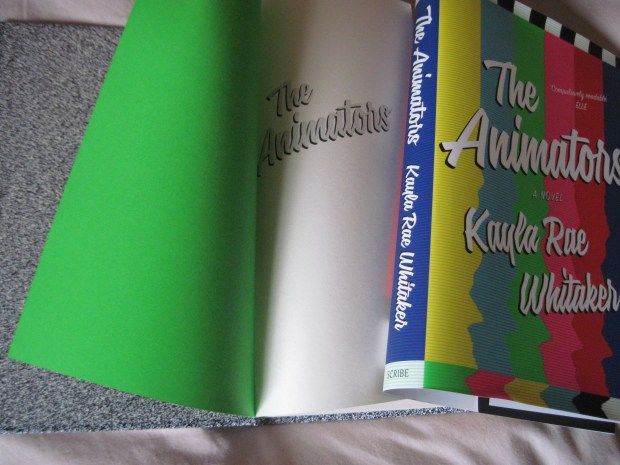
I love the attention to detail evident in the book design, especially the black-and-white TV fuzz of the covers under the dust jacket, and the pop of neon green on the inside of the endpapers.
- Open Your Trunk. This is a mantra arising from Mel and Sharon’s second movie, Irrefutable Love, which is autobiographical for Sharon this time – revolving around a traumatic incident from her shared past with Teddy, her string of crushes, and her stroke recovery. One powerful message of the novel is that you can’t move on in life unless you confront the crap that’s happened to you. As humorous as it is, it’s also a weighty book in this respect. It has three pivot points, moments so grim and surprising that I could hardly believe Whitaker dared to put them in. (The first is Sharon’s stroke; the others I won’t spoil.) This means the ending is not the super-happy one I might have wanted, but it’s realistic.
Anything that makes you in that way, anything that makes you hurt and hungry in that way, is worth investigating. … When you take the things that happen to you, the things that make you who are, and you use them, you own them.
I thought the timeline could be a little tighter and the novel was unnecessarily crass in places. For me, the road trips were the best bits and the rest never quite matched up. But this is still bound to be one of my top novels of the year. I think every reader will see him/herself in Sharon, and we all know a Mel; for some it might be the other way around. Like A Little Life and even The Essex Serpent, this asks how friendship and work can carry us through. Meanwhile, the cartooning world and the Kentucky–New York City dichotomy together feel like a brand new setting for a literary tragicomedy.
An early favorite for 2017. Don’t miss it.
The Animators was published by Random House and Scribe UK on January 31st. My thanks to Sophie Leeds of Scribe for sending a free copy for review.
My rating: 
All the Lonely People*
Last week I finished two books, one fiction and one nonfiction, that had loneliness as a central theme – although their treatment of the subject was vastly different.
First was Quartet in Autumn by Barbara Pym, which was recommended to me by various bloggers and certainly lived up to their praise. Originally published in 1977, this was Pym’s seventh novel out of nine; she died in 1980. It’s about four London office workers, all sixty-somethings who are partnerless and don’t have, or at least don’t live with, any immediate family members. We never learn what they do in this office; in fact, Edwin, Norman, Letty and Marcia don’t seem to be filling much of a need, especially given the fact that the two old girls aren’t replaced when they retire midway through the novel.
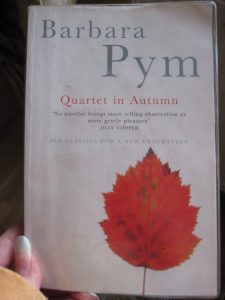 For as long as they’ve been working together, the four haven’t given in to the usual human impulse to know and be known. At first there doesn’t seem to be much to know about them; with only one or two shorthand facts apiece it’s a minor challenge to tell them apart. Widower Edwin’s hobby is attending Anglican services; Norman lives off fried food and visits his brother-in-law in hospital; Letty lives in a boarding house and has a friend in the countryside; Marcia has had a mastectomy and hoards tinned food and empty milk bottles.
But for all of them a line applied to Letty holds true: “It was a comfortable enough life, if a little sterile, perhaps even deprived.” Especially after her retirement, Letty knows “she must never give the slightest hint of loneliness or boredom, the sense of time hanging heavy.”
From what I’d heard about Pym, I might have expected a lighthearted satire about country manners and Anglican vicars. Perhaps that’s a fair assessment of some of her earlier books? But this is much darker, and the humor always has a bitter edge:
- When Marcia finds a plastic bag labeled “To avoid danger of suffocation keep this wrapper away from babies and children,” the narrator adds, “They could have said from middle-aged and elderly persons too, who might well have an irresistible urge to suffocate themselves.”
- Offered the option of moving into a care home, Letty thinks “better to lie down in the wood under the beech leaves and bracken and wait quietly for death.”
Overall it’s quite a melancholy little book, a warning against letting your life become too small and private. Yet the last line, remarkably, is a sudden injection of optimism: “it made one realize that life still held infinite possibilities for change.” I’d recommend this to readers who have enjoyed Mrs. Palfrey at the Claremont by Elizabeth Taylor. 
As an unwittingly positive counterpart, I was at the same time reading How to Be Alone by Sara Maitland. This is part of a School of Life series that turns the “how-to” concept on its head: instead of areas where we think we need instruction, the books are about areas where we feel like experts, topics so simple or automatic they don’t seem to need explanation (e.g. How to Be Bored, or How to Age).

I feel it’s important to point out that the author’s last name is spelled wrong on the cover!
But Maitland argues that although being alone is easy to achieve, there is an art to doing it properly, and solitude and loneliness are by no means the same thing. She knows whereof she speaks: though she grew up in a large Catholic family, after her divorce she moved to a remote area of Scotland and lives alone in a house a quarter mile from the nearest road.
Despite our modern obsession with self-confidence and fulfilling relationships, Maitland believes “the present paradigm is not really working.” More of us than ever are depressed and afraid to spend time alone lest it might make us appear selfish, pathetic or in some way unlovable.
Profiling everyone from the Desert Fathers of early Christianity to the Romantic poets, she counters by enumerating all the benefits that solitude confers: self-knowledge and a rest from constant relating (that goes for extroverts as well as introverts), a connection to nature and to the divine, and the freedom to create. She convinced me, and includes a great bibliography of further reading about solitude.
*I only found out the other week that Eleanor Rigby “picks up the rice” in a church. For my entire life I’d thought she “picks up her ice” (granted, that doesn’t make much sense, but the Beatles could be trippy lads). You learn something new every day!
Some Books I Was Surprised to Love
Like most fiction readers, I generally stick with what I’m pretty sure I’ll like. For me that means that, unless I’ve heard very good feedback that makes me think the book will stand out from its peers, I tend to avoid science fiction, fantasy, and mystery novels (or genre fiction in general). I’m also leery of magic realism and allegories, as these techniques can so often be cringe-inducing. But occasionally a book will come along that proves me wrong.
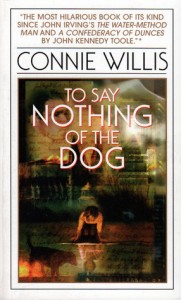 For instance, last week I finished To Say Nothing of the Dog by Connie Willis. Time travel would normally be a turnoff for me, but Willis manages it perfectly in this uproarious blend of science fiction and pitch-perfect Victorian pastiche (boating, séances and sentimentality, oh my!). Once I got into it, I read it extremely quickly – finishing the final 230 pages on one Sunday afternoon and evening – and it provoked a continuous stream of snorts. I can hardly think of anyone I wouldn’t recommend it to.
This got me thinking about some other pleasantly surprising books that took me outside of my usual reading comfort zone in recent years:
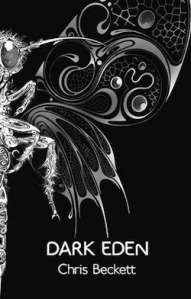 Dark Eden by Chris Beckett: Six generations ago a pair of astronauts landed on the planet Eden and became matriarch and patriarch of a new race of eerily primitive humans. A young leader, John Redlantern, rises up within the group, determined to free his people from their limited worldview by demythologizing their foundational story. Through events that mirror many of the accounts in Genesis and Exodus, Beckett provides an intriguing counterpoint to the ways Jews and Christians relate to the biblical narrative. Page-turning science fiction with deep theological implications. I liked each of the two sequels less than the book that went before, but they’re still worth reading.
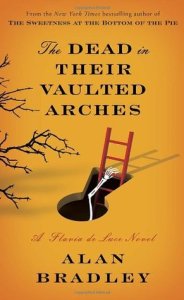 The Flavia de Luce mysteries by Alan Bradley: Normally I shy away from series and tire of child narrators – and yet I find the Flavia de Luce novels positively delightful. Why? Well, Canadian author Alan Bradley’s quaintly authentic mysteries are set at Buckshaw, a crumbling country manor house in 1950s England, where the titular eleven-year-old heroine, also the narrator, performs madcap chemistry experiments and solves small-town murders. The Dead in Their Vaulted Arches (#6) is the best yet. In this installment, Flavia finally learns of her unexpected inheritance from her mother. The most recent, Thrice the Brinded Cat Hath Mew’d (#8), is a close second.
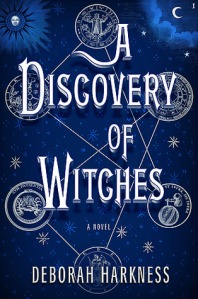 A Discovery of Witches by Deborah Harkness: The thinking gal’s Twilight. Harkness, a historian of science, draws on her knowledge of everything from medieval alchemy to recent DNA mapping. The main character, reluctant witch Diana Bishop, is studying alchemical treatises at the Bodleian Library. She calls up an enchanted manuscript from Ashmole’s original collection, presumed missing since 1859. There are three excised pages, and the book instantly draws attention from the myriad “creatures” (non-humans) plaguing Oxford. Enter Matthew Clairmont, a mega-hot vampire with a conscience. From rural France to upstate New York, he and Diana fight off rival vampires and the witches who killed Diana’s parents. As with Beckett’s books, the two sequels are a bit of a letdown, but the first book is great fun.
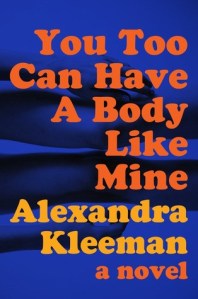 You Too Can Have a Body Like Mine by Alexandra Kleeman: A full-on postmodern satire bursting with biting commentary on body image, consumerism and conformity. The narrator, known only as A, lives in a shared suburban apartment. She and her roommate, B, are physically similar and emotionally dependent, egging each other on to paranoid anorexia. Television and shopping are the twin symbolic pillars of a book about the commodification of the body. In a culture of self-alienation where we compulsively buy things we don’t need, have no idea where our food comes from and worry about keeping up a facade of normalcy, Kleeman’s is a fresh voice advocating the true sanity of individuality.
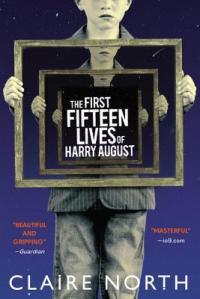 The First Fifteen Lives of Harry August by Claire North: The theme of a character reliving the same life over and over will no doubt have you thinking of Kate Atkinson’s Life After Life, but I liked this book so much better. Perhaps simply because of the first-person narration, I developed much more of a fondness for Harry August and his multiple life stories than I ever did for Ursula Todd. Harry, the illegitimate son of a servant girl, is born in the same manner each time – on New Year’s Day 1919, in the ladies’ restroom at Berwick-upon-Tweed rail station! – but becomes many people in his different lives.
What books were you surprised to love recently?
Review: English Animals by Laura Kaye
“Maybe we can see that the animals are like us, or we are like animals.”
Laura Kaye’s impressive debut novel, English Animals, is a fresh take on themes of art, sex, violence and belonging. It has particular resonance in the wake of Brexit, showing the apparent lack of a cohesive English identity in spite of sometimes knee-jerk nationalism.
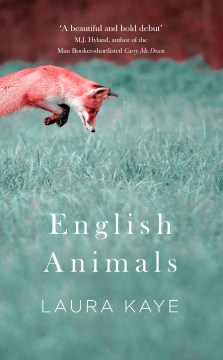 The novel takes place within roughly a year and is narrated by Mirka Komárova, a 19-year-old Slovakian who left home suddenly after an argument with her parents and arrives in the English countryside to work for thirty-somethings Richard and Sophie Parker. She doesn’t know what to expect from her new employers: “Richard and Sophie sounded like good names for good people. But they could be anything, they could be completely crazy.”
It’s a live-in governess-type arrangement, and yet there are no children – Mirka later learns that Sophie is having trouble getting pregnant. Instead Mirka drives the volatile Parkers to the pub so they can get drunk whenever they want, and also helps with their various money-making ventures: cooking and cleaning for B&B guests and the summer’s wedding parties, serving as a beater for pheasant shoots, and assisting with Richard’s taxidermy business. Her relationship with them remains uncertain: she’s not a servant but not quite an equal either; it’s a careful friendship powered by jokes with Richard and cryptic crossword clues with Sophie.
At first Mirka seems disgusted by Sophie’s shabby family home and the many animals around the place, both living and dead. Initially squeamish about skinning animal corpses, she gets used to it as taxidermy becomes her artistic expression. Taking inspiration from whimsical Victorian portraits of dead animals in costume, she makes intricate modern tableaux with names like Mice Raving, Freelance Squirrels and Rats at the Office Party. When her art catches the eye of a London agent, she starts preparing her pieces for an exhibit and is the subject of a magazine profile. The interviewer writes this about her:
Mirka is someone who understands the philosophical nature of her art. How, in our strange condition of being simultaneously within and outside the animal kingdom, we invest taxidermy with our longing for permanence.
I loved the level of detail about Mirka’s work – it’s rare to encounter such a precise account of handiwork in fiction, as opposed to in nonfiction like Edmund de Waal’s The Hare with Amber Eyes and David Esterly’s The Lost Carving; Kaye herself is a potter, which might explain it – and I appreciated the many meanings that dead animals take on in the novel. They’re by turns food, art objects and sacrificial victims. Taxidermy is a perfect juxtaposition of physicality and the higher echelons of art, a canny way of blending death and beauty.
But of course the human residents of this community also fall into the title’s category: Many of them are what you might call ‘beastly’, and the threat of violence is never far away given Richard and Sophie’s argumentativeness. A promiscuous blonde, Sophie reminded me of Daisy in The Great Gatsby, so often described as careless: “You are a dangerous person, Sophie,” Mirka says. “Don’t say that. I didn’t mean to hurt anything.” Mirka replies, “You don’t care about other things. Everything is a game. Everyone is a toy for you to play with.”
The two different blurbs I’ve seen for the book both give too much away, so I will simply say that there’s an air of sexual tension and latent hostility surrounding this semi-isolated home, and it’s intriguing to watch the dynamic shift between Richard, Sophie and Mirka. I felt that I never quite knew what would happen or how far Kaye would take things.
I did have a few minor misgivings, though: sometimes Mirka’s narration reads like a stilted translation into English, rather than a fluent outpouring; there’s a bit too much domestic detail and heavy-handed symbolism; and the themes of xenophobia and homophobia might have been introduced more subtly, rather than using certain characters as overt mouthpieces.
All the same, I read this with great interest and curiosity throughout. It’s a powerful look at assumptions versus reality, how we approach the Other, and the great effort it takes to change; it’s easier to remain trapped in the roles we’ve acquired. I’d recommend this to readers of Polly Samson, Francesca Segal and even Rachel Johnson (the satire Shire Hell). In particular, I was reminded of Shelter by Jung Yun and Little Children by Tom Perrotta: though suburban in setting, they share Kaye’s preoccupations with sex and violence and the ways we try to hide our true selves beneath a façade of conformity.
This is one of the most striking debut novels I’ve encountered in recent years; it’s left me eager to see what Laura Kaye will do next.
English Animals was published by Little, Brown UK on January 12th. My thanks to Hayley Camis for the review copy.
My rating: 
I was delighted to be asked to participate in the blog tour for English Animals. See below for details of where other reviews and features have appeared or will be appearing soon.

Starting the Year as I Mean to Go On?
The houseguests have gone home, the Christmas tree is coming down tomorrow, and it’s darned cold. I’m feeling stuck in a rut in my career, the blog, and so many other areas of life. It’s hard not to think of 2017 as a huge stretch of emptiness with very few bright spots. All I want to do is sit around in my new fuzzy bathrobe and read under the cat. Luckily, I’ve had some great books to accompany me through the Christmas period and have finished five so far this year.
I thought I’d continue the habit of writing two-sentence reviews (or maybe no more than three), except when I’m writing proper full-length reviews on assignment or for blog tours or other websites. Granted, they’re usually long and multi-part sentences, and this isn’t actually a time-saving trick – as Blaise Pascal once said, “I’m sorry I wrote you such a long letter; I didn’t have time to write a short one” – but it feels like good discipline.
So here’s some mini-reviews of what I’ve been reading in late December and early January:
The Dark Flood Rises, Margaret Drabble
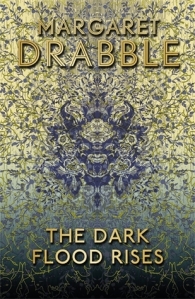 The “dark flood” is D.H. Lawrence’s metaphor for death, and here it corresponds to busy seventy-something Fran’s obsession with last words, obituaries and the search for the good death as many of her friends and acquaintances succumb – but also to literal flooding in the west of England and (dubious, this) to mass immigration of Asians and Africans into Europe. This is my favorite of the five Drabble books that I’ve read – it’s closest in style and tone to her sister A.S. Byatt as well as to Tessa Hadley, and the themes of old age and life’s randomness are strong – even though there seem to be too many characters and the Canary Islands subplot mostly feels like an unnecessary distraction. (Public library)
Hogfather, Terry Pratchett
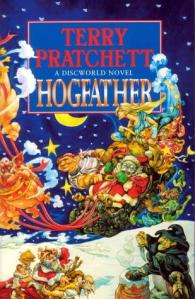 In Discworld belief causes imagined beings to exist, so when a devious plot to control children’s minds results in a dearth of belief in the Hogfather, the Fat Man temporarily disappears and Death has to fill in for him on this Hogswatch night. I laughed aloud a few times while reading this clever Christmas parody, but I had a bit of trouble following the plot and grasping who all the characters were given that this was my first Discworld book; in general I’d say that Pratchett is another example of British humor that I don’t entirely appreciate (along with Monty Python and Douglas Adams) – he’s my husband’s favorite, but I doubt I’ll try another of his books. (Own copy)
Love of Country: A Hebridean Journey, Madeleine Bunting
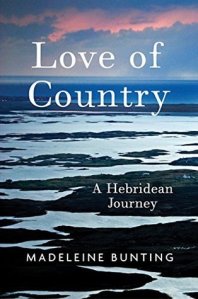 In a reprise of childhood holidays that inevitably headed northwest, Bunting takes a series of journeys around the Hebrides and weaves together her contemporary travels with the religion, folklore and history of this Scottish island chain, an often sad litany of the Gaels’ poverty and displacement that culminated with the brutal Clearances. Rather than giving an exhaustive survey, she chooses seven islands to focus on and tells stories of unexpected connections – Orwell’s stay on Jura, Lord Leverhulme’s (he of Port Sunlight and Unilever) purchase of Lewis, and Bonnie Prince Charlie’s landing on Eriskay – as she asks how geography influences history and what it truly means to belong to a place. (Public library)
Cobwebs and Cream Teas: A Year in the Life of a National Trust House, Mary Mackie
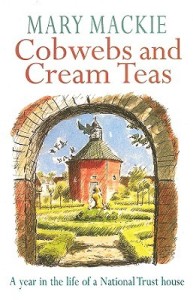 Mackie’s husband was Houseman and then Administrator at Felbrigg Hall in Norfolk in the 1980s – live-in roles that demanded a wide range of skills and much more commitment than the usual 9 to 5 (when he borrowed a pedometer he learned that he walked 15 miles in the average day, without leaving the house!). Her memoir of their first year at Felbrigg proceeds chronologically, from the intense cleaning and renovations of the winter closed season through to the following Christmas’ festivities, and takes in along the way plenty of mishaps and visitor oddities. It will delight anyone who’d like a behind-the-scenes look at the life of a historic home. (Own copy)
The Bridge Ladies: A Memoir, Betsy Lerner
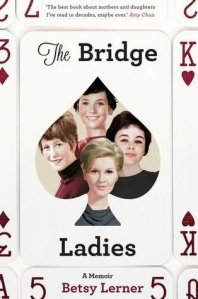 When life unexpectedly took the middle-aged Lerner back to her hometown of New Haven, Connecticut, she spent several years sitting in on her mother’s weekly bridge games to learn more about these five Jewish octogenarians who have been friends for 50 years and despite their old-fashioned reserve have seen each other through the loss of careers, health, husbands and children. Although Lerner also took bridge lessons herself, this is less about the game and more about her ever-testy relationship with her mother (starting with her rebellious teenage years), the ageing process, and the ways that women of different generations relate to their family and friends. It wouldn’t be exaggerating to say that every mother and daughter should read this; I plan to shove it in my mother’s and sister’s hands the next time I’m in the States. (Own copy)
Waiting on the Word, Malcolm Guite
 Guite chooses well-known poems (by Christina Rossetti, John Donne, Alfred Lord Tennyson, Samuel Taylor Coleridge et al.) as well as more obscure contemporary ones as daily devotional reading between the start of Advent and Epiphany; I especially liked his sonnet sequence in response to the seven “O Antiphons.” His commentary is learned and insightful, and even if at times I thought he goes into too much in-depth analysis rather than letting the poems speak for themselves, this remains a very good companion to the Christmas season for any poetry lover. (E-book from NetGalley)
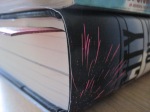 I started too many books over Christmas and have sort of put six of them on hold – including Titus Groan, which I’m thinking of quitting (it takes over 50 pages for one servant to tell another that the master has had a son?!), and City on Fire, which is wonderful but dispiritingly long: even after two good sessions with it in the days after Christmas, I’ve barely made a dent.
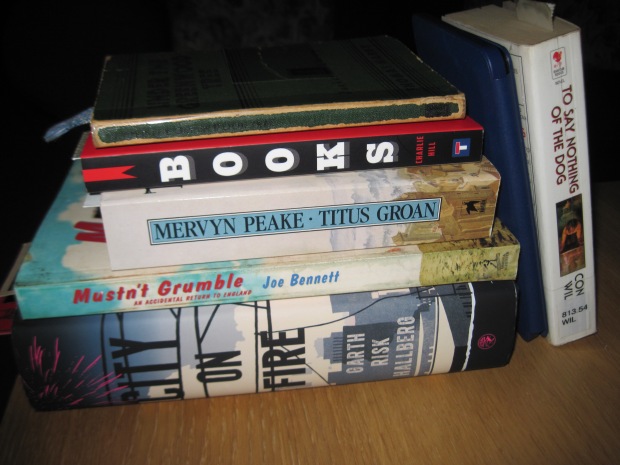
Stack on left = on hold (the book on top is Under the Greenwood Tree); standing up at right = books I’m actually reading.
However, the three books that I am actively reading I’m loving: To Say Nothing of the Dog by Connie Willis is an uproarious blend of time travel science fiction and Victorian pastiche (university library), Pachinko by Min Jin Lee is a compulsive historical saga set in Korea (ARC from NetGalley), and the memoir Birds Art Life by Kyo Maclear has been compared to H Is for Hawk in the way she turns to birdwatching to deal with depression (e-book from Edelweiss). I also will be unlikely to resist my e-galley of the latest Anne Lamott book, Hallelujah Anyway (forthcoming in April, ARC from Edelweiss), for much longer.



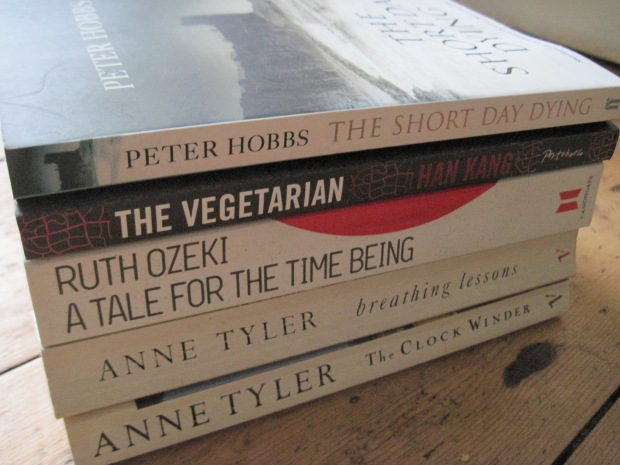
Meanwhile, in post-holiday charity shopping I scored six books for £1.90: one’s been tucked away as a present for later in the year; the Ozeki I’ve already read, but it’s a favorite so I’m glad to own it; and the rest are new to me. I look forward to trying Han Kang; Anne Tyler is a reliable choice for a cozy read; and the Hobbs sounds like a wonderful Victorian-set novel.
All in all, I seem to be starting my year in books as I mean to go on: reading a ton; making sure I review most or all of the books, even if I write just a few sentences; maintaining a balance between my own books, library books, and recent or advance NetGalley/Edelweiss reads; and failing to restrain myself from buying more.
Now if I could just work on my general attitude…
How’s the reading year starting off for you?
The Best Fiction of 2016: My Top 15
You might be surprised to hear that I received ‘only’ eight books for Christmas. (And a very fetching owl bookmark.) Here they are:

As I did last year, I’ve come up with my top 15 fiction books of the year (the three translated works first appeared in English in 2016) and even attempted to rank them. Many of these books have already featured on the blog in some way over the course of the year. To keep it simple for myself as well as for all of you who are figuring out whether you’re interested in these books or not, I’m limiting myself to two sentences per title: the first is a potted summary; the second tells you why you should read it. I also link to any full reviews.
Without further ado, let the countdown begin!
 Your Heart Is a Muscle the Size of a Fist by Sunil Yapa: A hard-hitting novel with an unforgettably resonant title, this is set at the 1999 Seattle WTO protest: Yapa explores the motivations and backstories of activists, police officers, and delegates as the day deteriorates into violence. This fine debut is about cultivating the natural compassion in your heart even while under the threat of the fist.
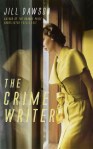 The Crime Writer by Jill Dawson: Beyond the barest biographical facts, Dawson has imagined the plot based on Patricia Highsmith’s own preoccupations: fear of a stalker, irksome poison-pen letters, imagining what it would be like to commit murder … and snails. You’re never quite sure as you’re reading what is actually happening in the world of the novel and what only occurs in Highsmith’s imagination, making this one of the most gripping, compulsive books I encountered this year.
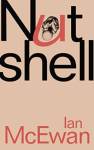 Nutshell by Ian McEwan: Within the first few pages, I was captivated and convinced by the voice of this contemporary, in utero Hamlet. His captive state pairs perfectly with Hamlet’s existential despair, but also makes him (and us as readers) part of the conspiracy: even as he wants justice for his father, he has to hope his mother and uncle will get away with their crime; his whole future depends on it.
 The Longest Night by Andria Williams: This absorbing work of historical fiction combines a remote setting, the threat of nuclear fallout, and a marriage strained to the breaking point in a convincing early 1960s atmosphere. A great debut and an author I’d like to hear more from.
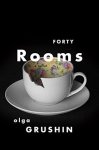 Forty Rooms by Olga Grushin: Each of us is said to occupy 40 rooms in our lives; this novel in 40 vignettes, one per room, tells the life story of a Russian immigrant to America who dreams of becoming a poet but ends up a suburban housewife and mother of six. I feel this book will resonate with women of every age, prompting them to question the path they’ve taken, the passions they’ve left unexplored, and whether it’s too late to change.
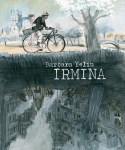 Irmina by Barbara Yelin: After her grandmother’s death Yelin, a Munich-based artist, found a box of diaries and letters that told the story of a budding love affair that was not to be and charted a young woman’s gradual capitulation to Nazi ideology. For the out-of-the-ordinary window onto Third Reich history and the excellent illustrations, I highly recommend this to graphic novel lovers and newbies alike.
 The Wonder by Emma Donoghue: In the 1850s a nurse investigates the case of an Irish girl surviving without food for months: miracle or hoax? Donoghue writes convincing and vivid historical fiction, peppering the text with small details about everything from literature to technology and setting up a particularly effective contrast between medicine and superstition.
 The Summer Guest by Alison Anderson: The kernel of the novel is a true story: for two summers in the late 1880s, Chekhov (known here as Anton Pavlovich) stayed at the Lintvaryovs’ guest house in Luka, Ukraine; one strand of the narration is a journal kept during those years by the family’s eldest daughter, who’s dying of a brain tumor. An elegantly plotted story about writing, translation, illness, and making the most of life.
 Quiet Flows the Una by Faruk Šehić: This autobiographical novel by a Bosnian poet and former soldier is full of poetic language and nature imagery. The lyrical writing about his beloved river provides a perfect counterpoint to the horror and absurdity of war.
 Three-Martini Lunch by Suzanne Rindell: Rindell brings the late 1950s, specifically the bustling, cutthroat New York City publishing world, to life through the connections between three young people who collide over a debated manuscript. It’s an expert evocation of Beat culture and post-war paranoia over communism and homosexuality.
 Golden Hill by Francis Spufford: The novel opens suddenly as twenty-four-year-old Richard Smith arrives from London with a promissory note for £1000; before he can finally get his money, he’ll fall in and out of love, fight a duel, and be arrested twice – all within the space of two months. Bawdy, witty, vivid historical fiction; simply brilliant.
 Why We Came to the City by Kristopher Jansma: Five university friends strive to make their lives count against the indifferent backdrop of recession-era New York City. You’ll see yourself in one or more of the characters, and the rest you’ll greet as if they were your own friends and makeshift family.
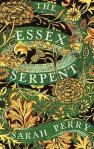 The Essex Serpent by Sarah Perry: The Essex Serpent was a real-life legend from the latter half of the seventeenth century, but Perry’s second novel has fear of the sea creature re-infecting Aldwinter, her invented Essex village, in the 1890s. This exquisite work of historical fiction explores the gaps – narrower than one might think – between science and superstition and between friendship and romantic love.
 The Tobacconist by Robert Seethaler: Seventeen-year-old Franz Huchel’s life changes for good when in 1937 his mother sends him away from his quiet lakeside village to work for her old friend Otto Trsnyek, a Vienna tobacconist. This novel is so many things: a coming-of-age story, a bittersweet romance, an out-of-the-ordinary World War II/Holocaust precursor, and a perennially relevant reminder of the importance of finding the inner courage to stand up to oppressive systems.
 Sweetbitter by Stephanie Danler: The restaurant where twenty-two-year-old Tess works is a claustrophobic world unto itself, like a theatre set where the food is high art and the staff interactions are pure drama. Everything about this novel is utterly assured: the narration, the characterization, the prose style, the plot, the timing; it captures the intensity and idealism of youth yet injects a hint of nostalgia.
& A poetry selection:
 Still the Animals Enter by Jane Hilberry: A rich, strange, gently erotic collection featuring diverse styles and blurring the lines between child and adult, human and animal, life and death through the language of metamorphosis. The message is that we are part of a shared life beyond the individual family or even the human species; we are all connected.
What are the best novels you read this year? Any new favorite books or authors?
I’ll be back tomorrow with the best nonfiction books I read this year.
Books in Brief: Five I Loved Recently
Novels about Patricia Highsmith and a prison production of The Tempest; a true-life account of opening a secondhand bookstore; a faux memoir setting ancestors’ memories in the context of twentieth-century history; and an exposé of the happiness movement in America: these five very different books are all 4-star reads I can highly recommend.
The Crime Writer
By Jill Dawson
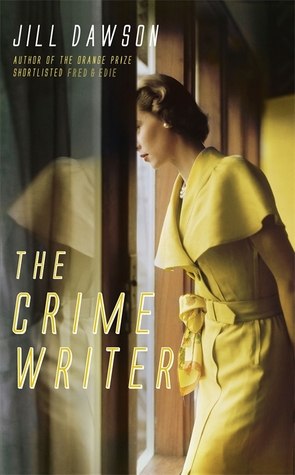 Patricia Highsmith hated the term “crime writer”; she preferred to speak of her work as “suspense novels,” animated by the threat of danger. Dawson’s terrific pastiche is set in the early 1960s, when the nomadic Highsmith was living in a remote cottage in Suffolk, England. Beyond the barest biographical facts, though, Dawson has imagined the plot based on Highsmith’s own preoccupations: fear of a stalker, irksome poison-pen letters, imagining what it would be like to commit murder … and snails. In a combination of third- and first-person narration, she shows “Pat” succumbing to alcoholism and paranoia as she carries on affairs with Sam, a married woman, and Ginny, a young journalist who’s obsessed with her. You’re never quite sure as you’re reading what is actually happening in the world of the novel and what only occurs in Highsmith’s imagination; I’m sure that’s deliberate. This counts as one of the most gripping, compulsive books I’ve encountered this year.
The Little Bookstore of Big Stone Gap
By Wendy Welch
 Everyone told Wendy Welch and her husband that they were crazy when they decided to open a used bookstore in a small Appalachian Coalfields town in the middle of a recession. They lived above the shop and initially stocked it with their own library plus books picked up cheap at yard sales – though Welch later learned to be much more choosy about what they added to their inventory and to tailor their selections to the tastes of country readers. Essentially, they were making it all up as they went along, but eight years later they’re still a community fixture in Big Stone Gap, Virginia. (I’d love to visit someday.) For the most part that’s because they branched out to fill other roles: hosting cultural events, murder mystery evenings, a writing group, a crafting circle, and regular Quaker meetings. I appreciated the details about the nitty-gritty of running a bookstore (like a chapter on pricing) more than the customer interactions. A warm and fuzzy book-lover’s delight.
Hag-Seed: The Tempest Retold
By Margaret Atwood
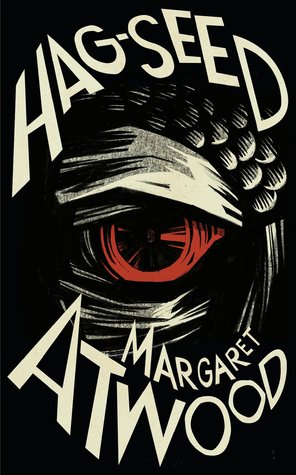 Margaret Atwood looks more like a good witch every year, and here she works her magic on The Tempest to produce the most satisfying volume of the Hogarth Shakespeare series yet. There’s a really clever play-within-the-play-within-the-play thing going on, and themes of imprisonment and performance resonate in multiple ways. It’s fun to see the disgraced Felix’s second act as a director of inmate plays at Fletcher Correctional – “I don’t care why you’re in here or what they say you’ve done: for this course the past is prologue.” Part V gets a little tedious/didactic as the cast hash out the characters’ afterlives, and at times (mainly the raps) you’re painfully aware that this is an old white lady trying to approximate how seasoned criminals might speak, but in general I thoroughly enjoyed this. Even though you see behind the scenes (e.g. my favorite chapter was about Felix wandering the streets of Toronto to buy props and costumes), you still get caught up in the magic. (See also Carolyn’s wonderful review at Rosemary and Reading Glasses.)
The Pursuit of Happiness: Why are we driving ourselves crazy and how can we stop?
By Ruth Whippman
 I call this niche genre anti-self-help. (Two other great examples are Smile or Die by Barbara Ehrenreich and Promise Land by Jessica Lamb-Shapiro.) Whippman has a particularly interesting perspective as a British Jew who moved to California for her husband’s work. With sharp humor and natural British cynicism, she investigates various manifestations of the American obsession with happiness, including the cult-like Landmark Forum, Zappos shoes HQ, Facebook’s encouragement of shallow social interaction, and the positive psychology movement. I especially liked her visit to Mormons in Salt Lake City (the nation’s happiest group, it seems, but also the most highly medicated against depression), but the funniest chapter is on happiness-focused parenting. The basic message is that the happiness movement went wrong by making it a matter of personal responsibility, of mental and spiritual triumph over circumstances. It gives no easy answers, but it’s a very enjoyable book.
Moonglow
By Michael Chabon
 Chabon’s seventh novel was inspired by his maternal grandfather’s deathbed confessions in 1989—or was it? A tongue-in-cheek author’s note refers to this as a “memoir,” and it’s narrated by “Mike Chabon,” but he and “Grandfather” (never named) are characters here in the same way that Jonathan Safran Foer and his ancestors are in Everything Is Illuminated. Space travel and explosives are Grandfather’s lifelong obsessions, but the chronology moves back and forth seemingly haphazardly, as if we are hearing this story exactly as it emerged. Chabon offers a rich meditation on how Jewishness and family secrets influence the creation of identity. With a seam of dark humor that brings to mind Jonas Jonasson’s The Hundred-Year-Old Man…, Moonglow inventively fuses family history and fiction but leaves cracks for happiness and meaning to shine through. (See my full review on the Pittsburgh Post-Gazette website.)
Have you read any of these? Which one takes your fancy?
A CanLit Classic: The Stone Angel by Margaret Laurence
Hagar Shipley has earned the right to be curmudgeonly. Now 90 years old, she has already lived with her son Marvin and his wife Doris for 17 years when they spring a surprise on her: they want to sell the house and move somewhere smaller, and they mean to send her to Silver Threads nursing home. What with a recent fall, gallbladder issues and pesky constipation, the old woman’s health is getting to be more than Doris can handle at home. But don’t expect Hagar to give in without a fight.
This is one of those novels where the first-person voice draws you in immediately. “I am rampant with memory,” Hagar says, and as the book proceeds she keeps lapsing back, seemingly involuntarily, into her past. While in a doctor’s waiting room or in the derelict house by the coast where she runs away to escape the threat of the nursing home, she loses the drift of the present and in her growing confusion relives episodes from earlier life.
Many of these are melancholy: her mother’s early death and her difficult relationship with her father, an arrogant, self-made shopkeeper (“Both of us were blunt as bludgeons. We hadn’t a scrap of subtlety between us”); her volatile marriage to Bram, a common fellow considered unworthy of her (“Twenty-four years, in all, were scoured away like sand-banks under the spate of our wrangle and bicker”); and the untimely deaths of both a brother and a son.

The stone angel of the title is the monument on Hagar’s mother’s grave, but it is also an almost oxymoronic description for our protagonist herself. “The night my son died I was transformed to stone and never wept at all,” she remembers. Hagar is harsh-tongued and bitter, always looking for someone or something to blame. Yet she recognizes these tendencies in herself and sometimes overcomes her stubbornness enough to backtrack and apologize. What wisdom she has is hard won through suffering, but she’s still standing. “She’s a holy terror,” son Marvin describes her later in the novel: another paradox.
Originally from 1964, The Stone Angel was reprinted in the UK in September as part of the Apollo Classics series. It’s the first in Laurence’s Manawaka sequence of five novels, set in a fictional town based on her hometown in Manitoba, Canada. It could be argued that this novel paved the way for any number of recent books narrated by or about the elderly and telling of their surprise late-life adventures: everything from Jonas Jonasson’s The Hundred-Year-Old Man Who Climbed Out of the Window and Disappeared to Emma Hooper’s Etta and Otto and Russell and James. I was also reminded of Jane Smiley’s Midwest novels, and wondered if Carol Shields’s The Stone Diaries was possibly intended as an homage.
I loved spending time in Hagar’s company, whether she’s marveling at how age has crept up on her—
I feel that if I were to walk carefully up to my room, approach the mirror softly, take it by surprise, I would see there again that Hagar with the shining hair, the dark-maned colt off to the training ring
trying to picture life going on without her—
Hard to imagine a world and I not in it. Will everything stop when I do? Stupid old baggage, who do you think you are? Hagar. There’s no one like me in this world.
or simply describing a spring day—
The poplar bluffs had budded with sticky leaves, and the frogs had come back to the sloughs and sang like choruses of angels with sore throats, and the marsh marigolds were opening like shavings of sun on the brown river where the tadpoles danced and the blood-suckers lay slimy and low, waiting for the boys’ feet.
It was a delight to experience this classic of Canadian literature.
(The Apollo imprint will be publishing the second Manawaka book, A Jest of God, in March.)
With thanks to Blake Brooks at Head of Zeus/Apollo for the free copy for review.
My rating: 
More Seasonal Reading
I like this reading with the seasons lark. It’s a shame that my library hold on Ali Smith’s Autumn didn’t come in until well after it turned to winter here in England, but I was intrigued by the sound of her post-Brexit seasonal quartet. Then, as if one winter anthology wasn’t enough, I tried another – this time a broader range of literature, history and travel writing.
Autumn by Ali Smith
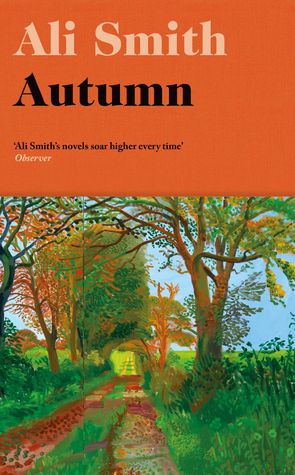 Smith is attempting a sort of state-of-the-nation novel in four parts. Her two main characters are Daniel Gluck, a centenarian dying at a care home, and his former next-door neighbor, Elisabeth Demand, in her early thirties and still figuring out her path in life. The present world Elisabeth and her mother navigate is a true-to-life post-Brexit bureaucratic nightmare where people are building walls and hurling racist epithets – “news right now is like a flock of speeded-up sheep running off the side of a cliff.” Mostly the book is composed of flashbacks to wordplay-filled conversations between Elisabeth and Daniel when he used to babysit for her, as well as dreams/hallucinations Daniel is having on his deathbed. But there’s also a lot of seemingly irrelevant material about pop artist Pauline Boty and Christine Keeler.
This was most likely written very quickly in response to current events, and while some of Smith’s strengths benefit from immediacy – the nearly stream-of-consciousness style (no speech marks) and the jokey dialogue – I think I would have preferred a more circumspect, compressed narrative. In places this was too repetitive, and the seasonal theme felt neither here nor there. I’ll listen out for what the other books are like, but doubt I’ll bother reading them. Aspects of this are very similar to Number 11 by Jonathan Coe (the state-of-Britain remit, even the single mother hoping to appear on a reality show), but I much preferred his take. [Gorgeous cover, though – David Hockney’s Early November Tunnel (2006).]
My rating: 
[For more positive reviews, see those by Eric of Lonesome Reader, and Lucy of Hard Book Habit.]
Winter: A Book for the Season, edited by Felicity Trotman
 This seasonal anthology contains a nice mixture of poetry, nature and travel pieces, and excerpts from longer works of fiction. Some favorite pieces were W.H. Hudson on the town birds of Bath in the late nineteenth century, Mark Twain on his determination to keep wearing his trademark white through the winter, a Hans Christian Andersen dialogue between a snowman who longs to be by the stove and the yard-dog that warns him away, and Richard Jefferies on those who go out to work on a winter morning. But I enjoyed the poetry the most. Trotman includes a wide range of celebrated poets, from Shakespeare and Keats to John Clare and Wordsworth. I particularly liked a more recent contribution from Carolyn King, “First Snow,” in which a cat imagines that a giant wallpaper stripper has produced the flakes.
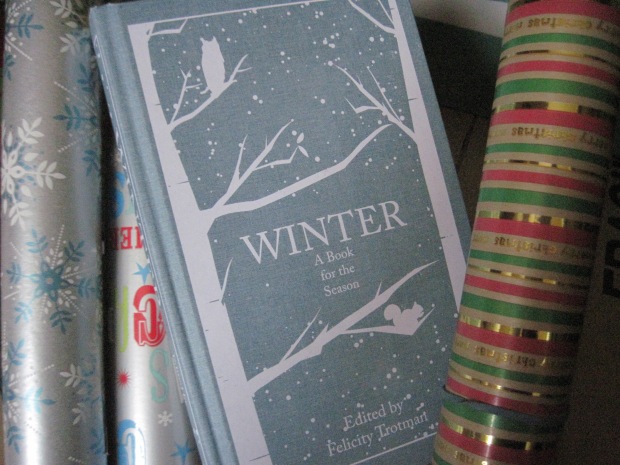
All told, though, there are too many seventeenth-century and older pieces with archaic spellings, and a number of the history and travel extracts, in particular, feel overlong – with nearly 40 pages in total from Ernest Shackleton’s South. Especially given the thin pages and small type, this represents a tediously large chunk of the book. Shorter pieces increase the variety in an anthology and mean the book lends itself to being picked up and read a few stories at a time. This is one to keep on the coffee table each winter and dip into over several years rather than read straight through. (See my full review at The Bookbag.)
My rating: 
As it happens, I’ve now read five books titled Winter: besides the Wildlife Trusts anthology and the novel about Thomas Hardy, both of which I’ve already reviewed here, there’s also Rick Bass’s wonderful memoir of his first year in Montana and Adam Gopnik’s wide-ranging book about the season. But beyond those with the simple one-word title, there are a whole host of titles on my TBR containing the word “Winter”. Here’s the whole list!
Have you read any “Autumn” or “Winter” books this year?
Novellas in November
Taking a lead from Laura over at Reading in Bed, I’ve trawled my shelves and my current library pile for some blissfully short books. For this challenge I limited myself to books with fewer than 150 pages and came up with four fiction books and two ‘nonfiction novellas’.
The Library of Unrequited Love by Sophie Divry
[92 pages]
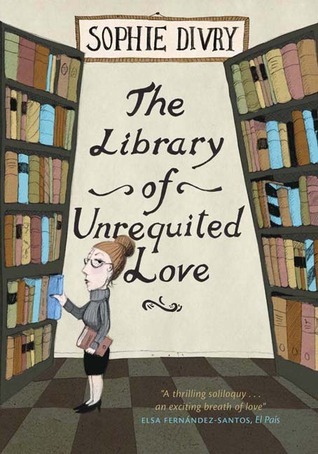 This one-sitting read is a monologue by an embittered librarian who arrives one morning to discover a patron has been locked into the basement overnight—a captive audience. Responsible for Geography, she hopes for a promotion to History, her favorite subject. Alas, no one seems to appreciate this library as a bastion of learning anymore; they only come for DVDs and a place to keep warm. That is, except for Martin, a young PhD researcher who’s caught her eye. But he doesn’t even seem to notice she exists. In one uninterrupted paragraph, this celebrates all that books do for us but suggests that they still can’t fix a broken heart.
My verdict: There are lots of great one-liners about the value of books (“You’re never alone if you live surrounded by books”), but overall it’s a somewhat aimless little experiment and not particularly well translated.
The All of It by Jeannette Haien
[145 pages]
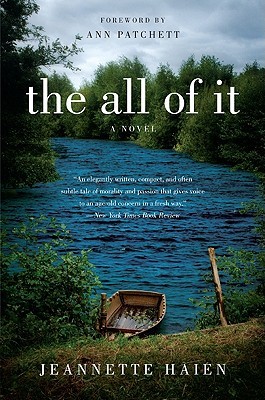 When this won the Sue Kaufman Prize for First Fiction in 1987, the author was in her sixties. It’s since been championed by Ann Patchett, who contributed a Foreword to this 2011 edition. Father Declan de Loughry, fishing for salmon, reflects on the recent death of parishioner Kevin Dennehy. Before he died, Kevin admitted that he and Enda were never properly married. Yet Enda begs the priest to approve a death notice calling Kevin her “beloved husband,” promising she’ll then explain “the all of it” – the very good reason they never married. As she tells her full story, which occupies the bulk of the novella, Father Declan tries to strike a balance between the moral high ground and human compassion.
My verdict: Enda’s initial confession on page 27 is explosive, but the rest of this quiet book doesn’t ever live up to it. I was reminded of Mary Costello’s Academy Street, a more successful short book about an Irish life.
Favorite passage: “One thing I’ve learned, Father—that in this life it’s best to keep the then and the now and the what’s-to-be as close together in your thoughts as you can. It’s when you let gaps creep in, when you separate out the intervals and dwell on them, that you can’t bear the sorrow.”
Thirteen Ways of Looking by Colum McCann
[143 pages]
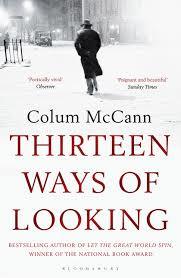 This starts off as the simple story of J. Mendelssohn, an octogenarian who wakes up on a snowy morning in his New York City apartment, contemplating his past – Lithuanian/Polish ancestry, work as a judge and marriage to Eileen, whom he met as a boy in Dublin – and planning to meet his son at a restaurant for lunch. But all of a sudden it turns into a murder mystery on page 24: “Later the homicide detectives will be surprised…” In 13 sections headed by epigraphs from the Wallace Stevens poem “Thirteen Ways of Looking at a Blackbird,” McCann flits through Mendelssohn’s thoughts and flips between the events preceding and immediately following the murder. A late interrogation scene is particularly strong – “unlike our poetry, we like our murders to be fully solved.”
My verdict: This is the first I’ve read from McCann, and it’s terrific. He stuffs so much plot and characterization into not many pages. Mendelssohn’s thought life is rich with allusions and wordplay. I was particularly intrigued to read about the autobiographical overlap in the Author’s Note. I haven’t yet read the short stories included in the volume, but for the novella on its own it’s  .
.
As We Are Now by May Sarton
[134 pages]
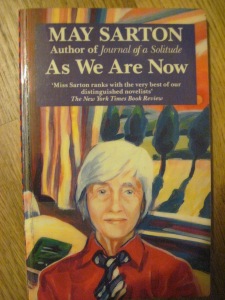 On the surface this is similar to a novel I reviewed earlier in the month, The Secret Diary of Hendrik Groen, 83¼ Years Old. But where spunky Hendrik determines to outwit his care home’s sullen staff, Sarton’s narrator, seventy-six-year-old Caroline Spencer, has given in. A retired high school math teacher, she’s landed in a New England old folks’ home because during her recovery from a heart attack she failed to get along with her brother’s younger wife. She finds kindred spirits in Standish Flint, a tough old farmer, and Reverend Thornhill, but her growing confusion and the home’s pretty appalling conditions drive her to despair.
My verdict: This is enjoyable for the unreliable narrator and the twist ending, but overall it struck me as rather melodramatic. However, I appreciated a lot of Caro’s sentiments.
Favorite passages: “Am I senile, I wonder? The trouble is that old age is not interesting until one gets there, a foreign country with an unknown language to the young, and even to the middle-aged. I wish now that I had found out more about it.” & “And what is left of you? A lapis lazuli pin, a faded rose petal, once pink, slipped into the pages of this copybook.”
And two short works of nonfiction:
Excerpts from a Family Medical Dictionary by Rebecca Brown
[113 pages]
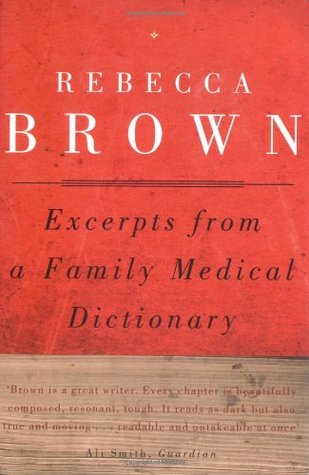 Brown is a novelist from Seattle. This is an account of her mother’s death from what sounds like stomach cancer. The disease progressed quickly and her mother died at home, under hospice care, in New Mexico in 1997. As the title suggests, the brief thematic chapters are arranged around vocabulary words like “anemia” and “metastasis.” My favorite chapters were about washing: her mother’s habit of reading while taking long baths, and the ways Brown and her sister tried to care for their mother’s disintegrating body, including a plan to prepare the corpse themselves. Clinical descriptions of vomiting alternate with magical thinking to accompany her mother’s hallucinations: “You’re packed, Mom, but all of us aren’t going, just you. But you’ve got everything you need.”
My verdict: Brown covers a lot of emotional ground in a very few pages, but I prefer my medical/bereavement memoirs to have more of a narrative and more detail than “when she died it was not peacefully or easy, it was hard.”
Ruined by Reading: A Life in Books by Lynne Sharon Schwartz
[119 pages]
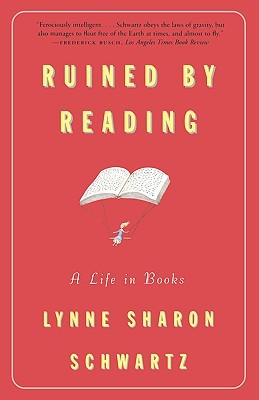 This 1996 memoir was sparked by reading a quote from a Chinese Buddhist in a New York Times article: he suggested that reading is dangerous as it imposes others’ ideas on you and doesn’t allow you to use your own mind freely. Schwartz, of course, begs to differ. As a novelist, reading has been her lifeline. She looks back at her childhood reading and her pretentious college student opinions on Franz Kafka and Henry James, and explains that she lets serendipity guide her reading choices nowadays, rather than a strict TBR list: “reading at random – letting desire lead – feels like the most faithful kind.”
My verdict: It’s a bibliomemoir; I should have loved it. Instead I thought it unstructured and thin. There are some great lines dotted through, but I wasn’t very interested in the examples she focuses on. Five pages about a children’s book by Eleanor Farjeon? Yawn! 
Favorite passages: “Like the bodies of dancers or athletes, the minds of readers are genuinely happy and self-possessed only when cavorting around, doing their stretches and leaps and jumps to the tune of words.” & “How are we to spend our lives, anyway? That is the real question. We read to seek the answer, and the search itself – the task of a lifetime – becomes the answer.”
 Bookish Beck = Rebecca Foster. American transplant to England. Freelance proofreader and book reviewer.
 Bookish Beck