Novellas in November 2022: That’s a Wrap!
This was Cathy’s and my third year co-hosting Novellas in November. We’ve done our best keeping up with your posts, which Cathy has collected as links on her master post.

The challenge seemed doomed at points, what with my bereavement and Cathy catching Covid a second time, but we persisted! At last count, we had 42 bloggers who took part this year, contributing just over 150 posts covering some 170+ books.
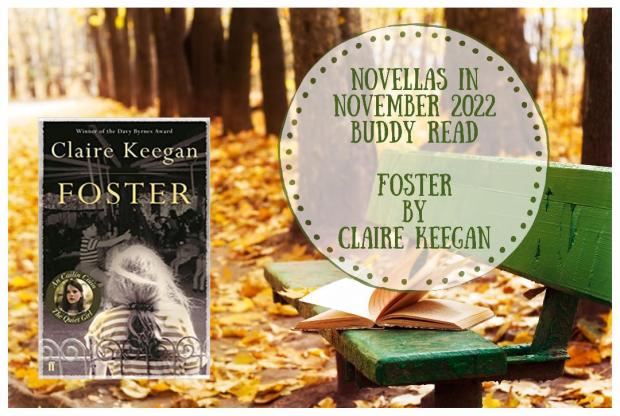
Ten of us read our chosen buddy read, Foster by Claire Keegan (with four bloggers reading Keegan’s Small Things Like These also/instead). I’ve gathered the review links here.
Our next most popular novella was a recent release, Maureen [Fry and the Angel of the North] by Rachel Joyce, which was reviewed four times. Other books highlighted more than once were Follow the Rabbit-Proof Fence, Mrs Caliban, The Swimmers, The Time Machine, Winter in Sokcho, Ti Amo, Body Kintsugi, Notes on Grief, and Another Brooklyn.
Thank you all for being so engaged with #NovNov22! We’ll see you back here next year.
Novellas in November: A Change of Plans
I will be leaving Novellas in November in Cathy’s very capable hands this year. From tomorrow there will be a pinned post on her blog, 746 Books, where you can leave your links throughout the month.

We lost my mother yesterday evening, suddenly, and I’ll be flying out to the States in the next couple of days to help with arrangements and attend the funeral.
I happen to have read a few novellas already so will schedule in reviews of those, but won’t be able to read or write as much as I’d like. I might not manage to reply to comments or keep up with social media and your own blogs – forgive me.
I’ll be taking plenty of books with me, including lots of novellas. Perfect for travel days and moments stolen away from tedious admin tasks. And (books in general, of course) for distraction, comfort and good cheer. One thing I was sure to mention in the obituary I wrote this morning was that my mother passed on to me and to her many students her great love of reading.
Planning My Reading Stacks for Novellas in November (#NovNov22)
Just a couple of weeks until Novellas in November (#NovNov22) begins! I gathered up all of my potential reads for a photo shoot, including review copies, library loans, recent birthday gifts and books that have been languishing on my shelves for ages.
Week One: Short Classics (= pre-1980)

Week Two: Novellas in Translation
 I always struggle with this prompt the most. (The Sorrows of Young Werther by Johann Wolfgang Goethe would also be a token contribution to German Literature Month.)
Week Three: Short Nonfiction
 This is probably (not so secretly) my favourite week of the month. Others may find it strange to consider nonfiction during a novellas month, but this challenge is really about celebrating the art of the short book in all its forms, and I love a work that can contribute something significant on a topic, or illuminate a portion of an author’s life, in under 200 pages.
Week Four: Contemporary Novellas (= post-1980)

I have a few other options on my e-readers as well, such as Marigold and Rose by Louise Glück, Foster by Claire Keegan (our buddy read for the month), and The Hero of This Book by Elizabeth McCracken.
I read 29 novellas last November; why not aim for one a day this time?! November is also Margaret Atwood Reading Month, so I’ve lined up one of her fairly recent poetry collections that I picked up from a Little Free Library. Apart from that, I do have a few review books I need to get to for Shelf Awareness, so it’ll be a jam-packed month.
Kate has already come up with her list of possible titles. Look out for Cathy’s today, too. If you’re struggling for ideas, here’s a long list of suitable authors and publishers I put together last year, or you might like to browse through the reviews from 2021.
Now to get reading!!
Do you have any novellas in mind to read next month?
Which options from my stacks should I prioritize?
Six Degrees of Separation: From Notes on a Scandal to Belzhar
This month we begin with Notes on a Scandal by Zoë Heller. I remember reading it at around the time the excellent film came out; I bet I’d get more out of it on a reread. (See Kate’s opening post.)
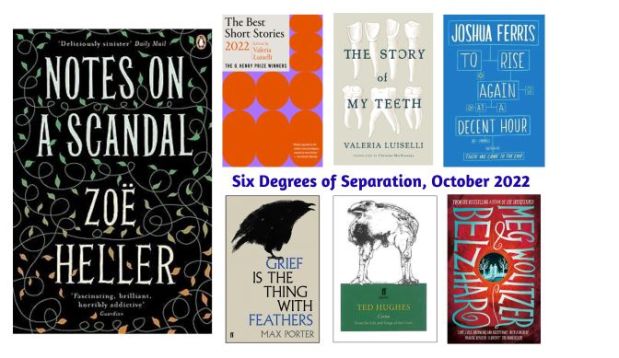
 #1 Heller’s novel came to mind as I was reading The Best Short Stories 2022: The O. Henry Prize Winners, edited by Valeria Luiselli. In the story “Clean Teen” by Francisco González, a junior high student who lives with his grandmother in Arizona has an affair with his English teacher, who’s unhappily married to a cop. These situations never end well, do they?
 #2 I’ve not read anything by Luiselli, but the book of hers that most intrigues me is The Story of My Teeth.
 #3 Speaking of teeth, Joshua Ferris’s To Rise Again at a Decent Hour is a comic novel about a dentist who falls victim to online identity theft.
 #4 That novel won Ferris a Dylan Thomas Prize, as did Grief Is the Thing with Feathers for Max Porter.
 #5 Porter’s creative response to bereavement draws on various forebears, including the poetry collection Crow by Ted Hughes.
 #6 Most of you will know that Hughes was married to Sylvia Plath, author of The Bell Jar. I’m using that as my half-step to get to one of the books I’m currently reading, Meg Wolitzer’s Belzhar. We’re reading this YA novel for book club this week as Wolitzer is a reliable author for us.
The premise: troubled teens are sent to a Vermont boarding school. Jam is one of five chosen for a special literature seminar that each year focuses on just one author. This year it’s Plath. When writing in their journals, the teens find that they are transported back to the scene of their trauma and can be with their lost loved ones, or be their undamaged selves, once again. They call that magical space Belzhar. I’ll plan to review this one in full in the near future.
Where will your chain take you? Join us for #6Degrees of Separation! (Hosted on the first Saturday of each month by Kate W. of Books Are My Favourite and Best.) Next month’s starting book is the classic cookbook The Naked Chef by Jamie Oliver.
Have you read any of my selections? Tempted by any you didn’t know before?
Get Ready for Novellas in November!
Novellas: “all killer, no filler” (said Joe Hill). For the third year in a row, Cathy of 746 Books and I are co-hosting Novellas in November as a month-long challenge, with four weekly prompts we’ll take it in turns to focus on. We’re announcing early to give you plenty of time to get your stacks ready.
Here’s the schedule:
1–7 November: Short classics (Rebecca)
8–14 November: Novellas in translation (Cathy)
15–21 November: Short nonfiction (Rebecca)
22–28 November: Contemporary novellas (Cathy)
29–30 November: You might like to post a “New to my TBR” or “My NovNov Month” roundup.
(As a reminder, we suggest 150–200 pages as the upper limit for a novella, and post-1980 as a definition of “contemporary.”)
This year we have one overall buddy read. Claire Keegan has experienced a resurgence of attention thanks to the Booker Prize shortlisting of Small Things Like These – one of our most-reviewed novellas from last year. Foster is a modern Irish classic that comes in at under 90 pages, and, in an abridged version, is free to read on the New Yorker website. You can find that here. (Or whet your appetite with Cathy’s review.)
Keegan describes Foster as a “long short story” rather than a novella, but it was published as a standalone volume by Faber in 2010. A new edition will be released by Grove Press in the USA on November 1st, and the book is widely available for Kindle. It is also the source material for the recent record-breaking Irish-language film The Quiet Girl, so there are several ways for you to encounter this story.
We’re looking forward to having you join us! We will each put up a pinned post where you can leave links starting on 1 November. Keep in touch via Twitter (@bookishbeck / @cathy746books) and Instagram (@bookishbeck / @cathy_746books), and feel free to use the terrific feature images Cathy has made and our new hashtag, #NovNov22.
Six Degrees of Separation: From The Soho Leopard to The Feast
This month we begin with a wildcard selection: the book you finished with last month (or, if you didn’t do an August chain, the last book you’ve read. See Kate’s opening post.) For me that’s Ruth Padel’s poetry collection The Soho Leopard.

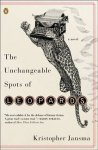 #1 Another “leopard” title I’ve read is The Unchangeable Spots of Leopards by Kristopher Jansma, a fun selection from my 20 Books of Summer in 2019. A linked short story collection with an unreliable narrator, it explores how life becomes fiction and vice versa.
 #2 The typewriter on the cover immediately made me think of Uncommon Type, the short story collection by Tom Hanks. I haven’t read this one and, if I’m honest, don’t ever plan to.
 #3 Tom Hanks features in the delightful story behind the title essay of These Precious Days by Ann Patchett: after Patchett interviewed him on his book tour, she became close with his personal assistant, Sooki Raphael, and ended up having Sooki stay at her Tennessee home during Covid lockdown while Sooki underwent cancer treatment.
 #4 That’s Sooki’s painting of Patchett’s dog Sparky on the cover. Another pet named Sparky adorns Jenny Offill’s charming children’s book about a sloth. I love finding the odd-one-out in an author’s oeuvre, and Sparky is simply darling.
 #5 Was the animal named after the personality trait/failing or the other way around? In any case, Sloth by Wendy Wasserstein is one of three books I happen to have read from the Seven Deadly Sins Series published by Oxford University Press (the others were Lust by Simon Blackburn and Gluttony by Francine Prose; all were, I’m sorry to report, just okay).
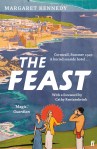 #6 The Seven Deadly Sins provide the metaphorical setup of The Feast by Margaret Kennedy, a rediscovered classic that I read on our trip to Spain in May.
Where will your chain take you? Join us for #6Degrees of Separation! (Hosted on the first Saturday of each month by Kate W. of Books Are My Favourite and Best.) Next month’s starting book is Notes on a Scandal by Zoë Heller.
Have you read any of my selections? Tempted by any you didn’t know before?
Six Degrees of Separation: From Ruth Ozeki to Ruth Padel
This month we begin with The Book of Form and Emptiness by Ruth Ozeki, which recently won the Women’s Prize for Fiction. It happens to be my least favourite of her books that I’ve read so far, but I was pleased to see her work recognised nonetheless. (See also Kate’s opening post.)

 #1 One of the peripheral characters in Ozeki’s novel is an Eastern European philosopher who goes by “The Bottleman.” I had to wonder if he was based on avant-garde Slovenian philosopher Slavoj Žižek. Back in 2010, when I was working at a university library in London and had access to nearly any book I could think of – and was still committed to trying to read the sorts of books I thought I should enjoy rather than what I actually did – I skimmed a couple of Žižek’s works, including First as Tragedy, Then as Farce (2009), which arose from 9/11 and the global financial crisis and questions whether we can ever stop history repeating itself without undermining capitalism.
 #2 In searching my archives for farces I’ve read, I came across one I took notes on but never wrote up back in 2013: Japanese by Spring by Ishmael Reed (1993), an academic comedy set at “Jack London College” in Oakland, California. The novel satirizes almost every ideology prevalent in the 1960s–80s: multiculturalism, racism, xenophobia, nationalism, feminism, affirmative action and various literary critical methods. Reed sets up exaggerated and polarized groups and opinions. (You know it’s not to be taken entirely seriously when you see character names like Chappie Puttbutt, President Stool and Professor Poop, short for Poopovich.) The college is sold off to the Japanese and Ishmael Reed himself becomes a character. There are some amusing lines but I ended up concluding that Reed wasn’t for me. If you’ve enjoyed work by Paul Beatty and Percival Everett, he might be up your street.
 #3 “Call me Ishmael” – even if, like me, you have never gotten through Moby-Dick by Herman Melville (1851), you probably know that famous opening line. I took an entire course on Nathaniel Hawthorne and Melville as an undergraduate and still didn’t manage to read the whole thing! Even my professor acknowledged that Melville could have done with a really good editor to rein in his ideas and cut out some of his digressions.
 #4 A favourite that I can recommend instead is Moby-Duck by Donovan Hohn (2011). It’s just the kind of random, wide-ranging nonfiction I love: part memoir, part travelogue, part philosophical musing on human culture and our impact on the environment. In 1992 a pallet of “Friendly Floatees” bath toys fell off a container ship in a storm in the North Pacific. Over the next two decades those thousands of plastic animals made their way around the world, informing oceanographic theory and delighting children. Hohn’s obsessive quest for the origin of the bath toys and the details of their high seas journey takes on the momentousness of his literary antecedent. He visits a Chinese factory and sees plastics being made; he volunteers on a beach-cleaning mission in Alaska. (I’d not seen the Ozeki cover that appears in Kate’s post, but how pleasing to note that it also has a rubber duck on it!)
 #5 Alongside Moby-Duck on my “uncategorizable” Goodreads shelf is The Snow Leopard by Peter Matthiessen (1978), one of my Books of Summer from 2019. A nature/travel classic that turns into something more like a spiritual memoir, it’s about a trip to Nepal in 1973, with Matthiessen joining a zoologist to study Himalayan blue sheep – and hoping to spot the elusive snow leopard. He had recently lost his partner to cancer, and relied on his Buddhist training to remind himself of tenets of acceptance and transience.
 #6 Ruth Padel is one of my favourite contemporary poets and a fixture at the New Networks for Nature conference I attend each year. She has a collection named The Soho Leopard (2004), whose title sequence is about urban foxes. The natural world and her travels are always a major element of her books. From one Ruth to another, then, by way of philosophy, farce, whaling, rubber ducks and mountain adventuring.
Where will your chain take you? Join us for #6Degrees of Separation! (Hosted on the first Saturday of each month by Kate W. of Books Are My Favourite and Best.) Next month’s starting point is a wildcard: use the book you finished with this month (or, if you haven’t done an August chain, the last book you’ve read).
Have you read any of my selections? Tempted by any you didn’t know before?
Six Degrees of Separation: From Wintering to The Summer of the Bear
This month we begin with Wintering by Katherine May. I reviewed this for the Times Literary Supplement back in early 2020 and enjoyed the blend of memoir, nature and travel writing. (See also Kate’s opening post.)

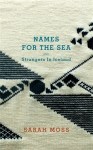 #1 May travels to Iceland, which is the location of Sarah Moss’s memoir Names for the Sea. I’ve read nine of Moss’s books and consider her one of my favourite contemporary authors. (I’m currently rereading Night Waking.)
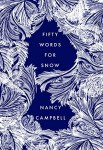 #2 Nancy Campbell’s Fifty Words for Snow shares an interest in languages and naming. I noted that the Icelandic “hundslappadrifa” refers to snowflakes as large as a dog’s paw.
 #3 In 2018–19, Campbell was the poet laureate for the Canal & River Trust. As part of her tour of the country’s waterways, she came to Newbury and wrote a poem on commission about the community gardening project I volunteer with. (Here’s her blog post about the experience.) Three Women and a Boat by Anne Youngson is about a canalboat journey.
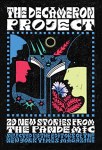 #4 Youngson’s novel was inspired by the setup of Jerome K. Jerome’s Three Men in a Boat. Another book loosely based on a classic is The Decameron Project, a set of 29 short stories ranging from realist to dystopian in their response to pandemic times.
 #5 Another project updating the classics was the Hogarth Shakespeare series. One of these books (though not my favourite) was The Gap of Time by Jeanette Winterson, her take on The Winter’s Tale.
 #6 Even if you’ve not read it (it happened to be on my undergraduate curriculum), you probably know that The Winter’s Tale famously includes the stage direction “Exit, pursued by a bear.” I’m finishing with The Summer of the Bear by Bella Pollen, one of the novels I read on my trip to the Outer Hebrides because it’s set on North Uist. I’ll review it in full soon, but for now will say that it does actually have a bear in it, and is based on a true story.
I’m pleased with myself for going from Wintering (via various other ice, snow and winter references) to a “Summer” title. We’ve crossed the hemispheres from Kate’s Australian winter to summertime here.
Where will your chain take you? Join us for #6Degrees of Separation! (Hosted on the first Saturday of each month by Kate W. of Books Are My Favourite and Best.) Next month’s starting point will be the recent winner of the Women’s Prize, The Book of Form and Emptiness by Ruth Ozeki.
Have you read any of my selections? Tempted by any you didn’t know before?
Six Degrees of Separation: From Sorrow and Bliss to Weather
This month we begin with Sorrow and Bliss by Meg Mason. (See also Kate’s opening post.) This is my personal favourite from the Women’s Prize shortlist and couldn’t be a better pick for the Six Degrees starter this month because I’ll be skimming back through the novel this weekend in advance of my book club’s discussion of it on Monday. (We’re one of this year’s six book groups shadowing the Women’s Prize through a Reading Agency initiative, so we then have to give semi-official feedback on our experience of the book by Wednesday.)

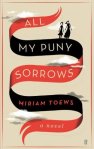 #1 Sorrow and Bliss is a terrific tragicomedy about sisterhood and mental health – as is All My Puny Sorrows by Miriam Toews, with which it shares a loaded title word as well.
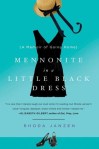 #2 Toews grew up in a Canadian Mennonite community, which leads me to my second choice, Mennonite in a Little Black Dress by Rhoda Janzen, a set of droll autobiographical essays that I read on a USA trip in 2017.
 #3 During the same trip, I read Dear American Airlines by Jonathan Miles, a witty novel about Bennie Ford’s rather miserable life, presented in the form of his longwinded complaint letter to the airline that has treated him to an unexpected overnight layover in Chicago.
 #4 Another laugh-out-loud book in the form of unlikely letters: Dear Committee Members by Julie Schumacher, in which Jason Fitger, an irascible middle-aged English professor in the Midwest, writes ambivalent letters of recommendation for students and colleagues.
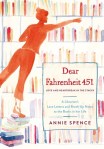 #5 One more “Dear” book of letters – I just can’t get enough of the epistolary form: Dear Fahrenheit 451 by Annie Spence. As the subtitle states, it’s a librarian’s love letters and breakup notes to books she’s adored and loathed. Casual and amusing, with good book recs.
 #6 I’ll finish with Weather by Jenny Offill, one of my favourites from 2020, which is also voiced by a librarian. Through Lizzie, Offill captures modern anxiety about Trump-era politics, the climate crisis and making meaningful use of time.
I have read all the books in this month’s chain (the links above are to my Goodreads reviews), and in a time of relentless bad news have chosen to prioritize humour and keep my descriptions short and light. These are all books that made me laugh, sometimes despite their weighty content, and half of them are built around letters. I’ve also looped from one Women’s Prize-shortlisted title to another.
Where will your chain take you? Join us for #6Degrees of Separation! (Hosted on the first Saturday of each month by Kate W. of Books Are My Favourite and Best.) Next month’s starting point will be Wintering by Katherine May – though it’s summer here, it’s winter where Kate is in Australia!
Have you read any of my selections? Tempted by any you didn’t know before?
Six Degrees of Separation: True History of the Kelly Gang to Geek Love
This month we begin with True History of the Kelly Gang by Peter Carey. (See also Kate’s opening post.) I feel like I still have an unread copy, but won’t find out now until after we move. I’ve read several of Carey’s novels; my favourite by far was Parrot and Olivier in America, a delightful picaresque set in the early 19th century.

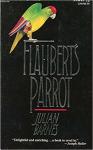 #1 Flaubert’s Parrot by Julian Barnes was one of my most-admired novels in my twenties, though I didn’t like it quite as much when I reread it in 2020. Funnily enough, his new novel has a bird in the title, too: Elizabeth Finch. I’m two-thirds through and it’s feeling like warmed-up leftovers of The Sense of an Ending with extra history and philosophy on the side.
 #2 My latest reread was Falling Angels by Tracy Chevalier, for book club. I’ve read all of her novels and always thought of this one as my favourite. A reread didn’t change that, so I rated it 5 stars. I love the neat structure that bookends the action between the death of Queen Victoria and the death of Edward VII, and the focus on funerary customs (with Highgate Cemetery a major setting) and women’s rights is right up my street.
 #3 Another novel featuring an angel that I read for a book club was The Vintner’s Luck by Elizabeth Knox. It’s set in Burgundy, France in 1808, when an angel rescues a drunken winemaker from a fall. All I can remember is that it was bizarre and pretty terrible, so I’m glad I didn’t realize it was the same author and went ahead with a read of The Absolute Book.
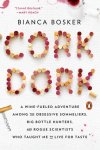 #4 The winemaking theme takes me to my next selection, Cork Dork by Bianca Bosker, which I read on a trip to the Netherlands and Belgium in 2017. Bosker, previously a technology journalist, gave herself a year and a half to learn everything she could about wine in hopes of passing the Court of Master Sommeliers exam. The result is such a fun blend of science, memoir and encounters with people who are deadly serious about wine.
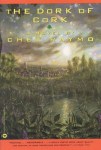 #5 I have so often heard the title The Dork of Cork by Chet Raymo, though I don’t know why because I can’t think of an acquaintance who’s actually read or reviewed it. The synopsis: “When Frank, an Irish dwarf, writes a personal memoir, he moves from dark isolation into the public eye. This luminous journey is marked by memories of his lonely childhood, secrets of his doomed young mother, and his passion for a woman who is as unreachable as the stars.” Sounds a bit like A Prayer for Owen Meany.
 #6 Another novel with a dwarf: Geek Love by Katherine Dunn, about a carnival of freaks that tours U.S. backwaters. I have meant to read this for many years and was even convinced that I owned a copy, but on my last few trips to the States I’ve not been able to find it in one of the boxes in my sister’s basement. Hmmm.
To the extent that we have ‘a song,’ “Geek Love” by Nerina Pallot would be it for my husband and me. A line from the chorus is “We’re geeks, but we know this is love.” It’s from her breakout album Fires, which came out in 2005 and was almost constant listening fodder for us while we were engaged. We’ve seen her live three times and she always plays this one.
From a gang via dorks to geeks, linked by the fact of books being stuck in (Schrödinger’s) boxes. Where will your chain take you? Join us for #6Degrees of Separation! (Hosted on the first Saturday of each month by Kate W. of Books Are My Favourite and Best.) Next month’s starting point is Sorrow and Bliss by Meg Mason — perfect given that it’s the book my book group has been sent to discuss as we shadow this year’s Women’s Prize.
Have you read any of my selections? Tempted by any you didn’t know before?
 Bookish Beck = Rebecca Foster. American transplant to England. Freelance proofreader and book reviewer.
