Novellas in November (#NovNov) Begins! Leave Your Links Here
I always look forward to November’s reading. Since 2016 I’ve been prioritizing novellas in this month, but this is only the second year that Cathy of 746 Books and I have co-hosted Novellas in November as a proper reading challenge.

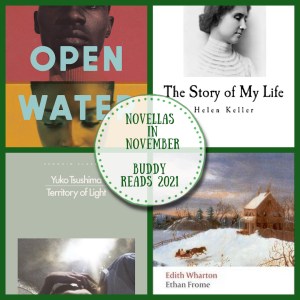
We have four weekly prompts and “buddy reads” as below. We hope you’ll join in reading one or more of these with us. The host for the week will aim to publish her review on the Thursday, but feel free to post yours at any time in the month. (A reminder that we suggest 150–200 pages as the upper limit for a novella, and post-1980 for the contemporary week.)
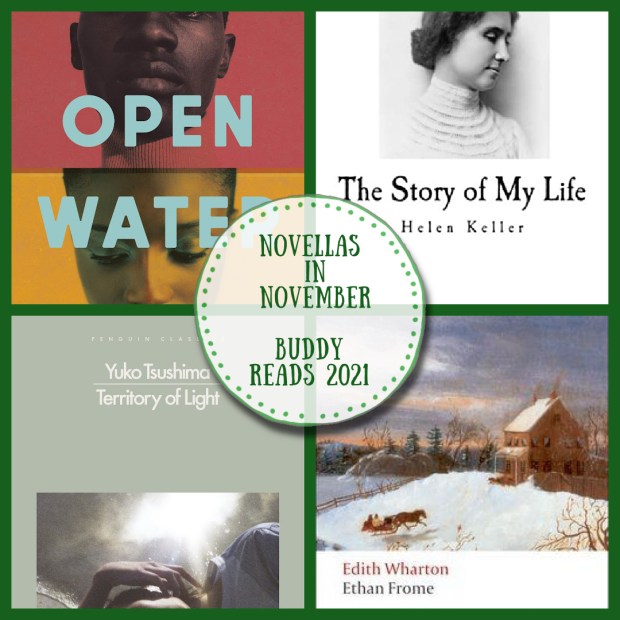
1–7 November: Contemporary fiction (Cathy)
Open Water by Caleb Azumah Nelson – including a giveaway of a signed copy!
8–14 November: Short nonfiction (Rebecca)
The Story of My Life by Helen Keller (free to download here from Project Gutenberg. Note: only the first 85 pages constitute her memoir; the rest is letters and supplementary material.)
15–21 November: Literature in translation (Cathy)
Territory of Light by Yuko Tsushima
22–28 November: Short classics (Rebecca)
Ethan Frome by Edith Wharton (free to download here from Project Gutenberg)
Leave links to any of your novellas coverage in the comments below or tag us on Twitter (@bookishbeck / @cathy746books) and/or Instagram (@bookishbeck / @cathy_746books) and we’ll add them to a master list.
Enjoy your reading!
Ongoing list of Novellas in November 2021 posts:
Five novellas: de Kat, Lynch, Mingarelli, Sjón, Terrin (reviewed by Susan at A life in books)
The Fell by Sarah Moss (reviewed by Dr Laura Tisdall)
The Disinvent Movement by Susanna Gendall (reviewed by Lisa at ANZ LitLovers)
Four novellas with screen adaptations (a list by Diana at Ripple Effects)
Contemporary novellas from the archives (a list by Annabel at Annabookbel)
Moral Hazard by Kate Jennings (reviewed by Cathy at 746 Books)
A Child in the Theatre by Rachel Ferguson (reviewed by Simon at Stuck in a Book)
The Death of the Author by Gilbert Adair (reviewed by Karen at Kaggsy’s Bookish Ramblings)
Come Closer by Sara Gran (reviewed by Cathy at 746 Books)
Amsterdam by Ian McEwan (reviewed by Simon at Stuck in a Book)
Five novellas: Burley, Capote, Hill, Steinbeck, Welsh (reviewed by Margaret at BooksPlease)
Often I Am Happy by Jens Christian Grøndahl (reviewed by Simon at Stuck in a Book)
Vertigo by Amanda Lohrey (reviewed by Nancy Elin)
Open Water by Caleb Azumah Nelson (reviewed by Cathy at 746 Books)
Open Water & Other Contemporary Novellas Read This Year
An Island by Karen Jennings (reviewed by Lisa at ANZ LitLovers)
At Night All Blood Is Black by David Diop (reviewed by Anokatony at Tony’s Book World)
Stone in a Landslide by Maria Barbal (reviewed by Karen at BookerTalk)
A Whole Life by Robert Seethaler (reviewed by Imogen at Reading and Watching the World)
I’m Ready Now by Nigel Featherstone (reviewed by Nancy Elin)
Small Things Like These by Claire Keegan (reviewed by Cathy at 746 Books)
The Lonely by Paul Gallico (reviewed by Simon at Stuck in a Book)
The Love Child by Edith Olivier (reviewed by Liz at Adventures in reading, running and working from home)
Murder Included by Joanna Cannan (reviewed by Simon at Stuck in a Book)
The Bookshop by Penelope Fitzgerald: From Novella to Movie (reviewed by Diana at Ripple Effects)
The River by Rumer Godden (reviewed by Lisa at ANZ LitLovers)
The Rector and The Doctor’s Family by Mrs Oliphant (reviewed by Liz at Adventures in reading, running and working from home)
Less than Zero by Bret Easton Ellis (reviewed by Kate at Books Are My Favourite and Best)
Open Water by Caleb Azumah Nelson (reviewed by Laura at Reading in Bed)
Foe by J.M. Coetzee (reviewed by Lisa at ANZ LitLovers)
The Writer’s Cats by Muriel Barbery (reviewed by Davida at TCL Book Reviews)
Short Non-fiction from the archives (a list by Annabel at Annabookbel)
Nonfiction November: Book Pairing – Novellas and Nonfiction (a list by Cathy at 746 Books)
Casanova’s Homecoming by Arthur Schnitzler (reviewed by Marina Sofia at Finding Time to Write)
Which Way? by Theodora Benson (reviewed by Liz at Adventures in reading, running and working from home)
Short Memoirs by Lucille Clifton, Alice Thomas Ellis and Deborah Levy
Aimez-vous Brahms? by Françoise Sagan (reviewed by Lisa at ANZ LitLovers)
The Writer’s Cats by Muriel Barbery (reviewed by Annabel at Annabookbel)
Burning Secret by Stefan Zweig (reviewed by Chris at Calmgrove)
The Cost of Living by Deborah Levy (reviewed by Cathy at 746 Books)
The Birds of the Innocent Wood by Deirdre Madden (reviewed by Simon at Stuck in a Book)
Baron Bagge by Alexander Lernet-Holenia (reviewed by Grant at 1streading)
The Poor Man by Stella Benson (reviewed by Simon at Stuck in a Book)
Somebody Loves You by Mona Arshi (reviewed by Davida at TCL Book Reviews)
Short Nature Books by John Burnside, Jim Crumley and Aimee Nezhukumatathil
Hiroshima by John Hersey (reviewed by Cathy at 746 Books)
Short nonfiction by Athill, Herriot and Mantel (reviewed by Margaret at BooksPlease)
The Fell by Sarah Moss (reviewed by Susan at A life in books)
The Story of Stanley Brent by Elizabeth Berridge (reviewed by Simon at Stuck in a Book)
The Parakeeting of London by Nick Hunt and Tim Mitchell (reviewed by Liz at Adventures in reading, running and working from home)
The Story of My Life by Helen Keller
Taking a Look Back at Novellas Read in 2021 (a list by JDC at Gallimaufry Book Studio)
Small Things Like These by Claire Keegan (a review by Mairead at Swirl and Thread)
The Story of My Life by Helen Keller (reviewed by Cathy at 746 Books)
The Faces by Tove Ditlevsen (reviewed by Anokatony at Tony’s Book World)
Coda by Thea Astley (reviewed by Nancy Elin)
I’d Rather Be Reading by Anne Bogel (reviewed by Karen at The Simply Blog)
Notes from an Island by Tove Jansson (reviewed by Simon at Stuck in a Book)
The Fell by Sarah Moss (reviewed by Clare at Years of Reading Selfishly)
Small Things Like These by Claire Keegan (reviewed by Susan at A life in books)
The Looking Glass by Carla Sarett (reviewed by Davida at TCL Book Reviews)
Daisy Miller by Henry James (reviewed by Diana at Thoughts on Papyrus)
Heritage by Vita Sackville-West (reviewed by Simon at Stuck in a Book)
One Billion Years to the End of the World by Arkady and Boris Strugatsky (reviewed by Chris at Calmgrove)
The Sense of an Ending by Julian Barnes (reviewed by Tracy at Bitter Tea and Mystery)
We Kill Stella by Marlen Haushofer and Come Closer by Sara Gran (reviewed by Marina Sofia at Finding Time to Write)
Tea and Sympathetic Magic by Tansy Rayner Roberts (reviewed by Nancy Elin)
Passing by Nella Larsen, from Novella to Screen (reviewed by Diana at Ripple Effects)
The Employees by Olga Ravn and A Psalm for the Wild-Built by Becky Chambers (reviewed by Annabel at Annabookbel)
Maigret in Court by Georges Simenon (reviewed by Karen at BookerTalk)
No. 91/92: A Diary of a Year on the Bus by Lauren Elkin (reviewed by Rebecca at Reading Indie)
Six Scottish Novellas: Gray, Mackay Brown, Mitchison, Muir, Owens, Smith (reviewed by Grant at 1streading)
Cain by José Saramago (reviewed by Lisa at ANZ LitLovers)
The Pear Field by Nana Ekvtimishvili (Booktube review by Jennifer at Insert Literary Pun Here)
Tinkers by Paul Harding (reviewed by Simon at Stuck in a Book)
Concrete by Thomas Bernhard (reviewed by Emma at Book Around the Corner)
Frida Kahlo and My Left Leg by Emily Rapp Black (reviewed by Imogen at Reading and Watching the World)
Utility Furniture by Jon Mills (reviewed by Liz at Adventures in reading, running and working from home)
Symposium by Muriel Spark (reviewed by Chris at Calmgrove)
Griffith Review #66, The Light Ascending, annual Novella Project edition (reviewed by Lisa at ANZ LitLovers)
SixforSunday: Novellas Read in 2021 before November (reviewed by Davida at TCL Book Reviews)
The Silent Traveller in Oxford by Chiang Yee (reviewed by Simon at Stuck in a Book)
The War of the Poor by Éric Vuillard (reviewed by Lisa at ANZ LitLovers)
The Spoke by Friedrich Glauser (reviewed by Marina Sofia at Finding Time to Write)
Dinner by César Aira (reviewed by Cathy at 746 Books)
The Scrolls from the Dead Sea by Edmund Wilson (reviewed by Reese at Typings)
The Story of My Life by Helen Keller (reviewed by Laura at Reading in Bed)
The White Riband by F. Tennyson Jesse (reviewed by Simon at Stuck in a Book)
Translated fiction novellas from the archives, including Territory of Light by Yuko Tsushima (reviewed by Annabel at Annabookbel)
I Don’t Want to Go to the Taj Mahal by Charlie Hill (reviewed by Liz at Adventures in reading, running and working from home)
Miss Peabody’s Inheritance by Elizabeth Jolley (reviewed by Karen at BookerTalk)
Hotel Iris by Yoko Ogawa (reviewed by Cathy at 746 Books)
Crusade by Amos Oz (reviewed by Nancy Elin)
Barbarian Spring by Jonas Lüscher (reviewed by Marina Sofia at Finding Time to Write)
My Monticello by Jocelyn Nicole Johnson (reviewed by Susan at A life in books)
The Fell by Sarah Moss (reviewed by Eric at Lonesome Reader)
Winter Flowers by Angélique Villeneuve (reviewed by Cathy at 746 Books)
Particularly Cats by Doris Lessing (reviewed by Simon at Stuck in a Book)
Territory of Light by Yuko Tsushima
Territory of Light by Yuko Tsushima (reviewed by Cathy at 746 Books)
The Murder Farm by Andrea Maria Schenkel and The Peacock by Isabel Bogdan (reviewed by Annabel at Annabookbel)
Assembly by Natasha Brown (reviewed at Radhika’s Reading Retreat)
Ludmilla by Paul Gallico (reviewed by Simon at Stuck in a Book)
The Woman from Uruguay by Pedro Mairal (reviewed by Susan at A life in books)
An interview with Stella Sabin of Peirene Press (by Cathy at 746 Books)
Behind the Mask by Kate Walter
The Pigeon and The Appointment
In the Company of Men and Winter Flowers
Who Was Changed and Who Was Dead by Barbara Comyns
The Deal of a Lifetime by Fredrik Backman (reviewed by Karen at The Simply Blog)
Carte Blanche by Carlo Lucarelli (reviewed by Tracy at Bitter Tea and Mystery)
Inspector Chopra & the Million Dollar Motor Car by Vaseem Khan (reviewed by Chris at Calmgrove)
Bunner Sisters by Edith Wharton (reviewed by Diana at Ripple Effects)
Father Malachy’s Miracle by Bruce Marshall (reviewed by Simon at Stuck in a Book)
Ignorance by Milan Kundera (reviewed by Simon at Stuck in a Book)
Rider on the Rain by Sébastien Japrisot and The Saint-Fiacre Affair by Georges Simenon (reviewed by Annabel at Annabookbel)
Hotel Splendid by Marie Redonnet and Fear by Stefan Zweig (reviewed by Cathy at 746 Books)
Some classics from my archives (reviewed by Annabel at Annabookbel)
The Cardinals by Bessie Head (reviewed by Marina Sofia at Finding Time to Write)
These Lifeless Things by Premee Mohamed, A Psalm for the Wild-Built by Becky Chambers, The Deep by Rivers Solomon (reviewed by Dr Laura Tisdall)
Four novellas, four countries, four decades (reviewed by Emma at Book Around the Corner)
Daphnis and Chloe by Longus (reviewed by Reese at Typings)
The Invisible Host by Gwen Bristow and Bruce Manning (reviewed by Simon at Stuck in a Book)
In Youth Is Pleasure by Denton Welch (reviewed by Imogen at Reading and Watching the World)
The Newspaper of Claremont Street by Elizabeth Jolley (reviewed by Nancy Elin)
Six Short Cat Books: Muriel Barbery, Garfield and More
Catholics by Brian Moore (reviewed by Cathy at 746 Books)
I’d Rather Be Reading by Anne Bogel (reviewed by Simon at Stuck in a Book)
A River in Darkness by Masaji Ishikawa (reviewed by Karen at BookerTalk)
The Witch of Clatteringshaws by Joan Aiken (reviewed by Chris at Calmgrove)
The Old Man and the Sea by Ernest Hemingway (reviewed by Margaret at BooksPlease)
The Turn of the Screw by Henry James (reviewed by Cathy at 746 Books)
Three to See the King by Magnus Mills (reviewed by Simon at Stuck in a Book)
Ethan Frome by Edith Wharton (reviewed by Cathy at 746 Books)
Touring the Land of the Dead by Maki Kashimada and Stranger Faces by Namwali Serpell (reviewed by Dr Laura Tisdall)
Ethan Frome by Edith Wharton (reviewed by Davida at TCL Book Reviews)
Love by Angela Carter (reviewed by Simon at Stuck in a Book)
Picnic at Hanging Rock by Joan Lindsay (reviewed by Margaret at BooksPlease)
Novellas in November 2021 Wrap Up (by Carol at Reading Ladies)
A Guide to Modernism in Metroland by Joshua Abbott and Black London by Avril Nanton and Jody Burton (reviewed by Liz at Adventures in reading, running and working from home)
Ethan Frome by Edith Wharton (reviewed by Karen at The Simply Blog)
Signs Preceding the End of the World by Yuri Herrera (reviewed by Karen at BookerTalk)
Madonna in a Fur Coat by Sabahattin Ali (reviewed by Imogen at Reading and Watching the World)
Small Things Like These by Claire Keegan (reviewed by Davida at TCL Book Reviews)
Clara’s Daughter by Meike Ziervogel (reviewed by Chris at Calmgrove)
Breakfast at Tiffany’s: from Novella to Screen (reviewed by Diana at Ripple Effects)
Child of All Nations by Irmgard Keun (reviewed by Marina Sofia at Finding Time to Write)
Territory of Light by Yuko Tsushima (reviewed by Laura at Reading in Bed)
Three Contemporary Novellas: Moss, Brown and Gaitskill (reviewed by Cathy at 746 Books)
Seven Final Novellas: Crumley, Morris, Rapp Black; Hunter, Johnson, Josipovici, Otsuka
In Pious Memory by Margery Sharp (reviewed by HeavenAli)
Murder in the Dark by Margaret Atwood, The Story of Stanley Brent by Elizabeth Berridge, Under the Tripoli Sky by Kamal Ben Hameda (reviewed by HeavenAli)
The Penelopiad by Margaret Atwood (reviewed by She Reads Novels)
Caravan Story by Wayne Macauley (reviewed by Lisa at ANZ LitLovers)
Farmer Giles of Ham by J.R.R. Tolkien (reviewed by Lisa at ANZ LitLovers)
I Am God, a Novel by Giacomo Sartori (reviewed by Lisa at ANZ LitLovers)
White Fragility by Robin DiAngelo (reviewed by Liz at Adventures in reading, running and working from home)
The Aunt Who Wouldn’t Die by Shirshendu Mukhopadhyay (reviewed by Erdeaka at The Bookly Purple)
Second-Class Citizen by Buchi Emecheta (reviewed by Liz at Adventures in reading, running and working from home)
The Invention of Morel by Adolfo Bioy Casares (reviewed by Emma at Words and Peace)
The Fell by Sarah Moss (reviewed by Callum McLaughlin)
Women & Power by Mary Beard and Come Closer by Sara Gran (reviewed by Callum McLaughlin)
The Tobacconist by Robert Seethaler and I Was Jack Mortimer by Alexander Lernet-Holenia (reviewed by Madame Bibi Lophile)
Things I Don’t Want to Know and The Cost of Living by Deborah Levy (reviewed by Madame Bibi Lophile)
Touch the Water, Touch the Wind by Amos Oz (reviewed by Kim at Reading Matters)
The Woman in the Blue Cloak by Deon Meyer (reviewed by Kim at Reading Matters)
The White Woman by Liam Davison (reviewed by Kim at Reading Matters)
Boys Don’t Cry by Fiona Scarlett (reviewed by Kim at Reading Matters)
Fludd by Hilary Mantel (reviewed by Margaret at BooksPlease)
Pietr the Latvian by Georges Simenon (reviewed by Margaret at BooksPlease)
In Translation by Annamarie Jagose (reviewed by Lisa at ANZ LitLovers)
The Red Chesterfield by Wayne Arthurson, The Book of Eve by Constance Beresford-Howe, Tower by Frances Boyle, Winter Wren by Theresa Kishkan, and The Santa Rosa Trilogy by Wendy McGrath (reviewed by Naomi at Consumed by Ink)
An essay on Kate Jennings’ Snake (reviewed by Whispering Gums)
Life in Translation by Anthony Ferner and Friend Indeed by Katharine d’Souza (reviewed by Liz at Adventures in reading, running and working from home)
Every Day Is Gertie Day by Helen Meany (reviewed by Whispering Gums)
Cold Enough for Snow by Jessica Au (reviewed by Brona’s Books at This Reading Life)
A Dream Life by Claire Messud (reviewed by Brona’s Books at This Reading Life)
Why Do I Like Novellas? Barnes, Brown, Jones, Ravn (reviewed by Stargazer)
Small Things Like These by Claire Keegan (reviewed by Callum McLaughlin)
Foster by Claire Keegan (reviewed by Smithereens)
The Light in the Piazza by Elizabeth Spencer (reviewed by Anokatony at Tony’s Book World)
King City by Stephen Pennell (reviewed by Liz at Adventures in reading, running and working from home)
Missus by Ruth Park (reviewed by Lisa at ANZ LitLovers)
Inseparable by Simone de Beauvoir (reviewed by Anokatony at Tony’s Book World)
I Heard the Owl Call My Name by Margaret Craven (reviewed by Robin at A Fondness for Reading)
Maigret Defends Himself by Georges Simenon (reviewed by Chris at Calmgrove)
My Week with Marilyn by Colin Clark (reviewed by Kate at Books Are My Favourite and Best)
Ethan Frome by Edith Wharton (reviewed by Margaret at BooksPlease)
Miguel Street by V.S. Naipaul (reviewed by Liz at Adventures in reading, running and working from home)
The Swallowed Man by Edward Carey, Naturally Supernatural by Wendy Mann, The Hothouse by the East River by Muriel Spark, Trouble with Lichen by John Wyndham (reviewed by Simon at Stuck in a Book)
Ethan Frome by Edith Wharton (reviewed by Laura at Reading in Bed)
Assembly by Natasha Brown, Treacle Walker by Alan Garner, All the Devils Are Here by David Seabrook, Space Exploration by Dhara Patel (reviewed by Annabel at Annabookbel)
Bellow, Powell, Wolkers, Bomans, al-Saadawi, de Jong, Buck, Simenon, Boschwitz (reviewed by Sarah at Market Garden Reader)
More Ideas of Novellas to Read for #NovNov
Still in need of ideas for what to read in November? Here are our novella-friendly lists of authors and publishers that fit the bill!
Authors who tend(ed) to write short books:
- James Baldwin
- J.L. Carr
- Barbara Comyns
- Alice Thomas Ellis
- Penelope Fitzgerald
- Paul Gallico
- Kaye Gibbons
- Susan Hill
- Denis Johnson – Train Dreams was one of our most-reviewed books last year
- Gabriel Josipovici
- Claire Keegan
- Shena Mackay
- Ian McEwan
- Sarah Moss’s three latest
- Jean Rhys
- Georges Simenon
- Muriel Spark
- John Steinbeck
- Nathanael West
- Jacqueline Woodson
In nonfiction – nature books:
- Jim Crumley
- John Lewis-Stempel
In nonfiction – animal/pet books:
- Derek Tangye
- Doreen Tovey
UK publishers that specialize in novellas:
Fitzcarraldo Editions (especially their early releases)
Penguin’s Little Black Classics series
Worldwide publishers that specialize in novellas:
Fish Gotta Swim Editions (Canada)
Melville House – “The Art of the Novella” series (USA)
Nouvella (USA) – Take a look at the last couple of rows on their merchandise page!
Quattro Books (Canada)
UK publishers that specialize in novellas in translation:
Charco Press – contemporary Latin American literature
Fitzcarraldo Editions
Holland Park Press
Les Fugitives – translations from the French
Lolli Editions (thanks to Annabel for this one)
Peirene Press – Cathy will be hosting an interview with them during translation week!
Pushkin Press
UK sources of short nonfiction:
Bloomsbury’s Object Lessons series
Fitzcarraldo Editions – some of their longform essays are under 200 pages
Penguin’s Great Ideas series
Little Toller Books – mostly nature and travel monographs
The School of Life – most of the ones in this particular series are under 200 pages
Oxford University Press’s Very Short Introductions series
Wellcome Collection Books – a number of their recent releases are under 200 pages
You could also check out some of last year’s Novellas in November content: 89 posts from 30 bloggers, including single reviews, multi-reviews and favourites lists.
Still stumped? Try these articles:
(Note: not all of the suggestions stick to our definition of a novella.)
- Brona’s list of Australian novellas
- “20 of the Best Short Classic Books” (Book Riot)
- Novellas: A Life List (Fish Gotta Swim)
- “10 Best Books Shorter than 150 Pages” (Publishers Weekly)
- “50 Must-Read Short Books in Translation” (Book Riot)
- “50 Must-Read Short Books under 250 Pages” (Book Riot)
- “50 Short Nonfiction Books You Can Read in a Day (or Two)” (Book Riot)
And, if you’re looking for a bit of context, the other year Laura F. put together a history of the Novellas in November challenge.
Planning My Reading Stacks for Novellas in November 2021
Not much more than a week until Novellas in November (#NovNov) begins! I gathered up all of my potential reads for a photo shoot. Review copies are stood upright and library loans are toggled in a separate pile on top; all the rest are from my shelves.
Week One: Contemporary Fiction

Week Two: Short Nonfiction

Week Three: Novellas in Translation
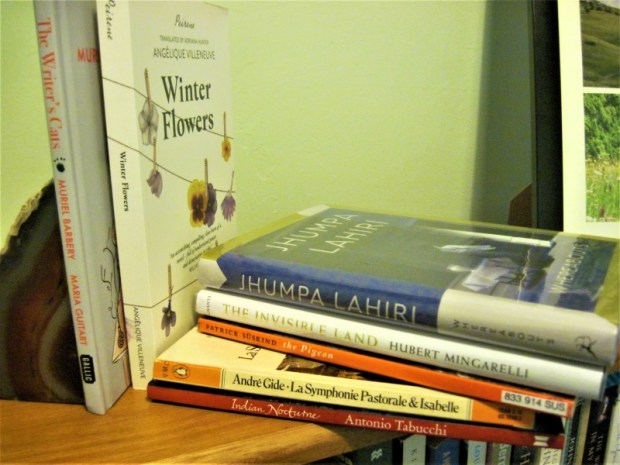
A rather pathetic little pile there, but I also have a copy of that week’s buddy read, Territory of Light by Yuko Tsushima, on the way. (The Pigeon by Patrick Süskind would be my token contribution to German Literature Month.)
Week Four: Short Classics
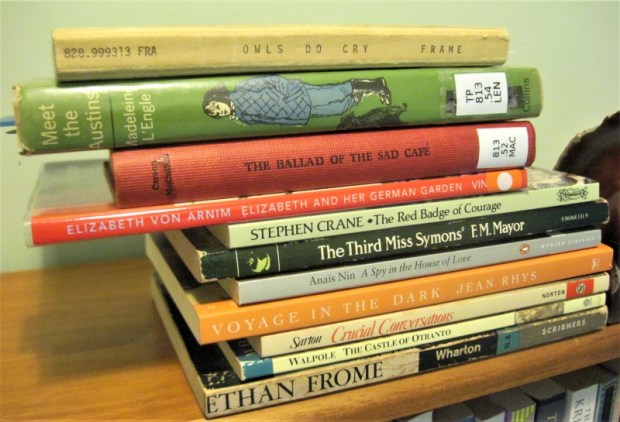
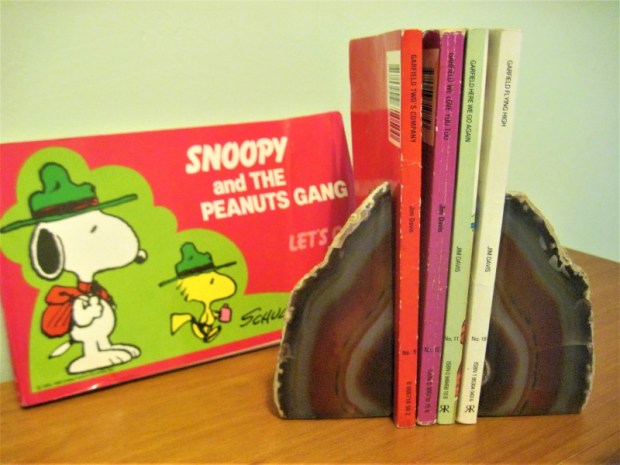
Last but not least, some comics collections that don’t seem to fit in one of the other categories. Of course, some books fit into two or more categories, and contemporary vs. classic feels like a fluid division – I haven’t checked rigorously for our suggested 1980 cut-off date, so some older stuff might have made it into different piles.
 Also available on my Kindle: The Therapist by Nial Giacomelli, Record of a Night too Brief by Hiromi Kawakami, Childhood: Two Novellas by Gerard Reve, and Milton in Purgatory by Edward Vass. As an additional review copy on my Nook, I have Frida Kahlo and My Left Leg by Emily Rapp Black, which is 140-some pages.
 Plus … I recently placed an order for some new and secondhand books with my birthday money (and then some), and it should arrive before the end of the month. On the way and of novella length are Who Was Changed and Who Was Dead by Barbara Comyns, Bear by Marian Engel, The Cost of Living by Deborah Levy, and In the Company of Men by Véronique Tadjo.
I also recently requested review copies of Small Things Like These by Claire Keegan (128 pages; coming out from Faber today) and The Fell by Sarah Moss (160 pages; coming out from Picador on November 11th), so hope to have those in hand soon.
Remember that this year we have chosen a buddy read for each week. I’m again looking after short nonfiction in the second week of the month and short classics in the final week. We plan to post our reviews on the Thursday or Friday of the week in question. Feel free to publish yours at any time in the month and we’ll round up the links on our review posts.

Superman Simon is thinking of reading a novella a day in November! Taken together, I’d have enough novellas here for TWO per day. But my record thus far (in 2018) is 26; since then, I’ve managed 16 per year.
I have no specific number in mind this time. Considering I also plan to read one or two books for Margaret Atwood Reading Month (and perhaps one for AusReading Month) and have a blog tour date, as well as other review books to catch up on and in-demand library books to keep on top of, I can’t devote my full attention to novellas.
If I can read all the review copies, mop up the 4–5 set-aside titles on the pile (the ones with bookmarks in), maybe manage two rereads (the Wharton plus Conundrum), make a dent in my owned copies, and get to one or more from the library, I’ll be happy.
Karen, Kate and Margaret have already come up with their lists of possible titles. Cathy’s has gone up today, too.
Do you have any novellas in mind to read next month?
Get Ready for Novellas in November!
Novellas: “all killer, no filler”
~Joe Hill
For the second year in a row, Cathy of 746 Books and I are co-hosting Novellas in November as a month-long challenge with four weekly prompts.
New this year: each week we will take it in turns to host a “buddy read” of a featured book we hope you will join in reading. We’re announcing the challenge early to give you plenty of time to get your stack ready.
(We suggest 150–200 pages as the upper limit for a novella, and post-1980 as a definition of “contemporary.”)
1–7 November: Contemporary fiction (Cathy)
Open Water by Caleb Azumah Nelson – including a giveaway of a signed copy!
8–14 November: Short nonfiction (Rebecca)
The Story of My Life by Helen Keller (free to download here from Project Gutenberg. Note: only the first 85 pages constitute her memoir; the rest is letters and supplementary material.)
15–21 November: Literature in translation (Cathy)
Territory of Light by Yuko Tsushima
22–28 November: Short classics (Rebecca)
Ethan Frome by Edith Wharton (free to download here from Project Gutenberg)

We’re looking forward to having you join us! Keep in touch via Twitter (@bookishbeck / @cathy746books) and Instagram (@bookishbeck / @cathy_746books) and feel free to use the terrific feature images Cathy has made and the hashtag #NovNov.
Six Degrees of Separation: Second Place to Woman on the Edge of Time
The last Six Degrees of Separation post I did was back in April; I’ve fallen out of the habit since then. But this month an idea seized me and I’m back! This time we begin with Second Place by Rachel Cusk, which is on the Booker Prize longlist. (See Kate’s opening post.)

When I saw Cusk speak at the online Hay Festival, I learned that Second Place (my review) was loosely inspired by Mabel Dodge Luhan’s 1932 memoir Lorenzo in Taos, about the time when D.H. Lawrence came to visit her in New Mexico. Thoughts of Lawrence in Taos inevitably take me back to my first (and only) academic conference in 2005, hosted by the D.H. Lawrence Society of North America in Santa Fe, with a fieldtrip out to his Taos ranch.
 #1 One of the books I read ‘in preparation’ for attending that conference was Small World by David Lodge, a comedic novel about professors on the international conference circuit. I’ve included it as one of the Landmark Books of My Life.
 #2 Flights and “small world” connections also fill the linked short story collection Turbulence by David Szalay.
 #3 If you can bear to remember the turbulence of recent history, UnPresidented by Jon Sopel is a breezy diary of the 2020 U.S. election. We were lucky enough to have the author, a BBC presenter and brother of one of our members, join our book club discussion on Zoom.
 #4 That punning title reminded me of A Sting in the Tale by Dave Goulson, his first and probably best work of popular science – all of his books since have been very similar, but that’s no problem because his enthusiasm for insect life is infectious and he writes with the wit and charm of Gerald Durrell.
#5 Goulson’s latest book, which I’ve recently reviewed for Shelf Awareness, is called Silent Earth, about the grave threats that insects face (pesticides, invasive species, climate change and much more). It’s the second book I’ve read in recent years (the first was Losing Eden by Lucy Jones) that is explicitly based on or inspired by Silent Spring by Rachel Carson. Like Carson’s book, these seek to effect real societal change.


#6 Carson, Goulson and Jones all conjure up dystopian scenarios of unimaginable natural loss to spur readers into action. A feminist classic my book club read earlier in the year, Woman on the Edge of Time by Marge Piercy, contrasts utopian and dystopian scenes experienced by a Latina woman who’s been confined to a mental hospital. Will society evolve into a utopian vision of subsistence living and absolute gender equality, or move towards further isolation and urban barrenness? It’s an unusual and fascinating novel with hints of science fiction, but grounded in the real world. I still haven’t managed to review it, but next month’s 1976 Club may be just the excuse I need. Do give it a try!

Cycling round from one feminist novel to another, I’ve also featured a couple of personal favourites, some recent works, and a classic of nature writing.
Where will your chain take you? Join us for #6Degrees of Separation! (Hosted on the first Saturday of each month by Kate W. of Books Are My Favourite and Best.) Next month’s R.I.P.-appropriate starting point is the short story “The Lottery” by Shirley Jackson.
Have you read any of my selections? Are you tempted by any you didn’t know before?
Six Degrees of Separation: From Shuggie Bain to Girl, Woman, Other

This month we begin with Shuggie Bain by Douglas Stuart (2020), last year’s Booker Prize winner. (See Kate’s opening post.) I tried it a couple of times and couldn’t get past page 100, but I’ve kept my proof copy on the shelf to try some other time.
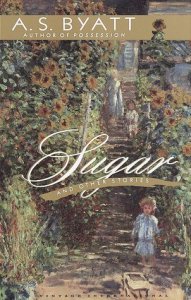 #1 The main character’s sweet nickname takes me to Sugar and Other Stories by A.S. Byatt. Byatt is my favourite author. Rereading her The Matisse Stories last year was rewarding, and I’d eventually like to go back to the rest of her short fiction. I read Sugar and Other Stories in Bath in 2006. (As my MA year in Leeds came to a close, I interviewed at several libraries, hoping to get onto a graduate trainee scheme so I could stay in the UK for another year. It didn’t work out, but I got to tour many wonderful libraries.) I picnicked on the grass on a May day on the University of Bath campus before my interview at the library.
I can’t claim to remember the book well overall, but I do recall the story “The July Ghost,” in which a man at a party tells a story about his landlady and the silent boy he’s seen in her garden. This turns out to be the ghost of her son, who died when he was hit by a car two summers earlier. I’ve never forgotten it because that’s exactly what happened to Byatt’s 12-year-old son.
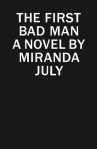 #2 The title of that memorable story takes me to The First Bad Man by Miranda July. This review from the early days of my blog is still inexplicably popular in terms of number of views. The novel is full of unlikable characters and quirkiness for the sake of it; I doubt I would have read it had I not been sent an unsolicited review copy by the U.S. publisher.
 #3 According to a search of my Goodreads library, the only other book I’ve ever read by a Miranda is A Girl Walks into a Book by Miranda K. Pennington, a charming bibliomemoir about the lives and works of the Brontës. I especially enjoyed the cynical dissection of Wuthering Heights, a classic I’ve never managed to warm to.
 #4 From one famous set of sisters in the arts to another with Vanessa and Her Sister by Priya Parmar, a novel about Vanessa Bell and Virginia Woolf. It is presented as Vanessa’s diary, incorporating letters and telegrams. The interactions with their Bloomsbury set are delightful, and sibling rivalry is a perennial theme I can’t resist.
 #5 Another Vanessa novel and one I would highly recommend to anyone wanting a nuanced look at the #MeToo phenomenon is My Dark Vanessa by Kate Elizabeth Russell. It’s utterly immersive and as good a first-person narrative as anything Curtis Sittenfeld has ever written. I also appreciated the allusions to other works of literature, from Nabokov (the title is from Pale Fire) to Swift. This would make a great book club selection.
 #6 Speaking of feminist responses to #MeToo, Girl, Woman, Other by Bernardine Evaristo is just as good as you’ve heard. If you haven’t read it yet, why not? It’s a linked short story collection about 12 black women navigating twentieth-century and contemporary Britain – balancing external and internal expectations to build lives of their own. It reads like poetry.
Cycling round from one Booker Prize winner to another, I’ve featured stories by and about strong women, with most of my links coming from names and titles.
Whatever could be on the 2021 Booker Prize longlist? We have a lot of literary prize races to see out before then, but I’m keen to learn what Rev. Rowan Williams and the rest of the judges deem worthy.
Where will your chain take you? Join us for #6Degrees of Separation! (Hosted on the first Saturday of each month by Kate W. of Books Are My Favourite and Best.) Next month’s starting point is Beezus and Ramona, in honour of Beverly Cleary (May 1, 2021).
Have you read any of my selections? Are you tempted by any you didn’t know before?
Six Degrees of Separation: From Phosphorescence to Sunburn

 This month we begin with Phosphorescence by Julia Baird (2020). (See Kate’s opening post.) It’s not currently available in the UK but is set to be published by HarperCollins in late May, and I’d be interested in reading it.
 #1 Baird’s premise and subtitle – “On Awe, Wonder and Things that Sustain You when the World Goes Dark” – remind me a lot of Wintering: How I learned to flourish when life became frozen by Katherine May, which I reviewed for the TLS early last year. (I also published an excerpt here.)
 #2 Winter and snow books together make up my favorite seasonal reading, though I’ll soon be moving on to spring themes instead. A wintry novel I recently loved was Snow Falling on Cedars by David Guterson (review here), which is doubly appropriate for this chain because I noticed the pretty rare word “phosphorescence” being used in it twice, including on the next-to-last page.
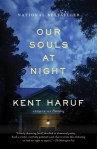 #3 Cedars take me to Our Souls at Night by Kent Haruf (review here), which takes place on Cedar Street in the fictional Colorado town of Holt. I wouldn’t normally recall such a tiny detail, but I grew up on a Cedar Street (in Silver Spring, Maryland), so it stuck in my mind.
 #4 Whenever I think of Our Souls at Night, I remember John Boyne’s crude Twitter joke about someone asking a bookshop for “Arseholes at Night.” I’ve enjoyed a couple of Boyne’s novels, including A Ladder to the Sky, a Ripley-esque work of suspense (review here).
 #5 In 2018 I read a few books with the word “Ladder” in the title in quick succession. One of the others was Ladder of Years by Anne Tyler, currently my second-favorite of her novels.
 #6 Sunburn by Laura Lippman, a noir mystery, must have been inspired – unconsciously, at least – by Ladder of Years: both are set in the mid-1990s, have a woman walking away from her family and into a new life, and feature a Delaware beach. I read Sunburn during a week in Milan in July 2019 – our last holiday abroad (tacked onto my husband speaking at a conference); indeed, the last time we went away anywhere for longer than a night or two. We hope to manage a couple of mini-breaks this spring and summer.
I’ve gone round from one evocative, light-filled word to another, both of which offer a tantalizing glimpse of warmer, happier times to come.
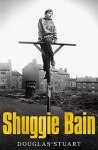 Where will your chain take you? Join us for #6Degrees of Separation! (Hosted on the first Saturday of each month by Kate W. of Books Are My Favourite and Best.) Next month’s starting point is Shuggie Bain.
Have you read any of my selections? Are you tempted by any you didn’t know before?
Six Degrees of Separation: From a Redhead to a Blue Dress
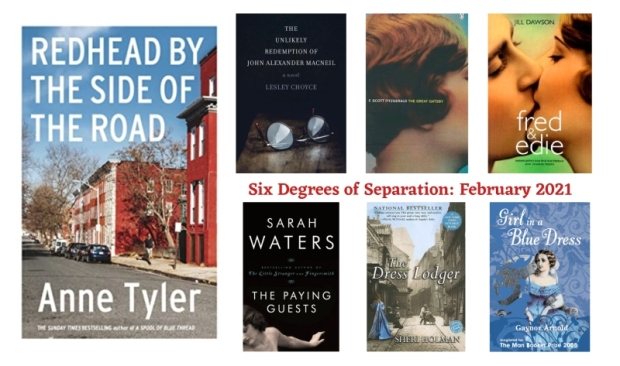
This month we begin with Redhead by the Side of the Road (2020). (See Kate’s opening post.) Anne Tyler’s lackluster latest somehow got longlisted for the Booker Prize. Still, I’m a solid Tyler fan and I’m taking advantage of Liz’s readalong to get to the books of hers that I own but haven’t read yet. Currently reading: The Clock Winder (1972).
#1 Sorry to break it to you if you haven’t read the book yet, but the title refers not to a person with red hair but to a fire hydrant: Micah, a typically useless Tyler antihero, makes this visual mistake commonly when he’s out running without his glasses on.
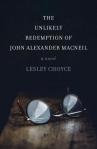 The Unlikely Redemption of John Alexander MacNeil by Lesley Choyce (2017) is beloved of a couple of Canadian book blogger friends, including Naomi (here’s her review). I came across it on my Goodreads TBR the other day and the blurb caught my eye. An old man starts doing peculiar things, like picking up a hitchhiker … except that it’s actually a neighbour’s mailbox. This reminded me of Micah’s folly, not least because of the glasses on the cover.
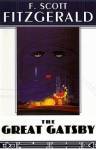
 #2 One of the key images in The Great Gatsby (1925) is of the eyes of optician Dr. T. J. Eckleburg peering out from an old billboard. They’re explicitly equated to the eyes of God looking down on the immoral lifestyle of characters blinded by the pursuit of money and happiness. Gatsby was our neighbourhood book club choice this month. Whether we’d read it multiple times before (it was my third read) or not at all, we found a lot to talk about – and two members took the opportunity to dress up in vintage 1920s fashions for the Zoom meeting!
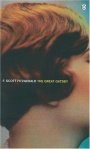
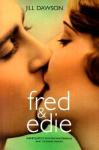 #3 Although those bespectacled eyes appeared on the copy I read in high school, the book group set cover featured a couple of 1920s figures: a woman on the front cover and a man on the back. They look rather like a young Scott and Zelda Fitzgerald, but I can’t find evidence that it’s an original photograph. In any case, I thought the image looked awfully familiar, and finally located it as the cover of Fred & Edie by Jill Dawson (2000), which is set in 1922 and was inspired by a true crime. In a sensational trial, Edith Thompson and her lover, Freddy Bywaters, were found guilty of murdering Edith’s husband and the pair were executed the following year. Cathy’s review whetted my appetite to read it.
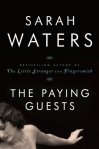 #4 Also featuring a murder committed in 1922 is The Paying Guests by Sarah Waters (2014). I will say no more – not least because I don’t fully remember what happens, though I have a vague sense that it is quite similar in plot to the Dawson – except that this was a stand-out from Waters. (My review for BookBrowse.)
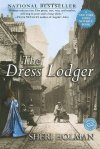 #5 “Paying guests” was an old-fashioned euphemism used by people who didn’t like to admit they had lodgers. Another random recent find on my virtual TBR was The Dress Lodger by Sheri Holman (2000), which is about a 15-year-old prostitute trying to provide for herself and her disabled baby boy during a cholera epidemic in Sunderland, England in 1831. Victorian pastiches can go either way for me, but when they’re good I adore them. There are enough positive friend reviews of this on Goodreads for me to keep it on the list: it sounds reminiscent of The Crimson Petal and the White, and the epidemic theme sure is relevant.
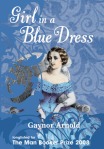 #6 The blue dress on the cover led me to Girl in a Blue Dress by Gaynor Arnold (2008), a novel about Charles Dickens’s longsuffering wife, Catherine. (Though the central pair are given different names, it’s very clear who they’re based on.) I’m a sucker for any book about Dickens. Like Redhead, this was longlisted for the Booker Prize.
This month I’ve gone round to a different primary colour, by way of a classic and much historical fiction (with 1920s settings aplenty, and lots of marcelled hair!).
Where will your chain take you? Join us for #6Degrees of Separation! (Hosted on the first Saturday of each month by Kate W. of Books Are My Favourite and Best.) Next month’s starting point is Phosphorescence by Julia Baird.
Have you read any of my selections? Are you tempted by any you didn’t know before?
Book Spine Poetry Strikes Again
Great minds think alike in the blogging world: last week, on the very day that Annabel posted a book spine poem, it was on my to-do list to assemble my current reading stack into a poem or two. I’d spotted some evocative and provocative titles, as well as some useful prepositions. The poems below, then, serve as a snapshot of what I’m reading at the moment, with some others from my set aside and occasional reading shelves filling in. You get a glimpse of the variety I read. (For one title in the second pile, a poetry book I’m reading on my e-reader, I had to improvise!)
My previous book spine poetry efforts are here and here (2016); and here (March 2020).
A dark one, imagining an older woman in serious condition and passing a night in a hospital bed:

Intensive Care
Complications,
Pain.
As I Lay Dying,
Owls Do Cry.
I Miss You When I Blink.
This Thing of Darkness,
Spinster Keeper,
Wrestling with the Angel.
And a more general reflection on recent times and what might keep us going:

Embers
How Should a Person Be
In These Days of Prohibition?
The Light Years
Outlawed,
The Noonday Demon.
Some Body to Love
The Still Point,
The Still Point of the Turning World.
Color and Line
A Match to the Heart.
The Bare Abundance
Love’s Work.
Unsettled Ground
The Magician’s Assistant.
Braiding Sweetgrass
Revelations of Divine Love.
Have a go at some book spine poems if you haven’t already! They’re such fun.
Six Degrees of Separation: From Hamnet to Paula
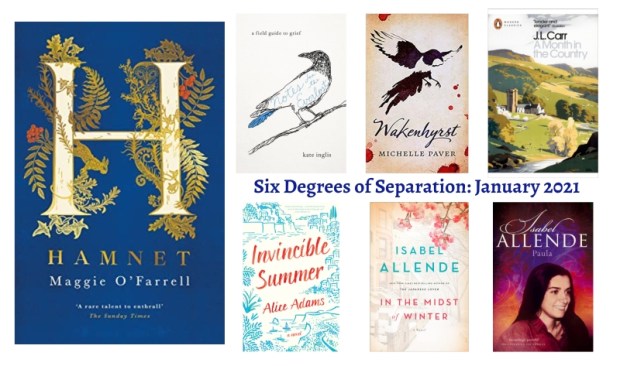
 I was slow off the mark this month, but here we go with everyone’s favorite book blogging meme! This time we start with Hamnet, Maggie O’Farrell’s Women’s Prize-winning novel about the death of William Shakespeare’s son. (See Kate’s opening post.) Although I didn’t love this as much as others have (my review is here), I was delighted for O’Farrell to get the well-deserved attention – Hamnet was also named the Waterstones Book of the Year 2020.
 #1 I’ve read many nonfiction accounts of bereavement. One that stands out is Notes from the Everlost by Kate Inglis, which is also about the death of a child. The author’s twin sons were born premature; one survived while the other died. Her book is about what happened next, and how bereaved parents help each other to cope. An excerpt from my TLS review is here.
 #2 Also featuring a magpie on the cover, at least in its original hardback form, is Wakenhyrst by Michelle Paver (reviewed for R.I.P. this past October). I loved that Maud has a pet magpie named Chatterpie, and the fen setting was appealing, but I’ve been pretty underwhelmed by all three of Paver’s historical suspense novels for adults.
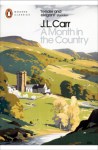 #3 One of the strands in Wakenhyrst is Maud’s father’s research into a painting of the Judgment Day discovered at the local church. In A Month in the Country by J. L. Carr (reviewed last summer), a WWI veteran is commissioned to uncover a wall painting of the Judgment Day, assumed to be the work of a medieval monk and long ago whitewashed over.
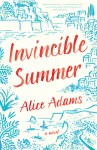 #4 A Month in the Country spans one summer month. Invincible Summer by Alice Adams, about four Bristol University friends who navigate the highs and lows of life in the 20 years following their graduation, checks in on the characters nearly every summer. I found it clichéd; not one of the better group-of-friends novels. (My review for The Bookbag is here.)
 #5 The title of Invincible Summer comes from an Albert Camus quote: “In the midst of winter, I found there was, within me, an invincible summer. And that makes me happy.” Inspired by the same quotation, then, is In the Midst of Winter by Isabel Allende, a recent novel of hers that I was drawn to for the seasonal link but couldn’t get through.
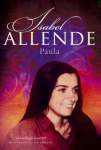 #6 However, I’ve enjoyed a number of Allende books over the last 12 years or so, both fiction and non-. One of these was Paula, a memoir sparked by her twentysomething daughter’s untimely death in the early 1990s from complications due to the genetic condition porphyria. Allende told her life story in the form of a letter composed at Paula’s bedside while she was in a coma.
So, I’ve come full circle with another story of the death of a child, but there’s a welcome glimpse of the summer somewhere there in the middle. May you find your own inner summer to get you through this lockdown winter.
Join us for #6Degrees of Separation! (Hosted on the first Saturday of each month by Kate W. of Books Are My Favourite and Best.) Next month’s starting point is Redhead at the Side of the Road by Anne Tyler.
 Bookish Beck = Rebecca Foster. American transplant to England. Freelance proofreader and book reviewer.
 Bookish Beck