Two “Summer” Books
With summer winding down, I decided it was time to read a couple of books with the word in the title to try to keep the season alive. These turned out to be charming, low-key English novels that I would recommend to fans of costume dramas. Both: 
I knew very little about Jonathan Smith’s Summer in February when I picked it up in a charity shop. From the ads for the 2013 film adaptation with Dan Stevens, I had in mind that this was an obscure classic. It was actually published in 1995, but is inspired by real incidents spanning 1909 to 1949. It’s set among a group of Royal Academy-caliber artists in Lamorna, Cornwall, including Alfred Munnings, who went on to become the academy’s president.
The crisis comes when Munnings and Captain Gilbert Evans, a local land manager, fall for the same woman. A love triangle might not seem like a very original story idea, but I enjoyed this novel particularly for its Cornish setting (“From dawn to dusk it had rained non-stop, as only Cornwall can”; “The sea was slate grey and the sky streaky bacon”) and for the larger-than-life Munnings, who has a huge store of memorized poetry and is full of outspoken opinions. Two characters describe his contradictions thusly: “I can see he’s crude and loud and unpolished and Joey says he cuts his toenails at picnics but…”; “he’s one in a million, a breath of fresh air, and he’s frank and fearless, which is always a fine thing.” The title refers to the way that love can make any day feel like summer.
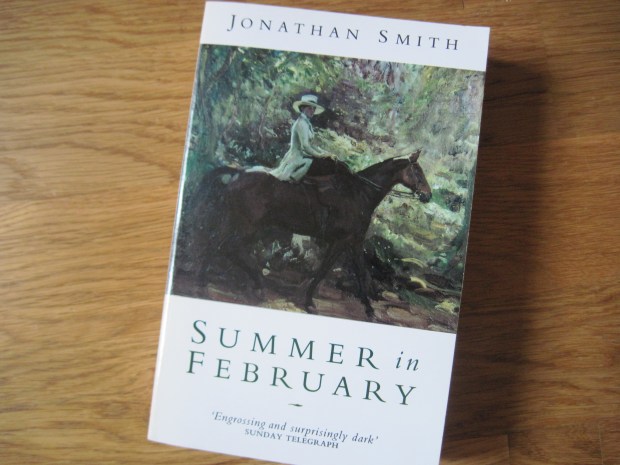
The cover image is the painting Morning Ride by A.J. Munnings.
For more information on Munnings, see here.
For more information on Gilbert Evans, see here. (Beware the spoilers!)
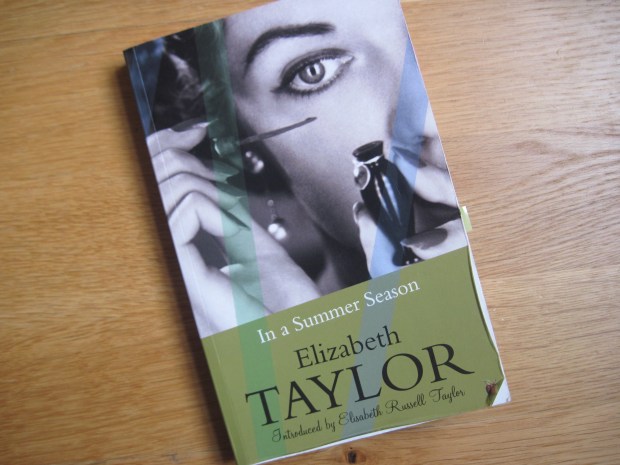
From 1961, In a Summer Season was Elizabeth Taylor’s eighth novel. The ensemble cast is led by Kate Heron – newly remarried to Dermot, a man ten years her junior, after the death of her first husband – and made up of her family circle, a few members of the local community, and her best friend Dorothea’s widower and daughter, who return from living abroad about halfway through the book. Set in the London commuter belt, this is full of seemingly minor domestic dilemmas that together will completely overturn staid life before the end.
From Kate dyeing her hair yet being keen to avoid accusations of “mutton dressed as lamb” to her son Tom’s disgust at his grandfather’s ageing body, old age and wasting one’s time on trivialities are a twin paranoia here. The title is not only a literal note of when much of the action takes place, but also a metaphor for the fleeting nature of happiness (as well as life itself). Kate remembers pleasant days spent with her best friend and their young children: “It was a long summer’s afternoon and it stood for all the others now. There had been many. And she and Dorothea were together day after day. Their friendship was as light and warming as the summer’s air.”
So much happens in the last seven pages. I wished the book could have turned out differently, yet the conclusion effectively sews it all up, and all within a cozy 220 pages. If you enjoy writers like Muriel Spark and Barbara Pym, you must try Elizabeth Taylor. Her work is similarly built around wry, perceptive observations about relationships and ways of life. This was my fourth novel by her, and I’d call it my second favorite so far after Mrs. Palfrey at the Claremont.
(Secondhand books are such good value: These two charity shop paperbacks cost me less than 85 pence in total. Such a low total spend per hour of enjoyment!)
This month I also read The Summer without Men by Siri Hustvedt (discussed here along with a few other recent reads). Earlier in the year I reviewed Ricarda Huch’s The Last Summer, and last year I reviewed the Summer anthology from the Wildlife Trusts. “Summer” turns up fairly frequently in titles of books I’ve read or want to read, in fact. Here’s the whole list!
Have you read any “Summer” books lately?
Library Checkout: August 2017
A thin month for library books overall, although I did read two very good ones. The Aldo Leopold book is a nature classic I’m pleased we could find via the library of the university where my husband works. In the second week of September I’m going along with him to Ghent, Belgium, where he’ll be presenting a research paper at a landscape ecology conference. Though we’ve been before, it’s a lovely town I’ll enjoy wandering – in between keeping up a normal virtual workload. After that we head on to Amsterdam for a long weekend; it’ll be my first time there and I’m excited to take in all the sights.
LIBRARY BOOKS READ
- The Argonauts by Maggie Nelson

From my parents’ local branch in America:
- Sparky! by Jenny Offill [a picture book illustrated by Chris Appelhans]
CURRENTLY READING
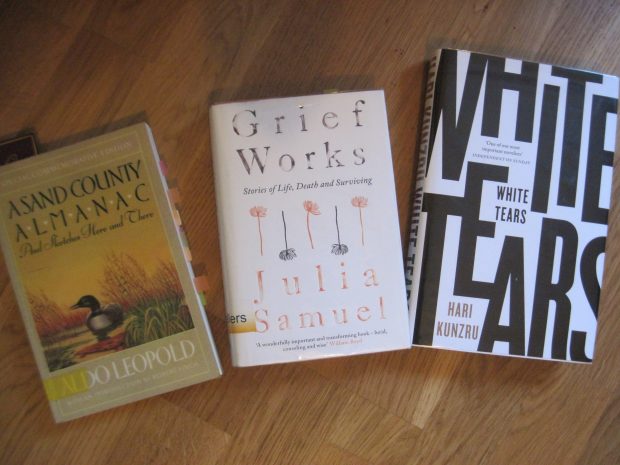
- A Sand County Almanac by Aldo Leopold
CURRENTLY SKIMMING
- Grief Works: Stories of Life, Death and Surviving by Julia Samuel
CHECKED OUT, TO BE SKIMMED
- 2 guide books to Belgium
- 2 guide books to Amsterdam
RETURNED UNFINISHED
- White Tears by Hari Kunzru – I read the first 145 pages, skimmed another 70 or so, then gave up. The vibe is Jonathan Franzen meets Zadie Smith circa The Autograph Man; the theme is cultural appropriation, especially of a blues song by a forgotten master. (I had the song from The Wire in my head the whole time.) My interest started to wane after what happens to Carter happens, and by the time the parallel road trips kicked in I was lost. So to what extent this was realist or magic realist or absurdist or whatever I couldn’t tell you. I liked the writing enough that I would try something else by Kunzru if I thought I’d connect to the subject matter more.

(Hosted by Charleen of It’s a Portable Magic.)
Have you been taking advantage of your local libraries? What appeals from my lists?
Classic of the Month: Fathers and Sons by Ivan Turgenev
Last month’s classic was Father and Son (Edmund Gosse); this month is Fathers and Sons, the 1861 novel by Ivan Turgenev (1818–83). I couldn’t resist pairing up the similar titles, and it turns out that even though one is nonfiction and the other fiction, they are thematically similar, dwelling on the clash of generations and contrasting romanticism and rationalism.
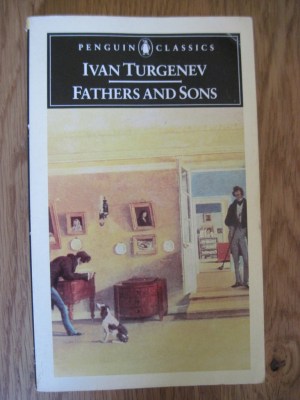 Nikolai Kirsanov’s son Arkady, newly graduated from university, has just returned to his father’s estate with his haughty fellow student Yevgeny Bazarov in tow. Bazarov intends to take a medical degree and follow in his father’s footsteps as a country doctor, so spends the time at his friend’s house dutifully poring over chemistry texts and dissecting frogs. Arkady, by contrast, seems earnest but aimless, happy to simply while away the days. The major change at home is that his father, a widower, has taken the servant girl Fenichka as his mistress and they have a baby, Mitya. (Gasp!) Yet the real shock in the world of the novel seems to be that Nikolai is consorting with someone of the lower classes. “In any case, it’s not for a son to sit in judgment on his father – least of all for me, and least of all with a father like you, who has never restricted my freedom in any way,” Arkady graciously concedes.
Together Nikolai and his rakish brother Pavel (“Women lost their heads over him, and men dubbed him a fop but were secretly envious”) represent an outmoded idealism that values art, nature, poetry, and true love. On the other side is Bazarov, who means to tear down those dated notions and recruit Arkady to the side of realism, even nihilism. “Nature is not a temple, but a workshop, and man’s the workman in it,” he explains to Arkady. But the pals’ notions get uncomfortably muddled when they meet the regal widow Anna Odintsov at the governor’s ball. On extended visits to her country house, Bazarov and Arkady become fixated on her and her younger sister, Katya, but differ in their willingness to give in to love.
Romantic love may be a madness best avoided in some of the characters’ view, but family love is a constant. Even Bazarov, though he makes a show of being embarrassed by their fussing when he goes home briefly after three years away, values his parents’ approval. His father proudly takes him along on his medical rounds, while his superstitious mother buttresses him with her prayers. She reminds her husband that Yevgeny is fundamentally different from them: “A son is an independent person. He’s like a falcon that comes when he wills and flies off when he lists; but you and I are like the funguses growing in a hollow tree.”
I was pleasantly surprised by how enjoyable and accessible Turgenev’s writing is. My experience with the Russian masters is shamefully limited; Leo Tolstoy’s The Death of Ivan Ilyich might literally be the only thing I’ve read previously. I was worried that all the patronymics, place names, and historical and cultural references would trip me up, but it’s no trouble to adjust to them here. You might think of Fathers and Sons as a friendly way of easing in to works like War and Peace: although elements of the story reminded me of Tolstoy’s epic (as I know it purely from the recent BBC miniseries) – the range of characters, from rich to poor, and their interactions; the long visits to acquaintances; the peaceful countryside; even a duel – it is on a much smaller scale, and has a correspondingly lower page count of about 220.
Something in nearly every character’s psyche rang true for me: Arkady’s relief at being home; Nikolai’s sense of being left behind; Bazarov’s feeling of smallness in an uncaring universe; his mother’s benevolent contentment with the status quo; Madame Odintsov’s well-ordered but purposeless life; and so on. Turgenev’s asides about Russia and about human nature give the narration a playful, knowing quality reminiscent of George Eliot. The idea of fathers and children being on different tracks extends to other forms of paternalism: religion (though this is a minor theme compared to in Father and Son) as well as masters versus serfs. “We all know there’s the master’s will; on account of you bein’ like our fathers. An’ the more strict the master rules, the better it be for us peasants,” as one rustic opines to Bazarov.
This is a thought-provoking but markedly readable classic that I can heartily recommend. Turgenev only wrote five other novels; if they’re all as strong (and roughly as short) as this one, I’d be happy to read them all – and will likely return to Fathers and Sons in the future.
My rating:
(With thanks to Karen at Kaggsy’s Bookish Ramblings for putting Turgenev on my radar.)
I read a Penguin Classics edition of Rosemary Edmonds’s 1965 translation. Her brief introduction gives helpful background and is a lovely piece of writing in its own right. Beware: only read a literary introduction after finishing the text, because critics assume you know the basic story line and so spoil who falls in love with whom, who dies in the end, etc. My edition is preceded by a lengthy lecture Isaiah Berlin gave on Turgenev in 1970.
Madness Is Better than Defeat by Ned Beauman
I’ve been a Ned Beauman fan ever since I read his debut, Boxer, Beetle, in 2011. Born in 1985, the Londoner is now the author of four novels and was named one of Granta’s 20 best British novelists under the age of 40. His books are madcap and complex; three out of four have historical settings (all broadly in the World War II era), but this is definitely not historical fiction as we know it. If I tell you that some common elements in his work are Nazis, pharmaceuticals and gay sex, and that his first two books reminded me most of Nick Harkaway, you’ll get some idea of the niche he’s working in.
 Madness Is Better than Defeat takes its title from a line in Orson Welles’s never-filmed screenplay of Heart of Darkness. We open in 1959 with Zonulet, a 43-year-old alcoholic CIA officer, writing a tell-all memoir about what happened when two parties set out to find a Mayan temple in Honduras in 1938. Sadistic business magnate Elias Coehorn, Sr. sent his feckless son, Elias Jr., to dismantle the temple and bring it back to New York City, while Arnold Spindler, chairman of Kingdom Pictures, tasked Jervis Whelt with directing a movie on location at the temple: Hearts in Darkness, a comedy about a spoiled society boy who’s sent on an archaeological dig to a Mayan temple and opens a nightclub when he gets there.
The scene is set for a clash of cultures: the New York faction bent on destruction versus the Los Angeles crew intent on creation. They’re joined by Joan Burlingame, a stuffy Cambridge anthropologist, and Leland Trimble, a gossip journalist who was formerly Zonulet’s colleague at the New York Evening Mirror. To start with the screwball plot is uncannily similar to that of Hearts in Darkness itself, and it seems the stalemate between the two groups will be mined purely for comic potential. But as the years pass and the deadlock continues, this becomes more of a psychological study of a community in isolation, rather like The Lord of the Flies or T.C. Boyle’s The Terranauts.
Alliances are formed and broken based on blackmail over the characters’ past and present indiscretions; routines and workarounds are developed (though an attempt to recreate Bloody Marys and Eggs Benedict fails); soon a whole new generation is being raised with little knowledge of what’s happened outside this jungle for more than a decade; all they have to go on is false information about the outcome of World War II conveyed by an ex-Nazi.
They spoke in American accents and they had all been taught a sort of eschatology in which they would one day return with their parents to Hollywood or New York. But they belonged to the rainforest and to the temple. And the geometry of the latter … was so primal to them that any talk of disassembly or reassembly struck them as abstract, almost paradoxical.
One of the hardest things to believe about the story line – so you’ll simply have to suspend your disbelief – is that no one was overly concerned when these two groups failed to reappear after assignments that were meant to last only a matter of weeks. Not until Zonulet gets to Honduras in 1956 to learn more about a secret CIA guerrilla training camp in the area is there sustained interest in what became of these exiled Americans, and it’s another two years before their jungle idyll comes to an explosive end.
What we have here is a twist on the Mummy’s Curse trope, with the temple causing many to lose their minds or their lives. I wish the novel could have retained its initial screwball charm without going quite so dark and strange, but that’s Beauman for you. I also thought that this was a good 100–150 pages too long, with many more secondary characters, subplots and asides than necessary. Ironically, even after nearly 500 pages, its conclusion left me wondering about some loose ends. But the writing is consistently amusing, particularly the voices captured in letters or diaries and the wacky metaphors:
- “The sky in the west was mixing an Old-Fashioned”
- “All her blood had thickened in her head like the last of the catsup”
- “They were so slathered in mulch that their two bodies together might have been some octopod newly burped from a mudpot.”
- “To describe the truck as temperamental would have been condescending; rather, I had the impression it had been earnestly wrestling with a deep crisis of personal faith about the very principle of internal combustion as a motive power.”
If you’re new to Ned Beauman, I’d suggest starting with The Teleportation Accident, my favorite of his novels. From there you could move on to Boxer, Beetle or Glow; this one can wait until you’re a confirmed admirer.
My rating: 
Madness Is Better than Defeat is published in the UK today, August 24th, by Sceptre and will be available in the USA in February. With thanks to Ruby Mitchell for the free review copy.
The Booker Dark Horse: Elmet by Fiona Mozley
The dark horse in this year’s Man Booker Prize race is Elmet, a brilliant, twisted fable about the clash of the land-owning and serf classes in contemporary England. I’d love to see this win the Booker, or make the shortlist at the very least. You’d hardly believe it’s a debut novel, or that it’s by a 29-year-old PhD candidate in medieval history. The epigraph from Ted Hughes defines “Elmet” as an ancient Celtic kingdom encompassing what is now West Yorkshire. The word still appears in a few Yorkshire place names today. Metaphorically, Hughes notes, the region was a “‘badlands’, a sanctuary for refugees from the law.” That’s an apt setting for Mozley’s central characters: a family living on the edge of poverty and respectability – off-grid and not quite legal.
 Daniel and Cathy Oliver – 14 and 15, respectively – live with their father, John Smythe, in a simple house he built with his own hands in a copse. They mostly eat whatever they can hunt. Daddy is a renowned pugilist not above beating people up when they owe his friends money. Feisty Cathy is bullied by boys at school; when teachers don’t believe her, she has no choice but to hit back. There’s a strong us-against-the-world ethos to the novel, but underneath that defensiveness there’s a sense of unease: Daniel, the narrator, isn’t a fighter like his father and sister. He’s a sensitive soul who’s happiest cooking and playing with his dogs.
Like the reader, Daniel watches in grim fascination as Mr. Price, a powerful local landlord, starts issuing threats. Price warns Daddy that his family is trespassing. If they don’t leave he’ll make life difficult for them. A group of tenants, many of them just out of prison and barely getting by, bands together to take revenge on Price, planning to withhold rent and farm labor until conditions improve. No longer will they accept £20 payments for 10-hour work days. At first it seems their fight for rights might be successful, but Price and his goons retrench. Things come to a head when Price promises to sign their plot of land over to Daniel – if Daddy agrees to call off the strike and fight one last climactic match in the woods.
The final 70 pages of Elmet blew me away: a crescendo of fateful violence that reaches Shakespearean proportions. This knocks all those Hogarth remakes (which generally, with the exception of Hag-Seed, adhere too slavishly to the plots and so fail to channel the spirit) into a cocked hat. Though oddly similar to two other novels on the Booker longlist that unearth disturbing doings in a superficially pastoral England – Reservoir 13 by Jon McGregor and Autumn by Ali Smith – Elmet achieves the better balance between lush nature writing and Hardyesque pessimism. Mozley’s countryside is no idyll but a fallen edgeland:
And if the hare was made of myths then so too was the land at which she scratched. Now pocked with clutches of trees, once the whole county had been woodland and the ghosts of the ancient forest could be marked when the wind blew. The soil was alive with ruptured stories that cascaded and rotted then found form once more and pushed up through the undergrowth and back into our lives.
The characters usually speak in Yorkshire dialect, but where many authors would render the definite article as “t’,” Mozley simply elides it. For instance, here’s John shaking his head over the injustice of land ownership:
It’s idea a person can write summat on a bit of paper about a piece of land that lives and breathes, and changes and quakes and floods and dries, and that that person can use it as he will, or not at all, and that he can keep others off it, all because of a piece of paper. That’s part which means nowt to me.
The author is not entirely consistent with the transcription of dialect, though, and sometimes her use of spoken language is off: too ornate to be believable in certain characters’ mouths, like Cathy or a man who comes to the door to deliver bad news late on. These are such minor lapses of authorial control that I barely think them worth mentioning, but take it as proof that Mozley will only get better in the years to come. This is a gorgeous, timeless tale of the determination to overcome helplessness by facing down those who might harm the body but cannot destroy the spirit.
My rating:
Elmet was published in the UK by JM Originals on August 10th. With thanks to Yassine Belkacemi and Katherine Burdon at John Murray Press for the free review copy.
Blog Tour: The Floating Theatre by Martha Conway (Review & Excerpt)
The Floating Theatre, Martha Conway’s fourth novel, opens with a bang – literally. April 1838: twenty-two-year-old seamstress May Bedloe and her cousin, the actress Comfort Vertue, are on the St. Louis-bound steamboat Moselle when its boilers explode (a real-life disaster) and they must evacuate posthaste. Afterwards Comfort accepts a new role giving abolitionist speeches; May takes her sewing skills on board Captain Hugo Cushing’s Floating Theatre, where she will be a Jill of all trades: repairing costumes, printing tickets, publicizing the show in towns along the Ohio River where they moor for performances, and so on.
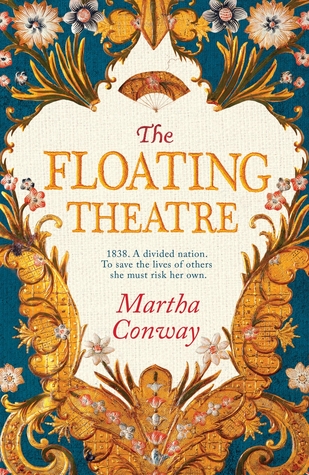 Conway gives a vivid sense of nineteenth-century theater life, both off-stage and on-, including just the right amount of historical detail so you can picture everything that’s going on. May is a delightfully no-nonsense narrator – she’d probably be diagnosed with Asperger’s nowadays for her literal approach and her initial inability to lie – and she’s supported by a wonderfully Dickensian cast of actors and crew members. The gripping plot takes on a serious dimension as May, too, gets drawn into the abolition movement: soon she’s helping to deliver runaway slaves from one side of the river to freedom on the other.
In America this was published as The Underground River, more clearly advertising its Underground Railroad theme. As it happens, I prefer this to Colson Whitehead’s The Underground Railroad, a novel to which it will inevitably be compared. (For one thing, Conway has a much more nuanced slave catcher character.) This is terrific historical fiction I can heartily recommend.
My rating:
The Floating Theatre was released in the UK by Zaffre, an imprint of Bonnier Publishing, on June 15th. My thanks to Imogen Sebba for the free copy for review.
An exclusive extract from The Floating Theatre:
Two figures were standing on the lower deck at the stern of the boat. One of them might have been Hugo, but as I got closer I saw that the other one was certainly not Helena—it was Thaddeus Mason, eating popcorn from a red-and-white striped bag.
“What ho, May!” Thaddeus called out when he saw me, as if he were practicing for a nautical part. I noticed he no longer wore his arm in a sling. The other man turned as I came up the gangplank; like Thaddeus, he wore his hair long, but his coloring was darker and he was half a head taller. There was a band of black crepe around his straw hat, and his shirtsleeves were rolled up past his elbows. Thaddeus introduced me.
“Captain Hugo Cushing,” the man said in a British accent, touching his hat.
“May and I were on the Moselle together,” Thaddeus told him—was that to be his introduction for me from now on? But he went on to say that Hugo’s sister Helena had been on the Moselle, too. “Do you remember the singer at dinner? Helena Cushing, of Hugo and Helena’s Floating Theatre?” Thaddeus took off his hat. “Sadly, she was not as fortunate as we were.”
I looked at Hugo and tried to think of something kind to say. I remembered the singer in her pink dress with the light shining behind her.
“The captain let her on to perform,” Hugo said. “We often made a few extra dollars this way. She was going to get off at the stop after Fulton. I was just pushing off to meet up with her there when the sky broke up with the explosion.”
“Oh,” I said. “That is—that’s very bad…” I trailed off awkwardly, but Thaddeus came in with a string of platitudes, which he spoke with great conviction and aplomb—a terrible disaster, an immense misfortune, the captain was a dastardly fellow.
“Where do you go?” I asked Hugo when Thaddeus finished. “Or do you stay here?”
He looked at me blankly.
“On this boat. Your theatre. Where do you perform?”
“Oh, well then, down along the Ohio, of course. We dock at a different town every day, put on a show, and then the next morning pull up and head for the next town. We go all the way to the Mississippi playing towns until the weather turns. Then we get pushed back up the river—I hire a steamer.” I could see that his boat, a flatboat, had no steam power of its own. “Fourth year at it,” he told me. “My sister and I put it all together. But now…” He made a gesture which I took to understand that for him, like me, his old partnership was over.
“And if that weren’t enough, his boat was damaged by the explosion,” Thaddeus added. “The captain was just telling me. Part of the Moselle’s paddle box shot in like a cannonball.”
“Even worse, my leather boat pump got punctured,” Hugo said. “Don’t know how I’m going to fix it, and a new one costs twenty dollars more than I have.”
“How much does a new one cost?” I asked.
He looked at me as if I were a fool. “Twenty dollars.”
“Where is your company?” Thaddeus asked him. “Maybe you could take up a collection.”
“They skittered off into town. Probably drinking their way into even more uselessness. Damn actors. Excuse me,” he said, but I wasn’t sure he meant the apology for me since he was looking out at the river. I wasn’t offended in any case. I had seen actors humiliate themselves in a variety of ways over the years.
I was delighted to be asked to participate in the blog tour for The Floating Theatre. See below for details of where other reviews and features have appeared.
Some Accidental Thematic Overlaps in My Recent Reading
Five of the books I’ve read recently (most of them while traveling to and from the States) have shared an overarching theme of loss, with mental illness, alcoholism, suicide, and dogs as subsidiary topics running through two or more of them. I hadn’t deliberately chosen these books for their commonalities, so it was uncanny to see the same elements keep popping up. I wanted to come up with some kind of impressively complex Venn diagram to show off these unexpected connections but couldn’t quite manage it, so you’ll have to imagine it instead.
Mental Illness
The Archivist by Martha Cooley
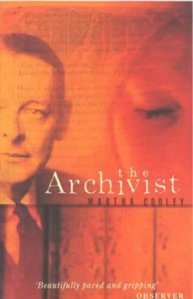 Matthias Lane is the archivist of the Mason Room, a university collection of rare books and literary papers. One of its treasures is a set of letters that passed between T.S. Eliot and his friend Emily Hale (held at Princeton in real life). Matt is haunted by memories of his late wife, Judith, a poet incarcerated in a mental hospital for over five years. A reckoning comes for Matt when he’s approached by Roberta Spire, a graduate student determined to view the Eliot–Hale letters even though they’re legally sealed until 2020. The more time Matt spends with Roberta, the more similarities start to arise between her and Judith; and between his situation and Eliot’s when the latter also put his wife away in a mental hospital. The novel asks what we owe the dead: whether we conform to their wishes or make our own decisions.
The Summer without Men by Siri Hustvedt
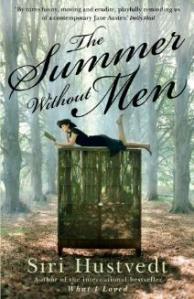 Thirty years on, poet Mia Fredricksen’s husband Boris asks her for a pause in their marriage so he can explore his feelings for his young French lab assistant. First things first: Mia goes crazy and ends up in a mental hospital for a short time. But then she sucks it up and goes back to her Minnesota hometown to teach poetry writing to teen girls for a summer, getting sucked into a bullying drama. This is a capable if not groundbreaking story of the shifts that occur in a long marriage and the strange things we all do as we face down the possibility of death. There are also wry comments about the unappreciated talents of the female artist. However, compared to the other two novels I’ve read from Hustvedt, this seemed feeble. Still, a quick and enjoyable enough read.
The Dogs of Babel by Carolyn Parkhurst
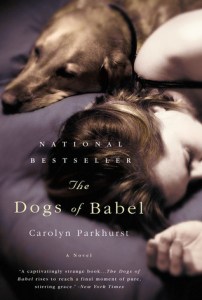 A delicious debut novel intellectual enough to bypass labels like ‘women’s fiction’ and ‘mystery’. One thing that sets it apart is how successfully Parkhurst writes from the perspective of a male narrator, Paul Iverson, who’s been knocked for six by the sudden death of his wife Lexy, a mask designer. While he was at the university where he teaches linguistics, she climbed to the top of the apple tree in their backyard and – what? fell? or jumped? The only ‘witness’ was their Rhodesian Ridgeback, Lorelei; in his grief Paul uses his sabbatical to research efforts to teach dogs to communicate, hoping one day Lorelei might tell all. Woven through are scenes from Paul and Lexy’s courtship and marriage; though Lexy occasionally struggled with her mental health, their dialogue is fun and zippy, like you might hear on The Gilmore Girls.
Suicide
The Archivist by Martha Cooley & The Dogs of Babel by Carolyn Parkhurst


Alcoholism
Don’t Let’s Go to the Dogs Tonight by Alexandra Fuller
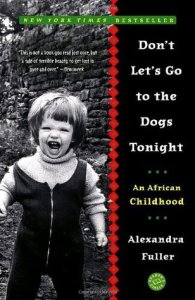 A classic memoir that conjures up all the sights, sounds, smells and feelings of Africa on the cusp of a colonial to postcolonial transition. Fuller’s family were struggling tobacco and cattle farmers in Rhodesia (Zimbabwe), Malawi and Zambia. She had absorbed the notion that white people were there to benevolently shepherd the natives, but came to question it when she met Africans for herself. While giving a sense of the continent’s political shifts, she mostly focuses on her own family: the four-person circus that was Bobo (that’s her), Van (older sister Vanessa), Dad, and Mum (an occasionally hospitalized manic-depressive alcoholic who lost three children) – not to mention an ever-changing menagerie of horses, dogs and other pets. This really takes you away to another place and time, as the best memoirs do, and the plentiful black-and-white photos are a great addition.
Let’s Take the Long Way Home by Gail Caldwell
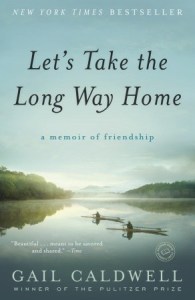 If you loved Ann Patchett’s Truth and Beauty, pick this up immediately. It’s a similar story of best friends: one who dies and one who survives. Caldwell’s best friend was Caroline Knapp (author of Drinking: A Love Story, among other nonfiction), whom she met via puppy ownership in Cambridge, Massachusetts. They were both single and childless, full-time authors with a history of alcoholism. Besides long walks with their dogs, they loved swimming and rowing together. In 2002 Caroline was diagnosed with stage-four lung cancer, inoperable and already metastasized. Despite all their proactive optimism, she was dead a matter of weeks later. In this moving and accessible short memoir, Caldwell drifts through her past, their friendship, Caroline’s illness, and the years of grief that followed the loss of Caroline and then her beloved Samoyed, Clementine, sharing what she learned about bereavement.
Dogs
The Dogs of Babel, Don’t Let’s Go to the Dogs Tonight & Let’s Take the Long Way Home


Do you ever find coincidental thematic connections in your reading?
Am I a (Book) Hoarder?
When I was a kid my parents and sister deemed me a pack rat, and over the years I’ve been a collector of many different things: stamps, coins, figurines, tea sets, shells, fossils, feathers, anything featuring puffins or llamas, and so on. At this point my only active collection is of books, but the others are all still in evidence in my old closet. I had a few good reasons to contemplate my belongings recently: first, I read a book about decluttering; then, on my recent trip back to the States, I helped my sister pack as she prepares to move out of her home of 12 years, and co-hosted a yard sale at my parents’ house to get rid of some of ye olde stuff.
Year of No Clutter, Eve O. Schaub
 Schaub faces the possibility that she has inherited a family tendency to hoarding and tackles her house’s clutter-filled “Hell Room.” From one February to the next she enlisted her daughters’ help sorting things into piles and came up with a regular route of consignment shops, thrift stores, and libraries where she could drop off carloads of donations. Bigger projects included a photo book of 100 of her daughter’s artworks and a rag rug incorporating many beloved articles of clothing.
I enjoyed the nitty-gritty details of how this family organized and got rid of things because I like big tidying projects and putting everything in its rightful place, whether that be the recycling bin, a crate in the attic, or a charity bag. But what I most appreciated was how sensitive Schaub is to all the issues that can be tied up with our stuff, especially OCD, nostalgia, and indecision. “Although Marie Kondo disapproves, I’m not about to stop collecting my own life,” she writes. “It has been a source of pleasure for me ever since I can remember; it helps define me.”
Helping Out
My sister is very much of the Marie Kondo school of de-cluttering. She strives for minimalism in her décor, and is constantly going back through her sons’ clothes and toys to see what she can get rid of. All the same, 12 years of living in the same house has spelled a lot of accumulation. As she did her last-minute wedding preparations in early August, I was let loose on the packing and soon got all the easy stuff – like books and decorations – boxed up. But I quickly became overwhelmed by what remained, such as the boys’ toy room, DIY supplies, and stacks upon stacks of framed art and photographs plus photo albums.

Nephew #2 “helps” with packing.
As I was packing I couldn’t keep myself from peeking into the albums and tearfully marvelling that the whole life she built with her first husband – who died of brain cancer in January 2015 – is over. Death is so simple and final, right? Yet even these many months later I have a hard time getting my head around how the huge personality and web of connections that was my brother-in-law could be gone. And this even though I couldn’t be happier that my sister has found love again and gained two terrific step-kids.
When she and her husband move into their new-build home later in the year and get all this stuff back out of storage, she’s going to have quite the job sorting through everything and deciding what of her old life to keep on display, or keep at all. How to honor the years that are gone without having them intrude on the new family that she’s made?
Making It Personal
Mementoes, including travel souvenirs and special cards and letters I’ve received, are particularly hard for me to cull. There are four or five sizable boxes full of mementoes in my closet in the States, and another couple in our attic here. Getting rid of correspondence just feels wrong to me; I’ve probably rarely deleted a personal e-mail in the last 20 years. It’s like I need that physical proof of the relationships and events that have meant the most to me.
I’m much less sentimental when it comes to most other objects. The yard sale my mom and I had last weekend was a great opportunity to get rid of things that had been sitting around for a decade or more and were just never going to join me in the UK, including lamps, cushions, a clock, a CD player, a jewelry box, a formal dress, a shoe rack, and various figurines and framed prints. I only made $37, and a lot remained to be picked up the Salvation Army (including a whole box of VHS films I found at the bottom of the closet), but it was good to shed some stuff – and I at least earned enough to cover my book and maple syrup shopping on this trip!


Now, even though there are 25–30 (smallish) boxes of books remaining in that closet, I can definitively say that I’m not as much of a book hoarder as I once was – back in high school, say. On this trip I went back through all of the boxes to consolidate them and pulled out another 50+ books to give away or resell on a future visit. I looked back with fondness through three boxes of books from my childhood, but then promptly handed them over to my mom to share with my nephews or give away, as she chooses.


Back in the UK, I keep on top of my book collection by considering carefully every time I read a book whether I want to keep it: Is it a favorite? Will I read it again, refer to it or lend it to others? If not, I might give it away to a friend, check the resale prices on Amazon, WeBuyBooks or Ziffit, or donate it to a charity shop. This keeps the review copies from piling up, and means that my shelves are always full but generally not overfull.
Are you brutal or sentimental when it comes to books and other possessions? When’s the last time you had a big clear-out?
Books in Brief: Five I Loved Recently
Feminist social history, visits with the world’s bees, a novel about a peculiar child and his reclusive writer mother, witty notes on Englishness, and tips on surviving heartbreak: five very different books, but I hope one or more of them is something that you’d enjoy.
Flâneuse: Women Walk the City in Paris, New York, Tokyo, Venice and London
By Lauren Elkin
 Raised in New York and now a Paris resident, Lauren Elkin has always felt at home in cities. Here she traces how women writers and artists have made the world’s great cities their own, blending memoir, social history and literary criticism. In a neat example of form flowing from content, the book meanders from city to city and figure to figure. My interest waned during later chapters on protesting (‘taking to the streets’) and the films of Agnès Varda. However, especially when she’s musing on Martha Gellhorn’s rootlessness, Elkin captures the angst of being a woman caught between places and purposes in a way that expatriates like myself will appreciate. It’s in making the history of the flâneuse personal that Elkin opens her book up to a wider swathe of readers than just the feminist social historians and literary critics who might seem like her natural audience. I would particularly recommend this to readers of Rebecca Solnit and Olivia Laing. (See my full review at The Bookbag.)
My rating:
Bee Quest: In Search of Rare Bees
By Dave Goulson
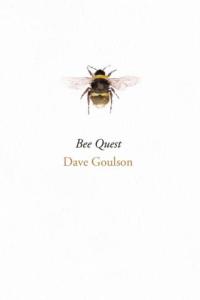 Goulson grows more like Bill Bryson and Gerald Durrell with each book. Although the topic of this, his third nature book (all of them are broadly about insects), is probably of least personal interest to me, there are plenty of wonderful asides and pieces of trivia that make it worth journeying along with him from Poland to Ecuador in the search for rare bees. For as close-up as his view often is, he also sees the big picture of environmental degradation and species loss. I learned some fairly dismaying facts: gold mining is extremely destructive to the environment, producing 20 tons of toxic material per ring; and it takes five liters of water to produce one almond in California. As for a more hopeful statistic: the billions of dollars it would take to set up conservation efforts for all the world’s species would still only equate to cutting world Coke consumption by 20%. It’s all a matter of priorities.
A favorite line:
“As is often the case in entomology, in the end it all comes down to the genitals.”
My rating:
Be Frank with Me
By Julia Claiborne Johnson
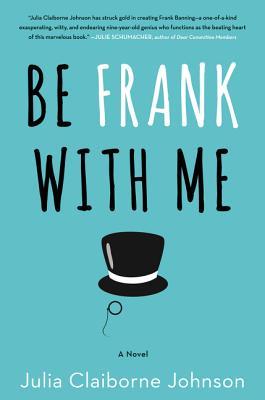 Alice, a young publishing assistant, is sent from New York City to Los Angeles to encourage one-hit wonder and Harper Lee type M.M. Banning to produce her long-delayed second novel. But when she arrives she discovers her most pressing duty is keeping an eye on Mimi’s oddball son, nine-year-old Frank. I doubt you’ve ever met a character quite like Frank. (I appreciated how, although he is clearly on what would be termed the autistic spectrum, Johnson avoids naming his condition.) Alice narrates the whole book in the first person. She finds herself caught in a four-person battle of wits – Alice, Mimi, Frank, and “itinerant male role model” Xander – inside Mimi’s big glass-fronted fishbowl of a house. There were a couple moments when I wondered where this madcap plot could be going. In particular, we have to wait a long time to find out whether Mimi is actually going to deliver another book. But the payout is worth waiting for. (See my full review at The Bookbag.)
My rating:
How to Be an Alien
By George Mikes
 (The first volume in the How to Be a Brit omnibus; originally published in 1946.) You can draw a straight line from this through Bill Bryson’s Notes from a Small Island to the “Very British Problems” phenomenon. Mikes (that’s “mee-cash” – he was a Hungarian journalist who accidentally moved to England permanently when he was sent to London as a correspondent just before World War II) made humorous observations that have, in general, aged well. The mini-essays on tea, weather, and queuing struck me as particularly apt. I’d heard this line before, though I can’t remember where: “An Englishman, even if he is alone, forms an orderly queue of one.”
Another favorite passage:
“It is all right to have central heating in an English home, except the bath room, because that is the only place where you are naked and wet at the same time, and you must give British germs a fair chance.” [This reminds me of when my mother made her first trip to England in 2004 to visit me during my study abroad year; in her family newsletter reporting on the experience, one of her key observations was, “British bathrooms are antiquated.” My husband and I still quote this to each other regularly.]
My rating:
A Manual for Heartache
By Cathy Rentzenbrink
 This is a follow-up to Rentzenbrink’s memoir, The Last Act of Love, which was about the accident that left her brother in a vegetative state for eight years and the legal battle she and her parents fought to be able to end his life. The first quarter of this book contains fairly generic advice for people who have been through family tragedy, illness or some other hardship. It’s when Rentzenbrink makes things personal, talking about her own struggles with PTSD and depression and strategies that have helped her over the years, that the book improves, and it maintains a pretty high standard therafter. Although you wouldn’t really call anything in here groundbreaking, it’s a slim and accessible volume that I could see being helpful for anyone who’s grieving, even someone who’s not usually a reader or has a short attention span. (I won a copy in a Goodreads giveaway.)
A couple favorite passages:
“Experiencing grief for the first time is like the dark twin of falling in love. It feels a bit crazy, and we don’t think anyone has ever felt exactly as we do. But of course they have.”
“We don’t need to be unbroken. Our first step is simply to stop trying to hide our scars. Heartache is human.”
My rating:
Have you read any of these? Which one takes your fancy?
Culling My Goodreads TBR
You could say my Goodreads to-read shelf has gotten out of hand. As of July 17th it was at 7190 titles. That includes pretty much every book I’ve ever heard about and thought “yeah, maybe I’ll read that someday.” Inspired by Eleanor’s “Down the TBR Hole” posts, I decided something needed to be done – but not just 5–10 titles at a time or I’d be at this forever. So in the last couple weeks I’ve looked through a few hundred or so entries on my TBR each day, starting with the ones that were added longest ago.
My culling strategies were as follows:
Remove:
- Any duplicates – it’s possible to add multiple editions of a book (especially print vs. Kindle) without realizing it.
- Anything I don’t recognize in the slightest, even after a brief refresher on the blurb.
- Anything that doesn’t look like something I would read; yes, I’m afraid this involves judging the book by its cover.
- Anything labeled #1, or that I know is a sequel – I don’t generally read series.
- Most of what came up in searches for “murder,” “kill,” “detect,” “body,” “blood” or “mystery” – just facing facts here: I don’t ever read crime fiction. If a murder is incidental to a plot, fine, but I don’t search out mysteries.
- Any book I already own in print or e-format; the book itself serves as the reminder that I intend to read it. [Exception: I maintain “Kindle priority” and “priority advanced 2017 read” shelves.]
Get down to just one to-find-next title for each author. I already know I’ll read anything by Wendell Berry or Margaret Atwood, so I don’t need 10 titles on my TBR; I’ll keep the one I’m most keen on at the moment. Likewise, I discovered three titles each by Ivan Doig, Helen Garner and Tom Drury on the TBR but can’t remember how I even heard of these authors; I cut down to one title apiece. [Exceptions:
- If an author has written in very different genres, I’ll retain two books to showcase the diversity, perhaps one fiction and one nonfiction.
- If it’s an author I know I want to read everything by and there’s just a handful more books that I need to find to complete the set (e.g. Carol Shields and Marcus Borg), I’ll keep them all on the list so I know to look out for them.]
Transfer some reference-type books (e.g. philosophy/ethics books, essay collections, anthologies and cookbooks) to my “to skim only” shelf.
Say goodbye to an author who’s disappointed me in the past (Marina Endicott), who I’ve decided I might not be interested in after all (Russell Banks), or whom I’ve gone off (Howard Jacobson).
Scan through for notably low average ratings.
- For any book where this is below, say, 3.4, I’ll look back at the blurb and scan through the reviews, especially those by friends, and decide on a case-by-case basis whether I want to keep it on the list.
- Any book with a rating significantly below 3.0 gets deleted as a matter of course. There is the potential here for deleting some books that are polarizing and I might just love, but it’s a risk I’m willing to take; if I’m meant to read a book in my lifetime, it’ll happen somehow. [At one point, to hurry things along, I organized the to-read shelf by ascending average rating and (after getting past a bunch of 0.00 ratings for pre-release or unrated books) managed to cull a good number of books with a 2.-something average.]
This has turned out to be a much more laborious process than I’d hoped, mostly because you can only delete one title at a time and always have to click “OK” to verify. It would go so much faster if I could select 10 or 20 titles to delete at once. Yet it’s ended up being a rewarding undertaking because I’ve rediscovered many books I’d completely forgotten about. Along the way I’m adding loads to my thematic shelves and have updated my “priority to find” list. I’ve also created various new shelves like “parenting,” “dementia” and “Nancy Pearl recommendation”.
After working on this off and on for two weeks – keeping a Goodreads window open all day while doing other computer work – I managed to get the TBR down to 5498 titles. So I’ve cut the original list down by about 23.5%. However, I still have 91 pages of results to sift through. It’s a bit depressing that after all the effort I’ve put in I still have so much to do when I get back from America. At the same time, it’s quite the addictive little task. The idea is that ultimately the TBR will be significantly shorter and more targeted to my tastes.
I shall report back when I’m finally finished!
 Bookish Beck = Rebecca Foster. American transplant to England. Freelance proofreader and book reviewer.
