This Year’s Pre-Christmas Reading
My household has been struck down by flu Covid this week, so we’ve had to cancel some all of our holiday plans and I haven’t had as much energy or festive good cheer as I would like. This is my favourite time of the blogging year what with everyone’s best-of lists appearing, so I hope that come Boxing Day I will be feeling up for starting my own countdown of superlatives and catching up on everything you all have posted recently.
Two of my recent reads were appropriate Yuletide choices:
 Robin by Helen F. Wilson: The most recent release from the “Animal” series issued by the British indie publisher Reaktion. (I’d previously read Seal.) Wilson introduces the breadth of international bird species that are known by the name “robin.” (The European robin, the protagonist of this monograph, is the only bird in its genus and is not as closely related to the American robin (a thrush) as to the bluebird; the name simply referenced the red breast. There are also magpie-robins in Southeast Asia.) Like another strikingly red bird, the cardinal in North America, the robin has long been associated with a) death and b) Christmas. They might be a portent of death, or an embodiment of the soul of the departed. For instance, the legend has it that a robin spent days in Westminster Abbey while Queen Mary II lay in state. Robins are the UK’s official favourite bird because they look cute and act endearing and sing sweetly, but they are violently territorial. (The old nursery rhyme “Who Killed Cock Robin?” also set up a weird and false vendetta between sparrows and robins.) This was a pleasant wander through biological and cultural information. I particularly loved the photos and other illustrations.
 Small Things Like These by Claire Keegan: I read this last year but reread it earlier this month for book club. A year ago, I called it a predictable narrative and thought the evil nuns were a stereotype. This time, Keegan really got me in the feels, just as she had with Foster a couple of months before. The Church-sanctioned abuse that was the Magdalen Laundries must have seemed like a system too big to tackle, but take a look at the title. One good man’s small act of rebellion was a way of standing up to the injustice and saying that these girls were of worth (indeed, this won the Orwell Prize for political fiction). This time around, I was especially impressed by how much Keegan fits into so few pages, including Bill working out who his father was. We also get a strong sense of a man in the middle of his life: privileged enough, happy enough, but wondering if this is all there is to it; if there is something more on offer. Like Foster, this is set in the 1980s but feels timeless, and seems to effortlessly encompass so much of what it means to be human. Absolutely beautiful.


Merry Christmas, all!
The Ones that Got Away: 2022’s DNFs, Most Anticipated Reads & More
Every time I list my DNFs the posts are absurdly popular, so if this is the permission you need to drop that book you’ve been struggling with, take it! If for any reason a book isn’t connecting with you, move onto something else; you can always try it another time. I’ve given a few words as to why I gave up on each one. In rough chronological order:
What Cannot Be Undone by Walter M. Robinson: Medical essays. Repetitive and mawkish; won’t stand out in the crowded field of doctors’ memoirs.
Loss of Memory Is Only Temporary by Johanna Kaplan: Rediscovered short stories of Jewish NYC in the 1960s–70s. The character portraits are sharp, but the first story, “Other People’s Lives,” is novella length and felt absolutely endless.
Six Walks: In the Footsteps of Henry David Thoreau by Ben Shattuck: Nice enough travel writing about trips to Cape Cod, Walden Pond and Mt. Katahdin, but the information on Thoreau (including extensive quotations) is not well integrated and the reflections generic.
Here Comes the Miracle by Anna Beecher (from the ST Young Writer of the Year Award shortlist): MA-course writing-by-numbers and seemed to be building towards When God Was a Rabbit-style mawkishness.
Empire of Wild by Cherie Dimaline: The premise was appealing but it was so slow to go anywhere and the writing was only so-so.
Devotion by Hannah Kent: I was enjoying the beautiful writing and the gentle love story unfolding between two teenage girls setting off from Prussia to Australia with their families. My interest waned a little during the start of the sea voyage, as I kept waiting for the bizarre twist other bloggers had warned of. When I finally got to it, it seemed so silly that I could scarcely be bothered to continue. A shame as I was getting Kiran Millwood Hargrave vibes.
Mercury Pictures Presents by Anthony Marra: A huge disappointment as I adored Marra’s two previous works. I wasn’t connecting to the characters or setting at all. Something about it felt too familiar, also; I kept trying to think what it was reminding me of. Mr Wilder & Me by Jonathan Coe?
After Sappho by Selby Wynn Schwartz: From the Booker Prize longlist. Another case of a terrific premise – and interesting style, too, what with the first person plural in the prologue and the discrete paragraphs like prose poems – but I found that there were too many historical figures, most of them too obscure for me to get interested in.
Raining Sideways: A Devonshire Diary of Food and Farming by Sally Vincent: Boring observations, poorly edited.
Motherthing by Ainslie Hogarth: I actually read about two-thirds of this comic horror novel about a woman dealing with the aftermath of her hateful mother-in-law’s suicide, and intended to review it for R.I.P. even though it felt try-hard. But when my mother died I found that the whole thing seemed in poor taste and I didn’t want to go back to it.
Liberation Day by George Saunders: I only read the first story, which was so much like “The Semplica Girl Diaries” (from Tenth of December) in voice and content that it felt unnecessary, as well as being overlong (nearly 1/3 of the whole book). I’ll hold my place in the Kindle edition and think about trying the rest again another time.
Lessons by Ian McEwan: I’m used to much shorter novels with more contrived plots from McEwan, whereas this feels like the sort of rambling life story William Boyd would have written. I was intrigued by the promised element of Roland’s abuse by his childhood piano teacher, but bored with the Cold War theme of the 1980s strand (which feels most like The Child in Time from his past oeuvre). Perhaps I’ll try it again another day.
Plus a handful more I didn’t keep notes on and barely remember, so they just get my reductive and unfair two-word summaries (alphabetical order this time):
- Human Croquet by Kate Atkinson: Too quirky.
- The Flow by Amy-Jane Beer: Too overwritten.
- The Wilderness by Sarah Duguid: Too pulpy.
- Brave New World: A Graphic Novel by Fred Fordham: Too lurid.
- Mother’s Boy by Patrick Gale: Too mild.
- The Quarry by Ben Halls: Too gritty.
- The White Rock by Anna Hope: Too what’s-the-point.
- One Good Story, That One by Thomas King: Too trickster.
- As I Walked Out One Midsummer Morning by Laurie Lee: Too old-fashioned.
- Homage to Catalonia by George Orwell: Too academic.
- What Is Not Yours Is Not Yours by Helen Oyeyemi: Too weird.
- Catch Your Breath by Ed Patrick: Too unfunny.
- The Unadoptables by Hana Tooke: Too boring.
Whew. I think that’s all.
That works out to abandoning about 8% of the books I started in the year, which is not a bad average for me (often it’s closer to 15%).
In January, I wrote about the 20 new releases I was most looking forward to reading in 2022. Here’s how I did with them:
Read and enjoyed (3.5* or above rating): 10 (a few will appear on my Best-of lists for the year)
Currently reading: 2
Started but set aside; need to finish: 3
Haven’t managed to get hold of: 3
Not actually published yet: 2 (Heartstopper, Volume 5 is now due out in 2023; try as I might, I can’t find any info on A Violent Woman by Ayana Mathis.)
This beats last year’s showing, when I had 5 DNFs from my Most Anticipated list!
I regret running out of time to finish True Biz and Horse from that Most Anticipated list, as well as The Rabbit Hutch (a bit too clever for its own good?) and Fight Night. It’s entirely possible that I could have found some more year favourites on my groaning set-aside and review backlog shelves. I also would have liked to get to the in-demand 2022 releases I’ve just picked up from the library, including The Seven Moons of Maali Almeida and Our Missing Hearts. No matter – I’ll enjoy these just as much when I get to them in an unhurried fashion next year.
What are some of the ‘ones that got away’ from you this year?
The Barbellion Prize 2022 Longlist
This is the third year that the Barbellion Prize will be awarded “to an author whose work has best represented the experience of chronic illness and/or disability.” In the inaugural year I read the entire shortlist, and last year I had already read a few from the longlist and was able to review another two shortlisted titles before the prize announcement.
The 2022 longlist was announced on Friday and contains two books I’d predicted – Hybrid Humans, which I reviewed earlier in the year; and Polluted Sex – and one more that I’d heard of (Chouette), while the rest were new to me. Letty McHugh kindly sent me a PDF copy of her self-published memoir in poems, Book of Hours, and I may be able to get some of the others from the publishers to support the prize through reviews early in the new year.
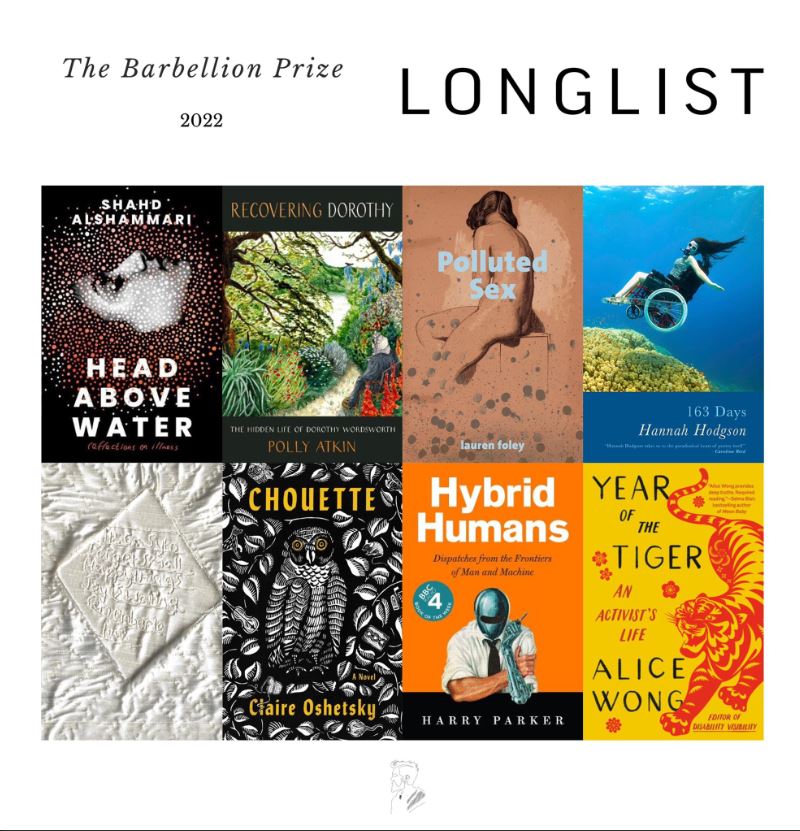
This list comes from the Prize website. Click on any title for more information. Here we have three (hybrid) memoirs, two autobiographical poetry collections, a novel, a book of short stories, and a biography. Will it be the year for a poetry collection or biography to win?
Head Above Water by Shahd Alshammari (Neem Tree Press)
From the synopsis: “takes us into a space of intimate conversations on illness and society’s stigmatization of disabled bodies. We are invited in to ask the big questions about life, loss, and the place of the other. … Through conversations about women’s identities, bodies, and our journeys through life, we arrive at a politics of love, survival, and hope.”
Recovering Dorothy: The Hidden Life of Dorothy Wordsworth by Polly Atkin (Saraband)
From the synopsis: “Less well known [than her writing and famous brother] … is that Dorothy became seriously ill … and was mostly housebound for the last 20 years of her life. Her personal letters and unpublished journals from this time … [show] a compassionate and creative woman who made her sickroom into a garden … and … grew to call herself a poet.”
Polluted Sex by Lauren Foley (Influx Press)
From the synopsis: “A pregnant woman takes the ferry to the UK. … Two ungendered characters contest the same female body. … Lauren Foley’s debut collection of dramatic short stories … is fearless in its depiction of women’s bodies and sexuality, offering an unflinching window into Irish girl and womanhood.”
163 Days by Hannah Hodgson (Seren Books)
From the synopsis: “Hodgson is an award-winning poet and a palliative care patient. In her compelling debut collection … she uses a panoply of medical, legal, and personal vocabularies to explore what illness, death and dying does to a person as both patient and witness. 163 days is the length of Hannah’s longest period of hospitalisation to date.”
From the synopsis: “Over the course of the pandemic, a complication with my chronic illness left me alone in a darkened room for three weeks. I drew comfort from an imagined Book of Hours. … Book of Hours is a collection of lyric essay and poetry exploring what it means to have faith, why we chase suffering and how to take solace in small joys.”
Chouette by Claire Oshetsky (Ecco/HarperCollins)
From the synopsis: “When Chouette is born small and broken-winged, Tiny … [is left] on her own to care for a child who seems more predatory bird than baby. … When she discovers that her husband is on an obsessive and increasingly dangerous quest to find a “cure” for their daughter, Tiny must decide whether Chouette should be raised to fit in or to be herself”.
My blog review excerpt: “Parker was a captain in the British Army in Afghanistan when an IED took his legs. Now he wears prostheses that make him roughly 12% machine. Pain management, PTSD, phantom limbs, foreign body rejection, and deep brain stimulation are other topics in this wide-ranging study that is at the juncture of the personal and political.”
Year of The Tiger: An Activist’s Life by Alice Wong (Vintage Books/PRH)
From the synopsis: “[With] original essays, previously published work, conversations, graphics, photos, commissioned art by disabled and Asian American artists, and more, Alice uses her unique talent to share an impressionistic scrapbook of her life as an Asian American disabled activist, community organizer, media maker, and dreamer.”
This year’s judges are Dr Emmeline Burdett, Lynn Buckle (last year’s winner) and scholar Ray Davis. The shortlist is due out in January and the winner will be announced in February.
Do any of these nominees appeal to you?
Love Your Library, December 2022
The UK has just experienced its coldest week since 2010, so it’s no wonder we’ve been freezing here in our drafty old house. It’s turning milder (and rainy), so we hope to have it habitable for hosting my parents-in-law on Christmas day, and my sister the week after.
Margaret sent me a link to this charming story about a public library in Poland that moved its entire collection 350 meters down the road using a human chain of over 600 volunteers. Marcie sourced many of her graphic novel and poetry reads, as well as various globe-trotting stories, from the library this year. And Eleanor has been reading loads of print and e-books from her library: everything from Dickens to sci-fi. Thank you all for your contributions!
Earlier in the month my library closed to the public for two days to complete a stock take (which happens once every three years). I helped out for my usual two hours on the Tuesday morning, scanning children’s chapter books with a tiny device about the size of two memory sticks put together. We scanned the library’s nearly 50,000 on-shelf items in the equivalent of just over one working day.
All of my remaining reservations seem to have come in at once. There’s no hope of me reading all the big-name 2022 releases (such as the Booker Prize winner, and Celeste Ng’s new novel) before the end of the year, but I will see if I can manage to finish a few more that I have in progress.
Since last month:
READ
- Pages & Co.: The Treehouse Library by Anna James

- Heat and Dust by Ruth Prawer Jhabvala
- Maureen Fry and the Angel of the North by Rachel Joyce
- Everything the Light Touches by Janice Pariat
- Leap Year by Helen Russell

- The Family Retreat by Bev Thomas
- Another Brooklyn by Jacqueline Woodson

CURRENTLY READING
- Horse by Geraldine Brooks
- A Heart that Works by Rob Delaney
- Leila and the Blue Fox by Kiran Millwood Hargrave
- Standard Deviation by Katherine Heiny
- Crying in H Mart by Michelle Zauner
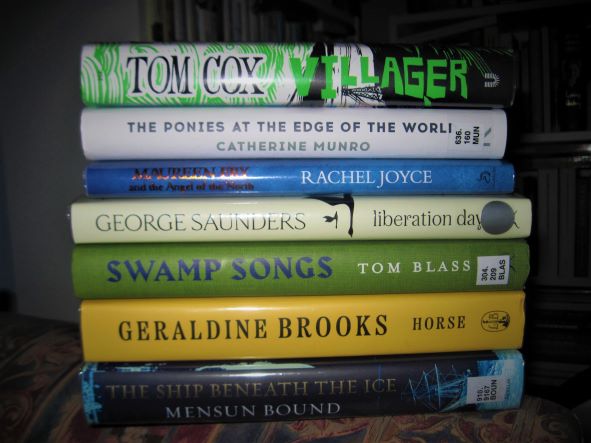
RETURNED UNFINISHED
- Lessons by Ian McEwan
- Liberation Day by George Saunders
What have you been reading or reviewing from the library recently?

Share a link to your own post in the comments. Feel free to use the above image. The hashtag is #LoveYourLibrary.
Review Catch-up: Lost & Found and Briefly, A Delicious Life
Picador has become one of the most reliable publishers for me, whether it’s fiction or nonfiction. My ever more preposterous backlog won’t be diminishing much before the end of the year, but here are two 2022 Picador releases from my Most Anticipated list that I picked back up recently and enjoyed: a bereavement memoir turned love story, and a historical novel about a real writer–musician pair as observed by a centuries-dead ghost.
Lost & Found: A Memoir by Kathryn Schulz
Schulz is a staff writer for the New Yorker, and her 2010 book Being Wrong was my favourite kind of nonfiction: wide-ranging, erudite and uncategorizable. When I heard she’d written a bereavement memoir, I was beyond eager to read it. Her father, Isaac, was a scholarly and opinionated Polish Jew whose family emigrated from Israel via Germany to the USA in the early 1950s. Schulz grew up in the Cleveland suburbs of Ohio. Her father died at 74 after a decade of poor health. I read part of this book on the transatlantic flight to my mother’s funeral, and found the thoughts on grief so wise and true. “One of the many ways that loss instructs us is by correcting our sense of scale, showing us the world as it really is: so enormous, complex, and mysterious that there is nothing too large to be lost.”

But loss is not the end of this story; it overlaps with and is in some sense superseded by an unexpected romance. Introduced by mutual friends 18 months before her father’s death, Schulz and “C.” (fellow New Yorker writer Casey Cep) quickly fell in love and fashioned a life together on the Eastern Shore of Maryland, despite some significant differences in temperament and background – for instance, C. is a devout Lutheran while Schulz is a largely non-practicing Jew. She manages to braid this together with bereavement: “Love, like grief, has the properties of a fluid: it flows everywhere, fills any container, saturates everything.” My only slight frustration with the book was the amount of generic material on losing and finding and what other thinkers have had to say about these universal experiences – I tended to skip past it to get back to the narrative of her developing relationship with C. 
Briefly, A Delicious Life by Nell Stevens
This is Stevens’s third book but her first novel; her previous books (Bleaker House and Mrs Gaskell & Me) were autofiction-ish but have tended to be classified as memoirs. That same playfulness with genre is here, turning what could have been a straightforward biographical novel about George Sand – in the vein of the underwhelming The Dream Lover by Elizabeth Berg – into something cheeky and magical.
George Sand spent the winter of 1838–9 on Mallorca with her children, Solange and Maurice, and her lover, composer Frédéric Chopin. Stevens imagines that the monastery where they stay is still haunted by Blanca, a teenager who died in childbirth (having been impregnated by one of the trainee monks) there in 1473. Sand and Chopin – between them “Godless foreign odd consumptive cross-dressers … strangers and strange and strangely insouciant about their strangeness” – are instantly unpopular with the locals.
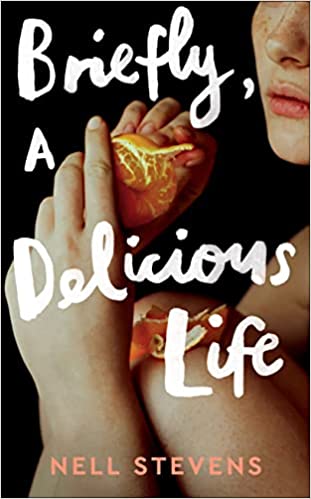
Blanca draws readers along on a tour of own past and George’s. Like any benevolent ghost, she’s a fan of pranks, but also hopes that she might use her power of omniscience to reverse tragic trajectories. A lover of men in her lifetime, she’s now enamoured with women in the hereafter, and outraged at how, even centuries later, women’s rights and desire are still being ignored. This is an earthy, impish, sexy read. Though it starts to wear a little thin before the end, it’s still well worth the ride.
With thanks to Picador for the proof copies for review.
Would you be interested in reading one or both of these? Do you have go-to/favourite publishers?
Book Serendipity, Mid-October to Mid-December 2022
The last entry in this series for the year. Those of you who join me for Love Your Library, note that I’ll host it on the 19th this month to avoid the holidays. Other than that, I don’t know how many more posts I’ll fit in before my year-end coverage (about six posts of best-of lists and statistics). Maybe I’ll manage a few more backlog reviews and a thematic roundup.
I call it “Book Serendipity” when two or more books that I read at the same time or in quick succession have something in common – the more bizarre, the better. This is a regular feature of mine every few months. Because I usually have 20–30 books on the go at once, I suppose I’m more prone to such incidents. The following are in roughly chronological order.
- Tom Swifties (a punning joke involving the way a quotation is attributed) in Savage Tales by Tara Bergin (“We get a lot of writers in here, said the rollercoaster operator lowering the bar”) and one of the stories in Birds of America by Lorrie Moore (“Would you like a soda? he asked spritely”).
- Prince’s androgynous symbol was on the cover of Dickens and Prince by Nick Hornby and is mentioned in the opening pages of Shameless by Nadia Bolz-Weber.


- Clarence Thomas is mentioned in one story of Birds of America by Lorrie Moore and Encore by May Sarton. (A function of them both dating to the early 1990s!)
- A kerfuffle over a ring belonging to the dead in one story of Shoot the Horses First by Leah Angstman and Motherthing by Ainslie Hogarth.
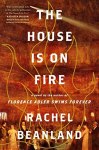
- Excellent historical fiction with a 2023 release date in which the amputation of a woman’s leg is a threat or a reality: one story of Shoot the Horses First by Leah Angstman and The House Is on Fire by Rachel Beanland.
- More of a real-life coincidence, this one: I was looking into Paradise, Piece by Piece by Molly Peacock, a memoir I already had on my TBR, because of an Instagram post I’d read about books that were influential on a childfree woman. Then, later the same day, my inbox showed that Molly Peacock herself had contacted me through my blog’s contact form, offering a review copy of her latest book!
- Reading nonfiction books titled The Heart of Things (by Richard Holloway) and The Small Heart of Things (by Julian Hoffman) at the same time.
- A woman investigates her husband’s past breakdown for clues to his current mental health in The Fear Index by Robert Harris and Motherthing by Ainslie Hogarth.
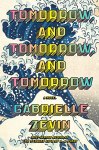
- “Tomorrow and tomorrow and tomorrow” is a repeated phrase in Another Brooklyn by Jacqueline Woodson, as it was in Tomorrow and Tomorrow and Tomorrow by Gabrielle Zevin.

- Massive, much-anticipated novel by respected author who doesn’t publish very often, and that changed names along the way: John Irving’s The Last Chairlift (2022) was originally “Darkness as a Bride” (a better title!); Abraham Verghese’s The Covenant of Water (2023) started off as “The Maramon Convention.” I plan to read the Verghese but have decided against the Irving.
- Looting and white flight in New York City in Feral City by Jeremiah Moss and Another Brooklyn by Jacqueline Woodson.
- Two bereavement memoirs about a loved one’s death from pancreatic cancer: Ti Amo by Hanne Ørstavik and Crying in H Mart by Michelle Zauner.


- The Owl and the Pussycat of Edward Lear’s poem turn up in an update poem by Margaret Atwood in her collection The Door and in Anna James’s fifth Pages & Co. book, The Treehouse Library.
- Two books in which the author draws security attention for close observation of living things on the ground: Where the Wildflowers Grow by Leif Bersweden and The Lichen Museum by A. Laurie Palmer.
- Seal and human motherhood are compared in Zig-Zag Boy by Tanya Frank and All of Us Together in the End by Matthew Vollmer, two 2023 memoirs I’m enjoying a lot.


- Mystical lights appear in Animal Life by Auður Ava Ólafsdóttir (the Northern Lights, there) and All of Us Together in the End by Matthew Vollmer.
- St Vitus Dance is mentioned in Zig-Zag Boy by Tanya Frank and Robin by Helen F. Wilson.
- The history of white supremacy as a deliberate project in Oregon was a major element in Heaven Is a Place on Earth by Adrian Shirk, which I read earlier in the year, and has now recurred in The Distance from Slaughter County by Steven Moore.


What’s the weirdest reading coincidence you’ve had lately?
Animal Life by Auður Ava Ólafsdóttir
Icelandic author Auður Ava Ólafsdóttir was familiar to me from Butterflies in November (2013), a whimsical, feminist road trip novel I reviewed for For Books’ Sake. Dómhildur or “Dýja” is, like her grandaunt before her, a midwife – a word that was once voted Iceland’s most beautiful: ljósmóðir combines the words for light and mother, so it connotes “mother of light.” On the other side of the family, Dýja’s relatives are undertakers, a neat setup that sees her clan “handling people at their points of entry and exit.”
 Along with her profession, Dýja inherited her great-aunt’s apartment, nine bottles of sherry, pen pal letters to a Welsh midwife and a box containing several discursive manuscripts of philosophical musings, one of them entitled Animal Life. In fragments from this book within the book, we see how her grandaunt recorded philosophical musings about coincidences and humanity in relation to other species, vacillating between the poetic and the scientific.
As Christmas – and an unprecedented storm prophesied by her meteorologist sister – approaches, Dýja starts to make the apartment less of a mausoleum and more her own home, trading lots of the fusty furniture for a colleague’s help with painting and decorating, and flirting with an Australian tourist who’s staying in the apartment upstairs. Outside of work she has never had much of a personal life, so she’s finally finding a better balance.
I really warmed to the grandaunt character and enjoyed the peppering of her aphorisms. As in novels like The Birth House and A Ghost in the Throat, it feels like this is a female wisdom, somewhat forbidden and witchy. The idea of it being passed down through the generations is appealing. We get less of a sense of Dýja overall, only late on finding that she has her own traumatic backstory. For a first-person narrator, she’s lacking the expected interiority. Mostly, we see her interactions with a random selection of minor characters such as an electrician whose wife is experiencing postpartum depression.
I felt there were a few too many disparate elements here, not all joined but just left on the page as a quirky smorgasbord. Still, it’s fun to try fiction in translation sometimes, especially when it’s of novella length. This also reminded me a bit of Weather and Brood.
Translated by Brian FitzGibbon. With thanks to Pushkin Press for my free copy for review.
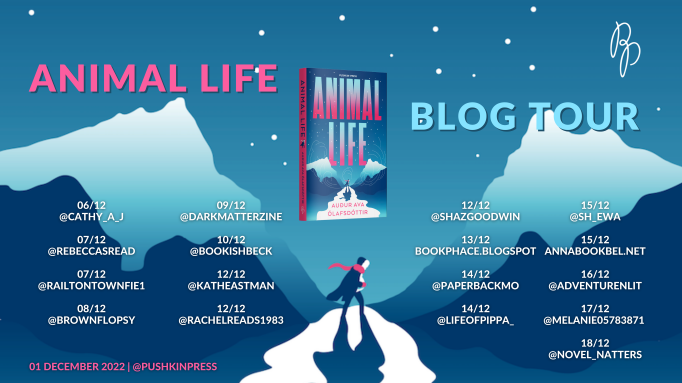
I was delighted to be part of the blog tour for Animal Life. See below for details of where other reviews have appeared or will be appearing soon.
Literary Wives Club: State of the Union by Nick Hornby
This was my third read for the Literary Wives online book club. The other members will also be posting their thoughts this week.
Kay at What Me Read
Lynn at Smoke & Mirrors
Naomi at Consumed by Ink
I first read State of the Union nearly three years ago (my original review). Nick Hornby is a reliable author for me; I’ve read almost his entire oeuvre now. This is an enjoyable novella that feels more like a screenplay – it basically is the script for the TV series – and is based around 10 dialogues between Tom and Louise, a couple meeting up at a pub for a drink before each marriage counselling session with Kenyon. Louise is an NHS gerontologist; Tom is an unemployed music journalist. When they stopped having sex, she had an affair. It was a short-lived thing, but it crushed Tom’s self-esteem and he moved out. The fact that one of them voted for Brexit and the other did not is an additional barrier. Though they have two children, we learn basically nothing about them. Tom and Louise talk about their relationship, but also everything else. They speculate about Kenyon’s other clients, and their own future.

The central question we ask about the books we read for Literary Wives is:
What does this book say about wives or about the experience of being a wife?
“How are new starts possible?” Louise says. “When you’ve been together for a long time, and you have kids, and you’ve spent years and years being irritated by the other person?”
I remember finding the book funny, though also on the nose, the first time I read it; this time it seemed more depressing. It could be something about the ebb and flow of all marriages, mine and the fictional one depicted.
What stood out to me most was that the main characters don’t appear to have much in common. They met at a party in their twenties and, when Louise asks if in an alternate life where they didn’t have a sexual connection (and thus, no kids together) they would be friends, they conclude that they wouldn’t. I’ve always thought that, at its heart, a marriage is a friendship. You should truly enjoy each other’s company and have at least a few common interests. Having other friends and separate hobbies is fine, of course, but for the one person you’re going to spend most of your time with to be very different from you strikes me as odd. Opposites attract is all well and good as a basis for lust, but not for a lasting partnership.
Tom and Louise are in danger of ‘staying together for the kids’ – is co-parenting all that’s keeping them together? – unless they rediscover a sexual spark. I’d forgotten the ending of the book. It seems like a fitting one for a TV miniseries and for a comic author.
My original rating (2019):
My rating now:
Next book: His Only Wife by Peace Adzo Medie (March 2023)
December Reading Plans
November is always a busy blogging month what with co-hosting Novellas in November and making small contributions to several other challenges: Nonfiction November, German Literature Month, and Margaret Atwood Reading Month.
In the final month of the year, my ambitions are always split:
I want to get to as many 2022 releases as possible … but I also want to dip a toe into the 2023 offerings.
I need to work on my review copy backlog … but I also want to relax and read some cosy wintry or holiday-themed stuff.
I want to get to the library books I’ve had out for ages … but I also want to spend some time reading from my shelves.
And that’s not even to mention my second year of McKitterick Prize judging (my manuscript longlist is due at the end of January).
My set-aside shelves (yes, literal shelves plural) are beyond ridiculous, and I have another partial shelf of review books not yet started. I do feel bad that I’ve accepted so many 2022 books for review and not read them, let alone reviewed them. But books are patient, and I’m going to cut myself some slack given that my year has contained two of the most stressful events possible (buying and moving into a house, and the death of a close family member).
I’m not even going to show you my preposterous backlog, because my WordPress media library is at capacity. “Looks like you have used 3.0 GB of your 3.0 GB upload limit (99%).” I’ll have to work on deleting lots of old images later on this month so that I can post photos of my best-of stacks towards the end of the year.
 So, for December I’ll work a bit on all of the above. My one final challenge to self is “Diverse December” – not official since 2020, when Naomi Frisby spearheaded it, but worth doing anyway. This is the second year that I’ve specifically monitored my reading of BIPOC authors. Last year, I managed 18.5%. I have no idea where I stand now, but would like to see a higher total.
 I’ll start with a December review book, A Down Home Meal for These Difficult Times by Meron Hadero, and see how I go from there. I was a lucky recipient of a proof copy of The Late Americans by Brandon Taylor, one of my new favourite authors; it doesn’t come out until May 23 in the USA and June 22 in the UK, but I will also see if I can read it early. Another potential 2023 release I have by a BIPOC author is Camp Zero by Michelle Min Sterling, a debut dystopian novel about climate refugees, which arrived unsolicited last month.
Among the other tempting options on my dedicated BIPOC-author shelf:
Leave the World Behind by Rumaan Alam
Black Buck by Mateo Askaripour
Fruit of the Drunken Tree by Ingrid Rojas Contreras
The Inheritance of Loss by Kiran Desai
Diamond Hill by Kit Fan
A Fine Balance by Rohinton Mistry
Still Born by Guadalupe Nettel
The Last of Her Kind by Sigrid Nunez
Names of the Women by Jeet Thayil
What are your year-end bookish plans? Happy December reading!
Novellas in November 2022: That’s a Wrap!
This was Cathy’s and my third year co-hosting Novellas in November. We’ve done our best keeping up with your posts, which Cathy has collected as links on her master post.
The challenge seemed doomed at points, what with my bereavement and Cathy catching Covid a second time, but we persisted! At last count, we had 42 bloggers who took part this year, contributing just over 150 posts covering some 170+ books.
Ten of us read our chosen buddy read, Foster by Claire Keegan (with four bloggers reading Keegan’s Small Things Like These also/instead). I’ve gathered the review links here.
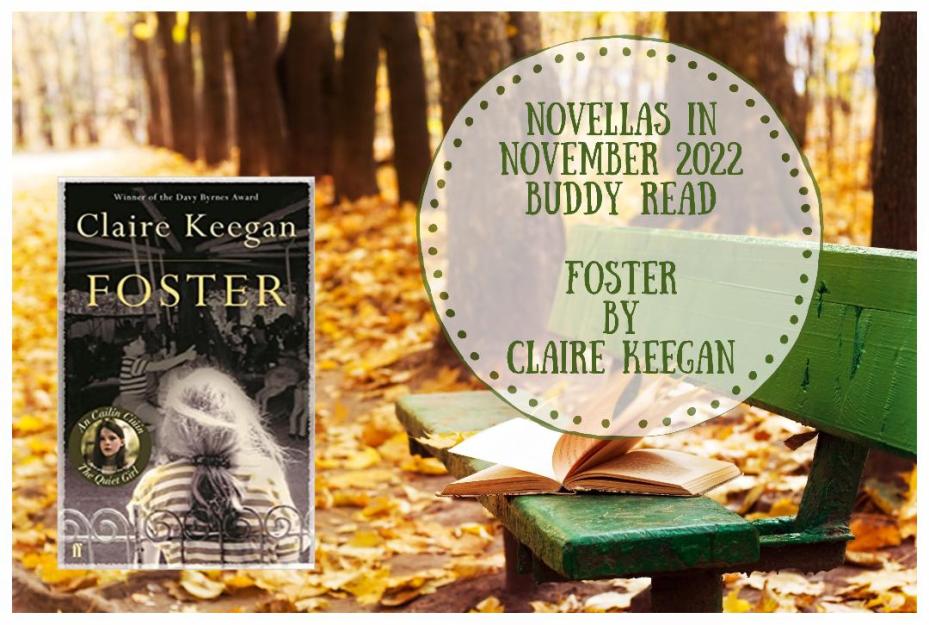
Our next most popular novella was a recent release, Maureen [Fry and the Angel of the North] by Rachel Joyce, which was reviewed four times. Other books highlighted more than once were Follow the Rabbit-Proof Fence, Mrs Caliban, The Swimmers, The Time Machine, Winter in Sokcho, Ti Amo, Body Kintsugi, Notes on Grief, and Another Brooklyn.
Thank you all for being so engaged with #NovNov22! We’ll see you back here next year.
 Bookish Beck = Rebecca Foster. American transplant to England. Freelance proofreader and book reviewer.
 Bookish Beck